2021-2024 OPTN Strategic Plan - OPTN Executive Committee
←
→
Page content transcription
If your browser does not render page correctly, please read the page content below
2021-2024 OPTN Strategic Plan
       OPTN Executive Committee

                                  1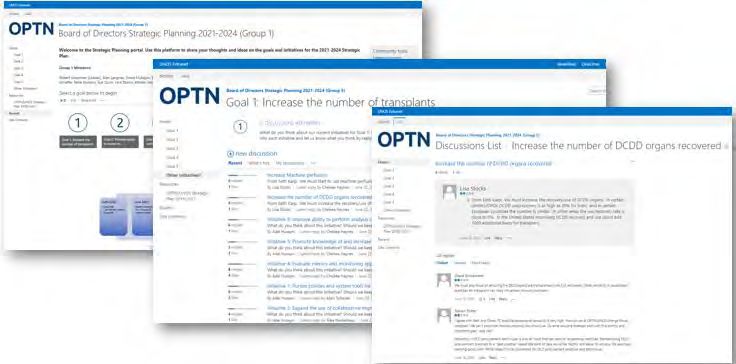
2021-2024 Strategic Plan Timeline

                                    2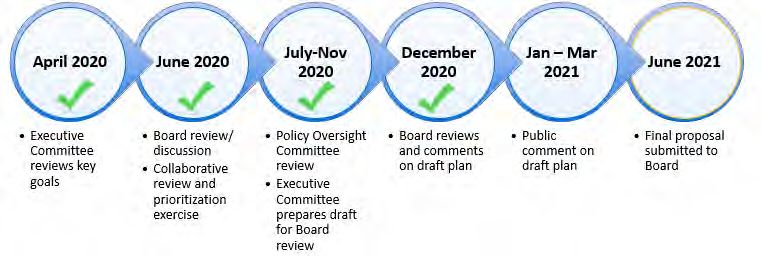
Review & Prioritization Exercise

                                   3
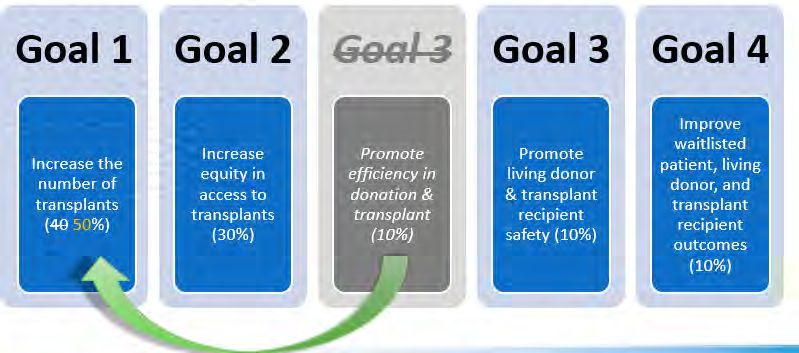
2018-2021 OPTN Strategic Goals
42021-2024 OPTN Strategic Goals
5Strategic Initiatives In-Depth
6Goal 1: Increase the number of transplants (50%)
1. Improve metrics and monitoring approaches for increased collaboration and
performance improvement activities when assessing transplant program and OPO
performance*
2. Pursue policies and system tools that promote system efficiency and increase organ
utilization*
3. Increase the number of DCD donor organs recovered and transplanted by
encouraging inter-organ and inter-program collaboration and the development of
effective practices
4. Review policies to determine whether future changes will be necessary to encourage
or facilitate machine perfusion of organs
5. Increase the effectiveness of paired living donation programs*
*Includes sub-initiativesGoal 2: Provide equity in access to transplants (30%)
1. Improve equity in transplant opportunities for multi-organ and single organ
candidates*
2. Increase the ability for allocation policies to be dynamic and incorporate
changes in faster policy cycles to respond to post-implementation findings
3. Examine differences in access to transplant among different ethnic, economic,
and geographic groups and develop strategies as indicated to address any
identified disparities
4. Increase racial, ethnic, and professional diversity on the Board and committees
to ensure a variety of perspectives are offered in the policy development
process*
*Includes sub-initiativesGoal 3: Promote living donor and transplant
recipient safety (10%)
1. Enhance sharing of knowledge about safety events, near misses, and effective
practices across the transplant community
Key metrics:
1) Increase percentage of members’ feedback that the OPTN MPSC is focused on improvement,
as well as compliance and safety
2) Increase the number of members who respond that the peer review process is valuable in
process improvement
3) On an annual basis, a minimum of 20 reported referrals sent from Member Quality to
Professional Education or OPTN committees to be addressed through communications or
educational offeringsGoal 4: Improve waitlisted patient, living donor,
and transplant recipient outcomes (10%)
1. Include recipient longevity in transplant center metrics
2. Evaluate effective methods for assessing living donor outcomes
3. Enhance transplant program tools and education in the selection and follow up of living
donors
4. Develop tools to calculate survival benefit to inform center practices, patient management,
and OPTN policy development
5. Improve patient tools for understanding the allocation process and organ acceptance
strategies
6. Improve the process/management of donor information that becomes available after
transplantation (blood cultures, sputum cultures, urine cultures, etc.)What do you think?
Do you agree with the Board’s proposed areas of strategic focus for the 2021-
2024 plan?
Is a goal or initiative missing from this plan that should be considered a strategic
priority? Will resource allocation benchmarks need to be changed to
accommodate the addition?
Are there goals or initiatives that should not be included in this plan? If so,
should they be maintained in the OPTN’s future operations or discontinued
altogether?
Are the stated performance metrics sufficient, measurable and specific?
11Questions?
David Mulligan, Chair
OPTN Executive Committee
David.mulligan@yale.org
Chelsea R. Haynes
OPTN Executive Committee Liaison
Chelsea.Haynes@unos.org
12You can also read


