2021 National Mutual Economy Report - Incorporating the Top 100 - Business Council of Co-operatives and ...
←
→
Page content transcription
If your browser does not render page correctly, please read the page content below

2021
National Mutual Economy Report
Incorporating the Top 100

1   BCCM | 2021 NATIONAL MUTUAL ECONOMY REPORT

With thanks to
                                   2021 Report Partner

                      Sponsors of the National Mutual Economy Report since 2017

2   BCCM | 2021 NATIONAL MUTUAL ECONOMY REPORT
Contents

Executive Summary			                                                 6

Chapter 1: Co-operatives and Mutuals in the Age of Sustainability    8

Chapter 2: Sector Snapshot                                          14

    The Contribution of the CME Sector to the Australian Economy    15

    Economic Impact by Industry                                     17

    The Financial Performance of the Top 100 CMEs                   23

    The Long-Term Financial Performance of Member-Owned
    Superannuation Funds					                                       24

Chapter 3: Co-operatives and Mutuals - The Economic Impacts         25

Chapter 4: Case Study - Cobargo Co-operative Society                32

Chapter 5: Case Study - RAC WA                                      39

Chapter 6: Tables and Data                                          44

3     BCCM | 2021 NATIONAL MUTUAL ECONOMY REPORT
About
the report
This is the eighth annual report on the scale and performance of the Australian
co-operative and mutual sector. The report aims to map the size, composition
and overall health of the sector using the Australian Co-operative and Mutual
Enterprise Index (ACMEI), which started in 2012 with the first national data
collection process in 2014.

                                                                                           2021 National Mutual Economy
                                                                                           Report
The ACMEI is a long-term research project undertaken by the University
of Western Australia. Its purpose is to provide a better understanding of                  Incorporating the Top 100

co-operative and mutual enterprise (CME) businesses and their contribution                 Providing the latest research on the
                                                                                           economic and social contribution of
to the national economy.                                                                   Australia’s co-operative, mutual and
                                                                                           member-owned firms
                                                                                           With the research collaboration of the
For the first time in 2021, employee-owned urban policy and public policy                  University of Western Australia and SGS
consultancy SGS Economics & Planning, a BCCM Member, has joined as                         Economics & Planning

a research partner. Using input-output modelling SGS has estimated the                     For more information on the co-operative
                                                                                           and mutual sector
CME sector’s total (direct plus indirect) economic contributions.
                                                                                           www.bccm.coop
Despite representing some of the largest businesses in their sectors and being
                                                                                           www.getmutual.coop
found across a range of industries, the overall size, structure and contribution
of the CME sector in Australia is relatively poorly understood. This is due to a paucity   Published June 2021 by the Business
of reliable data, difficulties in definition and vagueness over which firms should be      Council of Co-operatives and Mutuals
                                                                                           (BCCM)
identified as CMEs.                                                                        GPO Box 5166, Wynyard, Sydney 2001 |
                                                                                           www.bccm.coop
For this year’s report on the ACMEI, see Mazzarol, T. (2021), Australia’s Leading          © Business Council of Co-operatives and
                                                                                           Mutuals (BCCM)
Co-operative and Mutual Enterprises in 2021, CEMI Discussion Paper Series,
DP 2101, Centre for Entrepreneurial Management and Innovation.                             This work is licensed under the Creative
                                                                                           Commons Attribution 3.0 Australia
All financial statistics presented in this report are in Australian dollars                Licence (CCBY 3.0).
unless otherwise indicated.                                                                This licence allows you to copy, distribute
                                                                                           and adapt this work, provided you
                                                                                           attribute the work and do not suggest
                                                                                           that BCCM endorses you or your work. To
                                                                                           view a full copy of the terms of this
                                                                                           licence, visit: http://www.
                                                                                           creativecommons.org/licenses/by/3.0/au/

Acknowledgements                                                                           Disclaimer: While the BCCM endeavours
                                                                                           to ensure the quality of this publication,
                                                                                           the BCCM does not accept any
                                                                                           responsibility for the accuracy,
The 2021 National Mutual Economy Report (NME 2021) was produced thanks to                  completeness or currency
                                                                                           of the material included in this
sponsorship by HCF, research by the University of Western Australia and SGS                publication and will not be liable for any
Economics & Planning and the input of several CMEs.                                        loss or damage arising out of any use of,
                                                                                           or reliance on, this publication.

From the University of Western Australia we would like to thank Professor Tim
Mazzarol. For their contributions to this year's report we extend our appreciation
to Thomas Walker and Andrew McDougall from SGS Economics & Planning.

Also, for their work on this year’s NME we would like to acknowledge
BCCM research and policy team Karl Coombe and Anthony Taylor.

4       BCCM | 2021 NATIONAL MUTUAL ECONOMY REPORT
About
the BCCM
The Business Council of Co-operatives and Mutuals (BCCM) is the
national peak body for co-operatives and mutuals in Australia.

It is a member funded and driven organisation representing co-operatives
and mutuals in all industries. The Council’s 96 members have more than
11 million members, including 60,000 businesses, combined.

BCCM is an industry-led association that has achieved many firsts for the
co-operative and mutual business community in Australia. This includes
a unique set of best practice governance principles for CMEs and the world
first Mutual Value Measurement framework to demonstrate the positive
impact of Australian CMEs on their members, customers, the community
and the economy.

5    BCCM | 2021 NATIONAL MUTUAL ECONOMY REPORT

Executive Summary
Melina Morrison
Chief Executive Officer | Business Council of Co-operatives and Mutuals

It is my pleasure to present the eighth annual National           is telling, demonstrating again how the sector’s natural
Mutual Economy (NME) Report.                                      tendency toward long-term sustainability has uniquely
                                                                  equipped co-operatives and mutuals with the resilience and
This year’s report details the performance of Australia’s         the means to deliver vital products and essential services to
co-operative and mutual enterprise (CME) sector through a         the nation in its time of need.
year of immense hardship (FY2019-20). The report presents
quantitative research alongside the lived accounts of the CME     In this year’s report, BCCM has partnered with SGS Economics
sector’s response to a year marred by natural disasters and       & Planning to detail the wider contributions of Australia’s CME
the onset of the COVID-19 pandemic heralding a halt to            sector (Chapter 3). Utilising input-output modelling
international trade and global recession.                         techniques, SGS has estimated the CME sector’s total
                                                                  contributions to incomes, GDP and employment. This year’s
We breakdown how CMEs, with their natural tendency toward         research shows that our sector (excluding superannuation
sustainable practices and their commitment to members,            funds) generates 1% of Australia’s GDP and nearly 1.5% of the
behaved in ways that generated distinctively positive             nation’s employment.
outcomes under extreme challenges. The inherent bias of the
model to focus on long-term sustainability equipped CMEs          The integral role CMEs play in promoting the sustainability of
with the necessary resilience to ensure their members and         our communities is demonstrated in our featured case studies
communities could endure the shocks of crisis.                    of Cobargo Co-operative Society (Chapter 4) and RAC WA
                                                                  (Chapter 5). Both, with histories extending over a century, have
The vital response by CMEs over FY2019-20 is not surprising,      been vital contributors to their communities. Cobargo
it is the natural tendency of business that is member-            represents a co-op evolving with the changes of time, yet
oriented, and purpose guided. CMEs have a long history            tirelessly committed to its members and community. RAC WA
demonstrating a commitment to environmental sustainability,       has been a cornerstone of the Western Australian community.
social responsibility and good governance (ESG). Moving           From its early days RAC was a pioneer, developing the road
forward as the societal expectations surrounding ESG              networks that facilitated transportation across the state.
continue to rise, including those of government and investing     Today RAC not only provides a range of services to its one
communities, CMEs are presented with a unique opportunity         million members, but works determinedly on their behalf to
to display their natural advantage in this area.                  reduce road accidents and fatalities and transition to
                                                                  sustainable mobility through advocacy and education.
In FY2019-20, the top 100 CMEs generated a combined
turnover of $32.8 billion. Revenues of the top 100 declined by    The 2021 Report was produced thanks to sponsorship by HCF,
3.1% on the previous year, yet in the context of an economy       the important collaboration between BCCM and the University
sluggish in the lead-up to the period and the combined            of Western Australia, and research from SGS Economics &
challenges of natural disasters and COVID, this is a strong       Planning. Our thanks to these contributors.
result. Between March and June 2020 Australia’s GDP shrank
by 7%, the largest quarterly contraction on record, sending the   Lastly, this report is built on your collaboration. Without your
economy into its first recession in over 28 years. Given this     co-operation in sharing data and information this important
environment, the performance of Australia’s leading CMEs          research exercise would not succeed.

6      BCCM | 2021 NATIONAL MUTUAL ECONOMY REPORT                                                                                    6
The vital response by
CMEs over FY2019-20 is not
surprising, it is the natural
tendency of business that is
member-oriented, and
purpose guided.
Melina Morrison

7   BCCM | 2021 NATIONAL MUTUAL ECONOMY REPORT
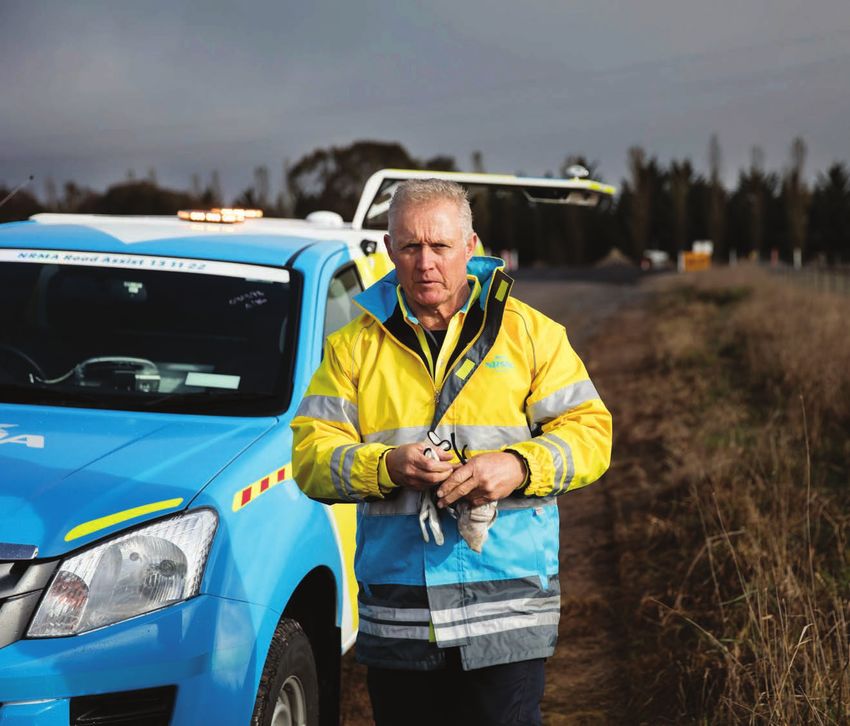
Chapter One
Sustainability: Sowing the seeds of Resilience                  9

The Natural Sustainability of CMEs delivers Tangible Benefits   11

Accountability presents an Opportunity for CMEs                 11

Mutual Capital Instruments                                      12

Co-operatives
and Mutuals in
the age of
sustainability
Sustainability is at the heart of the co-operative and mutual enterprise (CME) model.
Principles that drive CMEs to promote long-term viability for members and their
communities are not added extras but are core and defining features. CMEs exist to
fulfil the needs of their members and are structurally invested in their communities.
CMEs understand that a resilient community is essential to their long-term success
and the success of their membership. In this year’s Report we focus on how the natural
tendency of CMEs to adopt sustainable principles enabled the sector to be a vital source
of resilience throughout a year of hardship and how these guiding values present the
sector with a unique opportunity as we enter an era of greater business accountability.

8       BCCM | 2021 NATIONAL MUTUAL ECONOMY REPORT

Sustainability: Sowing the seeds
of Resilience
The 2019-20 Financial Year was unquestionably one of extremes, marred by natural
disasters of unimaginable extent. Across Australia ongoing droughts, bushfires of
generational proportions, and devastating floods pushed many communities to the
brink. Then in the early months of 2020 the COVID-19 pandemic impacted every aspect
of Australian life bringing enormous health, social and economic costs, the prolonged
impacts of which will be felt for years to come.

The speed and scope with which                smooth the impact across their entire        demonstrated this hallmark
Australians needed to recalibrate their       business, including redeploying to help      characteristic.
interactions, daily lives and businesses      distressed communities.                            Perhaps most importantly,
could not have been anticipated. Yet the            Rather than seek to be bailed-out      co-operatives and mutuals acted
response of CMEs to these crises              from government, co-operatives and           decisively to protect and promote the
reveals that their deep commitment to         mutuals bailed-in their reserves. CMEs       mental health of their staff and
their members and their view to the           relied primarily on their own savings to     members, which was illustrated by HCF
long-term, is a vitally crucial element       get through the crisis, using past           providing psychology and psychiatrists
within the Australian economy.                earnings to support employment rather        online as part of a mental health
      Co-operatives and mutuals proved        than taxpayer funds. CMEs used their         proposition for staff. CMEs understand
to be particularly resilient in the face of   own money and people to assist               that the health of their community is
economic adversity. By keeping true to        members, staff and communities. This         essential for the health of their business.
the purpose of serving their members,         experience underscores, as with many         In October 2020, Australia’s largest
the natural resilience of CMEs helped         crises of the past, that CMEs can be         workplace mental health study found
them to react positively to the extreme       relied upon as stable and responsible        that almost 60% of workers experienced
challenges. Throughout the pandemic           businesses, whose purpose enables            a mental health condition throughout
their business characteristics and            them to see beyond the short-term            the year, with many struggling for the
structure led CMEs to behave in a             needs of investors to deliver real value     first time during the pandemic. CMEs
distinctive way, often exhibiting the best    for their communities.                       took extraordinary measures to promote
examples in corporate behaviour.                    CMEs acted rapidly to recalibrate      the health of their staff and members,
      Co-operatives and mutuals               their operations to meet the necessities     not simply as it posed a challenge to
demonstrated an immediate instinct to         of social distancing. Like all businesses,   their operations but as it was seen as a
retain their workforce, often going to        co-operatives and mutuals had to adapt       core tenet of their business purpose.
extraordinary lengths to do so. This is       their activities to meet the requirements    CMEs, as communities, responded to
illustrated by RACQ that redeployed           of restrictions yet the swiftness and the    the mental health challenge as the best
some team members to support various          people-first mentality with which CMEs       example of sustainable member-
charities including Churches of Christ,       responded highlights their mutual            focussed business.
Foodbank and Meals on Wheels.                 mindset.
Ultimately these actions meant there                While Government financial
were very few job losses in the CME           support was critical for Australian
sector. Mass unemployment was a               business, CMEs did not rely heavily
major economic concern during the             on subsidies and eschewed the
pandemic. This highlights a significant       disappointing behaviour demonstrated
character of mutually owned businesses        by some within the business
over other types. CMEs did not                community. Across the sector, self-help
immediately seek to reduce costs by           has always been the default response
cutting staff, but rather sought to           and throughout FY2019-20 CMEs again

9      BCCM | 2021 NATIONAL MUTUAL ECONOMY REPORT
Such crucial responses to the crisis on   1. A long-term view of business is innate
the part of CMEs was only possible due
                                             to co-operatives and mutuals.
to their underlying member-owned
structure. The member ownership of           Not driven by the need to maximise short term
CMEs entails a number of important           profitability in the way that listed firms must, they are
characteristics that make them               able to build a longer-term attitude to growth which is
sustainable contributors to economic
                                             more patient. This leads to relative conservatism in
and community life:
                                             business planning. Not programmed to chase short term
                                             profit gain, CMEs are more likely to take a patient view
                                             to growing their business. In banking, this is best
                                             understood through their relatively low levels of
                                             loan default.

                                          2. Co-operatives and mutuals are likely to carry less
                                             debt than shareholder owned businesses.
                                             Reflecting their long view of business, and an
                                             expectation that any borrowing must serve the long-
                                             term interests of their members. Balance sheets are
                                             typically less leveraged than investor-owned companies.

                                          3. The ‘mutual mindset’ of CMEs means that their
                                             co-operative business culture drives how they
                                             behave in a crisis.
                                             Naturally focussed on their members and the
                                             community, they seek ways of delivering value to
                                             their core stakeholders despite the adversity of
                                             economic conditions.

10     BCCM | 2021 NATIONAL MUTUAL ECONOMY REPORT
The Natural Sustainability of CMEs delivers
Tangible Benefits
The manner in which BCCM members and the CME sector met the challenges
of FY2019-20 was inspired. Yet, for CMEs building resilience and striving for
sustainable outcomes is not simply a crisis response.
Guided by the commitment to their members, CMEs, under members with lower costs or better and more diverse service
all conditions, consistently drive to fulfill these goals, and this offerings over the longer term. This focus on members drives
natural tendency has significant and tangible benefits competitive pressure towards positive outcomes for all
for Australia. consumers in many markets.
CMEs facilitate the participation of SMEs in competitive CMEs spread the benefits of business wider.
markets, building resilience into supply chains and enabling As businesses embedded in their communities CMEs
smaller enterprises to endure crises. CMEs are businesses understand that contributing to the community chest is
that plan for the long-term, without the need to respond to essential for their long-term success. CMEs share their profits
short-term share market pressures. This makes CMEs stable through lower prices to customers, dividends to members and
and reliable businesses able to adopt longer term strategies community donations and sponsorships so more people
and be a counter to short-term volatility. benefit. CMEs provide local employment opportunities and
Public trust is consistently higher for CMEs than for other elevate small business, bringing equity and fairness.
types of business. With high member loyalty and customer CMEs are long-lasting businesses, serving generations of
satisfaction, CMEs are able to concentrate on running their customers. In Australia, the longevity of CMEs is striking. The
business to best meet the needs of their customers. Strong average age of an ASX top 50 firm is 65 years. By comparison,
member relations mean CMEs are able to present their the average age of a top 50 Australian CME is 82 years, a full 17
years and 25% longer.
Accountability presents an
Opportunity for CMEs
As in other developed nations, the Australian business sector stakeholders and deliver performance and value, in the short
is dominated by investor-owned companies, which exist to and long term. By balancing their decisions and actions, they
maximise shareholder returns. CMEs exist for a different have developed a culture and mindset that integrates ESG into
purpose – value for current and future members. This means every facet of their organisations.
the focus for CMEs is on the social, economic and cultural More and more, government, investors and the public are
needs of members, rather than absentee investors. This fully recognising the price of externalities and short-sighted
compels CMEs to behave in ways that contribute positively to priorities. Expectations upon businesses to act as good
developing a more sustainable and robust economic system. corporate citizens is continuing to rise, and more importantly
Good corporate citizenship is not a cost for CMEs but is a so too are calls for solid reporting. With this mounting
member dividend. pressure, a unique opportunity is being presented for CMEs
The world of investment is evolving quicker than ever. As to display their natural advantage in the domain of sustainable
investors become increasingly focussed on their social and practices.
environmental impact, greater demands are being made upon The 2019 legislative reforms, now permitting mutuals to
businesses to align with wider stakeholder values. Being raise growth capital using Mutual Capital Instruments, present
environmentally sustainable, socially responsible and adopting an ideal opportunity for CMEs to highlight their credentials in
good governance practices (ESG) has been an inherent part of sustainability. Rising standards in ESG could put CMEs in an
co-operative and mutual enterprise for over a century. CMEs advantageous position faced with an investing community
have a well-defined member-based purpose which informs increasingly concerned with their total investment impact.
their strategy and business model. They are transparent and
accountable in their operational activities with all their
11 BCCM | 2021 NATIONAL MUTUAL ECONOMY REPORTMutual Capital Instruments
Nothing has made us prouder, as a relatively new peak body, than the legislative changes
to the Corporations Act allowing mutuals and co-operatives to raise investment capital
without demutualising.
The reforms which culminated in the Treasury Laws (Mutual Reforms) Act 2019 took four
years to prosecute as part of a unified industry campaign funded by BCCM members. The
legal changes are only one part of the push for a more enabling operating environment for
Australian co-operatives and mutuals and are indicative of the outcomes the sector can
achieve when it works together.
Mutuals 7
35
2019 Total
making constitutional
amendments enabling
the issuance of MCIs:
2020 28
HESTA announced as
cornerstone investor in “We’re very excited to be the first
Australia-first innovative
listed impact investment
investors to support Australian Unity
with Australian Unity to bring MCIs to market as
HESTA committed $20 million as a
cornerstone investor in Australian Unity’s
we both share a long-term interest
inaugural issuance of MCIs, helping to
establish a new capital source for the
in building this country’s social
For Purpose, Mutual sector in Australia.
The $120 million issuance of the ASX-
infrastructure,”
quoted MCIs has the potential to expand
Australia’s impact investment market, HESTA CEO Debby Blakey
allowing retail investors to invest for
social impact alongside large
institutional investors.
MCIs represent a potential new
source of capital for the co-operative
$120M
and mutual enterprise sector, which was
previously reliant on retained profits 2020
to expand operations. The legislative Capital raised through
changes have provided the opportunity the first issuance of MCIs:
for mutual entities like Australian Unity
to access permanent capital without
compromising their mutual status.
12 BCCM | 2021 NATIONAL MUTUAL ECONOMY REPORTCo-operatives and mutuals should ensure that they are able to express their business purpose clearly including how it is demonstrated in the operations of the business. In terms of attracting external investment funding, the business purpose of co-operatives and mutuals is an advantage. To appeal to investors, it is necessary to be clear about how funds are to be used. A clear business purpose makes the proposition unambiguous. If we look at the ESG framework, we can see how any business can test itself against the criteria, and this will be the same for a mutual, except that it will be able to use its corporate status as a positive indicator. In this respect, being a co-operative or mutual is an upfront advantage, yet only if it is visible from the outside. Co-operatives and mutuals should ensure that they are able to express their business purpose clearly including how it is demonstrated in the operations of the business. With the Mutual Value Measurement (MVM) framework developed by Monash University and the BCCM, CMEs now have a customised measurement and reporting framework that they can implement to help them report performance, including ESG information, in a consistent and comparable manner. It has never been more important that the CME sector measure and fully express their vital yet often invisible contributions to Australian economic and community life. 13 BCCM | 2021 NATIONAL MUTUAL ECONOMY REPORT
Chapter Two
The Contribution of the CME Sector to the Australian Economy             15

Economic Impact by Industry                                              17

The Financial Performance of the Top 100 CMEs                           23

The Long-Term Financial Performance of Member-Owned Superannuation Funds 24

Sector
Snapshot

14     BCCM | 2021 NATIONAL MUTUAL ECONOMY REPORT
The Contribution of the CME
Sector to the Australian Economy
CMEs play a vital and quantifiable role locally and internationally.

There are more than

2031 active CMEs
      in Australia

                                                                                largest
                                                                       Australia’s
                                                                         co-operative by
                                                                          turnover is an
CMEs have a combined                     Australia’s CMEs have a
active membership of                      combined turnover of
      more than                                more than
                                                                       Agribusiness
31.1M $35.3B
15     BCCM | 2021 NATIONAL MUTUAL ECONOMY REPORT
largest
Australia’s Australia’s largest
mutual by member-owned business by
membership is a assets is a
Roadside Bank
assistance
organisation
Australia’s CMEs combined have more than
$1.11 trillion in gross assets
CMEs directly employ at least
70,000 people
in Australia
Total revenue of the CMEs provide employment
and work opportunities to
top 100 CMEs is 280 million people across the
$32.8
globe - 10% of the world’s
The top 300 CMEs employed population*
globally have a total *International Co-operative Alliance, webpage on
co-operatives facts and figures, retrieved 22
turnover of more than
billion
April 2021.
$US2.14
trillion*
*International Co-operative Alliance and Euricse,
excluding
World Co-operative Monitor 2020: Exploring the superannuation
cooperative economy, Report 2020, retrieved 22
April 2021.
16 BCCM | 2021 NATIONAL MUTUAL ECONOMY REPORTEconomic Impact by Industry
Australia’s top 100 CMEs in FY2019-20
(excluding superannuation funds)
For a list of the Top 100 CMEs in Australia by assets and turnover,
including the superannuation industry, see Appendices A, B, C and D.
Numbers of firms in top 100 by industry
A B C D E F GH I J K LMN
39 17 12 6 6 5 333 2 1 1 1 1
A Financial Services 39
B Health Insurance 17
C Agribusiness 12
D Mobility Services 6
E Retailing 6
F Medical Services 5
G Health Services 3
H Purchasing Services 3
I Wholesaling 3
J Utilities 2
K Education, Training and Childcare 1
L Fishing 1
M Professional Services 1
N Sports and Recreation 1
17 BCCM | 2021 NATIONAL MUTUAL ECONOMY REPORTTurnover of firms in top 100 by industry turnover (AUD $ - mil)
N-
M - 00.3
L-
K - 70.6
J - 415.4
49.9
70.2
I-
1
216
2
H-
.8
G ETA
49
R
- 8 ILI
3.3
21 NG
F
.7
- OL
W
8
H
52 E S
E
PU - 2
.8 AL
SE RC ,35
RV HA 7.3
IN
IC SI
G
ES NG
61.5
A - 8,7CIAL
FINAN ICES
D - 4,3 SERV
MOBIL 42.0
SERVICITY
ES
5 1.4
7
5,
- I- ESS
C GR IN
A US
B
ANCE
30.9
B - 8,3H
INSUR
HE A LT
A Financial Services 8,761.5
B Health Insurance 8,330.9
C Agribusiness 5,751.4
D Mobility Services 4,342.0
E Purchasing Services 2,357.3
F Wholesaling 852.8
G Retailing 821.7
H Professional Services 493.3
I Health Services 415.4
J Medical Services 270.6
K Fishing 216.8
L Utilities 100.3
M Education, Training and Childcare 70.2
N Sports and Recreation 49.9
18 BCCM | 2021 NATIONAL MUTUAL ECONOMY REPORTEconomic Impact by Industry
Top 10 CMEs
Top 10 CMEs by assets in FY2019-20 (excluding superannuation funds)
RANK CME STATE ASSETS
1 ME Bank VIC $31.46 billion
2 Great Southern Bank (formerly CUA) QLD $16.15 billion
3 Newcastle Permanent NSW $13.53 billion
4 Heritage Bank QLD $10.74 billion
5 People’s Choice Credit Union SA $9.45 billion
6 Teachers Mutual Bank NSW $8.14 billion
7 Greater Bank NSW $7.52 billion
8 Bank Australia VIC $7.20 billion
9 Beyond Bank Australia SA $7.07 billion
10 IMB Bank NSW $6.79 billion
Top 10 CMEs by turnover in FY2019-20
RANK CME STATE TURNOVER
1 CBH Group WA $3.24 billion
2 HCF NSW $2.97 billion
3 Capricorn Society WA $2.15 billion
4 HBF Health WA $1.68 billion
5 RACQ QLD $1.48 billion
6 Australian Unity VIC $1.41 billion
7 ME Bank VIC $1.12 billion
8 RAC WA WA $930.4 million
9 Teachers Health Fund NSW $778.3 million
10 RACV VIC $687.8 million
19 BCCM | 2021 NATIONAL MUTUAL ECONOMY REPORTTop 10 CMEs by Membership in FY2019-20 (including superannuation funds)
RANK CME STATE MEMBERS
1 NRMA NSW 2.6 million members
2 Australian Super VIC 2.3 million members
3 RACV VIC 2.18 million members
4 RACQ QLD 1.8 million members
5 Retail Employees’ Superannuation Fund (REST) NSW 1.76 million members
6 HCF NSW 1.7 million members
7 Sunsuper QLD 1.4 million members
8 HOSTPLUS VIC 1.3 million members
9 Aware Super NSW 1.1 million members
10 RAC WA WA 1.1 million members
20 BCCM | 2021 NATIONAL MUTUAL ECONOMY REPORTEconomic Impact by Industry
Australia’s top 100 CMEs in FY2019-20 by
State and Territory (excluding superannuation funds)
Number of top 100 firms by State and Territory
NSW 40
VIC 19
SA 13
WA 11
QLD 10
TAS 4
NT 3
21 BCCM | 2021 NATIONAL MUTUAL ECONOMY REPORTShare of turnover of top 100 firms by State and Territory NSW 34% WA 28% VIC 19% QLD 10% SA 7% NT 1% TAS 1% 22 BCCM | 2021 NATIONAL MUTUAL ECONOMY REPORT
The Financial Performance
of the Top 100 CMEs
The data collected from the FY2019-20 period reflects the challenges of the year.
With sluggish economic conditions leading up to the period, the effects of the COVID
pandemic, bushfires and floods only exacerbated this trend.

The combined annual turnover for the Top 100 Australian                      Unsurprisingly, FY2019-20 continued to witness
CMEs (excluding the member owned superannuation funds)                  significant impacts on overall sectoral profitability with the top
for FY2019-20 was $32.8 billion with combined assets of just            100 five-year median EBIT trend reporting a decline of 9.1%.
over $199.8 billion.                                                    A comparison across industries however presents contrasting
     This result presents a 3.1% decrease in gross annual top           outcomes. Significant increases in profitability for agribusiness
100 turnover, the first contraction in combined turnover since          co-operatives are juxtaposed by the falls in profitability in
2014. Despite this outcome gross top 100 assets continued to            health insurance and mobility mutuals. This is probably a
display relatively strong growth with an 8.7% improvement on            demonstration of the uneven character of the disruption
the previous year.                                                      brought on by the year’s crises.

                                    Median rate of EBIT growth: five-year trend

      Agribusiness                     Mobility clubs                                 Financial                       Health

     41.9%                             -9.8%                                          Services

                                                                             -13.6% -28.4%
                                                                                                                    insurance

                                     Top 100 CMEs Annual (gross) Turnover and Assets
                                                    Five Year Trend

                                                                    8.5%
     $250,000,000,000
                                                                    AVERAGE
                                                                ANNUAL GROWTH
                                                                 RATE IN ASSETS

     $200,000,000,000

     $150,000,000,000

                                                                                          5.1%
     $100,000,000,000                                                                     AVERAGE
                                                                                       ANNUAL GROWTH
                                                                                           RATE IN
                                                                                         TURNOVER

                                                                                                               ANNUAL TURNOVER (GROSS)
      $50,000,000,000
                                                                                                               LINEAR (ANNUAL TURNOVER (GROSS))

                                                                                                               ASSETS (GROSS)

                  $0                                                                                           LINEAR (ASSETS (GROSS))

                        FY2015/16      FY2016/17    FY2017/18             FY2018/19          FY2019/20

23      BCCM | 2021 NATIONAL MUTUAL ECONOMY REPORT
The Long-Term Financial
Performance of Member-Owned
Superannuation Funds
The 37 member-owned industry superannuation funds reported a combined revenue of
-$139 million during the FY2019-20 period and a significant decline in the annual average
rates of profitability. The results continue a trend of recent years induced by lethargy in
the wider economy, yet the impacts of the crises have compounded these influences.
Despite this outcome we continue to witness strong growth in the sector’s gross assets.
Superannuation Funds Annual (gross) Turnover and Assets
Five Year Trend
1,000,000,000,000 14.1%
AVERAGE ANNUAL
900,000,000,000 GROWTH RATE IN
ASSETS
800,000,000,000
700,000,000,000
600,000,000,000
500,000,000,000
400,000,000,000
30.2%
300,000,000,000 DECLINE
IN AVERAGE
ANNUAL RATE
200,000,000,000 OF TURNOVER
ANNUAL TURNOVER (GROSS)
100,000,000,000
LINEAR (ANNUAL TURNOVER (GROSS))
0
ASSETS (GROSS)
-100,000,000,000 LINEAR (ASSETS (GROSS))
FY2015/16 FY2016/17 FY2017/18 FY2018/19 FY2019/20
Observation
Financial trends across the Top 100 CMEs and the member owned industry superannuation funds
reflect a pattern that highlights an increasing pressure on profit margins within the financial services
sector, including banking, superannuation, health, and general insurance (Mazzarol, 2020). The impact
of the COVID-19 pandemic on the Australian economy in the first half of 2020 was significant, with
Australia’s GDP growth dropping by 6.3%, the deepest such downturn in Australia’s history (Trading
Economics, 2020).
The negative financial trends shown in the Top 100 CMEs and industry super funds reflect the
overall trends taking place in the sectors within which these firms compete. They do not reflect
vulnerabilities inherent to the CME business model. Australia’s CMEs, however, compete within highly
competitive market environments, and in many cases under increasing levels of government
regulation and global competition.
24 BCCM | 2021 NATIONAL MUTUAL ECONOMY REPORTChapter Three Co-operatives and Mutuals - The Economic Impacts 25 BCCM | 2021 NATIONAL MUTUAL ECONOMY REPORT
Co-operatives and Mutuals -
The Economic Impacts
The Co-operative and Mutual Enterprise (CME) sector generates
significant contributions to the Australian economy each year.

These economic contributions           •     Purchasing of Australian sourced assets, goods and services
can be measured in terms of the
                                       •     Local employees buying domestically supplied goods and services
‘direct’ contributions generated
by each of the CME themselves, as      •     Distribution of local profits to Australian residents, and
well as the ‘indirect’ contributions   •     Distribution of sponsorships and grants to Australian community groups.3
that each CME supports
domestically through their:            SGS Economics & Planning has used the National Mutual Economy data,
                                       survey responses drawn from across the CME sector and input-output modelling
                                       techniques to estimate the CME sector’s total (direct plus indirect) economic
                                       contributions. The table below summarises the total economic contribution
                                       estimates. They are expressed in terms of Australian income, Australian value
                                       added4 and Australian full time equivalent (FTE) employment.

        Table 1: CME Sector Contribution To Australian Economic Activity (2020) (Excl. Superannuation)

                                        Financial           Health
                                                                          Agribusiness        Residual         Total CME sector
                                        services          insurance
                                                                           subsector         subsectors       (excl. super funds)
                                       subsector          subsector

                   Income ($M)             $10,139          $8,477           $6,005            $10,822              $35,443
Direct
economic           Value added ($M)        $1,917           $1,588           $1,260            $2,109                $6,874
contributions
                   Employment (FTE)        8,445             5,141           14,039            41,976                69,601

                   Income ($M)             $13,918          $11,175          $8,674            $20,187              $53,954
Indirect
economic           Value added ($M)        $4,552           $1,913           $1,956            $3,978               $12,400
contributions
                   Employment (FTE)        18,185           12,880           21,854            55,599               108,517

                   Income ($M)          $24,057            $19,652           $14,679           $31,008              $89,397
Total
economic           Value added ($M)        $6,470           $3,501           $3,216            $6,087               $19,274
contributions
                   Employment (FTE)        26,630           18,021           35,892            97,574                178,118

Source: SGS Economics & Planning                                 Note: $M means Millions of dollars; FTE means Full Time Equivalent

The results show that the CME sector
contributes approximately:
                                       $90 billion                                               towards Australian income levels

                                       $20 billion                         towards Australian Gross Domestic Product (GDP), and

                                       180,000                                                            full time equivalent jobs.

                                       Major contributors to these results are the Agribusiness, Financial services
                                       and Health insurance subsectors. Note: These results exclude the major
                                       contributions made by the CME superannuation subsector.

26     BCCM | 2021 NATIONAL MUTUAL ECONOMY REPORT
3 Also includes the consumer spending funded by the Financial Services subsector via loans to members. | 4 Australian value added equals Australian income less the value of intermediate goods & services purchased in the Australian production process. Australian value added also broadly equates with GDP and broadly equals the sum of Australian wages and profits supported during production. 27 BCCM | 2021 NATIONAL MUTUAL ECONOMY REPORT 27
Agribusiness CME subsector
economic contributions to the
Northern Rivers economy
The Agribusiness subsector generates significant contributions to the Australian
economy each year. However, to illustrate the regional significance of some CME activities,
SGS Economics & Planning has broadly estimated the contributions that the Agribusiness
subsector makes to the Northern Rivers (NSW) economy on an annual basis.

(credit Paul Harris)

28      BCCM | 2021 NATIONAL MUTUAL ECONOMY REPORT
The Co-operative and Mutual Enterprise (CME) Community
of the Northern Rivers (NSW)

CMEs have been part of the economic and social life of the Northern Rivers since the
1870s. The number of CMEs peaked in the early 1980s, with subsequent decline explained
by amalgamations of building societies, dairy co-operatives and credit unions. One notable
example is Norco, a dairy co-operative with a long history whose origins began in 1893 and
subsequently absorbed a number of smaller co-operatives.

Today, the Northern Rivers remains a stronghold for CMEs, with over 30 co-ops
and mutuals actively engaged in Agriculture, Finance, Retail, Housing, Healthcare
and Medical Services.

      1.5B
     Combined Turnover
                                            2,893 27,421
                                                Combined Direct                             Combined Members
                                                (FTE) Employees

                                   Leading Northern Rivers Agricultural CMEs

                                     Turnover (m)    Assets (m)   Sector

Norco Co-operative                     $684.4         $230.6      Australia’s largest 100% farmer-owned dairy co-op

The Casino Food Co-op                  $268.3          $161.4     Australia’s largest meat processing co-operative

OZ Group Co-op                         $204.6          $35.3      Soft fruit supplier to major supermarkets and overseas

Marquis Macadamias                     $200.9          $115.8     World’s most successful macadamia processor

Clarence River Fishermen’s Co-op        $21.2           $4.9
                                                                  Processors, marketers, and exporters of fresh
                                                                  seafood caught by local fishers
Ballina Fishermen’s Co-op                $5.7           $1.6

29      BCCM | 2021 NATIONAL MUTUAL ECONOMY REPORT
The economic contributions are • Purchasing of locally sourced assets, goods and services
measured in terms of the ‘direct’ (e.g. producers buying equipment, supplies, etc)
contributions generated by each of
• Capital works expenditures in the local area
the Agribusiness co-ops and their
producers members, as well as their • Distribution of profits to local residents
collective ‘indirect’ contributions (i.e. co-ops distributing profits to local members), and
made in the Northern Rivers • Distribution of co-op sponsorships and grants to local community groups.
through their:
The table below summarises the total economic contribution estimates. They
are expressed in terms of income, value added5 and full time equivalent (FTE)
employment6. The impact of the cluster on the Rest of Australia is also included
to provide a total impact.
Table 2: Agribusiness Subsector Contribution To Northern Rivers Economic Activity (2020)
Northern Rivers
Northern Rivers Rest of Australia Total
Agribusiness Cluster
Income ($M) $207 - $207
Direct economic
contributions of co-op Value added ($M) $31 - $31
operations
Employment (FTE) 2,893 - 2,893
Income ($M) $1,318 - $1,318
Direct economic
contributions of Value added ($M) $160 - $160
producer operations
Employment (FTE) 3,535 - 3,535
Income ($M) $29 - $29
Direct economic
contributions of Value added ($M) $7 - $7
capital expenditure
Employment (FTE) 51 - 51
Income ($M) $799 $1,528 $2,327
Indirect economic
contributions of co-op Value added ($M) $111 $530 $641
and producer operations
Employment (FTE) 5,090 7,453 12,542
Income ($M) $2,354 $1,528 $3,881
Total economic
contributions of co-op Value added ($M) $308 $530 $838
and producer operations
Employment (FTE) 11,568 7,453 19,022
Source: SGS Economics & Planning Note: $M means Millions of dollars; FTE means Full Time Equivalent
The results show that the
Agribusiness subsector
$2.4 billion towards income levels across the Northern Rivers
(and $3.9 billion in total across Australia)
contributes approximately:
$308 million towards Gross Regional Product (GRP)
(and $838 million towards GDP), and
11,568 full time equivalent jobs across the Northern Rivers
(and 19,022 FTE jobs across Australia in total).
In FY2019-20, the agriculture, forestry and fishing industry in the Northern Rivers7
was directly worth $293 million in value added (GRP) according to SGS’s Australia’s
Economic Wellbeing dataset8. Given that SGS found that the direct impact of the
cluster’s producers is worth $160 million per annum in value-added, this means that
the agribusiness CME cluster broadly constitutes 55% of the agriculture, forestry
and fishing value-added in the Northern Rivers.
30 BCCM | 2021 NATIONAL MUTUAL ECONOMY REPORTThe network effect: the employment impact of co-operative agriculture in the Northern Rivers
INCOME
DISTRIBUTIONS TO 1.5 BILLION
CUSTOMERS
7 LEADING
AGRIBUSINESS
CO-OPS:
2,893 FTE
OWNED BY AND
SUPPORTING
MEMBER FARM
AND FISHING
BUSINESSES:
2,271
GENERATED BY FARM
BUSINESSES
ON FARM
EMPLOYMENT:
3,535 FTE
IMPACT
INDIRECT ECONOMIC
IMPACTS:
5,090 FTE
$308 million
contributued to Gross
Regional Product
11,568
jobs generated
5 Regional value added equals regional income less the value of intermediate goods & services purchased in the regional production process. Regional value added also broadly
equates with GRP and broadly equals the sum of regional wages and profits supported during production. | 6 Direct employment was calculated using actual data supplied by
businesses for co-op operations and producer operations. Data was not available for producer operations for two of the CMEs, to fill the gap SGS used employment multipliers to
calculate direct employment for these two CMEs and added these estimates to the received data. Indirect employment was calculated using employment multipliers. | 7 As defined
by the LGAs of Ballina, Ballina Shire, Byron Shire, Clarence Valley, Kyogle, Lismore City, Richmond Valley and Tweed Shire | 8 SGS Economics & Planning (2021). Australia’s Economic
Wellbeing. Available at
31 BCCM | 2021 NATIONAL MUTUAL ECONOMY REPORTChapter Four CASE STUDY Cobargo Co-operative Society An extended version of this case study is presented in Australia’s Leading Co-operative and Mutual Enterprises in 2020 by T. Mazzarol (part of the CEMI Discussion Paper series). You can access the full discussion paper from the Centre for Entrepreneurial Management and Innovation website: cemi.com.au/cemi-discussion-papers. 32 BCCM | 2021 NATIONAL MUTUAL ECONOMY REPORT
Cobargo Co-operative Society

The Cobargo Co-operative Society is a community-owned
enterprise on the south coast of NSW. Originating as a dairy
producer co-operative in 1901, it has evolved into a consumer
co-operative servicing the needs of the regional community of
Cobargo. In 2020, the co-operative had around 1,200 active
members and generated an annual turnover of around
$4.1 million.

The Cobargo story is one of an intimate connection and resilient
bond between the local region and its co-operative. The history
presents a 120-year relationship of mutual support that has seen
both the co-op and the local community traverse immense
changes and hardships.

                                       Consumer                  Members

                                      co-operative              1,200

                                                   Years in
                                                  operation      Turnover

                                                  120         $4.1 million

33   BCCM | 2021 NATIONAL MUTUAL ECONOMY REPORT
The Foundation of In 1901, the Cobargo District Co-operative Creamery Butter Society was established
to help provide a sustainable future for local dairy farmers, running a local enterprise
the Co-operative including a butter factory. An initial 50 members signed up, motivated by a common
need to find an outlet for their produce. By 1904 the co-operative had already begun
to display a high level of performance. Membership had risen to 2,110 shareholders
and the co-operative began exporting butter to international markets.
The co-operative marketed its butter under the brand names “Emu”, “Cobargo”
and “Narira”, transporting its product by horse and cart to the NSW coast where
it was further distributed by steam ships to Sydney and the UK. By 1908 the
co-operative was producing around 47,880 lbs of butter a month, with an
annual turnover of more than £12,000, of which more than 85% was distributed
to members.
Early History During the first half of the 20th Century the world experienced the challenges of the
First and Second World Wars interspersed with the Great Depression. The
co-operative continued to operate achieving record production outputs, making
generous contributions to the War Food Fund, to help the people of Belgium who
had suffered severely under occupation.
During the Great Depression, the co-operative continued to operate, although
its members had suffered harshly. Prices were at a 20-year low, yet supply remained
good with production high and costs satisfactory. Despite the hardship, the
co-operative continued to produce high quality butter, which won prizes in the
Orient Steam Navigation Company’s export butter competition.
Despite these global crises, the agricultural sector, specifically dairying,
continued to progress through the application of new technologies and farming
Cobargo butter factory 1910
practice. Enhanced storage through the construction of silos, improvements in herd
(source Cobargo Co-operative
Society Ltd) management, introduction of automated milking machines, and the adoption of milk
pasteurisation all resulted in growing production throughout the dairy industry.
Despite these global crises, the agricultural sector, specifically
dairying, continued to progress through the application of new
technologies and farming practice.
Change and the In 1951, the co-operative changed its name to the now recognisable Cobargo
Co-operative Society but continued to produce high quality butter. The co-op was
initial ventures awarded the NSW Department of Agriculture’s Certificate of Merit for the choicest
into retail grade butter in 1955, surpassing Norco Co-operative. Cobargo’s butter was not only
superior, but it was also produced in greater volume.
Exports to the UK began to fall, and changes within the dairy industry, including
intensive farming practices designed to enhance milk production and boost the
overall productivity of the sector, resulted in significant restructuring of the dairy
industry around the Bega Valley.
It was perhaps due to these changes, and the developing needs of members,
that in this period the co-operative made its first ventures into retail, operating a
shopfront store within Cobargo from where they sold dairy products, hardware, and
farmer supplies. The retail store was housed in a former Army “Nissen Hut” where it
sold axes, shovels and manual tools, and everything from hay, to grass seeds, and
pet food.
34 BCCM | 2021 NATIONAL MUTUAL ECONOMY REPORTThe co-operative continued to operate but
shifted its purpose from supporting the needs
of dairy producers, to serving the
needs of the entire community.
End of Dairy Between 1971 and 1989 the total number of dairy farms in the area declined by 57%,
and the survivors were larger and more capital intensive. The impact of declining
Production and dairy farming, industry restructuring, loss of export markets and drought placed the
Shift in Purpose viability of the co-operative’s dairy factory under a cloud. Faced with this
environment the Cobargo Co-op made the difficult decision to cease its
manufacture of butter and close its factory.
The co-operative continued to operate but shifted its purpose from supporting
the needs of dairy producers, to serving the needs of the entire community. The
retail store that had been established and operated since the 1950s, along with
other retail sites within the town, provided an opportunity to reinvent the
co-operative, transforming it from a producer owned manufacturer to a consumer
owned retail business.
The 1980s was also a time of social change for the Cobargo region. Cobargo was
a “sleepy little town” however, within a decade the town had expanded. Cobargo
took on a different life with new people arriving from outside the region, escaping
the hustle of big cities.
Cobargo transformed into a tourist town and a “sea change” location for people
who were seeking the beauty of the NSW south coast. The co-op’s membership also
changed along with this demographic shift to which the co-operative’s board
responded with a strategic decision to invest more into its retail operations.
The next decades were marked by steady expansion as the co-operative
consolidated its retail operations and progressively upgraded its facilities. By the
early 2000s the co-operative owned several parcels of land within Cobargo
including its retail store and other buildings rented out as a doctor’s surgery, a
hairdressing salon, clothing and gift shop, and a museum and tourist information
centre. Today the co-operative comprises a large area within the centre of Cobargo
housing a hardware, nursery, farm supplies, chemicals, outdoor furniture, pet and
stock feeds, homewares, and paints.
Mutuality through Throughout their history, the co-op and the town of Cobargo have been all too
familiar with disaster. The co-op had suffered a major loss with its original butter
Disaster factory having burned down in the 1920s. Severe bushfires in 1939-1940, 1944, and
1952 plagued the region and erratic periods of rainfall significantly impacted dairy
farming. The region saw extended periods of drought from 1978 through to 1983, with
severe wildfires in November 1980 that raged through the Bega area. Adding to this,
the town suffered severe flooding in 1971, considered to be the worst since 1919.
Throughout these hardships the community of Cobargo has always been able
to rely upon its co-op to provide support and a central place to meet to face their
challenges. No time typifies this more than the summer of 2019-2020.
The horrendous bushfires of December-January 2019-2020 which swept
across large swathes of Australia significantly impacted Cobargo. The fires caused
loss of life and severe damage to property throughout the region. Burning embers
triggered spot fires keeping firefighters and locals busy in attempts to save
their town.
The co-op’s response to this tragedy was decisive, immediately reacting to
the needs of the community. The co-operative, understanding that its purpose
extended well beyond that of simple transaction, demonstrated the epitome of
social-minded values with a view to long-term community sustainability.
35 BCCM | 2021 NATIONAL MUTUAL ECONOMY REPORT“
This business was opened within days of the fire because there was a
demand and a need in the community … People on the staff who had
been impacted by the bushfires, lost homes lost everything, were here
working trying to service the needs of the community….I think we’ve
worked quite strongly in that direction…The staff here are so
supportive and comforting to people impacted by the fire, people
came here just for the comfort factor even if they weren’t buying
anything because they got a friendly face, probably a hug, and
concern for their welfare”
June Tarlinton, Chair, Cobargo Co-operative Society, 2020
Cobargo main street ravaged by bushfires
(source: ABC abc.net.au)
36 BCCM | 2021 NATIONAL MUTUAL ECONOMY REPORT 36Despite the traumatic experiences of the
bushfires and the COVID-19 pandemic the
board and management of the Cobargo
Co-op continues to remain optimistic about
the future.
A Future Out of the adversity has come something strong. For several years things had been
difficult for the co-operative, struggling to achieve its financial goals. However, due to
Together the co-operative giving such support and comfort to the community, the community
is now reflecting that back. The community now looks toward the co-op as the business
in the town, most viable to maintain the town’s services and help rebuild what was
there before.
After the fires there were concerns that many businesses would never be able to
reopen, however the co-operative has been considering ways to assist the town in its
revival. Following the fires, the co-operative agreed under a bushfire recovery program
through the Business Council of Australia (BCA), to provide its unoccupied land as a site
upon which to build some temporary shops to help the people who had lost their
businesses return and commence trading. This action by the co-operative signals to
the community how much it is willing to support them by generously providing its
resources for a common purpose.
Cobargo Co-op today (source: Cobargo Co-operative Society Ltd)
Despite the traumatic experiences of the bushfires and the COVID-19
pandemic the board and management of the Cobargo Co-op continues to remain
optimistic about the future. The co-operative’s previous expansions, facilities
upgrade, and land purchases had placed the finances of the business under some
strain. However, over the first half of 2020 things have improved dramatically. The
co-op is now looking at ways to recognise the different needs of the community, and
what goods and services the co-operative can supply.
For over twelve decades of challenge and change the Cobargo Co-op has
dedicated itself to the wellbeing of its community. After the latest hardships, it has
again renewed its commitment. While the board and management have no illusions
that the future years will be easy, they have commenced on a pathway, bringing their
community along in the aftermath of horrific tragedy.
37 BCCM | 2021 NATIONAL MUTUAL ECONOMY REPORTAs the co-op looks to the future to
builds on its long history, it is now
Statement of Vision
being guided by a newly developed Cobargo Co-operative Society Ltd. has a vision to support
set of statements of vision, mission, the community of Cobargo and surrounding districts to
and values. These statements outline grow and prosper into the future, being open to how this
the purpose of the co-operative:
may evolve. We aim higher than just economic growth,
looking to support Cobargo’s social capital by being a
vibrant and interactive place where community feel safe
and supported to connect.
Statement of Mission
Cobargo Co-operative Society Ltd. is a community-owned
business that exists purely to serve the community of
Cobargo and surrounding locale. Cobargo Co-operative
Society Ltd. aims to provide for the needs of the Cobargo
community with a high standard of customer service,
integrity, honesty, and humility. Cobargo Co-operative
Society Ltd. strives to provide as much variety as possible
at competitive prices whilst focusing on growth into new
areas to better support the sustainability of the area.
Cobargo Co-operative Society Ltd. aims to continue being
one of the largest employers in the Cobargo district, and
provide a safe, enjoyable, and flexible place to work.
Statement of Values
Cobargo Co-operative Society Ltd. values the diversity of
the area, families that have farmed here for generations, the
new commers who see a future here, and the long history of
traditional custodianship of this land. They reflect the
hardworking, innovative, and caring folk who call Cobargo
home, and in every aim to mirror this back to our
customers, fellow staff, and business partners. At the heart
of our work here is respect and consideration for all, striving
for excellence, and above all serving the needs of Cobargo.
38 BCCM | 2021 NATIONAL MUTUAL ECONOMY REPORTChapter Five CASE STUDY RAC WA Author: Bruce Baskerville An extended version of this case study is presented in Australia’s Leading Co-operative and Mutual Enterprises in 2021 by T. Mazzarol (part of the CEMI Discussion Paper series). You can access the full discussion paper from the Centre for Entrepreneurial Management and Innovation website: cemi.com.au/cemi-discussion-papers. 39 BCCM | 2021 NATIONAL MUTUAL ECONOMY REPORT
RAC WA

The Automobile Club of Western Australia (ACWA) was established
in 1905 and consciously sought to emulate the British example of
the Automobile Club of Great Britain and Ireland. In 1907 it became
the Royal Automobile Club, or RAC.

The Club became an incorporated association in 1916 and was
honoured by King George V in 1922 with its Royal prefix. In 2020,
the RAC had approximately 1.1 million active members, directly
employed over 1,500 staff, and generated an annual turnover of
more than $930 million.

                                           Mobility              Members

                                           mutual                1.1M

                                                   Years in      Turnover
                                                  operation

                                                   116        $930 million

40   BCCM | 2021 NATIONAL MUTUAL ECONOMY REPORT
RAC WA
There are several continuous themes running through the RAC’s history. It has
lobbied governments, State and Commonwealth, for better legislative and regulatory
measures to manage road traffic and road safety. It played a significant role in the
development of the tourism industry in Western Australia, promoting motor touring
through the provision of road maps, accommodation, service stations and other
useful information. It lobbied the State for the creation of national parks along main
roads and highways, and lobbied local councils over road conditions along potential
tourist drives by highlighting the local economic benefits of increased tourist traffic.
Arising from similar motives, the RAC between 1908 and 1975 provided most of
the directional and warning signs on public roads, especially in country areas, to help
tourists and long-distance drivers. In 1940 it began implementing new sign designs
reflecting the first national Road Signs Standard.
In the 1920s and 30s, the RAC sought to extend its role in providing support for
motorists through the development of roadside assistance patrols, complemented
by a system of contract service stations across the State. New members increased
and they became increasingly vociferous about needing such support. Motor
mechanics were often unaware of how to deal with increasingly complex mechanical
problems, and there was no system of training or certification for mechanics. It was
RAC WA Free Road Map distribution to
members 1970s (source: RAC WA) in this period that the RAC’s reputation as a trusted source of knowledge and
practical assistance became established.
The RAC was critical in the later 20th century to having a regulatory
environment established for the wearing of seat belts, establishing, and managing
speed limits and speed zones, and the reduction in drink driving, as well as operating
programs to change driver behaviours in ways that made driving safer. The RAC’s
trusted and influential standing in the community gave it a high degree of authority
to persuade members and the public to change ingrained habits.
(RAC WA) played a significant role in the development of the
tourism industry in Western Australia, promoting motor
touring through the provision of road maps, accommodation
(and) service stations.
The Club has, since the 1980s, sought to reduce the impacts of motoring on the
environment, and on human health, and more recently actively encouraged the
development of alternative forms of mobility from cycling and public transport to
hydrogen cell and electric powered vehicles. Research and lobbying in support of
alternative fuels that could be both less-polluting and cheaper lead the RAC to
support LPG conversions of motor vehicles, the increasing use of diesel fuels,
recycling oils and the development of electric vehicles. The RAC helped to develop
prototype electric vehicles in Perth and engaged with several local inventors and
engineering firms.
Members’ environmental concerns in the 1980s and 1990s also coincided with
the introduction of comfortable sedan-style four-wheel drive off-road vehicles. The
RAC WA Early Electric Vehicle RAC lobbied the State government to seek balance between opening vehicle access
Demonstrator 1970s (source: RAC WA) to wild places while preventing such places being destroyed.
41 BCCM | 2021 NATIONAL MUTUAL ECONOMY REPORTYou can also read


