2021 TOYOTA BOSHOKU REPORT
←
→
Page content transcription
If your browser does not render page correctly, please read the page content below
TOYOTA BOSHOKU
REPORT

2021
2020.4.1–2021.3.31
On publishing the Toyota Boshoku Report

     The Toyota Boshoku group continues to hand down its founding spirit of “for the world and for people”
     and is engaged in operations that are a step ahead of the times. We are already actively involved in
     CSR1 activities and have contributed to the achievement of the SDGs.2 In line with a changing world,
     since March 2019 we have accelerated the shift from CSR to CSV3 management. In July 2020, we
     defined as our materiality the identification of important issues to be resolved through our business
     operations from among a variety of social issues and the approach we adopt to resolve them. In
     November 2020, we announced our 2025 Mid-Term Business Plan, which incorporates measures to
     realize our materiality.
          This report describes the group’s approach to the future and the action we are taking based on
     the 2025 Mid-Term Business Plan. Additionally, in order to update and disclose information on the
     origins and characteristics of the group, the structure of the report has been organized into chapters in
     accordance with the Management Concept shown in the figure below. We regard this report as a tool
     for deepening constructive dialogue with our stakeholders. We encourage you to read the report and
     provide us with your honest feedback about the group.

     1 Corporate Social Responsibility
     2 Sustainable Development Goals
     3 Creating Shared Value

      Management Concept

                                                                       Principles of Toyoda
                                                                       Toyota Boshoku’s company belief, which stipulates the
                                   Principles
                                                                       founding spirit of Sakichi Toyoda, “for the world and for
                                   of Toyoda
                                                                       people,” as our daily motto

                           Corporate Philosophy                        Corporate Philosophy
                                                                       Our philosophy, which has been converted into easily
                                                                       understood phrases in order to ensure that the Principles of
                                                                       Toyoda are widely practiced among our company members
               Code of Conduct                     TB Way              and clarified as the value provided to our stakeholders

                                                                       Code of Conduct
                                                                       A guide to the basic conduct we expect in our business
                                                                       activities
                                         Vision
                                                                       TB Way
                                                                       Our management beliefs, values, and behavioral principles
                                                                       in concrete terms
                Toyota Boshoku Group’s Materiality
                                                                       Vision
                                                                       The company we aim to become, based on our values
                                                                       and philosophy
                         Mid-term Business Plan                        Toyota Boshoku Group’s Materiality
                                                                       In order to realize the Vision, the approach we adopt to
                                                                       resolve the important issues we have identified to be
           Business Plan           Revenue Plan       Resources Plan   prioritized through our business operations from among a
                                                                       variety of social issues

           Annual Global              Annual              Annual       Mid-term Business Plan
           Hoshin (Policy)           Profit Plan      Personnel Plan   A plan that shows in detail how we will work toward
                                                                       realizing our materiality

01        TOYOTA BOSHOKU REPORT 2021
CONTENTS                                                                   Editorial policy

     01 On publishing the Toyota Boshoku Report                              Scope of reporting
     02 CONTENTS / Editorial policy                                          The information in this report applies to the
     03 About the Toyota Boshoku group                                       Toyota Boshoku group in Japan and other
                                                                             regions throughout the world. However, the
                                                                             scope of reporting differs for each initiative.

05   Management Concept
     —With “for the world and for people” as our starting point—
                                                                             Information disclosure in this report is carried out
                                                                             using the following reporting definitions:
                                                                              Toyota Boshoku group : Japan, The Americas,
                                                                               Asia & Oceania, China and Europe & Africa
     06 Philosophy                                                             regions
     07 The path of value creation                                            Toyota Boshoku : Toyota Boshoku Corporation
                                                                              Japan region : Toyota Boshoku Corporation and
     09 The identity of the Toyota Boshoku group                               Japan affiliates
        (management resources)                                                Outside Japan : The Americas, Asia & Oceania,
     11 Value creation process                                                 China and Europe & Africa regions
     13 Market changes and outlook                                           The scope for some items is stated on the
                                                                             respective pages.

14   Vision
     —Our desired status for the future—
                                                                             Period covered by the report
                                                                             This report contains performance data for fiscal
                                                                             2021 (from April 1, 2020 to March 31, 2021).
                                                                             Some information on activities outside this period
     15 Vision                                                               is also included.
     17 Message from the President                                           Reference guidelines
     23 Message from the CFO                                                 • IIRC International Integrated Reporting
     27 Special Feature 1 MOOX—an autonomous driving mobility                              Framework (International  Framework)
                            service space designed for MaaS                  • Ministry of Economy, Trade and Industry’s
     31 Special Feature 2 Formulation of 2025 Environmental                    Guidance for Integrated Corporate Disclosure
                                                                               and Company-Investor Dialogues for
                            Action Plan
                                                                               Collaborative Value Creation
     33 Disclosure of information in line with the recommendations of        • GRI Sustainability Reporting Standards (GRI
        the Task Force on Climate-related Financial Disclosures (TCFD)         Standards)
                                                                             • ISO 26000
34   Materiality
     —Accelerating the shift to CSV management—
                                                                             • Environmental Reporting Guidelines 2018
                                                                             • Environmental Accounting Guidelines 2005
                                                                             Importance and completeness
     35 Materiality formulation process                                      This report focuses on information of particular
                                                                             importance and has been edited so as to be easy
     37 Materiality at a glance                                              to read and understand. Further information is
     39 Materiality penetration initiatives                                  disclosed on our website.
                                                                             (https://www.toyota-boshoku.com/global/)

42   Mid-Term Business Plan
                                                                         Broad

     —Action plan to realize materiality—                                                                                          Website

     43   Overview of business planning
                                                                         Target audience

     45   Review of 2020 Business Plan
     47   Overview of new Mid-Term Business Plan
     49   Priority Action 1                                                                                    Report
     53   Priority Action 2
     57   Priority Action 3
                                                                         Narrow

     61   Priority Action 4
     65   Strategy by Business                                                             Outline / Figures        Content           Details / Data
     69   Messages from Outside Directors
     71   List of KPIs                                                       Cautionary statement with respect to
                                                                             forward-looking statements

72
                                                                             This report contains forecasts and expectations
     Governance                                                              that relate to future plans and strategies in
                                                                             addition to the expected financial results of
     —Establishing a resilient global management foundation—                 Toyota Boshoku Corporation and the Toyota
                                                                             Boshoku group. These statements are not based
     73 Corporate Governance                                                 on actual results from the past. Rather, they are
     79 Directors, Audit & Supervisory Board Members and                     estimates based on assumptions and opinions
        Operating Officers                                                   that have been formed by the Company from the
     81 Compliance / Risk Management                                         information available at the time of writing. They
                                                                             also involve risks and uncertainties relating to
                                                                             economic trends, the severe competition

84   Financial / Corporate Information                                       affecting the automobile industry and changes in
                                                                             global demand, taxation regulations, laws,
                                                                             systems, natural disasters, and other matters.
     85   10-Year Financial Summary                                          Accordingly, actual results may differ from the
     87   Financial Review                                                   Company’s forecasts.
     91   Consolidated financial statements
                                                                             Numerical values of financial results
     95   Business Domains                                                   The numerical values of financial results have
     97   Investor and Corporate Information                                 been rounded off in this report.

                                                                                                      TOYOTA BOSHOKU REPORT 2021                02
About the Toyota Boshoku group

     The Toyota Boshoku group primarily manufactures and sells
     automobile-related parts such as seats, interior components
     including door trims, exterior components such as
     bumpers, and unit components including air filters and
     stack manifolds. Utilizing the technologies we have
     cultivated through the development and production
     of automobile seats, we have expanded our
     business fields, including entering the aircraft and
     railway seat business. We aim to become a
     supplier that is trusted and chosen
     by customers.

     Three product businesses

     Seat Business                                               Interior & Exterior Business                                 Unit Components Business
     Automobile Seats                                            Interior Components                                          Filter products
     Non-automobile Seats                                        Exterior Components                                          Plastic parts for internal combustion
                                                                                                                              engine (ICE)
                                                                                                                              Fuel cell-related products
                                                                                                                              Electric powertrain-related products

     Business revenue           893.1 billion yen                Business revenue           250.5 billion yen                 Business revenue              89.3 billion yen

     Four regions
                                                                                                                                                  Number of company
                                                                                                                                                  members
                                                TOYOTA BOSHOKU EUROPE

          TOYOTA BOSHOKU
                  AMERICA                                                  TOYOTA BOSHOKU
                                                                                    (CHINA)
                                                                                                               TOYOTA BOSHOKU
                                                                                                                                                  50,899
                                                                                                                                                  Number of companies

                                                                                                                                                  98
                                                                TOYOTA BOSHOKU ASIA

                                                                                                                                                  (including Toyota Boshoku)

                                The Americas                         Europe & Africa                      Asia & Oceania                           Japan
                                                                                                                              (including China)
                   Affiliates
                                20 companies                         10 companies                         43 companies                             24 companies
            Number of
      company members           12,855                               5,185                                17,339                                   15,520
                  Revenue
                                246 billion yen                      82.6 billion yen                     324.2 billion yen                        699.6 billion yen
                                (down 9.8% year-on-year     )        (down 6.5% year-on-year     )        (down 2.9% year-on-year       )          (down 8.9% year-on-year   )
                                    272.9                                 88.3       82.6                     333.8      324.2                         768.3
                                               246.0                                                                                                            699.6

                                   FY2020 FY2021                        FY2020 FY2021                        FY2020 FY2021                            FY2020 FY2021
      Notes:
      1 Revenue of each region is before deduction of internal sales 2 Revenue in FY2021 has been affected by reduced production resulting from the coronavirus pandemic

03          TOYOTA BOSHOKU REPORT 2021
As of March, 2021

        Revenue                               Operating profit ratio                                ROE

 1,272.1 billion yen
                                                        4.5
                                                         %
                                                                                                10.0  %

                                           Ratio of equity attributable
      Total equity                                                                      Dividend payout ratio
                                            to owners of the parent

    369.6billion yen
                                                    39.6 %
                                                                                                27.0  %

                   CO2 emissions                                             Waste generation (Japan)

   48.1                              40.4                          1.83                               1.53
t-CO2/1,000 unit        16.0         t-CO2/1,000 unit             t/1,000 unit        16.4              t/1,000 units
    (FY2011)           % reduction       (FY2021)                      (FY2011)      % reduction           (FY2021)

                                                                                      Number of trees planted
     R&D expenses                        Number of patents registered
                                                                                          (cumulative)

                                                                                    330                           530
      41.8                                          546                           thousand trees               thousand trees
         billion yen
                                                                                     (FY2016)
                                                                                                   +200            (FY2021)

                                                                                                thousand trees

                                                                                          TOYOTA BOSHOKU REPORT 2021          04
Management Concept
     —With “for the world and for people” as our starting point—

     06    Philosophy

     07    The path of value creation

     09    The identity of
                                                                                               Vision
           the Toyota Boshoku group
           (management resources)

     11    Value creation process

     13    Market changes and outlook
                                                                                 Materiality

                                                                        2025
                                                                      Mid-Term
                                                                      Business
                                                                        Plan
                                                       The Identity
                                                         of the
                                                         Toyota
                                                        Boshoku
                                                         Group
                                          Philosophy

05        TOYOTA BOSHOKU REPORT 2021
Management                                                                           Mid-Term                                                Financial / Corporate
  Concept                     Vision                      Materiality                  Business Plan               Governance                  Information

  With “for the world and for people” as our starting point

                                                                 Philosophy

Principles of Toyoda
Handing down the spirit of Sakichi Toyoda (established in 1935)
Always be faithful to your duties, thereby contributing to the company and to
the overall good.
Always be studious and creative, striving to stay ahead of the times.
Always be practical and avoid frivolousness.
Always strive to build a homelike atmosphere at work that is warm and friendly.
                                                                                                        Sakichi Toyoda
Always have respect for spiritual matters, and remember to be grateful at all times.

Corporate Philosophy
1. Society              The Company will promote corporate growth while fulfilling the following responsibilities as a good
                        corporate citizen:
                        1) Maintain ethical values, ensuring that our corporate activities are fair and transparent;
                        2) Supply safe products that do not harm the environment; Promote corporate activities that help protect
                           the global environment;
                        3) Ctreate a better society as a member of our local communities.
2. Customers            The Company will develop innovative technologies and products to deliver quality that satisfies our customers.
3. Shareholders         The Company will promote innovative management policies that ensure future corporate growth and the
                        trust of our shareholders.
4. Employees            The Company will build and maintain positive labour-management relations, respect the individuality of its
                        employees and create safe and comfortable workplaces.
5. Business             The Company will promote open and mutually beneficial relationships with its business partners in pursuit
   partners             of long-term growth and prosperity.

Code of Conduct
As members of the Toyota Boshoku group, we declare that we will observe rules and carry out
sensible actions in accordance with this code of conduct.
1. Business activities
(1) Dealings with customers (2) Dealings with suppliers (3) Dealings with political parties and public agencies
(4) How to respond to anti-social forces (5) Ensuring safety and quality (6) Consideration of the environment
(7) Global business activities (8) Protection of company assets
(9) Respect for intellectual property rights (10) Handling of confidential information
2. Relations between employees and the company
(1) Global human resources development (2) How to build a meaningful workplace (3) Prohibition of illegal and antisocial acts
3. As members of society
(1) A healthy social lifestyle (2) Contribution to society (3) Corporate information and publicity (4) Insider trading (5) Traffic safety

TB Way
We contribute to society by developing leading-edge technologies and manufacturing high-quality
products.
1. We meet challenges with courage and creativity, to realize our dreams.
2. We carry out kaizen continuously, aiming to achieve higher goals.
3. We practice genchi-genbutsu by going to the source to analyze problems and find their root causes.
4. Once a decision is made, we move quickly to carry out the plan, with passion and a sense of mission.
5. We seek to do our best, act professionally and take responsibility for our actions.
6. We respect the values of other cultures and accept differences, with an open mind and a global perspective.
7. As a good corporate citizen, we do what is right and contribute to society.
8. We respect the individual and use teamwork to produce the best result.

                                                                                                                               TOYOTA BOSHOKU REPORT 2021        06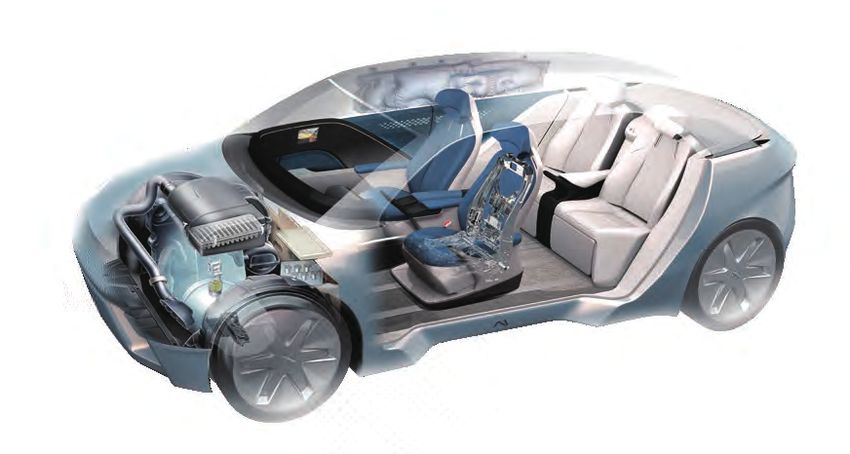
The path of value creation

Combining a focus on R&D with a commitment to
MONOZUKURI and HITOZUKURI                                                                    Revenue
                                                                                             FY2007
                                                                                             Exceed 1 trillion yen for the first time

 Toyoda Boshoku was founded by            A major change was made in With the aim of becoming a truly global system supplier, the three
 Sakichi Toyoda, who believed in the      the Company’s business          companies were merged to establish a global production structure,
 importance of self-sufficiency in        activity to escape the          deepen our unique technologies and expand our fields of business.
 high-quality yarn for the development    downturn in the textile market.
 of the automatic loom.                   Production of automotive
                                          components then became the
                                          Company’s core business.
                                          Shift to automotive
 Early beginnings                         components                        Evolution into a global system supplier
                                          business

1918                                     1964                             2004                                                  2010

1918                                                                      2004 Araco Corporation (car interior
Toyoda Boshoku Corporation was founded                                         components business), Takanichi Co.,
by Sakichi Toyoda                                                              Ltd. and Toyoda Boshoku Corporation
                                                                               merged to form Toyota Boshoku
1921                                               Management                  Corporation
• Entered China                                                           2005 • Formulated the TB Way
• Established Toyoda Boshoku Shou                                              • Introduced the One Hub per Region
                                                                                 structure
1935
Formulated the Principles of Toyoda
                                                                          2007 Signed a joint development agreement             2010 Completed construction of the No.2
1943                                                                           for kenaf seeds with a national research              building of the Sanage Technical Center
Merged with Toyota Motor Co., Ltd.                                             institute in Indonesia                                (centralized the development of interior
(now Toyota Motor Corporation)                                            2008 • Established Research Laboratories                   parts)
                                                                                 (now New Value Creation Center)                2011 Opened Milan Design Branch, a base for
1947                                                                           • Developed new-generation automotive                 gathering design information and other
Established Arakawa Sheet Metal Industries                                       seat frames                                         activities
Co., Ltd. (later Araco Corporation)                      R&D              2009 Established TB Kawashima Co., Ltd. for           2013 Developed high impact polymer resin
                                                                               transportation interior materials business            together with Toyota Central R&D Labs.,
1950                                                                                                                                 Inc.
Established Minsei Spinning Co., Ltd.                                                                                           2014 Completed Tajimi Technical Center
as a separate independent entity from                                                                                                proving ground
Toyota Motor Co., Ltd.

1960
Established Takashimaya Nippatsu Industries
Co., Ltd. (later Takanichi Co., Ltd.)
                                                                          2004 Formulated Toyota Boshoku Earth Charter          2010 First participation of business entities
1967                                                                      2006 Launched Skills Competition                              from outside Japan in Skills Competition
Company name changed from
Minsei Spinning Co., Ltd. to
Toyoda Boshoku Corporation
                                                  MONOZUKURI
2000
• Stock listed on the Tokyo Stock Exchange,
  First Section
• Merged with Toyota Kakoh Co., Ltd.

                                                                          2008 • Established the Toyota Boshoku
                                                                                 Technical Skills Academy
                                                                               • Completed the Global Learning Center
                                                    HITOZUKURI            2011 Started operations at Technical Skills
                                                                               Training Center
                                                                                                                                    Global Learning Center

Business and product changes

 1970                                 1985                              2009                               2013                                2013
Started development of             Started full-scale production       Started production of cabin air      Started production of motor core Received first order for railway seats
automotive seat fabrics            of automotive filters               filter material using the Dual Layer constituent parts using          Utilized in the Gran Class of the
                                                                       Melt Blown Construction Method the FHS process1                       Hokuriku Bullet Train (Shinkansen)
                                                                                                                                              (Photo provided by
1 Fine Hold Stamping process: Toyota Boshoku’s unique high-precision, high-speed stamping technology                                           East Japan Railway Company)

07              TOYOTA BOSHOKU REPORT 2021
Management                                                                          Mid-Term                                                  Financial / Corporate
        Concept                     Vision                       Materiality                Business Plan               Governance                    Information

        With “for the world and for people” as our starting point

                                                                                                           Revenue
                      Revenue                                                                              FY2021

                                                                                                          1,272.1 billion yen
                     FY2016 1,415.7 billion yen
                     Historic high in sales

                        Toyota Boshoku is accelerating reform                                                  Toyota Boshoku has formulated our
                        and taking steps for the future, amid a                                                Materiality and is aiming to achieve
                        once-in-a-century transformational period.                                             sustainable growth in the face of changing
                                                                                                               social and economic conditions resulting
                                                                                                               from the coronavirus pandemic.

                         Towards the future                                                                     From CSR to CSV management

     2015              2016             2017              2018             2019             2020             2021

     2015 Integrated the seat frame mechanism             2017 Signed business partnership
          component businesses of Aisin Seiki                    agreement with Tachi-S Co., Ltd.
          Co., Ltd. (now Aisin Corporation) and           2018 • Announced 2020 Business Plan
          Shiroki Corporation into the Company                   • Celebrated 100th anniversary
     2016 • Changed management structure                  2020 • Completed the main building
            (product business-based organization)              • Formulated Materiality
          • Announced 2050 Environmental Vision                                                                Main building (Kariya)
                                                               • Announced 2025 Mid-Term Business Plan
          • Announced 2020 Mid-term Business              2021 • Introduced Chief Officer System
            Implementation Plan

     2015 Developed new seat frames                       2018 • Concluded an agreement with National University
          boasting light weight and                              Corporation Nagoya University to jointly research
          high rigidity                                          tide generating force
     2016 Established Silicon Valley                           • Exhibited for the first time at CES2019, the
          Office of Toyota                                       world’s largest consumer electronics trade show
          Boshoku America, Inc.                           2019 • Opened sales and development office in India
     2017 • Established ATN Auto Acoustics Inc.                • Established TOYOTA BOSHOKU AKI USA, LLC
            as a joint venture between Toyota                    as a joint venture with Delta Kogyo Co., Ltd. and
            Boshoku, Autoneum and Nihon                          Toyo Seats Co., Ltd. for MTMUS2
            Tokushu Toryo Co., Ltd., engaged in                • High impact polymer resin won the 2019 R&D100 Award3
            NV evaluation and analysis of                 2020 • Participated in an autonomous driving                                                         R&D
            automobile interior and exterior systems             demonstration test at Chubu Centrair International
                                                                 Airport using the Drowsiness Suppression Seat
          • Signed an agreement on comprehensive                 System
            promotion of industrial-academic                   • Participated with “MOOX” in the demonstration test
            collaboration with National University               and exhibition for the practical application of
            Corporation Kanazawa University                      autonomous driving at Aichi Earth Expo Memorial Park
                                                                                                                                                         The Identity
                                                                                                                                                           of the
                                                                                                                                                           Toyota
     2016 Established Global Quality Learning             2019 • Completed the MONOZUKURI Innovation Center                                               Boshoku
          Center                                               • Toyota Boshoku was recognized as a Water                                                  Group
     2017 Took part in the 44th World Skills                     Security “A List” Company, the Top Ranking, by                         HITOZUKURI                        MONOZUKURI
          Competition for the first time and won a               CDP
          gold medal in the mechatronics category         2020 Received the highest rating in the CDP Supplier
     2018 Concluded a cooperation agreement                    Engagement Rating and was elected to the
          with National University Corporation                 Leaderboard for the first time
          Iwate University centered on industrial
          technology development

     2015 Held the first Global Week, an annual event     2018 Launched GEDP4 for global executive
          that brings together members including the           development and GLDP5 for next-
          top management in the world, as well as              generation leader development                         MONOZUKURI
          the next generation leaders, under one roof     2020 Started GSCT6 to discuss                           Innovation Center
     2016 Started vibrant work style innovation                succession planning for executive
     2017 Launched Global HR Platform                          management on a global level

 2013                                2014                               2015                               2019                                 2020
First application of seats made     Started production of fuel         Jointly developed the Company’s Announced MX191                         MOOX
using the Foam in Place Method      cell-related products              first aircraft seats with       at the Tokyo Motor Show                 Participated in a demonstration
                                    (separators)                       All Nippon Airways Co., Ltd.                                            test at Aichi Earth Expo Memorial
                                                                                                                                               Park (see p.27 for details)
2 Mazda Toyota Manufacturing, U.S.A., Inc.: Joint venture of Toyota Motor Corporation and Mazda Motor Corporation
3 A venerable and prestigious award sponsored by R&D World Magazine in the US. Honors the 100 most outstanding products and
  technologies developed by world-class research institutions and companies and put to practical use in the past year
4 Global Executive Development Program
5 Global Leader Development Program
6 Global Succession Committee by Top Executives
                                                                                                                                      TOYOTA BOSHOKU REPORT 2021            08
The identity of the Toyota Boshoku group (management resources)

Our strengths, cultivated over more than 100 years,
are the source of our value creation
The Toyota Boshoku group has consistently focused on
HITOZUKURI and MONOZUKURI from the customer’s
perspective, based on the concept that “human resources
development is at the heart of manufacturing.” In addition, taking                 R&D—
into account the nature of our products, i.e. that people have               Pursuing “comfort” in
direct physical contact with them, we will continue to provide             mobility spaces based on
“comfort value” through advanced R&D based on manufacturing               “safety” and “environment”
that considers people, connects with them, and makes them feel
an affection for our products.
                                                                      Product development that considers
                                                                      the customers who will use the products
                                                                      Passion, sense of mission, tenacity
                                                                      Global collaboration for better products
                                                                      Innovation

                                         R&D
                                                                            MONOZUKURI—
                                                                          Cultivated over 100 years,
                                                                         creating “affection” based on
                                                                           “trust” and “reassurance”
                                    The Identity
                                      of the
                                      Toyota
                                     Boshoku                          Customer First
                                      Group                           Fusion of reasonable price, high-quality
                                                                      products with cutting-edge technology
         HITOZUKURI                                MONOZUKURI         Kaizen (continuous improvement)
                                                                      Find the root cause of a problem
                                                                      through Genchi-Genbutsu
                                                                      (go, see & study)

                                                                              HITOZUKURI—
                                                                          Combining and maximizing
                                                                     the power of 50,000 global members
                                                                        to support future value creation

                                                                      Diverse values
                                                                      Teamwork
                                                                      Challenging spirit
                                                                      Honest and sincere

09          TOYOTA BOSHOKU REPORT 2021
Management Mid-Term Financial / Corporate
Concept Vision Materiality Business Plan Governance Information
With “for the world and for people” as our starting point
In order to offer high-quality time and space in all forms of mobility,
we take on the challenge of R&D with an insatiable curiosity and
spirit of inquiry, while staying ahead of the current trends. We are
committed to developing high-quality and safe products with
passion, a sense of mission, and tenacity in a global collaborative
system that sets high goals and achieves them.
R&D foundation
Development bases 13 bases
R&D expenses 41.8 billion yen
Intellectual property
Number of patents held Japan 1,924 Outside of Japan 1,589
It is important for us to always keep in mind the end user’s
perspective, with an awareness of “B to B to C,” whereby we are
trusted and chosen by customers. Based on the concept that people
are the foundation of MONOZUKURI, we promote manufacturing
with an emphasis on HITOZUKURI. We will continue to set ourselves
the challenge of developing environmentally sound production and
manufacturing technologies for the next 100 years through a fusion of
reasonable price, high-quality products with cutting-edge technology.
Manufacturing foundation
Manufacturing entities 76 entities
Capital investment 46.7 billion yen
The Toyota Boshoku group has a corporate culture that respects
diversity, where we learn and grow together; and teamwork that
challenges us to unite our minds with honesty and sincerity. By
fostering a challenging spirit that leads to self-fulfillment and job
satisfaction, we aim to realize our vision of diverse human resources
being drawn by the appeal of the Toyota Boshoku group, with
company members working vibrantly in all regions worldwide.
Diverse human resources globally
Number of group members* 50,899
Proportion of members working in regions outside Japan* 69.5%
Collaboration with business partners
Number of companies that participated in the Annual
Supplier Meeting online 158
* Including temporary company members
TOYOTA BOSHOKU REPORT 2021 10Value creation process
We aim to enhance our corporate value by drawing a roadmap
for growth to 2030, and steadily implementing our plan
In order to realize our Vision and be the company we aim to become, in 2020 the Toyota Boshoku group formulated its
materiality (the approach we adopt to resolve the important issues we have identified to be prioritized through our business
operations from among a variety of social issues) and the 2025 Mid-Term Business Plan, an action plan to achieve this
materiality. We will implement this plan while maximizing our underlying philosophy and the strengths we have developed
over our 100-year history.
Toward achieving materiality
Five-year action plan starting in FY2022
Formulation of the 2025 Mid-Term Business Plan to
resolve issues identified through a review of the
2020 Business Plan and analysis of the current
Principles situation, and to realize materiality.
of Toyoda
Economic
Corporate Value
Philosophy 2025 Target
Code of As an interior system supplier, become
Conduct a company that serves as “Home” and secures
competitiveness that can surpass global suppliers
TB Way
R&D 2025
Mid-Term
Business
The Identity Plan
of the P.42
Toyota
Philosophy Boshoku
HITOZUKURI Group MONOZUKURI Social
Priority Actions
Value
Pursue safety, environment and
P.06 P.09 1 comfort, and increase customers,
thereby evolving into a trusted
supplier capable of offering
optimal proposals to customers
Thoroughly improve productivity
2 and implement business
Backcasting
strategies, while enhancing
cooperation among Product
business segments and Regions
Improve competitiveness
3 through MONOZUKURI
innovation and promote
environmental initiatives
Establish a resilient global
4 management foundation and
Backcasting
develop human resources to
support sustainable growth
“Home” means a business or region that is capable of creating
* added value on a Genchi-Genbutsu (go, see & study) basis and has
competitive advantage compared to competitors.
11 TOYOTA BOSHOKU REPORT 2021Management Mid-Term Financial / Corporate
Concept Vision Materiality Business Plan Governance Information
With “for the world and for people” as our starting point
Vision
P.14
Looking into the future,
we will create tomorrow’s automobile
interior space that will inspire
our customers the world over.
Materiality
P.34
Offer “QUALITY OF TIME AND SPACE” in all mobility
Formulating our materiality to be achieved
The Toyota Boshoku group defines as our materiality
the identification of important issues to be resolved
through our business operations from among a
variety of social issues and the approach we adopt
to resolve them.
Issues Relating to Safety, Environment, and
Comfort to Resolve through Our Business Operations
As an Interior Space Creator we will contribute to
1 people’s quality of life, creating comfort, safety,
and reassurance through innovation
Using our established technical capability, we will
2 contribute to realize a society with no traffic
casualties through providing products that
assure safety
Together with our business partners, we will
3 realize MONOZUKURI innovations that minimize
environmental stress
Issues Relating to the People and Organizations
that are Our Sources for Exercising Competitiveness
We will develop people capable of contributing to
4 society, who have diverse values, a challenging
spirit and understand the value of strong teamwork
We will continue to be a company of integrity
trusted by all our stakeholders, inheriting our
5
tradition of fairness and moral behavior to the
next generation
TOYOTA BOSHOKU REPORT 2021 12Market changes and outlook
Aiming to be an Interior Space Creator, leading
the creation of new value for mobility spaces
As a system supplier, the Toyota Boshoku group integrates the entire space, i.e. the
components of mobility, as a single package. We will continue to create new value as
an Interior Space Creator by providing solutions to realize spaces that pursue comfort
based on the premise of safety and the environment.
Responding to the evolution of technologies such as CASE1 and MaaS2, and changing values
in relation to automobiles
The automotive market is facing a period of major change, said MX191,3 which provides comfortable time and space envisaging
to occur only once every 100 years. The Toyota Boshoku group autonomous driving levels 3 and 4, and MOOX,4 which envisions
is advancing with R&D in response to the evolution of the use of space for a variety of services. We are also expanding
technologies such as CASE and MaaS, and to changing values and upgrading our products that support electrification in order
in relation to automobiles. For example, in terms of the evolution to adapt to changes in energy in society—from engines to
of autonomous driving technology, we are leading the creation hybrids, hydrogen fuel, and electrification.
of new value for mobility spaces. This includes the creation of
Transformation of the automotive market Autonomous driving
LEVEL 1 LEVEL 2 LEVEL 3 LEVEL 4, 5
Cognitive focus
Cognitive focus on active driving
Non-driving Cognitive focus Non-driving
Change of driver activities on active driving Non-driving
activities on active driving activities
Non-driving activities activities
Joy from the
Consumer Value Joy of riding Joy of control Joy of driving
QUALITY OF TIME AND SPACE
1. Connected, Autonomous, Shared, and Electric
2. Mobility as a Service: This is a concept for seamlessly linked new mobility that combines all types of transportation other than personally owned vehicles as one service
3. MX is an abbreviation of “Mobility eXperience.” An automobile interior space model designed for autonomous driving levels 3 and 4.
4. A word coined from the combination of MObile and bOX, this means a private space that can be utilized freely while in motion. An autonomous driving concept vehicle in which
the space is utilized for a variety of services.
Expanding our target to non-automotive mobility, and even to the entire living space
As well as automobiles, in future the Toyota Boshoku group will Potential market image
expand the spaces in which it provides value to aircraft and
trains. Furthermore, the entire living space of “smart cities” and
Aircraft Trains
“connected cities” can also be viewed as a potential market. Approx.
200
In Japan alone, the market for space-related products such
as automobiles, aircraft, trains, home appliances, and housing, Automobiles
trillion yen
is worth approximately 200 trillion yen. So if, for example, we in Japan alone
Home
were to capture a 1% share of this market, we would be a Housing
appliances
company with 2 trillion yen in revenue.
13 TOYOTA BOSHOKU REPORT 2021Management Mid-Term Financial / Corporate
Concept Vision Materiality Business Plan Governance Information
Vision
— Our desired status for the future —
15 Vision
17 Message from the President
23 Message from the CFO
Vision
27 Special Feature 1
MOOX —an autonomous
driving mobility service
space designed for MaaS
Materiality
31 Special Feature 2
Formulation of 2025 Environmental
Action Plan
2025
Mid-Term
33 Disclosure of information in line Business
Plan
with the recommendations of the The Identity
Task Force on Climate-related of the
Toyota
Financial Disclosures (TCFD) Boshoku
Group
Philosophy
TOYOTA BOSHOKU REPORT 2021 14Vision
Looking into the future,
we will create tomorrow’s automobile interior space
that will inspire our customers the world over.
multi-dimensional value to customers and society and to
Achieving sustainable growth in terms of both social
expand our business fields while strengthening our management
and economic value foundation and competitiveness. We aim to enhance our
The Toyota Boshoku group has as its corporate belief the corporate value over the medium- to long-term by maximizing
Principles of Toyoda, which bring together the ideas of Sakichi the economic value generated by our group through our
Toyoda, the founder of the Toyota Group. To continue to earn business activities, re-investing the results for future growth, and
the trust of all stakeholders, we have established our Corporate returning them to our stakeholders.
Philosophy as well as our Vision, which describes the company The automotive industry is facing a period of major
we aim to become. This Vision advocates, “looking into the change, said to occur only once every 100 years, and the
future, we will create tomorrow’s automobile interior spaces that environment surrounding our group is also undergoing major
will inspire our customers the world over,” and our aim is to offer changes. Given these circumstances, the group will further
“QUALITY OF TIME AND SPACE” in all mobility. accelerate its shift to CSV management, whereby we enhance
In order for the Toyota Boshoku group to achieve this Vision and circulate both social and economic value while maintaining
and realize sustainable growth, we believe it is essential to a long-term perspective.
increase social and economic value through our business
activities; in other words, to grow while fulfilling our responsibility
in harmony with society. As indicated by the concept of CSV,
this means that we aim to grow by addressing social needs and
resolving social issues in order to enhance social value, while at
the same time enhancing economic value as well. The Toyota
Boshoku group has organized this approach as “the management
structure we aim to become,” and we are striving to offer
15 TOYOTA BOSHOKU REPORT 2021Management Mid-Term Financial / Corporate
Concept Vision Materiality Business Plan Governance Information
Our desired status for the future
Recognition of social conditions and market environment in 2025
• Global warming through climate change, transition to a carbon neutral society
• Emergence of waste disposal issues and water resource issues
Social Environment • Growing population, aging of society
• Evolution of digitalization and AI
• Creative destruction of business models and loss of boundaries
• Changes in values and lifestyles in the wake of the coronavirus pandemic
• Mobility revolution through the development of CASE, MaaS
• Monetization of software data, enhancement of added value in mobility experience through
provision of service content
Changes in Automobiles • Progress in autonomous driving technology through market entrants from other sectors
• Change from ownership to sharing
• Acceleration of electrification in response to tighter environmental regulations (ZEV1 regulations)
• Resolution of traffic issues through smart city traffic systems
• Tightening of environmental and safety regulations, introduction of regulations in emerging
countries equivalent to those in developed countries
Changes in Automotive and
• Modularization of components and advance of vertical/horizontal integration in response to the
evolution of technology
Automotive Parts Markets
• Changes in component structure/requirements to adapt to changes in cars (support for heat
and sound insulation, lightweighting)
• Market polarization (shift to ultra-high value-added in POV ) 2
1 Zero Emission Vehicle: An electric vehicle or fuel cell vehicle that produces no emissions
2 Personally Owned Vehicle
The management structure we aim to become
We distribute to our stakeholders what we achieve by enhancing economic value, and
enhance corporate value on a medium- to long-term basis by re-investing for growth.
Enhance
economic value
Distribute
Invest in growth
what we achieve
Sustainable growth
Economic value
Enhance corporate value
Expand business
Shareholders/
fields investors
Customers
International/Local
communities
Offer multi-dimensional value
Company Business
members partners
Strengthen competitiveness
Strengthen management foundation
Social value
Coporate growth while Contribute toward Enhance social value through
fullfilling our responsibility social value our business operations
in harmony with society
CSR CSV
TOYOTA BOSHOKU REPORT 2021 16Message from the President
Takeshi Numa
President
17 TOYOTA BOSHOKU REPORT 2021Management Mid-Term Financial / Corporate
Concept Vision Materiality Business Plan Governance Information
Our desired status for the future
We will pursue further enhancement of corporate value
in line with our 2025 Mid-Term Business Plan
Review of FY2021
Various insights gained from
the coronavirus pandemic
Fiscal 2022 is the first year of our 2025 Mid-Term Business
Plan, which we announced in November last year, and I would
like us to make a start at a strong pace in order to realize the plan.
First, I would like to review our initiatives in the last fiscal year.
In fiscal 2021, the coronavirus pandemic had a major
impact on economic and social activities worldwide. In order to
cope with this unprecedented crisis, the Toyota Boshoku group
was quick to launch the COVID-19 Countermeasures Meeting in
March 2020 as a company-wide, cross-functional organization,
thereby working to ensure business continuity by grasping
the global infection situation and robustly implementing
preventive measures.
In addition, as part of the Kokoro Hakobu Project,
comprising support activities that the Toyota Group is working
on together, we donated approximately 180,000 masks,
including those manufactured in-house, to support local
governments and medical institutions that are making daily
efforts to deal with infectious diseases.
On the other hand, the challenging business environment
brought about by the coronavirus pandemic also provided an
opportunity for each division to thoroughly review the
operational quality of all work. In particular, our operational
efficiency activities known as “Eliminate, Reduce and Change
TOYOTA BOSHOKU REPORT 2021 18Message from the President
Activity,” which have been ongoing since fiscal 2020, have Environmental Vision and 2020 Environmental Action Plan. In
accelerated in each division, and we have made great 2020, we declared our support for the TCFD3
progress in improving the efficiency of our respective operations recommendations, and in March 2021, we were selected for the
as well as reforming the way we work in preparation for the CDP4 Supplier Engagement Rating Leaderboard, their highest
coming new normal era. level of recognition.
In terms of manufacturing operations, the MONOZUKURI1 (2) In terms of Strengthen management foundation, human
Innovation Center, which was completed at the Sanage Plant resource development as well as the centralization and
in January 2020, has greatly advanced the digitization of utilization of information were the issues to address. In order to
production preparation operations. By using the center as a hub successfully run the operations of 98 global sites, it was very
to remotely provide support to countries outside Japan, we important to assign local members to important positions and
have been able to significantly reduce the number of production develop our members’ communication skills to solve problems.
preparation manpower. We have also introduced a system that allows us to obtain
In fiscal 2021, faced with a crisis in the form of the coronavirus information and make quick decisions using ERP.5
pandemic, I believe we strengthened our solidarity as a group, Furthermore, going forward we will use our main building in
and at the same time, this was an opportunity for each and Kariya, which was completed in May 2020 to make timely
every one of our company members to reevaluate their role management decisions and further increase the speed of
and responsibility, and to ask themselves how their work is on-site improvements.
helping society. (3) In the area of Strengthen competitiveness, as we look to
In the process of implementing COVID-19 countermeasures, bolster our core operations, we were able to identify our strengths
I myself realized that many tasks can be done efficiently on a and weaknesses in materials and construction methods by
remote basis, but of course there are exceptions. For example, benchmarking thoroughly against our competitors around the
in OJT2-based human resource development, we assess the world, and to identify the points of competitiveness that we
level of understanding and implementation by having the junior need to strengthen in order to become “Home.”6
member actually carry out the task. However, we can only know We have also focused on innovation in seat devices, and as
whether they have truly understood or not by checking the a result, the one-motor power seat has been adopted in Toyota’s
results on a Genchi-Genbutsu (go, see & study) and by inference new SUV, the Yaris Cross. As a result of simultaneously achieving
from their facial expression and/or tone of voice. This process weight reduction and cost savings by reducing the number of power
can be rather difficult unless it is done on a face-to-face basis. components, I believe we were able to extend the CO2 reduction
In this sense, I gained many insights into the possibilities and effect of improved fuel efficiency and user comfort to vehicles at
limitations of remote working, and in this sense, I feel this year more affordable prices. I am confident that its use in a wide range
was very meaningful for our future transformation. of vehicles will lead to solutions for social issues in the future.
1 Manufacturing and craftsmanship (4) In the area of Offer multi-dimensional value and Expand
2 On-the-job training
business fields, we are developing various initiatives in response
to changes in the automotive industry, such as CASE7 and
Summary of the 2020 business plan MaaS.8 We have developed our own high-power rechargeable
lithium-ion batteries, drawing on Toyota Boshoku’s strengths in
Steady progress in initiatives to enhance microfiber and high-precision stamping technologies. We have
begun to investigate how the development could be used for
corporate value over the medium- to long-term
non-automotive applications. In addition, we are building
Fiscal 2021 was also the final year of our 2020 Business Plan partnerships with NTT DOCOMO, INC. and other companies
(hereinafter referred to as the previous mid-term plan). The from other industries with which we had few connections in the
previous mid-term plan, which started in fiscal 2017, set out the past. This includes activities such as the development of
following four tasks aimed at enhancing our corporate value: MOOX, an interior space model that supports autonomous
(1) Corporate growth while fulfilling our responsibility in harmony driving and aims to provide new value while in motion, and
with society; (2) Strengthen management foundation; (3) Strengthen participation in a demonstration test using the Drowsiness
competitiveness; and (4) Offer multi-dimensional value and Suppression Seat System. Based on these diverse
Expand business fields. Below I provide a brief review of the achievements, and excluding the impact of the coronavirus
results of our initiatives over the past five years. (1) In the area pandemic, operating profit for fiscal 2021 is estimated at
of Corporate growth while fulfilling our responsibility in approximately 71.3 billion yen. In other words, we have
harmony with society, we developed activities with an emphasis achieved our target of 70 billion yen in operating profit by 2020,
on the ESG (Environmental, Social and Governance) which was stated in our previous mid-term plan, and I feel that
perspective. Particularly with regard to the environment, we we have steadily strengthened our earning power as a company
have promoted systematic initiatives based on our 2050 over the past five years.
19 TOYOTA BOSHOKU REPORT 2021Management Mid-Term Financial / Corporate
Concept Vision Materiality Business Plan Governance Information
Our desired status for the future
3 Task Force on Climate-related Financial Disclosures I believe that sustainable growth means becoming a company
4 Carbon Disclosure Project: An NGO established in the UK that operates a global
information disclosure system to help investors, companies, cities, nations, and that continues to be needed by society by working earnestly to
regions manage their environmental impact
5 Enterprise Resource Planning: A cross-functional core system for centrally solve social issues through our business operations.
managing company-wide information and effectively utilizing management To achieve this, we need to take the conventional concept
resources
6 As part of our “Home & Away” strategy, “Home” means capable of creating added of CSR (Corporate Social Responsibility) one step further and
value on a Genchi-Genbutsu (go, see & study) basis and have competitive
advantage compared to competitors. In contrast with this, “Away” refers to practice CSV (Creating Shared Value) management that
businesses or regions in which other companies have more advantages than we do
in terms of expertise.
pursues both social value and economic value.
7 Connected, Autonomous, Shared, and Electric With this in mind, we established the Toyota Boshoku
8 An abbreviation of Mobility as a Service, a new concept of mobility that seamlessly
links all modes of transportation other than the private car as a single service, using group’s Materiality in July 2020.
ICT (Information and Communication Technology)
Based on our management philosophy system, which
originates in the Principles of Toyoda, we have identified the
Management policy from a medium- to long-term important issues to be prioritized by Toyota Boshoku through
perspective our group’s operations from among a variety of social issues,
and have organized and clarified the approach we adopt to
Clarifying what we need to do now, starting from resolve them as our materiality. We firmed up the details step by
step, including a working group of younger members and
our aspirations for the future
heated discussions among the management team for more than
Despite these many achievements and gains in our previous a year. Furthermore, based on these five aspects of materiality,
mid-term plan, I recognize that there are still some issues to we have defined our desired status in 2030 as “Creating new
be addressed. In particular, the fact that fixed costs have grown value as an Interior Space Creator,” and our 2025 target, which
significantly during our growth process to date, while revenue is the halfway point, as being “As an interior system supplier,
and marginal profit have not increased, is an important point of become a company that serves as “Home” and secures
reflection. I also see it as a major challenge for us to further competitiveness that can surpass global suppliers.”
strengthen our global risk management.
In order to overcome these challenges and achieve
sustainable growth, it is important to create a future vision of Formulation of 2025 mid-term business plan
what we are aiming for from a more long-term perspective than
ever before, and to consider what we should do now by A serious mid-term business plan that has been
backcasting from our ideal future.
thoroughly discussed and thought through
In April 2021, we launched our 2025 Mid-Term Business Plan
(hereinafter referred to as the new mid-term business plan). The
new mid-term business plan sets forth four priority actions, as
well as activity targets and specific implementation items /
points for each initiative (see p.47–68 for details of the new
mid-term business plan).
To formulate the new mid-term business plan, we conducted
a total of 200 small-group meetings, such as quality circle
activities, over a period of more than a year. Our main aim was
to uncover the issues and consider how to address them by
reviewing the current situation starting from zero, without being
bound by the existing framework. At the beginning of our
activity, it took time to understand and there was some
backlash because it was a new and unconventional method.
However, our company members on the frontline, including
officers, thought deeply about what kind of company we are
aiming to be and how to achieve that. As a result, I am proud to
say that we were able to develop a plan with a higher level of
commitment than ever before. This time, we made it necessary
to hold discussions in English with local members who have
been placed in important posts. I also think it was significant
that the time created by the reduction in travel resulting from the
coronavirus pandemic could be devoted to these discussions,
TOYOTA BOSHOKU REPORT 2021 20Message from the President
and that all the participants were able to tackle the issues with gratitude to others; (2) Create an open workplace; (3) Top
tenacious determination. management and other managers to take the initiative as
In order to achieve the new mid-term business plan, which leaders, and pursue goals without fear of failure; and (4) Practice
has been formulated with commitment and high-level goals, our thorough cost and lead time reduction.
organizational structure has also been drastically reorganized. At When an organization is aiming for ambitious goals, it is
the management level, we introduced a diversity matrix to the essential that supervisors and subordinates, as well as team
Board of Directors to ensure the diversity of members essential members, recognize and respect each other. In order to
for future governance, and introduced Chief Officer System to foster such a culture, we officers greet our colleagues and
speed up management decision-making and execution. express our gratitude. I believe that without this, no matter
With regard also to our leaders, we actively appointed how much we tell our company members to be honest,
young management members as field chiefs and center chiefs straightforward, and have nothing to hide, this would not be
in order to develop the next generation through practical conveyed to them, and as a result we would not be able to
experience and bolster our organizational capability. achieve an open workplace.
We have also set up new divisions to promote themes To achieve ambitious goals that are not simply an extension
where there are high expectations in society, including carbon of the past, it is necessary to approach the task in a way that is
neutrality, health management, and digital transformation (DX). also not an extension of the past. We have been practicing
Additionally, we have established new organizations in areas “Eliminate, Reduce and Change Activity,” and I expect that all
that need to be strengthened in the future, in order to create company members, including our leaders, will come up with
new businesses and accelerate partnerships with external completely fresh ideas in the future by rethinking things from
parties, as well as pursue efficiency in the global supply chain. zero and solving problems from new angles, without being
bound by precedents.
I also believe that in order to transform a company, it is of
Thoughts on corporate reform utmost importance that all company members, regardless of
their position or job title, have the awareness that they are the
Having a sense of urgency main players. Through the implementation of this new mid-term
business plan, I hope we will become a company in which all
—if we don’t change, we won’t survive
our company members view reform as their own personal task,
In the new mid-term business plan, we have set ourselves and where each and every company member thinks, decides,
higher goals than ever before. At the root of this is a strong takes actions on their own initiatives with the awareness that
sense of urgency, with the feeling that if we don’t change, we they must change for their own future. To this end, we are
won’t survive. In order for the Toyota Boshoku group as a whole working to improve the operational quality of all work through
to change, it is necessary for not only management, but also TQM9 activities while developing a training system that ensures
each and every member to think, decide, and act on their own we will do our fundamental activities as a matter of course.
initiatives, with an awareness of the need for reform. On the other hand, I think there are some things that should
Since assuming the position of president three years ago, not change. I am speaking about our company belief, the
I have communicated within the company that customer first, Principles of Toyoda. This includes the words, “Always be
Genchi-Genbutsu, and communication are the basis of all our faithful to your duties, thereby contributing to the company and
operations. As we move forward with the new mid-term to the overall good.” This is about resolving social issues
business plan, we have communicated the following four through our group’s operations, “for the world and for people,”
messages within the company to ensure that these and is in essence a way of thinking that aims for a sustainable
fundamentals are thoroughly implemented and we improve the future, as represented by the current SDGs. I think this leads to
quality of our operations: (1) Express your greetings and our materiality. Another one of my favorite parts is, “Always be
21 TOYOTA BOSHOKU REPORT 2021Management Mid-Term Financial / Corporate
Concept Vision Materiality Business Plan Governance Information
Our desired status for the future
practical and avoid frivolousness.” Even though the coronavirus was established for the purpose of open innovation, and the
pandemic has put us in a very difficult situation, I believe that we Technical Advisory Board, which includes outside experts.
must be creative in how we spend our money, eliminate waste We are aiming for QUALITY OF TIME AND SPACE (offering
using the TPS (Toyota Production System) concept, and stick to high-quality time and space in all forms of mobility), and this is
every millimeter, every gram, every second, and every yen. expanding from automobiles to other fields including aircraft,
There are many important things in the Principles of Toyoda that trains and ships. Housing, smart cities, connected cities, and all
are still relevant today, and I would like to continue to pass on other living and community spaces on the planet can also be
this spirit of Fueki Ryuko10 (continuity and change) to all of our viewed as markets that are seamlessly connected to mobilities.
company members. By taking further flight on the wings of our imagination, our
9 Total Quality Management: To maintain a flexible and resilient corporate structure, business domain can deepen and further evolve to
activities aimed at increasing the vitality of people and the organization, and in
turn, creating customers and improving their satisfaction, based on the essential four-dimensional time and space, including the infinite possibilities
principles of “customer first,” “total participation,” and “continuous improvement”
10 Incorporating new things and changes while not forgetting those essential
of space colonies in outer space.
elements that never change With such big dreams in mind, I would like us to achieve
sustainable growth by enhancing our corporate value, while at
the same time continuing to be a sincere company that is trusted
Message to stakeholders by all stakeholders and welcomed by local communities around
the world. Please continue to put your trust in the future
We will continue to be a company “for the world initiatives of the Toyota Boshoku group.
and for people” for the next 100 years
I was appointed president in 2018, just when the Toyota Boshoku
group celebrated its 100th anniversary. I feel a strange sense
of destiny in this coincidence, and while inheriting our founding
principles, I will continue to pass on the Principles of Toyoda
to the next generation as we look forward toward the next
100 years. At the same time, I will strive to nurture company Takeshi Numa
members who can realize these Principles, and fulfill my President
responsibility as president at this milestone.
We hope to contribute more than ever to solving various
social issues by maximizing the identity of the Toyota Boshoku
group, namely: R&D, MONOZUKURI (manufacturing and
craftsmanship) and HITOZUKURI (human resources
development).
Of course, many of the issues that exist in the world,
including global environmental and energy problems, cannot be
solved by our company alone. In addition to collaboration with
our customers, partner companies and suppliers, I would like to
aim for a sustainable society by collaborating globally with
external parties who possess technologies, know-how and
functions that we do not, as well as with end users from a
customer-first perspective.
We are moving forward with our search to establish the
fourth and fifth pillars of business in areas other than our current
core business, looking even further ahead beyond 2030.
One example is the development of food production
technology that utilizes the tide generating force caused by the
waxing and waning of the moon, as a way of preventing a future
global food crisis. In collaboration with Iwate University, we are
also developing biodegradable plastic using inedible seaweed
as a way to tackle to the problem of marine plastic waste.
We will continue to pursue new value creation through
further collaboration between industry, academia, and
government by utilizing the New Value Creation Center, which
TOYOTA BOSHOKU REPORT 2021 22You can also read


