2023 Emergency Information - HATCH NUCLEAR PLANT
←
→
Page content transcription
If your browser does not render page correctly, please read the page content below
HATCH NUCLEAR PLANT

2023 Emergency
Information

                      1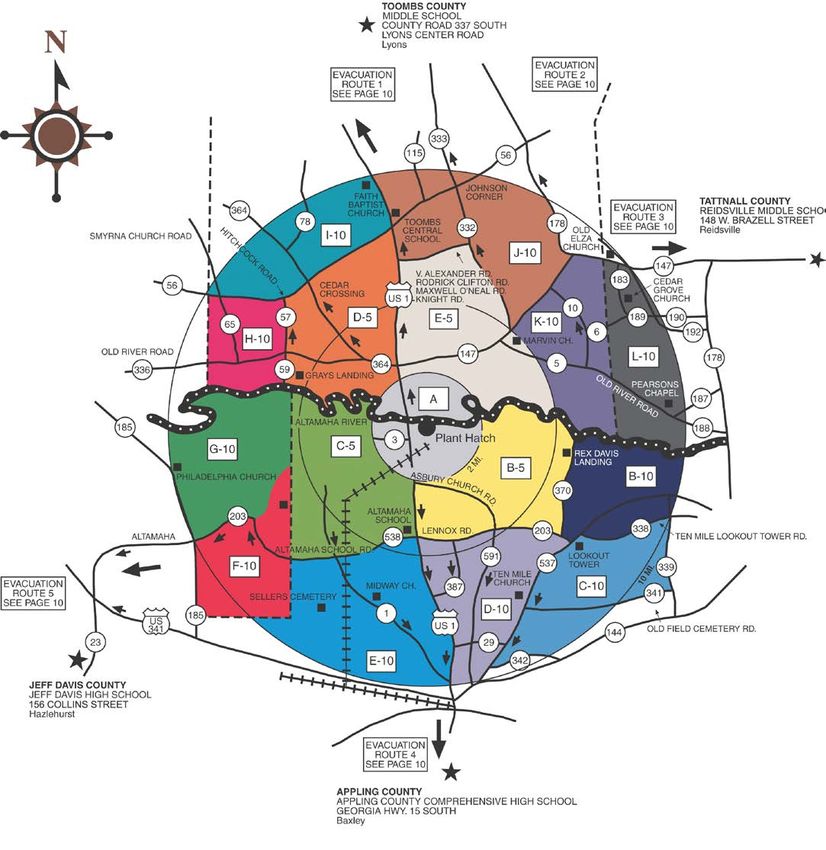
ABOUT THIS EMERGENCY INFORMATION BROCHURE
                                                                                                                 A
                               Plant Hatch is committed to the relentless pursuit of safety.                     Pl
                               This includes the safety of our employees, facility and, most
                                                                                                                 So
                               importantly, the safety and health of our neighbors. As a neighbor
                               of Plant Hatch, it’s important that you are informed about our                    Fil
                               facility.

                               Please follow these tips to use the emergency information
                               brochure:                                                                         Fil
                                                                                                                 or
                                  • Keep this brochure to use in the unlikely event of an emergency.             te
                                  • Familiarize yourself with the contents of this brochure, which               ke
                                   explains what to do in the unlikely event of an emergency at our
                                                                                                                 Na
      Scan to download a           plant.          Scan to download a
     digital version of this      • The Family Emergency
                                                  digitalPlan
                                                          version  of this
                                                              on Page 24 will help you plan your                 Ho
    emergency information.         evacuation andemergency
                                                  be preparedinformation.
                                                              to respond quickly.
                                  • The Access and Functional Needs Card, which came with this                   Ci

                                   brochure, is for you or anyone at your location who has a physical
                                                                                                                 Ho
                                   condition, or would require additional assistance, in the event of an
                                   evacuation. Please complete and return the card on an annual basis
                                   to ensure proper assistance.                                                  Pl
                                  • You also may view the 2023 Hatch Emergency Information brochure
                                   online by scanning the QR code on the opposite page.
                                  • Pole-mounted sirens are installed throughout the 10-mile Emergency
                                   Planning Zone around Plant Hatch. These sirens alert residents to
                                   listen to a local radio or television station (emergency alert stations
                                   on Page 6) for instructions in the unlikely event of an emergency.
                                  • The CodeRED emergency notification system is used by public safety
                                   officials and may be utilized to contact residents by phone in the
                                                                                                                 Pl
                                   event of an emergency. For additional information, contact your local
                                   emergency management agency - contact information is on Page 3.
                                                                                                                 M
                               If you have any questions about information in this brochure,
                               please call Plant Hatch Emergency Preparedness at 855-880-2058.
                                                                                                                 Ho

                               To learn more about nuclear energy, please call the Plant Hatch
                                                                                                                 Ci
                               Energy Education Center at 1-800-722-7774.

                                                                                                                 Ho

2                                                                                                            1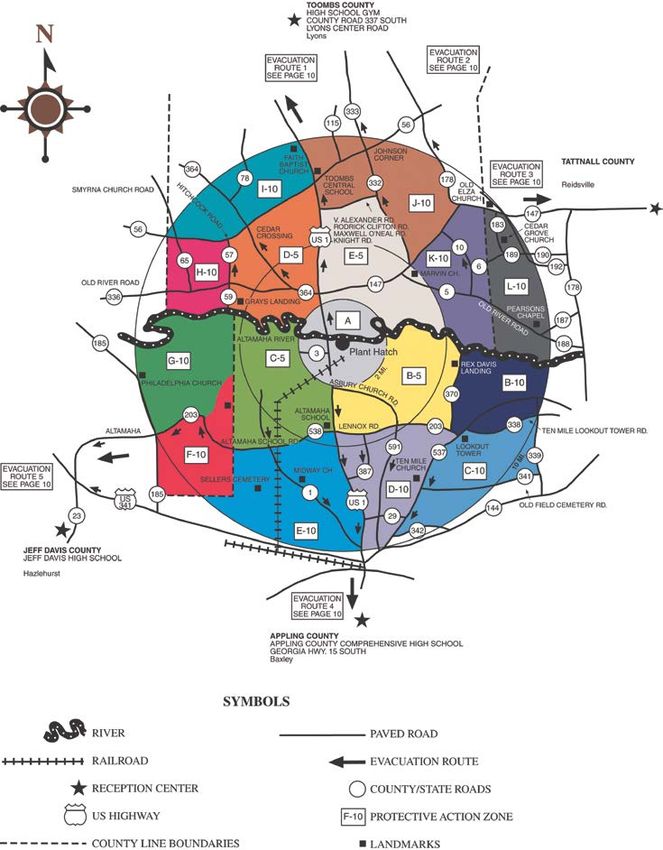
WHO IS INVOLVED IN THE EMERGENCY PLAN?                             EMERGENCY INFORMATION

    State and local government agencies have plans to protect you if   During an emergency at Plant Hatch, a recorded public information
    there is an emergency at Plant Hatch. Organizations involved in    line will be activated. Please call 800-262-5283. GeorgiaPower.com
    emergency planning are:                                            will be updated with the latest information about the emergency.
                                                                       To report rumors during an emergency, residents are asked to
                                                                       please call 888-823-0406.

                                                                       State and county 24-hour contact numbers:
       • Appling County Emergency Management Agency                     • Georgia Emergency Management
       • Jeff Davis County Emergency Management Agency                   and Homeland Security Agency
                                                                         800-879-4362 or 800-TRY-GEMA
       • Tattnall County Emergency Management Agency
       • Toombs County Emergency Management Agency                      • Appling County Sheriff’s Office
                                                                         912-367-8111
       • Georgia Emergency Management and Homeland Security Agency
                                                                        • Jeff Davis County Sheriff’s Office
       • Georgia Department of Natural Resources                         912-375-6600
       • Georgia Governor’s Office                                      • Tattnall County Sheriff’s Office
       • Georgia Power                                                   912-557-8800
       • Southern Nuclear                                               • Toombs County Sheriff’s Office
                                                                         912-526-9292

                                                                       For questions about state and local emergency plans contact:
                                                                        • Georgia Emergency Management and Homeland Security Agency
    Any serious emergency would generally develop over time. There       gema.georgia.gov | 800-879-4362 or 800-TRY-GEMA
    would normally be plenty of time for you to be notified and take    • Appling County Emergency Management Agency
    action.                                                              applingema.com | 912-367-8170
    For more information about the Plant Hatch Emergency Plan,          • Jeff Davis County Emergency Management Agency
    please call Plant Hatch Emergency Preparedness at 855-880-2058.      jeffdavisema.com | 912-375-6628
                                                                        • Tattnall County Emergency Management Agency
                                                                         tattnallcountyga.com/emergency-management-agency.cfm
                                                                         912-557-6820 | TattnallEMA/Facebook
                                                                        • Toombs County Emergency Management Agency
                                                                         912-526-6424

2                                                                                                                                           3
EMERGENCY CLASSIFICATIONS HOW WOULD YOU KNOW IF THERE WAS AN EMERGENCY?
Notification of Unusual Event
The least serious of the four U.S. Nuclear Regulatory Commission Siren Systems
(NRC) classifications. It means there is a minor problem at the
plant. Because of strict federal regulations, many situations occur Sirens have been set up within the 10-mile Emergency
that qualify as unusual events. Unusual events pose no danger to Planning Zone (EPZ) around Plant Hatch. These sirens alert
the public. You will not need to take any actions unless directed by residents to monitor local radio or television stations in the
state and local officials. event of an emergency. The sirens have a sound different
than fire trucks.
Alert The sirens are tested frequently, including an annual test
An event has occurred that could reduce the plant’s level of safety. that will be heard by residents. The sirens are activated
There should be no danger to the public. County and state officials briefly for this annual test. Residents will be notified of
will be involved and prepared for any necessary response. You will any audible testing in advance through local television,
not need to take any actions unless directed by state and local radio and print media.
officials.
Site Area Emergency
An event has occurred that could involve major problems with
plant systems. Local radio and television stations in the area will CodeRED Emergency Notification System
provide information and instructions. If you’re in an affected area,
you will be notified by state and local officials about any actions The CodeRED emergency notification system may be
you need to take. utilized to contact residents by phone in the event of an
emergency. For additional information, contact your local
emergency management agency (see contact information
General Emergency
on Page 3).
The most serious of the four NRC classifications. Radioactive
material could be released outside the plant site. State and local
authorities will take action to protect the public. Sirens may
be sounded and local radio and television stations will provide
information and instructions. If you’re in an affected area, you will
be notified by state and local officials about any actions you need Other Alerts
to take. The radio and television stations listed on Page 6 will
broadcast a warning.
In boating and recreational areas, local emergency officials
will sound sirens and/or use loudspeakers to warn visitors.
4 5EMERGENCY ALERT STATIONS EMERGENCY ACTIONS
The three actions you may be asked to take to protect yourself
are “take shelter,” “go inside, stay inside” or “evacuate.” These
three actions are described in the following sections. Be sure you
Radio
understand them. Officials will tell you what to do based on the
WUFE-AM 1260 Baxley, Ga. type of emergency. For updated information, stay tuned to local
WBYZ-FM 94.5 Baxley, Ga. radio and television stations. Whatever you are told to do, keep
calm, follow directions and minimize phone use for emergency
WHJD-FM 105.9 Hazlehurst, Ga.
purposes only.
WTCQ-FM 97.7 Vidalia, Ga.
WYUM-FM 101.7 Vidalia, Ga. If Told to Take Shelter
WVOP-AM 970 Vidalia, Ga.
Taking shelter means protecting yourself by going inside a building
and not breathing outside air. The building could be your house,
your workplace or some other nearby building. Taking shelter will
Television
help keep you safe if there is a small amount of radiation in the air.
WSAV-TV Channel 3 Savannah, Ga.
WTOC-TV Channel 11 Savannah, Ga. If you are told to take shelter, follow these steps:
WJCL-TV Channel 22 Savannah, Ga. 1. Stay indoors until further notice.
2. Close all doors and windows.
Social Media 3. Turn off fans, heaters and air conditioners that use outside air. Only
use your heating or cooling system to protect life or health.
Facebook: facebook.com/georgiapower
4. Do not use fireplaces. If your fireplace is in use, put out the fire.
Twitter: twitter.com/GeorgiaPower Close dampers or any other air intakes.
5. Stay tuned to your local radio or television stations listed on Page 6
for more instructions.
6. Shelter your livestock if you can do so easily. Place them on stored
False Alarms feed and protected water.
7. Do not leave your home or shelter. Stay indoors until you receive
A false alarm of the emergency sirens is possible because of
official notice that it is safe to go out or until you are instructed to
lightning or other events. If you hear the emergency sirens and
evacuate your home.
there is NO emergency information on an emergency alert station,
then the alarm is probably false. 8. If you must go outside, protect your breathing by placing a
damp cloth or towel over your nose and mouth. To provide more
If this happens, please call the local emergency management protection, fold the cloth over several times before placing it over
agency office with any questions (phone numbers are on Page 3). your nose and mouth.
9. If your children are in school and the school is in an affected zone,
they will be sheltered in place. It is important that you do not go to
a school to pick up children.
6 7If Told to Go Inside, Stay Inside If you are told to evacuate, follow these steps:
Go inside, stay inside means protecting yourself by going inside 1. Stay calm. If you already know where to go, how to get there
any type of building, home or business. This action will keep you and what to take, that will help you. You will have time to do
safe if there is a security event occurring at the plant. There is no what you need to do.
danger of a radiation release at this time. 2. Stay tuned to your local radio or television stations listed on
Page 6 for news about the emergency.
If you are told to go inside, stay inside, follow these steps: 3. Children who are in school during an emergency will be cared
for. DO NOT go to the school. If your children are in school
1. Go indoors and stay until further notice.
and the school is in an affected zone, they will be sheltered or
2. Lock all doors and windows. sent to the reception center as needed. You will be told how
3. If you observe suspicious activity, call local law enforcement to pick up your children when you get to the reception center/
immediately. shelter. It is important that you do not go to a school to pick
up children.
4. Do not drive unless it is an emergency.
4. Gather what you and your family will need. You will likely
5. Stay tuned to stations listed on Page 6 for updates.
have to be away from home for a few days. Take these things
along if you can:
If Told to Evacuate Your Home • This brochure.
• Some way to identify yourself, such as a driver’s license or
Evacuation means that you and anyone who is with you should
other important papers with proof of address.
move to a place that is at least 15 miles away from the facility.
• Cash, checkbook and credit cards.
• Go first to your reception center/shelter. Reception centers/
shelters are listed on Page 16. Look at the map on Page 18, find • Glasses, prescription drugs and other important medicines.
the zone you live in and follow the evacuation route on Page 13. • Personal toiletry items (toothbrush, comb, etc.).
• You may need to be checked for contamination. This can be • Baby supplies.
done at your reception center/shelter.
5. Remember to do the following before you leave:
• Sign in when you get there to help keep track of all persons
during an emergency.
• Shelter your livestock, especially dairy animals, if you
can do so easily. Leave enough water and stored feed for
NOTE: It is important for you to register at your reception center/shelter, several days. Residents will receive instructions on where
even if you do not intend to stay there. This allows officials to verify you are they can shelter their pets from state and county agencies.
safe and out of the area. Law enforcement officers will make every effort to
protect your property while you are away. For the safety and convenience
• Turn off all appliances except your refrigerator and freezer.
Turn off lights and water faucets.
of others, alcoholic beverages and firearms should not be brought to the
reception center/shelter. Residents will receive instructions on where they can • Lock all windows and outside doors. Law enforcement will
shelter their pets from state and county agencies. Only service animals will patrol the evacuated area.
be allowed in the shelters, which are defined as: any guide dog, signal dog or
other animal trained to provide assistance to an individual with a disability,
• Tie a white cloth to the front doorknob of your house or
including, but not limited to, guiding individuals with impaired vision; to the mailbox. The white cloth will signal to emergency
alerting individuals with impaired hearing; providing minimal protection or workers that you have left the area safely.
rescue work; and pulling a wheelchair or fetching dropped items.
8 9• Remind nearby friends and neighbors about the need to
evacuate. Do not use the phone for this since the lines will
be needed for official calls.
• Use your own car if you can. If you have room, check
to see if any of your neighbors need a ride. If you know
someone who may need assistance in evacuating, give
them a ride if possible. If additional assistance is needed,
please contact your local county emergency management
agency. Telephone numbers are provided on Page 3. If
you need a ride and have already sent in an Access and
Functional Needs Card, an emergency worker will pick
you up. If you have not sent in the card, you can also call
your county emergency management agency office for
assistance (listed on Page 3).
NOTE: An Access and Functional Needs Card for a Plant Hatch
emergency was included with this brochure. If you or someone you
know would be unable to evacuate himself or herself, fill out the
Access and Functional Needs Card and mail it now.
• Turn on your car radio for more information.
• Follow the route you have marked on the map on Page 18.
Traffic control officials will help guide you on your trip.
• Close car windows and vents. Keep the air conditioner and
heater off. It is okay to recirculate air inside the car.
6. Drive carefully. Go straight to the reception center/shelter,
even if you plan to stay with friends or at a motel. Your
belongings and clothing may be checked for contamination.
The reception center/shelter will record your temporary
address or location.
While you are away from home, local officers will patrol the
area to protect property. Officials will decide when you can
go home to check on animals and to pick up other items.
When the emergency has ended, public officials will tell you
through the news media when it is safe to go home.
10 11INFORMATION FOR FARMERS, FOOD PROCESSORS EVACUATION ROUTES AND INFORMATION
AND DISTRIBUTORS
State and local emergency response officials may issue special Evacuation routes will depend on weather conditions and will be
preventive and emergency protective actions for farmers, food announced on radio and television. There will be no need to rush, so
processors and distributors. Those instructions may include: obey posted speed limits.
• Cover outside feed supplies with a tarp or other appropriate material. Evacuation Route 1 —Toombs County
• Cover open water sources such as wells, rain barrels, tanks, (West of U.S. Hwy 1) U.S. Highway 1, north to County Road 115
cisterns, etc. (Aimwell Road Ext.), west to 701 Bulldog Road, Lyons, north to
• Remove dairy animals, poultry and other livestock from pasture. Toombs County Middle School:
Shelter them if possible and provide them with protected feed • County Road 364 (Cedar Crossing-Alston Road), north to County
and water. Road 78 (Cedar Crossing-Vidalia Road), north to U.S. Highway 1
• Do not use fresh milk from your dairy animals, vegetables from • County Road 97 (South Thompson Road), north to U.S. Highway 1
your garden or eggs from your poultry.
• County Road 78 (Cedar Crossing-Vidalia Road), north to U.S.
• Cover harvested crops or store them indoors. Highway 1
• Do not process or distribute agricultural products until they have • Georgia Highway 56, east to U.S. Highway 1
been sampled by appropriate government officials and found to
• Georgia Highway 147, west to U.S. Highway 1
be free of contamination.
• County Road 336 (Old River Road), east to U.S. Highway 1
• Do not engage in dust-producing activities such as cultivating,
disking, bailing or harvesting.
• Wash, scrub, peel or shell fresh fruits and vegetables before
eating them. Evacuation Route 2 —Toombs County
• Wash hands thoroughly before preparing or eating food. (East of U.S. Highway 1) Georgia Highway 178, north to U.S. Highway
1, south to Parker Avenue, west to 701 Bulldog Road, Lyons, south to
• If ordered to evacuate, provide plenty of food and water for
Toombs County Middle School:
your animals. Make sure shelters are well ventilated during hot
weather. Farmers will have opportunities to return to their farms • Georgia Highway 147, east to Georgia Highway 178
to care for their livestock, under supervision of emergency workers. • Georgia Highway 56, east to Georgia Highway 178
• County Road 332 (Marvin Church Road), north to County Road 333
(Johnson Corner Road), north to Georgia Highway 178
Emergency officials will advise you what to do based on the type
of emergency and other factors such as the distance of your farm
or facility from the plant and the prevailing wind conditions.
Follow their instructions to prevent or minimize contamination of
food products.
12 13Evacuation Route 3 — Tattnall County Evacuation Route 5 — Jeff Davis County
Georgia Highway 147, northeast to North Tattnall Middle School: County Road 203 (Altamaha Road), west to U.S. Highway 341, south
• Georgia Highway 178, north to Georgia Highway 147 to U.S. Highway 23 (Contos Boulevard), south to Jefferson Street
(Alma Highway), north to Broxton Highway, west to Jeff Davis High
• County Road 184 (P.E. Davis Road), County Road 185 (Elza District School:
Road), County Road 183 (I.S. Smith Road), northeast to Elza
District Road to Highway 147 • County Road 245 (Owl Head Road), east to County Road 185
(Graham Road), south to County Road 203 (Altamaha Road)
• County Road 186 (Edwin Phillips Road), County Road 189 (Peach
Tree Road), east to County Road 192 (Cedar Haw Road), north to • County Road 223 (Bullard Creek Road), west to County Road 185
Highway 147 (Graham Road), south to County Road 203 (Altamaha Road)
• County Road 626 (Maple Drive), County Road 187 (Catherine T. • County Road 185 (Graham Road), south to County Road 203
Sanders Road), south to County Road 188 (Old River Road), east (Altamaha Road)
to Highway 178, north to Highway 147 • County Road 185 (Graham Road), north to County Road 203
(Altamaha Road)
• County Road 301 (Will Waters Road), west to U.S. Highway 341
Evacuation Route 4 — Appling County • County Road 182 (Mt. Zion Church Road), south to U.S. Highway
341, east to U.S. Highway 23 (Contos Boulevard)
U.S. Highway 1, south to Georgia Highway 15, south to Appling
County High School:
• County Road 3 (West River Road), east to U.S. Highway 1
• County Road 538 (Altamaha School Road), south to U.S. Highway 1
• County Road 537 (Ten Mile Road), south to Georgia Highway 144,
south to U.S. Highway 1
• County Road 1 (Nails Ferry Extension Road), south to County Road
1 (Nails Ferry Road), south to U.S. Highway 1
14 15HOW TO DETERMINE YOUR ZONE Evacuation
Zones Reception Center
Routes
Notice on the map (Page 16) that the 10-mile area has been
D-10 Evacuation Route 4
divided into zones. The number by the zone letter tells the Appling County
distance (in miles) between that area and the plant. Appling County High School
482 Blackshear Highway, Baxley
E-10 Evacuation Route 4
Government officials will give instructions on which zones are
affected and what actions should be taken. You should know
the zone in which you live and work. For example, Altamaha F-10 Evacuation Route 5
Elementary School is located in zone C-5, and Toombs Central Jeff Davis County
Elementary School is located in zone J-10. Jeff Davis High School
156 Collins Street, Hazlehurst
G-10 Evacuation Route 5
Evacuation
Zones Reception Center
Routes
H-10 Evacuation Route 1
Toombs County
Evacuation Route 1 Toombs County Middle School
701 Bulldog Road, Lyons
A I-10 Evacuation Route 1
Appling County Toombs County
Evacuation Route 4 Appling County High School Toombs County Middle School
482 Blackshear Highway, Baxley 701 Bulldog Road, Lyons
J-10 Evacuation Route 2
B-5 Evacuation Route 4
Appling County
Appling County High School K-10 Evacuation Route 2
482 Blackshear Highway, Baxley
C-5 Evacuation Route 4
Tattnall County
L-10 Evacuation Route 3 North Tattnall Middle School
148 West Brazell Street, Reidsville
D-5 Evacuation Route 1
Toombs County
Toombs County Middle School
701 Bulldog Road, Lyons
E-5 Evacuation Route 1
B-10 Evacuation Route 4
Appling County
Appling County High School
482 Blackshear Highway, Baxley
C-10 Evacuation Route 4
16 17EMERGENCY PLANNING ZONE MAP TOOMBS COUNTY
Toombs County Middle School
701 Bulldog Road
Lyons
EVACUATION
EVACUATION ROUTE 2
ROUTE 1
TATTNALL COUNTY
North Tattnall Middle
EVACUATION
ROUTE 3
School
148 W. Brazell Street
Reidsville
Symbols
EVACUATION
ROUTE 5
JEFF DAVIS COUNTY
JEFF DAVIS HIGH SCHOOL
156 COLLINS STREET
Hazlehurst
EVACUATION
ROUTE 4
APPLING COUNTY
Appling County High School
482 Blackshear Highway
Baxley
18 19RADIATION Radiation Protection Principles:
Time, Distance and Shielding
Radiation, energy in the form of waves, is part of life because Most people are rarely exposed to uncontrolled sources of
it is naturally present in our environment. Also, radiation can be radiation above background; still, it is wise to be prepared and
produced artificially; examples include medical X-rays, microwaves know what to do in the unlikely event of an emergency.
and nuclear power plants.
Applying the radiation protection principles of time, distance
The combined effect of the structural, mechanical and human and shielding during a radiological emergency helps to minimize
safety systems built into our nuclear plants protects people and exposure to radiation, very similar to the way you would protect
the environment from unnecessary or excessive exposures. yourself against overexposure to the sun.
Radiation absorbed by the human body is measured in millirem. State and county officials apply these principles when giving
The average background radiation from our natural environment protective actions and share easy-to-understand directions.
(sunlight, rocks, soil, food) and man-made sources of low-level
radiation adds up to approximately 300 millirem a year.
Radiation Information Sources
U.S. Centers for Disease Control and Prevention:
cdc.gov/nceh/radiation/
U.S. Environmental Protection Agency:
epa.gov/radiation/protecting-yourself-radiation
Limit Time Increase Distance Use Shielding
U.S. Nuclear Regulatory Commission:
nrc.gov/about-nrc/radiation
Radiation Emergencies
Time: For people who are exposed to radiation in addition to
In a large-scale radiological release, state and county officials will natural background radiation, limiting or minimizing the exposure
give directions to provide maximum protection. time reduces the dose from the radiation source.
As discussed in the brochure, officials will notify individuals that Distance: Just as the heat from a fire reduces as you move
could be affected to take the appropriate protective action – take further away, the dose of radiation decreases dramatically as you
shelter, go inside, stay inside or evacuate. If a radiation emergency increase your distance from the source.
occurs, follow any recommended actions to protect yourself, your
loved ones and your pets. Shielding: Barriers of lead, concrete or water provide protection
from penetrating gamma rays and X-rays. This is why certain
Stay tuned to local radio or television for the most up-to-date radioactive materials are stored under water or in concrete or lead-
information. lined rooms, and why dentists place a lead blanket on patients
receiving X-rays. Inserting the proper shield between you and a
radiation source greatly reduces or eliminates exposure and dose.
20 21HOW PLANT HATCH WORKS HOW WE SERVE OUR COMMUNITY
Electricity
Serving our plant neighbors is a top priority in everything we do
Steam Line
– we strive to be one of the greatest assets in the community.
Containment
Structure
Our goal is to be an economic engine powered by quality jobs
1
2 and community service. Simply put – we want life to be better
3
because we are here.
Reactor Generator
Vessel
Reactor
Core Turbines
Pump
Our employees demonstrate their commitment to community
5 service through their participation in diverse projects including
educational outreach programs, local elementary school mentoring
Pump Mechanical Draft
Condenser
Cooling Towers
Body of Water
Control Rods 4 groups, quarterly American Red Cross blood drives and United Way
of Appling and Toombs/Montgomery County.
Although our main focus is on our local community, it’s also
Boiling Water Reactor important that we recognize the benefits of nuclear energy to our
entire country as we work to safely provide affordable, reliable,
clean energy and improve our environment.
1. Water is pumped through the reactor core where the fission
process boils the water into steam.
2. The steam goes to the turbine and spins the turbine. blades. BENEFITS OF NUCLEAR ENERGY
3. The turbine spins the electric generator to produce electricity. We protect the environment.
Nuclear energy produces more carbon-free energy than any other energy
4. The steam goes to the condenser where it turns to liquid source. It provides 87% of Georgia’s carbon-free electricity and more than 50%
again to continue the cycle. of all U.S. emission-free electricity. In 2019, the use of nuclear energy in the U.S.
prevented the emission of 476 million metric tons of carbon dioxide — the
5. The water that circulates through the condenser is cooled by equivalent of the amount released in a year by 110 million passenger cars.
large fans in the cooling towers.
We care about your safety.
Nuclear facilities are held to the highest of standards by the federal
government and its inspectors. There are comprehensive plans in place –
in partnership with local, state and federal agencies – that prepare for the
unexpected and provide layer upon layer of redundant safety features.
We are the most reliable.
More than 90 nuclear facilities in the U.S. provide about 20% of all
electricity in the country. These facilities generate electricity 24 hours a
day, seven days a week.
Efficiency is the core.
Note: The two water systems used to generate electricity are separate and One uranium fuel pellet is about the size of a pencil eraser and creates as
don’t mix with each other. much energy as one ton of coal or 17,000 cubic feet of natural gas.
22 23FAMILY EMERGENCY PLAN
Be prepared to rapidly respond to a plant event by completing this
simple evacuation checklist.
We live in Our reception Our evacuation
zone: center/shelter is: route is:
Scan to download a Scan to download a
digital version of this digital version of this
emergency information. emergency information.
(See emergency map on Page 18.) If you cannot determine your
zone, please call Plant Hatch Emergency Preparedness at
855-880-2058.
Other Important Numbers and Information
24 25For emergency information on Plant Hatch
@georgiapower
GeorgiaPower.com
For general information on Plant Hatch
Edwin I. Hatch Nuclear Plant
11028 Hatch Parkway N., Baxley, GA 31513
912-453-2000
southernnuclear.com
@southernnuclearYou can also read


