2nd Annual Maryland Bird Symposium - Advancing Avian Conservation and Research in Maryland and Beyond - Maryland Bird Conservation ...
←
→
Page content transcription
If your browser does not render page correctly, please read the page content below
2nd Annual
          Maryland Bird
                 Symposium

               Advancing Avian Conservation and
               Research in Maryland and Beyond

            Patuxent National Wildlife Visitor Center
                               Laurel MD
                           January 25, 2020

The Maryland Bird Conservation Symposium is presented in partnership with:
SPONSORS
            Thanks to the sponsors below, we raised $4,700 for the
       Maryland Avian Research & Conservation (MARC) Fund for Youth!

Keystone ($500)

Conservation ($250)                                       Research ($100)

Individual ($50+)
Judith Brennan     Lani Hummel        Lisa Newcombe     Julie Super
Gwen Brewer        Barbara Johnson    John Newton       Stella Tea
Peter Bungay       Rachel Johnsen     Matt Olear        Ed Vigezzi
Lynn Davidson      Judith Kay         Gene Scarpulla    Anne Walker
Steve Holmer       John McKitterick   Kurt Schwarz      Hal Wierenga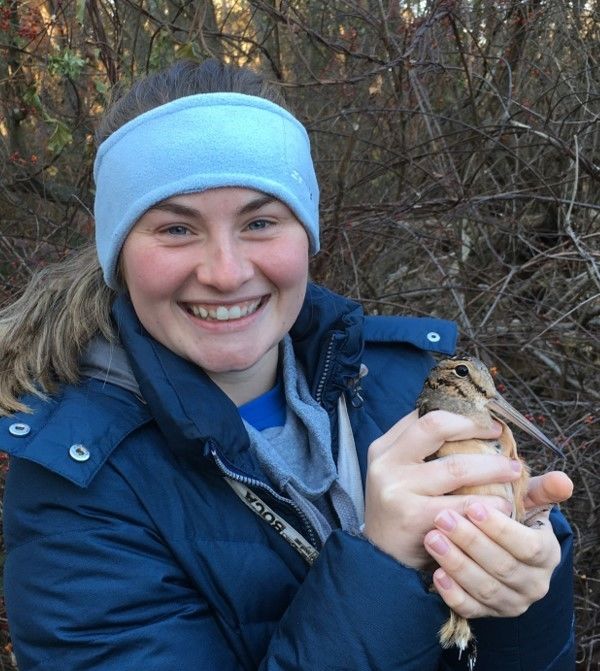
Exhibits and Displays
                                                                                Rachel Carson Room

                                                               Nathan Tea        Art - Framed art and small canvas
                                                               Aaron Reb         Art - Drawings
                                                               Oliver Patrick    Art - Piece depicting a map of Maryland
                                                                                 composed a collage of bird species
                                                               Lisa Garrett      Poster - Bird watching in North Beach
                                                                                 Maryland and Calvert County

                                                                      Thank you for participating in the
                                                                         Maryland Bird Symposium.

                                                                       Contact us about Sponsorship
                                                                      opportunities for the 3rd Annual
                                                                        Maryland Bird Symposium!

                            About the MARC Fund for Youth
The Maryland Avian Research & Conservation (MARC) Fund for Youth was launched at the Maryland Bird
Conservation Symposium in January 2019. This fund is the first of its kind in Maryland, and possibly the Mid-Atlantic,
that empowers youth to conduct avian research or conservation.

WHO MAY APPLY? All Middle School and High School youth who are residents of or attend a school in Maryland.
Graduated high school seniors who have not started college are eligible. Several youth may also apply as a team.

WHAT KINDS OF PROJECTS ARE CONSIDERED?
• Research / Monitoring: conducting research on a species to find out something new. You will need a research
  question that your work will seek to answer.
• Conservation: Implementing an action that seeks to create / restore / improve habitat or eliminate a threat.
• Community Engagement: Working with a community or school to make a positive impact for birds and for the
  community. This could involve creating or improving habitat, forming a citizen action group, or some other kind of
  positive action toward helping birds.

Projects must include one or more of the 143 Species of Greatest Conservation Need (SGCN) as documented in
Maryland's State Wildlife Action Plan., and may take place anywhere the bird species you pick spends any part of its
annual cycle. A MARC Fund Committee member is assigned as a mentor to every project. We want youth to have a
successful project and want to know how they’re doing throughout your project.

For more information or to apply for a grant, see https://marylandbirds.org/about-the-marc-fund.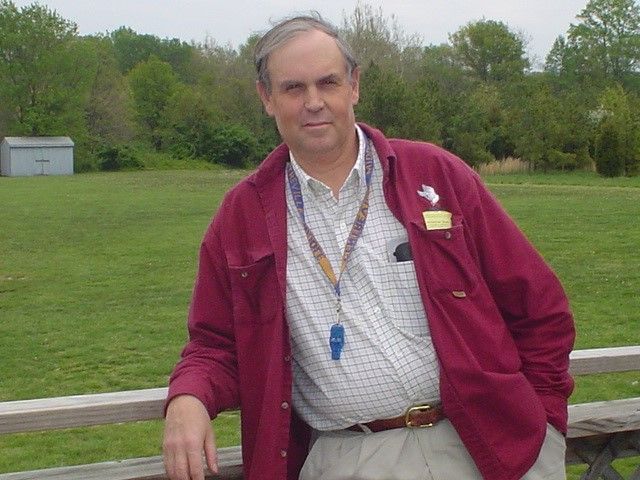
2019 Maryland Bird Conservation Symposium
                                                   Presentation Abstracts
                                                       AUDITORIUM

Migration biology in the context of the full annual cycle: identifying stopover habitat hotspots for conservation – Emily Cohen
   Research in Dr. Cohen’s laboratory broadly aims to understand animal migration biology in the context of the full annual
   cycle. We live in a rapidly changing world where many species are declining, and this is especially true for migratory species.
   It is possible that changes in habitat, climate, and resource availability due to unprecedented human activity are inflating the
   costs associated with animal migration. At the same time, advancing technologies and analytical tools are making it possible
   to solve many of the important mysteries about migratory animals. Dr. Cohen’s research makes use of field, lab, and
   remotely sensed data integrated with rigorous quantitative tools to 1) address fundamental questions about migration
   biology, 2) understand how and why migration is changing and migratory species are declining, and 3) develop tools for the
   inclusion of stopover and airspace habitats into conservation and management efforts for migratory species.

Maryland & DC Breeding Bird Atlas 3: A Record of Change – Gabriel Foley
   Breeding bird atlases are a great way for you to explore new birding areas, learn more about the behavior of their local birds,
   and contribute directly to bird conservation! The Maryland & DC Breeding Bird Atlas 3 began in January 2020 and will
   continue until December 2024. This community science effort will document the distribution, abundance, and timing of the
   birds breeding in Maryland and DC. Volunteers will use the website ebird.org/atlasmddc to collect atlas data. Gabriel Foley,
   Atlas Coordinator, will be discussing what the Atlas is, how it is used to conserve birds and their habitats, and how, with a
   little knowledge of your local birds, you can get involved. You can follow the Atlas on social media at @mddcbba3.

Banding and telemetry Study of Fall Migrant Soras on the Patuxent River – Greg Kearns
   Greg Kearns began studying the Sora rail in 1987. At their peak in 1998, they banded 1,300 rails; by the year 2000, only 100.
   This research linked the decline of the rails to the vanishing stands of wild rice (95% decline) observed during the same
   period. Resident Canada Geese, whose population was increasing 15-20% per year during the 1990s, were grazing the wild
   rice. Greg coordinated a goose management plan and the additional planting of seeds and rice plants. Today the wild rice has
   recovered beyond the acreage there was 30 years ago. Now, 20 years later, Greg revived the Sora telemetry migration
   research with a new system called Motus, meaning “movement” in Latin. Motus is a large network of automated tracking
   stations all over eastern North America and beyond to detect birds with a digitally coded transmitter. Work was also done
   using DNA from blood samples to try and develop a method to sex the birds accurately.

Halting habitat loss and mitigating climate change: What are your elected officials doing? – Kimberly Golden Brandt
    Our local and state elected officials have a critical role to play in halting habitat loss and mitigating climate change. Learn
    about recent and on-going efforts at the state level and in several of Maryland’s fastest growing counties. Topics will include
    local forest conservation ordinance improvements, solar siting, transportation investment, and planning for future growth.

Bringing Birds to Your Backyard – Jonathan Irons
    Have you ever wondered how to bring more birds to your back yard? Jonathan will discuss habitat, feeding and making your yard
    bird friendly.

Drones for conservation: how drones are providing a new way to monitor bird populations – Andy Wilson
   Low-cost drones are increasingly used in ecology and conservation, for mapping, counting and monitoring larger organisms,
   including large birds such as wildfowl and seabirds. Drones can be used to access terrain more quickly and easily than
   fieldworkers can on foot, and in some circumstances, this can reduce disturbance. However, many birds are too small to
   capture and identify from aerial images, and often they are obscured from above by vegetation. I describe how airborne
   bioacoustics, that is, taking audio recordings of singing and calling birds from a drone-mounted recorder, could be a useful
   new way of monitoring birds. I will discuss recent advances from an ongoing research program conducted by undergraduate
   students at Gettysburg College, PA.
2019 Maryland Bird Conservation Symposium
                                                Presentation Abstracts
                                           RACHEL CARSON ROOM

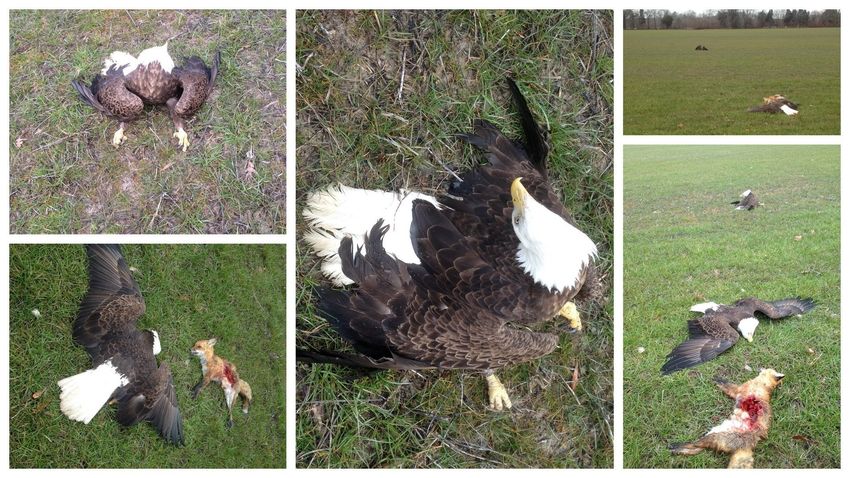
The Killing of Bald Eagles on Maryland’s Eastern Shore – Donna Cole
    30 bald eagles have been killed on Maryland’s Eastern Shore in the last ten years, but that’s just the tip of the iceberg.
    There’s a long history of these carbofuran poisonings on the Delmarva Peninsula, which have continued to happen long
    after the Environmental Protection Agency banned the toxic pesticide. Award-winning journalist Donna Cole, has spent
    over three years on this story, explains the sordid history of these killings, why they’ve happened and what’s being done
    about it.

Anthropogenic Alteration of Common Shorebird Stop-Over Sites in the North Atlantic Flyway – Madelaina Ondo
   Migratory shorebirds using the Atlantic flyway rely on a few productive stopover sites to fuel their journeys. The
   presence of humans in these crucial habitats has had quantifiable effects on shorebird migratory success. This talk will
   identify and expand on ways humans have altered migration success of shorebirds through the lens of Washington
   College's Senior Capstone Experience.

Barn Owls of the Patuxent River – Andy Brown
    When you imagine the bird life of the Patuxent River, you don't usually think of owls. However, the marshes of the
    Patuxent and surrounding farmlands are important habitats for one of Maryland's most endangered owls. I will discuss
    the history of Barn Owls conservation efforts along the Patuxent River and how the nest box program is helping to
    maintain their population.

Effects of Heavy Metal Pollution on Quality of Bird Song – Nina Black
    This study is an acoustic analysis of the vocal quality of multiple European bird species living in areas of high
    anthropogenic heavy metal pollution compared to those with little exposure to heavy metal pollution. This study also
    looks at the use of public science for research purposes.

Maryland & DC Breeding Bird Atlas 3: A Record of Change – Gabriel Foley
   Breeding bird atlases are a great way for you to explore new birding areas, learn more about the behavior of their local
   birds, and contribute directly to bird conservation! The Maryland & DC Breeding Bird Atlas 3 began in January 2020 and
   will continue until December 2024. This community science effort will document the distribution, abundance, and timing
   of the birds breeding in Maryland and DC. Volunteers will use the website ebird.org/atlasmddc to collect atlas data.
   Gabriel Foley, Atlas Coordinator, will be discussing what the Atlas is, how it is used to conserve birds and their habitats,
   and how, with a little knowledge of your local birds, you can get involved. You can follow the Atlas on social media at
   @mddcbba3.

Patuxent Forest Breeding Bird Surveys and Forest Inventory – Sandy Spencer
    Patuxent Research Refuge is a nearly 13,000 acre national wildlife refuge of the U.S. Fish & Wildlife Service. This
    presentation is on recent efforts to understand the contribution this forest makes to a selection of the area's forest-
    dependent bird species as well as the quality of the forest.

Manakins: nature’s Lords of the Dance – Kevin Bennett
   PThe manakins are a Neotropical family of birds unique for their elaborate courtship displays, anatomical and behavioral
   novelties, striking male ornamentation, and complex social behaviors. The traits that make manakins so remarkable
   stem from their breeding system in which males gather in aggregations called leks to display for females. The
   extraordinary features of manakin biology have made them a model system for studying sexual selection and its impact
   on morphology, behavior, ecological roles, and even evolutionary trajectories.
2020 Maryland Bird Symposium
                                                      Saturday, 25 January 2019
                                          Patuxent National Wildlife Visitor Center, Laurel MD

                                                                  ― AGENDA ―

                                                                  AUDITORIUM

9:00 AM    (Registration in Rachel Carson Room)
10:00 AM   Welcome, Opening remarks
           Keynote: Maryland, the State of Bird Conservation .......................................................Mike Parr
                                             Keynote address brought to you by
                              Maryland Ornithological Society and Maryland Biodiversity Project

10:50 AM   Migration biology in the context of the full annual cycle: identifying stopover habitat hotspots for
           conservation ................................................................................................................ Emily Cohen
11:15 AM   Maryland & DC Breeding Bird Atlas 3: A Record of Change ........................................ Gabriel Foley

11:40 AM   Making a Difference ...........................................................................................Daniel Irons/YMOS
12:05 PM   Banding and telemetry Study of Fall Migrant Soras on the Patuxent River ................. Greg Kearns

12:30 PM   (Lunch in Rachel Carson Room)

1:40 PM    Halting habitat loss and mitigating climate change: What are your elected officials doing? ........
           ................................................................................................................... Kimberly Golden Brandt
2:05 PM    Bringing Birds to Your Backyard .................................................................... Jonathan Irons/YMOS
2:30 PM    Drones for conservation: how drones are providing a new way to monitor bird populations .........
           ...................................................................................................................................... Andy Wilson
3:00 PM    Keynote: Uniting across the Americas to discover unknown bird migrations for conservation
           ......................................................................................................................Autumn-Lynn Harrison
                                             Keynote address brought to you by
                              Maryland Ornithological Society and Maryland Biodiversity Project

3:30 PM    Moving Bird Conservation Forward: Next Steps ........................................................... Chris Eberly
3:40 PM    Adjourn
4:15 PM    Must be out of Building!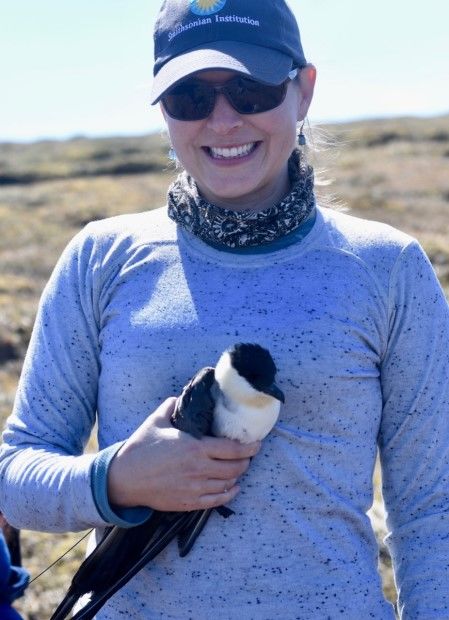
2020 Maryland Bird Symposium
                                                     Saturday, 25 January 2019
                                         Patuxent National Wildlife Visitor Center, Laurel MD

                                                                ― AGENDA ―

                                                   RACHEL CARSON ROOM

9:00 AM    Registration, coffee/tea, exhibit setup
10:00 AM   (Welcome, Keynote in Auditorium)

                                            Keynote address brought to you by
                             Maryland Ornithological Society and Maryland Biodiversity Project

10:50 AM   The Killing of Bald Eagles on Maryland’s Eastern Shore ............................................... Donna Cole

11:15 AM   Anthropogenic Alteration of Common Shorebird Stop-Over Sites in the North Atlantic Flyway ......
           ............................................................................................................................... Madelaina Ondo
11:40 AM   Barn Owls of the Patuxent River ................................................................................... Andy Brown
12:05 PM   Effects of Heavy Metal Pollution on Quality of Bird Song................................................ Nina Black

12:30 PM   Lunch catered by Absolutely Perfect Catering
           Networking, posters/exhibits, Phoenix Wildlife Center rehab Eastern Screech-Owl

1:40 PM    Maryland & DC Breeding Bird Atlas 3: A Record of Change ........................................ Gabriel Foley

2:05 PM    Patuxent Forest Breeding Bird Surveys and Forest Inventory................................... Sandy Spencer
2:30 PM    Manakins: nature’s Lords of the Dance ..................................................................... Kevin Bennett

3:00 PM    (Keynote in Auditorium)

                                            Keynote address brought to you by
                             Maryland Ornithological Society and Maryland Biodiversity Project

3:30 PM    (Closing Remarks in Auditorium)
3:40 PM    Adjourn
4:15 PM    Must be out of Building!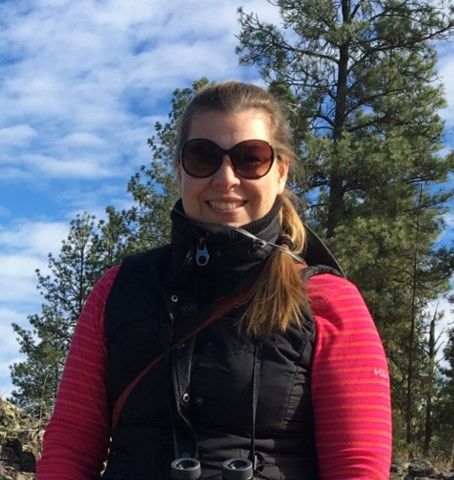
2019 Maryland Bird Conservation Symposium
                                                 Presenter Information
                        Kevin Bennett
                        PhD Candidate, University of Maryland, College Park; kevinfpbennett@gmail.com
                        Kevin is a PhD Candidate at the University of Maryland, College Park and currently doing his
                        dissertation research at the Smithsonian's National Museum of Natural History. He studies sexual
                        selection and plumage color evolution in manakins, after having previously studied bird migration
                        timing at Colby College for his Bachelor's and abundance patterns of free-ranging domestic cats at
                        Fordham University for his Master's. Though he now studies evolution for a living, Kevin has been
                        lucky enough to work on several exciting conservation projects, including Whooping Crane breeding
in the US and tagging endangered marsupials in Western Australia. He is a birder in his (sparse, graduate student) free time.

                        Nina Black
                        Student, Washington College; nblack4@washcoll.edu
                        Nina Black is a senior at Washington College majoring in Biology with a concentration in Ecology and
                        Evolution from Chestertown, MD. She has interned at Washington College's River and Field Campus
                        for summer and fall seasons doing both field sparrow nest searching and learning to bird band. She
                        recently returned from a year abroad in the Netherlands where she conducted acoustic research on
                        European bird species with Dr. Hans Slabbekoorn.

                          Kimberly Golden Brandt
                          Director of Smart Growth Maryland; kbrandt@presmd.org
                          Kimberly has a graduate degree in urban and regional planning and has worked as a professional
                          planner for twenty years. Her work experience includes local land use planning and natural hazard
                          mitigation planning for the State of Maryland, where she served as the state’s Hazard Mitigation
                          Officer. More recently, she served as the Local Policy Director at 1000 Friends of Maryland, a
                          smart growth advocacy organization that merged with Preservation Maryland in 2018. Kimberly
                          leads Preservation Maryland’s smart growth education and advocacy efforts, which support
preservation of forests and open space and revitalization of Maryland’s cities and towns.

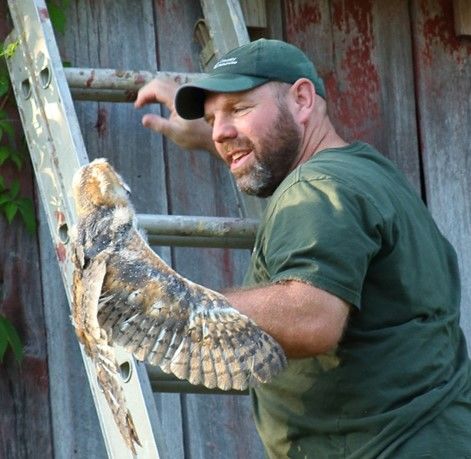
                          Andy Brown
                          Calvert County Natural Resources Division; andrew.brown@calvertcountymd.gov
                          Andy Brown is the Senior Naturalist with Calvert County Natural Resources Division. He received a
                          B.S. in Wildlife Biology from Frostburg State University. He has been working with Barn Owls in
                          Southern Maryland since 1994.

                          Emily Cohen
                          University of Maryland Center for Environmental Science, Appalachian Laboratory;
                          Emily.Cohen@UMCES.edu
                          Research in Dr. Cohen’s laboratory broadly aims to understand animal migration biology in the
                          context of the full annual cycle. We live in a rapidly changing world where many species are
                          declining, and this is especially true for migratory species. It is possible that changes in habitat,
                          climate, and resource availability due to unprecedented human activity are inflating the costs
                          associated with animal migration. At the same time, advancing technologies and analytical tools
                          are making it possible to solve many of the important mysteries about migratory animals.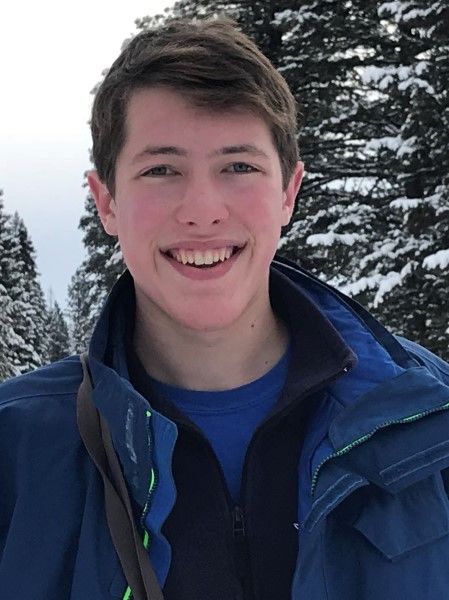
2019 Maryland Bird Conservation Symposium
Donna Cole
Multimedia reporter at WNAV Radio; donna@wnav.com
Donna L. Cole is an Associated Press and Society of Professional Journalists award-winning
journalist. She hosts the 1430 Connection, a weekly radio show on WNAV Radio in Annapolis. The
professional work Donna is most proud of came in the summer of 2018, when she broke news
about carbofuran killing Bald Eagles - the story received global coverage. It raised awareness of the
dangers of pesticide use and wildlife poisonings and led to change in the state of Maryland pesticide
licensing procedures. For this work, Donna received the Society of Professional Journalists DC Pro
Chapter 2019 Dateline Award for Investigative Journalism and the Chesapeake Associated Press
Broadcasters Association Outstanding Enterprise Journalism award.

 Gabriel Foley
 Coordinator for the Maryland & DC Breeding Bird Atlas 3; mddcbba3@mdbirds.org
 Gabriel Foley is an avid birder from the prairies of Saskatchewan, Canada. For his graduate work
 there, he researched nighthawk habitat use in Canada’s boreal forest. Gabriel has also published
 research on acoustic analysis and interactions between bats and nighthawks around the
 Washington Monument in D.C. Over the past decade, he has worked on research projects in
 Canada, the US, and South Africa, and was the host of a weekly nature radio show, The Prairie
 Naturalist. You can connect with him on social media at @birdnirdfoley.

 Autumn-Lynn Harrison - Keynote Speaker
 Research Ecologist, Smithsonian Migratory Bird Center; HarrisonAL@si.edu
 Dr. Harrison has led field projects to deploy electronic tracking devices on seabirds and shorebirds
 breeding in the Alaskan Arctic, Brown Pelicans in the Chesapeake Bay, and seals and sea lions in
 South Africa and California. She has contributed to United Nations efforts to identify ecologically
 significant areas for migratory marine animals in international waters of the North Pacific Ocean
 and to create a new international treaty for the ocean. Harrison earned B.S. Degrees in
 Environmental Science and Fisheries and Wildlife Science from Virginia Tech, a Graduate Diploma
 of Science from James Cook University in Townsville, Australia, and a Ph.D. from the University of
 California, Santa Cruz. She grew up on the Eastern Shore, where her family has lived since the
 1600s .Her first job in this field was a seasonal naturalist at Pocomoke River State Forest and Park.

 Daniel Irons
 YMOS; danielirons02@yahoo.com
 An avid birder and avian wood carver, Daniel is 17 and is a native to Maryland’s Eastern Shore.
 He’s been an active member of the Youth Maryland Ornithological Society for 10 years and
 competes annually in the World Series of Birding. Daniel also volunteers at the Foreman’s Branch
 Bird Observatory, and has worked as a migration counter for the Cape May Bird Observatory. This
 past year, he spent the summer and fall working with Richard Crossley in Cape May, NJ.
 Specializing in birding by ear, Daniel has a strong interest in visible migration including morning
 flight, seawatching, and nocturnal flight call counts.

Jonathan Irons
YMOS; Jonathanirons28@gmail.com
Jonathan Irons is an avid birder and wildlife photographer. Jonathan is 15 years old and resides on
Maryland’s Eastern Shore. He has been an active member of the Youth Maryland Ornithological
Society for 8 years and competes annually in the World Series of Birding. Jonathan has been a
volunteer for the past 4 years at the Banding station at Foreman’s Branch Bird Observatory at
Chino Farms. Jonathan has attended many Youth Birding camps throughout the US including Camp
Chiricahua, Hog Island, Camp Colorado. Jonathan is also a 5-time world champion youth wildfowl
carver.
2019 Maryland Bird Conservation Symposium
                     Presenter Information
Greg Kearns
Naturalist, Patuxent River Park; Greg.Kearns@pgparks.com
Greg Kearns, a MNCPPC naturalist for over 35 years at Patuxent River Park in Upper Marlboro
Md., is an accomplished photographer, expert birder, and a renowned authority on the Sora Rail
(Porzana carolina) and wetland ecology at Jug Bay. He was named conservationist of the year by
the Md. Dept. of Natural Resources in 2006 for this work and for restoration of the wild rice
marshes on the river, which has been recognized as one of the best wetland restorations in MD.
He also received the Jug Bay Award for significant contributions to the environment on the
Patuxent and recently was awarded the 2017 National Wetlands Restoration and Conservation
award from the Environmental Law Institute In Washington, DC.

Madelaina Ondo
Student, Washington College; mondo2@washcoll.edu
Madelaina is a senior at Washington College studying environmental science with an interest in
wildlife conservation and monitoring. Over the summer she interned at Washington College’s
River and Field Campus, monitoring nesting success of Field Sparrows. During the 2019 fall
semester, Madelaina interned at the Foreman's Branch Bird Observatory where she learned to
identify common bird species and extract them from mist nets. Aside from her interest in birds,
Madelaina enjoys spending time outside and hanging out with the animals on her family’s farm.

 Mike Parr - Keynote Speaker
 President, American Bird Conservancy; mparr@abcbirds.org
 Mike joined American Bird Conservancy in 1996 after graduating from the University of East
 Anglia, UK, and working for BirdLife International. He has co-authored seven books
 including: Parrots - A Guide to the Parrots of the World, Important Bird Areas in the United
 States, and The American Bird Conservancy Guide to Bird Conservation, along with numerous
 articles and papers. He is Chair of the Alliance for Zero Extinction and a member of the Board of
 Directors of the Sustainable Forestry Initiative.

 Sandy Spencer
 Refuge Wildlife Biologist, Patuxent Research Refuge , USFWS; sandy_spencer@fws.gov
 Sandy has been aRefuge Wildlife Biologist, at the Patuxent Research Refuge since 2011. Prior to
 coming to Patuxent she was refuge biologist at Rappahannock NWR from 2000-2010. She
 graduated from the College of William and Mary, and received a graduate degree at George
 Mason University in 2000. Her research was on the last Marsh Wren population of the Potomac
 River/Dyke Marsh.

Andy Wilson
Gettysburg College; awilson@gettysburg.edu
Andy has been an avid birder since childhood. In his native UK he was an Ecologist at the British
Trust for Ornithology for 10 years before moving to PA for grad school in 2004...just in time for
the start of 2nd Pennsylvania Breeding Bird Atlas (2nd PBBA) fieldwork. After six years as a 2nd
PBBA point count technician, Andy took a lead on analyzing the wealth of atlas data, and, along
with Dan Brauning and Bob Mulvihill, edited the atlas book (published 2012). Andy is an Associate
Professor of Environmental Studies at Gettysburg College, PA.
2020 Legislative Agenda
SB0028 & HB0013
Solid Waste Management—Prohibition on Re-
leasing a Balloon Into the Atmosphere
Ban the intentional release of balloons, the dead-
liest form of marine debris, impacting all animals
within the marine ecosystem, including birds.
SB0299 & HB0192
Department of General Services—Energy-
Conserving Standards (Maryland Sustainable
Buildings Act of 2020)
Requiring the Department of General Services to
enact Leed Credit 55 to conserve energy and re-
duce avian mortality associated with the use of
glass.
Elimination of Stockpiles of the Banned Pesti-
cide Carbofuran (Carbofuran Stockpile Elimi-
nation Act of 2020)
A bill to eliminate the possession loophole of a
deadly banned pesticide still killing eagles and
other wildlife and threatening human health.
HB0279
Real Property—Restriction on Use—Low-
Impact Landscaping
A bill to support citizens utilizing their own private
property to plant native in support of biodiversity
and to reduce resource intensive, harmful prac-
tices associated with the required maintenance
of turf.
Please join Safe Skies Maryland, Maryland Ornithological Society, and Audubon MD-
DC in a Joint Lobby Night in support of these and other important pieces of legislation
View and Sign-up for Action Alerts and Updates at:
bit.ly/SSMD20202019 Maryland Bird Conservation Symposium
― Organizing Committee ―
Wayne Bell
Center for Environment and Society at Washington College; wbell2@washcoll.edu
Dr. Bell is Senior Associate and founding Director of the Center for Environment and Society at
Washington College. Prior to joining the College faculty in fall 2000 he served as Vice President for
External Relations for the University of Maryland Center for Environmental Science (UMCES), a global
research facility headquartered at Horn Point near Cambridge, MD. His love of birds began in his
childhood, catalyzed a bit by having Rachael Carson as a neighbor in Silver Spring, MD. While at Harvard
he expanded this love to ecology in general, this time encouraged by E. O. Wilson at a time when the
field was transforming itself from descriptive natural history into a predictive, quantitative science. He is
a past-president of the MOS and continues his affiliation through the YMOS program for youth birders.
Beth Decker
Director, Safe Skies Maryland; beth@safeskiesmaryland.org
Beth Decker is the Director of Safe Skies Maryland and chairs both a conservation committee for
Maryland Ornithological Society, as well as the Sustainability Working Group for the Maryland Bird
Conservation Partnership. She is currently working to advance forest literacy, as well as increasing
opportunities for students and educators to engage with current and emerging topics in conservation
toward a sustainable future.
Chris Eberly
Executive Director, Maryland Bird Conservation Partnership; director@marylandbirds.org
Chris was born in Maryland and grew all over Pennsylvania. He received a B.S. in Computer Science at
Indiana University of Pennsylvania and spent 11 years in the computer field. He then returned to grad
school and earned an M.S. from the University of Georgia. For the next 17 years Chris managed the
bird conservation program for the Department of Defense and consulted with military bases in the
U.S. (including AK and HI). Chris has been the Executive Director of the Maryland Bird Conservation
Partnership (MBCP) since 2017.
Patrick Newcombe
YMOS; patrickstonecroft@gmail.com
An avid birder, Patrick Newcombe has tied birding into his many interests. He helped organized the first
MD Bird Conservation Symposium and has done research ranging from manakin courtship displays, to
nocturnal migration, to the diets of endangered birds. Patrick had his paper, Migratory flight on the Pacific
Flyway: strategies and tendencies of wind drift compensation, published in the professional journal Biology
Letters in September 2019! He believes in environmental education and the economic sustainability for
conservation. He is passionate about conservation and international development, and appreciates the
mentorship he has received from many people. He is excited to give back to the birding community
through the MARC Fund. Patrick is a senior at Sidwell Friends School (Montgomery County, MD) and a
Caroline D. Bradley Scholar.
George Radcliffe
YMOS Coordinator; radclifg@gmail.com
George taught middle school science for 38 years in Dorchester and Queen Anne’s Counties and has
been the Youth Coordinator for the Maryland Ornithological Society since 2005. He has been an active
member of the Maryland Association of Environmental and Outdoor Education since its inception in
1986 and has been both President and Trustee of that organization. He currently lives and works on his
farm in Dorchester County, a property which has been in his family since 1663 and the first property in
Maryland to be given an environmental easement by the Maryland Environmental Trust.You can also read


