A guide to historic
heritage identification
←
→
Page content transcription
If your browser does not render page correctly, please read the page content below

A guide to historic heritage identification
1

                                                                                             Contents
                                                                                             1.      Historic heritage                      2

                                                                                             1.1     About this user guide                  2
                                                                                             1.2     What is historic heritage?             2
                                                                                             1.3     Why is historic heritage important?    3
                                                                                             1.4     How do I identify historic heritage?   3

                                                                                             2.      Regional Policy Statement–Policy 20    4

                                                                                             3.      Using the Criteria                     6

                                                                                             3.1     Historic values                        6
                                                                                             3.1.1   Themes                                 6
                                                                                             3.1.2   Events                                 9
                                                                                             3.1.3   People                                 10
                                                                                             3.1.4   Social                                 12
                                                                                             3.2     Physical values                        13
                                                                                             3.2.1   Archaeological                         14
                                                                                             3.2.2   Architectural                          16
                                                                                             3.2.3   Technological                          18
                                                                                             3.2.4   Integrity                              19
                                                                                             3.2.5   Age                                    20
                                                                                             3.2.6   Group or townscape values              22
                                                                                             3.3     Social values                          23
                                                                                             3.3.1   Sentiment                              23
                                                                                             3.3.2   Recognition                            25
                                                                                             3.4     Tangata whenua values                  26
                                                                                             3.5     Surroundings                           28
                                                                                             3.6     Rarity                                 30
                                                                                             3.7     Representativeness                     31

                                                                                             4.      If you need further advice             33

Cover photos
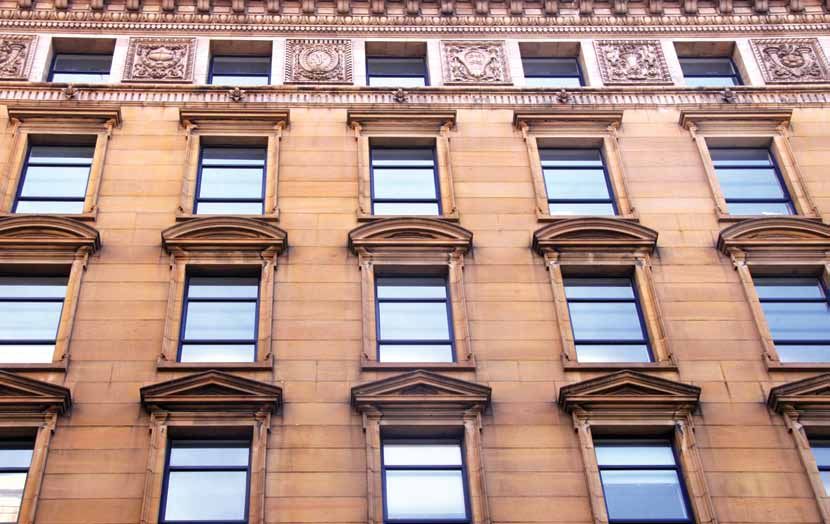
Top: AMP Society Building, Customhouse Quay, Wellington; Bottom (l-r): Cone Hut, Tararuas;
Papawai Marae, Greytown; Cape Palliser Lighthouse; Brancepath Station near Masterton.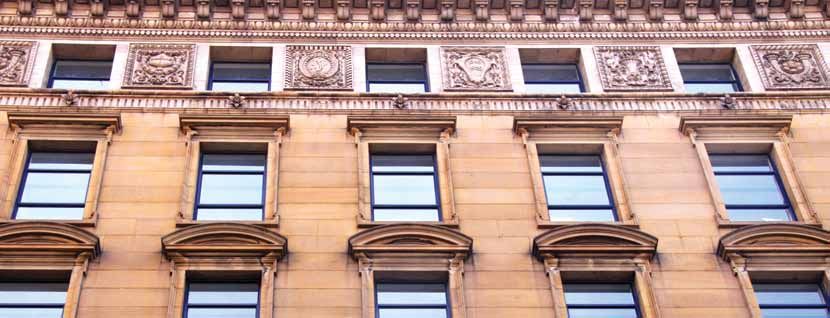
2                                                                                                                                3

    1.        Historic heritage                                  Historic heritage includes:

                                                                 •   Historic sites, structures, places, and areas; and
    1.1        About this user guide                             •   Archaeological sites; and
                                                                 •   Sites of significance to Māori, including wahi tapu; and
    This user guide aims to help people understand the           •   Surroundings associated with the natural and physical
    different types of historic heritage values associated           resources
    with places, sites and areas. The guide contains
    criteria for assessing historic heritage values and the
    significance of places in a regionally consistent way and
    in a common language that everyone can understand            1.3        Why is historic heritage
    and use. The criteria are designed to be used by local
    authorities, community groups and others to evaluate the                important?
    significance of historic heritage places, sites and areas.
                                                                 Historic heritage provides a connection to those who lived
                                                                 before us. It helps us define who we are and contributes to
                                                                 our sense of place. Once destroyed, it cannot be replaced.
    1.2       What is historic heritage?                         Our history is found in both the tangible physical remains
                                                                 and in the intangible values associated with our ancestors.
    The Resource Management Act 1991 and the proposed
    Regional Policy Statement define historic heritage as
    the natural and physical resources that contribute to
    an understanding and appreciation of New Zealand’s           1.4        How do I identify historic
    history and cultures, deriving from any of the following
    qualities:
                                                                            heritage?
                                                                 To identify historic heritage, it is important to have a full
    •   Archaeological                                           and accurate understanding of a place’s history, and to
    •   Architectural                                            evaluate all aspects of its significance. The criteria help
    •   Cultural                                                 ensure that nothing is overlooked.
    •   Historic
    •   Scientific
    •   Technological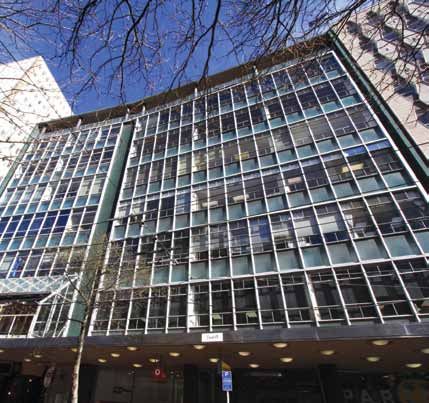
4                                                                                                                                                                           5

    2. Regional Policy
                                                                      Policy 20:		       Identifying places, sites and areas with significant historic heritage
       Statement – Policy 20                                          			                values – district and regional plans

                                                                      District and regional plans shall identify places, sites and areas with significant historic heritage values that
                                                                      contribute to an understanding and appreciation of history and culture under one or more of the following criteria:
    The proposed Regional Policy Statement identified
    as an issue the loss of heritage values as a result of            (a)   Historic values: these relate to the history of a place and how it demonstrates important historical
                                                                            themes, events, people or experiences.
    inappropriate modification, use and destruction of
    historic heritage. This loss sometimes occurs due to a                  (i)    Themes: the place is associated with important themes in history or patterns of development.
    lack of understanding of historic heritage values. Policy           (ii)       Events: the place has an association with an important event or events in local, regional or
    20 requires district and regional plans to identify places,       		           national history
    sites and areas with significant historic heritage values.          (iii)      People: the place is associated with the life or works of an individual, group or organisation
    The policy includes criteria to ensure all aspects of historic    		           that has made a significant contribution to the district, region or nation.
    heritage are considered. A place, site or area must fit at          (iv)       Social: the place is associated with everyday experiences from the past and contributes to our
    least one of the criteria in order to have significant historic   		           understanding of the culture and life of the district, region or nation.
    heritage values, but does not need to have significance in        (b) Physical values: these values relate to the physical evidence present.
    each of the different categories.
                                                                        (i)        Archaeological: there is potential for archaeological investigation to contribute new or important
                                                                      		           information about the human history of the district, region or nation.
    The identification criteria should be used when
                                                                        (ii)       Architectural: the place is notable for its style, design, form, scale, materials, ornamentation,
    determining what places to include in a district or               		           period, craftsmanship or other architectural values.
    regional plan. They should be used by resource consent
                                                                        (iii)      Technological: the place provides evidence of the history of technological development or
    and notice of requirement applicants if historic heritage         		           demonstrates innovation or important methods of construction or design.
    values are suspected in a project area. The criteria can
                                                                            (iv)   Integrity: the significant physical values of the place have been largely unmodified.
    also be used when considering plan changes. Historic
    heritage values are not always immediately apparent,                    (v)    Age: the place is particularly old in the context of human occupation of the Wellington region.
    particularly for archaeological sites. Lack of inclusion in         (vi)       Group or townscape values: the place is strongly associated with other natural or cultural
    a district or regional plan is not a definitive indicator that    		           features in the landscape or townscape, and/or contributes to the heritage values of a wider
                                                                      		           townscape or landscape setting, and/or it is a landmark.
    there are no historic heritage values present. Knowledge
    about what historic heritage values a place has can               (c)   Social values: these values relate to the meanings that a place has for a particular community or communities.
    assist in determining the impacts that activities, such as          (i)        Sentiment: the place has strong or special associations with a particular cultural group or community
    subdivision or development, may have on those values.             		           for spiritual, political, social, religious, ethnic, national, symbolic or commemorative reasons.
                                                                        (ii)       Recognition: the place is held in high public esteem for its historic heritage values, or its contribution
                                                                      		           to the sense of identity of a community, to the extent that if it was damaged or destroyed it would
                                                                      		           cause a sense of loss.

                                                                      (d)   Tangata whenua values: the place is sacred or important to Maori for spiritual, cultural or historical reasons.

                                                                      (e)   Surroundings: the setting or context of the place contributes to an appreciation and understanding of its
                                                                            character, history and/or development.

                                                                      (f)   Rarity: the place is unique or rare within the district or region.

                                                                      (g)   Representativeness: the place is a good example of its type or era.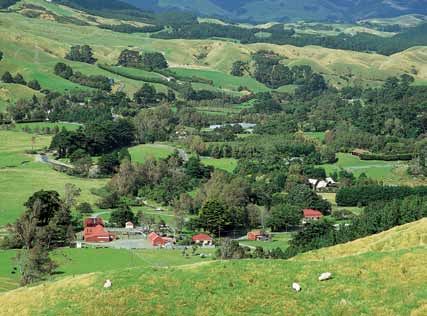
6                                                                                                                                                                  7

    3.         Using the criteria                                                            FIGURE TWO - NATIONAL HISTORIC SITES OF CANADA THEMATIC FRAMEWORK

    The following sections explain and illustrate each
    criterion of policy 20. A place, site or area should be              PEOPLING THE LAND                                                           GOVERNING CANADA
    assessed against all the criteria, but only needs to have            • Canada’s Earliest Inhabitants                                             • Politics and Political Processes
    historic heritage values in one of the criteria in order to          • Migration and Immigration                                                 • Government Institutions
    be considered significant.                                           • Settlement                                                                • Security and Law
                                                                         • People and the Environment                                                • Military and Defence
                                                                                                                                                     • Canada and the World

    3.1        Historic values                                           DEVELOPING ECONOMIES
                                                                         • Hunting and Gathering
                                                                         • Extraction and Production
               These relate to the history of a place and how it 		                                                                                  EXPRESSING INTELLECTUAL
                                                                         • Trade and Commerce                                                        AND CULTURAL LIFE
               demonstrates important historical themes, events,         • Technology and Engineering                                                • Learning and the Arts
               people or experiences.                                    • Labour                                                                    • Architecture and Design
                                                                         • Communications and                                                        • Science
    An assessment of historic heritage values should include               Transportation                                                            • Sport and Leisure
                                                                                                           BUILDING SOCIAL
    a well-documented history of a place. History includes                                                 AND COMMUNITY LIFE
                                                                                                                                                     • Philosophy and Spirituality
    not just the construction of a place, but its use over time.                                           • Community Organizations
    Primary sources, such as historic letters or government                                                • Religious Institutions
    records, are more reliable than secondary sources, like                                                • Education and Social Well-Being
    contemporary books. However, modern books can be                                                       • Social Movements
    useful in helping to understand context, and if properly
    referenced, can be an excellent way to locate primary             Source: Parks Canada

    source material. The stories about a place can be just as
    important as the place itself.                                                                It is important to consider how a place fits into the wider
                                                                                                  context of local, regional and/or national history. Though
                                                                                                  New Zealand has not adopted a national thematic
                                                                                                  framework, this diagram from Canada shows what one
    3.1.1 Themes                                                                                  looks like. Knowing the main themes of history can be
                                                                                                  helpful in grouping similar places together, widening
                The place is associated with an important event or                                understanding of history and identifying those themes
               events in local, regional or national history.                                     that are under- or over-represented.

    • What theme or themes in history is the place
      associated with?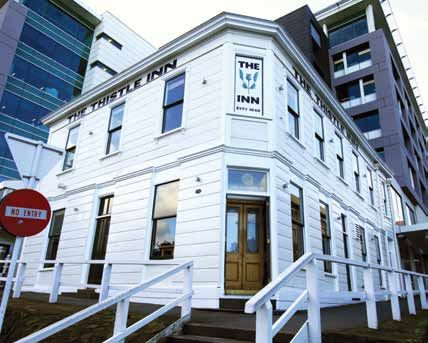
8                                                                                                                                9

                                                                  3.1.2 Events
                                                                            The place has an association with an
                                                                            important event or events in local, regional or
                                                                            national history.

                                                                  • Was the place the site or location of a significant
                                                                    historic event?

    The Austrian State Houses in Titahi Bay, Porirua,
    illustrate suburban development of a particular era.
    Designed in New Zealand, they were built by Austrian
    tradesmen from materials pre-cut in Austria to address
    the housing shortage in the 1950s.

                                                                  Papawai Marae, near Greytown, was the centre of
                                                                  Kotahitanga, the Māori parliament movement. Sessions
                                                                  in 1897 and 1898 passed resolutions to end Māori land
                                                                  sales.

    Built in 1927, the Former 2YA Transmitter Building was
    New Zealand’s first major radio transmitter. The building
    is associated with the historic themes of communications
    and technology, and is still in use as a radio transmitter.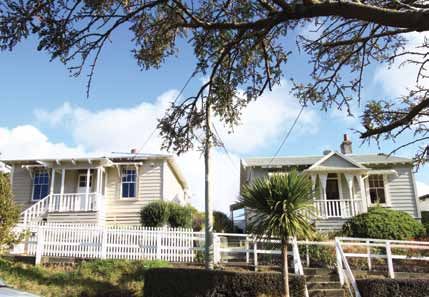
10                                                                                                                                     11

                                                                       © Alison Dangerfield, New Zealand Historic Places Trust, 2008

                                                                       Wallaceville Animal Research Station became the
     In the 1840s, tensions were growing between pākehā                diagnostic and research centre for animal health in
     settlers and Māori, who had been evicted from their               New Zealand after its construction in 1904. It was built
     land in the Hutt Valley. Governor Grey was planning               for the Department of Agriculture, which was formed
     to take Ngāti Toa’s land, and his soldiers attacked Te            in 1892.
     Rangihaeata and his people at Battle Hill. After a week,
     Ngāti Toa fled north and conceded to crown demands
     for their land.

     3.1.3         People
     		            The place is associated with the life or works of
     		            an individual, group or organisation that has
     		            made a significant contribution to the district,
     		            region or nation.

     • Does the place have a connection with a person,
     persons, group or organisation? What is the nature of
     that connection?

     It is important to consider how significant a connection
     is, not just that there is a connection. For instance, the        Nash House was the de facto electorate office for Sir
     place where a composer wrote his music would have a               Walter Nash, who was Hutt MP 1929 to 1968, Leader of
     more significant association with the composer than the           the Labour Party 1950 to1963 and Prime Minister 1957 to
     house he was born in.                                             1960.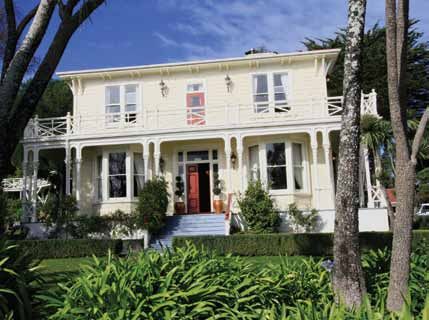
12                                                                                                                                         13

     3.1.4 Social
               The place is associated with everyday
               experiences from the past and contributes to our
               understanding of the culture and life of the district,
               region or nation.

     • What does the place tell us about our social history?

                                                                        There was rapid expansion of suburban development
                                                                        in the Hutt Valley throughout the 1920s and 1930s. The
                                                                        Lower Hutt Post Office opened in 1943, around the time
                                                                        Lower Hutt became a city.

     Daisy Hill Farm House was home to Robert Bould, the
     first sheep farmer in the Johnsonville area in 1853. The
                                                                        3.2        Physical values
     site now appears to be just another typical suburban
                                                                                   These values relate to the physical evidence present.
     section.
                                                                        Physical values include archaeological, architectural,
                                                                        technological, integrity and age. A physical description
                                                                        is an important part of an assessment of historic heritage
                                                                        values in part because it clarifies what is being assessed.
                                                                        How it was constructed, used and altered can all be part
                                                                        of its physical values. A physical description should
                                                                        highlight those attributes with high physical heritage
                                                                        values so that those values can be retained should any
                                                                        change be proposed to the site.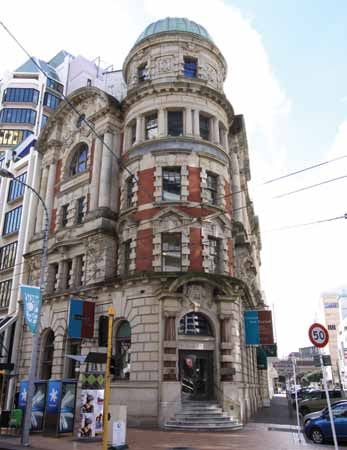
14                                                                                                                                      15

     3.2.1 Archaeological
                There is potential for archaeological investigation
                to contribute new or important information about
                the human history of the district, region or nation.

     • Is it likely that archaeological remains are present on
     the site?

     It can be challenging to identify archaeological values,
     because sites are usually underground and there is
     not always visible evidence at the surface. However,
     there are ways of knowing where sites are likely to be
     found. The New Zealand Archaeological Association
     maintains the Site Recording Scheme for all known                 Kevin Jones, Crown Copyright, Department of Conservation, 1998

     archaeological sites in New Zealand. In recent years,
     they updated their site record information with a GPS             Waikekeno is a well preserved archaeological complex,
     device to ensure the location is correct. The area extent         including papa kāinga, gardens and pā. The garden
     of these sites can vary widely. A concentration of known          system has high archaeological values as the size of the
     sites can be an indication that further unidentified sites        walls and mounds are rare. No systematic archaeological
     may exist in the area. An absence of any sites can be             investigation has occurred here, so there is immense
     an indicator that an area has never been surveyed. The            potential for information.
     surest way to determine whether or not archaeological
     remains are present is to engage a qualified professional
     archaeologist. An archaeologist can help you avoid
     damaging archaeological sites.

                                                                       Te Pa o Kapo is a Ngāti Ira pa abandoned around 1820.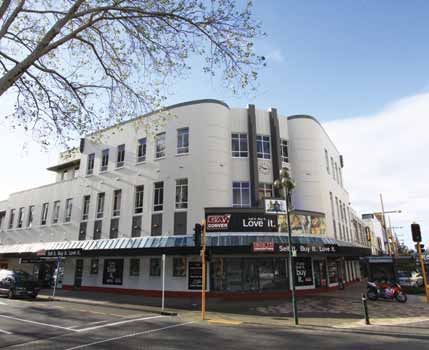
16                                                                                                                                     17

     3.2.2 Architectural
               The place is notable for its style, design, form, scale,
               materials, ornamentation, period, craftsmanship or
               other architectural values.

     • What is the architectural style? Is there anything unique
     about the way it is made or the materials it is made from?
     Is it a remarkable design achievement?

                                                                          Massey House was the first curtain-walled high rise
                                                                          office building in New Zealand when it was completed in
                                                                          1957. A curtain wall is an outer covering of a building in
                                                                          which the outer walls are non-structural, but merely keep
                                                                          out the weather. It is an important example of Modernist
                                                                          architecture.

     The Otaki Railway Station is an excellent example of a
     Type-B station, which has largely been unmodified. It was
     designed by George Troup, a chief architect of New Zealand
     Railways, who also designed Dunedin Railway Station.
18 19
3.2.3 Technological 3.2.4 Integrity
The place provides evidence of the history of The significant physical values of the place have
technological development or demonstrates been largely unmodified.
innovation or important methods of construction
or design. • How intact is the place? Has the place undergone
change since its establishment?
• Does the place show scientific or technological Alterations can have significance in their own right.
achievement?
There were many shipwrecks off the south Wairarapa
coast before Cape Palliser Lighthouse was first lit in
1897. The lighthouse was accessed by a dirt track until
steps were built in 1912.
Designed by government architect John Campbell and
constructed in 1908, the Public Trust Building is subject
to a heritage order. Any changes to the building require
Constructed in 1876 as part of the Rimutaka Incline approval from the New Zealand Historic Places Trust.
rail link (and largely rebuilt after a fire in 1910), the 24
metre-long Pakuratahi Howe Truss Bridge has very
strong regional and national historical value in that it
was part of the first rail link between Wellington and the
Wairarapa, remaining in active rail use until the closing
of the line in 1955. Few of these remain in New Zealand.20 21
Upper Hutt Blockhouse was erected in 1860 in response Thistle Inn was established in 1840 and remains on its
to local fears that the Taranaki land wars would escalate. original site. Before the big earthquake of 1855, the site
The building was occupied by a small militia that vacated was on the shoreline. The original building burned down
it in 1861 because no attack eventuated. The land was put in July 1866, and by December of that same year a new
into reserve in 1916, and was one of the first buildings building was constructed.
in New Zealand to have statutory protection due to its
heritage values.
3.2.5 Age
The place is particularly old in the context of
human occupation of the Wellington region.
• How old is the place?
Age can be an indicator of heritage significance, but a
place does not need to be old in order to have heritage
values.
Taylor Stace Cottage was constructed in 1847 for William
and Anne Taylor, and later sold to Alfred Stace. It is
one of the oldest surviving residences in the Wellington
region.22 23
3.2.6 Group or townscape values
The place is strongly associated with other natural
or cultural features in the landscape or townscape,
and/or contributes to the heritage values of a wider
townscape or landscape setting, and/or it is a
landmark.
• If the place was lost, what effect would this have
on the group or townscape? Does the place make a
significant contribution to the group or townscape?
The place has significance based on its prominence,
visibility or association with a particular landscape.
Where there is a concentration of similar places, heritage
values can derive from the associations between places.
Tarikaka Street Railway Houses are a collection of
nearly identical houses. The pre-fabricated houses were
cut at the Frankton factory in Hamilton, and built by the
Railways Department in the 1920s for employees.
3.3 Social values
These values relate to the meanings that a place has
for a particular community or communities.
3.3.1 Sentiment
The place has strong or special associations with
a particular cultural group or community for
spiritual, political, social, religious, ethnic,
St Gerard’s Church and Monastery together form one of national, symbolic or commemorative reasons.
Wellington’s most distinctive landmarks. They are crucial
to the townscape of Oriental Bay and Mount Victoria. • Does the place have particular importance for a group
or groups of people?24 25
3.3.2 Recognition
The place is held in high public esteem for its
historic heritage values, or for its contribution to
the sense of identity of a community, to the extent
that if it was damaged or destroyed it would cause a
sense of loss.
• Is the place well known in the community? Would it
be missed if it was lost?
ANZAC Hall is a symbol of the patriotism dominating
small towns during World War I. There was a large
military camp in Featherston in 1916, and this hall was
built by locals as a social hall for soldiers. It held weekly
balls, there were reading and writing rooms, billiard
tables, a supper room and refreshment bar.
Wellington Town Hall was intended to be demolished
after completion of the Michael Fowler Centre in 1983,
however, the local branch of the New Zealand Historic
Places Trust convinced the city council to retain it. It is
still in frequent use for functions, and forms part of
Civic Square.
Photo courtesy of Tom Law
St Mary’s Church Otaki, built in 1858-59, is the oldest
Catholic Church in New Zealand still in use.26 27
Tapu Te Ranga was a pa site and place of refuge for
Ngāti Ira before they fled to Mana Island in 1827.
Gear Homestead is owned by Porirua City Council,
which opened the building for public use in 1983. It
serves as a functions venue and is important to the
Porirua community.
3.4 Tangata whenua values
The place is sacred or important to Māori for
spiritual, cultural or historical reasons.
• Have iwi, hapū, marae or whānau indicated this place
is important to them?
Only mana whenua can identify Māori sites of
significance. Information and advice about consultation
with iwi can be found on Greater Wellington’s website.
The legend of Ngā Rā a Kupe is that Kupe and Ngake
stopped at Palliser Bay to rest and got into a discussion
over who could build a canoe sail faster. Kupe finished
his just after midnight, while Ngake didn’t finish until
dawn. The sails were hung against the cliffs, and these
sails made the rock formations (pictured above) visible
today.28 29
3.5 Surroundings
The setting or context of the place contributes to an
appreciation and understanding of its character,
history and/or development.
• What is the setting of the place? What are its
boundaries?
Any assessment of heritage values should consider
the setting of a place, and identify the extent of its
surroundings and whether or not the setting contributes
to or detracts from its heritage significance. When
considering the surroundings of a building, for example,
consider outbuildings, gardens and other features
associated with it.
Clyde Quay Boat Harbour was the only marina in
the inner Wellington harbour for many years. The
surroundings, including the collection of boat sheds,
Mount Victoria, Oriental Bay and Freyberg Pool,
contributes to the significance of the harbour.
© Alison Dangerfield, New Zealand Historic Places Trust 2007
At Brancepeth Station, the survival of 29 Victorian
outbuildings makes it a very unique place.30 31
3.6 Rarity 3.7 Representativeness
The place is unique or rare within the district or The place is a good example of its type or era.
region.
• Is the place typical for these types of places? Does the
• Are there many other places like this? place represent other places that were once common but
are now rare?
Any assessment should include analysis of how common
the type of site is. Rarity and representativeness are sometimes connected
in that a place could be rare as one of the few remaining
examples of a type of place, but also a good representative
of a type of place that was once common.
R Nester, Crown Copyright, Department of Conservation 2006
Cone Hut in the Tararua Ranges is one of the best
surviving examples of a slab hut in New Zealand. It was
built using locally sourced totara split into slabs.
The Solway Railway Station shelter has been in use Stewart Dawsons Corner has been home to Stewart
at Solway since 1880. It was moved across the tracks in Dawsons Jewellery for more than 100 years. The building
1910, and is the only one of its type in New Zealand still is one of the few surviving commercial buildings of its era.
at its original station. Lambton Quay used to be lined with similar buildings.32 33
4. If you need further
advice
1. Historians
Professional historians can assist with researching
and writing the history of places. Advice about how
to contract a professional historian, as well as a list of
available historians, can be found on the Professional
Historians’ Association of New Zealand/Aotearoa
website (www.phanza.org.nz).
2. Archaeologists
Professional archaeologists can advise on archaeological
sites, including evaluating archaeological values,
determining the boundaries of archaeological sites and
how to protect sites from damage. A list of consultant
archaeologists can be found on the New Zealand
© Alison Dangerfield, New Zealand Historic Places Trust 2007
Archaeological Association website
(www.nzarchaeology.org).
Lower Hutt Fire Station is a post-war Modernist design
and is constructed in reinforced concrete. The style was
used for many buildings in Lower Hutt in the mid-20th
century.
3. Conservation architects
Conservation architects are specialists in heritage
buildings. A list of heritage and conservation architects
is available at (www.architecturenz.net).
4. Heritage organisations
Local historical societies and archives have a wealth
of information about local places. In addition, the
New Zealand Historic Places Trust (www.historic.org.nz)
has a range of helpful resources.
5. Local councils
Some councils offer advice and financial assistance for
historic heritage. Check with your local council for more
information.NOTES:
34
References
New Zealand Historic Places Trust
www.historic.org.nz
Wellington City Council
www.wellington.govt.nz/services/heritage
Porirua City Council
www.pcc.govt.nz/About-Porirua/Porirua-s-heritage
Maritime New Zealand
www.maritimenz.govt.nz
Department of Conservation
www.doc.govt.nz/conservation/historic
Te Ara Encyclopaedia of New Zealand
www.teara.govt.nz/en/wairarapa-places
Greater Wellington Regional Council
www.gw.govt.nz/History-2
Parks Canada
www.pc.gc.ca
Historic Bridges of the Wellington Region
Survey for the Freshwater Plan Review, Chris Cochran,
Sept 2010
All photos are taken by Greater Wellington unless otherwise statedWater, air, earth and energy – elements in Greater Wellington’s logo that combine to create and sustain life. Greater Wellington promotes
Quality for Life by ensuring our environment is protected while meeting the economic, cultural and social needs of the community
For more information, contact Greater Wellington:
Wellington office Masterton office
facebook.com/GreaterWellington GW/EP-G-10/167
PO Box 11646 PO Box 41
October 2010
Manners Street Masterton 5840 Please recycle
Produced sustainably
Wellington 6142 T 06 378 2484 twitter.com/greaterwgtn
T 04 384 5708 F 06 378 2146
F 04 385 6960 www.gw.govt.nzYou can also read


