A Level Brochure 2020 - Kinabalu International School
←
→
Page content transcription
If your browser does not render page correctly, please read the page content below
A Level Brochure
2020
Mission Statement
At Kinabalu International School we are dedicated to providing an
excellent education in a caring, respectful environment, challenging
students to achieve their full potential as successful global citizens.
Guiding Statements
We celebrate individual and cultural diversity
We are honest, responsible and accountable for our actions
We treat others with dignity and respect
We are supportive of each other and recognise the importance of each oth-
er’s well-being
We work with others to make the world a better place
Aims
To provide an internationally recognised curriculum
To encourage global citizenship, providing students with the knowledge, skills
and attitudes to participate positively in the world
To provide a range of opportunities that challenge students to
develop a wide range of skills
To achieve positive growth and life-long learning
To ensure a safe, secure and well-equipped learning environment for all.
Welcome to our Sixth Form
Here at Kinabalu International School we understand the
importance that the Sixth Form plays in preparing our
students for the next stages of their educational and
vocational journies.

We are proud to offer a wide variety of the highly
regarded Cambridge International AS and A Levels,
providing students with flexibility to follow an extensive
number of Higher Education courses and career paths
globally.

The Sixth Form is an exciting time for students, and                             Mr Ian Barker
sometimes a scary one, when significant decisions are made                     Head of Sixth Form
about the future.

Students have the choice of studying up to four subjects at A Level. They will gain a deep
understanding of each selected subject, as well as developing high levels of independent
thinking skills. And with our broad range of subjects on offer students have the option to
specalise in a specific subject area or continue with a variety of subjects.

Since the A Level programme started at KIS in 2013 our graduates have achieved high levels of
academic success. Guided by our expert teachers, benefitting from our small class sizes and
personalized support, our graduates have progressed to some of the top universities around the
world, to study a wide range of courses. In addition to securing excellent exam results, they
have also regularly attained highly regarded Cambridge International Assessment Awards
including Top in the World and Top in Malaysia.

However academic achievement is not enough today. At Kinabalu International School we
believe in preparing our students social and mentally as well, so that they have the life skills
needed to be successful global citizens. The Sixth Form at KIS provides all of our students with a
wealth of opportunities to develop these skills, in scenarios that will support them in future
university and work applications.

The A Level Programme

Cambridge International is the examination board for all of
our A Levels, except Drama and Theatre, which is a Pearson
Education A Level. Both of these examination boards are
highly respected, not only in the UK but also worldwide. A
Level students can choose      between two to four subjects
from the following list:

A Level courses are typically 2 year courses, although those studying Cambridge International
A Level courses, can stop after the first year with an AS level qualification.

Students studying Cambridge International A levels will take examinations at the end of Year
12 and Year 13, each year’s examinations are worth 50% of the overall qualification. If
students are taking a Pearson EdExcel qualification then they will take all of their
examinations are the end of Year 13.

Please note that A Level courses will only run if there are sufficient numbers to run the course.

Graduate Destinations

Since 2013 KIS graduates have succeeded in gaining entry to top unversities globally.While the
majority attend UK universities, students have also progressed to universities in Australia,
China, Europe and the United States of America.

Courses studied include:

   Biomedical Engineering              Earth Sciences                  Engineering

Finance & Investment Banking              Genetics                      Geography

     Hotel Management                       Law                  Mechanical Engineering

          Medicine                   Primary Education                Public Relations
Why Choose KIS?
KIS aims to prepare Sixth Form students for life after school, and will provide opportunities for
personal growth and development. All Sixth Formers will be expected to make clear and direct
contributions within the school community, and to be excellent role models within the school as
a whole. When applying to university students needs to demonstrate that they have undertaken
a range of activities.

    Qualified teachers

All of our teachers at Kinabalu International School are
qualified    teachers    with       at   least   three   years
teaching experience. Many of our A Level teachers have
over 10 years teaching experience and all provide expert
support for their A level students.

      Small class sizes

We are committed to small class sizes to ensure that
all students get the individual attention they need to
fulfill their academic potential.

    Individual support

Each of our A Level students will be supported not only by their subject teachers but also by
their Form Tutor and Head of Sixth Form.

We thoroughly prepare our students for their university applications. During this time we give
advice to our students on their personal statements and help them to make the best
application possible.

  Leadership opportunities

We have many leadership opportunities available to our students. Our prefects are very
important to the running of our school, and not only do they help support the other students,
but they also gain valuable experience for themselves.
Academic Excellence Scholarships
WHO CAN APPLY?
Students of all nationalities
Prospective and existing students of KIS
Students who have an outstanding academic record and a strong command of written and
spoken English
Students who are passionate about learning
Scholarships are not available to students whose fees are normally paid for by a sponsoring
company
TERMS
Scholarships will provide for a reduction of between 25 to 75% in the termly school tuition fee
The School Application Fee of RM800 applies to all prospective students submitting a
Scholarship application
Scholarship students are expected to pay the Refundable Deposit and termly Development
Fund Levy in full
Scholarship students will be entitled to a discount on the Registration Fee (RM 1,000) and
Capital Fee (RM 8,000) at the same percentage as the scholarship offered
Any incidental education expenses throughout the school year, such as Accident Insurance,
educational visits, textbooks and exam fees extra-curricular activities etc. will need to be paid
for by the student
Sixth Form Academic Excellence Scholarships are awarded for the duration of the A Level
programme (2 years)
All scholarships will be reviewed on a termly basis to ensure that attainment, commitment
and behaviour are being maintained at the standard expected of an academic scholar.
Scholarship awards may be withdrawn at any time if the student does not maintain the
expected standards. At least one formal warning in writing will be given to the student and
parents prior to the withdrawal of a scholarship. The scholarship will be immediately
withdrawn in the event of late payment of any school fees
The scholarship is not transferable and may only be taken up in the year offered.
HOW TO APPLY
See http://www.kis.edu.my/scholarships for full details of the application process.
Application Process
EXISTING KIS STUDENTS:
It is expected that, subject to successful achievement of the required IGCSE grades, all Year 11
students will progress into the Sixth Form at KIS. During Term 1 of Year 11 all existing students
will be asked to complete a ‘Statement of Intentions’ form confirming their A Level subject
preferences, or advising the Admissions Team if the student does not intend to continue with
their studies beyond Year 11 at the school. Final subject selections will be requested in February.
Students will receive formal confirmation of their place in Year 12 following the receipt of the
IGCSE grades in August. If a student is unsuccessful in gaining the required grades further
discussion will be required with the Head of Sixth Form.
KIS will endeavour to accommodate subject choices. Should a course be oversubscribed or not
be available for any reason, we will communicate this to applicants at an early stage in the
admission procedure.
STUDENTS NEW TO KIS:
A Level courses are rigorous and demanding and students must be committed if they are to be
successful. For that reason the school will not accept any applicant who would not be able to
meet the demands of the course. We will consider each application carefully and individually.
Step 1: Complete the application form and return it to KIS together with:
Certified copies of school reports for the previous 2 years [in English, translated if necessary]
and IGCSE/GCSE/SPM/GCE O Level results, if available, and the Application Fee (RM 800)
Step 2: We may contact your current school and request a confidential reference. This will be sent
directly to us.
Step 3: We will invite you to an interview with the Head of Sixth Form. All applicants must be able
to communicate and learn in the medium of English, and must be able to prove that his/her
language proficiency is of an appropriate level. If there is any doubt, the applicant may be
required to take an additional language test as this stage. We may also set test papers in the
applicant’s chosen subjects to ensure that he/she is capable of study at A Level.
Step 4: If you have not yet completed your qualifiying exams you may receive a conditional offer
upon successful completion of steps 1-3 The conditions of this offer will specify the grades that
you will be expected to achieve. If you have already completed your qualifying exams and have
met our admissions criteria we will issue a Letter of Offer.
Step 5: When you receive your examination results, you must immediately contact the Head of
Sixth Form at KIS. If the results are satisfactory, the conditional offer will be formalised into a firm
offer, for acceptance.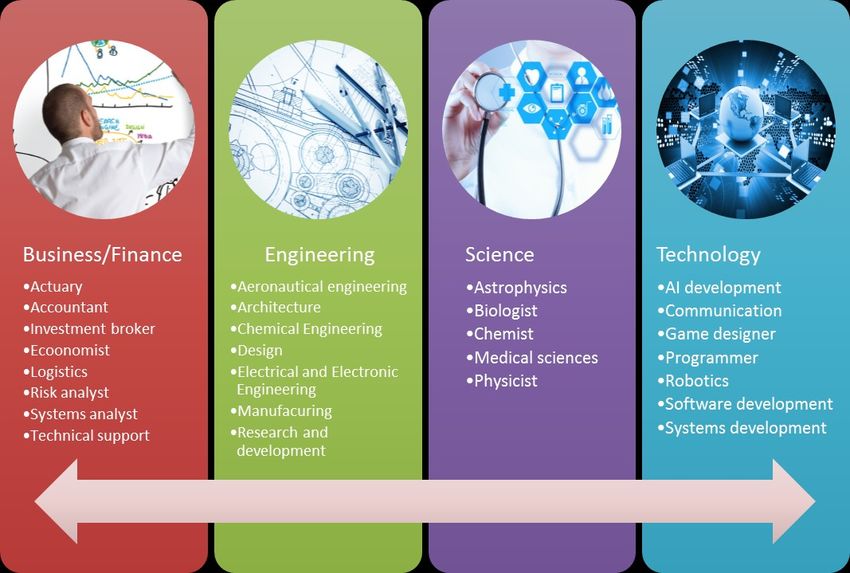
School Fees

                                  TERMLY SCHOOL FEES 2019-20*

                      Tuition Fee                              RM 14,420 per term

           School Development Fund Levy                         RM 700 per term

    * Fees for 2020-21 will be confirmed later in 2020.

                  FOR NEW STUDENTS ONLY: ONE TIME ONLY FEES (2019-20)

                    Application Fee                            RM 800 per student

                   Registration Fee                           RM 1,000 per student

                      Capital Fee                             RM 8,000 per student

                 Refundable Deposit                           RM 2,500 per student

OTHER FEES / COSTS:

Text Books: Students are expected to purchase course text books, basic stationery and
specialised equipment, such as calculators. Text books will be supplied by the school for
purchase by students at the start of the course.

Laptop Computer: Sixth Form students must provide their own laptop computer. All other
essential resources to support the curriculum will be provided by the school.

Annual Insurance Fee: RM 31.80 per student - Fees are due and payable before the date of
admission or annually before the first day of term. The Insurance Fees are non-refundable.
(Schedule of benefits available on request).

Examination Fees: The Cambridge Examination Board charges approximately 85 Pounds Sterling
for each full A Level subject. This is payable when the school confirms the candidate for the
examinations towards the end of the AS and A2 courses

Field / Residential / Social / Class Trips: All school trips must be self-financing. Fees are normally
charged on an individual basis based on quoted costs incurred for the trip concerned.
Art & Design (9479)
Cambridge International AS & A Level Art & Design
provides opportunities for learners to develop their
personal practice, enrich their understanding of key
concepts and improve their practical skills in a wide range
of traditional and contemporary techniques. It allows
learners to explore and build on their interests.

The syllabus encourages independent expression and the
development of a critical, reflective practice. It is
designed to accommodate a wide range of abilities,
materials and resources, and allows the different skills of
teachers to be fully exploited.

Cambridge International AS & A Level Art & Design encourages the learning of the following key
concepts:

  Communication                                                      Intention
                          Critical           Materials and
                         reflection                                                     Research and
                                               processes
                                                                                          context
    Creativity                                                         ART

During the A Level programme students will develop their ability to be:
confident, experimenting with media and materials in two- and three-dimensional processes, taking
risks and improving technical skills to develop a personal artistic style
responsible, taking charge of their own development as practitioners, with an independent approach
to the creative process
reflective, recording ideas and critically evaluating their work as they continually review, refine and
adapt
innovative, combining approaches and techniques and developing the skills to solve problems
creatively
engaged, enriching their work by exploring different artists, movements and concepts.

Content overview:

Cambridge International AS & A Level Art & Design encourages learners to explore a range of
processes and techniques appropriate to their chosen area of study. The syllabus encourages
personal responses that are based on knowledge and understanding and skills in art, craft and
design. The four areas of study are listed below:

                                  Graphic              Three Dimensional                Fabric and
      Fine Art
                             Communication                    Design                     Textiles
Career pathways: Every year thousands of students with Cambridge International AS & A Levels gain places at leading universities worldwide. Cambridge International A Level Art and Design provides a suitable foundation for the study of: Prior learning: No prior learning is needed to study AS or A Level Art and Design. However, students who have not studied the IGCSE Art and Design course, or equivalent, will need to work at home to improve their skills and techniques.
Biology (9700)
Universities value learners who have a thorough
understanding of key concepts in biology, an
in-depth knowledge of biology’s most important
themes     and     strong      practical   skills.   Cambridge
International AS and A Level Biology helps learners
develop the knowledge and skills that will prepare
them for successful university study. Our learners
also develop lifelong skills of scientific enquiry,
confidence in technology, and communication and
teamwork skills.

Cambridge International AS & A Level Biology encourages the learning of the following key
concepts:

   Cells as the unit of life       Biochemical processes           Organisms in their environment

    Natural selection              DNA, the molecule of heredity       Observation and experiment

Content overview :

In Year 12, Biology students study the following topics:

In Year 13, Biology students study the following topics:
Career pathways Cambridge International A Level Biology provides a suitable foundation for the study of biology or related courses in higher education. It is equally suitable for candidates intending to pursue careers or further study in biological sciences, or as part of a course of general education. Prior learning: We recommend that learners who are beginning this course should have previously completed a Cambridge O Level or Cambridge IGCSE course, or the equivalent, in Biology or Double Science and obtained at least a C grade.
Business (9609)

The study of Cambridge International AS and A
Level Business allows learners to take the first step
towards     a    career      in   private    or   public
organisations or progress with confidence to a
degree in business and management related
subjects.    Business is an exciting course that
develops    many      different    transferable    skills.
Students will also gain general knowledge about
business that is useful for a wide range of careers.

Cambridge International AS & A Level Business encourages the learning of the following key
concepts:

                 Change                 Management           Customer focus

                Innovation                  Strategy         Creating value

Content overview:

The AS & A Level Business syllabus content is divided into six main topic areas. Except for
Strategic Management each area is studied at both AS and A level. Strategic Management is
only studied in Y13.

       Business and                            People in
                                                                              Marketing
     its Environment                        Organisations

      Operations and                         Finance and                      Strategic
   Project Management                        Accounting                  Management
Career pathways: Cambridge International A Level Business provides a suitable foundation for the study of Business or related courses in higher education. Equally it is suitable for candidates intending to pursue careers or further study in business or management, or as part of a course of general education. Prior learning: No prior learning is needed or expected to study AS or A Level Business.
Chemistry (9701)
Universities value learners who have a thorough
understanding of key concepts in chemistry, an
in-depth knowledge of chemistry’s most important
themes and strong practical skills. Cambridge
International AS and A Level Chemistry helps
learners develop the knowledge and skills that will
prepare them for successful university study. Our
learners also develop lifelong skills of scientific
enquiry,       confidence       in   technology,      and
communication and teamwork skills.

Cambridge International AS & A Level Chemistry encourages the learning of the following key
concepts:

        Atoms and forces             Chemical behaviour and reactions                 Energy changes

                        Experiments and evidence                  Chemical bonds

Content overview

The AS & A Level Chemistry syllabus content is based around the three main topics of Physical
Chemistry, Inorganic Chemistry and Organic Chemistry and Analysis. Students will also undertake
a significant amount of practical laboratory work.

           Physical Chemistry               Inorganic Chemistry              Organic Chemistry & Analysis

1 Atoms, molecules and                9 The Periodic Table: chemical    14 An introduction to organic chemistry
stoichiometry                         periodicity
                                                                        15 Hydrocarbons
2 Atomic structure                    10 Group 2
                                                                        16 Halogen derivatives
3 Chemical bonding                    11 Group 17
                                                                        17 Hydroxy compounds
4 States of matter                    12 An introduction to the chem-
                                                                        18 Carbonyl compounds
                                      istry of transition elements
5 Chemical energetics
                                                                        19 Carboxylic acids and derivatives
                                      13 Nitrogen and sulfur
6 Electrochemistry
                                                                        20 Nitrogen compounds
7 Equilibria
                                                                        21 Polymerisation
8 Reaction kinetics
                                                                        22 Analytical techniques
                                                                        23 Organic synthesis
Career pathways:
Cambridge International A Level Chemistry is a much sort after qualification by universities.
Chemistry students can enjoy a wide range of potential career paths, all leading to some of
the highest paid employment opportunities.
Prior learning:
We recommend that learners who are beginning this course should have previously
completed a Cambridge O Level or Cambridge IGCSE course, or the equivalent, in
Chemistry or Double Science and obtained at least a C grade.
.Drama (9482)
Cambridge International AS & A Level Drama
provides opportunities for learners to develop their
skills as theatrical practitioners, engaging with
performance texts in practical and creative ways. It
fosters engagement with, and enjoyment of, the
study of a wide range of theatrical styles and genres.
Through their study, learners will develop as skilled,
well-informed, reflective practitioners, able to
research ideas and create and interpret meaning
through drama.
The aims of the course:
Cambridge International AS & A Level Drama encourages students to explore a range of
practical and theoretical approaches to drama from script to performance. The syllabus
encourages students to develop the ability to apply practical skills effectively and to analyse and
evaluate both their own work and the work of others.
Content overview:
At AS Level, students focus on three key areas:
the exploration, interpretation and analysis of the potential of dramatic texts in a performance
context
the development of dramatic skills and their application to the process of devising based on a
selected stimulus
the development of acting skills and their application to scripted performance.
At A Level, students focus on three key areas:
theatre-making and performance through the process of devising and presenting a piece inspired
by a selected practitioner or tradition or style
structuring individual performance work from materials on a chosen theme selected and linked by
the student
exploration of and research into performance texts, practitioners, styles, and genres.
Skills developed through drama are all highly transferable. They can help students in other subject
areas, and can help equip them for higher education or employment.Career pathways A Level Drama students develop excellent communication aind interpersonal skills which are much sought for by employers. Careers opportunties for students are wide and varied. Prior learning: There is no prior learning required to take this course.
English Language (9093)
Our age demands an acute critical sensitivity to language. An A
Level in this subject is not only a valuable qualification per se, it
also equips students with the ability to analyse language usage
forensically.
English Language learners develop an understanding and
enjoyment of a wide variety of different texts, both written and
spoken. They gain awareness of how language works in different
ways, for different purposes and for different audiences. In
addition, they gain skills for life, including:
the ability to appreciate how different texts are shaped by their language and style
skills in creating their own imaginative and persuasive writing
skills in researching, selecting and shaping information
the ability to analyse and compare written and spoken texts in close detail.
Cambridge International AS & A Level English Language encourages the learning of the
following key concepts:
Analysing written and spoken texts Structure Language acquisition
Context Imaginative writing Persuasive and argumentative writing
Spontaneous speech Spoken language and social groups
Content overview:
The AS & A Level English Language syllabus is broad based. Texts will be drawn from a range of
English language sources such as advertisements, brochures, leaflets, editorials, news stories,
articles, reviews, blogs, investigative journalism, letters, podcasts, (auto) biographies, diaries,
essays, scripted speech (e.g. a speech by a politician) and narrative/descriptive writing.
Candidates are required to:
identify distinguishing features of the texts, relate them to the function and context of the
writing, and organise information in their answers
comment on aspects such as vocabulary, figurative language (e.g. use of metaphor and
simile), word ordering and sentence structure, formality/informality of tone, and the
communication of attitudes, bias or prejudice, structure
write for a specific purpose and/or audience using appropriate vocabulary, tone, and style.Career pathways: Cambridge International A Level English Language offers a wide range of potential careers. The study of the use of the English Language is exceptionally useful in careers such as Law, Marketing and Psychology. Prior learning: We recommend that learners who are beginning this course should have an IGCSE or equivalent qualification in English at grade C or above.
English Literature (9695)
Cambridge International AS & A Level Literature in
English is accepted by universities and employers as
proof of knowledge and understanding.
Successful Literature in English learners develop a
lifelong understanding and enjoyment of literary
texts, and, importantly, gain a range of essential
skills, including:
the ability to write clearly and effectively
skills in developing arguments
skills in researching and managing information
the ability to analyse complex texts in different
forms and styles.
Cambridge International AS & A Level English Literature encourages the learning of the
following key concepts:
Imaginative literature Audience and Readership Language and style
Structure Genre Conventions Context Interpretation Form
Content overview:
During the course students will study and analyse a range of literary texts. They will analyse the
different elements of novels and prose including characterization, action and setting.
Candidates must demonstrate:
The ability to respond to texts in the three main forms (Prose, Poetry and Drama) of different
types and from different cultures
An understanding of the ways in which writers’ choices of form, structure and language shape
and meaning
The ability to produce informed, independent opinions and judgments on literary texts.
The ability to communicate clearly the knowledge, understanding and insight appropriate for
literary study
The ability to appreciate and discuss varying opinions of literary works.Career pathways: Students who take A Level Literature find that it is an excellent preparation for careers in the Media [publishing, journalism, advertising etc], business, administration and teaching. A Level Literature teaches indispensable skills that are recognised by employers who put a high value on people who can construct a clearly expressed argument, present ideas concisely, logically and clearly and who can make a critical analysis of a piece of writing. Prior learning: We recommend that learners who are beginning this course should have a good understanding of English and preferably have studied English it at IGCSE level or equivalent. .
Geography (9696)
Geography     occupies       a   central   position     in
understanding and interpreting issues affecting
people, places and environments, and change in
both space and time. Cambridge International AS
and A Level Geography helps learners develop the
knowledge and skills that will prepare them for
successful university study.

Cambridge International AS & A Level Geography encourages the learning of the
following key concepts:

                     Space             Scale            Place           Diversity

                    Interdependence            Environment                  Change

Content overview:

Candidates for Cambridge International AS Level Geography study the following topics:

     Core Physical Geography                          Core Human Geography

     Hydrology and fluvial geomorphology              Population

     Atmosphere and weather                           Migration

     Rocks and weathering                             Settlement dynamics

Candidates for Cambridge International A Level Geography study the AS Level topics and two
options from each of:

     Advanced Physical Geography                      Advanced Human Geography

     Tropical environments                            Production, location and change

     Coastal environments                             Environmental management

     Hazardous environments                           Global interdependence

     Hot arid and semi-arid environments              Economic transition
Career pathways: Cambridge International A Level Geography provides a suitable foundation for the study of Geography or related courses in higher education. Equally it is suitable for candidates intending to pursue careers or further study in Planning, Environmental Subjects, Development, and Tourism. Many of the skills learned while studying Geography are readily transferable. Prior learning: No prior learning is needed to study A Level Geography.
History (9389)
Cambridge International AS & A Level History is
accepted by universities and employers as proof of
knowledge and understanding of History. Successful
candidates learn to evaluate historical evidence,
present clear and logical arguments, assess different
interpretations of an argument and develop an under-
standing of historical concepts such as cause and
effect, similarity and difference and continuity and
change.
Cambridge International AS & A Level History encourages the learning of the following key
concepts:
Cause and consequence Change and continuity Similarity and difference
Significance Environment Change
Content overview
A Level History students will study a programme based around significant events in Modern
World History. The programme is designed to enable students to develop:
an interest in the past and an appreciation of human endeavour
a greater knowledge and understanding of historical periods or themes
a greater awareness of historical concepts such as cause and consequence, change and
continuity, similarity and difference, significance and interpretations
an appreciation of the nature and diversity of historical sources available, and the methods
used by historians
an exploration of a variety of approaches to different aspects of history and different
interpretations of particular historical issues
the ability to think independently and make informed judgements on issues
an empathy with people living in different places and at different times
a firm foundation for further study of History.Career pathways: Cambridge International A Level History is considered one of the premier A Levels by universities, defined as a ‘facilitating subject’ by the Russell Group of Universities. This means that the subject provides a gateway to higher study across a range of academic subjects and disciplines. Prior learning: No prior learning is needed to study A Level History.
Information Technology (9626)
In a world where Information Technology (IT) is constantly
changing, individuals increasingly need technological and
information literacy skills that include the ability to gather,
process and manipulate data. The impact of IT on society is
enormous and as the percentage of businesses and
households connected to communication networks such as the
internet grows, so does the need for individuals who
understand these new technologies.

This syllabus encourages learners to become effective and discerning users of IT. It helps them to
develop a broad range of IT skills, knowledge and understanding. Learners study the
structure and use of IT systems within a wide range of organisations, including the use of a
variety of computer networks. As a result, learners gain an understanding of IT system life cycles,
and how these affect the workplace. They also learn about the wider impact of IT on society in
general. At A Level, learners also study simple programming for the web relevant to their own use
of IT.

Cambridge International AS & A Level Information Technology students will explore the following
key concepts:

          Impact of Information Technology           The Internet                Network

         Hardware and software             New technologies               System life cycle

Content overview:
                        AS Level                                          A Level

1. Data, information, knowledge and processing    11. Emerging technologies
2. Hardware and software                          12. Role and impact of IT in society
3. Monitoring and control                         13. Networks
4. eSafety and health and safety                  14. Project management
5. The digital divide                             15. System life cycle
6. Using networks                                 16. Graphics creation
7. Expert systems and other types of processing   17. Animation
8. Spreadsheets                                   18. Mail merge
9. Database and file concepts                     19. Programming for the web
10. Sound and video editing
Career pathways: Cambridge International A Level Information Technology provides a suitable foundation for the study of IT or related courses in higher education. Equally it is suitable for candidates intending to pursue careers or further study in IT, or as part of a course of general education. Prior learning: No prior learning is needed to study A Level Information Technology.
Mathematics (9709)
Cambridge International AS & A Level Mathematics
develops a set of transferable skills. These include the
skill of working with mathematical information, as well
as the ability to think logically and independently,
consider accuracy, model situations mathematically,
analyse results and reflect on findings. Learners can
apply these skills across a wide range of subjects and
the skills equip them well for progression to higher
education or directly into employment.

Cambridge International AS & A Level Mathematics students will explore the following key
concepts:

                 Problem solving              Communication               Mathematical modelling

Content overview:

                        AS Level                                                A Level

             Pure 1                 Statistics 1                 Pure 3                    Mechanics 1

 Quadratics                Representation of data      Algebra                     Forces and equilibrium

 Functions                 Permutations and            Logarithmic and             Kinematics of motion in a

                           combinations                exponential functions       straight line
 Coordinate Geometry

                           Probability                 Trigonometry                Momentum
 Circular Measure

                           Discrete random variables   Differentiation             Newton’s laws of motion
 Trigonometry

                           The normal distribution     Integration                 Energy, work and power
 Series

                                                       Numerical solution of
 Differentiation
                                                       equations
 Integration
                                                       Vectors

                                                       Differential equations

                                                       Complex numbers
Career pathways: A Level Mathematics is a vital choice for many careers especially those involving Engineering, Science or Technology. Prior learning: Students who study A Level Mathematics are required to have at least a grade B pass at IGCSE Mathematics or equivalent.
Music (9483)
Cambridge International AS and A Level Music
encourages learners to develop their musical skills in a
variety of music styles and traditions and build on their
musical interests. Learners are encouraged to listen,
compose and perform with understanding, analysis and
confident communication. They learn to become
independent and critical thinkers.

Cambridge International AS and A Level Music provides a foundation for the study of music or
related courses in higher education.

The key concepts for Cambridge International AS & A Level Music are:

               Rhythm              Melody and line            Harmony             Form

              Texture and timbre        Continuity and change       Tension and resolution

Content overview:

Cambridge International AS & A Level Music encourages learners to study a variety of music and build on
their individual interests. Learners develop the ability to make connections between the musical activities
of listening, composing and performing and the variety of music around the world. Teachers have the
flexibility to structure the Cambridge AS & A Level Music syllabus so that the course supports and
develops learners’ musical experience, interests and abilities.

At AS Level, learners focus on listening, composing and performing. For listening, they study set works.
These are chosen to support learners in developing their listening skills and understanding of music,
including compositional techniques and performance practice. They learn to work with Western notation.
Learners also listen to and explore other music of their choice and identify and learn to communicate
connections across a wide variety of music. Learners are also encouraged to build on their own personal
musical interests as they study composing and performing. Through this, they learn to develop their own
range of compositions and performance programme.

At A Level, learners have the opportunity to build on their AS Level studies. They choose two areas of
interest from composing, performing and investigating music. Learners have the opportunity to develop
their musical knowledge, skills and understanding and to communicate these through music and
academic writing of more depth.
Career pathways: Cambridge International A Level Music provides a foundation for the study of music or related courses in higher education. Equally it is suitable as part of a course of general education. Students of A Level music learn many transferable skills, especially in the art of communication. Prior learning: There is no prior learning required to take this course.
Physical Education (9386)
The Cambridge International AS and A Level Physical Education
syllabus is both practical and theoretical. As well as fostering
enjoyment in physical activity, it will encourage students to
develop an understanding of the interaction between theory and
practice by focusing on the performer and performance. Students learn
about anatomy and physiology, movement skills and contemporary
studies at Cambridge International AS Level. This provides a firm
foundation for the further advanced study of exercise, physiology,
psychology of sport performance and the study of the Olympic Games
from a global perspective.
The aims of this course are:
to provide a knowledge and understanding of the conceptual basis, structure and function of
a selection of physical education activities
to develop understanding and problem-solving skills (interpretation and evaluation)
to develop planning and practical skills for effective performance
to foster an ability to relate practice to theory, and theory to practice
to develop an understanding of the physiological, socio-cultural and psychological factors
which influence physical education
to provide an experience which is valuable, both as a means of personal development and as
a foundation for employment or more advanced study.
Content overview:
Year 12 Year 13
Applied anatomy and physiology Exercise and sport physiology
Acquiring, developing and Psychology of sport performance
performing movement skills
Contemporary studies in physical education Olympic games:
and sport a global perspectiveCareer pathways: A Level Physical Education is an excellent pathway career choice for students who are wanting to pursue careers in areas like Physiotherapy or Sports Science. It is also a very useful qualification for other fields like Leisure and Tourism or Recreational development. Prior learning: We recommend that learners who are beginning this course should have previously completed an IGCSE course in Physical Education or the equivalent.
Physics (9702)
Universities value learners who have a thorough
understanding of key concepts in physics, an in-depth
knowledge of the most important themes in physics and
strong practical skills. Cambridge International AS and A
Level Physics helps learners develop the knowledge and
skills that will prepare them for successful university
study. Our learners also develop lifelong skills of
scientific enquiry, confidence         in     technology, and
communication and teamwork skills.

Cambridge International AS & A Level Physics students will explore the following key
concepts:

    Models of physical systems              Forces and fields                  Matter, energy and waves

   Mathematics as a language and problem-solving tool                   Testing predictions against evidence

Content overview:
In Year 12, Physics students study the following topics:

               Physical           Measurement               Kinematics                    Waves
             quantities and         techniques
                 units
                                                                Dynamics               Deformation
                                  Work, energy                                           of solids
            Forces, density         and power              Electric fields
             and pressure                                                              D.C. circuits
                                   Particle and             Current of
             Superposition        nuclear physics               electricity              AS LEVEL

In Year 13, Physics students study the following topics:
             Motion in a circle      Gravitational               Ideal gases             Temperature
                                         fields
                                                                Capacitance            Electromagnetic
                  Thermal
                                     Oscillations                                         induction
               properties of
                                                                  Alternating
                 materials
                                                                   currents               Electronics
                                      Quantum
              Communication             physics             Magnetic fields                A LEVEL
Career pathways: A Level Physics is a vital choice for many careers especially those involving Engineering, Medicine, Science or Technology. Prior learning: Students who study A Level Physics are required to have at least a grade B pass at IGCSE Physics or equivalent.
Psychology (9990)
Cambridge International AS & A Level Psychology is accepted
by universities and employers as proof of knowledge and
ability. This syllabus aims to encourage an interest in and
appreciation of psychology through an exploration of the ways
in which psychology is conducted. This exploration includes a
review of a number of important research studies and an
opportunity to look at the ways in which psychology has been
applied.
The syllabus uses a wide variety of assessment techniques that will allow learners to show what they
know, understand and are able to do. The emphasis is on the development of psychological skills as
well as the learning of psychological knowledge.

Cambridge International AS & A Level Psychology encourages the learning of the
following key concepts:

    Nature versus nurture       Ethics in psychological research       Relevance of psychology

    Choice of psychological research methods             No one view in psychology is definitive

Content overview

Cambridge International AS and A Level Psychology provides candidates opportunities to
consider approaches, issues and debates and research methods that underpin all aspects of
psychology. At AS Level candidates focus on 12 core studies. The core studies illustrate a wide range
of research methods used in psychology, such as experiments, observations, self-reports and case
studies. Candidates for Cambridge International A Level Psychology study the AS Level content and
two of the following options: :

1. Abnormality This specialist option considers the definitions, symptoms, causes and
   treatments of a variety of mental disorders.

2. Consumer behaviour This specialist option reflects the society in which we live and looks at both
   seller and purchaser as well as the design of consumer environments.

3. Health This specialist option focuses on health issues, including pain and stress.

4. Organisations This specialist option considers the world of work, and how individuals and groups
   within an organisation function and influence each other and have an impact on the organisation
   itself.

These A Level options are diverse in nature but each specialist option is balanced and
equivalent in terms of content and demand.
Career pathways: Cambridge International A Level Psychology provides a suitable foundation for the study of Psychology or related courses in higher education. Equally it is suitable for learners intending to pursue careers or further study in social sciences, or as part of a course of general education. Prior learning: No prior learning is needed to take this course.
Off Jalan Khidmat, Bukit Padang,
      88300, Kota Kinabalu, Sabah, Malaysia

Tel: +6 088 224526 | 245 325 / Fax: +6 088 244 203
   E-mail: info@kis.edu.my / www.kis.edu.my
You can also read


