A PORTABLE WEARABLE TELE ECG MONITORING SYSTEM - DOI.org
←
→
Page content transcription
If your browser does not render page correctly, please read the page content below
International Journal of Engineering Applied Sciences and Technology, 2020
                         Vol. 4, Issue 12, ISSN No. 2455-2143, Pages 683-690
                      Published Online April 2020 in IJEAST (http://www.ijeast.com)

             A PORTABLE WEARABLE TELE ECG
                  MONITORING SYSTEM
              K. Jhansi Priya                        K. Harish Yadav                       K. Jyothsna
               Dept. Of ECE                            Dept. Of ECE                        Dept. Of ECE
           Guru Nanak Institute Of                 Guru Nanak Institute Of            Guru Nanak Institute Of
           Technology, Hyderabad                   Technology, Hyderabad              Technology, Hyderabad

Abstract: This paper introduces a wearable Tele-ECG                 accessory, Ag/AgCl electrodes are attached to the body,
and heart rate (HR) monitoring system which has a                   with conducive gel at the electrode–skin interface, for
novel architecture, ECG circuit. In addition, a                     signal acquisition to derive certain ECG leads. The
Bluetooth low energy (BLE), a smartphone, a server,                 conductive gel may be toxic and cause skin irritation and
and a web page have been added to the system for                    the Ag/AgCl electrodes may cause allergic reactions of the
remote monitoring. The TE can be attached to and                    skin. Despite their high conductance initially, after
removed from the singlet by a Velcro, which allows the              prolonged use, Ag/AgCl, lose their adherence resulting in
user to dry-clean the TE easily for long-term use. A                signal loss and requiring replacement. Therefore, the use
new ECG system has been designed to evaluate the TE-                of Ag/AgCl electrodes for extended periods of patient
based ECG system and the average correlation                        monitoring is not appropriate. As alternatives, dry metal
between the recorded ECG signals is obtained as                     electrodes have been used and some studies have explored
99.23%. A filtered digital signal, with a high signal-to-           textile electrode (TE) that has a minimal effect on
noise ratio of 45.62 dB, is transmitted to the                      patient’s normal lifestyle. The TE also has high contact
smartphone via BLE.ECG measuring is quite                           conductivity that is essential for a reliable ECG
important to examine and monitor a patient with heart               acquisition. TE can be used to pick up ECG, EEG, and
problems The ECG signal is plotted, the HR is                       electromyogram (EMG) signals and they have been
calculated with 1.83% mean absolute percentage error,               proven to be as reliable as Ag/AgCl electrodes. In normal
and displayed. The data are sent to the server, allowing            conditions, the conductance of TE based ECG monitor is
the patient’s physician to analyse the signals in real              regarded as equivalent to Ag/AgCl. Humid conditions are
time through the web page or the smartphone. If HR                  advantageous rather than detrimental to TE-based monitor
reaches beyond the normal range or user presses the                 due to the electrolytic properties of sweat. The electrolyte
“HELP” button on the smartphone screen, the                         includes molecules and ions. Therefore, it increases
physician is informed automatically by a short message              electrical conductivity. Nemati et al. [3] demonstrated a
service (SMS) with a location pin on the map. The                   wireless ECG monitoring system which consisted of a belt
battery lasts approximately 14 days and when it needs               stretched inside a T-shirt and equipped with three
replacement, the system automatically alerts the users              capacitive electrodes, Contactless ECG sensors provide
by an SMS and a flashing LED. This fast and                         the convenience of monitoring in nonhospital
uninterrupted telemonitoring system has the potential               environments. Diverse ECG measurement systems have
to improve the patient’s life quality by providing a                been reported including systems that can be fixed to chair
psychological reassurance.                                          bed or can be adapted to clothes. Nemati et al
                                                                    demonstrated a wireless ECG monitoring system which
                I.        INTRODUCTION                              consisted of a belt stretched inside a T-shirt and equipped
Patient care demands on hospitals are on the rise in                with three capacitive electrodes, where the ECG
parallel with the growth of the world population and the            measuring is transmitted to a PC, requiring the user to own
accompanying rise in chronic diseases. According to the             a PC. However, once this proposed system is preferred,
mortality statistics recorded in 2015, 17.7 million people          the patients can use their existing cell phone for
have lost their lives due to cardiovascular diseases in the         monitoring the vital signs collected ECG signals using two
world. This number corresponds to 31% of the total                  electric potential integrated circuit sensors fitted in a
number of deaths. Instrumentation and measurement (I                phone case and were able to transmit the signal with a
and M) are a keystone to diagnose each disease. ECG                 microcontroller through Bluetooth low energy (BLE) and
measuring is quite important to examine and monitor a               displayed the ECG signal on a cell phone. They also use
patient with heart problems. In a conventional ECG                  smartphone memory to save ECG data, which is not
measuring system, In a recent study, Mahmud et al. [6]              appropriate for multiple usages due to limited data storage.
have proposed to measure instant ECG with a smartphone

                                                              683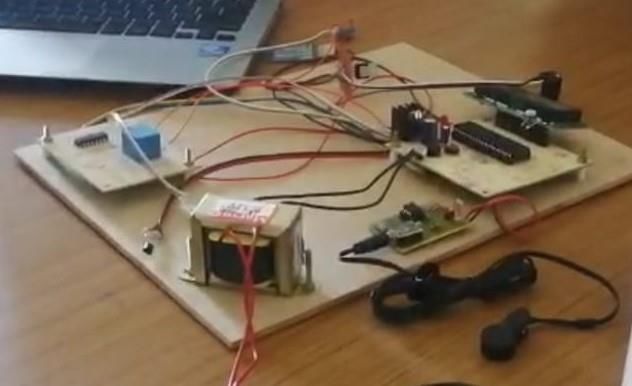
International Journal of Engineering Applied Sciences and Technology, 2020
                             Vol. 4, Issue 12, ISSN No. 2455-2143, Pages 683-690
                          Published Online April 2020 in IJEAST (http://www.ijeast.com)

             II.       LITERATURE SURVEY                             during ECG measurements, especially for prolonged use.
                                                                     Therefore, special consideration is taken regarding two
  1. TITLE: “A wireless wearable ECG sensor for long-                interfaces: the patient-sensor and sensor-cardiologist
term applications”                                                   interfaces. A convenient interface between the body and
                                                                     the sensor can be realized using a non-contact ECG
 AUTHOR: E. Nemati, M. J. Deen, and T. Mondal                        sensing method. Alternatives for           wet ECG that
                                                                     potentially provide comfortable patient-sensor interface
       ECG measuring is quite important to examine and               are dry-electrode or capacitively-coupled ECG (CC-ECG)
monitor a patient with heart problems. In a conventional             methods.
ECG measuring system, Ag/AgCl electrodes are attached
to the body, with conducive Manuscript received June 11,                             III.     EXISTING SYSTEM
2018; revised January 3, 2019; accepted January 5, 2019.
This work was supported by the Republic of Turkey                     This system consists of Bluetooth module and it is used to
Ministry of Development, Istanbul Development Agency                  transmit about the condition of patient’s brief. It Can’t
through the Innovative and Creative Istanbul Financial                able to transmit for a long range.
Support Program under Project TR10/16YNY/0136. Color
versions of one or more of the figures in this paper are                             IV.      PROPOSED SYSTEM
available online at Digital Object Identifier gel at the
electrode–skin interface, for signal acquisition to derive                      In proposed system we can send the data in IoT.
certain ECG leads. The conductive gel may be toxic and               Since the Bluetooth range is short, it can’t be well utilized.
cause skin irritation and the Ag/AgCl electrodes may                 This system has Bluetooth and IoT and it will inform
cause allergic reactions of the skin. Despite their high             about the brief condition. In addition it has pressure sensor
conductance initially, after prolonged use, Ag/AgCl, lose            which sense about tightness of the brief. Fast response,
their adherence resulting in signal loss and requiring               Easy to monitor patient’s condition.,
replacement. Chamadiya et al. [8] performed ECG
measurements with electrodes fitted on stretchers,                              Easy to use in Hospitals and in Homes. In order
wheelchairs, and patient beds Therefore, the use of                  to overcome the drawbacks of           existing system, our
Ag/AgCl electrodes for extended periods of patient                   system ensures safety of the humans mainly the elderly
monitoring is not appropriate. As alternatives, dry metal            people. Arteaga-Falconi et al. [28] utilized the benefits of
electrodes have been used and some studies have explored             smartphone and developed a mobile biometric
textile electrode (TE) that has a minimal effect on                  authentication by using measured ECG signal, We
patient’s normal lifestyle. The TE also has high contact             proposed “A Portable Wearable Tele ECG Monitoring
conductivity that is essential for a reliable ECG                    System”. Our system includes temperature and humidity
acquisition. TE can be used to pick up ECG, EEG, and                 sensor to know the inside temperature and humidity
electromyogram (EMG) signals and they have been                      conditions of the person, an ecg sensor and pressure sensor
proven to be as reliable as Ag/AgCl electrodes. In normal            are present to monitor the blood pressure and the heart rate
conditions, the conductance of TEbased ECG monitor is                of the person and if it’s below the values required then it is
regarded as equivalent to Ag/AgCl. Humid conditions are              displayed in mobile will be given in the particular area.
advantageous rather than detrimental to TE-based monitor
due to the electrolytic properties of sweat. The electrolyte                    V.          HARDWARE DESCRIPTION
includes molecules and ions. Therefore, it increases
electrical conductivity. Contactless ECG sensors provide              MICROCONTROLLER: PIC 16F877 is one of the most
the convenience of monitoring in nonhospital                          advanced microcontroller from Microchip. This controller
environments. Diverse ECG measurement systems have                    is widely used for experimental and modern applications
been reported including systems that can be fixed to chair,           because of its low price, wide range of applications, high
bed or can be adapted to clothes demonstrated a wireless              quality, and ease of availability. It is ideal for applications
ECG monitoring system which consisted of a belt                       such as machine control applications, measurement
stretched inside a T-shirt.                                           devices, study purpose, and so on. The PIC 16F877
                                                                      features    all    the    components         which     modern
2. TITLE: “Unobtrusive Sensing of Psychophysical                      microcontrollers normally have. The figure of a
Parameters” AUTHORS: M. Ouwerkerk, F. Pasveer, and                    PIC16F877 chip is shown below.
G. Langereis

         One of the main goals of this project is to
provide maximum convenience to the user or patient

                                                               684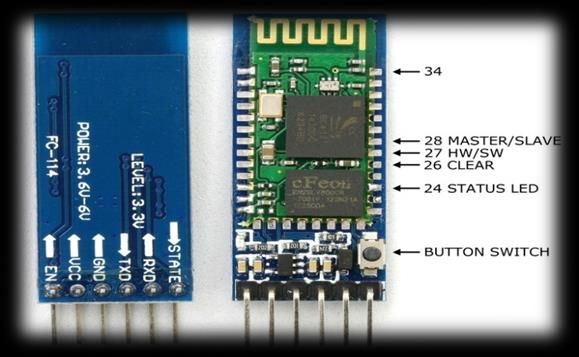
International Journal of Engineering Applied Sciences and Technology, 2020
Vol. 4, Issue 12, ISSN No. 2455-2143, Pages 683-690
Published Online April 2020 in IJEAST (http://www.ijeast.com)
Timer 2: 8 bit timer/counter with 8 bit period
registers with pre-scalar and post-scalar.
Two Capture (16bit/12.5nS), Compare (16
bit/200nS), Pulse Width Modules (10bit).
10bit multi-channel A/D converter
Synchronous Serial Port (SSP) with SPI (master
code) and I2C (master/slave).
Universal Synchronous Asynchronous Receiver
Transmitter (USART) with 9 bit address
detection.
Parallel Slave Port (PSP) 8 bit wide with external
Fig. 2.5: PIC Microcontroller RD, WR and CS controls (40/46pin).
Brown Out circuitry for Brown-Out Reset
Features of PIC16F877 (BOR).
The PIC16FXX series has more advanced and
developed features when compared to its previous series. Key features
The important features of PIC16F877 series is given
below Maximum operating frequency is 20MHz.
Flash program memory (14 bit words), 8KB.
General features Data memory (bytes) is 368.
EEPROM data memory (bytes) is 256.
High performance RISC CPU. 5 input/output ports.
ONLY 35 simple word instructions. 3 timers.
All single cycle instructions except for program 2 CCP modules.
branches which are two cycles.
2 serial communication ports (MSSP, USART).
Operating speed: clock input (200MHz),
PSP parallel communication port
instruction cycle (200nS).
10bit A/D module (8 channels)
Up to 368×8bit of RAM (data memory), 256×8
of EEPROM (data memory), 8k×14 of flash
memory. VI. LIQUID CRYSTAL DISPLAY
Eight level deep hardware stack.
Interrupt capability (up to 14 sources). LCD (Liquid Crystal Display) screen is an
Different types of addressing modes (direct, electronic display module and find a wide range of
Indirect, relative addressing modes). applications. A 16x2 LCD display is very basic module
Power on Reset (POR). and is very commonly used in various devices and circuits.
Power-Up Timer (PWRT) and oscillator start-up These modules are preferred over seven segments and
timer. other multi segment LEDs. The reasons being: LCDs are
Low power- high speed CMOS flash/EEPROM. economical; easily programmable; have no limitation of
Fully static design. displaying special & even custom characters (unlike in
Wide operating voltage range (2.0 – 5.56) volts. seven segments), animations and so on.A 16x2 LCD
High sink/source current (25mA). means it can display 16 characters per line and there are 2
Commercial, industrial and extended temperature such lines. In this LCD each character is displayed in 5x7
ranges. pixel matrix. This LCD has two registers, namely,
Low power consumption (
International Journal of Engineering Applied Sciences and Technology, 2020
                          Vol. 4, Issue 12, ISSN No. 2455-2143, Pages 683-690
                       Published Online April 2020 in IJEAST (http://www.ijeast.com)

                    Fig: 16x2 LCD

             VII.       TEMPERATURE SENSOR                                            Fig: Humidity Sensor

                                                                                      IX.        PRESSURE SENSOR
          Temperature is the most-measured process
variable in industrial automation. Most commonly, a
                                                                      A pressure sensor is a device which senses pressure and
temperature sensor is used to convert temperature value to
                                                                      converts it into an analog electric signal whose magnitude
an electrical value. Temperature Sensors are the key to
                                                                      depends upon the pressure applied. Since they convert
read temperatures correctly and to control temperature in
                                                                      pressure into an electrical signal, they are also termed as
industrials applications. A large distinction can be made
                                                                      pressure transducers. A pressure sensor is a device for
between temperature sensor types. Sensors differ a lot in
                                                                      pressure measurement of gasses or liquids. Pressure
properties such as contact-way, temperature range,
                                                                      sensors are used for control and monitoring in thousands
calibrating method and sensing element. The temperature
                                                                      of everyday applications. Pressure sensors can also be
sensors contain a sensing element enclosed in housings of
                                                                      used to indirectly measure other variables such as fluid/gas
plastic or metal. With the help of conditioning circuits, the
                                                                      flow, speed, waterlevel and altitude. The pressure sensor
sensor will reflect the change of environmental
                                                                      works on the principle of force applied will deflect the
temperature.
                                                                      diaphragm inside the pressure transducer.

                                                                                      Fig. Pressure Sensor

                                                                                            X.     BLUETOOTH
                     Fig: Temperature Sensor
                                                                      HC-05 Bluetooth Module is an easy to use Bluetooth SPP
                VIII.    HUMIDITY SENSOR                              (Serial Port Protocol) module, designed for transparent
                                                                      wireless serial connection setup. Its communication is via
         Humidity sensor is an instrument used for                    serial communication which makes an easy way to
measuring the moisture content in the environment.                    interface with controller or PC.
Humidity measurement instruments usually rely on
measurements of some other quantity such as temperature,
pressure, mass or a mechanical or electrical change in a
substance as moisture is absorbed. By calibration and
calculation, these measured quantities can lead to a
measurement of humidity. The measure of the amount of
water vapor present in the air. Humidity is calculated as
Relative humidity and Absolute humidity. For industrial
and medical environments relative humidity becomes an
important factor. A rise in the values of humidity, beyond
threshold levels, can lead to malfunctioning of control
systems, errors in weather prediction systems.

                                                                686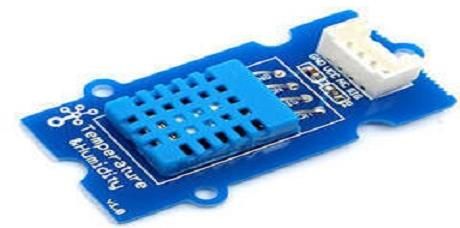
International Journal of Engineering Applied Sciences and Technology, 2020
                           Vol. 4, Issue 12, ISSN No. 2455-2143, Pages 683-690
                        Published Online April 2020 in IJEAST (http://www.ijeast.com)

                 Fig. 2.26: Bluetooth Module                                  Nowadays, IoT is one of the most advanced,
                                                                    efficient, and cost less technological solution which
         HC-05 Bluetooth module provides switching                  encompasses various hardware and software resources;
mode between master and slave mode which means it able              and allows remotely connected sensing devices to sense
to use neithereceiving nor transmitting data. GND:                  with more capabilities, provides efficiency and can be
Ground: Connect to Ground TXD: UART_TXD,                            monitored and controlled through deployed of existing
Bluetooth serial signal sending PIN: Connect with the               systems or infrastructures, resulting the physical World
MCU’s (Microcontroller and etc.) RXD PIN: RXD                       integration with computer controllers (or systems). As IoT
UART_RXD, Bluetooth serial signal receiving PIN:                    provides interconnectivity among various real-time
Connect with the MCU’s (Microcontroller and etc.) TXD               sensing sensors and PLC and other intelligent devices,
PIN. KEY: Mode switch input: If it is input low level or            therefore this technology will be an entity indicated for the
connect to the air, the module is at paired or                      more advance cyber-systems encircling the significant
communication mode. If it’s input high level, the module            developments, “such as smart grid, smart vehicle systems,
will enter to AT mode.                                              smart medical systems, smart cities, and others smart
                                                                                                                   systems.”
    XI.      ELECTRO CARDIOGRAM SENSOR

The heart functions as a pump for circulating blood to the
body by repetition of contraction and enlargement. The
cardiac electric potential is produced in the body during
heart contraction. Electrocardiogram can be measured by
leading these electrical signals to other body position and
amplify.
                                                                                    Fig. Internet of Things

                                                                              In early future, IoT has striven to provide
                                                                    advance or smart connectivity for variety of electronic and
                                                                    intelligent equipment’s or devices, IT-based systems and
                                                                    the more advanced services through deploying of various
                                                                    traditional and real-time protocols, networks domains, and
                                                                    system software/hardware applications, which will be a
                                                                    work followed by machine-to-machine technological
                   Fig. ECG Sensor                                  concept.

Specifications                                                                  XII.     SOFTWARE DESCRIPTION
Range of ECG sensor
                                                                              MPLAB® X IDE is a software program that runs
EKG - Range : 0~5㎷
                                                                    on a PC (Windows®, Mac OS®, Linux®) to develop
Resolution :    5㎶                                                  applications for Microchip microcontrollers and digital
Pulse - Range : 47 ~ 250bpm                                         signal controllers. It is called an Integrated Development
Resolution :     1bpm                                               Environment (IDE), because it provides a single integrated
                                                                    “environment” to develop code for embedded
Internet of things (IoT)                                            microcontrollers. MPLAB® X Integrated Development
                                                                    Environment        brings     many     changes    to   the
         Internet of things (IoT), is another advance
                                                                    PIC® microcontroller development tool chain. Unlike
technology in IT sector, provides internetworking for
                                                                    previous versions of MPLAB® which were developed
numerous of devices such as sensors, actuators, PLCs and
                                                                    completely in-house, MPLAB® X is based on the open
other electronic embedded smart devices and controls, and
                                                                    source Ne tBeans IDE from Oracle. Taking this path has
various software’s’ and provides systems network
                                                                    allowed us to add many frequently requested features very
configuration     and   connectivity,   which     enables
                                                                    quickly and easily while also providing us with a much
communication between these numerous devices for
                                                                    more extensible architecture to bring you even more new
information exchanging.
                                                                    features in the future.

                                                              687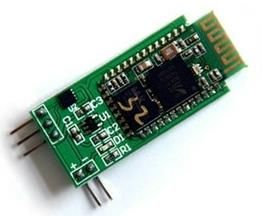
International Journal of Engineering Applied Sciences and Technology, 2020
Vol. 4, Issue 12, ISSN No. 2455-2143, Pages 683-690
Published Online April 2020 in IJEAST (http://www.ijeast.com)
XIII. FLOWCHART
Fig. 3.2: MPLAB® X IDE Project Manager
Using MPLAB: This section details the installation and
uninstall of MPLAB IDE. It is followed by a simple step-
by-step tutorial that creates a project and explains the
elementary debug capabilities of MPLAB IDE. Someone
unfamiliar with MPLAB IDE will get a basic
understanding of using the system to develop an
application. No previous knowledge is assumed, and
comprehensive technical details of MPLAB IDE and its
components are omitted in order to present the basic
framework for using MPLAB IDE.
Fig. 4.10: Flow chart
These basic steps will be covered
Features and installation XIV. CONCLUSION
Selecting the Device
Creating the Project In this paper, a wearable wireless Tele-ECG monitoring
Setting Up Language Tools system is demonstrated. The system has a novel
Naming the Project architecture which includes a singlet redesigned by
attaching TE, textile thread, snap fasteners, Velcro, soft
Adding Files to the Project
sponge, ECG front end, and MCU. The instruments on the
Building the Project
singlet acquire the ECG signal and transmit it to a cell
Creating Code phone. The ECG signal along with the measured HR is
Building the Project Again depicted on the cell phone and then transmitted to a server,
Testing Code with the Simulator which allows the physician to observe the signals through
the webpage and the smartphone. In addition, a holter-
based ECG measuring system has been designed to
compare TE-based system. Both systems have been
evaluated with 30 volunteers in standing, walking, and
going upstairs conditions. The highest SNR value of TE-
and holter-based systems is 45.62 and 45.89 dB,
respectively. The average correlation of ECG
measurements of two systems in each condition is 99.23%.
In addition, the HR is measured with both systems for
each group and with fingertip pulse oximeter for all
688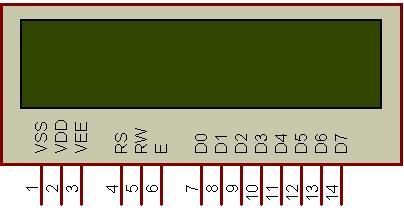
International Journal of Engineering Applied Sciences and Technology, 2020
                          Vol. 4, Issue 12, ISSN No. 2455-2143, Pages 683-690
                       Published Online April 2020 in IJEAST (http://www.ijeast.com)

patients. The smallest MAE and MAPE are obtained as                   As shown in figure if any abnormality in temperature is
1.1% and 1.83% between the TE-based system and the                    found then temperature sensor detects and it is displayed
pulse oximeter. Spano et al. [36] and Wang et al. [38] have           on LCD.
demonstrated the remote healthcare system by using dry
electrode placing a belt and a medical vest with battery life         Thus we find out the health of the person and the heart rate
approximately 7 and 2 days, respectively The wearable                 through ECG acquisition sensor and pressure sensor
system merges the latest technologies such as TE, BLE,                through the Bluetooth and Internet of Things(Iot).
smartphone, server, and webpage to utilize and combine
all the advantages into one telemonitor. The significant
advantage and novelty of the proposed telemedicine
technology is the combination of the best available
technologies and the addition of few other features. No
single reported device has all the features and benefits of
the proposed device: comfort in daily life, easy to clean,
high-quality ECG by TE, fast data transmission, long
battery life with approximately 14 days, remote multiple-
patient following by physicians, manual and automatic
emergency requests, medical history, and geographical
location tracking. The proposed system can potentially
reduce congestion of hospitals and the cost of the medical
examination since the patients can be monitored remotely
for heart problems.

                   XV.      FUTURESCOPE

In future the project can be upgraded in more ways such as
Instead of body worn ECG electrodes one can use the
capacitive electrodes which can be fitted in clothing
instead of sticking to the body using gel. Ultra low power                          Fig: LCD Displaying The Humidity
system can built with low power wireless protocol to save
power and long battery life. Solar powered ECG                                 As shown in figure if any changes occur in
electrodes can be used in future.                                     humidity then humidity sensor will detect and gives the
                                                                      information to mobile through IOT.
                       XVI.     RESULT
                                                                                           ACKNOWLEDGEMENT

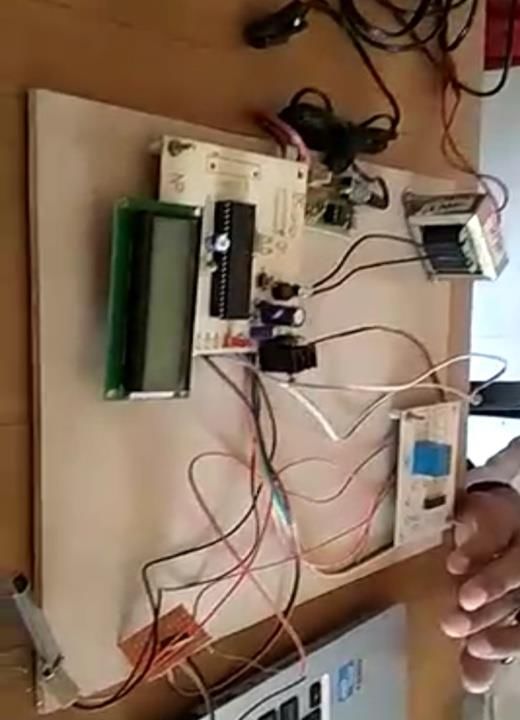
As shown in fig LCD displaying the kit is connected to                          The authors would like to thank Dr. B.
mobile using IOT.                                                     Karagozoglu for his suggestions and comments, B. Gun
                                                                      for his official support, and Y. Arik and S. Kocakaplan for
                                                                      their SolidWorks program support and Aluminum test,
                                                                      training, and research center for 3-D printing.

                                                                                         XVII.    REFERENCES

                                                                       [1] O. Sangpetch., and A. S. Faculty.(2016).’ “Security
                                                                      Context Framework for Distributed Healthcare IoT
                                                                      Platform,” Internet Things Big Data Technol. Next Gener.
                                                                      Healthc.,( pp. 71–76).
                                                                      [2] D. Domingos, A. Respício, and R. Martinho,(2017)
                                                                      “Reliability of IoT- Aware BPMN Healthcare Processes,”
                                                                      Internet Things Adv. Appl. Healthc.,( pp. 214–248).
          Fig: LCD Displaying The Temperature                         [3] J. Haouel;, H. Ghorbel, and H. Bargaoui,(2016)
                                                                      “Towards an IoT Architecture for Persons with
                                                                      Disabilities and Applications,” Internet Things Technol.
                                                                      Healthc.,( pp. 159–161).

                                                                689
International Journal of Engineering Applied Sciences and Technology, 2020
Vol. 4, Issue 12, ISSN No. 2455-2143, Pages 683-690
Published Online April 2020 in IJEAST (http://www.ijeast.com)
[4] D. T. Meridou, Maria-Eleftheria Ch. Papadopoulou, ECG monitoring system for multiple-patient remote
A. P. Kapsalis, P. Kasnesis, A. I. D. C. Z. P. I. S. Venieris, monitoring,” IEEE Sensors J., vol. 16, no. 13,( pp. 5452–
and D. I. Kaklamani,(2017) “Improving Quality of Life 5462).
with the Internet of Everything,” Beyond the Internet of [16] S.-C. Lee and W.-Y. Chung,(2014) “A robust
Things: Everything Interconnected,( pp. 377–408). wearable u-healthcare platform in
[5] B. Taji, S. Shirmohammadi, V. Groza, and M. wireless sensor network,” J. Commun. Netw., vol. 16, no.
Bolic,(2013) “An ECG monitoring system using 4, (pp. 465–474).
conductive fabric,” Med. Meas. Appl. Proc. (MeMeA),
IEEE Int. Symp., (pp. 309–314).
[6] L. Bor-Shyh, W. Chou, W. Hsing-Yu, H. Yan-Jun,
and P. Jeng-Shyang, (2013)“Development of Novel Non-
Contact Electrodes for Mobile Electrocardiogram
Monitoring System,” IEEE J. Transl. Eng. Heal. Med.,
vol. 1, no. October, (pp. 1–8).
[7] D. N. Mathias, S. Il Kim, J. S. Park, and Y. H.
Joung,(2015) “Real time ECG monitoring through a
wearable smart T-shirt,” Trans. Electr. Electron. Mater.,
vol. 16, no. 1,( pp. 16–19).
[8] M. Abu-saude and B. I. Morshed,
(2016)“Polypyrrole (PPy) Conductive Polymer Coating of
Dry Patterned Vertical CNT (pvCNT) Electrode to
Improve Mechanical Stability,” 2016 IEEE Top. Conf.
Biomed. Wirel. Technol. Networks, Sens. Syst.,( pp. 84–
87).
[9] A. Dionisi, D. Marioli, E. Sardini,
and M. Serpelloni, (2016)“Autonomous
wearable system for vital signs measurement with energy-
harvesting
module,” IEEE Trans. Instrum. Meas., vol. 65, no. 6,( pp.
1423–1434).
[10] C. Gomez, J. Oller, and J. Paradells, (2012)
“Overview and evaluation of
Bluetooth low energy: An emerging low-power wireless
technology,”Sensors, vol. 12, no. 9, (pp. 11734–11753).
[11] J. M. Bland and D. G. Altman, (1986)“Statistical
methods for assessing
agreement between two methods of clinical
measurement,” Lancet,vol. 327, no. 8476, (pp. 307–310).
[12] Z. Zhang, Z. Pi, and B. Liu, “TROIKA: (2015)A
general framework for heart rate monitoring using wrist-
type photoplethysmographic signals during
intensive physical exercise,” IEEE Trans. Biomed. Eng.,
vol. 62, no. 2,(pp. 522–531).
[13] J. Dong, J.-W. Zhang, H.-H. Zhu, L.-P. Wang, X.
Liu, and Z.-J. Li,(2012)“A remote diagnosis service
platform for wearable ECG monitors,” IEEE Intell. Syst.,
vol. 27, no. 6, (pp. 36–43).
[14] U. Satija, B. Ramkumar, and M. S. Manikandan,
(2017)“Real-time signal
quality-aware ecg telemetry system for IoT-based health
care monitoring,”IEEE Internet Things J., vol. 4, no. 3,
(pp. 815–823).
[15] E. Spanò, S. Di Pascoli, and G. Iannaccone,
(2016)“Low-power wearable
690You can also read


