A practical case of individual management of body weight - Dr. Sylvie Bidot -Maurant, Team doctor Jérémie Azou, former rower in Team France Frensh ...
←
→
Page content transcription
If your browser does not render page correctly, please read the page content below
A practical case of individual management of
                 body weight

         Dr. Sylvie Bidot –Maurant, Team doctor
       Jérémie Azou, former rower in Team France
                 Frensh rowing federation

                             Medigames 2019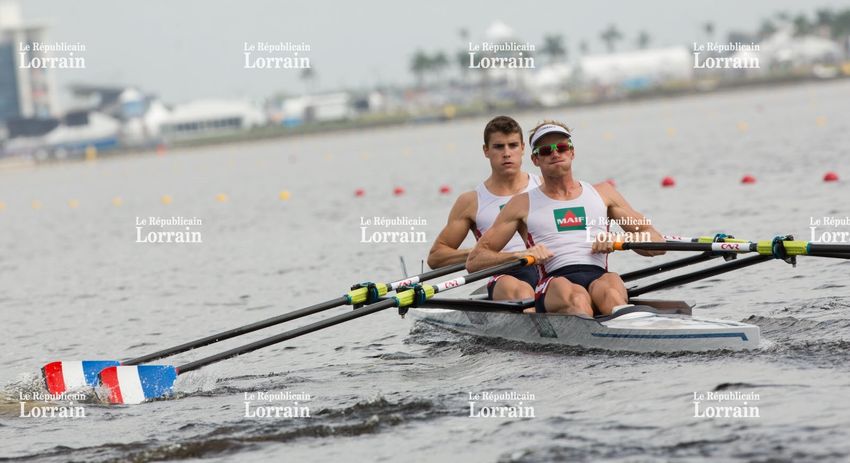
Presentation of the discipline : the boat

                      The clipboard

Swimming lady
                Footboard                                 Whole body muscular
                                                          work:
                                                          - Arms
                                                          - Trunk
                                                 Tracks   - Legs
                                       Wearing

                                      Slide
Presentation of the discipline : the different types of boats

                                                                2 rowers

                                                                1 oar

                                                                2 oars

                                                                1 oar with a cox

                                                                4 rowers

                                                                1 oar

                                                                2 oars

                                                                1 oar with a cox

                                                                2 oars with a cox

                                                                8 rowers

                                                                1 oar with a cox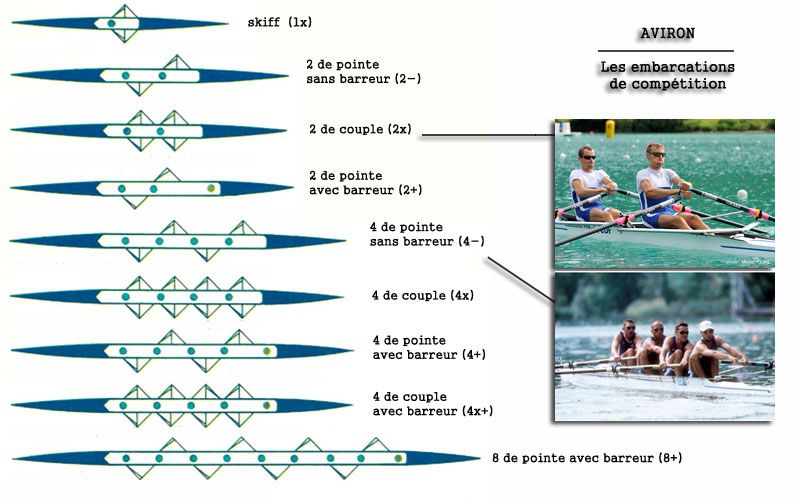
Azou Jérémie presentation ( nicknamed « superman »)
 Lightweight , 2x
  - A gold medal at the Olympics
     - 2 gold and 4 silver medals at World championships
        - 4 gold et 1 bronze medals at European championships
          - 14 gold, 6 silver et 3 bronze medals at France championships

He has managed to lead a career of outstanding high-level sportsman and a professional career
by becoming an osteopathic kinesitherapist

He currently lives in Vancouver
Presentation of the discipline: the weight categories

Light weights ( LW)

Men : average 70 kg or 154,32 lb
          maximum 72,5 kg or 159,83 lb
Women : average 57 kg or 125, 66 lb
          maximum 59 kg or 130 lb

All the others have no weight constraints off for performance.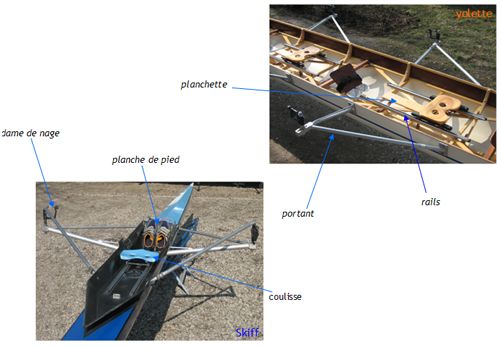
Training: the same whatever the weight categoryrie:

Two training sessions per day
Competitive period: 200 days a year

Boats : - 3106,856 to 3728,227 miles, or 5 000 to 6000 km a year
           - 12,4274 miles , or 20 km a day (11,1847 miles ,or 18 km as competitions approach
with longer recovery sessions)
           - intensity variation
           - technical session and / or physical progression
Bodybuilding: two to three sessions per week

-   15 movements
-   30/70 repetitions depending on the movement
-   Without stopping for 25 to 30 minutes
-   5 minutes of rest
-   3 to 4 rounds per session
-   1h30 to 2 hours of bodybuilding + warm up + recovery
    + stretching

Very demanding workouts during periods of caloric
restriction: works on gestures, rhythm, cadence,
amplitude.
- Work in C2 is 200 laps at 50 to 60%
- Work in C1 maximum load is at 75 to 100%,
approaching competitions.
Dietary advice: balanced diet !!!!!                                       well hydrated
- Stop - nibbling :
         - sweet foods
            - sweet drinks                                                not enough hydrated
               - prepared dishes
                   - fast food
              - sauces (ketchup, mayonnaise, etc ...)                     dehydrated

- Drink all day long (good hydration with the color of the urine)
- Normal hydration, without restriction 48 hours before the competition
Macronutrments: energy and structural contribution
- Carbohydrates: starchy foods (complete), legumes
No carbohydrate index or high glycemic load
Pas de glucides à in
- Protein: lean meat, fish, egg, dairy, etc ...
- Lipids: favor omega 3
- oil: rapeseed, olive, flax
- oleaginous: nuts, almonds,
- small fatty fish
- avocado fruitDeficiency in energy supply:
Male: decreased testosterone (bone density, fatigue fracture?)
Woman: Triat syndrome of female athletes (FAT: female athlete triad):
- Dietary behavior disorder: Decrease in energy intake too important: negative energy
balance
- amenorrhea
- osteoporosis
This leads to a decrease in plasma estrogens
Main consequence: increased risk of fatigue
fracture (costale +++), especially during
heavy training load.Micronutrients: allow the proper cellular, enzymatic, etc ...
vitamins
- trace elements
- antioxidants (polyphenols, flavonoids, etc ...)
- minerals
And also
Essential amino acids
Polyunsaturated fatty acids
(omega 3)Micronutrients: Avoid deficiencies +++++
Eat:
- Whole grains
- Legumes
- Fruits and vegetables (raw and cooked)
- Spices
Have 5 colors on your plate (can cover daily needs)
Ban the systematic use of food supplements except in case of
proven deficiencies
(drifts towards doping)Role of the sports doctor: especially outside France team internships
- Be attentive !!!!
- Regular interrogation (by remote questionnaire if necessary)
- Regular clinical examination without forgetting the skin folds
- Screening for deficiencies and risk factors for injury and non-performance
- Overtraining screening
- Research of technopathy in case of pain (do not
hesitate to go on the water to watch the workouts)
Adapt
Personalize
Reason
Reassure
Support must be individual and personalized
There is no "global recipe", each athlete loses
weight in his own wayRecovery: not to forget even in caloric restriction !!!!!
- Session of strength: 20 g of protein and 20 g of carbohydrates
- Endurance session: 20 g of protein and 80 g of carbohydrates
In 30 minutes !!!
Hours of sleep
Recovery massage
Cryotherapy or other means depending on the feelings of each
Recovery just after the competition at the
edge of the pool given on the pontoon by the
doctorThe doctor must be in total symbiosis with the athlete thank you for your attention
You can also read


