ACTION PLAN FOR THE DALMATIAN PELICAN - (Pelecanus crispus) IN EUROPE - Compiled by
←
→
Page content transcription
If your browser does not render page correctly, please read the page content below
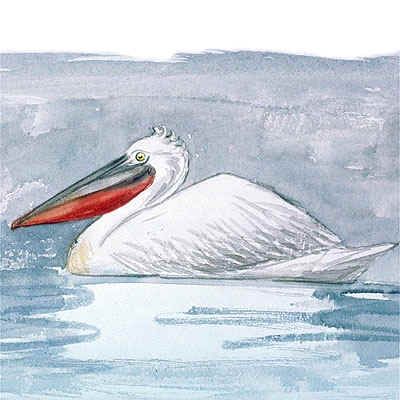
ACTION PLAN FOR THE DALMATIAN PELICAN
        (Pelecanus crispus) IN EUROPE

                       Compiled by:

A J CRIVELLI (Station Biologique de la Tour du Valat, France)
ACTION PLAN FOR THE DALMATIAN PELICAN
(Pelecanus crispus) IN EUROPE
Compiled by:
A. J. CRIVELLI (Station Biologique de la Tour du Valat, France)
With contributions from:
M. Anagnostopoulou (Greek Biotope/Wetland Centre)
C. Athanasiou (WWF-Greece)
G. Catsadorakis (Society for the Protection of Prespa, Greece)
G. Daoutopoulos (University of Thessaloniki, Greece)
E. Daroglou (Society for Protection of Nature and Ecodevelopment, Greece)
T. Dimalexis (University of Thessaloniki, Greece)
B. Hallmann (Greece)
G. Handrinos (International Wetlands and Waterfowl Research Bureau National Delegate,
Ministry of Agriculture, Greece)
D. Hatzilakou (Greece)
B. Heredia (BirdLife International, U.K.)
H. Jerrentrup (Society for Protection of Nature and Ecodevelopment, Greece)
S. Kouvelis (WWF-Greece)
M. Malakou (Society for the Protection of Prespa, Greece)
M. Marinov (Danube Delta Institute, Romania)
T. Michev (Institute of Ecology, Bulgaria)
T. Nazirides (University of Thessaloniki, Greece)
C. Papaconstantinou (Hellenic Ornithological Society, Greece)
N. Peja (University of Tirana, Albania)
N. Petrov Dilchev (Institute of Ecology, Bulgaria)
M. Pyrovetsi (University of Thessaloniki, Greece)
P. Rose (International Wetlands and Waterfowl Research Bureau, U.K.)
L. Rose (Royal Society for the Protection of Birds, UK)
G. Sarigul (Turkish Society for the Protection of Nature)
V. Taylor (International Wetlands and Waterfowl Research Bureau, U.K.)
J. van Vessem (International Wetlands and Waterfowl Research Bureau, U.K.)
Timetable
First draft: September 1994
Workshop: October 1994
Second draft: November 1994
This version: April 1996Reviews This action plan should be reviewed and updated every five years. An emergency review will be undertaken if sudden major environmental changes, liable to affect the population, occur within the species' range. Geographical scope The action plan needs to be implemented in Albania, Bulgaria, Federal Republic of Yugoslavia (Serbia), Greece, Romania, Russian Federation, Turkey and Ukraine. Acknowledgements We wish to thank Janine van Vessem, Paul Rose, Gernant Magnin and Petar Iankov for making useful comments on the draft of this action plan.
SUMMARY....................................................................................................................................... 1

INTRODUCTION............................................................................................................................ 2

PART 1. BACKGROUND INFORMATION .............................................................................. 2

Distribution and population............................................................................................................ 2

Life history......................................................................................................................................... 3
        Breeding ................................................................................................................................ 3
        Wintering .............................................................................................................................. 4
        Habitat requirements .......................................................................................................... 4

Threats and limiting factors............................................................................................................ 5
      Disruption of hydrological regimes and habitat degradation........................................ 5
      Contamination by heavy metals and pesticides............................................................... 5
      Powerlines............................................................................................................................. 5
      Disturbance, nest destruction and shooting ..................................................................... 5

Conservation status and recent conservation measures.............................................................. 6

PART 2. AIMS AND OBJECTIVES ..........................................................................................12

AIMS ................................................................................................................................................12

OBJECTIVES.................................................................................................................................12

1. POLICY AND LEGISLATIVE ...............................................................................................12

2. SPECIES AND HABITAT PROTECTION...........................................................................14

3. MONITORING AND RESEARCH ........................................................................................15

4. PUBLIC AWARENESS AND TRAINING............................................................................16

REFERENCES...............................................................................................................................17

ANNEX 1. RECOMMENDED CONSERVATION ACTIONS BY COUNTRY .................20
SUMMARY
The Dalmatian Pelican Pelecanus crispus is classified today as Vulnerable within its whole
geographical distribution, from the Federal Republic of Yugoslavia to Mongolia (Collar et al.
1994). Its present world breeding population is estimated at 3,215–4,280 pairs, more than 80%
being in the former U.S.S.R. – Kazakhstan, Russian Federation, Turkmenistan, Ukraine and
Uzbekistan. The European population occupies Albania, Bulgaria, Greece, Romania, Russian
Federation, Turkey, Ukraine and Federal Republic of Yugoslavia (Serbia only).
Rose and Scott (1994) estimate the world population to be c.12,000–16,000 individuals. Since
the second half of the nineteenth century the Dalmatian Pelican has never stopped declining, due
to disturbance and degradation of wetlands, hunting and colony destruction by fishermen.
Threats and limiting factors
* Drainage and habitat degradation in breeding and wintering areas - critical
* Powerlines - high
* Disturbance, nest destruction and shooting - high
* Contamination by heavy metals and pesticides - medium to low
* Climatic changes - unknown
Conservation priorities
* Legal protection of the species and its habitat during breeding and wintering in all
range states - essential
* Sustainable management of wetlands - essential
* Establishment of wardened non-intrusion zones around breeding colonies - essential
* Appropriate vegetation and hydrological management - essential
* Monitoring of breeding, wintering numbers and ecological change at key sites -
essential
* Burial of powerlines or replacement with thick cable - high
* Monitoring of conservation measures taken and hydrological studies - high
* Public awareness campaign aimed at decision makers, hunters, fishermen and local
communities - highINTRODUCTION The Dalmatian Pelican Pelecanus crispus is classified by IUCN as globally threatened in the category Vulnerable (Groombridge 1993), and this is unchanged under the new criteria (Category C2a: small population and declining with severe fragmentation) (Collar et al. 1994, Mace and Stuart 1994). At the European level it is considered Vulnerable (Tucker and Heath 1994). The species is included on Appendix II of the Bern Convention, on Annex I of the EU Wild Birds Directive, on Appendix I of CITES, on Appendix II of the Bonn Convention and in the Agreement for the Conservation of African-Eurasian Migratory Waterbirds (AEWA) under the Bonn Convention. This action plan identifies the main threats and the main actions to be taken in order to enhance the population of this species and restore its habitat. It covers c.30% of the species' world breeding population and 25–30% of its wintering population. It is therefore necessary to implement the plan not only in Europe, but over the whole distribution of the species. Crivelli and collaborators (pers. comm.) have hypothesised that there are several subpopulations almost totally isolated from each other; it is thus practicable to implement the action plan as a first step in Europe only, and subsequently to extend it to the whole range of the species. PART 1. BACKGROUND INFORMATION Distribution and population During ancient times pelicans appear to have been spread widely through western Europe. Considering that the temperature during the Paleolithic period was 2–3°C higher than today it is possible that the Dalmatian Pelican bred over a large part of western Europe at this time (Crivelli and Vizi 1981). During this century and last, a strong decline has occurred in Europe with breeding colonies disappearing in former Yugoslavia, Hungary, Albania, Greece, Mongolia, former U.S.S.R., Romania and Turkey (Crivelli and Vizi 1981). Today, the species breeds in Albania, Bulgaria, Federal Republic of Yugoslavia (Serbia only), Greece, Kazakhstan, Mongolia, Romania, Russian Federation, Turkey, Turkmenistan, Ukraine and Uzbekistan (Crivelli 1994). The best estimate of the world population is 3,215–4,280 pairs (Crivelli 1994). The former U.S.S.R. (Kazakhstan, Russian Federation, Turkmenistan, Ukraine and Uzbekistan) harbours 80–84% of this, and the next most important country, Greece, has 6–8%. European numbers (Table 1) are estimated at 886–1,204 pairs (c.30% of the world population).
Table 1. Numbers of breeding Dalmatian Pelicans Pelecanus crispus in Europe (modified from
Crivelli 1994).

    Country                  Breeding pairs       Number of              References
                            (year of census)       breeding
                                                     sites
    Albania                 40–70 (1990s)              1        Peja et al. (in press)
    Bulgaria                70–90 (1990s)              1        T. Michev (pers. comm.)
    Fed. Rep. of            10–20 (1980s)              1        O. Vizi (pers. comm.)
    Yugoslavia
    (Serbia only)
    Greece                 190–260 (1990s)             2        Catsadorakis et al. (in
                                                                press),
                                                                A. J. Crivelli and
                                                                D. Hatzilacou
                                                                (unpubl. data)
    Romania                 70–150 (1990s)             1        B. Kiss and M. Marinov
                                                                (pers. comm.)
    Russian                    400–450                4–5       Crivelli et al. (1994)
    Federation
    Turkey                 100–150 (1990s)            4–5       Peja et al. (in press)
    Ukraine                      6–14                  1        Lysenko (1994)
    Total                     886–1,204              15–17

The wintering sites of the Dalmatian Pelican in south-east Europe, Turkey and former U.S.S.R.
are well-known (Crivelli et al. 1991a), but this does not apply to the Middle East (Iran, Iraq) or
Asia (Pakistan, India, China) (Crivelli et al. 1991b), and several sites in these areas probably
remain to be discovered. The January 1993 mid-winter counts in the Black Sea and
Mediterranean (Albania, Bulgaria, Greece, Syria and Turkey) gave a figure of 1,463 individuals
(P. Rose pers. comm.) and in the Middle East and Asia 4,803 individuals (Perennou et al. 1994).
These numbers are low considering that the world population in January (including immatures)
should be 12,000–16,000 individuals.

Life history

*      Breeding
       Breeding colonies are located on lakes, deltas and estuaries, preferably within reedbeds.
       Breeding birds usually arrive in February, and laying generally occurs 10 days later. The
       birds lay up to four eggs and the average clutch is 1.8. Incubation lasts 31–32 days and
       fledging takes 11–12 weeks (Crivelli et al. 1991b). The main mortality during breeding is
       at the egg stage (Crivelli 1987); hatching success varying from 35 to 70%. Contrary to
common belief, the Dalmatian Pelican can easily rear two chicks and fledging success in
a well-protected colony is over one chick per nest, up to a maximum of 1.35
(Catsadorakis et al. in press). Even in a protected area, however, breeding success can be
less than one chick fledged per nest. At Srébarna, a Nature Reserve in Bulgaria, for
example, average success between 1955 and 1993 was 0.84 chicks per nest with a
coefficient of variation of 30% (T. Michev verbally 1994); this lower success might be
explained by predation, especially by wild boars Sus scrofa destroying nests with eggs or
killing chicks.
With the present state of knowledge of the population dynamics of pelicans it would
appear that a success rate in the Dalmatian Pelican of 0.8 chicks per nest should be at
least sufficient to keep the population stable. A success rate of over one chick per nest
should ensure an increasing population (Crivelli 1987).
* Wintering
The breeding areas are vacated in autumn, and the main winter quarters are located in
coastal areas of the Mediterranean and Caspian Seas and the Persian Gulf, often in deltas.
There are few wintering sites inland, when unfrozen water and a rich food supply are the
key factors. Suitable sites for night-roosting, safe from terrestrial predators, are also an
important requirement.
* Feeding
Dalmatian Pelicans eat only fish and feed alone or in groups (Crivelli et al. 1991b). The
composition of the diet depends almost entirely on the relative abundance of prey
species, on their spatial and temporal distribution, and to a lesser extent on their
behaviour. In lagoon systems the birds will catch mainly migratory fish such as eels
Anguilla anguilla, mullets Mugil and sedentary fish such as gobies Gobius and sand-
smelts Atherina (Crivelli 1987, Peja et al. in press, A. Crivelli, D. Hatzilacou and Ebert
verbally). In inland fresh waters, preferred species are Cyprinidae such as roach Rutilus,
bleak Alburnus, rudd Scardinius, carp Cyprinus carpio and others (Andone et al. 1969,
Crivelli and Vizi 1981, Crivelli 1987, Romashova 1994). Fish taken range in length from
3 to 50 cm. Birds sometimes feed far away from the breeding colony.
* Habitat requirements
Dalmatian Pelicans are absent from cold regions, although they will tolerate temperatures
below 0°C for short periods (7–10 days). Originally, the species was probably found only
in fresh water inland, but today there are a few colonies in brackish lagoon ecosystems in
the Mediterranean region (Peja et al. in press).
For breeding and roosting the birds need areas totally isolated from the mainland by
water (e.g. islands, sand banks, reedbeds surrounded by water) in order to avoid
predation by mammals (foxes, dogs, wolves, wild boars, jackals, etc.) and disturbance.
The absence of adequate roosting areas can prevent pelicans using a site at any time of
year.
The hydrological regime within wetlands is a further key factor in successful breeding
(Catsadorakis et al. in press), and also in the pelicans' use of wetlands for other purposes.
For example, the presence of shallow water is important for the successful spawning of
fish which form the birds' food, and Dalmatian Pelicans need wetlands with a rather highdensity of fish. Water transparency and depth are not important factors for successful
foraging.
Threats and limiting factors
* Disruption of hydrological regimes and habitat degradation in breeding and
wintering areas
This is the most important factor in the decline in most countries. Drainage of wetlands
and development schemes (land reclamation and irrigation) caused the abandonment of
many breeding colonies and has reduced considerably the number of wetlands which can
be used by Dalmatian Pelicans. Burning of reedbeds in spring is a common practice
which could be very detrimental to the breeding habitat. Long-term eutrophication of
wetlands is also considered a negative factor.
Water management is a common feature in all wetlands today. Such management and
exceptional climatic events (drought or flood) have important impacts on the breeding of
pelicans (Catsadorakis et al. in press) and on their use of wetlands (e.g. Lake Kerkini in
Greece: Pyrovetsi 1990, Pyrovetsi and Papastergiadou 1992, Crivelli et al. 1995a,b).
Other striking examples are the recent ecological changes in the Aral Sea in Kazakhstan
or at Lake Lop in China which have led to the disappearance of the breeding populations
of Dalmatian Pelicans.
Importance: critical
* Contamination by heavy metals and pesticides
High concentrations of DDE were found in eggs collected at Lake Prespa (northern
Greece) in 1984–1986, eggshell thickness being 12–20% less than pre-1947 values,
dating from before DDT was in use (Crivelli et al. 1989). Later investigations (1989)
showed a sharp decrease in the concentrations of chlorinated hydrocarbons. Other recent
studies have also detected concentrations of heavy metals and chlorinated hydrocarbons
in Dalmatian Pelican eggs (Cook 1992, Albanis 1993, T. Michev verbally 1994).
Poslavski and Chernov (1994) showed that hatching success is very low mainly due to a
low eggshell thickness, a direct consequence of the heavy use of pesticides for cotton
cultivation in the Aral Sea area.
Importance: medium to low
* Powerlines
Crivelli et al. (1988) identified powerlines as a significant cause of mortality in one
wintering area, mainly through collision, and the problem was also encountered
subsequently at a breeding site (Crivelli et al. 1991b) and in many other areas. Removal
of powerlines, the addition of plastic flags as markers, and the use of thick cables have
been tested with successful results (Crivelli et al. 1991a, G. Catsadorakis and A. Crivelli
verbally 1994, H. Jerrentrup verbally 1994).
Importance: high
* Disturbance, nest destruction and shooting
In many countries, disturbance is a major threat, especially in the breeding season (e.g.
birdwatchers and photographers, normally from western countries). Destruction of
colonies by fishermen still occurs, though it is becoming rarer. Shooting, mainly fromautumn to spring, is still common in all countries, and it is not unusual to find shot birds
in most of the wetlands used by Dalmatian Pelicans. There are also numerous reports of
pelicans shot at fish-farms or aquaculture installations in Greece, Israel, Romania, former
U.S.S.R. and former Yugoslavia (Heins et al. 1990, Pyrovetsi 1990, G. Handrinos
verbally 1994, T. Nazirides verbally 1994, G. Catsadorakis verbally 1994, D. Hatzilakou
verbally 1994, Society for the Protection of Nature in Israel verbally 1994). Such
shooting is a threat which has not been correctly assessed up to now.
Importance: high
* Climatic changes
Krivenko et al. (1994) have shown that cyclical changes in climate could be important in
determining distribution and abundance of pelicans in arid and semi-arid regions (e.g.
Kazakhstan). In terms of short-term climatic cycles, an increase in pelican numbers is
observed in cool, wet periods and a decline in warm, dry periods. With global warming,
and an increase of man's influence on water management, the importance of this limiting
factor could increase in the future.
Importance: unknown
Conservation status and recent conservation measures
Note: “protected area” means “designated as protected area”.
* Albania
Legislation. The Dalmatian Pelican has been protected since 1988 by the “Hunting Law”.
Distribution. Breeding: Karavasta lagoon.
Wintering and migration: all along the Adriatic coast and lakes in central
Albania.
Key sites. Breeding: Karavasta lagoon (unprotected).
Foraging: Lake Megali Prespa.
Wintering: Karavasta and Narta lagoons.
% of population in protected areas. Breeding: 0%.
Wintering: 0%.
Conservation efforts.
• Warden hired during the breeding season (April–July) since 1992 at Karavasta lagoon under
the International Pelicans Research, Management and Conservation Programme (Project leader:
A. J. Crivelli).
Research. See Barbieri et al. (1986), Lamani (1989), Gjiknuri and Peja (1992), Hagemeijer
(1994), Peja et al. (in press), Vangeluwe et al. (in press).
* Bulgaria
Red Data Book. Listed as Threatened (Anon. 1985).
Legislation. Protected by law since 1948. The species is listed in the Act 342/21.04.1986 of the
Ministry of Environment and a fine of US$460 plus an additional penalty is planned for any
killed bird or collected egg. Hunting is banned at all wintering or passage sites.
Distribution. Breeding: Lake Srébarna.
Wintering and migration: Black Sea coast area and a few inland wetlands.
Key sites. Breeding: Lake Srébarna (Nature Reserve).
Foraging: Danube river, Romanian wetlands north from Srébarna.Wintering and migration: Lakes Burgas, Atanasovo and Mandra, and Ovcharitza
and Studen kladenetz reservoirs.
% of population in protected areas. Breeding: 100%.
Wintering: 25%.
Conservation efforts.
• Building one artificial raft; no successful breeding (T. Michev and colleagues).
• Burning the reedbed and fencing the breeding colony as measures against predators, mainly
wild boars and jackals (T. Michev and colleagues, BSPB); led to an increase in the number of
breeding birds.
• Public awareness programme with permanent TV display of the breeding colony at Srébarna
(Srébarna Nature Reserve Authorities).
• Educational and public awareness materials involving the media to create a positive attitude
towards the species.
• Updating the Act, protecting the species by increasing the fine to US$447.80 for killing a bird
and collecting eggs.
• National Wetlands Plan including priority actions for the conservation of the most important
wetlands in Bulgaria (1993) (Ministry of Environment and BSPB).
• Preparation of a management plan for Srébarna Nature Reserve with the support of the Ramsar
Convention (Ministry of Environment).
• Attempts to improve the enforcement of the legislation and to ensure wardening of the pelican
colony at Srébarna by employing four wardens (Ministry of Environment).
Research.
• Monitoring and ringing at the Srébarna colony.
• Monitoring of the Dalmatian Pelicans migrating in autumn over the Burgas area since 1978 (T.
Michev and colleagues, BSPB).
• Midwinter counts since 1977 (T. Michev and colleagues, BSPB).
See also Michev (1981), Anon. (1985), Simeonov et al. (1990), Crivelli et al. (1991b).
* Greece
Red Data Book. Listed as Endangered, category 1 (in immediate danger of extinction)
(Handrinos 1992).
Legislation. Declared a “species of high protection” (Decision of Ministry of Agriculture,
414985/1985); hunting of it is thus prohibited.
Distribution. Breeding: northern Greece (Prespa) and south-west Greece (Amvrakikos).
Wintering and migration: northern Greece, and south-west Greece.
Key sites. Breeding: Prespa lakes (National Park) and Amvrakikos Gulf (Tsoukalio and
Logarou lagoons, Ramsar site).
Wintering and migration: Kerkini, Lakes Langada and Kastoria, Porto-Lagos
area, Evros and Axios deltas, Amvrakikos Gulf and Mesolonghi.
% of population in protected areas. Breeding: 100%.
Wintering: 90%.
Conservation efforts.
Two round table meetings of experts and interested parties were held in 1990 with a view to
drawing up a national action plan. Although this has not been published, it remains the main
single source of information on the species in Greece. Specific conservation measures have
included:
• Surveillance of the Tsoukalio breeding colony (Amvrakikos area) over three years (HOS).
• Dismantling of a powerline in Porto-Lagos (Crivelli et al. 1988).
• Installing thick cable at Porto-Lagos (H. Jerrentrup verbally 1994).• Continuing efforts to remove all pelicans held illegally as pets or as tourist attractions (Forestry
Service, Ministry of Agriculture verbally 1994).
• Building of three artificial islands at Kerkini by the Sidirokastro Forest Service in 1993: no
breeding attempts in 1994 (T. Nazirides verbally 1994).
• Publication of a leaflet, a poster and other relevant awareness materials by the Society for the
Protection of Prespa. (M. Malakou verbally 1994).
• A study for the zoning of Prespa National Park according to the EU Wild Birds Directive
(Catsadorakis et al. 1988).
• A study at Lake Kerkini, 1982–1994, on the effects on vegetation, fisheries and waterbirds of
raising water-levels at this Ramsar site (Crivelli et al. 1995a,b).
• Education programme at Amvrakikos (HOS).
• In Prespa, which holds the largest colony in Greece, a continuous effort has been made since
1983 by IPRMCP in collaboration with local authorities, public services and NGOs (especially
the locally based SPP) to ensure the safety and increase of the breeding Dalmatian Pelicans.
Among numerous activities, the following should be mentioned:
- Continuous monitoring, 1983–1994, of pelican numbers, nesting attempts, breeding
success and population dynamics; environmental factors are also monitored in order to
understand the causes of population change.
- Long-term study, 1984–1994, on the fish populations of Prespa lake in parallel with the
study of the diet of pelicans.
- In 1988 and 1989 in collaboration with the Greek National Power Corporation, the
marking of powerlines with plastic flags. In 1990, because the flags had deteriorated, the
conventional dangerous powerlines were substituted with one thick (and thus more
visible) insulated cable; this has proved very effective, and no collisions have occurred
since.
- In 1988–1994 a detailed survey and study of each pelican breeding site was carried out
to identify nest-site preferences in order to permit construction of artificial nest-sites.
- In 1987 a series of artificial rafts, 3 x 4 m and made with timber and reeds, was built
during the winter. In 1988 one raft was installed, but was used only for roosting; in 1989
four pairs bred successfully on it. In 1990, three rafts were installed and 21 nests were
made on them; eggs were laid, but were abandoned due to human disturbance. In 1991,
nine rafts were installed, and these successfully hosted 52 nests of White Pelicans P.
onocrotalus and Dalmatian Pelicans.
- 1985–1986, 1990–1994: pelicans monitored at Lake Kastoria, an important wetland for
these birds during the breeding season.
- 1993–1994: education programme with a focus on pelicans, by SPP with IPRMCP as
consultants; more than 7,000 students attended.
- 1993–1994: education programme of the SPP on the values of Prespa and the pelicans
for all schools of Prespa (IPRMCP collaborators as consultants).
- Wardening of the breeding colony by volunteers in 1989 (at the request of the Prespa
Centre for Man and Nature) organised by IPRMCP. In 1990–1994 a warden was hired
with funds from WWF and IPRMCP at the request of SPP.
- 1994: publication of an awareness leaflet on pelicans for the visitors, by SPP written by
IPRMCP scientists with data from 1983–1994.
- 1994: publication of a poster on pelicans by SPP.
- 1994: hiring of a local fisherman by SPP for three months during the breeding season to
distribute awareness materials to visitors to prevent disturbance of the pelican colony.
- 1983–1994: continuous collaboration of SPP and IPRMCP scientists with local
fishermen to minimise disturbance during the breeding season.- Continuous collaboration of SPP and IPRMCP scientists with the Florina Forest
Service to stop disturbance of the breeding colonies by visitors.
- 1991: installation of signs with information on the vulnerability of pelican colonies and
the ban on approaching them, by the Florina Forest Service, at the request of and under
the advice of SPP and IPRMCP.
- 1991–1994: marking a non-intrusion zone around the main pelican breeding island with
the installation of floating buoys in collaboration with the Forest Service and SPP and
IPRMCP scientists.
- 1994: study of the management of wet meadows for fish and waterbirds (SPP, Tour du
Valat, RSPB, WWF, IPRMCP).
• Actions carried out by the Aristotle University team to create a new breeding habitat at Lake
Kerkini (project leader M. Pyrovetsi, funded by ACNAT). The management measures were
accompanied by the following actions to promote successful implementation:
- Building of artificial structures at Lake Kerkini: one dredged-soil islet (1987); two
floating rafts (1988); two platforms made of tree-branches and two dredged-soil islets
(1991); one metal stable structure with floating platform (1992). Dalmatian Pelicans
nested on the dredged-soil islet in 1990, but breeding was interrupted as a result of egg
theft. The structures have been used extensively by pelicans and other waterbirds for
roosting.
- 1988–1989: socio-ecological research among fishermen of Lakes Kerkini, Vistonis and
Prespa to identify the nature of conflicts between them and pelicans.
- 1989–1990: seminars with fishermen of three villages around Lake Kerkini and Porto-
Lagos by the Greek Secretariat of Youth and the Society for the Conservation and
Ecodevelopment of Wetlands in Northern Greece.
- 1991: production of a poster about management at Kerkini by the above organisation
and NGOs. Production of six posters about Dalmatian Pelicans at Lake Mikri Prespa,
thanks to the British Council.
- 1987–1988, 1993–1994: education programmes at primary schools of all villages
around Kerkini; preparation of printed materials.
- 1991–1994: environmental education programmes at secondary schools in four villages
around Kerkini and Thessaloniki high schools.
- 1991–1994: review of the management structures at Lake Kerkini.
- 1991: assistance in organising local NGOs for the protection of lake Kerkini at
Lithotopos and Kerkini.
- 1993–1994: agro-ecological study at Lakes Prespa and Kerkini concerning the impact
of agricultural practices on pelicans and wetlands.
- 1993–1994: study of the wise use of irrigation water at Kerkini.
• Actions undertaken by the HOS for the conservation of Dalmatian Pelican in Greece:
- A study funded by RSPB entitled “The distribution of the globally endangered
Dalmatian Pelican (Pelecanus crispus Bruch) in Greece: threats pertaining to its habitats
and recommendations for protection” (Hatzilacou 1993) The aim of this study, which
was an initial step in the preparation of this action plan, was to provide detailed up-to-
date information on the distribution of the Dalmatian Pelican in Greece, to outline current
and imminent threats pertaining to the species' habitats and to recommend actions for
protection. It has been widely distributed to NGOs, the Ministries of Environment and
Agriculture and to the environment services of prefectures where Dalmatian Pelican
habitat is present (Evros, Rodopi, Xanthi, Serres, Kastoria, Florina, Thesprotla, Arta,
Preveza, Agrinio) in order to inform the local authorities about the specific problems ofthe Dalmatian Pelican in each region and to highlight sensitive issues which must be
taken into consideration during the drafting of local management plans.
Research. Present projects:
• Management and development of biotopes of Dalmatian Pelican in northern Greece (project
leader M. Pyrovetsi).
• IPRMCP (project leader A. J. Crivelli).
A great number of publications exist, but only those published since 1990, or in press, are listed
here: Pyrovetsi and Daoutopoulos (1990), Daoutopoulos and Pyrovetsi (1990), Pyrovetsi (1990),
Pyrovetsi and Daoutopoulos (1991), Crivelli et al. (1991a,b), Psilovikos (1992), Pyrovetsi and
Papastergiadou (1992), Cook (1992), Pyrovetsi et al. (1993a,b), Hatzilacou (1993), Pyrovetsi and
Dimalexis (1994), Bartzoudis and Pyrovetsi (1994), Catsadorakis et al. in press), Crivelli et al.
(1995a,b), Pyrovetsi and Papazahariadou (in press).
* Romania
Legislation. Protected by law as a National Monument.
Distribution. Breeding: Danube delta (Biosphere Reserve, Ramsar site).
Wintering and migration: None.
Key sites. Breeding: Danube delta (Lake Lejai in Sf Gheorghe area).
Wintering and migration: None.
% of population in protected areas. Breeding: 100%.
Wintering: None.
Conservation efforts.
• Educational material on the species.
• Public awareness programme for the Danube Delta (ROS/BirdLife International)
Research. See Rudescu (1955), Korodi (1962–1963), Catuneanu et al. (1978), Paspaleva et al.
(1985), Crivelli et al. (1991b), Anon. (1992).
* Russian Federation
Red Data Book. Listed as Vulnerable in the Red Data Book of the U.S.S.R. (Borodin 1984).
Legislation. Ban on hunting.
Distribution. Breeding: Russian Federation.
Wintering and migration: Caspian sea coast (Russian Federation and Azerbaijan)
and Turkmenistan.
Key sites. Breeding: Terek delta (Local Reserve), Kirov Bay area, Kura delta, Kuban delta
(Hunting Reserve), Volga delta (Hunting Reserve) and Lake Manych-Gudilo
(State Reserve).
Wintering and migration: Kura delta, Bol'shoi Kyzyl-Agachsky Gulf.
% of population in protected areas. Breeding:Legislation. Protected by law since 1974.
Distribution. Breeding: Mainly western Anatolia, also along Black Sea coast and in central
Anatolia.
Wintering and migration: Mainly coastal wetlands in western and southern
Turkey and a few inland wetlands.
Key sites. Breeding: Büyük Menderes delta (National Park) and Kizilirmak delta
(unprotected), Lakes Manyas (National Park) and Aksehir and Camalti Tuzlasi
(Nature Reserve).
Wintering and migration: Goksu, Büyük Menderes and Meric deltas, Lakes
Manyas, Bafa, Marmara and Isikli, and Camalti Tuzlasi.
% of population in protected areas. Breeding: >90 %.
Wintering: >75%.
Conservation efforts.
• Building of artificial platforms in trees at Lake Manyas; successful breeding for more than 25
years (T. Gurpinar).
• Education and conservation programme in several wetlands (DHKD) including the Menderes
delta for four years.
• After three years of campaigning by DHKD, Menderes delta has been declared a National Park
and Lake Bafa a Nature Park.
• DHKD employed and supervised a warden for the conservation of the pelican colonies in the
Menderes delta for three breeding seasons.
• Printing of a pelican poster and brochure (DHKD).
Research.
• Monitoring and ringing in Menderes and Kizilirmak deltas (DHKD).
• Monitoring and ringing at Camalti Tuzlasi (M. Siki).
• Search for colonies (DHKD).
See also Vielliard (1968), Lehmann (1974), Heins et al. (1990), Crivelli et al. (1991b), Kasparek
(1992), Peja et al. (in press).
* Ukraine
Red Data Book. Listed as Vulnerable in the Red Data Book of the U.S.S.R. (Borodin 1984).
Legislation. Ban on hunting only.
Distribution. Breeding: Danube delta.
Wintering and migration: Caspian Sea coast (Russian Federation and Azerbaijan)
and Turkmenistan.
Key sites. Breeding: Lake Kugurlui (unprotected) in the Danube delta.
Wintering and migration: Kura delta, Bol'shoi Kyzyl-Agachsky Gulf.
% of population in protected areas. Breeding: 0%.
Wintering: 0%.
Conservation efforts. None.
Research. See Crivelli (1994), Litvinova (1994), Lysenko (1994).
* Federal Republic of Yugoslavia (Serbia only)
Legislation. Legally protected in Serbia.
Distribution. Breeding: Lake Skadar (Montenegro).
Wintering and migration: none.
Key sites. Breeding: Lake Skadar (National Park) (Montenegro Province).
Foraging: Lakes Skadar and Megali Prespa (former Yugoslav Republic of
Macedonia).Wintering and migration: none.
% of population in protected areas. Breeding: 100%.
Wintering: no wintering.
Conservation efforts.
• Creation of a National Park at Lake Skadar.
Research. See Crivelli and Vizi (1981), Vizi (1975, 1979a,b, 1981).
PART 2. AIMS AND OBJECTIVES
AIMS
1. In the short term, to prevent any further declines below 1994 levels in the population size
and distribution of the Dalmatian Pelican.
2. In the medium to long term, to increase the population size of the Dalmatian Pelican to a
level at which it no longer qualifies as a globally threatened species.
OBJECTIVES
1. POLICY AND LEGISLATIVE
1.1. Legislation
The legal protection during breeding and winter of Dalmatian Pelicans and key sites for the
species should be encouraged in all range states.
Priority: essential
Time-scale: short
1.2. Taking of birds
Establish a total ban on catching chicks or adults for zoos or tourist purposes.
Priority: essential
Time-scale: short
1.3. Promote sustainable development in wetlands
An integrated approach to the conservation of wetlands should be promoted which will also
benefit the conservation of other species. Such an approach will need to address the protection of
sites from development, pollution, changes in the hydrological regime, tourism and fishing
policy, etc. The welfare of the local people should also be taken into account. The involvement
of local communities in conservation and management measures is of critical importance.
The Dalmatian Pelican is considered as a priority species in the coastal and inland wetland
European conservation strategies currently being prepared by BirdLife International (Tucker et
al. in press)
Priority: essential
Time-scale: short/ongoing
1.4. International cooperation
Establish and enhance cooperation on the conservation of trans-border wetlands. Promote
international collaboration and information exchange.Priority: medium Time-scale: ongoing 1.5. National species action plan It is recommended that in each country a body is designated to prepare a detailed national action plan for the species. The same body would also be responsible for coordinating the implementation of the national action plan. Preparation of such plans will provide an opportunity to further develop objectives involving further integrated and interdisciplinary work as well as specific policies. Organisations responsible for the implementation of each action should be identified at this stage. Priority: medium Time-scale: short
2.     SPECIES AND HABITAT PROTECTION

2.1.   Site protection

2.1.1. Designation as protected areas
The designation of all breeding, key feeding areas and wintering sites should be promoted in all
range states.
Priority:     essential
Time-scale: medium

2.1.2. Hunting
The implementation of the ban on hunting in all wintering and staging areas where Dalmatian
Pelicans occur in large numbers should be encouraged with high penalties for those found guilty
of harming Dalmatian Pelicans.
Priority:      essential
Time-scale: short

2.1.3. Wardening
Encourage the establishment of statutory temporary or permanently wardened zones around the
colonies, forbidding human intrusion including fishermen, birdwatchers and photographers.
Scientists should be allowed to visit breeding colonies only with permission of the appropriate
national body.
Priority:       essential
Time-scale: short

2.2.   Site management

2.2.1. Vegetation management
Promote a ban on burning (or cutting) of reedbeds in spring within the breeding areas. Encourage
measures to restore wetland sites within the range of the Dalmatian Pelican.
Priority:      essential.
Time-scale: short/ongoing

2.2.2. Hydrological management
Carry out proper water management of the wetlands in which a breeding colony is located and/or
in important staging and wintering areas. Promote the restoration of the hydrological regime
within the range of the Dalmatian Pelican.
Priority:      essential
Time-scale: short/ongoing

2.2.3. Powerlines
Dismantle or bury powerlines identified as dangerous for pelicans. If this is not feasible,
powerlines should be made visible to the birds in order to avoid collisions.
Priority:     high
Time-scale: short

2.2.4. Artificial structures
When appropriate, and only in fully protected areas, provide adequate artificial structures to
facilitate breeding or roosting.
Priority:      low
Time-scale:    ongoing

2.2.4. Residues and pollution
Prevent dumping of residues, chemical pollution and eutrophication at Dalmatian Pelican sites.
Promote the restoration of sites which have suffered from pollution.
Priority:      low
Time-scale: ongoing

3.     MONITORING AND RESEARCH

3.1.    Breeding birds
Monitor the number of breeding pairs annually using trained people only.
Priority:     essential
Time-scale: short/ongoing

3.2.    Wintering birds
Monitor the number of wintering birds every mid-January, preferably by counting birds at
roosting sites.
Priority:       essential
Time-scale: short/ongoing

3.3.    Ecological change
Monitor water-level, water quality and ecological change at key wetland sites.
Priority:      essential
Time-scale: short/ongoing

3.4.    Undertake hydrological studies
These should include the whole water catchment and especially the effects of river diversions
and pumping of underground water for irrigation.
Priority:     high
Time-scale: medium

3.5.    Conservation measures
Regularly monitor and assess the effects of the conservation and management measures taken,
and, when necessary, steer actions as appropriate.
Priority:     high
Time-scale: short/ongoing
3.6.    Prey populations
Monitor fishery catches at the key Dalmatian Pelican sites in collaboration with the official
services responsible for collecting such data.
Priority:      medium
Time-scale: medium/ongoing

3.7.    Causes of mortality
Monitor dead pelicans and undertake research on causes of death.
Priority:     low
Time-scale: medium/ongoing

3.8.    Socio-ecological aspects
Undertake socio-ecological studies on key wetlands for the species in order to identify existing
or potential conflicts between people and pelicans.
Priority:       low
Time-scale: medium

3.9.    Feeding ecology
Undertake studies on feeding ecology, where this has still not been done, especially in relation to
potential conflicts between Dalmatian Pelicans and commercial fishermen, and assess the impact
of the birds on the fish populations.
Priority:        low
Time-scale: medium

3.10. Dispersal
Monitor and study the dispersal of Dalmatian Pelicans throughout the year by surveys and
colour-ringing.
Priority:       medium
Time-scale: ongoing

4.     PUBLIC AWARENESS AND TRAINING

4.1.    Public awareness
The users of wetland resources and decision-makers at local, regional, national and international
level should be informed about the plight of the Dalmatian Pelican. Public awareness campaigns
should be undertaken with hunters, fishermen, local communities, civil servants and officials
involved in Dalmatian Pelican conservation.
Priority:      high
Time-scale: short

4.2.     Training
Promote training courses and environmental education on wetland issues, and provide training to
the trainers.
Priority:       medium
Time-scale: short/ongoing
REFERENCES

Albanis, T. (1993) Pesticide residues and their accumulation in wildlife of wetlands in Thermaikos and Amvrakikos
        Gulfs. WWF project 4680-Greece, report.
Andone, G., Almasan, H., Rudu, D., Andone, L., Chirac, E. and Sclarletescu, G. (1969) Cercetare asupra pasarilor
        ichiofage din delta Dunarii. Inst. Cercet. Pisc. Studi si Cercetari 27: 133–183.
Anon. (1985) Red Data Book of the People's republic of Bulgaria, 2. Sofia: Bulgarian Academy of Sciences.
Anon. (1992) Conservation status of the Danube delta, 4. Gland, Switzerland: IUCN East European Programme
        Environmental Status Reports.
Barbieri, F., Bogliani, G. and Prigioni, C. (1986) Note sull' ornitofauna dell' Albania. Riv. ital. Orn. 56: 53–66.
Bartzoudis and Pyrovetsi, M. (1994) Efficient use of irrigation water from Lake Kerkini. Report.
Bondarev, D. V. (1976) Rafts for nesting Pelecanus crispus. The Volga River delta. In Manual of wetland management.
        Slimbridge, U.K.: International Waterfowl and Wetlands Research Bureau.
Borodin, A. M., ed. (1984) [Red data book of the U.S.S.R.: rare and endangered species of animals and plants, 1:
        animals]. Second edition. Moscow: Promyshlennost. (In Russian.)
Catsadorakis, G., Malakou, M. and Crivelli, A. J. (in press) The effects of the 1989–1990 drought on the colonial
        waterbirds nesting at Lake Mikri Prespa with special attention on pelicans. Colonial Waterbirds.
Catuneanu, I. I., Korodi, G., Munteanu, P., Pascovschi, S. and Vespremeanu, E. (1978) Fauna republicii Socialiste
        Romania: Aves 15 (1): 266–279.
Collar, N. J., Crosby, M. J. and Stattersfield, A. J. (1994) Birds to watch 2: the world list of threatened birds. Cambridge,
        U.K.: BirdLife International (BirdLife Conservation Series no. 4).
Cook, R. T. (1992) Trace metals and organochlorines in the eggs and diets of Dalmatian Pelicans (Pelecanus crispus) and
        Spoonbills (Platalea leucorodia) in Northern Greece. M.Sc. thesis, University of Manchester, U.K.
Crivelli, A. J. (1987) The ecology and behaviour of the Dalmatian Pelican, Pelecanus crispus Bruch, a world-endangered
        species. Arles, France: Commission of the European Communities and Station Biologique de la Tour du Valet.
Crivelli, A. J. (1994) The importance of the former U.S.S.R. for the conservation of pelican populations nesting in the
        Palearctic. Pp.1-4 in A. J. Crivelli, V. G. Krivenko and V. G. Vinogradov, eds. Pelicans in the former U.S.S.R.
        Slimbridge, U.K.: International Waterfowl and Wetlands Research Bureau (Spec. Publ. 27).
Crivelli, A. J., Catsadorakis, G., Jerrentrup, H., Hatzilacou, D. and Michev, T. (1991a) Conservation and management of
        pelicans nesting in the Palearctic. Pp.137–152 in T. Salathé, ed. Conservation of migratory birds. Cambridge,
        U.K.: International Council for Bird Preservation (Tech. Publ. 12).
Crivelli, A. J., Focardi, S., Fossi, C., Leonzio, C., Massi, A. and Renzoni, A. (1989) Trace elements and chlorinated
        hydrocarbons in eggs of Pelecanus crispus a world endangered bird species nesting at Lake Mikri Prespa, north-
        western Greece. Environ. Pollut. 61: 235–247.
Crivelli, A. J., Grillas, P. and Lacaze, B. (1995a) Responses of vegetation to a rise in the water level at the Kerkini
        reservoir (1982–1991), a Ramsar site in northern Greece. J. Environmental Management.
Crivelli, A. J., Jerrentrup, H., Nazirides, T. and Grillas, P. (1995b) Effects on fisheries and waterbirds of raising the water
        level at the Kerkini reservoir, a Ramsar site in northern Greece. J. Environmental Management.
Crivelli, A. J., Krivenko, V. G. and Vinogradov, V. G., eds. (1994) Pelicans in the former U.S.S.R.. Slimbridge, U.K.:
        International Waterfowl and Wetlands Research Bureau (IWRB Spec. Publ. 27).
Crivelli, A. J., Mitchev, T., Catsadorakis, G. and Pomakov, V. (1991b) Preliminary results on the wintering of the
        Dalmatian Pelican, Pelecanus crispus in Turkey. Zool. Middle East 5: 11–20.
Crivelli, A. J. and Vizi, O. (1981) The Dalmatian Pelican Pelecanus crispus Bruch 1832, a recently world endangered bird
        species. Biol. Conserv. 20: 297–310.
Daoutopoulos, G. A. and Pyrovetsi, M. (1990) Comparison of conservation attitudes among fishermen in three protected
        lakes in Greece. J. Environmental Management 31: 83–92.
Gjiknuri, L. and Peja, N. (1992) Albanian lagoons: their importance and economic development. Pp.130–133 in M.
        Finlayson, T. Hollis and T. Davis, eds. (1992) Managing Mediterranean wetlands and their birds: proceedings of
        an International Waterfowl and Wetlands Research Bureau international symposium, Grado, Italy, February
        1991. Slimbridge, U.K.: International Waterfowl and Wetlands Research Bureau (IWRB Spec. Publ. 20).
Groombridge, B., ed. (1993) 1994 IUCN Red List of threatened animals. Gland, Switzerland, and Cambridge, U.K.:
        International Union for Conservation of Nature and Natural Resources.
Hagemeijer, W. J. M., ed. (1994) Wintering waterbirds in the coastal wetlands of Albania, 1993. Zeist, Netherlands:
        Werkgroep Internationaal Wad-en Watervogelonderzoek (WIWO Report 49).
Handrinos, G. (1992) [Birds.] Pp.125–243 in M. Karandrinos and A. Legakis, eds. [The Red Data Book of Greek
        vertebrates],. Athens: Hellenic Zoology Society and Hellenic Ornithological Society. (In Greek.)
Hatzilacou, D. (1993) The distribution of the globally endangered Dalmatian Pelican Pelecanus crispus in Greece:
        threats pertaining to its habitats and recommendations for protection. Sandy, U.K.: Royal Society for the
        Protection of Birds.
Heins, J.-U., Rüsler, S. and Brinkmann, R. (1990) Situation des Krauskopfpelikans Pelecanus crispus Bruch 1832 in
        Menderes delta/SW Türkei. Kartierung mediterr. Brutvögel 4: 3–11.
Kasparek, M. (1992) Die Vögel der Turkei: eine Übersicht. Heidelberg: Max Kasparek Verlag.
Kazakov, B. A., Khokhlov, A. N., Pishvanov, Y. V. and Yemtyl, M. K. (1994) Pelicans on wetlands of the Predkavkaz'e
region (north of the Caucasus). Pp.9–16 in A. J. Crivelli, V. G. Krivenko and V. G. Vinogradov, eds. (1994)
Pelicans in the former U.S.S.R.. Slimbridge, U.K.: International Waterfowl and Wetlands Research Bureau
(IWRB Spec. Publ. 27).
Khokhlov, A. I. and Melgunov, I. L. (1994) Pelicans on wetlands of the Stavropol Region. Pp.17–19 in A. J. Crivelli, V.
G. Krivenko and V. G. Vinogradov, eds. (1994) Pelicans in the former U.S.S.R.. Slimbridge, U.K.: International
Waterfowl and Wetlands Research Bureau (IWRB Spec. Publ. 27).
Korodi, G. J. (1962–1963) Data on the Dalmatian Pelicans, territorial extension, biometry and nutrition in Roumania.
Aquila 69–70: 71–79.
Krivenko, V. G., Crivelli, A. J. and Vinogradov, V. G. (1994) Historical changes and present status of Pelecanus crispus
and Pelecanus onocrotalus numbers and distribution in the former U.S.S.R.: a synthesis with recommendations for
their conservation. Pp.132–151 in A. J. Crivelli, V. G. Krivenko and V. G. Vinogradov, eds. (1994) Pelicans in the
former U.S.S.R.. Slimbridge, U.K.: International Waterfowl and Wetlands Research Bureau (IWRB Spec. Publ.
27).
Krivonosov, G. A., Rusanov, G. M. and Gavrilov, N. N. (1994) Pelicans on the northern Caspian Sea. Pp.25–31 in A. J.
Crivelli, V. G. Krivenko and V. G. Vinogradov, eds. (1994) Pelicans in the former U.S.S.R.. Slimbridge, U.K.:
International Waterfowl and Wetlands Research Bureau (IWRB Spec. Publ. 27).
Lamani, F. (1989) Données sur la distribution et la zoogéographie des Pelecaniformes et des Ciconiiformes en Albanie.
Biologia Gallo-Hellenica 13: 111–118.
Lehmann, H. (1974) Brutkolonien im Hochland Zentralanatoliens. Jahrb. Naturwiss. Ver. Wuppertal 27: 80–104.
Linkov, A. B. (1994) Pelecanus onocrotalus and Pelecanus crispus in Kalmykia. Pp.20–24 in A. J. Crivelli, V. G.
Krivenko and V. G. Vinogradov, eds. (1994) Pelicans in the former U.S.S.R.. Slimbridge, U.K.: International
Waterfowl and Wetlands Research Bureau (IWRB Spec. Publ. 27).
Litvinova, N. A. (1994) Trends in pelican numbers on the south-west shore of the Caspian Sea. Pp.122–123 in A. J.
Crivelli, V. G. Krivenko and V. G. Vinogradov, eds. (1994) Pelicans in the former U.S.S.R.. Slimbridge, U.K.:
International Waterfowl and Wetlands Research Bureau (IWRB Spec. Publ. 27).
Lysenko, V. I. (1994) The Dalmatian Pelican (Pelecanus crispus) in the Ukraine. P.5 in A. J. Crivelli, V. G. Krivenko and
V. G. Vinogradov, eds. (1994) Pelicans in the former U.S.S.R.. Slimbridge, U.K.: International Waterfowl and
Wetlands Research Bureau (IWRB Spec. Publ. 27).
Mace, G. and Stuart, S. (1994) Draft IUCN Red List categories. Species 21–22: 13–24.
Michev, T. (1981) The Dalmatian Pelican (Pelecanus crispus): its numbers and population dynamics in the Srébarna
Nature Reserve, south Dobrodgea. Pp.516–527 in Proceedings of the regional Symposium MAB-UNESCO, 20–24
October 1980, Blagoevgrad, Sofia. (In Bulgarian with English summary.)
Ministère de l'Environnement de Bulgarie (1993) Plan National d'Actions Prioritaires de Conservation des Zones Humides
les Plus Importantes de Bulgarie. Rapport du Ministère de l'Environnement de Bulgarie.
Paspaleva, M., Botond Kiss, J. and Talpeanu, M. (1985) Les oiseaux coloniaux dans le delta du Danube. Trav. Mus.
Histoire nat. “Grigore Antipa” 27: 289–304.
Peja, N., Sarigul, G., Siki, M. and Crivelli, A.J. (in press) The Dalmatian pelican, Pelecanus crispus, nesting in
Mediterranean lagoons: Karavasta (Albania), Camalti Tuzlasi and Menderes delta in Turkey. Colonial Waterbirds.
Perennou, C., Mundkur, T., Scott, D. A., Follestad, A. and Kvenild, L. (1994) The Asian Waterfowl census 1987–1991:
Distribution and Status of Asian Waterfowl. Kuala Lumpur, Malaysia: AWB (Publ. 86) and Slimbridge, U.K.:
International Waterfowl and Wetlands Research Bureau (Publ. 24).
Psilovikos, A. (1992) Research on the sedimentation problem of Lake Kerkini: recommendations, solution. Report.
Pyrovetsi, M. (1990) Conservation and management of the biotopes pf the Dalmatian pelican (Pelecanus crispus) in
northern Greece. Thessaloniki, Greece: Commission of European Communities (DG XI) and Aristotelian
University of Thessaloniki.
Pyrovetsi, M. and Daoutopoulos, G. A. (1990) Educational response to differences in environmental attitudes among
fishermen. Pp.497–506 in M. Marchand and H. A. Udo de Haes The people's role in wetland management.
Leiden: Centre for Environmental Studies, Leiden University.
Pyrovetsi, M. and Daoutopoulos, G. A. (1991) Educational response to differences in environmental attitudes among lake
fishermen. Landscape Urban Planning 20: 167–172.
Pyrovetsi, M. and Dimalexis, A. (1994) Physical factors controlling breeding performance of the Dalmatian Pelicans
(Pelecanus crispus). Proceedings of VI International Congress on Ecology, Manchester, U.K.
Pyrovetsi, M. and Papastergiadou, E. (1992) Biological conservation implications of water-level fluctuations in a wetland
of International Importance: Lake Kerkini, Macedonia, Greece. Environ. Conserv. 19: 235–244.
Pyrovetsi, M. and Papazahariadou, M. (in press) Mortality factors of wintering Dalmatian pelicans (Pelecanus crispus) in
Macedonia, Greece.
Pyrovetsi, M., Dimalexis, A. and Stamou, G. (1993a) Factors affecting breeding success of Dalmatian Pelicans at Lake
Mikri Prespa. Pp.174–176 in Proceedings of 15th Panhellenic Conference of the Greek Society of Biological
Science, Florina.
Pyrovetsi, M., Psalidas, V. and Vokou, D. (1993b) Contribution of the environmental education in changing high school
students knowledge and attitudes towards a wetland ecosystem. In Proceedings of 15th Panhellenic Conference of
Greek Society of Biological Science, Florina.Romashova, A. T. (1994) Breeding biology and feeding ecology of Pelecanus crispus and Pelecanus onocrotalus in the
northern Caspian. Pp.99–114 in A. J. Crivelli, V. G. Krivenko and V. G. Vinogradov, eds. (1994) Pelicans in the
former U.S.S.R.. Slimbridge, U.K.: International Waterfowl and Wetlands Research Bureau (IWRB Spec. Publ.
27).
Rose, P. M. and Scott, D. A. (1994) Waterfowl population estimates. Slimbridge, U.K.: International Waterfowl and
Wetlands Research Bureau (IWRB Spec. Publ. 29).
Rudescu, L. (1955) Pelicanii din Delta Dunarii. Ocrotirea Nat. Bucuresti 1: 107–120.
Simeonov, S., Michev, T. and Nankinov, D. (1990) [The fauna of Bulgaria. 1: Aves, 20]. Sofia: BAS Publ. House. (In
Bulgarian.)
Tucker, G. M. and Heath, M. F. (1994) Birds in Europe: their conservation status. Cambridge, U.K.: BirdLife
International (BirdLife Conservation Series no. 3).
Vangeluwe, D., Beudels, M.-O. and Lamani, F. (in press) Conservation status of Albanian coastal wetlands and their
colonial waterbird populations (Pelecaniformes and Ciconiiformes). Colonial Waterbirds.
Vielliard, J. (1968) Résultats ornithologiques d'une mission à travers la Turquie. Rev. Faculté Sci. Univ. Istanbul (B) 33:
67–171.
Vizi, O. (1975) O gnezdenju pelikana kudravog (Pelecanus crispus Bruch 1832) na Skadarskom jezeru is problem
njegove Zastite. Glas. Republ. Zavoda Zast. Prir. Prirodnajackog Muzeja 8: 5–13.
Vizi, O. (1979a) Ishrana pelikana kudravog Pelecanus crispus Bruch 1832 na Skadarskom jezeru i njegov znacaj za
ribarstvo. Podjoprivreda i sumarstvo 25: 45–57.
Vizi, O. (1979b) New data on breeding of Dalmatian Pelican (Pelecanus crispus Bruch 1832) on Lake Skadar. Glas.
Republ. Zavoda Zast. Prir. Prirodnajackog Muzeja 12: 125–139.
Vizi, O. (1981) The Dalmatian Pelican of Lake Skadar. Pp.419–424 in G. S. Karaman and A. M. Beeton, eds. The biota
and limnology of Lake Skadar, Titograd.ANNEX 1. RECOMMENDED CONSERVATION ACTIONS BY COUNTRY
* Albania
1.1./2.1.1. Promote the creation of a Nature Reserve or a National Park at Karavasta lagoon.
It is recommended that only professional fishermen of the local cooperative be
allowed to fish, using fixed traps only and with a ban on fishing within the
lagoon. Independent fishing should be totally forbidden.
1.4 Develop cooperative links with NGOs and public bodies in Greece and the
Former Yugoslav Republic of Macedonia for the conservation of lakes Prespa.
2.1.3. Promote the establishment of a non-intrusion zone of 200 m around the colony at
Karavasta.
2.1.3. Hire two wardens from March to July to guard the colony against disturbance
and destruction by local people.
2.2.2. Encourage the maintenance of the three connections between the sea and the
lagoon by dredging them regularly.
3.1. Census the colony.
3.2. Undertake midwinter counts, not only on coastal wetlands but also in inland
wetlands.
3.3. Monitor ecological change.
3.9. Continue the study of feeding ecology in the breeding area.
3.10. Carry out colour-ringing.
4.1./4.2. Undertake public awareness campaigns and training at all key sites, targeted
mainly at hunters, fishermen and local communities.
* Bulgaria
1.3. Promote the implementation of the national Action Plan for the Conservation of
Wetlands in Bulgaria.
1.1./2.1. Establish appropriate protection of the wetlands where pelicans roost, migrate or
winter or where they forage during the breeding season.
1.3. Promote sustainable development within the framework of the management plan
for Srébarna, including improvement of the conditions for the breeding colony,
identifying the main feeding grounds of the pelicans around Srébarna and
applying to all conservation projects in Bulgaria.You can also read


