BRIGHTON AND HOVE BEACH CHALETS AND HUTS - BRIGHTON AND HOVE CITY COUNCIL
←
→
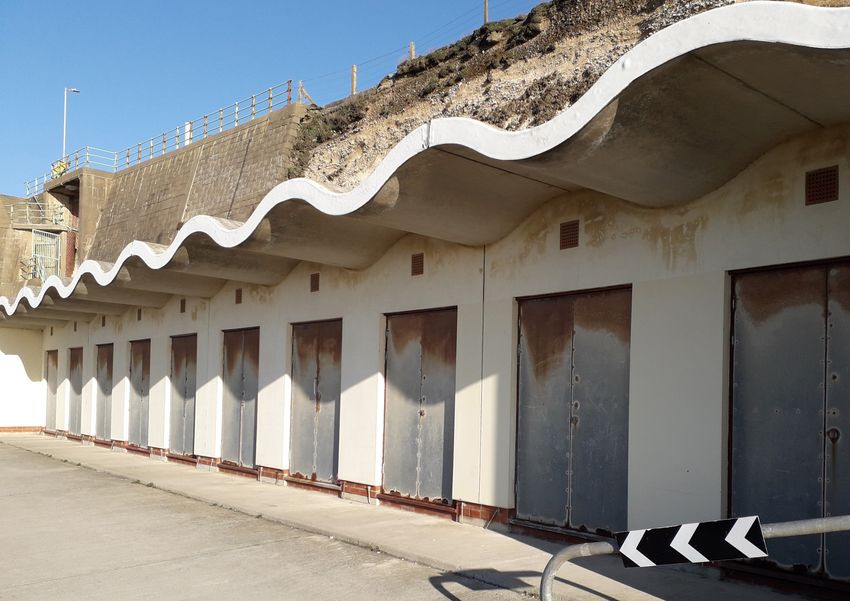
Page content transcription
If your browser does not render page correctly, please read the page content below
BRIGHTON AND HOVE BEACH CHALETS AND HUTS

                 BRIGHTON AND HOVE CITY COUNCIL
143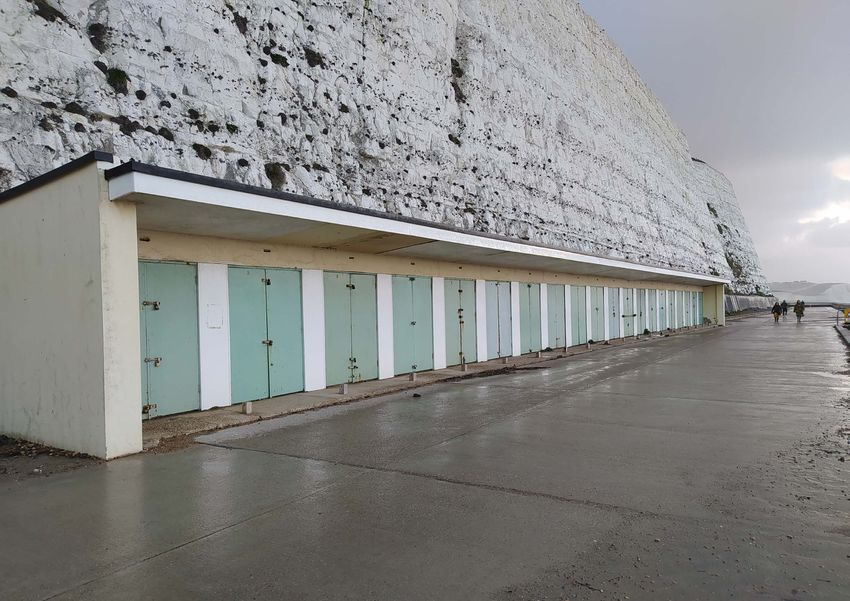
144

                                      Contents
                                      01   Introduction & Project Brief
                                      02   Site Analysis
                                      03   Typology Analysis
                                      04   Chalet Design Proposals
                                      05   Summary and Conclusions

      PORT OF BLYTH - FLYPRO-UK LTD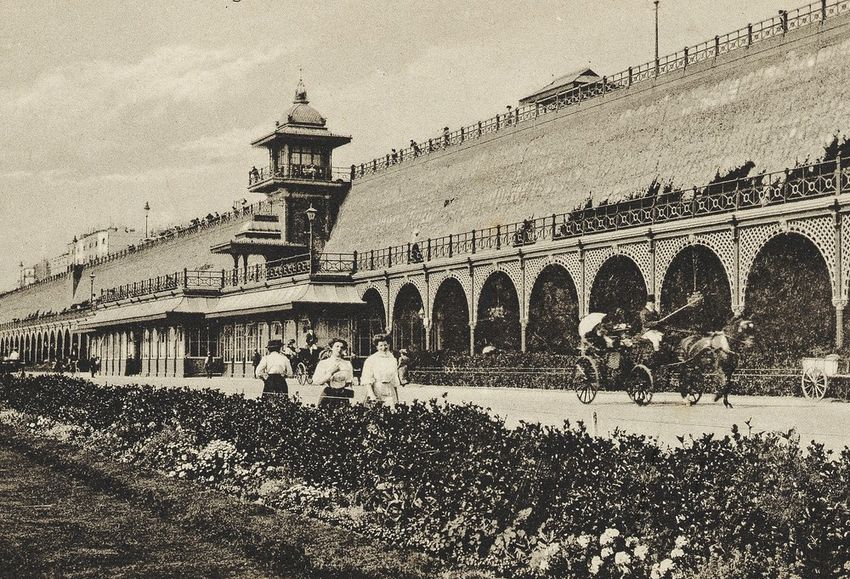
01 Introduction & Project Brief

                                        Project Team      Introduction                                             Feasibility Studies
                                        Project Manager   This study aims to evaluate a selection of different     The design concept emerging from this document
                                                          sites for the proposal of new locations for beach        is the result of contextual research undertaken to
                                        Stuart Croucher   chalets along Brighton and Hove's seafront               understand Brighton and Hove, it’s past, present
                                                          and cliff area. Additionally, there will be sketch       and future ambitions as a seaside town. The
                                                          design proposals for new beach chalets. This             studies are informed by the existing context, the
                                                          will recognise that these chalets do not solely          emerging seafront development, masterplans, the
                                        Architects        function as beach side storage but are places            historic architecture of Brighton and Hove and the
                                                          themselves that the public have a real fondness          vernacular forms of the beach hut.
                                        Louise Urquhart   for and often owners can be found spending their
                                        Paul Mason        entire time by the beach sitting outside their hut
                                        Hattie Smith      or chalet.
                                        Colin Armstrong
                                                          The sketch design options explored in the
145

                                                          following pages are the result of an initial
                                                          contextual study carried out to evaluate the
                                                          feasibility of a number of different sites and how
                                                          best these sketch design options fit into the site
                                                          and Brighton and Hove's seafront surroundings.

                                                                                                                 Feasibility Study | Brighton and Hove Beach Huts and Chalets   3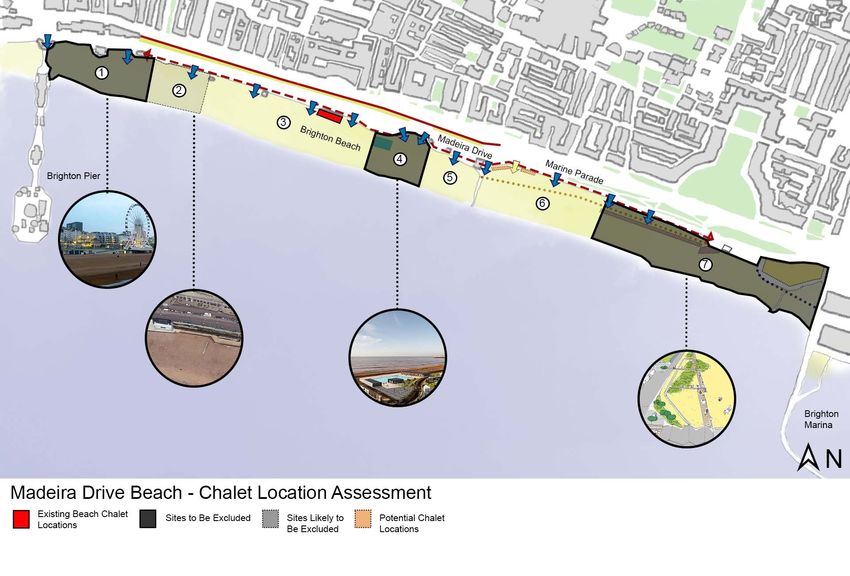
01 Introduction & Project Brief

          1.1 Site Location                                                                        B RIG HTO
                                                                                                               N

                                                                                                                 AN
          The site relevant to this study is located

                                                                                                                   DH
          on the south coast of England in the
          seaside town of Brighton and Hove.

                                                                                                                   OV E
          Brighton and Hove is directly connected to                                          AXO OF TOWN FROM
          London and Gatwick Airport by rail and is also                 ABERDEEN                  GOOGLE MAPS
          easily accessible from the major ports of Dover,
          Portsmouth, Southampton and the industrial port
          of Shoreham, 5 miles from the centre of Brighton.
          The A259 main road connects Brighton and Hove
          to much of the south coast and neighbouring
                                                                         EDINBURGH
          towns. Rail links to London allows visitors to
          easily travel to Brighton and Hove, with train
          journeys only being an hour long. The city offers
          sustainable transport links via its cycle network,
146

          buses and a bike sharing scheme.                                     NEWCASTLE

          The proposal for a collection of new beach
          chalets spread out across a number of potential
          site locations will provide Brighton and Hove
          a further opportunity to develop their Beach
          front, especially the location of Madeira Terrace
          and Black Rock which is in need of restoration.                             MANCHESTER
          These proposals will bring much needed activity
          and support to these areas whilst aiming to
          accommodate the rise in demand for beach
          chalets.

                                                                                                   LONDON

              | Project Site Location

      4   Brighton and Hove Beach Huts and Chalets | Feasibility Study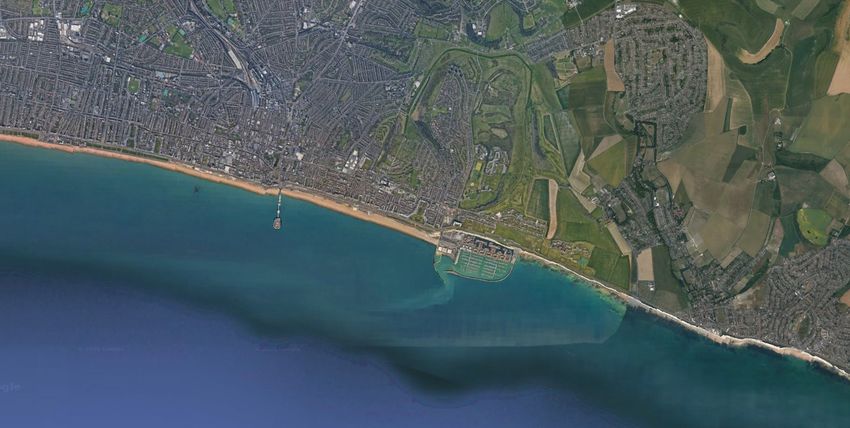
1.2 Local Context

      1. Hove Lawns - provides open green space
      in the city looking out directly towards the
      sea and is used for lawn bowls and tennis.
      In the summer these grassy areas become a
      hub of activity serving as a public gardens.
      During the pandemic they have provided
      public space for people to play sports in the
      winter.                                                                                  02

      2. Brighton Train Station - offers direct
      connections to London and Gatwick Airport.
                                                         06                                         05
                                                                                01
      3. Cycle Lanes - connects to most of                                           06
      Brighton and Hove’s nearby coastal                                                  03
      locations. It runs the entire length of the
      promenade and continues along the
      Undercliff.                                                                                                      04
                                                                                                                              07
      4. Madeira Terrace - is considered the
      longest cast-iron structure in Britain
147

      however, has suffered weathering from
                                                                                                                                         08
      the marine environment for more than 100
      years, and needs restoration. It fronts onto
      the city's major event space, hosting 24
      major events every year.                                                                                                                                     06
                                                                                                                                                                                    06
      5. Brighton and Hove City Centre - has
      all the facilities of a large city and the city
      centre is only ¼ mile inland from the beach.

      6. Existing Chalet Locations - beach chalets
      act as a more robust, permanent beach                   | Undercliff Walkway Edge
      hut and are built of a brick construction
      with varying levels of access to water and
      electricity.

      7. Potential redevelopment plans for Black
      Rock seafront and Brighton Marina.

      8. Cliff and Undercliff edge - allows for
      pedestrian access to the more rural coastal
      locations such as Saltdean, Ovingdean and
      Rottingdean.

                                                        | Rottingdean Chalets                            | Hove Promenade and Lawns
                                                                                                                                      Feasibility Study | Brighton and Hove Beach Huts and Chalets   5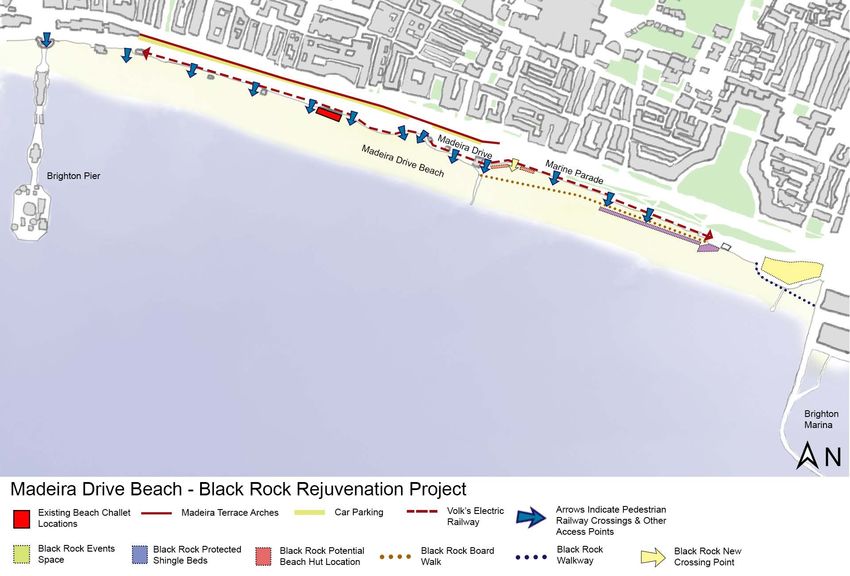
02 Site Analysis

          2.1 Site History

          Brighton and Hove’s Origins                                    both world wars, the seaside remained popular
          Brighton and Hove was originally an agricultural               in the inter-war period and the public’s love for
          and fishing village surrounded by fields and                   swimming in the sea came back stronger once
          coastline. The transformation from small fishing               WW2 ended. In 1928, Rottingdean parish was
          village to urban spa town saw Brighton’s                       absorbed by Brighton and Hove and in order to
          population grow rapidly in the 1700’s due to                   protect the coastline an impressive sea wall at
          doctor’s prescription of the cold sea bath as the              the base of the cliffs was constructed, initially
          latest ‘cure-all’ remedy. The sick flocked to the              from Black Rock all the way to Rottingdean. This
          coast with their families, and this resulted in huge           became known as the Undercliff Walk, which
          demands for accommodation and entertainment,                   was designed by engineer David Edwards. This
          where the modern concept of the seaside                        opened in July 1933. It was extended to Saltdean
          emerged. This newfound interest from the public                Gap in July 1935 when the Rottingdean swimming
          in visiting the seaside led to the development and             pool was built to replace bathing facilities lost
          urbanisation of seaside towns and villages.                    to the wall. A final short addition to the wall
                                                                         extended it to the very end of the borough
          Beginnings of The Beach Hut                                    boundary making it a total of 3.35 miles long.
148

          The first type of beach hut was designed around                Future Plans Brighton and Hove
          this time and was referred to as a bathing
          machine. They were portable and horse drawn                    The demand for beach huts and chalets has
          serving the purpose as a changing room to                      recently grown. Brighton and Hove's seafront
          preserve a bather's modesty, while simultaneously              is set to be revitalised with an aim of returning
          taking one person at a time from the top of the                Madeira Terrace and Drive to its former glory,
          beach down to the sea water.                                   where a vibrant hub of activity on the seafront
                                                                         will help boost Brighton’s economy and seaside
          Victorian Era                                                  appeal. Madeira Terrace is a unique structure
                                                                         originally built as a covered promenade to attract
          By 1837, bathing machines and swimming in the
                                                                         tourists from London when the new railway
          sea were already all the rage. Men’s bathing
                                                                         opened in the late 1800's. The first stage of
          machines had initially been kept separate
                                                                         restoration aims to restore and activate at least 30
          from the women’s ones, but by the 1900's this
                                                                         of the 151 arches that make up Madeira Terrace.
          separation disappeared due to Britain’s desire
                                                                         Black Rock regeneration project will also seek
          to be like the rest of Europe. As it became more
                                                                         to redevelop another important seafront site,
          acceptable for people to walk along the beach
                                                                         creating transport links to the eastern seafront,
          in their swimwear the bathing machines lost their
                                                                         and new infrastructure improving the experience
          function but remained on shore as the modern
                                                                         for all who visit.
          day beach hut.
          Pre and Post War
          Despite beaches being largely unusable during                                                                         | Bathing Machines

      6   Brighton and Hove Beach Huts and Chalets | Feasibility Study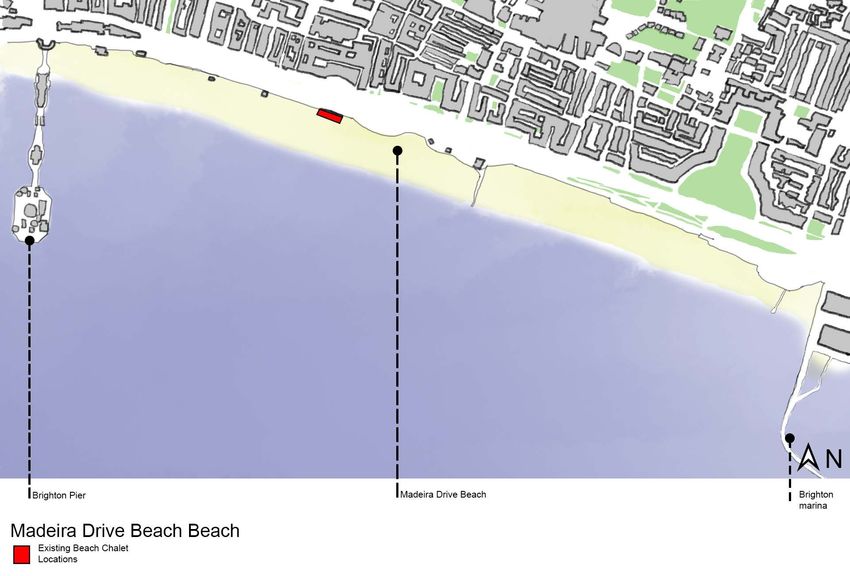
149

      | The Maderia lift and terrace 1900                                         | Brunswick Terrace, Hove, part of the Brunswick estate development of 1820   | Madeira Drive Beach with typical Regency architecture
                                                                                    with Hove Lawns in front

      | Present day Maderia terrace in which some arches are set to be restored   | Beach huts in Hove                                                          | Black Rock seafront which is set to be redeveloped

                                                                                                                                                                                  Feasibility Study | Brighton and Hove Beach Huts and Chalets   7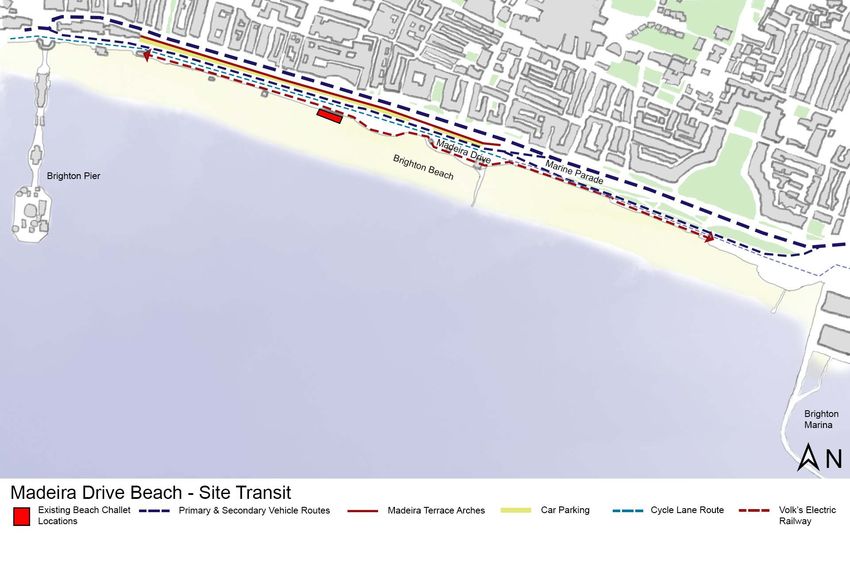
02 Site Analysis

          2.2 Existing Context

          Black Rock Seafront
          Plans for Black Rock Rejuvenation Project seeks
          to significantly improve the area's surrounding
          environment and infrastructure of the eastern
          seafront. It will also provide much needed
          upgrades that will promote greener, more
          sustainable travel and improve connectivity
          between the eastern seafront, Black Rock and
          Brighton Marina.

          Hove Cycle Lane & Lawns
                                                                         | Black rock seafront view from Brighton Marina
          Hove Cycle Lane has been vital to promoting
          a more sustainable approach to travel by
          encouraging people to drive less and use
          alternative greener transport methods. There
150

          are currently schemes which include a westward
          extension of the A259 seafront cycle lane and the
          temporary A270 Old Shoreham Road Cycle Lane
          in Hove along the Portslade Stretch.

          Hove Beach Chalets
          Hove beach chalets are located at a few points
          along Hove's promenade in line with the beach
          huts. These beach chalets offer a more robust                  | Hove cycle lane looking out across the lawns
          storage down on the waterfront, with access to
          water and electricity.

          Madeira Terrace & Drive
          Madeira Terrace and it's original cast-iron
          structure is set to be restored with the ambition
          of using the Terrace as an all year-round events
          space. The project looks to boost sustainable
          tourism and promote local culture.

                                                                         | Hove beach chalets, some have suffered recent vandalism. | Present day Maderia Terrace and drive

      8   Brighton and Hove Beach Huts and Chalets | Feasibility Study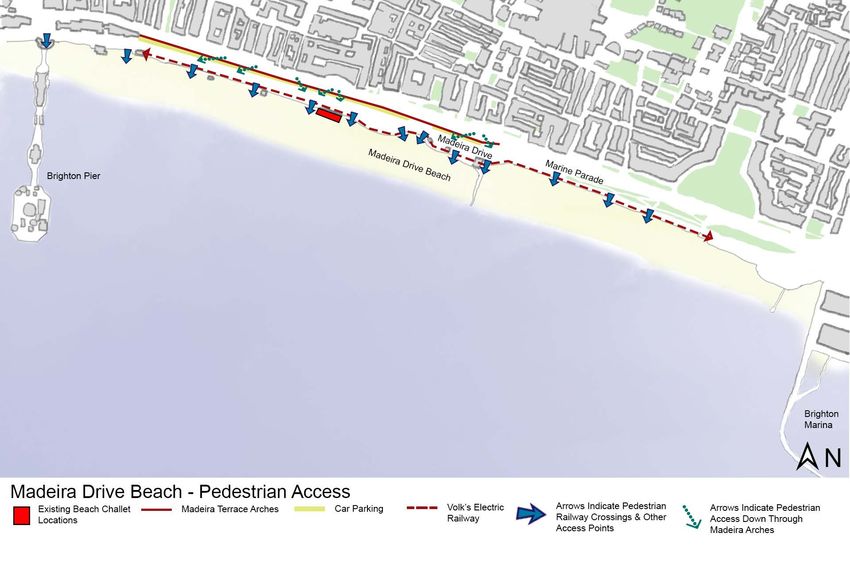
Saltdean Undercliff Walkway
      The three coastal beaches of Ovingdean,
      Rottingdean and Saltdean are accessible on foot
      via the Undercliff walkway. These locations offer
      more privacy and peace away from the busier
      seafront of Brighton and Hove, making it more
      attractive to locals to rent beach chalets here
      rather than in the town. The undercliff walkway
      stretches from the Brighton Marina all the way
      to Saltdean and is also popular with cyclists who
      can cycle along the coast segregated away from      | Ovingdean Chalets
      motor traffic.

      Saltdean Lido and Library
151

      Saltdean was widely undeveloped land in the
      1900's but by the 1930's became a desirable and
      attractive seaside suburb to Brighton and Hove.
      Once tourists began to visit Saltdean it became a
      fashionable beach resort town. The interwar years
      fuelled the nation's love for sport and leisure,
      lidos and outdoor leisure facilities became very
      popular. Plans for a luxury hotel, named 'The
      Ocean Hotel' and a lido swimming pool were to
      be designed and built in Saltdean, which was        | Saltdean Lido and Library
      completed in May 1938.

                                                          | Rottingdean Chalets         | Saltdean Undercliff Walkway

                                                                                                                        Feasibility Study | Brighton and Hove Beach Huts and Chalets   9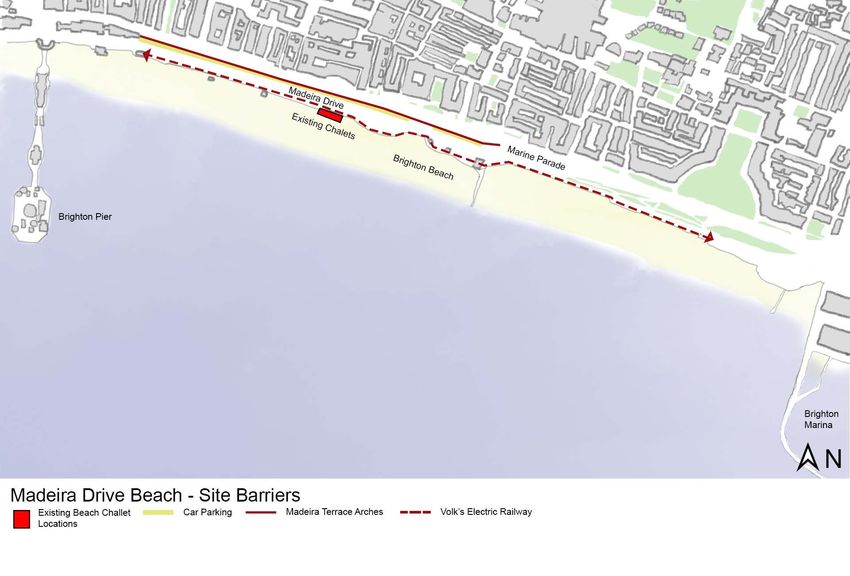
02 Site Analysis

       2.3 Materiality

       Maderia Terrace Arches
       This Victorian arched promenade delinates the
       eastern portion of beach front before Brighton
       pier. The iconic victorian iron work and pastel
       colour scheme defines the character of this area.

       Boats and Beach Huts
       The traditionally designed beach huts which line
       most of Brighton and Hove beach shore line are
       an iconic image of the city itself. Their simple
       modular shed like design is animated by the
       vibrant coloured paint used by owners to treat the
       doors and helps break the monotony.

       Chalk Cliffs
152

       The chalk cliffs which begin in Brighton and
       continue on through to Saltdean and beyond are
       natural formations of rock which are formed by                 | Victorian Ironwork in Maderia Terrace   | Boats and Brighton's fishing village origins
       layers of chalk that have built up gradually over
       millions of years.

                                                                      | Beach Huts                              | Chalkcliffs

  10   Brighton and Hove Beach Huts and Chalets | Feasibility Study
2.4 Project Aspirations
Shelter and Light
Beach chalets function as storage containers, but
also allow owners to inhabit their own portion of
the beach front. It is not uncommon for owners to
spend their entire time at the beach outside their
chalet. The chalets are used for shelter, definers
of space and could be further utilised by making
the interior more plesant. This could be achieved
by introducing more natural light.
A Sense of Place
In some beach and chalet locations, there is
already a sense of place created by the presence
of the beach. It will be required, to maximise the
number of viable sites, for some of the chalets
153
to create their own sense of place, where direct
access to the beach is not possible.
| Contemporary beach huts, Southend | Coastal defence sea wall with an elevated promenade, Millford-on-sea
Heavy and Light Construction
Heavy construction, such as concrete, is the
obvious choice of material to resist the harsh
marine environment and to be resilient to falling
chalk, cliff debris and the risk of vandalism.
However, with heavy construction there is an
economic and environmental impact. A lighter,
sustainable construction method could help
address this, but requires considered design to
mitigate the above outlined risks associated with
a cliffside location.
Monolith or Diminutive
The more resilient construction and the economy
of building end on chalets, give these structures a
more monolithic feel. The beach huts by contrast
are more diminutive, resembling garden sheds
with their double-pitch roofs and vibrant colour | Hoenderloo lodge formed by site-specific conditions, MVRDV | Recycled timber cabins connect to views of nature and water
variance. The former tends to mean that many of
the chalets have an imposing and industrial feel
while the beach huts are more charming.
Feasibility Study | Brighton and Hove Beach Huts and Chalets 11Chalet Siting Feasibility Study
Brighton and Hove
- Existing Chalet
Locations
Currently Brighton and Hove's
City Council rent out chalets
at 5 different locations. These
are issued for a fixed 5 year
period with a yearly fee.
There is currently a closed
waiting list only open to
Brighton & Hove residents.
1 of the 5 chalets is located
on Hove beach front. Another
is located on Brighton's beach
front and the remaining 3
are at different points on the
Undercliff. 2 of these 3 are on
the beach fronts of the towns
of Rottingdean and Saltdean,
and the final 1 of 3 is at the
154
remote beach location of
Ovingdean.
Feasibility Study | Brighton and Hove Beach Huts and Chalets 1202 Site Analysis
Beach & Cliff - Under
Cliff Route Extent
The Undercliff, which was
originally constructed to
reinforce the chalk cliff face
against sea erosion, functions
as a pedestrian and cycle
route that connects the
Undercliff chalets to the city,
and is completely segregated
from motor traffic.
155
13 Brighton and Hove Beach Huts and Chalets | Feasibility StudyBeach & Cliff -
Connectivity & Access
The Undercliff chalets can
also be accessed via car and
bus along the coastal road.
These bus routes run the
length of the coast and into
the city, with some directly
linking to Brighton train
station.
All current beach chalet
locations on the Undercliff are
placed within close proximity
of access points. These
access points provide a safe
means down from the top of
the cliff onto the Undercliff
itself.
156
Feasibility Study | Brighton and Hove Beach Huts and Chalets 1402 Site Analysis
Madeira Drive Beach
Opportunities to site new
beach chalets exist on
Madeira Drive Beach.
The area is defined as the
stretch of beach between
Brighton Pier and the Marina.
Madeira Drive will also
be considered as another
potential location in this
study.
157
15 Brighton and Hove Beach Huts and Chalets | Feasibility StudyMadeira Drive Beach -
Site Barriers
Madeira Drive Beach already
has one of the current
beach chalets on its beach
front. In proposing any new
locations for beach chalets,
consideration of the site
barriers to pedestrians is
required.
The Madeira Terrace Arches
separate Marine Parade from
Madeira Drive, this is due to
the dramatic change in level
which continues along the
extent of this portion of the
beach.
The beach is cut off from
consistent direct access
158
to Madeira Drive, the
beach's main pedestrian
thoroughfare, by the Volk's
Electric Railway.
Feasibility Study | Brighton and Hove Beach Huts and Chalets 1602 Site Analysis
Madeira Drive Beach -
Site Transit
Marine Parade is the primary
vehicular route in this
location. The change in level
between Marine Parade
and Madeira Drive creates
a barrier to the busier car
and bus traffic, and gives
the secondary vehicular
route, through Madeira Drive,
congestion relief.
As a result of the lower
volume of traffic and
the proximity to the
beach, Madeira Drive is a
more pleasant place for
pedestrians. This area also
functions as a major event
159
space for the city.
This street also incorporates
a dedicated cycling route
which runs along the beach
front. This cycling route
connects Hove in the East of
the city to the Undercliff via
the length of Brighton Beach.
17 Brighton and Hove Beach Huts and Chalets | Feasibility StudyMadeira Drive Beach -
Pedestrian Access
By identifying the pedestrian
access through the site
barriers, locations for
development that are both
accessible and do not create
new barriers can be found.
At present the Madeira
Terrace Arches are closed
for refurbishment, but the
arrows indicate the normal
points of access they provide
down through the arches
themselves from Marine
Parade to Madeira Drive.
Volk’s railway is another
identified site barrier and
cuts off the beach from
160
Madeira Drive. The blue
arrows indicated the crossing
points which permit access.
Additionally, the arrows not
crossing the rail line indicate
access onto the pier and
down a change in level
from Madeira Drive onto the
beach.
Feasibility Study | Brighton and Hove Beach Huts and Chalets 1802 Site Analysis
Madeira Drive Beach -
Black Rock Rejuvenation
Project
The Black Rock rejuvenation
project has been mapped out
to understand the potential
future development of this
area. This will also define the
limitations new development
places on the options to
locate new beach chalets.
An obvious part of the
development which will
impact future access to any
new beach chalets, sites
on the beach nearby, is the
proposed boulevard walkway.
Likewise, it will not be
161
possible to propose sites
closed to the new location of
the natural shingle.
19 Brighton and Hove Beach Huts and Chalets | Feasibility StudyMadeira Drive Beach - Chalet
Location Assessment
1. Brighton's Central Beach -
Commercial activities at this location
and the Ferris-wheel reduce the
available area for future chalet and
beach hut development.
2. Volk's Electric Railway - There exists
potential for new beach chalets here
as there is an existing hard standing
walkway that is currently underutilised.
However, this is unlikely to be feasible
due to the operational requirements of
the station.
3. Existing Chalets - This area is
defined by the presence of existing
chalets. There is potential for more
chalets. This is on the basis that there
is already chalets in this location.
4. This location is subject to a new
proposed open air pool and other
leisure facilities that currently occupy
the beach front. For these reasons this
162
is not considered to be a potential area
for this type of development.
5. This area is wedged between the
beach groyne and area 4. It contains
the halfway station, adventure golf
and the Volks Workshop and will soon
contain new vegetated shingle beds.
This would make this area unsuitable
for further development.
6. As part of the Black Rock
Development, this corner section
has already been designated for
the provision of more Beach Huts.
However, this area remains a potential
site for new beach chalets if this could
be integrated with the proposals for
the new Black Rock board walk.
7. Due to the Black Rock development,
this area has no potential for chalet
development. The Black Rock projects
proposes this area as a new location
for natural beach shingle.
Feasibility Study | Brighton and Hove Beach Huts and Chalets 2002 Site Analysis
Identified Potential
Beach Chalet Locations
Based upon the previous
analysis, several sites with
potential for development of
new chalets were identified
as shown in the adjacent
image.
These sites can be split into
two groupings with the first
group being those around
Brighton beach and Marina.
The second set of sites
are clustered between
Rottingdean and Saltdean
Beaches on the Undercliff.
Selection of these Undercliff
sites was made based
163
on the limited number of
places that could physically
accommodate the footprint of
a bank of chalets.
21 Brighton and Hove Beach Huts and Chalets | Feasibility StudyMadeira Drive Beach and Marina sites
The images below are of indicated sites for potential chalet or beach hut siting. Yellow - These sites have been identified as being able to accommodate beach chalets based upon the reports analysis, but have
a number of issues outlined in the constraints and accessibility portion of the report on page 24 which leads to the conclusion that they are not to be recommended.
164
1 Madeira Terrace Arches 2 Madeira Drive Beach - Site 2
3 Black Rock Rejuvanation Car Park 4 Undercliff - Marina
Feasibility Study | Brighton and Hove Beach Huts and Chalets 2202 Site Analysis
Brighton - Proposed Chalet Sites 2 of 2 - Madeira Drive Beach & Undercliff Sites
The images below are of indicated sites for potential chalet or beach hut siting. Red - These sites have been identified as being able to accommodate beach chalets based upon the reports analysis and are
preferred to the aforementioned sites on page 22. This conclusion is reached because significantly less constraints were identified that prevent development of new chalet or beach hut in these locations.
165
5 Madeira Drive Beach - Site 5 6 Undercliff - Rottingdean Chalet 7 Undercliff - Site 7
8 Undercliff - Site 8
9 Undercliff - Site 9 10 Undercliff - Site 10 11 Undercliff - Saltdean Beach
23 Brighton and Hove Beach Huts and Chalets | Feasibility StudyMadeira Drive - Constraints & Accessibility
The area which can be defined by Madeira Drive has many
opportunities for new beach hut or chalet siting but also, many
constraints. These sites have the advantage over the Undercliff
sites of being easier to service as they are quite close to an
urban centre without the geographical hurdle of the cliff. These
sites would both be popular and could command higher rental
values with greater opportunities to be serviced with water and
electricity.
1. This location looks to take advantage of the new proposals for
the Madeira Terrace arches with a view to include chalets into
the design. The advantages of this is that it would not restrict
views out onto the beach and would integrate with the existing
access and parking infrastructure. Additionally, at this location the
chalets would not be as exposed to adverse weather as those
on the beach front. However, this may not be a viable solution if
it conflicts with the intentions for the Arches renovation. Beach
chalets would look out onto a road and would not be child friendly
either.
2. To incorporate new chalets alongside the existing chalets.
This location appears feasible based on the precedent of the
current chalets which sit on the beach and are accessed easily
from Madeira Drive. However, the existing chalets form a barrier
currently between the beach and Madeira Drive which has
an overall negative impact and is evidenced by the measures
166
required to be taken to mitigate vandalism. To incorporate more
chalets here would potentially amplify this effect. Development in
this location is restricted by some key events which are often held
here.
3. This location would look to integrate with the new Black Rock
development on the beach and occupy a portion of the existing
car parking bays. It benefits from the new development providing
pedestrian access in front and not behind any chalets. This
would limit the impact of the chalets obscuring views and they
would have direct access onto the beach. As with site 1, at the
arches, there may not be scope within the new development to
accommodate the beach chalets and in occupying existing park
spaces this may come into conflict with the current proposals.
4. Site 4 is situated on the Undercliff and faces onto the Marina
retail park car park. This looks at the opportunity the Undercliff
can offer for space to accommodate beach chalets within
proximity of Brighton Beach. However, this is not considered an
ideal or desirable option. This site offers few benefits over the
other Brighton Beach locations and has the significant detracting
factor of it facing onto a car park. This site is under consideration
at the moment for a future transport hub.
5. Site 5 is situated in the prime location of Madeira Drive Beach
where there are many easily accessible entry points to the beach
which the potential chalets could take advantage of in terms of
their location.
Feasibility Study | Brighton and Hove Beach Huts and Chalets 2402 Site Analysis
Saltdean & Rottingdean -
Constraints & Opportunities
The Undercliff sites that were
identified have the significant
benefit of backing onto the cliff
which eliminates the issue of
obscuring views to the beach.
Rents are likely to be lower due to
the more remote location and the
difficulties in providing services
such as electricity and water.
However, some sites may offer
these opportunities by being close
to either of the two nearby villages.
The identified Undercliff sites are
highlighted in yellow and can be
broken down into two types. The
first type is the locations in close
proximity to the existing beach
167
front infrastructure associated
with the towns of Rottingdean and
Saltdean. These sites have the
benefits of close proximity to both
beaches and to local amenities.
Additionally, the sites closer to the
beaches will have better levels
of surveillance and are therefore
less susceptible to vandalism.
The second type of sites are
those which are between the two
towns. These locations still benefit
from their proximity to the towns
and can be accessed by foot in
approximately 10 minutes but are
further to any amenities and are
more vulnerable to unsupervised
vandalism.
25 Brighton and Hove Beach Huts and Chalets | Feasibility StudySaltdean & Rottingdean -
Access
The chalets that are currently
on-site are easily accessible from
both the Rottingdean and Saltdean
town centres. These chalets are
located on the Undercliff near
pedestrian access points from the
towns, down the cliff and to the
beach, with the Saltdean chalets
being directly accessed from its
main beach access route.
Access points are indicated that
show the main access onto the
Undercliff. Rottingdean has one
main access point as shown
directly from the town centre.
There are two access points
which connect Saltdean onto the
Undercliff. The first is a tunnel
168
which passes under the main
coastal road and provides a
connection from the Saltdean Lido.
The second allows for access to
the chalets on the Undercliff from
Saltdean’s main commercial street.
The identified sites closest to
these access points benefit from
this proximity, and to local bus
stops and car parking. The other
sites are still very accessible via
the same means, and as shown
when accessed by bike the issue
of proximity is of lesser relevance.
Feasibility Study | Brighton and Hove Beach Huts and Chalets 2603 Typology Analysis
Introduction
In studying how occupants of the chalets use
the space, how the chalets are traditionally
constructed and their form a set of baseline
criteria for their design can be established. The
chalets are derivatives of the original beach hut
and have a primary function as secure beach side
storage for belongings associated with spending
time at the seaside. However, as evidenced in the
images they can become places in themselves to
shelter from the wind, inhabit or just sit outside
looking out to sea.
Several issues with the existing chalets were
identified. These include the; flat roofs, which
make them ideal for local youths to climb on; in
Hove there has been break ins and the Madeira
Drive chalets where routinely vandalised, until the
backs had been covered with promotional vinyl
posters
169
Inside of a Rottingdean Chalet – Wall mounted pegs, shelving and desk with oils lamps & gas stove. Beach paraphernalia and seating come storage.
Madeira Drive chalet (below) vinyl posters to deter graffiti.
Rottingdean chalet situated on undercliff with occupants sitting outside.
27 Brighton and Hove Beach Huts and Chalets | Feasibility StudyAnalysis of Brighton and Hove Beach Chalet
Bitumen Roof
Pre-cast
Concrete
Beams
Structural
Brick Walls
with painted
Cement
Render
Painted Steel
170
Columns
Concrete Slab Painted Steel
Doors
Construction Diagram Overall Chalet Block Dimensions
This part of the study looks at an example of an existing The Chalet and columns help define a front porch area and 23 Chalets Units
beach chalet, in this instance the chalets on Brighton provide some level of shading to allow for seating at the 0.9m Covered Porch Area
and Hove Beach, being the chalet for which the most threshold in the shade. The main frontage faces onto the
detailed up to date information was provided. The analysis beach and projects itself onto the beach front. Approx. 2.1m Unit Depth
focuses on aspects that were considered important to the Approx. 1.6m Unit Width
development of a revised chalet design.
Estimated GIFA - 3.3 SQM
Feasibility Study | Brighton and Hove Beach Huts and Chalets 2803 Typology Analysis
Interior Layout, General Dimensions & Spatial Quality
171
Plan Furniture Layout Plan Dimensioned Layout Plan Spatial/Functional Layout
Above is an envisaged typical plan inside a chalet based Estimated dimensions based upon client information. An analysis of how a chalet tends to be inhabited shows
upon the images on the previous page which looked Assumed 215mm deep walls of structural brick. that the rear wall to have seating that faces outwards.
inside a currently occupied chalet.Typical elements Shelving and storage is aligned around perimeter to
include oil lamps, seating with storage underneath, hooks maximise space in the centre for manoeuvring and
for hanging beach paraphernalia and shelving that was occupation. Doors open out full width of the frontage to
installed by the occupants. provide views out to the sea.
29 Brighton and Hove Beach Huts and Chalets | Feasibility StudyArea Assessment for Identified Sites Madeira Drive Beach
(Site 5)
This assessment looks to analyse the identified sites by verifying how many chalets could be
accommodated in these locations. Additionally, the individual site’s constraints and opportunities have Useable length – 115.8m
been highlighted.
Total No. Chalets - 36
(Adapted/Radical)
Dimensions provided to us by the client for the existing chalets on Brighton and Hove beach was used
as a template for a future chalet footprint which was then fitted into each of the locations. This value for Total No. Chalets – 30
an individual chalet unit will help provide the total number of chalets that could be allocated to a site. (Reimagined)
We can also calculate how many beach chalets could be allotted onto the sites by using the general
dimensions provided by the client for their standard beach hut designs. Considerations of constraints Opportunities – Prime
such as maintaining pedestrian and cycle transit space of at least 5m, and preferably more; access location on Madeira Drive
space to the side of 2.5m and rear of the structures at 0.5m were taken into consideration. Beach. Easy to service and
access. No risk from chalk
cliff face.
Constraints – Close
Unit Dimensions Unit Dimensions
proximity to existing Volks
(Adapted + Radical Designs) (Reimagined Design) rail line could cause issues.
Approx. 3m Unit Depth Incl. Porch Approx. 4.3m Unit Depth inc. ramp/porch Potential conflicts are
possible with Black Rock
Approx. 3.1m Unit Width Approx. 2.25m Unit Width Rejuvenation project which
Estimated GIFA – 6.0 SQM Estimated GIFA – 4.0 SQM is also developing this site.
172
Undercliff - Rottingdean Undercliff
(Site 6) (Site 7)
Useable length – 57.9m Useable length – 101.3m
Total No. Chalets - 19 Total No. Chalets - 33
(Adapted/Radical) (Adapted/Radical)
Opportunities – Significant Opportunities – Good
amount of space. frontal access clearance.
Large amount of space
Constraints – Tight site in
terms of unit depth leaving Constraints – Further
only 5m clearance at front. from town centres. Lesser
Lesser surveilled site. Can't surveilled site. More
accommodate Reimagined difficult to service. Cannot
chalets due to chalk falls. accommodate Reimagined
chalets due to chalk falls.
At risk of over-topping
which may make site
unviable.
Feasibility Study | Brighton and Hove Beach Huts and Chalets 3003 Typology Analysis
Undercliff (Site 8) Undercliff
(Site 10)
Useable length – 55.5m
Total No. Chalets - 18 Useable length – 105.5m
(Adapted/Radical) Total No. Chalets - 33
Opportunities – Good frontal (Adapted/Radical)
access clearance. Large
amount of space.
Opportunities – Good
Constraints – Further from frontal access clearance.
village centres. Lesser Large amount of space.
surveilled site. More
difficult to service. Can't
accommodate beach huts Constraints – Can't
due to chalk falls. Risk of accommodate beach huts
over-topping may make site due to chalk falls. At risk
unviable. of over-topping which may
make site unviable.
Undercliff (Site 9)
Useable length – 58.6m
Total No. Chalets - 19
Opportunities – Good frontal
access clearance. Large
amount of space.
Constraints – Can't
accommodate beach huts
173
due to chalk falls. Risk of
over-topping may make site
unviable.
Undercliff - Saltdean Beach
(Site 11)
11.a
Useable length – 37.9m
Total No. Chalets - 12 (Adapted/Radical)
Total No. Chalets - 9 (Reimagined)
Opportunities – Proximity to village makes location easy to service, close to lighting, more surveilled
than other sites. Can accommodate all types of chalets due to presence of retaining wall behind.
Constraints – Smaller than other locations.
11.b
Useable length – 40.7m
Total No. Chalets - 13 (Adapted/Radical)
Total No. Chalets - 10 (Reimagined)
Opportunities – Proximity to village makes the location easy to service. Close to lighting. More
surveilled than other sites. Can accommodate beach huts due to presence of retain wall behind.
Constraints – Smaller than other locations.
31 Brighton and Hove Beach Huts and Chalets | Feasibility StudyMaterials
Key Client Requirements – Resilience, Easy to Maintain, Environmentally Sustainable
Key Performance Requirements – Resilient to the Impacts of the Marine Environment, Resilient Design and Construction to withstand Vandalism, Low Maintenance
Chalets can be broken down into a series of key elements which make up their construction. There is the Structure, Doors, Walls, Cladding, Roof. Additionally, one
element that could be incorporated as a general design improvement is windows. While these have clear security implications in terms of vulnerability to break-ins ect.
This can be mitigated and make the chalets more pleasant structures to actually inhabit with doors closed.
Roof Cladding Windows
Material – Timber Material – GRP (Glass Reinforced Plastic) Material – Recycled Plastic Timber Composite Material – Polycarbonate
Advantages – Lightweight for installation, Advantages – Lightweight for installation, Advantages – Lightweight for installation, Advantages – Lightweight for installation,
174
affordable, sustainable. affordable, can be fire-resistant. affordable, resilient in marine environments, affordable, resilient in marine environments.
sustainable.
Disadvantages – More vulnerable in marine Disadvantages – Difficult to recycle and less Disadvantages – Is a polymer and therefore not
environment compared to less sustainable sustainable than timber. Disadvantages – More vulnerable to vandalism, the most sustainable option.
alternatives, more vulnerable to damage and class B fire resistance.
attack, needs special attention in detailing to
protect from damp and fire.
Material – GRP (Glass Reinforced Plastic) Material – High Pressure Laminate
Advantages – lightweight for installation, Advantages – Lightweight for installation,
affordable. recyclable, fire resistant, vandal resistant, resilient
in marine environments.
Disadvantages – Difficult to recycle and less Disadvantages – More expensive than than
sustainable than timber. timber.
Feasibility Study | Brighton and Hove Beach Huts and Chalets 3204 Chalet Design Proposals
Materials
Roof Cladding
Material – Timber
Advantages – Sustainable, easy to maintain,
lightweight for installation, affordable.
Disadvantages – More vulnerable in marine
environments compared to less sustainable
alternatives, more vulnerable to damage and
attack.
Material – Re-cycled Plastic tile Material – GRP (Glass Reinforced Plastic)
Advantages – Lightweight for installation, Advantages – Easy to maintain, lightweight for
affordable, sustainable, resilient in marine installation, affordable, marine resilient, long life-
environments, class A fire-rating, tough, long life- span
span.
Disadvantages – Difficult to recycle and less
sustainable than timber.
Disadvantages – Does not have the same net
175
gain bio-diversity effect of sedum.
Material – Sedum
Advantages – Sustainable, improves biodiversity,
can be low maintenance, absorb water and
moisture.
Disadvantages – More expensive than plastic tile.
33 Brighton and Hove Beach Huts and Chalets | Feasibility StudyChalet Design Proposals
The following design proposals are three options for new beach chalets. The typology analysis provided a boiler plate for their design in terms of form, spatial qualities and use. Using this as a starting
point each option progressively departs from this to explore additional opportunities and potential improvements. Each proposal pays careful consideration to the constraints and requirements regarding
sustainability, resilience to vandalism and wear and resilience in a marine environment. Through the assessment of the identified sites it is assumed that the undercliff sites are the preferred ones and as such it
is of benefit that the chalets themselves create a sense of place in what can be a fairly isolated linear space
Existing Typology Option 01 - Adapted Existing Option 02 - Radical Adapted Existing Option 03 - Re-imagined Design
176
• Existing design based upon typology analysis • An adaptation of the existing design. • A more extensive re-working of the existing • A new approach to the typology.
within this document typology
• Aims to create a sense of place. • Looks to explore the opportunities of a design
• This forms the basis for the design of the • Aims to evoke a more exciting sense of place option which adheres more exclusively to key
proposed options • Introduces changes to the construction to than option 01 characteristics of the existing beach chalets
improve resilience and sustainability and less explicitly to the original form.
• Pushes the limits more regarding sustainability
• Aims to create an even more sustainable
option while still meeting resilience criteria.
Feasibility Study | Brighton and Hove Beach Huts and Chalets 34Option 01 - Adapted Existing
This option takes the existing beach chalet design and enhances certain key features. The chalet retains the mono-pitched roof form and places each unit
end on end, this works to deflect cliff debris back away from the Undercliff walk and make the chalets easy to construct. The entrances face out to the sea,
this is the same as the existing chalets, however, to generate interest upon the approach from the side, the chalet fronts are kinked at an angle and their
now bright coloured frontages read as an exciting band of multiple colours.
Another feature retained from the existing chalets are the large double doors that open out the space to the sea. Allowing occupants to enjoy the view to
the sea and the horizon while being sheltered by the chalet’s roof and walls is a key defining characteristic.
Plan
177
Section
Perspective Axonometric Diagram
Feasibility Study | Brighton and Hove Beach Huts and Chalets 3504 Chalet Design Proposals
Adapted Existing - Construction Approach
Prefabricated timber roof panel with recycled
plastic tile
Prefabricated timber stud wall with High
Pressure Laminate cladding
Prefabricated timber stud wall with magnesium
oxide boarding to create fire seperating layer
between units
Prefabricated timber stud wall with re-cycled
plastic timber composite cladding
Prefabricated sections of GRP structure, lining
and cladding.
178
Prefabricated wall section with High Pressure
Laminate cladding and inset composite GRP
double door
The construction strategy balances the requirements of sustainability and robustness in
a marine environment. The construction uses sustainable materials by integrating timber
elements were possible and limiting more resilient but difficult to recycle materials such
as GRP. Strategies to use reversible connections, to allow for disassembly, and use of
standardised parts and assemblies can be employed to make it possible to recover the
GRP and re-use it. A GRP base is formed to protect the timber structure above and allow
this to drain and dry out after exposure to wet conditions.
Most elements are prefabricated to ensure quality of construction, improve efficiency and
cost and make construction easier in a location with limited access. Recycled plastic tiles
are used as a sustainable alternative to the GRP in the roof. HPL is used to clad chalet block
end panels and the coloured fronts. HPL is more sustainable than the GRP and is both fire
and vandal resistant. To combat the risk of fire in the timber construction the chalet unit’s
separating walls will have magnesium oxide layers between the timber studs which offer
both protection to the spread of fire and are resistant to damage through moisture.
36 Brighton and Hove Beach Huts and Chalets | Feasibility StudyRadical Adapted Existing
This option further develops the ideas in the previous option and pushes those design concepts further to achieve a more dramatic impact. In addition to
the modifications to the frontage, there is a sense of movement created by the roof line. Sections of the sloped roof are pitched up at apexes to accentuate
the kinking of the individual unit front panels. This takes the monolithic block of chalets and starts to break them down visually into individual units and
alludes to the charm of the traditional beach huts.
This retains much of the same construction methods and technological approach of the previous iteration but also introduces a sedum roof and
polycarbonate window sections. The sedum roof is an additional sustainability asset by improving biodiversity. The introduction of a window makes
inhabiting the chalets more pleasant should occupiers be required to shelter from the elements temporally with the doors closed.
Plan
179
Section
Perspective Axonometric Diagram
Feasibility Study | Brighton and Hove Beach Huts and Chalets 3704 Chalet Design Proposals
Radical Adapted Existing - Construction Approach
Option 02 - Construction Approach
Timber prefabricated roof panel with sedum finish
layer
Prefabricated timber stud wall with High Pressure
Laminate cladding
Prefabricated timber stud wall with Class
0 sheathing to create fire separating layer
between units
Prefabricated timber stud wall with re-cycled
plastic timber composite cladding
180
Prefabricated sections of GRP structure, lining
and cladding
Prefabricated sections of timber with triple
walled polycarbonate front and back attached
with galvanised stainless steel fasteners
Prefabricated wall section with High Pressure
Laminate cladding and inset composite GRP
double door
This construction strategy is as in option 01 but with the introduction of the sedum roof and
polycarbonate window sections. The sedum roof should be specified with vegetation which
can survive in the harsh marine environment and that requires minimal maintenance.
The polycarbonate sections are at a high level out of reach of the public. The timber
stud support frame will allow no section large enough for someone to pass through. The
stainless steel fasteners will be of the variety that makes them tamper proof and highly
corrosion resistant.
38 Brighton Beach Huts | Feasibility Study | May 2021Re-Imagined Design
This option is a re-think of the beach chalet and imagines them as objects in the landscape taking inspiration from the beach huts diminutive shape.
These chalets exploit the sustainability opportunities when the structure is raised on stilts above the level of any potential flooding. This allows for the
incorporation of additional timber elements and a lesser dependency on materials with poorer environmental credentials such as the GRP. Each unit would
be completely prefabricated off-site and then dropped onto stilts.
The roof form mimics that of the modest beach hut but is sloped back to deflect any debris from the cliff to the back of the chalet unit. The chalets when
not in use have a colourful bright door frontage which securely seals up the unit, but opens in the way when in use to provide a small sheltered terrace at
the front. This design features means that clear polycarbonate faced doors can be installed behind so that on a wet and windy day the chalets can shelter
people from the elements but still provide a view out to the sea.
Plan
181
Section
Perspective Axonometric Diagram
Feasibility Study | Brighton and Hove Beach Huts and Chalets 3904 Chalet Design Proposals This construction strategy looks to balance the requirements of sustainability and robustness in a
marine environment. To achieve this the construction uses mostly sustainable materials and integrates
Re-Imagined Design - Construction Approach as much timber elements as possible. Difficult to recycle materials, such as GRP, are used sparingly.
A GRP base is formed to protect the timber structure above and allow this to drain and dry out. All
elements are prefabricated to ensure the quality of construction, improve efficiency, cost and make
construction easier in a location with access issues.
Recycled plastics are used as a resilient and robust material in this environment but also offer a
sustainable alternative to the GRP. To resist fire and vandalism external cladding is to be High Pressure
Laminate and the recycled plastic roof tiles will achieve a class A fire rating. The timber doors should
also provide a level of fire resistance as appropriate.
Timber Pre-fabricated roof
panel with recycled plastic tile
Timber framed inner door with
clear polycarbonate lining front
and back to open outwards
High Pressure Laminate cladding
Timber stud wall construction
line both sides with plywood with
WBP marine ply on outer face
Timber stud wall construction
line both sides with plywood with
182
WBP marine ply on outer face
High Pressure Laminate grey
cladding panels with vertical
coloured sections
Treated timber door
Timber sections with triple walled
polycarbonate front and back
attached with galvanised stainless
steel fasteners
High Pressure Laminate
cladding
GRP structural supporting stilt
sections
Chalets will be accessed by
ramp and walkway made of
recycled plastic lumber
40 Brighton and Hove Beach Huts and Chalets | Feasibility StudyChalet Design Options Pros & Cons Comparison Matrix
Adapted Existing Radical Adapted Existing Re-Imagined Design
Pros Pros Pros
• Easiest to construct. • Retains the economical design of the chalets • Mimics charm of the beach hut.
but has some of the charm of the beach huts.
• Protected private patio.
• Closest in appearance to existing chalets.
• Windows allow natural light in when doors are
closed. • Admits most natural light inside.
• Most resilient design to the elements and
vandalism.
• Sedum roof improves biodiversity. • Most fire resistant.
Cons • Least vulnerable to flooding.
Cons
• The least visually impactful. • Off site fabrication means least amount of on
• Features such as the roof make it more costly site labour.
• No natural light when doors are closed. than the Adapted Existing option.
Cons
• Highest use of plastic and GRP making it the • Use of timber structure and end on end design
least sustainable option. requires fire seperation. • Raised level makes it more challenging to
provide wheelchair access.
• Use of timber structure and end on end design • Occupies the largest footprint.
requires fire seperation.
183
• Potential for cliff debris and litter to collect
between units.
Feasibility Study | Brighton and Hove Beach Huts and Chalets 4105 Summary & Conclusions
The options outlined within this report represent increasingly ambitious
approaches to the design of beach chalets. While each design option
meets the core requirements, they progressively expand the scope of
what a beach chalet can be. As such, they each have increasing cost
implications. This report is accompanied by a clear breakdown in the
pricing of each option, to enable the form of implementation to be
delivered depending upon available budgets or other constraints.
Regarding the identified sites, only those sites recommended should be
considered for beach chalets. Of these sites, Madeira Drive, Rottingdean
and Saltdean offer the best opportunities to develop beach chalets.
Madeira Drive has the key advantage of its prime location but the
obvious constraint of potential clash with the Black Rock Rejuvenation
development. Rottingdean and Saltdean both have the advantage of
having larger sites with more potential for development due to the
significant amount of space in terms of volume however these locations
are more remote.
184
42 Brighton and Hove Beach Huts and Chalets | Feasibility Study185
Feasibility Study | Brighton and Hove Beach Huts and Chalets 43186
You can also read


