ADBLUE ?R - ALL YOU NEED TO KNOW ABOUT ADBLUE: THE FACTS, MYTHS AND USAGE YOUR EUROPEAN ADBLUE PROVIDER - HALFORDS
←
→
Page content transcription
If your browser does not render page correctly, please read the page content below

AdBlue ?
                            R

All you need to know about AdBlue:
     the facts, myths and usage

  Your European AdBlue Provider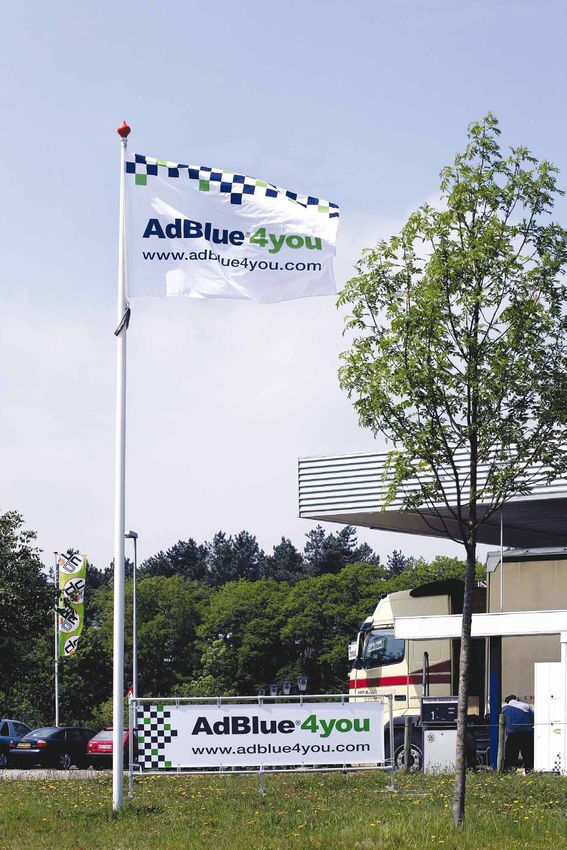
All you need to know about AdBlue

                                                               • About AdBlue                                         4
                                                               • What is AdBlue?                                      4
                                                               • What does AdBlue do?                                 4
                                                               • Properties of AdBlue                                 5
                                                               • Do I need AdBlue?                                    5
                                                               • Why do I need AdBlue?                                5
AdBlue is used in trucks, buses, cars,                         • Will I need AdBlue in the future?                    5
vans, boats, excavators, tractors, etc.                        • Is AdBlue hazardous?                                 6
                                                               • AdBlue and emission legislation                      7
                                                               • Buying AdBlue                                       10
AdBlue combined with an SCR-catalyst converter has
proven to be the leading technology for reducing               • Where can I buy AdBlue?                             10
Nitrogen Oxide (Nox) in exhaust gasses which are created       • How much AdBlue do I need?                          11
in the combustion process in diesel engines.                   • How can I recognise quality AdBlue?                 12
It all started in the heavy duty truck sector with Euro 4,
                                                               • Running out of AdBlue                               14
progressed to Euro 5 and almost all truck manufacturers
have embraced AdBlue in Euro 6 emission legislation.           • If I run out of AdBlue, am I running illegally?     14
                                                               • Does running out of AdBlue damage the engine?       14
In 2011, the NOx reducing emission legislation came            • If I run out of AdBlue will the engine shut down?   14
into place for the off-road sector. Some off-road
                                                               • Dispensing AdBlue                                   15
manufacturers had already opted for the SCR technology.
With the Stage 4 / TIER 4 Final emission legislation almost    • What to do in case of...?                           15
all off-road machinery will be fitted with an SCR system.      • What do I do when I have accidentally put AdBlue
Also the passenger car industry has selected the               • in my diesel tank?                                  16
combination of SCR-catalyst technology and AdBlue in           • What do I do when I have accidentally put diesel    48
a wide range of cars.                                          • in my AdBlue tank?                                  16
                                                               • How do I recognise the AdBlue tank?                 16
For many people AdBlue is a totally new product, which
will raise many questions. This booklet, developed by          • What do I do when I have spilled AdBlue?            17
GreenChem, is to inform you about AdBlue. It will address      • Can I reuse spilled AdBlue?                         17
questions such as: “What does AdBlue do?” and “What            • How will AdBlue be available?                       18
are its benefits?”. Quality and safety precautions will also
                                                               • Can I get my own dedicated AdBlue
be addressed.
                                                               • storage/dispensing system?                          20
Enjoy your reading, if there are any further questions         • Can I use homemade storage equipment                22
or you want to purchase AdBlue please contact us via           • Storing and dispensing your own AdBlue              23
www.greenchem-adblue.com                                       • Optimal storage conditions for AdBlue               23
                                                               • Storage Requirements                                23
Best regards,
                                                               • How to keep your AdBlue clean                       24
GreenChem Holding B.V.                                         • About GreenChem                                     26

                             2                                                               3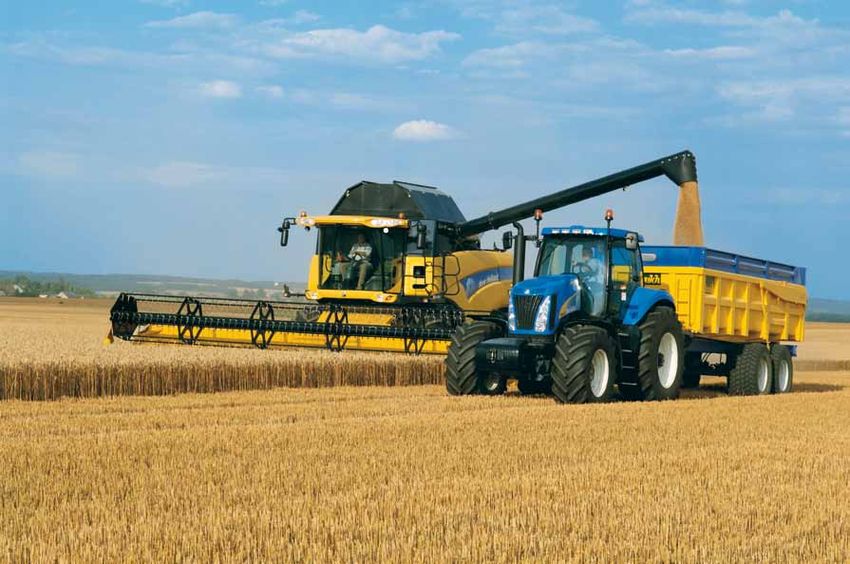
Properties of AdBlue

                                                                                                           Appearance:                  Colourless and clear liquid
                                                                                                           Chemical Composition:        NH2)2CO + H2O
                                                                                                           ISO:                         ISO22241: NOx reduction
                                                                                                                                        agent AUS 32
                                                                                                           Freezes at:                  -11°C
                                                                                                           Evaporates at:               40°C
                                                                                                           Corrosive:                   Yes
                                                                                                           Crystallization:             Yes
  About AdBlue                                                                                             Expiration date:             Best before 18 months
                                                                                                                                        after production in a sealed
                                                                                                                                        correctly stored package
  What is AdBlue and what does it do?                                                                                                   (after 18 months, quality
                                                                                                                                        testing is advised)
  AdBlue is a highly purified colorless liquid. It contains
  demineralized water and urea (32.5%). AdBlue is used with
  diesel engines and is also known outside of Europe as                                                    Do I need AdBlue?
  DEF, ARLA 32 or AUS 32.
                                                                                                           If you use a modern diesel powered machine fitted with
  The main active component of AdBlue is ammonia. This is                                                  an SCR catalyst, you will need AdBlue.
  chemically formed by hydrolising automotive urea, which is
  the main raw material for AdBlue. Urea is also used in the
  production of fertilizers and many more applications.                                                    Why do I need AdBlue?

 AdBlue
About    is used with diesel engines using SCR technology.
      AdBlue                                                                                               Your vehicle needs AdBlue to reduce NOx output. Due
 This technology (Selective Catalytic Reduction) reduces                                                   to the increasingly stringent emission legislation, diesel
       What is AdBlue?
 harmful emissions (NOx).
AdBlue is a highly purified colorless liquid. It contains demineralized water and urea (32.5%). AdBlue
                                                                                                           engines need to run more cleanly. NOx standards have
is used in diesel engines and is also known outside of Europe as DEF, ARLA 32 or AUS32.                    sharpened for transportation vehicles, as well as off-road
  AdBlue
The main activeis   injected
                component          intois the
                              of AdBlue          catalyst
                                          urea (also  known as of  the SCR
                                                               carbamide).        system,
                                                                           This compound    can be         vehicles and passenger cars.
  where
created from it triggers
             natural           a chemical
                       gas and occurs               reaction
                                      naturally in the metabolismwith   the ammonia.
                                                                  of mammals.   Urea is also used in the   All commercial vehicle manufacturers have to meet
production of fertilizers.
  This chemical reaction converts the toxic nitrogen oxides                                                the Euro 5 and Euro 6 standards for diesel engine
  (NOx)What    doesnitrogen
            into      AdBlue do?(N2) and water vapor (H2O). Water                                          emission. Although Euro 5 emission standards could
AdBlue is used in diesel engines with SCR technology. This technology (Selective Catalytic Reduction)
  vapor and nitrogen are naturally occurring gasses that are
reduces harmful emissions. AdBlue is injected into the catalyst of the SCR system, where it triggers a
                                                                                                           be met by different technologies, Euro 6 standards (into
  harmless
chemical reaction.to
                   Thisthe    environment.
                        chemical reaction converts the toxic nitrogen oxide (NOx) into nitrogen (N2)       force January 2014) require the use of Selective Catalytic
and water vapor (H2O). Water vapor and nitrogen are naturally occurring gasses that are harmless to        Reduction with AdBlue.
the environment.

                                                                                                           Will I need AdBlue in the future?

                                                                                                           Yes, you probably will.
                                                                                                           Based on the current developments in engine technology,
                                                                                                           if you run a diesel engine you will still need NOx reducing
                                                                                                           fluids in the future.
                                                                                                           Emission legislation for transportation and off-road
                                                                                                           vehicles will become more demanding. Euro 6 (due in
----------------------------------

          Properties of AdBlue
Appearance:                          Colorless and clear liquid
                                                       4                                                                                5
Chemical Composition:                (NH2)2CO + H2O
ISO :                                ISO22241: NOx reduction agent AUS 32
Freezes at:                          -11°C
2014) will require the use of SCR technology and AdBlue
for all transportation vehicles and passenger cars.
                                                              AdBlue and emission legislation
So it is likely that you will require AdBlue in the future.

As a fleet owner you will also need AdBlue for your           Is my vehicle subject to this
replacement vehicles. Since 2006, most newly built            emission legislation?
trucks and buses are fitted with an SCR system that uses
AdBlue. Putting new trucks into use will automatically        The Euro 1-6 emission legislation applies to motorcycles,
require you to familiarise yourself with AdBlue.              heavy duty vehicles (buses, trucks) and passenger cars.
Current developments also point towards an increase in        However, not all vehicles are required to meet the same
the use of catalytic reduction in off-road vehicles.          standards.
Stage I to IV (emissions legislation due in 2014) demand
cleaner off-road vehicles with lower NOx output. AdBlue       Stage I to IV legislation applies to most off-road
is the best way to achieve this.                              machinery as used in construction, for farming and other
                                                              applications. Whether you need to use SCR technology
2014 will also change the diesel technology in passenger      and AdBlue accordingly, depends on the emission levels
cars. SCR and AdBlue will become a standard feature for       of your machine or vehicle.
diesel driven cars, which will make AdBlue a part of daily    More information on the appliance of legislation on your
life.                                                         vehicle can be obtained from the manufacturer.

Is AdBlue hazardous?

No, Adblue is not a hazardous substance. It has no known
significant effects or critical hazards.
The raw material, urea, even occurs naturally in our
digestive system. However, we strongly dissuade you to
ingest AdBlue or inhale AdBlue vapors, due to the risk of
an allergic reaction.

AdBlue is corrosive and can dissolve materials that are
not listed as AdBlue proof in ISO 22241. These materials
could create malfunctions in your SCR-catalyst.
More information on properties and safety precautions
can be found in the Material Safety Data Sheet which can
be downloaded at www.greenchem-adblue.com.

                             6                                                            7
EURO 5 (715/2007/EC)
                                                                                                           Euro 5 was introduced in the EU in 2009. It proposes to
                                                                                                           limit harmful emission from Heavy Goods Vehicles (HGVs).

                                                                                                           EURO 4 (98/69/EC, 2002/80/EC)
                                                                                                           Euro 4 was introduced in the EU in 2005. It proposed
                                                                                                           further limiting of petrol and diesel vehicles emissions.
                                                                                                           In Euro 4 the emission of NOx has been limited for the first
                                                                                                           time.

Emission legislation in the European Union                                                                 EURO 3 (98/69/EC)
                                                                                                           Euro 3 was introduced in the EU in 1999. It limited diesel
                                                                                                           car emissions. Euro 3 also included legislation for Heavy
                                                   EURO I        1993         EURO IV       2006
                            0,40
                                                   EURO II       1996         EURO V        2009           Duty Vehicles.
                                                   EURO III      2001         EURO VI       2013

                            0,35                                                                           EURO 1 & 2 (91/441/EEC, 93/59/EEC & 94/12/EC,
                                                                                                           96/69/EC)
                            0,30
                                                                                                           Euro 1 came into force in 1993, setting emission standards
                            0,25
                                                                              I
                                                                                                           for commercial vehicles and light trucks. It was the start of
                                                                                                           a step by step reduction of emissions from all engines to
         Paticles (g/kWh)

                            0,20
                                                                                                           improve air quality in Europe. Euro 1 was soon followed by
- 97 %

                            0,15
                                                                                                           Euro 2 in 1996, which included legislation for motorcycles.

                            0,10                                              II

                                                     III
                            0,05

                                           V         IV
                              0
                                   0   1       2           3      4       5   6         7          8   9

                                                               NOX (g/kWh)

                                                                 - 95 %

                                                                                                           Legislation for off-road vehicles
Legislation for transportation vehicles
                                                                                                           Stage III and IV and Stage IV B
EURO 6                                                                                                     Addressing a wider range of off-road vehicles. Stage III
Euro 6 will come into force in 2014. It will especially                                                    and IV contain more elaborative and demanding standards.
affect standards for diesel driven vehicles, requiring                                                     Stage IV will be introduced in 2014. To meet these emission
further reduction of NOx and Hydrocarbon emission.                                                         standards almost all manufactorers will use AdBlue.
Consequently, the SCR system and AdBlue will become                                                        Stage IV B was introduced in 2011 leading major non-road
vital to meet the Euro 6 standards. Euro 6 legislation                                                     suppliers towards implementation of SCR technology.
will immediately come into force for trucks in January.
                                                                                                           Stage I and II (1997-2004)
New introduced passenger cars will have to meet the                                                        The first non-road diesel engine regulations were introduced
legislation before september 2014 and in january 2015 all                                                  in 1997. These stages did not yet include railroad engines,
newly delivered cars will have to meet Euro 6.                                                             inland vessels or airplanes.

                                                       8                                                                                9
How much AdBlue do I need?

                                                             Your AdBlue consumption depends on your type of
                                                             operation. A full tank of AdBlue will last several tanks of
                                                             diesel.

                                                             Estimated usage for trucks:

                                                             The average use of AdBlue
                                                             vs diesel for tucks is 4 to 8%.
                                                             - Local distribution:
                                                             - Approximately 500L in one year
                                                             - National distribution:
Buying AdBlue                                                - Approximately 1,000L in one
                                                             - year
                                                             - International distribution
                                                             - Approximately 2,500L in one
Where can I buy AdBlue ?
                                                             - year
AdBlue is widely available in 10 and 20L cans, 200L drums
and 1000L Intermediate Bulk containers (IBC’s) or via        Estimated usage for Passenger cars:
designated AdBlue dispensing systems. Most truck stops
                                                             -   Mid class diesel
already sell AdBlue in cans or bulk. Europe also has a
                                                             -   (For example Opel Insignia or Peugeot 508):
widespread network of AdBlue distributors and commercial
                                                             -   1 llitre AdBlue for 1,000 km
suppliers. Look for dispensing units with the AdBlue logo
                                                             -   SUV/MPV class diesel
and fill your tank just as you would tank fuel.
                                                             -   (for example Opel Zafira or VW touran):
                                                             -   1.5 litre AdBlue for 1,000 km
Visit the GreenChem website to find the best solutions for
your AdBlue supply:
                                                             Estimated usage for off-road vehicles:
www.adblue4you.com
www greenchem-adblue.com                                     Because of the wide variety of off-road vehicles, it is
                                                             difficult to pinpoint their exact usage. A large heavy duty
                                                             tractor can use 2,500L of AdBlue a year.
                                                             A ratio of 5 to 10% of the diesel usage is used to
...available throughout Europe                               calculate the required AdBlue.

                             10                                                           11
How can I recognise
quality AdBlue?

Look for the AdBlue logo and a green and blue
checkerboard pattern:

AdBlue should always be a colorless clear liquid.
If you buy drums or cans, watch out for brand names that
are similar to AdBlue. You could be dealing with a brand of
inferior quality. Make sure that you buy AdBlue from a VDA
licensed partner and look for this text on the container or
dispensing system: “AdBlue according ISO 22241”.

You can also look for the GreenChem logo to be sure that
you top up with premium quality AdBlue.

                Did you know...

     The first SCR systems were constructed for
     industrial use (in boilers). As the technology
     became more advanced, SCR was used in
     much smaller diesel engines in the automotive
     industry. Trucks and busses were equipped
     with SCR, with great results.

     SCR has excellent fuel economy and reliability
     and does not require extra circulation of exhaust
     gasses through the engine, keeping it cool and
     clean.

                            12
Running out of AdBlue

Warning: Running out of AdBlue could result in fines,
penalties or limited engine performance. In some cases it
will prevent your engine from starting at all. Be smart
and make sure you have an emergency supply on board.

If I run out of AdBlue, am I running illegally?
                                                               Dispensing AdBlue
AdBlue limits the amount of harmful emission from your
engine. Emission legislation allows only small amounts
of NOx. If you exceed this limit when running without          Do I need to wear protective clothing
AdBlue, you may be running illegally.                          when I dispense AdBlue?
Note: Legislation will not allow you to start your engine      This is not necessary. You might want to wear gloves to
without AdBlue.                                                keep your hands clean, but any spilled AdBlue can easily
                                                               be washed off with water. Adblue can cause staines on
                                                               clothes or upholstery.
Does running out of AdBlue damage
the engine?
                                                                   What to do in the case of:
No, the engine will not be damaged when you run out of
AdBlue. You can continue to the next AdBlue distribution           Ingestion
point or use your emergency supply at the next stop.               You can wash out your mouth with water and
However the engine performance could be effected until             drink small amounts of water.
you fill up.
                                                                   Skin contact
If I run out of AdBlue will the engine                             If you spill AdBlue on your skin, wash it with
                                                                   soap and water. AdBlue will dissolve in water.
shut down?
                                                                   Skin is normally unaffected by AdBlue.
No, the engine will not shut down, but some engines
                                                                   Inhalation
automatically limit engine performance when AdBlue
                                                                   Inhalation of AdBlue vapor may result in nausea
supplies are depleted.
                                                                   or lightheadedness. If you experience the latter,
                                                                   relocate to a place with fresh air and wait for the
If your engine is equipped with SCR technology, your
                                                                   symptoms to subside.
vehicle will lose power, and reduce its emission
according to legal standards. The vehicle’s performance
                                                                   Eye contact
will be restored when AdBlue levels are up again.
                                                                   AdBlue is not irritant, but may cause discomfort
                                                                   in the case of eye contact. Remove any contact
Note: Some engines will not start after you have run out
                                                                   lenses and flush your eyes with plenty of water.
of AdBlue. Make sure that you have an emergency supply
                                                                   Get medical attention if irritation occurs.
on board, or continue to the next distribution point without
shutting down your engine.

                            14                                                             15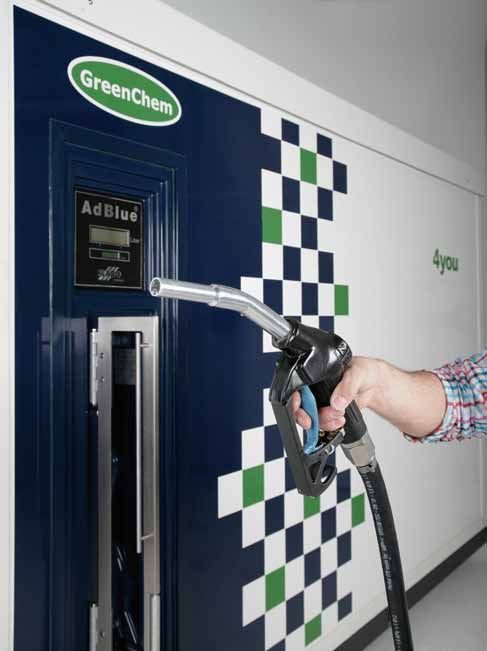
The opening for your AdBlue tank is narrower than the
                                                                opening for a diesel tank, so you should not be able to put
                                                                diesel in the wrong tank (the nozzle does not fit).

                                                                What do I do when I have spilled AdBlue?

                                                                AdBlue is not dangerous to the environment. A small
                                                                AdBlue spill can be diluted with water. It is best to mop
What do I do when I have accidentally                           up the spillage and avoid flushing it down a drain or
                                                                waterway. In case of a large spill, try to prevent the spillage
put AdBlue in my diesel tank?
                                                                from entering drains or waterways. Contain the spill with
                                                                sand, earth or your spill kit and dispose of it properly.
Do not start your engine! Depending on the amount of            Spill kits are available in different sizes and sets.
AdBlue, you may damage your engine when you start it.
You should empty and clean your tank. You will have to          Note: The surface on which you spill
empty the whole tank and discard the mixture.                   AdBlue may become slippery. Make
                                                                sure that you clean up the spill as
For further instructions on emptying and cleaning your          quickly as possible to prevent slipping
tank, please contact your vehicle supplier.                     and falling.

What do I do when I have accidentally                           Can I reuse spilled AdBlue?
put diesel in my AdBlue tank?
                                                                No, never try to reuse spilled AdBlue!
                                                                Spilled AdBlue will always be contaminated. Using
Do not start your engine! Even the slightest drop of diesel
                                                                contaminated AdBlue can cause costly damage to your
will pollute the AdBlue in your tank. One drop of diesel
                                                                vehicles’ SCR system, so no matter how great the spill,
will pollute up to 20 liters of AdBlue. Running with polluted
                                                                you cannot reuse it !
AdBlue will disrupt your SCR system. To prevent further
damage to your vehicle, it is best to contact your vehicle
manufacturer. You may need to replace certain AdBlue
components.

                                                                                  Did you know...
How do I recognise the AdBlue tank?
                                                                   That you are helping the environment when you
You can recognise your AdBlue tank by its blue cap or an           use AdBlue? AdBlue reduces the amount of NOx
AdBlue label, but it is a totaly separate tank.                    that is emitted by diesel engines.

The filling point is often fitted near your diesel cap. Some       AdBlue usage contributes to cleaner air and
passenger cars have an AdBlue tank in the boot or in the           cleaner surroundings.
engine bay.

                             16                                                              17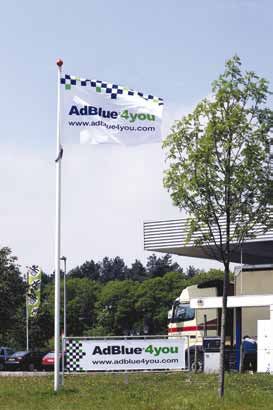
IBC (1,000L)

                                                                                                An IBC is a universal
                                                                                                container for storing
                                                                                                liquids.
                                                                                                An IBC can be filled
                                                                                                with AdBlue and can
                                                                                                be equipped
                                                                                                with variety pumps to
                                                                                                dispense AdBlue.
How will AdBlue be available?
The GreenChem AdBlue solutions
                                                            Smart Mobile
                                                            (250L or 450L)
AdBlue is available in cans, drums, IBC’s or through a
bulk dispensing unit. The kind of packaging that you need
                                                            This container was
depends on your usage and the most efficient way to top
                                                            especially developed for
up your vehicle.
                                                            off-road users in remote
                                                            locations.
                                  Jerry cans                Refilling on site is easy
                                  (10 or 20L)               with the integrated 12/24
                                                            Volt dispensing unit.
                                  AdBlue jerry cans are     This container offers extra protection from contamination
                                  the perfect way to        in the rough off-road environment.
                                  equip yourself with
                                  an emergency supply                               Dispensing Equipment
                                  of AdBlue. Jerry cans
                                  can be bought via                                 Rotary Drum/IBC Handpump
                                  GreenChem dealers,                                This mechanical operated pump
                                  autofactors, (OEM)                                is a cost effective way of refilling
                                  dealers and truckstops.                           the AdBlue tank of the machines.
                                                                                    Especially designed to be used
GreenChem uses canisters                                                            for AdBlue dispensing.
with an integrated spout,
which provides more                                                                 Smart IBC Pro and Pro Plus
comfort and a clean refilling.                                                      For the mid size fleets the use of
                                                                                    an electric IBC Pump provides
Drum AdBlue (200L)                                                                  a comfortable and clean matter
                                                                                    of refilling the AdBlue tank.
The drum can be used
with an AdBlue approved                                     Tailored solutions
selfpriming pump or an
AdBlue handpump.                                            GreenChem offers tailored solutions for AdBlue
The drum was developed for                                  customers, such as special canisters or branded
dispensing and storing small                                products. Please contact us for more information on
amounts of AdBlue.                                          tailored solutions: info@greenchem-adblue.com

                             18                                                         19
Did you know...
We install telemetry in our advanced Smart storage
and dispensing systems. Via machine to machine
communication this technology monitors AdBlue
storage levels and notifies GreenChem.
A care-free solution for keeping AdBlue levels up and
Can I get my own dedicated AdBlue your machines running.
storage/dispensing system?
Yes you can. GreenChem has a wide variety of dedicated Smart XL (6,200L)
AdBlue storage and dispensing systems.
GreenChem provides home base units for fleet owners The Smart XL is a bigger version of the Smart and can
and commercial systems for commercial filling stations. contain up to 6,200 litres of AdBlue. It has an integrated
dispensing unit suitable for moderate AdBlue users.
The GreenChem
product line: Smart XLe (6,200L)
Smart One and Smart The Smart XLe can contain up to 6,200L of AdBlue just
Home Base (2,900L) like the Smart XL. However, the Smart XLe is designed for
left /right or double dispensing nozzles.
The Smart is an above
ground storing and
dispensing solution. The Smart T
systems have an integrated (6,000 to 15,000L)
dispensing unit.
The Smart T systems
The Smart One is are suitable for stor-
the next step after ing large quantities of
using IBC’s AdBlue on site. These
systems have
The Smart Home a separate storage tank
Base is a more that can contain up to
complete version 15,000 liters of AdBlue.
of the Smart One,
including hose reel, The storage tank is connected to a small dispensing unit
heating, venting and through piping, which saves precious space at your filling
flowmeter with pulse point.
out.
Please contact us for more information
about Smart dispensing units.
20 21Did you know...
Air quality has improved
significantly in the last
ten years, but urban areas
in Europe still cope with
health problems due to
pollution. Euro 6 restricts Storing and dispensing
the allowed emission
levels, but also aims to
your own AdBlue
improve the availability and
quality of spare parts and
anti-pollution devices. Optimal storage conditions for AdBlue
According to the Euro legislation, it should be easy AdBlue should be stored out of direct sunlight
to access information on vehicle repairs. between -6°C and 25°C in a clean and sealed container
Manufacturers must ensure restriction free access or dispensing unit.
to the information for upkeep and repair of their
vehicles. This also includes on board diagnostic
software. Storage Requirements
The regular upkeep of vehicles will further improve Environment:
our living conditions and reduce health risks. Check local legislation for environmental requirements.
Some countries require a bunded AdBlue storage
tank when you are storing AdBlue or an anti spill container
under the IBC or drums. Contact local authorities for
further information on storage requirements.
Can I use homemade storage Suitable containers:
equipment for AdBlue? AdBlue can only be stored in high density Polyethylene,
polypropylene or stainless steel containers.
You can use your own storage system for the Suitable materials for piping, insulation and sealing:
dispensing of AdBlue, but it must be a system that is - Polyisobutylene (synthetic rubber), free of additives
designed for AdBlue. If you decide to use a homemade - (for seals and hoses)
solution for dispensing AdBlue, consider that many - PFA, PVDF & PTFE (teflon) free of additives (for sheet
materials are not resistant to AdBlue - lining for chemical equipment/support rings, seals)
Storing AdBlue in the wrong equipment may result in - Copolymers of (P)VDF and HFP (viton), free of additives
costly damage to your vehicles due to contamination. - (for the insulation of electrical wires & seals/o-rings)
Always respect the storage requirements to keep Do not use corrosive materials like copper, nickel,
your AdBlue integrity. Make sure that you read our tips on zinc, mild iron or aluminum. You can check the entire
maintaining AdBlue quality in the next section. list in the ISO 22241 recommandations.
22 23Buying AdBlue:
• Only buy AdBlue from AdBlue licensees, registered
• by VDA. They produce according ISO 22241.•
• Not every urea solution is AdBlue and you should be
• suspicious for AdBlue that is sold at a very low price.
• If you are unsure whether you are dealing with legitimate
• AdBlue, request the lab test results.
• Make sure your AdBlue distributor has sufficient
• knowledge and solutions for dispensing AdBlue, select
How to keep your AdBlue Clean? • the professional...
Storage and dispensing:
The quality of AdBlue is of the utmost importance.
Contamination can result in damage to your SCR catalyst • Do not attempt to refill AdBlue drums or jerry cans by
or aftertreatment and increases in harmful emission. Be • yourself.
smart and mind the environment: Keep your AdBlue clean! • Use dedicated equipment for storage and dispensing.
• Store the AdBlue between -6°C and 25°C in a closed
• container to maintain minimum shelf life of 18 months.
Handling: • Shelf life is reduced to approximately 6 months in a
• vented container.
• Protect AdBlue against any contamination at all times • Do not store AdBlue in direct sunlight. UV radiation is
• (fuel, oil, water, dust, dirt, metals, detergent etc.) • harmful to AdBlue.
• Don’t put anything inside the AdBlue container. This will • Do not use fuel or lubricants or any non-dedicated
• compromise quality. • equipment for your AdBlue.
• Make sure that you do not mix AdBlue with diesel or any • Do not use AdBlue containers with broken seals.
• other liquids. • Only use refilled AdBlue containers which are sealed
• Do not try to mix your own AdBlue, urea quality is very • and clean (i.e.: IBC, drums).
• important. • If your AdBlue has frozen, it can be used once thawed
• If you use a jug or vessel to transport AdBlue, make sure • out.
• that it is clean. Do not use vessels that have previously n
• been used to transport diesel or oil.
• Use AdBlue dedicated materials instead.
Dispensing AdBlue: Did you know...
• AdBlue is not an additive to diesel. Always put AdBlue
Greenchem AdBlue is produced by mixing high
• into its dedicated tank.
quality urea prills with demineralized water? The
• Only top up AdBlue with a dedicated filling system.
water has to be heated up before urea is blended
• Homemade equipment may compromise AdBlue quality
in the reactor/mixer-tank. Urea dissolves quite fast,
• due to corrosion or breaches.
which ensures us a fast and flexible production.
• Check the filling equipment for crystallization and
Every batch is produced under strict quality
• blockages before you start dispensing.
requirements and tested by a third party laboratory.
• If you are using AdBlue jerry cans, make sure that the
• opening and spout are clean.
24 25We are making
progress towards
a cleaner environment
About GreenChem
GreenChem is one of the largest European distributors
of AdBlue. It was founded in Breda (The Netherlands) in
2003 and began as a pioneer in NOx reduction.
GreenChem became a part of Agrofert Holding in 2009
and profits from a rapidly growing AdBlue market.
We are proud to deal with many vehicle manufacturers
(OEM) that have chosen GreenChem as their sole
AdBlue distributor and supplier.
GreenChem has 20 AdBlue blending facilities all over
Europe and more than 3.500 contracted AdBlue
tanksystems (3.000 to 15.000 litres) equipped with
telemetry in the European market.
GreenChem offices are spread all over Europe to remain
in contact with our customers so if you’re looking for
premium quality AdBlue, GreenChem is the way to go.
GreenChem values quality products as well as quality
of life. We work according to DIN ISO 9001:2008
and ISO 14001:2004 and stand for reliable delivery and
knowledge, constant quality control and satisfied
customers. This is how we continue to raise the bar on
AdBlue quality and customer satisfaction.
26
1...available throughout Europe
The GreenChem brand AdBlue4you has been
developed as a clear indicator for the premium
quality AdBlue that GreenChem produces.
For any questions or inquiries contact
your country representative or visit our website
www.greenchem-adblue.com
GreenChem Solutions Ltd.
Kingfisher Exchange,
Walton Street, Aylesbury
Bucks HP21 7AY, United Kingdom
Tel. +44(0)1296 468 531
Fax +44(0)1296 468 532
E-mail: uk@greenchem-adblue.com
www.greenchem-adblue.com
Publication by GreenChem 2013
28You can also read


