AIRCRAFT SERIOUS INCIDENT INVESTIGATION REPORT - AI2018-6
←
→
Page content transcription
If your browser does not render page correctly, please read the page content below
AI2018-6

AIRCRAFT SERIOUS INCIDENT
  INVESTIGATION REPORT

  NAKANIHON AIR SERVICE CO., LTD.
            JA6 7 1 7

           September 27, 2018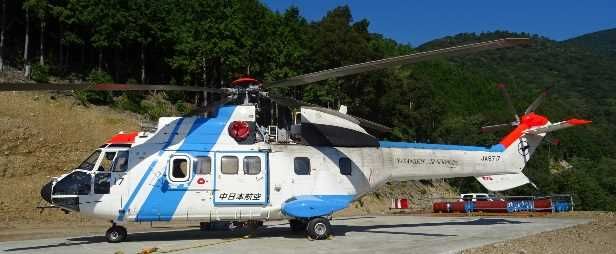
The objective of the investigation conducted by the Japan Transport Safety Board in accordance
with the Act for Establishment of the Japan Transport Safety Board and with Annex 13 to the
Convention on International Civil Aviation is to prevent future accidents and incidents. It is not the
purpose of the investigation to apportion blame or liability.

                                                                Kazuhiro Nakahashi
                                                                Chairman
                                                                Japan Transport Safety Board

                                                     Note:
     This report is a translation of the Japanese original investigation report. The text in Japanese shall
prevail in the interpretation of the report.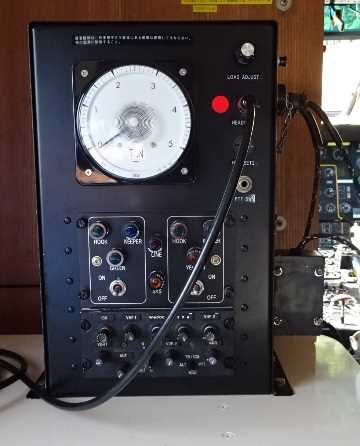
AIRCRAFT SERIOUS INCIDENT
                        INVESTIGATION REPORT

                  DROPPING OF OBJECT
        DURING EXTERNAL CARGO SLING OPERATION
   KITAGAWA-VILLAGE, AKI-GUN, KOCHI PREFECTURE, JAPAN
          AT AROUND 15:32 JST, SEPTMBER 23, 2017

                NAKANIHON AIR SERVICE CO., LTD.
            AÉROSPATIALE AS332L1 (ROTORCRAFT), JA6717

                                                                             September 7, 2018
                                                    Adopted by the Japan Transport Safety Board
                                                             Chairman Kazuhiro Nakahashi
                                                             Member       Toru Miyashita
                                                             Member       Toshiyuki Ishikawa
                                                             Member       Yuichi Marui
                                                             Member       Keiji Tanaka
                                                            Member        Miwa Nakanishi

1. PROCESS AND PROGRESS OF THE INVESTIGATION
 1.1 Summary of the         On Saturday, September 23, 2017, an Aérospatiale AS332L1,
     Serious Incident registered JA6717 and operated by Nakanihon Air Service Co., Ltd.,
                       dropped stones being carried in a bucket that was slung external to the
                       aircraft immediately after taking off from a cargo sling point of the Kojima
                       temporary helipad in Kitagawa-village, Aki-gun, Kochi Prefecture.
 1.2 Outline of the         This event fell under the category of “Case where suspended object
     Serious Incident dropped unintentionally” as stipulated in Item (XV), Article 166-4 of the
     Investigation     Ordinance for Enforcement of the Civil Aeronautics Act (Ordinance of
                       the Ministry of Transport No. 56 of 1952), which is classified as an
                       aircraft serious incident.
                            The Japan Transport Safety Board was notified of this serious
                       incident’s occurrence and designated an investigator-in-charge and an
                       investigator on September 24, 2017 to investigate this serious incident.
                            An accredited representative and an adviser of the French
                       Republic, as the State of Design and Manufacture of the Aircraft involved
                       in the serious incident, participated in this investigation.
                            Comments were invited from parties relevant to the cause of the
                       serious incident. Comments on the draft report were invited from the
                       Relevant State.

                                               1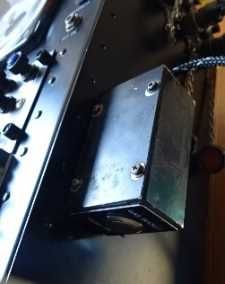
2. FACTUAL INFORMATION
 2.1 History of the           The history of the
     Flight           flight was summarized as
                      below        based    on   the
                      statements of the captain,
                      the onboard mechanic, and
                      ground workers.
                              On    September     23,
                      2017,        an    Aérospatiale
                      AS332L1,             registered
                      JA6717 and operated by            Photo 1 The Aircraft and Bucket of the
                      Nakanihon Air Service Co.,                  Serious Incident
                      Ltd.,        was     repeatedly
                      engaging in cargo transport between the cargo sling point of the Kojima
                      temporary helipad in Kitagawa-village, Aki-gun, Kochi Prefecture, and a
                      cargo unloading point approximately 1.3 km from the cargo sling point
                      from around 15:00. On this day, three ground workers were at the cargo
                      sling point, of whom one was a trainee who was undergoing ground work
                      training.
                          The captain was seated in the right pilot seat and the onboard
                      mechanic in charge of outside monitoring, guidance, and the sling
                      equipment operation was seated on the forward left seat of the cabin.
                          The onboard mechanic, who was monitoring bucket exchange work
                      at the cargo sling point from the Aircraft as it hovered in order to make a
                      tenth flight, thought to warn concerning the trainee’s slinging work while
                      holding a radio in one hand, and he reached to operate the transmit
                      switch of the communication radio of the control box (to be described in
                      2.7) immediately after the Aircraft took off from the cargo sling point. At
                      this time, he mistakenly operated the open/close switch for the bucket
                      instead of the transmit switch, and as a result the bucket opened and the
                      stones (approximately 2.7 tons) fell.
                          The captain, having been told that the onboard mechanic had
                      dropped stones by the onboard mechanic, terminated the flight and
                      returned to the Temporary Helipad.
                          On the date that this serious incident occurred, the Aircraft
                      conducted cargo transport 48 times at other temporary helipads prior to
                      beginning transport at the Temporary Helipad, and this serious incident
                      occurred on the 58th time in total. Neither the number of times
                      conducting transport nor the content of the transport was much greater
                      than normal, and the onboard mechanic was not feeling fatigued. In
                      addition, at the time that he attempted to operate the send switch, the
                      onboard mechanic was thinking about how to warn the trainee and was
                      not looking at his hand.
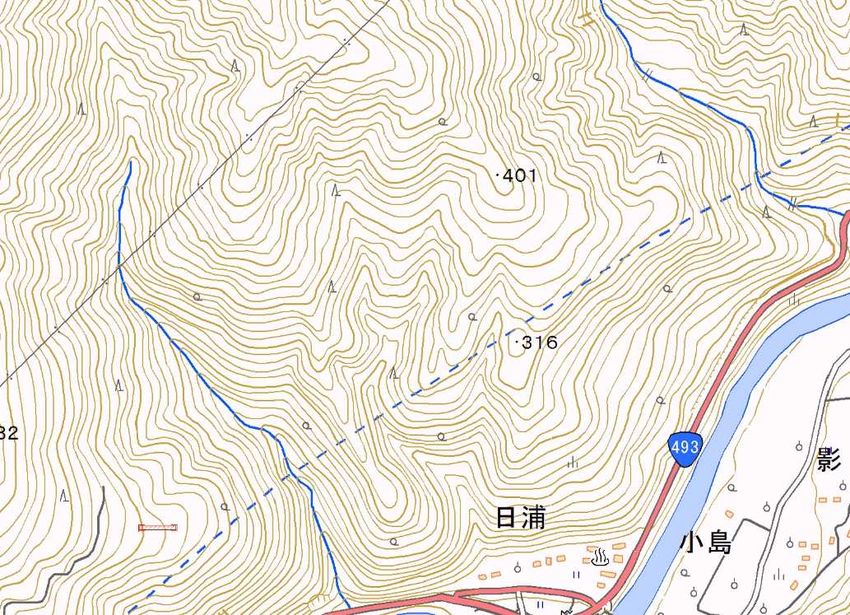
                              This serious incident occurred at approximately 80 m southeast
                      from the Temporary Helipad (N 33° 29' 55", E 134° 05' 27") and at around

                                                 2
15:32 on September 23, 2017.

                                                                      N
                                          Kagawa Pref.

                                                                                 Cargo unloading point
                                                Tokushima Pref.

                            Kochi Pref.

                          Kitagawa-village

                                                                      Planned flight path

                               Kojima
                         Temporary Helipad

                                             Area of stones drop
                                                                                                                 100m
                            Location of the serious                                         国土地理院 地理院地図
                            incident occurrence

                                                         Figure 1 Estimated Flight Route and
                                                                 Area of Stones Drop

2.2 Injuries to      None
    Persons
2.3 Damage to the    None
    Aircraft
2.4 Personnel        Captain: Male, age 58
    Information          Commercial pilot certificate (Rotorcraft)                                        June 2, 1981
                                Specific pilot competence
                                Expiry of practicable period for flight                                  April 24, 2019
                         Type rating for Aérospatiale SA330                                              April 28, 2006
                         Class 1 aviation medical certificate                          Validity: September 30, 2018
                         Total flight time                                                  10,945 hours 35 minutes
                         Total flight time on the type of aircraft                           2,097 hours 31 minutes
2.5 Aircraft         Aircraft type: Aérospatiale AS332L1,
    Information                 Serial number: 2394, Date of manufacture: January 3, 1993
                     Certificate of airworthiness: No. Dai–2017–168, Validity: June 18, 2018
                     Total flight time                                                      10,686 hours 42 minutes
2.6 Meteorological          According to the statement of the captain, the weather during the
    Information      cargo transport was cloudy, the wind was weak, and the airflow was calm.
2.7 Additional       (1) Control box
    Information             The control box used to operate the external sling system including
                     opening and closing of the bucket and to operate the radio was installed
                     on the forward left side of the cabin behind the cockpit seats. The
                     onboard mechanic was in charge of operating it.

                                                                  3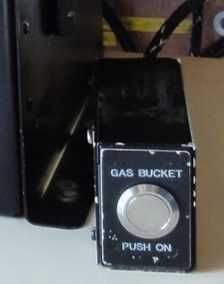
A switch box was installed on the right side of the control box, and
the bucket open/close switch was installed on the bottom of the switch
box. This switch box can be removed from the control box and can be
operated by placing it on a desk or holding it with a hand; however, at
the time of this serious incident, the switch box was being used while
attached to the control box.
      The bucket open/close switch is a push button. The bucket opens
 during the time the button is pushed.
      The transmit switch of the communication radio is installed on the
 lower front side of the control box. Moving the switch down (to the
 “RAD” position shown in Photo 2) puts the radio in the transmit mode.

                                  Bucket open/close switch     The switch box in
                                  (Bottom of the switch box)   the removed state

                                                     The communication
                                                     radio’s transmit switch

                        Photo 2     The Control Box

(2) Functional test of the bucket system
      In the aircraft investigation, the Aircraft and bucket system were
 connected on the ground in the same situation as when this serious
 incident occurred and given a functional test, and it was confirmed that
 the system was operating normally.
(3) Experience of the onboard mechanic and circumstances of education
 and training
      The onboard mechanic has approximately 23 years of experience in
 cargo transport and approximately two years and three months of
 experience working as an onboard mechanic in the Company.
      Education and training was being implemented appropriately for
 the onboard mechanic by the Company in accordance with the
 Company’s in-house regulations for education and training.
(4) Injury to persons and Damage to objects on the ground
      There was no injury to persons or damage to objects on the ground
 as a result of the dropping of the stones.
(5) Flight route for cargo transport
     The operator conducting cargo transport by cargo sling was

                        4
conducting transport by setting a flight route that would not cause safety
issues for persons and objects on the ground, the Aircraft was flying with
consideration for the configuration of transport, weather conditions, and
other matters on that day based on a flight route that the Company had
set in advance with consideration for safety on the ground.
3. ANALYSIS
3.1 Involvement of None
Weather
3.2 Involvement of None
Pilots
3.3 Involvement of None
the Equipment
3.4 Analysis of (1) Dropping of the stones
Findings It is certain that this serious incident occurred because the bucket
opened and the stones dropped immediately after the Aircraft took off from
the cargo sling point carrying stones in the bucket, in the reason why the
onboard mechanic mistakenly operated the bucket’s open/close switch
instead of the transmit switch of the communication radio when he
intended to communicate a warning to the trainee.
(2) The onboard mechanic
It is certain that the onboard mechanic had received the necessary
education and training.
Regarding the onboard mechanic operated the bucket’s open/close
switch by mistake instead of the communication radio’s transmit switch,
it is probable that this occurred when, while in a state in which his
attention was focused on thinking about how to communicate a warning
to the trainee and his attentiveness to the bucket’s operation was faded,
the onboard mechanic unintentionally operated the bucket’s opening,
which was an action that he had been conducting repeatedly until that
time.
Additionally, it is somewhat likely that the onboard mechanic did not
notice the mistake in the switch he was about to operate because he was
not looking at his hand when operating the switch.
(3) Design of the control box
The bucket’s open/close switch had a design that opened the bucket
simply by pressing the open/close switch and did not have a mechanism to
prevent wrong operation. Because of this, the bucket opened when the
onboard mechanic mistakenly pressed the bucket’s open/close switch. It is
probable that using a mechanism that requires the operation of multiple
switches to open/close the bucket or a switch fitted with a guard, etc.,
would be effective measures for preventing wrong
operation.
54. PROBABLE CAUSES
It is certain that this serious incident occurred because the bucket opened and the stones
dropped immediately after the Aircraft took off from the cargo sling point carrying stones in the
bucket, in the reason why the onboard mechanic mistakenly operated the bucket’s open/close
switch instead of the transmit switch of the communication radio.
5. SAFETY ACTIONS
The Company took the following safety actions after the occurrence of this serious incident.
(1) The Company carried out individual re-education on preventing human errors for the
onboard mechanic.
(2) The Company carried out education on preventing human errors for all employees involved
in operations and executive-led safety education at cargo transport sites. Additionally, the
Company issued a notification concerning the prevention of human errors by the safety
supervisor and disseminated it within the company.
(3) For the Aircraft and other aircrafts in the Company that use a bucket’s open/close switch of
the same type as that used on the Aircraft, by installing an additional toggle switch in order
to prevent wrong operation, the Company improved the switch function so that open/close
operation for the bucket cannot be performed without a simultaneous operation with the
existing switch.
6You can also read


