ALIVE Studying Kruger's elephants for 20 years!
←
→
Page content transcription
If your browser does not render page correctly, please read the page content below
SPECIES ID ‒ MAMMALS | RESEARCH PROJECT

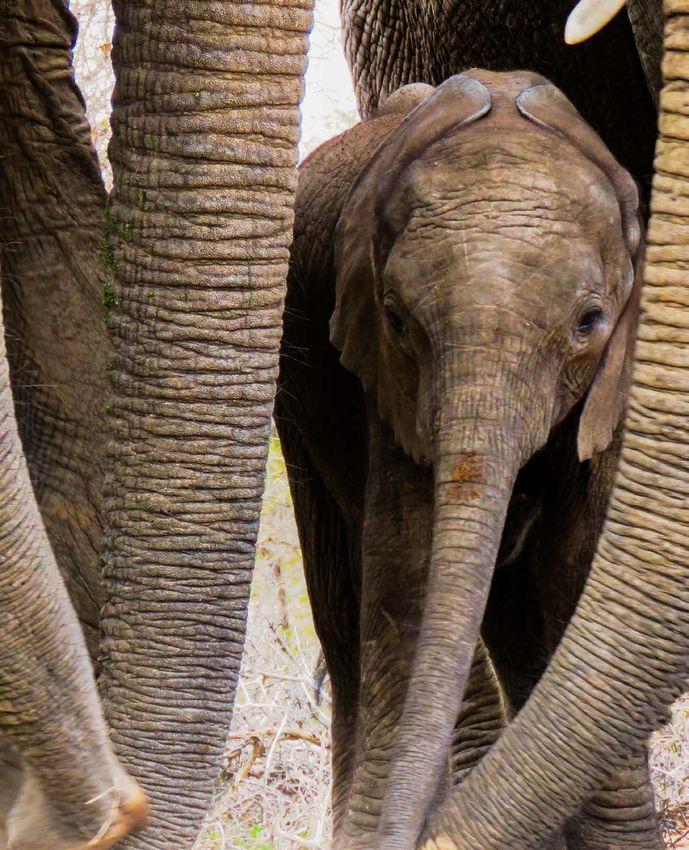
     African elephant (Loxodonta Africana).
     Photo © Christin Winter

     ELEPHANTS
     ALIVE
     Studying Kruger’s
     elephants for 20 years!
     by Harriet Nimmo

46    KRUGER
          KRUGER
             MAGAZINE
                 MAGAZINE
                      | Issue| 4Issue
                                 – Winter  2018 2018
                                      4 – Winter
SPECIES ID ‒ MAMMALS | RESEARCH PROJECT

      Black rhinoceros (Diceros
      bicornis), commonly referred
to as ‘black rhino’, have been
relentlessly persecuted since the 19th
century and there are only about
5 000 animals remaining today.
Ruthless poaching across Africa, and
presently in South Africa, threatens
the survival of the species on a global
scale. South African National Parks
                               “The biggest challenge is ‘trying to provide advice on both
(SANParks) has established a Black
Rhino Guardian Programme in theto best manage expanding populations in fenced reserves
                             how
Kruger National Park, whichwithin    South Africa, while simultaneously educating people on
                              hosts the
largest population of black rhino in alarming pan-African decline facing elephants’.”
                                  the
the country. This multidisciplinary
programme draws support from
Scientific Services, Ranger Services,

              K
Air Services and Veterinary
Wildlife Services to enable the best
management and protection possible
for the species.                      ruger is home to            For 20 years, Elephants Alive,
                                    one of southern        the Hoedspruit-based NGO, has
                                    Af rica’s largest      been studying the elephants of
                                    f ree-ranging          the Greater Kruger to ensure their
                                    elephant               survival, and to promote harmony
                                    populations.           with humans.
                                    With the fences          We have developed an
                                    down, elephants        identification database of nearly 2
                   can move throughout the Great           000 elephants by photographing
                   Limpopo Transf rontier Park. This       and drawing their unique features.
                   includes Kruger National Park           We identify individual elephants
                   and the Associated Private Nature       by their sex, ear patterns (tears,
                   Reserves (APNR) bordering the           notches, holes) and the shape of
                   park (Timbavati, Klaserie, Umbabat,     their tusks. Monitoring individual
                   Balule and Thornybush) in South         elephants for 20 years has enabled
                   Af rica, Gonarezhou National Park       us to understand their social
                   in Zimbabwe and Parque Nacional         bonds, their breeding behaviour,
                   do Limpopo in Mozambique.               and their movements over time.

Black rhinoceros. Photo © Estiaan Houy

                                                                     KRUGER MAGAZINE | Issue 4 – Winter 2018   47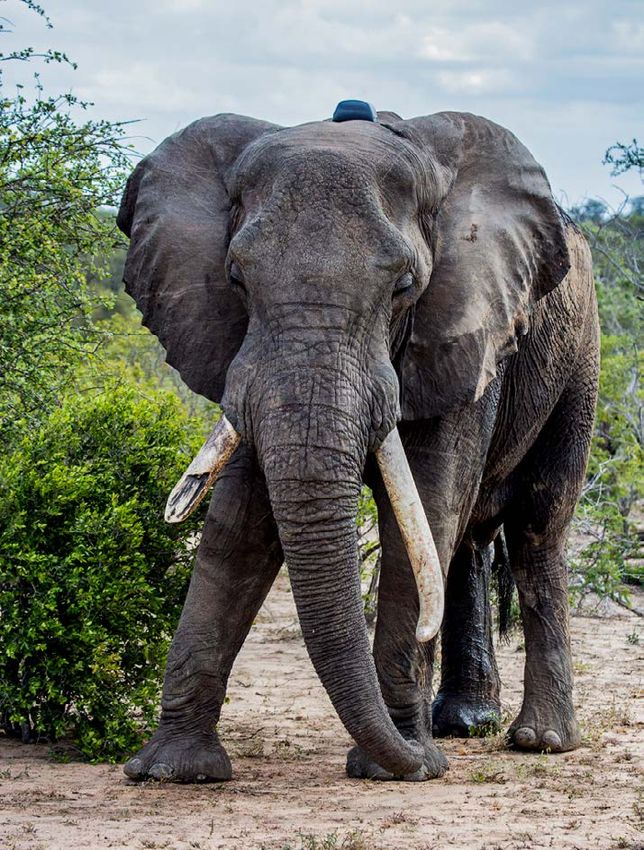
SPECIES ID ‒ MAMMALS | RESEARCH PROJECT

                                                                                        “From zero ivory poaching
                                                                                         incidents three years ago,
                                                                                        Kruger has lost close to 100
                                                                                      elephants to poaching over the
                                                                                      past 18 months, mainly in the
                                                                                            north of the Park.”

                                                                                     social interactions, record their
                                                                                     vocal communications, and
                                                                                     try to understand the genetic
                                                                                     relatedness between bulls
                                                                                     by DNA-testing their dung.
                                                                                     These last two activities are
                                                                                     undertaken in collaboration
                                                                                     with Cambridge University.
                                                                                     Our research is helping us to
                                                                                     understand the importance
                                                                                     of the oldest bulls in elephant
                                                                                     society, sadly deemed by trophy
                                                                                     hunters to be ‘beyond their
                                                                                     prime’ and by poachers as their
                                                                                     most lucrative targets because
                                                                                     of their large tusks. We have
                                                                                     watched these long-lived old
                                                                                     males teach, lead and discipline

Collared elephant ‘Classic’, about 45 years old.
Photo © Mike Kendrick

   We have also radio-collared
and named 80 elephants
since 1998, so we can follow
their movements in greater
detail throughout the Great
Limpopo Transfrontier Park.
We have focused our attention
on monitoring and naming
mature bulls because much less
is known about male elephants.
Males can also be more at risk
of being involved in human-
elephant conflicts such as crop
raiding – and of course big bulls
are top of poachers’ hit lists.
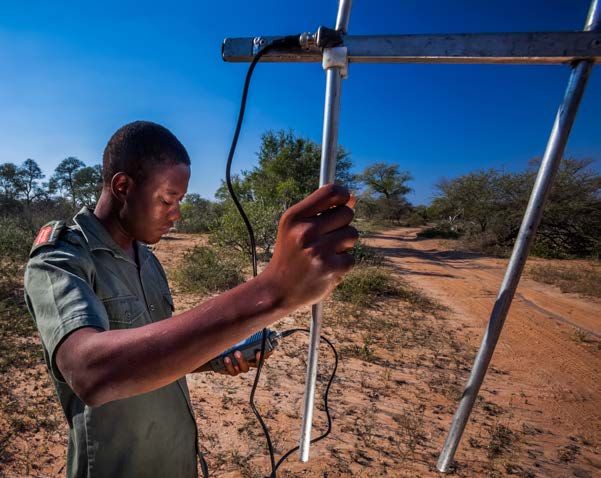
We map the movements of                            EA Researcher Ronny Makukule tracking elephants.
these collared bulls and their                     Photo © Neil Aldridge

48      KRUGER
            KRUGER
               MAGAZINE
                   MAGAZINE
                        | Issue| 4Issue
                                   – Winter  2018 2018
                                        4 – Winter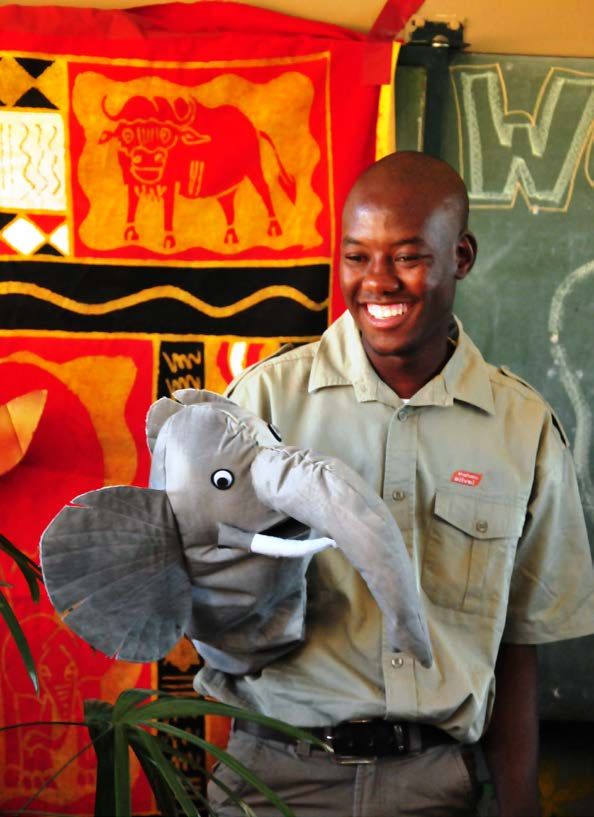
SPECIES ID ‒ MAMMALS | RESEARCH PROJECT

the younger bulls. Elephants
revere their elders, relying on
their wisdom to teach them
their ways – something we
humans sadly seem to have lost.

         Our elephant ID studies are the
         longest and most consistent
for all of southern Africa. This long-
term research is providing fundamental
information for elephant management
and protection, informing SANParks,
conservation bodies and private
landowners on seasonal movements,
the sustainability of trophy hunting in
some private reserves, and impact on
vegetation. Worryingly, it is now also
used to identify poaching hotspots.             Michelle re-collaring ‘Classic’.

 “Our elephant ID studies are the
longest and most consistent for all
of southern Africa. This long-term
research is providing fundamental
     information for elephant
  management and protection.”

  Africa has already lost a
third of its savannah elephant
population during the past
seven years. There has been a                   Tranquilised elephant during re-collaring.
                                                Photos © Mike Kendrick
65% decline in forest elephants
over a ten-year period. The
staggering decimation of
elephant herds in Mozambique               that, while it is not yet out of         on how elephants move relative
and Tanzania (53% and a 60%                hand in South Africa, poaching           to their resources in order to
decline respectively over a                is a real threat. The reality hit        better manage their impact on
five-year period) has left many            home when one of Elephants               the vegetation. Elephants were
concerned that elephant                    Alive’s collared bulls, ‘Charlie’,       culled from 1967 to 1994 in an
poaching in South Africa                   was poached at the end of 2017,          attempt to keep the population
will increase. From zero ivory             just a few weeks after having            densities around 6 000. Today,
poaching incidents three years             had his collar fitted in Parque          the population is closer to
ago, Kruger has lost close to 100          Nacional do Limpopo.                     20 000, so understanding their
elephants to poaching over the                Our research has also                 movements is critical to any
past 18 months, mainly in the              provided very valuable                   decisions required across the
north of the Park.                         information to SANParks, which           Great Limpopo Transfrontier
  It is Elephant Alive’s belief            requires detailed information            Park as a collective whole.

                                                                            KRUGER MAGAZINE | Issue 4 – Winter 2018   49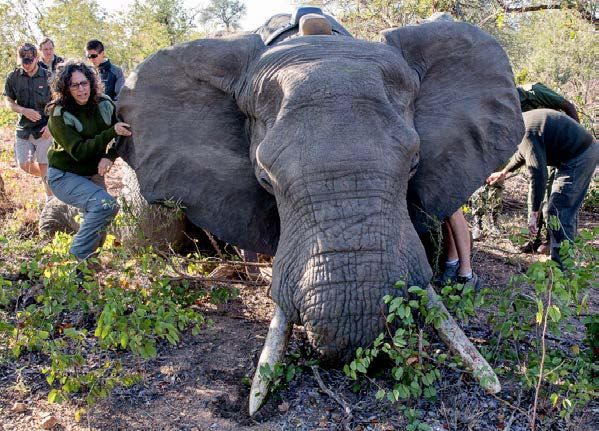
SPECIES ID ‒ MAMMALS | RESEARCH PROJECT

   “As well as identifying and
   studying the movements of
   elephants, Elephants Alive
  also works hard to minimise
   human-elephant conflict.”

  As well as identifying and
studying the movements of
elephants, Elephants Alive
also works hard to minimise
human-elephant conflict.
One of the biggest issues is
elephants damaging large
trees – particularly in the private
reserves bordering Kruger,
where there are more artificial
waterholes, which attract more
elephants in times of drought
or during the dry season when
they are primarily browsers.
Some private landowners are
calling for elephants to be shot
to reduce tree damage.                       Elephants Alive outreach work at schools.

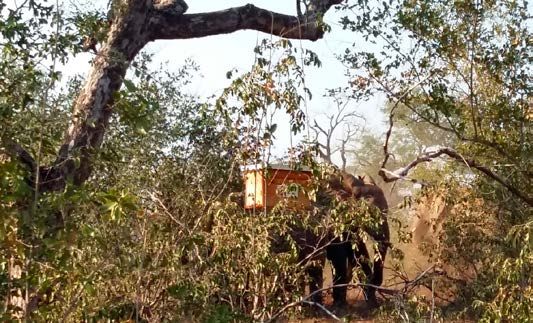
                                                                         Elephants bypassing a tree with beehives.
                                                                         Photo © Robin Cook

                                                                                  “It is known that elephants
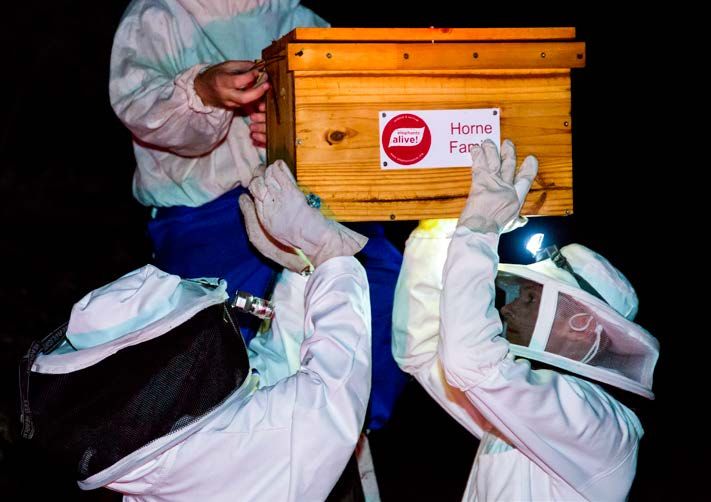
Beekeepers hanging beehives in a tree.
                                                                                  do not like bees.”
Photo © Mike Kendrick

50      KRUGER
            KRUGER
               MAGAZINE
                   MAGAZINE
                        | Issue| 4Issue
                                   – Winter  2018 2018
                                        4 – Winter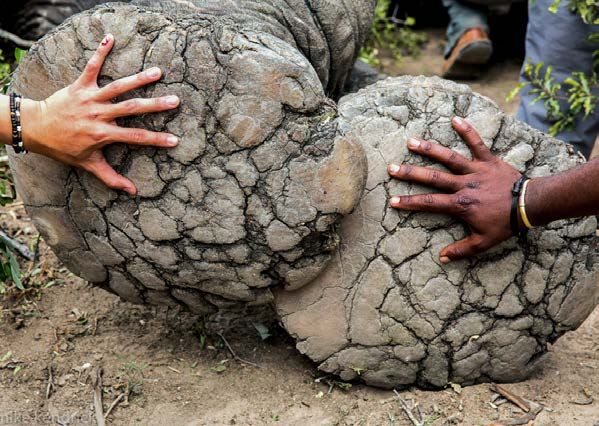
SPECIES
                                                  SPECIES   ‒ MAMMALS
                                                        ID ID ‒ MAMMALS
                                                                      | RESEARCH
                                                                         | RESEARCH
                                                                                  PROJECT
                                                                                    PROJECT

          Elephants Alive
   Elephants Alive’s team is led by
   Dr Michelle Henley, co-founder, CEO
   and principal researcher. Named as
   one of “the ten most inspiring women
   in South Africa” by Culture Trip in
   2017, Michelle is one of conservation’s
   unsung heroes. When asked what
   Elephants Alive’s biggest challenge
   is, Michelle explains that the biggest
   challenge is “trying to provide
   advice on both how to best manage
   expanding populations in fenced
   reserves within South Africa, while
   simultaneously educating people
   on the alarming pan-African decline
   facing elephants”.
                                                      Dr Michelle Henley, CEO, with an elephant collar.
                                                      Photo © Mike Kendrick

  Since 2004, more than 3 000        marula trees whose trunks were           Black Mamba anti-poaching
individual trees have been           protected with wire netting and          patrols, improving community
monitored to understand              54% of trees with no protection.         liaison efforts and providing
elephant impact, including 62        The beehives provide a win-win           inspirational role models for
trees with southern ground           solution – protecting iconic             young learners. Elephants
hornbills and 226 trees with         trees, generating honey for sale         Alive also runs collaborative
raptor/vulture nesting sites. Half   and reducing human-elephant              programmes with Wild Shots
of these trees have had wire net     conflict.                                Photography Outreach,
wrapped around their trunks            It is Elephant Alive’s belief          targeting young learners in
to prevent bark-stripping by         that, to ensure the long-term            communities where there is
elephants. The three iconic tree     preservation of these free-              human-elephant conflict.
species that we focus on are         ranging elephants, it is critical           With expanding human
marula, knobthorn and false          to empower, inform and involve           populations putting ever
marula. The results from this        impoverished local communities.          more pressure on Af rica’s
study highlight this cost-effect     We run education programmes              reserves and National Parks,
measure to protect large trees.      with rural communities and               and increasing threats f rom
  It is known that elephants         government schools. We work              poaching, Elephants Alive’s work
do not like bees, and beehive        closely with the all-female              is increasingly crucial.
fences have been successfully
used in East Africa to protect
farmers’ crops. Elephants
Alive has pioneered innovative
research, using beehives
                                                  Contact us
suspended in a number of                     Elephants Alive
iconic marula trees over a                   info2u@elephantsalive.org
two-year study period. Our
research showed that only 2%
of study trees with beehives                                Visit our website on: www.elephantsalive.org
experienced any elephant                                         Follow us on Facebook
damage, compared to 28% of

                                                                     KRUGER MAGAZINE | Issue 4 – Winter 2018   51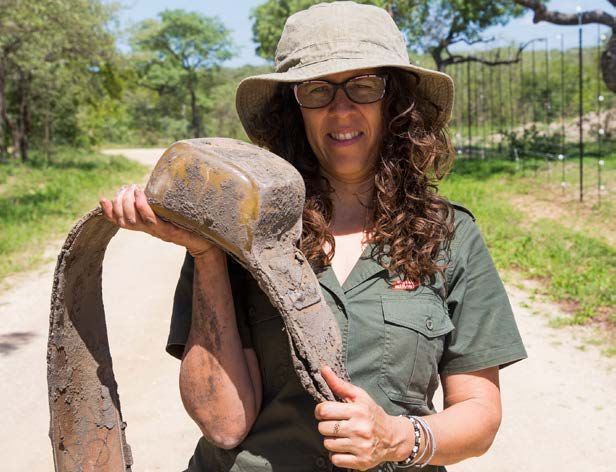
You can also read


