Realtime Neural Interface Controlled Au-Pair BIMA Bot - International ...
←
→
Page content transcription
If your browser does not render page correctly, please read the page content below
International Journal of Recent Technology and Engineering (IJRTE)
                                                                                 ISSN: 2277-3878, Volume-8, Issue-1, May 2019

        Realtime Neural Interface Controlled Au-Pair
                         BIMA Bot
                                             N.Kripa, R. Vasuki, R. Kishore Kanna

  Abstract: This project describes about a brain controlled robot         Brainsense EEG headband is a wireless module EEG
based on Bluetooth communication system. Brain Control                    electrode device [5]. It has a electrode to be placed on the
Interface is a frame work that can bypass all the conventional            Pre-Frontal Fp1 area in the 10-20 system of scalp electrode
channels of communication which gives a direct correspondence             location. It has a electrode to be clipped in ear as the
and control from the pattern of brain waves to the machine in
                                                                          reference electrode.
external environment. Here a movable robot is been used which
is controlled by the EEG waves converting into commands for the
robot to be followed [1]. BIMA Robot is a self controlled Robot.
This work is developed for the disabled people, bed ridden, old
aged people to use in their daily lives. Human brain consists of
millions of interconnected neurons. The Brain waves are
acquired by wireless EEG sensor Brainsense with single
electrode. The head band is worn and raw EEG data is been
acquired for 100 people of various age groups for two times at
various times [2]. The eSense value is been calculated for each
person and this is given as the command for the BIMA bot. The
robot is fed with instructions and acts according to the commands
received through Bluetooth. The main advantage of this work is
it is of low cost compared to the wired many electrode devices
which is used in hospitals. And this is a user friendly device, Au-
pair is the person who goes for errands, and is portable and light                      Fig 2: 10-20 System of Scalp Electrode
weight for domestic use [3].
   Keywords: Brain control interface, Bluetooth, BIMA Bot,                         One side of the headband pouch consists of AAA
Brainsense, eSense, Au-pair, Wireless.                                    battery for power supply and the other side of the headband
                                                                          pouch consists of TGAM Brainwave sensor. It is used to
                    I.        INTRODUCTION                                convert the raw EEG data got from the brain into its
                                                                          respective frequency spectrums. In other words the EEG
There are many electrical signals produced from our body.
                                                                          waves cannot be understood by the Robot machine so
One such signal is the Electroencephalograph (EEG) [4]
                                                                          inorder to that it converts into machine language of
which is taken from the brain as the summation of the
                                                                          frequency data[12].
signals produced from the neurons. There are wired and
wireless EEG devices with few and many electrodes
                                                                                                  III. ESENSE METER
depending on the need and usage of the brain waves it is
selected accordingly [7]. Here single electrode with wireless
                                                                                   The electrical activity of the brain which is
headband is been used to acquire the data. The BIMA bot is
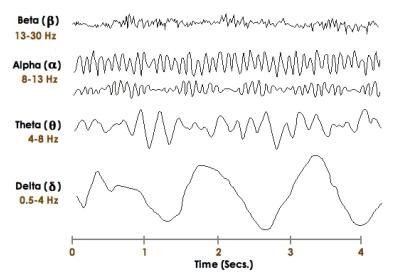
                                                                          recorded as the EEG waves consists of four different kinds
a manipulated robot which assists the people who is using it.
                                                                          of waves depending on its frequency. From low to higher
                                                                          frequency range it is Delta, Theta, Alpha and Beta [6].
             II. BRAIN WAVE ACQUISTION
                                                                          Different types of emotions like meditation, anger, sleep,
EEG Headband:                                                             happiness, alertness, attention etc, affect the EEG waves. So
                                                                          according to the frequency the eSense meter value is from
                                                                          scale of 1 to 100. The eSense values from 40 to 80 scale
                                                                          indicates the normal to attentive and meditation level
                                                                          usually indicates Alpha waves [13]. The eSense value of
                                                                          scale between 80 to 100 are considered as slightly elevated
                                                                          meaning of which indicates the Beta waves which is got
                                                                          when a person is in anxious or doing fast activity. The
                                                                          eSense value of scale 20 to 40 is said as reduced level
                                                                          indicating the Theta waves usually seen under the children
                                                                          of 14 years and in some abnormal adults [8]. The eSense
              Fig 1: Brainsense EEG Headband                              value of scale ranging from 1 to 20 is said as strongly
Revised Manuscript Received on May 22, 2019
  N.Kripa, Research Scholar, Department of Biomedical Engineering         lowered which indicates the Delta wave which occurs
Bharath Institute of Higher Education and Research, 173, Agaram Road,     during early stage of sleep.
Selaiyur, Chennai – 600073, Tamil Nadu, India.Chennai-73
  Dr. R. Vasuki, Professor, Department of Biomedical Engineering
Bharath Institute of Higher Education and Research, 173, Agaram Road,
Selaiyur, Chennai – 600073, Tamil Nadu, India.Chennai-73
   R. Kishore Kanna, Research Scholar, Department of Biomedical
Engineering Bharath Institute of Higher Education and Research, 173,
Agaram Road, Selaiyur, Chennai – 600073, Tamil Nadu, India.Chennai-73

                                                                              Published By:
     Retrieval Number A2144058119/19©BEIESP                             992   Blue Eyes Intelligence Engineering &
                                                                              Sciences Publication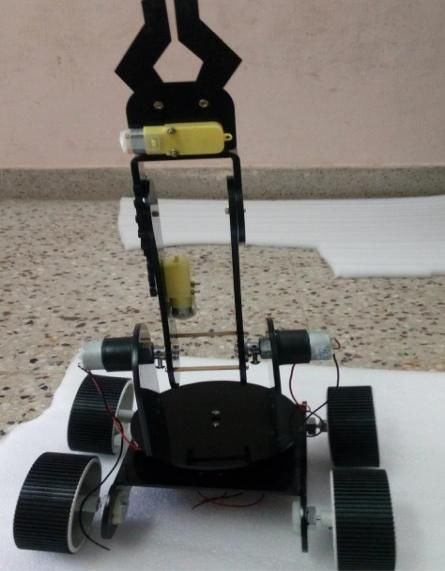
Realtime Neural Interface Controlled Au-Pair BIMA Bot

                                                                                       Fig 5: ATmega 328

                                                                 Arduino is connected with the computer with the USB
                                                                 cable. After launching the Arduino IDE a window is
                                                                 opened.
                  Fig 3: EEG Wave Types

                       IV. BIMA BOT

Components and Construction:
          BIMA is the Biorobot Interfaced Manipulated
Assistant. BIMA Bot is a pick and place robot model.

                                                                                 Fig 6: Arduino IDE window

                                                                 ATmega comes with preburned bootloader so as the new
       Fig 4: Required Components for BIMA Bot                   code can be uploaded without any use of external
                                                                 hardware programmer[11].
         The base is taken and connected with two 30
rpm gear motors in back side and two dummy wheels                       V.EEG INTERFACED WITH BIMA BOT
are connected in front side. Along with that 10 rpm gear
motor is connected in centre of the base for rotation.

Flange is connected to the centre of the robot. The plate
is turned and it is connected with the gear motor tightly.
The side pieces are connected to the circle plate and
pasted with anabond paste[15].

The two arms are connected to the flange tightly. 60rpm
bom motor is fixed with 3*30mm screw and the gear
gripper is connected with it [9]. The arm is connected
with the gear motor. The base gripper is turned and the
gear is connected to the motor.
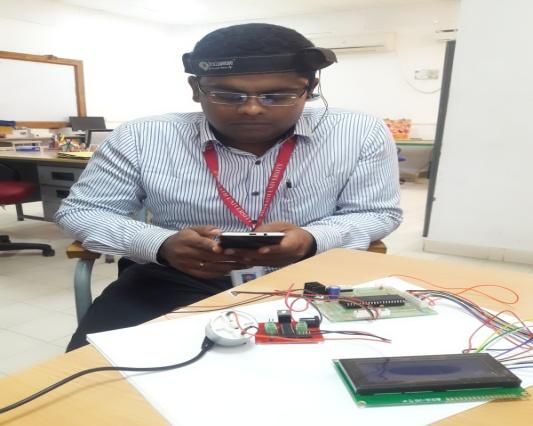
                                                                                    Fig 7: EEG Acquisition
Gear gripper is connected one by one carefully. The
controller is kept at the centre of the pick and place robot     EEG is been acquired from different persons and for
model.                                                           each person the eSense value is found by taking the
                                                                 repeated eSense values for that person [14]. This eSense
Control Unit:                                                    value is been fed to the microcontroller of the BIMA
                                                                 Bot.
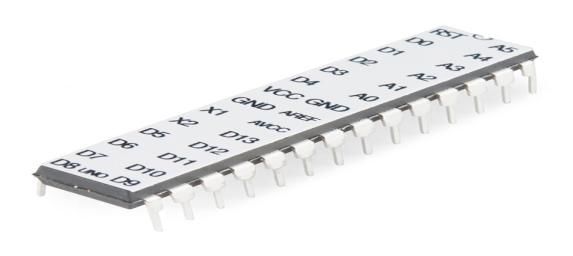
ATmega 328 is used as microcontroller in the control
unit. It has 28 pins, 8bit, 32 kb Flash memory[10].

                                                                     Published By:
   Retrieval Number A2144058119/19©BEIESP                            Blue Eyes Intelligence Engineering &
                                                               993
                                                                     Sciences Publication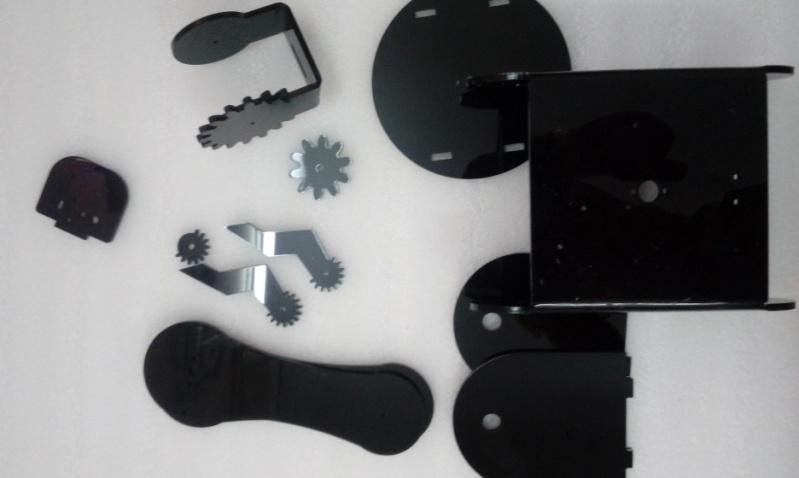
International Journal of Recent Technology and Engineering (IJRTE)
                                                                           ISSN: 2277-3878, Volume-8, Issue-1, May 2019

                                                                 We would like to thank the Institution to allow us to do the
                                                                 research and also the management for the great support in
                                                                 providing the necessary things for this research.

                                                                 REFERENCES

                                                                 1. Wenchuan Jia, Dandan Huang, Xin Luo, Member, Huayan Pu,
                                                                     Xuedong Chen, Member, and Ou Bai, “Electroencephalography(EEG)-
                                                                     Based Instinctive Brain-Control of a Quadruped Locomotion Robot”,
                                                                     34th Annual International Conference of the IEEE EMBS
                                                                 2. San Diego, California USA, 28 August - 1 September, 2012, pg 1777-
                                                                     1781.
                                                                 3. F Lotte, M Congedo, A Lécuyer, F Lamarche and B Arnaldi, “A review
                                                                     of classification algorithms for EEG-based brain–computer interfaces”,
                                                                     Journal of Neural Engineering, Volume 4, Number 2, 31 January 2007
                                                                 4. Eleanor ACurran, Maria JStokes, “Learning to control brain activity: A
                                                                     review of the production and control of EEG components for driving
                                                                     brain–computer interface (BCI) systems”, Brain and Cognition
                                                                 5. Volume 51, Issue 3, April 2003, Pages 326-33.
                                                                 6. Arzu G¨uneysu and H. Levent Akın,” An SSVEP Based BCI to Control
                                                                     a Humanoid Robot by Using Portable
                                                                 7. EEG Device”, 35th Annual International Conference of the IEEE
              Fig 8: BIMA Bot with Gripper                           EMBS, Osaka, Japan, 3 - 7 July, 2013, p 6905-6908.
                                                                 8. C. Bell, P. Shenoy, R. Chalodhorn, and R. Rao, Control of a humanoid
So whenever the eSense value is attained the BIMA Bot                robot by a noninvasive brain-computer interface in humans, Journal of
                                                                     Neural Engineering, vol. 5, pp. 214220, 2008.
checks with the eSense value which is fed to the                 9. Rohan Hundia, “Brain Computer Interface-Controlling Devices
microcontroller of it. For the first time when eSense value is       Utilizing The Alpha Brain Waves”, International Journal Of Scientific
got Bot moves and when the second time the value crosses             & Technology Research Volume 4, Issue 01, January 2015, Pg 281-
the Bot picks the thing which is to be picked in its path. And       285.
                                                                 10. Han Jeong Hwang, Soyun Kim, Soobeom Choi, Chang Hwan Im,
the third time when the value is attained the Bot moves and          “EEG-Based Brain-Computer Interfaces: A Thorough Literature
drops the picked up item [15].                                       Survey”, International Journal of Human–Computer Interaction,
                                                                     Volume 29, 2013 - Issue 12, Pages 814-826
           VI. RESULTS AND CONCLUSION                            11. M. Rajya Lakshmi* Dr. T. V. Prasad Dr. V. Chandra Prakash, “Survey
                                                                     on EEG Signal Processing Methods”, International Journal of
                                                                     Advanced Research in Computer Science and Software Engineering,
For each person the e Sense value differs depending upon             Volume 4, Issue 1, January 2014, pg 84
the age and the emotions. For a person to use a BIMA Bot         12. Juti Naraballobh, Dusit Thanapatay, Akinori Nishihara, “EEG-Based
the same person’s eSense value has to be fed because it              Analysis of Auditory Stimulus in a Brain-Computer Interface”, 2015
                                                                     6th International Conference of Information and Communication
could not work for other person.                                     Technology for Embedded Systems (IC-ICTES)
         For around 100 people it is taken and seen that how     13. R.Hari Sudhan, M.Ganesh Kumar, A.Udhaya Prakash, S.Anu Roopa
BIMA Bot works for each person and the EEG is analyzed               Devi, P. Sathiya, “Arduino Atmega-328 Microcontroller”, International
                                                                     Journal Of Innovative Research In Electrical, Electronics,
according to it.                                                     Instrumentation And Control Engineering Vol. 3, Issue 4, April 2015,
         Age and sex plays a vital role in determining the           Pp 27-29.
function of BIMA Bot for each person accordingly.                14. S.Anusha, M.Madhavi, R.Hemalatha, “Home Automation Using
                                                                     Atmega328 Microcontroller And Android Application”, International
         The same work is repeated again for the same                Research Journal Of Engineering And Technology (Irjet), Volume: 02
number of people after a certain duration of 4 months.               Issue: 06 | Sep-2015, Pp 865-868.
                                                                 15. Mohamed R. Mahfouz, Michael J. Kuhn , Gary To, “Wireless medical
                                                                     devices: A review of current research and commercial systems”,
  100                                                                Biowireless2013, IEEE, pp 16-18.
                                                                 16. Wojciech Sałabun, “Processing and spectral analysis of the raw EEG
                                                                     signal from the MindWave”, Przeglad Elektrotechniczny 90(2):169-
   80                                                                174 · February 2014.
                                                                 17. R.A. Kadu, Prof. V.A. More, P.P. Chitte, J.G. Rana, M.R. Bendre,
                                                                     “Wireless Control & Monitoring of Robotic Arm “,International
   60                                                                Journal of Computer Technology and Electronics Engineering
                                                                     (IJCTEE) Volume 2, Issue 1, pp 28-38.
   40                                                            18. Md. Anisur Rahman, Alimul Haque Khan, Dr. Tofayel Ahmed, Md.
                                                                     Mohsin Sajjad, “Design, Analysis and Implementation of a Robotic
                                                                     Arm- The Animator”, American Journal of Engineering Research
   20                                                                (AJER), Volume-02, Issue-10, pp-298-307.

    0
         Age 6-14 Age 15-25 Age 26-45 Age 46-60

 Fig 9: Chart for eSense value vs. the Age of the person
         Thus the working of BIMA Bot for the Brain
controlled interface is attained.

                ACKNOWLEDGEMENT

                                                                   Published By:
    Retrieval Number A2144058119/19©BEIESP                   994   Blue Eyes Intelligence Engineering &
                                                                   Sciences Publication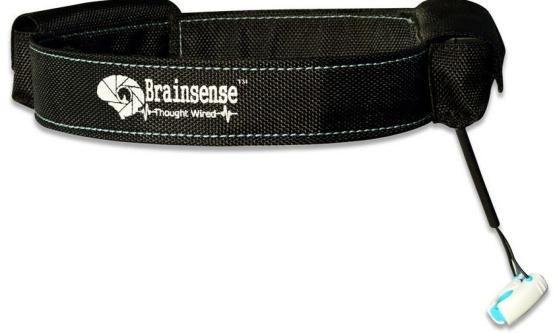

You can also read


