Annals of Clinical Case Reports
←
→
Page content transcription
If your browser does not render page correctly, please read the page content below
Annals of Clinical Case Reports                                                                                                             Case Report
                                                                                                                                 Published: 25 Jan, 2018

Importance of Early Dental Care in a Child with Niemann-
                  Pick Disease, Type C
                                               Amparo Pérez1*, Clara Serna1, Antonio José Ortiz1 and Marcelo Bonecker2
                                               1
                                                   Department of Dentistry, Hospital Morales Meseguer, Spain
                                               2
                                                   Department of Pediatric Dentistry, Universidad de Sao Paulo, Spain

                                               Abstract
                                               Niemann Pick disease is an autosomal recessive neurodegenerative disorder produced by an
                                               accumulation of intracellular cholesterol in lysosomes and endosomes. It manifests in middle-
                                               to-late childhood and provokes ataxia, dysarthria, dysphagia (making oral nutrition difficult),
                                               hypotonia, spasticity, seizures and developmental abnormalities, which means that maintaining
                                               oral hygiene is difficult. A six-year-old girl diagnosed with Niemann Pick type C, currently treated
                                               with 2-hydroxypropyl-beta-cyclodextrin-intrathecal. Her oral health has been managed for 4 years
                                               applying the caries management by risk assessment (CAMBRA) preventive protocol. Through oral
                                               hygiene maintenance at home (good brushing technique, and 0.12% chlorhexidine mouthwash)
                                               and three-monthly plaque check-ups and fluoride varnish applications, the child has remained free
                                               of caries. From the outset, treatment has included psychological management with the help of the
                                               patient’s mother. The use of preventative protocols makes it possible to manage the oral health of
                                               children with Niemann Pick disease. The help and participation of the family are essential to the oral
                                               health and psychological management of children with this disease.

                                               Abbreviations
                                                  CAMBRA: Caries Management by Risk Assessment; NPC: Niemann-Pick Disease Type
                                               C; HPBCD: Hydroxypropyl-Beta-Cyclodextrin; ICDAS: The International Caries Detection &
                                               Assessment System; DMEM: Dulbecco's Modified Eagle's Medium

                     OPEN ACCESS
                                               Introduction
                                                    Niemann-Pick disease type C (NPC) is an autosomal recessive neurodegenerative disorder
                    *Correspondence:
          Amparo Pérez, Department of          caused by the mutation of two genes. In 95% of families, it is caused by mutations in the NPC1 gene,
 Integrated Pediatric Dentistry, Hospital      whose cytogenetic location is 18q11.2, NPC type 1 (257220). In the remaining 5% of families, it is
     Morales Meseguer, 2ª Planta, Avd          produced by mutations in the gene NCP2, with cytogenetic location 14q24.3, NPC type 2 (607625).
       Marqués de los Vélez sn, 30006,         Its minimum incidence is estimated to be 1:150,000 of newborn live babies in Western Europe,
                         Murcia, Spain,        and usually manifests in middle-to-late childhood. The clinical manifestations are similar in both
          E-mail: amparo.perez@um.es           types of NPC, as they are produced by intracellular transportation of endocytosed cholesterol
          Received Date: 20 Nov 2017           with sequestration of unesterified cholesterol in lysosomes and late endosomes. This provokes an
          Accepted Date: 15 Jan 2018           accumulation of cholesterol and sphingolipids in particular organs. Niemann Pick Type D is a
         Published Date: 25 Jan 2018           specific form of NPC 1 in patients of Nova Scotia Acadian ancestry. Niemann-Pick disease type A
                               Citation:       and B are different and provoked by deficits in sphingomyelinase activity [1]. The accumulation of
  Pérez A, Serna C, Ortiz AJ, Bonecker         lipids in the liver can provoke severe hepatic disease with hepatosplenomegaly and cirrhosis. If they
M. Importance of Early Dental Care in a        accumulate in the lungs they can cause respiratory failure. The accumulation of glycosphingolipids
 Child with Niemann-Pick Disease, Type         is typical in cases with neurological disorders such as ataxia, dysarthria, dysphagia (making oral
  C. Ann Clin Case Rep. 2018; 3: 1493.         nutrition difficult), hypotonia, spasticity, seizures and developmental abnormalities that can lead
                       ISSN: 2474-1655         to dementia. Death occurs in the late second or third decade of life but may occur sooner [2,3].
 Copyright © 2018 Amparo Pérez. This           Caries is a multifactorial disease and its development is determined by the teeth themselves, the
    is an open access article distributed
                                               bacterial ecosystem, diet and oral hygiene habits. Any change in these factors can affect individual
under the Creative Commons Attribution
                                               susceptibility, risk, and caries activity [4]. As in the case of special patients, prompt dental care
     License, which permits unrestricted
                                               of patients with rare diseases will help them to enjoy a better quality of life. This will allow early
   use, distribution, and reproduction in
                                               diagnosis of oral diseases, and the use of preventative protocols can avoid the appearance of
 any medium, provided the original work
                                               pathologies and facilitate and simplify the clinical management of these patients.
                        is properly cited.

Remedy Publications LLC., | http://anncaserep.com/                               1                                        2018 | Volume 3 | Article 1493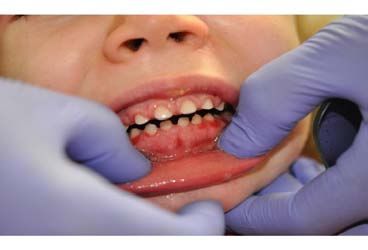
Amparo Pérez, et al.,                                                                                         Annals of Clinical Case Reports - Oral Medicine

                                                                                   Figure 2: Protrusion in upper jaw and gingivitis in lower jaw. The child has
                                                                                   frequent tartar formation on the second molars.

                                                                                   Figure 3: As soon as the deciduous teeth, 7.1 and 8.1, were extracted, they
 Figure 1: Front and lateral radiographs of the head were it can see the           were submerged in Dulbecco's Modified Eagle's medium (DMEM) for later
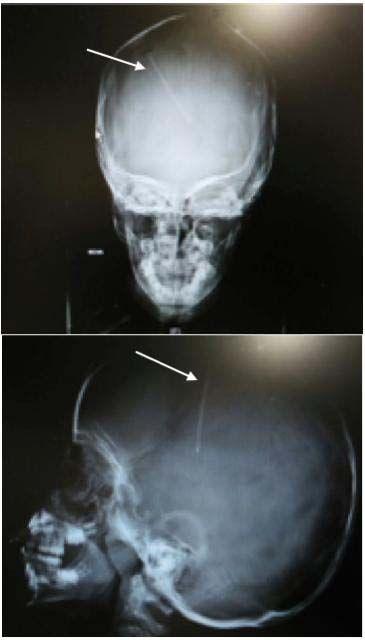
 Ommaya reservoir. The intrathecal treatment with hydoxypropyl-beta-               investigation of Niemann-Pick type C disease.
 cyclodextrin (HPBCD) is placed.

                                                                                  Discussion
Case Presentation
                                                                                      For children with systemic disease that make oral hygiene
Medical history                                                                   maintenance difficult it is important to manage dental health care
    A Caucasian girl of 6 years of age was first referred to the University       from an early age, using preventative dental protocols to avoid
of Murcia Dental Clinic 4 years ago. Without family antecedents, she              future restorative treatment and to provide a better quality of life.
was diagnosed with Niemann Pick disease type C at the age of two at               These systemically compromised patients attend frequent hospital
the Virgen de la Arrixaca University Hospital (Murcia, Spain).                    appointments in which they undergo numerous clinical tests, a
                                                                                  situation which compromises their behavior when it comes to dental
    She presented encephalopathy, seizures controlled by medication,              health care. At the first appointment, it was decided not to use any type
psychomotor retardation, dysphagia, and spastic tetraparesis. The girl            of drug-based management but to use psychological management as
received enteral nutrition via a gastronomy tube.                                 a technique for managing her behavior. Although the child suffered
    Since diagnosis the patient had been medicated with miglustat                 neurological deterioration and could not speak, her understanding
(glucosylceramide synthase inhibitor). Due to the poor neurological               was sufficient to permit this approach. The presence and help of her
evolution of the disease, authorization was requested from the                    mother was fundamental to attending to the patient, as she was able
Spanish Ministry of Health to begin compassionate treatment with                  to assist communication with the patient.
intrathecal hydroxypropyl-beta-cyclodextrin (HPBCD). She has been                     The patient remained in her wheelchair, which avoided any
treated with this experimental drug since April 13th 2012, which she              need for her to get used to a new ‘environment’ that might affect
receives 400 mg every 15 days, in an Ommaya reservoir (Figure 1)                  her behavior. The behavior management techniques used included
with local analgesia without sedation; the patient has suffered no                a combination of desensitization, ‘tell-show-do,’ non-verbal
incident or complications arising from sedation, or secondary effects             communication, and voice control. The fact that the child did not
or allergy to the medication. During the last few months, the child has           need invasive treatment facilitated management, although there were
begun to take small amounts of puréed food, although not every day.               moments when she broke down in tears.
Dental history                                                                        According to the CAMBRA protocol, the child is considered a
    Clinical examination found that the child presented dental                    high-risk patient [4]. For the last 4 years, since she was first referred
development compatible with her age, acute gingivitis (Figure 2),                 to the clinic, she has received preventative dental treatment every
hyposalivation with thick saliva, and frequent tartar formation on                three months. She and her parents have been instructed in oral health
the second molars. The International Caries Detection & Assessment                care, correct tooth brushing techniques and 0.12% chlorhexidine
System (ICDAS) was used to diagnose caries, finding that she did not              application to manage gingivitis [5]. Manual prophylaxis is performed
present caries. The CAMBRA method was also used to evaluate the                   manually with curettes and fluoride varnish is applied every 3 months.
risk of caries and to elaborate a treatment plan.                                     Caries management is carried out by visual examination, as no

Remedy Publications LLC., | http://anncaserep.com/                            2                                                    2018 | Volume 3 | Article 1493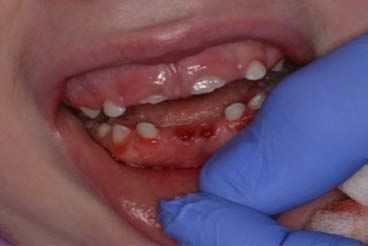
Amparo Pérez, et al.,                                                                                        Annals of Clinical Case Reports - Oral Medicine

bite plate radiograph has been taken due to the family’s unwillingness               3. In children with Niemann Pick type C disease, extraction
for their daughter to undergo any more X-rays as she has undergone               of deciduous teeth should be performed as soon as the mobility of
numerous general X-rays over the years.                                          each tooth is noticed in order to avoid possible aspiration due to the
                                                                                 dysphagia that these patients present.
    Four years on, the girl has remained free of caries, although
gingivitis management has produced less positive outcomes due to                 Declarations
the fact that the patients is not fed by mouth and presents a low saliva
                                                                                 Ethics approval and consent to participate
production, accompanied by a Angle Class II malocclusion.
                                                                                    The Research Ethics Committee of the University of Murcia
    As the patient presents dysphagia, to prevent possible aspiration            considers that this case report is exempt from ethical approval (Ref:
deciduous teeth were extracted as soon as the parents noticed                    1361/2016).
slight mobility of a tooth. A chronological disorder has occurred
in exfoliation; the first tooth lost was 6.1, followed by 5.1. The last              The girl’s mother signed the informed consent of the Dental
teeth to be extracted were 7.1 and 8.1 (Figure 3). As soon as they had           Clinic of the University of Murcia before starting the implementation
been extracted they were submerged in Dulbecco's Modified Eagle's                of the CAMBRA protocol.
Medium (DMEM) for later investigation of Niemann-Pick type C                     Acknowledgement
stem cells. On the same day, the normal eruption of 1.1 and 2.1 was
observed. Extractions were performed infiltrating 2% Lidocaine and                   We are grateful to child’s family for trusting us. She died January,
epinephrine 1:100.000, after topical anaesthesia with Hurricaine®.               3, 2017 with 7 years old.
The extractions were performed without difficulty as the child was               References
attending the clinic every three months and was always seen by the
                                                                                 1. Miller WL. Disorders in the initial steps of steroid hormone synthesis. J
same dentist, which has helped her to get used to the clinic and staff.
                                                                                    Steroid Biochem Mol Biol. 2017; 165: 18-37.
Although the child does not speak, she recognizes the dentist, and her
facial expressions and reactions are interpreted by the mother.                  2. Xiong H, Bao XH, Zhang YH, Xu YN, Qin J, Shi HP, et al. Niemann-Pick
                                                                                    disease type C: analysis of 7 patients. World J Pediatr. 2012; 8: 61-66.
Conclusions
                                                                                 3. Lorenzoni PJ, Cardoso E, Crippa AC, Lourenço CM, Souza FT, Giugliani
    1. Child patients with rare diseases that cause physical impairments            R, et al. Niemann-Pick disease type C: a case series of Brazilian patients.
must attend the pediatric dental clinic as young as possible to receive             Arq Neuropsiquiatr. 2014; 72: 214-218.
three-monthly program of preventative measures, as these patients                4. Ramos-Gomez FJ, Crystal YO, Ng MW, Crall JJ, Featherstone JD. Pediatric
are at high risk from caries.                                                       dental care: prevention and management protocols based on caries risk
                                                                                    assessment. J Calif Dent Assoc. 2010; 38: 746-761.
    2. Oral preventative protocols are of fundamental importance to
the avoidance of more complicated restorative treatment; they will               5. Mesquita-Guimarães KS, De Rossi A, Freitas AC, Nelson-Filho P, da Silva
also help patients to have a better quality of life. The participation and          RA, et al. Changes in caries risk and activity of a 9-year-old patient with
                                                                                    niemann-pick disease type C. Case Rep Dent. 2015; 2015: 571098.
help of parents in oral hygiene maintenance is essential and parents
should be instructed to this end.

Remedy Publications LLC., | http://anncaserep.com/                           3                                                    2018 | Volume 3 | Article 1493
You can also read


