APPLICATION OF IOT IN HEALTHCARE: KEYS TO IMPLEMENTATION OF THE SUSTAINABLE DEVELOPMENT GOALS
←
→
Page content transcription
If your browser does not render page correctly, please read the page content below
sensors
Review
Application of IoT in Healthcare: Keys to Implementation of
the Sustainable Development Goals
Ángeles Verdejo Espinosa 1, * , José Luis López 2 , Francisco Mata Mata 2                               and Macarena Espinilla Estevez 2

                                          1   Electrical Engineering Department, University of Jaén, 23071 Jaén, Spain
                                          2   Department of Computer Science, University of Jaén, 23071 Jaén, Spain; llopez@ujaen.es (J.L.L.);
                                              fmata@ujaen.es (F.M.M.); mestevez@ujaen.es (M.E.E.)
                                          *   Correspondence: mverdejo@ujaen.es

                                          Abstract: We live in complex times in the health, social, political, and energy spheres, and we
                                          must be aware of and implement new trends in intelligent social health systems powered by the
                                          Internet of Things (IoT). Sustainable development, energy efficiency, and public health are interrelated
                                          parameters that can transform a system or an environment for the benefit of people and the planet.
                                          The integration of sensors and smart devices should promote energy efficiency and ensure that
                                          sustainable development goals are met. This work is carried out according to a mixed approach,
                                          with a literature review and an analysis of the impact of the Sustainable Development Goals on the
                                          applications of the Internet of Things and smart systems. In the analysis of results, the following
                                          questions are answered about these systems and applications: (a) Are IoT applications key to the
                                          improvement of people’s health and the environment? (b) Are there research and case studies
                                          implemented in cities or territories that demonstrate the effectiveness of IoT applications and their
                                benefits to public health? (c) What sustainable development indicators and objectives can be assessed

                                          in the applications and projects analyzed?
Citation: Verdejo Espinosa, Á.;
López, J.L.; Mata Mata, F.; Estevez,      Keywords: smart systems; smart grids; IoT; sensors; SDGs; accessibility; social healthcare systems;
M.E. Application of IoT in Healthcare:    energy efficiency
Keys to Implementation of the
Sustainable Development Goals.
Sensors 2021, 21, 2330. https://
doi.org/10.3390/s21072330
                                          1. Introduction
Academic Editor: Francisco Falcone             Today, technological advances must be accompanied by their applications and imple-
                                          mentation in human-inhabited environments, in which public health and energy efficiency
Received: 12 March 2021                   play an important role [1,2]. The study of the impact of the Sustainable Development
Accepted: 22 March 2021                   Goals (SDGs) on sensor and Internet of Things (IoT) applications in human environments
Published: 26 March 2021                  should be considered essential for the future of our territories [3–5]. Energy efficiency and
                                          environmental sustainability are intimately linked to people’s health, and the improvement
Publisher’s Note: MDPI stays neutral      of the quality of human life is today conditioned by technology, sensor networks, intelligent
with regard to jurisdictional claims in   systems, and IoT applications [6].
published maps and institutional affil-        Smart grids and smart cities should facilitate people’s access to environments, facilitate
iations.                                  healthcare services, and promote the safety and happiness in our society. Technologies
                                          such as the IoT, the Internet of Energy, artificial intelligence, and the installation of sensors
                                          in human environments are used to optimize infrastructures, services, and the strategic
                                          planning of communities.
Copyright: © 2021 by the authors.              We must design and implement advanced facilities, equipped with sensors and devices
Licensee MDPI, Basel, Switzerland.        that promote the safety and health of people while maintaining a balance between energy
This article is an open access article    use and efficiency. We must train professionals in the technological and engineering sectors,
distributed under the terms and           in universities, to keep humans and sustainability at the heart of their designs and projects.
conditions of the Creative Commons             It is essential that the incorporation of intelligent systems is efficient from a technical,
Attribution (CC BY) license (https://     safety, and economic point of view. Sensor devices, the Internet of Everything, together
creativecommons.org/licenses/by/          with reliable and safe electrical installations and comfortable human environments will
4.0/).

Sensors 2021, 21, 2330. https://doi.org/10.3390/s21072330                                                      https://www.mdpi.com/journal/sensors
Sensors 2021, 21, 2330                                                                                             2 of 37

                         lead to cost reduction, higher productivity, and health and safety for people, companies,
                         and institutions.
                               We cannot forget that the implementation of energy audits in environments inhabited
                         by people is based on a reduction in greenhouse gas emissions, which will have direct
                         effects on the improvement of people’s health, the protection of the environment, and
                         profitability. All these parameters that directly or indirectly affect IoT platforms, energy
                         control, and health should be analyzed as a part of all human health research [7–12].
                               IoT applications and their multiple developments and advances are unstoppable;
                         sensors, intelligent devices, systems, and advanced technological architectures offer great
                         prospects for development in cities and communities in the present and in the near future [13].
                               The digitization and application of intelligent systems and IoT devices in urbanized
                         environments and in communities inhabited by people is carried out in blocks of analy-
                         sis, structured in different disciplines, but all of them have a common center of gravity,
                         the trilogy: human–technology–sustainability. We will analyze this trilogy and its main
                         applications, as an introduction to the research carried out [14].
                               Cities and human-inhabited environments have come under great digital and tech-
                         nological pressure in recent years, and this has been exacerbated by the global pandemic
                         caused by COVID-19 [15–17]. The use of intelligent systems, IoT, and advanced engineering
                         systems has played an essential role in the solutions put forward for pandemic management
                         and will continue to gain importance in the future. Institutions at all levels are committed
                         to the energy transition and sustainable development, and we must take them into account
                         in any smart environment developments, research, and implementations [18–20].
                               In the analysis of human environment systems, such as cities or communities, it is
                         necessary to carry out an in-depth study of the conflicts and systems in which an advanced
                         society is involved. These systems and environments must also be involuted as an active
                         part of a whole that brings together, for example, waste management, the measurement
                         of environmental pollution [21–23], energy audits, the use of renewable energies, and
                         electrical efficiency [24–27].
                               Society needs efficient and healthy resources and everything depends on their manage-
                         ment, improved governance, and projects that stimulate the implementation of advanced
                         technological systems to facilitate the path to sustainable development. The management
                         of water, transportation, and agriculture must be taken into account for social growth and
                         human health, since these fields directly involve healthy food and better air quality [5,28–32].
                               One of the parameters to which we must pay special attention in this study is that
                         of IoT applications for the improvement of people’s health. It will be one of the param-
                         eters that we will explore as a common thread throughout the work, in which we will
                         interrelate sustainable development and energy control as necessary elements for its eval-
                         uation. Social and public health aspects are at the forefront of the research and work on
                         intelligent systems [33–35].
                               Many intelligent systems applied to human environments will be developed in the
                         next decade, serving to improve the health and quality of life of our societies. They will be
                         ubiquitous, applied in homes, elderly care facilities, hospitals and health centers, schools,
                         and universities, and many institutions will request sensor devices and IoT systems to be
                         implemented for health management [36–38].
                               Governments and political management strategy around intelligent devices, technol-
                         ogy, sensors, and IoT systems must be effective and take into account sectors and disciplines
                         such as engineering, computer science, architecture, healthcare, etc. There are multiple
                         cities and territories that are applying the Smart City and Smart Human City strategy to
                         address the future and implement technological advances in cities [39–43].
                               Smart, sustainable, and efficient cities must be designed with sensor systems and IoT
                         applications; the so-called “sensory city” is an integrative model that will enhance people’s
                         lives, management processes, and, with energy efficiency, environmental sustainability
                         and people’s health as the three main pillars [44–49]. Advances in the implementation
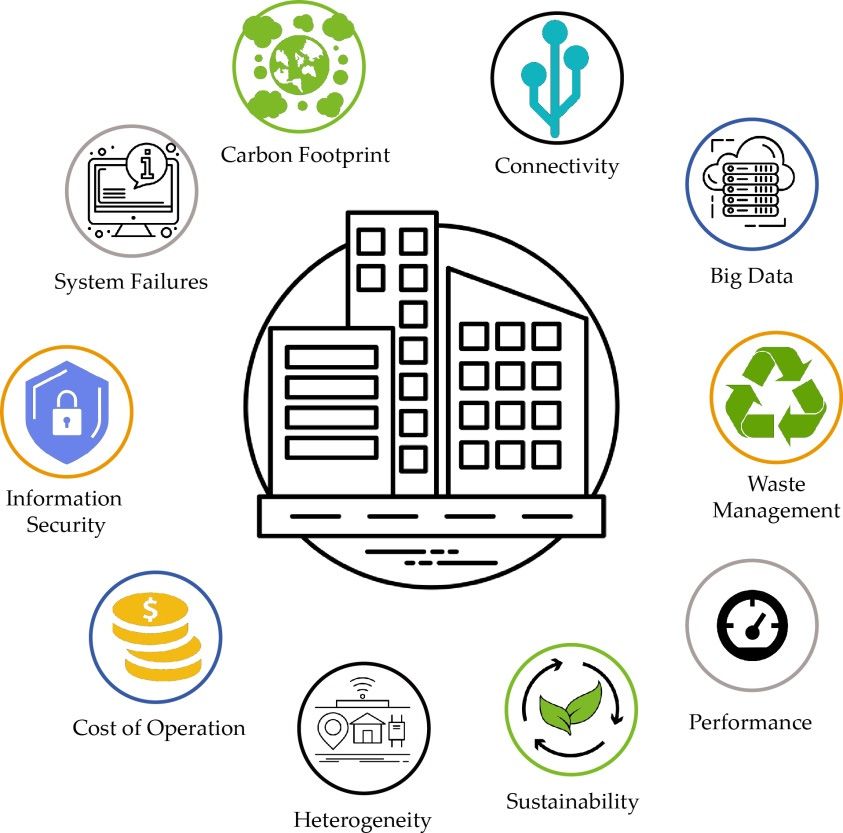
                         of urban IoT applications and their effectiveness in human environments is unstoppable,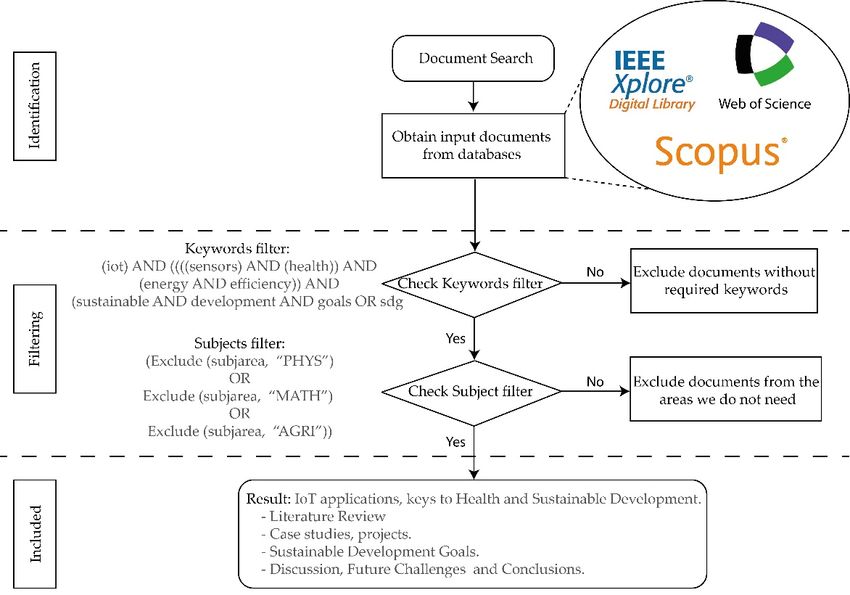
Smart, sustainable, and efficient cities must be designed with sensor systems and IoT
applications; the so-called “sensory city” is an integrative model that will enhance peo-
Sensors 2021, 21, 2330 ple’s lives, management processes, and, with energy efficiency, environmental sustaina- 3 of 37
bility and people’s health as the three main pillars [44–49]. Advances in the implementa-
tion of urban IoT applications and their effectiveness in human environments is unstop-
so we can
pable, indicate
so we some ofsome
can indicate the most
of theused
mosttoday. Figure Figure
used today. 1 shows some of
1 shows the research
some of the re-
blocks
search blocks and architectures of present and future smart cities and, within each
and architectures of present and future smart cities and, within these groups, these
of them brings
groups, each of together a largetogether
them brings number of sensors,
a large IoT systems,
number and computer
of sensors, engineering,
IoT systems, and com-
electrical, electronic,electrical,
puter engineering, and otherelectronic,
technological solutions,
and other which must
technological be multidisciplinary
solutions, which must be
and multifaceted [15].
multidisciplinary and multifaceted [15].
Figure1.1.Architectures
Figure Architecturesand
andcomponents
componentsininsmart
smartcities
cities[15].
[15].
IoTapplications
IoT applications and andsystems
systemsaim aimto tomake
makethe theInternet
Internetevenevenmoremoreimmersive
immersiveand and
integrated into our environment in a natural way. It must be easy
integrated into our environment in a natural way. It must be easy to access and interact to access and interact
withany
with anyofof
thethe devices
devices around
around us—for
us—for example,
example, traffictraffic
lights,lights,
security security
cameras, cameras, tele-
telephones,
phones, computers,
computers, tablets, signs,
tablets, vehicles, vehicles, signs,
stores, stores,health
sensors, sensors, healthetc.
centers, centers, etc. [50,51]
[50,51].
Theanalysis
The analysisandandlocation
locationofofintelligent
intelligentsystems
systemswithin
withinurban,
urban,rural,
rural,and
andgenerally
generally
humanspaces
human spaces is complex.
complex. Sensors,
Sensors,actuators,
actuators, andanddevices
devices areare
located andand
located move movewithwith
peo-
ple; theythey
people; can can
be fixed but are
be fixed butincreasingly mobile—for
are increasingly example,
mobile—for in cell phones
example, or vehicles.
in cell phones or
vehicles.
However,However,
there are there are organized
organized architectures
architectures and levelsand levels of
of design designhow
around around how
intelligent
intelligent systems
systems should should
or can or can beinarranged
be arranged in human environments,
human environments, e.g., in cities,e.g., in cities,
communities,
communities,
or in any other orenvironment
in any other [51].
environment [51]. Figure
Figure 1 shows one of1 these
showsarchitectures
one of theseand architectures
its design.
and its design.
IoT applications, according to [51], can be analyzed on the basis of the different types
IoT applications,
of intelligent according
environments: to [51],
smart can be
living, analyzed
smart cities,onsmart
the basis of thesmart
energy, different types
transport,
of intelligent
smart health,environments:
smart industry, smart living,
smart smart cities,
buildings, smartsmart
homes, energy,
etc. smart transport, smart
health,Insmart industry,
the most common smart buildings, of
architecture smartIoT homes,
systemsetc. and their applications, it is usually
In the most common architecture of IoT systems
broken down into layers of performance or system implementation. and their applications, it is usually
For example, the fol-
broken
lowingdown
main into
layerslayers of application
[7,15]: performance or system
layer, serviceimplementation.
support/application For support
example,layer,
the
following main layers [7,15]:
network/communication application
layer, and smart layer, service support/application
device/sensor layer. support layer,
network/communication layer, and smart device/sensor layer.
Each of these sub-architectures or working layers integrate the different technolo-
gies, devices, sensors, systems, etc., which will be interconnected by means of electrical–
electronic and wired or wireless connections. The range of connection elements is very
wide and each field of action will have its own specific systems.
Specifically, speaking of systems applicable to people’s health, we can choose and
differentiate some of them. In some cases, research is focused on simple, low-cost, ubiqui-
Each of these sub-architectures or working layers integrate the different technologies,
devices, sensors, systems, etc., which will be interconnected by means of electrical–elec-
tronic and wired or wireless connections. The range of connection elements is very wide
Sensors 2021, 21, 2330
and each field of action will have its own specific systems. 4 of 37
Specifically, speaking of systems applicable to people’s health, we can choose and
differentiate some of them. In some cases, research is focused on simple, low-cost, ubiq-
uitous
tous devices
devices for for monitoring
monitoring people’s
people’s healthhealth
[52]; [52]; in other
in other cases, cases, a general
a general reviewreview
is made,is
made, and different sensors and intelligent systems applied to the care of
and different sensors and intelligent systems applied to the care of people at home people at home
are
are detailed
detailed [53].[53].
Thedifferent
The differentexisting
existingtechnologies
technologies and
and systems
systems cancan be listed,
be listed, alsoalso providing
providing an up-
an update
datepreview
and and preview of those
of those to come
to come in thein the future:
future:
1.1. Technological
Technological systems in the smartsmart human
human home:
home: environmental
environmentalsystems,
systems,personal
personal
systems,
systems, data
data management systems and interfaces,
interfaces, actuators
actuators electrical
electricalsystems
systemsand and
protections,
protections, energy efficiency controllers,
controllers, software,
software, automation
automationsystems,
systems,augmented
augmented
reality,
reality, etc.
2.2. Applications
Applicationsto topeople’s
people’shealth:
health:smart
smarthealthcare,
healthcare, monitoring
monitoring of of
activities of daily
activities liv-
of daily
living,
ing, monitoring
monitoring forfor medicalmanagement,
medical management,robotic
robotic personal
personal assistance devices,
devices, fall
fall
monitoring and
monitoring and control devices, telecare
telecare for
for social
social interaction
interaction and
andleisure,
leisure,automation
automation
for human–machine
for human–machine interaction, implantable medical medical devices,
devices, sensors,
sensors,microsensors
microsensors
and general-purpose
and general-purpose devices,
devices, intelligent
intelligent materials,
materials, etc.
etc.
Innovative
Innovativeprojects
projectsbased
basedon onthe
therealization
realizationofofpatents,
patents,prototypes,
prototypes,andandtechnological
technological
applications
applicationsusing
usingIoT,
IoT,sensors,
sensors,and intelligent
and systems
intelligent can come
systems fromfrom
can come research centers
research with
centers
public or private funding, companies, or public or private institutions, among
with public or private funding, companies, or public or private institutions, among others. others. For
example, there are large technology companies, such as Telefónica Koa Health
For example, there are large technology companies, such as Telefónica Koa Health [54], [54], which
aim
whichto meet
aim tothe growing
meet demand
the growing for digital
demand behavioral
for digital healthhealth
behavioral products, or Apple
products, [55],
or Apple
which is committed
[55], which to the collection
is committed and processing
to the collection of data on
and processing of mobile
data ondevices,
mobilethrough
devices,
intuitive
through applications that are close
intuitive applications to people
that are closeandtocommonly
people and used. Figure 2 shows
commonly some of2
used. Figure
the companies
shows some ofthatthecarry out technological
companies that carry projects applied to projects
out technological people’s applied
health and that are
to people’s
making a major commitment to intelligent social care and healthcare systems
health and that are making a major commitment to intelligent social care and healthcare empowered
by IoT strategy.
systems empowered by IoT strategy.
Figure2.2.Technology
Figure Technologygiants
giantsininIoT
IoTand
andhealth.
health.
The
The2030
2030Agenda
Agendaof ofthe
theUnited
UnitedNations
Nations(UN)(UN)established
established thetheSustainable
Sustainable Develop-
Develop-
ment Goals (SDGs) in 2015. This Agenda is an action plan for people,
ment Goals (SDGs) in 2015. This Agenda is an action plan for people, the planet, the planet, and
and pros-
prosperity. The 17 goals are comprehensive and indivisible, balancing the three
perity. The 17 goals are comprehensive and indivisible, balancing the three dimensions of dimensions
of sustainabledevelopment:
sustainable development:economic,
economic,social,
social,and
and environmental
environmental [56].
[56]. This
This paper
paper delves
delves
into the indicators, goals, and main resources that will be taken into account in
into the indicators, goals, and main resources that will be taken into account in the design the design
and
andimplementation
implementationof ofintelligent
intelligentsystems,
systems,IoT,
IoT,andandsensors
sensorsininthe
theframework
frameworkof ofthe
the SDGs.
SDGs.
Technology, engineering, and the environment are integrated into the research
Technology, engineering, and the environment are integrated into the research pursuing pursuing
the
theadvancement
advancement of ofhealth
healthand
andsustainable
sustainabledevelopment,
development, for forwhich
whichwe wewill
willanalyze
analyzethe
the
guidelines governing the SDGs in depth.
guidelines governing the SDGs in depth.
It is necessary to propose working methods and protocols to implement the SDGs in
It is necessary to propose working methods and protocols to implement the SDGs in
smart cities, taking into account citizen participation, governance, energy systems, and
smart cities, taking into account citizen participation, governance, energy systems, and
technological developments [57]. There are numerous studies, models, and proposals, the
most relevant of which we will be analyzed for this work, without forgetting that people’s
health is our focal point of action.
There is no doubt that the systems that will make technological change and progress
in sustainable development possible will be the IoT, sensors, communications networks,
and all the electrical, electronic, computer, and intelligent material devices that will be
flexibly integrated into cities and territories. These advances will also bring major energy
Sensors 2021, 21, 2330                                                                                            5 of 37

                         savings, which are fundamental to the SDG indicators and criteria and essential for energy
                         efficiency and environmental sustainability [58].
                               The interrelation of IoT systems, health, and energy efficiency has a common nexus
                         that we want to discuss in this paper: the need to design and implement smart technology
                         projects for cities and human environments in which the welfare and quality of life of
                         people coexist in a sustainable and efficient system, which will inevitably lead to substantial
                         benefits for the planet [59]. This paper has also reviewed research on intelligent system
                         designs in smart cities mainly through governance and in collaboration with technology
                         companies, such as Microsoft, Cisco, Amazon, Facebook, Intel, Google, etc. [1,60–62].
                               There must be clarity, transparency, and efficiency in the mass implementation of
                         technological devices, IoT, and sensors, since society may not be prepared for this great
                         change. Fear and ignorance and the digital divide will be important hurdles in the mass
                         installation of systems unknown to a large majority of people. The use of technology for
                         health and energy efficiency must be approached as an unstoppable process that will affect
                         all areas of life. While the general public will become more acquainted with it, their doubts
                         and fears must be addressed.
                               The pandemic caused by Sars-Cov2 has boosted the research and implementation of
                         useful biosensors and systems capable of obtaining reliable information to prevent, detect,
                         and mitigate the effects of the disease [63], and there is no doubt that various sectors that
                         before were perhaps less prone to the use of technology have now changed their criteria
                         and are willing to use IoT systems, sensors, and other devices in their lives, for example
                         the elderly, who are unaware of the true potential of technology for their welfare.
                               This work aims to improve knowledge about existing applications and future trends in
                         the implementation of intelligent devices and systems that improve the health of people and
                         communities, from the perspective of energy efficiency and sustainable development. To
                         do this, we will analyze high impact research that is being developed and its effectiveness
                         and whether it really will benefit the health of people and the environment. We will
                         examine its productivity, energy, and economic efficiency and we will address a question
                         that many projects do not take into account: are the sustainable development objectives
                         met in this research?
                               Our aim is to analyze the technology-health-ODS trilogy and prove that it is effective
                         and will lead to a near future in which sustainability and environmental health are achieved
                         hand in hand with technology. A mixed research approach will review the studies and
                         research offered by the literature on IoT solutions, sensors, smart cities, and smart grids
                         and their importance for public health, energy efficiency, and environmental sustainability.
                         Some of the sources and their implications in different territories will be X-rayed through
                         institutions and technology companies and how they implement the SDG indicators.
                               The manuscript is structured as follows: Section 1 introduces the subject of our work,
                         Section 2 explains the methodology used, Section 3 analyses the proposed methodological
                         development in depth, details the technological developments of intelligent sensor systems
                         and IoT devices, and their role in health and sustainability, with the fulfilment of the SDGs
                         and their indicators as a common theme. The discussion of the results obtained is detailed
                         in Section 4, and in Section 5, conclusions will be drawn and some proposals and future
                         challenges will be addressed.

                         2. Materials and Methods
                               The work followed a mixed approach [64], in which a literature review, case studies,
                         and real projects provided the material for analysis and implementation of initiatives
                         carried out through IoT systems and applications and smart sensors that improve people’s
                         health. In addition, an improvement of energy efficiency and of environmental sustain-
                         ability through the SDG proposals was analyzed simultaneously. The choice of a mixed
                         literature review can be beneficial for broad research questions, allowing the various types
                         of evidence to provide a more complete and detailed understanding of the problem by pro-
The work followed a mixed approach [64], in which a literature review, case studies,
and real projects provided the material for analysis and implementation of initiatives car-
ried out through IoT systems and applications and smart sensors that improve people’s
health. In addition, an improvement of energy efficiency and of environmental sustaina-
Sensors 2021, 21, 2330 bility through the SDG proposals was analyzed simultaneously. The choice of a mixed 6 of 37
literature review can be beneficial for broad research questions, allowing the various types
of evidence to provide a more complete and detailed understanding of the problem by
viding multiple
providing perspectives,
multiple both both
perspectives, quantitative and qualitative,
quantitative as wellasaswell
and qualitative, caseas
studies [65,66].
case studies
The research
[65,66]. The was carried
research outcarried
was in different phases,
out in which
different are detailed
phases, which in areFigure 3. in Figure 3.
detailed
Figure3.
Figure 3. Structure
Structure of
ofthe
themethodology.
methodology.
Table
Table11shows
showsthethesources
sourcesconsulted,
consulted,which
which are
arethe
the scientific
scientific databases
databases IEEE
IEEE Xplore,
Xplore,
Web
WebofofScience,
Science,and
andScopus. These
Scopus. areare
These high-impact scientific
high-impact databases
scientific widely
databases usedused
widely by the
by
scientific–technological community.
the scientific–technological community.
Table1.1.Consulted
Table Consulteddatabases.
databases.
Source
Source URL
URL
http://ieeexplore.ieee.org
http://ieeexplore.ieee.org
IEEE Xplore
IEEE Xplore
(accessed
(accessed on 18 November
on 18 November2020).
2020).
https://clarivate.com/webofsciencegroup
https://clarivate.com/webofsciencegroup
Web
Web Of Science(WOS)
Of Science (WOS)
(accessed
(accessed on 19 November
on 19 November2020).
2020).
http://www.scopus.com
http://www.scopus.com
Scopus
Scopus
(accessed on
(accessed on 20
20 November
November2020).
2020).
Table22shows
Table showsthe
theresults
resultsobtained
obtainedaccording
accordingto
tothe
thesearch
searchstrategies
strategiesand
andexclusion
exclusion
filtersused.
filters used.
Table 2. Methodological search strategy and filters.
Search for Keywords Results
(TITLE-ABS-KEY (IoT) and (Sensors) and (Health) and (Energy and Efficiency)
78
and (Sustainable and Development) and (Goals) or (SDG)).
Filters applied
Filter: Exclusion of some subject areas: (Exclude (Subj_area, “Physics and
Astronomy”) or Exclude (Subj_area, “Mathematics”) or Exclude (Subj_area, 18
“Agricultural and Biological Sciences”)).
Total Results (78–18) 60
Sensors 2021, 21, 2330                                                                                                             7 of 37

                                         Following the recommendations of the existing literature in the literature review
                                   and case study processes, known as a mixed review [64–67], we set the objectives of the
                                   literature search and the research questions. Our objective was to analyze IoT applications
                                   in the field of people’s health and how they improve energy efficiency and comply with
                                   the SDGs.
                                         To achieve the objective, we performed a systematic literature review (SLR) in various
                                   databases, as set out in Table 1. Subsequently, we posed the research questions and selected
                                   the keywords that would form the search strategy in the databases. Afterwards, we
                                   analyzed the results obtained and filtered out any areas not related to the stated objectives,
                                   finally obtaining a number of references to be used for detailed analysis.
                                         In this work, in addition to an SLR, a mixed method was used, so that in the analysis
                                   of the results obtained in the database search, we added research and real case studies
                                   implemented by companies or institutions, and we analyzed the most notable of these
                                   projects, providing a comprehensive range of knowledge to conduct our review [68].
                                         Table 3 details the research questions we are going to analyze in the paper and the
                                   main objectives that respond to these questions.

                                       Table 3. Identified research questions and their objectives.

  Q. N◦                   Identified Research Questions                                               Objectives
                                                                             The objective is to demonstrate through literature and
              Are IoT applications key to the improvement of people’s
   RQ.1.                                                                   evaluation of SDGs the importance of IoT applications for
                           health and the environment?
                                                                                            health and environment
                                                                          The objective is to analyze through a literature review those
              Are there research and case studies implemented in cities      studies and research based on IoT applications that
   RQ.2.       or territories that demonstrate the effectiveness of IoT
                  applications and their benefits to public health?       implement or design systems that improve people’s health
                                                                                                and sustainability.
                                                                           The objective is to analyze all SDGs and their indicators in
              What sustainable development indicators and objectives
   RQ.3.                                                                     order to locate those that are directly involved in the
              can be assessed in the applications and projects analyzed
                                                                               research and implementation of IoT applications.

                                        All the answers to the research questions were analyzed through a qualitative analysis
                                   of the documents extracted from the literature search and review, as well as a selection
                                   of research of international relevance that, due to its origin or good results, we found
                                   interesting for our work.

                                   3. Results
                                        In this section, we will analyze the results obtained in the literature search using
                                   keywords and filters and also include the selected case studies of the main technology
                                   giants, specified in Figure 2. First of all, a quantitative study of the selected manuscripts
                                   will be made. This documentation provides an overview of the years in which the research
                                   is concentrated, the main areas and sub-areas of study, countries, authors, etc., and offers
                                   us a wide range of possibilities for analysis.

                                   3.1. Analysis of the Sources Selected in the Literature Review
                                       Figure 4 provides an overview of the number of sources analyzed and the years of
                                  publication of the sources, which shows that the main studies are focused on the years 2019
                                  and 2020.
                                       Figure 5 shows the number of documents published by country of origin of the authors,
                                  among which the USA and China stand out.
                                       Following the percentages and quantitative parameters, we will begin to evaluate the
                                  manuscripts and their main contributions and discussions from a qualitative perspective.
                                  We will begin the analysis by following the research questions and examining which of
                                  the selected and filtered manuscripts provide answers to the questions. It is interesting to
                                  note the main areas of study in the selection of keywords, among which Engineering and
                                  Computer Science stand out above the rest, as shown in Figure 6.
a wideFigure
range4ofprovides
possibilities for analysis.
an overview of the number of sources analyzed and the years of
publication of the sources, which shows that the main studies are focused on the years
3.1.
2019Analysis of the Sources Selected in the Literature Review.
and 2020.
Figure 4 provides an overview of the number of sources analyzed and the years of
Sensors 2021, 21, 2330 publication of the sources, which shows that the main studies are focused on the years 8 of 37
2019 and 2020.
Figure 4. Results by year. Scopus.
Figure 5 shows the number of documents published by country of origin of the au-
thors,4.among
Figure
Figure 4.
Resultswhich
Results
byby the
year.
year. USA and China stand out.
Scopus.
Scopus.
Figure 5 shows the number of documents published by country of origin of the au-
thors, among which the USA and China stand out.
Sensors 2021, 21, x FOR PEER REVIEW 9 of 39
Figure
Figure5.5.Documents
Documentsby
byterritory.
territory.Scopus.
Scopus.
Following the percentages and quantitative parameters, we will begin to evaluate the
manuscripts and their
Figure 5. Documents main contributions
by territory. Scopus. and discussions from a qualitative perspective.
We will begin the analysis by following the research questions and examining which of
the selected
Followingandthefiltered manuscripts
percentages provide answers
and quantitative to thewe
parameters, questions. It to
will begin is interesting
evaluate theto
note the main
manuscripts andareas
theirofmain
studycontributions
in the selection
andofdiscussions
keywords, from
among which Engineering
a qualitative and
perspective.
Computer
We Science
will begin stand out
the analysis byabove the rest,
following the as shownquestions
research in Figure and
6. examining which of
the selected and filtered manuscripts provide answers to the questions. It is interesting to
note the main areas of study in the selection of keywords, among which Engineering and
Computer Science stand out above the rest, as shown in Figure 6.
Documentsbyby
Figure 6.6.Documents
Figure area.
area. Scopus.
Scopus. Computer
Computer Science:
Science: 24.9%;
24.9%; Engineering:
Engineering: 24.4%;24.4%;
Energy: Energy:
12.6%; Environmental Science: 11.8%; Business, Management and Accounting: 11.8%; Social
12.6%; Environmental Science: 11.8%; Business, Management and Accounting: 11.8%; Social Sci- Sciences:
7.6%; Materials
ences: Science:
7.6%; Materials 4.2%; Medicine:
Science: 2.5%; Biochemistry,
4.2%; Medicine: Genetics,
2.5%; Biochemistry, and Molecular
Genetics, Biology:
and Molecular 1.5%;
Biol-
Chemistry:
ogy: 1.7%; Other:
1.5%; Chemistry: 2.9%.
1.7%; Other: 2.9%.
Sometimes there
Sometimes there are
are conflicts
conflicts in
in the
the definitions
definitions given
given for
for smart
smart environments
environments and and the
the
systems applied to them and in sustainable environments, when both are
systems applied to them and in sustainable environments, when both are complementary complementary
and necessary
and necessary and,
and, in
inthis
thiscontext,
context,we wewill address
will thethe
address importance of linking
importance bothboth
of linking concepts
con-
in all aspects. Sustainability and the SDGs, together with energy efficiency protocols,
cepts in all aspects. Sustainability and the SDGs, together with energy efficiency protocols, must
be applied
must to the to
be applied research of intelligent
the research systemssystems
of intelligent and IoTand
applications, regardless
IoT applications, of the field
regardless of
the field in which it is carried out. We shall make sure to do so in our case, with our em-
phasis on health protocols and people’s well-being [2].
Table 4 analyzes the filtered references based on the research questions posed. Each
of the sources is analyzed, and a test is carried out to see which area or which specific
activity they relate to:
Sensors 2021, 21, 2330                                                                                                                       9 of 37

                                         in which it is carried out. We shall make sure to do so in our case, with our emphasis on
                                         health protocols and people’s well-being [2].
                                              Table 4 analyzes the filtered references based on the research questions posed. Each of
                                         the sources is analyzed, and a test is carried out to see which area or which specific activity
                                         they relate to:
                                         •     IoT Applications for Health Improvement;
                                         •     Energy Efficiency Indicators analyzed in research;
                                         •     Projects or case studies analyzed;
                                         •     Sustainable Development Goals.

                                        Table 4. Analysis of the sources consulted and their subject matter.

                         Research Focused on IoT Applied to:                                 Analyze Energy   Analyze the SDGs     Source
                                                                                               Efficiency
  1     Industry 4.0, health at work, carbon emissions, solid waste management                      X                o            [25,69–75]
  2                E-health, elderly adults, environmental resources                                X                -             [76–79]
  3                          Cybersecurity, health and privacy                                      -                -             [80,81]
  4     IA, smart cities, governance, urban health, energy efficiency, green IoT.                   X                o             [82–88]
  5                Data mining, health systems, wearable biosensors                                 -                -             [89–96]
  6          Big Data, cyber-physical systems, mobile health, public health                         -                -             [97–99]
  7                 Smart buildings, healthcare, health monitoring                                  X                o           [92,100–104]
  8                               Computing architectures                                           X                -            [105–107]
  9            Smart city applications architecture, 5G, circular economy                           X                -           [3,108–114]
  10                            Drones, smart cities, security                                      o                -              [115]
  11           Electronic waste, Sustainable Development Goals (SDGs)                               X                X              [116]
  12                Energy management, wireless sensor networks                                     X                -            [117–119]
  13                     Mobile health applications (m-Health Apps)                                 -                -            [120,121]

  14                            Waste management, logistics                                         o                -
                                       Smart cities                                                                               [122–124]

  15                                     Academia                                                   -                -              [125]
                                                                 (X): Yes; (o): Escarce; (-): No.

                                             Among the sources in Table 3, it can be observed that in the 60 references that deal
                                        with IoT and its application to health, a small number of them analyze the implications
                                        of energy efficiency and the Sustainable Development Goals in their research subject. We
                                        will be able to answer the research questions, which will be developed below, according to
                                        the quantitative and qualitative analysis carried out previously. Table 4 shows 15 different
                                        thematic blocks or groupings of cases and analyses:
                                        1.      Block 1: Industry 4.0, health at work, carbon emissions, solid waste management.
                                              There are a large number of research studies that deal with the health of people
                                         from the point of view of industry, occupational health, waste management, and, in
                                         general, health research from an industrial and occupational perspective. According
                                         to Oztemel [25], robots will be dominant in manufacturing, 3D printing, etc., and will
                                         dominate the production process. Wearable Internet, big data analysis, sensor-based living,
                                         smart city implementations, or similar applications will be the main concern of the scientific
                                         community. People’s health will have an ally in the robots and sensors implemented in
                                         the industry, which will allow a breakthrough in healthcare and economic and social
                                         development [69–75].
                                         •     Analysis and evaluation of energy efficiency at work: Yes.
                                         •     Analysis of Sustainable Development Goals: Scarce.
                                         2.     Block 2: E-health, elderly adults, environmental resources.
                                              In this block, there are several research studies that focus their analysis on e-health,
                                         health, and mobility and focus on the study of elderly people, home care, and disability,
Sensors 2021, 21, 2330                                                                                           10 of 37

                         among others [77–79]. It is a very interesting block of study, especially taking into account
                         the current pandemic and the need for protection and prevention in healthcare for the
                         elderly and people with disabilities. Chiuchisan [76] discusses existing or developing
                         medical devices and technologies that are easy-to-use, affordable, accessible, and sustain-
                         able solutions that address a variety of needs, with the goal of ensuring an “active and
                         independent living environment at home” for older adults.
                         •    Analysis and evaluation of energy efficiency at work: Yes.
                         •    Analysis of Sustainable Development Goals: No.
                         3.   Block 3: Cybersecurity, health, and privacy.
                               Most of the papers explain the problem of security and privacy of people in studies
                         on IoT and sensors applied to health; however, there are some specifically devoted to this
                         issue, such as Hamamreh [80] and Koroniotis [81]. They study the need to design robust,
                         efficient, and versatile security methods for current and future wireless systems.
                         •    Analysis and evaluation of energy efficiency at work: No.
                         •    Analysis of Sustainable Development Goals: No.
                         4.   Block 4: AI, smart cities, governance, urban health, energy efficiency, green IoT.
                              In this block, different studies have been grouped together, some very similar and
                         others different, but they all have the theme of energy efficiency or sustainability in
                         common, which is why we will group them together for analysis [84,86–88].
                              In the field of Artificial Intelligence (AI), Allam [82] reviews the urban potential of
                         AI and proposes a new framework linking AI technology and cities while ensuring the
                         integration of Smart Cities for the fulfilment of Sustainable Development Goal 11 and the
                         New Urban Agenda. It is the first document to directly address an SDG. Li [83] highlights
                         the cost of using and choosing smart sensors with advanced engineering approaches
                         applied to water quality monitoring management. We must understand that people’s
                         health also depends on water quality applications and energy resources that are an essential
                         part of life.
                              Tuysuz [85] presents a very interesting concept, “Green IoT”, a novel and powerful el-
                         ement needed to elevate the study of IoT and its applications towards energy sustainability
                         and SDG compliance. It analyses the green perspective of the IoT paradigm and aims to
                         contribute to establishing a global approach to green IoT environments.
                         •    Analysis and evaluation of energy efficiency at work: Yes.
                         •    Analysis of Sustainable Development Goals: Scarce.
                         5.   Block 5: Data mining, health systems, wearable biosensors.
                              In this set of research, diverse but all related to the IoT and its applications to health
                         and sustainability, we found some works where the subject matter does not really specify
                         the role of energy efficiency at work clearly, nor relate to any of the SDGs. For this reason,
                         the following studies have been grouped into this block: [90,92,94–96]. I. Ud Din [89]
                         studies IoT-based smart cities, though not making special reference to energy efficiency or
                         the SDGs. Ana Koren [91] proposes a ZigBee Body Area Network and tests its performance
                         in the context of IoT-based Smart Homes through several simulations with the objective of
                         providing quality solutions in the fields of eHealth. Jin [93] discusses the challenges and
                         opportunities of biosensors as medical devices of the future.
                         •    Analysis and evaluation of energy efficiency at work: No.
                         •    Analysis of Sustainable Development Goals: No.
                         6.   Block 6: Big Data, cyber-physical systems, mobile health, public health.
                              Rachad Atat [97] presents the taxonomy of cyber-physical systems providing a descrip-
                         tion of data collection, storage, access, processing, and analysis. Ahrary [99] describes a
                         new approach to designing a production and distribution system for vegetables, using intel-
                         ligent systems. Konstantellos [98] describes essential theory, recent research, and large-scale
                         use cases that address pressing challenges in cyber-physical system architectures.
Sensors 2021, 21, 2330 11 of 37
• Analysis and evaluation of energy efficiency at work: No.
• Analysis of Sustainable Development Goals: No.
7. Block 7: Smart buildings, healthcare, health monitoring.
In this block, we have grouped research studies that focus on health indoors, in build-
ings and homes, responding to the needs of people in controlled environments [102,104].
Himeur [92] reviews energy efficiency systems based on data fusion from the consumer’s
perspective as a cost-effective strategy for energy reduction in buildings. In terms of health,
the main issue at hand, it is concluded that energy efficiency indirectly leads to improve-
ments in terms of the environment and pollution, a benefit to public health. Jia [100]
investigates cutting-edge projects and IoT adoptions for the development of smart build-
ings, both in academic and industrial contexts. In this research work, a detailed literature
review of the techniques used for the optimization of energy consumption and scheduling
in smart homes has been carried out.
Detailed discussion has been carried out on different factors contributing to thermal
comfort, visual comfort and air quality comfort [101]. Mahmood [103] proposes to re-
duce energy consumption and understand the impact of home automation on society to
achieve the goal of green technology and environmental sustainability. An IoT-based home
automation approach integrated with a smart meter is proposed.
• Analysis and evaluation of energy efficiency at work: Yes.
• Analysis of Sustainable Development Goals: Scarce.
8. Block 8: Computing architectures.
We detected in the analysis of the sources that there are some studies on computer
architectures [105] that review the potential to improve the performance of current and
future IoT communication systems, but it is computationally demanding due to matrix
multiplications and inversions. Iddianozie [106] conducts a multidimensional study to
address the problem of inferring the semantics of IoT devices using machine learning
models, using datasets collected from IoT devices. De [107] discusses the use of fuzzy
applications, big data architectures, and the Geographical Information System (GIS) with a
higher degree of heuristic and metaheuristic simulations in the agricultural supply chain
to develop more robust models.
• Analysis and evaluation of energy efficiency at work: Yes.
• Analysis of Sustainable Development Goals: No.
9. Block 9: Smart city applications architecture, 5G, circular economy.
This block emphasizes the relationship between IoT and its application to health,
taking into account the smart city strategy and the circular economy [108,109,111,113,114].
Very interesting sources are included in this block. In [3], the latest advances in IoT technolo-
gies, sustainable energy and environment, IoT-enabled smart cities, e-health and ambient
assisted living systems, among other topics, are discussed. Although it refers to sustainable
systems, it makes no mention of the SDGs—in this sense, it is noteworthy that most sources
make little or no reference to the importance of SDG indicators and compliance.
The circular economy in smart cities and related IoT applications is a field of work and
analysis that stands out as a novel vision of activity sensorization in business, social, and
health applications and many more. However, in the cases studied in this work [110,112],
no special mention is made of the SDGs or improving energy efficiency.
• Analysis and evaluation of energy efficiency at work: Yes.
• Analysis of Sustainable Development Goals: No.
10. Block 10: Drones, smart cities, security.
We cannot forget the role that drone technology plays in this era where data and
location provide crucial information in all fields of study. In [115], a study of the techniques
and applications of collaborative drones and IoT to increase the intelligence of smart citiesSensors 2021, 21, 2330 12 of 37
is presented. These drones and the IoT play a vital role in communication, transporta-
tion, agriculture, safety and security, environmental protection, energy saving, weather
monitoring, health care, etc.
• Analysis and evaluation of energy efficiency at work: Scarce.
• Analysis of Sustainable Development Goals: No.
11. Block 11: Electronic waste, Sustainable Development Goals (SDGs).
In all the sources analyzed, we found only one in which the involvement of SDGs
in IoT research and applications and the impact on health is referred to and studied in
depth [116] through an e-waste collection system using IoT.
• Analysis and evaluation of energy efficiency at work: Scarce.
• Analysis of Sustainable Development Goals: Yes.
12. Block 12: Energy management, wireless sensor networks.
Anjum [117] studies RF-based power management to provide power to wireless
embedded systems. Dynamic power level maintenance and optimization are analyzed,
as well as ensuring reliable communication that adheres to the goal of increased network
performance and lifetime [118,119].
• Analysis and evaluation of energy efficiency at work: Yes.
• Analysis of Sustainable Development Goals: No.
13. Block 13: Mobile health applications (m-Health Apps).
This book [120] addresses recent advances from both clinical and technological per-
spectives to provide a comprehensive view of m-Health. The authors describe the basic
concepts of the three scientific technological enablers of m-Health (sensors, informatics,
and communications) in detail, and how each of these key ingredients has evolved and
matured over the past decade. The book concludes with a detailed discussion of the
future of m-Health and presents future directions for shaping and potentially transforming
healthcare services in the coming decades.
Liu [121] applied a new mobile healthcare conceptual framework to develop a mea-
surable evaluation index system with a model for examining consumer adoption of mo-
bile devices.
• Analysis and evaluation of energy efficiency at work: No.
• Analysis of Sustainable Development Goals: No.
14. Block 14: Waste management, logistics.
In this block, we have grouped several research papers related to waste management
and logistics, as necessary elements for the preservation of health and closely related to
energy and the SDGs. However, we found few references in them to energy efficiency or to
any sustainability indicator. In [122], hybrid multi-criteria decision-making methods are
used, carrying out a literature review to identify 15 IoT adoption barriers that obstruct IoT
implementation in smart cities in India.
Another work integrated LoRaWAN communication network (network developed
using the Internet of Things) with waste sorting equipment to create a system that provides
automated garbage can operation, environmental monitoring, and graphical interface
monitoring. The system uses electrostatic capacitance-type proximity sensors to determine
the types of waste deposited in the trash cans [123].
Regarding logistics, [124] reviews cutting-edge IoT applications in the logistics sector.
Although the adoption of IoT potentially generates enormous benefits, there are still
barriers that prevent the full adoption of IoT in logistics.
• Analysis and evaluation of energy efficiency at work: Scarce.
• Analysis of Sustainable Development Goals: No.
15. Block 15: Academia.Sensors 2021, 21, 2330 13 of 37
In this last block, we have reviewed a research paper where the academic field is
merged in IoT systems, in which experiences from different educational systems are shared.
It discusses digital transformation in academic society and innovative ecosystems in the
world [125].
• Analysis and evaluation of energy efficiency at work: No.
• Analysis of Sustainable Development Goals: No.
3.2. Analysis of the Sustainable Development Goals and Their Indicators
The Millennium Development Goals (MDGs, 2000–2015) led to improved health
Sensors 2021,
Sensors 2021, 21,
21, xx FOR
FOR PEER
PEER REVIEW
REVIEW 14 of
14 of 39
39
and well-being through the collaborative efforts of United Nations (UN) agencies and
their constituent Member States. In 2015, the 2030 Agenda for Sustainable Development
proposed 17 Sustainable Development Goals (SDGs) [56]. The United Nations Rio+20
summitThe The impact
in Brazil
impact of
inof smart
2012
smart systems on
committed
systems on public health
governments
public health is clear,
to is clear,a but
create but
set itit is
of is also important
SDGs
also important
that wouldto tobe ana-
ana-
integrated
lyze theinto
lyze the impact
impact the offollow-up
of the SDGs.
the SDGs. to Therefore,
the Millennium
Therefore, Development
in Table
in Table 5, we
5, we provide
provideGoals an(MDGs)
an overview
overview after their
of the
of the rela-
rela-
2015 deadline
tionship
tionship [126]. SDGs
between
between SDGs and and their
their impact
impact on on people’s
people’s health,
health, taking
taking into into account
account that that wewe
The
are impact
going to of
studysmartIoTsystems
systems on public
and health
sensor is clear,
applications but
are going to study IoT systems and sensor applications in health and healthcare. A high it
in is also
health important
and to
healthcare. analyze
A high
thequality
impacthealthcare
quality of the SDGs.
healthcare Therefore,
system
system must take
must in
take Table
into5,account
into we provide
account an overview
the population
the population and
and of their
the
their relationship
needs, health
needs, health
between
sectorSDGs
sector and their
governance,
governance, impact
health
health on people’s
delivery
delivery health, human
partnerships,
partnerships, taking
humaninto account
resources,
resources, that we are going
pharmaceutical
pharmaceutical labor-
labor-
to atories,
study
atories,IoT along
alongsystems and
data,sensor
with data,
with applications
IoT, sensor
IoT, sensor systems,inAI,
systems, health
AI, and healthcare.
engineering
engineering systems, A
systems, high efficiency,
energy
energy quality
efficiency,
healthcare
and advanced
and systemtechnology.
advanced must take into
technology. accountsystems
Healthcare
Healthcare the population
systems and their
must develop
must develop the needs,
the ability health
ability to measure
to sectorand
measure and
governance,
use data tohealth
learn delivery
and must partnerships,
be based on human
four resources,
values: they pharmaceutical
must
use data to learn and must be based on four values: they must be for people and they must be for people laboratories,
and they must
along
be with data,resilient,
be equitable,
equitable, IoT, sensor
resilient, andsystems,
and AI, engineering
efficient [127].
efficient [127]. Well-directed
Well-directed systems,
political
political energy efficiency,
institutions
institutions and
expanding
expanding
advanced technology.
essential public
essential public services Healthcare
services such
such as systems
as healthcare, must develop
healthcare, education, the
education, energy, ability
energy, water, to measure
water, and and
and sanitation
sanitation useareare
data to learn
effective in
effective and must
in promoting
promoting thebe based
the SDGs on
SDGs [128].four
[128]. values: they must be for people and they must
be equitable,
In Table
In Table resilient,
5, we and
5, we will efficient
will analyze [127].
analyze the 17
the 17Well-directed
SDGs and
SDGs and the political
the indicators
indicators institutions
that have
that have expanding
the greatest
the greatest
essential
impact on IoT systems applied to health and energy efficiency, necessary for a betterare
impact public
on IoT services
systems such as
applied healthcare,
to health education,
and energy energy,
efficiency, water,
necessary and sanitation
for a better qual-
qual-
effective
ity of
ity in
of life promoting
life and
and health
health ofthe SDGs
of people [128].
people and,and, therefore,
therefore, ofof their
their environment.
environment.
In Table 5, we will analyze the 17 SDGs and the indicators that have the greatest
Table 5.
Table 5. Impact
Impact of
of the impact on IoT
the Sustainable
Sustainable systems applied
Development
Development Goals on
Goals toIoT
on health
IoT and energy
applications
applications efficiency,health
for improving
for improving necessary
health and the
and forenvironment.
the a better quality
environment.
of life and health of people and, therefore, of their environment.
SDGs
SDGs Targets Goals
Targets Goals and and Application
Application to to IoT
IoT Systems
Systems
Table 5. Impact of the Sustainable Development Goals on IoT applications for improving health and the environment.
Targets 1.1–4,
Targets 1.1–4, 1.a.:
1.a.: Implement
Implement appropriate
appropriate social
social protection
protection measures
measures for for all.
all.
SDGs •• Ensure that
Ensure that all
all men
men and
and
Targets women
Goals have equal
and have
women equal rights
Application rights to economic
to IoT to economic resources,
Systems resources, as as
well as access
well as1.1–4,
Targets access to basic
toImplement
1.a.: services,
basic services, ownership
ownership
appropriate and
socialand control of land,
controlmeasures
protection inheritance,
of land, inheritance,
for all.
natural
•natural resources,
resources,
Ensure andand
and
that all men technology.
technology.
women have equal rights to economic resources, as
•• To well as access
To support
support the to basicand
the poorest
poorest services,
and mostownership
most vulnerable,
vulnerable, and control
the
the of land,
UN has
UN has inheritance,
issued
issued aa Framework
Framework
for natural
for the resources,
the immediate
immediate and technology.response
socio-economic
socio-economic response toto COVID-19,
COVID-19, calling
calling forfor an
an ex-
ex-
Goal 1:
Goal 1: End
End poverty
poverty in
in all
all its
its • To support the poorest and most vulnerable, the UN has issued a Framework
Goal 1: End poverty in all its traordinary
traordinary scale-up
scale-up of
of international
international support
support and
and political
political
for the immediate socio-economic response to COVID-19, calling for an commitment
commitment to en-
to en-
forms
forms everywhere.
forms everywhere.
everywhere. sure that people everywhere have access to essential services and social pro-
sureextraordinary
that people everywhere have accesssupport
scale-up of international to essential services
and political and social to
commitment pro-
ensure that people everywhere have access to essential services and
tection.
tection.
social protection.
IoT IoT Application
IoT Application Solutions
Application Solutions
Solutions [89,129–133]:
[89,129–133]:
[89,129–133]:
•• •Social Social
Social protection
protection
protection is achievedthrough
is achieved
is achieved throughadvanced
through advanced healthcare
advanced healthcaresystems.
healthcare systems.
systems.
• Coverage will be achieved through the design of IoT systems and
•• Coverage
Coverage will be achieved
will beapplications through
achieved through the design of IoT systems and technologi-
technologi-
technological that can the design to
be applied ofdifferent
IoT systems and
territories.
cal applications
•cal applications thatwill
that
Energy efficiency canbe
can beled
be applied
applied to different
to
by advances different territories.
territories.
in renewables and efficient energy
•• Energy
Energy efficiency
efficiency
applications will
forwill be led
be
powering ledsmart
by advances
by advances
devices. inin renewables
renewables and and efficient
efficient energy
energy
•applications
Natural resources
applications will benefit
for powering
for powering smart
smart from the introduction of low-cost technologies,
devices.
devices.
sensors, and efficient applications.
•• •Natural
Natural resources will
resources will benefit
benefit from
from the
the introduction
introduction of of low-cost
low-cost technologies,
Economic, social, and human resources will be essential for the progression
technologies,
sensors,
sensors, and efficient applications.
and efficient applications.
and implementation of intelligent systems, sensors, and applications that
•• Economic,
Economic, social,
achieve social,
real and human
and
progress human resources
resources
in vulnerable will be
will be essential
populations. essential for the
for
These resources themust
progression
progression
andprovide
and the means of
implementation
implementation to make progress
of intelligent
intelligent in bridging
systems,
systems, the technology
sensors,
sensors, gap as well
and applications
and applications that
that
as the health and energy gaps.
achieve real
achieve real progress
progress in
in vulnerable
vulnerable populations.
populations. These
These resources
resources must
must pro-
pro-
vide the
vide the means
means to
to make
make progress
progress in
in bridging
bridging the
the technology
technology gap
gap as
as well
well as
as the
the
health and energy gaps.
health and energy gaps.
Goal 2:
Goal 2: Zero
Zero hunger.
hunger. Targets 2.1–4,
Targets 2.1–4, 2.a.:
2.a.: Doubling
Doubling the
the agricultural
agricultural productivity
productivity and
and incomes
incomes ofof small-
small-
scale food
scale food producers,
producers, particularly
particularly women,
women, indigenous
indigenous peoples,
peoples, family
family farmers,
farmers,
pastoralists, and
pastoralists, and fisherfolk,
fisherfolk, through
through secure
secure and
and equitable
equitable access
access to
to land,
land,
knowledge, markets,
knowledge, markets, and
and opportunities
opportunities forfor value
value addition
addition and
and off-farm
off-farm employ-
employ-You can also read


