APRILE - Board of Professional Engineers Queensland
←
→
Page content transcription
If your browser does not render page correctly, please read the page content below

APRIL
Issue 66 2020

                              E-NEWS
                                       A word from the Registrar

                                       Protecting your RPEQ signature in a digital
                                       world

                                       BPEQ 90th Anniversary: Celebrating RPEQs
                                       and their achievements

                                       City Hall – symbol of Brisbane

                                       Your questions about direct supervision
                                       answered

                                       Tips for renewing your registration

                Protecting the
                public and setting
                the standard of
                engineering.
A WORD
FROM THE
REGISTRAR

RPEQ renewals for 2020-21 will officially begin on Friday, 1
May 2020. The leadup to the renewal period this year has
been far from ideal with the emergence of the coronavirus
(COVID-19). This has caused problems for BPEQ – firstly
                                                                     “...the renewal period is
having to postpone the renewal period start date – and of
course RPEQs. The title of postal and email communications
                                                                     Friday, 1 May to Tuesday,
alerting RPEQs about the renewal period appears to have
led to some confusion about when renewals would actually
                                                                     30 June 2020.”
begin. To be clear, the renewal period is Friday, 1 May to
Tuesday, 30 June 2020.                                         The appointment of a new Registrar is timely with BPEQ
To help make the renewal process as seamless as possible       celebrating 90 years, ongoing work to assist the Victorian
we’ve included some tips and frequently asked questions        Government implement its own registration scheme
in this e-news issue. For comprehensive information on         for engineers, reviews of the areas of engineering and
renewing, visit the RPEQ Renewal page on the BPEQ website      continuing professional development and the potential
or read the information contained in the postal or email       creation of a registration type for graduate engineers.
notice.                                                        If we can provide further information or assistance, please
I am sure most readers will have noticed Kylie Mercer’s        contact BPEQ at admin@bpeq.qld.gov.au or call
absence from BPEQ. I have been acting in the role of           07 3210 3100.
Registrar since late 2018 when Kylie went on secondment
to another government agency. Kylie has since resigned
as Registrar and BPEQ has begun recruitment of a new
permanent replacement. The new Registrar is expected to be
announced in the coming months.

                                                               KAINE BARTON
                                                               A/g Registrar

BPEQ E-news Issue 66 April 2020                                                                                              2
PROTECTING YOUR
RPEQ SIGNATURE
IN A DIGITAL
WORLD

Pictured: BPEQ Chair Dawson Wilkie

I am writing this while ‘working from home’. For someone
that has been involved in on-site construction activities for
                                                                         “...we must be more
many years, to say that this is a little bit of a change for me,
is an understatement. So, a big shout out to those electrical
                                                                         rigorous in our approach
and electronic engineers that are keeping us connected in
these interesting times.
                                                                         to signatures.”
One contemporary issue for the Board is the use, or
more accurately the misuse, of digital signatures. Digital         So how does a RPEQ protect that all important signature?
signatures however are here to stay. I recently had a call         A very good question and I would love to have the perfect
from a concerned RPEQ about the unauthorised use of their          solution. Unfortunately, there will always be the risk of
digital signature. We spoke about the responsibilities of          someone taking a RPEQ’s signature and misusing it.
RPEQ’s in managing their digital signatures and thought            However, there are some things that we as professionals can
that this might be an appropriate time to address this             do to at least minimise the risk of fraudulent use of our RPEQ
publically.                                                        signatures:
                                                                     •    Have a different signature for signing as a RPEQ,
A RPEQ’s signature is something of significant professional               coupled with your RPEQ number, as opposed to your
and personal value. It may be used to confirm that                        normal usage
professional engineering services have been done by or
directly supervised by a RPEQ, or even required under                •    Keep a register of when you use your signature
certain rules and regulations to ‘certify’ works and services.            (this allows you to be able to quickly confirm the
                                                                          authenticity of a document)
‘In the old days’, long before the current coronavirus crisis,       •    Do not allow others to place your signature on a
it was easy to request a wet signature on a document. In the              document
current situation it may not be possible to obtain a wet ink         •    If you have a digital signature in the workplace,
signature on a document and technology may even make                      ensure that it is removed from the company system
doing so unnecessary. Whilst there are several current                    when you leave
electronic processes that internally certify a document,
externally this is fairly easy to get around and have a            Misuse of a RPEQ’s digital signature may equate to a breach
document falsely authorised by someone, in this case a             of the Professional Engineers Act or the Code of Practice
RPEQ.                                                              for RPEQs; and just as seriously may be an act of fraud. The
                                                                   Board should be informed if a RPEQ believes their signature
This environment means that we must be more rigorous in            has been used without their authorisation. The Board has
our approach to signatures. If you want to be assured that         investigated a number of cases recently that involved the
the signature is genuine, the best way is to contact the           unauthorised use of a RPEQ’s digital signature to suggest
signatory directly.                                                that a drawing had been done by that RPEQ. This is the most
                                                                   common - along with alterations being done to designs and
                                                                   keeping the original signature - situation involving misuse
                                                                   of a RPEQ’s signature that the Board encounters.

BPEQ E-news Issue 66 April 2020                                                                                                3
Ultimately, RPEQs have the responsibility to demonstrate
when it is their authorised signature. A record of when they
use their signature is one way of doing this. The other is to   DAWSON WILKIE
encourage people to contact the signatory and check to see
if the signature was correctly applied.                         Chair and Regional Representative

                                                                BE Civil, FIE Aust, FIPWEAQ, RPEQ, GAICD, CPEng,
For more information on protecting you RPEQ signature see       EngExec, APEC Engineer
articles in BPEQ e-news issues in January 2018 and May
2018.                                                           Dawson Wilkie was first appointed to the Board as
                                                                Chair and regional representative in January 2015
                                                                and was re-appointed in April 2018. A qualified
                                                                civil engineer working in private consultancy,
                                                                Dawson has worked in the profession for more
                                                                than 35 years. Graduating from the Queensland
                                                                Institute of Technology in 1979, Dawson went on
                                                                to work with the New South Wales Department of
                                                                Main Roads and then in local government with
                                                                Dubbo City Council and Townsville City Council.
                                                                Dawson was the Managing Director of a medium-
                                                                sized construction company and then the Chief
                                                                Executive Officer at an engineering firm before
                                                                moving into private consultancy.

UPCOMING CPD                                                          AUSIMM
                                                                      Webinar: Advanced Process Control for MMM –
COURSES AND                                                           Control and Optimize Using Models and Data
                                                                      Online: 6 May 2020

CONFERENCES                                                           ENGINEERS AUSTRALIA
                                                                      RPEQ - How to provide direct supervision when
                                                                      working remotely
                                                                      Online: 30 April 2020

                                                                      Continuing Professional Development (CPD)
                                                                      Online: 1 May 2020

                                                                      IPWEAQ
                                                                      Online Mini Conferences
                                                                      Online: 31 July 2020

BPEQ E-news Issue 66 April 2020                                                                                       4
BPEQ 90th ANNIVERSARY

CELEBRATING
RPEQS AND THEIR
ACHIEVEMENTS
Pictured: Duncan Gilmore

In 2020, BPEQ turns 90. To celebrate this milestone BPEQ
is acknowledging the achievements, projects, innovations,
discoveries and stories of RPEQs past and present.

The public can appreciate engineering skill and expertise in
the built environment but what about those inconspicuous
creations and developments that contribute to the way we
live? For instance, emissions reduction technology and
renewable energy projects pioneered by Australian and
Queensland engineers.

With World Creativity and Innovation Day being celebrated
in April it is the perfect opportunity to look at the creativity
and innovation of RPEQ Duncan B Gilmore (Mechanical,
registered since 1980), the Managing Director and President
of Gilmore Engineers Pty Ltd, e3k and the Bright Devices
Group Pty Ltd.                                                       The hybrid technology was incorporated into a Ford Falcon – a common
                                                                     sight in many Australian garages. Photo courtesy: Duncan Gilmore.
Duncan graduated from The University of Queensland in
1972 with a First Class Honours degree in Mechanical
Engineering and received The University Medal. He went             In 1988, Duncan worked at the Robotics Division in
on to complete a Master of Engineering Science degree in           the Mechanical Engineering Laboratory, Ministry of
1975, and a PhD degree in 1977.                                    International Trade and Industry, Tsukuba, Japan; and as
                                                                   a visiting professor in the Systems and Design Division,
In 1977 he joined the Queensland Electricity Commission            Mechanical Engineering Department, the Massachusetts
and later took up the position of project engineer on a world-     Institute of Technology, Boston, USA.
first prototype fuel and emission-saving hybrid gasoline-
electric vehicle transmission in 1979. In 1982 the federally
funded vehicle was demonstrated at a World Congress held
in Melbourne. Many novel features, such as brake energy                  “...world-first prototype fuel
regeneration, power flow control via a computer, and a
rotary computerised mode controller (similar to iDrive today)            and emission-saving hybrid
were demonstrated. Today, many vehicles incorporate
similar features first revealed in Australia in 1982, including
                                                                         gasoline-electric vehicle
hybrid drive.                                                            transmission in 1979.”

BPEQ E-news Issue 66 April 2020                                                                                                             5
Duncan was a Senior Lecturer in Mechanical Engineering at
The University of Queensland from 1986 to 1993. He also
aspired to the office Vice President of Engineers Australia.

Duncan left the University in 1993 to form Gilmore Engineers
Pty Ltd, a leading edge consultancy specialising in research
and development and failure analysis. He expanded his
company with the introduction of e3k, a research and
development arm in 2001.

After being a Queensland finalist in 2010, e3k went on to
receive four Engineering Excellence Awards from Engineers
Australia including being named an overall National Winner
in 2012, for the engineering design and testing of the
SeaUrchin Marine Power Generator.

                                                                 An underwater tidal renewable power generation turbine developed
                                                                 e3k. Photo courtesy: Duncan Gilmore.
      “...e3k went on to receive
      four Engineering Excellence                              Further, in 2013, the medical device named ‘Agilitas’ which
      Awards from Engineers                                    was wholly developed by e3k over five years, was launched
                                                               for commercial sale by Bright Devices Pty Ltd. It is a smart
      Australia...”                                            visual cueing device designed to assist persons suffering
                                                               primarily from ‘Freeze of Gait’ (FOG) associated with
                                                               Parkinson’s Disease. An Australian Patent was awarded in
Notably, in February 2014, Atlantis Resources Limited, a       2012 and a US Patent in 2019.
company grown in Queensland and New South Wales from
the technology developed by e3k in the years 2001 to 2004,     Duncan became a RPEQ in 1980, and Gilmore Engineers Pty
was publically listed on the London Stock Exchange. The        Ltd became a Registered Professional Engineering company
world-patented technology, part-owned by investment            of Queensland in 1993.
bank Morgan Stanley since 2007, relates to underwater
tidal renewable power generation turbines. This project
represented another important early contribution by               This year is a celebration of the achievements,
                                                                  projects, innovations, discoveries and stories of
Australia to the introduction of renewable electric power
                                                                  RPEQs past and present. BPEQ encourages RPEQs to
generation. The company is currently installing 269 turbines      share their thoughts –
on the seabed of the Pentland Firth, north of Scotland,
thereby contributing to the Country becoming the first green         •     What are some of Queensland’s great
data storage centre.                                                       engineering feats?

                                                                     •     Who was the RPEQ/s who helped deliver the
                                                                           project?

                                                                     •     Are there unsung heroes in the profession?

                                                                  To have your say contact BPEQ at
                                                                  admin@bpeq.qld.gov.au.

BPEQ E-news Issue 66 April 2020                                                                                                     6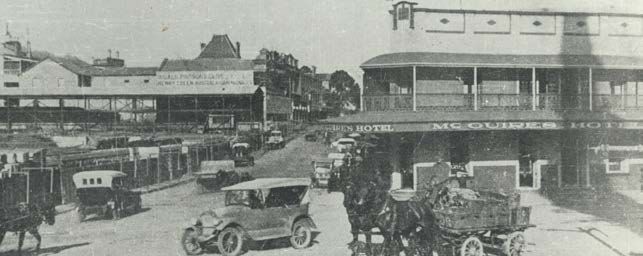
CITY HALL
– SYMBOL OF BRISBANE
Think engineering in Brisbane and many significant              City Hall took 10 years to build and came at a cost of around
landmarks come to mind – the Old Windmill, the Story            £980,000. At the time it was one Australia’s most expensive
Bridge, or the much more modern Brisbane Skytower, the          buildings and the second largest construction project,
tallest structure in Brisbane. But the building that has come   behind only the Sydney Harbour Bridge.
to symbolise Brisbane is one that was for 30 years the
tallest in Brisbane – City Hall.                                RPEQ Russell McWilliam (RPEQ# 53) was the consulting
                                                                structural engineer for City Hall. The only part of Brisbane
Inaugurated on 8 April 1930, the vision for Brisbane City              City Hall not entirely McWilliam’s work is the
Hall began in 1909. Ratepayer opposition to the estimated               auditorium dome. The design and building of
£180,000 cost of construction calculated to around $25                   City Hall incorporated many advanced technical
million today and disagreement over its location saw plans                elements for its time with a modern steel
delayed for almost a decade. The current site was settled                  reinforced concrete column and beam structure.
by 1917 – the other potential site in Fortitude Valley was                  Local materials were used as much as possible
sold to the Catholic Church who planned to build the Holy                    in the construction – including granite from
Name Cathedral – with the laying of the first foundation                      Samford and Enoggera and sandstone from
stone by Queensland Governor Sir Hamilton Gould-                               Helidon.
Adams, despite there being no plans drawn.
                                                                               Like Brisbane City Hall, the Board of
Another two years passed before plans from                                     Professional Engineers of Queensland is
architects Hall and Prentice were designed,                                    celebrating 90 Years in 2020. To celebrate
submitted and approval given to the Italian                                    this milestone BPEQ is acknowledging the
Renaissance style building complete with chariot                               significant projects like Brisbane City Hall
statues (construction costs were estimated at                                  and RPEQs such as Russell McWilliam that
£460,000). A second foundation stone was laid by                               have contributed to the development of
Edward, the Prince of Wales (later King Edward VIII /                          Queensland.
Duke of Windsor) in July 1920.
                                                                               Brisbane City Hall is a remarkable
                                                                               engineering achievement. It is listed with the
                                                                               National Trust and included in the National
      “...at the time was                                                      Estate and the Queensland Heritage Act
                                                                               1992 and also acknowledged by RPEQs who
      one Australia’s most                                                     voted for Queensland’s greatest engineering
      expensive buildings...”                                                  feat.

BPEQ E-news Issue 66 April 2020                                                                                                7
YOUR QUESTIONS ABOUT
DIRECT SUPERVISION
ANSWERED
Under the Professional Engineers Act 2002, registration is      Obligations are placed both on the unregistered person who
required for anyone carrying out a professional engineering     is being directly supervised and the RPEQ who is providing
service in Queensland or for Queensland. It is an offence for   the direct supervision. Direct supervision requirements are
unregistered persons to undertake professional engineering      intentionally onerous.
services. However, there is an exception that allows
unregistered persons to carry out professional engineering      To establish direct supervision, the following elements must
services only if they are directly supervised by someone who    be shown to exist and supported by evidence that meets
is a RPEQ.                                                      each requirement:

 ELEMENT                                                        REQUIREMENT
 The supervision must be direct; and the supervising RPEQ       The supervising RPEQ must have direct contact and not
 must have actual knowledge of the services/project.            through a third person.

 The supervising RPEQ must direct the person in the             The supervising RPEQ must actively direct the unregistered
 carrying out of the service.                                   person in carrying out the professional engineering
                                                                services. A passive or observational role is not sufficient.

 The supervising RPEQ must oversee the carrying out of the      The supervising RPEQ must be involved from the beginning
 service by the person.                                         and throughout all the professional engineering services
                                                                provided in each project/contract.

 The supervising RPEQ must evaluate the carrying out of the     The supervising RPEQ must evaluate the professional
 service by the person.                                         engineering services and ensure they are being carried
                                                                out to the standard expected of a RPEQ as if the RPEQ
                                                                was undertaking the professional engineering services
                                                                personally.

 The supervising RPEQ must take full professional               The requirement is that all professional engineering
 responsibility for the service.                                services are carried out to the standard expected of a RPEQ
                                                                and that the supervising RPEQ takes overt professional
                                                                responsibility for them.

BPEQ E-news Issue 66 April 2020                                                                                                8
Direct supervision was the topic presented by BPEQ for a        of the questions asked during the webinar about direct
recent Engineers Australia hosted webinar. Here’s a few         supervision:

  QUESTION                                                      ANSWER
 Is keeping a diary of conversations an adequate record of      Not by itself, a collective of evidence is required by the
 supervision?                                                   RPEQ and supervised person to support the elements
                                                                discussed in this article (and outlined in the webinar), not
                                                                just one item.

 Is it necessary to have a RPEQ to sign off the drawing/        Yes. All work done by the RPEQ is part of the whole
 document, since evidence of direct supervision is what         supervision process.
 matters?

 If the engineer being supervised is also an experienced        Yes. Direct supervision requirements contained in the Act
 RPEQ, would that make any difference to direct supervision     do not apply to RPEQs. Direct supervision is only applicable
 requirements?                                                  to unregistered persons.

 Given the onus is on the non-RPEQ, who needs to maintain       Both
 the records of supervision? The non-RPEQ, the RPEQ or
 both?

 I hear and understand the point that non-RPEQs must be         As RPEQs are bound by the Code of Practice and
 directly supervised by a RPEQ, but what onus is there on a     are obligated to provide services competently and
 supervising RPEQ to ensure the non-RPEQ is actually being      professionally within their area of registration. This is
 supervised in the correct way?                                 no different to providing the same service through the
                                                                unregistered person.

 Software development seems to be a grey area. I have           No different to a RPEQ in any other field of engineering if
 Bachelor qualified unregistered engineers who report to        the service being supervised is a professional engineering
 me writing programs for electrically operated industrial       service.
 machines. As a RPEQ in Electrical field what level of
 ‘supervision’ am I required to provide?

 Would evidence of direct supervision, be meeting minutes       As discussed this is but one aspect but wouldn’t be
 and emails or do they need to be more formal?                  enough itself. A collective of evidence is required by the
                                                                RPEQ and supervised person, not just one item.

 If the supervisor sits in the same room as the unregistered    It is advisable to show direct supervision for evidence
 person, and so most guidance is verbal and in-person,          of these conversations and instructions. For example,
 how much additional evidence of supervision is required?       minutes of meetings emailed contemporaneous to each
 Does there need to be hard evidence of all outcomes of         meeting or follow up emails confirming the discussions
 conversations?                                                 had and instructions given.

 Who has to keep the evidence if I am working as contractor     Both parties need to keep similar corroborating evidence.
 and not direct employee?

  Given a junior engineer (unregistered) forms a solid          No. Seniority and relationships are not elements of direct
 trust connection to a senior RPEQ over the time, would it      supervision and as long as the junior engineer remains
 appropriate for the RPEQ to pass the authority to the junior   unregistered they will need to be directly supervised.
 engineer to lead the projects with minimum supervision
 from the senior engineer?

 Is a project manager who is managing design consultants        This would depend on the project and the extent to which
 and construction contractors required to be a RPEQ or          professional engineering services are being provided.
 supervised?                                                    If the project manager is carrying out professional
                                                                engineering services, applying engineering knowledge
                                                                and judgement, then they would need to be a RPEQ
                                                                themselves or directly supervised.

Further information about BPEQ policies and processes,
including registration and direct supervision, visit
www.bpeq.qld.gov.au.

BPEQ E-news Issue 66 April 2020                                                                                                9
TIPS FOR RENEWING
            YOUR REGISTRATION
            5-STEP ONLINE RENEWAL PROCESS
            To complete the 5-step online renewal process, registrants must be able to answer:

            YES to either question one (1) or question two (2) of the continuing professional development (CPD) questions
            (Section C); and

            NO to ALL fitness to practice (FTP) questions (Section D).

            Applicants who have not complied with CPD requirements and/or declare a FTP issue should contact BPEQ.

                      VISIT                                     CLICK                                  COMPLETE
                     Visit                                      Click the                                 Choose
               www.bpeq.qld.gov.au                             Renew Now                              payment option
                                                                 option                              and make payment

                          1                    2                    3                    4                     5

                                          SIGN IN                                   ANSWER
                                    Sign in by clicking the                         Answer the
                                         My Account                                online renewal
                                             tab                                     questions

            For online renewal, a declaration form must be read and accepted. Under the Professional Engineers Act 2002
            (Qld), it is an offence to state anything on the form that you know is ‘false or misleading in a material particular’.
            BPEQ may cancel registration where it has reasonable grounds to believe that the person has been registered
            because of a materially false or misleading representation.

BPEQ E-news Issue 66 April 2020                                                                                                 10
                                                                                                                                 0
                                                                                                                                 1
COMMON QUESTIONS
Where do I find the portal to access ‘My Account’? What do I do if I have forgotten my password?
You can access the ‘My Account’ portal by clicking the Click the ‘Forgot password?’ underneath the fields
blue button found on the right side of the website page and follow the prompts. An email will be sent to your
or through here: portal.bpeq.qld.gov.au. If you still nominated email address with a link to reset your
cannot find the ‘My Account’ portal, please contact us at password. Make sure you check you spam/junk mail as
admin@bpeq.qld.gov.au. well.
How do I change or update my email address? How do I change or update my postal address?
To change or update your email address, please After logging in, you can change or update your postal
email admin@bpeq.qld.gov.au and request to have it address under you ‘Profile’.
changed.
How do I obtain a Tax Receipt? I have missed the renewal period. What do I do?
A Tax Receipt is downloadable from the ‘My Account’ If an engineer’s registration has expired, they can apply
portal. Once logged in, it will be available within 24 to BPEQ within two months of their registration expiring
hours of receipt of the Renewal Questionnaire. The Tax (1 July – 31 August) to have it restored. A restoration
Receipt will also be posted along with your Registration fee of $295.80 (this includes the cost of registration
Certificate. for 12 months) will apply. Applications for restoration
made more than two months after the expiry may also be
accepted by BPEQ under reasonable circumstances.
The connection is slow and I cannot upload documents.
What do I do?
Many more people are working from home and there is a
lot of web traffic. This may cause slow or limited access
to the renewal portal. If you experience connectivity
issues we apologise for the inconvenience and
encourage you to try again later. RPEQs have two months
to renew their registration. If problems persist contact us
at admin@bpeq.qld.gov.au.
BPEQ E-news Issue 66 April 2020 11CELEBRATING 90 YEARS OF BPEQ ENGINEERING IN QUEENSLAND THEN TO NOW Aerial view of City Hall from Albert Street, 1931 Sketch of Proposed Design for City Hall, 1884 The construction site of the future Brisbane City Hall, 1926 Bundaberg Traffic Bridge Burnett River, 1931 Brisbane Queen Street, c. 1930 All images sourced from John Oxley Library, State Library of Queensland and Brisbane Images, Brisbane City Council. BPEQ E-news Issue 66 April 2020 12
WELCOME
TO OUR NEWEST RPEQS

BPEQ extends a warm welcome to the following engineers who recently became registered:

23840           Mohammed                   ABBAS                                 Electrical
23834           Scott                      ADAM                                  Mechanical
23864           Mohammed Abid              ALI                                   Building Services, Mechanical
23865           Mustafa                    AL-JUMAILY                            Structural
23809           Blake                      ALLAN                                 Structural
23852           Shane                      AMBROSE                               Electrical
23872           Geoffrey                   ANSTEY                                Aerospace
23774           Samuel                     AUCELLO                               Aeronautical
23833           Shoja                      BAGHERIASL                            Civil
23766           Geoffrey                   BARROW                                Civil
23794           Benjamin                   BASSETT                               Electrical
23771           Miguel                     BECERRA GUTIERREZ                     Building Services, Mechanical
23853           Ryan                       BENTLEY                               Mechanical
23805           Martin                     BLACKMAN                              Mechanical
23851           Gregory                    BRANFIELD                             Mechanical
23773           Sylvia                     BROMLEY                               Management, Mechanical
23824           Bonar                      BUCALINA                              Structural
23814           Constantin                 BUCUR                                 Mechanical
23810           Andrew                     BYRNE                                 Civil, Management
23850           Hayden                     BYRNE                                 Mechanical
23877           Daniel                     CARKEET                               Civil
23817           Michael                    CHALAK                                Electrical, Management
23825           Sam                        CHIRGWIN                              Electrical
23876           Ahmed                      DARWISH                               Civil
23763           Steven                     DAVIDOW                               Structural
23818           Zac                        DAYMOND                               Structural
23779           Chanh                      DO                                    Structural
23787           James                      DONALD                                Civil
23797           Kevin                      DRAY                                  Mechanical
23882           Shane                      DUGGAN                                Mechanical
23870           Dylan                      EBNETER                               Civil
23757           Sara                       ESKANDANIAN                           Mechanical
23754           John                       FALCONER                              Civil - Public Works
23847           Oluwatosin                 FANIRAN                               Civil
23867           Ahmad                      FIROUZIANHAJI                         Structural
23843           David                      FLETCHER                              Civil
23849           Yuan                       GAO                                   Civil

BPEQ E-news Issue 66 April 2020                                                                                  13
23828           Gene              GONZALES            Information Telecommunications &
                                                      Electronics
23871           Tejas             HALANI              Mechanical
23837           Robert            HAMILTON            Electrical
23836           Peshan            HEWA EDIRIMANNAGE   Mechanical
9176            Tsz               HO                  Civil
23782           Peter             HUNKIN              Civil
23881           Sven              JAHKE               Aeronautical
23868           Christopher       KACIR               Civil, Structural
23760           Bechara           KARAM               Civil, Management, Structural
23819           Troy              KENNEDY             Electrical, Information
                                                      Telecommunications & Electronics
23813           Gerard            KEYNES              Management
8618            David             KIRKPATRICK         Civil
20599           Gregory           KNIGHT              Structural
23798           Andrey            KUTYAEV             Management, Mechanical
23858           Evangeline        LEGASPI             Structural
23804           Yukun             LI                  Civil
23792           Xing              LIN                 Civil
23835           Alice             LISLE-DENNY         Civil, Structural
23866           Joseph            LO PRESTI           Mechanical, Structural
23778           Liang Pin         LOW                 Civil, Geotechnical
23768           Shaun             MADDEN              Management, Mechanical
23767           Christopher       MANSELL             Civil
23874           Terence           MCCRYSTAL           Civil
23756           Patrick           MCGUIRE             Information Technology and
                                                      Telecommunications
23845           Armin             MEHMEDAGIC          Information Telecommunications &
                                                      Electronics
21020           Jessieloida       MORI                Civil
23775           Colin             MORROW              Structural
12625           Renukha           NADARAJAH           Civil
23857           Leonard           NEIST               Management
23892           Ronan             NETO                Civil
23838           Lucien            NGUYEN              Mechanical
23885           Samuel            NICKLIN             Mechanical
23888           Rico              NOWAK               Mechanical
23860           Shannon           O’KEEFFE            Civil
17647           Richard           PAGE                Civil
23803           Jenani            PARAMARAJAH         Structural
5924            Peter             PARAS               Civil, Structural, Management
23789           Marc              PHILIP              Electrical, Management
23796           Thaxter           PLATH               Mechanical
23811           Sasikumar         POOSAPADI ARJUNAN   Civil, Structural
23889           Edo               PORIC               Electrical
23795           Jared             PRIDDLE             Civil
23884           Lu                QU                  Management, Information
                                                      Telecommunications & Electronics
23820           Nithyanand        RAJAMANI            Management, Mechanical
23883           Andres            RAMBAL VECINO       Information Telecommunications &
                                                      Electronics

BPEQ E-news Issue 66 April 2020                                                       14
23855 Vinita RAO Management, Petroleum
23844 Nadia RASOULI Electrical
23894 Mark REID Electrical
23846 Tom REYNOLDS Civil
23786 Benjamin RINGROSE Structural
23878 Quentin ROBERTS Electrical, Environmental,
Information Telecommunications &
Electronics
23863 Raffaele ROSA Electrical
23827 Caleb SCHIPPLOCK Civil
23806 Abu Taher SHAFIQUE Electrical, Management, Information
Telecommunications & Electronics
23793 Parshant SHARMA Electrical
23777 John SHEHADIE Chemical
23839 Nicholas SIMMS Petroleum
23862 Noel SINGH Management, Structural
23788 Julian SKIPWORTH Environmental
23826 Simon SMITH Civil
23762 Ramy SOLIMAN Information Technology and
Telecommunications
23861 Mahdad SONEE Mechanical
23887 John SPARKSMAN Mechanical
23801 Garth SPENCE Electrical
23880 Storm STICKLAND Civil
23790 Senthil SUBBIAH Mechanical
23764 Narayan SUBEDI Management
23808 Norman SUCHER Electrical
23832 Bryan TAN Mechanical
23886 Jeffrey Alfred TANAEL Civil
23780 James TAYLOR Mechanical
23848 Kia Hui TEW Civil, Environmental
23784 Ahmed THABET Mechanical
23800 Harsh TRIVEDI Information Telecommunications &
Electronics
23761 Kudret TUTUK Geotechnical (mining)
23755 Calem WALSH Information Telecommunications &
Electronics
19838 Yan WANG Electrical
23869 Ross WATERS Civil
23854 Darryl WATKINS Civil, Management
23859 Abdul Quddus WAZIRZADA Information Telecommunications &
Electronics
6780 Prasanna WICKRAMASURIYA Electrical
23879 Christopher WILCOX Mechanical
23893 Leonard WILIEM Mechanical
23890 Susanna WILLS Structural
23891 Sheong WONG Building Services, Mechanical
23765 Roberto WUST Electrical
23830 Chi Kin YIP Civil
23802 Yazhen ZHOU Environmental
BPEQ E-news Issue 66 April 2020 1523208 Diana TODOR Civil
23201 Douglas TOMPSITT Chemical, Management
23117 Rebecca TOPP Civil
23118 Duc TRINH Civil, Structural
23155 Thomas TRIPP Mechanical
23199 Jordan TSANG Structural
23365 Barbara VAN HEERDEN Civil, Management
23121 Tanmay VEGAD Structural
23143 Jake VERLIN Civil
23119 Lei WANG Electrical, Information
Telecommunications & Electronics
23131 Raymond YAU Civil
23213 Emad YOUSSEF Mechanical
23138 Di ZHANG Aerospace
23204 Yi Cheng ZHAO Mechanical
23200 Vadim ZHULAEV Mechanical
23159 Hassan ZOLFAGHARI Civil
BPEQ E-news Issue 66 April 2020 16Protecting the public
and setting the standard
of engineering.
CONNECT WITH BPEQ
ON LINKEDIN AND TWITTER
Don’t forget BPEQ is on LinkedIn and Twitter. To keep up to date with the
latest news and events from BPEQ or to start a discussion on registration
or engineering issues generally, click FOLLOW.
www.bpeq.qld.gov.au
admin@bpeq.qld.gov.au
(07) 3210 3100
Level 15, 53 Albert Street Brisbane 4000
PO Box 15213 CITY EAST QLD 4002
This newsletter is provided for general information only. It is not legal advice and should not be taken or relied
upon as such. If you have any questions or concerns about your compliance with the Professional Engineers Act
2002 (Qld) or your general legal obligations as an engineer, you should obtain appropriate legal advice. The Board
accepts no legal responsibility or liability for any loss you may suffer as a result of reliance upon the information
contained in this newsletter.
BPEQ E-news Issue 66 April 2020 17You can also read


