ATLAS AND CMS AND HL-LHC UPGRADE: STATUS AND PLANS - KRISZTIAN PETERS POF PREPARATION MEETING MARCH 18, 2019 - DESY INDICO
←
→
Page content transcription
If your browser does not render page correctly, please read the page content below
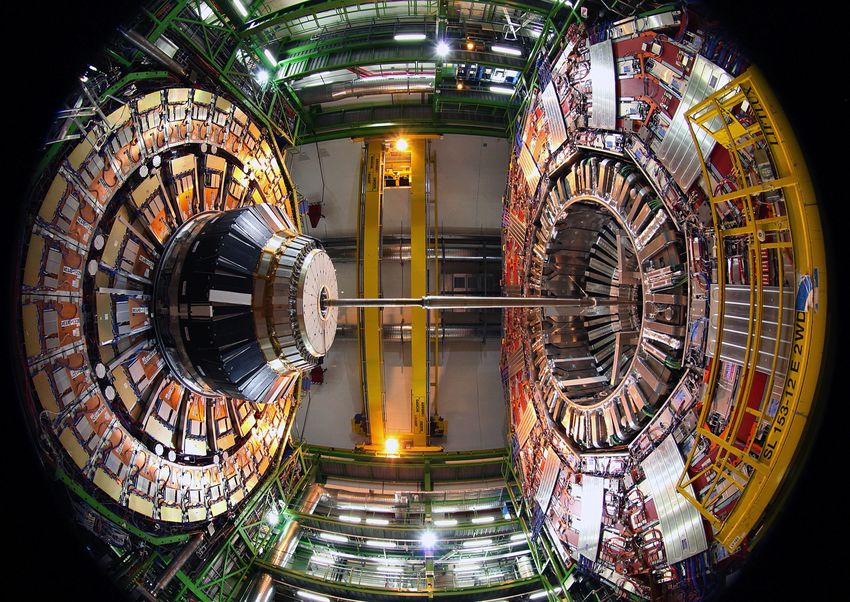
ATLAS and CMS and HL-LHC
 upgrade: status and plans
           Krisztian Peters
       PoF preparation meeting
           March 18, 2019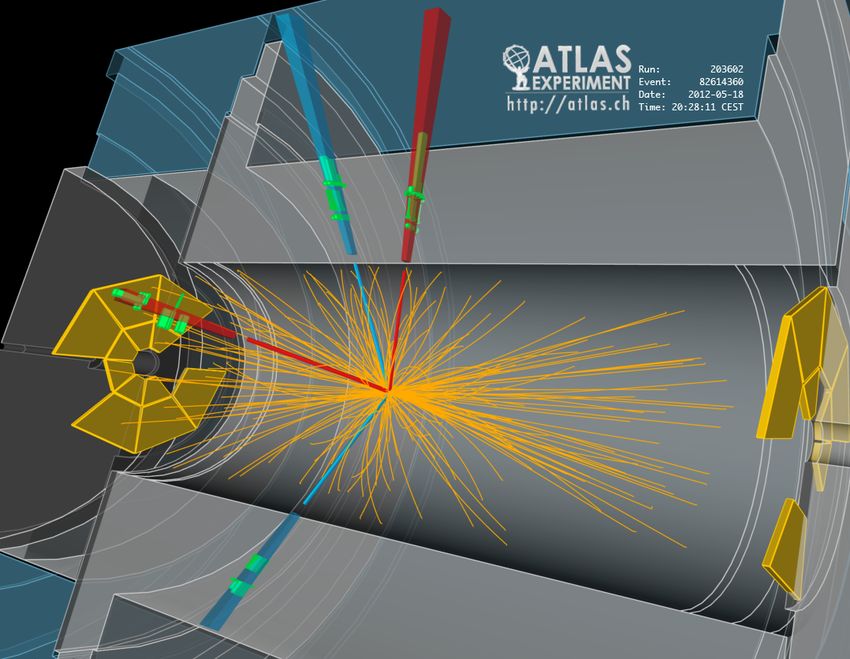
The DESY groups in ATLAS and CMS
Two strong and influential groups on ATLAS and
CMS
-   Each group has roughly 100 members
-   ~4-6 PhDs graduate in both groups every year
-   Groups have high visibility and leading roles in detector
    operation, object reconstruction, physics analysis and
    upgrades
-   Many management and leadership positions covered by                                     Physics Coordinator
                                                                                                      K. Mönig
    DESY scientists
                                                                         Physics Analysis                        Combined Performance
    • Deputy spokesperson, physics coordinator,Collaboration Board
      Chair, physics and performance group conveners, etc.           B-Physics        Exotics              E-gamma          Flavour tag
                                                                                                                              C. Pollard

                                                                     Heavy ions        Higgs             Inner Tracking      Jet/etmiss
                                                                                     K. Tackmann

                                                                        SM             SUSY                  Muon               Tau
                                                                                       F. Meloni
                                                                        Top        Upgrade Phys.         Phys. Model.
                                                                                                            S. Amaroso

                                                                                                                                           2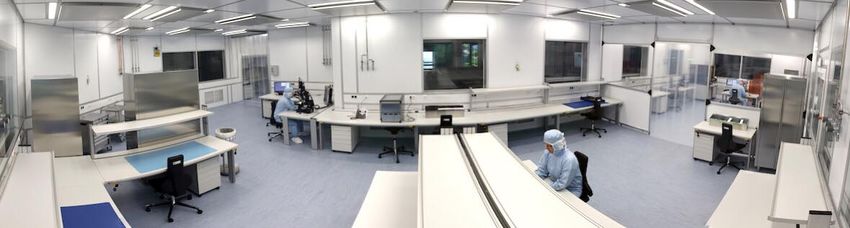
Detector Operations and Upgrade
CMS: fast beam condition monitor (BCM1F) for online measurement of luminosity
constructed at DESY and group has a leading role in operation

ATLAS: responsibility for maintenance and further development of prompt calibration loop
for the semiconductor tracker (SCT)

New tracking detectors for Phase-1 upgrade
-   Construction of 287 modules for 4th layer
    of CMS pixel detector at DESY, installed in
    early 2017

-   ATLAS added innermost layer (IBL) and
    track trigger (FTk) with collaboration of DESY

                                                                                       3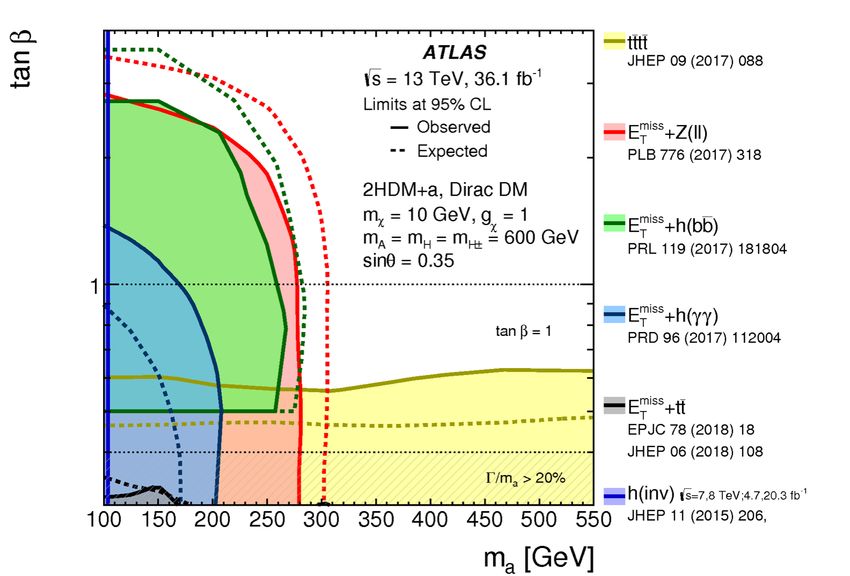
Detector and algorithm performance studies
Involved in many performance studies required for successful data analyses:
-   From photon identification to Monte Carlos studies
-   CMS: pivotal role in alignment of CMS detector, handling
    about 200000 alignment parameters simultaneously
-   ATLAS: strong contributions to tracking aspects for
    current and future tracking systems to adjust to ever
    increasing pile-up events

                                                                              4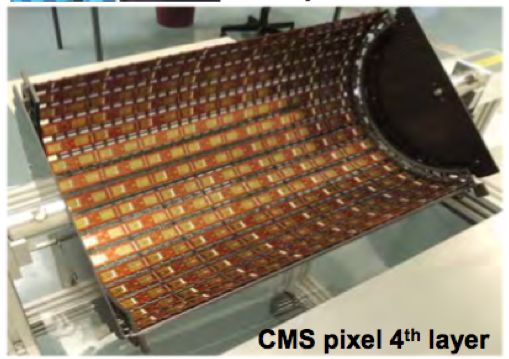
Computing
TIER-2 and National Analysis Facility (NAF)
-   Allow for complementary usage of the same data source
-   TIER-2: large national and international impact on the WLCG
-   NAF: more than 600 users registered. Direct access to the entire TIER-2 GRID storage with ~7000 CPU
    cores

                                                                                                          5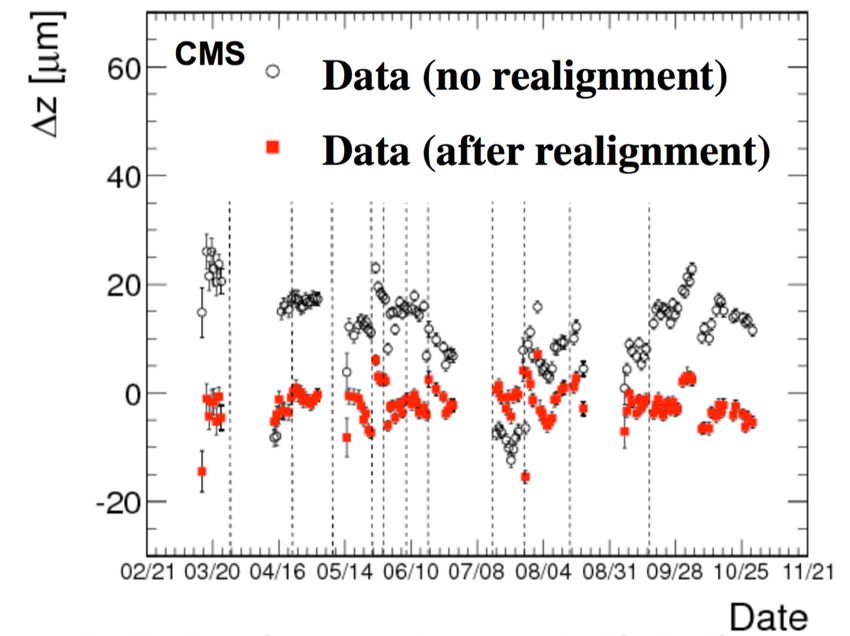
Physics analysis
Large impact to the overall LHC physics programme

Higgs physics:
-   Move from Higgs discovery (DESY contribution) in Run 1 to precision Higgs physics
-   Leading contributions to recent observations of ttH production and H→bb decays

                                                                                        6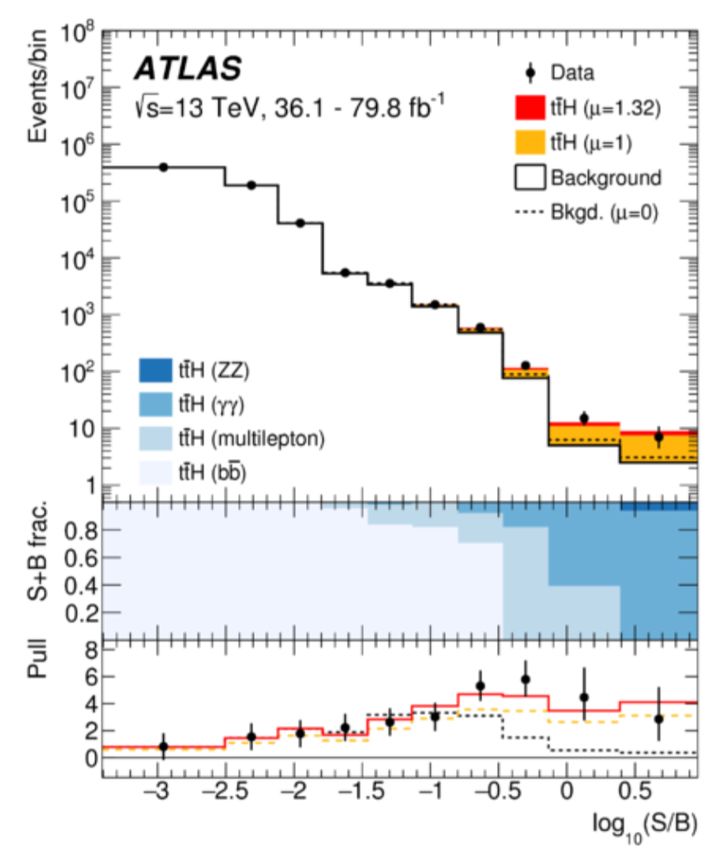
Physics analysis
Large impact to the overall LHC physics programme

Top physics, Standard Model measurements and DM and other BSM searches:

                                                                          7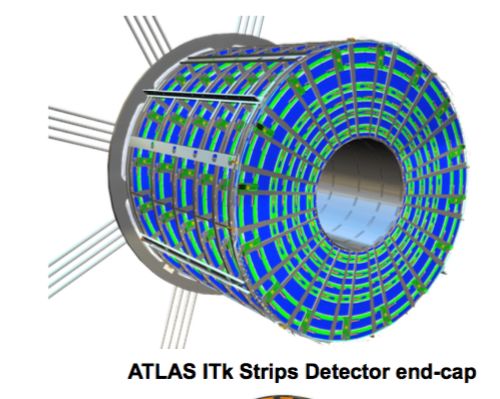
Phase 2 upgrade
DESY groups are delivering a silicon strip end-cap detector as a German contribution to
each experiment end of 2024
-   Includes 3 years of module production
-   In strong collaboration with German institutes
-   DESY groups play leading roles in the design and construction of tracking detectors

                                                                                          8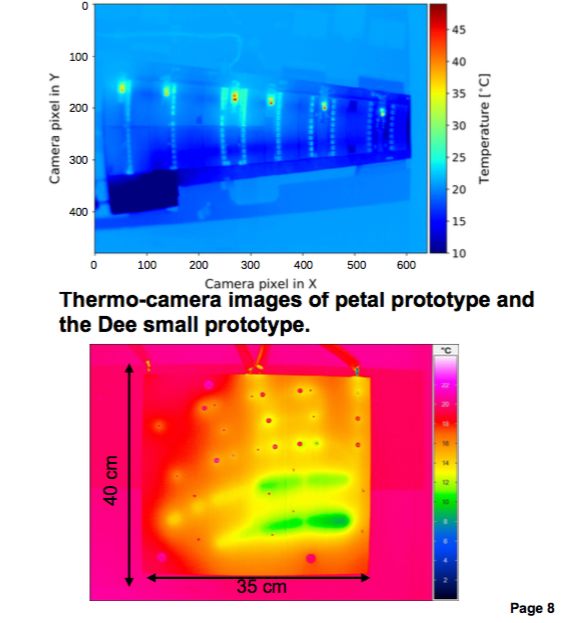
R&D for Phase 2 upgrade
Based on R&D from detector concept to production
-   Novel silicon concepts developed for HL-LHC
    • DESY leading role in sensor studies and module designs
-   Performance studies on sensors and full modules
    • DESY test beam key for tracker developments

-   From silicon modules to full detector: covering many areas from
    simulation to mechanical construction
-   Supported by R&D performed within “Matter and Technologies”
-   TDRs approved, with DESY members as main authors

                                                                      9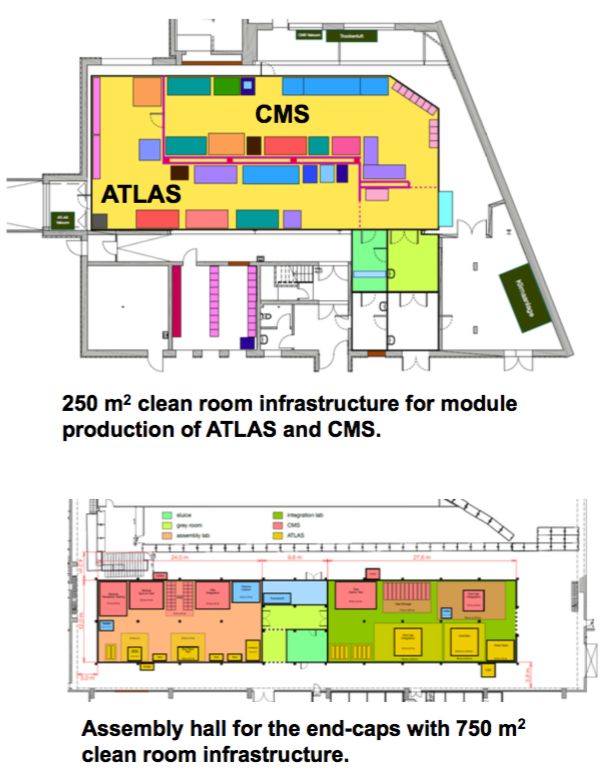
Detector Assembly Facility (DAF)
Dedicated facility for detector development and
construction to be used for HL-LHC tracking detectors
-   Existing buildings 25c and 26. About 1000 m2 clean rooms and
    200 m2 lab space
-   10 MEUR from DESY for refurbishment and lab equipment

DAF status:
-   Clean rooms in 25c is now in operation and ready for the
    upcoming production
-   Assembly hall in 26 is also completed and is now being
    commissioned
-   DAF will be in use for LHC Upgrades until about 2026
-   Lab infrastructure for module production in Zeuthen in
    preparation to complement DESY facilities

                                                                   10
11
TDR 2018
Scintillator
Calorimeter Endcap
Hadronic (CE-H)
SiPM-on-Tile technology developed by CALICE for Linear Collider calorimeters
Silicon
CMS endcap calorimeter phase 2 upgrade
Electromagnetic (CE-E)
Calorimeter Endcap
34 Chapter 2. Active elements
permits
Sensor arrangement in the layers
r
to
la
til
CMS High-Granularity Calorimeter (HGCAL)
in
Sc
con
radiation
Sili
!7
CE-H (Si+Scint)
Plane 49
16
Stainless steel, Cu
Figure 2.13: Layout of wafers and tiles in a layer where both are present: the 22nd layer of CE-H. Missing Area inside 356cm 2
Missing Area outside 6031cm 2
cast and machined or injection-moulded, as individual tiles or multiple tile units (megatiles). In highest fully covered eta and radius 2.858 379.0 mm
addition, the reflective coating with paint or foil is still subject to optimisation by prototyping. Lowest fully covered eta and radius 1.545 1470.8 mm
• Scintillating tiles with SiPM readout
Both approaches build on experience: painted megatiles are used in the CMS HCAL, and foil-
205 t
Number of Halves sensors 18
9λ
Number of Choptwos sensors 0
wrapped individual tiles have been developed in the CALICE framework. The final choice, to Number of Fives sensors 0
where
be made in 2019, will be driven by cost, performance, and ease of assembly considerations, e.g. Number of Full sensors 294
Scintillators
the amount of light yield loss and noise increase due to irradiation, and by thermal-mechanical
• Silicon sensors in CE-E and high
Plane 8 InnerRadius (mm): 327.8 OuterRadius (mm): 1599.9 Z (cm): 329.1
HGCAL = Sampling calorimeter
considerations. The thermal expansion coefficient of plastic scintillator is 78 ⇥ 10-6 K 1 and thus
4-30 cm2
in low-radiation regions of CE-H
-30 ° C
5 times larger than that of the copper cooling plate and the PCB. For a temperature difference of
CE-H (Si)
500m2
400 k
new challenges: radiation hardness, data rates, cooling
4000
70 K (assembly at 30 C and operation at 40 C) this leads to millimeter-size mismatches and
in practice limits the maximum size of megatiles to about 20 cm. In the inner parts with small
cells, such a size still represents a significant reduction in the number of parts to be handled.
8
On the other hand individual tiles are better suited for assembly using standard pick-and-place
tools.
SiPM-on-Tile read-out boards, electronics integration
The tileboard holds the SiPMs, the front-end electronics, LEDs and associated driving circuitry,
radiation regions of CE-H
low voltage regulators and the connectivity to the motherboard that is situated at the outer
periphery of the cassette.
upgrade,
Pb, CuW, Cu
0.5 - 1 cm2
26 X0, 1.5 λ
Silicon
-30 ° C
600m2
27000
13 March 2019
CE-E
6M
23t
28
postdoc
DESY contributes to engineering design
then support production and commissioning
Both endcaps
Channel size
Per endcap
#Channels
Automated assembly and QC procedures
Op. temp.
#Modules
Absorber
Weight
Layers
Depth
Area
Thorben Quast
Largely adopted for CMS endcap
ia
l 3x0.5 engineers, 2x0.5 physicists, 0.5 ia
l
er er e
at tive at iv
Ac
m m ss
Pa
TDR due early 2021
-
-
-
-
-Future plans
PoF IV
Deliver endcaps
Milestones: to CERN
- Endcap assemblies
- Detector operation, performance studies and analysis of LHC Run 3 data
- Prepare for HL-LHC
12Finalise phase 2 upgrades
Main milestones and challenges
- End of 2019: start of pre-production (e.g. ATLAS modules)
- 2020: start of production
- ~2023: completion of substructures with modules
- 2024: finalisation and testing
- End of 2024: delivery to CERN
After its use for the ATLAS and CMS tracker end-caps for the HL-LHC, the DAF will be a
major asset for any large-scale, high-precision detector development project at DESY
13Data analysis
Germany is funding HL-LHC upgrades with 120 MEUR (in addition to the 200 MEUR
annual contribution) → Responsibility to carry out a long term programme at the LHC
Prepare to fully exploit the wealth of LHC data – get the full “return on investment” of our
upgrade efforts
Physics analyses along two major themes in ΜU
- Higgs and standard model precision physics
- Search for new physics and for dark matter candidates
Accommodate to the change in physics reach
which comes with the larger dataset but only
minor energy increase
14You can also read


