Attitudes towards and experiences of the NHS during Covid-19: views from patients, professionals and the public - Phase 3 (May - June 2021)
←
→
Page content transcription
If your browser does not render page correctly, please read the page content below

July 2021

Attitudes towards and experiences of the NHS
during Covid-19: views from patients, professionals
and the public
 Phase 3 (May – June 2021)

                                                  britainthinks.com

BritainThinks | The Richmond Group of Charities
Contents

 01 02 03 04 05 06
Background and   Key findings   Attitudes towards   Health inequalities   Future of the NHS   Key findings
methodology                     the NHS and
                                experiences of
                                healthcare

                                                                                                             2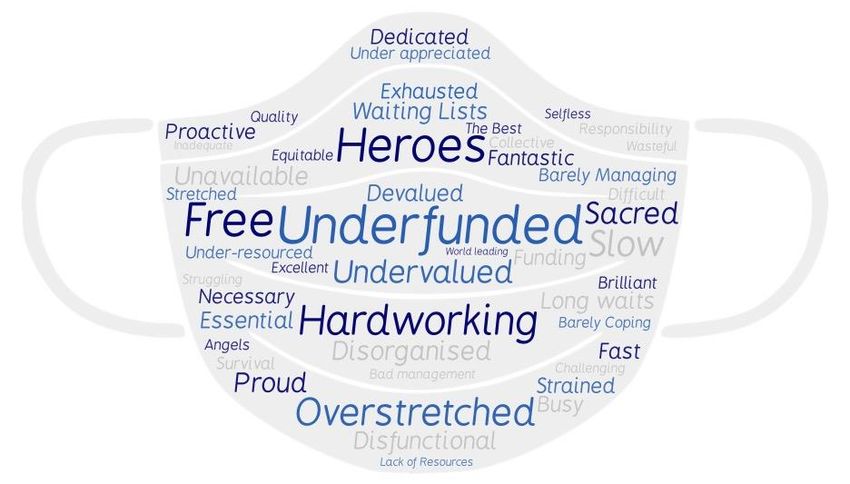
Background and methodology

01                           Background and methodology

                                                          3
Background and methodology

This is the final stage of an ongoing research study

                 Phase one                            Phase two                                 Phase three
       August - September 2020                   February - March 2021                         May – June 2021

•   Tele-depths with HCPs                  • Tele-depths with Patients               •   Tele-depths with HCPs
•   Tele-depths with Patients              • Mini-groups with the Public             •   Tele-depths with Patients
•   Mini-groups with the Public            • Survey with the Public                  •   Mini-groups with the Public
•   Survey with the Public                                                           •   Survey with the Public

     Patients were re-recruited from Phase 1 and 2 to allow us to monitor their evolving experiences of and attitudes
    towards the NHS throughout the Covid-19 pandemic. New HCPs were interviewed in Phase 3 having been omitted
                               in Phase 2 due to increased work pressures from Covid-19.

BritainThinks | The Richmond Group                                                                                      4
Background and methodology

Research objectives
  The core goal of this research was to understand how patient, public and professional attitudes towards the NHS
  have been shaped by the experience of Covid-19 and to explore expectations and priorities for the future. The
  research was designed to be iterative, with each phase building upon the last. Beyond this, each phase also had
  its own specific objectives:

                  Phase one                        Phase two                                Phase three
         August - September 2020               February - March 2021                       May – June 2021

 • Patient, public and professional      • Where ‘credit’ and ‘blame’ is          • How primary, secondary and
   priorities for on-going reform          apportioned when thinking about          community care services are
   within the NHS;                         the NHS’ performance during the          seen to be managing and how
 • Levels of concern about delays          pandemic;                                they should be improved in the
   to treatment, access to               • Experiences and perceptions of           future;
   healthcare through digital              remote (video/phone)                   • Perceptions of inequalities in
   formats, and looking ahead to           appointments both during the             healthcare, and the level of
   the winter months.                      Covid-19 pandemic and longer             support for policies dedicated to
                                           term.                                    improving this.

BritainThinks | The Richmond Group                                                                                      5
Background and methodology
Sample & methodology
10 x tele-depths 4 x mini- Survey with
8 x tele-depths
with health care groups with 2000 members
with patients
professionals the public of the public
• All have one or more long-term • HCPs from a range of professions: • Nationally representative survey
• 4x mini-groups with 5x participants
conditions, with a mixture of • 3x GPs with n=1723 members of the UK
in each
severity of conditions and in- • 3x nurses public aged 18+ online.
• 10x 30–45-year-olds,
service use. • 1x diabetes nurse • The sample covered England
• 10x over 50s.
• The conditions included*: • 1x oncology nurse only.
• All participants were low-moderate
• 5x patients with long-term • 1x mental health nurse • Survey fieldwork took place
service users.
health conditions • 2x consultants between 11th – 13th June and was
• Participants from a range of
• 2x patients with mental health • 1x oncologist 6 questions long.
locations across England, with a
conditions (ideally on waiting • 1x chest physician
mixture of urban, suburban and
lists) • 2x AHPs (physio)
rural areas.
• 1x cancer patient • Working in a range of locations
• SEGs of C1C2.
• 2x patient post-elective surgery across the country, serving a mix
*Figures do not match total tele-depths of urban, suburban and rural
conducted due to some participants having communities.
more than one condition.
BritainThinks | The Richmond Group 6Key findings
02 Key findings
7Key findings
Key findings
For the first time in this programme of work, there are indications that the Covid-19 ‘grace period’ is
coming to an end.
1 • Whilst the public and patients continue to praise the NHS, there is a growing expectation of a return to ‘normal’
characterised as a return to face-to-face and improvements to waiting list times. This is accompanied by
questions from a minority of those we spoke to about the commitment of those in the NHS to delivering this.
Overall, patients who have used primary care remain positive (68% rate the access as good, whilst 78%
rate the quality of care they received as good).
2 • However, both scores are down from the previous wave, and 28% of those polled had to wait longer than 2
weeks for an appointment.
• Moreover, the qualitative research indicates that a growing gap between low expectations and generally
positive experiences is leading to participants attributing these positive experiences to ‘luck’ – rather than to the
system performing effectively.
Similarly, in secondary care whilst perceptions remain positive overall (75% rate the access as good,
3 whilst 84% rate the quality of care they received as good), scores are down from the previous waves.
• Concerns in relation to secondary care coalesce around waiting lists; tackling waiting lists will be a key metric
by which the NHS is judged moving forward.
8Key findings
Key findings
Spontaneous understanding of health inequalities amongst the public and patients is low, and tackling
health inequalities is not widely seen as a priority for the NHS.
4 • Even amongst those HPCs and members of the public for whom this is seen as a more pressing issue, the
complexity of health inequalities and the range of organisations involved leads to questions about whether the
NHS has the funds or – on its own – the ability to resolve the challenge.
The public are more pessimistic about the standard of care that the NHS will be able to deliver moving
forward than they were in February.
5 • In February, 21% of those polled expected the standard of care to get worse of the next 12 months; this has
now risen to 32%.
• Pessimism is driven by an expectation that, even if we are able to move beyond the pandemic, pressures on
the NHS (high patient demand, staff burnout, lack of funding) will continue.
HCPs are aware of patient concerns, particularly in relation to access, and are worried that they are
6 seeing declining public support as a result.
• This is leading to calls for an open and honest conversation with the public about what they can expect from
the NHS moving forward.
9Key findings
Similarities and differences between public, patients and
professionals
Attitudes towards and Support for NHS in Future of NHS healthcare
experiences of the NHS addressing health delivery
inequalities
Although support remains There are mixed levels of The public are less
strong on the surface, understanding of what the optimistic about the
Public challenges in relation to term ‘health inequalities’ standard of care the NHS
access, concern about means, even amongst HCPs. will be able to deliver
waiting lists and a view that moving forward than they
the NHS should be For most addressing health were in February.
Patients ‘returning to normal’ is inequalities is not a priority
causing real frustration. when set against issues Patient and HCPs’ views
that are perceived to be aligned with these concerns.
more urgent e.g., waiting
HCPs are feeling pressure to lists. There are also
deliver more services at questions about whether the
Professionals pace and fear that the impact NHS has the funding to
will lead to increased staff tackle health inequalities,
burnout. There is concern and the extent to which it lies
about the risk of losing within its remit.
public support.
10Attitudes towards the NHS and experiences of healthcare
Attitudes towards the NHS and
03 experiences of healthcare
•
•
Impact of Covid-19 on perceptions and experiences of the NHS
Patient deep divesPatients Public
Attitudes towards the NHS and experiences of healthcare
On the surface, support for NHS and frontline staff remains high
and consistent with previous phases of research
Although resourcing and funding issues are top of mind in
discussions, there is ongoing support for the work of frontline
staff, and the NHS continues to be a source of national pride
for patients and the public.
To be honest I think they’re brilliant the NHS… they’re doing a brilliant job.
Patient, Surgery, Greater Manchester
I think the NHS is amazing but with that I mean the doctors and nurses
working hard.
What three words would you use to describe the NHS and social
care system currently? Public focus group, Greater Manchester
BritainThinks | The Richmond Group 12Patients Public
Attitudes towards the NHS and experiences of healthcare
However, cracks in these positive perceptions are beginning to
emerge
There is increasing frustration with the perceived failure of the
NHS to adapt to accommodate non-Covid-19 related
illnesses.
Whilst the majority of criticism remains focused on the
Government, some of the public and patients are beginning to be
critical of frontline staff who they believe are using the
pandemic as an ‘excuse’ for a reduced patient load.
They need to open up. Shops, restaurants have opened up. People are in
distress, in pain, they want to see doctors.
Public focus group, Midlands
The word ‘excuse’ comes to mind – Covid-19 is now just being used as
an excuse.
What three words would you use to describe the NHS and social
care system currently? Public focus group, Greater Manchester
BritainThinks | The Richmond Group 13Patients Public
Attitudes towards the NHS and experiences of healthcare
And there is a growing expectation that ‘normal services’ should
now be resuming
Normality is characterised as…
A return to face-to-face
High vaccination appointments where either
I want to have a face-to-face appointment. In some
ways, it doesn’t feel like real treatment, I’ve never
rates are key to this most appropriate for the even met the psychiatrist I’m talking to.
growing pressure appointment type or simply
Patient, Mental health, Sussex
preferred by the patient.
to resume ‘normal’
services, due to an
assumption that
this will have
helped reduce Making meaningful progress in The challenge now is to catch up, and from what I
addressing waiting lists, and have heard it is a big job. There are lots of non-
pressure on the showing greater Covid-19 patients who need medical attention
NHS. that haven’t received any in over a year.
accommodation for non Covid-
19 related illnesses. Public focus group, Greater Manchester
BritainThinks | The Richmond Group 14Attitudes towards the NHS and experiences of healthcare
We looked at the NHS across three key areas
Primary care Secondary care Community care
BritainThinks | The Richmond Group 15Primary care deep dive BritainThinks | The Richmond Group 16
Public
 Attitudes towards the NHS and experiences of healthcare

 An increase in the proportion of people who have used primary
 care since March 2021 has been accompanied by a decline in
 experiences of access and the quality of care

Q. We'd like to understand your experiences of accessing NHS services since the first lockdown in March 2020. Have you used any NHS services since the start of the pandemic in March
2020? Base size: all respondents in Phase 2 Feb 2021 (n=2104) and Phase 3 June 2021 (n=1723).                                                                                              17
Q. And thinking about your experience with doctors, nurses or other health professions at a GP practice, please tell us how you would rate: the experience of accessing care (e.g. making an
appointment); the quality of care you received. Base size: all respondents who have had an appointment with a doctor, nurse, or other health professional at a GP practice in Phase 2 Feb
2021 (n=1011) and Phase 3 June 2021 (n=977).
Public
Attitudes towards the NHS and experiences of healthcare

While there are many positive access experiences, over a quarter
(28%) report waiting more than two weeks for an appointment

                Thinking about your experiences of using GP services, please
                  tell us the extent to which you agree or disagree with the                                         Many focus group participants
                                      following statements                                                        describe getting an appointment as
                                    Showing % of NET Agree
                                                                                                                      ‘impossible’ and claim that
                  76%                                                                                            emergency or walk-in services are a
                                                 64%                                                               better option for them should an
                                                                                                                              issue arise.

                                                                                 28%
                                                                                                                  I called up at 7.59am and I was already 24th on
                                                                                                                  the list. When I got through the morning
                                                                                                                  appointments were all gone and I was told to call at
                                                                                                                  2pm again, even though I was in pain, and wanted to
    My appointment took place at a    The process for booking an      I had to wait longer than two
    time that was convenient for me   appointment (e.g. online or     weeks to get an appointment                 talk to a doctor.”
                                      through the telephone) was                                                                            Public focus group, Midlands
                                            straightforward

BritainThinks | The Richmond Group                                                                                                                                                         18

Q. Thinking about your experiences of using GP services, please tell us the extent to which you agree or disagree with the follow statements. Base size: all respondents who have had an
appointment with a doctor, nurse, or other health professional at a GP practice in June 2021 (n=977).
Public
Attitudes towards the NHS and experiences of healthcare
Similarly, whilst perceptions of quality of care remain high, there
are indications of a perception that doctors do not have the time to
care
Thinking about your experiences of using GP services, please
tell us the extent to which you agree or disagree with the
following statements Focus group participants shared the
Showing % of NET Agree view that GPs do not always have
73% 71% sufficient time to address their
concerns and are seen to be ‘cutting
corners’ by asking patients to send
photos rather than examination for
diagnosis.
25%
My son had a toe problem and they said to send a
The way the appointment was I felt the healthcare The appointment felt rushed photo for them to have a look at it – how can they
delivered (whether online, professional who delivered my really tell?
telephone or in-person) met my appointment really listened to
needs me Public focus group, Greater Manchester
BritainThinks | The Richmond Group 19
Q. Thinking about your experiences of using GP services, please tell us the extent to which you agree or disagree with the follow statements. Base size: all respondents who have had
an appointment with a doctor, nurse, or other health professional at a GP practice in June 2021 (n=977).Public Patients
Attitudes towards the NHS and experiences of healthcare
The research suggests a gap between negative expectations and generally
positive experiences – meaning that those positive experiences are often put
down to luck
Overall, the majority of individuals have had However, these experiences are assumed to
positive experiences with their GPs since 2020 be in the minority
Quantitatively, over half (54%) of participants Qualitatively, those that have positive
who have visited a GP surgery since March experiences with their GPs say they feel
2020 said that ‘overall, my experience was they are the ‘exception to the rule’ due to
better than I expected’, whilst only 16% widespread perceptions that primary care
disagreed with this statement. services are insufficient, even if this doesn’t
align with their own experiences.
My doctors are pretty good. If I ring up at 8am I get an I have an amazing GP service. I’m probably the only person
appointment, they are good like that. I think I am one of the in the world. You can always get in touch, get an appointment.
lucky ones. They’ve been doing phone appointments but you can also go in.
99.9% of population probably don’t have that.
Patient, Mental health and long-term condition, Greater
Manchester Public focus group, Greater Manchester
BritainThinks | The Richmond Group 20
Q. Thinking about your experiences of using GP services, please tell us the extent to which you agree or disagree with the follow statements. Base size: all respondents who have had
an appointment with a doctor, nurse, or other health professional at a GP practice (n=977)Professionals
Attitudes towards the NHS and experiences of healthcare
Issues with access in particular are recognised by GPs, and
attributed to significant workload pressures
The number of patients asking for help has increased, whilst remote
appointments create pressure to see more patients each day.
Many GPs are bringing down their hours to part-time to avoid burnout, reducing the overall
capacity of GP practices.
GPs recognise that there are issues with booking appointments and securing referrals, and fear that these will get
worse if demand does not abate and / or there continue to be staff shortages.
I have been a GP for a long time, my colleagues are competent and we step up to the plate when we are needed. The natural assumption is that
we will get up and do it again everyday, but I think quite a lot of GPs have had enough now. Primary care is teetering on the brink of falling
over, and when primary care falls over, the NHS will collapse.
HCP, GP, South East
BritainThinks | The Richmond Group 21Public Patients Professionals
Attitudes towards the NHS and experiences of healthcare
But GPs’ attempts to manage this workload conflict with patients’
and the public’s desire for more access
GPs want to be able to manage
Public and patients want greater access and prioritise patient care,
access to primary care, expecting for example by more use of triage, or
increased availability to it can be their by channelling patients through other
first point of call for all medical needs. services (e.g. pharmacists). There is
also a desire for active management
of public expectations of GP surgeries.
We should free up GPs more. A lot of admin work
They need to improve access to GP surgeries. I could be done by other people, but we should also
don’t like the way that it is now, it is so impersonal. be making better use of people like pharmacists for
patients… Patients want to talk to a doctor, but
Public focus group, Sussex don’t always need to talk to the doctor.
HCP, GP, South West
BritainThinks | The Richmond Group 22Secondary care deep dive BritainThinks | The Richmond Group 23
Public
 Attitudes towards the NHS and experiences of healthcare

 Similar to primary care, an increase in the proportion of people who
 have used secondary care has been accompanied by a decline in
 experiences of access and the quality care
     Have you used NHS services since the start of the pandemic in                              Have would you rate the experience of accessing care / the quality
                             March 2020?                                                                             of care you received?
           Showing % of respondents who selected each option                                           Showing % of respondents who selected ‘NET: good’
                                   Phase 2 (Feb 2021)                                                                            Phase 2 (Feb 2021)
                                   Phase 3 (June 2021)                                                                           Phase 3 (June 2021)
                                                                                                                                                   90%
                                                                                                         84%                                                   83%
                                                                                                                     75%

                                                     29%
                             22%

                    Yes, I have had used other health services                                     Access – Secondary care                  Quality of care – Secondary care
                      (e.g. A&E, minor injury clinics, or other
                    health services delivered in hospital or by
                                   specialists)

Q. We'd like to understand your experiences of accessing NHS services since the first lockdown in March 2020. Have you used any NHS services since the start of the pandemic in March 24
2020? Base size: all respondents in Phase 2 Feb 2021 (n=2104) and Phase 3 June 2021 (n=1723)
Q. Please tell us how you would rate: the experience of accessing care; the quality of care you received. Base size: all respondents who have used other health services in Phase 2 Feb
2021 (n=471) and Phase 3 June 2021 (n=515).
Public Patients
Attitudes towards the NHS and experiences of healthcare
Concerns about secondary care coalesce around waiting lists: the
NHS’s ability to tackle this will be a key metric by which it is judged
moving forward
Long waiting lists have been an issue for a long
• 27% of respondents identify waiting lists for time, there is room for improvement. Your appointment
secondary care as one of their biggest concerns doesn’t seem to arrive, and when it does, it gets
cancelled.
for the NHS over the next few years – making it
second only to funding. Public focus group, Midlands
• In the qualitative research, spontaneous mentions
of waiting lists have increased over all phases of
research.
I’ve been on a waiting list for nearly a year, still no
word. I did call a couple of times and they said I’ll
• There is, however, scepticism about the NHS’s probably hear about May or June. So I'm hoping to
ability to make meaningful progress in this area in hear soon, but you just don’t know.
the short to medium term. Patient, Mental health and long-term condition, Sussex
BritainThinks | The Richmond Group 25
Q. And thinking about the next two or three years, what are your biggest concerns in the NHS? Select up to two. Base size: All respondents (n=1723)Patients
Attitudes towards the NHS and experiences of healthcare
For those who are in the secondary care system, experiences of
access and quality of care are inconsistent
• Whilst some patients report being satisfied with the
speed of referrals, some patients within the sample
process
Referral
have already been waiting over a year for an
appointment.
• Delays add to mental strain and force patients to self Patients agree that the quality
manage issues, often leading to worsening health of communication plays a vital
conditions. role in shaping their
experiences of care, with failure
to keep patients up to date, or
Ongoing care
• Across various specialist teams, patients report
receiving mixed levels of ongoing care and support not knowing who to contact with
once their referral has been processed. questions significantly
• Access is key: those with a clear contact point report an exacerbating issues.
improvement in their conditions whilst others report
being unable to get ad hoc support in the case of a flare
up.
BritainThinks | The Richmond Group 26Community care deep dive BritainThinks | The Richmond Group 27
Public                        Patients
Attitudes towards the NHS and experiences of healthcare

Community care is less top of mind and less well understood than
primary and secondary care, but there is an assumption that it is
experiencing the same pressures as other parts of the service

          Most do not have
      specific understanding of
        how community care
                                                           This leads to an assumption that services are under-funded and
      services operate and / or
                                                             under-resourced due to budget cuts and staffing issues,
       what they cover – with
                                                                   problems which are blamed on the Government.
          NHS community
        services often being
        conflated with social
                care.
                                                          I think the problem is probably that their workload is a little heavy... They only have a
                                                          certain amount of time in a day that you can get workload done

                                                                                                                  Public focus group, Greater London

BritainThinks | The Richmond Group                                                                                                                       28
Public Patients
Attitudes towards the NHS and experiences of healthcare
The small number with direct experience of the service highlight the
importance of consistent and predictable care
Positive experiences involve: Case study: Ali*
• Frequent and consistent contact/visits Ali’s* elderly mum caught Covid-19 in 2020 and had to be admitted
• Access to staff with strong interpersonal to hospital for over a week with serious breathing issues. Due to
skills as well as medical knowledge her old age, the family feared she would not make it, but she
managed to pull through.
• Clear communication and expectation
management. Following her recovery and discharge from hospital, she received
additional community support in the form of daily visits from nurses
to monitor her condition and help her with basic tasks whilst she
regained strength. These services exceeded Ali’s expectations of
community care based on what he’d heard about services in the
My mum caught Covid-19, she was in hospital and then got media. This support not only aided Ali’s mum’s physical health, but
aftercare afterwards. All I’ve seen is good service being put improved her mental wellbeing, whilst also reducing pressure and
in place. strain on Ali to provide the support himself.
BritainThinks | The Richmond Group 29
*Names have been changedAttitudes towards the NHS and experiences of healthcare
Attitudes towards the NHS and
03 experiences of healthcare
•
•
Impact of Covid-19 on perceptions and experiences of the NHS
Patient deep divesPatients
Attitudes towards the NHS and experiences of healthcare
We conducted deep dives into our four patient types:
Long term health
Mental health
conditions
Cancer patients Surgery patients
BritainThinks | The Richmond Group 31Patients
Attitudes towards the NHS and experiences of healthcare
Overall summary of experiences
Cancer patients Surgery patients Mental health Long term health conditions
Patient experiences have Patients in the sample have Patients are still reporting Patients have faced a continual
improved over the three phases now had surgeries which were issues with access and quality decline in access to and quality
of research. 2020 saw delayed at the start of the of care, with a perception that of care due to the temporary
significant issues in cancer care pandemic. However, access to care is only available once closure of specialist clinics.
including delays and poor aftercare has been mixed. they are in crisis. Remote Patients have been forced to
communication. This has now While some have had access to appointments are felt to be rely on GPs (who often have
improved through a return to services such as physio, others insufficient for patients’ limited knowledge of their
more in-person care and feel there are expectations to needs. conditions), and on their own
clearer communication. self-manage recovery. ability to self manage.
Improvements in Deterioration or sustained issues in
experiences across the experiences across three phases of
three phases of research research
BritainThinks | The Richmond Group 32Cancer patients
Attitudes towards the NHS and experiences of healthcare
Patients with cancer have reported improved access to and
experiences with care
Phase 1 Phase 2 Phase 3*
August 2020 February 2021 May-June 2021
with the NHS
Patients already receiving
Interactions
Patients reported that access and
treatment were able to continue, Access and quality of care have
quality of care improved due to
however those waiting for treatment continued to improve, with the
some in-person appointments being
faced delays and restricted access patient reporting shorter waiting times,
made available. There was a sense
to HCPs. Communication from HCPs clearer communication and quicker
that HCPs were adjusting to new
on delayed treatment was described referrals for testing and results.
processes.
as unclear and inconsistent.
Treatment delays caused Improved healthcare experiences led Whilst patient care is seen to have
Physical &
emotional
wellbeing
considerable distress for patients. to improved feelings of mental and improved, the pandemic itself
The pandemic itself also presented physical wellbeing. However, the remained a key source of concern.
challenges due to fears of catching second lockdown did take its toll This patient was worried about the
the virus and reduced access to emotionally, as individuals had to be reintroduction of restrictions, and the
opportunities to remain healthy extra vigilant about protecting impact this will have on them
such as swimming. themselves from the virus. emotionally.
I feel like there is no help there. I feel a bit bad saying it because I know They’ve been a lot better recently. I have been seen a lot quicker. My annual
they have been there for everybody, but I don’t feel like they have been mammogram was on time, I was referred from an emergency to secondary care
there for me… Everybody else has been left aside. I just feel let down. and had surgery quite quickly. Whenever I have needed to see a doctor or nurse,
that has been fine.
Patient, Cancer, Greater Manchester, Phase 1 Patient, Cancer, Greater Manchester, Phase 3
BritainThinks | The Richmond Group 33
*Note: only one cancer participant in Phase 3Cancer patients
Attitudes towards the NHS and experiences of healthcare
Case study: Rebecca*
Condition(s): Breast cancer, diabetes, autoimmune inflammatory disorder
Phase 1 & 2 Phase 3
Rebecca was able to complete some treatment before the Rebecca’s experiences with the NHS have continued to
pandemic hit, but the need for in-person care limited her improve since the last phase of research. Upon
ongoing treatment. She received an injection every month presenting with a new lump on her breast, she was
(to reduce the risk of relapse) but was told by a GP pleased with how quickly this was addressed by HCPs.
receptionist that these might not be able to continue due She received an emergency CT scan to investigate this
to Covid-19 restrictions. Many of Rebecca’s appointments and her GP kept her updated on results. She then
were changed to phone calls, where she struggled to received confirmation that the lump was not a new tumor,
communicate concerns and often felt rushed off the When I was which was a huge relief.
phone. During her one in-person appointment, Rebecca diagnosed with my
Despite these improvements, however, Rebecca has
was afraid of the infection risk, as someone near her was cancer, they found been struggling more generally with the pandemic. She
turned away due to their high temperature. a mass on my has felt emotionally drained; while she is positive at the
By the second phase of research, Rebecca had ovary but said it seeming ‘end in sight’, she worries that more delays or
discovered a new lump on her breast which was cause for was benign. Then I new lockdowns might be announced. Due to her cancer
concern. She was able to schedule an in-person started bleeding diagnosis, Rebecca feels she has been in effective
appointment for this, and while she was still nervous lockdown since 2019, and wants to be able to return to
about Covid-19, she was positive about the oncologist, and shouldn’t be… normal life, in particular to see family and friends she has
who understood her health conditions and needs. they sorted out an not met in person since her cancer diagnosis.
Rebecca also began to have more positive phone emergency CT
consultations, describing her GP as going ‘above and scan right away
beyond’.
BritainThinks | The Richmond Group 34
*Names have been changedSurgery patients
Attitudes towards the NHS and experiences of healthcare
Many patients who finally underwent their delayed surgery in Phase
2 are now reporting prolonged waiting times for after-care
Phase 1 Phase 2 Phase 3
August 2020 February 2021 May-June 2021
with the NHS
While surgery has taken place and
Interactions
All patients who were waiting for gone well, access to aftercare has
Surgery was delayed indefinitely –
surgery were able to go ahead with been more challenging for the
patients were left with no indication of
their treatment, either directly through patients in this wave with reports of
when they would be able to receive
the NHS or via private facilities paid long waits for new referrals or being
the surgery they needed.
for by the NHS. discharged from aftercare despite
ongoing mobility and pain issues.
Delayed surgery led to considerable
Physical &
anxiety, and for some, continued Being able to have the surgery they
emotional
wellbeing
pain and diminished ability to carry needed gave patients a huge sense Ongoing pain and mobility issues
out daily tasks and remain of relief. However, the recovery combined with the impact of
physically active. Many relied on the process brought about new lockdowns continue to cause
support of family and friends, with challenges and continued to impact problems.
some noting they had not been offered daily life and mobility.
any other support.
I’ve been to see the surgeon who is going to do the hip surgery and he Nothing has really changed in quickness and things. A few weeks ago [in April] I
told me there’s a long wait. I’ve asked for the cortisone injection you can had an MRI and then had a letter about my follow up appointment which is
have, but I was told I would have to wait for that as well. scheduled for 24th June. It seems a long time to wait.
Patient, Surgery, Midlands, Phase 1 Patient, Surgery, Manchester, Phase 3
BritainThinks | The Richmond Group 35Surgery patients
Attitudes towards the NHS and experiences of healthcare
Case study: Jim*
Condition(s): Musculoskeletal, hip replacement
Phase 1 & 2 Phase 3
Jim was told he would need hip replacement Jim has continued to struggle with ongoing pain
surgery at the end of 2019, and was put on a and mobility issues since his surgery, including
waiting list. When the pandemic hit, his waiting new pain in his back. He spoke with the surgeon
time was increased. While he was understanding a few times after his operation, including one in-
and felt he would be seen eventually, his health person appointment, and was told the pain was
issues had a big impact on his mental wellbeing. to be expected and would settle down eventually.
Jim then had a further negative experience with Jim also had physiotherapy appointments, the
the NHS after suffering a fall which impacted his There was about a month first a month after his surgery. After only a few
back. He received a rushed service and was between my physio appointments (with long waits between), the
forced to be treated in a hospital corridor, which physiotherapist said he was doing well and did
appointments and then she
left him feeling improperly cared for. not need to be seen anymore, giving him
said, ‘I think you’re doing well, exercises to do at home. This came as a surprise
By the second phase of research, Jim had been we don’t need to see you to Jim who felt that his condition had not
able to get the surgery he needed. He received a
call before Christmas, and his surgery was
anymore’. I was surprised, as I improved enough yet. He has since continued to
still had pain in my back at the struggle with pain management and mobility. As
scheduled for a few weeks later. It took place at a
a result, he has contacted his GP again to report
private facility but was paid for by the NHS. Jim time, which I told her, but she
the ongoing issues and return to physiotherapy.
was pleased by the speed and ease of this just gave me exercises to do at
process but found his follow up physiotherapy home.
difficult.
BritainThinks | The Richmond Group 36
*Names have been changedPatients
Mental health
Attitudes towards the NHS and experiences of healthcare
Patients with mental health conditions report some improved access to remote
appointments, compared with previous research, but limited change in their overall
condition Phase 1 Phase 2 Phase 3
August 2020 February 2021 May-June 2021
with the NHS
Patients continued to report
Interactions
Remote appointments replaced significant access and quality of There has been improved access for
face to face, with patients saying that care issues, including requests for those in crisis, but beyond that long
this led to a decline in quality of care. support not being followed up on, and waits remain. Remote appointments
Those on waiting lists saw increased continued perceptions that remote also remain, despite ongoing
delays. care was not adequately meeting challenges with this format.
patients’ needs.
Physical &
Lack of access to healthcare resulted Improved access and the easing of
emotional
wellbeing
The start of the pandemic added to in adverse affects on patients’ restrictions has led to some
existing mental health challenges health. Lockdown was also found to improvements in patient health,
due to concerns about catching Covid- be emotionally exhausting, depriving however this is described as ‘up and
19. patients of the usual sources of relief down’ at best, as many still feel let
and support (such as seeing family). down by NHS services.
There are a lot of challenges in actually getting to see someone. It’s I guess you feel like you’re more able to contact the health service about normal
gotten incredibly hard to see a general health doctor or a mental health things, [but there are] long waits now. It’s gone from, you can’t contact at all, to
practitioner. I was referred to a new psychiatric doctor in July – it’s being able to contact but having long waits… it’s better but in some ways you
February now and I’ve not spoken to them at all. do still feel you’re on your own, because the health service is so overstretched.
Patient, Mental health, Midlands, Phase 2 Patient, Mental health, Sussex, Phase 3
BritainThinks | The Richmond Group 37Patients
Mental health
Attitudes towards the NHS and experiences of healthcare
Case study: Louise*
Condition(s): Depression, anxiety and autism
Phase 1 & 2 Phase 3
At the beginning of the pandemic, Louise struggled to Louise is still facing ongoing challenges with her
manage her health concerns, which were exacerbated mental health, including experiencing depressive mood
by the stresses surrounding Covid-19 and lockdowns. swings and anxiety, as well as exhaustion.
Her dog ‘kept her going’, helping with her anxiety
which in the past has prevented her leaving the house. She has noted improvements in access to HCPs,
however this has not always led to improvements in
Louise was on a waiting list for further mental health care and outcomes. Louise has been able to speak to
support. She was concerned that waiting lists had her GP on several occasions but with mixed levels of
increased since the start of the pandemic, but felt success, as she feels that they do not have the time or
unable to follow up to ask for a quicker referral. She It’s very hard to get expertise to properly manage her conditions.
was put under the care of a social worker but felt they through on the phone…
were overstretched, having been tasked with 45 Louise has also been able to get more access to a
When I finally was able psychiatrist which she finds more impactful for her.
patients rather than the usual 25.
to, the appointments However, these phone calls often ‘fit in’ around the
By the second phase of research, Louise felt little had have been about 3 doctor’s other clinics, meaning they are somewhat
changed. The lockdowns were emotionally draining, months apart. But the ‘unofficial’ in nature. As a result, Louise has
and her dog had passed away. While she was able to experienced issues such as not being informed of a
access an in-person chiropractor appointment for a
doctor is quite good, she
cancelled appointment when her doctor was unwell
slipped disc, other appointments remained virtual. She gives me quick calls herself. Louise waited an hour for the call before
had one call with her GP, and a few with a mental before her clinic to check calling reception, an experience which negatively
health support team, but was still on waiting lists – with in. contributed to her feelings of anxiety.
one having a 24-month delay.
BritainThinks | The Richmond Group 38
*Names have been changedLong term health
Attitudes towards the NHS and experiences of healthcare conditions
Many patients with long-term conditions are still reporting
challenges in accessing care and expectations of self-management
Phase 1 Phase 2 Phase 3
August 2020 February 2021 May-June 2021
with the NHS
Patients still report limited access to
Interactions
Continued lack of access to specialist specialist care, with long waiting times
Many saw access to specialist care care left many patients having to self- and delayed appointments.
become restricted, with treatments manage their own symptoms, Expectations for self-management
and tests cancelled. without feeling that they had the continue and GP support is viewed as
support required to do so effectively. insufficient for those with more
complex conditions.
Physical &
Lack of access continued to impact Some participants note that the
emotional
wellbeing
For most patients, the pandemic had a
patients mentally and physically. Some easing of restrictions has led to
significant negative impact. Lack of
were concerned about the infection improvements in their mental
access to care caused health to
risk, and others described the wellbeing. However, limitations to
decline, and in turn led to anxiety
second lockdown feeling more specialist care continue to impact
and concerns about mental health.
difficult emotionally than the first. their physical health and mobility.
It has been rejection after rejection - the specialist doctor will only see someone
I used to go to a pain management clinic, but unfortunately now things
without a diagnosis. I am stuck in this middle ground where no one will pick
like that have stopped. I’m waiting to have some bloods done and I am
me up… I know I will be a long-term burden on them if I don’t get the support…
due to have a blood transfusion, but I have been waiting months for that
The specialist is probably the only gatekeeper, but I know she won’t see me.
now.
Patient, Long-term condition, Midlands, Phase 1
Patient, Long-term condition, Greater London, Phase 3
BritainThinks | The Richmond Group 39Long term health
Patients
Attitudes towards the NHS and experiences of healthcare conditions
Case study: Ellie*
Condition(s): Ehlers Danlos Syndrome
Phase 1 & 2 Phase 3
Before the pandemic, Ellie attended a specialist Ellie has continued to struggle with a deterioration
care unit with a consultant, support team and in her condition since the second phase of
facilities to manage her condition. All of her research. She feels she will have to ‘start over’ with
appointments were cancelled at the start of the first the process of improving her condition when she
lockdown, and she no longer had access to can access support and has had to make life
facilities vital to managing her condition. changes to cope with her symptoms, such as
socialising less and using less public transport.
Ellie’s symptoms worsened, leading to her
dislocating her hip trying to get out of a chair. She Ellie’s specialist care unit has remained closed, and
was unable to reach her consultant directly, and her she has not been able to secure an appointment
GP surgery has minimal knowledge about her with her usual consultant, who is currently only
condition. It’s been absolutely awful. I seeing those who are undiagnosed.
Ellie reported that her health was continuing to have run into doctors who This has resulted in Ellie being entirely reliant on
decline in the second phase of research. She had has asked me to ‘grow up her GP practice. Here, her experiences have been
virtual physiotherapy appointments but did not find and get on with my day’… to heavily dependent on who she has seen on any
these helpful. Her issues were compounded by given day – some have been unequipped to
additional complications, including winter weather the point where I thought properly manage her condition, whilst others have
further limiting Ellie’s movement and becoming ill about leaving my GP been completely dismissive of her concerns,
with Covid-19 resulting in fatigue. She feels her practice, and I have been causing a great deal of distress. She has only felt
condition has relapsed to the level it was prior to there since I was born. positive about the care of one GP, who provided her
receiving any treatment. with more information and resources.
BritainThinks | The Richmond Group 40
*Names have been changedPerceptions and levels of support for health inequalities
Health inequalities
04Public Patients
Perceptions and levels of support for health inequalities
Whilst around half of patients and public we spoke to had heard the term
‘health inequalities’ previously, real understanding of its meaning is low
No, I can’t think of what it might mean, everybody
is treated the same. If you’re talking about race…
I just don’t see it, I don’t think there are any. there are lots of different races when you go into
hospital.
Public focus group, Greater London
Patient, Surgery, Midlands
I think one thing that comes to mind is elderly people
being less prioritised… Ethnic minorities, poorer
It’s not something I’ve read about before
people, those not as articulate struggling to
access services.
Public focus group, Greater Manchester
Patient, Mental health, Sussex
BritainThinks | The Richmond Group 42Professionals
Perceptions and levels of support for health inequalities
HCPs have greater awareness of the term, however understanding of its
meaning is not consistent
Health inequalities are a significant issue for the NHS, there
Many HCPs recognise how health inequalities are so many inequitable groups – BAME groups, learning
can impact their patients, and spontaneously disabled groups, out of work, people who are in work and
discuss the relationship between factors such can’t get to a GP.
as race, ethnicity and socio-economic status HCP, GP, South East
and health outcomes. Their specific focus is
driven by the areas most relevant to their
specialism or area of work.
Socio-economic status comes into mind with diabetes. You
need background info on good choices, good exercises.
However, understanding is not consistent
Some people struggle with this. They don’t always
across all HCPs, with some conflating access understand the severity of it in the future.
issues with health inequalities.
HCP, Nurse, Manchester
BritainThinks | The Richmond Group 43Perceptions and levels of support for health inequalities
Participants were provided with the following definition of health
inequalities:
“The NHS defines health inequalities as the unfair and avoidable differences in health
across the population, and between different groups within society. Health inequalities arise
because of the conditions in which we are born, grow, live, work and age. These conditions
influence our opportunities for good health, and how we think, feel and act, and this shapes
our mental health, physical health and wellbeing.”
Where further explanations were needed, participants were also shown a variety of news headlines relating to
health inequalities e.g., 'Miscarriage rates over 40% higher in Black women' and 'Poor Britons have worse health
than generation born a century ago'
BritainThinks | The Richmond Group 44Public Patients Professionals
Perceptions and levels of support for health inequalities
Whilst the definition helped to increase understanding, confusion
remained for many
No understanding Limited understanding Strong understanding
Minority view, held by some patients and Majority view, held by individuals across all Minority view, held by some HCPs and
members of the public of lower participant groups. public/patients of higher SEG/education.
SEG/education.
Do not understand health inequalities based on Are able to make a connection between some Recognise how wider socio-economic factors such
definition and require further data to validate / limited factors (e.g. geography, age) and health as race and education levels intersect with health
understand the claims. outcomes, but failed to recognise broader patterns outcomes.
and tend to revert back to viewing health
inequalities through the lens of individual
experiences.
I have heard about those things; I don’t Age, north/south divide. It always seems to It’s about the circle of disadvantage – a
believe it to be honest … how can giving be if something happens in London, it lack of education leads to worse career
birth be different for someone because of gets resources, money. If you’re up North, prospects, that leads to reduced finances
the colour of their skin? they die younger. and being trapped in poverty.
Patient, Long-term condition, Midlands Public focus group, Greater Manchester Public focus group, Midlands
Those with no or limited understanding had a greater tendency to respond negatively to discussions on health
inequalities due to perceptions that there was an implied blame on individual HCPs for unequal experiences.
BritainThinks | The Richmond Group 45Public Patients Professionals
Perceptions and levels of support for health inequalities
Understanding corresponds with expectations: those with greater
comprehension see more value in addressing health inequalities
Health inequalities are seen to be a low priority for the NHS, driven by
No understanding a lack of understanding as to what they are and how they could be
addressed.
There is strong claimed support for ensuring equal NHS services for all.
However perceptions that inequalities are down to individual
Limited understanding experiences rather than broader patterns mean that this is seen to be a
longer-term change that the NHS could work towards, rather than
an urgent action.
Addressing health inequalities is viewed as a necessary and important
Strong understanding investment into the health of the nation and the NHS itself. It is tied
with preventative care and improved societal health which could lead to
reduced strain on the NHS.
BritainThinks | The Richmond Group 46Patients Public
Perceptions and levels of support for health inequalities
However, even those who indicate more support for tackling health
inequalities question whether the NHS could or should lead the way
I would not feel very confident. They [the NHS] don’t
ABILITY: Due to the perceived financial .
have the resources to do it on their own. They
pressure the NHS is under, there are need more funding.
Any initiatives or
questions about whether or not it has the
resources available to tackle this issue. work done in the
Patient, Mental health, Sussex
field of health
inequalities
would need to be
done in close
collaboration
RESPONSIBILITY: Many feel that effectively with relevant It's down to the government creating a better
addressing health inequalities goes beyond partner environment with a holistic approach, rather than
the NHS’s remit and strays into the blaming it on NHS. The NHS has been firefighting
organisations. for years, they aren't able to address the root
responsibility of other organisations – leading
to questions about whether they would be causes.
better placed to address them. Public focus group, Midlands
BritainThinks | The Richmond Group 47Public
Perceptions and levels of support for health inequalities
Ultimately other issues within the NHS are more top of mind for the
public
When asked about key The topic of health inequalities in the NHS
concerns in the NHS, only does not come up spontaneously. Even for
3% of the public chose: those with higher levels of understanding,
‘That some groups will find
issues of funding, staffing and quality of
it harder to access
healthcare because of care are deemed more urgent.
factors such as their race,
age or where they live’.
It is important, but there are other problems we need to focus
on first. They need more funding for staff, and more resources
Public Focus group, Midlands
BritainThinks | The Richmond Group 48
Q. And thinking about the next two or three years, what are your biggest concerns in the NHS? Base size: All Respondents (n=1723)Perceptions and levels of support for health inequalities
Building an understanding of the terminology in a way that avoids
perceptions of blame will be a crucial first step to building public support for
tackling health inequalities
In the first instance, communications should… And then….
Highlight the end benefit to the Be clear that change would be a
Demystify the terminology
NHS collaborative effort
The terminology of ‘health inequalities’ Addressing health inequalities should Positioning addressing health
needs to be clearly explained in a be positioned as an effective means inequalities as collaboration between
way that is simple and accessible of preventative care that could different sectors, with clearly defined
for all audiences and does not alleviate pressure on the NHS in the responsibilities will help address
appear to ‘blame’ HCPs / other long term. concerns about NHS resources
individuals for differences in being redirected outside its ‘core’
This will provide reassurance in the
outcomes. remit.
context of high levels of concern
about funding.
BritainThinks | The Richmond Group 49Future of the NHS 05 Future of the NHS
Public
 Future of the NHS

 Consistent with previous waves, funding remains the biggest
 concern, followed by access

                                     And thinking about the next two or three years, what are your biggest concerns in the NHS?
                                                          Showing % of respondents who selected each option

                                                         Lack of funding in the NHS                                                                                     31%

                                Waiting times for secondary care (referrals, surgery)                                                                             27%
          The length of time it takes to get an appointment in primary care (e.g. GP
                                                                                                                                                            25%
                                            practice)
                                                           Understaffing of the NHS                                                                   22%

                                                            Privatisation of the NHS                                                           20%

                       Telephone or video appointments replacing face to face care                                                          19%

                                                         NHS staff being underpaid                                                       18%

                                         Quality of care being delivered by the NHS                                  11%
        That some groups will find it harder to access healthcare because of factors
                                                                                              3%
                       such as their race, age or where they live
                                                                               Other    1%

BritainThinks | The Richmond Group                                                                                                                                            51

Q. And thinking about the next two or three years, what are your biggest concerns in the NHS? Select up to two. Base size: All respondents (n=1723)
Public
Future of the NHS
The public are less positive about the standard of care the NHS will
be able to provide over the next 12 months than they were in
February
Do you think the general standard of care provided by the NHS over the next 12 months will get better / worse / stay the
same?
Showing % of respondents who selected each option
NET: Better (incl. 'much' and 'slightly better') About the same NET: Worse (incl. 'slightly' and 'much worse')
43%
34% 32%
27% 27%
21%
Phase 2 (Feb 2021) Phase 3 (June 2021)
Across all phases of research, older people are less likely to feel optimistic: in Phase 3, 39% of 18-24 year old's said
‘better’ compared to just 28% of 65+.
BritainThinks | The Richmond Group 52
Q. Thinking about the future, do you think the general standard of care provided by the NHS over the next 12 months will get...? Base size: all respondents in Phase 2 Feb 2021(n=2104)
and Phase 3 June 2021 (n=1723).Public Patients Professionals
Future of the NHS
Pessimism is driven by a perception that, even if we are able to
move past the pandemic, pressures on the NHS will continue
Patients who have not
been able to get access to Patients who may have
care over the course of avoided seeking medical Continued demand as a An expectation
the pandemic who are help during the pandemic result of Covid-19
currently on waiting lists now looking for support
that issues
Burnout and Low / no around access
low morale expectations and quality of care
amongst of additional will continue to be
staff funding challenging or – at
worst –
deteriorate
A surge in patient demand
There are things that should have been highlighted six months ago that The challenge is to catch up. From what we’ve heard it’s going to be a
weren’t highlighted and they will come to roost in six months’ time. big job. More patients are now needing medical attention.
HCP, Physio, South Public Focus group, Midlands
BritainThinks | The Richmond Group 53Public Patients Professionals
Future of the NHS
For some amongst the public and patients, questions about HCPs’
commitment to returning to ‘pre-pandemic’ care also drives
pessimism
The return to face-to-face appointments are
often the flashpoint for pessimism, with I don’t think it ever will go back to the way it used to be, I
think they are pushing for it all to be online long term.
patients and the public who are most keen to
see a return to face-to-face appointments Public Focus group, Sussex
questioning whether the perceived time and
convenience benefits that accrue to HCPs
from remote care will be prioritised over
patient preferences. You don’t have the same relationship virtually. Its fine for
getting information and getting changes for medication.
However, this does not align with HCP People aren’t opening up as much. It’s a bit more matter of
fact over Teams. You don’t get the personal connection,
feedback, with most indicating a strong
and I feel that maybe that they aren’t as honest.
desire to resume face-to-face care where
needed. HCP, Nurse, Manchester
BritainThinks | The Richmond Group 54You can also read


