ARRANGING BRIC RE- READY FOR - Roland Berger
←
→
Page content transcription
If your browser does not render page correctly, please read the page content below

S I G H T S
                               O T I V E IN
                      AU T O M
BEYOND MAINSTREAM                                                  02.2014

        BRAZIL
      READY
                                    RE -
                                ARRANGING

                             BRIC
       FOR
     RECOVERY                                              RUSSIA
                                                            IN
                                                          CRISIS
                                                          MODE
                                  WHO WILL
                                    DRIVE
                                   FUTURE
                                  GROWTH?

                                                            CHINA
                                                            THE
                                                          WORLD'S
                                                           POWER
       INDIA
                                                          ENGINE
    WAITING
      IN
     THE
    WINGS
B
   IN BRAZIL
       IT'S
     AN ART
TO MAKE SURE
    THAT THE                                                         R
     MONEY                                                   THE MARKET
   YOU MADE                                                    TODAY IS
     IN THE                                                  26% BELOW
 GOOD TIMES                                                       THE
     IS NOT                                                GOVERNMENTAL
      LOST                                                   LONG -TERM
  IN THE BAD                                                     PLAN,
     TIMES.                                                 AND THIS GAP
     Antonio Roberto
         Cortes,
                                                            WILL EXPAND
        CEO MAN
      Latin America
                                                                TO 36%
                                                              (WHICH IS
                                                             1.3 MILLION
                                                                 CARS)
                                                               IN 2018.
                                                              Presentation to
                                                                the Russian
                                                                government
                                                              by Ford Sollers

           C                   WILL
CHINA'S AUTO
    MARKET
                           BRIC                                      I
                                                              I EXPECT
 IS GROWING               GET BACK
                           ON TRACK                               THE
  VERY FAST.                                                     AUTO
   I BELIEVE                          ?
                                                             INDUSTRY
  30 MILLION                                                       TO
    ANNUAL                                                   GET BACK
  SALES WILL                                                    ON ITS
    ALSO BE                                                      FEET
   REACHED                                                     AGAIN.
QUITE SOON.
                                                              Pawan Goenka,
       Matsui Xiuji,                                         Executive Director,
         Deputy                                                  Mahindra
     General Manager,
       GAC Toyota

 2                      THINK ACT // AUTOMOTIVE INSIGHTS
                               REARRANGING BRIC
IN
                                                                                                                         DRIVE-

                                                                                Dear Reader,
                                                                                Until a few months ago, it seemed as if growth in the
                                                                                BRIC automotive markets was unstoppable. But today
                                                                                the euphoria appears to be well and truly over. Auto-
                                                                                makers and suppliers in Brazil, Russia and India have
                                                                                seen demand weakening over time, and business has
                                                                                been disappointing. Indeed, China was the only market
                                                                                where the industry achieved a remarkable success: Its
                                                                                share of the global market almost tripled within one car
                                                                                generation, up from 9% to 26% between 2007 and
                                                                                2014. China has therefore more or less single-handed-               MARCUS BERRET
                                                                                ly generated the additional car sales our industry so               Head of the Automotive
                                                                                desperately needed to survive the crisis and quickly                Competence Center
                                                                                                                                                    at Roland Berger
                                                                                return to pre-crisis levels.                                        Strategy Consultants

                                                                                With the precursors to slower growth already emerging
                                                                                in the core markets of Europe, the United States and
                                                                                Japan, automakers and suppliers need to know for sure
                                                                                whether they can rely on the BRIC markets in the fu-
                                                                                ture. The current edition of Automotive Insights ad-
                                                                                dresses this question. Our authors explain why we be-
                                                                                lieve that Brazil and India are set to make a comeback.
                                                                                They identify risks the industry has to face in Russia.
                                                                                And they describe the challenges faced by automakers
                                                                                and suppliers in China's increasingly saturated market.
COVER & PAGE 2: VLADIMIR KRAMIN/FOTOLIA; ISTOCKPHOTO; EDITORIAL: ENNO KAPITZA

                                                                                We hope you enjoy reading this issue.

                                                                                                                 THINK ACT // AUTOMOTIVE INSIGHTS                            3
                                                                                                                        REARRANGING BRIC
CONTENTS
THINK ACT // AUTOMOTIVE INSIGHTS // 02/2014
18
24
L
SPECICA
BRI E
IS SU
8
SPOTLIGHTS BRAZIL RUSSIA CHINA
2 DRIVE-IN 8 LOOKING FOR 18 STUCK IN THE 30 HOTSPOT CHINA
Thought leaders on GROWTH CRISIS China's automotive
the future of BRIC Adjustment rather than Russia is bringing up industry remains the
crisis? The industry the rear of BRIC. Three BRIC growth champion.
6 THE WORLD is optimistic again. future scenarios
BRICS 37 CREDIT IS KING
A quick check of the 15 TURNING THE INDIA Auto financing is the
emerging economies CORNER next big thing in China.
An efficient approach 24 READY TO ROLL
40 IS LAMS THE for Brazilian suppliers Manufacturers and
NEW BRIC? to bridge the standstill suppliers have taken a
A snapshot of next- breather. Will India be
generation growth back on track in 2015?
opportunities
4 THINK ACT // AUTOMOTIVE INSIGHTS
REARRANGING BRIC
*WHO INVENTED
BRIC?
Jim O'Neill used the acronym for the
first time in 2001 in a Goldman Sachs
paper entitled "Building Better Global
Economic BRICs". O'Neill is a British FOUR
economist and former chairman of MARKETS
Goldman Sachs Asset Management. –
He viewed this group of relatively
diverse countries as a single entity,
FOUR
positioning it as a counterweight to the OPINIONS
G7 economies. Doing so created a How leaders in the
symbol of the approaching shift in
global economic power away from the
industry see
G7 states to emerging markets. future prospects
for their region.
13
Santiago
Chamorro on
adjustment in
Brazil
30
23
Thomas
Sedran on his
wishes for
48 the Russian
market
TOPICS IN DEPTH ESSENTIALS 28
Ravindra
42 GLOBAL 46 CHINESE- 52 FAMOUS CARS Pisharody on
the next stage of
SUPPL IE RS WESTERN King of Indian roads: development in
GO BRIC POWER The Ambassador India
A guideline for global ENGINES
suppliers to reshape Why the acquired 53 FOOD FOR
their BRIC activities Western firms also THOUGHT
stand to benefit.
44 BRIC SUPPLIERS 54 AUTHORS 35
GO GLOBAL 48 BOUNTIFUL Contributors to this Liu Tao on
Key facts about investors, HARVEST issue the difficult
task of brand
deal values and targets Agricultural equip- manage-
ment is a big seller 54 ROLAND BERGER ment in China
in BRIC countries. AUTOMOTIVE
EXPERTS
THINK ACT // AUTOMOTIVE INSIGHTS 5
REARRANGING BRIC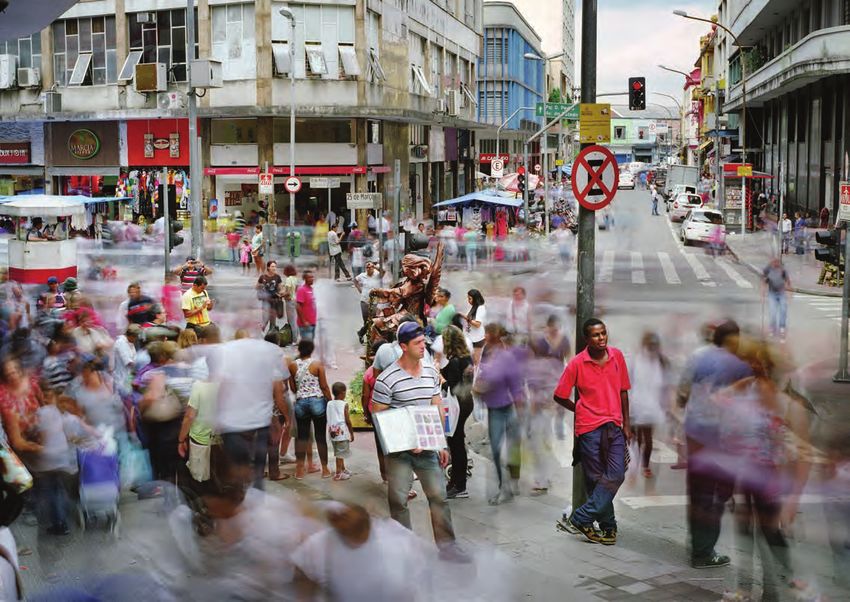
BRIC
                                                                                 EW
                                                                          O ERVI
                                                                           V

The four BRIC countries account for over a quarter of the world's land area
and more than 40% of its population. Although geographically separated,
with distinct histories and culture, they share a long list of common character-
istics: large available labor force, rich resource deposits, a significant amount
of foreign direct investment and high expectations concerning GDP growth.
                                                                                           Brazil       Russia       India     China    Germany

                         66%
                                              7%
2030
                                                          6%
                                                                                         SPECTACULAR CATCH-UP RACE
                                                                                         BRIC has taken over the lead in worldwide
                          53.5                                                           automotive sales volume from triad markets.
                                                                                         Light vehicle sales [m units, %]

              WHAT WILL BE LEFT                                                          2002          2012          2019              RoW
              OF BRIC? IC? OR C?                                                         56.6          79.5          103.4             Triad
              Growth in China and India is                                                   21%              23%            22%       BRIC
              expected to outpace world GDP
              between 2013 and 2030, but                                                                                           NOTE:
              Russia and Brazil will fall behind.                                                                                  Triad includes
                                                                                                                                   Western Europe
              GDP [USD bn]                                        21%                                                              (excl. Balkan
                                                                                                                                   states), Japan
                                                                                                                                   and the US; light
                                                                                             68%                                   vehicles include
                                                                                                              41%            35%   passenger
                                                                                                                                   cars and light
                                                                                                                                   commercial
                                                                                                                                   vehicles.

                         57%
       2013                             10%

                                                    11%

                          20.4                                                                                               43%

                                                                                                              36%
                                                                                                                                             75.4
                                       22%

                                                                                                                                        73%

                                                                                             11%
6                                                     THINK ACT // AUTOMOTIVE INSIGHTS
                                                             REARRANGING BRIC
BRAZIL is the seventh largest RUSSIA is the eighth largest INDIA is the world's tenth CHINA's economy* is the
* by nominal GDP
29.6
economy* in the world. It is economy* in the world. Oil and largest economy*, is the 19th second largest in the world, and
the largest economy in Latin gas production and pipeline largest exporter and the 10th has been one of the fastest-
America and the second largest projects have been a fundamen- largest importer. With 1.2 billion developing over the past 30
in the Western hemisphere. tal cause of economic growth people, its retail market is one years. It also has the biggest
Inflation and high production and a geostrategic lever in the of the fastest growing worldwide. manufacturing and technology
costs make it hard for compa- country's relations with Europe India's growth has suffered from export markets worldwide.
nies to maintain profitability. and Asia. The consequences a slump in infrastructure and Projected growth of 7% in
The lack of competitiveness has of the Crimean crisis will have corporate investment which 2014 demands a new approach
forced the automotive industry a major effect on automotive also had significant impact on for market development in 24.7
to focus on Mercosur markets. production in Russia. automotive OEMs and suppliers. the automotive industry.
LOWER ENTRY PRICES 22.7
In 2014 BRIC incomes are still comparably Disposable Entry-level price of
low. Therefore the average price of the income 20 most popular cars
[in USD p.a.] [average, in USD]
most popular cars lags behind 20.8
1,000 7,600
markets like Germany.
5,000 13,400
7,000 14,200
16,000 9,000 14,800 28,700
Sources: Oxford Economics, Roland Berger
2030
142.6
THE WINNER IS …
38% CHINA
MONUMENTAL SHIFT: Automotive markets in Brazil,
BRIC WILL CONQUER Russia and India have seen dips
THE WORLD ECONOMY or even significant declines,
while the boom in China seems
2013 In 2013, the BRIC economies to be continuing. A closer look at
represented 27% of global GDP. 2030 the different countries reveals a
they will account for more than 38%. new quality of growth in China,
GDP [USD bn] the hope for a more dynamic
62%
future develoment in India and
27%
Brazil and a rather conservative
outlook for Russia.
Light vehicle sales
2002-2019 [m units]
World 5.3
02
14
15
16
19
BRIC
20
20
20
20
20
4.3
3.6 3.6 3.6 3.6
3.2 3.2
3.0 2.9
2.8
2.6 2.7
1.4
THINK ACT // AUTOMOTIVE INSIGHTS 1.1 7
REARRANGING BRIC 0.8
7
B R A Z I LG R O W T H
                                                                       I N G  FOR
                                                                  LOOK

Exhausting business: It's not just traveling salesmen at the Copacabana who need a survival strategy.

8                                                                    THINK ACT // AUTOMOTIVE INSIGHTS
                                                                            REARRANGING BRIC
BRAZIL
                                                                                                  Looking for growth
PHOTO: ANTONIO BARTUCCIO/SIME/SCHAPOWALOW; REUTERS/NACHO DOCE; GARY CALTON/PANOS PICTURES

                                                                                             The Brazilian automotive industry has the blues.
                                                                                             But everybody agrees that this is a temporary
                                                                                             phenomenon. Therefore, both car manufacturers
                                                                                             and suppliers will need to find a way to master
                                                                                             the lean years despite idle capacity.
                                                                                             BY STEPHAN KEESE                  p. 54

                                                                                            THINK ACT // AUTOMOTIVE INSIGHTS                    9
                                                                                                   REARRANGING BRIC
B R A Z I LG R O W T H
                                                           I N G  FOR
                                                      LOOK

                                             figure will equal some 3.5 million units.       The overall sluggish economy and uncer-
                                             Actual production will not exceed 3.5           tain financing regulations have slowed
                                             million units in the optimistic scenario        down sales. Even governmental incentive
                                             and will likely equal 3.2 million units in a    programs like planned fleet renewal are

R
                                             more conservative scenario.                     unlikely to drive the market back up. Even
                                                 The reasons for these setbacks are          so, in southern Brazil Chinese manufactur-
                                             known. The Brazilian economy depends            ers such as Foton or Shiyan Yunlihong are
                                             too heavily on its domestic market. How         in the process of expanding their manufac-
                                             dynamically and profitably Brazil's car in-     turing facilities. In the end a tight market, a
                                             dustry grows hinges directly on domestic        lack of growth and new players are leading
                                             consumption. Overall, consumer confi-           to even fiercer competition.
                                             dence has suffered heavily over the past
educed hours, mandatory vacations,           two years – and this has dragged car                        PRODUCTIVITY
close-downs, forced leave and layoffs –      sales down. High vehicle prices, high in-                    CHALLENGES
the automotive industry in Brazil is cur-    terest rates and restrictive lending are
rently getting bad press in contrast to      putting a damper on new car sales.              One strategy to achieve the target volumes
the past, when Brazil was typically a            Truck manufacturers are suffering a         for cars more quickly would be to push ex-
poster boy for the global car industry.      significant drop in sales as well. Even in an   ports. Unfortunately, the models and parts
After all, the country has the seventh       optimistic scenario, the segment will not       currently manufactured in Brazil are not
largest economy in the world. Carmakers      find its way back to 2011 levels by 2018.       competitive on the world market. Key ma-
had high hopes. They expected to sell
five million cars here in 2014. With this
in mind, over the past few years they
have invested huge amounts in new fa-
cilities, product portfolios and dealer
networks. But now growth is stagnating,
and that's why the industry needs an ef-
fective survival strategy.

          ROSY PAST –
       UNCERTAIN FUTURE

Production capacity in Brazil rose overall
by 25% between 2011 and 2013. It's
not just incumbents PSA, Renault, Nis-
san and Fiat that have extended their
production lines. Luxury carmakers such
as BMW, Audi, Mercedes and Land Rov-
er are kicking off production in Brazil,
and even Chinese manufacturers (JAC
and Chery) are setting up facilities in
South America's biggest country. How-
ever, in the meantime, companies have
received the big wake-up call, as it's now
become apparent that the market isn't
growing as fast as anticipated. Assum-
ing a more optimistic scenario, unit
sales in 2016 will be about 3.7 million,
and in a conservative environment this

10                                                      THINK ACT // AUTOMOTIVE INSIGHTS
                                                               REARRANGING BRIC
377
terials for the automotive industry such as
aluminum and steel are up to 25% more Economic recovery at risk
expensive in Brazil than elsewhere. Fur- Even in an optimistic scenario, both sales and production
thermore, labor costs are too high, espe-
of light vehicles* will fall behind high hopes of five million
cially in relation to local productivity:
Strong unions are getting their way. In re-
units per year. What's more, Brazilian wages are growing
cent years, during each individual round of much faster than producivity is.
wage negotiations, they were able to push
through wage demands that were higher
than inflation. The result is that labor costs 3%
CAGR
at manufacturers have increased on aver- Car sales per year Labor costs vs. productivity
[m units] [indexed 2002=100] 255
age by 9% annually since 2008, while sup- 1.5%
pliers have had to pay their people 7% CAGR
more each year. However, since labor costs
have been rising faster than productivity,
Street view of São Paolo: Former
economic wunderkind Brazil has to 4.2
deal with structural problems. 3.7 3.9
3.6
3.3 3.5
3.2
175
2013 2014e 2016e 2018e
2.1% 122
125
CAGR
Car production per year
112
[m units] 0.5%
CAGR
100
3.9
3.5 3.5 3.6
3.1 3.2
2.8
2013 2014e 2016e 2018e 2002 2006 2010 2014
PHOTO: EDUARDO MARTINO/PANOS PICTURES
Conservative Optimistic scenario Productivity Labor costs
*Passenger cars and light commercial vehicles
Sources: ANFAVEA, IHS, Roland Berger Sources: Sindipeças, MDIC, Roland Berger
THINK ACT // AUTOMOTIVE INSIGHTS 11
REARRANGING BRICB R A Z I LG R O W T H
I N G FOR
LOOK
Sales talk: Many competitiveness has been steadily declin- planned increase in IPI tax (federal tax
middle-class families ing. And it's unlikely the bargaining power levied on industrialized products and im-
can't get their cars
financed anymore. of Brazil's unions will decline in the fore- ports) has been suspended.
seeable future: Unemployment is low and However, it now looks like the govern-
the car industry is having severe problems ment has fully exhausted all its options. It
finding skilled workers as it is. cannot slow down the increase in labor
Devaluation of the real is also driving costs, there is insufficient investment to
costs up, as all imported components are expand the infrastructure and it's consid-
now considerably more expensive. ered politically unwise to eliminate import
The Brazilian government is trying to cor- tariffs on raw materials. And there's an-
rect the situation. After all, this sector other problem on the horizon: Argentina
accounts for 13.3% of the country's GDP has technically gone bankrupt. The neigh-
and employs 450,000 people. Key indus- bor to the south is one of the most im-
try leaders met with government officials portant export markets for Brazil's auto
in April 2014 to discuss actions. The re- industry.
sult is that Brazil's government has now
set up a guarantee fund designed to off- HOPING FOR
set the effects of consumer loan defaults. STEADY GROWTH
The government has also made things
easier for financiers by dropping the mini- It's now time for car manufacturers and
mum amounts that need to be deposited suppliers to take control of their own des-
at the central bank. Furthermore, the tinies. First, they must improve profitabili-
ty. A market with increasingly slower
growth and more and more competitors is
making the threat of idle capacity very
real. However, there are ways to offset
these effects. For example, by fully ex-
ploiting the opportunities offered by auto-
mation and streamlining all activities – es-
pecially at new sites – and making them
more efficient. Manufacturers and suppli-
ers will have to take a critical look at their
level of vertical integration in Brazil.
A lot of this is based on hope. Brazil
has a healthy basis – with its population
of almost 200 million people and abun-
dant raw materials, it can be expected
that the economy will recover at some
point. But the question is: "When"?
Production in Brazil:
Skilled workers are hard to find.
12 THINK ACT // AUTOMOTIVE INSIGHTS
REARRANGING BRICIEW
I N T E R VH A M O R R O
G O C
SANTIA
"WE DON'T TALK
ABOUT A CRISIS, WE
CALL IT AN
ADJUSTMENT."
The President of GM lot of people can't get financing for their cars. an actual crisis, the recovery window would
Besides, soaring inflation is forcing car com- be five to seven years. Therefore, we expect
do Brazil talks about new panies to compete with necessities such as 2015 to be probably flat, with no relevant ups
consumer profiles, niche school, rent, home appliances, etc.. Car fi- or downs.
PHOTO: PAULO FRIDMAN/CORBIS; REUTERS/NACHO DOCE; ILLUSTRATION: BEN TALLON/DIE ILLUSTRATOREN
experiences and General nancing installments are just another cost Are the measures taken by the Brazilian
that have been going up along with other fam- government sufficient to support market
Motor's biggest asset in the ily-related expenses. In addition, we have to recovery? The government wants to improve
Brazilian market. deal with the discontinuation of tax subsidies the competitiveness of the Brazilian automo-
(IPI), and there are new safety requirements tive industry: e.g. they plan to make cars more
Mr. Chamorro, why is it so difficult to sell such as airbags and ABS brakes. As a conse- fuel-efficient and safer. And they are strength-
cars in Brazil at the moment? Well, first of all quence, we even have to raise our prices. It's ening the position of retailers. This is positive
we lack consumer confidence. It's at the low- clear that a lot of families are opting not to as it means important changes for consum-
est level in years. There are many reasons for have a car anymore. ers. Incentives within the Inovar-Auto subsidy
this: Interest rates are going up and banks How long will it take the Brazilian market to program have already brought significant
have no appetite for rolling out credit, espe- recover from the crisis? We don't talk about progress in terms of fuel efficiency. However,
cially in the private sector. Just 18 months a crisis, we call it an adjustment. Normally, measures like these lead to higher costs. They
ago, 65% of credit requests were approved. whenever the Brazilian market feels an adjust- bring Brazil into an area of conflict between
Nowadays the approval rate is only 40%. So a ment, it takes two years to recover – if it was the emerging consumer profile and the devel-
THINK ACT // AUTOMOTIVE INSIGHTS 13
REARRANGING BRICour suppliers who deserve attention and our
"NEW
commitment to improve logistic costs.
GM do Brazil's portfolio is in the process of
upgrading. What are the most important fea-
TECHNOLOGIES tures? To put it in a nutshell: New products
with modern technology are replacing older
ones. They are more consumer-oriented. Fur-
NEED A thermore, the quality that we can deliver to
consumers has been improved. We also inte-
grated the production of GM's models globally
REASONABLE in order to cover all consumer needs. Onix,
Prisma, Cobalt and Spin are products from a
single platform. As a result, we are able to im-
PRICE." Santiago Chamorro
prove our industrial scale and our relationship
with suppliers. In the future, this will happen
more often.
With a strong series of launches behind
you, where do you see GM Brazil in the next
15 to 20 years? Brazil is an interesting mar-
oped market portfolio. It's important to ob- tives. Even so, we had a good market share of ket and GM wants to stay a part of it. Today we
serve cost-related aspects, otherwise we 16.8% in the first quarter of 2014. However, are the world's third largest GM Chevrolet op-
can't take advantage of Brazil's demographic we need to address three important challeng- eration, right behind the US and China. Our
bonus: a young population, a growing and es. First, increasing labor costs. These typi- sales network is one of our best assets. I think
consuming middle class and good levels of cally increase faster than inflation. Rising la- we have the best relationship in the whole
employment. So I think there is a lot of work to bor costs are ok, if productivity grows at the market and over the long term we'll become
do on three fronts: taxes, easier credit access same pace. But this is not the case in Brazil. even closer with our partners. The Chevrolet
and infrastructure. In the long run, this means we will lose com- brand is a strong asset in the Brazilian market
You mentioned a conflict between the petitiveness and the ability to export globally. – maybe the strongest in the world. We be-
emerging consumer profile and the devel- It's difficult to play in the global automotive lieve that the Chevrolet brand is the favorite of
oped market portfolio. Is the Brazilian mar- arena if your exports are weak. We could learn Brazilians – and we want to reward them with
ket ready for expensive technologies? Those from countries such as Mexico and Korea. good products. We were a pioneer in online
technologies are good as long as it's possible They are very good at taking advantage of the sales, we were first to offer direct dialog with
to buy them at a reasonable price. Take the global demand for vehicles. the mechanics, the first to customize vehicles
example of air conditioning. In the past, about Apart from labor costs, what are the other (with the Celta in 2000) and we want to con-
40% of all cars had AC, but later that margin two challenges? The second challenge is to tinue to be the number one in key areas. To do
increased to 60%, then 70% and now we have obtain a certain scale in local operations. so, it's important to have the support of com-
it in almost 100% of our platforms. Over time, Regulations require having solid local produc- mitted employees who are able to understand
the price of AC became affordable for Brazilian tion and a good level of localization, which the very important role they play in our great
consumers. If this doesn't happen, they will means the ability to add local features to the company.
remain niche experiences. Of course we have vehicle. To do this in a profitable way, scale is
some examples of vehicles powered by alter- required. That means we need to support our
native fuels. Some of the cost is reduced by suppliers in increasing their production vol-
government subsidies, but the cost difference umes. Also, we will probably need to gain Santiago Chamorro was born in Bogota, Co
is still too big compared to models with con- scale within our relationships: with fewer sup- lombia in 1969. He holds degrees in econo
mics and finance, and participated in the
ventional drivetrains. It will be difficult to sell pliers and optimized cost structures between
CEO management program at ADEN Business
such technology to Brazilian consumers. manufacturers and suppliers. The third chal- School in Bogota. Chamorro has been working
Taking the perspective of General Motors – lenge is to reduce the cost of logistics. We for GM for 20 years now, where he has held
what is currently putting the biggest pres- have a monoculture of truck transportation in positions in sales, service and marketing in Co-
lombia, Chile, Brazil and the US. Since August
sure on margins? At the moment, sales are a country that has eight thousand kilometers 2013, he has been President and Managing
highly dependent on rebates and other incen- of coastline! And we have a strategic map of Director of GM's operations in Brazil.
14 THINK ACT // AUTOMOTIVE INSIGHTS
REARRANGING BRICRed lights: Brazilian consumers tend to postpone car purchases.
BR A Z IL
TURNING THE
CORNER
Due to low consumer confidence and high
inflation rates, Brazil has become a tough market
for automotive suppliers. Stuck in a cul-de-sac?
Not if …
PHOTO: MARTIN ROEMERS/PANOS PICTURES
BY MARTIN BODEWIG p. 54
THINK ACT // AUTOMOTIVE INSIGHTS 15
REARRANGING BRIC… suppliers focus on some
effective restructuring
levers to boost their perfor-
mance and rightsize their
domestic operations.
Caught in a jam: A symbol
T
for the situation of the
automotive industry in Brazil
he overall picture of the Brazilian automo- The "Custo Brasil", the costs associated crease local production rates for suppli-
tive market is rather bleak. No wonder with Brazil's inefficient tax system, red ers, too. However, the big volume OEMs
that high hopes have vanished in Brazil. tape, corruption and poor infrastructure, have long since reached a share of over
Manufacturers and suppliers alike are became fully visible in the P&Ls. "Ino- 60% Overall, there is more and more
suffering from low volumes and idle ca- var-Auto", a government incentive pro- strain on relations between suppliers and
pacity, and the gap between labor costs gram offering significant tax reductions car manufacturers. The latter have be-
and productivity development is becom- for OEMs that use 60% local content come very restrictive with price compen-
ing more and more of a challenge. (among other criteria), is meant to in- sations. Brazilian suppliers that are part
16 THINK ACT // AUTOMOTIVE INSIGHTS
REARRANGING BRICB R A Z I LC O R N E R
I N G THE
TURN
of a global supplier will have it easier than
purely local companies. They have better
able. Production planning must be a top
management priority, especially in times Six levers of
access to financing, technology and man-
agement support.
of downturn.
With costs lowered and processes performance
HOW TO BOOST
smoother and more efficient, it becomes
possible to adapt structural costs to the improvement
PROFITABILITY AND OPERA- new reality. It is striking that much of the How Brazilian suppliers can
TIONAL EXCELLENCE Brazilian supplier industry is still located combat declining margins.
within high labor cost regions close to the
Waiting for better days is definitely not an São Paulo metropolitan area, Campinas or
option for Brazilian automotive suppliers, São José dos Campos area. A move to low-
since forecasts for 2014/2015 see low cost areas within or outside the country is Sales and
overall volumes and ongoing cost inflation. a clear option, especially for companies R&D
In many cases, fast reaction is necessary with low technology and high labor con- 6 Revise
product
which means restructuring operations to tent. Now is the time to consolidate the portfolio
lower the cost base and safeguard profit- number of plants, given the low degree of
ability. When savings are difficult to capacity utilization.
achieve, suppliers should focus on two Cutting overhead costs may seem like
strategic priorities: achieve operational ex- old-school advice – but it is vital to the over- Overhead
cellence and lower the break-even point. all success of the restructuring endeavor. 5 Optimize
The basis for operational excellence is While many Brazilian suppliers have opti- overheads
efficient sourcing. This is more than apply- mistically built up their overhead structures,
ing self-evident purchasing levers like sup- because they expected years of growth and
ply base consolidation and volume bun- profitability, these structures need to be
dling or renegotiating with suppliers. challenged now. Consulting experience
Instead, suppliers should think about spe- shows that a reduction of costs of 10 to Logistics
cific levers. Localization compensates for 20% is feasible, just by adopting industry Improve 46
logistics
the devalued currency and high importa- best practices. This may compensate for costs and
tion costs. Insourcing fills up free capacity many of peculiarities in the Brazilian tax inventory
and helps to retain the qualified workforce system. It is unfortunate, but in Brazil, cor-
to eliminate the suppliers' margin and lo- porate functions that deal with taxes, im-
gistics costs. ports or accounting tie up a lot of resources Production
Lean production and automation in comparison to their global peers. Increase 23 Adjust plant
comes next. Suppliers ought to reinforce Lastly, why not revise the product port- productivity footprint
lean production principles, reducing lot siz- folio to improve productivity in the medium
es and throughput times, thus ensuring term? Suppliers need to make clear-cut
productivity even with lower volumes. Low decisions: If unprofitable projects cannot
cost intelligent automation is a way to be turned around, they have to be eliminat-
compensate for high labor cost increases. ed. Instead, new product categories with Purchasing
In the long run, digital ("smart") production solid growth potential have to be identi- Achieve
will add to the effect. fied. Environmental requirements and the purchasing
excellence
Logistics optimization is yet another demand for more comfort and safety will
crucial task. Brazilian suppliers often foster new technologies – and market op-
have high inventories. An excellent orga- portunities. As the challenges are complex, Increase Rightsize
nization reduces downtimes, optimizes an unbiased analysis of the most promis- operational Brazil
PHOTO: REUTERS/RODOLFO BUHRER
delivery routes and reduces stocks. Fo- ing levers and a central project manage- efficiency
cusing on production planning is key – as ment organization is needed to make re-
customer orders in Brazil are often unreli- structuring a success. Source: Roland Berger
THINK ACT // AUTOMOTIVE INSIGHTS 17
REARRANGING BRICStalled: The domestic car industry is hit hard by the political and economic turmoil.
s ia
RuCsK IN THE CRISIS
ST U
18 THINK ACT // AUTOMOTIVE INSIGHTS
REARRANGING BRICRUSSIA CRISIS
C K IN THE
STU
Russia was expec-
ted to become the
largest automotive
market in Europe.
This forecast pro-
ved to be too opti-
mistic. And there
doesn't seem to be
much light at the
end of the tunnel.
We have composed
three scenarios to Russian citizens: Hoping that economic sanctions won't last for a long time.
illustrate the situa-
tion more clearly.
BY UWE KUMM, JÜRGEN REERS
AND JURI WAGENLEITNER
T
p. 54
hings aren't what they used to Shadows first appeared in 2009, when
be: In the past Russia was the global financial crisis heavily hit Rus-
among the core growth re- sia's optimism. The market was cut by
gions for almost every car half to 1.5 million vehicles. Quick recov-
manufacturer. Its economy ery followed until 2012, but in 2013 the
was booming with up to 8% growth in market dropped again by 6% due to the
GDP per annum, fired by soaring com- overall economic slowdown. And in 2014,
PHOTO: CHRISTOPHER MORRIS/VII/CORBIS; GEODAKYAN ARTYOM/ITAR-TASS PHOTO/CORBIS
modity prices. Some 140 million people as a result of political and economic
had growing personal incomes which changes the market declined about 13%
they were willing to spend on cars. They between January and September.
loved modern vehicles, preferably foreign
brands. They were also fond of larger THE POWER
models and sport utility vehicles, which OF PREDICTIONS
provided high margins for the manufac-
turers. As a consequence, the yearly vol- With a roller-coaster pattern of the auto-
ume of the automotive market increased motive market in the past and the current
by two million vehicles between 2003 ambiguity about political and economic
and 2013. developments, predictions have become
THINK ACT // AUTOMOTIVE INSIGHTS 19
REARRANGING BRIC3.6
Optimistic
scenario
3.2 more difficult than ever. Therefore, we de-
cided to use scenario techniques. We
previous expectations of over four mil-
lion vehicles sold per year by 2020.
Baseline
scenario have built three market scenarios, reflect-
ing key trends and risks. PESSIMISTIC SCENARIO. In this sce-
2.8 BASELINE SCENARIO. Projections by
nario we expect that the political conflict
will escalate further, although we do not
Pessimistic
scenario the government and leading institutes assume that import bans on vehicles or
share the estimate that the Russian econ- components will be introduced. In any
omy will not grow faster than 2% per year case, this would trigger even tougher po-
on average until 2020, which is a moder- litical and economic sanctions against
ate increase in real GDP for an emerging the Russian economy, leading to its isola-
market. In this scenario we assume that tion. Conditions like these would impact
political conflicts will persist in the short Russian export revenues and state bud-
term. But we do not expect a further es- gets on federal and regional levels. Eco-
calation or more severe economic sanc- nomic stagnation would be the conse-
tions by the EU or the US against Russia. quence, at least in the medium term. And
As the low growth rates go hand in hand in this case it is likely that the market
with a large budget deficit, the govern- would not exceed three million vehicles
ment will not be able to support the auto- sold per year by 2020, basically stagnat-
motive market sufficiently. In light of this ing at the pre-crisis level.
situation, we expect the market to decline None of these scenarios is as positive
by 12% in 2014. After that a quick recov- as the previous forecasts, which were de-
ery is likely and the market will return to veloped five, three or even only one year
pre-crisis levels of 2.9 million vehicles ago. It becomes clear that the times of
sold in 2017. For 2016-2020, we expect double-digit growth rates are over. Russia
stable annual market growth of 3.5%, is still a long-term attractive market due to
leading to a total market volume of 3.2 its size, but it will remain volatile, with high
million vehicles. downside risks, and the upside will be
much lower than previously expected. And
OPTIMISTIC SCENARIO. We assume all this is detrimental to local vehicle pro-
that the market in 2014 will decline by duction in Russia, which in dire need
about 10%. But we expect faster recov- strong and stable domestic sales volumes.
ery to pre-crisis levels. Also the number
of vehicles sold by 2020 will be slightly THE DIFFICULT TASK OF
higher than in the baseline scenario – COMPETITIVENESS
2008–2013 2014–2020
at 3.6 million vehicles. To achieve this,
Light vehicle sales per year [m units] several developments would have to In the mid-2000s, the Russian govern-
take place: political conflicts have to ment realized that the automotive indus-
Sources: IHS, Roland Berger be resolved, the economy has to grow try was a backbone of manufacturing and
faster, structural reforms must be car- a basis for re-industrialization in the fu-
ried out and Russia would need to in- ture. It started a policy of protective mea-
Setback vest more in infrastructure. In addition,
support measures for the market are
expected, including subsidized car
sures, including high import duties. At the
same time it set up localization obliga-
tions rewarded by subsidies for local pro-
High hopes of 4 million
loans and regulations that prohibit us- duction. The idea was to create demand
cars sold by 2020 are no age of old vehicles – just to name a few. for localized content, in order to trigger
PHOTO: PICTURE ALLIANCE/DPA
longer realistic – even in In our optimistic market scenario, how- the development of several adjacent in-
our optimistic scenario. ever, we still stay significantly below dustries. Foreign manufacturers received
20 THINK ACT // AUTOMOTIVE INSIGHTS
REARRANGING BRICRUSSIA CRISIS
C K IN THE
STU
incentives for increasing the share of val- changing environment. It has to be pro-
ue created in Russia. This strategy proved tected because Russia's structural prob-
to be successful in the beginning. lems have become even worse. 1
Unfortunately, Russia's entry into the In 2013, the share of imported cars
World Trade Organization (WTO) in 2012 amounted to about 30% of the domestic
was not in line with the interests of the sales volume. We expect this number to LOW SCALE EFFECTS
automotive industry. The import duties on grow to over 50% in the longer term. Es- Compared to other regional markets such
cars will have to be reduced from 25% in pecially production of models in Russia as Europe, Brazil or India, the domestic sa-
2012 to 13 to 15% in 2018. In addition, with volumes below 25,000 units per year les volumes in Russia are lower and more
all preferential effects (reduced duties on cannot compete with plants in other re- volatile. They are not sufficient to produce
significant economies of scale. At the same
components import, localization obliga- gions, even with subsidies in the amount time, unlike Europe or India, the Russian
tions, etc.) will have to cease by then. To as of today. Upcoming model replace- automotive industry is not able to reach
take the edge off the worst effects for the ments will not make their business case scale via large export volumes. Today fewer
automotive industry, Russia quickly intro- and justify the needed investments in than 120,000 Russian vehicles are expor-
ted, mainly to CIS countries (Common-
duced a scrappage fee on vehicle imports production plants and supplier tooling
wealth of Independent States, former Sovi-
– a measure which turned out not to com- upgrades, if capacitiy is available in the et Republics). These volumes are going to
ply with WTO regulations. In order to com- home regions. According to our esti- decline in the future, as ongoing tensions
pensate for the scrappage fee, annual mates, a total of 600,000 cars or almost with the second-largest export market Uk-
raine will most likely have negative effects.
subsidies worth two billion Euros were 25% of forecast production volume could
approved. This program is expected to be at significant risk of being imported by
last for three years, but there is still a 2020 – instead of being produced locally.
need for annual approval from the parlia- As a consequence, Russian contract
ment within the regular budget process, manufacturers (e.g. Avtotor, Sollers) will 2
which puts the subsidy program at risk of suffer greatly, because they have fo-
being reduced or at least not extended. cused on low volume models and limited
The market is already suffering from the contract durations. Several production HIGH PRODUCTION COST
Russia has never been a low-cost country,
neither for car manufacturers nor for sup-
pliers. Without trade barriers and incentives
At risk: Many local produc- by the government, the overall cost base is
tion sites may be downsized not competitive due to low productivity, a
or even shut down. high labor fluctuation rate, poor infrastruc-
ture and rising energy costs.
3
INFERIOR POSITION COMPARED
TO INTERNATIONAL HUBS
Russian customers prefer the same models
as their European, US or Asian peers. Al-
most every international car manufacturer
produces the same model in its home
country, usually in much larger quantities.
Available capacity in the home country of
manufacturers make Russian plants com-
pete versus incremental cost base, espe-
cially if new investments in local production
and localization are required in Russia.
THINK ACT // AUTOMOTIVE INSIGHTS 21
REARRANGING BRICRUSSIA CRISIS
C K IN THE
STU
Cost disadvantage
sites in Russia will be at risk of being
downsized or even shut down. Unemploy-
ment will increase, reducing tax revenues
Local production in Russia is not competitive without and tightening the budget situation. Low-
significant subsidies. er vehicle production volumes will make
1,520
the business case for domestic and for-
Cost effects of local production
vs. CBU imports [EUR/car]1) 1,160 eign suppliers even less attractive, lead-
ing to a reduction in Russian activities or
a revision of current plans to invest in
620 Russia. As a result, also Russian manu-
2014 facturers like AvtoVAZ will have difficul-
Current
1)
Calculated for international 60 subsidy level
ties in obtaining high-quality compo-
manufacturers with local 50,000 25,000 10,0002)
Without
nents at competitive prices, thus facing
production vs. European cost level;
volumes relate to single models any subsidies the risk of a continued loss of market
2)
Production of cars per year 2020 share versus low cost competition from
-500
China and thus increasing the pressure
Source: Roland Berger
on the downward cycle.
THE TIME FOR ACTION
-1,360
IS NOW
We see a significant risk of the Russian au-
Loss of value creation tomotive industry entering an irreversible
process of deindustrialization. Without
More than 50% of the 3.2 million cars sold in Russia fundamental changes to cope with WTO
will be imported in 2020. 593 obligations and strong efforts to modern-
expected
ize the economy, there is little room to
Local on
Market structure 2013 vs. 2020 break out of this trend. However, the con-
['000 units]*
ti
producisk
593
sequences can be mitigated if appropriate
at risk measures are implemented immediately.
2013
2020
1,228
at r What Russia needs is a long-term strategy
and support for the industry beyond 2018,
1,064
certain which is aligned with key stakeholders and
again provides clear long-term economic
856
benefits for local production in Russia – for
766
manufacturers and suppliers. A majority of
industry participants still strongly believe
565 in the long-term potential of the Russian
507
market, and are willing to actively shape
the change. However, if the industry doesn't
turn around soon, they would be well ad-
vised to thoroughly review their Russia
strategy and reduce the risks of Russian
Russian cars, Foreign cars, Foreign cars, operations.
local production local production local imports
For further information on the impact of economic
* LCV sales not considered sanctions in the wake of the Ukraine crisis, please
take a look at our "Economic scenario update 2014"
Sources: IHS, Roland Berger p. 53
22 THINK ACT // AUTOMOTIVE INSIGHTS
REARRANGING BRICIEW
INTERV EDRAN
S S
THOMA
"Russia
continues to be
an important
but challenging
market."
How will the automotive indus- The head of Chevrolet and Cadillac Europe explains why
try in Russia develop over the Russia (still) has top priority for General Motors.
short term? We had two consec-
Mr. Sedran, what makes the utive years of declining industry
Russian automotive market so volumes. And the market dynam- cilities. According to this, we ported by the government. The
unique? Well, Russia is quite dif- ics in the first half of 2014 look plan to increase our annual local automotive industry is still deal-
ferent from the rest of Europe. quite similar to the same period production capability to up to ing with a low purchasing power
There are some 300 vehicles for last year. According to the Asso- 350,000 vehicles. In exchange of consumers in the Russian
every 1,000 people in Russia, ciation of European Business Au- privileges on import duties for provinces, especially in small
which is well below the quota of tomobile Manufacturers Commit- our components are granted. An towns and villages. They need
most European countries. The tee, the automotive market in integral part of our Russia strat- personal transportation urgent-
country is huge, but public trans- Russia will further weaken in the egy is a major program to devel- ly, but they don't have enough
portation is limited and underde- second half of 2014. Russia con- op our local suppliers as well as money to buy a new car.
veloped. Hence, individual trans- tinues to be an important but to attract our global supplier And what about the third wish?
portation is and continues to be challenging market. However, we partners to Russia. Finally, I would appreciate more
essential for the Russian popula- believe in the long-term growth of If you could have three wishes competitive Russian suppliers.
tion. Also there are a lot of used the Russian automotive market to solve current challenges for Despite competitive wage struc-
cars on the roads – ten years and and consider this to be a top pri- GM in Russia, what would they tures, the prices for parts from
older – which will need to be re- ority market for General Motors. be? First, I would appreciate Russian suppliers are still signifi-
placed in the near future. Does the government support more favorable economic condi- cantly above world market stan-
How do local conditions affect your commitment? The govern- tions. As an example for the dards and represent a major
business? Take the extreme cli- ment is in general willing to fos- Russian market you have a vola- roadblock for more localization
mate in Russia: Heavy snow and ter the automotive industry – es- tile national currency, the Rus- and exports from Russia.
ice in winter and very hot sum- pecially local manufacturing sian ruble, which just this year
mers. Many roads are of poor activities. In 2012, we signed an increased our cost of business Thomas Sedran is President and
Managing Director of Chevrolet and
quality and some urban areas agreement with the Russian gov- in Russia significantly. The only Cadillac Europe. Previously he was a
ILLUSTRATION: BEN TALLON/DIE ILLUSTRATOREN
don't even have any. This combi- ernment under the provisions of way to react is to increase local- Member of the Board of Adam Opel
AG and held leading positions at
nation of conditions, for example, Regulation 166 (Contract of In- ization and try to have most of Roland Berger Strategy Consultants
has fueled the segment of SUVs dustrial Assembly). We have the supply base in the ruble and Alix Partners. Sedran holds a
master's degree and a Ph.D. in Busi-
in the past. It tripled from 2009 committed ourselves to expand- zone. My second wish is quick ness Administration. He was born in
to 2013. ing our local manufacturing fa- market recovery, ideally sup- Augsburg, Germany in 1964.
THINK ACT // AUTOMOTIVE INSIGHTS 23
REARRANGING BRICINTE
WITH RVIEW
TATA'
Gaining ground: The Indian automotive industry is expected to grow faster in the next few years.
RAVIN s
PISHA DRA
INDIA
RODY
p. 28
READY
TO
ROLL
AGAIN
24 THINK ACT // AUTOMOTIVE INSIGHTS
REARRANGING BRICEADY
INDIA R AGAIN
L
TO ROL
Here, volumes will not be the problem, but
profits may prove to be elusive due to the
massive global overcapacity that has been
put on the ground in China.
Some indicators show that the dy-
namics of the Indian market was stabi-
lized in recent years. Low economic
The growth of the Indian growth, investment blockage and red
automotive market leveled off
tape have stunted growth in passenger,
commercial and off-road vehicles. In fi-
in recent years. Manufacturers nancial year 2014 capacity utilization for
passenger vehicles has fallen significant-
and suppliers used the respite ly. When market leaders Maruti Suzuki
(capacity utilization of 80%) and Hyundai
to work on costs and export (capacity utilization of 93%) are not taken
into account it was lower than 60%. In
readiness. New government commercial vehicles, capacity utilization
has fallen to a painfully low level of 40%.
initiatives will help India get
MOVE THE METAL
back on track in 2015.
Low capacity utilization puts pressure on
BY WILFRIED AULBUR p. 54
organizations to "move the metal". By
pushing sales activities like special in-
centives for customers and sales people,
special editions or promotions, automo-
tive companies can protect market share
A
and volumes. Reduced profitability is of-
gainst all odds, the Indian au- development are higher aspirations, bet- ten the consequence. This is compound-
tomotive industry has made ter infrastructure, and increasing living ed by an extremely competitive Indian
its presence felt globally. standards and disposable income. industry environment, which allows ra-
Starting from humble begin- zor-thin margins especially for many sub-
nings at the time of liberaliza- ALL LIGHTS ARE GREEN scale players in the passenger vehicle
tion in 1991, India is today the sixth larg- and commercial vehicle segment as well
est motor vehicle producer globally and Across all segments we see solid growth. as their dealers.
the third largest market in Asia. Besides Passenger vehicles will reach about five Despite the recent weakness, nearly
four-wheelers, the country boasts the million sales by 2020. Commercial vehi- all international players bet on India's fu-
world's largest tractor market and second cles should see a solid growth of 10% per ture by setting up substantial operations
largest two-wheeler market. India's sup- year on average to reach about one million in the country. The capacity expansion of
pliers are rapidly upgrading skills and units by 2020. Two-wheelers are likely to car manufacturers has grown by 12% per
scale to leverage this opportunity. Some achieve sales volumes of 30 million units year on average since 2009. Over the last
have already transformed themselves with scooters growing twice as fast as mo- 14 years, foreign direct investments (FDI)
into global powerhouses. torcycles. Conservative estimates for trac- in the automotive sector have amounted
India's promise and long-term poten- tors, a segment that still depends heavily to about 4.5% of total FDI inflows into In-
tial is undeniable. By 2025 the motoriza- on the monsoon season, put growth rates dia. Private equity companies have also
tion rate will increase fivefold. At 72 vehi- at 7% and the volume at around one mil- managed to unlock investments in Hero
PHOTO: SANJIT DAS/PANOS PICTURES
cles per 1000 inhabitants, the country's lion units in 2020. India's construction MotoCorp, International Tractors, Agile
motorization rate will be 60 to 70% higher equipment market will grow at 10% per Electric, Alliance Tires, Endurance, Avtec,
than that of China in 2010. Driving this year to reach about 90,000 units in 2020. and others.
THINK ACT // AUTOMOTIVE INSIGHTS 25
REARRANGING BRICEADY
INDIA R AGAIN
L
TO ROL
Robust Export gap
growth Export shares of domestic carmakers remain low.
[% of total sales]
All segments of the Indian
32.5% average for 9% Maruti Suzuki
automotive market global OEMs
are expected to take off.
Sales forecast
[CAGR and units sold in 2020]
14% 3% Tata Motors 3% Mahindra &
Mahindra
1% Ashok Leyland
Auto components
12%
Two-wheelers
30 m Sources: SIAM, Roland Berger
12% Innovation race
Passenger Indian OEMs have made significant R&D investments in the last decade.
vehicles [% of net revenue]
4.98 m
4.75%
10% 3.9%
Commercial 2.41% 2.28%
vehicles 0.98% 1.27% 1.17% 1.4%
0.95 m 0.31% 0.36%
10%
0.29%
Construction
equipment
Average for Tata Motors Mahindra & Maruti Ashok Hero
0.09 m Mahindra Suzuki Leyland MotoCorp
global OEMs,
7% 2013
Tractors
1.05 m 2004 2013
Sources: SIAM, LMC, IHS, ACMA, Roland Berger Sources: Bloomberg, Roland Berger
26 THINK ACT // AUTOMOTIVE INSIGHTS
REARRANGING BRICThe challenges of the last five years have
not been only negative for the country;
they also triggered some important struc-
tural changes. Increased competition and
low capacity utilization for domestic sales
have forced multinational companies and
local players to actively leverage India as
a vehicle export hub. Besides better
fixed-cost degression, exports provide
higher margins and therefore support do-
mestic business of car manufacturers as Close to gridlock: India's motorization rate will increase fivefold by 2025.
well as the balance of payments of the
country. In the financial year 2014, global
car manufacturers on average exported centage of revenue have risen dramati- ments. As a first step, factors not critical
32.5% of their total sales out of India. For cally for Ashok Leyland, Maruti Suzuki, to safety – such as increasing ground
domestic car manufacturers the corre- Mahindra & Mahindra and Tata Motors. clearance for Indian vehicles, localization
sponding number is 7%, which is poised Tata Motors has even reached levels in of non-critical parts, etc. – must get devel-
to grow due to an increased export focus line with its global peers. opment clearance locally to avoid endless
of Maruti Suzuki. iterations between the local team and
In addition, the country's fascination INDIAN INVENTION overburdened headquarter engineers in
with the newest and latest models has MACHINE the US, Europe, Japan or South Korea.
resulted in a much stronger focus of do- Further drivers of strengthening local ca-
mestic companies on research and devel- Many multinational companies have real- pacity are constant price pressure and
opment (R&D), driving constant product ized that local R&D expertise enables local exchange rate volatility. Subsequently,
upgrades. R&D investments as a per- teams to react faster to market develop- several car manufacturers are leading the
Under construction: India's infrastructure is making a great leap forward.
PHOTO: QILAI SHEN/PANOS PICTURES; STEVE RAYMER/NATIONAL GEOGRAPHIC/CORBIS
THINK ACT // AUTOMOTIVE INSIGHTS 27
REARRANGING BRICIEW
I N T E R VI S H A R O D Y
D R A P
RAVIN
way by developing clear strategies to build Mr. Pisharody, after a challeng-
vehicle variation capability in India and to ing environment in 2013 and
leverage this capacity globally. Some, like 2014, how will the Indian auto-
BharatBenz, have even developed specific motive industry develop over
vehicles for the local market and in the the next two years? The begin-
process changed long-held paradigms of ning of 2014 marked the lowest
the parent company. point in sales that we had seen in
Going forward, not only the long-term a very long time. Overall, we are
but also the short to medium-term oppor- cautiously optimistic about the
tunities in India look positive. The previ- current financial year ending
ous government cleared several thousand March 2015. The Indian economy
crores' worth of projects in the last year of will recover in late 2014 and gain
their tenure. If the new government can momentum in the beginning of
ensure swift execution of these projects, 2015. This positive development
it will have a positive impact on the econ- will be reflected in the automo-
omy. The Supreme Court lifted the ban on tive sector. We have already seen
mining iron ore in Goa and put an annual signs of recovery in medium and
cap of 20 million tonnes on excavation, heavy commercial vehicle vol-
which again is a relevant step in reviving umes over the past two to three
the economy. The solid majority of the months. We expect this trend to
new government and its announcements continue. In the beginning of
and actions so far clearly indicate deci-
sive pro-growth action, which is sorely
needed. The task of the hour is to build on
"Restarting 2015, even stronger year-on-year
growth is possible – of course
some of this effect is due to the
this momentum via decisive reform.
Growth and the virtuous cycle that it
drives need to be nurtured and supported the fact that we are starting from a
low level.
Will this recovery be sustain-
rather than taken for granted as the last
government has clearly shown.
economic able? We should see a greatly
improved situation starting in
the second quarter of 2015. In-
BRIGHT OUTLOOK
Sales of medium and heavy commercial
vehicles are picking up, which typically is a
engine" dia will return to growth across
all categories in the automotive
industry for reasons that have
been widely discussed in the
6 to 9 month lead indicator for the econo- Tata's Executive Director, Commercial Vehicles, press. What is interesting to
my and private consumption. Footfalls in explains how the automotive industry in note is the fact that despite the
dealerships are increasing. The Index of India can reach the next development stage. current downturn, people have
Industrial Production (IIP) grew at 3.4% af- continued to move up the in-
ter languishing for a long time around zero, come ladder.
and inflation seems to be slowly coming What is the government's role in
down. With the right focus, driving India's pushing the Indian economy? It
growth to 5 to 6% GDP in the financial year is important for the government
2015 (which ends in March 2016) seems to recognize that positive senti-
feasible. A return to growth rates of around ment is not enough. There is a
7 to 8% in financial year 2016 is what we dire need to restart the invest-
expect. India's automotive industry seems ment cycle, and push manufac-
to be ready to roll again. Fasten your seat- turing and mining. This will ulti-
belts and enjoy the ride. mately encourage new vehicle
28 THINK ACT // AUTOMOTIVE INSIGHTS
REARRANGING BRIC"Compared
purchases and improve replace-
ment economics which, in turn,
like Brazil, Thailand or South Afri-
ca, it's clear that we have severe to Brazil and last mile transportation via
three- and four wheelers.
will lead to a much more positive
mood among financers who play
deficiencies in our road infra-
structure, ports, electricity, etc. or South How will the footprint of Tata
Motor's commercial vehicle
a crucial role in the automotive
industry. There is a lot of latent
which need to be addressed. We
also need clarity on the overall Africa, segment look like in the future?
Well, the current exchange rate is
we have
demand that has built up during business environment for the au- favorable for our export business.
the past few years. Consumer de- tomotive industry in India. This So if we look at our current prod-
deficien-
mands are still high and consum- means, for example, lifting mining uct lineup, we have a wide range
er sentiment is optimistic. A large bans as soon as possible. This is of world-class products suitable
cies in
part of this is due to the aware- crucial not only from a commer- for markets such as Asia Pacific,
ness created by the media and cial vehicles point of view, but the Middle East, Africa, Latin
also in terms of safeguarding en- America and parts of Europe. In
our infra-
the internet. Fast action by the
new government can turn this la- ergy sources and ensuring a pos- many of these regions, we are a
tent demand into an opportunity itive balance of payments. well-known brand name, and all
to restart the economic engine.
Is the new government ready to
Are there also measures af
fecting the industry's balance
structure." of them are projected to grow
fast. We can easily penetrate
unleash this potential? We be- sheets more immediately? Yes, these markets – either through
lieve the new government is well think of financing, assets and exports or, if necessary, industri-
aware of the challenges that they taxes: A more level playing field al operations on the ground.
are facing and we may see some between non-banking financial Even with our currently limited
new policies. Probably some de- companies (NBFC) and banks is footprint, we are already among
cisions that were not beneficial desirable. Banks currently have sumption picks up again, we will the global top five commercial
for the country will be reversed. an edge over NBFCs. NBFCs, but see significant activity in the vehicles companies. Our old leg-
Do lessons learned from the re- the latter are crucial for vehicle fi- small commercial vehicles sec- acy products had success in
cent financial crisis offer guid- nancing, as is a concerted effort tor. Small commercial vehicles these markets markets, but since
ance on how to reignite growth? to push banks to increase their are being bought by entrepre- we believe that much more is
Not really. The global financial support of the automotive sector. neurs who want to improve their possible, we will invest in prod-
crisis of 2008 and 2009 didn't What else could help? We need lot in life. Many of these small ucts and capacity. With our new
have a major impact on India as a good incentive for scrapping operators have never owned a products and a strong focus on
the Indian banking system was older vehicles. The market would vehicle before, so you can imag- international markets, we clearly
largely isolated from global receive a significant boost if all ine how important financing is have what it takes to improve this
events. The downward movement commercial vehicles 15 years or here. Another very promising sec- positioning in the future.
we are talking about here started older were replaced. This would tor is the bus industry. About
in 2012 and was driven by a lack also help the environment and 80,000 buses are currently sold
of growth that was felt immedi- improve traffic safety. The new in India each year. However, the
ately in commercial vehicle sales. government could look at some potential is at least ten times
Regarding the business envi- European initiatives from 2008 higher. Unfortunately, the govern-
ronment for automotive com and 2009 for guidance. Other ment policy on mass transport is Ravindra Pisharody joined Tata
Motors in 2007 as Vice President
panies in India – are there spe factors include extending the ex- neither clear nor consistent.
Commercial Vehicles (Sales &
cific actions the government cise duty reduction, implement- State transport undertakings Marketing). He is a member of
should take? I'll just name a few. ing accelerated depreciation for can't increase prices due to polit- the board of various Tata Group
We need to encourage invest- commercial vehicles, keeping ical constraints and, as a conse- Companies. Before joining Tata
ILLUSTRATION: BEN TALLON/DIE ILLUSTRATOREN
ments in infrastructure, con- diesel prices in check and en- quence, they don't have the Motors, he worked with Castrol
Ltd., a subsidiary of BP, and with
struction and manufacturing. We forcing bus body safety. funds to upgrade their fleets. In-
Philips India, a subsidiary of the
shouldn't try to compete with de- Looking across segments, dia urgently needs an integrated Dutch company, in various roles.
veloped markets in these areas. where do you see exciting mobility concept for the cities Pisharody is an alumnus of IIT,
But even compared to countries growth opportunities? As con- that links metro railways, buses Kharagpur and IIM, Kolkata.
THINK ACT // AUTOMOTIVE INSIGHTS 29
REARRANGING BRICYou can also read


