BELARUS
IN FOCUS:

ANNUAL
REVIEW 2020

AND FORECAST
FOR 2021
←
→
Page content transcription
If your browser does not render page correctly, please read the page content below
BELARUS IN FOCUS: ANNUAL REVIEW 2020 AND FORECAST FOR 2021
SUMMARY FORECAST
    FOR 2021
    The collapse of the ruling regime
    will remain likely through 2021

    The power bloc will retain
    significant influence in domestic
    politics

    Political organisations are likely
    to enter new alliances and attempt
    to engage in dialogue with the
    ruling elites as civil society
    is expected to become more
    financially secure and viable

    The political crisis in relations
    between Belarus and the West will
    worsen in 2021

    Russia may try to trade its
    influence in Belarus for the
    alleviation of Western sanctions;
    if not, it is likely to continue
    moderate support for
    Lukashenka

2       BELARUS IN FOCUS ANNUAL REVIEW 2020 AND FORECAST FOR 2021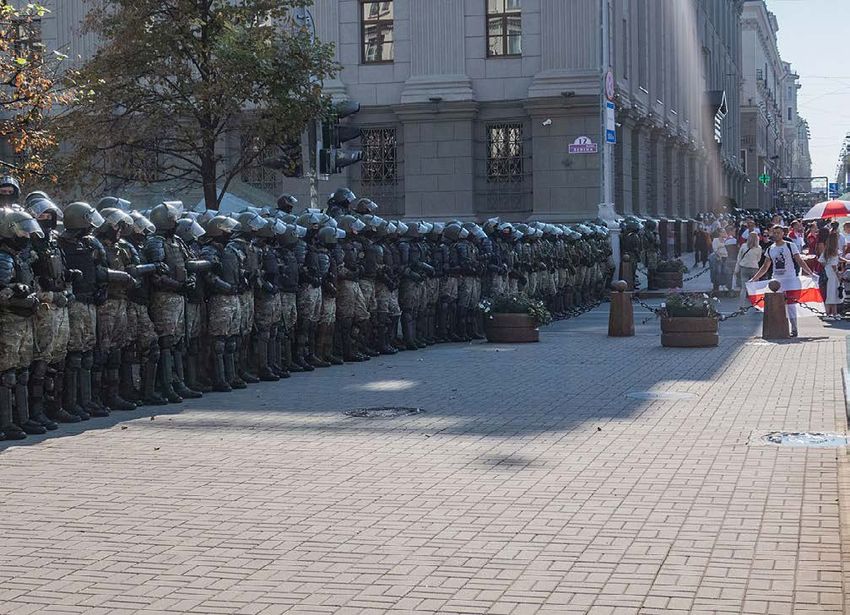
CONTENTS
The Ruling Elite..................................................................... 4

Security.................................................................................... 8

Civil Society and Political Parties................................ 12

Belarus–West relations.................................................... 18

Belarus–Russia relations...............................................21

                     COLOR KEY

                                  THE SITUATION
                                  HAS DETERIORATED

                                  THE SITUATION
                                  HAS NOT CHANGED

                                  THE SITUATION
                                  HAS IMPROVED

BELARUS IN FOCUS ANNUAL REVIEW 2020 AND FORECAST FOR 2021                                   3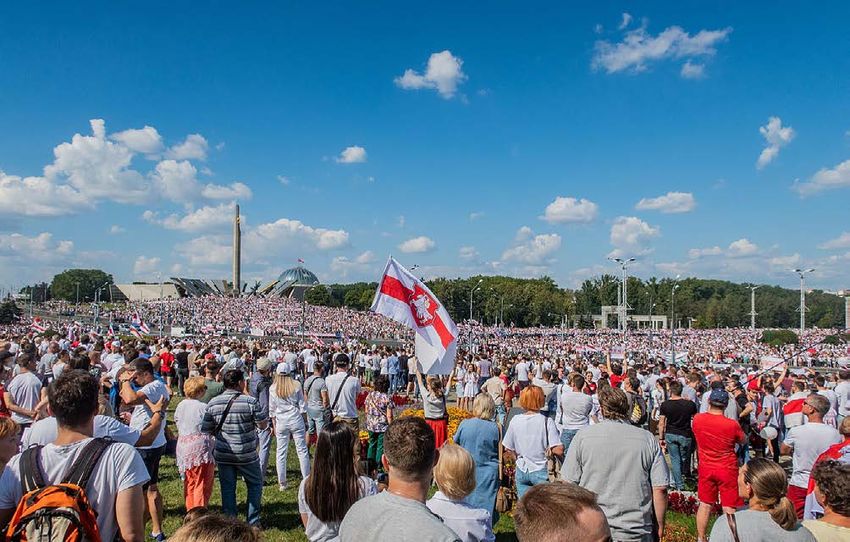
THE RULING
    ELITE

    2020: THE STATE LOST
    TOUCH WITH SOCIETY
    AND RESUMED FINANCIAL
    INTERVENTION IN
    THE PUBLIC SECTOR

By Zmicier Kuchlej      In 2020, the ruling class faced the most
                        severe challenges of the last 20 years,
                        including the coronavirus outbreak, the
                        presidential election and mass rallies
                        opposing the official results. The existing
                        political system failed to address these
                        issues, and the ruling class was forced
                        to revert to 20th-century governance
                        practices. The mobilisation of a
                        militarized governance style was unable
                        to arrest the weakening of the state
                        and further reduced popular support
                        for public institutions. However, the
                        incumbent ruler and his clique managed
                        to buy time and indefinitely delay any
                        transition process.

4      BELARUS IN FOCUS ANNUAL REVIEW 2020 AND FORECAST FOR 2021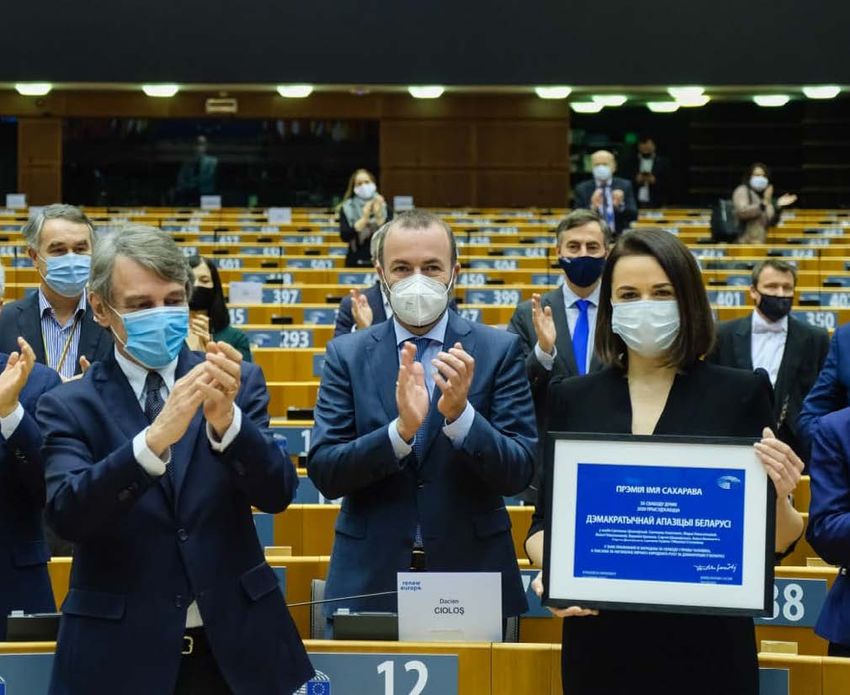
Lukashenka‘s coronavirus rhetoric and lack of
action to address this challenge frustrated the
Education and Health ministries‘ operations,
negatively affecting their public image. In the
first weeks after the presidential election,          IN THE FIRST
the ruling elite‘s monolith of power fractured     WEEKS AFTER THE
and amid ever diminishing popular support            PRESIDENTIAL
for public institutions, the Belarusian state        ELECTION, THE
machine is weakening.                               RULING ELITE'S
                                                        MONOLITH
Lukashenka has lost his previous support                OF POWER
among most social groups. Loyalty to him is at         FRACTURED
a historic low, yet he retains power and control    AND AMID EVER
over the ruling elites, the security forces and       DIMINISHING
the edifice of power he created. Loyalty among          POPULAR
public servants is also gradually eroding, and          SUPPORT
many have already resigned from the civil              FOR PUBLIC
service.                                             INSTITUTIONS,
                                                   THE BELARUSIAN
Simultaneously, the political weight of the        STATE MACHINE IS
security forces has peaked and liberals in             WEAKENING
the government have lost influence. The
National Bank remains the last stronghold
of technocrats but retains political
disengagement.

The public sector‘s lobbying for state subsidies
and investment, including for loss-making
public enterprises, has succeeded. The
current government‘s primary preoccupation
is retaining control over the labour movement
and preserving public sector jobs.

Small and medium-sized businesses receive
minimal, if any, state aid. Before and after
the presidential election, the state increased
financial pressure on the private sector,
demonstrating high electoral and protest
mobilisation capacity. Simultaneously, the

BELARUS IN FOCUS ANNUAL REVIEW 2020 AND FORECAST FOR 2021         5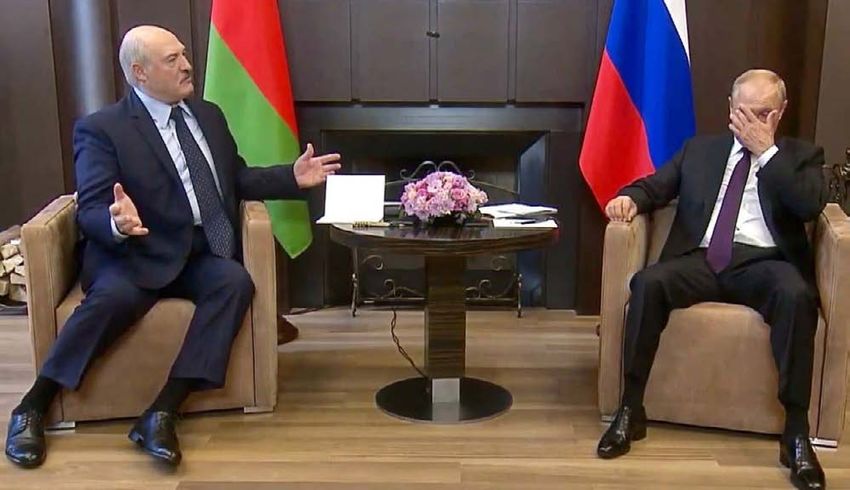
leadership remained committed to an informal
                       pact with large loyal businesses with no
                       political ambitions.

   BY THE END          In the spring of 2020, the education system
      OF 2020,         was disoriented due to the coronavirus
   THERE WERE          outbreak. For several weeks, the authorities
  160 POLITICAL        lost control over the education sector, and
    PRISONERS          despite significant pressure from Lukashenka,
   IN BELARUS          around 40% of parents refused to take their
FACING CRIMINAL        children to schools.
  CHARGES AND
   OVER 32,000         The authorities‘ inconsistent response firstly
     CASES OF          to the coronavirus challenge, and then to
 ADMINISTRATIVE        post-election rallies, has prompted doctors to
     ARRESTS           take a pro-active opposing stance regarding
                       state actions while continuing to fight in the
                       frontlines of the coronavirus outbreak. In the
                       spring, Civil Society organised substantial
                       support for doctors to help them to address
                       these challenges.

                       Towards the end of 2020, the cost of protest
                       activity gradually increased. After August
                       9, the hefty fines previously imposed upon
                       rally participants were replaced with harsh
                       crackdowns, arrests, torture, dismissals, and
                       academic expulsions. The actions of security
                       forces resulted in several killings. By the end
                       of 2020, there were 160 political prisoners
                       in Belarus facing criminal charges and over
                       32,000 cases of administrative arrests.

                       In the second half of 2020, the state changed
                       legislation and law enforcement practice
                       several times, essentially placing the security
                       forces outside the law. In the election
                       aftermath, the incumbent ruler delegated
                       some punitive functions to civil servants

6    BELARUS IN FOCUS ANNUAL REVIEW 2020 AND FORECAST FOR 2021
(housing and utility services, education and
social security officials) for use against some
parents, IT workers and larger social and
territorial groups.

 FORECASTS FOR 2021
 Security officials are likely to retain
 the level of influence and repression
 and the ruling elite would not engage
 in a dialogue with the opposition on
 ultimatum terms

 Budgetary intervention in the public
 sector of the economy will maintain
 current employment levels

 The gap between the ruling elite and
 society will widen further; the regime
 support base will continue to narrow
 and erode

 The gap between the ruling elite and
 society will widen further; the regime
 support base will continue to narrow
 and erode

BELARUS IN FOCUS ANNUAL REVIEW 2020 AND FORECAST FOR 2021   7
SECURITY

    2020: A YEAR OF SECURITY
    LOSSES

By Andrei Parotnikau     2020 was a challenging year for national
                         security and defence. For the first time
                         in many years, the ratio of gains to
                         losses was persistently negative. The
                         participation of all law enforcement
                         agencies in the suppression of protests,
                         the deteriorating financial situation in
                         military industry, the involvement of
                         law enforcement agency heads in anti-
                         Western propaganda, and Lukashenka‘s
                         appeal to Putin for military support have
                         compromised Belarus‘ reputation as
                         an independent voice on international
                         security issues.

                         The financial situation in the military-industrial
                         complex has become more complicated.
                         Although Goskomvoenprom [the State
                         Military Industry Committee] does not
                         disclose specific performance indicators,
                         indirect evidence points to a deterioration in

8      BELARUS IN FOCUS ANNUAL REVIEW 2020 AND FORECAST FOR 2021
financial performance. It appears that every
fifth rouble of the military industry wage
bill is financed by bank loans (from March
to October this share increased 6.6% to
21.1%). The excessive concentration of
defence products remains an issue: the
three largest companies provide over 70%
of industrial output within Goskomvoenprom
(25 enterprises, 22 manufacturers). The EU
sanctions against several leading Belarusian
military industry enterprises will also harm
their performance.
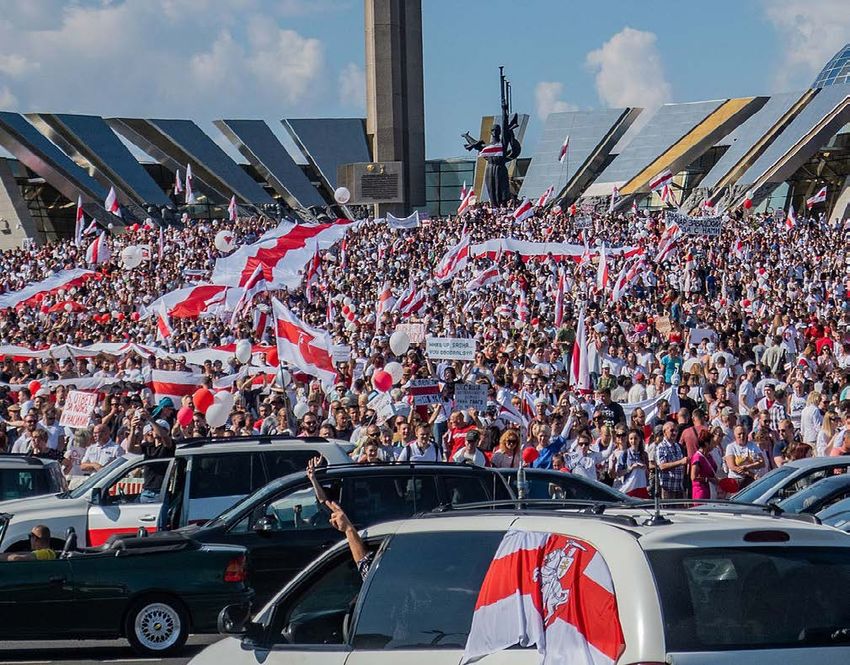
Protest rally against
Practically all law enforcement agencies, Lukashenka,
including the army, border guards and the 30 August 2020.
Ministry of Emergency Situations, were Minsk, Belarus
Homoatrox
BELARUS IN FOCUS ANNUAL REVIEW 2020 AND FORECAST FOR 2021 9Homoatrox
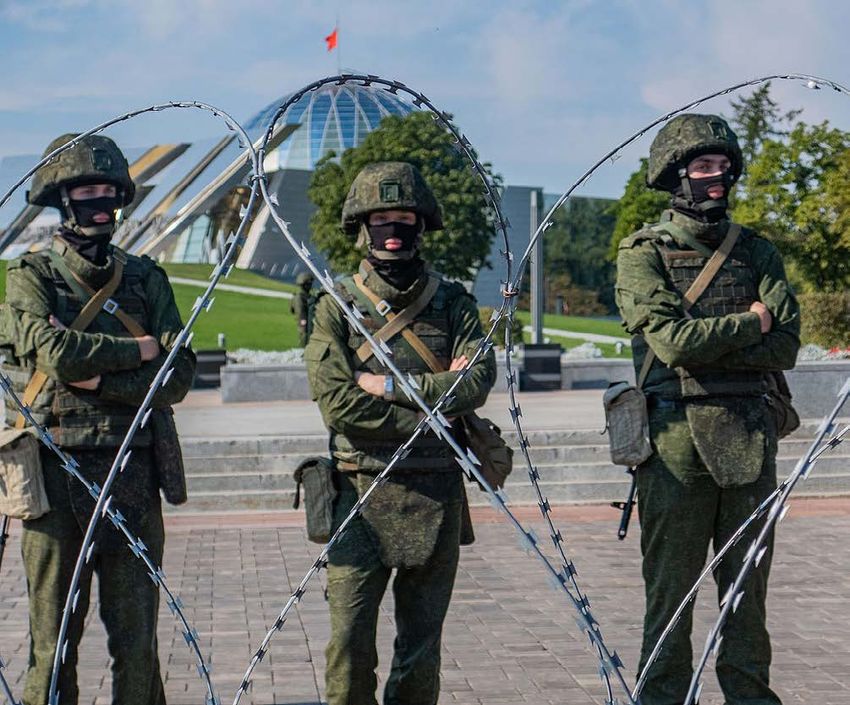
Protest rally against involved in the regime‘s punitive campaign
Lukashenka, against widespread protests. Amid reduced
30 August 2020. popular support for public institutions, the
Minsk, Belarus involvement of previously apolitical security
institutions in assisting the Lukashenka
regime has damaged their reputation with the
people.
High-ranking military officials directly
participated in the crackdown on the protest
movement and engaged in the propaganda
campaign against the protests. This narrative
included accusations against the West of
planning military aggression against Belarus
and allegations of subversive activities against
Minsk directed at Ukraine. These repressions
and the aggressive rhetoric of officialdom
have voided all of the recent years‘ modest
successes towards building a regional
10 BELARUS IN FOCUS ANNUAL REVIEW 2020 AND FORECAST FOR 2021security dialogue. The fact that the Western
threat is just a propaganda tool is evidenced
by the absence of any significant national
defence funding increase.
REPRESSIONS
Lukashenka’s appeal to the Kremlin requesting AND THE
assistance in suppressing popular protests AGGRESSIVE
and the scale of Russian participation in RHETORIC OF
the “Slavic Brotherhood” exercises have OFFICIALDOM
cancelled out any perception of Minsk as HAVE VOIDED ALL
an independent player in the international OF THE RECENT
security arena. However, despite this, there YEARS' MODEST
are no direct signs of deepening cooperation SUCCESSES
between Minsk and Moscow. TOWARDS
BUILDING A
REGIONAL
SECURITY
DIALOGUE
FORECASTS FOR 2021
The power bloc will retain significant
influence in domestic politics
The Belarusian authorities will continue
attempts to involve Moscow in their
confrontation with the Belarusian society
Belarus’ political weight in addressing
regional security issues will reduce
BELARUS IN FOCUS ANNUAL REVIEW 2020 AND FORECAST FOR 2021 11CIVIL SOCIETY
AND POLITICAL
PARTIES
2020: CIVIL SOCIETY
COMPENSATES FOR
STATE FAILURES,
AS POLITICAL ORGANISATIONS
ENGAGE SOCIETY
IN TRANSFORMATION
By Zmicier Kuchlej The state response to the coronavirus
outbreak and other incumbent
authorities‘ policy failures created new
opportunities for Civil Society and
political organisations in 2020. Civil
society has provided support in areas
where the state did not act efficiently:
healthcare, education and assistance to
victims of state repression. New political
forces, representing previously inactive
social groups, set the election and post-
election agendas. For the first time in
Belarus‘ modern history, citizens and
emigrants launched hugely successful
fundraising for political and public
projects.
12 BELARUS IN FOCUS ANNUAL REVIEW 2020 AND FORECAST FOR 2021Homoatrox In 2020 Civil Society organised the most Protest rally against successful fundraising campaign in the Lukashenka, history of modern Belarus. This started with 16 August 2020. a fundraiser to help doctors and victims of Minsk, Belarus COVID-19 and gradually gained strength and expanded its scope. In the wake of the presidential election, fundraising initiatives helped victims of repression and supported a range of public initiatives, repeatedly breaking fundraising records. Early in 2020, conventional opposition political organisations, including the United Civil Party (UCP), the Belarusian Popular Front, Belarusian Christian Democracy (BCD), the “For Freedom Movement”, and the Belarusian Social Democratic Party “Hramada” (BSDG), tried to form a national agenda for the primaries long before the presidential election was announced. The primaries were never completed due to the emergence of new BELARUS IN FOCUS ANNUAL REVIEW 2020 AND FORECAST FOR 2021 13
public figures with presidential ambitions from
                      outside of the usual opposition. Despite their
                      relative popularity and public interest, the
                      primaries did not result in a “single candidate
 THREE WOMEN,         nomination.”
    SVIATLANA
TSIKHANOUSKAYA,       Participants in the primaries lost influence on
    VERANIKA          the political agenda, however, the UCP and
 TSEPKALA (THE        BCD joined the headquarters of the new
   SPOUSES OF         wave of candidates at an early stage of the
  TSIKHANOUSKI        campaign and thus remained in the political
 AND TSEPKALA         process.
  RESPECTIVELY)
    AND MARIA         Andrei Dzmitryeu from “Tell the Truth”,
  KOLESNIKOVA         Siarhei Cherechen from the BSDG and self-
      (FROM           nominated ex-MP Hanna Kanapatskaya tried to
   BABARYKA'S         strengthen their support base via participation
 TEAM) MERGED         in the presidential election. Newly emerged
    ELECTORAL         candidates eclipsed them; however, former
 HEADQUARTERS         presidential candidate Andrei Dzmitryeu
   AND BECAME         continues to build political capital.
 THE SYMBOL OF
     CHANGE           Mikalai Statkevich, leader of the Belarusian
                      Social Democratic Party Narodnaya Hramada
                      (Belarus has three different Social Democratic
                      parties) initially implemented a strategy of
                      nominating over 30 protest candidates,
                      including vlogger Siarhei Tsikhanouski.
                      Mikalai Statkevich and Siarhei Tsikhanouski
                      were arrested in the wake of the campaign;
                      therefore, Sviatlana Tsikhanouskaya, Siarhei‘s
                      wife, applied for and was registered as a
                      candidate with the support by activists from
                      the Statkevich team.

                      The election and post-election agendas
                      were formed by new political organisations
                      representing previously inactive sections of
                      the electorate, mainly from the private sector:

14   BELARUS IN FOCUS ANNUAL REVIEW 2020 AND FORECAST FOR 2021
Homoatrox Viktar Babaryka, Valery Tsepkala, and Siarhei Protest rally against Tsikhanouski all announced presidential Lukashenka, ambitions. The authorities regarded them as 16 August 2020. a serious threat and refused to register any of Minsk, Belarus them, arresting Babaryka and Tsikhanouski. Three women, Sviatlana Tsikhanouskaya, Veranika Tsepkala (the spouses of Tsikhanouski and Tsepkala respectively) and Maria Kolesnikova (from Babaryka‘s team) merged electoral headquarters and became the symbol of change. Sviatlana Tsikhanouskaya then rallied the entire protest electorate and mobilised a mass voter turnout, incidentally demonstrating that the electoral system was only designed for some 3 million people (or less than 50% of voters). BELARUS IN FOCUS ANNUAL REVIEW 2020 AND FORECAST FOR 2021 15
This massive mobilisation of voters to observe
                       the electoral process led to some polling
                       stations commissioners being unable to falsify
                       the results, showing that Tsikhanouskaya
   THE RIGGED          scored significantly more than Lukashenka.
  ELECTION ON          The Golos platform, where more than 1.2
 AUGUST 9 AND          million voters registered, recorded her victory.
POLICE VIOLENCE
    AGAINST            The rigged election on August 9 and police
  PROTESTERS           violence against protesters on August 9-11
   ON AUGUST           inspired a sustained protest movement,
 9-11 INSPIRED         involving at least 300k-500k new activists
  A SUSTAINED          across the country. In the first weeks after
    PROTEST            the election, the demonstrators controlled
   MOVEMENT,           the central squares and streets of the capital,
  INVOLVING AT         large cities and even regional centres. By the
LEAST 300K-500K        end of October, after harsh repression by
 NEW ACTIVISTS         the authorities, the protests transformed into
   ACROSS THE          dispersed demonstrations and other forms
    COUNTRY            of activity, yet did not abate despite the cold
                       weather.

                       The Tsikhanouskaya team – Tsikhanouskaya
                       herself was forced to relocate to Lithuania
                       on August 9-10, maintains close contacts
                       with new protest activists. During the first
                       days of her forced emigration, Sviatlana
                       Tsikhanouskaya initiated the Coordination
                       Council to represent the protest movement
                       in a dialogue regarding the transfer of
                       power from the Lukashenka regime. The
                       Coordination Council Board was comprised
                       of participants in the primaries, intellectuals,
                       and a labour movement representative.
                       Lukashenka launched a criminal investigation
                       on charges of attempted, unconstitutional
                       seizure of power and incrementally arrested or
                       forced into exile members of the Coordination
                       Council board. The members who have found

16   BELARUS IN FOCUS ANNUAL REVIEW 2020 AND FORECAST FOR 2021
themselves abroad are coordinating civic projects in Belarus with Tsikhanouskaya‘s team. Sviatlana Tsikhanouskaya and the Coordination Council shape Western capitals‘ agendas concerning Belarus and lobby for a gradual increase of sanctions pressure on the ruling class. FORECASTS FOR 2021 Political organisations are likely to enter new alliances and attempt to engage in dialogue with the ruling elites The majority of political organisations are likely to retain the ultimatum agenda demanding the transfer of power from Lukashenka and new elections Civil society is likely to become more financially independent and viable, discovering new ways to raise funds through the diaspora and other fundraising initiatives BELARUS IN FOCUS ANNUAL REVIEW 2020 AND FORECAST FOR 2021 17
BELARUS–
     WEST
     RELATIONS
     2020: BELARUSIAN
     OFFICIALDOM AND THE WEST
     ARE ENEMIES AGAIN

By Dzianis Melyantsou    In 2020, Belarus‘ relations with the
                         West divided into ‚before‘ and ‚after‘
                         the presidential election. ‚Before‘ there
                         some normalisation of relations with
                         both the European Union and the United
                         States of America. ‚After‘ the allegations
                         of rigged elections supported by
                         evidence and the unprecedented scale
                         of state repression against the people,
                         abruptly ended this process, putting
                         Belarus back to square one in relations
                         with the West.

                         2020 started with a breakthrough in relations
                         with the West - US Secretary of State Michael
                         Pompeo‘s visit to Minsk and agreements on
                         the supply of American oil to the Belarusian
                         market. The parties had come close to
                         restoring ambassadorial level diplomatic
                         relations.

18     BELARUS IN FOCUS ANNUAL REVIEW 2020 AND FORECAST FOR 2021
Belarus‘ relations with the EU also had a
positive dynamic. The lengthy and painful
process of preparing agreements on visa
facilitation and readmission had come to
an end. On July 1, the agreements entered
into force, and the cost of a Schengen visa
for Belarusians dropped to 35 euros. The
intensity of high-level contacts between
Belarus and the EU member states continued
to grow. Several highest level visits to the EU
were planned but never materialised due to
the coronavirus outbreak, which also affected
the intensity of Belarus‘ other international Sviatlana Tsikhanouskaya
contacts. Simultaneously, issues on the in the European
Belarus-West agenda changed dramatically, Parliament, 16 December
primarily focusing on discussions of short and 2020. Brussels, Belgium
Image by Sviatlana Tsikhanouskaya's official Telegram channel.
BELARUS IN FOCUS ANNUAL REVIEW 2020 AND FORECAST FOR 2021 19medium-term responses to the pandemic
challenges.
The presidential election and the harsh
THE crackdown on peaceful rallies by the
PRESIDENTIAL Belarusian authorities abruptly curtailed
ELECTION AND the trend towards normalising relations and
THE HARSH returned Belarus to a state of isolation; the
CRACKDOWN EU and the US imposed sanctions against
ON PEACEFUL Belarusian officials several legal entities and
RALLIES BY THE business people. For the first time in modern
BELARUSIAN Belarusian history, with the support of Russia,
AUTHORITIES Minsk introduced reciprocal sanctions
ABRUPTLY against the European Union and reduced
CURTAILED THE its level of participation in several bilateral
TREND TOWARDS and multilateral forums. By the end of 2020,
NORMALISING Belarusian officialdom and Western countries
RELATIONS found themselves in a state of deep political
AND RETURNED crisis, which is likely to continue to deteriorate
BELARUS TO in 2021 as the EU and the United States
A STATE OF introduce new sanctions.
ISOLATION
FORECASTS FOR 2021
Belarus’ relations with the EU and the
US will [continue to] deteriorate
The independence of Belarus’ foreign
policy will be curtailed
20 BELARUS IN FOCUS ANNUAL REVIEW 2020 AND FORECAST FOR 2021BELARUS– RUSSIA RELATIONS 2020: BELARUS AND RUSSIA RELATIONS INCREASINGLY LOOK LIKE INTERNAL, NOT INTERNATIONAL In 2020, Russian conflict continued to grow By Anatol Pankouski until the elections and the clampdown on the first wave of protests. After this, Belarus abandoned the Western foreign policy, becoming decisively dependent on Russia. However, the ruling clique‘s methods have been so toxic that even the Kremlin hesitates to provide pro-active support. For Belarus and Russia, 2020 began with the largest conflict in the history of bilateral relations regarding Russian oil supply. For the first four months, the parties operated without a general agreement on oil due to the Belarusian side‘s disagreement with Russian tax policy. In April, the list of conflict issues with Russia expanded: in addition to the oil issue disputes arose over the price of gas supplies (which, BELARUS IN FOCUS ANNUAL REVIEW 2020 AND FORECAST FOR 2021 21
against the background of a drop in spot
                      prices, turned out to be unreasonably high for
                      Belarus), tension over trade barriers, terms
                      of the Russian loan for construction of the
   THE RULING         Belarusian Nuclear Power Plant and sharp
     CLIQUE'S         divergence in anti-covid policies, which led to
METHODS HAVE          the closure of the Belarusian-Russian border
 BEEN SO TOXIC        for the movement of people.
    THAT EVEN
  THE KREMLIN         Moreover, during the Belarus election
  HESITATES TO        campaign, Belarusian officialdom alleged
 PROVIDE PRO-         that Russia was encroaching on Belarusian
ACTIVE SUPPORT        sovereignty and acting as an incubator of
                      “puppeteers” directly interfering in the internal
                      political process. Belarusian propaganda
                      claimed that the opposition contenders were
                      agents of Russia and aimed at destroying
                      Belarusian statehood in the interests of the
                      Russian ruling class.

                      After the facts of torture and humiliation in
                      Belarusian remand prisons and the deaths of
                      protesters became known on August 12 (also
                      thanks to Russian journalists), Lukashenka
                      began urgently seeking Putin‘s support and
                      official rhetoric pivoted from anti-Russian to
                      strongly anti-Western. The Kremlin recognised
                      Lukashenka‘s victory immediately, but for
                      about a month afterwards was in no hurry to
                      offer support. However, on September 14, at a
                      meeting in Sochi, Putin promised Lukashenka
                      a $ 1.5 billion loan, media assistance (to
                      replace Belarusian propagandists who quit
                      state media outlets in protest) and, upon
                      additional request, assistance from troops
                      and/or police forces.

                      Simultaneously, Putin approved the plan of
                      constitutional reforms presented by Lukashenka

22   BELARUS IN FOCUS ANNUAL REVIEW 2020 AND FORECAST FOR 2021
kremlin.ru purported to facilitate national reconciliation. It appeared that constitutional reform and Aliaksandr Lukashenka decentralisation of power were the necessary and Vladimir Putin, preconditions of Russian support. However, 14 September 2020. despite numerous statements by Russian Sochi, Russia dignitaries about the expected frameworks and timing of changes to the Belarusian constitution, Lukashenka, as the number of arrests grew and public protests became less massive, became less and less willing to address this issue. As a result, Lukashenka has stopped talking about the constitutional reform until the end of the year. Russian support was limited but sufficient. In 2020, two tranches of a $500 million Russian loan were received and Russian propaganda propped up Lukashenka. The oil and gas agreements for 2021 were concluded on the terms of 2020 (Belarus, however, regards them as not fraternal). It is significant that in 2020 the collapse of the post-Soviet imperial complex pivoting BELARUS IN FOCUS ANNUAL REVIEW 2020 AND FORECAST FOR 2021 23
around Russia received additional impetus,
                       and Belarus turned out to be only a part of
                       this process. In the autumn, there was another
                       revolution in Kyrgyzstan, a war in Nagorno-
IT IS SIGNIFICANT      Karabakh which allowed Turkey to consolidate
   THAT IN 2020        influence in the region, elections in Moldova,
  THE COLLAPSE         won by pro-European candidate Maria Sandu,
   OF THE POST-        and finally, lengthy protests in Khabarovsk.
 SOVIET IMPERIAL       Additionally, there was an unsuccessful attempt
     COMPLEX           to assassinate Navalny, which undermined
PIVOTING AROUND        the Russian special services‘ reputation for
RUSSIA RECEIVED        omnipotence. Aside from Russia‘s internal
    ADDITIONAL         processes, in all these cases in the post-
  IMPETUS, AND         Soviet space, Russia responded reluctantly
BELARUS TURNED         demonstrating an unwillingness to reciprocate
 OUT TO BE ONLY        loyalty with money, military intervention or
  A PART OF THIS       political authority. This is also true for Belarus;
     PROCESS           current support for Lukashenka did not exceed
                       the usual assistance in quiet years.

 FORECASTS FOR 2021
 The relatively low-key involvement of the
 Kremlin in Belarusian affairs is likely to
 continue

 Russia may try to trade its influence in
 Belarus for the alleviation of Western
 sanctions as she did with Armenia during
 the Karabakh war

 If not, Russia is likely to continue to support
 Lukashenka to a limited extent

24    BELARUS IN FOCUS ANNUAL REVIEW 2020 AND FORECAST FOR 2021
AUTHORS:
Zmicier Kuchlej,
Andrei Parotnikau,
Dzianis Melyantsou,
Anatol Pankouski
IMAGES BY
Homoatrox (wikimedia.org
under the Creative Commons
Attribution-Share Alike 3.0
Unported license), Sviatlana
Tsikhanouskaya's official
Telegram channel, kremlin.ruYou can also read


