Biblored Colombia's Innovative Library Network
←
→
Page content transcription
If your browser does not render page correctly, please read the page content below
Biblored
                                                                                                        Colombia’s Innovative
                                                                                                        Library Network

                                                                                                                       maría cristina caballero

                                                                                                        February 2003

                                    Council on Library                                                  Council on Library
                                    and Information Resources                                           and Information Resources
                                    1755 Massachusetts Avenue, nw
                                    Suite 500
                                    Washington, dc 20036-2124
                                    usa

                                    www.clir.org

K span cyan magenta yellow   44374/COLIR/covers in common/sheetwise out span   175line/herk/dt.0020"/2-14-3df                         2-14-3   brd   8.42am   18.875x12.375 long herk 6/c
Biblored
Colombia’s Innovative
Library Network

               maría cristina caballero

February 2003

Council on Library
and Information Resources
Washington, d.c.
2
 maría cristina daballero

Photo credits, cover              COUNCIL ON LIBRARY                        PUBLISHED BY:
Large photos:                     AND INFORMATION RESOURCES
                                                                            Council on Library
bill & melinda gates foundation   The Council on Library and Information    and Information Resources
Small photos:                     Resources (clir) is an independent,
bill & melinda gates foundation                                             1755 Massachusetts Avenue, nw
maría cristina caballero          nonprofit organization that works to       Suite 500
                                  expand access to information, however     Washington, dc 20036
                                  recorded and preserved, as a public
                                  good.                                     Web site at http://www.clir.org
                                      In partnership with other organiza-
                                  tions, clir helps create services that    Additional copies are available for
                                  expand the concept of “library” and       $20 per copy. Orders must be placed
                                  supports the providers and preservers     online through clir’s Web site.
                                  of information. Through projects,
                                                                               The paper in this publication meets
                                                                            8

                                  programs, and publications, clir works
                                  to maintain and improve access to         the minimum requirements of the
                                  information for generations to come.      American National Standard for
                                                                            Information Sciences—Permanence
                                  BILL & MELINDA GATES FOUNDATION           of Paper for Printed Library Materials
                                  The Bill & Melinda Gates Foundation       ansi z39.48-1984.
                                  is dedicated to improving people’s
                                  lives by sharing advances in health and
                                  learning with the global community.       © Copyright 2003 by the Council
                                  Led by Bill Gates’ father, William        on Library and Information Resources.
                                  H. Gates, Sr., and Patty Stonesifer,      No part of this publication may be
                                  the Seattle-based foundation has an       reproduced or transcribed in any form
                                  endowment of approximately $24            without permission of the publisher.
                                  billion. For more information, visit      Requests for reproduction should be
                                  www.gatesfoundation.org.                  submitted to the Director of
                                                                            Communications at the Council on
                                  ISBN   1-887334-98-x                      Library and Information Resources.

                                  Margaret Re/re:design
                                  Publication Design
about the author
                                                                                             3

                                                                              Biblored Colombia’s Innovative Library Network
A native of Colombia, María Cristina Caballero is an award-winning
journalist. Currently, she is a fellow at the Center for Public Leadership
at Harvard University. Ms. Caballero was director of investigations
at Semana, Colombia’s leading weekly newsmagazine, from 1998 to 2001.
Previously, Ms. Caballero worked at Cambio (a newsmagazine) and at
El Tiempo (Colombia’s main daily newspaper). She has held fellowships
in Harvard’s Nieman and Mason programs.
                 Ms. Caballero won Colombia’s highest journalistic honor,
the Simon Bolivar National Prize in Journalism, in 1998 for her exclusive
interview with Carlos Castaño, leader of Colombia’s paramilitaries. She won
the same award in 1991 for a series of investigative reports on corruption
in her country’s National Notary and Property Registration Institute.
Ms. Caballero received the World Press Freedom Award from the United
States-based Committee to Protect Journalists in 1999. Her commentaries
have appeared in The New York Times, The Boston Globe, and The Miami
Herald, among other news outlets.
4
María Cristina
       maría cristina
               Caballero
                      caballero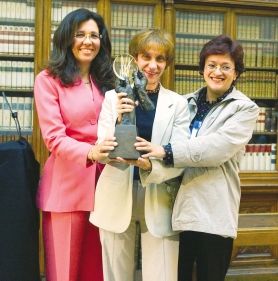
“This award is an exceptionally refreshing
                                                                                                                                       5
                                    encouragement for our embattled country….

                                                                                                                       Biblored Colombia’s Innovative Library Network
                                    Through our library system, we have
                                    improved the lives of millions of children and
                                    adults by offering new educational, recreational,
                                    and cultural opportunities that fight against
                                    boredom, frustration, and violence. This
                                    project provides the foundation to achieve
                                    peace in a more egalitarian society.”
                                    margarita peña
                                    Secretary of Education
                                    District of Bogotá

                                                                               i    Preface
                                                                               ii   Acknowledgments
                                                                               1    Introduction
                                                                               2    Equal Access for All
                                                                               3    The Initial Vision:
                                                                                    Libraries as “Urban Temples”
                                                                               5    Part of a Broader Education
                                                                                    and Technology Initiative
                                                                               5    Bogotá’s Information Deficit
                                                                               6    The Initial Goals
                                                                                       The Plan and Estimated Costs
                                                                                       Design Plans
                                                                               8    Advancing the Process:
                                                                                    Collections and Services
                                                                               9    Overcoming Obstacles
                                                                              10    The Network’s Daily Impact
                                                                              11    Types of Training
                                                                                    and Programs Offered
Credit: maría cristina caballero
                                                                              12    The Three Major Libraries
                                    Bogotá’s secretary of education,                   Virgilio Barco
                                    Margarita Peña, talks with one of the              El Tunal
                                    youngest users of the El Tunal library.            El Tintal
                                                                              15    Local and Neighborhood Libraries
                                                                              17    Administration
                                                                              18    Continuing the Project:
                                                                                    Confronting New Challenges
                                                                              19    Library Boom
                                                                              20    References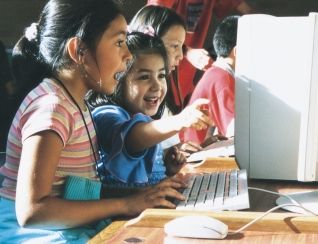
preface
   6
maría cristina daballero

                           Colombia’s Biblored (Capital Network of Public Libraries) was honored
                           with the 2002 Bill & Melinda Gates Foundation Access to Learning Award,
                           which is administered by the Council on Library and Information Resources
                           (clir). Biblored, which received the u.s. $1-million grant to expand its services,
                           was recognized for its success in providing free and innovative access to
                           information for the people of Bogotá, particularly those in low-income areas.
                                             This case study outlines how Biblored was created, funded,
                           designed, and implemented in just four years. It demonstrates the power and
                           popularity of public libraries in a war-torn, conflicted society. At the same
                           time, it shows how educational and cultural opportunities offered by public
                           libraries can change people’s lives in profound ways.
                                             The Access to Learning Award is given annually to a
                           library or comparable organization outside the United States to recognize
                           accomplishments in making information technology accessible without charge
                           to the public, particularly underserved communities. The award is presented
                           in August at the annual meeting of the International Federation of Library
                           Associations and Institutions (www.ifla.org). Clir, which began administering
                           the award in November 2001, solicits applications with an annual deadline
                           of February 28. An international advisory committee of librarians and infor-
                           mation technology experts reviews the applications and selects the recipient.
                           The 2002 competition drew more than 130 applications from 65 countries.
                                             Biblored is the third recipient of the Access to Learning
                           Award. In 2001, the award was given to Guatemala’s Proyecto Bibliotecas
                           (Probigua) and the Biblioteca del Congreso de la Nación in Argentina.
                           The Helsinki City Library of Finland was the first award recipient in 2000.
                                             Clir appreciates the opportunity to administer the Access
                           to Learning Award, which would not be possible without the generosity
                           of the Bill & Melinda Gates Foundation.

                           alice bishop
                           Special Projects Associate
                           CLIR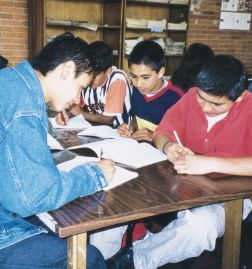
acknowledgments
                                                                                         7

                                                                          Biblored Colombia’s Innovative Library Network
This report could not have been possible without the cooperation
of Colombia’s Minister of Education, Cecilia María Velez; the Secretary
of Education of Bogotá, Margarita Peña; the former Mayor of Bogotá,
Enrique Peñalosa; Director of the Colombian National Libraries Plan,
Lina Espitaleta; Biblored’s Manager, Catalina Ramírez; and Jorge
Orlando Melo, Director of Biblioteca Luis Angel Arango.
                 The author would like to thank the Dean of Harvard
University’s John F. Kennedy School of Government, Joseph S. Nye Jr.,
for his support and special interest in Colombia. She also is grateful
for the support of the Kennedy School’s Mason Program and the Harvard
Center for Public Leadership. Finally, she wishes to acknowledge the
support of her husband and favorite editor, John Lenger.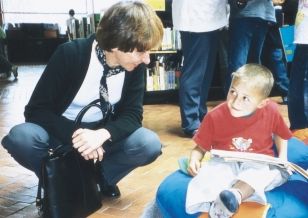
Colombia, the Nation
                                             percent of the country’s total school-age
F   orty years of civil war and more than
    a decade of “narco-terrorism” have
battered Colombia’s civil institutions,
                                             population—some 1.5 million children
                                             and teenagers. Bogotá’s population has
                                                                                                 NICARAGUA

                                                                                                COSTA
                                                                                                 RICA
                                                                                                        Caribbean
                                                                                                            Sea
                                                                                                        PANAMA
                                                                                                                                                                  Atlantic
seriously undermining Latin America’s        been growing rapidly because of inter-                                                         VENEZUELA                Ocean
                                                                                                                      Medellin
                                                                                                                                                             GUYANA
oldest democracy. Almost 40,000              nal conflict and violence in rural areas.                                     Bogota
                                                                                                                                                                             FRENCH
                                                                                                                                                                             GUIANA
                                                                                                                                                                    SURINAME
Colombians have been killed in the           The capital shelters about 100,000 new                                Cali
                                                                                                                           COLOMBIA
past decade. Approximately 2 million         people each year. Colombia’s Secretary
of Colombia’s 41 million people are          of Education says about 80 percent
                                                                                                         ECUADOR
poverty-stricken refugees who have left      of the city’s inhabitants live in poverty.
their villages to escape the violence.           Given the city’s serious challenges,
                                                                                                                                                           BRAZIL
    Colombia has been confronting a          its mayoral administrations did                                        PERU

crisis of governance. The homicide rate      not emphasize access to information
is the world’s highest, and the poverty      by creating a modern network of public
                                                                                               Pacific
rate is growing. Sixty-four percent of the   libraries. Consequently, in the mid-              Ocean

population lives under the poverty line.     1990s, Bogotá had almost no suitable
                                                                                                                                            BOLIVIA
    Home to more than 6 million people,      spaces providing information, knowl-
Bogotá is one of Latin America’s largest     edge, research opportunities, or culture
cities and Colombia’s economic center.       other than the Biblioteca Luis Angel
It contributes 26 percent of Colombia’s      Arango (BLAA) which was always                                                                               PARAGUAY
gross domestic product and has 15            crowded.                                                                               CHILE     ARGENTINA

Biblored Libraries in Bogotá

                                                                                                                           Biblored at a Glance
                                                                                                                           Number of libraries                             19
                                                                                                                           Number of
                                 Virgilio                                                                                  public access computers                       328
                                 Barco
                                                                                                                           Number of books                           185,000
                                                                                  Tunal
                                                                                                                           Monthly average
                                                                                                                           of users                                  200,000
                                                                                                                           Number of
                                                                                                                           full-time employees                           177
                                                                                                                           Annual budget
                                                                                                                           in US dollars                      $2,173,000

                                                    Tintal

Major                   Local
Libraries               Libraries
Virgilio Barco          1.   Servitá                                   12.   Puente Aranda
El Tunal                2.   Restrepo                                  13.   C.O.L. Venecia
El Tintal               3.   La Victoria                               14.   Nuevas Delicias
                        4.   Bosa                                      15.   Perdomo
                        5.   Suba                                      16.   C.O.L. Timiza
                        6.   La Marichuela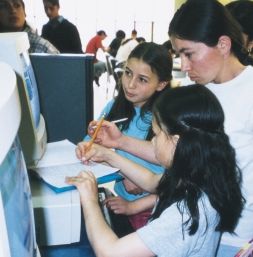
introduction

Biblored, Capital Network of Public Libraries, was the brainchild of                                        1

Enrique Peñalosa, mayor of Bogotá from 1998 to 2001. Peñalosa made

                                                                                            Biblored Colombia’s Innovative Library Network
the network a key part of the city’s development plan early in his term. “I
decided to promote a di¤erent vision, a di¤erent lifestyle in Bogotá. We
should not focus our e¤orts on measuring citizens’ success through their
per-capita incomes, but through the development of their potential by
providing them opportunities to improve the quality of their lives,”
Peñalosa said. “That’s why I focused e¤orts on building libraries and
parks, dramatically improving the transportation system, and opening
bicycle routes,” he added.
            In a city where so many “Biblored has helped link the
residents live in poverty, Biblored o¤ers   people of Bogotá with the world
access to computers, technology, and        of digital information. We
books free of charge. With the creation     hope that this remarkable project
                                            to improve public access to
of Biblored, libraries have also become
                                            information in Colombia will
centers of community development
                                            serve as a model for other countries.”
activities in disadvantaged parts of the
                                            richard akeroyd
city. Over the last four years, Biblored    Director of International Library Initiatives
                                            Bill & Melinda Gates Foundation
has built three large, modern public
libraries—El Tintal, El Tunal, and Virgilio Barco — in renovated city
parks in Bogotá. The project has also upgraded 16 local and neighborhood
libraries that now attract an average of 10,000 visitors each day. The net-
work has approximately 328 computers for public use and approximately
185,000 volumes.
2
maría cristina caballero
Credit: bill & melinda gates foundation/photographs: wesley bocxe
El Tintal is one of three major libraries built as part Cecilia María Vélez White, former
of Biblored. Situated on the site of an abandoned Secretary of Education in Bogotá who was
garbage transfer station, the library attracts more
recently named Colombia’s Minister of
than 2,000 users on weekdays.
Education, says that Biblored is an innovative
and ambitious project aimed at providing
Equal Access for All equal access to education and culture for all
Biblored is helping to create “social tissue,” citizens. “The increasing number of users
offering educational, cultural, and recreational of the new libraries proves that lower-income
activities to residents of all sectors of the families are learning the benefits of building
city, particularly those struggling with social on their educational and cultural potential,”
problems. The libraries have the challenge she said.
of offering constructive, community-based Jorge Orlando Melo, director of Colombia’s
alternatives to children, teenagers, senior biggest library, the Biblioteca Luis Angel
citizens, and the unemployed, and give them Arango (blaa), supported Biblored’s creation
opportunities to become more engaged and now reports that Biblored doubled the
and productive citizens. At the same time, number of library users in Bogotá—from
the libraries are intended to promote peace 3.5 million to 7 million— between 2000
by offering constructive alternatives for the and 2002. Melo estimated that Biblored
use of free time. provided Internet service to about 2.4 millionusers in 2002. Access to Internet services
has not been at the expense of books, which
are used extensively. 3
Today, thousands of people regularly
Biblored Colombia’s Innovative Library Network
use Biblored services. Biblored’s impact is
illustrated by the experience of 12-year-old
Luis Cárdenas. When a large white building
suddenly appeared in Cárdenas’ neighbor-
hood, it piqued the young boy’s curiosity.
Instead of roaming the streets, he began
spending his days at the library, engrossed
in workshops on technological tools and
reading incentives. “I’d rather be here and
not on the street, learning what I shouldn’t,”
said Cárdenas. Library staff soon helped
Credit: maría cristina caballero
Cárdenas enroll in school. He says the library
has given him the “opportunity to learn,
to know the world, to become someone, to
dream, to travel in time and space—without
spending money.”
Another example is 75-year-old Olga
Bravo, who migrated to Bogotá from a rural
region plagued by violence. After attending
a three-week training program, Mrs. Bravo,
who had learned only basic reading and writ- Olga Bravo, a 75-year-old woman who fled her
ing when she was a farm girl, says, “I feel as town because of violence, attended a workshop
if I were born again. I had not even dreamed about computers at El Tunal library. She plans
to teach her 26 grandchildren what she learned.
of learning about computers and the Internet.
Now, I can be useful. I will help educate my
26 grandchildren. I will teach them about poor neighborhoods by providing educational
computers.” opportunities and promoting citizen involve-
ment. His administration opened new
schools, built and renovated city parks, and
The Initial Vision: planted trees. It transformed and modernized
Libraries as “Urban Temples” the public transportation system, and even
In 1998, when Mayor Peñalosa, an economist, expanded the city’s bicycle routes.
decided to make a library network part of Biblored was a key symbol of Peñalosa’s
Bogotá’s development plan, he envisioned plan. “The three new libraries are as big
“urban temples”—islands of civilization as cathedrals,” he said. “They symbolize
in the midst of the country’s grinding poverty the importance that the city wanted to place
and long-simmering civil war. He led a mas- on education and intellectual development,
sive effort to improve living conditions in which also allow citizens to appreciate
life more.”Peñalosa lived in different u.s. cities, where
he gained an appreciation for public libraries
as part of a civilized life.
The goal of Peñalosa and his team was
to create a library system that would offer free
access to information, particularly digital
information. With this in mind, some of the
new libraries were built in sections of the city
where children had very few social or educa-
tional options. “There, Biblored’s libraries
now serve as a beacon of hope,” commented
Vélez White, who was in charge of imple-
menting the project. “Through the new
libraries, people can enjoy access to informa-
Credit: maría cristina caballero
tion that will help them not only solve
inquiries but socialize with their neighbors.”
Today, “Bogotá, City of Libraries” and “road
of knowledge for Bogotá” are frequently used
as slogans.
In developing countries, Peñalosa
noted, car owners are usually the people
who wield the power. “As a result, they are
able to dominate policies, with major invest-
Aleja Camacho, who works as a maid, brings ments frequently going into roads,” he said.
her two daughters to Suba’s local library so they Peñalosa’s new emphasis on public libraries
can do homework. changed all that. “We didn’t pave all the
streets. Part of that budget went to Biblored
The former mayor, interviewed for and other projects that would benefit
this report in November 2002, added that low-income populations and provide them
the libraries were designed to be monuments opportunities to develop their potential,”
to human dignity. “Every citizen is invited he stated.
to use them and to be well-treated, to feel “Libraries allow us to be more educated,”
important just because he or she is a he added. ”If we can get more knowledge,
Colombian citizen. I strongly believe that the we can see how insignificant are the causes
real learning process happens when it takes of conflict—in contrast with the universe,
place by your own initiative, when you are world history, and scientific and technological
motivated to learn. Bill Gates is an example advances. Libraries promote thinking and
of how the individual is capable of learning intelligent and civilized debates. The libraries
and progressing by him or herself.” provide space for our future writers and scien-
Peñalosa knew Bogotá needed more tists. Libraries allow us to build ourselves as
public libraries because he frequently saw individuals and communities and promote
long lines in front of the blaa. “I was also equality. If we are able to develop our human
impressed to know that it was one of the most potential, we will probably be able to coexist
used all over the world,” he added. In fact, better and be less conflicted.”Part of a Broader Education Bogotá’s Information Deficit
and Technology Initiative A study ordered by Vélez White in 1998
Biblored is part of a broader project aimed and directed by librarian Lina Espitaleta, who 5
at improving education and the use of tech- later was named director of the National
Biblored Colombia’s Innovative Library Network
nology in Bogotá. The first goal was to wire Libraries Plan, revealed a critical information
the public schools into an integrated educa- deficit in the city, particularly in poorer areas
tion network to enable online learning. This (Espitaleta and Palomino 1998).
project, known as “Red P,”* was authorized When the study was undertaken, Bogotá
in the last month of the administration of had 105 public libraries. Many were very
the mayor, Antanas Mockus, who preceded politicized, according to Biblored officials.
Peñalosa. It was financed with a $42-million “We found that some City Council members
loan from Spain. During Peñalosa’s term, opened a library with a few schoolbooks and
14,000 computers were installed in 662 pub- one employee, and after getting votes, just
lic schools. This network offers virtual and forgot about it,” one official said. “Others
collaborative learning centers as well as inter- opened incipient libraries in order to provide
active learning projects. employment to a friend or relative.”
The second goal was to increase the num- The libraries were understaffed.
ber of students enrolled in public schools. Seventy-five percent had only one employee,
Under the Vélez White regime, the number 18 percent had two employees, and 7 percent
of students enrolled in public schools had three employees. The libraries were
increased 30 percent. Many of those students also plagued by decreasing budgets, which
came from vulnerable areas. meant reduced hours and services and little
According to Vélez White, more than 150 access to information technology. Only blaa,
schools were upgraded, 24 existing schools which contained 90 percent of the books
were totally rebuilt, 25 new schools were con- in the library system, had adequate staff and
structed, and 100 kindergartens were created. equipment. Not surprisingly, it was severely
Vélez White asked the directors of some of overcrowded.
Bogotá’s best private schools to administer Nevertheless, Biblored began integrating
the new public schools built in disadvantaged and strengthening some of the better func-
sectors of the city and, to the surprise of tioning libraries. Today, some of these local
many, they accepted the challenge. and neighborhood libraries are administered
“Lately, innumerable challenges have by the Social Welfare Department of the
risen, especially related to the appropriation District, private enterprises, and nongovern-
and use of technology. The final challenge mental organizations. Biblored officials work
will be to integrate the technological facilities with these organizations to improve library
in a creative way into the educational arena,” services across the city.
concluded Vélez White.
* The use of “red” comes from the Spanish word
for “network.”The Initial Goals In response to these goals, Biblored’s
The study defined public libraries as dynamic libraries were located strategically to serve at
6 institutions promoting education and culture least 70 percent of the school-age population
by providing free access to information and 40 percent of the adult population—
maría cristina caballero
resources. about 3.4 million people in all.
Blaa’s director and the director of
the Pilot Library of Medellín, Gloria Inés
Palomino, served as advisors to the study. THE PLAN AND ESTIMATED COSTS
The study examined the shortage of books The 1998 study set forth the initial descrip-
and the need for a comprehensive, citywide tion of the Biblored implementation plan.
network. It established the following goals Stages in this plan included the preparation
for Biblored, some of which drew on of manuals, estimate of costs, study of
studies about library usage: demand, and identification of priorities.
The plan also addressed technical, financial,
— Create and strengthen reading habits in
legal, and administrative procedures. It had
young children; support citizens motivated
the following components:
to learn by themselves through self-educa-
tion; promote creativity and stimulate the — Identify locations and establish
imagination of children, teenagers, and the potential impact of the libraries.
adults. (unesco 1996)
— Devise a system of accountability and
— Promote respect for cultural inheritance controls that is consistent with budget
and knowledge of cultural patrimony, the constraints.
arts, and scientific innovations. (Palomino
— Devise architectural plans and define
1998)
contracts.
— Provide access to a variety of cultural
— Create an administrative power structure,
activities as a way to promote personal
management process, and norms.
development and enhance cohesion
among communities. Promote intercultural — Define goods, infrastructure, and services.
dialogue and acceptance of diversity.
— Select and train staff, including a general
(unesco 1995)
manager for the project.
— Promote oral traditions.
— Devise a communications program
— Facilitate access to community-based activ- to project image and promote campaigns.
ities and celebrate achievements; promote
community development programs. Offer Initial investments in Biblored began
up-to-date information to local institutions, in 1998 as part of the city’s three-year devel-
professional associations, and interest opment plan. Four years later, the city had
groups. (Mejía 1991) established the Biblored project at a cost
of $17.4 million. That sum does not include
— Promote the use of new information
the parks and bicycle routes around the
technologies.
libraries. “That is the budget that was spent7
Biblored Colombia’s Innovative Library Network
Credit: bill & melinda gates foundation/photographs: wesley bocxe
by the Secretary of Education, but we also Each library in Biblored offers a variety of programs
delegated contracts to other institutions, such and training sessions for users of all ages. These pro-
as the Institute for Recreation and Sports,” grams range from story times for children to special-
ized computer literacy sessions for senior citizens.
said Peñalosa. “That Institute, for example,
was in charge of building the park around
the Virgilio Barco Library, the largest one.” DESIGN PLANS
The cost of land would have increased the The study outlined the parameters for the
price considerably. “If we had had to pay for construction of each library. The mayor made
the land on which the Virgilio Barco Library final decisions about locations and then
was built, it would have cost about $6 million.” sought the necessary funds, pointing out that
it was one of his administration’s priorities.
Contests were held to select the architects
who would design the new libraries. Contest
guidelines stipulated that each library be
modern and that it offer a wide range of ser-
vices, such as open collections, digital informa-
tion, multimedia packages, video and audio
rooms, and specialized learning areas for chil-
dren. The guidelines stressed Biblored’s goal
of supporting educational development.The mayor, secretary of education, general the city so that no resident lives more than
manager, and Espitaleta were among those one kilometer from a branch. The average
8 who oversaw the project. Espitaleta insisted size of these libraries is 500 square meters.
that all libraries share a database dedicated Users can consult the library catalog online
maría cristina caballero
to public access, catalogs and controls, circula- from the branch libraries as well as from the
tion and loan systems, periodicals, acquisi- main facility. Biblored has a computer link
tions, and reserve academic material. to blaa and the Caja Colombiana de Subsidio
Familiar-Colsubsidio Library systems.
The small neighborhood libraries admin-
Advancing the Process: istered by Colsubsidio existed before Biblored.
Collections and Services Espitaleta points out that the network inte-
Another challenge in creating Biblored grates its work with a number of institutions
was deciding what types of collections would such as Colsubsidio and the Chamber of
be most useful. A team was formed to provide Commerce of Bogotá, which is in charge
guidance. The team prepared a manual of the administration of the “Bogotá Rooms”
regarding selection policies, objectives, types opened in each one of the three big new
of users, and priorities within the social libraries.
sciences, humanities, pure sciences, applied Children’s rooms offer general informa-
sciences, and specialized collections. tion, literature, reference books, and maga-
The team took into account exclusive, zines. General rooms contain information
investigative, and basic collection levels. Team in the humanities, social sciences, natural
members prepared detailed lists of the types sciences, and technology. Reference materials
of materials to be included in the collections. include dictionaries, encyclopedias, atlases,
Before making any decisions, the team yearbooks, guides, and directories.
consulted specialists (mainly from the blaa), “One of the most important areas of
examined demonstration materials, analyzed development in the Biblored project is access
user profiles, and consulted employees. to technology as a learning and operational
Collections team members not only purchased tool,” observed Vélez White. Users access
volumes but also received donations from the Internet and other technology-based
enterprises and individuals. information, such as databases and special-
Initially, each of the three major libraries ized software.
had approximately 25,000 volumes. Their Now Biblored offers training in computer
capacity is far greater, approximately 150,000 skills to children, teenagers, and adults
volumes per library. There is seating space of all ages. There are also specialized courses
for 600 patrons. In 2003, Biblored plans to for elementary and high school teachers
double the number of volumes in each of the to help them teach their students how to
three major libraries. Because the collections use computers.
are so limited, library patrons cannot borrow Other programs are dedicated to user
books. By the end of 2003, however, the guidance, instructions on the use and han-
libraries will be equipped for lending. dling of library materials, promoting literacy,
The 16 smaller libraries in the Biblored storytelling, workshops, meetings with
network are located strategically throughout writers, cultural programs (exhibitions, the-
ater, music), writing workshops, forums,
and movies.9
Biblored Colombia’s Innovative Library Network
Credit: maría cristina caballero
Overcoming Obstacles Luisa and Natalia, 10 and 6 years old, are playing
During the formative stages, while librarians learning games at Virgilio Barco Library.
were creating multiple services and acquiring
collections, Biblored encountered a number finance Biblored, we didn’t pave many streets,
of financial, administrative, political, and legal but I knew that to pave streets was going to
obstacles. be a project assumed by any other administra-
Critics questioned the project, stating tion. It was not likely that another administra-
it was a luxury and should not have been a tion would give priority to building a network
priority. Peñalosa countered that the libraries of libraries,” he said.
were necessary to provide citizens basic infor- Some political opponents objected that
mation they needed to improve their lives. At libraries had become obsolete in the Internet
the same time, he argued that the libraries era. “I expressed a total disagreement with
were to be cost-eªcient buildings and would that view. They complement each other,”
showcase some of the country’s best archi- Peñalosa said.
tects. “It was important for the libraries to be At the outset, there were tensions
a symbol of hope for the city, also to provide between Biblored’s general manager and
an excellent service to underserved neighbor- Vélez White. In the end, a new general
hoods,” he said. “Of course, in order to manager was retained.Initially, the Virgilio Barco Library In overcoming obstacles, coalitions with
was a joint project between the Mayor’s oªce other institutions proved invaluable. The
10 and the governor of the neighboring state Secretary of the Treasury expedited the legal
of Cundinamarca. A lot owned by the process to remove abandoned machines in
maría cristina caballero
Department of Welfare, State of a building previously dedicated to processing
Cundinamarca, was identified for the library; trash that was transformed into the El Tintal
library patrons could use train service to visit Library. Treasury also helped get resources
the library. The process in the governor’s to build parks around the Virgilio Barco and
oªce was so slow that the mayor decided El Tintal Libraries when the project was run-
to look for alternatives. It was necessary to ning short on cash. The mayor’s Secretary
initiate legal action to recover land donated by General Office helped deal with legal prob-
a previous administration to Millonarios, a lems relating to reclaiming the land that had
local soccer club. “Incredible but true. The been donated to the soccer club. The plan-
soccer club had not made any investment in ning, water, and telephone departments also
the land,” said Peñalosa. “On the contrary, it helped. The Police Department removed
was charging people to deposit trash construc- hundreds of cars recovered from thieves that
tion materials there. The lot’s level had gone had been dumped on the land needed for
up by six meters. Just the excavations to find El Tintal’s park. The Institute of Recreation
solid ground and to remove the trash cost and Sports helped remove squatters who
$180,000.” were living on land assigned to the Virgilio
The original plan called for four new Barco Library.
libraries. The library for the Suba section
in north Bogotá was never built because
the project ran out of money. The land and The Network’s Daily Impact
design of architect Carlos Morales are ready, Many people who use the Biblored computers
however, should funds become available. are poor; they are also young. Children, youth
“Suba’s council members and the owners and young adults, who account for approxi-
of the land where the library was initially mately 33 percent of Bogotá’s population,
planned to be built didn’t help a lot,” said are among the frequent beneficiaries of the
Peñalosa. “Some were trying to get more project.
money than the legal market price. It was Visitors of all ages enthusiastically use the
necessary to look for another place for computers. After attending an introductory
the library and we lost a lot of time.” training course in Word and Excel, 13-year-old
Biblored’s current general manager, Javier Rojas decided he wants to study systems
Catalina Ramirez, says that local booksellers engineering when he finishes high school.
were initially skeptical of the project. “They He had not considered it before, but after
considered the project direct competition learning some of the “secrets of the Internet,”
to their industry. It was necessary to explain he does not miss a day in the computer lab at
that the beneficiaries of the project didn’t the library. Rojas’ mother is a maid; his father
have, in general, the buying power to get is a night guard.
books,” said Ramirez.Each of the three major libraries has more Teacher training at El Tunal. The course
than 6,000 square meters of space and the is intended to train future trainers on the
capacity to serve about 600 users simultane- use and services of the library. Each module 11
ously. The space includes reading rooms contains four sessions, generally held on
Biblored Colombia’s Innovative Library Network
where general reference collections may be Saturdays. The course includes knowledge
found, newspapers, individual and team work of the computer, multimedia packages, the
stations with Internet access, project rooms, Internet, and Biblored’s Unicornio catalog.
music rooms, and training rooms, as well
Computer literacy for senior citizens at El Tunal.
as children’s reading and playrooms equipped
In this course, senior citizens learn to use the
with Internet access and multimedia pack-
library catalog, Internet, and multimedia
ages. Each library also has a room dedicated
packages.
to local Bogotá issues and auditoriums
and multipurpose rooms that offer space Computer literacy for children. Children receive
for community meetings. training on the library catalog, Internet, and
multimedia. The sessions are usually held
on Saturday.
Types of Training
Technological tools and promoting literacy for
and Programs Offered
children at El Tintal. Through this 10-hour
In response to users’ demands, each library
workshop, children learn to use Microsoft
organizes a different daily schedule of courses
Word, the Internet, and Microsoft Encarta.
and activities. Here are some examples:
Microsoft Office training for teenagers and
Unicornio training at El Tunal and Virgilio
adults at El Tintal. Youngsters and adults
Barco. The objective is to train users in the
learn Microsoft Office and how to navigate
use of the Biblored catalog. Patrons who have
the Internet. The course also teaches basic
undergone such training can obtain informa-
skills for writing résumés and developing
tion on the library’s resources before they
research projects and reports.
consult the bookshelves. Offered monthly, the
training teaches basic skills in Boolean and Internet for teenagers and adults at every library.
advanced searches. In three Saturday sessions, users learn to use
the Internet as a research tool. Users learn
Systems training for teenage users at El Tunal.
basic and meta searches, search strategies,
Youngsters who participate in this course
and search sequences.
learn about computer software and hardware,
including Microsoft Office (Word, Excel, “Listen, feel, and communicate” at El Tintal.
and PowerPoint), multimedia packages, This project is for users who are blind or visu-
the Internet, and Biblored’s catalog. They ally impaired. The Institute for the Blind
are taught about search programs as well donated a Braille system, software, a machine
as about information recovery and storage. that reads texts, and a special printer. The
library has 163 Braille books and 60 digital-
audio books. Biblored staff and volunteers
read books for blind patrons and organize
discussions about the readings.Workshops for displaced children. This project
invites children who have been displaced by
12 violence to read books, participate in academic
games, and do other kinds of constructive
maría cristina caballero
activities with other children.
Reading in hospitals. Groups of volunteers,
guided by Biblored staff, read to sick children
in hospitals.
Myths and local traditions. Local citizens
discuss local history. Professionals facilitate
the discussion.
Teenagers’ programs. Library staff members
promote discussions among young people
Credit: maría cristina caballero
who have watched movies and heard speakers.
They also organize concerts and presentations
of young musicians. Some libraries are
encouraging teenagers to publish monthly
newsletters with their views.
Among other programs are oral expression
workshops, reading sessions in extremely
poor neighborhoods, and reading programs
in jails. The new libraries are also organizing
Fernanda, a member of the “Grandparents’ Corner”
group, is exploring the Internet. art exhibitions with the support of institutions
such as the blaa.
The Grandparents’ Corner. Senior citizens
share their knowledge and traditions. Some
The Three Major Libraries
of the libraries are compiling the history
VIRGILIO BARCO
of different neighborhoods as told by
Built in the middle of Simon Bolivar Park,
grandparents.
this library—Biblored’s largest—is visited
Promoting reading through new every weekend by an average of 8,000 people.
technologies/workshop for children. Library staff The library welcomes about 2,000 visitors
read a story and children create illustrations each weekday. Named in honor of a former
on computers, pointing out key elements Colombian president, the library opened its
of the story. doors in November 2001, after an investment
of about $7 million. Designed in the round,
Listening with your eyes workshop. This
it allows visitors a 360-degree view of the
program is geared to people with hearing
city through its windows and terrace.
problems, through the support of
specialized institutions.The library has 73 Internet and multime- to the main building by a bridge. The room
dia posts. Of these, 38 are in the Internet and has child-size furniture, bookshelves, and
multimedia room, 30 are in the children’s bathrooms. There is a reading room, an 13
room, and 5 are in the periodicals room. Internet and multimedia room, a game room,
Biblored Colombia’s Innovative Library Network
The children’s room contains 74 chairs; and a workshop room. The children’s collec-
the general reading room has 280. There are tion includes books, educational videos,
98 chairs in the literature area, 31 in periodi- and compact discs.
cals, 30 in the reference room, and 95 are
available for multiple purposes. The library EL TUNAL
has 29 video and audio posts, an auditorium Located in the south of the city in the
that seats 414, and a music room with Tunjuelito sector, El Tunal was the first new
150 seats. library to open. It was estimated that about
One of Colombia’s best-known architects, 2,500 people would use the library each day
Rogelio Salmona, was in charge of the design. when it opened in May 2001. By mid 2002,
His goal was to build a library for people to the library had more than 3,500 daily users.
enjoy—a place where patrons would feel free The library has already expanded its reading
to wander around and find an abundance of room and is moving the computer and
opportunities. Salmona integrated the struc- Internet room into a bigger space.
ture into an esplanade with restaurants, a gar- The 6,828-square-meter library was
den surrounded by water channels, and places designed by three architects—Manuel
where people can walk and ride their bikes. Guerrero, Suely Vargas, and Marcia
The library’s terrace offers playgrounds and Wanderley—and built at a cost of $4.5 million.
an open-air theater. El Tunal has about 290 chairs in the general
Initially, the library was 7,000 square reading room, 177 in the reference room, 16
meters, but Salmona integrated 3,000 more in periodicals, 34 in the room devoted to
square meters into the space by taking over Bogotá issues, 36 in the children’s room, and
open-air parking lots. Now, the parking lots 50 for multiple purposes. Its auditorium seats
are in the basement. 250 people and a multiple-purpose room can
This large library houses the administra- accommodate 150. The current collection
tive offices for Biblored. Art exhibits are often includes 35,000 books.
displayed in the lobby. Next to the lobby is Twelve-year-old Juan Estéban would
the reading room, which has a capacity to seat prefer to spend all his time in the library.
500 people, as well as reference rooms and He and his friends enjoy playing educational
specialized rooms with magazines, music, games through the Internet, reading colorful
and research materials. There is also a room books, listening to music, and watching
dedicated to Bogotá. This room, administered educational videos. “This is like a dream,”
by the Chamber of Commerce of Bogotá, he says.
is furnished with maps, history books, and Initially, the librarians were surprised
copies of recent legislation. to see the number of unaccompanied children
Virgilio Barco has a multiple-use room at the library. Upon talking with some of the
and auditorium that is used for seminars, children, they became aware of some serious
conferences, concerts, and dance and theater social problems. For example, 12-year-old
presentations. The children’s room is linkedprograms. Twice a week there are movie
sessions for children. “We had never been
María Cristina
22 to a movie theater before. My mother used
to tell us that it was too expensive. But, here,
maría cristina
you can go for free!” says 9-year-old Carla
with a smile.
Caballero
At El Tunal, the Internet room is always
crowded, and the librarians are in high
caballero
demand for services and advice. A grandpar-
ents’ club has been organized at the library.
Grandparents hold weekly reading sessions
and attend regular computer training courses.
On a typical day, a 9-year-old from
the Don Bosco School searches for “French
dances.” Her school is organizing a dance
Credit: maría cristina caballero
festival and she was assigned to look for
information at the library. She is delighted
to find a Web page with music and videos.
When Oscar Javier Vásquez arrived at
El Tunal for the first time, he had no idea
how to turn on a computer. “I asked for help
from one of the employees, and he helped
me immediately,” this 14-year-old says. From
that day, he became a daily user of the library.
Four eighth-graders—Daniel, Juan, Javier, and Because he suffers from migraines, Vásquez
Arley —answer questions for their English class. had stopped going to school. He sought out
“Since we have the library, we all get better grades
the director of El Tunal and offered to be
at school,” says Daniel.
a volunteer. “I offered to help other children
and teenagers that come as ignorant about
Carolyn was a regular user of the children’s computers as I was,” he explains. He has
room. She enjoyed talking with the children’s become a volunteer in all library activities and
librarian. One day she began to cry, telling the even offered to help out in the coffee shop.
librarian that her stepfather was abusing her His favorite activity, however, is searching the
sexually. The librarian took the girl to a social Internet. Vásquez has used his new skills to
welfare agency where Carolyn told a social learn about his illness and remains interested
worker that her mother had abandoned her in medical-related Web pages. “After learning
family and left her living in a small room so many interesting things about the body
with her stepfather. The girl is now protected and health care, I have decided that I want
by the Instituto de Bienestar Familiar to become a doctor,” Vásquez says. He plans
(Colombia’s Institute of Family Welfare). to return to school as soon as his doctor
Many children have told the librarians gives permission.
they have no place to go after school. Now,
El Tunal offers cultural activities and trainingEL TINTAL He told the librarian that he is a street vendor
El Tintal symbolizes creativity in the use selling lemons at stoplights. After he sells
of resources. Originally an abandoned some lemons, he visits the children’s room, 15
garbage-transfer station, it was renovated where he loves to read the books. He leaves
Biblored Colombia’s Innovative Library Network
at a cost of $4.5 million and opened in 2001. his lemons in the lockers where the other
Today, more then 2,000 users visit on week- children leave their schoolbags.
days, and 3,500 patrons come to the library
on Saturdays.
Located on the city’s western fringe, Local and
El Tintal sits on the dividing line between Neighborhood Libraries
working-class houses and the violent Patio Biblored distinguishes between “local” and
Bonito neighborhood. Here there are no “neighborhood” libraries, all of which are
neighborhood movie theaters, shopping part of the Biblored system. The six newly
malls, or places where children, teenagers, upgraded local libraries are located in Suba,
or adults can spend their free time. El Tintal La Marichuela, La Victoria, Servitá, Restrepo,
has became the preferred place of the local and Bosa. Ten smaller upgraded libraries,
population. It offers 546 chairs for children, known as neighborhood or decentralized
teenagers, and adults. The library’s collection libraries, are located in such neighborhoods
numbers about 28,000 books, and it has 64 as Las Ferias, Nuevas Delicias, Perdomo,
Internet and multimedia stations; there are Timiza, Venecia, Puente Aranda, Ricaurte,
always long lines of children and teenagers and San Fernando.
hoping to use the Internet. The auditorium Every day, dozens of students do their
accommodates 150 people. homework at these libraries. Many are located
The architectural firm of Daniel Bermúdez in impoverished and violent neighborhoods.
and Cia Ltda. designed this library. Bright, On one holiday in August 2002, four
airy hallways give onto glass-enclosed rooms eighth-graders—Daniel, Juan, Javier, and
where, on one recent morning, children from Arley—were answering questions for English
the Patio Bonito Public School were waiting class. “Since we have the library, we all get
in line to use the Internet. “At first, people better grades at school… . We always come
were afraid to use the terminals to look together to do homework… . We generally find
up books, then to find them,” says Library the books we need,” says Daniel. Juan points
Director Imelda Rodríguez. “That is changing, out that they have also attended computer
and now the library is a social development training programs, learning how to use Word,
center for the whole neighborhood.” Excel, and the Internet. Both Daniel and
In May 2002, a little boy with lemons Arley, whose mother packs bread in a bakery,
hanging around his neck arrived at the door. want to become engineers and are finding
“Can I get in here?” he asked one of the out about scholarships.
librarians. “Of course you can. This is a These libraries are always extremely busy.
public library. Everyone is welcome,” she Chairs are at a premium. Every day, librarians
answered. The 9-year-old could not believe it. organize an hour dedicated to reading short
stories or fairy tales to children. They also
offer educational videos to teenagers.Library as Lifeline
A nother small library opened in
the violent La Marichuela neighbor-
hood in Ciudad Bolívar in southern
Credit: maría cristina caballero
Bogotá. One of the neighborhood
libraries that is part of Biblored, it is
visited by about 14,500 children,
teenagers, and adults each month.
José, who is 9 years old, and Lady,
his 11-year-old sister, bring their
mother to the library every day. The
children choose books, generally related
to their homework, that they read to
their mother, Carolina, who is blind.
José is reading about Colombian history to his
They also read her children’s books,
blind mother Carolina. They frequently visit
such as Manuela Color Canela
the “Marichuela,” one of the neighborhood libraries.
(Manuela, Cinnamon Color). “I am only
able to see shadows,” Carolina says.
Carolina says that her children read the a smile. After learning how to make dedicated to repairing shoes.
texts and that she helps them do the different kinds of breads, he taught Nevertheless, I feel proud of myself
summaries for their homework, remind- his children bread making and opened because I was able to provide my family
ing them of key points. Carolina and a small family business. On a recent with food and to send my children to
her husband, who is also blind, earn a visit to La Marichuela Library, he was study.” Now retired, he dedicates his
living and finance their children’s stud- reading about how to repair radios and time to his real passion—reading. He
ies by making brooms and trash bags. television sets. “These days you have loves learning about the arts and scien-
Carolina hopes that her children will to pay too much for experts to fix these tific discoveries. His favorite topic is
become successful professionals. things,” he says. Martinez plans to offer astrophysics. While he reads, his
That’s why she encourages them to his services to neighbors for a small fee. grandchildren use the computers to
visit the library every day. Andrés, a 69-year-old man who fixes do their homework. Andrés says he
During a recent visit to the library, shoes, visits Suba’s local library three loves books as much as he loves his
Guillermo Antonio Niño Martinez, times a week. He always brings his grandchildren. “Everything I read has
a 72-year-old grandfather, said that 9-year- old twin grandchildren, Camilo an impact on me. Perhaps because
he comes to learn about things such Andrés and Juan Sebastián. After I am so excited to learn, because I am
as bakeries and woodwork. “I am old, spending some time reading, he says, so ignorant. I like to learn about every-
but I still can learn. Even an old parrot “I must tell you that I was not socially thing. Libraries are the real paradise.”
can learn to talk,” he points out with accepted by many because I was a manDuring a recent visit, teenagers were
watching a video about the consequences
of drug addiction. Titled Stuck in the Snow, 17
the video shows teenagers who became
Biblored Colombia’s Innovative Library Network
addicted to cocaine and started robbing their
families to pay for their drugs. Asked about
the video, 16-year-old Norbey Giraldo said,
“To use cocaine doesn’t generate anything
good.” Manuel Arenas, also 16, added,
“To use drugs just causes a lot of problems
for you and your family.”
Administration
Espitaleta designed the administrative struc-
Credit: maría cristina caballero
ture and defined the positions required for
Biblored’s operation. She trained the supervi-
sory staff, and organized seminars and work-
shops. The mayor chose the first general
manager.
Espitaleta visits a library each week to
evaluate progress and challenges. The current
manager of Biblored, Catalina Ramirez, also
organizes weekly meetings of the directors
of the main Biblored libraries in her office to Lorena and Teresa are visiting El Tintal library
evaluate administrative and budgetary issues. for the first time. They became interested in the
Encyclopedia of Things that Never Existed.
Today, Biblored has a general assembly,
a board of directors, and an executive director.
Board members serve on committees dealing Created in May 2001 by Vélez White,
with executive issues, projects, finance, bibloamigos supports Biblored’s operations
communications, and volunteer activities. and strengthens the network. It has
Vital to Biblored’s success is bibloamigos already received private donations of books.
(Asociación de Amigos de la Biblored), a bibloamigos also administers the libraries’
private, nonprofit organization whose mission auditoriums; it is legally authorized to rent
is to obtain and coordinate private-sector them for funds that help support the libraries.
support for the project. Currently, bibloami- General Manager Catalina Ramirez says
gos, under the direction of Clorinda Zea, is the project needs funds to be sustainable.
obtaining local funds to improve the libraries’ “We don’t want Biblored to become a politi-
collections, install new technologies, start a cians’ bureaucracy,” she adds. During critical
book lending program, enhance communica- budget shortages, bibloamigos has temporar-
tions programs, upgrade cultural activities, ily paid the utility bills, for example.
and finance children’s projects.Plans for the Access to Learning Award
According to Camila Rivera, an
G iven Biblored’s success and users’
continuing demands, Secretary
of Education Margarita Peña sees the
enthusiastic coordinator of Biblored
who now works with the Minister of
Access to Learning award as a way to Education, the project is currently using
bolster resources. “The award provides 57 percent of its technological capacity.
Credit: bill & melinda gates foundation/photographs: douglas robertson
this project with an excellent opportunity “This award will allow us to expand
to broaden the scope and enhance the Biblored services, providing access to
quality of services,” she said. Her office information and new technologies in a
is the primary financial supporter democratic way,” said Antanas Mockus,
of the project. the current Mayor of Bogotá.
Vélez White points to the need to Former Mayor Peñalosa says that
improve Biblored’s technological infra- the award has helped to improve the
structure. Award funds will be used self-esteem of Bogotá’s citizens and
to upgrade hardware and software, also generates pressure on current
which will enable more users to access and future administrations to continue
electronic information. Bandwidth funding the libraries. “We have
will be increased. been trying to promote a new way
Biblored also wants to develop an of approaching life, pointing out that
electronic library that will allow users happiness doesn’t come from buying
access to reference information, partic- things, and the malls must not become
ularly about local history and facts, the axis of the citizens’ lives,” said
and full texts. It also wants to develop the former mayor.
its Web site (www.biblored.org) to
broaden the scope of information
services offered to Internet users.
Biblored representatives receive the Access to
Learning Award in Glasgow, Scotland, during
the annual meeting of the International Federation
of Library Associations and Institutions (IFLA).
Left to right: Biblored General Manager Catalina
Ramirez; Bogotá’s Secretary of Education Margarita
Peña; Collections Librarian Piedad Ortiz.
Bibloamigos plans to institutionalize an Continuing the Project:
annual fund-raising event. “Each November Confronting New Challenges
there will be a party with music from different Biblored demands a significant part of the
regions. The idea is to invite entrepreneurs city’s budget. Annual expenditures are about
and upper-middle-class people who are able $2,173,000. The city covers the salaries of
to pay one million pesos (about u.s. $350) per 177 full-time library employees, 61 of them
couple to invest in the collections,” according devoted primarily to technology.
to Ramirez. In 2002, questions arose about financing
the libraries. “I have the impression that the
noise around the operating budget of the
libraries is taking place because some identifyYou can also read


