Boeing anti-stall system was activated in Ethiopia crash: source - Phys.org
←
→
Page content transcription
If your browser does not render page correctly, please read the page content below
Boeing anti-stall system was activated in
Ethiopia crash: source
29 March 2019, by Luc Olinga

                                                      The information was first reported by The Wall
                                                      Street Journal.

                                                       Boeing and the FAA declined to comment to AFP.

                                                       Ethiopian authorities have promised to submit the
                                                       preliminary report on Flight 302 by mid-April but
                                                       have already said that there are "clear similarities"
                                                       between the two Max 8 crashes.

                                                       It was yet another blow to aviation giant Boeing,
                                                       which just this week unveiled a fix to the
                                                       Maneuvering Characteristics Augmentation System
                                                       (MCAS) that Boeing designed to prevent stalls in its
                                                       new plane.
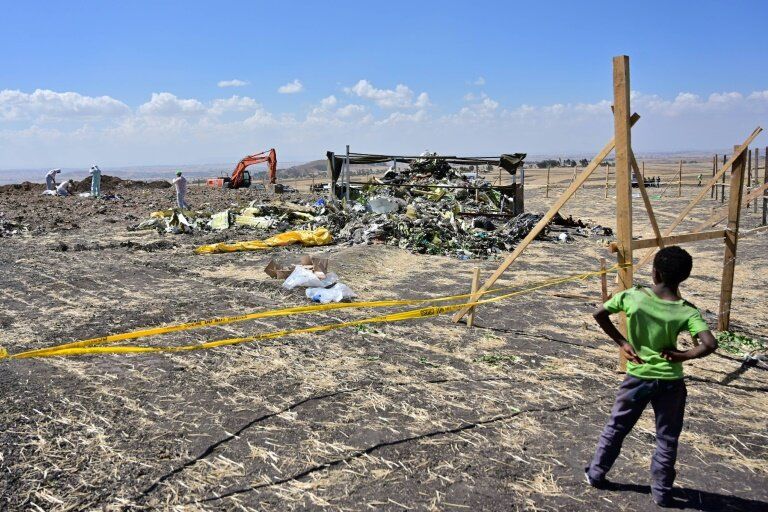
The two planes' flight recorders provided the strongest
indication yet that an anti-stall system malfunctioned in The aviation company has tried to restore its
both the Ethiopian Airlines crash of March 10, 2019—the battered reputation, even while continuing to insist
aftermath of which is seen here—and Lion Air's 2018       that the MAX is safe.
crash in Indonesia

Boeing's MCAS anti-stall system, which was
implicated in the October crash of a 737 MAX 8
airliner in Indonesia, was also activated shortly
before a recent accident in Ethiopia, a source with
knowledge of the investigation said Friday.

The information is among the preliminary findings
from the analysis of the "black boxes" retrieved
from Ethiopian Airlines Flight 302, which crashed
southeast of Addis Ababa on March 10, killing 157
people, the source told AFP on condition of
anonymity.

The information retrieved from the plane's voice
and data recorders was presented Thursday to US Indonesian air safety officials Soerjanto Tjahjono (R), and
authorities, including the Federal Aviation      Nurcahyo briefed journalists in Jakarta during a March
Administration (FAA), the source said.           21, 2019 news conference about the Lion Air crash in
                                                       2018
However, the source said the investigation is still
underway and the findings are not yet definitive.

                                                                                                      1/3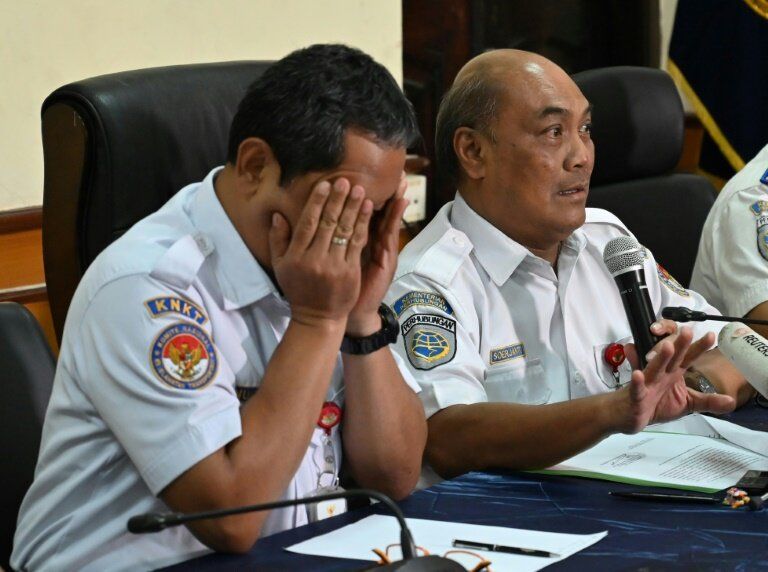
'MCAS was the problem'

The family of 31-year-old Jackson Musoni, a
Rwandan citizen who died in the Ethiopian Airlines
accident, filed a lawsuit against Boeing on
Thursday in a court in Chicago, where the company
has its corporate headquarters. The suit accuses
the aircraft manufacturer of designing a defective
system.

The MCAS, which lowers the aircraft's nose if it
detects a stall or loss of airspeed, was developed
specifically for the 737 MAX, which has heavier
engines than its predecessor, creating aerodynamic
issues.
                                                      Acting FAA administrator Daniel Elwell, seen here
                                                      testifying before a Senate committee on March 27, 2019,
The initial investigation into the October Lion Air   has insisted that the certification of Boeing's Max 8
crash in Indonesia, which killed all 189 people on    airplanes was "detailed and thorough"
board, found that an "angle of attack" (AOA) sensor
failed but continued to transmit erroneous
information to the MCAS.
                                                      Boeing on the defense
The pilot tried repeatedly to regain control and pull
the nose up, but the plane crashed into the ocean. Elwell denied the agency was lax in its oversight,
                                                      saying, "The certification process was detailed and
The flight track of the doomed Ethiopia Airlines      thorough."
flight, which also crashed minutes after takeoff,
"was very similar to Lion Air (indicating) there was He also seemed to cast doubt on the MCAS as the
very possibly a link between the two flights," FAA clear culprit, saying that data collected from 57,000
acting chief Daniel Elwell told Congress this week. flights in the US since the MAX was introduced in
                                                      2017 revealed not a single reported MCAS
The FAA grounded the MAX fleet worldwide, but         malfunction.
not until two days after most countries had done so.
                                                      However, Steven Marks, the lawyer for Jackson
That delay, along with an FAA policy allowing         Musoni's family, said information from the recent
Boeing to certify some of its own safety features,    tragedies, as well as pilot reports, "made it crystal
has raised questions about whether regulators are clear that the cause of these two crashes are the
too close to the industry.                            same."

                                                      "There's no question that MCAS was the problem"
                                                      and that pilots were not aware of the system, he
                                                      told AFP.

                                                      US pilots complained after the Lion Air crash that
                                                      they had not been fully briefed on the system.

                                                      Musoni was among at least 22 United Nations
                                                      employees killed in the Ethiopian crash.

                                                      Boeing also declined to comment on the lawsuit,

                                                                                                      2/3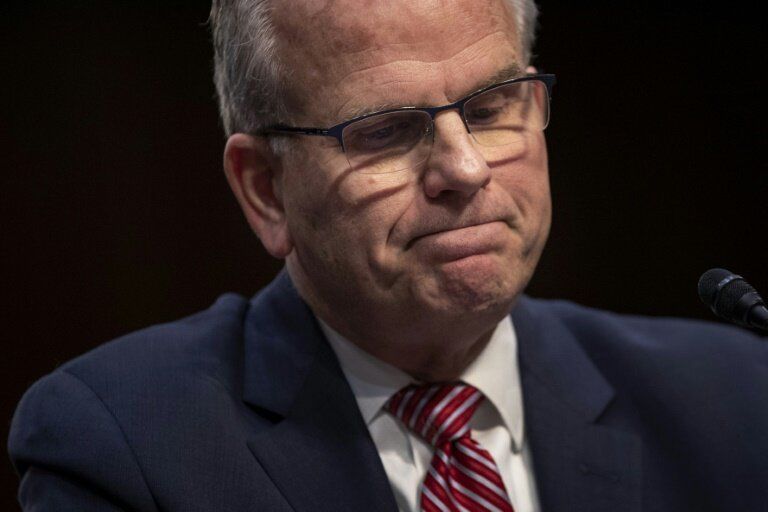
but this week unveiled changes to the MCAS
                                   system that will be installed worldwide, once the
                                   FAA approves.

                                   Among the changes, long in the works, the MCAS
                                   will no longer repeatedly make corrections when
                                   the pilot tries to regain control, and the company
                                   will install a warning feature—at no cost—to alert
                                   pilots when the left and right AOA sensors are out
                                   of sync.

                                   The company also is revising pilot training,
                                   including for those already certified on the 737, to
                                   provide "enhanced understanding of the 737 MAX"
                                   flight system and crew procedures.

                                   © 2019 AFP
                                   APA citation: Boeing anti-stall system was activated in Ethiopia crash: source (2019, March 29) retrieved
                                   19 April 2019 from https://phys.org/news/2019-03-boeing-mcas-anti-stall-ethiopia-source.html

                                   This document is subject to copyright. Apart from any fair dealing for the purpose of private study or research, no
                                   part may be reproduced without the written permission. The content is provided for information purposes only.

                                                                                                                                                3/3

Powered by TCPDF (www.tcpdf.org)
You can also read


