Briefing to the Incoming Parliament - NZ Drug Foundation Policy Briefing 2017 2020 - NZ Drug ...
←
→
Page content transcription
If your browser does not render page correctly, please read the page content below

Briefing to the
Incoming Parliament
NZ Drug Foundation
Policy Briefing
2017 — 2020

The Drug Foundation has been at the
forefront of major alcohol and other drug
debates for 28 years. We take the lead in
Aotearoa New Zealand promoting healthy
approaches to alcohol and other drugs.

Public education,              Community                             Policy
information and outreach       engagement                            development
We create resources and        We work with communities,             We advocate for evidence-based
lead projects in schools and   especially tangata whenua, to find    policies and effective treatment
workplaces to reduce alcohol   effective solutions to drug issues.   services that will build a healthy
and drug harm.                                                       society with the least possible
                                                                     harm from drug use.

                                                                                      www.drugfoundation.org.nz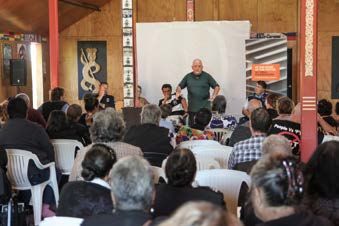
Tēnā koe
The New Zealand Drug Foundation’s vision is for an
Aotearoa free from drug harm.
Our mission is to be the catalyst for people, their communities, service
providers and policy makers to take action that prevents drug harm.

Like you, we are concerned about the harms drugs cause in New Zealand.

This year, more than 20 people died and many more were hospitalised
after using new and highly toxic synthetic psychoactive substances.
Communities are deeply concerned about the effects of methamphetamine,
and we know that many people who are struggling with drug use can’t get
the help they need.

But there are solutions. We think we can repair the harm, if we do these things:
PRIORITY 1.   Keep young people in school and keep them safe. | PAGE 06
PRIORITY 2.   Reform our laws to treat drug use as a health issue. | PAGE 08
PRIORITY 3.   Invest more effectively in prevention, harm reduction and treatment. | PAGE 10
PRIORITY 4.   Reduce drug harm in communities and respond to emerging challenges. | PAGE 12
You also have some important decisions to make in 2018. | PAGE 16

We look forward to working with you to reduce drug harm over the
next three years and beyond!

Ross Bell
Executive Director

www.drugfoundation.org.nz                                                           Briefing to the Incoming Parliament | December 2017   01

But first – what you
need to know about
drugs in New Zealand.

WE HAVE HIGH RATES                                         MOST DRUG USE IS                       DRUGS CAN CAUSE
OF DRUG USE                                                NOT HARMFUL                            SERIOUS HARM TO SOME
The drugs that cause the most                              While it’s safest not to use           For a small group of users, drug use
harm in New Zealand are                                    alcohol and other drugs, most          – whether legal or illegal – can cause
alcohol and tobacco. Over half                             people are not harmed much,            significant harm. Risks include
a million New Zealand adults                               or at all, by their use.               illness, injury, dependence and
drink hazardously.1                                                                               even death, with the effects borne
                                                                                                  by whole communities.
NEW ZEALAND ADULTS                                                                                • It is estimated 12% of people will
                                                                                                    develop a substance use disorder in

 79%          drank alcohol in the
              past year.1
                                                                                                    their lifetime – and for Mäori, the
                                                                                                    rate is as high as 27%.5
                                                                                                  • A third of reported offences are
                                                            4 out of 5 New Zealand

 16%
                                                            adults who used an illicit drug         committed by people who have
              of New Zealand adults                         in the past year reported
              currently smoke tobacco.1                                                             consumed alcohol.6
                                                            no harmful effects.2
                                                                                                  • About 5000 people die
                                                                                                    each year from smoking

 17%          used illicit drugs
              in the past year.2
                                                                                                    (including second-hand smoke).7
                                                                                                  • There is rising community concern
                                                                                                    about methamphetamine, which
                                                                                                    can cause hallucinations, erratic

 11%          used cannabis
              in the past year.3
                                                                                                    behaviour and psychosis in
                                                                                                    some users.8

                                                               7
                                                                            7 out of 8
                                                                            New Zealand
                                                                            adults who used
                                                                            alcohol in the past
                                                                            year reported no

                                                               8
                                                                            harmful effects.4

02   Briefing to the Incoming Parliament | December 2017                                                          www.drugfoundation.org.nz
THE MOST DISADVANTAGED ARE
OFTEN THE WORST AFFECTED
• Mäori, Pacific people and those
  living in deprived neighbourhoods
  are more likely to experience harm
  from their own alcohol or drug
  use.11
• Mäori, Pacific people and those
  living in deprived neighbourhoods
  are more likely to want help with
  their drug use but not receive it.11
                                         THERE IS NOT ENOUGH
                                         HELP AVAILABLE
                                         • Around 50,000 New Zealanders
                                          receive support to reduce their
                                          alcohol or drug use each year.12
                                          Around 50,000 more want help
                                          but don’t receive it.11
                                         • Services are overextended and
                                          underfunded, and people struggle
                                          to find the help they need at the
                                          time they need it.
                                                                             50,000
                                         20
                                         More than 20 New Zealanders
                                         died in 2017 from taking
                                         synthetic drugs, and many
                                         more had serious long-lasting
                                         health effects.9,10

                                                                                    Around 50,000 people want help
                                                                                    to reduce their alcohol and drug
                                                                                    use but don’t receive it.

www.drugfoundation.org.nz                                                     Briefing to the Incoming Parliament | December 2017   03
CONTINUED

What you need to know
about drugs in New Zealand.

WHY DO PEOPLE                                              WHY IS SOME
TAKE DRUGS?                                                DRUG USE HARMFUL?
People use alcohol and other                               The likelihood of harmful use
drugs for many reasons, including                          patterns developing depends
pleasure and recreation, spiritual                         on a range of social, cultural and
discovery, performance                                     genetic factors. Although chemical
enhancement, experimentation,                              addiction can play a part, more
peer pressure or to self-medicate                          significant factors that contribute
physical problems, emotional pain                          to substance use disorders are
or trauma.                                                 usually underlying trauma, mental
                                                           illness and/or distress.

04   Briefing to the Incoming Parliament | December 2017                                         www.drugfoundation.org.nz
WHY DO WE NEED
TO FOCUS ON DRUGS?

Drug use affects
every level of society.
Focusing on alcohol and
drug reform will help fix
many of the big issues
facing New Zealand today.

                                                         ½             MENTAL HEALTH
                                                         More than half the people
                                                      using mental health services
                                                       are likely to have substance

             11,561
                                                            use problems as well.15
PRISONS
11,561 people have gone to
prison in the past 10 years
for drug offences.13
                                                         12%                    JOBS AND
                                                                               EDUCATION
                                                     12% (of those who have ever
                                                     used drugs) reported harmful
                                                       effects on opportunities for
FAMILY VIOLENCE                                         work/study/employment.2
Alcohol is clearly linked with
child maltreatment and
inter-partner violence.14
                                                                       HOMELESSNESS

             10%
                                                               Substance misuse can
                                                                 increase the chance
POVERTY                                                             of becoming and
10% (of those who have ever used                               remaining homeless.16
drugs) reported drug use had
affected their financial position.2

                                                $1.8b                    SOCIETAL COST

             40%
                                                                Illicit drug use costs
MĀORI                                                      New Zealand $1.8 billion
INEQUITY
                                                          each year in health, social
Māori are more                                              and economic harms.17
disproportionately criminalised
and make up about 40% of those
in prison for drug offences.13

www.drugfoundation.org.nz             Briefing to the Incoming Parliament | December 2017   05
PRIORITY 1:
Keep young people in
school and keep them safe.
Alcohol and drug use is one STRENGTHENING HEALTH EDUCATION MESSAGES ARE NOT REACHING
of the most common reasons WOULD HAVE LIFELONG BENEFITS THE MOST AT-RISK YOUNG PEOPLE
for students to be excluded Schools should be equipping The young people experiencing the
or expelled from school. students with self-management skills most harm from drugs and alcohol
But schools are a major protective and knowledge about alcohol and say they do not see mainstream
factor for reducing alcohol and drug other drugs through the health health messages and services as
harm18 and improving overall life learning area of the curriculum. relevant to them. We can use peer
outcomes. We need to keep young However, there is significant crowd methods to engage these
people in school as long as possible variation in how this part of the young people.
– including those struggling with curriculum is resourced and taught.
their drug or alcohol use.
A WHOLE-SCHOOL TARGETING
PROGRAMME PEER CROWDS
Photo credit: Matheus Bertelli, pexels.com
Tüturu helps implement A 2016 study identified groupings
school-wide changes to reduce of young New Zealanders with
drug and alcohol-related harm shared lifestyles and influences,
and keep students in school. called peer crowds. Peer crowds
that experience the greatest burden
We are running an independently
of harm from alcohol do not
evaluated pilot in 12 schools,
engage with typical mainstream
with support from Odyssey and
messages and services.
other organisations. The Ministry
of Health, Ministry of Education, An interagency steering group is
Health Promotion Agency and implementing recommendations
Police are overseeing the project. from the study, using highly
targeted approaches and
simplifying health advice for
young people.
06 Briefing to the Incoming Parliament | December 2017 www.drugfoundation.org.nzWE RECOMMEND:
• Strengthen implementation of
the health learning area of the
New Zealand curriculum.
• Use evaluated approaches, such
as Tūturu, to keep young people
in school.
• Fund highly targeted initiatives
based on the peer crowd study.
• Fund research, such as the
Youth 2000 study.
• Invest in youth services that can
work in partnership with schools.
Photo credit: Tobil, pexels.com
www.drugfoundation.org.nz Briefing to the Incoming Parliament | December 2017 07PRIORITY 2:
Reform our laws to treat
drug use as a health issue.
5
We all want a happier, THE SOLUTION IS TO TREAT DRUG USE
healthier, more equal AS A HEALTH AND SOCIAL ISSUE
New Zealand. Those who struggle with their
drug use need support, compassion
Unfortunately, New Zealand’s and access to treatment.
current drug law is standing in
the way. We can learn from international
examples such as Portugal, which
The Misuse of Drugs Act 1975 decriminalised the use of all drugs OUR 5 GOALS FOR
criminalises those who struggle in 2001 and invested heavily in A NEW DRUG LAW
with their drug use, rather than prevention, treatment and harm
supporting them. And every year, reduction. Drug use is still
thousands more New Zealanders prohibited, but it does not carry
1
Minimise the harms caused
are left with a conviction that criminal penalties. by drug use, particularly for
impacts on employment, young people
relationships and travel. Despite fears at the time, harmful
drug use in Portugal has fallen,
In 2016:
• 3,511 people were convicted for
drug possession, use and/or use
and drug harms including HIV
infections and overdoses have
reduced dramatically.19
2 Respect
human rights
of a drug utensil13
• 799 people were imprisoned for
drug possession, use and/or use
OUR DRUG LAW SHOULD HAVE CLEAR
GOALS AND FOLLOW THE EVIDENCE 3 Safer communities with
less drug-related crime
of a drug utensil.13 New Zealand is ready to talk about
And yet we have some of the highest
drug use rates in the world. All the
evidence shows that punishing and
drug law reform. In July 2017, we
launched Whakawätea te Huarahi,
a model drug law to 2020 and
4 Promote equity
for Māori
beyond. Our approach is based on
5
threatening people does not stop
the recommendations of the 2011 Be cost-effective and
them using drugs. evidence-based
Law Commission review and on
international evidence.
We want to replace the Misuse of
Drugs Act with a new law that treats
drug use and possession as a health
issue, not a crime. Commercial
supply and trafficking of drugs
would still be illegal.
08 Briefing to the Incoming Parliament | December 2017 www.drugfoundation.org.nzWhakawātea Whakawätea te Huarahi
te Huarahi Check out our model drug law
A model drug law
to 2020 and beyond
Whakawätea te Huarahi for details
on our law reform proposal:
https://www.drugfoundation.org.nz/
assets/uploads/Whakawatea-te-
Huarahi-July2017.pdf
OUR RANGE OF LAW REFORM WHAT ABOUT CANNABIS?
WE RECOMMEND:
RECOMMENDATIONS PROMOTE
MĀORI EQUITY Cannabis causes harm in our
communities, and regulation is the • Remove criminal penalties for drug
Unacceptably, our current drug law responsible way to minimise that use, possession and social supply.
produces hugely disproportionate harm. A regulated market can be • Regulate cannabis so that it can
imprisonment and conviction rates designed to: be legally consumed, produced
for Mäori. The result is endless and sold.
cycles of reconviction. • make it harder for those under 18
• Invest in evidence-based drug
to access cannabis
• Mäori make up 42% of those prevention, education and
• minimise the number of people
convicted for drug offences.13 treatment (see page 10 for
who use the drug, how frequently more on this).
• Amongst cannabis users, nearly
they use it and how potent it is • Update the Psychoactive
twice as many Mäori report legal
• educate people about the risks Substances Act 2013 to regulate
problems as non-Mäori.3
• make it easier for anyone struggling low harm substances, steering
For new legislation to be a success, with their use to access support. people away from more harmful
Mäori need to be partners in its ones (see page 18 for more
development and implementation. on this).
“We are constantly
1,300
asked to create
cultural solutions to
structural problems.
These are structural
problems, and they
Our proposals will reduce Māori must have structural
drug convictions by as many as solutions.”
1,300 per year and improve health TRACEY MCINTOSH,
outcomes by ensuring treatment PROFESSOR OF INDIGENOUS STUDIES
options are culturally responsive. AT AUCKLAND UNIVERSITY
www.drugfoundation.org.nz Briefing to the Incoming Parliament | December 2017 09PRIORITY 3:
Invest more effectively in
prevention, harm reduction
and treatment.
We’d like to see all those who are
struggling with their drug use able
to access a full range of evidence-
based support options at the time
3.5x
that they need them.
Unfortunately, this vision is far from
the current reality. People face long
waiting lists and struggle to access
the support they need.
$M
“ Law reform and treatment
are two sides of the same At least 3.5 times more spent
coin – one won’t work on drug-related law enforcement
without the other.” than on health interventions17
LET'S FLIP THE SCALES
In 2014/15, to address a
$1.8 billion drug problem,
we spent at least 3.5 times more
on drug-related law enforcement
than on health interventions.17
$M
78.3
Health
273.1
It is more cost-effective and
humane to focus on health
rather than enforcement.
Police, Courts and
Corrections
10 Briefing to the Incoming Parliament | December 2017 www.drugfoundation.org.nzINVESTMENT SHOULD BE SPREAD ACROSS:
WE CAN MAKE A REAL IMPACT BY
TARGETING ALL LEVELS OF USE Prevention and education Treatment
If people choose to use drugs, Effective treatment means a range
To be most effective, we need
they start later in life, use less of options to suit different people
targeted approaches for each group
frequently and experience – from peer support, iwi-based
shown in the diagram below, from
less harm. initiatives and one-on-one
those who don’t use drugs at all to
counselling to more intensive
those who are severely dependent. Harm reduction
methods like detox or residential
This means investing in a full This includes information and treatment. We need to increase
range of evidence-based and tools that reduce the risk of drug funding to the whole sector and
culturally responsive options, harm, for example, providing especially at the low threshold end
not just clinical treatment. sterile injecting equipment, drug (those who don’t meet the strict
checking at festivals or shorter criteria for formal treatment).
opening hours for alcohol retailers.
WE RECOMMEND:
NO CURRENT RECREATIONAL HAZARDOUS MILD MODERATE/SEVERE
• Double the treatment budget
USE USE USE DEPENDENCE DEPENDENCE
to eliminate waiting lists.
MEDICAL
• Fund a full range of treatment
ASSISTANCE,
INTENSIVE options, including community-
PROGRAMME based and whānau-based services.
COMMUNITY-LEVEL SUPPORT, • Invest in drug prevention
COUNSELLING, SUPPORTED
WITHDRAWAL, RESPITE CARE and education.
• Remove legal barriers to
BRIEF INTERVENTION, harm-reduction services such
HARM REDUCTION as drug checking.
• Fund a campaign to destigmatise
HARM MINIMISATION, addiction and encourage
SELF-MANAGEMENT AND SELF-CARE help-seeking.
• Fund better research on
EVIDENCED-BASED INFORMATION drug use and treatment needs.
AND AWARENESS RAISING
Source: National Committee for Addictions Treatment (NCAT). Shaping the Sector.20
www.drugfoundation.org.nz Briefing to the Incoming Parliament | December 2017 11PRIORITY 4:
Reduce drug harm in
communities and respond
to emerging challenges.
Although not using drugs at all
is the best option, this is not DRUG TESTING IN
a realistic goal for everyone. THE WORKPLACE
Inevitably, people will take drugs,
WE RECOMMEND: Workplaces increasingly drug-test
sometimes in harmful ways.
employees. Although this may be
For those who do, our focus is
• Strengthen the advice given to appropriate in some settings (for
on preventing and reducing the example, safety-sensitive sites),
employers and employees on
harm that they experience. drug testing is often carried out
the appropriate use of drug
We proactively identify emerging testing and how to keep inappropriately (for example,
issues across New Zealand, design workplaces safe. testing office staff). We advise
innovative solutions and assist employers how to minimise the
communities to implement them. risk of drug impairment in the
These are some pressing issues workplace and provide advice
we are working on. on how testing should be used.
12 Briefing to the Incoming Parliament | December 2017 www.drugfoundation.org.nzDRUG CHECKING AT EARLY WARNING
FESTIVALS AND ELSEWHERE SYSTEM
WE RECOMMEND: WE RECOMMEND: New Zealand’s National Drug
Policy calls for the establishment
• Remove legal barriers • Direct the Ministry of Health of a multi-agency early warning
to drug checking in the urgently to implement a system in 2017, but this hasn’t
Misuse of Drugs Act. multi-agency early warning happened. We need a way to
system to monitor emerging monitor and promptly alert the
drug trends. public, health agencies and Police
This year, the Drug
to any new and harmful drug
Foundation partnered with
trends. An early warning system
KnowYourStuffNZ to provide
could have given us valuable
free drug checking at festivals.
information before and during the
We provided people with
synthetic cannabinoids crisis that
accurate information to help
led to more than 20 deaths in
them make better decisions
2017 and may have saved lives.
and stay safe. The results
speak for themselves:
31%
of the drugs tested were not
what people expected.21
52%
of people said they wouldn’t
take the substance when their
drugs were not what they
thought they were.21
www.drugfoundation.org.nz Briefing to the Incoming Parliament | December 2017 13PRIORITY 4: CONTINUED
Reduce drug harm in
communities and respond
to emerging challenges.
METHAMPHETAMINE
RESIDUE IN HOUSES
WE RECOMMEND: New Zealand spent $52 million New Zealand’s National Drug
last year remediating state houses Policy calls for agencies to work
• Fund research on that contained residues of together to address drug issues
methamphetamine residue methamphetamine22. In fact, and identifies secure housing as
in homes and review the there is no scientific evidence a key protective factor in reducing
New Zealand standards that living in a house where drug harm. Housing New Zealand
accordingly. methamphetamine has previously actively undermines this with its
• End Housing New Zealand’s been smoked causes harm. The ‘zero tolerance’ approach to drug
‘zero tolerance’ policy towards cost is mind-boggling, but so are use in its homes.
$52M
tenants suspected of using the social justice implications –
drugs. Provide support instead. many Housing New Zealand
• Dimiss the Residential clients were forced to leave their
Tenancies Act Amendment Bill homes and are now homeless and
(see page 17 for more on that). facing huge debts, along with their
spent last year remediating state
children and dependants. houses that contained residues
of methamphetamine.
Photo credit: Russell Brown
14 Briefing to the Incoming Parliament | December 2017 www.drugfoundation.org.nzNALOXONE FOR SUPPORTING
OVERDOSE PREVENTION COMMUNITIES
WE RECOMMEND: WE RECOMMEND: As part of our Tautäwhihia Kaua
e Whiu programme, we support
• Urgent action to fund • Invest in iwi-led and Mäori communities to respond
and distribute naloxone community-led health and to the disproportionate harm
emergency overdose kits wellbeing initiatives. caused to them by both drugs
to people using opioids, • Reform our drug laws, which and our drug laws. We bring
their families and are particularly harsh on Māori, local politicians and communities
service providers. and provide support instead. together around drug issues and
lead advocacy training to make
We work alongside communities sure everyone’s voice is heard in
We prioritise our advocacy discussions around law reform
to reduce drug harm and support
towards those most at risk and healthy treatment models.
initiatives that help individuals
of drug overdose. Death is
and whänau struggling with drug
something you cannot
use, particularly methamphetamine.
recover from.
New Zealand records around Photo credit: Hillena Parsons
37 opioid overdose deaths per
year23, but the actual number is
likely much higher24. Naloxone
can reverse opioid overdoses,
and in other countries, it is
distributed widely. This should
be happening in New Zealand,
both to save lives now and to
prepare for a potential opioid
crisis like that in North America.
Although naloxone was
reclassified for distribution
in emergency overdose kits in
2016, the government has failed
to make the medicine available.
www.drugfoundation.org.nz Briefing to the Incoming Parliament | December 2017 15Important decisions
for 2018.
These important legislative MISUSE OF DRUGS
reviews and amendments are (MEDICINAL CANNABIS AND
OTHER MATTERS) AMENDMENT BILL
already on the agenda for 2018.
We are just a phone call away if
you need further information on WE RECOMMEND:
any of these topics.
• Support the Bill through its first
reading to enable the select
committee to research this
issue in depth.
This amendment Bill is likely to
have its first reading in early 2018.
It proposes legalising the use and
cultivation of raw cannabis by
those who suffer from a debilitating
condition or terminal illness.
We support a ‘gold standard’ model
in which cannabis must go through
the same research and approval
79%
process as any other medicine.
However, it will take time for
a full range of affordable
pharmaceutical-grade cannabis
products to be developed.
Patients deserve accessible, safe
and affordable medicine now.
This Bill seeks to give them that and
can work as a stop-gap measure until of New Zealanders
a gold standard system is in place. support cannabis law
reform for pain relief.
CURIA POLL, AUGUST 2017
16 Briefing to the Incoming Parliament | December 2017 www.drugfoundation.org.nzRESIDENTIAL TENANCIES REVIEW OF THE OFFENCES AND
AMENDMENT BILL 1986 (NO. 2) PENALTY REGIME FOR PERSONAL
POSSESSION WITHIN THE MISUSE
OF DRUGS ACT 1975
WE RECOMMEND: Instead, it has been driven by WE RECOMMEND:
Housing New Zealand’s ‘zero
• Do not pass this into law. tolerance’ approach to tenants • Revise the penalties for personal
• Fund research on taking drugs in their properties, possession of drugs in line
methamphetamine residue in by the media response to that and with the Law Commission’s
homes and review the New Zealand by the methamphetamine testing recommendations and our model
standards accordingly. and remediation industry. drug law Whakawātea te Huarahi.
• End Housing New Zealand’s ‘zero
While methamphetamine labs
tolerance’ policy towards tenants
suspected of using drugs. Provide can contain a range of dangerous The National Drug Policy commits
support instead. chemicals with very real health the government to develop options
risks, there is no scientific evidence to minimise harm relating to
For more information:
drugfoundation.org.nz/policy-and- of health harms from living in a penalties for personal possession
advocacy/meth-in-nz/ non-lab property. Despite this, a of drugs. The current prohibition
New Zealand standard has been approach is costly and harmful.
created that sets methamphetamine We recommend removing criminal
levels above which houses should penalties for use and possession of
This Bill has been to select
be ‘remediated’. drugs and drug utensils.
committee and is due for its second
reading. It is meant to address This Bill takes it a step further and This should be the first step of a
methamphetamine ‘contamination’ gives landlords the power to evict much wider review of New Zealand
in rental houses. We think the Bill tenants with only seven days’ drug laws.
is fundamentally flawed. notice when methamphetamine
residue is found. This will cause
The debate about the health risks
significant financial and social
of living in a house where
harm to vulnerable people.
methamphetamine has previously
been smoked (‘non-labs’) has not
arisen from concerns raised by the
medical or scientific establishment.
www.drugfoundation.org.nz Briefing to the Incoming Parliament | December 2017 17CONTINUED
Important decisions
for 2018.
REVIEW OF THE PSYCHOACTIVE
SUBSTANCES ACT 2013
WE RECOMMEND: The Act was created on the Tragically, more than 20
understanding that a regulated New Zealanders died using
• Support any proposed changes market is much safer than an unregulated synthetic psychoactive
that help the Act work as it was unregulated black market, where substances in 2017. Could a
originally intended, allowing profit is the only motive. In a black working Act have prevented these
low-harm substances to be market, products are not tested, and deaths? Yes and no. The reality
strictly regulated. no one is accountable if a product is that there will always be
causes harm or even death. dangerous new drugs entering
the market and people willing
Unfortunately, the legislation was
The Psychoactive Substances Act to try them, but there’s a
passed very quickly, with limited
is due for review in 2018. compelling argument that
public education about itst purpose.
rin 016 a regulating low-risk substances
When the Act was passed, new
R p rch 2and
Some communities epanicked,
would steer most people away
substances were being produced political decision was a to insert
made
so quickly there wasn’t time to a t 1 M testing of from serious harm.
make each illegal before the next
as
a clause banning animal
any new drugs. This rendered the
was developed. Act unworkable, and no products
have been approved for sale.
Thousands of untested products
were legally on sale, and no one
knew their health effects.
The Act made all psychoactive
substances illegal by default.
However, if a substance could be
proven to pose no more than a low
risk of harm, it could be approved
01 3
ct 2
for sale under strict regulations.
es A
bs t anc
e S u No
53
ctiv 1 3 3
a 20 201
ch o c t
17 J
u l y
Psy P u b lic A
n t s e c t i on 2
o f asse see
e t
Dat c e men
m m en
n t e nts www.drugfoundation.org.nz
18
Co Co
Briefing to the Incoming Parliament | December 2017REFERENDUM ON LEGALISING
THE PERSONAL USE OF CANNABIS
WE RECOMMEND:
• Quickly set the date of the
referendum, ensuring adequate
time for consultation, especially
with those most affected by the
current drug laws.
• Fund an evidence-based
information campaign to make
sure the public understands
the issues.
• Ensure health, social justice
and community development
are central to any public debate
around changing the law.
As you will be aware, a referendum
on legalising cannabis will take
place in 2020 or before. It is vital
the public understand the issues
so they can make an informed
decision in the referendum.
www.drugfoundation.org.nz Briefing to the Incoming Parliament | December 2017 19Who we are.
We are a highly skilled and diverse team including CONTACT:
academics, health practitioners, policy advisers Ross Bell
and education specialists. We work closely with Executive Director
Phone: 04 801 6303
MPs on a range of issues, so please be in touch. Mobile: 021 499 292
Email: ross.bell@drugfoundation.org.nz
BOARD
Tuari Potiki (Chair) Matthew Allen (Deputy Chair) Khylee Quince Anna Jacob
Director of Māori Development at Director and owner of public policy Senior Lecturer and Associate Social Intrapreneur at
Otago and of Kai Tahu, Kāti Māmoe consultancy Allen + Clarke Head of School at AUT School The Southern Initiative
and Waitaha descent of Law and of Ngāpuhi and
Ngāti Porou descent
Deb Fraser Dr Greg Hamilton Jim Matheson Lizzie Marvelly
Director of Whakaata Tohu Tohu/ Lead Service Transition for Education system and organisation Public speaker, media
Mirror Services Canterbury District Health Board performance consultant commentator, editor, columnist,
producer and musician and of
Ngāti Whakaue descent
STAFF
Ross Bell Anna Tonks Ben Birks Ang Gilbert Taurua Kali Mercier
Executive Director Senior Health Promotion National Youth Services Principal Adviser, Senior Adviser, Policy and
and Policy Adviser Adviser Tautāwhihia, Kaua e whiu Advocacy
Melanie Saxton Natalie Bould Nathan Brown Samuel Andrews Stephen Blyth
Administrator Communications Adviser Drug Demand Reduction Harm Reduction Projects Communications Manager
Manager Adviser
20 Briefing to the Incoming Parliament | December 2017 www.drugfoundation.org.nzTake advantage
of our resources.
Our mission is to be the catalyst for people, their
communities, service providers and policy makers
to take action that prevents drug harm.
Matters
tance. of Subs
of Subs tance.
octobe
Matters
r 2017
Volume
28 Issue
No.3 www.dr
ugfound
ation.or
g.nz g.nz
ation.or
ugfound
No.1 www.dr
28 Issue
2017 Volume
march
How to stay in control
We
sho
haveuld
ga known
Poundin beat
helpful
The recen
deaths t extraordin
linke ary
use could d with synth spate of 20
line are etic
signs werehave been avoid cannabinoid
at the frontthat is being
others there, but ed. The
Police and ort, somethingget more? who was warning
listening?
supp we
offering ved. How can
well recei
METHHELP, DRUGHELP, POTHELP LIVING SOBER MATTERS OF SUBSTANCE
These online and hard copy resources A vibrant online community for Our regular print and online magazine
offer hope, motivation and useful tools people struggling with their alcohol is one way we share the best evidence
to support change for people who are use. Over 5,000 members use it to on drug policy and practice. A mix of
ready to reduce or quit using drugs. share wisdom, kindness, encouragement articles, candid interviews and
and understanding. compelling personal stories.
HARM REDUCTION INFORMATION
Mini pocket cards offer harm reduction DID YOU KNOW?
advice for young people. A collaboration
with government, NGOs and A series of youth-friendly resources with facts about different drugs,
communities to provide accurate, including advice for adults to have safe conversations with young
accessible information. people about drug use and harm reduction. Videos in te reo Mäori and
English and posters in te reo Mäori, English and Chinese (traditional).
GET IN TOUCH
64 239% TO REQUESTS FOR OUR RESOURCES We can supply any of
HAVE SKYROCKETED BETWEEN these resources for
64% AND 239% IN THE PAST YEAR your electoral offices.
References available online at: nzdrug.org/BiP-2017 Briefing to the Incoming Parliament | December 2017 21References
1. Source: Ministry of Health. (2017). Annual Update of 9. Source: NZ Herald. (2017, September 14). Police: 18. Matua Raki. (2017). Bridging the gap: Young people
Key Results 2016/17: New Zealand Health Survey. Twenty deaths linked to synthetic drugs. New and substance use. Wellington: Matua Raki. Retrieved
Online data tables. Retrieved from https:// Zealand Herald. Retrieved from http://www.nzherald. from https://www.matuaraki.org.nz/uploads/files/
minhealthnz.shinyapps.io/nz-health-survey-2016-17- co.nz/nz/news/article.cfm?c_ resource-assets/MR-Youth-AOD-resource-WEB.pdf
tier-1/ id=1&objectid=11922356 19. Source: Eastwood, N., Fox, E. & Rosmarin, A. (2016). A
2. Source: Ministry of Health. (2010). Drug Use in New 10. Source: Frykberg, E. (2017, November 10). Synthetic quiet revolution: Drug decriminalisation across the
Zealand: Key Results of the 2007/08 New Zealand drugs link fears in Hutt Valley man’s death. Radio globe. Release, Drugs, The Law & Human Rights.
Alcohol and Drug Use Survey. Wellington: Ministry of New Zealand. Retrieved from https://www.radionz. Retrieved from: https://www.tni.org/files/publication-
Health. Retrieved from https://www.health.govt.nz/ co.nz/news/national/343529/synthetic-drug- downloads/a_quiet_revolution_march_31_2016.pdf
system/files/documents/publications/drug-use-in-nz- suspected-in-hutt-valley-death 20. Source: National Committee for Addiction Treatment.
v2-jan2010.pdf 11. Source: Mental Health Commission. (2011). National (2017). Shaping the sector. Retrieved from: http://
3. Source: Ministry of Health. (2015). Cannabis Use Indicators 2011. Measuring mental health and ncat.org.nz/wp-content/uploads/NCAT-shaping-the-
2012/13: New Zealand Health Survey. Wellington: addiction in New Zealand. Mental Health sector-single-pages-full.pdf
Ministry of Health. Retrieved from https://www. Commission: Wellington. Retrieved from http://www. 21. Know Your Stuff NZ. (2017). Our Results. Retrieved
health.govt.nz/system/files/documents/publications/ hdc.org.nz/media/199059/national%20indicators%20 from https://knowyourstuff.nz/our-results/
cannabis-use-2012-13-nzhs-may15-v2.pdf 2011%20measuring%20mental%20health%20
and%20addiction%20in%20new%20zealand.pdf 22. Macdonald, B. (2017, October 2). Meth testing: $52m
4. Source: Ministry of Health. (2010). The 2007/08 New on an irrational fear. Newsroom. Retrieved from
Zealand Alcohol and Drug Use Survey. Online data 12. Source: Ministry of Health (2017, September 11). https://www.newsroom.co.nz/2017/10/01/50790/
tables. Wellington: Ministry of Health. Retrieved from Email correspondence. meth-testing-52m-on-an-irrational-fear
http://www.health.govt.nz/publication/2007-08-new- 13. Source: Ministry of Justice (2017). Official information
zealand-alcohol-and-drug-use-survey-online-data- 23. Ministry of Health. (2015). Number of accidental
request from NZ Drug Foundation. poisoning and mental and behavioural disorder deaths
tables
14. Source: Social Policy Evaluation and Research Unit. where opioid poisoning was recorded on the death
5. Source: Oakley Browne, M. A., Wells, J. E., Scott, K. M. (2015). What works: Reducing the impact of alcohol record, 2004-2011. Official information request.
(eds). (2006). Te Rau Hinengaro: The New Zealand on family violence. Wellington: SUPERU. Retrieved
Mental Health Survey. Wellington: Ministry of Health. 24. Source: Coffin, P. (2012). Under estimated and
from http://www.superu.govt.nz/sites/default/files/ overlooked: A global review of drug overdose and
Retrieved from https://www.health.govt.nz/system/ What_works_Alcohol_%26_Violence.pdf
files/documents/publications/mental-health-survey. overdose prevention, in C. Cook (Eds.), Global State of
pdf 15. National Committee for Addiction Treatment and Harm Reduction 2010: Key issues for broadening the
Platform (2013). A Profile of Alcohol and Other Drug response, (pp. 113-119). London: International Harm
6. Source: Health Promotion Agency. (2017). Alcohol Treatment Services in Aotearoa New Zealand. Reduction.
and crime. Retreived from https://www.alcohol.org. Retrieved from: http://ncat.org.nz/profiling-aod/
nz/resources-research/facts-and-statistics/
nz-statistics/alcohol-and-crime 16. Source: Beaton, S., Cain, T., Robinson, H., Hearn, V. &
ThinkPlace. (2015). An insight into the experience of
7. Source: Ministry of Health. (2017). Health effects of rough sleeping in central Auckland. Retrieved from
smoking. Retrieved from: http://www.health.govt.nz/ https://www.lifewise.org.nz/wp-content/
your-health/healthy-living/addictions/smoking/ uploads/2016/01/rough-sleeping-report.pdf
health-effects-smoking
17. McFadden Consultancy. (2016). The New Zealand
8. Source: NZ Drug Foundation. (2017). About drug harm index 2016 (2nd edn). Wellington: Ministry
methamphetamine. Retrieved from http://drughelp. of Health. Retrieved from https://www.health.govt.nz/
org.nz/a-bit-about-drugs/meth/about-meth publication/research-report-new-zealand-drug-harm-
index-2016
22 Briefing to the Incoming Parliament | December 2017 www.drugfoundation.org.nzOur mission is to be the
catalyst for people, their
communities, service providers
and policy makers to take action
that prevents drug harm.
www.drugfoundation.org.nzYou can also read


