BSA Stand Up Paddleboarding Award
←
→
Page content transcription
If your browser does not render page correctly, please read the page content below
BSA Stand Up
Paddleboarding
Award

The BSA Stand Up Paddleboarding award
introduces Scouts to the basics of stand up
paddleboarding (SUP) on calm water, including
skills, equipment, self rescue, and safety        This program
                                                  implemented
precautions. This award also encourages Scouts         with
                                                   assistance
to develop paddling skills that promote fitness     from the
and safe aquatics recreation.                         ACA.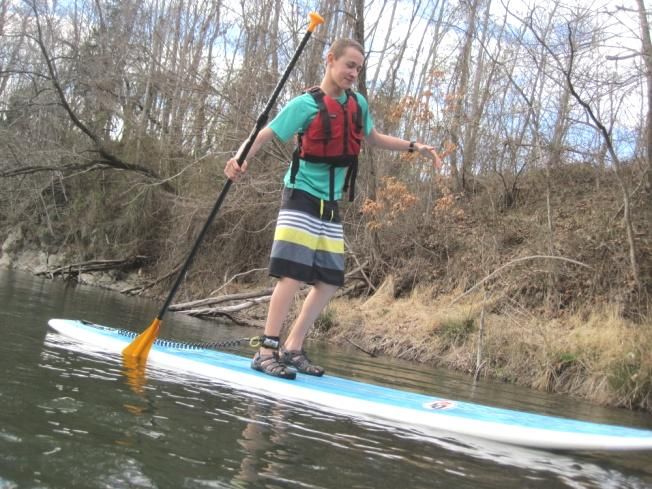
SUP Safety                                                    7. Planning. Units engaged in any SUP activity should
                                                              notify parents and other responsible parties of the
The U.S. Coast Guard considers stand up paddleboards          location and duration of the activity. Units taking day or
as vessels when they are used outside of designated           overnight trips on calm water should consult the BSA
swim areas or ocean surfing zones. Therefore, federal         publication Aquatics Supervision, No. 34346, and other
regulations concerning life jackets, sound devices, and       resources for additional guidance on trip safety. Planning
lights apply.                                                 for all SUP activities should include checking water and
                                                              weather conditions prior to and during the activity and
In Scouting, federal regulations are supplemented by the      include plans for adjusting, delaying, or curtailing the
BSA’s Safety Afloat policy. The complete Safety Afloat        activity when appropriate. In particular, everyone should
guidelines are found in the Guide to Safe Scouting            be off the water for at least 30 minutes after any lightning
available at www.scouting.org. The following list             or thunder.
highlights items specific to stand up paddling.
                                                              8. Equipment. In addition to a board, paddle, and
1. Qualified Supervision. All SUP activities must be          properly sized life jacket, each participant in a SUP
supervised by a mature and conscientious adult who is         activity on calm water should have a whistle and an
trained in and committed to compliance with the nine          appropriate leash. (Leashes are discussed in the
points of Safety Afloat. That supervisor must be skilled in   equipment section.) All equipment should be safety
the safe operation of stand up paddleboards for the           checked and repaired as needed prior to use. Dress
specific activity. For SUP activities on confined, calm       should be appropriate for air and water temperatures.
water free of hazards, the supervisor should be able to       Shoes, sunscreen, a hat, sunglasses, and a water bottle
demonstrate the knowledge and skills required for the         are also recommended.
BSA Stand Up Paddleboarding award and have the
knowledge and ability to perform rescues of paddlers.         9. Discipline. Scouts should know and respect the rules
Additional skills and knowledge are needed to supervise       for safe paddling and follow directions from those leading
float trips or SUP activities on rivers or the ocean.         the activity. Rules and safety procedures should be
                                                              reviewed before each launch.
2. Personnel Health Review. The supervisor should
review the health histories of all participants and adjust
the activity to anticipate risks associated with individual
health conditions.

3. Swimming Ability. Every participant must complete
                                                              SUP Venues
the 100-yard BSA swimmer classification test to               Training for BSA Stand Up Paddleboarding should be
participate in training for BSA Stand Up Paddleboarding       conducted in calm, flat water free from wind, waves,
or to paddle a SUP during a Scouting function.                current, or outside boat traffic—within swimming distance
4. Life Jackets. Properly fitted Coast Guard-approved         of shore. There should be no submerged trees or
life jackets must be worn by everyone engaged in SUP          structures that could injure an individual falling off a
activities. Type III personal flotation devices are           board. Completion of the training should prepare Scouts
recommended, but inflatable life jackets are appropriate      and leaders to enjoy SUP activities in similar
in calm water for those 16 years of age or older.             environments. That, in turn, can lead to opportunities
                                                              such as flat-water racing. However, the further you
5. Buddy System. Everyone in a SUP activity is                venture from shore, the more you need to know about
monitored by a buddy nearby who can sound an alarm            handling wind, waves, and currents.
and lend assistance if needed. During instruction, the
instructor must also have a buddy familiar with the           Flat-water touring is another possibility. Gear can be
activity.                                                     carried on the deck in waterproof bags. Consult other
                                                              resources for what to carry, where to go, and how to deal
6. Skill Proficiency. Anyone classified as a swimmer          with changing environments.
may engage in SUP training provided by a qualified
instructor. For unit recreational activities in calm,         SUP originated as an offshoot of surfing. It is still used in
confined waters, participants need to be able to control      the surf and has expanded into whitewater. Stand up
the board adequately to return to shore, either on the        paddleboarding in the surf or whitewater requires skills
board or by swimming. Units taking day or overnight trips     beyond those covered in the BSA Stand Up
on calm water should have the skills required for the BSA     Paddleboarding award. Such skills are best acquired
Stand Up Paddleboarding award. SUP activities on rivers       from qualified instruction. Check local paddling clubs and
or the ocean require training beyond that obtained from       the ACA (www.americancanoe.org) for opportunities to
the BSA Stand Up Paddleboarding award.                        learn more advanced skills.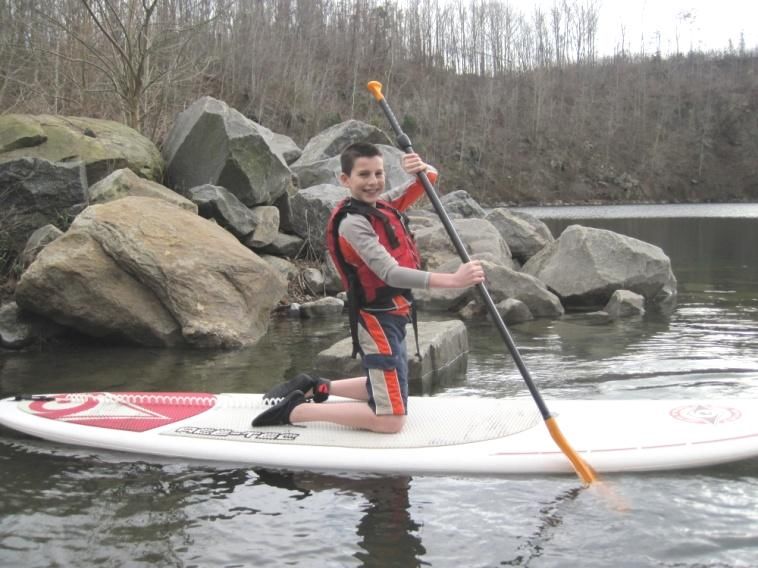
SUP Equipment
Life Jackets. Everyone in a SUP Scouting activity
must wear a properly fitted Coast Guard-approved life
jacket. To determine the proper fit, first check the label to
determine if the life jacket is designed for your weight.
Put it on, fasten and tighten all the straps, and then lift at
the shoulders. It should not lift up around your head.

     Boards.        Stand up
     paddleboards come in a
     range of materials, styles,
     widths, and lengths. Some
     boards are highly specialized
     either for a specific activity or
     for a certain water venue.
     Other all-around boards can
     be used for different activities
     across a range of water
     venues. Generally, the wider
     a board is, the more stable it
     will be on the water.

                                                                 Paddles.        There are many different materials and styles
                                                                 of paddles. Key components to understand when choosing a
                                                                 good paddle are length and weight. Heavy paddles will tire a
                                                                 person quickly, but lighter paddles can be more expensive.
                                                                 There are also numerous techniques for sizing a paddle, so
                                                                 consider going with the manufacturer’s recommendation.
                                                                 However, the key point when sizing a paddle is that when the
                                                                 blade is fully immersed in the water, the grip should not be
                                                                 higher than your shoulder. In addition, different SUP activities
                                                                 might be better executed with a different length of paddle. For
There are different types of stand up                            example, some ocean SUP surfers prefer a shorter paddle
paddleboards: (from left) all-around, touring,                   length than when they are paddling on flat water .
all-around, inflatable, and whitewater.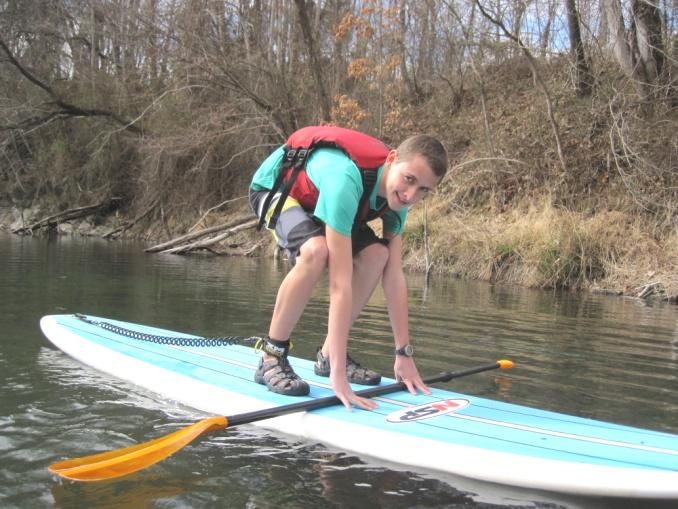
SUP Equipment
Leashes. Leashes are a crucial piece of
equipment in numerous situations. In flat water, a leash
will keep your board from blowing away in the wind and
may keep it from striking another paddler if you fall.
Leashes are either straight, coiled or a hybrid of both.
A coiled lease is appropriate for flat water since a
straight lease may drag in the water and snag paddle
blades or other objects. One end of the leash is               Whistles. In waters under the jurisdiction of the
attached with a Velcro cuff to your ankle or calf. The         U.S. Coast Guard, every participant must have a
other end is attached to a fitting on the tail of the board.   sound-producing device readily accessible. A whistle
                                                               attached to one’s PFD suffices and is advisable on any
Straight or hybrid leashes are typically used in surf. In      body of water.
flowing rivers, with or without whitewater, leash use is
not as straightforward since there is a possibility the
leash could lead to entanglement. For river use, the           Footwear. Despite what you might see in a range
leash should be attached to your life jacket with a            of pictures, footwear that will not fall off your feet is
quick-release mechanism, never to your ankle or calf.          highly recommended. You do not want your SUP
Seek specialized training before attempting SUP in             experience to be cut short with a trip to the local
moving water rivers or whitewater, and follow the              hospital due to a cut from a sharp object, a piece of
advice of your instructor. When in doubt, do not wear a        glass, a fish hook, or an oyster shell.
leash in moving or whitewater.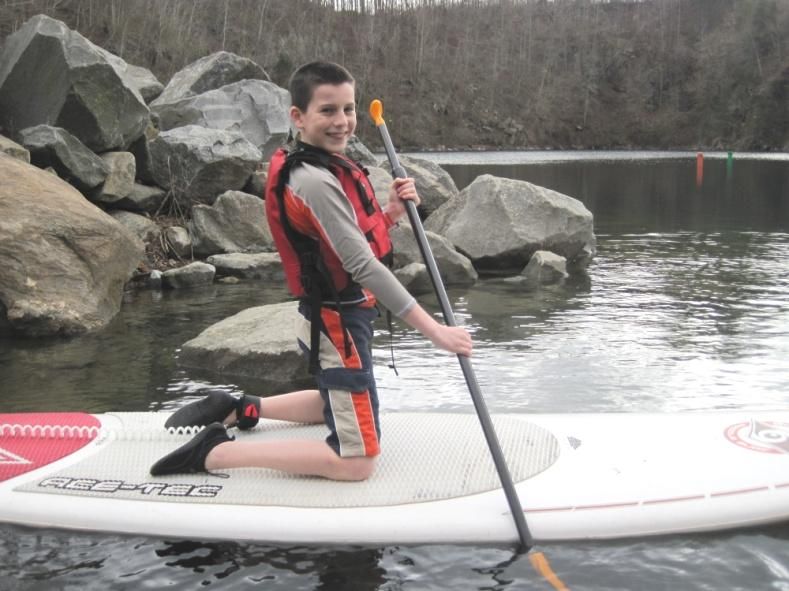
SUP Techniques
Underarm Carry. Place one arm over the rail
and grab the handle or hand well in the center of the
board. Bend with your knees to lift the board—do not
bend with your back. If the board is too heavy or too long
to carry by yourself, use the two-person carry. One
person places his or her arm over the nose of the board
and the other places an arm around the tail of the board,
being careful not to get cut from the fin(s).
SUP Techniques
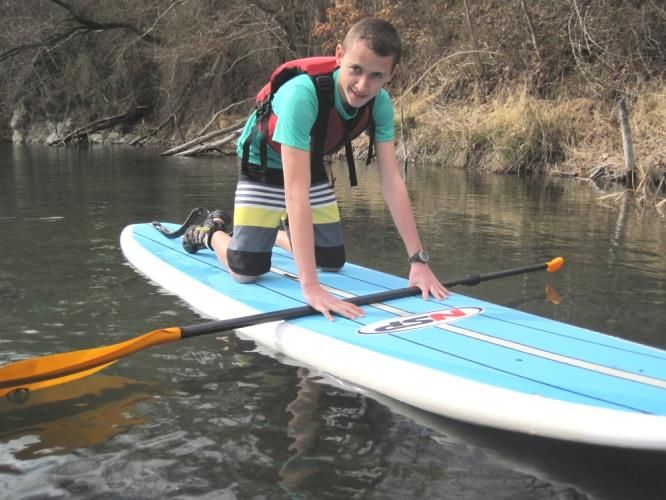
Paddle on Knees. To become comfortable on                   knuckles on each hand are facing the same direction,
the board before standing up, or to paddle away from a      and if you stick your thumbs out, they will be pointing at
dock, paddle on your knees using either an over/under       one another. In using either the over/under or double-
grip, a double-overhand grip, or the standard grip. For     overhand, you do not have to place a hand on the T-
the over/under grip, hold the paddle in the center of the   grip. The standard grip is only for those who can
shaft with your hands in the same configuration as if you   comfortably hold the paddle with one hand on the grip
were holding a baseball bat, realizing though that your     and the other hand on the shaft without putting undue
hands should not be touching each other. To use the         pressure on their shoulders.
double-overhand grip, hold the shaft so that your

               Over/under grip                                        Double-overhand grip

                                                 Standard grip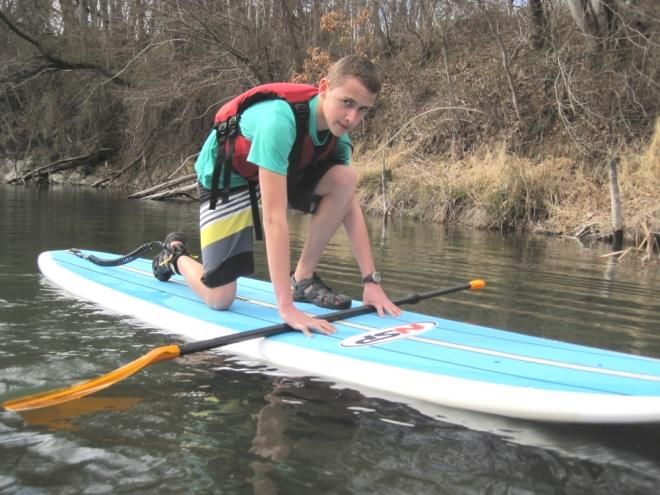
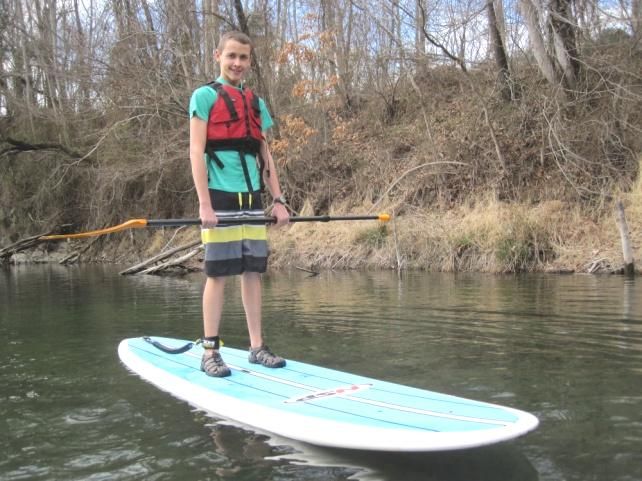
Stand and Balance in Neutral
Position. Here are two techniques to go from
kneeling to standing on a stand up paddleboard. The
first (at right) is to place your paddle on the board in
front of you with the blade on one side of the board and
the grip on the other. Keeping your hands on the shaft,
and staying balanced on the board, slowly drag one foot
up underneath your body. Next bring your other foot
forward while slowly standing up, holding the paddle
perpendicular to the board.

The tripod method (below) is another option to rise from
the kneeling position. Place the blade of the paddle in
the center of the board in front of you with the grip
pointing upwards toward the sky. Then, maintaining your
balance in the center of the board, hold the shaft in an
over/under grip and begin to slowly bring one foot
forward underneath your body. You can then walk your
hands up the shaft while bringing the other foot forward.
Once you are standing in the center of the board and the
board is trim, keep your feet about shoulder width apart
and place one foot approximately one to two inches
forward of the other.
Proper Falling Technique. Try to anticipate
and avoid situations that may lead to a fall. For example,
if a motorboat with a large wake approaches from a
distance, you may want to kneel until the waves arrive
and die down. However, sooner or later you are going to
fall. If you feel yourself losing balance and cannot easily
recover by bracing with your paddle, try to fall away from
the board with your paddle held to the side. You do not
want your elbow or chin to hit the board when falling, nor
do you want your board to shoot out away from you and
potentially injure someone else nearby.
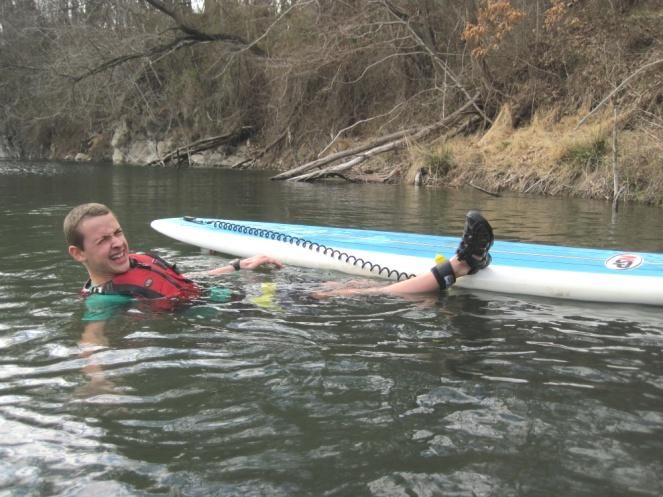
Remount. To recover back onto the board,
approach the board from the center. Using the handle or
hand well, pull/lift your upper torso over the rail and onto
the deck. Next, slide around into the prone position.
Unless there is a strong current, you can place your
paddle next to the board and retrieve it after you
remount since it will float. If you try to remount from the
tail of the board, be very careful that you do not get cut
by the fin(s) or that the board does not shoot out in front
of you and injure someone.
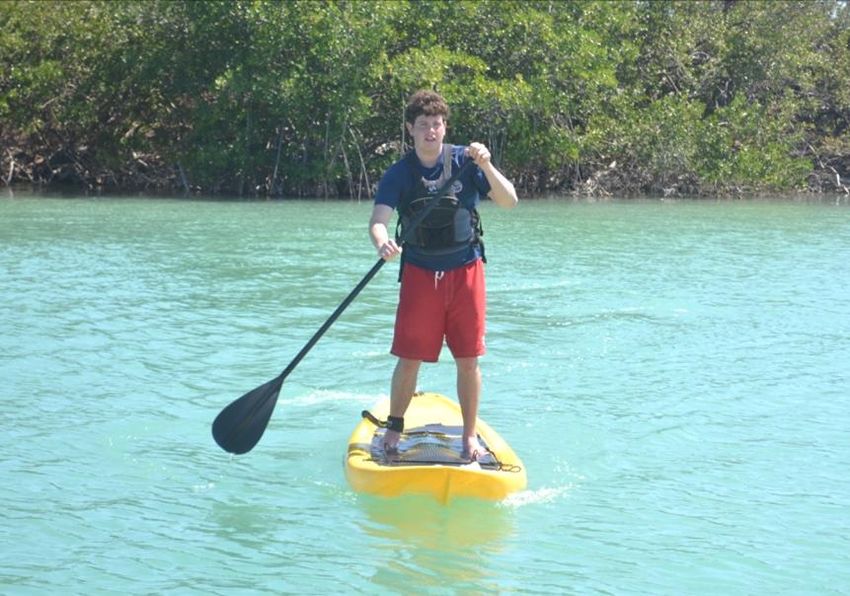
Forward Stroke. Three key components to the forward stroke are the catch phase, the power phase, and the
recovery phase. With one hand on the grip and the other at a comfortable position on the shaft, the paddle should be
as vertical (the shaft being straight up and down) as possible when viewed from the front. Both the top hand and
shaft hand should be on the outside of the rail or both hands out over the water as much as possible. Then rotate
your body and hips around its vertical axis and place the blade of the paddle into the water several feet in front of the
paddler for the catch phase.

At this point, the back face of the blade should be directed forward toward the nose, and the power face should be
directed backward toward the tail. Once the blade is fully submerged, and without splashing, begin to unwind your
body, simultaneously pulling slightly with your shaft arm and pushing with your grip arm for the power phase of the
forward stroke. Transition from the power phase to the recovery phase before your blade passes your feet. A foot or
so before your feet, begin to slice the blade out of the water by dropping your grip hand down toward the centerline
of the board. Then rotate your torso and hips so that the blade swings back toward the nose of the board for the next
catch phase.

         Catch phase                              Power phase                              Recovery phase

Back Stroke. To stop the board or generate initial momentum backward, use the back stroke. Rotate your
torso and hips toward your paddling side and place the paddle blade behind you in the water next to the rail, with the
back face of the blade facing down. Keeping the shaft as vertical as possible, push the blade forward with your shaft
arm while unwinding your torso and hips. Once the blade is no longer vertical in the water (usually after it passes
your feet), begin the recovery phase by dropping your grip hand down toward the centerline of the board.

         Catch phase                                Power phase                           Recovery phase
Forward Sweep. The forward sweep turns the nose of the board away from the paddling side. With your knees slightly bent, rotate your torso and hips so that you place the paddle blade as close to the nose of the board as you can reach with the power face directed away from the nose. Your thumb on your grip hand should be in a thumbs-up position for this part of the catch phase. This assures that the blade is in the correct orientation before beginning the power phase of the stroke. Then, without splashing, begin to unwind your hips and torso back to the normal position so that the blade makes a wide sweeping arc away from the rail. You can end the power phase of the forward sweep either once the paddle shaft becomes perpendicular to the board or you can continue to rotate your body so that the blade exits the water closer to the tail of the board. The start of the recovery phase of the stroke, slicing the blade out of the water, will be dictated by how much you want the board to turn. Reverse Sweep. The reverse sweep turns the nose of the board toward the paddling side. With your knees slightly bent, rotate your torso and hips so that you place the paddle blade as close to the tail of the board as you can reach with the power face of the blade directed toward the tail. Your thumb on the grip hand should be in a thumbs-up position for this part of the catch phase. This assures that the blade is in the correct orientation before beginning the power phase of the stroke. Then, without splashing, begin to unwind your hips and torso back to the normal position so that the blade makes a wide sweeping arc away from the rail. You can end the power phase of the reverse sweep either once the paddle shaft becomes perpendicular to the board or you can continue to rotate your body so that the blade exits the water closer to the nose of the board. The start of the recovery phase of the stroke, slicing the blade out of the water, will be dictated by how much you want the board to turn. Draw Stroke. To move the board sideways, you can use the draw stroke. Begin the stroke by rotating your torso and hips until your shoulders are parallel to the centerline of the board. Then, keeping the paddle shaft vertical and the power face of the blade parallel to the rail, reach out to the side and place the blade into the water. Using your torso and arms, draw the board toward the blade for the power phase. Before the power face of the blade touches the rail, being the recovery phase of the stroke. Drop your grip hand forward toward the nose, thereby slicing the blade out of the water behind you. Remember, due to the fin(s) on the board, you might need to rotate enough so that the power phase of the draw stroke occurs right behind your feet to truly make the board go sideways without turning the nose.
BSA
                     Stand Up Paddleboarding Award Application
Name of applicant

Address

City                                                         State           ZIP code

Council name                                                                 Council number

Unit type                                                                    Unit number

Name of counselor*                                           Qualification

Counselor signature signifies that applicant has completed all requirements Date

Requirements
1. Review the BSA Safety Afloat policy. Explain         7. Discuss the following:
   to your instructor how this applies to stand up             a. Different types of stand up
   paddleboarding.                                                 paddleboards
                                                               b. How to correctly size and hold a paddle
2. Before fulfilling other requirements, successfully              for stand up paddleboarding
   complete the BSA swimmer test: Jump feetfirst
   into water over the head in depth, level off, and    8. Using a properly outfitted stand up paddleboard,
   begin swimming. Swim 75 yards in a strong               safely demonstrate the following:
   manner using one or more of the following                    a. How to carry a stand up paddleboard
   strokes: sidestroke, breaststroke, trudgen, or               b. How to safely paddle away from a dock
   crawl; then swim 25 yards using an easy, resting                 or shoreline (on knees)
   backstroke. The 100 yards must be completed in               c. How to stand and balance on a board in
   one swim without stops and must include one                      the neutral position
   sharp turn. After the swim, rest by floating.                d. How to appropriately fall off a board
                                                                e. How to remount the board
3. Explain safety considerations for stand up                   f. Forward stroke
   paddleboarding in the following environments:                g. Back stroke
   lake, moving water, whitewater, open ocean, and              h. Forward sweep
   ocean surf.                                                  i. Reverse sweep
                                                                j. Draw stroke
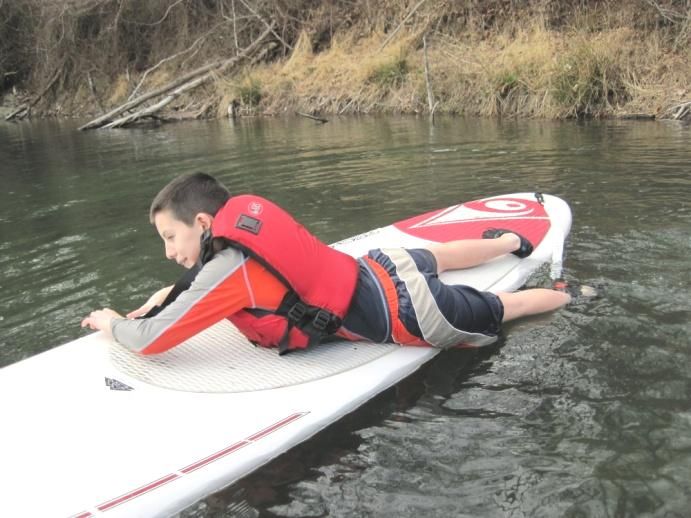
4. Review the characteristics of life jackets most              k. One self-rescue technique—lay on your
   appropriate for stand up paddleboarding and                      stomach and paddle with your hands
   understand why one must always be worn while
   paddling. Then demonstrate how to select and fit     9. With supervision from your instructor, paddle a
   a life jacket for stand up paddleboarding.              course that involves the following:
5. Describe the appropriate type of leash to wear              a. A straight line for 25 yards and stop
   in different water venues.                                      within one board length
                                                               b. A figure 8
6. Name and point out the following:                           c. Moving abeam to the right 10 feet and
      a. Major parts of a stand up paddleboard                     to the left 10 feet.
      b. Parts of a paddle for stand up
          paddleboarding
                                                        * Counselor must review information on back of
                                                        application form.
Information for Counselors
Overview. Any youth or adult who is registered with a troop, ship, or crew and completes the requirements is
eligible for a patch and recognition card, available from the local council service center. Instruction for BSA Stand
Up Paddleboarding is to be conducted under safe conditions on calm, flat water free from wind, waves, current, or
outside boat traffic—within swimming distance of shore. There should be no submerged trees or structures that
could injure an individual falling off a board. One to three hours in one or more sessions should suffice for
instruction and practice. Paddle lengths and life-jacket sizes should be adequate to fit all participants. Counselors
are expected to supplement the material in this document with their own knowledge and resources. All counselors
must be trained in BSA Safety Afloat. Completion of this award should prepare the participants for unit activities in
similar environments and encourage them to seek more advanced courses prior to paddling in more challenging
venues.
Who Can Teach SUP. Any person recognized as a SUP instructor by the ACA | Canoe - Kayak - SUP -
Raft - Rescue or equivalent organization may serve as a counselor for this award, with the approval of the local
council. An ACA Level 1 or Level 2 Stand Up Paddleboarding Assessment Course or ACA Instructor certification is
strongly recommended. A person experienced in SUP skills and safety may serve as a counselor in a BSA summer
camp program under the direction of a currently certified BSA Aquatics Instructor.
SUP Safety. In addition to the basic board-handling skills, the counselor needs to have the following:
• Knowledge of the dangers of falling off the board near docks or onto submerged obstructions–scene
safety
• Knowledge of the different leash types and when and when not to wear them
• Knowledge of how to rescue SUPs; both with and without an attachment point at the nose
Scout-to-Counselor Ratio. There should be one qualified counselor for every six Scouts. Ratios of
youth to adults must also meet the BSA Youth Protection policies. Everyone must be monitored by a buddy,
including the instructor. The instructor’s buddy may serve as an assistant on the water or as a lookout on land if the
instruction is close enough to shore for easy verbal communication. The instructor’s buddy must know enough to
realize when the instructor is having difficultly rather than demonstrating a fall.
References
• ACA | Canoe - Kayak - SUP - Raft - Rescue, www.sup-aca.org or www.americancanoe.org
• BSA Aquatics Supervision, 2013 Printing, No. 34346
Photo Credits
Thank you to the following people for providing the photographs for this document: Kelsey Bracewell,
Chris Stec, Keith Keller, Mike Robinson, and the Florida Sea Base. Thank you to Scouts Nick
Hammond, Grant Schaefer, and Sebastian Keller. Illustrations courtesy of David Bell and John
McDearmon.
Acknowledgments
This Stand Up Paddleboarding Award is the work of a team of dedicated volunteers and professional
BSA staff members. A special thank-you goes to Joe Glasscock and Keith Christopher of the BSA
National Council and volunteers Pat Noack, David Bell, Chris Stec, and Bill Hall of the BSA Aquatics
Task Force. In addition, this document would not have been possible without the support of the ACA
national office staff and the ACA’s SUP Discipline Committee.
430-189
2013 PrintingYou can also read


