BULLETIN MONTHLY ECONOMIC - March 2019
←
→
Page content transcription
If your browser does not render page correctly, please read the page content below

MONTHLY ECONOMIC
BULLETIN    March 2019

        Krungsri Research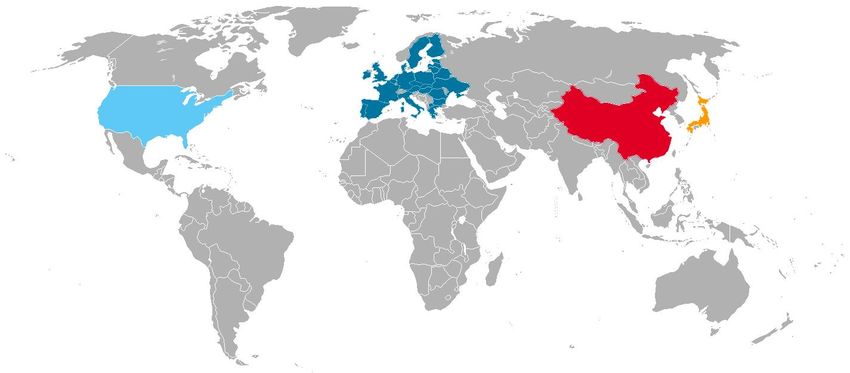
Global: Taking a load off
China
There are still external headwinds, but domestic activity
has started to stabilize.
Government cuts growth target, reiterates targeted and
prudent policy to avoid a substantial slowdown.
Broad policy rate cut is unlikely as transmission of
recent targeted easing is becoming more effective.
Europe
Decent rebound in January-February
US data suggests growth slippage is not
Marked rebound in consumption with Japan
one-sided.
Consumption continued to lose
buoyant outlook as favourable ECB’s dovish surprise: offering new
spending conditions outstrip mixed momentum, but should recover in
TLTROs, pushing out date-contingent
job data. coming months.
rate guidance, slashing growth forecast.
Slim chance of more massive easing as
Housing sector is recovering, with Brexit timeline: UK Parliament backs 3-
recent rebound in sales and current financial conditions are very
month Brexit delay, but Theresa May
homebuilder sentiment, mortgage accommodative.
still hoping for “third time lucky”.
rates likely peaked.
Krungsri Research 2
Global growth is stabilizing driven by solid rebound in
non-manufacturing sector activity
Non-manufacturing PMI rebounded sharply to just 1.1ppt Jump in non-manufacturing PMI led to uptick in
lower than the cyclical high in Sep’18 composite PMI, suggesting GDP growth has stabilised
US ISM PMI Eurozone Markit PMI
62 Manufacturing Non-Manufacturing 62 Manufacturing Non-Manufacturing
60 60
58 58
56 56
54 54
52 52
50 50
48 48
Jan-16
Jul-16
Jan-17
Jul-17
Jan-18
Jul-18
Jan-19
Jan-16
Jul-16
Jan-17
Jul-17
Jan-18
Jul-18
Jan-19
Apr-16
Oct-16
Apr-17
Oct-17
Apr-18
Oct-18
Apr-16
Oct-16
Apr-17
Oct-17
Apr-18
Oct-18
Manufacturing PMI dropped to a 3-year low, but services Manufacturing PMI saw the first contraction since Aug’16
sector continued to lead non-manufacturing data higher but Non-manufacturing PMI hit a 4-month high
China Official PMI Japan Markit PMI
56 Manufacturing Non-Manufacturing 56 Manufacturing Non-Manufacturing
54 54
52 52
50 50
48 48
Jan-16
Jul-16
Jan-17
Jul-17
Jan-18
Jul-18
Jan-19
Jan-16
Jul-16
Jan-17
Jul-17
Jan-18
Jul-18
Jan-19
Apr-16
Oct-16
Apr-17
Oct-17
Apr-18
Oct-18
Apr-16
Oct-16
Apr-17
Oct-17
Apr-18
Oct-18
Source: Institute for Supply Management (ISM), National Bureau of Statistics (NBS), Markit, Bloomberg, Krungsri Research Note: PMI data above 50 = expansion, below 50 = contraction
Krungsri Research 3US: Marked rebound in consumption, buoyant outlook as
favourable spending conditions outstrip mixed job data
Non-farm payrolls decelerated to +20k in February vs 180k consensus estimate, largely blamed on winter weather and payback from unusually strong
gains in prior months. Still, the +12k upward revision to December-January data pushed the 12-month moving average “underlying pace” above 200k.
In the household survey, unemployment fell by 300k, pushing unemployment rate back down to 3.8% from 4.0%. The broader U6 measure of
underemployment declined to 7.3% from 8.1%, reaching its lowest since 2000. Consumption growth has rebounded markedly as retail sales in control
group rose 2.7% YoY in January (vs +0.9% in December). Looking ahead, with stronger wage growth, improving household survey employment data,
and consumer confidence picking up, the immediate outlook for consumer spending remains strong.
’000 sa Change in Non-farm Payrolls % YoY Average hourly earnings
400 3.5
Latest 12-month ma
3.0
300
2.5
200 209
2.0
100 1.5
20
0 1.0
Jul-12
Jul-13
Jul-14
Jul-15
Jul-16
Jul-17
Jul-18
Jul-12
Jul-13
Jul-14
Jul-15
Jul-16
Jul-17
Jul-18
Jan-12
Jan-13
Jan-14
Jan-15
Jan-16
Jan-17
Jan-18
Jan-19
Jan-12
Jan-13
Jan-14
Jan-15
Jan-16
Jan-17
Jan-18
Jan-19
% Unemployment rate % Index Consumer confidence vs Retail sales % YoY
9.0 16 150 6.0
U3 unemployment (LHS)
8.0 14
U6 underemployment 125
7.0 12 4.0
6.0 10 100
5.0 8 2.0
75
4.0 6 Conference Board Consumer Confidence
Retail sales control group* (RHS)
3.0 4 50 0.0
Jan-12
Jul-12
Jan-13
Jul-13
Jan-14
Jul-14
Jan-15
Jul-15
Jan-16
Jul-16
Jan-17
Jul-17
Jan-18
Jul-18
Jan-19
Jan-12
Jul-12
Jan-13
Jul-13
Jan-14
Jul-14
Jan-15
Jul-15
Jan-16
Jul-16
Jan-17
Jul-17
Jan-18
Jul-18
Jan-19
* Retail sales control group (excluding automobiles, gasoline, building materials and food services)
Source: Bureau of Labor Statistics (BLS), Census Bureau, Conference Board, Krungsri Research represents the total industry sales that are used to prepare the estimates of PCE for most goods.
Krungsri Research 4Housing sector is recovering after recent rebound in sales
and homebuilder sentiment, mortgage rates likely peaked
We had earlier anticipated the housing sector indicators would continue to trend down this year. But, we now expect housing activity to pick up this
year for three reasons. First, existing and new home sales have rebounded markedly in recent months. Second, leading indicators – housing starts and
building permits – and home builders' sentiment have improved recently. Third, headwind from higher interest rates should diminish gradually as
mortgage rates have likely peaked. All in, residential investment, which had dragged 2018 GDP, could contribute to growth this year.
Index Home Sales Million % 30-Year Fixed Mortgage Rate
115 800 5.5
* The most reliable leading
indicator for existing home sales
110 700 5.0
105 600 4.5
100 500 4.0
95 Pending Home Sales * 400 3.5
New Home Sales (RHS)
90 300 3.0
Jan-12
Jul-12
Jan-13
Jul-13
Jan-14
Jul-14
Jan-15
Jul-15
Jan-16
Jul-16
Jan-17
Jul-17
Jan-18
Jul-18
Jan-19
Jul-12
Jul-13
Jul-14
Jul-15
Jul-16
Jul-17
Jul-18
Jan-12
Jan-13
Jan-14
Jan-15
Jan-16
Jan-17
Jan-18
Jan-19
Million Leading indicators for Housing Market Index ppt Residential Investment % QoQ saar
1.6 80 1.0 30
1.4 70
0.5 15
1.2 60
1.0 50 0.0 0
0.8 Housing Starts 40
Building Permits -0.5 -15
0.6 30
NAHB Home Builders (RHS) CTG (LHS) Growth
0.4 20 -1.0 -30
Jul-12
Jul-13
Jul-14
Jul-15
Jul-16
Jul-17
Jul-18
Jan-12
Jan-13
Jan-14
Jan-15
Jan-16
Jan-17
Jan-18
Jan-19
1Q10
1Q11
1Q12
1Q13
1Q14
1Q15
1Q16
1Q17
1Q18
Source: National Association of Realtors (NAR), Census Bureau, Mortgage Bankers Association (MBA), National Association of Home Builders (NAHB), Bureau of Economic Analysis (BEA), Krungsri Research
Krungsri Research 5Europe: Decent rebound in January-February data
suggests growth slippage is not one-sided
A sharp rebound in January retail sales (+2.2% YoY from +0.3% in December) provides some reassurance that consumer spending isn’t falling off a
cliff. Looking ahead, we expect household consumption to expand at a moderate pace. Consumer confidence had surged in February led by broad-
based improvement and is consistent with retail sales growth of over 1.5%. Country-level data show industrial production (IP) had rebounded by 1.7%
YoY in France (after falling 2.5% in December) and by 1.8% in Spain (following a 4.2% drop), while Italy booked a smaller drop (-0.8% from -5.5%).
Germany was the only exception as IP tumbled 3.3% YoY (from -2.7%), dragged by a 19% drop in auto production. However, an improvement in
February data (-1.5%) suggests supply problems in the auto industry have waned.
% YoY Euro area consumption data DI DI EC Consumer Confidence
5.0 0 5
Retail sales (LHS) EC Consumer Confidence Germany France Italy Spain
4.0 -3 0
-5
3.0 -6
-10
2.0 -9
-15
1.0 -12 -20
0.0 -15 -25
Jul-14
Jul-15
Jul-16
Jul-17
Jul-18
Jul-14
Jul-15
Jul-16
Jul-17
Jul-18
Jan-14
Jan-15
Jan-16
Jan-17
Jan-18
Jan-19
Jan-14
Jan-15
Jan-16
Jan-17
Jan-18
Jan-19
% YoY Germany Production % YoY % YoY Industrial Production
10 40 12
Industrial Production (LHS) VDA Car Production
8
5 20
4
0 0 0
-4
-5 -20
-8
France Italy Spain
-10 -40 -12
Jan-14
Jul-14
Jan-15
Jul-15
Jan-16
Jul-16
Jan-17
Jul-17
Jan-18
Jul-18
Jan-19
Jan-14
Jul-14
Jan-15
Jul-15
Jan-16
Jul-16
Jan-17
Jul-17
Jan-18
Jul-18
Jan-19
Source: Eurostat, European Commission (EC), Association Of The German Automotive Industry, Bloomberg, Krungsri Research
Krungsri Research 6ECB’s dovish surprise: offering new TLTROs, pushing out
date-contingent rate guidance, slashing growth forecast
% ECB staff projections for Euro area Key notes from ECB Meeting on March 7
2.0
Sep'18 Dec'18 Mar'19 The Governing Council announced dovish policy measures and
1.8 guidance that exceeded market expectations.
1.6 (i) Introduced a third round of TLTROs. The ECB will conduct a
1.4 series of quarterly operations from September 2019 to March
2021 (total of 7 operations), with 2-year maturities at a rate
1.2 indexed to the MRO (currently at 0%). The new TLTROs will
1.0 include an incentive to encourage bank lending, to be capped at
30% of eligible loans.
0.8
(ii) Pushed back forward guidance for policy rate to end-2019.
2018
2019
2020
2021
2018
2019
2020
2021
2018
2019
2020
2021
President Draghi indicated “several” members had proposed an
Real GDP HICP inflation Core HICP extension until March 2020. The ECB is retaining the state-
inflation
contingent element for rate guidance “and in any case for as long
Eurozone Financial Index EUR NEER as necessary”.
Index
Conditions (iii) Slashed growth projections to 1.1% for 2019 (from 1.7%)
1.0 110
0.8 108 and 1.6% in 2020 (from 1.7%). The ECB retained its decision that
0.6 106 risks to its forecasts are tilted to the downside, citing geopolitical
0.4 104 uncertainty, protectionism, and vulnerabilities in EMs. Draghi
0.2 102 continued to note that all ECB members assessed the probability
0.0
100 of a recession was “very low”.
-0.2
-0.4 98
The dovish surprises suggest there is slim chance of additional
-0.6 96
94 policy changes in the near-term given that Eurozone financial
-0.8
-1.0 92 conditions have eased substantially and the euro has weakened,
-1.2 90 suggesting more favorable economic conditions. However, we
expect the ECB to further change its date-contingent guidance
Jan-14
Jul-14
Jan-15
Jul-15
Jan-16
Jul-16
Jan-17
Jul-17
Jan-18
Jul-18
Jan-19
Jan-14
Jul-14
Jan-15
Jul-15
Jan-16
Jul-16
Jan-17
Jul-17
Jan-18
Jul-18
Jan-19
given that markets are not pricing-in the first rate hike until 2021.
Source: European Central Bank (ECB), Bloomberg, Krungsri Research
Krungsri Research 7Brexit timeline: UK Parliament backs 3-month Brexit delay,
but Theresa May still hoping for “third time lucky”
Date Event Perspectives
12 March Second Meaningful House of Commons voted 391-242 to reject Theresa May's revised Brexit deal. The 149-vote margin was less
Vote on Brexit deal than the record 230-vote margin in the First Meaningful Vote on January 15.
13 March Vote on no deal Parliament voted 312-308 to reject no-deal Brexit at any time and under any circumstances.
14 March Vote on delaying Parliament voted 412-202 to delay the Brexit deadline by three months to June 30. The motion adds that the 3-
Brexit month delay would be “for the purpose of passing the necessary EU exit legislation”.
19 March Third Meaningful If Parliament finally passes the Brexit deal, it must also be approved by the EU Parliament in a plenary vote.
Vote on Brexit deal However, if Parliament does not support the Brexit deal, the delay will be much longer and require the UK to
take part in EU Parliament elections in May. A longer Brexit delay would raise the possibility of a softer Brexit
and a second referendum to reverse the Brexit decision which many Brexiters would see as a betrayal.
21-22 March EU summit The issue is what kind of Article 50 extension to grant to the UK. This involves deciding how long a delay should
be, whether it should be one-off, and what the conditions should be. A shorter extension could lead to a
subsequent extension request. A longer extension would allow time for a more extensive review of the UK’s
“red lines”, which EU leaders prefer to avoid.
29 March Scheduled Brexit day Now it is likely to slip past with the UK remaining in the EU. To avert significant market volatility, prudent
precautionary measures have been implemented: (i) BOE has launched lending facility for UK lenders to access
euro funding, starting Mar 13; (ii) a 12-month window for European derivatives traders to continue using UK-
based clearing houses, effective from actual Brexit day.
23-26 May EU Parliament EC President Jean-Claude Juncker said any delay beyond May 23 would require the UK to take part in the EU
elections Parliament elections. However, many EU officials disagree with Juncker’s cut-off date. Instead, they see the key
moment as July 2 (the first sitting of new EU Parliament).
Before EU ratification Given that both sides – the UK and the EU – share an incentive to avoid a “no deal scenario”, the EU is likely to
30 June accept the UK’s extension request.
30 June Brexit day A June 30 exit date is far from certain. Some EU leaders have talked of much longer delays, as has PM May, if
Britain wants to fundamentally reconsider what kind of Brexit deal it wants.
Source: BBC, Financial Times, The Economist, Bloomberg, Krungsri Research
Krungsri Research 8China: External headwinds intact, but domestic activity
has started to stabilize
sa Manufacturing PMI China’s export growth by destination (% YoY)
56 Headline New Orders Export Orders Nov'18 Dec'18 Jan-Feb'19
54 12.1
9.8
6.0 5.1 4.3
52 3.9
1.5 1.4 3.3
0.9
50
-0.3 -1.8
48 -3.5 -5.0 -3.3
-4.6 -4.6
46
-14.6
44
Total US EU ASEAN Latin Africa
Jan-16
Jul-16
Jan-17
Jul-17
Jan-18
Jul-18
Jan-19
Apr-16
Oct-16
Apr-17
Oct-17
Apr-18
Oct-18
( ) share in 2018 (19.3%) (16.5%) (12.9%) America (4.2%)
(6.0%)
sa Non-Manufacturing PMI Krungsri Research’s view
66 External headwinds are intact. Blown by the Lunar New Year distortion,
Construction Services February exports dropped after surging in January, and led exports to
64 drop 4.6% YoY in the first two months, matching the drop in December.
62 The impact of higher tariff is more pronounced as shipments to the US
60 have tumbled, and by smaller magnitudes to other markets. Looking
forward, continued weakness in the Export Orders sub-indices in the
58
Manufacturing PMI suggests export growth will remain weak despite
56 optimism over US-China trade negotiation.
54 On the other hand, domestic economic activity appears poised to
52 stabilize. Services PMI growth is accelerating. Construction PMI is
50 expanding, albeit at a slower pace. New Orders sub-indices in the
Manufacturing PMI rebounded recently. A furry of government
Jul-16
Jul-17
Jul-18
Jan-16
Jan-17
Jan-18
Jan-19
Apr-16
Oct-16
Apr-17
Oct-17
Apr-18
Oct-18
stimulus policies are likely to materialize soon, which could reinforce
the recovery momentum in 2H19.
Note: PMI data above 50 = expansion, below 50 = contraction
Source: National Bureau of Statistics (NBS), Reuters, Capital Economics, CEIC, Financial Times, Bloomberg Krungsri Research
Krungsri Research 9Government cuts growth target, reiterates “targeted and
prudent” policy to avoid a substantial slowdown
2018 2018 2019
Indicator Company tax and social security premium will
Actual Target Target
be reduced by about CNY2trn or 2.2% of GDP,
up from CNY1.3trn last year. This includes 3%
GDP growth cut in manufacturing VAT and 1% cut for
6.6% 6.5% 6.0-6.5%
(% YoY) construction and transport sectors worth up to
CNY600bn or 0.6% of GDP.
Fiscal deficit 2.6% 2.8%
4.1%
(% of GDP)
Further targeted easing to support private and
small firms lending, and reduce their funding
Special local government cost including targeted RRR cut.
bond quota 1.79, 1.35, 2.15,
2% 1.5% 2.2%
(trn CNY, % of GDP)
Debt-swap program will continue to ease local
Reasonable government burden with market-based
TSF, M2 273%, Keep ratio
growth, approach.
(% of GDP) 203% stable
No target
Krungsri Research’s view
The government has revised down 2019 growth target to 6-6.5% from 6.5%, citing external headwinds (e.g. slowing global
growth, ongoing trade policy uncertainty) and slowing domestic demand.
Monetary policy remains “prudent”, implying the government will ease monetary policy in a way that will keep leverage ratio
and M2 money supply stable. Targeted measures, i.e. targeted RRR cuts and targeted medium-term lending facility (TMLF),
should continue or possibly extended, particularly to support small and micro businesses.
Fiscal policy will be “more proactive”. More measures have been announced, including infrastructure spending and various tax
cuts. The widening on-budget deficit target (+0.2% of GDP) and augmented off-budget deficit (+0.7% of GDP) driven by special
local government bond quota would strengthen the fiscal impulse and will be sizable enough to avoid a substantial slowdown.
Note: CPI and unemployment target is set as same as the last year, 3% and 5.5% respectively. They are the ceiling target meaning that official no need to react if the number is below the target.
Source: National People's Congress (NPC), NBS, Bloomberg, Reuters, Capital Economics, CEIC, Krungsri Research
Krungsri Research 10Broad policy rate cuts unlikely as transmission of recent
targeted easing is becoming more effective
With economic data weakening, people are talking about the possibility of broad policy rate cuts. We think this is unlikely for three reasons. First, the
effectiveness of recent targeted policies is more pronounced. Lower interbank rates have started to kick in, and lending rates are dropping. Loans to
non-financial institutions are growing at a cyclical-high pace. Total Social Financing (TSF) has increased recently led by bank loans and the financial
market instead of shadow-banking industry. Second, to avoid financial market volatility, the PBOC is likely to stick with its “targeted and prudent”
guidance. Third, there is more room now than before, for the government to loosen fiscal policy in tandem. For example, the government can opt to
relax some regulations in the housing sector as house prices are stabilizing.
Interest rate (%) 12-month rolling sum of Total Social Financing (TSF)
SHIBOR-Lending rate spread (RHS) 80 Loan Shadow banking
8 4 Corporate Bond Non Financial Enterprise Equity
60 Other Total
Policy rate Effective lending rate 3
6 40
SHIBOR 2 20
4 0
1
-20
2 0 -40
1Q12
3Q12
1Q13
3Q13
1Q14
3Q14
1Q15
3Q15
1Q16
3Q16
1Q17
3Q17
1Q18
3Q18
1Q12
3Q12
1Q13
3Q13
1Q14
3Q14
1Q15
3Q15
1Q16
3Q16
1Q17
3Q17
1Q18
3Q18
Jan-19
12-month rolling sum of loan (% YoY) House price (% YoY)
Non Financial Enterprise and Govt Agency Household 40
80 1-tier 2-tier 3-tier
60 30
40 20
20
10
0
-20 0
-40 -10
1Q12
3Q12
1Q13
3Q13
1Q14
3Q14
1Q15
3Q15
1Q16
3Q16
1Q17
3Q17
1Q18
3Q18
Jan-19
Jul-14
Apr-13
Sep-13
Feb-14
May-15
Oct-15
Mar-16
Aug-16
Apr-18
Sep-18
Jan-12
Jun-12
Nov-12
Dec-14
Jan-17
Jun-17
Nov-17
Source: People's Bank of China (PBOC), NBS, Bloomberg, Krungsri Research
Krungsri Research 11Japan: Consumption continues to lose momentum, but is
set to recover in coming months
Weak growth of two consumption indices confirmed consumption continued to lose momentum this year. First, retail sales growth had edged down.
Second, department store sales have tumbled after China enacted a new e-commerce law in January. The new law requires persons buying goods
for sale online in China to register with the government and pay taxes. As a result, while Chinese tourist arrivals had risen by 19.3%, duty-free sales
of cosmetics and jewelry products at department stores had fallen 7.7% YoY. This could change the structure of inbound tourist spending. Looking
ahead, consumption could improve moderately given better household and business sentiment due to stronger demand ahead of the annual
Golden Week celebration.
Consumption index (% YoY) Tourist arrivals (% YoY)
Department store sales Retail sales Total Chinese tourist
4 40
2 30
0 20
-2
10
-4
-6 Declining tourist arrivals led by worse weather 0
dragged department store sales in 2H18
-8 -10
Jan-18
Mar-18
Jul-18
Aug-18
Nov-18
Feb-18
Apr-18
Sep-18
Feb-18
May-18
Dec-18
Jan-19
Jun-18
Sep-18
Oct-18
Mar-18
Aug-18
Nov-18
Apr-18
May-18
Jul-18
Oct-18
Jan-18
Jun-18
Dec-18
Components of domestic store sales (% YoY) Jan-19 Economic watcher diffusion index
10 Business Household
Related to duty free store sales 54
5
Cosmetic 52
0 &jewelry 50
-5 Food
Household48
-10 Clothing 46
-15 44
May-18
Jan-18
Mar-18
Jun-18
Jul-18
Aug-18
Nov-18
Jan-19
Feb-18
Sep-18
Oct-18
Dec-18
Feb-19
Apr-18
Jul-18
Oct-18
Jan-18
Feb-18
Mar-18
Apr-18
May-18
Jun-18
Aug-18
Dec-18
Sep-18
Jan-19
Nov-18
Source: Cabinet office, Japan Department Stores Association, Nikkei Asian Review , Krungsri Research
Krungsri Research 12Slim chance of more massive easing as current financial
conditions are very accommodative
Financial Gap Index* (19 Feb) BOJ would have to consider additional stimulus if the
1.5 exchange rate affected Japan’s inflation and economy.
Financial institutions Financial market
(22 Feb) BOJ will adopt policy that is most appropriate in light
Real estate Residential investment of economic and financial developments, and has the least
Credit Total Haruhiko Kuroda side-effects. Tax hike in October is unlikely to have a big
1.0
Dovish negative impact. Global economy is expanding “fairly steadily”.
Easing
(26 Feb) The central bank must ramp up monetary stimulus to
0.5 achieve its inflation target as maintaining the current policy for
too long could cause excessive swings in the economy.
Goushi Kataoka
Super Dovish
0.0 (28 Feb) Many board members, including myself, believe the
momentum (to achieve the price goal) is sustainable. As such,
there is absolutely no need to ease further. The demerits of
further easing could exceed the costs, so we need to be careful
-0.5 of debating such an action.
Hitoshi Suzuki
Tightening Neutral
(6 Mar) If the economy deteriorates to the extent that
-1.0 achieving the long-term inflation target becomes difficult, it is
1Q00
1Q01
1Q02
1Q03
1Q04
1Q05
1Q06
1Q07
1Q08
1Q09
1Q10
1Q11
1Q12
1Q13
1Q14
1Q15
1Q16
1Q17
1Q18
necessary to strengthen monetary easing without delay. the
conduct of monetary policy should be data-dependent, not
Yutaka Harada calendar-based.
* Comparing to its potential trend by using HP-filter and using PCA for weighted-aggregate
Dovish
Krungsri Research’s view
Weakening economic data and lingering external uncertainties have prompted the BOJ to take a more dovish stance. However, we see slim chance of
more massive easing for two reasons. First, there are rising concerns lower interest rates would hurt bank profits and the low degree of bond market
function. Second, financial conditions are very accommodative currently. Our financial gap index – the difference between various variables and their
long-tern trends – suggests current financial accommodation policies are close to that employed during overheating periods in 2006-2007 and 2009-
2010. Although they are not broad-based like during those periods, this time, financial institution conditions are expansionary and the real estate sector
is heating up. However, Governor Kuroda and some board members continue to keep options open, saying the BOJ will add accommodative policies if
economic momentum is not on track to achieve the set goals. Thus, unless economic data deteriorate after the October tax hike, there would be very
little stimulus measures. The measures could include: (i) accelerating government bond purchases while keeping to purchasing targets (BOJ's bond
purchases have dropped to JPY40trn, well below its JPY80trn annual guidance); and (ii) allowing 10-year government bond yields to deviate more
narrowly, compared to +/- 0.2ppt from 0%, currently.
Source: Bank of Japan (BOJ), Cabinet office, Statistical Bureau, CEIC, Bloomberg, Krungsri Research
Krungsri Research 13Thailand: Converging towards potential
GDP growth recover close to potential in 4Q18
Thailand’s GDP growth accelerated to 4.1% in 2018 (vs revised-up 4% growth for 2017) after growth recovered to 3.7% YoY in
4Q18 (close to 3.8% potential) from 3.2% in 3Q18. This was in line with median consensus estimate (3.6%) but fell short of our
expectation (4.0%). Sequential growth bounced back to positive (+0.82% QoQ sa vs -0.32% in 3Q18). Output gap remained
positive for the fourth consecutive quarter.
Despite decelerating auto sales (from +19.8% YoY to +8.5%), private consumption growth rose to +5.3% from +5.2% YoY, the
strongest since 1Q13. Food consumption was robust: Food & Non-alcoholic Beverage (+2.4% YoY from +1.3%), Alcoholic Beverage
& Tobacco (+4.5% YoY from -11.6%). Gross fixed investment growth accelerated to +4.2% YoY from +3.9%, reflecting stronger
growth of private investment (+5.5% YoY, strongest since 4Q14). However, public spending was disappointing: investment growth
was flat YoY while government consumption continued to ease. Net exports exerted a smaller drag on GDP: -3.4ppt (unadjusted)
vs -8.4ppt previously, with both goods and services contributing to the improvement.
We now see 2019 GDP growth at 3.8% (instead of 4.1%)
After two years of above-trend growth, we expect the Thai economy to moderate and converge towards its long-term potential of
3.8% this year, 0.3ppt slower than the previous projection. The slower growth forecast reflects: (i) considerably weaker
momentum in 2H18 when sequential growth averaged only +0.25% QoQ sa, way below +1.59% in 1H18; and (ii) more visible
impact of a global slowdown.
We pushed back rate hike expectation to 2Q19 (instead of March)
Given that 4Q18 GDP data was not encouraging and exports started the year on a down note, which over-shadowed sturdy
growth in domestic demand indicators, a March rate hike is becoming less likely in line with the Bank of Thailand’s data-
dependent approach. Given the BOT’s strong intention to “create policy space” and recently-hawkish policy stance (i.e. upbeat on
growth outlook, more vigilant of financial stability risks, little concern about low inflation and strong baht), we remain convinced
the MPC will deliver another 25bps rate hike in 1H19. If that does not happen, it is likely to maintain policy rate and end the
current hike cycle early. Beyond 1H19, it is not appropriate to raise rates because: (i) there is higher possibility central banks in
emerging economies would start to lower rates after the recent surprise rate cut by the Reserve Bank of India; and (ii) global
fundamentals are expected to be weaker in 2020.
Krungsri Research 14We trimmed 2019 GDP growth forecast by 0.3ppt to 3.8%,
now see a rate hike in 2Q19
2019F
Krungsri Research Forecast 2017 2018
Previous Latest
GDP growth YoY (%) 4.0 4.1 4.1 3.8
Pri va te Cons umpti on Expendi ture YoY (%) 3.0 4.6 4.3 4.1
Government Cons umpti on Expendi ture YoY (%) 0.1 1.8 2.6 2.2
Pri va te Inves tment YoY (%) 2.9 3.9 4.8 4.6
Publ i c Inves tment YoY (%) -1.2 3.3 8.0 5.5
Nomi na l Exports i n USD (f.o.b.) * YoY (%) 9.8 7.7 4.5 3.5
Nomi na l Imports i n USD (f.o.b.) YoY (%) 13.2 14.3 6.5 6.0
Current Account Ba l a nce USD, bn 50.2 37.7 32.1 30.7
Touri s t Arri va l s Mn, pers ons 35.6 38.3 41.3 41.1
Hea dl i ne Infl a ti on YoY (%) 0.7 1.1 1.1 1.1
Core Infl a ti on YoY (%) 0.6 0.7 0.9 0.9
Excha nge ra te (end of peri od) THB/USD 32.66 32.42 31.50 31.00
Pol i cy Interes t ra te (end of peri od) (%) 1.50 1.75 2.00 2.00
Duba i crude pri ce - peri od a vera ge USD/bbl 53.1 69.3 66.5 66.5
* Our Customs-based export growth forecast for 2019 is 3.7%
Source: Office of the National Economic and Social Development Council (NESDC), Bank of Thailand (BOT), Ministry of Commerce (MOC), Ministry of Tourism and Sports (MOTS), Krungsri Research
Krungsri Research 15Key revision
Theme Narratives
Lowered 2019 GDP growth After two years of above-trend growth, we expect the Thai economy to moderate and converge towards its
to 3.8% from 4.1% long-term potential of 3.8% this year, 0.3ppt slower than the previous projection. The slower growth forecast
reflects: (i) considerably weaker momentum in 2H18 when sequential growth averaged only +0.25% QoQ sa,
way below +1.59% in 1H18; and (ii) more visible impact of a global slowdown.
Revised down export This reflects more visible impact of the slowing global economy and trade. We are cautiously optimistic of the
growth forecast to 3.5% outlook for exports premised on the following: (i) substantial progress in US-China trade talks having reduced
from 4.5% risk of trade tensions escalating; (ii) Thai exports usually expand more than global trade (relatively high
elasticity); and (iii) manufacturers’ plans to relocate some production bases from China to Thailand due to
trade war concerns.
Trimmed foreign tourist We are becoming concerned about escalating tension between India and Pakistan, which has prompted several
arrivals by 0.2m to 41.1m airlines to reroute or suspend services. The disruption could affect inbound visitors from India and Europe – the
two markets combined account for 21.8% of total foreign arrivals in 2018. However, we continue to assume
this is simply a temporary, idiosyncratic factor. And the decision to waive fees for Visa-on-Arrival (VOA) up to
April offer some reassurance and there was limited impact from the air pollution crisis in Bangkok, reflected by
the surge in January arrivals.
Broad-based downgrade of The slower export growth projection will filter down to private sector spending – the outlook for investment
domestic demand and employment in export-oriented industries is dimmer. Public spending growth saw larger downgrades to
reflect slow progress in five EEC infrastructure investment projects and delays in disbursements of investment
budgets by state enterprises (especially from State Railway of Thailand).
Pushed back rate hike Given that 4Q18 GDP data was not encouraging and exports started the year on a down note, and over-
expectation to 2Q19 shadowed sturdy growth in domestic demand indicators, a March rate hike is becoming less likely in line with
(instead of March) the Bank of Thailand’s data-dependent approach. Given the BOT’s strong intention to “create policy space” and
recently-hawkish policy stance (i.e. upbeat on growth outlook, more vigilant of financial stability risks, little
concern about low inflation and strong baht), we remain convinced the MPC will deliver another 25bps rate
hike in 1H19. If that does not happen, it is likely to maintain policy rate and end the current hike cycle early.
Beyond 1H19, it is not appropriate to raise rates, because: (i) there is higher possibility other central banks in
emerging economies would start to lower rates after the recent surprise rate cut by the Reserve Bank of India;
and (ii) global fundamentals are expected to be weaker in 2020.
Source: Krungsri Research
Krungsri Research 162018 GDP grew 4.1% after 4Q18 growth nears potential
% Thailand’s GDP growth THB, bn Real GDP (sa) THB, bn
6.0 2,700 500
YoY QoQ sa Output gap (RHS)
5.0 2,600 400
Real GDP
Average growth since 2010 = 3.8% 3.7
4.0 2,500 Potential GDP 300
3.0 2,400 200
3.2
2.0 2,300 100
0.8
1.0 2,200 0
0.0 2,100 -100
-1.0 -0.3 2,000 -200
1Q13
2Q13
3Q13
4Q13
1Q14
2Q14
3Q14
4Q14
1Q15
2Q15
3Q15
4Q15
1Q16
2Q16
3Q16
4Q16
1Q17
2Q17
3Q17
4Q17
1Q18
2Q18
3Q18
4Q18
1Q10
1Q11
1Q12
1Q13
1Q14
1Q15
1Q16
1Q17
1Q18
Krungsri Research’s view
Thailand’s GDP growth accelerated to 4.1% in 2018 (vs revised-up 4% growth for 2017) after growth recovered to 3.7% YoY in 4Q18 (close to 3.8%
potential) from 3.2% in 3Q18. This was in line with median consensus estimate (3.6%) but fell short of our expectation (4.0%). Sequential growth
bounced back to positive (+0.82% QoQ sa vs -0.32% in 3Q18). Output gap remained positive for the fourth consecutive quarter.
Despite the sharp slowdown in auto sales (from +19.8% YoY to +8.5%), private consumption growth rose to +5.3% from +5.2% YoY, the strongest since
1Q13. Food consumption was robust: Food & Non-alcoholic Beverage (+2.4% YoY from +1.3%), Alcoholic Beverage & Tobacco (+4.5% YoY from -11.6%).
Gross fixed investment growth accelerated to +4.2% YoY from +3.9%, reflecting stronger growth of private investment (+5.5% YoY, strongest since
4Q14). However, public spending was disappointing: investment growth was flat YoY while government consumption continued to ease. Net exports
exerted a smaller drag on GDP: -3.4ppt (unadjusted) vs -8.4ppt previously, with both goods and services contributing to the improvement.
Sectors which outperformed were Wholesale & Retail Trade, Hotels & Restaurants, and Transport & Communication. Manufacturing sector was also
impressive despite still-weak exports as growth exceeded post-crisis average of +2.9% YoY. Growth of agricultural output was sluggish. The Financial
Services sector weakened further as growth dropped to the slowest since 1Q11. The NESDC said this reflected slower earnings of specialized financial
institutions. But, we think it was largely due to structural headwinds offsetting cyclical improvements led by recovering GDP growth. Hence, the financial
sector now finds itself facing a new normal – average annual growth had tumbled from over 8% in 2010-2017 to around 3% in 2018.
Source: NESDC, Krungsri Research
Krungsri Research 17Strong domestic demand offset export headwinds; non-
financial services sectors were strong
High growth GDP growth by expenditure (% YoY)
Modest/Moderate growth 16.1
2Q18 3Q18 4Q18 12.8
Contraction
9.5 10.3 9.9 10.1
7.9
5.2 5.3 5.5 4.9 4.5
4.1 3.1 3.8 4.2
2.3 1.9 1.4
0.8
-0.1 -0.5 -0.2
-2.2
Private Government Private Public Exports of Exports of Imports of Imports of
Consumption Consumption Investment Investment Goods Services Goods Services
Supply-side GDP data (% YoY)
10.0
2Q18 3Q18 4Q18
8.8
7.3 7.3 7.5
6.5 6.1
5.3 5.3
4.5 4.6 4.2
4.1 3.6
3.2 3.3 3.4 3.1 3.2
2.7
1.4 1.6 1.9 1.8
Agriculture Manufacturing Construction Wholesale & Hotel & Transport & Financial Real estate
Retail trade Restaurants Communication Intermediation
Source: NESDC, Krungsri Research
Krungsri Research 18Private spending remained resilient in January; output of
domestic demand-oriented industries continued to rise
Private consumption growth picked up to +3.3% YoY in January (vs +2.6% YoY in December). Spending on durable goods and services recovered
strongly, while purchases of semi-durable and non-durable goods were stable. Private investment growth rose to +2.1% YoY, reversing from -0.5% in
December, led by broad-based rebound in sub-component indices. The Manufacturing Production Index was subdued at +0.2% YoY, but domestic
demand-oriented industries remained robust: Automotive (+8.9% YoY), Electrical Appliances (+7.6%), Food & Beverages (+1.5%).
% YoY Private spending indicators Private spending indicators 2018 2019
(% YoY) * J F M A M J J A S O N D J
8.0 Consumption Investment Private consumption
6.0 Non-durables
Semi-durables
4.0 Durables
2.0 Services
Non-residents expenditure
0.0 Private investment
Construction area permitted
-2.0
Construction material sales
-4.0 Imports of capital goods
Jan-16
Jul-16
Jan-17
Jul-17
Jan-18
Jul-18
Jan-19
Apr-16
Oct-16
Apr-17
Oct-17
Apr-18
Oct-18
Machinery sales
Newly registered vehicles
* Green > 0%, Red < 0% / Darker green (red) indicates stronger (weaker) momentum
% sa Manufacturing production indicators % YoY Manufacturing Production Weight 2018 2019
(% YoY) * J F M A M J J A S O N D J
72 Capacity utilization (LHS) Industrial production 8.0
All industry 100.0%
70 6.0 Food & Beverages 19.9%
68 Automotive 13.9%
4.0 Petroleum 9.6%
66 Chemicals 9.2%
2.0
64 Rubbers & Plastics 8.9%
0.0 Cement & Construction 5.5%
62
IC & Semiconductors 5.5%
60 -2.0 Electrical Appliances 3.8%
Jan-17
Dec-17
Jan-18
Feb-17
Mar-17
May-17
Jul-17
Feb-18
Mar-18
May-18
Jul-18
Dec-18
Jan-19
Jun-17
Aug-17
Sep-17
Nov-17
Jun-18
Aug-18
Sep-18
Nov-18
Apr-17
Oct-17
Apr-18
Oct-18
Textiles & Apparels 3.5%
HDD 3.4%
* Green > 0%, Red < 0% / Darker green (red) indicates stronger (weaker) momentum
Source: BOT, Office of Industrial Economics (OIE), Krungsri Research
Krungsri Research 19Income conditions continue to improve; prospects remain
robust buoyed by election spending
Farm income grew 4.8% YoY in January (vs +7.6% previously), taking the 12-month moving average to an 11-month high. More agricultural products
saw price increases, especially rice. Non-farm wage growth jumped to +2.4% YoY from +0.8% previously, with growth becoming increasingly broad-
based. In the near-term, given favourable household income conditions, we expect higher domestic spending leading to and after the election, e.g.
election expenditure and a temporary boost from part-time employment created by the election.
% YoY Farm income (12mma) Farm income growth Weight 2018 2019
(% YoY, 12mma)* J F M A M J J A S O N D J
15
Rubber 16.27%
White rice 9.97%
10 Mango 7.66%
Swine 7.27%
5 Hommali 7.03%
Sugarcane 7.03%
Fowl 6.57%
0
Glutinous rice 6.41%
Cassava 5.40%
-5 Shrimp 3.97%
Mar-17
Jul-17
Mar-18
Jul-18
Jan-17
Feb-17
May-17
Jun-17
Aug-17
Sep-17
Nov-17
Dec-17
Jan-18
Feb-18
May-18
Jun-18
Aug-18
Sep-18
Nov-18
Dec-18
Jan-19
Feb-19
Apr-17
Oct-17
Apr-18
Oct-18
Oil palm 3.68%
Maize 3.02%
* Green > 0%, Red < 0% / Darker green (red) indicates stronger (weaker) momentum
% YoY Nonfarm wage (12mma) Average monthly wage Share 2018 2019
2.0 (% YoY, 12mma)* J F M A M J J A S O N D J
Wholesale & retail trade 16.70%
1.5 Manufacturing 16.51%
Accommodation & food service 7.55%
1.0
Construction 5.55%
0.5 Transportation & storage 3.32%
Financial & insurance 1.39%
0.0 Information & communication 0.56%
Real estate 0.51%
-0.5 Electricity, gas, steam 0.31%
Mar-17
Jul-17
Jul-18
Jan-17
Feb-17
Feb-19
May-17
Jun-17
Aug-17
Sep-17
Sep-18
Nov-17
Dec-17
Jan-18
Feb-18
Mar-18
May-18
Jun-18
Aug-18
Nov-18
Dec-18
Jan-19
Apr-17
Oct-17
Apr-18
Oct-18
Water supply 0.23%
Mining & quarrying 0.18%
* Green > 0%, Red < 0% / Darker green (red) indicates stronger (weaker) momentum
Source: BOT, Office of Agricultural Economics (OAE), National Statistical Office (NSO), Krungsri Research
Krungsri Research 20Drought concerns are excessive: possibly weak El Nino
this year, dam water levels currently above 2016 levels
Compared to the 2016 drought, this year’s situation is not worrying. First, the National Oceanic and Atmospheric Administration (NOAA) sees weak El
Nino occurring this year (vs strong El Nino in 2016). Second, water levels in most major dams are currently higher than in 2016. Water levels in
Sirindhorn might be at worrying levels, but crops in the northeast region are drought-tolerant plants. In the central region, water levels in some major
dams are below 2016 levels, but the royal irrigation department can release water from dams in the North region (currently abundant).
El Niño (Drought): Water levels in major dams
Oceanic Nino Index (ONI) (% of total capacity)
Degree of severity of El Niño or La Niña
North North East
3.0
2016 2019 2016 2019
2.5 62
57 58
45 48 49
2.0 34 35 39
26 28 30
1.5
1.0 Bhumibol Sirikit Kwae Noi Ubonrat Lampao Sirindhorn
(13,462) (9,510) (939) (2,431) (1,980) (1,966)
El Niño 0.5
Central & East West & South
Neutral 0.0 2016 2019 2016 2019
46 87
La Niña -0.5 39 36
70 72 78 77
29 52
25 22
-1.0
-1.5
Pasak Klong Si Yad Kra Siew Srinakarin Wachira- Ratchaprapa
-2.0 Chonlasit (420) (299) (17,745) longkorn (5,639)
2009 2010 2011 2012 2013 2014 2015 2016 2017 2018 2019 (960) (8,860)
Note: I) The numbers in parentheses represent full-capacity water storage (million cubic
Note: Index > +0.5, meaning the rain is less than normal level (El Niño); metre) for each dam.
Index < -0.5, meaning the rain is more than normal level (La Niña) II) Data as of March 4, 2019, compared with the same date in 2016.
Source: National Oceanic and Atmospheric Administration (NOAA), Royal Irrigation Department, Krungsri Research
Krungsri Research 21Progress in EEC projects: new city plan effective August will
increase land use in industrial and city areas
Draft of new city plan for EEC (Total 8 million rai)
Zone (land use) Former (Rai) New (Rai) Change
City 916,183 1,364,451 +4.8% Chonburi: Modern City Of The East
Industry 263,561 406,492 +4.3%
Rayong: Biz City
Agriculture 5,619,633 5,211,154 -7.2%
Conservation 838,245 Chachoengsao: Thai Way Of Life
New Cities Industrial Zone
Areas Key Targets Zone Potential areas
U-Tapao Airport (10-60 km • New city EECd Lam Cha Bung
around) • Aviation center
• EEC gateway EECi Wangjan Rayong, Sri
Racha
Map Ta Put industrial estate Upstream petrochemical
EECa U-Tapao--Aviation city of
Pattaya World tourist destination
Eastern Region
Sri Racha • Transit-Oriented Development (TOD) EECh Chachoensao—high
• Digital economy speed train network
Chonburi town Trade & services center Chonburi
Industrial province
Chachoengsao town New city of prime residences
Industrial cluster estate Southern Rayong
Rayong town Residential zone for business workers
(Ban-bung, Pluak Daeng,
Wangjan Rayong Innovation center Ban-khai)
Source: Department of Public Works and Town Planning, Krungsri Research
Krungsri Research 22Thai exports start the year on a down note; we trim 2019
export growth forecast to 3.7% from 4.5%
High growth Exports by major product (% YoY)
Modest/Moderate growth 27.4
Nov-18 Dec-18 Jan-19 19.9
Contraction
9.8
5.2 4.0 3.7 4.7 4.3 4.1
2.8 0.3
-0.9-1.7 -2.0 -1.0 -3.3 -1.7 -1.3 -0.8 -3.2
-5.7 -9.3 -8.6 -5.6 -9.6 -5.8 -7.3
-11.3 -9.5-13.5
Total Agricultural Processed Electronics Automobile Electrical Plastic Rubber Construction Chemical
exports products foods HDD, IC & parts appliances products products materials products
(9.7%) (8.4%) (15.5%) (14.5%) (9.9%) (5.4%) (4.3%) (3.7%) (3.1%)
Exports by major destination (% YoY)
Nov-18 Dec-18 Jan-19
17.6
11.9
8.3 8.0
4.3 2.7 0.9
0.6 0.6
-2.0 -5.0 -4.3 -4.2
-4.8 -7.4 -5.9 -4.5
-8.9 -7.3 -8.3 -9.8
-16.7 -17.4 -16.0
US EU15 Japan China ASEAN5 CLMV Middle East Africa
(11.1%) (9.0%) (9.9%) (12.0%) (15.5%) (11.6%) (3.4%) (3.0%)
Note: ( ) share in 2018
Source: Ministry of Commerce (MOC), Krungsri Research
Krungsri Research 23Imports of raw material recovered strongly, suggesting
better prospects for industrial production
High growth
Imports by major products (% YoY)
Modest/Moderate growth 75.3 Nov-18 Dec-18 Jan-19
Contraction
14.7 14.0 12.3 9.5
4.8 8.7 8.7 8.5 8.8 4.8
2.8 2.4 4.0 3.6
-1.9 -3.1
-8.2
Total imports Fuel lubricants Capital goods* Raw materials** Consumer goods Vehicles
(16.9%) (24.2%) (35.6%) (11.1%) (5.9%)
Note: ( ) share in 2018 * Capital goods excl. aircraft, ship ** Raw materials exclude gold
Krungsri Research’s view
Merchandise exports fell 5.7% YoY in January (vs -1.7% in December), the third contraction in as many months. Shipments were subdued across
markets and products. It was dragged by (i) slowing global trade; (ii) smaller shipment of electronic products to several countries that are part of China’s
supply chains, such as Hong Kong and Taiwan; (iii) further contraction in shipments of several products to China as its economy slows down and due to
US-China trade dispute. However, Thai exports to the US expanded in line with demand to replace imports from China.
Imports jumped 14% YoY in January (vs -8.2% in December), largely explained by volatile items – arms and military weapons for drills. Stripping out
these items, imports grew only 3.7% YoY. The continued rise in imports of core capital goods (excluding aircraft and ships), consumer goods and vehicles
reflected resilient domestic demand. Imports of vehicles & parts accelerated in line with strong domestic car sales. Imports of raw material (excluding
gold) recovered strongly, suggesting better prospects for industrial production. Slower growth of fuel and lubricant imports reflect a gradually larger
base and the recent drop in crude prices, rather than slowing domestic activity. Meanwhile, January trade balance registered a deficit of USD4.03bn,
reversing from USD1.06bn surplus in December.
We revised down 2019 export growth forecast to 3.7% from 4.5%, to reflect more visible impact of the slowing global economy and trade. Substantial
progress in the US-China trade talks has reduced risk of trade tensions escalating. We are cautiously optimistic of the outlook for exports premised on
the following: (i) Thai exports usually expand more than global trade; and (ii) manufacturers’ plans to relocate some production bases from China to
Thailand due to trade war concerns.
Source: MOC, Krungsri Research
Krungsri Research 24Foreign tourist arrivals continue to recover, suggesting
limited impact of air pollution crisis in Bangkok
Foreign tourist arrivals Krungsri Research’s view
4.5 Million (LHS) % YoY (RHS) 30
3.72 Foreign tourist arrivals rose 4.9% YoY to 3.72m in January,
4.0 25 underpinned by fee-waiver for Visa-on-Arrival (VOA) for tourists
3.5 20 from several countries. There was a surge in arrivals from those
3.0 countries, including Taiwan (+31% YoY), India (+24.9%) and China
15
2.5 4.9 (+10.3%). Meanwhile, receipts from foreign tourists rose 2.4%
10
2.0 YoY to THB195bn in January.
5
1.5 Overall, the tourism sector is displaying more positive signs.
1.0 0
However, we will monitor the sector to determine if recovery will
0.5 -5 be sustainable after the VOA measure expires at end-April. For
0.0 -10 full year 2019, we expect foreign tourist arrivals to increase by
Jan-16
Jul-16
Jan-17
Jul-17
Jan-18
Jul-18
Jan-19
Apr-16
Oct-16
Apr-17
Oct-17
Apr-18
Oct-18
8%, close to the 7.5% growth registered in 2018.
High growth
Modest/Moderate growth Foreign tourist arrivals (% YoY)
Contraction
Nov-18 Dec-18 Jan-19
31.8
22.5 19.9 20.2 24.9
10.3 8.7 11.5 9.3 12.3
5.8 3.1 6.0 6.5
2.8 4.3 2.6 2.3 1.2 1.8 4.0 1.2 2.2
-2.6 -4.8 -1.5 -5.5 -8.2
-14.6 -13.7
China ASEAN5 Europe* North Asia** CLMV India Russia US Australia Middle East
(27.5%) (16.3%) (13.8%) (13.5%) (10.5%) (4.2%) (3.8%) (2.9%) (2.1%) (1.9%)
Note: ( ) share in 2018 * Europe excludes Russia ** North Asia excludes China
Source: MOTS, Krungsri Research
Krungsri Research 25Election: Whoever wins, stimulating the economy will be
the top policy agenda
Latest polls suggest no party will win a majority, making it complicated to form a coalition government
In the March 24 election, Pheu Thai party is expected to obtain the largest number of seats in the lower house. However, no
single party is expected to win a majority. Third parties such as the Democrat Party, Future Forward or Bhumjaithai are important
in forming a ruling coalition.
Major political parties are campaigning on promises to boost welfare spending
Short-term policies: Improving the economic well-being of the people is a key policy promised by all major political parties.
Pledges to provide more cash for children, low-income earners, farmers, and the elderly are likely to boost consumer spending, at
least in the near-term. Historical data suggest domestic spending tend to strengthen during and after election periods.
Long-term policies: Most political parties are focusing on restructuring the economy and infrastructure development. Welfare and
economic policies of major political parties look similar to those of the current government, supporting policy continuity. For
major infrastructure projects in EEC, contracts are expected to be awarded by 2Q19. There has been satisfactory progress
recently, with the EEC new city plan scheduled to take effect in August.
Resuming democratic governance will unlock foreign investments and international negotiations
Since the 2014 coup in Thailand, the European Union (EU) has delayed signing cooperation agreements with Thailand.
Meanwhile, Vietnam has negotiated with several countries and reached major trade agreements, and their FDI and exports have
outpaced Thailand’s.
However, Thailand turning back into a democratic state will unlock more trade talks with western countries (such as FTA with the
EU and CPTPP) and open room for more investment and inflows from other countries and mutual funds which are prohibited from
conducting business and transactions with countries under military rule.
Krungsri Research 26Latest polls suggest no party will win a majority, making it
difficult to form a coalition government
Latest polls show a large number of respondents are still undecided. For Prime Minister candidates, Prayut and Sudarat are neck and neck in the polls.
Most polls show Pheu Thai party will obtain the largest number of seats in the lower house. However, no single party is likely to win a majority. Third
parties such as the Democrat Party, Future Forward or Bhumjaithai are important in forming a ruling coalition.
Favorite Party Favorite PM
Phue Thai Palang Pracharath
Democrat Future Forward
Bhumjaithai Others Prayut Sudarat Abhisit Undecided Others
Bangkok Poll 13 12 8 61 62 17 12 7 46 18
Rangsit Poll 17 22 18 7 8 28 26 25 23 26
Nida Poll 36 23 15 8 1 17 26 24 11 12 27
0% 100%
Financial Time
(Survey in urban)
24 9 14 11 42
E-san Center for
Business and Economic 45 7 4 21 6 17
Research
0% 20% 40% 60% 80% 100%
Source: Local Press, Financial Time, Krungsri Research
Krungsri Research 27Short-term policies: Improving household income is top
policy agenda for all major political parities
Short-term policies
Political party
Same key policies Difference in focus and details
PALANG Improving household • Expand eligibility criteria for state welfare cards (for low-
PRACHARATH income is an urgent policy income earners)
“7:7:7 Pracharath for all major parties, such • Provide basic needs and assistance for seniors, disabled,
welfare, society and economy” as… women, laborers, farmers, teachers, SME, students
• Increase living allowance • 3-year debt moratorium for village fund debtors
DEMOCRAT for low-income earners • Farmer revenue-guarantee scheme
“Cutting poverty, • Increase child support • Cash for low-income earners, children, elderly,
fostering people, allowance • Funds for education, social enterprises, and start-ups
building nation” • Free education
• Increase living allowance
PHEU THAI for the elderly • “Fattening people's wallets"
“trimming expenses, • Improve incomes of farmers, SMEs, young entrepreneurs,
increasing incomes, expanding • Increase budget for and workers
opportunities” universal health coverage • 3-year debt moratorium
FUTURE FORWARD • State welfare covering all ages (for mother, children,
“Elevated and Equal youth, and the elderly)
Thailand” • Free education
• Legalize underground lottery operations
BHUMJAITHAI • Tackling bread-and-butter issues
“Empower people, • Proposing marijuana as a new cash crop
reduce state power” • Legalize ride-hailing mobile applications (Grab)
Source: Political Parties’ website, Bangkok Post, Local Press, Krungsri Research
Krungsri Research 28Pledges of larger cash allowances are likely to boost
consumer spending, at least in the near-term
• Cash for children (6-8 years): THB100,000-181,000 per head
• Total government budget: THB70-127bn per year
Monthly allowance (THB) for… To improve
universal
Children Low-income earners Elderly healthcare
(from THB600) (from THB200-300) (from THB600) scheme
PALANG
PRACHARATH 2,000 1,000 1,000 (Not specified)
DEMOCRAT
1,000 800 1,000 (Not specified)
PHEU THAI
(Not specified) (Not specified) (Not specified) (Not specified)
FUTURE
FORWARD 1,200 2,000 (for Youths) 1,800 4,000 per head
Source: Political Parties’ website, The Standard, Local Press, Krungsri Research
Krungsri Research 29Domestic spending tend to strengthen during and after
election periods
t-1 = 100 Private Consumption Expenditure (sa) t-1 = 100 t-1 = 100 Government Consumption Expenditure (sa) t-1 = 100
106 106 108 108
2001 2001
2005 106 2005 106
104 104 2007
2007
104 2011 104
2011
102 102 102 102
100 100 100 100
98 98
98 98
Floods
96 96
96 96 94 94
-1 quarter Election +1 quarter +2 quarter +3 quarter -1 quarter Election +1 quarter +2 quarter +3 quarter
t-1 = 100 Private Fixed Investment (sa) t-1 = 100 t-1 = 100 Public Fixed Investment (sa) t-1 = 100
115 115 110 110
2001
2005 105 105
110 110
2007
2011 100 100
105 105
95 95
2001
100 100 2005
90 90
2007
95 Floods 95 85 2011
85
90 90 80 80
-1 quarter Election +1 quarter +2 quarter +3 quarter -1 quarter Election +1 quarter +2 quarter +3 quarter
Source: NESDC, Krungsri Research
Krungsri Research 30Long-term policies: Most parties focus on economic
restructuring and infrastructure development
Medium- to long-term policies
Political party
Same key policies Difference in focuses and details
PALANG Restructuring and reforms Continuity of existing policies under current government
• Support SMEs, Smart farmers, StartUp, Communities, Green innovation
PRACHARATH such as… • Infrastructure development for future, EEC scheme, high-tech investment hub
“7:7:7 Pracharath • Education4.0, new cities (Isan4.0, Lanna4.0 zone), white cities (healthcare),
• Infrastructure Bangkok5.0 (5G technology), decentralization
Welfare, Society and
• Competitiveness • Reduce hurdle, expand business opportunities
Economy”
DEMOCRAT • Digital economy Tax reform to tackle trade monopoly
• More progressive tax system, education reform, narrowing income inequality
“Cutting Poverty, • Human development • Communal land right deeds and land bank
Fostering People, • Mega-transport projects with regional links, expand EEC projects, trade talks
• Healthcare • Amend outdated legislation and decentralize power
Building Nation”
PHEU THAI Expand role of people and private companies
• Reduce government role, support young entrepreneurs & start-ups
“Trimming • More balanced wealth distribution, deregulation to enhance competitiveness
Expenses, Increasing • Review restrictions for some infrastructure projects, such as digital businesses to be
Incomes, Expanding located anywhere (not only EEC), medical hub to be near Bangkok, enhance
Suvarnabhumi Airport, high-speed train project
Opportunities” • Thailand to create own product brands, engage in more trade talks
FUTURE End economic monopoly and reform the military
• Reduce government role, improve economic efficiency via 3 mechanisms: (i)
FORWARD decentralization of power (to provinces), (ii) improve basic infrastructure, (iii)
“Elevated and develop agricultural tourism and targeted industries in each province
Equal Thailand” • Reform programs: state welfare, tax reform (reduce BOI privileges, increase
property and land tax, increase deduction on personal income tax, education
reform)
BHUMJAITHAI Eliminate hurdles, increase disposable income
• Buriram Model (develop tourism industry to generate income for locals)
“Empower • Profit-sharing scheme for farmers and other industries
people, reduce • Work-from-home schemes, digital home schools
state power” • Local doctors for community healthcare
Source: Political Parties’ website, Bangkok Post, Local Press, Krungsri Research
Krungsri Research 31Most welfare and economic policies are similar with
current government’s, reinforcing policy continuity
Major existing polices of current government and political parties’ views on policy continuity
WELFARE, AID MEASURES, CREATING PRACHARATH STRENGTHEN THAI ECONOMY’S
DEBT-EASING SOCIETY (Public-private collaboration) COMPETITIVENESS
-> Welfare smartcards -> Restructure Agriculture -> Economic development zones
-> Basic needs for individual groups -> Business development -> Infrastructure projects
PALANG ✓ Continue with more cash in ✓ Alternative crops, innovation, ✓ EEC and expand to Southern,
PRACHARATH smartcards, more training cost reduction Northeastern, Lanna zones
✓ Elderly, disabled, women, laborers, ✓ Develop community business & ✓ Continue infrastructure projects
farmers, teachers, SME, students tourism with facilities
DEMOCRAT ✓ Smartcards with other assistance ✓ Guaranteed minimum for farmers’ ✓ Continue EEC project
crops, land bank
✓ Aids for farmers, labors, child, elderly ✓ Develop community business & ✓ Expand to southern region, revise
tourism with facilities high-speed rail project
PHEU THAI Will not cancel immediately if Empower farmers to determine ✓ Agree but will review EEC project
there is no better option crop prices
Welfare for all and 3-year debt Build a strong Thai brand, support ✓ Expand areas in infrastructure
moratorium young entrepreneurs projects
FUTURE Disagree with smartcard Increase land tax, cut deduction Revise EEC project with plan to
FORWARD Welfare for all people, including on personal income tax (RMF) reduce BOI tax incentives
youths, and aid for all provinces Continue the regulatory guillotine Revise infrastructure projects to
public transport nationwide
BHUMJAITHAI ✓ Smartcards with other assistance Work and study 4 days a week ✓ Continue EEC project
✓ Propose marijuana as a new cash Buriram Model, profit-sharing ✓ Expand areas in infrastructure
crop scheme projects
Source: Political Parties’ website, Local Press, Krungsri Research
✓ Agree to continue existing policy Not specified Disagree with existing policy
Krungsri Research 32You can also read


