ACHIEVING RACIAL EQUITY: CALLING THE SOCIAL WORK PROFESSION TO ACTION
←
→
Page content transcription
If your browser does not render page correctly, please read the page content below
SWPI-RPT-29014.Racial-Report_Layout 1 5/29/14 1:12 PM Page 2

ed in 2009 and is a
 is:
policy deliberations.
tion and dissemination

uture issues in

ation

DC 20002-4241                        A C H I E V I N G R A C I A L E Q U I T Y:
202.336.8393
                                     CALLING THE SOCIAL WORK PROFESSION TO ACTION

                                                                                        M AY 2 0 1 4

                                      >   REPORT FROM A THINK TANK SYMPOSIUM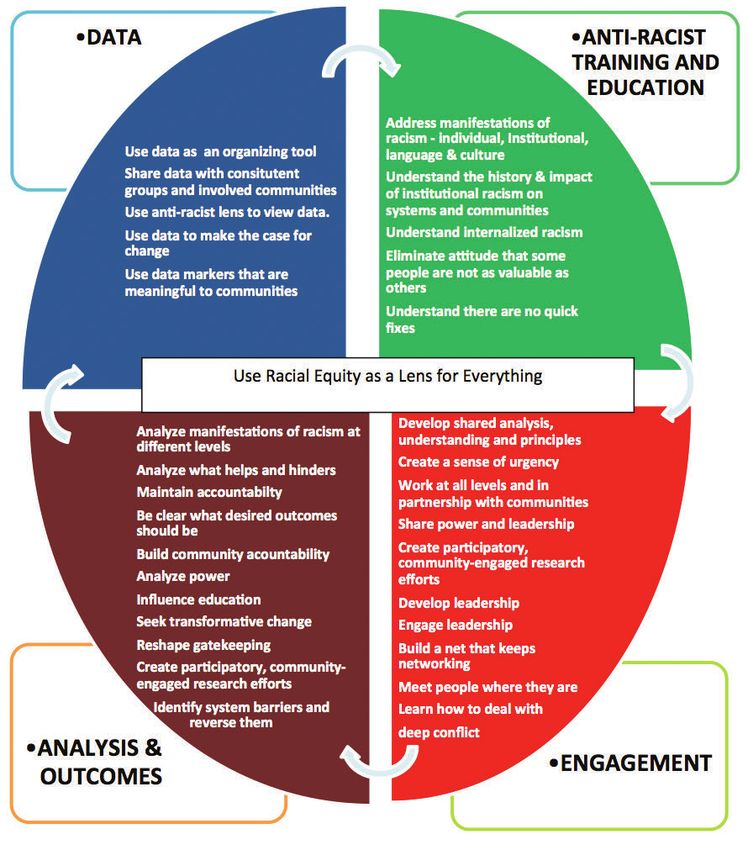
SWPI-RPT-29014.Racial-Report_Layout 1 5/29/14 1:12 PM Page 3

                ACHIEVING RACIAL EQUITY:
                CALLING THE SOCIAL WORK PROFESSION TO ACTION

                Achieving Racial Equity: Calling the Social Work Profession to Action was sponsored by the NASW
                Foundation’s Social Work Policy Institute (SWPI). We would like to thank Casey Family Programs
                (www.casey.org) for their providing partial financial support for the think tank. We would also like to
                thank members of the Anti-Racist Alliance (http://antiracistalliance.com/) and staff and organizers with
                The People’s Institute for Survival and Beyond (www.pisab.org) for their important contributions to the
                think tank and to this report.

                The NASW Foundation and its Social Work Policy Institute especially thank the planning group –
                Mary Pender Greene, Sandra Bernabei, Meizhu Lui, Joyce James, Bayard Love – for their active
                involvement, working with Joan Levy Zlotnik, to bring this think tank to reality.

                                                                                                                                                         TA B L E O F C O N T E N T S

                                                                                                                                                         About the Symposium .............................................................................

                                                                                                                                                              Overview .....................................................................................

                                                                                                                                                              Choosing the Participants ...............................................................

                                                                                                                                                              Symposium Structure .....................................................................

                                                                                                                                                         Laying the Ground Work .........................................................................
                                                                                        F O R M O R E I N F O R M AT I O N C O N TA C T
                                                                                                                                                              The Basics of Color-Blind Racism .....................................................
                                                                                        Joan Levy Zlotnik, PhD, ACSW                                          Undoing Racism ...........................................................................
                                                                                        Director, Social Work Policy Institute
                                                                                                                                                         Identifying Anti-Racist Community Organizing Principles for Achieving Rac
                                                                                        750 First Street NE, Suite 700
                                                                                                                                                         What Can We Learn from Current Targeted Efforts.....................................
                                                                                        Washington, DC 20002
                                                                                                                                                              Texas Health & Human Services .....................................................
                                                                                        202.336.8393
                                                                                        jzlotnik@naswdc.org                                                   Casey Family Programs .................................................................

                                                                                        SocialWorkPolicy.org                                                  Region of Seattle ...........................................................................

                                                                                                                                                              Boston Public Health Commission ...................................................

                                                                                                                                                              Associated Black Charities .............................................................

                                                                                                                                                         Developmental Stages of Achieving Racial Equity: Lessons from Social
                                                                                        Recommended Citation – Social Work Policy Institute (2014).      Work-Connected Initiatives .......................................................................
                                                                                        Achieving Racial Equity: Calling the Social Work Profession to        Evaluating Racial Equity Guidelines ...............................................
                                                                                        Action. Washington, DC: National Association of Social
                                                                                                                                                              Behavioral Health Disparities Initiative – National Association of Dean
                                                                                        Workers.
                                                                                                                                                              Anti-Racism at Smith College School for Social Work .........................
                                                                                        Additional copies of the report can be downloaded from the
                                                                                                                                                         Developing an Action Agenda .................................................................
                                                                                        Social Work Policy Institute’s website, SocialWorkPolicy.org.
                                                                                                                                                         Recommendations ...................................................................................

                                                                                                                                                         Conclusion ...............................................................................................

                                                                                                                                                         References ...............................................................................................

                                                                                                                                                         Appendix ...............................................................................................
                       ©2014 National Association of Social Workers. All Rights Reserved.
SWPI-RPT-29014.Racial-Report_Layout 1 5/29/14 1:12 PM Page 4

  EQUITY:
 PROFESSION TO ACTION

 rk Profession to Action was sponsored by the NASW
I). We would like to thank Casey Family Programs
 ancial support for the think tank. We would also like to
p://antiracistalliance.com/) and staff and organizers with
 (www.pisab.org) for their important contributions to the

licy Institute especially thank the planning group –
hu Lui, Joyce James, Bayard Love – for their active
to bring this think tank to reality.

                                                                                                          TA B L E O F C O N T E N T S

                                                                                                          About the Symposium ................................................................................................................1

                                                                                                               Overview ......................................................................................................................1

                                                                                                               Choosing the Participants ................................................................................................2

                                                                                                               Symposium Structure ......................................................................................................2

                                                                                                          Laying the Ground Work ............................................................................................................3
                         F O R M O R E I N F O R M AT I O N C O N TA C T
                                                                                                               The Basics of Color-Blind Racism ......................................................................................3
                         Joan Levy Zlotnik, PhD, ACSW                                                          Undoing Racism ............................................................................................................5
                         Director, Social Work Policy Institute
                                                                                                          Identifying Anti-Racist Community Organizing Principles for Achieving Racial Equity:
                         750 First Street NE, Suite 700
                                                                                                          What Can We Learn from Current Targeted Efforts........................................................................8
                         Washington, DC 20002
                                                                                                               Texas Health & Human Services ......................................................................................8
                         202.336.8393
                         jzlotnik@naswdc.org                                                                   Casey Family Programs ..................................................................................................8

                         SocialWorkPolicy.org                                                                  Region of Seattle ............................................................................................................9

                                                                                                               Boston Public Health Commission ..................................................................................10

                                                                                                               Associated Black Charities ............................................................................................11

                                                                                                          Developmental Stages of Achieving Racial Equity: Lessons from Social
                         Recommended Citation – Social Work Policy Institute (2014).                      Work-Connected Initiatives ........................................................................................................13
                         Achieving Racial Equity: Calling the Social Work Profession to                        Evaluating Racial Equity Guidelines ..............................................................................13
                         Action. Washington, DC: National Association of Social
                                                                                                               Behavioral Health Disparities Initiative – National Association of Deans & Directors ..........13
                         Workers.
                                                                                                               Anti-Racism at Smith College School for Social Work ........................................................14
                         Additional copies of the report can be downloaded from the
                                                                                                          Developing an Action Agenda ..................................................................................................16
                         Social Work Policy Institute’s website, SocialWorkPolicy.org.
                                                                                                          Recommendations ....................................................................................................................17

                                                                                                          Conclusion ................................................................................................................................19

                                                                                                          References ................................................................................................................................20

                                                                                                          Appendix ................................................................................................................................21
kers. All Rights Reserved.
SWPI-RPT-29014.Racial-Report_Layout 1 5/29/14 1:12 PM Page 1
OVERVIEW DEFINING RACIAL EQUITY
The symposium conveners ascribe to the
participants share NASW’s comm
to “...strive to end discrimination,
Racial Equity definition used by the Center
poverty and other forms of social
for Assessment and Policy Development:
injustice” (NASW, 2008).
“Racial equity is the condition that would be
“If our society can successfully tackle its treatment of people who are “different” by
achieved if one’s racial identity no longer
virtue of the social category of race, it will have changed the manner in which it views, predicted, in a statistical sense, how one
DEFINING INSTITUTIO
fares. When we use the term, we are
OR STRUCTURAL RACI
understands, and responds to ‘differentness’ in other forms” thinking about racial equity as one part of As cited in Institutional Racism
racial justice, and thus we also include work
(National Association of Social Workers [NASW], 2007).
the Social Work Profession: A C
to address root causes of inequities not just to Action (NASW, 2007):
their manifestation. This includes “Institutional or Structural Racism is
elimination of policies, practices, attitudes social, economic, educational, and p
and cultural messages that reinforce forces or policies that operate to fos
differential outcomes by race or fail to discriminatory outcomes or give pre
eliminate them.” to members of one group over othe
to implement specific strategies to November 17 and 18, 2013 at
A s of 2013, there is not a single
profession in the United States change their own practices and the NASW’s national office in Washington,
derives its genesis from the origins
Center for Assessment and Policy Development race as a concept (Barker, 2003; So
(U.S.) that requires its professionals to institutions in which they work. DC. The think tank received partial
www.racialequitytools.org/glossary# 2004). Race as a biological fact has
demonstrate an understanding of funding support from Casey Family
racial-equity invalidated by biologists and geneti
structural racism, nor has a single Thus, there is a need to build on Programs and was planned by an
but race as a social construct is very
profession or association established ‘cultural competence’ frameworks interdisciplinary group including SWPI
Physical traits still have meaning as
an official base of competencies to NASW, 2001; 2007) to develop a director Joan Levy Zlotnik and New
markers of social race identity. It is
address race and racism. practical and actionable ‘racial equity’ York City NASW chapter leaders
> CHOOSING THE
social race identity that confers plac
framework. Cultural competence is a Sandra Bernabei and Mary Pender
in the social hierarchy of society, an
Still, in every institution we touch, useful and necessary practice Greene, along with anti-racist
PARTICIPANTS
thereby access to or denial of privile
data show that white people have framework; however, it is insufficient to community organizers/race equity
Symposium organizers sought to
power, and wealth (Smedley &
considerably better outcomes, even achieve racial equity. It is not just how experts Joyce James, social worker from
convene leading national race equity
Smedley, 2005).”
when we control for a host of other we relate and interact and understand Texas, Bayard Love of Boston and
experts; key social work stakeholders
factors. Recent killings of young men people in our individual interactions, Meizhu Lui of Hawaii.
from all facets of the social work
like Trayvon Martin, the lack of legal we also need to understand how our
profession — including practitioners,
repercussions, and the ensuing national systems and services are structured. The Achieving Racial Equity symposium
policy makers, organizers,
conflict underscores the urgency of brought renewed attention to the
administrators, researchers and > SYMPOSIUM STRUCT
deepening our efforts to address In addition to being culturally strategies outlined in NASW’s The symposium was comprised o
academicians; along with funders, and
institutionalized racism. While the U.S. competent, it is essential for NASW to Institutional Racism & the Social Work series of presentations, facilitated
community organizers who are
has made some gains with respect to 1) officially define racism as a systemic Profession: A Call to Action (2007) and exercises, discussions, and small
committed to undoing racism and
representation and race relations, the phenomenon, 2) set actionable built on NASW’s leadership in workgroups. (See Appendix 1 fo
achieving racial equity. (For the List of
country is hungry for an effective way competencies to guide professional development of standards and the Symposium Agenda). All wer
Participants see Appendix 2). The think
to achieve racial equity. development, and 3) develop best indicators for achievement of cultural focused on:
tank provided an opportunity to learn
practices for planning, executing and competence in social work practice > understanding the roots and cu
from each other and to consider how
Given NASW’s primary mission “to measuring the reduction and eventual (NASW 2001; NASW, 2006). As with manifestations of institutional a
we can most effectively fulfill our
enhance human well-being and to help elimination of racial inequity. NASW’s 2007 document, symposium structural racism and
responsibility to address structural
meet the basic human needs of all organizers believe that by being > identifying principles, practice
racism by changing our own behavior,
people, with particular attention to the With these goals in mind, the NASW rigorous and tenacious in our work for analysis that are effective for
sharing power, and helping change the
needs and empowerment of people under the auspices of its Social Work racial equity, we will drastically undoing them.
functioning of institutions and
who are vulnerable, oppressed, and Policy Institute (SWPI), convened a think improve outcomes for all populations.
organizations. Organizers designed the
living in poverty,” (NASW, 2008), tank symposium, Achieving Racial Symposium organizers selected
group to be interdisciplinary,
social workers should be leading efforts Equity: Calling the Social Work presenters and panelists whose
intergenerational, and multi-racial.
Profession to Action that was held on networks and organizations have
Many of the participants are current
leaders and members of NASW; all demonstrated significant progres
1 > ACHIEVING RACIAL EQUITY: CALLING THE SOCIAL WORK PROFESSION TO ACTION
SWPI-RPT-29014.Racial-Report_Layout 1 5/29/14 1:12 PM Page 2
OVERVIEW DEFINING RACIAL EQUITY
The symposium conveners ascribe to the
participants share NASW’s commitment
to “...strive to end discrimination,
towards racial equity and have
developed practical knowledge about
Racial Equity definition used by the Center
poverty and other forms of social what does and does not work.
for Assessment and Policy Development:
injustice” (NASW, 2008). Presentations were designed to
“Racial equity is the condition that would be
If our society can successfully tackle its treatment of people who are “different” by
catalyze conversations among all
achieved if one’s racial identity no longer
participants in order to draw out the
rtue of the social category of race, it will have changed the manner in which it views, predicted, in a statistical sense, how one
DEFINING INSTITUTIONAL collective wisdom of the group.
fares. When we use the term, we are
OR STRUCTURAL RACISM
nderstands, and responds to ‘differentness’ in other forms” thinking about racial equity as one part of
The symposium speakers included
As cited in Institutional Racism &
racial justice, and thus we also include work
Eduardo Bonilla-Silva (Duke University);
(National Association of Social Workers [NASW], 2007).
the Social Work Profession: A Call
to address root causes of inequities not just
Ron Chisom, Kimberly Richards and
to Action (NASW, 2007):
their manifestation. This includes “Institutional or Structural Racism is the
Diana Dunn (The People’s Institute for
elimination of policies, practices, attitudes social, economic, educational, and political
Survival and Beyond); Joyce James
and cultural messages that reinforce forces or policies that operate to foster
(Race Equity Consultant); Ralph Bayard
differential outcomes by race or fail to discriminatory outcomes or give preferences
(Casey Family Programs); Diane
eliminate them.” to members of one group over others,
ement specific strategies to November 17 and 18, 2013 at
Bell-McKoy (Associated Black
derives its genesis from the origins of
e their own practices and the NASW’s national office in Washington,
Charities); Erline Achille (Boston Public
Center for Assessment and Policy Development race as a concept (Barker, 2003; Soto,
ons in which they work. DC. The think tank received partial
Health Commission); Mary Flowers
www.racialequitytools.org/glossary# 2004). Race as a biological fact has been
funding support from Casey Family
(City and Region of Seattle); Joseph
racial-equity invalidated by biologists and geneticists,
here is a need to build on Programs and was planned by an
Barndt (Founder, Crossroads Ministry);
but race as a social construct is very real.
l competence’ frameworks interdisciplinary group including SWPI
Ruby Gourdine (Howard University);
Physical traits still have meaning as
, 2001; 2007) to develop a director Joan Levy Zlotnik and New
Joshua Miller (Smith College) and Laura
markers of social race identity. It is this
al and actionable ‘racial equity’ York City NASW chapter leaders
Lein (University of Michigan) (See
> CHOOSING THE
social race identity that confers placement
work. Cultural competence is a Sandra Bernabei and Mary Pender
Speaker Biographies – Appendix 3).
in the social hierarchy of society, and
and necessary practice Greene, along with anti-racist
PARTICIPANTS
thereby access to or denial of privileges,
work; however, it is insufficient to community organizers/race equity
Symposium organizers sought to The following section summarizes the
power, and wealth (Smedley &
e racial equity. It is not just how experts Joyce James, social worker from
convene leading national race equity presentations and discussions of the
Smedley, 2005).”
ate and interact and understand Texas, Bayard Love of Boston and
experts; key social work stakeholders one-and-one-half-day symposium. It is
in our individual interactions, Meizhu Lui of Hawaii.
from all facets of the social work followed by identification of key themes
o need to understand how our
profession — including practitioners, and an agenda for action. The
s and services are structured. The Achieving Racial Equity symposium
policy makers, organizers, appendix provides links to a number of
brought renewed attention to the
administrators, researchers and > SYMPOSIUM STRUCTURE resources that served as background
tion to being culturally strategies outlined in NASW’s The symposium was comprised of a
academicians; along with funders, and for the symposium along with resources
ent, it is essential for NASW to Institutional Racism & the Social Work series of presentations, facilitated
community organizers who are identified at the symposium that can be
ially define racism as a systemic Profession: A Call to Action (2007) and exercises, discussions, and small
committed to undoing racism and helpful in guiding the implementation of
menon, 2) set actionable built on NASW’s leadership in workgroups. (See Appendix 1 for
achieving racial equity. (For the List of the action steps.
encies to guide professional development of standards and the Symposium Agenda). All were
Participants see Appendix 2). The think
pment, and 3) develop best indicators for achievement of cultural focused on:
tank provided an opportunity to learn
es for planning, executing and competence in social work practice > understanding the roots and current
from each other and to consider how
ing the reduction and eventual (NASW 2001; NASW, 2006). As with manifestations of institutional and
we can most effectively fulfill our
tion of racial inequity. NASW’s 2007 document, symposium structural racism and
responsibility to address structural
organizers believe that by being > identifying principles, practices, and
racism by changing our own behavior,
ese goals in mind, the NASW rigorous and tenacious in our work for analysis that are effective for
sharing power, and helping change the
he auspices of its Social Work racial equity, we will drastically undoing them.
functioning of institutions and
nstitute (SWPI), convened a think improve outcomes for all populations.
organizations. Organizers designed the
mposium, Achieving Racial Symposium organizers selected
group to be interdisciplinary,
Calling the Social Work presenters and panelists whose
intergenerational, and multi-racial.
ion to Action that was held on networks and organizations have
Many of the participants are current
leaders and members of NASW; all demonstrated significant progress
> ACHIEVING RACIAL EQUITY: CALLING THE SOCIAL WORK PROFESSION TO ACTION 2SWPI-RPT-29014.Racial-Report_Layout 1 5/29/14 1:12 PM Page 3
LAYING THE GROUNDWORK > The first frame is “Abstract
Liberalism,” which uses ideas
> The third is “Cultural Racism,”
explains racial inequity by bla
associated with political liberalism the culture of certain racial gro
(e.g. equal opportunity) and and allowing whites to dodge
responsible for creating and all but replaced Jim Crow racism. economic liberalism (e.g. responsibility for systemic reali
popularizing the field of anti-racist Bonilla-Silva labels this new ideology individualism) in an abstract way to that create inequity. Since biol
community organizing as currently color-blind racism. explain and ultimately justify racial superiority has been disproved
taught and utilized in social work inequity. By framing race-related nauseam, the cultural frame pr
education programs and related > That this ideology (color-blind racism) issues in the language of liberalism, a palatable and seemingly
organizations across the United States. supports the new racial order (called whites can appear ‘reasonable’ and sophisticated explanation of in
the “new racism”) that also emerged even ‘moral,’ while opposing almost For example, “People in our (w
in the 1960s and 1970s. all practical approaches to deal with community really value educat
ABOUT THE PEOPLE’S
de facto racial inequity. For which I think accounts for why
INSTITUTE FOR SURVIVAL > That there are core elements of the
Two presentations laid the groundwork example, “I am all for equal schools do so well.”
AND BEYOND ideology – frames, style, and
Founded in the early 1980s in partnership
for the deliberations at the symposium. opportunity, that is why I am against
story-lines - that can be identified
with Civil Rights champions Anne Braden,
affirmative action” or “Parents should > The fourth is “Minimization of
and interrupted.
C.T. Vivan, Jim Dunn, and others, The
The first was provided by Eduardo have a right to send their kids where Racism,” which suggests
People’s Institute analysis is rooted in and
Bonilla-Silva of Duke University who set they want to for school, which is why discrimination is no longer a c
This new racial order in the post-civil
has been refined through lessons of decades
the stage by helping the participants I am against any action that could factor affecting life chances fo
rights era (what Bonilla-Silva calls
of anti-racist community organizing. After
understand the ideology “Color-blind reasonably reduce continued people of color. Minimization
“new racism”) includes racial practices
over 40 years of organization and training,
Racism” - how we have been socialized segregation of schools.” whites to seem like they under
that tend to be subtle, institutional, and
The People’s Institute is still considered one
to believe we are in a post racial era, and acknowledge the existenc
avoid direct racial references. For
of the most relevant and practical anti-racism
and how that belief actually helps > The second frame is at least the former existence of
example, to maintain “racial order”
training programs in the country. The 2002
maintain and further entrench existing “Naturalization,” which allows discrimination, while dismissin
in fancy stores nowadays, blacks and
Aspen Institute Survey “Training for Racial
racial inequity. Eduardo is an whites to justify racial inequities by attempts to eliminate current d
other people of color may be
Equity and Inclusion,” an in-depth review and
internationally acclaimed sociologist suggesting they are natural inequity. For example, “I have
monitored, asked “May I help you”
comparison of 10 top-ranked anti-racism
and leading scholar on the study of occurrences. For example, whites doubt that there is discriminati
several times, or even accused of
programs from across the United States,
structural racism and racial ideology. can ignore the history of legal and there are plenty of jobs out the
stealing things or using fraudulent credit
identified The People’s Institute for exemplary cards. While current manifestations of cultural practices, and explain people who are willing to wor
practice in transforming individuals, group
The second presentation was by Ron neighborhood segregation (which
racism seem to be ‘non-racial,’ they are
dynamics and social structures
Chisom, Diana Dunn and Kimberly leads to disparate resourcing of Think tank participants used case
just as effective as Jim Crow practices
(www.aspeninstitute.org/sites/default/
Richards of The People’s Institute for schools, public works, home values, examples of color-blind ideology
for maintaining racial inequity in every
files/content/docs/rcc/training.pdf).
Survival and Beyond (PISAB). It and private investment in order to identify which logic fram
aspect of life.
provided a taste of PISAB’s Undoing communities of color), by claiming applied and discussed how comm
Racism/Community Organizing® that it is natural for people to want to such situations occur in our daily
According to Bonilla-Silva, by
workshop, helping to ensure that the be around people that look and feel Participants found that the elemen
symposium participants developed a > THE BASICS OF understanding the “frames” - core
like them. For example, “I think it’s the ideology are prolific in their o
arguments or themes - of the ideology,
common understanding of racism by COLOR-BLIND RACISM we can easily see how colorblind natural for people to feel more thinking, their conversations and
examining the relationship between An Outline of the Dominant Racial interactions with others, and in th
ideology manifests in our own thinking, comfortable around people that look
racism and poverty and power; the role institutions and policies.
Ideology of the Post-Civil Rights Era the words and writings of others, and like them, which is why I don’t have
that social work and other professions
Dr. Eduardo Bonilla-Silva presented the collective actions of our programs a problem with the fact that 80% of
play in power relationships;
three main claims in his presentation on and institutions. Together, these frames children in underfunded urban
establishing a common definition of
color-blind ideology. create a flexible and virtually school districts in the U.S. are
racism; and, identifying the codification
impenetrable wall that allows current Black and Latino.”
and legalization of race and whiteness.
> That a new, more sophisticated, racial inequity to go on uncontested.
The People’s Institute is a collective of
anti-racist, multicultural community seemingly non-racial ideology
organizers and educators that is largely emerged in the late 1970s and has
3 > ACHIEVING RACIAL EQUITY: CALLING THE SOCIAL WORK PROFESSION TO ACTIONSWPI-RPT-29014.Racial-Report_Layout 1 5/29/14 1:12 PM Page 4
AYING THE GROUNDWORK > The first frame is “Abstract
Liberalism,” which uses ideas
> The third is “Cultural Racism,” which
explains racial inequity by blaming
The participants agreed that color-
blind ideology exists largely as Dr.
associated with political liberalism the culture of certain racial groups, Bonilla-Silva has described it and that
(e.g. equal opportunity) and and allowing whites to dodge social work educators should ensure
sible for creating and all but replaced Jim Crow racism. economic liberalism (e.g. responsibility for systemic realities that all professionals in the field be
rizing the field of anti-racist Bonilla-Silva labels this new ideology individualism) in an abstract way to that create inequity. Since biological equipped to identify it, and interrupt it
nity organizing as currently color-blind racism. explain and ultimately justify racial superiority has been disproved ad in themselves, in their institutions, and
and utilized in social work inequity. By framing race-related nauseam, the cultural frame provides in others. In addition, they should be
on programs and related > That this ideology (color-blind racism) able to correct it in a disarming way
issues in the language of liberalism, a palatable and seemingly
zations across the United States. supports the new racial order (called with accurate facts about the present
whites can appear ‘reasonable’ and sophisticated explanation of inequity.
the “new racism”) that also emerged even ‘moral,’ while opposing almost For example, “People in our (white) day manifestations of racism.
in the 1960s and 1970s. all practical approaches to deal with community really value education,
BOUT THE PEOPLE’S For example, in response to
de facto racial inequity. For which I think accounts for why our
STITUTE FOR SURVIVAL > That there are core elements of the “Minimization of Racism,” and the
example, “I am all for equal schools do so well.”
ND BEYOND ideology – frames, style, and suggestion that, “I have no doubt that
nded in the early 1980s in partnership
opportunity, that is why I am against
story-lines - that can be identified there is discrimination, but there are
h Civil Rights champions Anne Braden,
affirmative action” or “Parents should > The fourth is “Minimization of
and interrupted. plenty of jobs out there for people who
Vivan, Jim Dunn, and others, The
have a right to send their kids where Racism,” which suggests
are willing to work,” social workers
ple’s Institute analysis is rooted in and
they want to for school, which is why discrimination is no longer a central
This new racial order in the post-civil should be prepared to create an
been refined through lessons of decades
I am against any action that could factor affecting life chances for
rights era (what Bonilla-Silva calls opportunity for learning about the
nti-racist community organizing. After
reasonably reduce continued people of color. Minimization allows
“new racism”) includes racial practices structural nature of racism, and be able
r 40 years of organization and training,
segregation of schools.” whites to seem like they understand to cite several examples that show that
that tend to be subtle, institutional, and
People’s Institute is still considered one
and acknowledge the existence, or jobs are more available for
avoid direct racial references. For
he most relevant and practical anti-racism
> The second frame is at least the former existence of hard-working whites than they are for
example, to maintain “racial order”
ning programs in the country. The 2002
“Naturalization,” which allows discrimination, while dismissing any equally hard working Blacks. Two
in fancy stores nowadays, blacks and
en Institute Survey “Training for Racial
whites to justify racial inequities by attempts to eliminate current day studies that further explore the myth of
other people of color may be
ity and Inclusion,” an in-depth review and
suggesting they are natural inequity. For example, “I have no this frame are the 2003 National
monitored, asked “May I help you”
mparison of 10 top-ranked anti-racism
occurrences. For example, whites doubt that there is discrimination, but Bureau of Economic Research study,
several times, or even accused of
grams from across the United States,
can ignore the history of legal and there are plenty of jobs out there for “Are Emily and Greg more employable
stealing things or using fraudulent credit
ntified The People’s Institute for exemplary cards. While current manifestations of cultural practices, and explain people who are willing to work.” than Lakisha and Jamal?” (Bertrand &
ctice in transforming individuals, group racism seem to be ‘non-racial,’ they are neighborhood segregation (which Mullainathan, 2003) and the 2003
amics and social structures just as effective as Jim Crow practices leads to disparate resourcing of Think tank participants used case study by Devah Pager, “The Mark of a
ww.aspeninstitute.org/sites/default/ for maintaining racial inequity in every schools, public works, home values, examples of color-blind ideology in Criminal Record” (Pager, 2003)
s/content/docs/rcc/training.pdf). aspect of life. and private investment in order to identify which logic frame
communities of color), by claiming applied and discussed how commonly For a full description of color-blind
According to Bonilla-Silva, by that it is natural for people to want to such situations occur in our daily lives. ideology, see Bonilla-Silva’s Racism
understanding the “frames” - core be around people that look and feel Participants found that the elements of Without Racists: Color-blind Racism
E BASICS OF the ideology are prolific in their own and Racial Inequality in Contemporary
arguments or themes - of the ideology, like them. For example, “I think it’s
OR-BLIND RACISM we can easily see how colorblind natural for people to feel more thinking, their conversations and America (2013, 4th Ed.) or White
line of the Dominant Racial ideology manifests in our own thinking, comfortable around people that look interactions with others, and in their Supremacy and Racism in the Post-Civil
the words and writings of others, and like them, which is why I don’t have institutions and policies. Rights Era (2001).
gy of the Post-Civil Rights Era
ardo Bonilla-Silva presented the collective actions of our programs a problem with the fact that 80% of
main claims in his presentation on and institutions. Together, these frames children in underfunded urban
ind ideology. create a flexible and virtually school districts in the U.S. are
impenetrable wall that allows current Black and Latino.”
a new, more sophisticated, racial inequity to go on uncontested.
mingly non-racial ideology
rged in the late 1970s and has
> ACHIEVING RACIAL EQUITY: CALLING THE SOCIAL WORK PROFESSION TO ACTION 4SWPI-RPT-29014.Racial-Report_Layout 1 5/29/14 1:12 PM Page 5
UNDOING RACISM The diagram is an analysis that helps
make several key points. First,
understanding how it works toge
with the criminal justice system an
institutions have historically and every other system.
systematically (albeit not always entirely
that all systems - including the current others, communities, and the world. intentionally) pulled decision-making Fourth, and most importantly, the
social service system - help keep people Many of us who purport to be change power away from the communities they suggests that social workers shift
poor and maintain racial inequity. By agents have actually been so deeply seek to ‘empower’ or ‘serve’. As a result, using a ‘needs analysis’ or
understanding how service providers socialized about what is normal, what the power to influence health, economic ‘victim-analysis’ to a ‘power anal
and institutions contribute to inequity, is valuable, and what is possible and and social resources lies almost entirely In the words of Ron Chisom, “Peo
we can begin to see new openings for not possible, that we stop ourselves outside of the hands of poor communities. are not poor because they lack o
effective action and organizing. from pursuing transformational change The PISAB suggests that this is true of all programs or services. People are
before we even confront any formal institutions, including the institutions because they lack power.” What
NASW CEO, ANGELO resistance. In addition to ‘internal’ or represented by the participants. follows, logically, is that our racial
McCLAIN, ON THE ‘implicit’ socialization stopping work must work to restore power
> UNDERSTANDING IMPORTANCE OF potential change agents/organizers Second, the exercise underscores the communities that have been histo
COMMUNITY from pursuing change, organizational way that people, organizations, and and systematically disempowered
WHY PEOPLE ARE POOR ORGANIZING: constraints reinforce ‘business as usual’ institutions work as systems, which
“We must return community organizing to
AND THE IMPORTANCE through policies, procedures, cultural challenges prevalent thinking that can To understand where social work
OF POWER its prominence in social work, not only to
norms, funding sources, promotions and isolate certain pieces of systems, while and social institutions fit into this
fulfill our commitment to social justice but
Although the usual Undoing Racism/ demotions, etc. leaving other pieces off the table of arrangement of power the trainer
Community Organizing® workshop is to clinical practice as well.” analysis. For example, advocacy efforts introduced the concept of gateke
two days, the three People’s Institute The second piece explored how to may focus on improving the academic The concept suggests that social
leaders, in a little more than three analyze power and how to begin to performance of Black men, while failing workers are among many who se
hours, took the participants through a answer the question, Why Are People to take into account that these same gatekeepers. Whether they intend
The PISAB believes that an effective,
high-level overview of several key are Poor? To help frame this students are disproportionately not, social workers typically serve
broad-based movement for social
concepts – focusing on why people are conversation, the trainers developed a disciplined; or looking at particular agents of social control, holding
transformation must be rooted in the
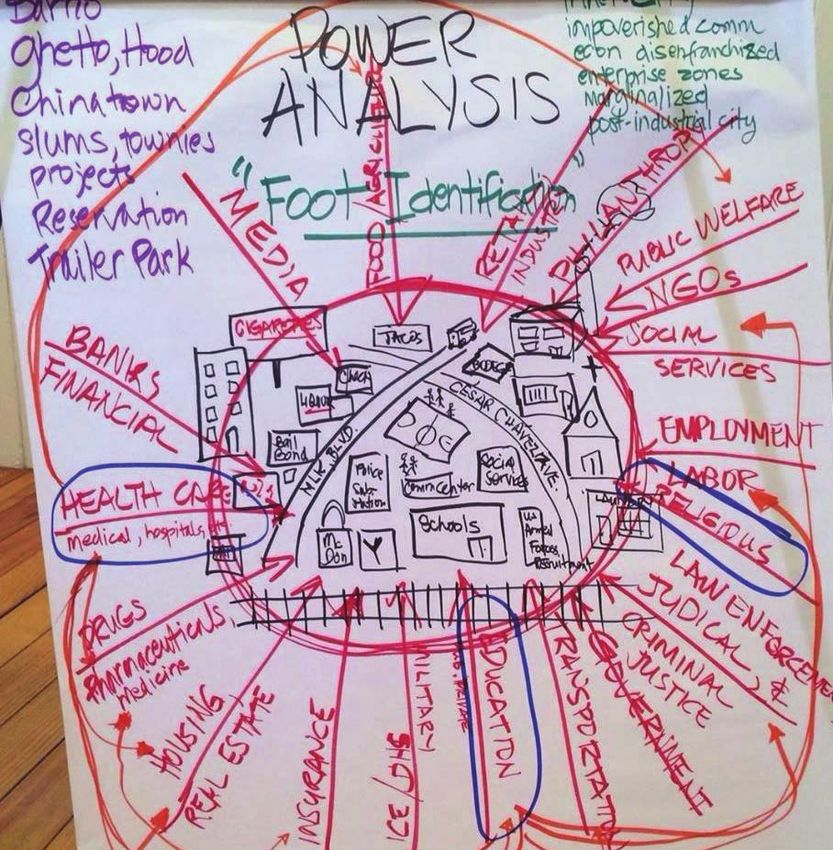
poor, understanding power and white ‘Foot of Oppression,’ (Image 1) based on schools’ performance, while failing to over people in poor communities
following Anti-Racist Community
privilege, defining racism, and interactive feedback from participants. look at the larger educational system, than always engaging with the
Organizing Principles:
graphically depicting the cross-systems > Undoing Racism which includes the processes and communities to restore decision-m
nature of power-imbalance and > Learning from History organizations through which statewide power or to work in ways that es
systemic racism that are at the root of and city-wide educational resources are mutual accountability. Although s
> Sharing Culture
economic and racial inequity. allocated, and the institutions and and human service workers may
> Developing Leadership
processes through which teachers and to be accountable to the people t
> Maintaining Accountability
The PISAB stresses the importance of administrators are trained. serve, they are - in reality - accou
> Networking
using anti-racist community organizing to the institutions that pay them,
> Analyzing Power Third, the exercise forces participants to credential them, evaluate them, a
strategies to undo racism and sees their
work as building on generations of > Gatekeeping consider the need for a cross-systems ultimately decide whether to prom
work for equity in the U.S. and abroad. > Undoing Internalized view. For example, the criminal justice fire them. In this sense, gatekeep
Their approach includes proactively Racial Oppression system is intricately interwoven with the often find themselves trapped and
bringing culture and humanity back into > Identifying and Analyzing education system—with increasing conflicted. It is through proactivel
systems and institutional culture, Manifestations of Racism police presence in schools, criminal organizing with the communities
analyzing and addressing the current (PISAB, n.d.) records being a primary factor that can they serve that they can become
arrangements of power and prevent entrance to college, and the ‘liberated’ and begin the process
accountability, understanding history as This symposium presentation prison industry predicting demand for restoring power to poor commun
it relates to our current reality, and began with an exercise and prison beds based on school test
analyzing internalized racial discussion on socialization: the scores. It has become impossible to Some examples of ways gatekee
oppression to enable people to work ways that all human beings are Image 1: Diagram of ‘The Power Analysis.’ spur transformation in the education hold power over the people they
together more effectively. Together, necessarily encouraged or conditioned This is a content trademark of The People’s system without incorporating a deep are as follows:
these elements help identify the ways to hold certain beliefs about themselves, Institute for Survival and Beyond.
5 > ACHIEVING RACIAL EQUITY: CALLING THE SOCIAL WORK PROFESSION TO ACTIONSWPI-RPT-29014.Racial-Report_Layout 1 5/29/14 1:12 PM Page 6
UNDOING RACISM The diagram is an analysis that helps
make several key points. First,
understanding how it works together
with the criminal justice system and
> Focus on diagnosis – not solution
> Require disclosure of information
institutions have historically and every other system. about one’s personal life for
systematically (albeit not always entirely service access.
systems - including the current others, communities, and the world. intentionally) pulled decision-making Fourth, and most importantly, the PISAB > Dominant culture forces their values
service system - help keep people Many of us who purport to be change power away from the communities they suggests that social workers shift from on people who do not share them
nd maintain racial inequity. By agents have actually been so deeply seek to ‘empower’ or ‘serve’. As a result, using a ‘needs analysis’ or ( e.g., requirements for foster parents
anding how service providers socialized about what is normal, what the power to influence health, economic ‘victim-analysis’ to a ‘power analysis.’ or kinship care providers to have
titutions contribute to inequity, is valuable, and what is possible and and social resources lies almost entirely In the words of Ron Chisom, “People certain size bedrooms available).
begin to see new openings for not possible, that we stop ourselves outside of the hands of poor communities. are not poor because they lack our > Cultural competency and diversity
e action and organizing. from pursuing transformational change The PISAB suggests that this is true of all programs or services. People are poor focuses on people of color – we do
before we even confront any formal institutions, including the institutions because they lack power.” What
not study diversity of white cultures.
ASW CEO, ANGELO resistance. In addition to ‘internal’ or represented by the participants. follows, logically, is that our racial equity
> Receive funding in the name of
cCLAIN, ON THE ‘implicit’ socialization stopping work must work to restore power to
MPORTANCE OF potential change agents/organizers communities without involving them
Second, the exercise underscores the communities that have been historically
OMMUNITY from pursuing change, organizational in the needs assessment, planning,
way that people, organizations, and and systematically disempowered.
RGANIZING: constraints reinforce ‘business as usual’ decision-making and implementation
institutions work as systems, which
e must return community organizing to
through policies, procedures, cultural processes.
challenges prevalent thinking that can To understand where social workers
prominence in social work, not only to
norms, funding sources, promotions and isolate certain pieces of systems, while and social institutions fit into this > Setting hours, locations, and
ill our commitment to social justice but
demotions, etc. leaving other pieces off the table of arrangement of power the trainers procedures that are convenient
linical practice as well.” analysis. For example, advocacy efforts introduced the concept of gatekeeping. for employees and not convenient
The second piece explored how to may focus on improving the academic The concept suggests that social for clients
analyze power and how to begin to performance of Black men, while failing workers are among many who serve as > Being disrespectful or setting a low
answer the question, Why Are People to take into account that these same gatekeepers. Whether they intend it or bar for service quality, based on a
AB believes that an effective,
are Poor? To help frame this students are disproportionately not, social workers typically serve as view that clients are ‘lucky’ to be
based movement for social
conversation, the trainers developed a disciplined; or looking at particular agents of social control, holding power receiving any services at all,
rmation must be rooted in the
‘Foot of Oppression,’ (Image 1) based on schools’ performance, while failing to over people in poor communities rather especially if they are offered for
ng Anti-Racist Community
interactive feedback from participants. look at the larger educational system, than always engaging with the free or at a reduced cost.
zing Principles:
oing Racism which includes the processes and communities to restore decision-making
ning from History organizations through which statewide power or to work in ways that establish
and city-wide educational resources are mutual accountability. Although social WORDS MATTER
Achieving racial equity requires that we
ing Culture
allocated, and the institutions and and human service workers may intend
consider expressions that we might use
eloping Leadership
processes through which teachers and to be accountable to the people they
every day that can be considered examples
ntaining Accountability
administrators are trained. serve, they are - in reality - accountable
of color-blind racial micro-aggressions.
working
to the institutions that pay them,
Examples include:
yzing Power Third, the exercise forces participants to credential them, evaluate them, and
> Issuing a white paper
ekeeping consider the need for a cross-systems ultimately decide whether to promote or
> White collar
oing Internalized view. For example, the criminal justice fire them. In this sense, gatekeepers
> White line
al Oppression system is intricately interwoven with the often find themselves trapped and
> Being at the bottom of the totem pole
tifying and Analyzing education system—with increasing conflicted. It is through proactively
> Washington Redskins
ifestations of Racism police presence in schools, criminal organizing with the communities that
AB, n.d.) records being a primary factor that can they serve that they can become > Indian giver
prevent entrance to college, and the ‘liberated’ and begin the process of > In a black hole
mposium presentation prison industry predicting demand for restoring power to poor communities. > Blacklist
with an exercise and prison beds based on school test > Blackball
ion on socialization: the scores. It has become impossible to Some examples of ways gatekeepers
hat all human beings are Image 1: Diagram of ‘The Power Analysis.’ spur transformation in the education hold power over the people they serve
arily encouraged or conditioned This is a content trademark of The People’s system without incorporating a deep are as follows:
certain beliefs about themselves, Institute for Survival and Beyond.
> ACHIEVING RACIAL EQUITY: CALLING THE SOCIAL WORK PROFESSION TO ACTION 6SWPI-RPT-29014.Racial-Report_Layout 1 5/29/14 1:12 PM Page 7
see as innocent opposition. But there are
Finally the trainers addressed internalized
racial oppression - inferiority and some objective truths here. Racism is a virus IDENTIFYING ANTI-RA
superiority - which is the way that racial that is growing clever at avoiding detection.
groups have internalized and act out Race consciousness is real. Racial ORGANIZIN
the belief that they are superior or assumptions and prejudices are real.
And racism is real. But these realities can
inferior based on their place in the
racial hierarchy. operate without articulation and beneath
ACHIEVIN
awareness. For those reasons, some can see
The symbolic “Foot of Oppression” racism where it is absent, and others can
willfully ignore any possibility that it could > WHAT CAN WE LEARN 1. Leadership Development;
(Image 1) that was created demonstrated
ever be present.”
2. Development of a Culturally
how the health, economic and social FROM CURRENT Competent Workforce;
resources that can promote well-being
Blow ends his column with the following –
TARGETED EFFORTS 3. Community Engagement;
exist external to poor communities.
“But nerves are raw, antennas are up and
There are key principles that are found 4. Cross Systems Collaborations
There are often limited services and
race has become a lightning rod in the
to be common across effective 5. Training Defined by Anti-Raci
Next, the PISAB offered a definition of structures in many poor communities;
Obama era. This is not Obama’s doing,
strategies that have been undertaken to Principles;
racism as Race Prejudice PLUS Power. and it was not unusual as highways
but the simple result of his being.”
work toward achieving racial equity. To 6. An Understanding of the Hist
developed, to have an interstate tease out elements that have proven to
They noted that ‘race prejudice’ is highway cutting off one community Institutional Racism and the Im
www.nytimes.com/2013/11/16/opinion/
work in many disciplines and across
actually redundant since the concept of from another, making it harder to on Poor Communities and
blow-disrespect-race-and-obama.html?
different areas of the country, a panel
‘race’ has prejudice built into it but access resources and services. Communities of Color.
ref=charlesmblow&_r=O
of leaders presented on their work to
stressed that to effectively solve any
achieve racial equity, with a focus on
problem, we must agree on an accurate Thus, if we are to undo racism and During her time at Child Protectiv
what guiding principles have proven to
definition of what the problem is. achieve racial equity, it will take white Services, the State of Texas actua
be essential to their work.
people working together with people of began to see a reduction in the
As noted above, race as a biological color and giving power to people of disproportionality between white
The panel was chaired by Joyce James,
fact has been disproved by geneticists color to break down barriers, to ensure children and children of color, as
a race equity consultant from Texas
and biologists; however as a social equitable opportunities and to promote as a reduction of child welfare re
who, in addition to moderating the
construct it is alive and difficult to economic well-being and strong and for children of all races. All of thi
panel, provided information about her
address at every level of our nation’s healthy communities. done without reducing the safety
highly regarded work serving as the
institutions. In the United States we children who were able to remai
Assistant Commissioner of Texas Child
have historically classified groups of DISRESPECT, RACE & their families and communities (Te
Protective Services and the Associate
people based on a specious OBAMA Department of Family and Protec
Deputy Executive Commissioner, Center
classification called ‘race’ - with whites Charles Blow, New York Times, Services, 2010; 2011).
for Elimination of Disproportionality
having state-sanctioned access to November 16, 2013 and Disparities and the State Office of
In his opinion piece, Blow states —
power and privilege; and all others The work that had been done in
Minority Health at the Texas Health &
“To what extent does this President’s race
arranged in a hierarchy below white. welfare was then expanded to al
Human Service Commission.
animate those loyal to him and those
While Black has always been at the Health and Human Services throu
opposed? Is race a primary motivator or a
bottom of the racial hierarchy, other the creation of the Center for the
Texas Health and Human Services
subordinate, more elusive one, tainting
‘races’ have been able to move up and Elimination of Disproportionality
Under Ms. James’ leadership, Texas
motivations but not driving them? To some
down the continuum as was beneficial Disparities. Then-Commissioner T
created “The Texas Model for the
degree, the answers lie with the questioners.
to whites (for examples, Irish people Suehs spoke directly to the desire
Elimination of Disparities and
There are different perceptions of racial
became classified as white, when it translate the child-welfare outcom
Disproportionality” with a major target
realities. What some see as slights, others
was more politically advantageous to the entire agency:
being the disproportionate number of
the white collective).
African American and Native American
“At the heart of all our progr
children in the foster care system. The
and services, we’re about pe
Texas Model is a set of principles that
And we want to make sure th
have led to proven outcomes when
every person is treated with r
applied rigorously and consistently
and dignity. Joyce has been
across an organization:
7 > ACHIEVING RACIAL EQUITY: CALLING THE SOCIAL WORK PROFESSION TO ACTIONSWPI-RPT-29014.Racial-Report_Layout 1 5/29/14 1:12 PM Page 8
see as innocent opposition. But there are
he trainers addressed internalized
oppression - inferiority and some objective truths here. Racism is a virus IDENTIFYING ANTI-RACIST COMMUNITY
rity - which is the way that racial that is growing clever at avoiding detection.
have internalized and act out Race consciousness is real. Racial ORGANIZING PRINCIPLES FOR
ef that they are superior or assumptions and prejudices are real.
And racism is real. But these realities can
based on their place in the
hierarchy. operate without articulation and beneath
ACHIEVING RACIAL EQUITY
awareness. For those reasons, some can see
mbolic “Foot of Oppression” racism where it is absent, and others can
willfully ignore any possibility that it could > WHAT CAN WE LEARN 1. Leadership Development; pioneer in helping improve equity
1) that was created demonstrated
ever be present.”
2. Development of a Culturally in our protective services programs
e health, economic and social FROM CURRENT Competent Workforce; and we want to put that same focus
es that can promote well-being
Blow ends his column with the following –
TARGETED EFFORTS 3. Community Engagement; on all our HHS agencies.”
xternal to poor communities.
“But nerves are raw, antennas are up and
There are key principles that are found 4. Cross Systems Collaborations;
are often limited services and
race has become a lightning rod in the
to be common across effective 5. Training Defined by Anti-Racist Additional information on Ms. James
es in many poor communities;
Obama era. This is not Obama’s doing,
strategies that have been undertaken to Principles; efforts can also be found in an NASW
was not unusual as highways
but the simple result of his being.”
work toward achieving racial equity. To 6. An Understanding of the History of Lunchtime Series — All Things are
ped, to have an interstate tease out elements that have proven to Not Equal: Institutional Racial
ay cutting off one community Institutional Racism and the Impact
www.nytimes.com/2013/11/16/opinion/
work in many disciplines and across Disproportionality & Disparity Across
nother, making it harder to on Poor Communities and
blow-disrespect-race-and-obama.html?
different areas of the country, a panel Systems (www.socialworkers.org/ce/
resources and services. Communities of Color.
ref=charlesmblow&_r=O
of leaders presented on their work to online/Resources/201334101136589
achieve racial equity, with a focus on _FINAL_All%20Things%20Are%20Not
we are to undo racism and During her time at Child Protective
what guiding principles have proven to %20Equal_PPT.pdf) and Building a
e racial equity, it will take white Services, the State of Texas actually
be essential to their work. Culturally Responsive Workforce:
working together with people of began to see a reduction in the
The Texas Model for Undoing
nd giving power to people of disproportionality between white
The panel was chaired by Joyce James, Disproportionality & Disparities in Child
o break down barriers, to ensure children and children of color, as well
a race equity consultant from Texas Welfare, a webinar from the National
ble opportunities and to promote as a reduction of child welfare removals
who, in addition to moderating the Child Welfare Workforce Institute.
mic well-being and strong and for children of all races. All of this was
panel, provided information about her
communities. done without reducing the safety of
highly regarded work serving as the Casey Family Programs.
children who were able to remain with
Assistant Commissioner of Texas Child Ralph Bayard of Casey Family
SRESPECT, RACE & their families and communities (Texas
Protective Services and the Associate Programs provided information on
BAMA Department of Family and Protective
Deputy Executive Commissioner, Center Casey’s long-standing leadership on
arles Blow, New York Times, Services, 2010; 2011).
for Elimination of Disproportionality addressing racial inequities with
vember 16, 2013 and Disparities and the State Office of regards to children. Bayard stressed
is opinion piece, Blow states —
The work that had been done in child
Minority Health at the Texas Health & the importance of:
what extent does this President’s race
welfare was then expanded to all of
Human Service Commission.
mate those loyal to him and those
Health and Human Services through
1. Using data to start the conversation
osed? Is race a primary motivator or a
the creation of the Center for the
Texas Health and Human Services about addressing inequities.
ordinate, more elusive one, tainting
Elimination of Disproportionality and
Under Ms. James’ leadership, Texas
ivations but not driving them? To some
Disparities. Then-Commissioner Tom Seeing data that shows racial
created “The Texas Model for the
ree, the answers lie with the questioners.
Suehs spoke directly to the desire to inequity in their own institutional
Elimination of Disparities and
re are different perceptions of racial
translate the child-welfare outcomes to outcomes helps many leaders
Disproportionality” with a major target
ities. What some see as slights, others
the entire agency: engage in this work. Racial equity
being the disproportionate number of work, Casey finds, is often
African American and Native American perceived as being unrelated
“At the heart of all our programs
children in the foster care system. The or only loosely to the core
and services, we’re about people.
Texas Model is a set of principles that mission of human services
And we want to make sure that
have led to proven outcomes when
every person is treated with respect organizations. When
applied rigorously and consistently
and dignity. Joyce has been a leaders see that their
across an organization:
> ACHIEVING RACIAL EQUITY: CALLING THE SOCIAL WORK PROFESSION TO ACTION 8You can also read


