CAMPMODAL 2018 "Multimodality and Supply Chain" The German best practices on international multimodal implementation and operation
←
→
Page content transcription
If your browser does not render page correctly, please read the page content below
Picture: DB AG, Daimler AG, Fraunhofer IML, 2014

CAMPMODAL 2018 “Multimodality and Supply Chain”
The German best practices on international multimodal
implementation and operation
Deutsche Bahn E&C | Hans-Jürgen Hendrich, Chief Operation Expert| Paulinia 12th May 2018

Content

                              The Deutsche Bahn Group and the DB
                        1     International

                        2     Introduction and benefits of multimodality

                        3     Success factors for an efficient multimodal supply chain

                        4     Case Studies: Bremen, Berlin and United Arab Emirates

                        5     Contact

2   Deutsche Bahn E&C, 2018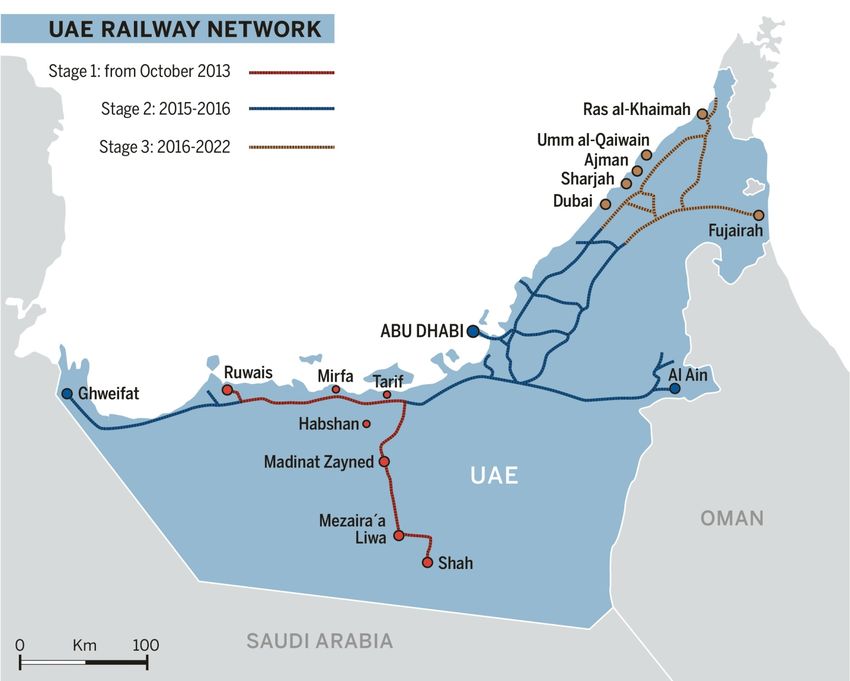
2 Introduction and benefits   3 Success factors efficient   4 Case Studies   5 Contact
              of multimodality              multimodal supply chain

    The Deutsche Bahn Group and
1   the DB International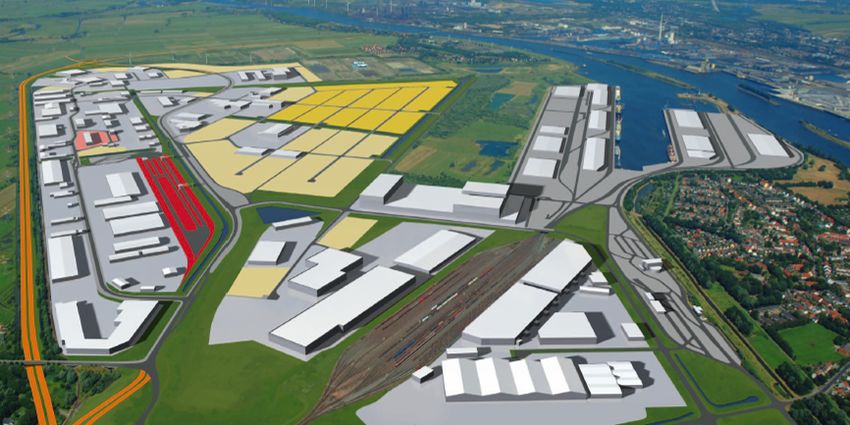
The Deutsche Bahn group is one of the world’s leaders in the
multimodal transport of passenger and goods

40
billion euros revenues (2016)

305,000
employees in 140 countries

40,000
journeys by rail managed daily

2nd
biggest worldwide provider of
transport and logistics services

442
million tons of cargo transported
per year

4.1
billion passengers transported by
rail and buses per year
                                                                       d
                                                                  rove
                                                               app 2008)
Deutsche Bahn E&C, 2018               4                         (DB
Today
We hold leading market positions in Europe and the world

                                            Netze
                                                     No.1
                                                Rail infrastructure
                                                                                            Bahn
                                             No. 1
                                               Operation of railway
                                                                                  No. 1
                                                                              Local rail passenger transport
                    Schenker                   stations

                                                                                  2
                          1
                                                                              No.
                   No.                                                    Long-distance passenger rail transport
              Rail freight transport
                                       No.3                                                    2
             1
                                                                                           No.
                                       Air freight
                                3
         No.                                                                              Bus transport
         Land transport No.
                    Ocean freight

                   No.    5
                 Contract logistics
(As of 12/14)
Deutsche Bahn E&C, 2018                                               5
1 The Deutsche Bahn                      3 Success factors efficient   4 Case Studies   5 Contact
Group and DB International               multimodal supply chain

          Introduction and benefits of
 2        multimodality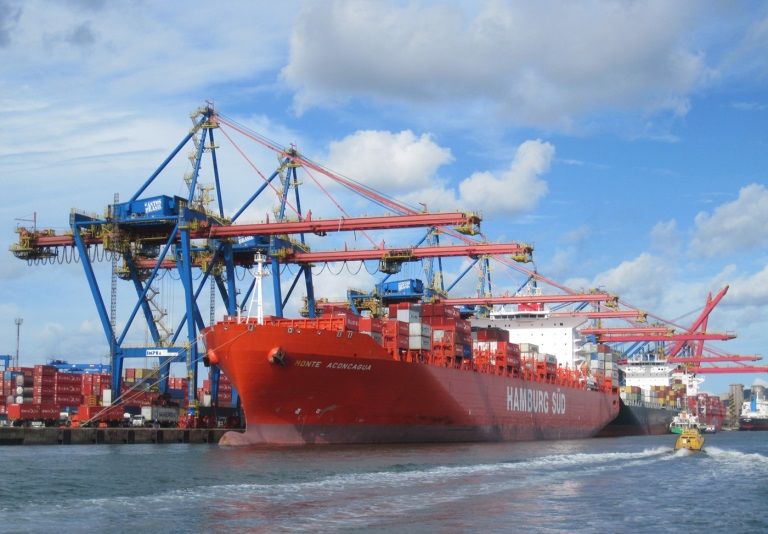
Germany occupies the #1 position in the LPI Rank as
  the most efficient logistics nation in the world, Brazil is #55

Logistics Performance Index (LPI) Rank
        Rank       Country            Score
          1 Germany                    4,23                       LPI Europe Rank                   LPI BRICS Rank
          2 Luxembourg                 4,22
          3 Sweden                     4,20                  Rank      Country       Score   Rank       Country   Score
          4 Netherlands                4,19                   1 Germany               4,23    20 South Africa      3,78
          5 Singapore                  4,14                   2 Luxembourg            4,22    27 China             3,66
          6 Belgium                    4,11                   3 Sweden                4,20    35 India             3,42
          7 Austria                    4,10                   4 Netherlands           4,19    55 Brazil            3,09
          8 United Kingdom             4,07                   6 Belgium               4,11    99 Russia            2,57
          9 Hong Kong                  4,07                   7 Austria               4,10
         10 United States              3,99                   8 United Kingdom        4,07
         12 Japan                      3,97                   16 France               3,90
         13 United Arab Emirates       3,94                   21 Italy                3,76
                                                              22 Norway               3,73         LPI America Rank
         14 Canada                     3,93
         16 France                     3,90                   23 Spain                3,73
                                                              36 Portugal            3,41    Rank      Country    Score
         20 South Africa               3,78
                                                                                              10 United States     3,99
         21 Italy                      3,76
                                                                                              14 Canada            3,93
         22 Norway                     3,73
                                                                                              40 Panama           3,34
         23 Spain                      3,73
                                                                                              54   Mexico         3,11
         24 South Korea                3,72                         LPI Asia Rank
                                                                                              55   Brazil         3,09
         27 China                      3,66
                                                             Rank      Country       Score    65   Uruguay        2,97
         35 India                      3,42
                                                              5 Singapore             4,14    66   Argentina      2,96
         46 Chile                      3,25
                                                              9 Hong Kong             4,07    69   Peru           2,89
         54 Mexico                     3,11
         55 Brazil                     3,09                   12 Japan                3,97
         65 Uruguay                    2,97                   24 South Korea          3,72
         66 Argentina                  2,96                   27 China                3,66
         69 Peru                       2,89                   35 India                3,42
         99 Russia                     2,57
         160 Syria                     1,60
                          Source: http://lpi.worldbank.org
Deutsche Bahn E&C, 2018                                                          7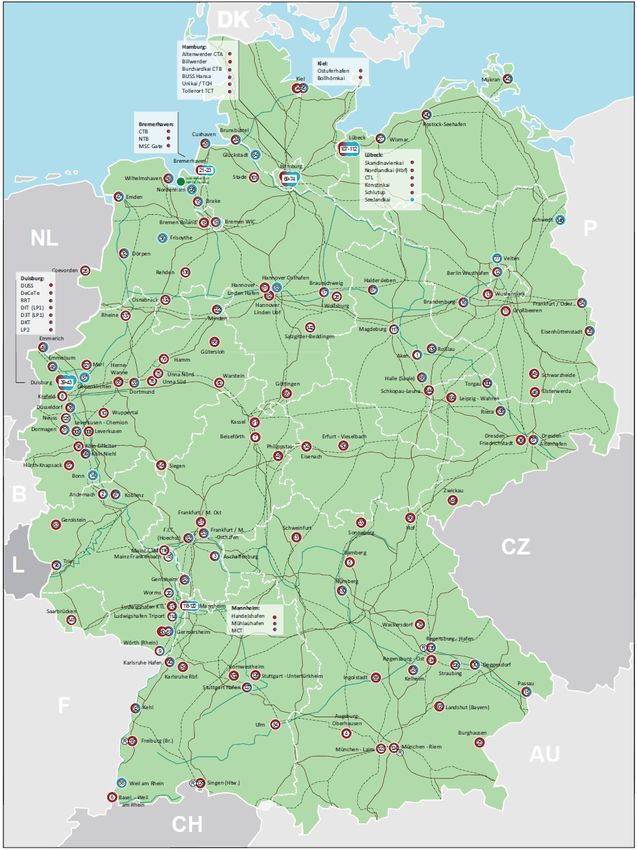
Intermodality is a key factor for achieving a high competitive nation, for
  the flow of people and goods in an integrated efficient manner

                                             LOGISTICS PERFORMANCE INDEX
                                             COMPARISON BRAZIL X GERMANY
                           5

                       4,5

                           4

                       3,5

                           3
      LPI SCORE

                       2,5

                           2

                       1,5

                           1

                       0,5

                           0
                                                                      International     Logistics
                               LPI Score   Customs   Infrastructure                                 Tracking & tracing         Timeliness
                                                                       shipments      competence
                  Germany        4,23       4,12         4,44             3,86           4,28             4,27                     4,45
                  Brazil         3,09       2,76         3,11             2,9            3,12             3,28                     3,39

                                                                                                           Source: http://lpi.worldbank.org

Deutsche Bahn E&C, 2018                                               8
The success is guaranteed by a full compromise of the government
  through a long term integrated planning and investments policy

           .... as well as through a legal framework that sets clear, objective
           and transparent rules for the private sector to invest and operate

      Bundesverkehwegplan Integrated planning -> one infrastructure plan, working as an
      integrated logistics system

      Maximum intermodal competition -> free competition among the private and public
      operators for the most efficient logistics solution

      Maximum intramodal competition -> more than 400 rail operators, several truck and barges
      operators

                   As consequence, all efforts from the public and private sector
                            converge to the maximization of results

Deutsche Bahn E&C, 2018                            9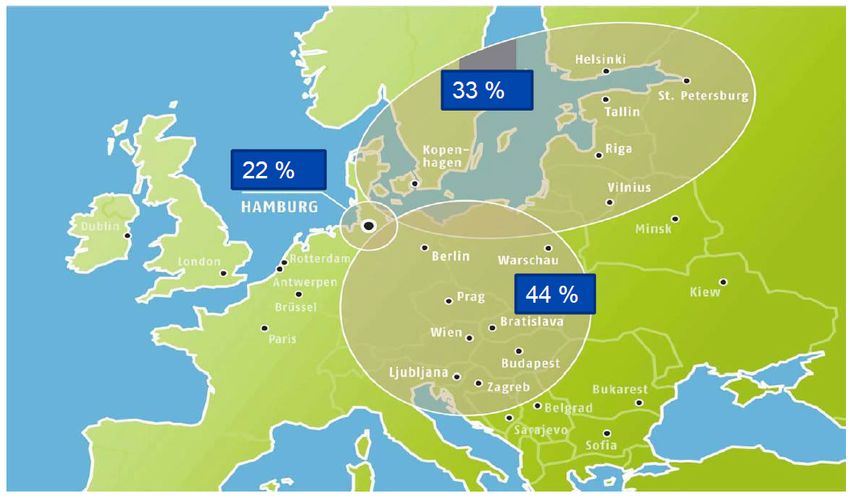
1 The Deutsche Bahn          2 Introduction and benefits   4 Case Studies   5 Contact
Group and DB International   of multimodality

          Success factors for an efficient
 3        multimodal supply chain
The Port of Hamburg is European third busiest container port
Port of Hamburg About the Port of Hamburg
§ Total port area: 7.145 acres
§ Ranking (container):
§ 3rd in Europe (after Rotterdam and Antwerp)
§ 18th worldwide Source: Hafen Hamburg Marketing e.V., 2016
Distribution of cargo in the Hinterland of the port of
Hamburg (2014)
§ 22% in the area around Hamburg
§ 33% to the North-East of Europe
§ 44% to Central Europe
Source: HPA Hafenbahn, 2014Hinterland transport: The railway transport plays a crucial role
in the hinterland of the Port of Hamburg
Transshipment of bulk and general cargo
2015 Total transshipment: Development of the turnover between 2005 and 2015
137.8 million tons (2015)
Transshipment traffic:
36.9 million ton
in million tons
Container transshipment
2015 Total transshipment:
8.8 million TEU* (2015)
*TEU: Twenty-foot Equivalent Unit
Source: Hafen Hamburg Marketing e.V., 2016Capable hinterland railway network: The port of Hamburg has
perfect connections to the European railway network
§ Hamburg is in the center of three railway traffic corridors
with 1,200 trains per week
Cargo Train services from and to Hamburg (2014)
Source: Handelskammer Hamburg, 2016
Source: HPA Hafenbahn, 2014Comprehensive port railway network: The port railway network
connect all important areas in the port of Hamburg
§ The port railway is a public rail infrastructure company
Important railway stations in the Port of Hamburg § Their infrastructure offers the following service facilities:
- Facilities for intake of fuel
- Passenger railway station (incl. building and other
facilities)
- Freight yard and terminal
- Switchyard
- Facilities for train composition
- Sidings
- Maintenance facilities and other technical facilities
- Ports
§ Controlling Authorities:
- Control Authority of the City of Hamburg (dt.
Landeseisenbahnaufsicht)
- Federal Network Agency (dt. Bundesnetzagentur)
- Federal railway authority (dt.
Eisenbahnbundesamt)
Source: HPA Hafenbahn, 2014Besides intermodal transport services to the Hinterland, the port of
Hamburg also uses inland waterways for several German destinations
Current line destinations
§ Aken
§ Braunschweig
§ Fallersleben
§ Haldensleben
§ Hannover
§ Magdeburg
§ Minden
§ Riesa
§ WustermarkBy the Elbe river, Hamburg is well connected to several inland waterways
The Port of Hamburg provides 106
public berths for inland waterway
craft.
In 2014, approximately 10,000 inland
waterway vessels tied up and
transported around 11.6 million tons
of cargo.
Cargo leaves Hamburg daily on the
River Elbe and the canals into the
hinterland. There are regular
services on the middle and upper
Elbe in the direction of Magdeburg,
Aken, Torgau, Riesa, Dresden and
even to the Czech Republic to Děčin,
Ústí nad Labem and Lovosice.
Along the Lower Elbe Brunsbüttel,
Cuxhaven and Glückstadt, among
others can be served. In the Elbe
Lateral Canal the link to the
Mittellandkanal is also the connection
to Braunschweig, Haldensleben,
Hanover and Minden as well as to
the Ruhr region and the inland ports
of the Rhein, Main, Mosel and
Neckar. Cargo also finds it way to
Berlin via the inland waterways.Railway transportation plays a crucial role for connecting
seaports to the hinterland in global supply-chains
Supply chains in combined transportation
Railway transportation services
1
Rail
2
§ Block trains
§ Networks
§ Single wagon freight transport
3
Pre-
carriage
Logistics Services
4
Terminal
§ Transshipment
Transshipment § Short-term storage
Terminal 5
Rail Equipment
transport
Advantages § Wagons
§ Loading units
+- Benefits from individual
advantages of each
§ Loading equipment
mode Service
Transshipment
+- Low environmental
impact
Terminal § Storage of empties and loaded units
§ “Last mile” by truck
Post- § Repair of loading units, etc.
+- Relief of road traffic carriage
+- High transport safetyWith a modal split of 25% the Port of Hamburg is Europe‘s best practice in hinterland railway transportation Factors for high modal split of railway transportation Deutsche Bahn E&C, 2018 - 18 -
Germany provides a dense network of CT-Terminals;
they became a success factor for regional development

                               Container Terminals in Germany
                               § Approx. 150 CT-Terminals are in operations, all industrial
                                 and commercial cities are covered
                               § Infrastructure most subsidized by federal or local
                                 government (up to 85% of CAPEX)
                               § Operators:
                                    § DUSS (75 % DB Netz AG, 12,5 % DB ML AG,
                                      12,5 % Kombiverkehr), more than 20 terminals
                                    § DB Intermodal Services
                                    § Inland harbours
                                    § Industrial companies such as BASF, Warsteiner,
                                      forwarders, e.g. Wincanton
                               § Some CT became nucleus for development of
                                 35 Freight Villages (GVZ)

                                                                         GVZ

Deutsche Bahn E&C, 2018              - 19 -
1 The Deutsche Bahn 2 Introduction and benefits 3 Success factors efficient 5 Contact
Group and DB International of multimodality multimodal supply chain
Case Studies: China, Bremen,
4 Berlin and United Arab
Emiratesarrived in Hamburg
Freight Villages are tailored
DB Chairman areas
Dr. Rüdiger for
Grube: the
“DB settlement
Schenker ofin an excellent starting
in Asia is
position” • Maiden
logistics providers voyage toindustries
and related Billwerder in only 15 days.
On behalf of the city of Zhengzhou, DB Schenker cooperated in the first freight train
§ ride from
A rail operation the north-central
developed Chinese and
by DB Schenker city partners
to Hamburg. The voyage was organized by the
Zhengzhou International Land Port Development and Construction Co., Ltd. The train
§ 10,214 km through Germany, Poland, Belarus, Russia, Kazachstan and China
with 51 containers arrived the freight yard in Hamburg-Billwerder on Friday.
§ 15 days, DB
half Schenker
the periodacted as logistics
it takes by ship partner to Zhengzhou for all services outside China
§ which includes operations as well as additional logistics services.
Cheaper freight cost compared to plane
"The growing Chinese goods traffic, together with the ongoing shift from production-
Deutsche Bahn E&C, 2018 industries to the Chinese hinterland,
intensive - 21 - offers a lot of potential. DB Schenker inFreight Villages are tailored areas for the settlement of
logistics providers and related industries
Definition of freight villages
§ A freight village is a defined area within all activities relating to transport, logistics and the
distribution of goods, both for national and international transit, are carried out by various
operators.
§ These operators can either be owners or tenants of buildings and facilities (warehouses, break-
bulk centres, storage areas, offices, car parks, etc...) which have been built there.
§ Also, in order to comply with free competition rules, a freight village must allow access to all
companies involved in the activities set out above. A freight village must also be equipped with all
the public facilities to carry out the above mentioned operations. If possible, it should also include
public services for the staff and equipment of the users.
§ In order to encourage intermodal transport for the handling of goods, a freight village must
preferably be served by a multiplicity of transport modes (road, rail, deep sea, inland
waterway, air).
§ Finally, it is imperative that a freight village be run by a single body, either public or private.
Source: Europlatforms (2010)
Deutsche Bahn E&C, 2018 - 22 -Global Trends favour the Development of Logistics Centres
and Freight Villages in the Outskirts of Cities
Trends Impacts Opportunities
Booming Cities Pollution & Congestion in Intelligent City Logistics
Cities Concepts
§ Growing population
§ High vehicle density § Logistics centres as hubs
§ Emerging and growing § Lack of infrastructure § Bundle traffic flows
megacities
Need for new Logistics Combined Transport
Booming Trade Flows Concepts
§ „Clean“ high-quality logistics
§ Increasing volumes § Regional storage areas but services
reduction of tiers § Reduction of traffic density
§ Increasing orders with § Central warehouses and
decreasing volumes stockless handling
New Regionalism
Cost Pressure § Storage/handling space with easy
Global Markets multimodal access
§ Global sourcing
§ Rising transport costs
§ Global distribution § Rising rentals in city areas Experienced Logistics Service
§ Global logistics networks Providers
§ Help to outsource logistics
Scarcity of Natural Resources § Reduction of costs by economies
Environmental Awareness
§ Oil, water, food of scale & scope
§ Request to save energy and to
protect the environment Save the Nature
§ Reduction of pollution by
concentration of logistics activities
Deutsche Bahn E&C, 2018 - 23 -Logistics centres and freight villages offer fields for
cooperation between private and public entities
Benefits of freight villages
Strengthening the local economy
§Industrial companies can focus on core competencies
§Allocation of logistic industry and supporting industries (cluster building)
Bundling of volumes – increasing efficieny
§Economies of scale and scope for supply and distribution
§Reduction of logistics costs through bundling
§Reduction of environmental burdens
§Quick transhipment due to physical integration of different transport modes
Higher product and process quality of the supply chain
§Use of synergies
§High density of service providers
§Collaboration between service providers
§Modern/ advanced IT infrastructure and solutions, which can be shared
§Wide variety of facilities for cargo handling
Risk Sharing
Deutsche Bahn E&C, 2018 - 24 -The freight village in Bremen is ranked # 2 in Europe and
created 8,000 jobs mainly through related services
Bremen-Germany largest freight village Key facts
§ Site area: 496 ha (+ 4 ha terminal for
combined transportation)
§ Covered storage area: 960,000 m²
§ Employment effect : 8,000 people in 150 companies
§ Annual cargo turnover: n/a
§ Total investment: €460 million since 1985
Customers (tenants)
§ Retail logistics, furniture logistics, forwarders,
international logistic providers, ship-owners
Location and benefits
Services provided
§ The greater Bremen area is located in the heart of global
trade flows; the proximity to port and airport in Bremen
§ Cooled warehouse
makes the region an attractive industrial location
§ The Bremen Logistics Centre offers attractive land plots § Gas station
with a high synergy potential for transport and logistics § Container terminal and service centre
companies to attract companies with a high affinity to the
logistics business (e.g. production companies and § Biggest high rack storage in Europe
retailers).
Source: DGG 2010: Ranking of Europe‘s Logistics Centers, DB International
Deutsche Bahn E&C, 2018 - 25 -Three freight villages (GVZ), perfectly connected to rail and road,
form the backbone of the logistics concept for Germany’s capital Berlin
Wustermark
Gross area: 226 ha
Gross area: 130 ha
(possibility of further enlargement)
Freienbrink
Großbeeren
Gross area: 260 ha
(possibility of further enlargement)
Motorway
RailwaylineDB International is strongly involved in the development of the
United Arab Emirates logistics and rail network
Project Details
n A total of 1,200 km of track length, mainly
double-track for mixed traffic
n More than 10 tunnels and about 300
structures
n Speed design:
• Freight transport up to 120 km/h
• Passenger transport up to 200 km/h
n Possibility of mix standards (AREMA / AAR,
UIC)
n Diesel operation with option for
electrification
n Current operation of Stage 1 (266 km) for
transport of sulfur from Shah to Ruwais1 The Deutsche Bahn 2 Introduction and benefits 3 Success factors efficient 4 Case studies Group and DB International of multimodality multimodal supply chain 5 Contact
Contact

Hans-Jürgen Hendrich                     Gustavo Gardini
Chief Operation Expert                   Business Development Director
Deutsche Bahn E&C GmbH                   DB International Brasil Ltda.

Oskar-Sommer-Straße 15,                  Praça Mahatma Ghandi, 2 / grupo 1220-1221
60596 Frankfurt am Main                  CEP 20031-908 Centro – Cinelândia
Germany                                  Rio de Janeiro – RJ

TelFax: +49 69 6319175                   TelFax: +55 21 2544-1238
                                         Cel:    +55 21 98358-2597
Hans-Juergen.Hendrich@deutschebahn.com
www.deutschebahn.com/en                  dbi.gardini@db-international.de
                                         www.deutschebahn.com/en
Obrigado pela atenção!
Headquarters Deutsche Bahn, Berlin, GermanyYou can also read


