Canada, the Freeloader, Rather Than Vested Defence Partner in NORAD and the Defence of North America
←
→
Page content transcription
If your browser does not render page correctly, please read the page content below
INTERNATIONAL ALLIANCES
D N D p h o t o / N a t i o n a l D e fe n c e I m a g e L i b r a r y

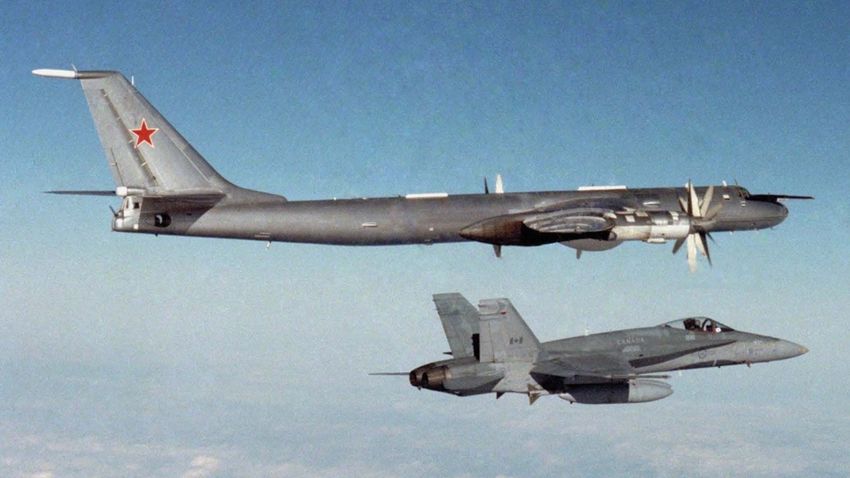
                                                                         A Canadian CF-18 Hornet intercepts a Russian Tu-95 Bear long-range bomber.

                                                                         Canada, the Freeloader, Rather Than Vested
                                                                         Defence Partner in NORAD and the Defence
                                                                         of North America
                                                                                                                                  by Andrew Wood

                                                                              Lieutenant-Colonel Andrew Wood is an artillery officer             carry out its assigned missions, failure to respond to, and lacking
                                                                         having served in the British Army for 20 years, including on            the capabilities required to respond to current and evolving threats
                                                                         operations in Northern Ireland and Iraq, as well as on exchange in      to North America.
                                                                         Army Doctrine before transferring to the Canadian Army in 2012.
                                                                         Currently serving in 1st Canadian Division HQ; he previously                 This article contends that a political commitment to the
                                                                         served on the Strategic Joint Staff as the Canada-US plans desk         Canada-US relationship, combined with the policy and capability
                                                                         officer involving a myriad of NORAD related issues. This article        investments required to modernise NORAD, is urgently needed to
                                                                         was developed for submission as part of the Joint Command and           restore the relevance of NORAD and render it an effective deter-
                                                                         Staff Programme.                                                        rence. These factors are, however, unlikely to be considered, due
                                                                                                                                                 to the short-term political vision of Canadian politics, the unwill-
                                                                         Introduction                                                            ingness to commit the required funds to re-balance the capability

                                                                         T
                                                                                                                                                 relationship, and the belief that the U.S. will ultimately guarantee
                                                                                      he North American Aerospace Defence Command                Canada’s security. Canada, while considering itself equal, has
                                                                                      (NORAD) is often framed as the benchmark in the            always been the junior partner in an unequal relationship, and as
                                                                                      Canada-United States (U.S.) relationship, which cel-       the threats and organisation have evolved, that gap has widened.
                                                                                      ebrated its 60th anniversary in May 2018. It is charged
                                                                                      with defending North America in the Air and Maritime             The article will also briefly examine the mutually beneficial
                                                                         domains.1 The Cold-War origins of the relationship benefited both       circumstances that led to the creation of NORAD, and for
                                                                         parties and traded space for capability and protection. Yet, despite    30 years of its life, provided an effective defence of North America.
                                                                         Canada’s repeated commitment to NORAD and the defence of                It will then examine some contributory factors in the decline of
                                                                         North America,2 a lack of political willingness, a diverted focus       its relative value and lost opportunities degrading deterrent effect,
                                                                         in favour of overseas operations, and a failure to invest in the        resulting in a flawed Canadian assessment of its own relevance
                                                                         capabilities required to maintain NORAD as a credible defence,          and the utility of NORAD. Linked to this assertion, it will also
                                                                         has resulted in the Command’s falling behind in its effectiveness to    examine the corresponding decline in its relevance to the U.S.,

                                                                         Canadian Military Journal            • Vol. 21, No. 2, Spring 2021                                                                        5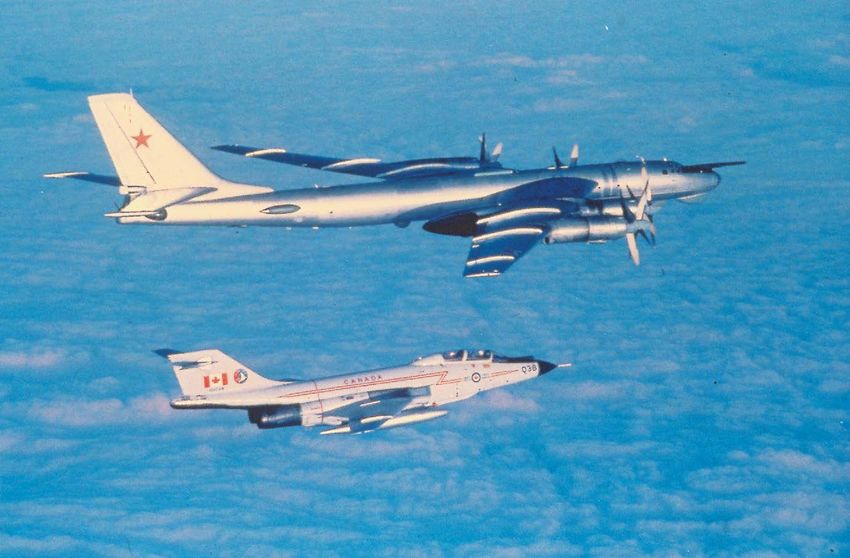
and offer an opinion as to whether this is, in fact, due to Canadian and threats faced by Canada and the United States. Its missions
neglect or other factors. The article will constrain itself to the extant expanded in the 1960s to ballistic missile early warning with the
NORAD Mission set and not venture into additional domains that emergence of intercontinental (ICBM) and submarine launched
are addressed through the Tri-Command sponsored Evolution of (SLBM) ballistic missiles. Subsequently, post 9/11, it assumed an
North American Defence (EvoNAD)3 study. asymmetric mission set, consisting of Operation Noble Eagle One
to intercept and interdict civil aircraft with potentially nefarious
Historical Perspective intentions, and to the war on drugs, with its Aerospace Control
Mission and a Maritime Warning Mission.6
N orth America has the advantageous position of facing
potential threats at standoff distances. Separated from The evolution of NORAD manifested itself in the Americans not
potential aggressors by the Atlantic, Pacific and Arctic Oceans, wanting Canada to be a liability in its defence against Soviet aggres-
Canada and the U.S. share an unparalleled defence relationship sion, and the recognition that Canada was incapable of defending
forged by a shared geography, common val- itself.7 The U.S. therefore, identified the need for
ues/ interests, deep historical connections, cooperation with Canada to acquire territory and
and highly integrated economies. These airspace in order to provide strategic depth against
factors inevitably elevate the task of defend- “North America has potential Soviet targets.8 This led initially to the
ing North America to the strategic level. the advantageous construction of the Pine Tree Line Radar warning
Equally important has been the commitment position of facing installations, followed shortly afterwards by the
to work together to defend North America, Distant Early Warning (DEW) line radar-warning
initially through the joint commitment of potential threats at system.9 Concerns over Canadian sovereignty
the Ogdensburg Declaration in 1940, and 4
standoff distances.” were addressed in terms of Canadian inclusion
since 1957/1958,5 through the Bi-National in site selection, and the application of Canadian
NORAD command. legal status and title.10 Cooperation at the military
level led to the develop-
ment of protocols for
the cross-border inter-
ception and control of
aircraft.11 These proto-
cols were subsequently
accepted at the political
levels of both govern-
ments, resulting in the
NORAD agreement
with its corresponding
checks and balances,12
to become responsible
to both nations for the
shared defence of North
America.
The NORAD
Agreement, most
recently renewed in
2006,13 deliberately
L i b r a r y a n d A r c h i v e s C a n a d a / C - 016 76 8
highlights the endur-
ing nature of the
bi-national relationship.
However, the passing of
40 years since the last
significant series of
investments exposes
the neglect both govern-
ments have placed upon
Prime Minister William Lyon Mackenzie King and President Franklin D. Roosevelt at Ogdensburg in 1940. continental defence,
despite the rhetoric14
embodied in subsequent
The Cold-War Soviet nuclear threat, initially through manned defence policies and national military strategies. Other factors have con-
bombers, led to the combined military conclusion that defence tributed to this neglect, namely, the end of the Cold War and a subsequent
would be most effectively and efficiently met through a shared shift from continental defence, to expeditionary operations, and the
command and control structure. Based upon this conclusion, historical belief that the defence of North America is best achieved
NORAD was founded in 1957, centred upon the shared interests far away from national territory.15
6 Canadian Military Journal • Vol. 21, No. 2, Spring 2021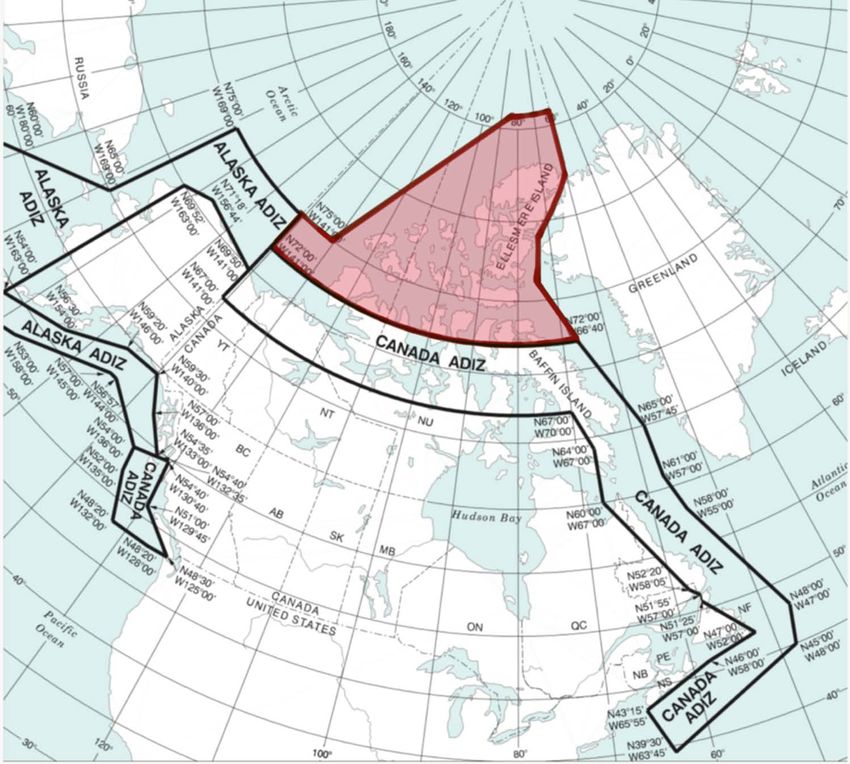
INTERNATIONAL ALLIANCES
power conflict subsided, to be replaced by
primarily-American led or supported Western
military interventions. This resulted in a shift
in direction towards expeditionary deploy-
ments to address post-Soviet Union security
impacts, such as those experienced in Bosnia
and Kosovo.
The second factor was 9/11, which rep-
resented a NORAD failure through, neither
predicting, nor being able to respond to the
events of that day.
“We found that NORAD, which had
been given the responsibility for
defending U.S. airspace, had con-
strued that mission to focus on threats
coming from outside America’s bor-
ders. It did not adjust its focus even
D N D / N a t i o n a l D e fe n c e I m a g e L i b r a r y / P C N 7 0 - 8 7
though the intelligence community
had gathered intelligence on the pos-
sibility that terrorists might turn to
hijacking and might even use planes
as missiles.”17
This did lead to the creation of Operation
Noble Eagle mission to address the asym-
metric (terrorist) threat under NORAD
auspices, and subsequently, the creation
of United States Northern Command
Close up of a radar antenna with the dome in the background. This DEW Line site is located at (USNORTHCOM) to inwardly address
Cambridge Bay in the Arctic. homeland defence missions.
NORAD is often described as the
benchmark of the Canada-United States
relationship, and yet it largely exists
‘beneath the political radar,’ success-
fully operating in the military domain,
out of sight and out of mind. As such,
there are few motivating factors for
either government to concentrate efforts
on North American Defence.
“NORAD today is largely out
of sight and out of mind, best
known as the organization that
“tracks Santa.”16
These initiatives and shared per-
spectives set the scene for the bi-national
relationship, and provide the reference
point as to how NORAD has diverged
from its founding intent.
17 W i n g Pu b l i s h i n g W i n n i p e g
Catalyst for Change
T hree factors served as a cata-
lyst for change with respect to
NORAD’s focus. First was the end-
ing of the Cold War, which viewed
the marginalisation of the continental Figure 1: The vastness of Canada’s Arctic is graphically driven home through this overlay of Europe upon
defence mission as the threat of great the region.
Canadian Military Journal • Vol. 21, No. 2, Spring 2021 7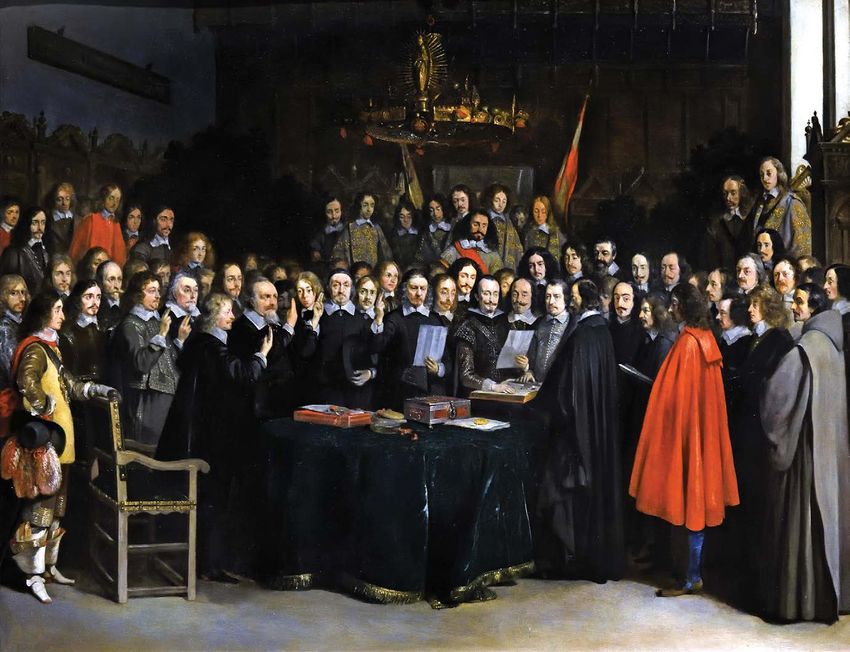
The final catalyst factor for change is the re-directed and the ability to exercise sovereign control would be hugely
                                                                     international focus, following the events of 9/11, towards global taxing for Canada alone, yet outsourcing to the U.S. to provide
                                                                     counter-terrorism operations, initially in Afghanistan and subse- this on our nation’s behalf erodes Canada’s sovereignty. Therein
                                                                     quently Iraq. In the absence of any superpower threat following lies the paradox that the government faces, and the environment
                                                                     the end of the Cold War, attention and resources were diverted in which NORAD exists.
                                                                     overseas, to the detriment of the homeland defence mission.
                                                                     Domestically, the creation of USNORTHCOM                                                   “…no alternative to NORAD which
                                                                     resulted in an inwardly orientated, all domain                                             would not involve a substantial reduc-
                                                                     command; in and of itself contributing to the                                              tion in military effectiveness…”21
                                                                     creation of Canada Command (CANCOM).18               “It is important to note
                                                                     The subsequent decision by Canada to not                 what NORAD has                    As the threats to North America have
                                                                     participate in the proposed US ballistic missile      provided to Canada,             evolved, the American reliance upon Canada to
                                                                     defence system19 strained the political relation-                                     defeat them has diminished, and hence, a gap
                                                                     ship, and forced USNORTHCOM and United              especially, ready access          has opened up. Space-based capabilities enable
                                                                     States Strategic Command (USSTRATCOM)               to the huge U.S. military         the U.S. to act independently, leaving Canada
                                                                     to adopt the ballistic missile mission set.                                           woefully short of the capabilities required to
                                                                                                                                capability and
                                                                     This decision marginalized NORAD and                                                  address them alone. As such, Canada needs
                                                                     the extant mission set, challenging its              investment structure.”           to make substantive efforts to make NORAD
                                                                     continued relevance.                                                                  relevant to the United States.

                                                                     Geo-Strategic Context                                                           It is important to note what NORAD has provided to Canada,
                                                                                                                                                 especially, ready access to the huge U.S. military capability

                                                                     T   he Westphalian notion of sovereignty has become the foun-
                                                                         dation of the modern nation state. The challenge for Canada
                                                                     remains the maintenance of sovereign control over its diverse and
                                                                                                                                                 and investment structure. These capabilities have consistently
                                                                                                                                                 made up for Canadian shortfalls, such as Generation Five
                                                                                                                                                 Lockheed Raptor F-22 fighters, the Airborne Warning and Control
                                                                     expansive geography.20 The ability to maintain domain awareness             System (AWACS) and air-to-air refuelling platforms, and these
Pe t e r H o r r e e / A l a m y S t o c k P h o t o / F 3 C 7 W 4

                                                                     Treaty of Münster, 1648, preliminary of the Peace of Westphalia, which ended the Thirty Years War.

                                                                     8                                                                Canadian Military Journal           • Vol. 21, No. 2, Spring 2021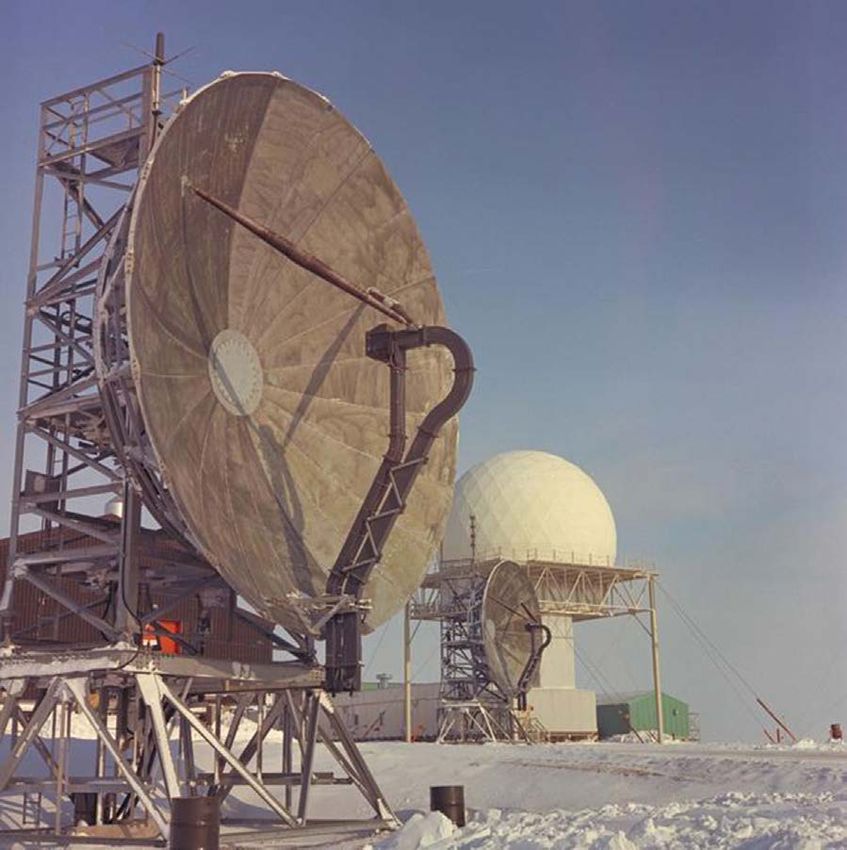
INTERNATIONAL ALLIANCES
D N D / N a t i o n a l D e fe n c e I m a g e L i b r a r y / P C P 8 5 - 7

                                                                               Another shot of a Russian Tu-95 Bear being intercepted by an earlier Canadian fighter-interceptor, this time, a CF-101 Voodoo out of CFB Bagotville, Quebec.

                                                                               investments have largely been at U.S. expense. Furthermore, the                      Since then, the threat environment has evolved significantly, in
                                                                               increased ability to exercise control over Northern airspace has               part resulting in the introduction of the maritime warning mission,
                                                                               enabled Canadian sovereignty.22 Being a Combatant Command23                    and the asymmetric mission exercised through Operation Noble
                                                                               (COCOM), NORAD enabled Canada to have unique access                            Eagle. However, RCAF capabilities and force structure supporting
                                                                               to both the strategic viewpoint of the United States, and its                  the NORAD mission have remained relatively unchanged. This
                                                                               seemingly-limitless intelligence and decision making network,                  has contributed to NORAD’s decreasing ability to keep pace with
                                                                               providing Canada a more influential global position than might                 the changing strategic environment and evolving threats. Given
                                                                               be expected or deserved.24 Furthermore, bi-national cost sharing               the return of great power competition, particularly with regard
                                                                               has avoided duplication and promoted the efficient and effective               to Russia and China, increased capabilities of these potential
                                                                               use of resources for each country.25 The financial costs are such              adversaries, and limited capacity due to aging infrastructure,
                                                                               that Canada would not have been able to meet them with its                     there is an overwhelming requirement to re-modernize NORAD
                                                                               significantly smaller defence budget.                                          to ensure that it has the equipment, resources and force structures
                                                                                                                                                              needed to effectively conduct its missions.
                                                                               Decades of Under-Investment
                                                                                                                                                                   The threats of today are not those faced in the 1980s. Manned

                                                                               N    ORAD last underwent a major a modernization in the 1980s
                                                                                    as part of the North American Air Defence Modernization
                                                                               (NAADM) memorandum of understanding (MoU). This, along
                                                                                                                                                              Soviet long-range bombers were required to fly over the northern-
                                                                                                                                                              most areas of North America in order to launch missiles against
                                                                                                                                                              targets to the south. Submarines of the 1980s had limited abilities
                                                                               with other minor projects, resulted in the building of the North               to operate in the Arctic and were addressed largely in the maritime
                                                                               Warning System (NWS), a set of short- and long-range radars                    domain.28 The extant NWS acted as a ‘trip-wire’ against aerial
                                                                               linking Alaska to Greenland, across Canada’s North. It also led                attack, and provided the command and control for air interception
                                                                               to the construction of Forward Operating Locations26 (FOLs) in                 in the Canadian Air Defence Identification Zone (CADIZ). The
                                                                               Northern Canada, the integration of Canadian Air Force (CAF)                   CADIZ represented the limit-of-range of the NWS radar coverage,
                                                                               personnel into the US AWACS program, and the purchase of                       but astonishingly, it did not cover the full sovereign territory of
                                                                               CF-18 Hornets for the CAF, which is now the Royal Canadian Air                 Canada’s Arctic Archipelago. The addition of the FOLs provided
                                                                               Force (RCAF).27 These initiatives significantly enhanced Canada’s              the ability to base fighters to intercept manned bombers within
                                                                               and NORAD’s ability to detect, operate and intercept the threats               the CADIZ, and the CF-18s themselves were capable against a
                                                                               presented by the Soviet Union.                                                 likely Soviet Bear29 threat.

                                                                               Canadian Military Journal                • Vol. 21, No. 2, Spring 2021                                                                                  9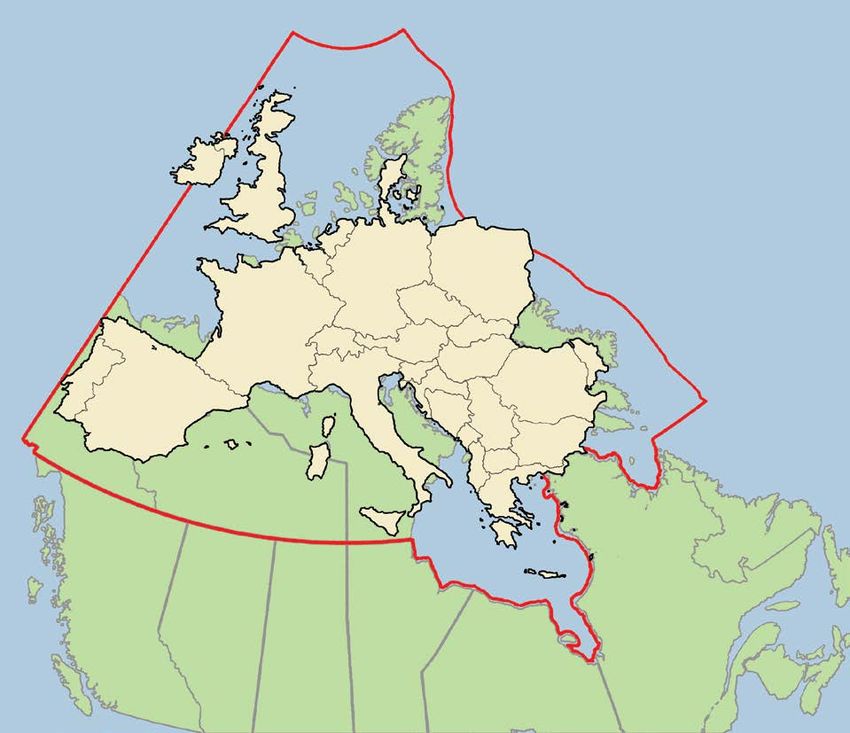
Bering Sea Arctic Ocean
R e d r a w n m a p t a k e n f r o m N a s i tt u q C o r p o r a t i o n / C B C N e w s a r t i c l e a t h tt p s : / / w w w. c b c . c a / n e w s / c a n a d a / n o r t h /
Baffin Bay
Inuvialuit Settlement
Region
Nuuk
Inuvik
Cambridge Bay Hall Beach
Yukon
Iqaluit
r ay t h e o n - w i n s - 5 - y e a r- n o r t h - w a r n i n g - s y s t e m - c o n t r a c t - 1. 2 5 9 4 0 7 5
Northwest
Territories
Nunatsiavut
Nunavut
Nunavik
Hudson Bay Goose Bay
Pacific Ocean
North Bay OTTAWA
Figure 2: The Canadian North Warning System Radar Site laydown.
After nearly 40 years, the Russian long-range aviation “NORAD has to an extent benefitted from the lack of
(LRA) incursions have become more frequent and adventur- political attention to date... and political oblivion is
ous in nature as a result of Russia’s emerging assertiveness.30 easily managed. There is, however, the great risk that
Advances in technology, including stand-off cruise missiles,31 too little attention will lead to NORAD’s marginalisa-
which no longer require the overflight of North America to range tion, especially in terms of resource commitments.”34
their targets, combined with stealth technologies, enable the air
and submarine launched cruise missiles to remain undetected Another example of malaise can be found in the 1986 NAADM
by NWS radars. Blended with an emerging Chinese threat, Agreement, which saw the development of the NWS to replace
intermixed with rogue state (North Korea and Iran) and non- the DEW and Pine Tree Line surveillance systems. Despite
state actors, we see a situation whereby the threat has outpaced a 50:50 split in construction costs, the agreement generated
the capabilities that were designed to counter a 60:40 split35 in operations and maintenance
the threats, eroding the defence credibility of costs,36 which provided clear gains to Canada
Canada in the eyes of the United States, and with significant enhanced capabilities. This
with it, the deterrent effect of NORAD.
“Additionally, Canada’s was shortly followed by the Canadian refusal to
financial commitment join the U.S. Ballistic Missile Defence (BMD)
Political Malaise to defence has programme, despite an American desire to base
interceptors in Canada, ignored NORAD’s
steadily declined.”
B oth countries have traditionally val-
ued the priority of defending North
America overseas,32 far away from national
missile warning role within the integrated
tactical warning/ attack assessment (ITW/AA)
system. This demonstrates the relative lack of
territories. Correspondingly, the level of political interests political understanding of the role NORAD fulfils in multi-domain
and understanding in NORAD has waxed and waned over the North American Defence.
years, from PM Diefenbaker’s lack of understanding over the
command’s role in the Cuban Missile Crisis,33 to PM Pearson’s While the key concerns of the U.S. have been around secu-
1964 White Paper on Defence, which, despite reaffirming the rity, those of Canada have been around its junior partner status’ and
commitment to collective security, focused national priorities of balancing the sovereignty issue with the realities of “securing
upon international peacekeeping. security.” Additionally, Canada’s financial commitment to defence
has steadily declined.37 However, the threats to North America
10 Canadian Military Journal • Vol. 21, No. 2, Spring 2021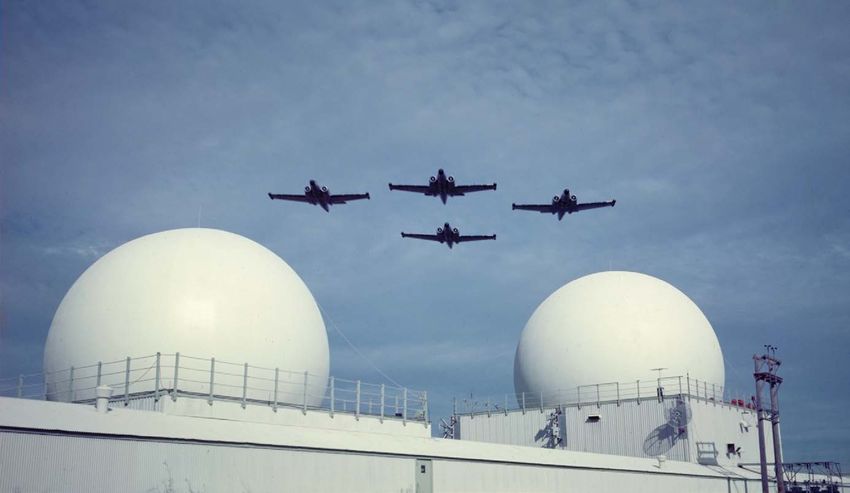
INTERNATIONAL ALLIANCES
have changed, and the U.S. has been able to address much                        The latest Defence Policy, SSE, emphasised being Strong at
of this change independently, widening the gap between the                Home and Secure in North America. Within that, it announced
two countries and further diminishing Canada’s roles within               significant investments and outlined a strong focus on the defence
NORAD. The stand-up of USNORTHCOM38 in 2002 is an example                 of Canada and North America. Most notably was the commitment
of the Americans taking more independent responsibility for               to modernise NORAD,45 which was hailed as the unwritten and
homeland defence, thus marginalizing Canada in the process. That          unfunded chapter of SSE. Yet, over two years since its launch,
said, the political rhetoric has been unchanged since its formation,      there is no follow-on chapter, nor is there currently any plan to
most recently articulated in the 2017 joint statement by President        modernize NORAD. There were significant commitments, such
Trump and PM Trudeau:                                                     as the pledge to replace the CF-18s with 88 advanced fighters.46
                                                                          However, the difficult decision with respect to which fighter
     “The North American Aerospace Defense Command                        would actually replace the CF-18 was pushed into a new electoral
     (NORAD) illustrates the strength of our mutual commit-               mandate, and the interim fighter purchase of 25 Ex-RAAF F-18s47
     ment. United States and Canadian forces jointly conduct              adds no realistic capability over the existing aging CF-18s, unless
     aerospace warning, aerospace control, and maritime                   it is for a pool of spare parts.48 The expansion of the CADIZ49
     warning in defence of North America. We will work to                 was a mere line on a map, aligning Canadian airspace with the
     modernize and broaden our NORAD partnership in these                 Exclusive Economic Zone (EEZ). It was accompanied with no
     key domains, as well as in cyber and space.”39                       increased capability to sense, or to control the full extent of the
                                                                          Arctic Archipelago.
     This demonstrates that politically NORAD is a great soundbite
to benchmark the CAN-US relationship, despite the misalignment                  The area in red (Figure 3) represents the expanded zone, with
with military reality.                                                    the previous line highlighted as the Canada ADIZ, which represents
                                                                          the limit of range of the current NWS. The policy highlights plans
Defence Policy                                                            to replace the NWS with a ‘system-of-systems.’50 This will not be
                                                                          fielded until at least 2035, leaving a 15-year capability gap. The proj-

R    epeated defence policies from the 1964 White Paper on
     Defence, to the Canada First Defence Strategy (CFDS)40
have consistently committed to strong North American defence
                                                                          ect to replace the aging CC-150 Polaris air-to-air tanker transport
                                                                          capability51 envisages a ‘like-for-like’ replacement, yet falls short
                                                                          of assigning any replacement to the NORAD mission, and fails to
and the unique partnership arrangement with the United States,            mention the NORAD assigned CC-130T52 based out of Winnipeg,
which is exemplified by the bi-national NORAD agreement.                  which represents the sole RCAF NORAD tanker commitment at

     “Only the U.S. has the mili-
     tary capabilities necessary
     to defend North America’s
     geographic expanses and
     that Canada would main-
     tain its existing security

                                                                                                                                                     S u p e r i m p o s e d b y Z a v i d i l , E x p a n d e d C a n a d i a n A D I Z u p o n o r i g i n a l a t N AV CA N A DA , N o t i c e o f C h a n g e , 2 018
     relationship with the U.S.”41

     The most recent defence
policy, Strong Secure Engaged42
is no different. Dr. Kim Nossal
articulates this as being “old
wine in new skins,”43 indicat-
ing that little has really changed
over time:

     “Canada’s new defence
     policy announced by the
     Liberal government of
     Justin Trudeau in June
     2017—entitled Strong,
     Secure, Engaged (SSE) —is
     indeed a case of “old wine”
     (an established and largely
     unchanging Canadian
     defence policy) in a “new
     bottle” (a new defence
     policy statement).”44

                                     Figure 3: The expanded Canadian Air Defence Identification Zone (CADIZ).

Canadian Military Journal             • Vol. 21, No. 2, Spring 2021                                                                         11
this time.53 The Ground Based Air Defence (GBAD) investment54 This article has explored the founding conditions of NORAD
is configured for army expeditionary deployments, such as the and the evolving nature of the Bi-National Command; the underpin-
Enhanced Forward Presence (eFP)55 battlegroup in Latvia, and is ning of mutually shared interests, and the offset of capability for
defined as being very short range air defence (VSHORAD.)56 As space against a shared threat dynamic. It focused upon Canada’s
such it will not provide a domestic capability that could support benefit from the deal involving the trading of space for protection
an event, such as the G8 summit or the Olympics, nor would and assurance, as well as the associated compromises with regard
it support the NORAD forward operating locations against the to sovereignty. The article has attempted to demonstrate that while
types of threats that they would now likely face. These examples NORAD has historically evolved to meet emerging threats, the
demonstrate the reality of the political and policy malaise. The last significant investment was with the NAADM agreement in
reality translates into a Canadian practice of the 1980s. Since then, investment and capa-
delayed decisions and short term stop gap bilities have atrophied. This has largely been
acquisitions that suit political mandates and due to changed focuses towards the war on
further the erosion of Canada’s credibility with “The article has terrorism and expeditionary operations, in
the United States. attempted to and of themselves reflecting broader historical
defence policy trends.
Conclusion demonstrate that while
NORAD has historically The requirement for renewed focus and
P olitically, Canada has traditionally pri-
oritized its CAN-US relationship more
in terms of economics, the current NAFTA/
evolved to meet
emerging threats,
investment is clear, SSE provided the impetus,
but it has so far failed to deliver the required
capabilities that will retain NORAD’s rel-
USMCA dynamic being such an example. the last significant evance into the future. Limited space available
Furthermore, the view that a dollar spent in this article prevents a detailed investigation
on defence is a dollar not spent on social
investment was with of capabilities and investments required to
programs, education or infrastructure develop- the NAADM agreement rebalance. However, it is clear that failure to
ment, leads to the marginalization of defence in the 1980s.” modernize with a sense of immediacy will
in Canadian politics to an extent that it is not in render the bi-national command irrelevant.
U.S. politics. Given the current rhetoric emerg- Subsequently, Canada will no longer be the
ing from the present U.S. administration,57 beneficiary of this mutually beneficial arrange-
Canada can no longer depend upon the U.S. to bear the ‘lion’s ment, as the U.S. will likely embark upon unilateral solutions to
share’ of the financial burden for the shared defence of North assure their homeland defence, in all probability at the expense of
America. Despite successive governments traditionally showing Canadian sovereignty, which would be to our detriment. Canada
little appetite to shoulder the huge financial burden of North has a small, and closing, window of opportunity to demonstrate
American defence, current and future government’s need to be pre- that it is a vested defence partner in NORAD and the defence of
pared to invest a higher priority in defence spending, particularly North America alongside the United States, as opposed to being
in support of large-scale projects, such as the NWS replacement the freeloader.
and high Arctic basing.
NOTES
1 NORAD’s three mission are Aerospace 7 J Jockel, Canada in NORAD, 1957 – 2007: A 15 A Charron and J Fergusson, Beyond NORAD
Command, Aerospace Control and since 2006, History. McGill-Queens University Press, 2007, and Modernization to North American Defence
Maritime Warning. pp. 9-11. Evolution. Canadian Global Affairs Institute, May
2 Emphasised in repeated defence policies, 8 Ibid, pp. 1-3. 2017, pp. 1-3.
including the Canada First Defence Strategy 9 At US expense. 16 A Charron et al, NORAD: Beyond Modernisation,
and the latest published defence policy, “Strong, 10 J Jockel, No Boundaries Upstairs: Canada, the University of Manitoba. January 2019, p. 6.
Secure, Engaged.” United States and the origins of North American 17 The 9/11 Commission Report, Final Report of the
3 EvoNAD is an all-domain study being Air Defence. Vancouver: University of British National Commission on Terrorists Attacks Upon
conducted by the Tri-Command (CJOC, NORAD Columbia Press, 1987, p. 83. the United States (Washington, DC: 2004), p. 427.
and USNORTHCOM) into all domain threats 11 Recognising sovereign rules of engagement. Ibid, 18 The mission sets are now incorporated into
to North America. It reports its findings to the p.54-55. Canadian Joint Operations Command (CJOC),
Permanent Joint Board on Defence (PJBD). 12 Namely that the commander and deputy com- with both domestic and expeditionary focus.
4 Which led to the establishment of the PJBD, mander would be approved by, and from, both 19 In 2004, Canada and the US had agreed to assign
followed by the CAN-US Military Cooperation nations. Ibid, p. 58. the early warning component of missile defence
Committee (MCC). 13 At which time it was signed in perpetuity by the to NORAD. The decision by PM Martin in
5 Militarily established in 1957, but not politically Canadian and U.S. Governments. 2005 not to participate in BMD was a surprise
ratified until 1958. 14 K Nossal, New Wineskin, Old Wine: The Future to the US. J Fergusson, Shall we Dance? The
6 It assumed the Maritime Warning Mission in 2006 of Canadian Contributions to North American Missile Defence Decision, NORAD renewal, and
with the re-signing of the NORAD Agreement Security, North American Strategic Defense the future of Canada-US defence Relations, in
in perpetuity. in the 21st Century, Springer Publishing, 2018, Canadian Military Journal, Vol. 6, No. 2 (2005),
pp. 97-107, at: https://link.springer.com/chap- pp. 12-15.
ter/10.1007/978-3-319-90978-3_8
12 Canadian Military Journal • Vol. 21, No. 2, Spring 2021INTERNATIONAL ALLIANCES
20 Bordering three oceans, the world’s second 37 A Charron, NORAD: Beyond Modernization, 48 Utility of interim fighter purchase. Accessed:
largest landmass, a low population density and the University of Manitoba, 2019, p. 15. https://www.macdonaldlaurier.ca/mlis-shimooka-
world’s longest undefended border. 38 The BMD role is resident in US Northern available-comment-scathing-ag-report-ailing-rcaf/
21 J Jockel, Canada in NORAD, 1957 – 2007: A Command (USNORTHCOM). 49 SSE initiative 107. Align the Canadian Air
History. McGill-Queens University Press, 2007, 39 Joint Statement from President Trump and Prime Defence Identification Zone (CADIZ) with our
p. 76. Minister Trudeau on 13 February 2017. Accessed: sovereign airspace.
22 Ibid, pp. 12-15. https://pm.gc.ca/eng/news/2017/02/13/joint- 50 SSE initiative 109. Collaborate with the United
23 Though its dual USNORTHCOM role. statement-president-donald-j-trump-and-prime- States on the development of new technologies to
24 Eluding to Canada’s “middle power status” as minister-justin-trudeau improve Arctic surveillance and control, includ-
defined by Nils Brvik in D. Barry and D. Bratt. 40 Canada. Department of National Defence. Canada ing the renewal of the North Warning System.
Defence against Help: explaining Canada-US First Defence Strategy, 2008. Accessed: https:// 51 SSE initiative 47. Recapitalize next generation
Security Relations. In American Review of www.canada.ca/content/dam/dnd-mdn/migration/ strategic air-to-air tanker-transport capability
Canadian Studies 38. No1, 2008, p. 64. assets/FORCES_Internet/docs/en/about/CFDS- (CC-150 Polaris replacement).
25 A Charron and J Fergusson. NORAD in SDCD-eng.pdf 52 CC-130T H Model Hercules Aircraft based out of
Perpetuity? Challenges and Opportunities for 41 1992 Defence White Paper (Mulroney). Winnipeg on 24 hours’ notice-to-move
Canada. University of Manitoba, 2014, p.9. 42 Canada, Department of National Defence, Strong 53 The CC-130T goes out of service in 2020, with
26 Located in Iqaluit, Inuvik, Yellow Knife and Secure Engaged Canada’s Defence Policy. 2017. the STTC Polaris replacement not due in ser-
Rankin Inlet. Accessed: http://dgpaapp.forces.gc.ca/en/canada- vice until at least 2028, leaving the RCAF and
27 Themselves replacing CF-101 Voodoos and defence-policy/docs/canada-defence-policy- NORAD solely reliant upon the US, which in
CF-104 Starfighters. report.pdf peacetime provides KC-135 aircraft (configured
28 A Charron and J Fergusson, NORAD in Perpetuity. 43 K, Nossal, New Wineskin, Old Wine: The Future specifically to support the RCAF mission with
University of Manitoba, 2014, pp.36-38. of Canadian Contributions to North American hose and drogue vice probe) from the air National
29 Tupolev 95/142 Aircraft. Security, North American Strategic Defense in the Guard based in Spokane, WA and Bangor, ME.
30 NORAD has tracked an increase in LRA activity 21st Century, Springer Publishing, 2018, pp.97- 54 SSE initiative 34. Acquire ground-based air
since 2007. 107. Accessed: https://link.springer.com/chap- defence systems and associated munitions capa-
31 Kh-101 (with a range of up to 4500km) recently ter/10.1007/978-3-319-90978-3_8 ble of protecting all land-based force elements
demonstrated in Syria, and the nuclear capable 44 Ibid, pp. 98-99. from enemy airborne weapons
Kh-102 cruise missile. 45 SSE initiative 111, Modernize NORAD to meet 55 Enhanced Forward Presence.
32 A Charron, NORAD: Beyond Modernization. existing challenges and evolving threats to North 56 Very Short Range Air Defence.
University of Manitoba.2019, pp. 11-12. America, taking into account the full range 57 Trump rhetoric on allied burden-sharing.
33 J Jockel, Canada in NORAD, 1957 – 2007: A of threats. Accessed: https://www.brookings.edu/blog/
History. McGill-Queens University Press, 2007, 46 SSE initiative 44. Replace the CF-18 fleet with order-from-chaos/2018/07/11/what-trump-
pp. 54-58. 88 advanced fighter aircraft to improve Canadian gets-wrong-on-allied-burden-sharing/
34 A Charron, NORAD: Beyond Modernization, Armed Forces air control and air attack capability
University of Manitoba. 2019, p. 59. 47 Purchase of interim fighters. Accessed: https://
35 The 60% share being borne by the US. nationalpost.com/news/canada/deal-to-buy-used-
36 Despite 11 of 15 Long-Range Radars and 36 of australian-fighter-jets-finalized-with-canadian-
30 Short-Range Radars being located in Canada. forces-set-to-be-flying-them-by-summer
D N D / C FJ I C p h o t o P C - 3 10 7 b y F l y i n g O ff i c e r S a n k e y
NORAD nostalgia… A flight of four Avro CF-100 Canuck fighter interceptors overfly a radar site near RCAF Station Cold Lake, Alberta, circa the early-1960s.
Canadian Military Journal • Vol. 21, No. 2, Spring 2021 13You can also read


