Food Price Report 2015 - Rapport sur les Prix Alimentaires à la Consommation 2015
←
→
Page content transcription
If your browser does not render page correctly, please read the page content below
Food Price Report 2015
Rapport sur les Prix Alimentaires à la
Consommation 2015
UNIVERSITY OF GUELPH                UNIVERSITÉ DE GUELPH
ECONOMIC BRIEF                         NOTE ÉCONOMIQUE

                            Dr. Sylvain Charlebois
                          Dr. Michael von Massow
                                 Dr. Francis Tapon
                               Dr. Erna van Duren
                                 Dr. Paul Uys, h.c.
                                      Warren Pinto
                                     Amit Summan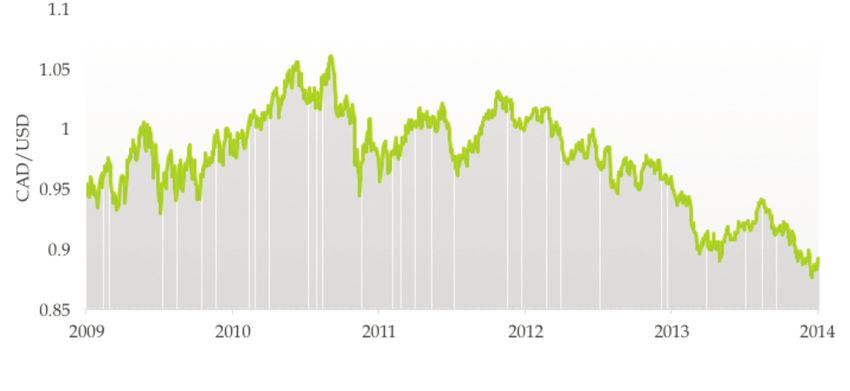
About the Authors
   Dr. Sylvain Charlebois
   Lead Author, Board Member, University of Guelph’s Food Institute
   scharleb@uoguelph.ca
   519-824-4120 x56808 or 226-979-2841

   Dr. Michael von Massow
   Associate Professor/ Professeur Agrégé, School of Hospitality, Food, and Tourism Management
   mvonmass@uoguelph.ca
   519-824-4120 x56347

   Dr. Francis Tapon
   Professor/Professeur Titulaire, Department of Economics & Finance
   ftapon@uoguelph.ca
   519-824-4120 x52657

   Dr. Erna van Duren
   Professor, Professeure Titulaire, School of Hospitality, Food, and Tourism Management
   evandure@uoguelph.ca
   519-824-4120 ext. 52100

   Dr. Paul Uys, h.c.
   Senior Director, Directeur, University of Guelph’s Food Institute

   Warren Pinto
   M.Sc. Candidate, Department of Marketing & Consumer Studies

   Amit Summan
   Economic Research Consultant

   Acknowledgements
   We would like to acknowledge the tremendous contributions by Sue-Ann Maharaj and Maggie McCormick.
   They have given our team great support in the preparation of this report.

2 Prepared by the The Food Institute at the University of Guelph 12/02/2014
Abstract / Résumé
  University of Guelph’s Food Institute presents the Food Price Report 2015 (FPR 2015).
  2014 realised many of the predictions made. Some categories have continued to decline
  over time, including dairy and eggs. We note in our predictions in respect to meat,
  grains, and vegetables that prices will rise in the new year. This year, we predict food
  prices overall will increase modestly at 0.3% to 2.4%.

Table of Contents
About the Authors .................................................................................................................2
Abstract / Résumé.................................................................................................................3
Food Price Report 2014: The Year Prior’s Predictions..........................................................4
          Figure 1: Change in Food Prices from 2004-2014 .................................................5
Factors Affecting Retail Food Prices.....................................................................................6
          Table 1: Fundamental Drivers of Canadian Retail Food Prices ...........................6
Macroeconomic Drivers ........................................................................................................6
          Figure 2: Crude Oil Prices (USD) from 2009 to 2014.............................................7
Sector & Domestic Drivers ....................................................................................................8
Food Price Report 2015 Forecast .........................................................................................9
Method ..................................................................................................................................9
Forecast ................................................................................................................................9
          Table 2: Forecast for 2015 .......................................................................................9
          Figure 3: Food Price Report Predictions .............................................................10
          Figure 4: Meat Price Changes from 2004-2014....................................................11
          Figure 5: CAD/USD Exchange Rate from 2009-2014...........................................12
Une année 2014 marquée par la protéine ..........................................................................14
2015 : Le dollar canadien est à surveiller ...........................................................................15
Bibliography ........................................................................................................................16

                                       Prepared by the The Food Institute at the University of Guelph 12/02/2014                             3
Food Price Report 2014:
   The Year Prior’s Predictions
        The University of Guelph Food Price Report         specifically, the coronavirus PED (porcine epidemic
   2014 projected food price increases between 0.3%        diarrhea) spread to vast populations of Canadian
   to 2.6%, higher than inflation in general. We           piglets, causing short-term hikes in pork prices
   expected to see price increases in all food             throughout barbecue season. Canadians saw these
   categories aside from dairy & eggs. We also             hikes primarily in bacon (up 25%) ham (up 18%),
   predicted the prices for meats, grains, fruit, and      and pork chops (up 18.2%). Although this may
   nuts to be relatively stable in 2014. As well, we       encourage vegetarianism among consumers,
   predicted an increase in price of fish due to           vegetable prices in 2014 may diminish those
   increased pressure on fisheries to catch, and           thoughts, as greens took an upward turn of 3.1%.
   pressure from consumers and retailers for               Much of this was due to historically ravaging
   sustainable catch.                                      droughts California experienced in the last year, a
                                                           main source of Canadian produce during the winter
        Overall, Canadian food prices in the last fiscal   season (Mansfield, 2014).
   year rose 2.8%, with the greatest increases in meat
   and fish, 12.4% and 5.9% respectively. Table 1               Last year’s report also predicted the major
   shows the change in food prices over the past           changes in the Canadian food retail space would
   decade. Constrained supply in the market has            have downward impacts on prices on dairy.
   caused additional upward pressures on beef and          Intensified competition arose with the introduction of
   pork prices. Real cattle prices are at its highest      Target and Dollarama whilst acquisitions of
   since the early 1980s, and hog prices at its highest    Shopper’s Drug Mart and Canada Safeway,
   since the mid-1990s. This trend of soaring meat         encouraged loss leadership on goods such as
   prices comes due to increase slaughter fees in          cheese, milk, and pasta to stimulate greater sales
   cattle from 2012 (Honey, 2012) and more recent          on other items in stores. As correctly forecasted, the
   incidents in porcine diseases that reduced supply in    CPI for dairy and eggs only saw a 0.6% increase in
   global hog markets (Campbell & Chen, 2014). More        price in 2014.

4 Prepared by the The Food Institute at the University of Guelph 12/02/2014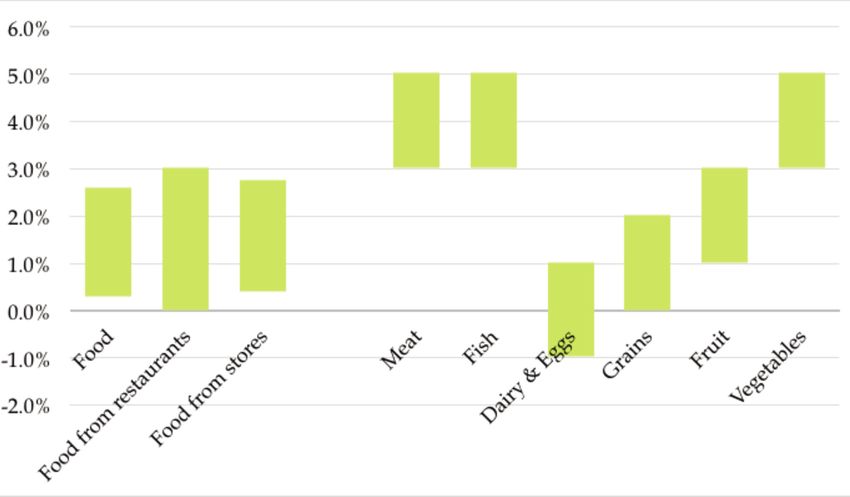
Change in Food Prices From 2004-2014
Figure 1:

            Prepared by the The Food Institute at the University of Guelph 12/02/2014   5
Food Prices
   Factors Affecting Retail

   The main drivers in three fundamental domains are expected to influence retail food prices in 2015. Table 1
   outlines the impact, effect, and likelihood of these drivers on prices in our food price forecast for the
   upcoming fiscal year.

   Table 1: Fundamental Drivers of Canadian Retail Food Prices

                               Drivers                  Impacts               Price Effects           Likelihood
                          Weather
     Macro
                                                   Increasing Significantly Variable              Likely
                          Geopolitical Risk        Moderate                Upward                 Unlikely
                          Input Costs              Significant             Slightly Downward      Likely
                          Energy Costs             Moderate                Downward               Likely
                          Currencies & Trade
                          Environment
                                                   Very Significant        Upward                 Very Unlikely

                          Food Retail &
     Sector               Distribution Landscape
                                                   Moderate                Slightly Downward      Likely

                          Food Processing
                          Industry
                                                   Slightly Moderate       Downward               Likely

                          Policy Context           Moderate                Moderating             Unlikely
                          Consumer Awareness       Significant & Growing   Increased Dispersion   Likely

                          Consumer Debt &
     Domestic             Deleveraging
                                                   Slightly Moderate       Slightly Downward      Unlikely

                          Inflation                Minimal                 Negligible             Likely
                          Consumer Income &
                          Income Distribution
                                                   Moderate                Slightly Downward      Likely

   Macro Drivers
   Changes in weather and climate are expected to have significant implications for food markets in the long
   term. As droughts have been increasing in recent years, the impact of climate conditions and catastrophic
   weather events increasingly creates upward pressures on food prices. Such impacts pose significant
   challenges in global agriculture, posing threats to the Canadian wallet. A significant proportion of Canadian
   food is imported, and events as the droughts in California and Brazil affect domestic retail prices of
   imported fruit and coffee, respectively. Conversely, dry weather in southeast Asia has increased prices for
   cooking oils, such as palm oil (Indonesia Investments, 2014). Despite weather as a strong upward driver of
   food price, forecasting short-term impacts for 2015 is extremely difficult.

6 Prepared by the The Food Institute at the University of Guelph 12/02/2014
Geopolitical risk may affect food prices through economic instability in South America and Eastern Europe
and Russia (Sonne & Troianovski, 2014). However, the structure of the Canadian food sector limits the
impact of these events, and this risk will affect prices only moderately at the consumer level. Input costs
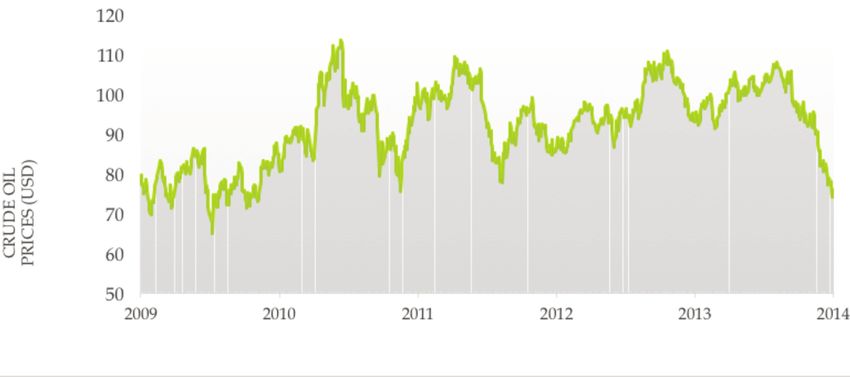
and energy costs may drop due to evident declines in oil prices, with negative pressures on food prices
(Baumeister & Kilian, 2013). Figure 2 shows the change in oil prices from 2009 to 2014.

Figure 2:
Crude Oil Prices (USD) From 2009 to 2014

The end of the American-Canadian dollar parity occurred during 2014, with the Canadian dollar currently
trading below 90 cents on the greenback toward year-end. These effects will continue to have upward
pressure on produce prices on the horizon since produce import levels tend to increase in the winter and
spring.

                              Prepared by the The Food Institute at the University of Guelph 12/02/2014       7
Sector & Domestic Drivers
         The food retail and distribution landscape in 2014 saw significant change, with the major retail
   acquisitions of Shopper’s Drug Mart and Canada Safeway by Loblaw’s and Sobey’s, respectively
   (Holloway, 2014). Financially, most food distributors performed surprisingly well despite dealing with the
   effects of a mature market. We did witness some interesting acquisitions this year in processing with dairy
   giant Agropur purchasing plants owned by Davisco Foods and Sobeys. Metro, Canada’s no. 3 food
   retailer, vertically integrated by purchasing Moisson Montréal. The dynamism seen in the 2014 food retail
   landscape will stabilise in 2015, with Loblaws and Sobey’s recalibrating resources around their newest
   acquisitions. The significant consolidations that occurred will limit the opportunity to consolidate further in
   the coming year, but may see more of it in food processing. Retail grocery inflation has lead Walmart to re-
   establish itself in the domestic market to compete with local retailers. Trends in Walmart Supercentre show
   grocery prices are rising (Shaw, 2014), disturbing its price leader status in the country for consumer goods.
   The sustained competition in the market will moderate prices across major retailers. Smaller stores and the
   emerging discounter stores are becoming viable options for consumers, with the launch of Loblaw’s Box in
   Windsor and Calgary as a smaller alternative to No Frills (Stang, 2014). This may be in response to
   impending moves by German owned Aldi Sud, already gaining traction in retail markets south of the
   border.
        The Canadian policy environment influences a wide array of food-related issues, from supply chain
   management to country-of-origin labelling (COOL). The election year will moderate many of these effects
   present in the market. CFIA’s introduction of its food labelling modernisation initiatives (Canadian Food
   Inspection Agency, 2014) will encourage food producers to state clearer nutritional and quantity
   information to consumers, but we expect this to alter purchasing behaviours on the horizon.
        Consumer food awareness continues to diversify purchase behaviours and increasingly affects price
   levels and dispersion in the coming years. Shopping at farmer’s markets is at a record high in Canada and
   is evidence an increasing breadth of retail options for consumers. Alternative retail options like farmer’s
   markets, convenience stores, and online retailers are increasing wallet-share of the Canadian shopper,
   who traditionally heavily favoured suburban big box stores. This growth has been apparent in urban
   centres, where pop-up farmer’s markets and convenience stores are becoming more viable food retail
   options (Langford, 2014). Skeptics of online food shopping may be surprised to learn 18% of Canadians
   have ordered food, beverages, or groceries online in 2013 (Canadian Press, 2013). This distribution
   segment is continuing to grow as evidenced by announcements such as Loblaw’s’ click-and collect service
   (Sturgeon, 2014) who will not be joining the Canadian food e-tail pioneers Walmart and Amazon (Friend,
   2013). Pressures from consumers are forcing retailers to promote specialty items, and compete on product
   offerings as well as prices.
          Domestic drivers of consumer debt, deleveraging, and income continues to have moderate and
   slightly downward pressures on retail food prices. 2014 saw high consumer debt that will persist in the new
   year (LaSalle, 2014). This will have little impact on food price affordability, as less than 10% of the
   Canadian household budget is spent on food on average in Canada (Charlebois, 2014). Likewise, there is
   little space for an increase in consumer wages and income, as the domestic economy continues to tighten
   up. However, strength of Canadian economies and wages range provincially. Correlation between food
   price inflation and job availability evidences the province-to-province variance in consumer prices, with
   higher food prices more apparent in economically burgeoning centres.

8 Prepared by the The Food Institute at the University of Guelph 12/02/2014
2015 Forecast
Food Price Report

Method
This study employs ARIMA and (when appropriate) SARIMA models (Joutz, 1997), supplemented by the
authors’ expert opinions to determine forecasts. ARIMA models tend to render favourable forecasts in this
context due to their validity in short-term forecasting and are the preferred model among many researchers
when forecasting inflation (Joutz, 1997; Shukla & Jharkharia, 2011; Stoviček, 2007). The Box-and-Jenkins
approach is used for model identification, using subjective assessments of autocorrelogram and partial
autocorrelogram plots for the series. Box-Jenkins is supplemented with the Akaike and Bayesian
information criteria to determine in-sample model fit, and by indicators such as the MAE and RMFSE to
determine out-of-sample forecasting ability for past years.

Forecast
The FPR 2014 forecasts that retail food prices will increase between 0.3% and 2.4% overall, growing faster
than inflation. It is expected that food prices will increase steadily in the coming year. Table 2 and Figure 3
below outline our forecasts.

Table 2:
Forecast for 2015
                Food Category                                   Expected Price Increase
               Meat                                            3.0% to 5.0%
               Fish & Seafood                                  3.0% to 5.0%
               Dairy & Eggs                                    -1.0% to 1.0%
               Grains                                          0.0% to 2.0%
               Fruit & Nuts                                    1.0% to 3.0%
               Vegetables                                      3.0% to 5.0%
               Food from Restaurants                           1.0% to 3.0%
               Overall Food Expenditures                       +0.3% to +2.4%

                                Prepared by the The Food Institute at the University of Guelph 12/02/2014         9
Figure 3:
Food Price Report Predictions
We expect prices for grains, fruits, and food from restaurants to be relatively stable in the coming year.
Supply management and food packagers are responsible for this stability. Dairy and eggs are expected to
remain the same price as in the last fiscal year, again due to loss leadership strategies within fierce retail
competition. Droughts and climate effects from 2014 will sustain impact in 2015, with imported vegetables
expected to rise above 3% in price for the Canadian customer. Due to the nature of produce imports,
Canadians will notice the increase in vegetable prices in the winter months, or perhaps later in the year.
With decreased feed and fuel prices expected in 2015, meat prices will stabilise and will not soar as in
years prior; and meat is expected to cost Canadians no more than an extra 5% this year. Pork prices are
not expected to experience spikes as 2014 had, as the damage of PED on the hog supply is fairly short-
term and prices will abate by mid next year (Atkins, 2014). Meat prices for the past decade are shown in
Figure 4 below.
10 Prepared by the The Food Institute at the University of Guelph 12/02/2014Figure 4:
Meat Price Changes from 2004-2014
Canada’s food manufacturing industry remains a strong economic force despite global pressures on
the industry, amid increasing multinational firms entering the Canadian market in production (Sparling &
LeGrow, 2014). Strength of local food production and distribution has lately been marred by the declining
Canadian dollar. Figure 5, below, shows the performance of the Canadian dollar against the US dollar over
the past five years. Now at its weakest since October 2009, the loonie against the greenback will liken
higher prices on import food items, such as organic produce and juices. The depreciating dollar makes
purchase of inputs more expensive, so goods with more imported inputs will be less competitive. Dollar
depreciation on the Canadian food industry will require working with governments to sustain favourable
environments for not only affordable food production, but also supporting Canadian consumers to eat
local. Moreover, the abating loonie may reduce Canadians crossing the border to grocery shop (Nagel,
2014), as changes in relative prices are induced by movement in exchange rates (McKenna & Grant,
2014).
Prepared by the The Food Institute at the University of Guelph 12/02/2014 11Figure 5:
CAD/USD Exchange Rate from 2009-2014
Volatile supply markets put food processors in a position to shrink consumer package goods. This
arises with Ottawa’s deregulation of food packaging sizes two years ago to enable processors to newer
packaging formats (CBC News, 2012). With inputs more expensive for packaged goods, producers opt to
sustain affordable prices for consumers with trends of smaller packaging. It is used as a method to pass on
a price increase without notable changes in prices. Canadians are noticing size reduction in packaging for
potato chips, yogurt, bacon, tuna, peanut butter, and cookies for grocery items (Elton, 2014). To manage
food prices at restaurants, sizes of protein on the plate are expected to be much smaller than before for the
same price. Market pressures to stabilise prices for consumers come at the cost of quantities, and it is
expected packages and portions will continue to shrink on the horizon.
Responsible protein will dominate Canadian plates in 2015. Consumer attitudes towards meat are
changing – with an emergence of ‘flexitarianism’: a plant-based diet with less frequent inclusion of meat, as
a less rigid form of vegetarianism. Flexitarians are shopping at vegetarian specialty stores and following
non-governmental organisations in their promotion of healthy sustainable eating e.g. ‘Meatless Monday’
initiatives (Laestadius, Neff, Barry, & Frattaroli, 2013). Consumers are already paying higher attention to
animal welfare, such as opting for sustainable catch for fish, pasture-raised meats, and even opting for
more vegetable-based proteins on their plate. Pork producers such as Olymel and Maple Leaf Foods have
made strides to respond to engaged consumers by phasing out sow gestation crates in order to reduce
sow maltreatment (Canadian Meat Business, 2014). Decisions around responsible protein affect specialty
shoppers in the market, with retailers and producers alike promoting protein alternatives to increasingly
engaged consumers. Meat eaters in particular are expected to opt for higher quality cuts for beef and pork
in the coming year. Responsible protein will moderate meat prices and soften general protein demand
overall. Fish, in particular, is at the forefront of the Canadian sustainability discussion, as consumers are
growing attentive to where fish is coming from. For consumers who refrain from substituting fish with other
proteins, expect to pay higher prices for the right cut, driving up fish prices between 3 – 5% in 2015.
12 Prepared by the The Food Institute at the University of Guelph 12/02/2014Food retailers adjusting to the dynamic acquisitions in the market allow for firms like Loblaw’s and
Sobey’s to expand private label programmes with profitable propositions in their new acquirements.
Retailers also garner greater influence over national brand manufacturers with their expanded set of stores.
An emerging story from Canadian retail appears to be a reflection on the changing demographic of
consumer. Canadians are yearning for smaller store formats, especially in urban centres. Retailers are now
responding to those sentiments by moving store models to one of a local grocery store. The local grocery
store pressures are happening from both ends: the small and the large retailer. From the evolution of the
small convenient store such as Couche Tard (owner of Mac’s Convenient Stores) and the success of
grocery sales at Shopper’s Drug Mart inform consumers of the convergence to ‘the small walkable
grocery store’.
Prepared by the The Food Institute at the University of Guelph 12/02/2014 13Une Année 2014 Marquée Par
La Protéine
La plupart de nos prédictions pour 2014 se canadien en 2013, Target continue d'éprouver des
sont réalisées. Depuis un an, l’ensemble des prix ennuis logistiques, subissant des pertes de près
alimentaires a augmenté de 2,8 % (mis à part le d'un milliard de dollars au Canada. Mais leurs
secteur de la restauration), tandis que ce dernier pertes par trimestre commencent à diminuer depuis
secteur voyait ses prix grimper de 2,2 %. Les le printemps dernier ce qui nous indique peut-être
amateurs de protéines animales y ont que le pire est passé. Quant à Walmart, sa part de
particulièrement goûté cette année. La hausse du marché en alimentation dépasse maintenant 10 %
prix de la viande, particulièrement prononcée au au Canada, et continue son avancée vers son
cours des 12 derniers mois, a atteint 12,4 %. Les objectif pour devenir le plus gros détaillant en
inventaires du bouvillon d’abattage ont été alimentation au pays. Loblaw, le numéro un actuel,
éprouvés par des sécheresses, tandis que l’offre du avec l’acquisition de Shoppers Drug Mart, vend
porc fut réduite par l’impact de la diarrhée porcine pratiquement plus de produits non alimentaires que
qui a affecté plusieurs fermes à travers le continent. de produits alimentaires.
Plusieurs consommateurs ont opté pour des
La fragmentation généralisée de la demande
substituts au bœuf ou au porc, ce qui n’est pas
continuera sûrement en 2015. D’ailleurs, la
souvent reflété dans l’index des prix à la
contribution économique des marchés publics a
consommation. Le prix du poisson a aussi
excédé pour la première fois les 5 milliards CAD en
augmenté de 5,9 %, ce qui est légèrement plus que
2014, et nous croyons que leur expansion
prévu. Nous estimons que les coûts de production
continuera en 2015.
liés à la protéine continueront d’augmenter, vu
l’intérêt pour la viande qui grandit sans cesse à La réduction des emballages est un
travers le monde. Les consommateurs canadiens phénomène qui se répand de plus en plus. Cette
devront se faire à l’idée qu’ils doivent désormais stratégie semble avoir atteint son apogée en 2014.
payer plus cher pour de la viande, du poisson ou Au lieu d’augmenter le prix des produits
d’autres sources de protéine animale. alimentaires, les manufacturiers et distributeurs
diminuent la quantité afin de laisser les prix unitaires
Après une année faste en transactions
intacts tout en diminuant le ratio quantité/prix. Une
majeures avec l’achat de Shoppers Drug Mart par
réduction des quantités a été répertoriée cette
le géant Loblaw, et l’acquisition de Safeway par
année avec le bacon, le yogourt, la confiture, les
Sobeys dans l’Ouest canadien, 2014 fut une année
biscuits, le jus d’orange, le poisson et les
relativement tranquille. Reste que l’industrie est en
conserves.
pleine mutation. Après son entrée dans le marché
14 Prepared by the The Food Institute at the University of Guelph 12/02/20142015 : Le Dollar Canadien Est
à Surveiller
Pour la prochaine année, les changements d’acquisitions domestiques en 2013, certaines
climatiques continueront d’être le facteur le plus acquisitions étrangères sont toujours possibles.
important, mais en même temps, c’est l’élément le
La baisse du coût de l’énergie aidera sûrement
plus imprévisible. Les sécheresses et les
les transformateurs et distributeurs alimentaires à
inondations influent beaucoup sur les prix des
mieux absorber l’augmentation imprévisible du coût
intrants et entraînent souvent une flambée des prix
des intrants. Nous estimons que le coût de l’énergie
à la consommation quelques mois plus tard selon la
ne sera pas un facteur déterminant pour 2015.
denrée affectée. Mais le facteur le plus déterminant
pour les prix alimentaires sera la valeur du dollar Le faible coût de l’énergie et les taux d’intérêt
canadien. Puisque nous importons des milliards de qui demeureront très bas pour encore un certain
dollars en produits alimentaires chaque année, la temps favoriseront l’effet déflationniste dans
faiblesse du dollar aura vraisemblablement un l’ensemble de l’économie. Par contre, nous
impact sur le pouvoir d’achat des importateurs estimons que le secteur agroalimentaire continuera
canadiens. En contrepartie, la marge entre le prix d’afficher un taux d’inflation alimentaire plus élevé
des produits importés en comparaison au prix des que l’inflation générale. Les viandes continueront de
produits domestiques pourrait diminuer, offrant ainsi coûter plus cher en 2015, mais leur hausse ne sera
à certains producteurs locaux un meilleur avantage pas aussi importante qu’en 2014. Pour les fruits et
concurrentiel. légumes, ce sera vraisemblablement le contraire.
Nous anticipons une hausse plus importante pour
Pour ce qui est des acquisitions potentielles,
les fruits et légumes. Pour les pains, céréales,
une plus grande faiblesse du dollar permettrait à
produits laitiers, œufs et noix, les hausses seront
certaines entreprises canadiennes d’être plus
plus modestes.
attrayantes pour des investisseurs étrangers. Bien
que nous ayons eu une année importante en termes
Table 2:
Voici nos prévisions pour l’année 2015
Catégories Hausses anticipées
Viandes 3.0% to 5.0%
Poissons et Fruits de Mer 3.0% to 5.0%
Produits Laitiers et oeufs -1.0% to 1.0%
Pains et Céréales 0.0% to 2.0%
Fruits et Noix 1.0% to 3.0%
Légumes 3.0% to 5.0%
Restauration 1.0% to 3.0%
Prévisions toutes catégories confondues +0.3% to +2.4%
Prepared by the The Food Institute at the University of Guelph 12/02/2014 15Biography
Atkins, E. (2014, Marc 25). Pig virus fears send pork prices soaring. Globe And Mail.
Baumeister, C., & Kilian, L. (2013). Do Oil Price Increases Cause Higher Food Prices? Ottawa:Bankof Canada.
Campbell, E., & Chen, L. (2014, February 6). Virus Killing 5 Million Pigs Spurs Hog-Price Rally: Commodities.
Bloomberg.com.
Canadian Food Inspection Agency. (2014). Food Labelling Modernization Initiative. Ottawa: Canadian Food
Inspection Agency.
Canadian Meat Business. (2014, February). US Pork Giants make Animal Welfare Plans. Canadian Meat Business, p. 8.
Canadian Press. (2013, October 28). More Canadians are buying food online, StatsCan says. Canadian Grocer.
CBC News. (2012, November 9). Canadian food processors fear massive job loss. CBC News.
Charlebois, S. (2014, September 11). Canada’s food costs not hard to swallow. The Western Producer.
Elton, S. (2014, November 16). Honey, they shrank the food! Maclean's Magazine.
Friend, D. (2013, October 31). Amazon competes against Canadian supermarkets by entering grocery business.
The Canadian Press.
Holloway, A. (2014, October 2). Who's Winning the Grocery Wars? Canadian Grocer.
Honey, J. (2012). Manitoba Cattle and Beef Industry 2012: Cattle Profile. Winnipeg: University of Manitoba.
Indonesia Investments. (2014, November 6). Crude Palm Oil Update: Prices & Production in Indonesia & Malaysia.
Indonesia Investments.
Joutz, F. L. (1997). Forecasting CPI Food Prices: An Assessment. American Journal of Agricultural Economics, 79(5),
1681-1685.
Laestadius, L. I., Neff, R. A., Barry, C. L., & Frattaroli, S. (2013). Meat consumption and climate change: the role of non-
governmental organizations. Climatic Change, 120(1-2), 25-38.
Langford, S. (2014). Going Rogue: Suss Out Pop-up Farmer's Markets. Canadian Gardening.
LaSalle, L. (2014, February 26). Canadians on target for record year of personal debt despite better end to 2013:
TransUnion. Canadian Press.
Mansfield, B. (2014). Wake Up Call: California Drought & B.C.'s Food Security. Vancouver: Vancity.
McKenna, B., & Grant, T. (2014, January 11). Why a lower loonie is (mostly) good for Canada. Globe and Mail.
Nagel, J. (2014, February 17). Cross-Border shopping takes hit as loonie falls: Poll. Surrey Leader.
Shaw, H. (2014, October 7). Walmart Canada has hiked the price of its groceries, BMO report finds. Financial Post.
Shukla, M., & Jharkharia, S. (2011). Applicability of ARIMA Models in Wholesale Vegetable Market: An Investigation.
Proceedings of the 2011 International Conference on Industrial Engineering and Operations Management, (pp.
1125-1130). Malaysia.
Sonne, P., & Troianovski, A. (2014, August 7). Russia Bans Food Imports in Retaliation for Western Sanctions. Wall
Street Journal.
Sparling, D., & LeGrow, S. (2014). The Changing Face of Food Manufacturing in Canada: An Analysis of Plant Closings,
Openings, and Investments. London, Ontario: Agri-food at Ivey.
Stang, R. (2014, May 12). Loblaw thinks outside the “box” with new banner. Canadian Grocer.
Stoviček, K. (2007). Forecasting with ARMA Models: The case of Slovenian inflation. Bank of Slovenia.
Sturgeon, J. (2014, September 25). Loblaw gears up for online grocery orders. Globalnews.ca.
Yang, H., & Hu, J. (2013). Forecasting of Fresh Agricultural Products Demand Based on the ARIMA Model.
Advance Journal of Food Science and Technology, 5(7), 855-858.
16 Prepared by the The Food Institute at the University of Guelph 12/02/2014University of Guelph, 2014.
You can also read


