CANDIDATE INFORMATION - Mayor and Councillor 2021 Municipal Election 2021-2025 - The Town of ...
←
→
Page content transcription
If your browser does not render page correctly, please read the page content below

TOWN OF OKOTOKS

      2021-2025
CANDIDATE INFORMATION

Prospective Candidate Information
        for the offices of
 Mayor and Councillor
2021 Municipal Election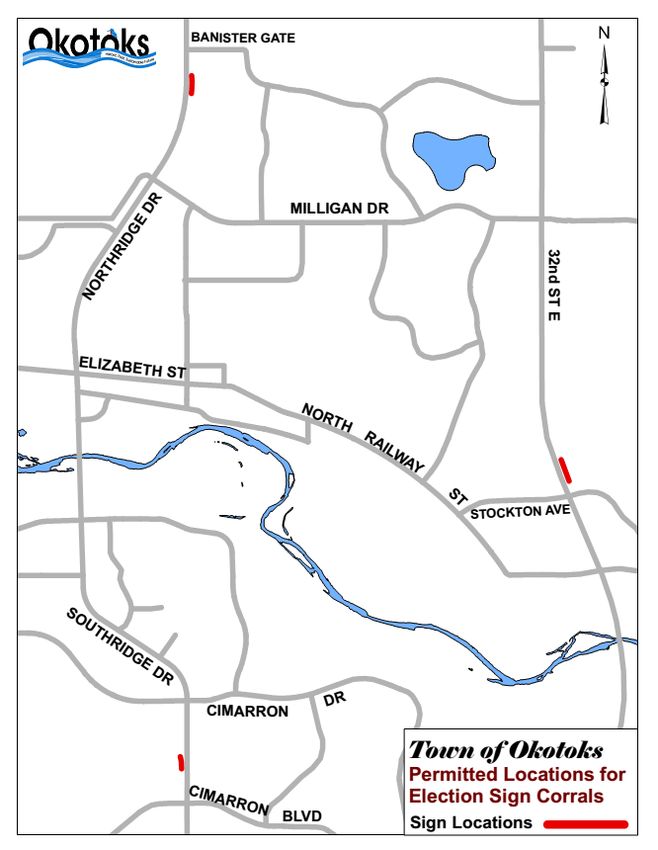
TABLE OF CONTENTS

                                                                                                   PAGE

Section I     Introduction................................................................................ 3

              Introduction to Municipal Councils ............................................... 4

Section II    Duties of Council Members

              Duties of Mayor ........................................................................... 5
              Remuneration and Benefits ......................................................... 6
              Mayor’s Time Commitment.......................................................... 6
              Duties of Councillors ................................................................... 8
              Remuneration and Benefits ......................................................... 9
              Councillor’s Time Commitment.................................................. 10
              Board and Committee Appointments ........................................ 13
              Disqualification of Councillors.................................................... 15

Section III   Election Procedures

              Nomination Day and Nomination Forms .................................... 17
              Filing of Nomination Papers ...................................................... 21
              Viewing Nomination Papers ...................................................... 22
              Qualifications of Electors .......................................................... 22
              Withdrawal of Nomination ......................................................... 23
              Qualifications of Candidates ...................................................... 23
              Ineligibility as a Candidate ......................................................... 24
              Eligibility to Vote in an Election .................................................. 25
              Rules of Residence ................................................................... 25
              Voter Identification Requirements and Special Votes ............... 27
              Election Day .............................................................................. 28
              Candidates’ Agents and Scrutineers ......................................... 29

Section IV    Campaign Financing and Literature

              Campaign Financing.................................................................. 31
              Printing of Campaign Literature ................................................. 32
              Placement / Removal of Campaign Literature and Signage ...... 32
              Election Signage ....................................................................... 33
              2021 Election Sign Corral Locations ......................................... 36
              Posting of Campaign Literature ................................................. 37
              Advertisement Distribution......................................................... 38
              Interference with Posted Documents......................................... 38

Section V     Offences ................................................................................... 39

                                                                                                                2
SECTION I INTRODUCTION
Information has been assembled as a resource for prospective candidates containing
answers to some of the most frequently received questions regarding election
procedures, and some very important facts.
This package is provided for information only, and has no legislative sanction. As this
information is not inclusive of all the information contained within the specific acts and
other legislation, and as legislation changes from time to time, any person wishing a
complete copy of the Local Authorities Election Act or the Municipal Government
Act, or any other act, is encouraged to view an online copy or order copies from the
Government of Alberta, Queen’s Printer website at: http://www.qp.gov.ab.ca.
The Alberta Municipal Affairs website notes the roles and responsibilities of municipal
officials as well as other information for prospective candidates at:
https://www.alberta.ca/municipal-elections-overview.aspx . To learn more, candidates
are encouraged to access this information and use these resources.
Should you have any questions regarding any information contained in this booklet,
please do not hesitate to contact:
Town of Okotoks
P. O. Box 20, Station Main
5 Elizabeth Street
Okotoks, AB T1S 1K1
Attention: Cathy Duplessis, Returning Officer
Phone: 403-995-2774 Fax: 403-938-7387
Email: cduplessis@okotoks.ca
3INTRODUCTION TO MUNICIPAL COUNCILS
The Canadian Constitution delegates responsibility for municipal institutions to the
provinces. Through a variety of legislation, the Alberta Legislative Assembly has
delegated some of its authority to municipal councils. The act you will use most often is
the Municipal Government Act (MGA).
As a member of Council you will have the opportunity to significantly influence the
future of your community. Your power as a member of Council depends on your ability
to persuade the other members of Council to adopt your view. All decisions must be
made at meetings, held in public, at which a quorum is present.
As an individual member of Council you will not have the power to commit the Town of
Okotoks to any expenditure or to direct the activities of the employees. Any promise you
make as part of your election campaign that involves municipal expenditures or the
activities of the Town can only be carried out if you can convince a majority of Council
that it is a viable idea.
Local legislation is in the form of bylaws. Generally, these remain in effect until they are
amended or repealed, so you will not be starting with a blank slate and creating your
ideal municipality from scratch. If you are running with some kind of reform in mind, you
will have to become familiar with what exists, how it has been created - by bylaw,
resolution, or tradition - and why it exists, before you will be able to start implementing
your changes.
Some examples of local documents you will often refer to are the Council Procedure
Bylaw, Land Use Bylaw, and the bylaw establishing the position of the Chief
Administrative Officer (CAO).
As a member of Council, it will be your duty to establish policy for your municipality. It
is the job of the administration to implement the policy. Alberta municipalities have
highly educated, competent, and dedicated administrators and you will need the
support, advice, and assistance of the administrative staff if you are to be an effective
member of Council. Their training, experience, and understanding of how and why
things have developed as they have, will be an important resource for you.
The best way to find out what the job is all about is to spend some time reading Council
agendas and minutes, and talking to the current members of Council. Sit in on some
Council meetings. This will help you in your campaign and will assist you in assuming
office.
4SECTION II DUTIES OF COUNCIL MEMBERS
DUTIES OF MAYOR
Term of Office: Four (4) years
The Mayor is the Chief Elected Official of the municipality and has duties that
encompass those of both Councillor and Chief Elected Official.
(Excerpt from the Municipal Government Act)
DUTIES OF THE MAYOR
Section 154
(1) A chief elected official, in addition to performing the duties of a councillor, must:
(a) preside when in attendance at a council meeting unless a bylaw provides
that another councillor or other person is to preside, and
(b) perform any other duty imposed on a chief elected official by this or any
other enactment or bylaw.
(2) The chief elected official is a member of all council committees and all bodies to
which council has the right to appoint members under this Act, unless the council
provides otherwise.
(3) Despite subsection (2), the chief elected official may be a member of a board,
commission, subdivision authority, or development authority established under
Part 17 only if the chief elected official is appointed in the chief elected official’s
personal name.
In addition to the above, the traditional role of Mayor also includes:
Representing the Town of Okotoks at public functions/ceremonies;
Being the primary spokesperson for Council when communicating Council’s
decisions and policies to the media and public;
Being the primary liaison with all other provincially elected officials;
Being the primary link between Council and administration (through the CAO).
5MAYOR’S REMUNERATION AND BENEFITS
Remuneration: $94,158 per annum for regular duties.
Loss of Regular Wages - up to a maximum of $200/day for
attendance at certain eligible functions, to a maximum of
$2,800/annually.
Benefits: Optional Group Benefit Plan (includes life insurance,
extended health care, dental care, and health spending
account).
Expenses: Reimbursement of reasonable expenses while traveling
outside of Okotoks to conduct official Town business
(most commonly, mileage reimbursement for private
vehicle use).
Office: Office space is provided to the Mayor with administrative
assistance provided by the Council Assistant and Legislative
Services. A corporately approved device and cell phone is
provided to conduct Council business.
MAYOR’S TIME COMMITMENT
Time Commitment: The position of Mayor is a full time commitment averaging
between 35 to 40 hours per week. The Mayor is expected to
attend meetings, public functions, ceremonies, and other
events which occur most often during evening hours and on
weekends. Some administrative duties and public functions
are required during normal working hours. Extensive reading
is often required in preparation for meetings. Regular
meetings/communication with the CAO are beneficial to keep
abreast on current major projects, events, and/or issues.
See page 10 for a more detailed description of Council’s time
commitment.
6Council Meetings: Regular Council meetings are held on the second and fourth
Monday of every month, except for July, August, and
December, when only one meeting is generally held.
In Camera meetings, when required, are held at 2:00 p.m. on
the same day as the regular Council meeting. Regular
Council meetings are at 3:00 p.m., often lasting to 6:00 p.m.
or later. Public Hearings generally occur at 7:00 p.m. when
required. Governance and Priorities Committee Meetings,
which include all Council Members, are held on the third
Monday of every month, except for July, August, and
December, at 5:30 p.m.
Inauguration of the new Council is scheduled for Monday,
October 25, 2021 and Organizational Meeting of Council is
scheduled for Monday, November 1, 2021 at 7:00 p.m.
Informal Council meetings, such as annual Joint Council and
Finance and Audit Budget Meetings (November), Strategic
Planning, and Council Governance Workshops are arranged
on an as required basis in order to discuss policy and long
term planning issues in more detail. In a typical year, 8 to 10
meetings of this nature may take place.
Council Committees: The Mayor is ex-officio member of all committees of Council
which fall under the authority of the MGA, and has the right to
attend any such committee meeting and participate with full
voting rights except any board, commissions, or
subdivision/development authority under Part 17 of the MGA
(e.g.: Subdivision and Development Appeal Board). The
Boards and Committee list provided in this booklet outlines
the various Boards that members of Council are appointed to
at the annual Organizational Meeting. It is the responsibility
of the Mayor to appoint the Council representatives to each
Board or Committee on an annual basis.
CAO Briefings: Currently the CAO and Council meet for informal updates
and dissemination of information the same day as the regular
Council meetings at a time determined by the CAO.
Currently the CAO administrative briefing is held for an hour
prior to the 2 p.m. In Camera session on Council Meeting
days.
7DUTIES OF COUNCILLORS
Term of Office: Four (4) years
Number of Councillors: Six (6) positions
The MGA provides that every municipality shall have a council, the members of which
shall be elected in accordance with the Local Authorities Election Act (LAEA). The MGA
provides for a broad spectrum of powers and duties for a council and councillors
including:
(Excerpts from Municipal Government Act)
Section 153
Councillors have the following duties:
(a) to consider the welfare and interests of the municipality as a whole and to
bring to council’s attention anything that would promote the welfare or
interests of the municipality;
(a.1) to promote an integrated and strategic approach to intermunicipal land use
planning and service delivery with neighbouring municipalities;
(b) to participate generally in developing and evaluating the policies and
programs of the municipality;
(c) to participate in council meetings and council committee meetings and
meetings of other bodies to which they are appointed by the council;
(d) to obtain information about the operation or administration of the municipality
from the CAO or a person designated by the CAO;
(e) to keep in confidence matters discussed in private at a council or council
committee meeting until discussed at a meeting held in public;
(e.1) to adhere to the code of conduct established by council under section
146.1(1);
(f) to perform any other duty or function imposed on councillors by this or any
other enactment or by the council.
8DUTIES OF A COUNCILLOR (cont’d)
Section 201
(1) A council is responsible for:
(a) developing and evaluating the policies and programs of the municipality;
(b) repealed 2015 c8 s20;
(c) carrying out the powers, duties, and functions expressly given to it under
this or any other enactment.
(2) A council must not exercise a power or function or perform a duty that is by this
or another enactment or bylaw specifically assigned to the CAO or a designated
officer.
COUNCILLOR REMUNERATION AND BENEFITS
Remuneration: $43,342 per annum for regular duties.
Loss of Regular Wages - up to a maximum of $200/day for
attendance at certain eligible functions, to a maximum of
$2,800/annually.
Benefits: Optional Group Benefit Plan (includes life insurance,
extended health care, dental care, and health spending
account).
Expenses: Reimbursement of reasonable expenses while traveling out
of Okotoks on official Town business (most commonly,
mileage reimbursement for private vehicle use).
Office: Shared office space is provided to Councillors next to the
Mayor’s office. Administrative assistance is provided by the
Council Assistant and Legislative Services. A corporately
approved device is provided to conduct Council business.
9COUNCILLOR’S TIME COMMITMENT
Time Commitment: The position of Councillor is a part time commitment
averaging between 10 - 20 hours per week. Councillors are
expected to attend meetings which occur most often during
evening hours and occasionally on weekends. Extensive
reading is required in preparation of meetings. Attendance is
also required at some public functions and ceremonies that
most often occur on evenings and weekends.
The MGA provides an outline of duties for members of
Council. The Act does not, however, indicate the minimum
number of hours per week members should spend
performing their duties. The amount of time spent varies
from each community and time of year and is left to the
discretion of each member of Council; however there are
certain minimum duties that need to be performed should a
candidate be elected to Council including:
Council Meetings: Regular Council meetings are held on the second and fourth
Monday of every month, except for July, August, and
December, when only one meeting is generally held.
In Camera meetings, when required, are held at 2:00 p.m. on
the same day as the regular Council meeting. Regular
Council meetings are at 3:00 p.m., often lasting to 6:00 p.m.
or later. Public Hearings generally occur at 7:00 p.m. when
required. Governance and Priorities Committee Meetings,
which include all Council Members, are held on the third
Monday of every month, except for July, August, and
December, at 5:30 p.m.
Inauguration of the new Council is scheduled for Monday,
October 25, 2021 and Organizational Meeting of Council is
scheduled for Monday, November 1, 2021 at 7:00 p.m.
In preparation for Council meetings, an agenda package
typically ranges from 100 - 300 pages and is ready for web
access on the Thursday prior to the meeting to allow time for
reading and reviewing the issues.
Informal Council meetings, such as the annual Joint Council
and Finance and Audit Budget Meetings (approximately 2.5
days in November), Strategic Planning, and Council
Governance Workshops are arranged on an as required
basis in order to discuss policy and long term planning
issues in more detail. In a typical year, 8 to 10 meetings of
this nature may take place.
10CAO Briefings: Currently the CAO and Council meet for informal updates
and dissemination of information the same day as the
regular Council meetings at a time determined by the CAO.
Presently the CAO administrative briefing is held for an hour
prior to the 2 p.m. In Camera session on Council Meeting
days.
Council Committees: Councillors are expected to each sit on approximately four
(4) to five (5) Council Committees. Only those Councillors
who are appointed to serve on a Committee have the right to
vote at that Committee. The Boards and Committees list is
provided in this booklet. Councillors are appointed to the
various Boards as determined by the Mayor (who compiles
all Council members requests and assigns members) at the
Organizational Meeting, which is held annually. There are
several types of committee appointments:
Committees established by Council under the MGA;
Committees established under other Legislation;
Regional committees, boards, etc., which request or
require representation by a member of Council.
Most Council Committees, Boards or Commissions meet on
a monthly basis in the evening, with an average meeting
length of two (2) hours.
Orientation: Councillors often find the first year as an elected official to be
very demanding. There are several orientation meetings
(after the Inauguration and Organizational Meeting) for the
new Council to become fully acquainted with the scope of
services the Town provides, the Corporation, and current
issues. These sessions are highly beneficial as they will
assist in effective decision making on Council and are
mandated under section 201.1 of the MGA.
In addition to Council Meetings, proposed Orientation/new
Councillor time commitments include 2.5 full days for the
Annual Budget Meeting discussions in mid-November and
the Alberta Urban Municipalities Association convention later
in November 2021.
Deputy Mayor: Councillors act as Deputy Mayor on a rotation in accordance
with the schedule adopted by Council at its Organizational
Meeting. In the event of the Mayor’s absence, the Deputy
Mayor may be called upon to perform the Mayor’s regular
functions, such as acting as Chair at Council meetings,
executing official documents, attending public functions, etc.
11COUNCILLOR’S/COUNCIL’S TIME COMMITMENT (cont’d)
AUMA: The Alberta Urban Municipalities Association (AUMA) is an association
that represents and supports municipal councils. AUMA represents a
unified voice to the provincial government on behalf of urban
communities and provides valuable services to support urban
municipalities (www.auma.ca).
Each year in the fall, an AUMA convention is held that attracts
approximately 1,000 delegates from urban councils and municipal
administration (staff). The convention that is held during an election year
is strongly geared toward newly elected council members and for this
reason, newly elected officials are encouraged to set aside time to attend
this event.
The 2021 AUMA convention would normally be held later in November
during an election year and alternates locations between Calgary and
Edmonton. Due to COVID-19 the convention might be held virtually as it
was in 2020. The convention registration and associated travel
expenses are provided within the Council budget, if required.
FCM The Federation of Canadian Municipalities (FCM) is the national voice of
Canadian municipal governments, dedicated to improving the quality of
life in all communities by promoting strong, effective, and accountable
municipal governments. The FCM represents the interests of all
municipalities on policy and program matters within federal jurisdiction.
The annual FCM conference is usually held in early June. Typically two
members of Council attend the FCM conference each year.
12BOARD AND COMMITTEE APPOINTMENTS
Council Initiated Committees with Council and Citizen Representatives:
COMMITTEE NAME (# of Councillors on Committee)
Family and Community Support Services Committee (FCSSC) (1)
The FCSSC provides leadership in the identification and addressing of social issues in
order to enhance the wellbeing of individuals, families, and the community. FCSS is a
partnership in which the province and the municipality fund locally driven preventive
social initiatives.
Finance and Audit Committee (F&A) (3)
The Finance and Audit Committee assists administration with the development and
implementation of annual operating and capital budgets, and reviews, reports and
makes recommendations on current and long range fiscal planning for the Town.
Municipal Planning Commission (MPC) (2)
Under the authority of the MGA, Part 17, Council established the MPC to perform such
functions relating to the development and subdivision of land as Council may delegate.
Okotoks Public Library Board (1)
Under the authority of the Libraries Act, this Board was established to manage,
regulate, and control the municipal library.
Subdivision and Development Appeal Board (SDAB) (1)
Under the authority of the MGA, Part 17, Council established the SDAB to serve as an
administrative tribunal to hear and make determinations in respect of appeals of
subdivision or development decisions of a Subdivision Authority (e.g. MPC). The Board
meets at the call of the Chairman when required.
United Way/Okotoks Partnership (UWOP) (1)
The purpose of the UWOP is to sustain a partnership with the United Way of Calgary
and Area, to oversee a community fundraising campaign, and to distribute United Way
funding.
Council Initiated Committees (no citizen representatives):
COMMITTEE NAME (# of Councillors on Committee)
Governance and Priorities Committee (GPC) (all of Council)
Plans and stages events, ceremonies, and special occasions held by the Town,
interviews applicants for Committees and Boards, recommends the adoption of names
for residential neighbourhoods, buildings, bridges, and roads, reviews and/or develops
corporate compensation objectives and policies, and reviews governance issues.
13Emergency Advisory Committee (EAC) (3)
Under the authority of the Emergency Management Act a council is required to
establish an EAC that will advise Council on the development of emergency plans and
programs which comply with provincial and local legislation.
External Agency Committees to which Council is appointed:
Alberta Foothills Industrial Corridor Association (3)
Okotoks/Foothills County Intermunicipal Committee (3)
Foothills Regional Services Commission (landfill)(two year appointment) (1)
Foothills Regional Water and Wastewater Collaborative (2)
Foothills Regional Emergency Services Commission (1)
Friends of Champion Park (2)
Westwinds Communities (seniors’ housing)(two year appointment) (1)
Community Futures Highwood (business development)(two year appointment) (1)
Calgary Metropolitan Region Board (1)
Calgary Metropolitan Region Board - Advocacy (1)
Calgary Metropolitan Region Board - Governance (1)
Calgary Metropolitan Region Board - Intermunicipal Servicing (1)
Calgary Metropolitan Region Board - Land use(1)
Calgary Metropolitan Region Board – Delivery of Policing Services (1)
Bow River Basin Water Council (1)
Foothills-Okotoks Recreation Society (2)
Crescent Point Community Foundation (1)
14DISQUALIFICATION OF COUNCILLORS
(Excerpts from the Municipal Government Act)
Section 174
(1) A councillor is disqualified from council if:
(a) when the councillor was nominated, the councillor was not eligible for
nomination as a candidate under the Local Authorities Election Act;
(b) the councillor ceases to be eligible for nomination as a candidate under
the Local Authorities Election Act;
(b.1) the councillor
(i) fails to file a disclosure statement as required under section 147.4 of
the Local Authorities Election Act before the end of the time period
referred to in section 147.7 of the Local Authorities Election Act, and
(ii) has not been relieved from the obligation to file a disclosure
statement by a court order under section 147.8 of the Local
Authorities Election Act;
(c) the councillor becomes a judge of a court or a member of the Senate or
House of Commons of Canada or of the Legislative Assembly of Alberta;
(d) the councillor is absent from all regular council meetings held during any
period of 8 consecutive weeks, starting with the date that the first meeting
is missed, unless subsection (2) applies;
(e) the councillor is convicted
(i) of an offence punishable by imprisonment for 5 or more years, or
(ii) of an offence under section 123, 124 or 125 of the Criminal Code
(Canada);
(f) the councillor does not vote on a matter at a council meeting at which the
councillor is present, unless the councillor is required or is permitted to
abstain from voting under this or any other enactment;
(g) the councillor contravenes section 172; (Disclosure of Pecuniary Interest);
(h) the councillor has a pecuniary interest in an agreement that is not binding
on the municipality under section 173;
(i) the councillor uses information obtained through being on council to gain
a pecuniary benefit in respect of any matter;
(j) the councillor becomes an employee of the municipality;
15(k) the councillor is liable to the municipality under section 249.
(2) A councillor is not disqualified by being absent from regular council meetings
under subsection (1)(d) if
(a) the absence is authorized by a resolution of council passed at any time:
(i) before the end of the last regular meeting of the council in the 8-week
period, or
(ii) if there is no other regular meeting of the council during the 8-week
period, before the end of the next regular meeting of the council,
or
(b) the absence is in accordance with a bylaw under section 144.1.
(3) For the purposes of this section, a councillor is not considered to be absent from a
council meeting if the councillor is absent on council business at the direction of
council.
(4) A councillor who is disqualified under this section is eligible to be elected at the
next general election in the municipality if the person is eligible for nomination
under the Local Authorities Election Act.
16SECTION III ELECTION PROCEDURES
(Excerpts from the Local Authorities Election Act)
NOMINATION DAY
Section 25
(1) Nomination day is four (4) weeks before election day.
(2) A person may file a nomination to become a candidate
(a) for a general election within the period beginning on January 1 in a year in which
a general election is to be held and ending at 12 noon on nomination day.
Nomination Day is Monday, September 20, 2021.
A person may file a nomination paper after January 1, 2021
until 12 noon on nomination day, September 20, 2021.
NOMINATION FORMS
Section 27 (paraphrased)
Every nomination of a candidate shall be in the prescribed form, be signed by at least
five (5) persons who are electors eligible to vote in that election and reside in the local
jurisdiction on the date of signing the nomination, and shall be accompanied by a
written acceptance sworn or affirmed in the prescribed form by the person nominated
stating:
o that the person is eligible to be elected to the office;
o the name, address and telephone number of the person’s official agent;
o that the person will accept the office if elected;
o and if required by bylaw, it shall be accompanied by a deposit in the
required amount ($500 for Mayor and $250 for Councillor); and
o if a bylaw has been passed providing for a deposit, a nomination paper is
not valid nor shall it be acted on by the Returning Officer unless it is
accompanied with the deposit.
PLEASE NOTE
In accordance with Section 147.22 “No person shall accept a contribution or incur a
campaign expense unless the person has been nominated as a candidate”.
Prior to accepting campaign contributions after January 1, 2021, even your own,
or spending any money on campaign expenses, you must file your nomination
papers for a position on Town Council.
The Nomination Form to be filed is as follows:
17NOMINATION PAPER AND CANDIDATE’S ACCEPTANCE
Local Authorities Election Act
(Sections 12, 21, 22, 23, 27, 47, 68.1, 151, Part 5.1)
Note: The personal information on this form is being collected to support the administrative requirements
of the local authorities election process and is authorized under section 27 of the Local Authorities Election
Act. The personal information will be managed in compliance with the privacy provisions of the Freedom
of Information and Protection of Privacy Act. If you have any questions concerning the collection of this
personal information, please contact the Town of Okotoks FOIP Coordinator at: 403-938-8944.
FOR THE TOWN OF OKOTOKS, IN THE PROVINCE OF ALBERTA
We, the undersigned electors of the Town of Okotoks, nominate:
(Candidate’s Surname) (Given Names)
of
___________________________________________________________________________________
(Complete Street Address and Postal Code)
as a candidate at the election to be held October 18, 2021 for the office of
______________________________________ of the Town of Okotoks.
(Either Mayor or Councillor)
Signatures of AT LEAST FIVE (5) ELECTORS ELIGIBLE TO VOTE in this election in accordance with
Sections 27 and 47 of the Local Authorities Election Act:
Complete Street Address and
Printed Name of Elector Postal Code of Elector Signature of Elector
18CANDIDATE’S ACCEPTANCE:
I, the above named candidate, solemnly swear (affirm):
THAT I am eligible under Sections 21 and 47 of the Local Authorities Election Act to be elected to
the office;
THAT I am not otherwise disqualified under Section 22 or 23 of the Local Authorities Election Act ;
THAT I will accept the office if elected;
THAT I have read Section 12, 21, 22, 23, 27, 28, 47, 68.1, and 151 and Part 5.1 of the Local
Authorities Election Act and understand their contents; and
THAT I am appointing the following individual as my official agent:
_______________________________________________________________________________
_______________________________________________________________________________
Name, Contact Information or Complete Address and Postal Code and Telephone Number of
Official Agent (if applicable)
Print name as it should appear on the ballot:
_______________________________ ___________________________________________
(Candidate's Surname) (Given Names) (may include nicknames, but not titles,
i.e. Mr., Mrs., Dr.)
SWORN (AFFIRMED) before me at the ]
Town of Okotoks in the Province of Alberta ]
____________________________________
this _______ day of _________________ 2021 ] Candidate’s Signature
______________________________________________
Signature of Returning Officer or Commissioner for Oaths
Or Notary Public in and for Alberta
(Also include printed or stamped name and expiry date)
RETURNING OFFICER’S ACCEPTANCE
Returning Officer signals acceptance by signing this form:
_______________________________________________
Signature of Returning Officer
IT IS AN OFFENCE TO SIGN A FALSE AFFIDAVIT
OR A FORM THAT CONTAINS A FALSE STATEMENT
Note: Each candidate for Mayor must include a $500.00 deposit with a Nomination Paper, and each
candidate for Councillor must include a $250.00 deposit with a Nomination Paper (Town of Okotoks
Bylaw 35-20). Deposits must be provided by cash, certified cheque or money order (credit cards
are not accepted).
19Nomination Form Instructions
A. Completing your nomination form
Nominations for Councillor must be:
1) made on this Nomination Form,
2) signed by five (5) or more electors (electors is defined in About Qualifications,
below),
3) signed and sworn or affirmed by you before a notary public or commissioner for
oaths, and
4) accompanied by a $500.00 deposit for Mayor and $250.00 deposit for Councillor
in cash, certified cheque, or money order payable to Town of Okotoks
B. Filing your nomination form
You must file your completed nomination form with the Returning Officer starting on
January 1, 2021 and closing on Monday, September 20, 2021, at 12 noon at the Town
of Okotoks Municipal Centre, 5 Elizabeth Street, Okotoks, Alberta.
Please contact the Returning Officer, Cathy Duplessis, at 403-995-2774 or
cduplessis@okotoks.ca to make an appointment to file your form before Monday,
September 20, 2021. Note: Faxed or emailed nomination papers will not be
accepted.
C. Withdrawing your nomination
You may withdraw your nomination at any time before 12 noon on September 19,
2017, by giving written notice to the Legislative & Policy Services Manager at
5 Elizabeth Street, Okotoks, Alberta (Faxed or emailed withdrawal papers are not
acceptable.)
NOTE You may only withdraw your nomination if enough candidates remain to fill the
office for which you are nominated (Section 32, Local Authorities Election Act).
D. About qualifications
1) Candidate qualifications
Section 21 of the Local Authorities Election Act describes the qualifications for
candidates. Section 22, 23 and 24 describes circumstances that make you
ineligible for election or nomination. We urge you to read these sections
carefully. You must read Sections 21, 22, 23, 27, 28, 47, 68.1, and 151 and Part
5.1 of the Act before completing the Candidate’s Acceptance of this form.
2) Elector qualifications:
Section 47(1) of the Local Authorities Election Act defines an elector as a person
who: • is at least 18 years old, • is a Canadian citizen, and • has resided in
Alberta for six (6) consecutive months immediately preceding Election Day and
the person’s place of residence is located in the area on Election Day.
3) Nominator qualifications
Nominators must be electors and must live in the Town.
20FILING OF NOMINATION FORMS
Section 28
(1) The Returning Officer shall receive nominations at the local jurisdiction office
between January 1, 2021 and 12:00 p.m. (noon) on Nomination Day.
Nomination Papers Accepted
January 1, 2021 until 12:00 noon on September 20, 2021
Municipal Centre - 5 Elizabeth Street
Candidates must sign the Nomination Paper (Candidate’s Acceptance portion) in the
presence of the Returning Officer or a Commissioner for Oaths. The Returning Officer
will be receiving nominations during the nomination period, so you can have your
signature witnessed then if you are delivering your papers in person. You will be
required to show photo identification. If your photo identification does not indicate your
Okotoks address, please contact the Returning Officer in order to determine what
forms of identification will be accepted. Please make an appointment to ensure the
Returning Officer or designate is available to accept your nomination papers. The
Returning Officer, Cathy Duplessis, can be contacted at 403-995-2774 or
cduplessis@okotoks.ca to make an appointment to file your form before Monday,
September 20, 2021. Note: Faxed or emailed nomination papers will not be
accepted.
If someone else will be delivering your Nomination Papers, you must have your
signature witnessed ahead of time by a Commissioner for Oaths so that your
Nomination Paper can be received by the Returning Officer.
Each candidate for Mayor must include a $500.00 deposit with a Nomination Paper,
and each candidate for Councillor must include a $250.00 deposit with a Nomination
Paper. Deposits must be provided by cash, certified cheque, or money order (credit
cards are not accepted).
Deposits are returned if:
(a) you are elected;
(b) you obtain a number of votes at least equal to one half of the total
number of votes cast for the candidate elected to office with the least
number of votes; or
(c) you withdraw as a candidate in accordance with the LAEA.
21VIEWING NOMINATION PAPERS
Section 28
At any time after January 1, 2021, a person may request to examine the filed
nominations during regular business hours and in the presence of the Returning Officer.
The names of candidates who have filed nomination papers in accordance with
the LAEA will be posted on the Town website’s election page.
If you wish to view the Nomination Papers, please contact Cathy Duplessis
(403-995-2774), Returning Officer for the Town of Okotoks. The Municipal Centre,
located at 5 Elizabeth Street, is open to the public Monday to Friday from 8:30 a.m. to
4:00 p.m.
QUALIFICATIONS OF ELECTORS
WHO SIGNS NOMINATION PAPERS
It is imperative that a person who signs Nomination Papers is eligible to vote.
Section 47
(1) A person is eligible to vote in an election held pursuant to the LAEA if the
person:
(a) is at least 18 years old,
(b) is a Canadian citizen, and
(c) has resided in Alberta for the six (6) consecutive months immediately
preceding election day and the person’s place of residence is located in
the area on election day.
NOTE:
1. “Area” means the area within the boundaries of a local jurisdiction (within the Town
of Okotoks boundaries).
2. The person who signs the Nomination Papers must be a resident in the local
jurisdiction on the date of signing the nomination.
3. To ensure validity of their Nomination Papers, a candidate is encouraged to have
more than the required five (5) electors’ signatures on the papers in case some
signatures are found to be ineligible.
22WITHDRAWAL OF NOMINATION
Section 32
32(1) A person nominated as a candidate may withdraw as a candidate at any time
during the nomination period.
(2) Subject to subsection (3), at any time within 24 hours after the close of the
nomination period, if more than the required number of candidates for any
particular office are nominated, any person so nominated may withdraw as a
candidate for the office for which the candidate was nominated by filing with
the returning officer a withdrawal in writing.
(3) If, after one or more candidates have withdrawn in accordance with
subsection (2), the number of remaining candidates does not exceed the
number of vacancies to be filled, the returning officer shall refuse to accept
further withdrawals.
QUALIFICATIONS OF CANDIDATES
Section 21
(1) A person may be nominated as a candidate in any election under this Act if, on
Nomination Day the person:
(a) is eligible to vote in that election,
(b) has been a resident of the local jurisdiction for the six (6) consecutive
months immediately preceding nomination day, and
(c) is not otherwise ineligible or disqualified.
23INELIGIBILITY AS A CANDIDATE
Section 22
(1) A person is not eligible to be nominated as a candidate in any election under this
Act if on Nomination Day
(a) the person is the auditor of the local jurisdiction for which the election is to
be held;
(b) subject to subsection (4), the person is an employee of the local
jurisdiction for which the election is to be held unless the person is on a
leave of absence granted under this section (see the Act for more
information);
(c) the person is indebted to the municipality of which the person is an elector
for taxes in default exceeding $50, excluding from that amount
i) any indebtedness for current taxes, and
ii) any indebtedness for arrears of taxes for which the person has
entered into a consolidation agreement with the municipality,
unless the person is in default in the payment of any money due
under the agreement;
(d) the person is indebted to the local jurisdiction for which the election is to
be held for any debt exceeding $500 and in default for more than 90 days;
(d.1) the person has, within the previous 10 years, been convicted of an
offence under this Act, the Election Act, the Election Finance and
Contributions Disclosure Act or the Canada Elections Act (Canada).
(4) Please read the balance of the section for more detail. A pdf copy of the Local
Authorities Election Act can be downloaded at:
https://open.alberta.ca/publications/l21
24ELIGIBILITY TO VOTE IN AN ELECTION
Section 47
(1) A person is eligible to vote in an election held pursuant to this Act if the person
(a) is at least 18 years old,
(b) is a Canadian citizen, and
(c) has resided in Alberta for the six (6) consecutive months immediately
preceding election day and the person’s place of residence is located in
the area on election day.
RULES OF RESIDENCE
Section 48
Section 48 of the Act provides further guidance to voters on the issue of residency as
follows:
(1) The place of residence is governed by the following rules:
(a) a person may be a resident of only one place at a time for the
purposes of voting under this Act;
(a.1) if a person has more than one residence in Alberta, that person
shall, in accordance with subsection (1.1), designate one place of
residence as the person’s place of residence for the purposes of
this Act;
(b) the residence of a person is the place where the person lives and
sleeps and to which, when the person is absent, the person intends
to return;
(c) a person does not lose the person’s residence by leaving the
person’s home for a temporary purpose;
(d) subject to clause (e), a student who
i) attends an educational institution within or outside Alberta,
ii) temporarily rents accommodation for the purpose of
attending an educational institution, and
iii) has family members who are resident in Alberta and with
whom the student ordinarily resides when not attending an
educational institution
is deemed to reside with those family members;
e) if a person leaves the area with the intention of making the person’s
residence elsewhere, the person loses the person’s residence
within the area.
(1.1) For the purposes of subsection (1)(a.1), a person shall designate the person’s
place of residence in accordance with the following factors in the following order
of priority:
25(a) the address shown on the person’s driver’s licence or motor vehicle
operator’s licence issued by or on behalf of the Government of
Alberta or an identification card issued by or on behalf of the
Government of Alberta;
(b) the address to which the person’s income tax correspondence is
addressed and delivered;
(c) the address to which the person’s mail is addressed and delivered;
26VOTER IDENTIFICATION REQUIREMENTS
In order to vote, you must produce identification for inspection or an elector who has
produced identification vouches for the identity of another person under Section 53. The
identification must be one of the following, as required by Section 53 of the Local
Authorities Election Act:
a) one piece of photo identification with name and current address issued by a
Canadian government (federal, provincial, local, or an agency thereof) e.g.:
Alberta Operator’s (Driver’s) License or government issued identification card;
or
b) one piece of identification authorized by the Chief Electoral Officer under the
LAEA that establishes name and current address, as listed below:
Attestation of residence issued by the authorized representative (landlord) of a
commercial property management company;
Attestation of identity and residence issued by the authorized representative of a
correctional institution;
Attestation of residence issued by the authorized representative of a First Nations
band or reserve;
Attestation of residence issued by the authorized representative of a post-secondary
institution;
Attestation of identity and residence issued by the authorized representative of a
shelter or soup kitchen;
Attestation of identity and residence issued by the authorized representative of a
supportive living facility or treatment center;
Bank/credit card statement or personal cheque;
Correspondence issued by a school, college or university;
Government cheque or cheque stub;
Income/property tax assessment notice;
Insurance policy or coverage card;
Letter from a public curator, public guardian or public trustee;
Pension Plan statement of benefits, contributions or participation;
Residential lease or mortgage statement;
Statement of government benefits: e.g.: employment insurance, old-age security,
social assistance, disability support, or child tax benefit;
Utility bill: e.g.: telephone, public utilities commission, television, hydro, gas or water;
Vehicle ownership, registration or insurance certificate.
Special voting arrangements are made to accommodate those who are unable to vote
on Election Day such as residents that will be out of town (advance vote), are
incapacitated or who are in an institution (seniors’ home). All regular voting and special
voting arrangements will be advertised in the local newspaper.
Advance votes for the 2021 election will be scheduled and advertised as required
under the LAEA.
27TOWN OF OKOTOKS
ELECTION DAY
is
MONDAY, OCTOBER 18, 2021
VOTING HOURS
6:00 a.m. to 8:00 p.m.
VOTING STATIONS
FOOTHILLS CENTENNIAL CENTRE
204 Community Way
(for residents south of the Sheep River)
OKOTOKS RECREATION CENTRE
99 Okotoks Drive
(for residents north of the Sheep River)
28CANDIDATES’ AGENTS AND SCRUTINEERS
A candidate may, on the nomination form, appoint an official agent and/or scrutineers to
represent him at a voting station. The scrutineer(s) must be at least 18 years of age.
Both the official agent and scrutineer(s) must subscribe to a statement at the voting
station. Not more than one agent or scrutineer per candidate is permitted at any voting
station on the candidate’s behalf. If a candidate would like to either personally or by
way of an agent, observe the election process at the voting station, the following
process shall be followed:
(Excerpts from the Local Authorities Election Act)
Official Agent
Section 68.1
(1) Each person nominated as a candidate may, on the nomination form, appoint an
elector to be the candidate’s official agent.
(1.1) If it becomes necessary to appoint a new official agent, the candidate shall
immediately notify the Returning Officer in writing of the contact information of
the new official agent.
(2) A person who has, within the previous 10 years, been convicted of an offence
under this Act, the Election Act or the Canada Elections Act (Canada) is not
eligible to be appointed as an official agent.
(3) No candidate shall act as an official agent for any other candidate.
(4) The duties of an official agent are those assigned to the official agent by the
candidate.
Candidate’s Scrutineer
Section 69
(1) If, at any time during voting hours, a person who is at least 18 years old presents
to the presiding deputy a written notice, in a form acceptable to the Returning
Officer,
(a) signed by a candidate, and
(b) stating that the person presenting the notice is to represent that candidate
as the candidate’s scrutineer at the voting station,
the person presenting the notice shall be recognized by the presiding deputy as
the scrutineer of the candidate.
(1.1) A person who has, within the previous 10 years, been convicted of an offence
under this Act, the Election Act, the Election Finances and Contributions
29Disclosure Act or the Canada Elections Act (Canada) is not eligible to be
recognized as a scrutineer.
(2) Before a person is recognized as a scrutineer, the person shall make and
subscribe before the presiding deputy at the voting station a statement in the
prescribed form.
(3) The presiding deputy shall not permit a candidate to have an official agent or a
scrutineer present while the candidate is present at any time in a voting station
during voting hours.
(3.1) The presiding deputy shall not permit a candidate to have both an official agent
and a scrutineer present at the same time in a voting station during voting hours.
(4) A candidate or official agent personally may
(a) undertake the duties that the candidate’s scrutineer may undertake, and
(b) attend any place that the candidate’s scrutineer is authorized by this Act to
attend.
(5) The presiding deputy may designate the place or places at a voting station where
a candidate, an official agent or a scrutineer of a candidate may observe the
election procedure, and in designating the place or places, the presiding deputy
shall ensure that the candidate, official agent or scrutineer can observe any
person making a statement under section 53(1)(b) or (2), 77 or 78.
(6) When, in the provisions of this Act that relate to the election of a member of an
elected authority, expressions are used requiring or authorizing an act or thing to
be done or implying that an act or thing is to be done in the presence of an
official agent, a scrutineer or a candidate, the expression is deemed to refer to
the presence of those an official agents and scrutineers
(a) that are authorized to attend, and
(b) that have in fact attended at the time and place where that act or thing is
being done,
and if the act or thing is otherwise properly done, the non-attendance of an
official agent or a scrutineer at that time and place does not invalidate it.
30SECTION IV CAMPAIGN FINANCING AND LITERATURE
CAMPAIGN FINANCING
There are a number of important rules about how money can be contributed to support
candidates and how those contributions can be spent.
During the campaign period, candidates can raise funds to support their election
campaigns. The campaign period for the 2021 general election is January 1, 2021 to
December 31, 2021. Candidates should become familiar with Part 5.1 Election
Finances and Contributions Disclosure of the LAEA.
If you run as a candidate you cannot receive any contributions unless you have filed
nomination papers that have been accepted by the Returning Officer. As a candidate
you can contribute up to $10,000 to fund your own campaign. You must open a
campaign bank account once you have received more than $1,000 in contributions.
Residents of Alberta can contribute no more than $5,000 to support a candidate in a
campaign period. Residents can contribute to the campaign of more than one
candidate. Candidates are responsible for ensuring they do not accept donations
exceeding these limits. Any anonymous contributions received must not be used and
must be returned to the contributor if that can be determined or donate the anonymous
contributions to a registered charity or the Town. Receipts must be issued for every
campaign contribution received and obtained for all campaign expenses.
Campaign expenses are described in section 147.1(1)(a) of the LAEA. Contributions
can be used to pay for campaign expenses and include items such as advertising,
hiring staff, and renting space for meetings. As a candidate it is your responsibility to
ensure that the money in your campaign bank account is used only for approved
campaign expenses.
If you accept campaign contributions, you are required to file a campaign disclosure
statement with the Town of Okotoks on or before March 1, 2022.
COMPLIANCE AND ENFORCEMENT
Recent legislative changes have authorized the Election Commissioner, under
Elections Alberta, to investigate potential violations of the LAEA Part 5.1, Election
Finances and Contributions Disclosure, and Part 8, Third Party Advertising provisions.
An organization or individual may request the Election Commissioner to conduct an
investigation in the matters related to campaign funding and third party advertising.
31PRINTING OF CAMPAIGN LITERATURE
(Excerpts from the Local Authorities Election Act)
Section 148
(5) No person shall print or distribute or cause to be printed or distributed in any
advertisement, handbill, placard, poster, circular, pamphlet, newspaper or other
paper a form of ballot printed by the Returning Officer, indicating or showing it to
be marked for any candidate or candidates.
(6) Notwithstanding anything in this section, the Returning Officer may at any time
after Nomination Day cause a facsimile of the ballot for chief elected official,
member of an elected authority, bylaw or question to be published as often as the
Returning Officer considers necessary in a newspaper circulating in the area, for
the information of the electors.
(7) A person who contravenes sections (1), (2), (3), (4) or (5) is guilty of an offence
and liable to a fine of not more than $10,000 or to imprisonment for not more than
six (6) months or to both fine and imprisonment.
PLACEMENT/ REMOVAL OF CAMPAIGN LITERATURE AND SIGNAGE
Advertising on public and private property must be in accordance with the Town’s
Election Signage Policy and Guidelines and Land Use Bylaw; with advertising on
private property only with the consent of the owner. Advertising on public property is
allowed within the Sign Corrals located on Northridge Drive, Southridge Drive and 32 nd
Street; as specified below. All advertising should be promptly removed within the
specified timelines of the policy, following the election.
32ELECTION SIGNAGE
(Excerpts from Town of Okotoks Election Signage Administrative Guidelines A13-02)
1. Location:
Election signs may be located:
1.1 On private property, as per the following sections of the Land Use Bylaw:
“s.10.3.1 The following signs do not require a development permit, but shall
otherwise comply with this Bylaw:
(a) one (1) temporary sign in any commercial, industrial or
agricultural district, as well as the Mixed Use Medium Density
(MUM), Mixed Use Low Density (MUL), or Mixed Gateway
Village (MGV) districts which does not exceed 3m2 in area,
and any sign in a residential district, the Heritage Mixed Use
(HMU) and Public Service (PS) Districts that does not exceed
0.6m2 and is intended for:
s.10.3.1(iii) identifying a political campaign. Such a sign may be
displayed for thirty (30) days prior to an election or
referendum and must be removed within seven (7)
days following the election or referendum,”
1.2 On public lands in designated sign corrals only. Sign corrals are located on
Northridge Drive, Southridge Drive, and 32nd Street as per Appendix A.
2. Style of Signage:
Each sign must identify a political campaign. The following types of signs will not be
allowed:
2.1 Any sign that is considered permanent;
2.2 Any sign that requires installation other than by manual means;
2.3 Any sign that is illuminated by any means;
2.4 Any sign that has any moving or rotating part;
2.5 Any sign that bears a legend that in any way imitates a standard or commonly
used highway traffic sign;
2.6 Any sign that is deemed by the CAO to be inappropriate or offensive.
3. Size and Quantity of Signage:
3.1 The maximum sign size is 3m2 when located in a sign corral or entirely inside the
property lines of a commercial or industrial property (32 sq. feet, essentially
the size of a 4’ x 8’ sheet of plywood).
3.2 The maximum sign height is 2m including supports.
3.3 As per Appendix B, a candidate may choose to have any combination of number
and size of signs, so long as the total does not exceed 3m2 (32 sq. feet) per
sign corral.
3.4 When located entirely inside the property lines of a residential, heritage mixed
use or public service district, the maximum sign size is 0.6m 2 (6.5 square feet).
3.5 Signs may be double sided and the second side will not be considered in the
overall determination of square footage.
334. Placement:
4.1 Sign Corrals
a) The Town of Okotoks will have the underground utilities marked by
Alberta One Call prior to the erection of the sign corrals. To avoid
damage to underground utilities, the location of buried utilities must be
strictly observed when securing signage and no ground penetration shall
occur within 1m of all flag/painted markings. Fines for the disturbance of
markings or damage to underground utilities may apply. Damage to
underground utilities by sign installation will be the responsibility of the
sign owner/installer.
b) Any sign placed outside the sign corral boundaries will be removed,
disposed of, and fines for littering may apply.
4.2 Private Lands
a) Permission from a property owner (including commercial property owners)
must be obtained prior to installation.
b) Property owners are often unaware of where their property lines end,
where utility lines are located, and how deep or shallow lines are installed.
Therefore the Town of Okotoks strongly encourages underground utilities
be marked by Alberta One Call prior to the erection of signage on private
lands. Town Administration can assist candidates with regard to
determining approximate locations of property lines, but not utility lines.
However, determination of exact location of property lines is the
responsibility of the candidate.
4.3 General
a) Any persons working near a highway should wear reflective vests.
b) Election signs should be installed during daylight hours.
c) Vehicles used for transporting signage must be legally parked.
d) Unauthorized vehicles are not permitted on public lands without a permit.
5. Duration of Placement:
5.1 In Sign Corrals
a) For municipal elections, signs may be displayed in the sign corrals from
Nomination Day until three (3) days following the election.
b) For provincial and federal elections or referendums, signs may be
displayed from the date of the election or referendum being called and
must be removed within three (3) days following the election or
referendum.
5.2 On Private Property
a) When election signs are placed on private property, the signs must be
removed within seven (7) days following the election as per s.10.3.1(iii)
in the Land Use Bylaw.
6. Maintenance and Damage to Public Lands:
6.1 During the allowable sign placement period, the corrals are to be monitored by
the candidates.
6.2 The Town will not perform standard maintenance of the sign corral (mowing
grass and litter picking) during the permitted sign placement period.
6.3 Candidates are responsible for the following maintenance which may include but
is not limited to:
a) Litter collection;
34You can also read


