Domestic Animal Management Plan 2017-2021 - Wodonga Council
←
→
Page content transcription
If your browser does not render page correctly, please read the page content below
Domestic Animal
Management Plan
2017–2021
Contents
            1. Introduction................................................................................................................................4

                  Development of the plan.....................................................................................................4

                  The aim of the plan...............................................................................................................4

                  About the city of Wodonga.................................................................................................5

                  Population and demographics...........................................................................................5

                  Domestic animal statistics and data..............................................................................6

            2. Training of authorised officers.............................................................................................8

                  Context....................................................................................................................................8

                  Civic Services staffing and operational structure.......................................................8

                  Future Plans............................................................................................................................9

            3. Registration and identification......................................................................................... 11

                  Current situation:............................................................................................................... 11

                  Current data........................................................................................................................ 12

                  Current education/promotional activities.................................................................. 13

                  Current compliance activities........................................................................................ 13

                  Summary.............................................................................................................................. 13

                  Future Plans......................................................................................................................... 13

            4. Nuisance.................................................................................................................................... 16

                  Current situation................................................................................................................ 16

                  Current data........................................................................................................................ 16

                  Cats....................................................................................................................................... 16

                  Local Laws and Orders under the Act........................................................................... 17

                  Revision of the council’s local law and orders............................................................ 17

                  Current education/promotional activities.................................................................. 17

                  Current compliance activities........................................................................................ 17

            5. Dog attacks.............................................................................................................................. 21

                  Current situation................................................................................................................ 21

                  Current data........................................................................................................................ 21

                  Current education/promotional activities.................................................................. 21

2   Domestic Animal Management Plan 2017 - 2021
Current compliance activities........................................................................................ 21

      Summary.............................................................................................................................. 21

      Future Plans......................................................................................................................... 22

6. Dangerous, menacing and restricted breeds................................................................ 23

      Current situation................................................................................................................ 23

      Current data........................................................................................................................ 23

      Summary.............................................................................................................................. 23

      Future plans......................................................................................................................... 23

      Current compliance activities........................................................................................ 23

7. Overpopulation and high euthanasia rates................................................................... 25

      Current situation................................................................................................................ 25

      Current data........................................................................................................................ 25

      Current education/promotional activities.................................................................. 25

      Current compliance activities........................................................................................ 25

      Future plans......................................................................................................................... 26

      Semi-owned cats................................................................................................................ 26

      Your cat’s welfare needs.................................................................................................. 27

8. Domestic animal businesses............................................................................................. 29

      Current situation................................................................................................................ 29

      Current data........................................................................................................................ 29

      Current education/promotional activities.................................................................. 29

      Current compliance activities........................................................................................ 29

      Future plans......................................................................................................................... 30

9. Other matters.......................................................................................................................... 31

      Current situation................................................................................................................ 31

      Future plans......................................................................................................................... 31

10. Annual review of the plan and annual reporting.......................................................... 33

      Appendix A Current local laws........................................................................................ 33

      Appendix B About the Plan.............................................................................................. 35

                                                                                                                                                 3
1. Introduction • Identification of potential off-leash
areas;
• Reduction of the number of stray and
The City of Wodonga Domestic Animal Management wandering animals;
Plan (DAMP) endeavours to cater for the needs of
companion animals (dogs and cats), their owners and • Introduction of ‘on-leash’ and other local laws
promotes and enhances the concept of ‘Responsible relating to dogs and cats towards responsible
Pet Ownership’ across the city’s companion animal pet ownership;
owners.
• Increased resourcing to help drive the council’s
The aim of this Domestic Animal Management Plan animal management and education programs; and;
(the Plan) is to support the council’s mission through
effective management of domestic animals (dogs and • Increased community and domestic animal
cats) within the city of Wodonga while addressing the business awareness of animal welfare matters.
issues relating to animal management in our urban and
rural areas.
The civic services team in delivering the Plan aims to The aim of the plan
provide a community-focused service which strikes
a balance between community expectations and The principle aim of this plan is to recognise that
compliance obligations under the Domestic Animals companion animals have come to play an important
Act 1994 (the Act). See Appendix B About the Plan. part in the lives of many people and to create an
The approach will use a mix of educational and environment that meets the needs of pet owners and
regulatory processes to promote the notion of the community to co-exist. The City of Wodonga will:
responsible pet ownership to gain compliance under
the Act. Encourage statutory compliance and promote
responsible pet ownership through education,
The preparation of the Plan is in line with the Domestic engagement and enforcement;
Animals Act 1994 (DAA) which requires all Victorian
councils to have a four-year plan in place for the Support and facilitate the benefits of animal
management of dogs and cats within their area. ownership and companionship;
Increase public safety and general amenity by
reducing nuisances caused by dogs and cats, and
Development of the plan non-responsible pet ownership;
This plan has been developed based on the outcomes Increase public safety by ensuring compliance of
and learnings from the previous plan, and a review declared dangerous and restricted breed dogs;
of the existing data in areas such as complaints, Provide for the welfare of dogs and cats;
dog attacks, registrations and impoundments.
Initial community feedback and consultations with Reduce the number of unwanted animals bred and
key stakeholders including veterinarians, animal euthanised; and
businesses, volunteer groups, dog trainers and other
service providers have also informed the plan. Issues Ensure the council fulfils its legislative
identified by these consultations include: responsibility under the Act.
• Adherence to legislation (the Act);
• Increased compliance to the Act;
4 Domestic Animal Management Plan 2017 - 2021
About the city of Wodonga                                   Population and
                                                            demographics
Spanning 433.7 square kilometres, the city is located       A snapshot of Wodonga:
in Victoria’s north east, about 300km from Melbourne.
                                                            •   The estimated residential population at
The city, along with its near neighbour, Albury in
                                                                June, 2016 was 41,286 people. The 2016
NSW, is located in a strategic location on the main
                                                                Census reported the City of Wodonga
Melbourne-Sydney freeway and railway.
                                                                residential population at 39,358;
The DAMP has been prepared for the needs of the
                                                            •   Wodonga is the largest and fastest growing
City of Wodonga, which is characterised by its relaxed
                                                                centre in North East Victoria and one of the
lifestyle and preferred choice for residential and rural
                                                                fastest growing regional Victorian cities;
living. There are more than 80km of bike and walking
paths with picturesque parks and gardens dotted             •   For the cycle of this plan 2017 to 2021, Wodonga’s
throughout the community including the foreshore                population is expected to increase by 4042
reserves of Lake Hume, including Kookaburra and                 persons.
Jacksons Point, Murray and the Kiewa River, Wodonga
                                                            •   Between 2011 and 2036, the population for the
Creek frontage and reserves, all providing the perfect
                                                                City of Wodonga is forecast to increase by 21,609
opportunity for pet activities.
                                                                persons (59.98% growth), at an average annual
The city includes the suburbs and rural localities of           change of 1.90 per cent.
Bandiana, Baranduda, Barnawartha North, Bonegilla,
                                                            •   The average household size in 2016 was 2.54;
Castle Creek, Ebden, Gateway Island, Huon Creek,
Killara, Leneva, Staghorn Flat (part), West Wodonga and     •   The average household size in 2036 will be 2.55;
Wodonga.                                                        and;
                                                            •   In 2036, people aged zero to four, 5 to 14, 15 to 19
                                                                and 20 to 24 will be the most populous forecast age
                                                                groups (Av. 4150.5).
                                                            •   It is expected the number of pets in the city will
                                                                grow in proportion to the population growth.
                                                                By 2036, it is estimated there will be at least
                                                                10,818 registered dogs in the city.

                                The council’s mission states:
                                “We will strengthen our community in all that we do.”
                              The council’s vision for domestic animal management is:
                      “A community where pets are embraced as an integral part of a family,
                     and where the safety of humans and the welfare of all animals underpins
                           the delivery of the council’s animal management programs.”

                                                                                                                        5
Domestic animal statistics and data
Dogs                          2009/10         2010/11    2011/12     2012/13     2013/14     2014/15     2015/16     2016/17

Impounded                          542          466          501        527         449         526        419          474

Pick-up but returned home %         0            0             0       13%          29%         33%       36%           26%

Released – Owner %                 50%          46%          45%       51%          66%         77%       77%           82%

Released – Sold %                  20%          27%          22%       22%          27%         19%       19%           10%

Destroyed %                        16%          15%           9%        9%          7%          4%         4%           8%

City of Wodonga                     2013-2014         2016-2017                       Infringements      Warnings
                                                                          Year                                       Prosecutions
                                                                                          Issued          Issued
Number of registered dogs                6478           7476
                                                                          2014/15           579            109                2
Number of dangerous dogs                  0              0
                                                                          2015/16           402            80                 1
Number of restricted breed dogs           2              1

Number of menacing dogs                   2              2                2016/17           813            89                 1

Number of dogs impounded
                                         449             474
annually
                                                                          Domestic animal business           2013            2017
Average number of dogs
reunited with owners - not               29%            26%               Registered domestic animal
impounded                                                                                                        3                3
                                                                          businesses
Released – Owner                                                          Number of boarding
                                         66%            82%                                                      1                1
                                                                          establishments
Released – Sold                          27%            10%               Number of pet shops                    3                0
Destroyed                                7%              8%               Number of pounds / shelters            1                0

                                                Top 10 Breeds

                       Labrador X 158                              Jack Russell 539
                    Kelpie X 176

Staffordshire Terrier X 205
                                                                                          Labrador 386

         Jack Russell X 295

                                                                                                Maltese Terrier X 384

                       Border Collie 303

                                              Maltese Terrier 321                 Staff Terr 377

6       Domestic Animal Management Plan 2017 - 2021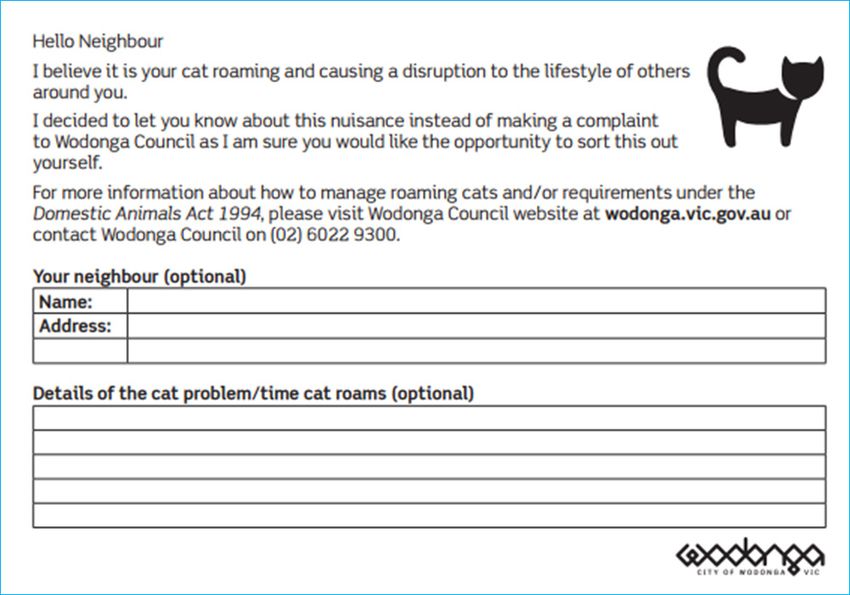
Dog Data
  700

  600

  500

  400

  300

  200

  100

       0

               COMPLAINTS        COMPLAINTS       COMPLAINTS       COMPLAINTS     COMPLAINTS      PICK-UP        IMPOUNDED        RELEASED       RELEASED          DESTROYED
               barking dogs     nuisance dogs     roaming dogs     dog attacks    dog attacks   but returned                       to owner        sold
                                                                     person         animal         home
                  2009/10               2010/11              2011/12              2012/13          2013/14                  2014/15            2015/16                 2016/17

Cat Data
 400

 300

 200

 100

   0
                 COMPLAINTS                     IMPOUNDED                   RELEASED                    RELEASED                 DESTROYED                   TRAPS ISSUED
                                                                              owner                       sold

                     2009/10              2010/11                2011/12              2012/13      2013/14              2014/15               2015/16              2016/17

Desexing - dogs & cats
       2500
                              2532
                                                                                                                                      Desexed             Not desexed
                                                                     2273
       2000

       1500

       1000                                                                       1252
                                         1033                                                             965                                     901
        500

                                                                                                                        23                                         7
           0
                                FEMALE DOG                                 MALE DOG                            FEMALE CAT                               MALE CAT

                                                                                                                                                                                 7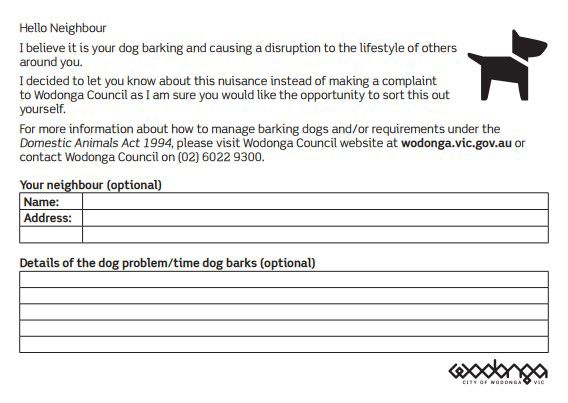
2. Training of
   authorised officers
Section 68 (A) (2)(b) of the Act outlines programs for    Pound services were discontinued in 2016
the training of authorised officers to ensure that they   and a tender to run the pound services was
can properly administer and enforce the requirements      awarded to Canine Country Kennels. The service
of this Act in the council’s municipal district.          changed to the new operator on July 1, 2016. The
                                                          Albury Animal Management Facility services the
                                                          following cities and shires:
Context
                                                             •		Albury City (NSW);
The civic services team Wodonga Council is responsible
for animal management operations under the Domestic          •		Greater Hume (NSW);
Animals Act 1994, other applicable laws and the
council’s local laws.                                        •		City of Wodonga (VIC);

                                                             •		Indigo (VIC), and

                                                             •		Towong Shire (VIC).
        Civic Services staffing
       and operational structure                          Current officers involved in animal control are trained
                                                          to the required standards to be able to perform all
                                                          requirements of their position under legislation.
                Director Business Services                Officer competency is developed through a mix of
                                                          practical training and through structured courses and
                                                          industry training. Civic services officers are appointed
                                                          as ‘authorised officers’ according to Section 72
                  Manager Environment and                 (Appointment of Authorised Officers) of the Domestic
                   Community Protection                   Animals Act 1994.

                                                          Annual skills audits have been undertaken and all
                Team Leader                               authorised officers have the required skills set for their
                                          Admin 0.5 EFT   positions. Each officer also attends workshops with the
                Compliance
                                                          North East Authorised Officers Association (quarterly).

                                             Local Laws
         Ranger      Ranger      Ranger
                                               Officer

                                                                 Ongoing officer competency
    Number of authorised officers                               is developed through a mix of
    Animal management team          2013        2017           practical exposure to the animal
    Rangers                          2            3
                                                                  management environment,
                                                               structured courses and industry
    Local Laws Officer               1            1
                                                                  engagement and training.

8       Domestic Animal Management Plan 2017 - 2021
Future Plans
Objective 2.1:
Maintain competency of animal management officers.
Activity When Evaluation Measures
Continually identify relevant
All planned training
training needs for civic services
Training needs identified and included in undertaken and
officers through consultation with Ongoing
the training plan. officer competency
management and the team. Include in
increased.
the annual training plan.
Objective 2.2:
Annually review all internal processes to ensure best practice investigation, compliance and enforcement processes.
Activity When Evaluation Measures
Review all investigation, compliance Annually – processes reviewed and officer All officers
and enforcement processes to ensure guidelines developed, approved training have attended
they are consistent with current undertaken and officers deemed competent. a variety of
practices, legislation and community By July
Officers using a range of techniques training in animal
expectations. annually
including compliance and education management
Undertake training relevant to any dependant on council and community and canine
changes across the sector. expectations. identification.
Objective 2.3:
Implement training guide that clearly identifies minimum training requirements and any additional training needs
that should be undertaken by all authorised officers by 2020.
Authorised officer training – basic DAMP 2014-2017 Planned – Next DAMP cycle
Microchip implantation training:
Officer one
Training in Microchip implantation was not undertaken
Officer two
as this service is undertaken by Canine Country Not required
Officer three
Kennels under contract.
Officer four
Industry training:
Animal handling
Breed identification
Certificate IV in Local Government
Animal assessment 2 officers undertaking Cert IV in
(Regulatory Services)
Statement taking and brief preparation Regulatory Services and Animal
Evidence presentation and prosecution skills Management.
Completed x 2 permanent staff.
Computer skills One still to complete.
Loading and unloading animals Internal training completed on
Emergency first aid for domestic animals investigations and preparing for
Court etiquette training prosecutions.
Refresher courses as required.
Court warrants, issue and filing
Conflict resolution
Aggressive dog handling
9 Domestic Animal Management Plan 2017 - 2021 9Occupational Health & Safety (OHS) Training
Animal control equipment use and care
Animal handling induction
Animal handling practical skills and practice
Explore use of Vehicle K-9 Cube to minimise animal
Manual handling Completed handling and dog bite OHS issues.
Emergency evacuation procedures permanent
Dealing with aggressive customers staff. (http://www.cjmattachments.com.au/the-k-9-
kube/)
Conflict resolution
Client interaction
Council policies and procedures under OH&S legislation
Bureau of Animal Welfare – training and information seminars, e.g. dangerous, restricted breed, and menacing dogs
All officers Officers to attend on a rotational basis As offered
Induction program for new staff
All officers As required As required
Municipal Association of Victoria and local government professionals – training and information days
All officers Officers to attend on a rotational basis As offered
10 Domestic Animal Management Plan 2017 - 20213. Registration and
identification
Current situation
Pet registration is a legal requirement under the The council offers fee reductions if your pet
Domestic Animals Act 1994. The council may take meets one or more of the following criteria:
action for not complying. Every dog and cat three
• Desexed (evidence must be provided)
months of age and over must be registered with your
local council. Existing registrations must be renewed by • More than 10 years of age
April 10 each year. Also, microchipping is compulsory
• Part of a domestic animal business or the owner
for all animals under the Domestic Animals Act 1994.
is a member of an applicable organisation*
Wodonga Council encourages animal owners to be
• A pet that has undergone specific training
responsible by ensuring their pets are microchipped,
registered and securely contained, suitably tethered or • A working dog
on a lead. Pet registration is NOT the same as microchip
registration.
*Applicable organisations
The council’s identification and registration activities
Australian National Cats Inc.
include:
Feline Control Council (Victoria) Inc.
• Annual registration renewal follow up including:
Cats Victoria
Reminder notices sent after May 10
Greyhound Racing Victoria
Phone audit
Dogs Victoria
Door knock
The Governing Council of Cat Fancy Australia
• Encouraging pet identification at every opportunity; and Victoria Inc.
• Random door knocking audit for unregistered
animals; Impounded animals are taken to the Albury Animal
Management Facility (AAMF) at 695 Mudge Street,
• Maintain and update the animal registration
Lavington NSW 2641. All animals released from the
database;
AAMF must be microchipped and registered.
• Online registration via the council webpage at
• The AMMF website and Facebook page provides
http://wodonga.vic.gov.au/community-services/
photographs of impounded wandering pets to
animals/registering-dog-cat.asp
enable owners to locate lost animals quicker.
• Offering reduced fee for registration of puppies Addresses Section 68(A)(c)(v) Outline programs outline
(between three and six months). This reverts to programs, services and strategies which the Council
full fee if evidence of desexing is not provided intends to pursue in its municipal district: - to encourage
at next registration cycle; the registration and identification of dogs and cats. Also
addresses Section 68A (2) (a), (c) (i), (c) (ii), (d) and (f).
Fee reduction for pets is a way to encourage
responsible pet ownership.
11Current data
Currently (September 2017) there are 7666 registered now on the increase. Data shows an overall upwards
dogs and 2018 registered cats. Animal registration trend in registrations across the City of Wodonga for
numbers in the City of Wodonga appear to have varied both dogs and cats, which can be attributed to the
in proportion to population growth over the last 10 council’s proactive educational programs such as
years. During the last DAMP cycle (2014-2017), dog the annual door knock registration checks, increased
registrations were stable and cat registrations were animal management services and responsible pet
trending down in the latter part of the cycle but are ownership by pet owners.
Animal Registration Trend
8000
7000
DOG CAT
6000
5000
4000
3000
2000
1000
0 2001 2002 2003 2004 2005 2006 2007 2008 2009 2010 2011 2012 2013 2014 2015 2016 2017 2018
Compared to the 2014/15 to 2015/2016 finacial year, dog registrations
have increased by 6% and cat registrations up by 7%
Top 5 dog names
Charlie 122
Max 122
Bella 201
Molly 115
What’s in a name?
Ruby 91
12 Domestic Animal Management Plan 2017 - 2021Current education/promotional
activities
• Information on www.wodonga.vic.gov.au website • Random unregistered animal audits;
relating to registration, identification, return of lost • Follow-up on animals notified as sold
animals and responsible pet ownership; by domestic animal businesses;
• Registration and identification brochures supplied • Regularly update / audit registration
to all local vets, community centres, libraries and database to ensure data is current
dog training facilities; (e.g. notification of deceased animal,
• Supporting Agriculture Victoria www.agriculture. change of address, change of owner);
vic.gov.au/pets unique community initiatives • Ensure all seized and impounded animals are
including responsible pet ownership program for identified, registered and microchipped prior to
schools and Animal Welfare Fund Grants Program; release back to their owner; and
• Use of media releases, paid advertising and the • Visiting premises with puppies and kittens for sale
council’s newsletter Citylife to advise residents to ensure they are microchipped as required under
of registrations, new pound service arrangements, the Act.
changes to legislation and responsible pet
ownership requirements;
• Registration and animal-related information on all
Summary
new resident packs;
The key focus for the Domestic Animal Management
• Civic services officers available to present to Plan 2014 – 2017 cycle was to increase the number of
school and community groups on responsible pet dogs and cats that were registered, microchipped or
ownership; desexed. Current data suggests this is being achieved.
• High-profile ranger vehicle and uniforms for civic
services officers. Future Plans
Current compliance activities The City of Wodonga will continue to promote
the benefits of responsible pet ownership as it is
• Investigation of unregistered animals; recognised they play an integral part in pet owner’s
lives, providing company, emotional wellbeing, physical
• Patrols of the municipality; activity and they also teach children responsibility and
• Issue of registration renewals annually; develop their social and nurturing skills (Agriculture
Victoria, 2017).
• Follow-up on non-renewal of registrations:
phone call; or The city will continue to promoting these benefits
visit to property. along with responsible pet ownership being the key
focus to help drive this plan into the future.
13Objective 3.1:
The ongoing accuracy of the council’s registration database by cross referencing with microchip registry data is
improved.
Activity When Evaluation Measure
Demonstrate the council’s pet registration
Undertake a sample review
database can be accurately cross-
of newly microchipped dogs
referenced with microchip registries. Increase in registration
and cats in the municipality
Demonstrate increase in numbers of pets numbers for both dogs
by cross checking registration
Annually registered with the council following cross- and cats in line with
microchip registries. Check all
checking. population growth / pet
animals listed on the council’s
ownership.
pet registration database and
Engagement of contractor to carry out
follow up those that are not.
random door knocks for pet registrations.
Objective 3.2:
Increase dog and cat registrations by three per cent (over population growth) each year.
Activity When Evaluation Measure
Promote benefits of Ongoing Quicker identification of Increase in numbers of pets
registering, microchipping, roaming / lost animals and relocated back to owners.
desexing animals through return to owner. Increased
social and local media, and compliance to legislation. Decrease in number of pets
educate resident pet owners. Animals promptly reunited impounded.
back to owner.
Investigate enforcement / 2 months Random premises check for
compliance campaign relating after launch unregistered animals.
to unregistered animals. of annual Spot checks on animals
renewal date outside of premises under
control of owner.
14 Domestic Animal Management Plan 2017 - 2021Objective 3.3:
Improve community understanding of responsible pet ownership
Activity When Evaluation
Measure
Communication
Develop a more targeted approach
June 30, plan developed and
to educating and informing the
2020 implementation
community.
commenced.
Improve the use of existing Networks identified, Increase in registration numbers
June 30, for both dogs and cats in line with
community networks to distribute contacted and engaged
2020 population growth / pet ownership.
and share information. (dog and cat survey).
Increase in numbers of pets relocated
back to owners.
Social media included
Create opportunities for more
as a key channel on Decrease in number of pets
engagement with the community June 30,
communication plan. impounded.
on pet-related issues through the 2020
Social media approaches
use of social media.
implemented. Reduced number of complaints
received.
Investigate the development Considered in the
June 30,
and distribution of pet-related development of the Report presented to council for
2020
community newsletter. communications plan. consideration.
Broaden responsible pet ownership Reduced number of incidents involving
June 30, Key messages included in
messages to include matching the animals.
2020 the plan.
new pet to the household.
Broaden responsible pet ownership
messages to include approaches to June 30, Key messages included in
reduce the risk of dog attack and 2020 the plan.
animal neglect.
Investigate introduction of
Improved pet behaviour. Report presented to council for
reward system through reduction June 30,
Increased responsible pet consideration.
of registration fees for formally 2020
ownership.
trained dogs.
Investigate incentives for pet
owners.
Consider reintroduction of Pets in June 30, Increased community / Report presented to council for
the Park annual event. 2020 stakeholder participation. consideration.
Explore relationship opportunities
with AlburyCity and stakeholders.
154. Nuisance the dog. Further action can be taken
if the matter is not resolved satisfactorily.
Dogs wandering or inadequately confined to their
Section 68A (2) (c) (VI) of the Act outlines programs,
premises are also considered a nuisance and a hazard
services and strategies to minimise the potential for
to motorists and the public in general. In these
dogs and cats to create a nuisance – also addresses
circumstances, the council can utilise local laws
68A (2) (a), (c) (i), (c) (ii), (d), (f).
or powers under the Domestic Animals Act 1994 to
resolve these issues.
Current situation
Current data
The council is guided by the Act, other state laws and
local laws to ensure all members of the community are
The following statistics are based on the 2016 / 2017
complying with the legislation.
financial year.
Council civic services officers aim to inform, educate • The council investigated 554 barking dog
and communicate to the community about their complaints.
responsibilities on pet ownership in the first instance. • The council investigated 575 wandering dogs.
When these avenues do not gain the desired result, the
council may issue letters, formal warnings, notices, • The council investigated 16 nuisance dog
infringements, court summons or referrals to the complaints.
Dispute Centre of Victoria. • The council impounded 264 cats.
Civic services compliance team members can also draw Out of all cats impounded:
upon building, town planning and health requirements
13 per cent were returned to their owner;
to deal with more complex issues relating to the
welfare or compliance of animal ownership. 32 per cent were not claimed and sold; and,
Barking dog complaints vary from year to year. Officer 55 per cent were euthanized (being feral or not
investigations indicate this is an outcome of: suitable for rehoming).
• Incidence of pets being left alone during the day;
• Increased working from home and neighbours Cats
noticing their dogs barking;
• Increase in higher density housing and new In Victoria there are approximately 500,000 un-owned
estates; and cats across the state, presenting the community with a
serious over-population issue. One of the reasons is due
• Declining levels of tolerance.
to the breeding cycle of these animals.
Excessive barking is caused by but not limited to:
Cats start breeding as young as five months of age. If
• Boredom;
left un-desexed, just one female cat and her offspring
• Separation anxiety; can produce up to 420,000 cats in seven years.
• Fear;
Cat owners are encouraged to be responsible pet
• Territorial behaviour; owners and desex their cats. Aside from preventing
• Attention-seeking behaviour; and accidental litters, there are many health and
behavioural benefits to desexing.
• Communication to each other.
Desexed cats:
In most cases, the owners are not at home to hear
or stop the excessive barking or may not notice the • Live longer and healthier lives;
problem. The council has policies and procedures to • Are more affectionate and are less inclined to
deal with barking complaints. In the first instance, the wander, run away or get into fights; and
council requests if the barking dog is your neighbour’s
• Desexed females do not experience heat cycles and
that you inform them about the barking. If there is an
males do not spray to mark their territory.
ongoing problem, log sheets should be kept and council
officers will then discuss the issue with the owner of
16 Domestic Animal Management Plan 2017 - 2021The council uses local laws and the Act to control the
implications of irresponsible cat ownership.
Revision of the council’s
local law and orders
Local Laws and Orders under the The local laws, orders and all strategies
related to the management of domestic
Act animals are reviewed on an ongoing basis as
part of the Civic Services Compliance Team Plan
The council’s Environment and Community Protection and in response to Victorian Government
Local Law (local law No.3) provides additional requirements.
requirements to assist with animal management.
These include: Review of local laws, orders and strategies are
undertaken on a regular basis to ensure consistency
• Section 13 – notice to comply; with the council, community expectations and
• Section 14 – power of an authorised officer to act legislation.
in urgent circumstances;
• Section 57 – restrictions on the number of animals Current education/promotional
kept on premises; activities
• Section 58 - conditions under which animals are
kept; The Department of Economics Development, Jobs,
Transport and Resources, Domestic Animals Branch
• Section 59 – noise and smell; (DEDJTR) operates state-wide educational programs
• Section 60 - animal litter; and and activities. In Victoria, legislation aims to
encourage responsible pet ownership, to protect the
• Section 61 – wandering animals. community from dangerous or nuisance animals and
to prevent animal neglect and cruelty. The Domestic
A complete copy of the City of Wodonga Environment Animals Branch (DAB) is responsible for overseeing the
and Community Protection Local Law No. 1 of 2014 can development of this legislation, along with associated
be found at: http://www.wodonga.vic.gov.au/about-us/ regulations and codes of practice.
local-laws/images/Local_Laws_2014_updated_TD.pdf
The council will build on these programs and operate its
The council can make orders under the Act to deal with own education programs to reflect local priorities.
animal management issues. Orders such as the ‘Order
for the Control of Dogs’ and cat curfew are an example Other council activities include:
of this. • Information on the Wodonga Council website
including registration, responsible pet ownership,
The council during the last DAMP cycle (2014-2017) animal welfare, lost animals, dangerous and
introduced the ‘Order for Control of Dogs’ to introduce restricted dogs, permits, pound and Wodonga Dog
local laws that require owners of pets to have effective Rescue.
control over their animals and, to prohibit dogs
entering certain areas within the municipality such as
in the immediate perimeter of a public area children’s Current compliance activities
playground or set distances away from a barbecue
• Increased patrols of the municipality including
within a park. This law was in response of community
local parks and walking tracks outside of normal
concerns and views on responsible pet ownership and,
office hours;
the council will only make an order under this part
of the legislation after community and stakeholder • Responding to animal nuisance and wandering
consultation. animal complaints;
• Issue of notices to comply;
Current orders are listed in Appendix A Effective Control
Order in full is also listed in Appendix A. • Issue of infringements;
• Undertake legal action;
• Issue of barking log sheets to residents to record
barking nuisances; and
• Provision of cat traps to assist residents with
trespassing cats.
17Objective 4.1:
Reduce dog nuisance complaints
Activity When Evaluation Measures
Research and review the need June 30, Level of needs identified Report presented to council for
for additional off-leash areas, in 2020 through dog and cat survey consideration.
conjunction with planning staff 2017.
and property developers for
consideration of special dog parks.
Review barking dog complaint / June 30, Review undertaken, changes Policy/guidelines adopted by
investigation policy / procedural 2020 made and officers trained. council.
guidelines.
Include information regarding Ongoing Information packs to be Number of information packs
confinement, barking, wandering sent to new residents and issued.
animals in registration information new animal owners in the
packs each year. municipality each year. Increase in numbers of pets
relocated back to owners.
Decrease in number of pets
impounded.
18 Domestic Animal Management Plan 2017 - 2021Objective 4.2:
Reduce cat nuisance complaints
Activity When Evaluation Measures
Provide educational material Current Results of dog and cat survey Number of information
about cat enclosures and nuisance and evaluated to gauge community packs distributed.
issues to: ongoing feedback.
(a) Cat owners on request; or
(b) When issues are identified; and
(c) In registration information
packs each year.
Increase cat trapping by assisting Ongoing Number of traps delivered Reduced number of
residents with cat trespass/ Number of cats impounded complaints.
nuisance problems by providing Number of cats registered
advice and traps through the
council’s trap program.
Consider extension of cat curfew June 30, Feedback from community Report presented to
to cover 24-hour period in line with 2020 consultation. council for consideration.
other the council’s practice. Study of best practice http://
agriculture.vic.gov.au/pets/cats/
legal-requirements-for-cat-owners/
code-of-practice-for-the-private-
keeping-of-cats
Objective 4.3:
Increase community knowledge of cat disease issues
Activity When Evaluation Measures
Provide Ongoing Results of dog and cat survey to gauge community feedback Reduction in
educational (website information). number of incidence
material about cat of reported cat
Feedback from animal industry and veterinary businesses.
diseases which diseases.
Number of pamphlets/ information sheets distributed
highlight the
through:
effect on animals
and the impacts • Local vets;
on the community.
• Council pound;
Seek feedback
• Libraries and learning centres;
from animal
industry and vets • Social media;
on key issues
• Local press; and
for education to
community. • Civic centre customer service.
Collate and Review information from Albury Animal Management Facility
monitor the and local veterinaries on cat flu detected numbers.
number of Study of best practice http://agriculture.vic.gov.au/pets/
disease-related cats/legal-requirements-for-cat-owners/code-of-practice-
cat deaths. for-the-private-keeping-of-cats
195. Dog attacks
Section 68A (2) (c) (iii) of the Act outlines programs, Current education/
services and strategies to minimise the risk of attacks
promotional activities
by dogs on people and animals – also addresses 68A (2)
(a), (c) (i), (c) (ii), (d), (f)
• Information on the council’s website relating
to responsible pet ownership and the owner’s
Current situation responsibilities relating to aggressive, menacing
and attacking animals;
Council officers carry out regular enforcement • Links on the council’s website to the relevant
activities relating to wandering dogs. They: state and non-government organisations which
• Respond to all wandering dog complaints; have a vested interest in animal welfare,
responsible pet ownership and the provision of
• Attend after hours emergency dog complaints; support services to pet owners and the
• Attend to all reports of dogs showing aggressive animals themselves;
tendencies as a matter of urgency; • Promote and provide registration and information
• Investigate all alleged dog attacks and ensure legal at organized animal / pet events.
action is instigated where required;
• Declare animals as dangerous or menacing as
required; and
Current compliance activities
• Ensure that the controls that are put in place under The council investigates all dog attacks and safety
state legislation, local laws and council orders are concerns by:
effectively enforced.
• Conducting patrols of the municipality;
The purpose of these measures is to ensure the risk
• Declaring dogs as menacing, dangerous or
to the community is controlled, reduced or completely
restricted breeds as required;
removed.
• Providing after hours emergency response for dog
attacks and dogs acting aggressively;
Current data
• Issuing infringements and summons to attend
The following statistics are based on the 2016-2017 court where applicable;
financial year. • Seizing all dogs involved in dog attacks resulting in
• Number of reported dog attacks on persons - 16 a serious injury; and
• Number of reported dog attacks on attacks on • Maintaining the ban on declared dangerous dogs.
animals – 33
Summary
The council will continue with its strict enforcement
approach to all reported dog attacks and aggressive
dog complaints in the municipality.
21Future Plans Objective 5.1: Increase the reporting of dog attacks in the community Activity When Evaluation Measures Improve public awareness of Ongoing Monitor the number of complaints Reduction in number of what a dog attack and dog rush received year on year. complaints. is, increase awareness of public reporting wandering animals. Increase awareness of the possible Ongoing Cat and dog survey results. Reduction in number of penalties and possible legal Include additional questions when prosecutions. actions that may result in the interviewing owners of dogs that have event of attack, drawing on recent attacked to gauge if they had prior dog attacks across Victoria as knowledge of the seriousness of the case examples. event. Objective 5.2: Decrease the time delay between when an attack occurs and reporting to council Activity When Evaluation Measures Increase community awareness on reporting Ongoing Recording mechanisms to ask Reduction in number all dog attacks immediately after they take and show time of attack to time of serious dog place, including better reporting from police. of reporting, which can then be attacks. Update the council website to provide advice evaluated to show decrease of for reporting of dog attacks, updated media time from attack until reporting. and pamphlets. 22 Domestic Animal Management Plan 2017 - 2021
6. Dangerous,
   menacing and
   restricted breeds
Section 68A(2)(c)(vii) of the Act outlines programs,        •   Menacing dogs - two
services and strategies to effectively identify all         •   Restricted breeds - two
dangerous dogs, menacing dogs and restricted breed
dogs in that district and to ensure that those dogs are
kept in compliance with this Act and the regulations -      Summary
also addresses 68A(2)(a), (c)(i), (c)(ii), (d), (f).
                                                            Council officers conduct inspections of all existing
Current situation                                           restricted breed menacing dogs on an ongoing basis.

The level of compliance is high within the city of
Wodonga and there is not a need to introduce any new        Future plans
activities in relation to this category of dogs. However,
the council will continue to monitor any activity and       •   Information and microchipping at organized animal
carry out random inspections.                                   /pet events; and
                                                            •   Continue to inform pet owners about responsible
Council officers ensure the owners of these dogs are
                                                                pet ownership including selecting the right pet for
adhering to the requirements by:
                                                                their circumstances and legal obligations, and;
•   Maintaining the State Government’s Victorian
                                                            •   Ongoing review of council’s policy on refusing
    Dangerous Dog (VDDR) database;
                                                                dangerous dogs to be registered in the
•   Conducting inspections and random audits;                   municipality.
•   Investigating complaints;
•   Prosecution of non-compliant owners;                    Current compliance activities
•   Audits of industrial/residential areas for non-
                                                            •   Attend to all complaints in relation to suspected
    declared dogs; and
                                                                dangerous, restricted breed and menacing dogs;
•   Identify declared dogs which are impounded.
                                                            •   Inspect all “declared” dog’s enclosures and
•   Education/promotional activities                            premises annually and on random audits;
•   Information on the council website and links to 		      •   Examination of the council’s registration database
    the The Department of Economics Development, 		             to identify and follow up on suspected (non-
    Jobs, Transport and Resources, Domestic Animals             declared) restricted breed dogs;
    Branch (DEDJTR) website; and
                                                            •   Declaration included on all registration forms as to
•   Information via pamphlets.                                  status of animal under restricted breed legislation;
                                                            •   Update and maintain Agriculture Victoria database;

Current data                                                •   Patrol industrial areas for non-registered guard
                                                                dogs (dangerous dogs by definition); and
Wodonga Council has the following dogs listed as            •   Check signage and collars of all menacing and
dangerous, menacing or restricted breed:                        dangerous dogs.
•   Dangerous dogs (guard dogs) - two

                                                                                                                   23
Objective 6.1:
Continue to obtain a high level of compliance.
Activity When Evaluation Measures
Continued inspections of all Ongoing All premises Number of premises visited annually.
declared, menacing or restricted and owners
breed dogs with zero tolerance comply
for non-compliance as detailed with the
in the Domestic Animals requirements.
Regulations 2005.
247. Overpopulation and
high euthanasia
rates
Section 68A(2)(c)(iv) of the Act outlines programs, Current education/
services and strategies to address any over-population promotional activities
and high euthanasia rates for dogs and cats – also
addresses 68A(2)(a), (c)(i), (c)(ii), (d), (f). • Promotion of organizations that encourage
responsible pet ownership such as The Department
of Economics Development, Jobs, Transport and
Current situation
Resources, Domestic Animals Branch (DEDJTR),
RSPCA Victoria, local veterinary practices and
The council together with the assistance of its support
Wodonga Dog Rescue;
partners such as the Wodonga Dog Rescue and Albury
Animal Management Facility are achieving good rates • Promotion of responsible pet ownership on the
of return of lost animals to owners and re-housing to council’s website;
new owners. Desexing of dogs and cats, microchipping
• Reduced registration fee for all cats that are
and regulation of animal businesses and local laws all
desexed and microchipped;
assist in reducing over population and high euthanasia
rate of dogs and cats. • First year registration free for cats under six
months of age;
• Placement of all found cats on the Albury Animal
Current data Management Facility website page; and
Rates of returning/re-housing of dogs. • Promote and provide registration and information at
the organized animal / pet events.
Over the last four years, council staff annually
impounded on average 456 dogs. In 2017, one in three
dogs picked up by a ranger (26 per cent) go straight Current compliance activities
back home, 82 per cent of the dogs that go to the
pound are collected by their owners and 10 per cent • Investigate complaints of animal hoarding;
are rehomed. Eight per cent are deemed unsuitable for
• Investigate reports of unauthorized backyard
homing and were euthanised.
breeders;
Rates of returning/re-housing of cats • Provision of cat traps to community delivered by
authorized officers; and
Over the last four years, council staff annually • All released pets to be desexed and microchipped.
impounded on average 191 cats. In 2017, 13 per
cent were released back to their owners, 22 per cent
were sold and 55 per c were euthanised. There has
been an increase in the number of cats impounded
and subsequently euthanised by council due to an
increased number of feral cats trapped.
Based on a cat’s breeding cycle, the proportion of feral
or wild cats across the city is high.
25Future plans
Objective 7.1:
Explore options to encourage cat owners to register their cats such as incentives, programs and other methods.
Activity When Evaluation Measures
Investigate programs, fee Ongoing Increase in cat Report presented to council for consideration.
reductions and other methods registration
to increase cat registrations. numbers.
Semi-owned cats
Agriculture Victoria states the cat overpopulation problem by feeding, but not owning (e.g. desexing and
problem is due to a number of factors, such as supply identifying) these cats.
exceeding demand and the ability of cats to breed
extremely quickly. Research has also found that a Feeding unowned cats helps keep them alive and strong
major contributing factor to this problem is people enough to reproduce. They keep breeding more and
feeding unowned cats but not taking full ownership or more kittens into a life of disease and neglect. This
responsibility for them. contributes to the tragic cat overpopulation problem in
Australia.
A survey by Monash University found 22 per cent of
people said they fed a cat that didn’t belong to them. Source Agriculture Victoria (2017): agriculture.vic.gov.au/
People feed unowned cats because they genuinely care pets/care-and-welfare/stray-and-unwanted-animals-in-
about them and feel sorry for them. However, many society/semi-owned-cats.
people don’t realise they are causing a bigger
Objective 7.2:
Increased activities to reduce feral cat population.
Activity When Evaluation Measures
Hot spot trapping in residential, Ongoing Number Decrease in the number of cats trapped.
commercial, industrial and of cats
environmentally-sensitive trapped
areas.
26 Domestic Animal Management Plan 2017 - 2021Objective 7.3:
Increased activities to reduce feral cat population.
Activity When Evaluation Measures
Engage community through media and Ongoing Survey results. An overall reduction in
community survey to generate discussion Ongoing discussion with the number of roaming
and to highlight issues of roaming cats and community. cats.
views on various methods and programs Number of cats impounded.
to reduce roaming cats such as the
implementation of a 24-hour cat curfew.
Consider future Trap, Neuter and Release June, Review to be conducted and Report presented
(TNR) strategies. 2020 researched whether a program to council for
such as TNR is a viable option to consideration.
reduce cat nuisance complaints.
Your cat’s welfare needs
Do you know the five key things cats need for a happy and healthy life?
The five key welfare needs are summarised in this table.
Environment - The need for a suitable environment (place to live)
Diet - The need for a suitable diet
Behaviour- The need to express normal behavior
Companionship - The need for to live with, or apart from, other animals
Health - The need to be protected from pain, suffering, injury and disease
Source Agricultural Victoria (2017): agriculture.vic.gov.au/pets/cats/your-cats-welfare-needs
278. Domestic animal
businesses
Section 68A(2)(c)(ii) of the Act outlines programs, Current education/
services and strategies which the council intends to
pursue in its municipal district to ensure that people
promotional activities
comply with this Act, and any other regulations and
• Visit facilities and provide information
any related legislation – also addresses 68A(2)(a), (c) (i),
including mandatory code of practice to
(c)(ii), (d), (f).
proprietors/ staff of existing and any new
domestic animal businesses; and
Current situation • Ensure domestic animal businesses are
advised of any review of the code of practice
Numbers of registered domestic animal businesses applicable for their business.
remain low in the city but support our pet owner
community well. As Wodonga is on the NSW / Victoria
border, this plan does not take into account domestic Current compliance activities
animal businesses interstate in NSW.
• Register all identified domestic animal businesses
In 2018 The Domestic Animals Act legislation is within the community
changing regarding the registration of Domestic • Conduct annual inspections/audits of each
Animals Business, including licensing of dog and premises
cat breeders and pet adoption agencies, and new
requirements for pet shops selling dogs and cats. • Follow up any non-compliance
A review of current practices is underway and • Liaise with other units within the council to provide
legislation will be introduced requiring a permit and/ advice when planning applications for domestic
or a licence system for breeders. Further information animal businesses are received to ensure
is not yet at hand, an education program will be appropriate conditions are placed on construction,
introduced when the legislation has been approved operation and so on
and the guidelines have been finalized.
• Investigate and act on complaints received
Current data The Act has altered the definition of domestic animal
business:
The City of Wodonga has the following registered • Investigate reported businesses advertising in
animal businesses: local newspapers to determine if the business
falls into the new definition under the Act, and
Domestic animal businesses 2017 their compliance with the legislation.
Registered domestic animal business 3
Number of boarding establishments 1
Number of pet shops 0
1
Number of pounds / shelters
(Albury AMC)
29Future plans
Objective 8.1:
Identify and register all domestic animal business (DAB) in the municipality.
Activity When Evaluation Measures
Identify all businesses that should be registered DABs in the Annually Compare Number of DABs
municipality using phone directories or similar, including online sites. number of registered.
Identify businesses selling pets, pet products and services in the registered
municipality. DABs before
and after
Follow up to determine whether they are and should be registered
activity.
with the council.
Objective 8.2:
Identify and register all domestic animal business (DAB) in the municipality.
Activity When Evaluation Measures
Conduct an annual inspection of each Annually 100 per cent of all DAB’s inspected Number of DABs
registered DAB for compliance. prior to renewal and action taken inspected.
for any non-compliance.
Objective 8.3:
All domestic animal businesses meet their registration and mandatory codes of practice standards.
Activity When Evaluation Measures
Develop a program to deal with June 30, 2020 Program implemented. Reduction in non-compliance
audit outcomes. Number of non-compliances of DABs.
recorded and actioned.
Objective 8.4:
Promote the requirements for domestic animal businesses to the community and domestic animal businesses to
increase awareness.
Activity When Evaluation Measures
Update the council’s website to include June 30, 2019 Website Website page views.
a domestic animal business section with updated.
links to relevant codes of practice.
Conduct a forum/seminar with June 30, 2019 Forum/ Workshop evaluation report.
current and prospective domestic seminar
animal business proprietors to conducted.
provide information relating to their
requirements under the Act.
30 Domestic Animal Management Plan 2017 - 2021You can also read


