CARREFOUR GROUP BUILDING RESPONSIBLE RELATIONSHIPS - 2007 SUSTAINABILITY REPORT
←
→
Page content transcription
If your browser does not render page correctly, please read the page content below

2007 Sustainability report

Carrefour
Group
Building
responsible
relationships
No.1                in Europe

                           30        countries                                                No.2        in the world

         102.442
         billion euros in sales
         incl. VAT under
         Goup banners
                                                                                                  16,899,020 sq.m
                                                                                                  of sales area

     490,042
     employees

                                                                                            14,991           stores

                                       More than   3   billion check-out operations
                                       per year

         Breakdown of sales incl. VAT under                                 Breakdown of sales incl. VAT under
         banners by format                                                  banners by geographic area

                                  n 59.1% Hypermarkets                                          n 	45.3% France
                                  n 23.5% Supermarkets                                          n 	39.1% Europe
                                  n 9.7% Hard discounts                                           (excluding France)
                                  n 7.7% Convenience, cash                                      n 	9.5% America
                                   & carry and other activities                                 n 	6.1% Asia

CARREFOUR / ATACADAO / CARREFOUR EXPRESS / CARREFOUR BAIRRO / CARREFOUR CITY / CARREFOUR MARKET / 5 MINUT CARREFOUR /
CHAMPION / DIA / DI PER DI / DOCKS MARKET / EXPRESS CARREFOUR / GB CARREFOUR / GROSS IPER / GS / ED / MARCHÉ PLUS / MINIPREÇO
/ OK / PROMOCASH / PROXI / SMILE MARKET / SHERPA / SHOPI / 5’ MARINOPOULOS / 8 À HUIT
With three billion check-out transactions per year, tens
of thousands of suppliers and over 490,000 employees
worldwide, the Carrefour Group assumes significant
economic, social and environmental responsibilities in
its operations, and is committed to providing high qual-
ity products and ensuring customer safety. Each day,
the Carrefour Group puts its skills, energy and resources
to work to ensure that it remains a high-performing,
socially responsible and sustainable company.

CONTENTS

2 / Message from the Chairmen / 3 / Adherence to the principles of the Global Compact / 4 / Responsible rela-
tionships benefit us all / 6 / Objectives / 8 / Mobilization / 16 / Commitments / 20 / Developping sustainable com-
merce every day / 22 / Economic and commercial challenges / 34 / Social and community challenges / 44 / Envi-
ro n m e n t a l c h a l l e n g e s / 5 2 / M a k i n g g r e a t e r p r o g r e s s t owa r d s u s t a i n a b l e r e l a t i o n s h i p s eve r y
year / 54 / Per formance / 64 / Cross-reference tables / 66 / Methodology / 69 / External audit / 70 /
Operations / 72 / Glossary

MESSAGE
         FROM THE CHAIRMEN:
         CARREFOUR’S COMMITMENTS
                                                    The Carrefour Group has long been committed to keeping human welfare and environmental protection
                                                    its key priorities while developing its operations. Sustainable development is an integral part of our corpo-
                                                    rate culture, and it does not hinder our economic performance but rather helps us identify opportunities
                                                    for development, reduce costs and better anticipate and manage risk. It will generate future growth and
                                                    create value for our Group and all our stakeholders. It is also a guarantee of our continuity.

                                                    n Robert Halley
                                                    Chairman of the Supervisory Board

“ Our goal is to achieve commercial and economic success, but it cannot be
separated from our social and environmental responsibilities.”
José Luis Durán, Chairman of the Management Board

Now more than ever, we are convinced that Sustainable Development can generate growth and profitability. It’s
a great opportunity to develop our brand while strengthening consumers’ trust in our products and services.
The many initiatives you will discover here in our 7th Sustainability Report show that these commitments date
back many years and have led to positive concrete action in all of the countries in which we are present.
We have decided to make the Carrefour brand the central axis of our strategy and are committed to
strengthening its presence and content on all our markets. The challenge is to meet customers’ pricing and
quality needs better than our competitors, and meet their expectations in terms of responsible manufacturing,
environmental protection and food and product safety.
Our goal is to achieve commercial and economic success, but it cannot be separated from our social and
environmental responsibilities. Our performance can only be ensured if we make progress in all of these areas.
For example, we have committed to reduce the Group’s energy consumption by 20% by 2020 (compared to
2004 consumption levels).
As the 9th-largest private employer worldwide, we also have an obligation to provide our staff with a pleasant
and stimulating work environment. This year, we have started making improvements in this area in order to
attract and retain the very best talent.
Our approach also gives greater meaning to our employees’ work and deepen their pride in being part of our
Group.
Our 2007 Sustainable Development Report will inform you about our Values and initiatives as well as the key
indicators we use to measure our progress. It also highlights five key areas on which we have placed special
focus in 2007: nutrition, sustainable consumption, our image as a responsible employer, social conditions in
production and combating climate change. The way we conduct our business demonstrates our dedication to developing concrete solutions to
major challenges with the aim of becoming a creator of responsible relationships.

n José Luis Durán
Chairman of the Management Board

 2   2007 SustainabiliTy Report / CARREFOUR GROUP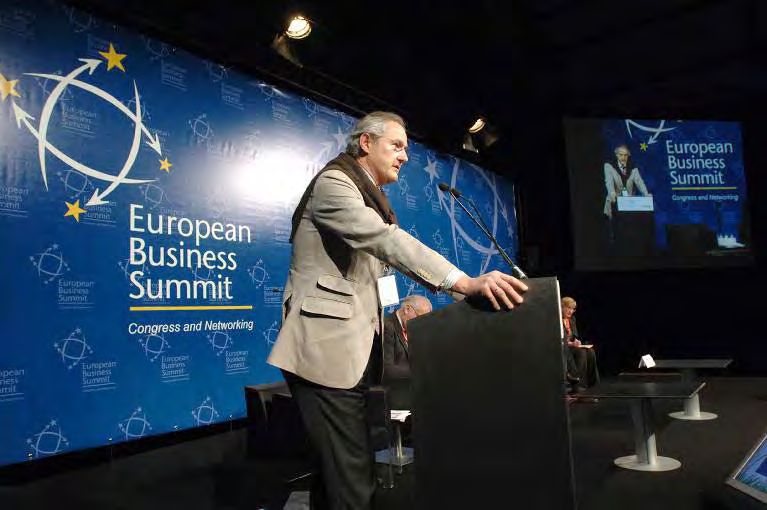
Adherence to the principles
      of the Global Compact
      In 2001, the Carrefour Group joined the United Nations Global Compact, making
      the commitment to adhere to and promote its 10 principles in the areas of human
      rights, labour standards and the environment.

Global Compact principles                                   Examples of Carrefour Group initiatives
Human rights
1. S
    upport and respect the protection of internationally   • T he Carrefour Group is committed to voluntary policy of respecting the basic rights set out by
   proclaimed human rights in its sphere of influence        the ILO and ensuring that its suppliers do the same, in particular by cooperating since 1997 with
                                                             the International Federation for Human Rights (FIDH).
2. E
    nsure that businesses are not complicit in human       •A
                                                              ll of Carrefour’s suppliers are contractually bound to the Group’s Social Charter. To ensure that
   rights abuses                                             suppliers comply with the charter, Carrefour strengthened its social audit policy in 2003. By the
                                                             end of 2007, 2,069 social audits had been performed.
                                                            •S
                                                              ince 2006, in the framework of the CIES, Carrefour has been working towards a convergence of
                                                             voluntary social audit initiatives.
                                                            >See pp. VI-VII in the Challenges Booklet.

Labour standards
3. U
    phold the freedom of association and the effective     •S
                                                              igning of an agreement with the UNI (Union Network International) in 2001 under which the Group
                                                             commits to ensure the application of the principles set out by the ILO (in particular freedom of asso-
   recognition of the right to collective bargaining
                                                             ciation, the right to collective bargaining and the abolition of child labour).
                                                            >See pp. 38-39.
4. E
    liminate all forms of forced and compulsory labour

5. E
    nsure the effective abolition of child labour
                                                            • In October 2004, the Carrefour Group signed the Corporate Diversity Charter, making a commit-
6. E
    liminate discrimination in respect of employment         ment to not discriminate at the time of hire or during a worker’s employment.
   and occupation                                           • Many employment programmes have been established for disabled persons.
                                                            >See pp. 36-37 and pp. VIII-IX in the Challenges Booklet.

Environment
7. S
    upport a precautionary approach to                     •C
                                                              arrefour develops environmentally friendly own-brand and banner-brand products affordable for aII
                                                               budget: organic, eco-labelled and Carrefour Quality Line products, Responsible Fishing range etc.
   environmental challenges
                                                            >See pp. 26-29 and 47-49/ Responsible Consumption, pp. IV-V in the Challenges Booklet.
                                                            • T he Group committed to reducing its energy consumption by 20% by 2020 (compared with 2004
8. U
    ndertake initiatives to promote greater                   consumption levels).
   environmental responsibility                             • Carrefour works to reduce the environmental impact of its stores:
                                                             - it uses an environmental management system to minimize waste and optimize its consumption of
9. E
    ncourage the development and diffusion of                  energy, refrigerants and water;
   environmentally friendly technologies                     - it performs life cycle analyses to define policies on check-out bags and advertising catalogues.
                                                            >See pp. 48-49/ Climate Change, pp. X-XV in the Challenges Booklet.
                                                            •C  arrefour takes steps to reduce CO2 emissions generated by logistics activities: streamlining flows,
                                                               testing alternative shipping methods (rail/road and river/road combinations) and offering
                                                               alternative fuels such as Aquazole and NGV.
                                                            >See Climate Change, pp. X-XV in the Challenges Booklet.
                                                            • T he Group deploys initiatives to raise awareness of Sustainable Development issues both internally
                                                               and externally and works to promote responsible consumption.

Anti-corruption
10. Work against corruption in all its forms, including    •June 2004: a Code of Ethics was adopted to provide guidelines to employees and help them fight
                                                             corruption. Now known as the Code of Conduct, it was updated and enhanced in 2007.
     extortion and bribery
                                                            •Awareness-raising and training initiatives – in particular for buyers – were deployed in the countries.
                                                            •In particularly sensitive countries the Group implemented ethics hotlines that employees, suppli-
                                                             ers or customers may use to alert us to any behaviour inconsistent with the Group’s Values.
                                                            >See p. 6.

                                                                                                                           CARREFOUR GROUP / 2007 SustainabiliTy Report   3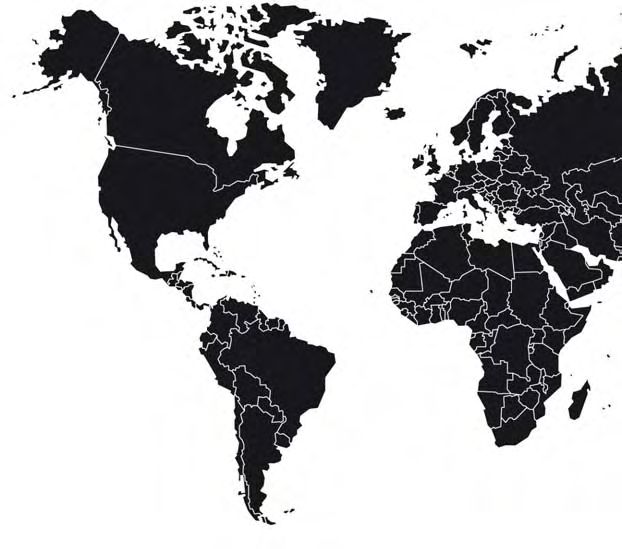
4 2007 SustainabiliTy Report / CARREFOUR GROUP

RESPONSIBLE RELATIONSHIPS
BENEFIT US ALL
Supported by the top level of the Group and upheld by all our
employees, our commitments to responsible commerce are an ex-
tension of the Values underlying the Carrefour Group’s strategy. They
are also based on our firm belief that the Group has as much to gain
from the promotion of Sustainable Development as its stakeholders.

                                              COMMITMENTS
                                              Objectives		06
                                              Mobilization		08
                                              Commitments		16
OBJECTIVES

                        TOWARD FAIR AND
                        SUSTAINABLE GROWTH
                        Not only does Sustainable Development closely match our own ethical standards and
                        principles -- it also creates value for the Group and its stakeholders. This is why we have
                        placed Sustainable Development at the very heart of our profitable growth strategy.

                                                   A HISTORICAL CONVICTION                                   A Code of Ethics applied
                                                   and strong values                                         throughout the Group
                                                   Tasty, authentic and safe fresh products, the precau-     In 2004, the Carrefour Group adopted a Code of
                                                   tionary principle, environmentally friendly produc-       Ethics that translated these Values into guidelines to
                                                   tion methods and fair compensation for suppliers          provide direction to employees and help them fight
                                                   are the cornerstones of Carrefour’s strategy for long-    corruption. In 2007 it was enhanced, updated and
                                                   lasting relations with all its stakeholders. In 1992,     renamed the Code of Conduct. It is now distributed
                                                   when Carrefour Quality Lines were created, the con-       to employees in all the countries.
                                                   cept of Sustainable Development was not yet widely        The Business Units regularly focus their communica-
                                                   recognized. Yet its principles were already a part of     tions initiatives on the Values and the Group’s Code
                                                   the Group’s corporate culture and strategy, and           of Conduct. Some of them also supplement these
                                                   Carrefour has only strengthened this approach ever        awareness-raising efforts with related training. More-
                                                   since.                                                    over, some sensitive countries, such as Argentina,
                                                   In 2002, the Group defined its seven core Values:         Brazil, China, Colombia, Indonesia and Turkey, have
                                                   Freedom, Responsibility, Sharing, Respect, Integrity,     set up ethics hotlines enabling their employees, sup-
                                                   Solidarity and Progress. They have been deployed in       pliers or customers to alert to any behaviour incon-
                                                   all countries as guidelines to be used by Carrefour       sistent with the Group’s Values.
       The Carrefour Group’s seven Values   n      employees in their relations with stakeholders. In
                                                   2005, to ensure compliance with these Values, Car-        A driving force for development
                                                   refour set up Carrefour Attitude, a management tool       For the Carrefour Group, Sustainable Development
                                                   enabling Business Unit Executive Committees to self-      is a key factor in growth, profitability and continuity.
                                                   assess their relationships with their stakeholders with   The Group anticipates emerging trends by paying
                                                   regard to Group Values. Each year, managers are           close attention to civil society. In 1997, for example, it
                                                   evaluated on their ability to integrate these Values      launched the Carrefour Organic range and began
                                                   into their duties. Some countries go even further -       marketing fair-trade products. By deploying a respon-
                                                   Brazil, for example, requires all applicants for senior   sible human resources policy, it makes a positive con-
                                                   managerial positions to complete a test measuring         tribution to employee performance. Reducing its
                                                   their aptitudes in relation to the Values.                energy consumption helps it save natural resources,
                                                                                                             play a role in the fight against climate change and
                                                                                                             cut costs. And by anticipating the various risks to
                                                                                                             which it is exposed, it is better able to ensure the con-
                                                                                                             tinuity of its operations.
                                                                                                             When Carrefour takes action to meet stakeholders’
                                                                                                             social and environmental expectations, it also cre-
                     Ethics hotline (Turkey) n
                                                                                                             ates value for the Group, its employees, shareholders
                                                                                                             and suppliers and the countries and communities in
                                                                                                             which it operates.

6   2007 SustainabiliTy Report / CARREFOUR GROUP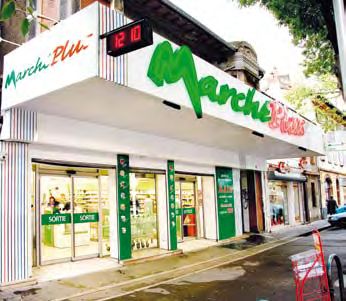
15 years
of commitment
1992
Carrefour
Quality Lines.
Sharing value among stakeholders - 2007
(expressed in millions of euros)
1996
Application of
the precautionary
principle to GMOs.
1997
Carrefour
Organic.
Employees
€7,985 million
Customers Suppliers
The Carrefour Group spent nearly 2000
Social Charter to be
€82,148 million €69,812 million €8 billion on 490,042 employees
in 30 countries.
signed by Group
Carrefour’s sales (excl. The Carrefour Group spent This amount includes gross salaries, suppliers drawn up in
VAT) reached €82,148 almost €70 billion on goods social charges and benefits.
million in 2007. and services from suppliers
cooperation with the
International Federation
For Human Rights.
Partners Shareholders
2001
Signature of an
agreement with
€1,147 million €828 million the UNI.
Other miscellaneous The Carrefour Group paid:
income for the Carrefour •€ 722 million in shareholders
Group: franchising fees,
income from financial •€
dividends
106 million in dividends to
2001 Membership in
companies and leasing. minority shareholders the United Nations
Financial income Financial institutions
Global Compact.
€42 million €568 million
The Carrefour Group The financial costs of
received €42 million
from financial and
strategic investments
repaying interest on loans
came to €568 million.
Government and communities
€1,291 million
2004 Adoption of
in interest and dividends.
the Group Code
Carrefour paid a total of
€1,291 million in taxes,
of Ethics; Signature
including €807 million of the Corporate
Depreciation and provisions in the amount of €1.7 billion were not included in this analysis. in corporate income tax.
Diversity Charter.
The residual difference of €1.1 billion results from the increase in shareholders’ equity.
2004
Carrefour
Attitude.
FOCUS ON...
Responsible communications 2005
Responsible
An internal communications code is being n encourage target audiences to adopt Fishing Line.
developed at Hypermarkets France to responsible behaviour;
translate the values Carrefour already applies n make responsible use of end customers’
– honesty, transparency and simplicity – into private data in marketing and commercial
formal obligations. In January 2008, initiatives; 2006 Carrefour
Hypermarkets France also signed the n set up an internal procedure to approve Agir range.
Advertisers’ Responsible Communications communications before they are released
Charter drawn up by the Union des externally;
Annonceurs (UDA). It includes five n integrate environmental impact into the
commitments: selection criteria for communications media. 2007 Commitment to reduce
na pply the principles of responsible the Group’s energy
communications to all messages released consumption by 20%
externally; by 2020 (compared
with 2004 levels).
CARREFOUR GROUP / 2007 SustainabiliTy Report 7
Mobilization

                        Commitments begin
                        at the highest level
                        As with any strategic commitment, a Sustainable Development initiative cannot lead to
                        concrete action unless the Group’s managers personally lend their support. Carrefour’s
                        management rises to this challenge, helping translate commitments into action.

                                                   The rules of                                            consensus and ensures the general management of
                                                   sound corporate governance                              the Group, approves the accounts and convokes the
                                                   In 2005, in keeping with the decision taken by the      General Meeting. It reports on its management to the
                                                   shareholders at their 20 April Meeting, the Carrefour   Supervisory Board.
                                                   Group adopted a new system of governance ensur-
                                                   ing a more balanced distribution of power between a     The principle of subsidiarity
                                                   Supervisory Board (the supervisory body) and a Man-     As an international group operating in 30 countries,
                                                   agement Board (in charge of Group management).          Carrefour increasingly emphasizes a decentralized
                                                                                                           management system that can be optimally adapted
                                                   The Supervisory Board                                   to the local context. The driving forces are the Busi-
                                                   The Supervisory Board comprises eleven members,         ness Units, each of which corresponds to one store
                                                   including one woman, six independent directors          format in a given country. All the Business Units share
                                                   and one foreign national. Representing the Share-       the Carrefour Values and apply the Group’s policies
                                                   holders’ Meeting, it appoints Management Board          according to the principle of subsidiarity.
                                                   members and approves any changes to the Group’s
                                                   structures and capital. It supervises and monitors      Active participation
                                                   the implementation of the Group’s strategy, verifies    by the Management Board
                                                   that the annual accounts presented by the Man-          For Carrefour, Sustainable Development is a combi-
                                                   agement Board are in order and, upon completion         nation of three major priorities: quality products and
                                                   of these tasks, produces a report for the Sharehold-    services, responsibility to stakeholders, and risk man-
                                                   ers’ General Meeting.                                   agement. In 2005, the Group placed Sustainable
                                                                                                           Development at the heart of its organization by cre-
                                                   Specialized Committees                                  ating the Quality, Responsibility and Risk Manage-
                                                   The Supervisory Board is assisted by two specialized    ment Department, which oversees the Sustainable
                                                   committees whose members are chosen from its ranks.     Development, Quality, Safety, Security, Insurance and
                                                   The Audit Committee examines the accounts, ensures      Risk Management, and departments Lobbying and
                                                   respect for stock market regulations and evaluates      the Carrefour International Foundation.
                                                   the Group’s internal and external supervision.          The Quality, Responsibility and Risk Management
                                                   The Compensation, Appointments and Corporate            department is a sign of the importance the Group
                                                   Governance Committee proposes appointments              places on Sustainable Development. The depart-
                                                   and pay rates, evaluates staff performance shares       ment reports directly to a dedicated member of the
                                                   and stock option packages and assesses the work         Management Board. Strategic directions in Sustaina-
                                                   of the Supervisory Board.                               ble Development are also presented and discussed
                                                                                                           at Management Board meetings. Their implementa-
                                                   The Management Board                                    tion in the field is then handled by the Executive
                                                   At its 22 January 2008 session, the Supervisory Board   Committees of the Business Units.
                                                   raised the number of Management Board members
                                                   from five to seven. The Management Board acts by

8   2007 SustainabiliTy Report / CARREFOUR GROUP
A WORD FROM THE MEMBERS OF THE MANAGEMENT BOARD
n n n Jacques Beauchet – member of the Management Board, Managing Director, Human Resources,
Communication, Legal, Quality, Responsibility and Risk Management
Sustainable Development is a true driving force for our Group’s long-term economic success. To this end, we have
long maintained Sustainable Development as a central focus of our strategy. We also aim to uphold our economic,
social and environmental responsibilities to our stakeholders. The members of the Management Board meet regularly
throughout the year to discuss various strategic Sustainable Development issues, including our policies on wood, fish,
labour, nutrition and energy.
Major decisions impacting our entire Group are taken during these meetings. This year, for example, we adopted new
energy strategies and made progress on social issues with our decision to join the SAI (Social Accountability Interna-
tional) with a view to identifying the best ways of ensuring compliance with ILO principles worldwide. All Group business
lines and levels – from the head office to the smallest store – are actively involved. This allows us to transform our objec-
tives into realities and strengthen consumers’ trust in Carrefour.
n n n Javier Campo – member of the Management Board, Managing Director, Hard Discount
At Dia, we focus on all the ways we can make a better contribution to Sustainable Development, such as reducing
energy consumption, recycling waste and developing more ecologically friendly packaging.
Since 2003, Dia has also been offering organic products. We work to continually improve nutritional information for our
products, in particular with nutritional dials. Finally, our Quality department in Spain obtained ISO 9001:2000 certification
in 2007 for its approval procedures for suppliers of own-brand produce.
n n n José Maria Folache – member of the Management Board, Managing Director, Commercial and Marketing
Product procurement is now both local and global. This is why all of our teams, whether overseas or close to home,
strive to work closely with our suppliers to bring customers high quality, environmentally friendly products that are pro-
duced responsibly. We are verifying compliance with increased quality and social audits. We are committed to bringing
our customers quality at the best price every day. We invite them to join us in our Sustainable Development efforts by
buying the environmentally friendly, socially responsible and organic products in our Carrefour Agir range. We also work
to develop products and services that help them reduce their energy consumption.
n n n Thierry Garnier – member of the Management Board, Managing Director, International (excluding Europe)
You might think that Sustainable Development is a concept for developed countries only, but our experience in Asia
and Latin America has shown us that consumers in these countries also value a balanced diet, environmental protec-
tion and product quality. With a view to meeting these expectations, we have launched initiatives such as Nutrition Week
in Brazil, rolling out a range of iron-rich products, and created the Foundation for Food Safety in China.
n n n Gilles Petit – member of the Management Board, Managing Director, France
Our commitment to Sustainable Development is an indispensable condition for our economic success in France.
It gives greater meaning to our employees’ work and strengthens our customers’ trust in our brand. It also reinforces our
relationships with our partners, whether they be suppliers, producers or franchisees. For this reason, we have been sup-
porting the development of our Carrefour Quality Line producers for the past 15 years. We have also had a partnership
with Reflets de France producers for the past decade.
n n n Guy Yraeta – member of the Management Board, Managing Director, Europe (excluding France)
Thanks to the best practices we have developed and deployed in our countries in Europe, and the regular dia-
logue we encourage, Sustainable Development is now a firm part of the Carrefour strategy in all our countries. As a part
of this approach, we roll out international initiatives such as Nutrition Week and World Environment Day and encourage
many local initiatives.
CARREFOUR GROUP / 2007 SustainabiliTy Report 9Mobilization
Involving
all of our activities
At the Carrefour Group, Sustainable Development is not a separate function. Like Quality,
it is an attitude, a corporate culture shared by all our employees. It is therefore totally inte-
grated into the Group’s organization and management.
A dedicated organization etc.). This allows operational teams to exchange
involving all our employees expertise and achieve a more effective application
The Sustainable Development Department’s organiza- of Sustainable Development principles in the prac-
tion involves all business lines and levels of the Group. tices of each activity.
Reporting to the Quality, Responsibility and Risk Man-
agement Department, the Group Sustainable Devel- Adapting to local conditions
opment Department ensures its steering. Its role is to The same organization is duplicated at country and
drive policy forward by bringing issues before the banner level. In each country, the Group Sustainable
Management Board, ensuring the implementation Development Department has Quality and Sustaina-
of set strategies and spreading the use of best prac- ble Development (QSD) relays through which it can
tices. communicate Group strategic directions. With its sup-
port, the QSD relays and operational and cross-func-
Combining internal and external expertise tional departments of the Business Units work together
For this, it relies on resources such as scientific net- to apply the Group’s Sustainable Development policy
works or committees and external specialists, and from the highest level down to the stores, making
cooperates with the Group’s operational and cross- adaptations to local contexts where necessary.The QSD
functional departments: Human Resources, Mer- also ensures reporting on deployed initiatives.
chandise, Logistics and Assets (stores, home offices,
The sustainable development organization
involves all activities
Quality and
sustainable
Cross-departmental
development network
networks
Involvement at all levels n
QSD management Human Resources Merchandise Logistics Assets
Group
Scientific
Country and expert QSD country Human Resources Merchandise Logistics Assets
committees
Business Unit QSD banner Human Resources Merchandise Logistics Assets
Impetus advice
Store
management
Reporting Implementation
Cooperative
Consulting
exchange
10 2007 SustainabiliTy Report / CARREFOUR GROUPCarrefour employees at work on Sustainable Development projects in Malaysia, Brazil and Greece n
Testimonial nnn Testimonial nnn
Sandrine Mercier Jane Lin Jing
Director for Quality, Assistant Secretary General,
Hypermarkets France Carrefour China Foundation
and Sustainable for Food Safety
Development France
n We work each day to raise
n The fact that we made awareness among Chinese
Sustainable Development an consumers and facilitate food
integral part of our corporate Logo: Carrefour China Foundation
safety. for Food Safety n
organization rather than just One of the main responsibilities of my position is
delegating it to a specialized cell makes it more to work in cooperation with various public
effective. It is impossible to deploy an initiative administration institutions and key players in the
of this kind without the active involvement production and distribution sectors, as well as
of operational teams. In our case, each activity with universities and consumers. We focus in
truly took the challenges of Sustainable particular on the central-western region,
Development to heart and included them a strategic area for the government, with a view
in its own strategy. As a result, we’ve made to improving its agricultural production
remarkably swift progress in a number of areas, methods.
taking real action rather than just talking about In 2007, we organized seven training seminars
the issues. The Group’s decentralized with 325 producers and government officials
organization also allows each country to tailor covering the distribution, safety and quality
its efforts to its own particular challenges. of agricultural products in the central-western
In France, for example, over the past two years, region. We also launched eight Nutrition Weeks
nutrition and responsible fishing issues have and four Food Safety Weeks at our stores. Finally,
taken on more and more importance. in agreement with The Food Fortification Office,
We’re therefore placing more emphasis on both a government entity, we help promote
of these fronts. iron-fortified soy sauces.
All these activities have allowed us to have
a significant impact and, among other things,
demonstrate Carrefour’s leading role in the
industrial sector in helping Chinese consumers
better understand food safety and nutrition.
CARREFOUR GROUP / 2007 SustainabiliTy Report 11Mobilization
making progress
with our stakeholders
For the Carrefour Group, Sustainable Development means using new working methods
that involve Group stakeholders. The challenge is to take substantive action that simultane-
ously meets societal demands and its own objectives.
Dialogues to identify priorities Identifying our stakeholders’
The Carrefour Group communicates regularly and main expectations
transparently with its stakeholders through the Sustain- This meeting was also an opportunity for our stake-
able Development Department at Group level and holders to discuss issues with members of the Man-
through the countries, banners and stores at local agement Board and Group managers. Stakeholders
level. Not only does this dialogue allow it to answer had the chance to express their expectations from the
their questions, but it also helps it stay tuned to their Group on various issues including fish resources, envi-
expectations and more easily identify the priorities of ronmental information on our products, relationships
tomorrow. with small suppliers, the scarcity of raw materials and
A key moment each year is the Stakeholders’ Consul- responsible communications. This 2007 Sustainable
tation Meeting, which brings together ratings agen- Development Report takes these expectations into
cies, funds managers, environmental and social account. It was designed to explain these issues and
NGOs, consumer organizations, unions, national and the Group’s positions on them, as well as its policies
international bodies and Sustainable Development and the initiatives it has deployed in the field.
discussion groups.
Partnerships for
Main topics of the 2007 stakeholders’ meeting increased effectiveness
The 2007 meeting, held on 7 December, was The complexity of Sustainable Development issues
attended by 35 participants as well as José Luis requires a combination of varied expertise. For over
Durán, Chairman of the Group’s Management 10 years, the Carrefour Group has been relying on
Board, and Jacques Beauchet, member of the Man- the expertise of its stakeholders, maintaining regular
agement Board. Managing directors and manag- dialogue with them and forming many partnerships
ers presented the results of Group initiatives in six that allow it to make faster, more effective progress
areas selected by stakeholders prior to the meet- toward its goals. For example, since 1998 the Group
ing: has been working with the International Federation
l listening to Staff surveys (1);
for Human Rights to ensure that its suppliers – espe-
l responsible consumption (2);
cially those in particularly sensitive countries – com-
l assistance with the implementation of a Sustainable
ply with the standards set out by the International
Development approach by own-brand and banner- Labour Organisation (see Challenges Booklet, pp.
brand suppliers (3); VI-VII). It also has a partnership with the WWF, which
l implementation of socially responsible practices
helps develop a better management of the environ-
by suppliers in particularly sensitive countries (4); mental impacts of its operations. It assists with waste
l Carrefour’s energy consumption reduction pol-
reduction (see p. 48), biodiversity protection (see
icy (5); p. 46) and the fight against climate change (see
l the solidarity policy of the Group and the Carre-
Challenges Booklet pp. X-XV).
four International Foundation (6). (1) see p. 38, (2) see Challenges Booklet p. IV, (3) see p. 28,
(4) see Challenges Booklet pp. VI-VII, (5) see Challenges
Booklet p. XIV, (6) see p. 40
Stakeholders’ meeting n
12 2007 SustainabiliTy Report / CARREFOUR GROUPMain entities involved in information and dialogue
Direct stakeholders
Customers Satisfaction surveys, panels, Consumer Services, toll-free numbers, websites, loyalty cards, Environment survey.
Employees Listening to Staff surveys, internal surveys, consultation bodies in all the countries, intranet, internal newsletters.
Shareholders Shareholder Relations Service, Annual General Meeting and other shareholder meetings, the Salon Action-
naria, Annual Report, Shareholders’ Guide, Letter to Shareholders, press releases, Group website, online
journal accessible 24/7 via a toll-free number (0805 902 902).
Franchised stores Annual conventions and special events, periodic meetings with Regional Managing Directors, training seminars.
Suppliers Regular contacts at all levels, SME Manager, Quality Line and Reflets de France clubs in France and Bel-
gium, supplier meetings in many countries.
Service providers Participation in the “Demeter, logistics and environment” club in France, collaboration to identify opportu-
nities for progress in all the countries.
Local authorities Consultations with local residents, regular and sustained relations with local authorities.
Public powers Meetings with local, national and international representatives, exchanges of information with national
governments and bodies to identify opportunities.
Indirect stakeholders
Professional organizations Participation in national, European and international distribution federations (FCD, EuroCommerce, EFSA,
GFSI-CIES), sharing of best practices (ERRT).
Media Organization of an internal and external communications network to coordinate communications initia-
tives in all the countries.
NGOs/social and Meetings at Group, country, and Business Unit levels with NGOs and organizations; local and national
environmental organizations partnerships.
Financial community Meetings with ratings agencies and SRI funds managers, completion of their questionnaires, road shows
on Sustainable Development.
Testimonial nnn
Pedro Ballesteros
Main Administrator Manager,
Sustainable Energy campaign
European Commission
n Retailers keep a day-to-day contact
with the citizens. Their role to facilitate and
foster action against climate change is
crucial. The Commission welcomes
Carrefour’s vision to convey a message of
consumer responsibility vis-à-vis our planet. The partnership
between Carrefour and the European Commission in the
framewok of the Sustainable Energy Europe Campaign is a
success for both parties and, most of all, for the society.
CARREFOUR GROUP / 2007 SustainabiliTy Report 13Mobilization
Practicing
responsible lobbying
Carrefour uses its influence to further discussion on the future of its sector and the planet
and to promote the sharing of best practices. The Group maintains a responsible dialogue
with public authorities and with international, national and local bodies, and it supports
initiatives promoting greater transparency in lobbying.
Contributing to discussion Similarly, in June the European Commission initiated
on policy and regulations official infringement proceedings against Greece
The Carrefour Group is present in nine EU member and Italy for their regulations governing the distribu-
states (France, Belgium, Spain, Italy, Greece, Cyprus, tion of petrol. Carrefour hopes that the liberalization
Romania, Poland and Portugal). In 2007 it continued of these markets will lead to better service and more
discussions with political decision-takers as a contri- competitive prices for consumers.
bution to the construction of a competitive, high-per-
formance internal market which would also protect n Climate change:
consumer interests. assuming our responsibilities and
This year policy and regulatory discussions focused promoting sustainable solutions
on major issues such as Europe’s competitiveness The European Commission and member states
compared with other regions of the world, the global have decided to make Europe a model region in
fight against climate change and informing consum- terms of fighting climate change. The initiative has
ers as a way to promote responsible consumption. two main goals: reduce our energy consumption
and increase the use of renewable energies.
KEY ISSUES IN 2007 The Carrefour Group is furthering this cause by shar-
n European competitiveness: ing its expertise in these areas, in particular concern-
creating a true European internal market ing consumer awareness. Its participation in the 2007
Significant progress toward the internal payments Green Week organized by the European Commission
market was made in 2007 with the adoption of the allowed the Group to strengthen this process of dia-
Payment Services Directive (SEPA) and the establish- logue with the Commission and civil society.
ment of the Single Euro Payment Area, which should The Carrefour Group’s goal is to assume the respon-
bring benefits for card payments, automatic deduc- sibility it has as a global company on issues related
tions and transfers similar to the advantages the to energy and sustainable production and con-
change over to the euro has brought to cash trans- sumption. In this regard, Carrefour would like to see
actions. In the framework of its commitment to the adoption of measures to facilitate access to
reduce fees associated with bank card use, Carre- green products, tax incentives to support initiatives
four shared its expertise with decision-makers at undertaken by companies, and the creation of a
various stages of these initiatives. This included the database accessible by civil society that would
insights it has gained as an issuer of payment cards include key environmental information for various
(nearly 10 million cardholders in France and Spain) product categories which could be useful in its call
and acquirer of large volumes of transactions. The for tender.
Group hopes that the move to SEPA will bring a
reduction in bank commissions on transactions, and n Helping consumers make informed choices
that they be transparent and justified. Carrefour is In the end, consumers are the ones making the final
also pleased by the European Commission’s rulings purchasing decisions. This is why it is essential that
against the abusive practices of MasterCard in they have accurate information on the products
Carrefour China’s campaign to raise Europe and GIE Cartes Bancaires in France. they buy. But too much information can make labels
energy awareness n
14 2007 SustainabiliTy Report / CARREFOUR GROUPThe Carrefour Group participated in the European Business Summit n The Carrefour Group participated in the CIES-GFSI n
difficult to understand. The Carrefour Group there-
fore requires that information on its labels be legible, FOCUS ON...
comprehensible and relevant. Several European ini-
tiatives aim to increase the amount of information Carrefour’s position on
on labels. product carbon labelling
For food products, Carrefour promotes providing full The goal is to provide consumers with clear
nutritional information on the back of packages, and accurate information so they can compare
since incomplete information on the front could eas- the real environmental impact of products. But
ily mislead consumers. Similarly, the basic referents the Carrefour Group feels that carbon labelling
used to calculate nutritional content should be har- not only fails to accomplish this goal but could
monized to allow for true product comparison. even mislead consumers. By focusing only
Regarding the classification and labelling of danger- on greenhouse gas emissions, it obscures other
ous substances and preparations (GHS), the Carrefour environmental criteria, such as water
Group would like to see regulated and monitored consumption, waste, biodiversity and toxicity,
labelling showing the substance or preparation’s poten- which may be of paramount importance
tial risk to the consumer, and relevantly assessed. in the case of certain products. It is the Group’s
hope that the European Commission will
n European shipping policy: prioritize the sharing of best practices in terms
working towards increased mobility and of eco-design and the use and accessibility
sustainability for freight of life-cycle analysis (LCA) findings. The creation
The European Union is working to achieve three of a public database would allow identification
main objectives in shipping: reduce European of the key factors in each product’s
dependence on oil, cut emissions and lighten traffic environmental impact and enable consumers
flow at city entrances and intra-European conges- to access accurate information.
tion points. The Carrefour Group is pleased with
these proposals, which are in line with our own ship-
ping optimization strategy. We support the proposed
urban mobility policy with its integrated and com-
prehensive approach. Certain Urban Transport Com-
mission proposals have been tested in our European
shipping network. The Group also hopes for the liber-
alization of rail freight, support for consistent com-
mon urban policies and the sharing of interprofes-
sional experiences.
CARREFOUR GROUP / 2007 SustainabiliTy Report 15Commitments
Managing
our risks
Identifying and preventing all the risks to which Group operations are exposed and seeking
out resources for efficient management of potential crisis situations are among the basic
principles of a Sustainable Development strategy. In 2007, the Carrefour Group deployed
a number of tools to make further progress in this regard.
Food safety, a priority account all the risks related to each location. The
objective for the Group map includes all the countries in which the Group is
In 2007, as an extension of the efforts already in place now present or plans to set up operations, whether
for several years, the Group further expanded initia- directly via its franchisees or through a purchasing
tives aimed at guaranteeing food safety. To better office.
identify food-safety challenges and take the most ap- The situation in each country was assessed on the
propriate decisions, it developed partnerships and basis of nine areas (politics, health, economy, terror-
established dialogue within the scientific community. ism, nature, labour, infrastructure, crime and commu-
The effectiveness of this policy also depends on all nity/environment) using multiple reference sources to
the operational and functional Carrefour teams that allow for regular updates and a combination of expert
are particularly involved in concrete day-to-day ac- perspectives. For increased objectivity, the commu-
tion related to food safety. nity/environment risk evaluation was calculated
Sharing best practices among countries is also facil- directly by ratings agency EthiFinance with its Global
itated by regular meetings of all internal stakehold- Risk Ratings tool.
ers, in particular through the Quality and Sustaina- These efforts will continue in 2008 with a detailed
ble Development network. This is supported by the analysis of employee exposure to health risks and
“minimum ticket” (set of procedures essential for mapping of risks related to natural phenomena. The
each Business Unit), which favours a homogenous analysis will be accompanied by measures to reduce
corporate culture and the harmonization of proce- the impact of these risks on Group operations.
dures using common criteria.
In 2007 we deployed a more anticipative risk man- Protecting our intangible assets
agement approach. Among other actions, a Risk As Group information is strategic and competitive, it con-
Prevention department was created within the stitutes one of our intangible assets and must be care-
Quality, Responsibility and Risk Management Depart- fully protected. Carrefour launched several initiatives in
ment. This new department is involved in risk man- 2007 to increase employee awareness of this priority.
agement on several levels in coordination with the These included awareness-raising conferences organ-
other functional departments, and it provides ized with authorities at most central sites and special
support to the countries. The following examples of training modules created to help the countries adopt
concrete achievements illustrate its mission. this approach quickly and without excessive cost.
Communications media such as the “Information
Anticipating risks: Security Passport” and “Post-It” type reminders on the
an international challenge essential rules to respect were also distributed. All of
Many of the countries in which the Group operates these tools have been translated into English and
have experienced significant detrimental situations Spanish and made available to the Business Units.
over recent years. In 2007, a mapping of “country
risks” was produced to provide decision-takers with Crisis management training
information allowing them to take decisions most Since 2006, the Business Units have made significant
suitable for Carrefour’s development, taking into progress in their crisis management preparation,
16 2007 SustainabiliTy Report / CARREFOUR GROUPEmployees in Colombia n Certified fair-trade packaging centre in the Dominican Republic Employee in Thailand n
(Carrefour Agir Solidaire bananas) n
enhancing procedures and adding more profes-
Testimonial nnn
sionalism to the approach. An audit of 10 Business
Units in early 2007 confirmed this improvement and
1,050
Over
allowed us to identify several areas for further work, Roland Vaxelaire
including forming crisis cells and organizing simula- Managing Director,
tion exercises. Group Quality, Responsibility and
Many tools were developed at Group level to support Risk Management
the Business Units in their preparation efforts. An activ-
employees dedicated
ity aimed at raising awareness of in-store crisis man- n Risk management is naturally indispensable to food quality and
agement was developed to help participants take for a group like Carrefour, but we see it first safety Group-wide.
into account all the impacts decisions can have on and foremost as a great opportunity to mobilize
stakeholders – an important part of effective crisis support among our teams for a proactive social
management. and environmental approach.
Simulation exercises adapted to local issues is one These initiatives allow us to develop
of the key elements of crisis preparation. In 2007, two a competitive advantage benefitting
exercises simulating an earthquake and rioting were our customers, employees and all of our
organized in Turkey with the participation of the stakeholders.
country’s Executive Committee.
In compliance with the Management Board’s deci-
sion, training in crisis management and communi-
cation will be deployed in all Executive Committees Testimonial nnn
and simulation exercises will be developed in all
Business Units. Emmanuel de la Ville
EthiFinance
n Carrefour invited us to
participate in its “risk mapping”
project, in particular to evaluate
country-specific risks related
to social, environmental and
community challenges. Through
our contribution, we gained insight into
the relevance of the Group’s approach
in progressively and systematically integrating
risk-related considerations into its development
strategy.
More information
www.carrefour.com
CARREFOUR GROUP / 2007 SustainabiliTy Report 17Assuming
Commitments
our responsibilities
Based on its stakeholders’ expertise and on its risk
mapping, the Group has identified its challenges all
along its chain of responsibilities from the producer to
the customer. Its commitment: continuously improve in
each area.
Economic progress
Social progress
Environmental progress
Production conditions and relations
with suppliers and the agricultural
community
Store management
OUR RESPONSIBILITIES
l Sustainable relations with our suppliers. OUR RESPONSIBILITIES FOR THE STORES
l Promoting local suppliers and products. l Reducing the consumption of natural resources and energy.
l Responsible sourcing (social and environmental l Sorting waste and reducing wastage.
conditions of production, protection l Safety of people in the stores.
of natural resources). l Controlling pollution.
l Promoting environmentally-friendly farming l Incorporating environmental criteria into
practices. the remodelling/renovation of stores.
Transport of products OUR RESPONSIBILITIES FOR PRODUCTS
l Prices suitable for different purchasing powers.
OUR RESPONSIBILITIES l Large selection of products.
l Optimization of the logistics chain. l Product quality and safety.
l Reduction of greenhouse gas emissions. l Reducing packaging.
l Reduction of noise. l Offering products that are suited to sustainable consumption.
18 2007 SustainabiliTy Report / CARREFOUR GROUP2007 KEY ISSUES
In 2007, the Group particularly n being a responsible employer ;
focused on 5 issues: n climate change ;
n balanced diet; For further information on the Group’s
n sustainable consumption; achievements, refer to the “Challenges
n manufacturing social conditions; Booklet” included in this report.
OUR RESPONSIBILITIES TO OUR EMPLOYEES
l Working conditions.
l Management of the teams. Relations with customers and communities
l A fair reward.
l Respect for diversity. OUR RESPONSIBILITIES TO OUR CUSTOMERS
l The safety of the personnel on our sites (stores, warehouses, etc.). l Listening to customers and satisfying their needs.
lDemocratizing consumption.
l Promoting sustainable consumption to customers.
OUR RESPONSIBILITIES TO OUR CUSTOMERS
l Raise customers’ awareness and understanding of sustainability in the stores. OUR RESPONSIBILITIES WITHIN LOCAL COMMUNITIES
l Promote the reduction, sorting and recycling of waste (collection points, l Promoting local employment.
alternatives to checkout bags, etc.). l Integrating into the urban setting.
l Accessibility for disabled people. l Creating living spaces.
l Accessibility by public transport. l Charitable and solidarity activities.
l Dialogue with the local communities.
CARREFOUR GROUP / 2007 SustainabiliTy Report 1920 2007 SustainabiliTy Report / CARREFOUR GROUP
developing sustainable
commerce every day
We act on our commitments. Our mission: To make quality accessible, while sup-
porting the development of our suppliers and franchise partners; to act as a
responsible employer, concerned with promoting equal opportunity, skill develop-
ment and social dialogue; to act as a socially aware company, respecting local
communities and the environment.

                                                COMMERCIAL AND ECONOMIC CHALLENGES   22

                                                SOCIAL AND COMMUNITY CHALLENGES      34

                                                ENVIRONMENTAL CHALLENGES             44
COMMERCIAL
AND
ECONOMIC
CHALLENGES
ECONOMIC SCORECARD
Stakeholders KEY FIGURES COMMITMENTS OBJECTIVES
Guarantee relevant, Make the price/quality ratio accessible in all segments: “first
up-to-date product price”, banner-brand products, organic, fair-trade, labelled
ranges etc.
25 million
customers Ensure traceability, respect the temperature chain and monitor
per day Guarantee product safety cleanliness
and quality
14,991 stores Minimum ticket applied by all countries by the end of 2008
CUSTOMERS worldwide
Develop innovative communications tools to provide
information on products’ quality, nutritional qualities and
80,000 products Guarantee clear
environmental impact.
in each information and raise
hypermarket awareness on consumers
about responsible
consumption Raise consumer awareness on responsible consumption
Support our partners in
Develop a quality/price offer in all segments (“low price”, own-
their development and
brand and banner brands) in cooperation with our partners
continued operation
7,085 franchise
Uphold the Group’s Promote our Values and raise our partners’ awareness of
stores
Values and positions environmental protection and social norms
47% of stores
are held by
FRANCHISEES franchisees Promote respect for our Ensure compliance with regulations on hygiene, quality and
commitments safety in products and stores
11 franchise
partners in
16 territories Contribute to local
economic development
Make franchise more accessible to our employees
and encourage business
creation
Discuss our strategies, goals and development paths
Develop conditions for
Share the value chain
sustainable growth with
our suppliers
Set up sustainable partnerships
4,000 to
15,000 suppliers,
Strengthen our
depending on
partnerships with local Promote local products and supply
SUPPLIERS the country
companies
78% of suppliers
are local Guarantee loyal, Guarantee ethical behaviour in business relationships Define,
transparent relationships convey and respect commitments and rules of exchange
Promote Sustainable
Support our suppliers in their Sustainable Development
Development initiatives to
initiatives
our suppliers
Launch an internal control mechanism that includes risk
Risk management
management
Guarantee the reliability of
environmental and social
Listed in Provide complete, reliable data
SHAREHOLDERS 9 SRI indices
information on the Group’s
activities and commitments
Confirm the Group’s
Provide investors and shareholders with a comprehensive
Sustainable Development
cross-functional vision of the Group’s operations
image
n Launched n n Underway n n n Implemented n n n n Complete
22 2007 SustainabiliTy Report / CARREFOUR GROUPPROGRESS 2007 ACHIEVEMENTS
• About 1,000 "first-price" grocery products in the Group’s hypermarkets (p. 26)
nnnn •A bout 5,000 banner-brand products in the Group’s hypermarkets (p. 26)
•3 48 national and own-brand fair-trade products sold in 4 countries (Challenges Booklet: pp. IV-V)
• Quality Scorecard deployed in several countries
nnnn
• All of the Group’s hypermarkets and supermarkets are audited several times annually (p. 56)
nnn • Minimum ticket applied in 11 countries (p. 16)
•N utritional labelling placed on own-brand products in the European countries, including Dia products (Challenges Booklet:
nn pp. II-III)
• Packaging information placed on own-brand products (p. 48)
•N utrition Weeks organized in most countries (Challenges Booklet: pp. II-III)
• Participation in World Environment Day in all countries (p. 51)
nn
• All of the Group’s countries have held events to raise consumer awareness on the environment and/or responsible consumption
(pp. 32, 50-51, Challenges Booklet: pp. IV-V and pp. X-XV)
nnnn • Our partners benefit from the product ranges developed by the Group (p. 30)
•A
wareness and information on our Values, crisis management and environmental and social issues at the annual meeting with
nnn
our partners
•Q uality signed by our franchise partners (pp. 30-31)
• Support for our partners (training, knowledge transfer, exchange of information etc.) by teams from International Partnership
nnn Management, a dedicated structure (pp. 30-31)
• Appointment of a Quality and Security Manager within the International Partnership Department
• Insegna, the first training centre dedicated to the franchise, opened in Italy (pp. 30-31)
nn • Gateway programmes and management leases to make franchise more accessible to employees (pp. 30-31)
nnn • Carrefour Quality Line clubs for suppliers, Reflets de France, supplier meetings organized in many countries (p. 28)
nnn • Club Demeter, work on retail-ready packaging
•1
5 years of involvement with Carrefour Quality Lines producers and 10 years with Reflets de France producers (p. 28)
nnn
•C
arrefour Guaranteed Partnership in France: 224 suppliers involved in 2007 (p. 28)
• Develop the local product mix
nnn • Organization of awards for local SMEs (e.g., Indonesia and Spain)
• Regionally dedicated product lines in five countries (p. 28)
•D istribution of revised Code of Conduct to all employees (p. 6)
nn • Ethics hotlines set up for suppliers in particularly sensitive countries (p. 6)
• Analyses carried out in cooperation with suppliers to verify that commitments are kept
•A
self-diagnostic Sustainable Development tool developed by the banners in France: 212 suppliers of own-brand products
nn
performed self-evaluations in 2007 (p. 29)
nnn • Training in crisis management by Risk Prevention Department (pp. 16-17)
• E
xternal audit raised to a moderate level of assurance for the 2007 Sustainability Report (p. 69)
• Key Performance Indicators reported three times a year (pp. 66-68)
nnn
• E
nablon reporting tools deployed in all countries: 150 users (pp. 66-68)
• Internal control and verification of reporting by the Internal Auditors (pp. 66-68)
• Included in nine SRI indices and in the main SRI funds (p. 54)
nnn
•A nswers to questionnaires from investors and rating agencies (p. 54)
CARREFOUR GROUP / 2007 SustainabiliTy Report 23You can also read


