University Hospitals of Leicester NHS Trust - Estate Strategy - 2018 to 2023 - West ...
←
→
Page content transcription
If your browser does not render page correctly, please read the page content below
University Hospitals of Leicester NHS Trust
Estate Strategy   -   2018 to 2023

Contents

 Contents ....................................................................... 1
 Table of Figures ............................................................. 2
 Table of Charts .............................................................. 2
 Foreword ...................................................................... 3
 Executive Summary ....................................................... 4
 1      Introduction ........................................................... 5
 2      Strategy Purpose .................................................... 6
 3      Strategic Overview .................................................. 8
 4      Our vision for the estate ........................................ 14
 5      Estates & Facilities Team........................................ 15
 6      National Policies .................................................... 22
 7      LLR Demographics ................................................ 25
 8      Where we are now? ............................................... 27
 9      How the estate is performing? ................................ 33
 10     Where do we want to be? ....................................... 48
 11     How are we going to deliver the change? ................. 56
 12     Conclusion ........................................................... 81
 13     Glossary of Terms ................................................. 84

     Rev                        Originator                     Approved               Date
     V2.1                       Claire Colgan                                         27th February 2018
     V2.2                       Claire Colgan                                         6th March 2018
     V2.3                       Claire Colgan                  Mike Webster           9th March 2018
     Final Draft Version        Mike Webster                   Darryn Kerr            26th April 2018
Table of Figures                                                                    Tables
Figure 1-Estate Strategy Components .............................. 4                Table   1 Size of Trust Estate ........................................... 27
Figure 2-Illustration of Estate Strategy in context of wider                        Table   2 Running Costs of Trust Estate ............................. 36
Trust Policies ................................................................ 5   Table   3 CHP Statistics ................................................... 40
Figure 3-Hospital Locations ............................................ 8          Table   4 Investment Categories by Hospital ...................... 41
Figure 4-LLR Case for Change Model ............................. 11                 Table   5 KPI Scores for UHL ............................................ 42
Figure 5-High level structure of E&F .............................. 15              Table   6 Estate occupancy costs ...................................... 44
Figure 6-Health specific documents ............................... 18               Table   7 Estate running costs .......................................... 44
Figure 7-HTMs & the Legislative Framework ................... 19                    Table   8 Forecast backlog spend...................................... 45
Figure 8-Carter Dashboard ........................................... 23            Table   9 Example of Trust risk register ............................. 46
Figure 9-Leicester Population Forecast ........................... 25               Table   10 Current Trust risks .......................................... 47
Figure 10-Population age profile .................................... 25            Table   11 Risk themes ................................................... 47
Figure 11-Deprivation across Leicester City .................... 25                 Table   12 Reduction in bed utilisation............................... 50
Figure 12-Self reported health status by age .................. 26                  Table   13 Reconfiguration programme project costs ........... 58
Figure 13-Map of deprivation in Rutland ......................... 26                Table   14 Reconfiguration programme savings .................. 80
Figure 14-Reconfiguration Programme ........................... 49
Figure 15-Illustration of delivery plan for reconfiguration
programme ................................................................ 50
Figure 16-Map of LLR Breast Screening Locations ............ 55
Figure 17-Reconfiguration Programme ........................... 57
Figure 18-Trust Capital Governance Framework .............. 74

Table of Charts
Chart   1 Condition of the Trust estate, by % .................... 33
Chart   2 Age Profile of the Trust Estate by % ................... 34
Chart   3 Total running costs by site ................................ 36
Chart   4 Facilities Management spend per annum per site .. 36
Chart   5 Fixed Costs per annum per site ......................... 36
Chart   6 Occupied floor area usage per site ..................... 37
Chart   7 Trust PAM scores ............................................. 39
Chart   8 Low Risk Backlog ............................................. 43
Chart   9 Moderate Risk Backlog ..................................... 43
Chart   10 Significant Risk Backlog .................................. 43
Chart   11 High Risk Backlog .......................................... 43
Chart   12 Investment versus backlog reduction ................ 79

                                                                                                                                                                      2
Foreword
Furthermore, this strategy captures the Trust’s future plans for the estate, Going forward the estate will both be an enabler and driver for change,
and how the estate will support the Trust’s Clinical Strategy and service supporting the delivery of our current and future clinical and other
delivery, and helps to enable many elements of the Trust’s business associated Trust strategies.
Leicester is one of the most diverse planning process. It is consistent with best practice as understood within
and dynamic cities in the country and This strategy commits the trust to fulfil its ambition by providing,
the health service and the management of the NHS as a whole.
has enjoyed significant development developing and maintaining a more efficient, high quality, sustainable
in recent years. and flexible estate which meet the operational demands and objectives
of the trust to day and in the future.
As its largest employer and being at the centre
of service provision we intend our hospital We recognise that our Estate Strategy needs to be flexible in its
estate to evolve and to continue to play a key approach to reflect the evolving NHS landscape and it likely to be
part in the success of the city and surrounding subject to further iterations over coming years.
areas. I commend this version of the Estate Strategy to you.
Ensuring a safe and appropriate environment,
maintaining our facilities and delivering excellent services is at the core of
what we do in the management of our estate.
Karamjit Singh CBE (Chairman)
Hybrid Theatre – Glenfield Hospital
The challenge
The health economy of the LLR footprint is going through a period of
unprecedented change. We recognise the need to transform our services
and, in doing so, are supporting the delivery of the STP.
We are responding to the challenge of a growing and ageing population,
increasing service user expectations and a period of continued financial
austerity. Therefore this strategy tells the story about how we are using
our buildings to change the way we deliver healthcare services, how we
are planning the use of our estate to support the Trust’s Clinical Strategy,
provide a flexible estate to meet the changing healthcare environment,
and to deliver, subject to public consultation, the STP reconfiguration
Main Entrance - Leicester Royal Infirmary
programme to transform our estate and “Building, Care at its Best”.
Much of this work takes place ‘behind the scenes’, but a good experience
Our estate vision
of our clinical services depends on these being delivered efficiently and
effectively. This Estate Strategy sets out a number of core principles for the future
use of our estate which are based on:
Everything we do aims to put excellent healthcare at the heart of the New Children’s Emergency Department - Leicester Royal Infirmary
Enhancing the patient experience
community. To do this we need to have high quality buildings in the right
places that support all our staff by providing an excellent working Enhancing the Service Performance
environment.
Improving and transforming the Quality of Estate
This Estates Strategy compliments our other Trust strategies and starts to Providing the highest possible Environmental standards
address the challenges set by Delivering the Forward View: NHS planning
guidance 2016/17-2020/21, Lord Carter's Review on operational Providing Value for Money
productivity and performance as well as Commissioner Led - Local Estates Enabling Partnerships and stakeholders
Strategies, and the Sustainability and Transformation Plan (STP) for
Leicester, Leicestershire and Rutland (LLR).
Ensuring Staff Welfare.
3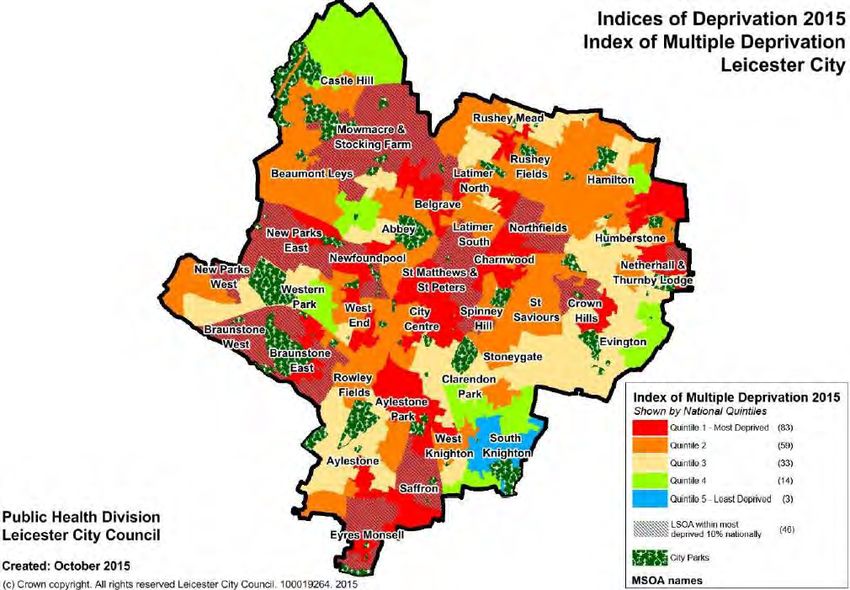
Executive Summary Our response
We are responding to the challenge of a growing and ageing
The opportunity
The strategy tells the story about how we intend to use our buildings
population, increasing service user expectations, and a period of to change the way we deliver healthcare services, in particular how we
This Estate Strategy is a key component of the Trust’s overall vision and
continued financial austerity. are planning the use of our estate to support the Trust’s Clinical
represents our plans for future development and transformation of the
Strategy.
estate in order to enhance the quality of the patient, visitor and staff The Estate Strategy has been developed in accordance with the process
experience. described by the DoH guidance ‘Developing an Estate Strategy’ and is It is made up of numerous elements of which a key foundation stone is
intended to be a focused and dynamic document that demonstrates the the reconfiguration programme and Development Control Plans which
It is presented in a way that answers three key questions:
Trusts commitment to providing an estate that is: will allow the Trust, subject to consultation, to transform 3 acute sites
which will in turn deliver the following benefits:
Where are we now?
Functionally suitable for the delivery of high quality healthcare
Configuration, performance and shortcomings of the estate in relation
services Immediate schemes supporting service delivery
to service strategies. Revenue savings
Located to provide the highest level of accessibility for patients,
Where do we want to be?
visitor and staff; that will be socially inclusive and Equality Act Reduction in outstanding backlog maintenance
compliant
Sustainable development
Describing the requirements to transform our estate to meet the
demands of the healthcare environment, which respond to local and
Designed and maintained to deliver a high quality clinical The disposal of part and re-use of the Leicester General Hospital
environment in spaces that are generic, flexible and future proofed
national priorities. Capital receipts.
How are we going to deliver the change?
Well utilised, cost effective, life-cycled and both energy and
environmentally efficient
Everything we do aims to put excellent healthcare at the heart
Recommendations and potential options to deliver the transformation of the community.
programme.
Provides an inclusive environment i.e. one that can be used by
everyone regardless of age, gender, ethnicity or disability.
The diagram below illustrates key components of each part of the
Estate Strategy:
Figure 1-Estate Strategy Components
4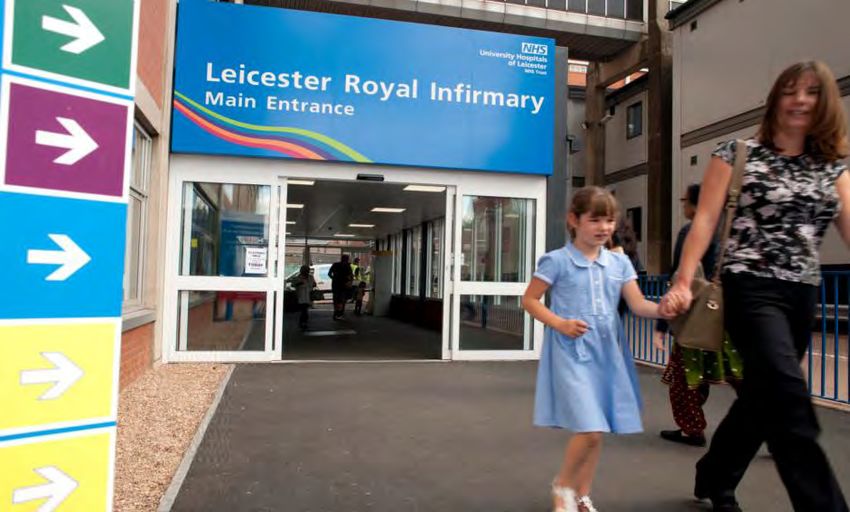
1 Introduction Why does the Trust need an Estate Strategy?
This Estate Strategy sets out how the Trust will maintain a fit for purpose
Methodology
This document follows the guidance recommended by NHS Estates in its
estate that enables delivery of high quality, safe and effective care, our publication “Developing an Estate Strategy” and has been written in
Welcome to the University Hospitals of Leicester NHS Trust
Clinical Strategy priorities and the organisation’s wider five year plans. collaboration with the Trust’s clinical directorates and support departments.
Estate Strategy.
This document sets out the Estate Strategy for the University Hospitals of This Estate Strategy has been developed to provide a framework, to advise The authors met with the clinical directorates to understand their specific
Leicester NHS Trust (the Trust), which comprises of 3 sites across Leicester, the Trust’s Board in considering estate investment and rationalisation needs arising from service development plans and subsequently developed
namely, Leicester Royal Infirmary (LRI), Glenfield Hospital (GH) and decisions and to support the delivery of the LLR STP. It provides a plan for the strategy with reference to the following documents:
Leicester General Hospital (LGH), together with a small number of satellite developing and managing the estate over the next five years and is
sites across the region. designed to meet the Trust’s service and business needs. 5 Year Financial Strategy - Financial recovery plan including
assumptions & high level long term financial model (LTFM) outputs,
Alignment with the Sustainable Transformation Plan The diagram below sets out the link between our enablers, including the 2nd November 2017
Aligning with the Trust’s vision and strategic objectives the existing estate Estate Strategy and our Clinical Strategy which in turn reflects our vision,
University Hospitals Leicester Clinical Strategy 2013/14 – 2018/19
will become more efficient, more specialised and better equipped to values, external and internal influences.
support LLR in delivering their STP priorities for the next five years, which 2016-17 Annual Report & Accounts
are: Delivering Caring at its Best – Our 5 year plan and 2016/17
priorities
Strand 1: New models of care
focused on prevention, Sustainable Development Management Plan – 2017
moderating demand growth Leicester, Leicestershire and Rutland Sustainability and
Strand 2: Service configuration Transformation Plan – November 2016.
to ensure clinical and financial
sustainability
Strand 3: Redesign pathways to
deliver improved outcomes for
patients and deliver core access
and quality standards
Strand 4: Operational
efficiencies
Figure 2-Illustration of Estate Strategy in context of wider Trust Policies
Strand 5: Getting the enablers
right.
Scope of the Estate Strategy
The scope of the Estate Strategy includes all of the estate we use to support
our services.
As a result, patients will have more of their care provided in the Ownership
community by integrated teams with the GP practice as the foundation of
Responsibility for the estate carries risk – risk of non-compliance with The Chief Executive, on behalf of The Trust, has responsibility for ensuring
care, and will only go to acute hospitals when they are acutely ill or for a
statutory regulations, Care Quality Commission (CQC) standards, and that there is an appropriate Estate Strategy approved by the Trust Board.
planned procedure that cannot be done in a community setting.
financial risks in relation to underutilised space, the management of backlog The Director of Estates and Facilities is responsible for an annual review of
maintenance, the risks associated with infrastructure capacity and the risks the strategy, and its implementation.
The Estate Strategy reflects the STP vision and objectives and provides a
associated with business continuity.
framework for the future management and development of the estate,
relative to clinical need, to support the reconfiguration ambition of
Managing these risks and meeting our statutory responsibility for
transforming our acute sites.
the management of the estate make the development of an Estate
Strategy essential.
5
2 Strategy Purpose 2.1 Developing the Strategy
The Estate Strategy has been
The Estate Strategy plays an important part in delivering the Trust vision
developed in accordance with the
to consistently deliver safe, personalised and efficient care, by prioritising
process described by the DoH
people, partnerships and productivity.
guidance ‘Developing an Estate
The Trust has identified the need for flexibility, changing property from Strategy’.
being a constraint to a driver and enabler for change, and in doing so the
The process asks 3 principal
Estate Strategy is based on consolidation of the estate, development of
questions in relation to The Trusts
new facilities, disposal of surplus land and buildings that will raise income
estate, set in the context of The
for the Trust.
Trusts objectives and service
The Estate Strategy: strategy, they are:
Underpins the strategic direction of the Trust Where are we now?
Supports the Clinical Strategy to improve patient pathways and Where do we want to be?
improve quality of care How do we get there?
Supports the outline and full business cases for the Reconfiguration
Programme
Shows a clear implementation programme over five years for The strategy is forward
transformation with tangible benefits looking, based on the
commissioning intent, national policy and the emerging
Helps to provide a safer and more attractive environment for direction for health and social care locally.
patients, visitors and staff
Develops a vision for future capital investment and potential
disinvestment Going forward an iterative process will need to be used to ensure
alignment, and where required data or plans will be reviewed to ensure
Supports local and national priorities and targets set by the
they remain current and relevant.
Department of Health (DoH)
Supports and works closely with our key partners and their
strategic plans within the city and across the region
Supports the implementation of new models of clinical care
Promotes education training and research
Facilitates income generation opportunities
Promotes environmental sustainability
Reduces backlog maintenance
Identifies opportunities for land disposals and development.
6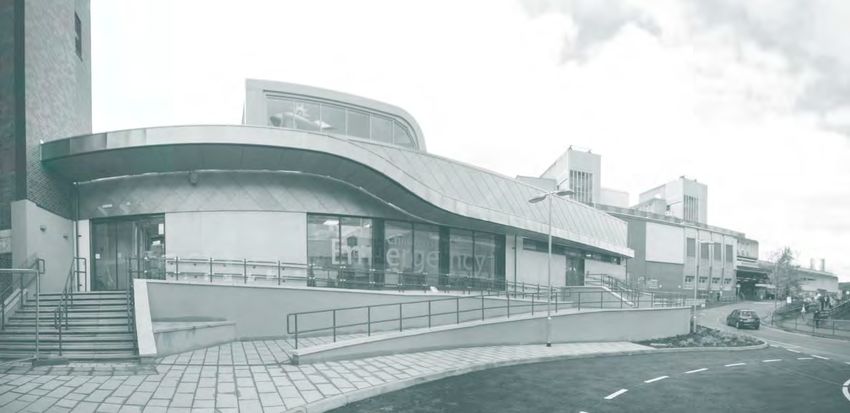
2.1.1 Estate Strategy Step by Step Through dialogue and engagement with key stakeholders, it has been Triangulation and Iteration: Keeping it aligned
possible to better understand the limitations posed by the current estate At each stage, reference is made to the supporting strategies and plans of
Where we are now? configuration and condition with the aim of developing potential solutions the Trust, to ensure we align the outcomes for maximum benefit. The
This initial stage is aimed at developing a comprehensive understanding of for improvement. Some of the underpinning strategies, aimed at setting Estate Strategy is designed to fit as part of a suite of documents, with
how well the current estate supports the delivery of services, using the future direction of clinical services are in the early stages of strong read across and avoiding duplication.
estates appraisal methods. For example: development, and as part of an iterative process these will be re-visited
and checked for alignment. An example of this would be ensuring the identified accommodation needs
What are the key metrics of the current Estate? for a particular clinical team align with the workforce plan, are affordable
The output from this stage is a schedule of key strategic aims and within the financial plan, and are underpinned by appropriate service lines
How well (or otherwise) is the Estate performing or managed?
developments for the Trust, focused on meeting the aims and objectives that support the identified priorities of The Trust.
What are the known risks and issues with the Estate? set out earlier. There should also be strong correlation to the Trusts vision
What are the quality indicators saying?
and values, its priorities and a direct correlation to addressing the areas Review Process
identified as requiring improvement in the initial assessment of the Throughout the development of the Estate Strategy, we review the
Describe the context of the current Estate current estate. position of reference data, the targets we develop and also ‘sense check’
How does the current estate limit or enhance the delivery of clinica l the emerging reconfiguration programme to ensure they are prudent,
services? How are we going to deliver the change? operationally sound and based upon firm foundations.
This final stage in the strategy development process takes the
information, data and output from previous stages to develop key It is essential that such key proposals are also discussed with senior
Where do we want to be? strategic themes and deliverables, which includes the capital investment colleagues and stakeholders, ensuring a shared understanding of the
This stage includes a detailed review of the known and anticipated service for the reconfiguration Development Control Plans, a rolling programme of drivers, priorities and rationale behind them.
plan changes, with the aim of developing a clear understanding of current estates improvements, and the formation of disinvestment opportunities.
operational issues, factors likely to drive change and investment in the
estate and assess the potential for service expansion or contraction in
terms of estate needs.
It also takes into account the Trust’s overall Clinical Strategy, financial
position and service requirements. Reference is taken from relevant
strategies, to ensure strong alignment and to avoid duplication.
It assumes an awareness of these supporting documents including:
Internal External
Clinical Strategy The Leicester, Leicestershire
& Rutland Sustainable and
Financial Strategy
Transformation Plan.
Workforce Strategy
LLR Primary Care Estates
Diagnostic Equipment Strategy
Strategy
LLR Council Corporate Plans
Sustainability Management
CCG Commissioning
Strategy
Strategies
Education / Organisational
LPT Estate Strategy
Development Strategy
Leicester City Council – ‘it’s
Information Management &
your city – how to shape the
Technology Plan (IM&T)
future of Leicester’
7
3 Strategic Overview
In 2016/17 the Trust over achieved against its Cost Improvement Health Research (NIHR) Biomedical Research Centre which supports key
Programme (CIP) of £35m through the following: research including lifestyle, diabetes, and cardio-respiratory diseases, and
for the first time the Trust has been successfully designated as an NIHR
3.1 Profile of The Trust Treating more patients via more productive theatres, outpatients Clinical Research Facility.
and beds
Our brand new space themed Children’s Research Facility officially opened
The Trust operates across three main sites; LRI, GH, LGH and a number Reducing the price paid for goods and services
on 28th June 2017 at LRI. The Research Space is a bright and welcoming
of small satellite sites across the region, and is the only acute Trust
Removing waste and eliminating unnecessary variation in our place, designed for children and young people.
serving the diverse local population of LLR; equating to approximately 1.1
patients’ pathways.
million residents.
Our patients are the most important thing to us and we are constantly
striving to improve the care they receive, through looking at the ways we Leicester’s Hospitals year at a glance – 2017
work, ensuring our staff are highly trained, and encouraging research
which allows us to offer our patients the latest technologies, techniques
and medicines - and attract and retain our enviable team of more than
15,000 highly skilled staff.
Headline facts:
Leicester City – population 348,343 (Source: Leicester(shire)
Rutland Statistics and Research)
Leicestershire County and Rutland – population 721,563 (Source:
Leicester(shire) Rutland Statistics and Research) Furthermore, the Trust is extremely proud to have an Experimental
Cancer Medicine Centre and the Hope Unit is an instrumental factor in
Total expenditure for year ending March 2017 (excluding the
delivering clinical trials of new cancer treatments, and is generously
impact of donated assets) – £966.3m actual
supported by the locally-based charity Hope Against Cancer.
The Trust has a gross internal area of 264,736m² across three
sites, LRI, GH and LGH. The Trust is providing access to cutting edge genetic medicine for our
patients by participating in the 100,000 Genomes Project. All of this
means that thousands of The Trust patients are amongst the first to try
Hospital Locations the latest medicines and techniques.
Figure 4– Hospital Locations Leicester’s Hospitals year at a glance –
Glenfield Hospital
2017 The heart centre at the Glenfield Hospital continues to lead the way in
Leicester General Hospital
developing new and innovative research and techniques, such as Trans-
Leicester Royal Infirmary
Catheter Aortic Valve Insertion (TAVI) and the use of the suture-less
Research & Development valve in heart surgery. It has also become one of the world’s busiest
The Trust is one of the biggest and busiest NHS Trusts in the country and ECMO centres and the only hospital in the UK to provide mobile ECMO
provides nationally and internationally-renowned specialist treatment and therapy for both adults and children.
services in cardio-respiratory diseases, extracorporeal membrane
oxygenation (ECMO), cancer, vascular and renal disorders to reach a
further two to three million patients from the rest of the country.
The Trust works closely with partners at the University of Leicester and De
Montfort University providing world-class teaching to nurture and develop
the next generation of doctors, nurses and other healthcare professionals,
many of whom go on to spend their working lives with the Trust.
The Trust continues to work with many different organisations throughout
the world to push the boundaries of research and develop new surgical
Figure 3-Hospital Locations
procedures for the benefit of our patients; with around 1,000 clinical trials
taking place every year, and is now home to a National Institute for
8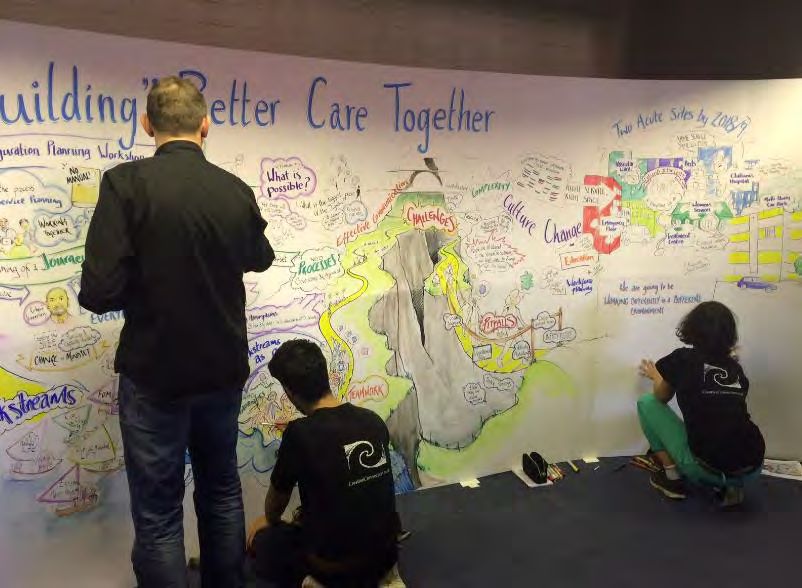
The Trust has one of the best vascular services nationally, with more The clinical management of the organisation is supported by the following
We do what we say we are going to do
patients surviving longer following an aneurysm repair. The move of the corporate directorates:
vascular service from the LRI to the GH provided new state of the art
facilities including a hybrid theatre, enabling the development of joint Corporate and Legal Affairs When we talk to patients and their relatives
we are clear about what is happening
working practices with cardiac surgery and cardiology to treat patients
Estates & Facilities
with complex cardiovascular disease. When we talk to colleagues we are clear
Finance and Business Services about what is expected.
The Trust is also proud to continue to have some of the lowest rates of
hospital-acquired infections, such as C.difficile and MRSA, in the country.
Human Resources (HR) We make the time to care
Information Management & Technology (IM&T) If we cannot do something, we will explain why.
East Midlands Congenital Heart Centre
Marketing and Communications
On the 30th November 2017 NHS England (NHSE) announced that the We focus on what matters most
threat to decommission heart services at the East Midlands Congenital Medical
Heart Centre (EMCHC) at GH had been lifted, meaning the centre will
continue to provide lifesaving surgery for children and adults in the Nursing We talk to patients, the public and colleagues
region. As part of the reconfiguration programme this service will move about what matters most to them and we do not
Operations
assume that we know best.
from the Glenfield Hospital to the Leicester Royal Infirmary.
Research & Development.
We do not put off making difficult decisions if
The decision came after a lengthy process to reorganise congenital heart
services in England after new standards of care were introduced in 2015,
Strategy. they are the right decisions
when NHSE had threatened to decommission heart surgery at the East We use money and resources responsibly.
Midlands Congenital Heart Centre (EMCHC) at GH.
‘Caring at its Best’ We are passionate and creative in our work
After a public consultation, NHSE bosses said they had changed their The Trust’s purpose is to provide ‘Caring at its best’ and staff have helped
minds but their decision was conditional on the hospital achieving "full
to create a set of values which are: We encourage and value other people’s ideas
compliance with the standards".
We seek inventive solutions to problems
Clinical Management We treat people how we would like to be treated
The Trust’s clinical management is structured into seven groups, with
We recognise people’s achievements and
celebrate success.
each group led by a Senior Consultant in the role of Director. The seven We listen to our patients and to our
Clinical Management Groups (CMG) are as follows: colleagues, we always treat them with dignity
and we respect their views and opinions
1. CHUGGS - Cancer, Haematology, Urology, Gastroenterology
We are always polite, honest and friendly
and Surgery
We are here to help and we make sure that Patients are at the heart of all that is done at The Trust. ‘Caring at its
2. ESM - Emergency and Specialist Medicine our patients and colleagues feel valued. Best’ is not just about the treatments and services provided but about
3. CSI – Clinical Supporting & Imaging giving patients the best possible experience.
4. ITAPS – Intensive Critical Care, Theatres, Anaesthesia, Pain and We are one team and we are best when we work together
Sleep
We are professional at all times
5. MSS - Musculoskeletal and Specialist Surgery
We set common goals and we take
6. RRC - Renal, Respiratory and Cardiac responsibility for our part in achieving them
7. W&C - Women’s and Children’s. We give clear feedback and make sure that
we communicate with one another effectively.
Each director has a clinical background, working within a clinical
environment as well as providing overall leadership for the CMG.
Alongside the director the CMG’s each have a head of nursing and a CMG
manager. Across the seven management groups there are fifteen core
service lines. Each of these is led by a clinician, senior nurse and
manager.
93.2 Delivering Caring at its Best The Trust Strategic Objectives for 2017/18 are outlined below: We will deliver financial stability as a consequence of the
priorities described here in order to make the Trust clinically
The Trust first published its Strategic Direction paper in November 2012
We will develop a sustainable workforce and financially sustainable in the long term.
plan, reflective of our local community which is
and following the publication of the ‘NHS 5 Year Forward View’ nationally
consistent with the STP in order to support new,
and work locally through the ‘Better Care Together’ programme and
integrated models of care. We will integrate the new model of
updated strategic direction was launched in 2015 setting out our plans for
care for frail order people with partners in
the coming 5 years. We will reduce our agency spend towards
the required cap in order to achieve the best other parts of health and social care in
use of our pay budget. order to create an end to end pathway for
Delivering Caring at its Best – Our 5 year plan 2016/17
frailty.
What we know is that now We will transform and deliver high quality
more than ever we cannot be a and affordable HR, OH and OD services in order to make them We will increase the support,
strong, sustainable, high ‘Fit for the Future’ education and specialist advice we offer to
quality acute Trust without partners to help manage more patients in
there being equally strong and the community (integrated teams) in order to prevent
unwarranted demand on our hospitals.
sustainable local primary care We will improve the experience of
and social care, in that sense medical students at the Trust through a We will form new relationships with primary care in order to
our future and our ability to targeted action plan in order to increase the enhance our joint working and improve its sustainability.
provide high quality care for numbers wanting to stay with the Trust
the 1.1m people living in the following their training and education.
richly diverse communities We will address speciality-specific Caring at its Best Awards
across the City and Counties is shortcomings in postgraduate medical The ‘Caring at its Best Awards’ reward our
interwoven with that of our education and trainee experience in order to make our services inspirational staff, those that live our values and
partners. a more attractive proposition for postgraduates. deserve recognition for their amazing success
We will develop a new 5 year Research Strategy with the and commitment to providing ‘Caring at its Best’.
Restricted by access to capital funding we have continued to deliver what
we can of our 5-year plan and ensure that it fits with the plans of partners University of Leicester in order to maximise the effectiveness of
our research partnership. Award winners are those staff members who
through the STP for the local area – what we call Better Care Together. demonstrate that they go the extra mile for
colleagues and patients. They will be working
We will progress our hospitals examples of our values in action and role models
reconfiguration and investment plans in of professionalism and courtesy, caring and
order to deliver our overall strategy to compassion.
concentrate emergency and specialist care
and protect elective work. We have six award categories which reflect our values and our aim, to
provide Caring at its Best. The five value categories allow staff to
We will make progress towards a
nominate colleagues for work and a positive caring attitude that goes
fully digital hospital (EPR) with user-friendly
above and beyond. The final category allows patients and the public to
systems in order to support safe, efficient and high quality
nominate a member of staff who has touched their lives and provided best
patient care.
care to them of their loved ones.
We will deliver the 2 year implementation plan for the ‘UHL
Way’ and engage in the development of the ‘LLR Way’ in order
to support our staff on the journey to transform servi ces.
We will review our Corporate Services in order to ensure we
have an effective and efficient support function focused on the
key priorities.
We will implement our Commercial Strategy, one agreed by the
Board, in order to exploit commercial opportunities available to
the Trust.
103.3 The financial challenge across As articulated in the November 2016 LLR STP, without developing new The next five years
ways of working the impact of increased demand creates a financial gap Over the next five years, LLR health services will need to adapt and
Leicester, Leicestershire & Rutland for health and social care of £399.3m. transform in order to ensure that they remain clinically and financially
sustainable.
Health and social care organisations throughout LLR face financial Of this healthcare accounts for £341.6m of the gap, whilst social
challenge, as demand and demographic growth for services out-strip the care gap equals to £57.7m over the same timeframe.
increased resources available year on year.
While there is an expectation in the health sector that the funding
available will rise by c. 2% each year, equating to an additional £200m
over the time of the STP, predictions for the growth in both cost and
demand range from 0.5% in some areas rising to 4.73% in more
specialist areas of medicine year on year.
The social care sector also faces similar challenges with demand in growth
matched to a flat or reducing level of funding available to support social
The LLR system has been aware of this continuing demand and increasing
care services.
resource gap for some years and has developed a number of plans to
mitigate this through the local transformation programme, known as the
Better Care Together.
Overall the impact of the growth on the system is primarily in acute and
specialised services. Solutions will be realised through investment in
community based services to deliver care in the most appropriate
settings. The STP sets out the actions that will need to be taken to balance the
pressures of continued growth in patient demand from an ageing and
CIP schemes already in place to deliver c. £175m of the required savings growing population, and a requirement to recover and maintain delivery
as articulated in the November 2016 LLR STP. against national access and quality standards.
This is necessary at a time of historically low levels of financial growth in
the NHS and substantial pressures on social care funding.
The single largest scheme in LLR is a programme of service redesign of
acute services to transform our acute sites.
This deals with both quality and workforce issues created by the
duplication of services over 2 or more sites. Once the acute
Figure 4-LLR Case for Change Model reconfiguration is complete the directly attributable cost saving from this
will be c. £25m each year.
113.4 Clinical Strategy The Clinical Strategy reflects the changes in population demographics, significantly strengthen its portfolio of other key services to ensure they
outlined in the Local Authority Joint Strategic Needs Assessment (JSNA), are sustainable in the future.
The Trust’s Clinical Strategy is focussed on delivering high-quality, patient placing the patient at the centre of service planning and design ensuring
that holistic patient centred care remains at the heart of everything we As a result of centralising and specialising services, the Trust will improve
centred services in the most appropriate setting with excellent clinical
do. For example services will be tailored to meet the challenges of a rising quality, safety and the hospital experience for patients from the time they
outcomes.
elderly population; ensuring integrated care is provided across primary, park their car to the moment they leave; will be recognised for low
community and social care. mortality rates, for low waiting times, excellent care, and will save money
by no longer supporting old, expensive and underutilised estate.
The Trust will work with partners to develop the infrastructure and
networks to offer expertise across the health community to ensure that
3.5 Our Workforce Strategy
care for the older person is as seamless as possible.
Recognising the challenges we face in developing sustainable, high quality
Financial Context
services, our developing workforce strategy will identify and set out a
People are living longer, and the NHS’s ability to treat and help manage
number of initiatives to be factored into the future shape of our Estate
conditions that were previously life-threatening continues to improve.
and are aligned to the ‘Caring at its Best’ corporate plan. These include:
Alongside this, the NHS faces a potential funding gap of around £30
Nursing staffing levels
billion by 2020/21 as articulated in the NHS Five Year Forward View
meaning that the NHS will need to radically transform the way it has Recruitment and retention of nursing and medical staff
traditionally provided care, to new and innovative models necessitating a
Training and Development Strategy
significant shift in activity and resource from the acute sector to the
community. Flexible Workforce and Flexible Working Options
7 day working
Across LLR this reflects a funding gap of £399.3m as articulated in the
November 2016 LLR STP. Sickness, Absence, health & Wellbeing
The Trust will meet its funding gap by working collaboratively with its LLR
Performance management.
Health and Social Care partners to re-design patient care pathways to
ensure that they continue to provide high quality care, outcomes and
patient experience whilst delivering value for money. The Trust has an on-
going operating deficit, in part related to the current configuration of its
clinical services, which do not optimise clinical adjacencies and patient
pathways.
The Trust’s reconfiguration programme will optimise where its services are
located as care pathways change to meet the financial challenge. The
methodology supporting the future location of services will be clinically
driven, evidence based, inclusive, open and transparent however will
necessitate tough decisions for the health community if it is to meet the
‘value for money’ test.
The model of clinical practice is to provide consultant delivered, rather
than consultant led, patient care. It will create a sustainable workforce for Regional Centres of Excellence
the delivery of responsive multi-disciplinary clinical services seven days a The Trust is proactively responding to the national drive towards fewer
week which meets the needs of patients and clinicians. regional centres of excellence for specialised services by ensuring its
services deliver innovative, high quality patient care through robust
It will seek to exploit opportunities for service integration across health Research and Development programmes which enable patients to benefit
and social care by removing the historical barriers to change. Training and from leading edge developments in the care of specific conditions and will
education will play an integral part in ensuring staff have the right skills specifically seek to ensure it remains as a national centre of excellence for
now and for the future. Training opportunities to support self-care in long- its work in Cardiac, Respiratory, Vascular, Renal, Cancer and Diabetes and
term condition management and carers will be explored.
123.6 Information Management and The use of information technology in the Trust will have a dramatic impact In 2016/17 we had funding from the Estates and Technology
in the way that clinical services are delivered and will contribute to Transformation Fund to deliver Electronic Record sharing.
Technology (IM&T) improvements in the quality of services provided.
The first phase of this project focused on determining a core dataset,
Well implemented and supported IM&T is no longer a back office function To compliment this a vision has been developed for IM&T which features working with all STP Clinical Workstreams, to identify an all-encompassing
and is critical for the effective delivery of healthcare services. of the following deliverables: dataset for care planning.
It is also a key enabler of the transformation agenda underway Our priorities for 2018/19 include further development of national
Electronic paper record (paperless out-patients as a minimum)
within the NHS.
solutions such as improvements in data sharing, improved systems access
Self-Check-In
for patients and greater interoperability between health and social care
IM&T play a major supporting role in the delivery of a number of key
strategic projects and programmes designed to improve the efficiency of Patient Calling system that enables patients to be called on their systems.
the Trust and deliver financial savings. smartphones
Our concrete actions for the future include:
Technology in PACH should be accessible to all staff and patients
Information technology will support the reconfiguration programme Shared access to paperless patient records at all clinical interfaces
through: Web based Outpatient, day case and day case viewer tracking across LLR to improve patient outcomes and support integrated
(patient pathway) working, alongside removing the use of paper.
The provision of VOIP (Voice over Internet Protocol) and Wi-Fi Electronic solutions to support non-face to face consultation
infrastructure into retained locations
Implementation of a comprehensive Electronic Patient Record
Electronic solutions that promote electronic clinic outcome letters within the Trust to improve quality and efficiency and facilitate
The provision of mobile devices and hot-desk facilities to support (GP and Patient) sharing of records across boundaries.
the transition to smaller premises and more versatile working
arrangements Clinic room utilisation and scheduling should be electronic and link Encourage patient empowerment to drive up the use of technology
with the outpatient tracker to support greater self-care, improvements in health and wellbeing
Ensuring the safety of paper records at bases being vacated and access to services, alongside developing alternatives to face to
Online Pre-Assessment Form / Consent / Education Material face consultations.
Facilitating physical moves with technicians on-site.
Integrated appointment Booking System/Waiting List Management Support independence of patients through the use of technologies
System (including a reminder service) that integrates with the such as telehealth and assistive technology.
outpatient and day case trackers.
Use real-time and historic data to support predictive modelling and
Theatres Management System improvements in clinical service delivery at the point off care and
e-Prescribing to support population health analysis and management for effective
commissioning.
Information reporting to ensure that the facility is utilised to
maximum efficiency, and the requisite security, connectivity and
IM&T play a major supporting role in the delivery of a number
infrastructure.
of key strategic projects and programmes designed to improve
the efficiency of the organisation and deliver financial savings.
IM&T across LLR Information Technology is a major driver for initiating change
To date the LLR community has focused on improving IM&T in four areas: within the organisation, with the capability to create business
advantage and enhance the effectiveness and efficiency of its
Sharing care records services.
We recognise that data is the key asset in the Trust for supporting both
Population data analysis
day to day clinical operations and the effective management of services System wide efficiencies which improve integrated working
and resources. Information technology is a major driver for initiating
Supporting STP workstreams.
change within the organisation, with the capability to create business
advantage and enhance the effectiveness and efficiency of its services.
Our Local Digital Road Map sets out our vision for the future both for IM&T
In order to harness the benefits from developing these major aspects of
that supports the delivery of care and using technology to support
IM&T it is important that developments in this area support the key
patients.
objectives and priorities, both clinical and business, of the Trust.
134 Our vision for the estate Objectives of the Estate Strategy
The core principles of the Estate Strategy are based upon it being both an
Health & Safety – the estate will provide a safe environment to
high standards of Health & Safety and statutory compliance
enabler and driver for change, supporting the delivery of current and Environmental – ensuring that our estate embraces the
The Trust’s vision for the future is to “provide, develop and future clinical services through the interpretation of the clinical and other sustainability agenda and that new developments and
associated Trust strategies.
maintain a more efficient, high quality, refurbishment projects employ sustainable methods and
techniques, making use of low and renewable energy sources and
sustainable and flexible estate which The objectives of this Estate Strategy are therefore to: improving the energy efficiency of the existing building stock where
meets the operational demands and feasible
objectives of the Trust today and in the Service Performance – a primary objective is to ensure that the Value for Money – ensuring that all estate and facilities provision
offers the best value for money
future” Trust estate supports, underpins and enables optimum operational
performance
Partnerships and stakeholders – working with our public sector
In five years we want to have an estate which is fit for purpose Quality of Estate – the Trust estate should be fit for purpose and partners and key stakeholders we will ensure we deliver a cohesive
and enables the delivery of high quality, safe clinical services to functionally suitable and with appropriate and effective approach to strategic estate management through our investment
our patients. maintenance arrangements to meet the required standards. and disinvestment programmes
This means an estate which is in good condition, functionally Enhancing the patient experience – to support clinical delivery Staff Welfare – the Trust will endeavour to provide, in all its
we aim to provide state of the art facilities that enable clinicia ns to estate provision, fit for purpose and cost-effective facilities and
suitable for the services being provided, provides a “healing
deliver treatment in a comfortable, caring, safe and uplifting amenities for staff.
environment”, is environmentally sustainable, accessible to local
environment, which enhances patient experience.
people and is designed around changing service needs. Capital receipts - assets are retained or disposed of according to
a plan that supports service delivery and enables business
Effectiveness – the estate will be utilised to its maximum and development opportunities, whilst also maximising cash receipts
have appropriate measures in place to ensure business resilience and thereby generating funds for investment.
and continuity
Equality and Diversity – the Trust estate must provide facilities
that are appropriate and respect the values of equality and
diversity to patients, staff, visitors and all others likely to use or
visit Trust premises
Images from an estate visioning workshop
145 Estates & Facilities Team manage, maintain and control the estate as
set out in this Estate Strategy.
Management of the Trust backlog
maintenance rolling programme and
infrastructure investment programme.
Estates & Facilities Structure
Director of The Director of Estates & Facilities is the
While the Chief Executive and the Trust Board carry ultimate responsibility principal advisor on all land, property, estate Providing strategic and operational
Estates and Head of Estates
for the safe and secure healthcare environment the diagram below and facilities development matters to the management of the estate (Hard FM services)
Facilities and Property
represents the professional approach adopted to enable the ongoing Executive Team and the Trust Board and is covering building and engineering, grounds
management of the Trust estate. supported by the Head of Service within the and gardens to all Trust premises.
Estates and Facilities structure.
The Figure below shows the high level structure of Estates & Facilities: Additionally providing a full facilities
HR Business Providing HR services and support estates management service to Leicester Partnership
Partner and facilities teams made up of circa 1700 NHS Trust and NHS Property Services
staff. Services include recruitment and property portfolio as a contracted service.
retention, disciplinary and grievance
processes, strategic workforce planning, Provision of estates technical auditing,
management of change and HR statistical monitoring and compliance with guidance and
performance management. regulations together with the estates and
facilities health and safety advice support and
Provides PA secretarial and administrative training to the team with fire training and
Office Manager
support to the senior management team and advice to the Trust as a whole.
and PA
manage the administration and business
support function for the estates and facilities Strategic management of the Trust’s estate
team. property portfolio including freehold and
leasehold management together with other
Provides strategic and operational specialist property advice including space
Head of utilisation and management, land and
Facilities management of the facilities teams (Soft FM
services) covering patient catering, domestic property disposal and acquisition, planning,
services, portering and logistics, postal valuations and dispute resolution.
services, switchboard, reception services,
customer service centre to all Trust premises. Head of Responsible for the management and delivery
Figure 5-High level structure of E&F
Business, of all commercial contracts relating to the
Additionally providing a full facilities Commercial delivery of the facilities management
management service to Leicester Partnership and Contracts functions.
A description of each roles is provided in the table below: NHS Trust and NHS Property Services
property portfolio as a contracted service. Provides financial management services in
Head of Finance
relation to the delivery of all estates and
Role Responsibilities Provision of facilities technical auditing, facilities management functions, covering all
The Trust Board has overall accountability for monitoring and compliance with guidance and pay and non-pay budgetary control,
Trust Board regulations.
all the activities of the organisation, which purchasing and invoicing.
includes the management and maintenance
of the Trusts estate and facilities. The Trust Head of Capital The delivery of strategic estate planning and All Staff It is the responsibility of all Trust employees and
Board delegates the responsibility for the Projects advice to support the reconfiguration other staff using the Trust’s premises to:
management and maintenance of the estate programme and STP programme and the
and facilities to the Chief Executive. development of business cases estates Recognise their duty under legislation to take
annexes. reasonable care for their own safety and the
safety of others at all times
Chief Executive
The Chief Executive has the ultimate
managerial responsibility for the Planning, design, procurement, delivery and Be familiar with all Trust and estates and
management and maintenance of the estate post project evaluation of major and minor facilities policies and procedures and
and facilities and delegates the operational capital projects and programmes. complete all statutory, mandatory and role
day to day responsibility and authority to the specific training.
Director of Estates & Facilities who will
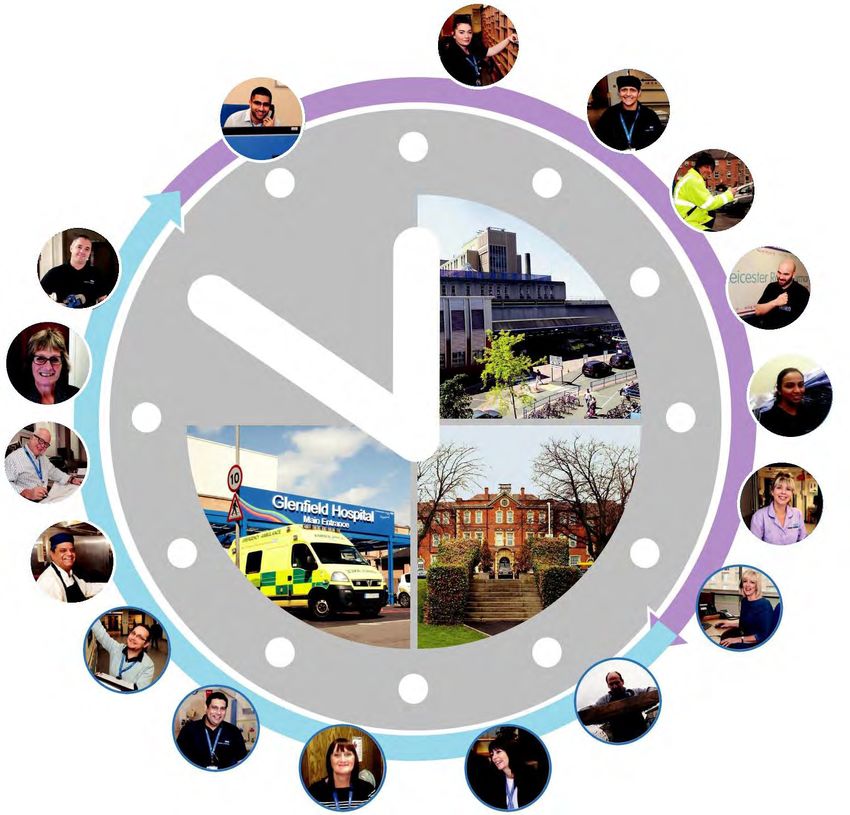
15What we do - Estates & Facilities is a 24 hour service
The operational front line services provided by the Estates and Facilities
team is wide ranging, accounting for 1,700 employees. Below is an
overview of the operational services provided and how our staff help
across Leicester, Leicestershire and Rutland:
Accommodation team - support relatives with on-site
accommodation at GH and look after our staff accommodation
across the city.
Retail Catering – manage our patient, visitor and staff
restaurants.
Porters – transport and patient logistics, including waste and
linen.
Cashiers - handle the money from retail catering and car parking.
Customer Service Advisors - record all work orders and requests
for relevant teams for action.
Post Rooms - sort and distribute the incoming and send out
letters for patient appointments and discharge information to GPs.
Auditors - monitor the cleaning around the hospitals to ensure
that the standards remain high at all times.
Patient Catering - organise and prepare the menus and meals for
patients. The meals are then distributed by the Food Assistants on
the wards.
Car Park Attendants - help visitors and patients on all sites, as
well as giving guidance and directions.
Linen - provide clean linen to the wards and supply staff with their
uniforms.
Domestic Assistants - work on the wards and around the hospital
to ensure the environment is clean and hygienic for patients and
staff.
Switchboard - our switchboard operators are the first point of
contact for patients and relatives ringing the hospital.
Gardeners - maintain the ground and gardens.
Receptionists - meet and greet visitors and help them to find the
right department or service.
Security - keep all the sites secure and help with any incidents
that may occur.
Maintenance - to keep everything going and fully functional,
anything from the bedside lamp to the freezers and lifts.
16Estates & Facilities Team Commitment There is a continual drive for improvements in our environmental
The Estates & Facilities team is committed to ensure a high quality estates performance, in particular energy and water consumption, waste
and facility service and effective estate maintenance systems are in place production and non-patient transport and the impact they have on
that ensures: the Trust’s carbon ‘footprint’.
Compliance in the development, occupation and management of all
The continuous provision of functionally suitable facilities for land and property, including acquisitions and disposals of freehold
healthcare provision creating a safe pleasant environment and leasehold land and premises.
internally and externally.
There is an effective estate and facilities risk management process
Maintenance of the integrity of the building fabric and building that reflects the principles within the Trust’s risk management
services, public health and utility systems, equipment and site strategy and gives assurance that Estates and Facilities risks are
infrastructure. being identified, proactively controlled and mitigated.
Minimal disruption to the Trust’s operations in the delivery of the
Estate & Facilities Service.
An efficient, responsive, comprehensive and effective service which
is based on sound technical and operational requirements in
compliance with codes and policies of good practice and i ndustry
and statutory standards.
All plant, equipment, buildings, utility services and site
infrastructure do not cause or create any hazard to the
environment and / or any person on the Trust site(s).
A safe environment and safe working practices including the use of
recognised risk assessment / management systems to ensure the
standards stay high, and that any slippage is recognised and
corrected.
Fire safety is maintained incorporating continual fire training, fi re
risk assessment and review.
Patients, staff and visitors perceive that the cleanliness, condition,
appearance, maintenance and privacy and dignity of the estate are
satisfactory.
NHS catering services provide adequate nutrition and hydration
through the choice of food and drinks for people to meet their
diverse needs.
Access and car parking arrangements meet the reasonable needs
of patients, staff and visitors and are effectively managed at all
times.
An effective management of accommodation including occupancy,
utilisation, leasing and licensing where appropriate and staff
residences.
A safe, effective portering service is provided that meets the needs
of patients, staff and visitors and the Trust, consistent with all
relevant guidance and legislation.
The telephony and switchboard service is provided efficiently,
professionally and courteously within agreed target response times.
17You can also read


