Case Notes IS REMOTE HEALTHCARE HERE TO STAY? - UK-FIRST NEXUS KEYHOLE HEART PROCEDURE - Royal Brompton Specialist ...
←
→
Page content transcription
If your browser does not render page correctly, please read the page content below
Case                                                                   UK-FIRST NEXUS KEYHOLE

Notes
                                                                             HEART PROCEDURE

                                                                        FLASH FREEZE TREATMENT
                                                                       FOR CHRONIC BRONCHITIS

                                                                            SLEEP AND COVID-19
Royal Brompton & Harefield Hospitals Specialist Care

IS REMOTE HEALTHCARE HERE TO STAY?

                                       News • Case Studies • Insight              Winter 2021
Welcome to the
                                   Winter 2021 edition
                                   of Case Notes
                                   Every day, private patients are referred
                                   to our hospitals for the exact same
                                   reason: to be seen by the world’s
                                   leading experts in heart and lung care.

   From our diagnostic specialists, to our doctors and nurses, every
   member of our multi-disciplinary team has dedicated themselves
   to a lifetime of advancement in this field. They’re the innovators
   and thought leaders.

   For example, we’re advancing minimally-invasive surgery and
   transcatheter procedures, where the heart and lungs can be accessed
   and treated through smaller access points than in traditional surgery.
   This leads to improved recovery and smaller, neater scars.

   In this edition of Case Notes, our consultant cardiologist, Dr Wajid
   Hussain, shares his views on the future of remote healthcare on
   page 4, and on page 8, read about our pioneering minimally invasive
   procedure to treat aortic arch disease with an innovative new stent.

   If you have any questions about our services, or would like to refer
   a patient, please get in touch. We’d be delighted to hear from you.

   David Shrimpton
   Managing director, RB&HH Specialist Care

T +44 (0)20 3131 0535 E privatepatients@rbht.nhs.uk www.rbhh-specialistcare.co.uk
Contents

         2
    What’s new?
                                            10
                                    Flash freeze treatment
                                    for chronic bronchitis

         4
 Is remote healthcare
      here to stay?

                                            12
                                    Sleep and COVID-19

         6
  New consultants

         7
   Research update

         8
UK-first Nexus keyhole                      14
  heart procedure                    Effectively tackling
                                      refractory angina

                                            16
                                      Social news feed

     4
new?
            What’s

ROYAL BROMPTON & HAREFIELD HOSPITALS SIGN
PARTNERSHIP WITH LEADING INDONESIAN HOSPITAL GROUP
Our hospitals have signed a memorandum of understanding (MoU) to establish
a strategic partnership with Mandaya Medical Group, one of the leading private
hospitals in Indonesia.
Under the agreement, our hospitals will provide a remote second opinion service to
Mandaya Medical Group patients, develop an education and training provision and
collaborate with Mandaya Medical Group to host joint events. In the longer term, the
partnership hopes to collaborate on establishing new cardiovascular services at the
new Mandaya Royal Hospital Puri.
The aim of the strategic partnership is to promote training and clinical practice to
enhance and empower clinical programmes for Mandaya Medical Group patients.
Our managing director, David Shrimpton, said: “Royal Brompton & Harefield
Hospitals are looking forward to working with colleagues at Mandaya Hospital
Group to build upon their specialised cardiac services. We foresee this being a
successful partnership between our two institutions.”
                                                                                                               Our managing director, David Shrimpton, signing the MoU.

                                                                                ROYAL BROMPTON HOSPITAL RANKED IN WORLD’S
                                                                                TOP TEN HOSPITALS FOR CARDIOLOGY
                                                                                A global survey among tens of thousands of medical professionals has identified
                                                                                Royal Brompton hospital in the top ten hospitals worldwide for cardiology.
                                                                                The ‘World's Best Specialized Hospitals 2021’ survey, published by American
         WORLD'S BEST                                                           weekly news magazine Newsweek, has ranked the world’s best hospitals in
                                                                                a number of specialised fields. Royal Brompton Hospital was ranked tenth in
        HEART HOSPITALS                                                         the cardiology listing, the only UK hospital to appear in the list’s top 50, with
                                                                                Harefield Hospital also rated in the top 200 - only 8 UK units in total achieved
                                                                                this milestone.
                                                                                Professor Mark Mason, medical director for Royal Brompton & Harefield NHS
                                                                                Foundation Trust, said: “Our Trust has long been a destination centre for
                                                                                professionals from around the globe and we have taught and continue to
                                                                                train some of the best and most talented clinicians in Europe and beyond.”

2 Royal Brompton & Harefield Hospitals Specialist Care Winter 2021 Case Notes
“I BECAME LIKE FAMILY”: RECOVERED
             NURSE THANKS HAREFIELD HOSPITAL FOR
             ‘INCREDIBLE’ CARE DURING COVID-19
             Maureen Clements was admitted to Harefield Hospital at
             the height of the COVID-19 pandemic.
             A senior nurse at Northwick Park Hospital, Maureen,
             contracted COVID-19 and was admitted to our hospital
             with respiratory failure.
             She later spent a month on Harefield Hospital’s Intensive
             Therapy Unit (ITU) and a further month on its wards, and
             has since spoken about her experience recovering from
             the virus and the care she received.
             “As a senior nurse I have been involved in delivering
             patient care for years as well as assessing nursing
             practice. I am absolutely blown away by the care I
             received and continue to get from Harefield Hospital.
             ‘Incredible’ is the only word,” she said.
             “The standard of care I received and standard of
             practice I witnessed was second to none. From the                                 Maureen Clements, senior nurse at Northwick Park Hospital, was
             moment I woke up to the moment I left, it didn’t falter.”                         admitted to Harefield Hospital at the height of the COVID-19 pandemic.

                                                                                   SPECIALIST CLINICS OPENED FOR PATIENTS
                                                                                   SUFFERING LONG-TERM EFFECTS OF COVID-19
                                                                                   Our hospitals have established innovative post-COVID-19 clinics
                                                                                   to help survivors of the virus with their long-term recovery.
                                                                                   As a specialist cardio-respiratory centre, with additional expertise
                                                                                   in intensive care, the Trust’s clinicians cared for some of the
                                                                                   sickest COVID patients with severe acute respiratory failure.
                                                                                   Many of these patients continue to experience long-term effects
                                                                                   after being discharged.
                                                                                   Dr Sundeep Kaul, who runs Harefield Hospital’s clinic, said:
                                                                                   “There are a whole host of issues that require attention in
                                                                                   post-COVID-19 patients, ranging from shortness of breath to
                                                                                   fatigue to joint problems. Many patients find their quality of life
                                                                                   is considerably impacted after recovering from the virus and
                                                                                   they struggle to carry out activities they used to do with ease,
                                                                                   such as driving or using a computer.
                                                                                   “Optimising a person’s health by assessing and treating
                                                                                   their whole body is one of the cornerstones of successful
                                                                                   high-quality, patient-centred healthcare and that’s what is
Vanessa Vyapooree, pictured, was treated at Royal Brompton Hospital for COVID-19
and received life support via extracorporeal membrane oxygenation (ECMO).          at the heart of this service.”

                                                                                        Royal Brompton & Harefield Hospitals Specialist Care Winter 2021 Case Notes 3
Is
                          remote
                         healthcare
                                               here to stay?
                  T  he COVID-19 pandemic has triggered a digital transformation in healthcare services.
                     From arranging appointments to monitoring patients, we have had to embrace new
                 technologies to continue providing care in challenging conditions. Our consultant cardiologist,
                  Dr Wajid Hussain, explains why we need to keep up the momentum in remote healthcare.

THE PANDEMIC HAS PROPELLED                                                                                 In April, NHS England urged all GP practices to
REMOTE HEALTHCARE FORWARD                                                                                  implement a total triage system. In a study of
                                                                                                           practices that had already implemented one of
Over the past decade, many customer-facing                                                                 the online triage systems (askmyGP) before the
industries have embraced digital transformation                                                            pandemic, it was found that the consultation rate
to improve the customer experience with their                                                              from 1 March to 6 July 2020 was largely similar
services, particularly self-service access and                                                             compared to the same period in 2019 (despite a
personalisation of services.                                                                               dip at the start of the March 2020 lockdown).
For example, we now have online retailers                                                                  This demonstrated that practices which had
that can cleverly use artificial intelligence to                                                           already implemented remote healthcare
recommend clothes in a style we’d love and a                                                               services were resilient to the dramatic changes
size most likely to fit us, saving us time to do                                                           brought about by the pandemic. Also, patients
more of the things we enjoy doing.                                                                         that were not technologically proficient could
However, healthcare services have unfortunately                                                            still seek care by calling the practices.
lagged behind. Whether it has been because                                                                 Trials of remote health monitoring services in
it was felt the cost of new technology was too                                                             a range of clinical care settings had also shown
high, not understanding how to use it, or simply                                                           benefits before the pandemic. This includes
just a reluctance to change current ways of                                                                a remote heart and lung disease monitoring
working, digitisation of healthcare services has                                                           service run by Norfolk Community Health
been slow and fragmented compared to other                                                                 and Care Trust, which enables patients to
industries. Until recently.                                                                                better manage their condition and access
From the way we socialise to the way we travel,         What’s more, nine in ten GPs have expressed that   heart failure nurses and consultants as needed.
the COVID-19 pandemic has greatly disrupted             they want to continue delivering consultations     Since the introduction of the service, the trust
our lives – including how we provide healthcare.        remotely after the pandemic has ended.             has reported a reduction in A&E admissions and
We rapidly embraced technology to help                                                                     bed days among high-dependency patients.
continue caring for our patients remotely to            RESULTS POINT TOWARDS BENEFITS                     Another study on a pioneering health technology
reduce the risk of disease transmission.                Although we have been successful in delivering     service that enables doctors to remotely monitor
According to NHS Digital, 57% of appointments           remote consultations (and this is in-line with     the health of patients living with dementia
in England were face-to-face compared to                the NHS Long Term Plan to offer digital-first      from home has shown a significant reduction
39% via telephone or video in September                 primary care), we may question whether this        in neuropsychiatric symptoms associated with
2020. This compares to September 2019,                  is the best solution for all patients, such as     the condition, such as anxiety and depression.
where 81% of appointments were face-to-face             those with complex needs. However, there is        Qualitative data from the study also highlighted that
and only 13% via telephone or video.                    mounting evidence of the benefits.                 the technology offered carers ‘peace of mind’.

4 Royal Brompton & Harefield Hospitals Specialist Care Winter 2021 Case Notes
TECHNOLOGY WILL HELP GET THE BALANCE RIGHT
We want patients to be at the centre of decision making about their health
and to deliver a service that is most convenient for them – ideally from the
safety and comfort of their own homes,” explains our consultant cardiologist,
Dr Wajid Hussain, who is also a member of the Remote Care Board for
NHSX – the digital arm of the NHS responsible for developing processes for
diagnosing, monitoring and caring for patients remotely.
“Integrating new technologies into our healthcare systems to help book
appointments, monitor and care for our patients remotely has great
potential to improve their physical and mental wellbeing. Patients with
chronic conditions don’t want to spend all their time at the GP clinic or                                Dr Wajid Hussain
hospital and digital tools can empower them to manage their condition,                                   Consultant cardiologist/cardiac
whilst enabling their healthcare team to continue delivering personalised                                electrophysiologist, chief clinical
care, efficiently.                                                                                       information officer for the Trust and
“However, we must also be mindful to see our patients when needed and                                    clinical director for digital health at the
new technologies, such as remote heart monitors, can help us decide when                                 Royal College of Physicians London
that is. In addition to medical devices, some consumer wearables are also
proving useful in assisting with diagnosis and is an area where we expect to                             Dr Hussain specialises in treating and managing
see quite dramatic growth soon. It is important for us to continue embracing                             arrhythmias especially atrial fibrillation.
technology as it will help us provide the best care for our patients.”
                                                                                                             We offer a range of remote heart
Dr Hussain is also the chief clinical information officer for our hospitals and is working across
services to make remote care more accessible for patients, such as screening patients for atrial             and lung consultation and diagnostic
fibrillation in community pharmacies using an innovative hand-held technology. Our hospitals                 options for our patients. To find out
are rapidly advancing digital tools to help improve patient care. Examples include helping                   more, or to refer a patient, please
patients with lung infections receive intravenous antibiotics and monitoring at home - avoiding              contact our customer services team
a two-week hospital stay, as well as piloting the ‘Patient Knows Best’ platform to help patients
                                                                                                             on +44 (0)20 3131 0535 or email
access all their medical records online.
                                                                                                             privatepatients@rbht.nhs.uk

                                                                                  Royal Brompton & Harefield Hospitals Specialist Care Winter 2021 Case Notes 5
OUR NEW
                                    CONSULTANTS
                   A      s one of Europe’s largest heart and lung centres, we attract some of the most talented
                          consultants from all over the world. Below are some of the newest members of our team.

                                Dr Robby Bajaj                                                            Dr Sabiha Gati
                                General practitioner                                                      Consultant Cardiologist

                                Wimpole Street                                                            Royal Brompton Hospital

                                Dr Robby Bajaj is a general practitioner                                 Dr Sabiha Gati is a consultant cardiologist
                                who has experience in all aspects of                                     at Royal Brompton Hospital and a senior
                                family medicine.                                                         honorary lecturer at the National Heart
                                                                                   and Lung Institute, Imperial College London.
        Dr Bajaj has an interest in preventative healthcare, using
        innovation and access to the best services and imaging.                    Dr Gati specialises in inherited cardiac conditions and works in
        He also has specialist interests in cardiology and dermatology.            the Cardiac Magnetic Resonance Unit. She is also the lead for
                                                                                   the sports cardiology service.
                                                                                   Dr Gati continues her work as a CRY (cardiac risk in the young)
                                                                                   cardiologist and is an active member of the CRY pre-participation
    Dr Ricardo José                                                                screening programme in athletes for the English Institute of
    Consultant in respiratory medicine                                             Sport, Lawn Tennis Association, Premier Football League and
                                                                                   Rugby Union.
    Royal Brompton Hospital

        Dr Ricardo José is a respiratory specialist with expertise in                                     Dr Wala Mattar
        acute and chronic respiratory infections and respiratory                                          Consultant general and
        disease associated with cancer. He has a special interest in
                                                                                                          interventional cardiologist
        respiratory disease in immunocompromised individuals and
        has a clinic dedicated to the management of respiratory
        infection and respiratory disease in patients with primary and                                    Harefield Hospital
        secondary immunodeficiency.
        His areas of expertise also include; respiratory infections                                       Dr Wala Mattar is a consultant cardiologist
        (acute, recurrent and chronic), bronchiectasis,                                                   with a subspecialty interest is in coronary
        immunodeficiencies, tuberculosis, primary fungal disease,                  and structural intervention and permanent pacemaker insertion.
        non-tuberculous mycobacteria, primary ciliary dyskensia and                Dr Mattar has specialist expertise in diagnosis and treatment
        pulmonary complications of cancer therapy.                                 of coronary artery disease, coronary artery intervention,
                                                                                   permanent pacemaker insertion, percutaneous patent
                                                                                   foramen ovale (PFO) closure and balloon aortic valvuloplasty.

                                Dr Philip Molyneaux
                                Consultant chest physician                                                Dr Deryk Waller
                                                                                                          General practitioner
                                Royal Brompton Hospital
                                                                                                          Wimpole Street
                                   Dr Philip Molyneaux is a consultant chest
                                   physician and is the director of the Clinical
                                                                                                           Dr Deryk Waller is a general practitioner
                                   Research Facility. He has a specialist
                                                                                                           who has special interests in preventative
        interest in interstitial lung disease and his further areas of
                                                                                                           medicine and occupational health, and has
        expertise include hypersensitivity pneumonitis and sarcoidosis.
                                                                                   become a respected leading doctor in this field. With Dr Robby
        He also manages pulmonary fibrosis and lung disease                        Bajaj, he has set up a clinic, with a view to providing high quality
        associated with systemic conditions such as rheumatoid                     patient-centred general practice, together with bespoke health
        arthritis, scleroderma and Wegener’s granulomatosis.                       screening tailored to an individual patient’s requirements.

6 Royal Brompton & Harefield Hospitals Specialist Care Winter 2021 Case Notes
Research
                    update
‘SIMPLE’ INNOVATION TO VENTILATORS COULD INCREASE OXYGEN SUPPLIES AT HOSPITALS

  A ‘simple’ modification of domiciliary           Additional oxygen is often added into the             Describing what the findings could mean in
  non-invasive ventilators could significantly     circuit of ventilation machines through an            light of the COVID-19 pandemic, Professor
  reduce oxygen consumption by hospitals           oxygen inlet connected to an oxygen source            Michael Polkey, consultant chest physician at
  treating COVID-19-related respiratory failure,   (in a hospital setting, this is typically a central   Royal Brompton Hospital and one of the lead
  a study by engineering and medical specialists   reservoir). However, not all of the oxygen that       authors of the study, said:
  at Royal Brompton Hospital has found.            is delivered to patients on ventilatory support       “One of the problems of COVID is that
  Domiciliary ventilation is commonly used         goes into the patient. While the oxygen is            patients sometimes require large quantities
  as a non-invasive way to help patients with      used when they breathe in (the inspiration            of oxygen. This relatively simple modification
  chronic respiratory conditions breathe           phase), when they breathe out (the expiration         of two standard, commonly used domiciliary
  while they sleep.                                phase) much of the oxygen is released back            ventilators presents a possible solution to
                                                   into the atmosphere, which can result in a            shortages in medical-oxygen supplies that
                                                   large amount of wasted oxygen.                        have overwhelmed some hospitals in their
                                                                                                         fight against COVID-19.

                                                                                   TRUST RESEARCH SHOWS LINK BETWEEN
                                                                                   BLOOD VESSEL DISEASE AND SEVERE COVID-19

                                                                                       Research published in the American Journal of Respiratory
                                                                                       and Critical Care Medicine has shown clinical observations,
                                                                                       imaging tests and point-of-care blood tests are all important
                                                                                       indicators of pulmonary angiopathy (blood vessel disease) in
                                                                                       COVID-19 and could help determine disease severity.
                                                                                       Preliminary results released earlier in the year from the
                                                                                       Trust’s critical care service established a clear link between
                                                                                       COVID-19 and blood clotting, by using hi-tech CT scans
                                                                                       to take images of lung function in patients most seriously
                                                                                       affected by the disease. Results found that all of those tested
                                                                                       suffered a lack of blood flow, suggesting clotting within the
                                                                                       small vessels in the lung.
                                                                                       The research examined 39 patients with COVID-19 induced
                                                                                       respiratory failure, who were either mechanically ventilated
                                                                                       or put on extracorporeal membrane oxygenation and had
                                                                                       undergone CT pulmonary angiography, including where
                                                                                       feasible, DECT (hi-tech imaging scans).

                                                                               Royal Brompton & Harefield Hospitals Specialist Care Winter 2021 Case Notes 7
Our team completes                                                                                           A NEW MINIMALLY
                                                                                                             INVASIVE APPROACH

UK-first
                                                                                                             A 78-year-old patient was recently referred to
                                                                                                             our centre for an elective procedure to repair
                                                                                                             her aortic arch aneurysm. However, as she was

 procedure
                                                                                                             in too frail a condition to perform a standard
                                                                                                             open-heart surgery, the cardiology team at
                                                                                                             Royal Brompton Hospital trialled a new minimally
                                                                                                             invasive endovascular approach to treat her.
                                                                                                             The team, led by consultant interventional
                                                                                                             cardiologist Professor Christoph Nienaber and

  to treat aortic aneurysm                                                                                   consultant cardiac surgeon Mr Ulrich Rosendahl,
                                                                                                             operated on the patient’s heart in the hospital’s
                                                                                                             state-of-the-art hybrid operating theatre –
                                                                                                             a traditional operating theatre but with the
                                                                                                             imaging capabilities of a catheter laboratory.
                                                       A SILENT CONDITION WITH

O
                                                                                                             In the first stage of the surgery, consultant
      ur cardiology team                               POTENTIALLY FATAL OUTCOMES
                                                                                                             vascular surgeon Mr Maziar Mireskandari
      has performed a                                  An aortic arch aneurysm often develops slowly
                                                       without symptoms but can lead to an aortic
                                                                                                             performed a ‘crossover bypass’ surgery, which is
                                                                                                             a procedure used to maintain blood flow to the
pioneering minimally                                   dissection if it becomes particularly large.          patient’s brain and prevent a stroke – one of the
invasive procedure                                     Aortic dissections can be life-threatening and
                                                       require emergency intervention, with chances
                                                                                                             main problems associated with keyhole surgery
                                                                                                             for the aorta.
to correct an aortic                                   of survival as low as 50% and patients aged
                                                                                                             In the second stage, two custom-sized Nexus™
arch aneurysm using                                    50-65 most at risk.
                                                                                                             stent components, were inserted into the aortic
a custom-made stent,                                   Lifestyle and medical treatments are the first
                                                       line of therapy for an aortic arch aneurysm,
                                                                                                             arch using keyhole surgery through the patient’s
                                                                                                             groin artery to repair the aneurysm and prevent
avoiding the need for                                  but an elective surgical intervention may be          dissection. The multi-part stents are custom
open-heart surgery.                                    recommended to prevent a dissection. Typically,
                                                       this involves an open-heart procedure to replace
                                                                                                             prepared for each patient and inserted and fitted
                                                                                                             together within the aortic arch using imaging to
                                                       all or part of the ascending aorta and a long         guide the process. Due to the minimally invasive
                                                       hospital stay. Although the operative risk for        nature of the procedure, the patient was able to
                                                       this elective procedure is low and can greatly        leave her bed very quickly and was discharged
                                                       improve 5-year survival, it may not be suitable for   within a few days, with her recovery time
                                                       high risk patients, such as those that are elderly.   reduced from several weeks.

8 Royal Brompton & Harefield Hospitals Specialist Care Winter 2021 Case Notes
SUCCESSFUL UK-FIRST
Our team were the first to use
this stent on a patient in the UK,
and the first to treat an aneurysm
encompassing the entire aortic arch by
combining crossover bypass surgery
with keyhole surgery. Aortic arch
aneurysm
Professor Nienaber said: “We’re
delighted that this combined B
procedure went so well and achieved
such a terrific result for our patient. It
took careful planning and was made
possible through a highly skilled,
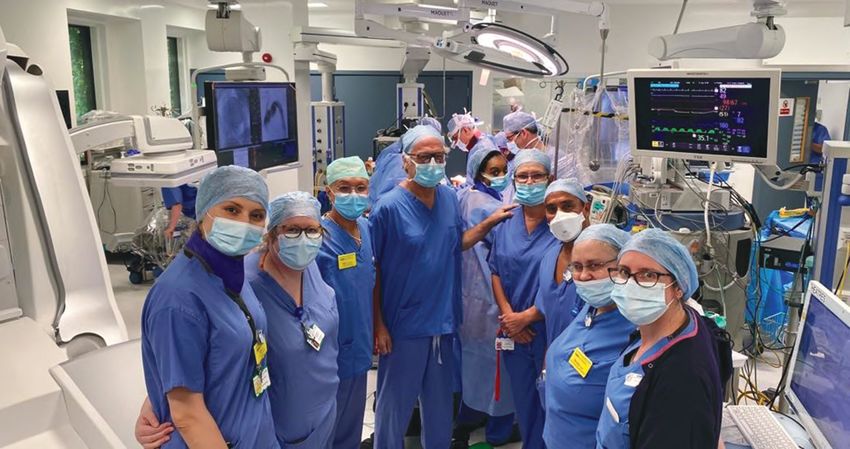
multidisciplinary team, involving
surgeons, anaesthetists, radiologists
and cardiologists and lots of supportive
team spirit.
“We’re proud to be the first in the UK
to complete this pioneering procedure
and look forward to establishing this C
innovative technique at the Trust so
more patients can benefit.”
The Nexus™ Stent Graft System (B)
transforms a complex open-heart surgery
to repair an aortic arch aneurysm (A)
into a standard minimally invasive
endovascular procedure. The multi-part
stent is customised to fit each individual
patient optimally and is the first branched
endovascular system to treat Aortic
Arch Disease. A CT scan (C) shows the
patient’s aortic arch aneurysm before the
procedure and a 3D CT scan (D) shows
the stent placed in the patient’s aortic arch. A D
Mr Maziar Mireskandari Professor Christoph Nienaber Mr Ulrich Rosendahl
Consultant vascular surgeon Consultant cardiologist Consultant cardiac surgeon
Mr Mireskandari specialises in vascular surgery Professor Nienaber specialises in the Mr Rosendahl specialises in surgical repair or
including minimally invasive surgery for complex diagnosis and interventional treatment replacement of heart valves and the aorta.
aortic disease. of aortic pathologies.
To find out more about our minimally invasive techniques to repair an aortic arch aneurysm, or to refer a patient,
please contact the customer services team on +44 (0)20 3131 0535 or email privatepatients@rbht.nhs.uk
Royal Brompton & Harefield Hospitals Specialist Care Winter 2021 Case Notes 9‘FLASH
FREEZE’
lung procedure gives hope to
chronic bronchitis patients
A 30-MINUTE ‘flash freeze’
lung procedure
can improve symptoms in patients with chronic bronchitis,
according to a recent study led by our consultant respiratory
physician, Professor Pallav Shah.
NO EFFECTIVE TREATMENT CURRENTLY AVAILABLE PROMISING INITIAL RESULTS
Chronic obstructive pulmonary disease (COPD) affects an estimated A prospective safety and feasibility study led by our consultant
1.2 million people in the UK, with up to a third of those with the condition respiratory physician, Professor Pallav Shah, has shown positive
experiencing chronic bronchitis. outcomes.
Unlike acute bronchitis, the chronic form of the condition can last up to For the study, 35 patients with chronic bronchitis were recruited to
three months and is characterised by a long-term productive cough, a undergo the cryospray (RejuvenAir) treatment on three separate
rapid decline in lung function and increased hospitalisations. occasions (every four to six weeks).
In addition, chronic bronchitis can greatly reduce quality of life, with Following treatment, there were clinically significant patient-reported
patients avoiding social situations and activities they enjoy, as well as outcomes reported (the primary outcome of the study) and no
reducing life expectancy in those affected. serious device-related adverse events, demonstrating the safety of
the procedure.
Current treatments available, such as bronchodilators and steroids,
can help relieve symptoms by thinning mucus and opening the “As there are no available medical treatments for chronic bronchitis
airways. However, none can stop or reverse the airway metaplasia with persistent sputum production, these early findings bring hope
and hypersecretion of mucus that is common in chronic bronchitis. to the many patients affected with the debilitating symptoms of this
condition,” said Professor Shah.
“We are due to start a more detailed clinical study with the liquid
nitrogen cryospray (RejuvenAir) treatment, which will hopefully add
more evidence of improved outcomes in these patients.”
The prospective clinical study was conducted in collaboration
with Chelsea and Westminster Hospital NHS Foundation Trust and
the University Medical Centre Groningen in the Netherlands, and
was funded by CSA Medical, the company that manufacturers the
RejuvenAir System.
Chronic bronchitis may lead to inflammation of the airway lining,
excess mucus production and damage to the cilia.
10 Royal Brompton & Harefield Hospitals Specialist Care Winter 2021 Case NotesA NOVEL APPROACH HOW REJUVENAIR WORKS
The RejuvenAir System offers a
®
new approach to treat the underlying Mucus hypersecretion
cause of chronic bronchitis. It enables Damaged cilia
clinicians to deliver small, metred
doses of cryogen spray at -196°C
directly to the diseased epithelium
of the respiratory tract during a
bronchoscopy procedure.
The minimally invasive procedure,
which takes around 30 minutes under
Overabundant goblet cells
general anaesthetic, instantly kills
diseased ciliated epithelial and goblet
cells which are overabundant in chronic
bronchitis, whilst preserving the
extracellular stem cells of the airways.
New healthy cells, including cilia and
goblet cells, then repopulate the
airways within a few days, with limited
scarring. Following this regeneration of
the airway epithelium, it is expected that
patients will experience improvement -196°C flash freeze Preservation of Intact ECM enables healing with
in their cough and breathing. causes instant cell death extracellular matrix (ECM) limited scarring and fibrosis
Professor Pallav Shah
Consultant physician in respiratory medicine
Renowned for interventional bronchoscopy and applying it to respiratory medicine,
Professor Pallav Shah has pioneered a number of novel procedures for treating lung diseases.
To find out more about the lung conditions we treat, or to refer a patient,
please contact our customer services team on +44 (0)20 3131 0535 or
email privatepatients@rbht.nhs.uk
All images used with permission from CSA Medical. Royal Brompton & Harefield Hospitals Specialist Care Winter 2021 Case Notes 11TROUBLE
DISRUPTION TO DAILY LIFE
Following the global outbreak of COVID-19 in December
2019 and widespread national lockdowns, a unique and highly
SLEEPING
stressful situation has developed for many worldwide.
Having to work from home, tackling challenging new family
dynamics and drastically reducing our social interactions, as well
DURING THE
as the ongoing anxieties around the health risks of COVID-19 and
financial uncertainty, have all had a major impact not only on our
day-to-day functioning but also on our sleep at night.
As sleep plays a key role in our mental wellbeing, physical health,
PANDEMIC
work performance, and emotion regulation, sleep disturbance
can have direct consequences on daytime functioning. Recent
surveys of the impact of COVID-19 on sleep found that 70% of
respondents reported changes in their sleep patterns since the
pandemic began and younger people were significantly more
likely to report experiencing changes in their sleep.
S
“Recognising and treating sleep problems can help individuals
leep is vital for our mental and physical wellbeing,
cope better with the anxiety and stress brought about
but with the COVID-19 pandemic continuing to by lockdowns and may also have important impacts on
disrupt the way we live and most importantly, our physical health and immune function,” says Dr Alanna Hare,
consultant physician in respiratory and sleep medicine at
routines, it also continues to disrupt our patients’ sleep. Royal Brompton & Harefield Hospitals Specialist Care.
Our sleep expert provides a guide on how to manage
sleeping problems when they arise.
12 Royal Brompton & Harefield Hospitals Specialist Care Winter 2021 Case NotesDIRECT EFFECTS OF INVESTIGATING AND
COVID-19 ON SLEEP DIAGNOSING SLEEP DISORDERS
Beyond the impacts of lockdown on sleep and the
DURING THE PANDEMIC
indirect impacts of the virus, such as anxiety and Since the COVID-19 outbreak, most sleep to provide home testing. This includes the
stress, the virus itself may also have direct impacts services have adapted diagnostic and diagnosis of sleep apnoea and other sleep-
on sleep. Although the respiratory manifestations treatment options available to patients to related breathing disorders, and wearable
of COVID-19 have been well described, emerging support remote consultations. The use devices to aid diagnosis of sleep-wake
evidence suggests COVID-19 has neurologic of pre-screening questionnaires provides rhythm disorders.
consequences as well. an assessment of someone ahead of a
For individuals newly diagnosed with
telephone or video consultation.
The most common neurologic symptoms sleep apnoea, remote CPAP (continuous
in COVID-19 are anosmia, loss of taste and Sleep diaries are helpful, particularly where positive airway pressure) set up, with
headache, but other symptoms such as stroke, insomnia, behaviourally insufficient sleep or video assistance from an expert team of
impaired consciousness, and seizure have also sleep-wake cycle disorders are suspected. physiologists, enables rapid adjustment to
been described. Other methods, such as using smartphone the device and consultant-led support.
apps to record snoring and video recording
Sleep dysfunction is common in patients admitted For individuals newly diagnosed with
of sleep behaviours by bed partners can also
to an intensive care unit (ICU) under normal insomnia, Dr Hare is trained in CBTi and
help. Having the bed partner present during
circumstances but seems to be more severe in provides a personalised programme of
a remote consultation can also provide vital
COVID-19 ICU patients. Whether these patients care for each patient. She also offers
collateral history.
will later develop persistent insomnia remains to remote consultations to treat patients
be studied. There is also a suggestion that there At the Royal Brompton Hospital, the sleep safely from home.
may be an increased prevalence of obstructive department has established safe systems
sleep apnoea in COVID-19 patients.
MANAGING INSOMNIA DURING COVID-19
Fortunately, for most people insomnia will be a
temporary condition. It is important for individuals to
focus on maintaining good sleep habits and a regular
sleep and wake schedule, avoiding daytime naps and
spending a prolonged time in bed.
Caffeine should be avoided for the six hours before bed
and it is particularly important to continue to get regular
exercise and daylight exposure each day. Physical
activity, including walking, has been demonstrated to
be associated with improved sleep outcomes for both
healthy people and those with insomnia.
Electronic devices such as mobile phones and laptops
can significantly disrupt sleep. To prevent this, people
should use a low blue light filter or blue light glasses Dr Alanna Hare
during the evening and try to stop using the device at
Consultant physician in respiratory and sleep medicine
least an hour before bed.
Chronic insomnia, defined as difficulty establishing or Dr Hare specialises in sleep disorders, respiratory failure and
maintaining sleep on more than 3 nights a week for domiciliary ventilation.
more than 3 months, with daytime consequences of
the sleep disturbance, is best managed with a
conventional cognitive behavioural therapy (CBT-I)
approach. This treatment is based on sleep diaries To find out more about our sleep services, or
and personalised sleep restriction as well as cognitive to refer a patient, please contact the customer
strategies which aim to identify and address sleep
services team on +44 (0)20 3131 0535 or
related dysfunctional thinking.
email privatepatients@rbht.nhs.uk
Cases of acute insomnia can also respond well to CBT-I,
providing sleep hygiene advice and sleep education.
Royal Brompton & Harefield Hospitals Specialist Care Winter 2021 Case Notes 13Effectively
tackling refractory
P ain caused by refractory angina can
be reduced by new therapies available
at our hospitals, which help to increase
myocardial perfusion and reduce the
psychological impact of the condition.
angina
WHAT IS REFRACTORY ANGINA? A DIFFICULT DIAGNOSIS
Angina is characterised by chest pain caused by reduced Diagnosis is challenging and requires extensive investigation
blood flow to the myocardium which results from coronary tailored to the patient’s symptoms. Due to this, the exact
artery disease. Despite great advances in medical therapies number of patients with true refractory angina is unknown.
and myocardial revascularisation procedures to treat angina,
However, estimates suggest that there are 30,000-50,000
there are a growing number of patients in whom these
new cases each year in Europe and between 600,000 and
conventional treatments remain ineffective. These patients
1.8 million patients living with refractory angina in the United
have what is termed, ‘refractory angina’.
States alone. Additionally, the clinical burden is growing due
Patients are diagnosed with refractory angina when they have to an ageing population and improved survival from coronary
experienced chronic angina-type chest pain for 3 months or artery disease, as well as conditions such as diabetes which
more despite optimal treatment with medication, stents and/ can impair small blood vessels of the heart.
or coronary artery bypass surgery.
Patients with refractory angina have significantly impaired
This could, for example, be due to the patient having very quality of life with a high incidence of depression as well as
diffuse arterial disease where the arteries are too small to poor self-perceived health status. Coupled with evidence
treat with conventional stents and/or functional disorders of that it is not associated with an increased long-term mortality,
the arteries where they have become compressed or unable treatments targeted at improving the symptoms and quality
to dilate, reducing blood flow to the myocardium. of life of this challenging patient population is key.
WHEN TO REFER A PATIENT
Chronic angina-type chest History of coronary artery disease. Pain associated with reversible ischaemia
pain for 3 months or more. that remains despite optimal medical
therapy, or angioplasty or bypass surgery.
14 Royal Brompton & Harefield Hospitals Specialist Care Winter 2021 Case NotesFORTUNATELY, TREATMENTS ARE AVAILABLE
Our specialist centre is only one of three in the UK that can accurately diagnose and treat refractory angina using the two main approaches to treatment.
TREATMENT: TREATMENT:
CORONARY SINUS REDUCTION COGNITIVE BEHAVIOURAL THERAPY PROGRAMME
The Neovasc Reducer™, a stent shaped like an hourglass, Randomised controlled trials have unfortunately shown
is used to create a narrowing in the coronary sinus. that pharmacological therapies do not significantly improve
This narrowing increases pressure in these veins to help symptoms and the quality of life of patients with refractory
re-distribute oxygenated blood to ischaemic areas of the heart. angina. However, cognitive behavioural therapy to assist with
self-management of symptoms and challenging negative health
“It is a quick, safe and minimally invasive procedure
beliefs can improve patient quality of life substantially.
that takes approximately 20 minutes to complete, with
patients often discharged within 24 hours,” explains our It has been shown to:
consultant interventional cardiologist, Dr Ranil de Silva. —— improve psychological wellbeing, including
“We are pleased to say that we see a response rate in anxiety and depression
three out of four patients, whereby symptoms of angina —— reduce symptoms to three episodes of angina
and their quality of life significantly improve after treatment.” or fewer per week
—— reduce glycerol trinitrate use
—— improve functional status, including a reduced physical
limitation score and increased daily walking.
“The programme is delivered by our nurse specialists and
clinical psychologists as part of an ongoing interaction with
each patient to help improve their quality of life. We also
have Skype consultations available to prevent patients from
travelling long distances,” explains Dr de Silva.
The Neovasc Reducer™ that is roughly the size of a 10p coin. The Neovasc
Reducer™ System is a trademark of Neovasc Inc. All rights reserved.
Dr Ranil de Silva
Consultant interventional cardiologist
Dr de Silva specialises in coronary angioplasty
procedures and intracoronary imaging.
To find out more about how we treat refractory angina,
or to refer a patient, please contact the customer
services team on +44 (0)20 3131 0535 or email
Three-dimensional reconstruction of a cardiac CT showing the correct
positioning of the reducer in the coronary sinus. privatepatients@rbht.nhs.uk
Royal Brompton & Harefield Hospitals Specialist Care Winter 2021 Case Notes 15Social
news feed
You can keep up to date with all our latest
news by following our social media pages
on Facebook, Twitter and LinkedIn.
Our team have been awarded
Our consultant cardiologist Trust-led atrial fibrillation research funding by RB&HH Charity
Dr Wei Li is celebrated in A study led by the Trust found that Our members of staff have successfully
NHLI academic promotions catheter ablation for long-standing been awarded funding from the Royal
Congratulations to Dr Wei Li, consultant persistent atrial fibrillation offers similar Brompton and Harefield Hospitals Charity
cardiologist at Royal Brompton & clinical improvements to surgical ablation. to conduct research.
Harefield NHS Foundation Trust, who has The competition, now in its second year,
been promoted to Professor of Practice Read more on funds non-medical health professionals
for adult congenital heart disease and to undertake up to 12 months of research
echocardiography in the Imperial College in order to develop their research skills,
London NHLI 2020 academic promotions. produce data and apply for further funding.
Read more on Read more on
Trust study shows nitric oxide may help
patients with COVID-19 pneumonia
A Trust study shows inhaled nitric oxide may
help patients with COVID-19 pneumonia. Our COVID-19 response
The study, the largest of its kind worldwide, Will you give a gift? There are just a few
New Arrythmia Alliance Heart Rhythm was led at by Dr Laura Price, consultant days left of the The Big Give Christmas
Congress Programme Director physician for pulmonary hypertension, Challenge, which will match any gift
and by Dr Benjamin Garfield, consultant given to our friends at Royal Brompton
Congratulations Dr Shouvik Haldar! As well
in critical care. It has shown that inhaled & Harefield Hospitals Charity before
as being our resident consultant cardiologist
nitric oxide (iNO) given to patients with Tuesday 8th December. Your gift will help
and electrophysiologist, he is now the new
severe COVID-19 pneumonia, significantly many heart and lung patients for years to
Arrythmia Alliance Heart Rhythm Congress
improves oxygen levels. come. #ChristmasChallenge2020
Programme Director.
Read more on Read more on Read more on
16 Royal Brompton & Harefield Hospitals Specialist Care Winter 2021 Case NotesHelping your
patients get a
good night’s sleep
Sleep is vital to your patient’s mental and physical health.
Yet up to a third of UK adults may be affected by sleep
problems, with many undiagnosed.
We have over 20 years’ experience in assessing and treating
a range of respiratory and intrinsic sleep disorders, including:
– sleep apnoea
– troublesome snoring
– insomnia
– restless legs.
We offer convenient, affordable, rapid assessments:
Home sleep studies, Remote consultations available Test results reviewed Sleep services offered
starting from £581 with our sleep experts* within one week† across all three sites
Harefield Hospital | Royal Brompton Hospital | 77 Wimpole Street
To find out more, or to refer a patient to one of our sleep clinics, please contact the customer
services team on +44 (0)20 3131 0535 or email privatepatients@rbht.nhs.uk
In-person consultations are also available if a patient chooses. †For a home sleep study at 77 Wimple Street
*Royal Brompton & Harefield Hospitals Specialist Care T. +44 (0)20 3131 0535 E. privatepatients@rbht.nhs.uk www.rbhh-specialistcare.co.uk Royal Brompton Hospital Harefield Hospital Royal Brompton & Harefield Sydney Street, Hill End Road, Hospitals Specialist Care Chelsea, Harefield, 77 Wimpole Street, London SW3 6NP, Uxbridge UB9 6JH, London W1G 9RU, United Kingdom United Kingdom United Kingdom
You can also read


