COVID-19 Infection Prevention and Control Guidelines for South Africa - Draft V1 - SAPC
←
→
Page content transcription
If your browser does not render page correctly, please read the page content below
COVID-19 Infection
Prevention and
Control Guidelines
for South Africa -
Draft V1

                     0|P a g e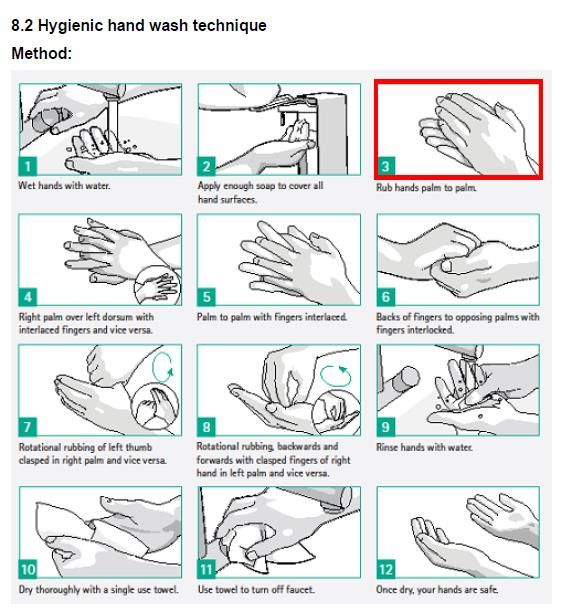
Foreword

                         The World Health Organization (WHO) declared COVID-19 a global
                         pandemic on 11th March 2020. The first case diagnosed in South Africa
                         was on the 3rd March, 2020. South Africa has a unique challenge of a large
                         vulnerable immunocompromised population living in overcrowded
                         conditions.

                         This guideline provides guidance towards the reduction and prevention of
                         transmission in both patients and staff at community and healthcare facility
                         level.

My sincere gratitude to Prof Shaheen Mehtar who drafted the guideline on behalf of the Infection
Prevention and Control Technical Working Group (Angela Dramowski, Briette Du Toit,            Ronel
Steinhobel, Marina Aucamp, Yolanda van Zyl and Marc Mendelson).

Dr T Pillay
Acting Director-General: Health
Date

                                                                                           1|P a g e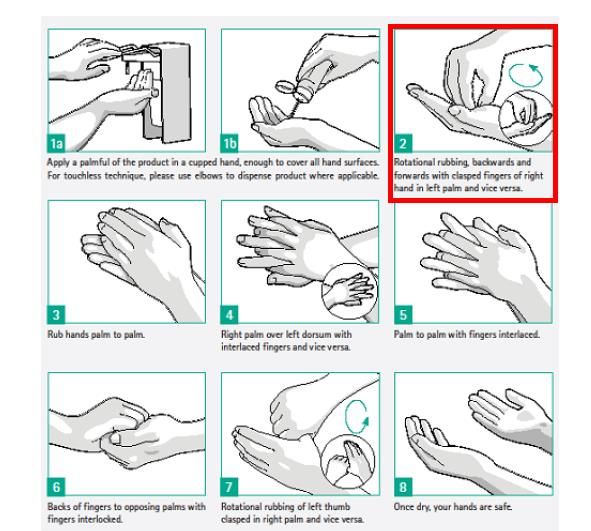
Table of Contents
 1.      Introduction ................................................................................................................................. 4
 2.      Strategic Framework .................................................................................................................. 4
 3.      About SARS CoV-2 relevant to IPC ............................................................................................. 4
   3.1. Routes of Transmission ........................................................................................................ 4
 3.2. Administrative controls.......................................................................................................... 5
   3.2.1. General IPC Precautions ..................................................................................................... 5
   3.2.2. Laboratory .......................................................................................................................... 5
   3.2.3. Clinical staff ........................................................................................................................ 6
   3.2.4. IPC team .............................................................................................................................. 6
   3.2.5. Occupational Health ........................................................................................................... 6
   4.1.6 Visitors ................................................................................................................................ 6
 4.2    Environmental Controls ......................................................................................................... 6
   4.2.1. Patient Placement .............................................................................................................. 6
   4.2.2 Intensive Care ..................................................................................................................... 6
 4.3    The built environment ............................................................................................................. 7
 4.3.1      Ventilation ............................................................................................................................... 7
   4.3.1.1 Hospital accommodation ..................................................................................................... 7
   4.3.1.2 Operating Theatres .............................................................................................................. 7
   4.3.1.3 Maternity - labour ward ....................................................................................................... 7
 5. IPC Controls for COVID-19 containment....................................................................................... 7
   5.1.2 Key elements of Standard Precautions : ............................................................................... 8
 5.2    Transmission based Precautions for COVID-19......................................................................... 8
   5.3    Aerosol generating procedures (AGP) ............................................................................... 9
 5.4   Signage for COVID-19 ........................................................................................................... 10
 6       Hand hygiene ............................................................................................................................ 10
  6.1  Why?.................................................................................................................................. 10
  6.2  Types of hand hygiene ....................................................................................................... 11
 7 Appropriate use of Personal Protective Equipment.................................................................... 12
   7.1     Types of PPE to use .......................................................................................................... 12
 Type of face covers ........................................................................................................................... 13
   7.2   Extending the use of PPE.................................................................................................... 15
 7.3   Donning and Doffing of PPE ................................................................................................. 15
 7.4        Norms for PPE requirement ................................................................................................... 17
 8       Environmental cleaning.............................................................................................................. 18
 9       Bodies, burial and post mortem ................................................................................................. 18
   9.1  Dead Bodies ....................................................................................................................... 18
   9.2  Post mortem (autopsy) ...................................................................................................... 19
   9.3  Family member .................................................................................................................. 20
 10 Repatriation and subsequent quarantine ................................................................................... 20

                                                                                                                                         2|P a g e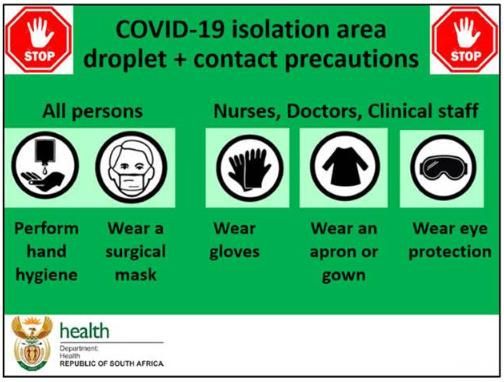
11 Summary.................................................................................................................................... 20
Appendix A: Detailed recommendation for use of PPE ....................................................................... 21

                                                                                                                                     3|P a g e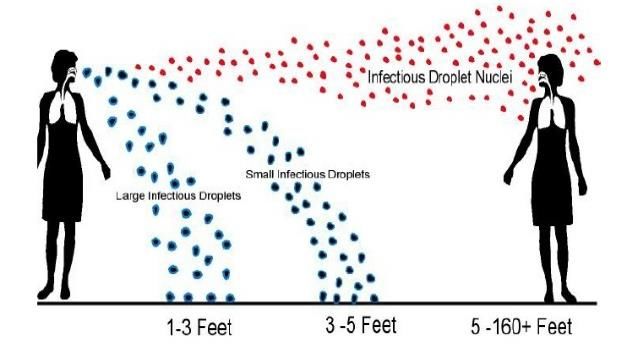
1. Introduction
The World Health Organization (WHO) declared COVID-19 a global pandemic. SARS CoV-2 (a novel
coronavirus) originated in Wuhan, China where the first cases were reported in late December 2019,
and spread rapidly across the globe. The first case diagnosed in South Africa was on the 3 rd March,
2020 and by 27th March, more than 1000 people have tested positive for SARS-CoV- 2. The rapidity of
spread across the globe, has demonstrated unprecedented transmission, albeit a mild disease in 80%
of those who have tested positive for the virus. South Africa has a unique challenge of a large
vulnerable immunocompromised population living in overcrowded conditions.
The Ministerial Advisory Committee on Coronavirus Disease 2019 (MAC-COVID 19) was formally
established on the 25th March, with its first Clinical Committee meeting on the 26th March, 2020-
Infection Prevention and Control (IPC) subgroup is charged with producing evidence-based guidance
towards the reduction and prevention of transmission in both patients and staff at community and
healthcare facility level. It will be shared with the various subcommittees as necessary.
2. Strategic Framework
The National Infection Prevention and Control Strategic Framework, March 2020
Practical Manual for the Implementation of the National IPC Strategic Framework, March 2020
Provincial Personal Protective Equipment Plan, Western Cape Government, (Circular H34-
2020) 25th March, 2020
WHO recommendations for COVID 19- 2020. Deliberations of the COVID 19 Expert Committee
will be used to update these guidelines.
3. About SARS CoV-2 relevant to IPC
SARS-CoV-2, a novel coronavirus, likely originating from a bat, with undefined intermediate animal
host, has recently been discovered in humans. Person to person transmission is rapid causing large
community outbreaks across the globe. The virus infects and locally colonizes the human nasopharynx
and upper respiratory tract, later affecting the lower respiratory tract leading to pneumonia,
respiratory failure and sometimes death (variable case fatality rates reported 1-5%). It is an enveloped
virus which makes it fragile and vulnerable to heat, chemicals and ultraviolet sunlight.
3.1. Routes of Transmission
There are two known routes of transmission (WHO recommendations1)
Via respiratory droplets produced via sneezing, coughing which is directly inhaled person to
person
Via respiratory droplets landing on environmental surfaces surrounding the infected person
(also known as the patient zone and the health zone)2 which are then transferred by the
contact route via contaminated hands to a person’s face and mucous membranes.
1 Rational Use of personal protective equipment (PPE) for coronavirus disease (COVID-19) WHO, interim guidance, 19th
March, 2020
2 National Department of Health. National Practical Manual for the Implementation of the National IPC Strategic
Framework, March 2020, p 23.
4|P a g e
No airborne transmission has been recorded except during aerosol generating procedures (AGP) in
close proximity3 From the WHO scientific brief (29th March, 2020) - In an analysis of 75,465 COVID-19
cases in China, airborne transmission was not reported. 4
When aerosols are generated during coughing and sneezing, the larger size droplets fall on surfaces
surrounding the source person depending on the mass of the droplets (Fig 1). Airborne transmission
requires air currents for movement of lighter particles such as Mycobacterium tuberculosis, measles
and chickenpox. This has not been found in COVID-19 transmission yet.
This is crucial information for applying the correct IPC procedures and ensuring safety of you and
your patients.
DROPLET Airborne
SARS-CoV-2
Influenza, MTB,
MERS, Measles,
Chickenpox
CONTACT
1m 2m 3m
Figure 1 Illustrating the difference between the distance travelled between droplet and airborne
after aerosol generation through coughing or sneezing
3.2. Administrative controls
Policies on containment and management of COVID-19 suspected and infected patients.
3.2.1. General IPC Precautions
Frequent hand washing and use of alcohol based hand rub (ABHR)
Encourage cough etiquette & respiratory hygiene
Social distancing. Keep a distance of up to 1.5 to 2 m when in contact with other people
Do not touch your face unless your hands are clean
PPE is not necessary if you are asymptomatic, or in self isolation
3.2.2. Laboratory
Take the correct required samples and send to the laboratory for processing
Ensure nasopharyngeal and other samples are processed and reported timeously
3WHO Coronavirus disease 2019 (COVID-19) Situation Report – 66; 26th March 2020
4https://www.who.int/news-room/commentaries/detail/modes-of-transmission-of-virus-causing-covid-19-implications-
for-ipc-precaution-recommendations
5|P a g e
3.2.3. Clinical staff
Implement effective management of patients (triage, isolation, treat promptly, discharge
Follow IPC protocols meticulously- these will keep you safe.
Use IPC equipment as indicated, do not waste precious PPE
3.2.4. IPC team
Train HCWs on evidence based IPC measures and the appropriate use of PPE
Conduct IPC ward rounds regularly to ensure compliance.
Carry out frequent audits on IPC practice and availability of supplies
Report all IPC matters to the Infection Control Committee and the Outbreak Response Teams
Support clinical teams in implementing IPC practices
Ensure proper cleaning of equipment
Use appropriate signage for COVID-19
3.2.5. Occupational Health
Evaluate HCWs at risk for COVID-19
Monitor and report occupationally acquired SARS-CoV-2
4.1.6 Visitors
Ideally, no visitors should be allowed. (see IPC controls below)
4.2 Environmental Controls
4.2.1. Patient Placement
4.2.1.1. Single room
Single occupancy room with en suite toilet facilities
Natural ventilation of 60l/sec per patient or 6 air changes per hour (ACH)
4.2.1.2 Cohort isolation.
Bed distance must be at least 2m from the foot of one bed to the foot so that the head of each
bed is further than 2 m.
A distance of at least 2.5m between the centre of one bed to the centre of the next bed or
1.5m from edge of one bed to the next
4.2.2 Intensive Care
Bed spacing- 3m or more to allow ease of movement of staff and equipment
Good ventilation- 160L/hour/patient or 12 air changes per hour (ACH)
Closed suctioning: use fresh sterile water each time to clean the suction catheter.
Open suctioning - NOT RECOMMENDED
Dedicated ventilator equipment with single patient use circuit
Dedicated patient care equipment
Carry out hand hygiene and change gloves after each patient contact
Do not touch face, front of apron, mask, goggles or face shield during a clinical ward round
Keep patient charts far from the patient’s bed (outside the room, if possible)
Always carry out hand hygiene before and after touching the notes (persistence on cardboard
and paper reported)
6|P a g e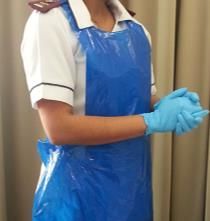
4.3 The built environment
Water, sanitation and hygiene have a major role to play in IPC particularly in the remote health
facilities and clinics. 5 The Environmental Health should be consulted prior to establishing
recommendations.
4.3.1 Ventilation
4.3.1.1 Hospital accommodation
Where possible, natural ventilation is preferred giving air exchange of 60L/sec/patient.
Mechanical ventilation, this must be checked by the engineers and records kept of airflow and
air changes per hour (ACH) which should be a minimum of 6 ACH
IPC team to check airflow using a smoke test
4.3.1.2 Operating Theatres
Should a COVID-19 patient need surgery, the operating theatre ventilation must be checked for ACH
and airflow. It is not necessary to convert the operating theatre into negative ventilation as long as
there is sufficient air volume (160L/sec) changes (up to 24 ACH) to keep a high dilution factor
particularly when carrying out AGP.
4.3.1.3 Maternity - labour ward
The delivery suites should have good bed spacing and ventilation.
Operating rooms should be similar to conventional operating theatre environment
Mothers who are positive for SARS-CoV-2 are advised to wear face masks when feeding their baby for
14 days after their symptoms have resolved as mother to baby transmission via respiratory droplets
can occur. There is no evidence of viral presence in breastmilk and breastfeeding is strongly
encouraged.
5. IPC Controls for COVID-19 containment
Only the most salient features of IPC are described here. Please follow the IPC guidance in the National
Practice IPC Manual for the Implementation of the National Strategic Framework (2020).
IPC Precautions: In addition to Standard Precautions, Droplet (and Contact) Precautions are
recommended.3 For aerosol generating procedures, airborne precautions (including use of
an N95 respirator for the HCW performing the procedure) should be instituted.
5.1 Standard Precautions6
5.1.1 Rationale
Standard precautions (SP) are aimed at reducing the risk of transmission of microorganisms from
recognized and unrecognized sources.
Patients and staff may serve as reservoirs for microorganisms, even if only colonised and not exhibiting
any signs of infection.
5
National Practical Manual for the Implementation of the National Strategic Framework, March 2020, p 129.
6 National Practical Manual for the Implementation of the National IPC Strategic Framework, March 2020, p 13.
7|P a g e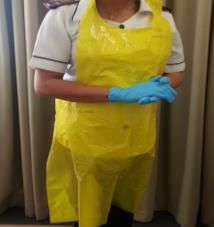
SP are the basic level of infection prevention measures which apply to relevant health care delivered
to all patients.
5.1.2 Key elements of Standard Precautions :
While all Standard Precautions should be implemented at all times, those highlighted below are
particularly relevant to COVID-19 containment
Hand hygiene*;
Appropriate use of personal protective equipment*;
Patient placement*;
Appropriate use of antiseptics, disinfectants, and detergents*;
Decontamination of medical devices; patient care equipment
Safe handling of linen and laundry;
Health care waste management;
Respiratory hygiene and cough etiquette*;
Environmental cleaning*;
Principles of asepsis;
Injection safety, prevention of injuries from sharp instruments and post-exposure prophylaxis.
(*Relevant to COVID-19 containment)
5.2 Transmission based Precautions for COVID-197
Type Recommendations Alternatives
Patient See engineering controls Shared toilet facilities to be
placement cleaned regularly (2- 4 hr)
Hand Hygiene Before and after each patient contact (5 Use ABHR between patients if
Moments of Hand Hygiene) hands not visibly soiled
Before wearing PPE
After removing PPE
PPE - for contact and droplet precautions8
Gloves non sterile, face mask, apron (or gown), goggles or face shield, N95 respirator
Environmental Frequent cleaning 2- 3 times/ day. Water, Use universal wipes which is a
cleaning detergent. Wipe over with disinfectant such as combination of detergent and
1:1000 ppm available chlorine or 70% alcohol disinfectant.
Terminal Remove all linen, healthcare waste and medical Use universal wipes which is a
cleaning equipment and send for disinfection or discard. combination of detergent and
Clean with water and detergent. Wipe with disinfectant
disinfectant
Clinical & -Dedicated equipment. None
Patient care -Disposable where possible
equipment -Shared equipment to be heat or chemical
disinfected after cleaning.
7National Practical Manual for the Implementation of National Strategic Framework, March 2020; p 115
8Circular H25/20: Guidelines for PPE use during the coronavirus disease 2019 (covid-19) western cape government: health
25 march 2020
8|P a g e
Linen Change linen regularly. Disposable linen not
Send to laundry marked as infectious recommended
Temp 65- 70o C cycle
Healthcare Healthcare risk waste for secretions (infectious)
waste PPE for handlers (see appendix A)
Catering Wash in automated dish washer. No additional Wash in hot water and allow to
precautions required dry.
Patient Patient to wear face mask during transfer Guidance for EMS and others
transportation Advise EMS patient has COVID-19 when transporting patient
Transfer as a single case
Visitors Ideally no visitors are allowed however if Mother allowed in with face
necessary, surgical mask should be used. Hand mask and instructed on hand
hygiene before and after wearing and taking off hygiene and social distancing
PPE
Duration of Patient should remain in COVID-19 isolation In some countries, resolution of
isolation area until discharge; symptoms plus two negative RT-
Once discharged, patient to self-isolate for 14 PCR tests for SAR-CoV-2 is
days after first symptoms began (mild diseases) required for de-isolation. Given
and for 14 days after clinical stabilisation (off
the shortage of test kits, South
oxygen, for moderate to severe disease.) Africa has adopted clinical
criteria for disease resolution
and de-isolation.
Table 1: Summary of Contact and Droplet precautions for COVID 19 patients
5.3 Aerosol generating procedures (AGP)
In high risk areas where AGPs are being conducted (eg: ICU) (Public Health England, March 2020):
Intubation, extubation and related procedures such as manual ventilation and open suctioning
Tracheotomy/tracheostomy procedures (insertion/open suctioning/removal)
Bronchoscopy
Surgery and post-mortem procedures involving high-speed devices
Some dental procedures (such as high-speed drilling)
Non-Invasive Ventilation (NIV) such as Bi-level Positive Airway Pressure (BiPAP) and
Continuous Positive Airway Pressure ventilation (CPAP)
High-Frequency Oscillating Ventilation (HFOV)
High Flow Nasal Oxygen (HFNO), also called High Flow Nasal Cannula
Induction of sputum for laboratory test
In addition, the following are also considered AGP
Collecting nasopharyngeal and oropharyngeal swabs;
Chest physiotherapy;
Re-use of ventilator circuits and respiratory equipment;
Cardiopulmonary resuscitation, including bag-mask ventilation;
Risk-prone procedures for droplet splashes include:
Washing and cleaning respiratory ventilation equipment in clinical areas without
adequate knowledge or protection.
9|P a g e5.4 Signage for COVID-19
Clear signage should be posted at the entrance of all clinical wards to inform all staff of IPC
requirements and protocols (Fig 2).
Figure 2: Signage for COVID19
6 Hand hygiene
6.1 Why?
Hands are most frequently in touch with patients, surfaces and parts of the healthcare worker’s body,
such as the face, nose, and mouth (Fig 3). To remove microbes optimally, hand must be thoroughly
and systematically washed paying speciall attention to the most contaminated areas, such as the
fingers and thumbs. Follow the WHO 5 Moments of Hand Hygiene.
10 | P a g eFigure 3 Transmission of pathogens via hands9
6.2 Types of hand hygiene
Hand washing with soap and water; dry.
Use alcohol-based hand rub (ABHR) containing 70% propyl or isopropyl alcohol with emollient.
(Guide to local production)10
Remember!!
- When washing hands, friction is necessary to remove transient microbes from the hands. (Fig 4)
- When using ABHR, make sure all surfaces are covered. Dip fingers in the ABHR in your palm and
then move to the other surfaces (Fig 5)
- Gloves do not offer total protection. ALWAYS WASH HANDS AFTER REMOVING GLOVES
- Never apply ABHR to gloves. It damages them and increases the risk of contamination!
9National Practical Manual for the Implementation of the National Strategic Framework, March 2020
10Guide to local production: WHO recommended hand rub formulations (2009): available from
https://www.who.int/gpsc/5may/Guide_to_Local_Production.pdf
11 | P a g eFigure 4 Washing hands; start with palm to palm Figure 5 Using (ABHR start with fingertips first)!
7 Appropriate use of Personal Protective Equipment
Personal protective equipment (PPE) is specifically used to protect clinical and non-clinical health
workers (including cleaners, ancillary staff and food service workers) from exposure to body fluids or
from droplet or airborne pathogens, chemicals or heat. The use of PPE is based on risk assessment
and evidence of the route of transmission for a given microbe.
7.1 Types of PPE to use
Table 2 sets out the generic PPE principles to decide on the appropriate PPE to use. There is no
evidence that foot or head gear is indicated for protection against droplet and contact precautions
and should be avoided.
See Appendix A for detailed recommendation for PPE use for:
Inpatient services (hospital wards, ICU, overnight/holding wards, step-down facilities)
Services at PHC facilities, outpatients, emergency units and temporary facilities
COVID-19 patients cared for at home (or in hostels)
Emergency medical services (EMS)
Community health worker (CHC) services
Forensic pathology services (FPS) and mortuary services11
11
Circular H25/2020: Guidelines for PPE Use during the Coronavirus disease (COVID-19). Western Cape Government:
Health. 25 March 2020
12 | P a g eTYPE OF PPE CLINICAL STAFF NON-CLINICAL NON-CLINICAL PATIENTS PATIENTS
(nurses, doctors, STAFF STAFF with without
EMS) (admin staff, (cleaners) RESPIRATORY RESPIRATORY
Providing direct catering staff) coming into symptoms symptoms
care to COVID-19 coming into distant distant contact
patients or contact with with COVID-19
patients with COVID-19 patients patients and
respiratory and contaminated contaminated
symptoms surfaces surfaces
Gloves Non-sterile gloves. Non-sterile gloves. Reusable long None None
Change between Change when rubber utility
patients leaving COVID-19 cleaning gloves
area (ideally up to
elbow) Change
after completed
cleaning
contaminated
area
Face cover Surgical Mask for Surgical mask Surgical mask Surgical mask None
type general care of when within At any time if surgical masks are touched by unwashed hands, get wet, are soiled, or are
removed from the face, they will become contaminated and will no longer provide effective
protection. They should then be discarded.
Masks that are not wet, were not touched by unwashed hands and were not removed from
the face, can be worn for up to 8 hours.
COVID-19 patients when inside a dedicated COVID-19 ward, where staff are wearing PPE, do
not need to wear masks.
COVID-19 patients when outside a dedicated COVID-19 ward must always wear a surgical
mask. The mask can be used for up to 8 hours.
N95 Respirators (FFP2, FFP3) which are specifically designed to filter out smaller particles and are
recommended for use in airborne precautions such as when dealing with TB, measles or chickenpox.
Note the following guidelines:
Seal tests should be performed each time a N95 respirator is used (i.e. when it is first put on)
Negative seal check:
Coned shape respirator: Cup hands over respirator without excessive pressure. Breathe in sharply. A
light collapse of the respirator should be felt with no air leaking in around the face to-face piece seal.
Duck- bill and V-flex type respirator: Breathe in sharply. The respirator should collapse inwards.
+ Positive seal check:
Coned shape respirator: Cup hands over respirator. Blow out. A build-up of air should be felt with no
air leaking out around the face-to-face piece seal edges of the device.
Duck-bill and V-flex type respirator: Breathe out forcefully; the respirator should expand on the
exhale.
The N95 respirators should ideally be used once only and should be discarded once safely
removed. However, as there is a global shortage of N95 respirators, reuse is strongly
encouraged and is preferable to having no respirator.
If HCWs are performing aerosol-generating procedures (e.g. sample collection) on several
COVID-19 patients sequentially, they may use the same N95 respirator and eye protection for
the session; they must however change apron and gloves between patients.
As the outside surface of the N95 respirator will become heavily contaminated with the virus
during aerosol-producing procedures, HCWs should take great care not to touch the outside
surface and must perform careful hand hygiene after removing it.
For reuse:
Without touching the respirator, Lift off the top strap. Do not Store respirator in a paper
slowly lift the bottom strap from touch the respirator. bag with your name on it.
around your neck up and over your Do not crush the respirator
head. when storing it.
Do NOT attempt to disinfect the N95 respirator as that destroys its integrity.
Note that obviously damaged and visibly contaminated respirators cannot be reused.
14 | P a g eCotton masks for healthcare workers. Due to the global shortages facing all countries, the use
of cotton masks is being considered. Cotton masks are not recommended for healthcare workers
because there is no filtration or protection against droplets or splashes. There is also the “wicking
effect” which increases the risk of mucous membrane contamination.
Cotton masks for source isolation (community). The urgent need to preserve essential PPE,
especially face masks for healthcare workers, the use of thick cotton masks may be considered for
source isolation for community healthcare workers, security, and the general public particularly
when travelling in enclosed spaces such as taxis.
7.2 Extending the use of PPE
Usually PPE is discarded after a single patient or procedure, however, because of an acute shortage of
PPE during the COVID-19 outbreak, the WHO and CDC are considering extended use and/or reuse of
certain PPE. For South Africa, it is recommended that the extended use of PPE is preferable to
reprocessing, the latter being expensive, not validated and the integrity of the PPE cannot be
guaranteed (Table 3).
Type of PPE Extended use Reprocess
Gloves (non-sterile) No No
Face masks Yes. Until damp or torn, or to end of No
shift. Change if contaminated
N95 respirators Yes. Up to 1 week for same HCW (as Pending (WHO)
TB protocol), unless respirator
integrity or leak-proof seal is
compromised
Aprons Yes, if not visibly contaminated No
(maintain 1m distance)
Gown Water resistant - yes if not visibly Yes - launder cotton gowns
Cotton gowns and contaminated (1m) Discard aprons if contaminated
aprons
Goggles Yes but do not contaminate hands Yes - wash with soap and water.
Dry. Wipe over with alcohol wipes
Face shields Yes, but do not contaminate hands Yes - wash with soap and water.
Dry. Wipe over with alcohol wipes
Table 3 Extended or reprocessing of PPE
7.3 Donning and Doffing of PPE13
A video demonstrating the correct sequence to put on (Don) and remove (Doff) PPE can be
downloaded from:
https://player.vimeo.com/external/400607941.hd.mp4?s=af075e8c9647a23114424834c1e73f866a7
3e5f7&profile_id=174&download=1
The poster summarises the correct way to put on and take off PPE. (Fig 6)
Dispose of all contaminated PPE in an infectious waste container.
13
Circular H25/20: Guidelines for PPE use during the coronavirus disease 2019 (covid-19) western cape government:
health 25 march 2020
15 | P a g eWASH HANDS OR USE AN ALCOHOL-BASED HAND SANITISER AFTER REMOVING GLOVES AND
AFTER REMOVING ALL PPE
SEQUENCE FOR PUTTING ON SEQUENCE FOR TAKING OFF PERSONAL
PERSONAL PROTECTIVE EQUIPMENT PROTECTIVE EQUIPMENT (DOFFING)
(DONNING)
Wash your hands before putting on the PPE. PPE Wash your hands before taking off the PPE. PPE
should be put on in an order that minimises should be removed in an order that minimises
contamination. The apron, mask, goggles and contamination. The gloves, apron, goggles/visor,
gloves must be put on in that order. See and mask must be removed in that order.* Wash
guidance on each below. your hands after taking off the PPE. Discard PPE in
infectious waste container. See guidance below.
Apron Gloves
Wash hands Wash hands
Slip it over the head and Securely grasp the
tie the stings behind the outside of glove with
back the opposite gloved
hand; peel off;
discard as infectious
waste
Slide the fingers of the un-gloved hand under
the remaining glove at the wrist; peel off;
discard as infectious waste
Mask or N95 Respirator Apron or Gown* (See Note)
Secure each tie or elastic at Wash hands
the middle of head and neck Unfasten or
Fit flexible band to nose break
bridge apron/gown ties
Fit snug to face and below Pull the apron
chin away from the
Fit-check respirator by blowing into it (air neck and
should not leak out) shoulders, touching the inside of the apron only
and bring it forward and over the head
Turn the apron inside out, fold or roll into a
bundle and discard as infectious waste
Goggles or Visor Goggles or Visor* (See Note)
Place Remove
over goggles/visor
face and from the back
eyes by lifting head
Adjust band or ear pieces
band to fit comfortably Place in designated receptacle for disinfecting
Gloves Mask or N95 Respirator
Hold the edge of the glove as you pull it Untie or
over your hand break
Extend to cover wrist bottom ties,
Once gloved, do not touch other surfaces followed by
top ties or
elastic.
Remove by handling the ties only and discard
as infectious waste.
Wash hands
*Note. When it is practically difficult to remove the apron/gown before the visor/goggles, then
the visor/goggles may be removed before the apron/gown.
Figure 6: Poster for donning and doffing of PPE
16 | P a g e7.4 Norms for PPE requirement
The amount of PPE and hand hygiene products needed per healthcare worker per shift is difficult to
assess but should be calculated and adequate stocks must be available to ensure the safety of the
staff. Table 4 illustrates a rough example of what might be needed as stock per healthcare worker
per day or per 12-hour shift. Example: 10 patients allocated per HCW per 12-hour shift.
Predicted PPE + consumable usage per day for a hypothetical 30-bed COVID-19 ward and a 30-bed
COVID-19 ICU
Type of PPE or Calculation Predicted usage per Predicted usage per
consumable day (COVID-19 ward) day (COVID-19 ICU)
Handrub* 4-8 HH opportunities 3 litres 6 litres
(3ml per time) per hour X 24 hrs x 30
pts
Liquid hand soap 2-4 HH opportunities 1.5 litres 3 litres
(3ml per time) per hour X 24 hrs x 30
pts
Paper towels (after soap 2-4 HH opportunities 1500 paper towels 3000 paper towels
and water) per hour X 24 hrs x 30
pts
Non-sterile gloves (change 1-2 pairs per hour x 24 720 pairs 1440 pairs
between patient contact) hrs for care of 30
patients
70% alcohol (for 30-bed ward vs ICU 2 litres? 4 litres?
disinfection of equipment)
0.5% sodium hypochlorite 30-bed ward vs ICU 10 litres 15 litres
(for surface disinfection)
Goggles/visors Clean + disinfect and 20 googles 40 goggles
share between shifts
Plastic aprons (change if 2-4 required for care of 60 aprons 120 aprons
contaminated + after AGP) each patient x 30
Cotton gowns with apron Allocate 2 per HCW per 60 cotton gowns 120 cotton gowns
(alternative to apron alone shift (1 extra for
for ICUs) laundry)
Surgical face masks Allocate 2 per HCW per 60 120
(for HCW use) shift; replace when wet,
damaged or
contaminated
N95 respirator Allocate 1 per HCW per 30 60
(for AGP only) shift for AGP; N95 can
be reused if integrity
ok
Water resistant gowns Disposable after AGP 30 60
(for AGP only)
HH = hand hygiene, HH* use of alcohol-based hand rub is preferred to save time, unless hands are visibly
soiled, AGP = aerosol-generating procedures; note: frequency of patient contact is much higher in ICU
settings with at least a doubling of usage for ABHR, gloves, aprons to be expected. Note 2: revision of PPE
extended use and re-use guidance may reduce the predicted amount of PPE required.
Table 4: Example of what might be needed as stock per healthcare worker per day or per 12-hour
shift
17 | P a g e8 Environmental cleaning
Human coronaviruses can remain infectious on surfaces for up to 9 days. COVID-19 virus has been
detected after up to 72 hours in experimental conditions.14 Therefore, cleaning the environment is
paramount and is covered in detail in the National IPC Manual (2020).
To summarise, each area of the healthcare facility must be cleaned at least twice daily, with a proper
schedule, checklist and programme. The cleaning can be validated using visual inspection and
fluorescent markers. In high risk areas (COVID-19 triage, isolation ward and ICU settings), the
environment must be cleaned and disinfected at least 3-4 times per day and checked by the supervisor
each time.
Following thorough cleaning, surfaces are wiped (NOT SPRAYED) with disinfectants such as 1:000 ppm
chlorine or 70% alcohol, as recommended. Universal wipes which combine cleaning and disinfection
are impregnated with peracetic acid and or hydrogen peroxide and may be used but these are
expensive. Hypochlorite must be used at the correct dilution to ensure maximum efficacy (Table 5).15
Chlorine How to dilute How to dilute How to dilute
Product
available to 0.5% to 1% to 2%
Sodium 3.5% 1 part bleach 1 part bleach 1 part bleach to
hypochlorite – to 6 parts to 2.5 parts 0.7 parts water
liquid bleach water water
Sodium 5% 1 part bleach 1 part bleach 1 part bleach to
hypochlorite – to 9 parts to 4 parts 1.5 parts water
liquid bleach water water
NaDCC 60% 8.5 grams to 1 17 grams to 1 34 grams to 1
(sodium litre water litre water litre water
dichloro-
isocyanurate)
– powder
NaDCC 60% 6 tablets to 1 11 tablets to 1 23 tablets to 1
(1.5g/tablet) - litre water litre water litre water
tablets
Chloramine - 25% 20 grams to 1 40 grams to 1 80 grams to 1
powder litre water litre water litre water
Table 5: Method for diluting hypochlorite requiring different concentrations (National IPC Manual,
2020)
Environmental spraying of buildings, roads, and dwellings with chlorine is not recommended. There
is no evidence that transmission from these areas occurs.
9 Bodies, burial and post mortem
9.1 Dead Bodies
The WHO recommendations for a person dying of COVID-19 have been published16
14 Kampf G, Todt D, Pfaender S, Steinmann E. Persistence of coronaviruses on inanimate surfaces and their inactivation
with biocidal agents. Journal of Hospital Infection. 2020;104(3):246-51 https://doi.org/10.1016/j.jhin.2020.01.022
(accessed March 22, 2020).
15 National Department of Health. National Practical Manual for the Implementation of the National IPC Strategic
Framework, March 2020, p 93.
16 Infection Prevention and Control for the safe management of a dead body in the context of COVID-19. WHO interim
guidance, 24th March 2020
18 | P a g e The dignity of the dead, their cultural and religious traditions, and their families should be
respected and protected throughout;
To date there is no evidence of persons having become infected from exposure to the bodies of
persons who died from COVID-19
Before attending to a body, ensure that the necessary hand hygiene and personal protective
equipment (PPE) supplies are available for standard precautions including hand hygiene,
appropriate use of PPE, and environmental cleaning,
PPE for routine use will be gloves and apron, however if there is a risk of splashing, face
protection, such a face mask, face shield or goggles may be worn
After removing all medical devices, ensure that any leaking from orifices are contained
Keep movement and handling of the body to a minimum
Wrap body in cloth (shroud) and transfer it as soon as possible to the mortuary area;
o There is no need to disinfect the body before transfer to the mortuary area;
o Body bags are not necessary, although they may be used for other reasons (e.g. excessive
body fluid leakage); and
o No special transport equipment or vehicle is required.
Health care workers or mortuary staff preparing the body (e.g. washing the body, tidying hair ) should
wear appropriate PPE (gloves, water resistant disposable gown, face mask, eye protection);
If the family wishes to view the body, they may do so, using standard precautions. They are not
allowed to touch or kiss the body. Embalming is not recommended to avoid excessive manipulation.
Adults >60 years and immunosuppressed persons should not directly interact with the body.
9.2 Post mortem (autopsy)
If a person died during the infectious period of COVID-19, the lungs and other organs may still contain
live virus, and additional respiratory protection is needed during aerosol-generating procedures (e.g.
procedures that generate small-particle aerosols, such as the use of power saws or washing of
intestines);
Perform autopsies in an adequately ventilated room, i.e. at least natural ventilation with at
least 160 L /s/patient air flow or negative pressure rooms with at least 12 air changes per hour
(ACH)
Controlled direction of air flow when using mechanical ventilation
Only a minimum number of staff should be involved in the autopsy;
Appropriate PPE must be available as per departmental protocol, including a scrub suit, long
sleeved fluid-resistant gown, gloves (either two pairs or one pair autopsy gloves), and face
shield (preferably) or goggles, and boots. An N95 respirator should be used in the case of
aerosol-generating procedures.
The mortuary must be kept clean and properly ventilated at all times;
Lighting must be adequate. Surfaces and instruments should be made of materials that can
be easily disinfected and maintained between autopsies;
Instruments used during the autopsy should be cleaned and disinfected immediately after the
autopsy, as part of the routine procedure;
Environmental surfaces, where the body was prepared, should first be cleaned with soap and
water, or a commercially prepared detergent solution; After cleaning, a disinfectant with a
minimum concentration of 0.1% (1000 ppm) sodium hypochlorite (bleach), or 70% ethanol
should be used
19 | P a g e9.3 Family member
Any person (e.g. family member, religious leader) preparing the deceased in a community
setting should wear gloves for any contact with the body. For any activity that may involve
splashing of bodily fluids, eye and mouth protection (face shield or goggles and medical
mask) should be worn.
Clothing worn to prepare the body should be immediately removed and washed after the
procedure, or an apron or gown should be worn;
The person preparing the body should not kiss the deceased.
Family and friends may view the body after it has been prepared for burial, in accordance
with customs.
The belongings of the deceased person do not need to be burned or otherwise disposed of.
Clothes can be laundered and reused.
10 Repatriation and subsequent quarantine
A guideline on repatriation, quarantine of returning South African Citizens and others has already
been developed and circulated.17
11 Summary
These are interim guidelines which are subject to change as the situation with COVID 19 develops in
South Africa. The guidelines will be updated regularly based on WHO recommendations.
17National Department of Health. South African Guidelines for quarantine facilities and isolation in relation to COVID19.
March 2020
20 | P a g eAppendix A: Detailed recommendation for use of PPE18
Inpatient Services (hospital wards, ICU, overnight/holding wards, step-down facilities)
Setting Target Personnel Activity Type of PPE or
or Patients Procedure
Isolation cubicles, Patients with Any Surgical Mask
rooms, or wards COVID-19
where COVID-19 Clinical staff Providing direct care to COVID-19 Surgical Mask
patients are being patients Apron
cared for. Non-sterile Gloves
Eye protection (goggles or
visor)
Clinical staff Aerosol-generating procedures* N95 Respirator
performed on COVID-19 patients Apron or gown
(such as nasopharyngeal and Non-sterile Gloves
oropharyngeal swabbing for testing Eye protection (goggles or
for coronavirus infections) visor)
N95 respirators** are only worn
when performing aerosol producing
procedures
Body of deceased Death of COVID-19 patient Wrap body with sheets as
per usual
Cleaners Entering the cubicle or room or ward Surgical mask
of COVID-19 patients Apron
Long rubber utility
cleaning gloves (ideally up
to elbow) that can be
washed
Eye protection (goggles or
visor)
Closed work shoes
Porters and nurses Transport of COVID-19 patients Surgical Mask
Non-sterile Gloves
Catering staff Providing meals inside COVID-19 Surgical Mask
ward Non-sterile Gloves
Administrative Administrative staff supporting Surgical mask
personnel COVID-19 ward services, who are Non-sterile Gloves
not usually in direct contact with Maintain spatial distance
patients, but would enter the of at least 1 metre, where
isolation ward. possible
Security personnel Any Surgical mask
Laundry workers Laundering of COVID-19 patient Linen to be bagged
linen separate from other linen
Surgical mask
Apron
Long rubber utility
cleaning gloves (ideally up
to elbow) that can be
washed
18
Circular H25/20: Guidelines for PPE use during the coronavirus disease 2019 (covid-19) western cape government:
health 25 march 2020
21 | P a g eEye protection (goggles or
visor)
Closed work shoes
All types of wards Patients without Any No PPE required
where Non-COVID-19 COVID-19
Patients (i.e. patients
who do NOT have Clinical staff Aerosol-generating procedures* Surgical mask
COVID-19) are being performed on Non-COVID-19 Apron
cared for patients* Non-sterile Gloves
Eye protection (goggles or
visor)
All staff Any other activity besides Aerosol- No PPE required
generating procedures performed
for Non-COVID-19 patients
Visitors Visiting patients without COVID-19 No PPE required
Other areas of the All staff Any activity that does not involve No PPE required
hospital where contact with COVID-19 patients
COVID-19 patients
transit (e.g.
corridors) but are not
directly attended to.
* Aerosol-generating procedures (see above)
**N95 respirator must still be used for all other Non-COVID-19 indications (e.g. when attend to a
patient with confirmed or suspected TB)
22 | P a g ePHC Facilities, Outpatients, Emergency Units and Temporary facilities
Setting Target Personnel or Activity Type of PPE or
Patients Procedure
Triage at Clinics, Clinical staff Triage: Preliminary screening Maintain spatial distance
CHC, OPD. of patients (via questions on of at least 1 metre
Emergency Units symptoms and contact with Surgical mask
and temporary COVID-19 cases) as they enter
facilities unit.
entrances Patients and escorts who While waiting for testing Move patient to isolation
screen positive room Provide Surgical
mask
Patients and escorts who While waiting for Maintain spatial distance
screen negative but have consultation of at least 1 metre.
respiratory symptoms Provide Surgical mask
Patients and escorts who While waiting for No PPE required
screen negative but without consultation
respiratory symptoms
Administrative All staff including reception, Administrative tasks that do No PPE required
areas clerical and clinical staff not involve contact with
COVID-19 patients
Clinic, CHC, OPD, Clinical staff Physical examination of Surgical Mask
Emergency Unit suspected COVID-19 patients Eye protection (goggles or
and Temporary visor)
facility Apron
Consultation Non-sterile Gloves
rooms Clinical staff Aerosol-generating N95 Respirator
procedures performed on Apron or gown
suspected COVID-19 patients Non-sterile Gloves
(such as nasopharyngeal and Eye protection (goggles or
oropharyngeal swabbing for visor)
testing for coronavirus
infections)
Note that N95 respirators are
only worn when performing
aerosol-generating
procedures
Clinical staff Physical examination of No PPE required
patients without respiratory
symptoms.
Cleaners Cleaning the vacated room Surgical mask
and areas used by a COVID-19 Apron
patient Eye protection (goggles or
visor)
Long rubber utility
cleaning gloves (ideally up
to elbow) that can be
washed
Closed work shoes
Body of deceased Death of COVID-19 patient Wrap body with sheets as
per usual
Entrance to Security personnel. Any Surgical mask
COVID-19 Area
23 | P a g eCOVID-19 patients cared for at home (or in hostels)
Setting Target Personnel or Activity Type of PPE or Procedure
Patients
Private home Patient with COVID-19 When in contact with Surgical mask.
or hostel others
Caregiver (family members Direct contact with Surgical mask
and other caregivers) COVID-19 patients. Apron.
Non-sterile gloves.
Eye protection (goggles or
visor)
Contact tracers and Medical Direct contact with Surgical mask (ideally with
response teams COVID-19 and suspected visor)
COVID-19 patients Apron.
Non-sterile gloves.
Body of deceased Death of COVID-19 Wrap body with sheets
patient
Emergency Medical Services (EMS)
Setting Target Personnel Activity Type of PPE or Procedure
or Patients
Ambulance/transfer Clinical staff Care for and transport of Surgical mask
vehicle suspected COVID-19 A40 suit (apron not practical when
patients to a referral worn outside, especially if windy)
health care facility Non-sterile Gloves
Eye protection (goggles or visor)
Clinical staff Intubation and suctioning N95 Respirator
of suspected COVID-19 A40 suit (apron not practical)
patients Non-sterile Gloves
Eye protection (goggles or visor)
Suspected COVID- While being transported Surgical mask
19 patient
Cleaners Cleaning the vehicle after Surgical mask
transport of suspected Apron
COVID-19 patients to the Eye protection (goggles or visor)
referral facility Long rubber utility cleaning gloves
(ideally up to elbow)
Closed work shoes
24 | P a g eCommunity Health Worker (CHW) Services
Setting Activity CHW PPE People/Patient PPE
Field: Outdoor points Distributing Maintain at least 1m distance from Maintain at least 1m
(bus or taxi rank) educational materials people. distance from people.
and Indoor points No PPE required No PPE required
(mall)
Field: In Distributing Maintain at least 1m distance from Maintain at least 1m
communities but educational materials people. distance from people.
outside homes No PPE required No PPE required
Distributing chronic Maintain at least 1m distance from Maintain at least 1m
medication and people. No PPE required distance from people. No
general supplies PPE required
Inside homes Assisting patient who Surgical mask (single use; ideally Surgical mask
has COVID-19 with or with visor)
without any other Gloves (single use)
diseases (CVA, chronic Apron (single use)
ulcer, septic wound, Alcohol-based hand sanitiser (use
etc.) except for TB before and after remove and
discard gloves, apron and mask)
Infectious waste disposal plastic
bag
Assisting TB patient N95 Respirator (single use) No PPE required
who does NOT have Alcohol-based hand sanitiser
COVID-19 Infectious waste plastic bag
Assisting TB patient N95 Respirator (single use) Surgical mask
who DOES have Gloves (single use)
COVID-19 Apron (single use)
Alcohol-based hand sanitiser
Infectious waste plastic bag
Assisting patient with Surgical mask (single use) Provide surgical mask to
respiratory symptoms Gloves (single use) patient
Alcohol-based hand sanitiser
Infectious waste plastic bag
Assisting patient Maintain 1m distance from patient. No PPE required
without respiratory
symptoms
25 | P a g eForensic Pathology Services (FPS) and Mortuary Services
Setting Target Personnel or Activity Type of PPE or
Patients Procedure
Private home, Caregivers, hospital Direct contact with deceased COVID-19 Surgical Mask
hostel or staff, mortuary staff and suspected COVID-19 patients Apron or gown
hospital transporting and Non-sterile Gloves
preparing the body and Eye protection (goggles or
Forensic Pathology visor)
staff transporting the
body
Body of Deceased Deceased body being removed Usual procedures for
COVID-19 patients removing body
FPS vehicle used Cleaner Cleaning of vehicle Surgical mask
to transport Apron
deceased Eye protection (goggles or
visor)
Long rubber utility cleaning
gloves (ideally up to elbow)
that can be washed
Closed work shoes
Mortuary Forensic pathology Conducting autopsy (if required) N95 Respirator
staff Gown
Apron
Eye protection (goggles or
visor)
Double gloves
Cut-proof synthetic mesh
gloves
Closed work shoes
26 | P a g eYou can also read


