CELEBRATING 20 YEARS OF HZWEI CURRENT HOME FUEL CELL OFFERINGS - H2-international
←
→
Page content transcription
If your browser does not render page correctly, please read the page content below
Hydrogeit / www.h2-international.com / Issue 2 / May 2020 / 10 $
CELEBRATING 20 YEARS
OF HZWEI
CURRENT HOME FUEL CELL
OFFERINGS
Our Joint Mission: Hydrogen
Hydrogen-Marketing
Hydrogen-Consulting
Hydrogen-Knowledge
Hydrogen-Webinars
Silke Frank, CEO
www.mission-hydrogen.de
HYDROGEN ONLINE CONFERENCE
October 8, 2020 - Start 6:00 CET
The largest Online Hydrogen Event in 2020
Access from Anywhere
24 Hours full of Knowledge
H2
Q&A with the Keynoters
Free Live-Tickets for Early Birds
www.hydrogen-online-conference.com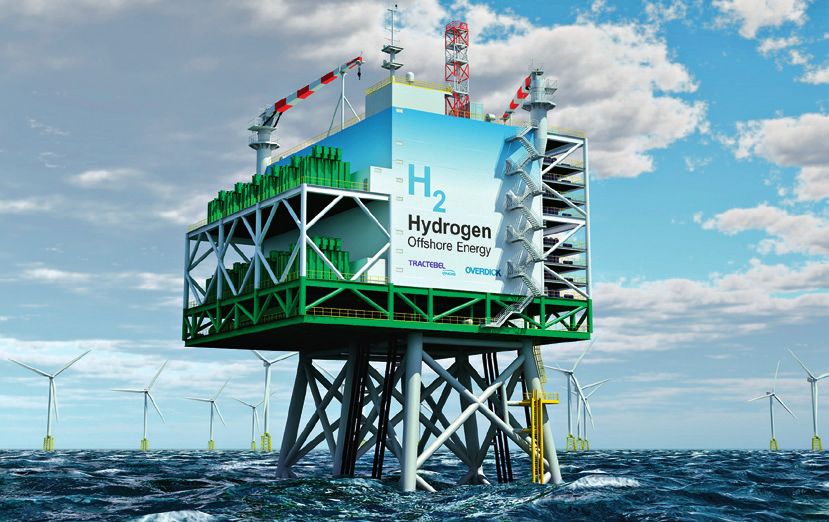
C O N T EN T S

CONTENTS
   3 Legal Notice
   4 Editorial
   5 News
            Hydrogen Council expands its influence
            Viessmann shuts down Hexis
            In a positive mood

   7 Trade shows
            HyVolution to be held annually
            Postponed or cancelled events

   8 Building sector
            Fuel cell CHP system made in China
                                                                                               8–14                       Residential fuel cells: newcomers
                                                                                                                          and leavers

            Current home fuel cell offerings
            New gas boilers run on hydrogen

15 Policy
            A green deal is on the table
            German government argues about hydrogen

19 Energy storage
            Hydrogen production on platforms and islands
            Capacity needs to grow
            Advanced solid hydrogen carriers                                                                                                                                                                             3

                                                                                                                                                                                                Source: Metas
28 Electric transportation
            Hydrogen vehicles: Trends and outlook
            Fuel cells go the extra mile
            No more diesel fuel on board                                                       40                 Hydrogen fueling stations get the green light

38 Research & development
            How to guarantee a renewable product
            Hydrogen vehicle metrology
            Pyrolysis as a hydrogen production pathway

43 Stocks
48 Global market
            UK gears up for hydrogen heating
                                                                                                                                                                                                Source: Anglo American

            CH2ILE – The hidden hydrogen champion
            Overview of FCH JU activities
            Solar, hydrogen and fuel cells combined

57 Products
58 Events                                                                                      50                 Chile, a hydrogen champion in the making

59 Business directory
H2-international                                      Editorial & Research Sven Geitmann, Michael Jensen, Sven Jösting,      News articles that show an author’s name represent the opinions of said
                                                                           Edgar Lange, Uta Mummert                          author and do not necessarily represent the views of the editorial board.

                                                      Design               Dipl.-Des. Andreas Wolter, Weimar                 All material published in this magazine or on the affiliated website
ISSN                  2367-3931                       Typesetting          Dipl.-Des. Henrike Hiersig, Berlin                is protected by copyrights. The reproduction of magazine or website
Issue/Year            No. 2, May 2020                                      Dipl.-Des. Robert Müller, Berlin                  content in whole or in part without express permission by Hydrogeit
                                                      Adverts              Uta Mummert, creating relations,                  Verlag is prohibited. Hydrogeit Verlag assumes no responsibility for
Publisher             Hydrogeit Verlag                                     Lablachère, France                                unsolicited manuscripts and images.
                      Sven Geitmann, Gartenweg 5      Translation          Björn Vrooman, b2ctranslations,
                      16727 Oberkraemer, Germany                           Kamenz, Germany                                                                            All technical, scientific and
                                                                                                                                                                      mathematical information
VAT ID No.            DE 221143829                    Frequency            4 digital issues per year, 1 printed                                                       contained in this journal was
Legally Responsible   Dipl.-Ing. Sven Geitmann                                                                                                                        created, compiled and checked
for Content                                           Single issue (DE) USD 10 / EUR 8 (excl. VAT)                           with the utmost care by the authors, editors and the publisher. Yet,
Phone / Fax           +49 (0)33055 213 ext. 22 / 20   1-year sub (DE)   USD 40 / EUR 35 (excl. VAT)                          despite our efforts, errors may occur. Hydrogeit Verlag expressly
Email                 info@h2-international.com       Shipping	D: USD 2.50 / EUR 2.00,                                      disclaims any liability for mistakes, misleading or absent information.
Web                   www.hydrogeit-verlag.de,                          World: USD 5.00 / EUR 4.00
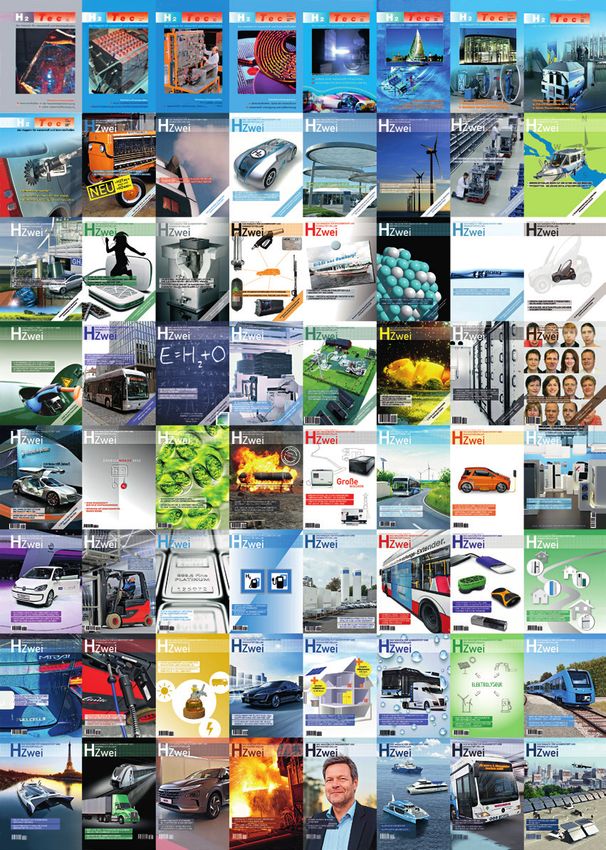
                      www.h2-international.com        Students          50 % off standard prices                             Cover image Celebrating 20 years of HZwei
                                                      Termination       At any time

                                                                                                                                                     H2-international 0 2 | M AY 2 0 2 0
ED I T O R I A L

    A NEW ALLIANCE
    Dear readers,

    Like other industries, the energy sector has seen events be-          saying Germany could even-
    ing postponed or cancelled, making it difficult if not impos-         tually become the number one
    sible to unveil new products, attend discussion panels and            market for hydrogen around
    meet new people. But the partial lockdown has also opened             the globe, like the United
    up some new opportunities. Thanks to greater digitalization,          States was for oil and gas for
    online product presentations can still reach a global audi-           over 50 years. That is quite the
    ence, face-to-face meetings are being replaced with webinars          comparison.
    and video conferences, and phone calls have become an even                All of these ideas may seem
    more important means to stay in touch. Additionally, few-             a bit far-fetched today. Nev-
    er commutes and business trips leave more time for other              ertheless, they show what we
    things and help reduce environmentally harmful emissions.             can achieve by continuing to
         Nevertheless, the question remains what to do when an            go down this road. And even
    event like Hannover Messe is postponed even though you                though the Summer Olympics
    were planning to attend it to unveil your latest product in           that were supposed to take
    front of a throng of journalists?                                     place in Tokyo have been postponed and Japan will not be
         It may still take a few weeks or months until we know            able to broadcast to the whole world this year what fuel cell
    whether shows and conferences will merely be pushed back              vehicles can do, the trend in the market will continue.
    to a later date. As it looks now, it seems extremely doubtful             In short, we could use this unexpected break from nor-
    that those planned for summer or fall can be held. More like-         mal life to prepare ourselves for a clean future.
    ly, they will not take place this year at all. It will be interest-       Let me end this editorial by saying that I hope you have
    ing to see if and how successfully online solutions, including        enjoyed reading the H2-international journal over the past
    state-of-the-art communication channels, can replace them             five years (see pp. 6 and 32) and that we can continue to be

4   for the time being.
         Whatever happens, Covid-19 will not be able to severe-
    ly impede or stop the advance of hydrogen and fuel cells.
                                                                          your trusted source for news and in-depth reports on the hy-
                                                                          drogen and fuel cell sector for a long time to come.

    Growth in the market will slow down somewhat, true, also                 Best wishes,
    considering the German cabinet has again postponed the
    debate on a national hydrogen strategy. We will simply have
    to be patient. As of this writing, it was not clear when the
    strategy would be put back on the agenda.                                Sven Geitmann
        And yet, it is safe to say that the current trend is irrevers-       Editor of H2-international
    ible. The public discussion on how to transform the energy
    sector in Germany and the changes we see happening in the
    market have demonstrated to politicians and the population
    that there will be no way around hydrogen. A national hy-
    drogen strategy will come. The only question is what it will
    look like.
         However, Germany is not the only EU member that is
    waking up to the potential of hydrogen and fuel cells. Coun-
    tries across the continent have realized what key contribution
    the technology could make to decarburizing the economy.
    As a result, the European Commission is currently preparing
    a white paper on how to create a cleaner industrial strategy
    specifically by using hydrogen.
         In early March, the Brussels-based agency announced
    it wanted to launch a Clean Hydrogen Alliance in collab-
    oration with governments and businesses from across the
    Union. In order to provide a foundation for this kind of
    partnership, it has already approved funding based on the
    IPCEI (Important Projects of Common European Interest)
    platform. This means we could see an alliance being forged
    as early as this summer.
         Overall, we are moving forward at a decent pace. Consid-
    ering recent announcements, it seems people are expecting
    hydrogen to take on a bigger role in the future, albeit some
    could be setting the bar a bit too high. There is already talk
    of hydrogen replacing an energy source such as brown coal,
    a suggestion that is being floated by a top-level executive who
    works for a large coal power company, no less. Others are
    H2-international 0 2 | M AY 2 0 2 0
NE W S
in March: ”Mission Hydrogen’s aim is to support, promote
TOTAL RESTRUCTURING and enable the hydrogen society long term.“ The company
markets itself as an independent partner to those who want
Since January, Jan Peter to grow and strengthen the hydrogen and fuel cell communi-
Source: Total, M. Lautenschläger
sen has been in charge of ty. It is offering consulting services to industry stakeholders
developing forward-look- and has also been planning to launch new events together
ing transportation solu- with other hydrogen and fuel cell organizations.
tions at Total in Germany. Peter Sauber Agentur and Mission Hydrogen had both
He is heading a new divi- partnered with scientific institutions located in different
sion that aims to install German states to bid on hosting the 23rd World Hydrogen
not only ultrafast charg- Energy Conference 2022 in Germany before it was an-
ers but also hydrogen nounced that the WHEC would be postponed by two years
and natural gas stations. because of the Covid-19 virus outbreak. As the next confer-
Bruno Daude-Lagrave, ence will reportedly be held from June 26 to 30, 2022, in Is-
the chief executive of To- tanbul, it is now entirely unclear when the event will take
tal Deutschland, said the place in Germany again. ||
company created the department to respond quickly to
market changes and make an active contribution to emis-
sions reduction. He added that the main goal of Total is to
be able to provide the energy needed for future generations HYDROGEN COUNCIL EXPANDS
of vehicles, a goal that can only be achieved by using a com-
bination of different technologies. ITS INFLUENCE
Petersen, who has degrees in physics and engineering
management, used to work for Elf and Tyczka Totalgaz, both Following an influx of new members, the Hydrogen Council
of which are now owned by the Total Group. He was also the has seen its influence grow around the world. In mid-Jan-
director of retail and consumer business at Total Deutschland uary, the association said several global players, including
and the managing director of Total Mineralöl. || Chevron, ElringKlinger, Mann+Hummel, McDermott and
Nikola Motor, had joined the council in supporting roles. Its
SILKE FRANK LAUNCHES
steering committee had also grown by five new members,
namely CNH Industrial, Michelin, Saudi Aramco, Schaeffler
and Siemens. And another five, all of which operate in the
5
finance sector, have formed an investor group. The organiza-
MISSION HYDROGEN tion’s membership total now stands at 81.
Benoît Potier, co-chair of the Hydrogen Council, which
Early this year, Silke Frank, was founded by 13 organizations in 2017, said that the as-
the longtime face of the sociation was “very pleased to see continued interest from
f-cell trade show, left event world-renowned companies,” businesses that “recognize the
organizer Peter Sauber massive potential of hydrogen and share our mission of scal-
Agentur Messen und Kon- ing up hydrogen solutions.” Co-chair Eui-sun Chung added:
gresse and went on to ”We believe in the power of hydrogen and the role it can play
found Mission Hydrogen in our existing energy system as well as a new, cleaner one.“ ||
in nearby Winnenden on
March 1. She had been with
Peter Sauber Agentur since
2003 and worked her way IN A POSITIVE MOOD
up the ladder to become
owner and founder Peter The Automotive Business Barometer has found that a clear
Sauber’s right-hand woman who oversaw day-to-day oper- majority of executives working in the auto industry wish
ations at the company. In that time, she had, for many years, automakers and politicians in Germany would support
a decisive influence on how the f-cell show held in Stuttgart more of the technologies deployed in electric vehicles. Over
was run. 80 percent of those who took part in the survey criticized
Because of this, Frank was believed to be the one who the current focus of politics and industry on all-electric
would eventually succeed him. In February, however, she transportation.
and Sauber parted ways over differences in their vision for Early this year, online market research firm Dynata con-
the company’s future. Sauber told H2-international that her ducted a survey on behalf of PwC Strategy& among more
leaving was “naturally a big loss” but that the f-cell show than 200 executives working in the German auto sector
would continue. However, in late March, Sandra Bilz, who at manufacturers, suppliers and dealerships that generate
had worked for the business for seven years, left as well. This annual revenues in excess of EUR 500,000. They said elec-
means Evelyn Hettich is now in charge of the symposium in tric transportation, fuel cells and batteries were the most
Stuttgart. important future-proof markets in need of innovation and
Silke Frank told H2-international she intended to keep believe their own companies to be relatively well-prepared
doing what a show, conference and event manager was best for the challenges ahead, in particular when it comes to
at and that was connecting people, in her case in the hydro- electric motor technology. However, almost two-thirds
gen and fuel cell sector. The chief executive of Ulm-based doubt alternative motors will ever be able to fully replace
Wenger Engineering, David Wenger, wrote about the startup combustion engines. >>
H2-international 0 2 | M AY 2 0 2 0
NE W S
Peter Gassmann, Managing Director of PwC Strategy& thank all our contributors, who have helped turn this mag-
Europe, said that Germany, as well as Europe, will need to azine into an industry staple and continue to fill its pages
rethink its reliance on manufacturing facilities in Asia and with novel and exciting stories each quarter.“ He said that
build up local expertise and capacities. This could help en- “Hydrogeit Verlag will keep working hard to ensure we pro-
sure that “the auto industry, as one of the country’s most duce a publication that both champions and challenges the
important industries, can stave off competition from the US hydrogen and fuel cell industry.“ ||
and China.“
Another survey, conducted by Kantar Emnid for gas net-
work operator Open Grid Europe, found the German pub-
lic to have quite a positive attitude toward hydrogen. Most VIESSMANN SHUTS DOWN HEXIS
respondents saw it as an important technology to complete
the country’s transition to a renewable economy. In all, 69 On March 19, German heating manufacturer Viessmann,
percent viewed hydrogen as future proof and expect it to based in Allendorf, announced it would shut down Hexis,
make an important contribution to transforming the energy its subsidiary in charge of developing SOFCs. The headline
market, while 76 percent agreed that politicians and business of the press release sounded rather innocuous: “Viessmann
leaders needed to increase investments in the technology takes new path to implementing future-proof technology.“
and offer more support for the sector. || However, in the third paragraph, the company then said it
“will discontinue operations at Hexis.“
It went on to write that while it had taken note of ”the
growing importance of hydrogen and fuel cells in supplying
HZWEI TURNS 20 energy to homes in Germany as well as Europe“ and intends
to stay committed to the technology, it will no longer man-
It has been over ufacture its own devices, offered across Europe since 2014.
20 years since They will be replaced by a Panasonic PEM system, which is
the “Magazin für run at relatively low temperatures and is suited especially for
Wasserstoff und new or recently renovated buildings. In Japan, Panasonic has
Brennstoffzellen” already installed more than 290,000 of the devices.
started covering Compared to the Panasonic system, the SOFC unit made
6 the hydrogen and
fuel cell sector.
H2Tec, as it was
by Hexis has always been at a disadvantage. Run at higher
temperatures, the module was designed to provide power
mainly in existing building stock at higher output. Named
called at the time, Galileo, it worked as expected but was expensive and less
was launched by tried and tested. Hexis said several hundred of the devices
Hanover-based had been installed as part of multiple demonstration projects.
SunMedia Verlags Consequently, the parent company’s management decid-
GmbH at the turn ed to keep offering both PEMFCs and SOFCs but limit itself
of this century. to the role of system integrator. Viessmann is now looking
In 2005, the com- for industrial partners from which it could purchase the fuel
pany decided to
cease publication
and transfer the
rights to the trade
Fig. 1: First cover of HZwei, from January 2006 magazine to Hy-
drogeit Verlag, a
small publisher that had been founded in Kremmen in 2004
and had since become Germany’s premier source for books
about hydrogen and fuel cells.
The H2Tec magazine was issued twice a year and was print-
ed mainly in two colors, blue and black. With 20 or 24 pages, it
was relatively thin. But as a quick look in the archive will show,
some of the experts who used to write for the publication are
still working in the hydrogen and fuel cell sector today.
When Hydrogeit Verlag took over, it changed more than
the name on the magazine cover. Issues were now 32 pag-
es and came in an entirely new design (see fig. 1, plus cover
collage on p. 32). Since then, the magazine has grown with
the rising interest in hydrogen and fuel cells. Today, it is an
average of 64 pages. Hydrogeit Verlag also did away with the
English paragraphs that summarized a few of the articles in
H2Tec. Instead, it launched an English edition of HZwei, as
the magazine was now called, in 2015 and named it “H2-in-
ternational – the e-Journal on Hydrogen and Fuel Cells.”
Sven Geitmann, the editor-in-chief and founder of Hy-
drogeit Verlag, was pleased to note that “now in its 15th year,
HZwei has grown more popular than ever. I would like to Galileo device showcased at the IBZ booth at Hannover Messe in 2015
H2-international 0 2 | M AY 2 0 2 0
T R A D E SH O W S
cell technology, with the aim of reaching economies of scale Paris is so high that Hype decided not to promote its smart-
in much less time. phone app, as it can no longer meet all requests.
The shutdown marks the end of an era for the subsidi- Although French exhibitors and attendees were again in
ary’s 40 employees, 34 of whom were based in Winterthur the majority this year, interest in the Paris-based show has
in Switzerland and six in Constance in Germany. Founded been growing around the world. For example, many German
by Swiss-based Sulzer in 1998, Hexis almost had to file for businesses have been pushing into the French market, and
bankruptcy in 2006 but was saved by Viessmann, which ac- HyVolution is offering them an ideal opportunity for estab-
quired 50 percent of the company in 2012 (see the photo of lishing a network in France. Some of the other exhibitors at
Hannover Messe 2012 on p. 3 of this issue) and the second the event were from Belgium, Canada, Denmark or the UK.
half in 2015. As recently as 2019, Hexis announced it was Both they and the attendees had many positive things to say
working on the next generation of fuel cell systems, called about the conversations they had and they people they got to
Galileo 1000 N. Volker Nerlich, longtime sales director at know, even if it is not always easy for foreign companies to
Hexis, left the business last summer. It is still unclear what get a foot in the door.
will happen to its other employees. A spokesperson for Viess- Additionally, FCH JU took advantage of the opportunity
mann said the parent company was in regular talks with to run an information day on upcoming EU requests for bids
Hexis staff to find solutions that will benefit everyone. in the sector, while members of the Hydrogen Valley Partner-
Alexander Schuler, the chief executive of Hexis, told ships based in France, Germany, Greece, Italy, Scandinavia,
H2-international that “this is a sad time for us, but we have Scotland, Spain and Portugal decided to hold their third plena-
not given up as a team. Making the decision public could ry session at HyVolution. The Espace Ateliers served a purpose
open an opportunity for finding new investors or partners similar to that of the Public Forum at Hydrogen + Fuel Cells
that can help us scale up the technology. We have been as- Europe, namely offering a central platform where exhibitors
sured the equipment in Winterthur and Constance will be could showcase their expertise. The roundtable discussions,
kept for another two months so we can start looking. Like- held mostly in French and sometimes in English, were record-
wise, Viessmann would be the first customer, or client, of any ed for broadcast on TV. The show even had a space allocated for
such venture. We are now concentrating all our efforts on business meetings. Although a few things could become a bit
finding a solution so we can keep making fuel cells.“ || more intuitive, it is clear that the Paris HyVolution show, which
GL Events is planning to hold annually from now on, has be-
come a big asset to Europe’s hydrogen and fuel cell community.
HYVOLUTION TO BE HELD
In 2021, HyVolution will take place on Feb. 10 and 11 at
Parc Floral on the outskirts of Paris. ||
Author: Uta Mummert
7
ANNUALLY
POSTPONED OR CANCELLED
EVENTS
Many events that were to be held this spring have been either
cancelled or postponed because of public health concerns
over Covid-19. Hannover Messe and Düsseldorf-based Ener-
gy Storage Europe will only return in 2021, the latter between
Source: GL events
March 16 and 18 next year. Essen-based SHK, the largest
show for heating and sanitation in Germany, has been re-
scheduled to take place in late summer, from Sept. 1 through
4, 2020. The global impact of the coronavirus pandemic has
also affected the Vancouver-based f-cell+HFC 2020, which
Twenty years later and a country apart, the French HyVo- has been pushed back to September 9 and 10, 2020.
lution show brings back memories of how Hydrogen + Fuel The World Hydrogen Energy Conference 2020, orig-
Cells Europe started out at Hannover Messe in Germa- inally scheduled to take place in Copenhagen, Denmark,
ny. Launched by Bertrand Chauvet, the president of Seiya was first moved to Istanbul, Turkey, following seemingly
Consulting, the first HyVolution attracted a relatively small irreconcilable differences of opinion between IAHE and the
number of exhibitors and attendees when it was held in Sep- local event organizer. But after Covid-19 began sweeping the
tember 2013 in Albi. After a short stint in Grenoble in 2014, globe, it was decided that the conference will not be held at
it found a permanent home in Paris two years later as GL all over the next two years. The next WHEC has been set for
Events took over management of the event. June 26 through 30, 2022.
In the meantime, the French government has also start- The calendar on page 63 of this issue will tell you what
ed to promote the hydrogen market, so that HyVolution has events are still to come this year. We will notify you on our
turned into a global show buzzing with activity. In all, 120 website or as part of our free monthly newsletter should more
exhibitors presented their products to over 2,000 industry of them be postponed or cancelled. You can click on one of
professionals who attended HyVolution between Feb. 4 and 5, the following links to get to an up-to-date list of events or to
twice as many as in 2018. Hype, a French operator of hydro- the H2-international newsletter section:
gen taxi cabs, came to the event with 15 Toyota Mirai cars to
shuttle visitors between the metro station and the expo area. www.h2-international.com/events/
The number of people asking for its hydrogen taxi services in www.h2-international.com/h2i-newsletter/
H2-international 0 2 | M AY 2 0 2 0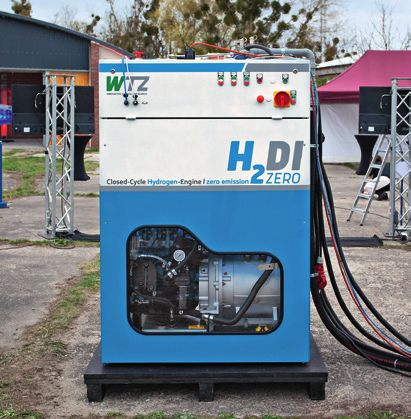
BUILDING SECTOR
Category: Building sector Author: Sven Geitmann
FUEL CELL STACKS FROM KÖPENICK
Fuel cell CHP system made in China
Mostly out of the public eye, Berlin-based inhouse engineer
ing has been working for years behind the scenes on a fuel
cell system that does not quite fit in with other suppliers‘
product offerings. With 5 kW capacity, it is much more po-
werful than devices offered by, for example, IBZ partners
(see list on p. 10). Likewise, it is used mainly to supply ener-
gy for commercial multi-family and business properties,
not single- or two-family homes. It has been said that the
system might now be brought to market during the second
half of this year.
The inhouse5000+ has already been field-tested for several
years in projects using either natural gas or hydrogen. The
fuel may be the single biggest difference to other smaller de-
vices, as it has been the only low-temperature PEM system
capable of running on hydrogen only. Most competing prod-
ucts have so far used fossil fuels, that is, natural gas or LPG,
to power homes.
When the chief executive of inhouse engineering, Chris-
toph Hildebrandt, was asked why the device had not yet been
brought to market, he said there were several reasons devel-
8 opment had taken longer than expected. One of them had
been a shortage in catalysts used in the reformer, another the
terms and conditions of KfW bank’s funding opportunity,
which had initially been limited to single- and two-family
homes. It also had been difficult to find partner companies
that could distribute the product.
Today, inhouse engineering is in a successful collabora-
tion with DiLiCo engineering, a Magdeburg-based supplier
of instrumentation and control equipment. The supplier is
not only helping to improve the CHP device but is also dis-
tributing it across the German state of Saxony-Anhalt.
So far, inhouse engineering has put up nearly 20 demon-
stration systems. One of them meets baseload demand at a Fig. 1: Testing a distributed energy system that runs off a hydrogen
swimming pool in Döbeln, another supplies energy for a fuel cell in the energy zone at industrial park Bitterfeld-Wolfen
multi-family building in Reichenbach. One more has been [Source: inhouse engineering]
installed at Riesa State Academy, both to meet baseload de-
mand and educate students about the inner workings of the home near Nuremberg. The CHP system can be fueled by
device. This spring, yet another will be put up at a retirement natural gas, LPG or biogas and two of the devices currently
installed use hydrogen alone. All of them have been designed
to generate over 100,000 kilowatt-hours of heat and up to
INTERNATIONAL
25,000 kilowatt-hours of electricity.
ONE OF FEW GERMAN STACK MANUFACTURERS In
NEWSLETTER contrast to other suppliers‘ small fuel cell heaters, the in-
house5000+ is not equipped with a peak load boiler or a
hot water storage tank. This means it needs to be con-
ON HYROGEN AND FUEL CELLS nected to an existing heating system, such as a natural gas
boiler, or such a system would have to be bought. Hilde-
brandt said the modular design makes it possible to “in-
stall the device even in hard-to-access spaces without the
use of heavy machinery.“
Located in Berlin’s Köpenick district, inhouse engineer-
ing manufactures all fuel cell stacks on-site. Components
international
E-JOURNAL ON HYDROGEN AND FUEL CELLS
are bought from several suppliers, some based in Denmark,
while the unit reforming natural gas comes from WS Re-
www.h2-international.com former. Stacks are still made by hand in the workshop in
Köpenick. However, the new building into which the small
H2-international 0 2 | M AY 2 0 2 0
BUILDING SECTOR
The 24-staff business has been working on the fuel cell CHP
system for nearly five years and is currently testing it in the
Hydrogen Village in Bitterfeld-Wolfen, as part of publicly
funded Hypos project H2-Home. The site is also home to a
second Hypos project named H2-Netz, the aim of which is to,
for example, determine what kind of pipeline is suitable for
delivering hydrogen (see H2-international, December 2017).
Work on the system, which recovers some of the latent heat
of vaporization when it generates heat and power, started in
2016. “We have achieved all that we wanted to achieve,“ said
Hildebrandt. The hydrogen-fueled device generates electrici-
ty at around 50 percent efficiency and has a total efficiency of
either up to 92 percent (HHV) or 104 percent (LHV).
Now that H2-Home is in its second stage, the CHP sys-
tem was put up for demonstration purposes at the Mitnetz
Gas 12,000 m2 testing site in the Bitterfeld-Wolfen industrial
park. Besides improving the unit, the focus of this stage will
be on identifying and solving possible supply and storage is-
sues in partnership with H2-Netz members.
In October 2019, multiple German and French organiza-
tions also launched LivingH2, a collaborative venture that
aims to integrate the device into the building systems at the
new Engie Lab Crigen in Paris. Other aims are to test a new
a membrane electrode assembly that has been non-uniform-
ly coated with a catalyst and see how feasible of an idea it
is to use odorants to detect hydrogen leaks. In addition to
inhouse engineering and Engie Lab Crigen, the partners in
this project are DBI – Gastechnologisches Institut and OTH
Regensburg University, both based in Germany, and CEA-
Liten, based in France. || 9
Fig. 2: PEM stacks with end plates and a compression spring assembly
business is planning to move this year could provide suffi-
cient room to revamp production.
The first thing on the agenda right now would be to get
the device CE-certified, Hildebrandt said. If everything goes » WEH® H2 FUELLING NOZZLES
as planned, a partner company in China could start manu-
facturing and shipping products in the second half of 2020. Top QUALITY for maximum RELIABILITY
Initial batches would run primarily on natural gas, although
up to 30 percent hydrogen blends would “not be an issue,” he
said. He added that the systems would be priced at around WEH® TK17 H2 70 MPa ENR
EUR 60,000 (excluding VAT but including full maintenance
services and stack replacement after around five years).
Funds from the KfW bank and the Clean CHP Act program
could cut the price roughly in half, though it would take
eight to nine years to recoup the full cost. ”We will be getting
the price down soon,” he said.
S&R BECOMES INHOUSE
Following a statutory merger in 2008, S&R Schalt- und
Regeltechnik, founded in 1991, ceased to exist, with only SAFE & EASY
inhouse engineering staying in business. Jürgen Arnold,
who founded S&R and was its chief executive, is still a H 2 Refuelling
member of inhouse despite his retirement. He was the
one who turned the company’s focus to fuel cells, even
though S&R was making most of its money with building
automation and management equipment.
In 2017, inhouse engineering established a partnership
with a business in China. In April 2018, they went on to
form a joint venture with the aim of making fuel cell
CHP systems in the People’s Republic and exporting
them to Europe.
» www.weh.com
H2-international 0 2 | M AY 2 0 2 0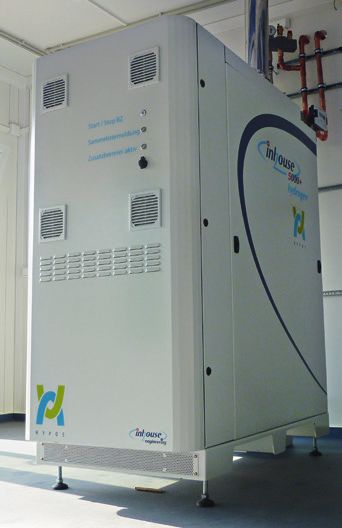
BUILDING SECTOR

     Category: Building sector

     OVERVIEW FUEL CELL HEATING SYSTEMS

          MANUFACTURER                                BUDERUS                SENERTEC          SOLIDPOWER           VIESSMANN

          MODEL                                       BLUEGEN BG-0           DACHS 0.8         BLUEGEN BG-15        VITOVALOR PT2

          FC TYPE                                     SOFC                   PEMFC             SOFC                 PEMFC

                                                      Natural gas,                             Natural gas,
          FUEL                                                               Natural gas                            Natural gas
                                                      bio natural gas                          bio natural gas

10        POWER (EL / TH)

          STORAGE
                                                      1.5/0.6 kW

                                                      external
                                                                             0.75/1.1 kW

                                                                             Buffer storage
                                                                                               1.5/0.85 kW

                                                                                               external
                                                                                                                    0.75/1.1 kW

                                                                                                                    Buffer storage
                                                                             300 L                                  220 L

          ELECTRICAL EFFICIENCY                       60 %                   38 %              55 %                 37 %

          OVERALL EFFICIENCY                          85 %                   92 %              88 %                 92 %

          ENERGY EFFICIENCY CLASS                     A+++                   A+++              A+++                 A++

          DIMENSIONS
                                                      660 × 600 ×            1,080 × 1,410 ×   800 × 550 ×          595 × 1,200 ×
          PARTLY WITH STORAGE UNIT
                                                      1,100 mm               1,870 mm          1.200 mm             1,800 mm
          (D × W × H)

          WEIGHT                                      195 kg                 332 kg (total)    250 kg               326 kg (total)

          FIELD TESTS,                                ene.field              Callux            ene.field (EU)       PACE
          OLLABORATIONS,                              PACE                   ene.field         PACE
          DEMONSTRATION PROJECTS                                             PACE

          MARKET LAUNCH                               3rd quarter 2016       June 2016         2012                 April 2014

                                                      Residential and                          Residential build-
          FIELD OF APPLICATION                                               One- and two-                          One- and two-
                                                      small office                             ings and commer-
                                                                             family homes                           family homes
                                                      buildings                                cial enterprises
                                                      31.071 2               20.000 2          25.000 2             20.000 to 25.000 2
          PRICE
                                                      (VAT included)         (plus VAT)        (plus VAT)           (VAT included)

          INCENTIVE OF UP TO                          16,050 2               11,100 2          16,050 2             11,100 2

         Sources: Initiative Brennstoffzelle, own research – accuracy cannot be guaranteed

     H2-international 0 2 | M AY 2 0 2 0
f-cell Stuttgart
September 29+30, 2020
The annual fuel cell and hydrogen
event – now in its 20 th year!
REMEHA SUNFIRE INHOUSE
ELECTA 300 SUNFIRE-HOME INHOUSE5000+
PEMFC SOFC PEMFC
Natural gas,
Natural gas,
Natural gas bio natural gas,
LPG
LPG, hydrogen
0.75/1.1 kW
Buffer storage
0.75/1.25 kW
external, individu-
4.2/7.5 kW
external,individu-
11
300 L ally selectable ally selectable
38 % 37.7 % (at full load) 34 % (CH4) / 50 % (H2)
95 % 90 % 92 %
A++ A++
1.070 × 1,500 × 600 × 680 × 1,160 × 740 ×
1,810 mm 1,150 mm 1,550 mm
350 kg (total) 150 kg 380 kg (total)
ene.field Callux ene.field
PACE ene.field
PACE
3rd quarter 2016 January 2020 2nd half 2020
Multi-family proper-
One- and two- One- and two-
ties and commercial
family homes family homes
buildings
ce
Conferen
23.000 2 23.315 2 (VAT around 60.000 2
(plus VAT) included, LPG) (plus VAT)
Trade Fair
11,100 2 11,100 2 37,000 2
Trade Fair space is selling out
ps
quickly – contact us now to book Worksho
your space!
f-cell@messe-sauber.de
f-cell.de #fcell #fcellaward
H2-international 0 2 | M AY 2 0 2 0BU IL D IN G SEC T O R
Category: Building sector Author: Sven Geitmann
NEW GAS BOILERS RUN ON HYDROGEN
Manufacturers prepare for hydrogen network
German consumers in need of a new heating system have IN COMPETITION WITH HEAT PUMPS
expressed growing interest in home fuel cells, an assessment Holzminden-based Stiebel Eltron is not an IBZ mem-
shared by the public hydrogen and fuel cell agency. Al- ber. Besides the fact that most of its products are heat
though there are few systems on the market these days, and pumps, there is this example from its internal maga-
pretty expensive ones at that, their numbers are rising. As it zine to illustrate why membership may not be an option:
looks now, the government will continue to fund the sector An employee reports that “in a recent conversation, a
for a while. The following paragraphs offer a summary of builder spoke to me about his construction project and
what is currently available for sale. told me he really wanted to use renewable energy to
supply heat and power to the building. He was thinking
German home heating about having a fuel cell installed. In the end, however,
suppliers say they are he became convinced that a heat pump solution brings
ready to shift into high more advantages to the table.”
gear. At least, the mem-
bers of the Fuel Cell
Initiative, also known the aim of this partnership was to offer customers SOFC
as IBZ, are reportedly modules with 10 kilowatts generating capacity in order to
working on bringing get a foothold in the market for fuel cell power plants. Phil
new systems to market. Caldwell, the chief executive of Ceres Power, said the part-
In February, Neu- nership had “the potential to drive the widespread adoption
bra ndenbu rg-ba sed of SOFC for distributed power generation products using the
Sunfire Fuel Cells, a Ceres Steel Cell technology.”
12 Sunfire subsidiary, un-
veiled a new heater in
Berlin. This solid ox-
By contrast, Freudenberg Sealing, based in Weinheim,
Germany, has taken its NEX 2400 (previously known as el-
core 2400) off the market. The company announced it would
ide fuel cell system can no longer manufacture or sell the device, although it would
run on methane, the keep supporting its latest product generation based on the
main component of terms and conditions of existing maintenance contracts.
natural gas, or a mix-
ture of propane and HIGH-PRICED MARKET Prices for home fuel cells are set by
butane. As Sunfire’s installers so guidelines on what you can expect to pay are
sales strategy has cen- hard to come by. As an example, the suggested retail price
tered around the use of for a Vitovalor PT2 is EUR 18,773. This excludes the cost
LPG, it has partnered of putting up the device and the 19 percent VAT rate on
with gas companies to equipment and installation. The government supports the
benefit from their dis- latter with EUR 9,300 and, based on the German CHP act,
tribution channels. may award a one-time grant to applicants who rather get
Liquefied petrole- paid for future energy deliveries upfront instead of having
um gas has been in use to bill deliveries monthly.
in the residential sector This means that consumers who want to use fuel cells
for decades, primari- to power their homes would have to invest between EUR
ly in the countryside, 20,000 and EUR 25,000 depending on site conditions. The
Fig. 1: Sunfire-Home where some buildings
are not connected to EXAMPLE: FUEL CELL INSTALLED IN A NEWBUILD
the natural gas network. Sunfire-Home offers suppliers an A single-family detached home consumes an average of
opportunity for gaining new customers who want to switch 4,200 kilowatt-hours per year. A residential fuel cell can
from oil to gas. Typically, these customers need a greater generate up to 6,200 kilowatt-hours of electricity an-
quantity of LPG as well, since (some) home fuel cells are con- nually, around 60 percent of which can be used on-site.
figured for combined heat and power. This results in 2,520 kilowatt-hours that will no longer
Designed in part by drawing on the expertise of Sunfire’s need to be bought from a utility. At an average electricity
former business partner Vaillant, the new SOFC system will price of EUR 0.25 a kilowatt-hour, the family in this ex-
now go into commercial production. Sunfire-Home is in- ample will therefore save EUR 630 per year. The remain-
stalled as an add-on to a conventional heating system and ing 1,680 kilowatt-hours can be fed into the grid and will
can be run in buildings with or without a connection to the bring in another EUR 84 thanks to Germany’s feed-in
gas grid, in the latter case by using LPG. tariff system. Overall, owners of single-family homes
Bosch, too, has been intensifying its efforts to develop can save EUR 714, that is, EUR 10,710 over 15 years, as-
fuel cells, even for non-automotive applications. In August suming the fuel cell stack does not need to be replaced
2018, it formed a strategic partnership with Ceres Power, during that time.
an SOFC manufacturer based in Horsham, UK. Bosch said
H2-international 0 2 | M AY 2 0 2 0BU IL D IN G SEC T O R
throughout the year, as the building is not connected to
the gas grid. Business owner Rita Hörmann said the Pi-
cea unit, as well as its auxiliary components, was the “first
commercially available and financially sound CHP system
that pays for itself over time.” In all, her husband Mark-
us added, they had paid around EUR 70,000 to get it up
and running (see also “Solar, hydrogen and fuel cells com-
bined” on p. 54).
STATIONARY HYDROGEN COMBUSTION ENGINE The WTZ
engine and machinery research center in Roßlau chose a
different path to developing a new stationary zero-emis-
sion system. It designed an air-independent propulsion
engine called H 2 DI Zero. The name stems from the fact
that some of the combustion gases are recovered so the
engine emits nothing but steam. Instead of air, it uses ar-
gon, an inert gas that can be retrieved multiple times over,
and pure oxygen, mixed with hydrogen. This eliminates
Fig. 2: Hydrogen storage module installed in Zusmarshausen nitrogen and carbon from the combustion cycle, thus also
[Source: Hörmann Solartechnik] removing hydrocarbons, carbon dioxides and nitrogen ox-
ides from the equation. >>
price is about the same as for installing a brine water heat
pump. This means home fuel cells are four or five times
as expensive as the latest generation of gas boilers, despite
national and EU-wide funding opportunities. Recouping
that money through energy savings alone will be difficult
to achieve.
MULTI-ENERGY RESIDENTIAL SYSTEMS Besides replacing
old devices to put in newer, more efficient ones, there also
seems to be a trend toward more complex solutions. For ex-
13
ample, Sunfire expects that at some point, entire neighbor-
hoods will be supplied with energy through a combination
of solar PV, heat pump and large fuel cell devices. These mul-
ti-energy residential systems will no longer produce heat and
power for individual buildings but several residential units
at once.
Similarly, Home Power Solutions, also known as HPS,
is redoubling its efforts to provide homeowners with off-
grid CHP solutions for energy-independent buildings. In
mid-February, the business announced it had partnered with
Gasag, a Berlin-based gas supplier, to install its products.
HPS said it was now planning to ramp up sales. Since
early 2019, the company has been offering homeowners a
system to store self-generated renewable energy, with the
aim of making them energy-independent throughout the
year. Called Picea, it consists of a solar PV unit equipped
with a load controller and an inverter, batteries, an elec-
trolyzer, a fuel cell and ventilation (see H2-international,
September 2018). Fig. 3: H2 DI Zero engine developed by WTZ [Source: WTZ]
The 300-bar modules offered by HPS (see fig. 2) are
made by Wystrach, based in Weeze, Germany. The supplier MTU IS BACK
announced the collaboration with HPS a year ago, during MTU Friedrichshafen, renamed Tognum in 2006, con-
the Energy Storage Europe show in Düsseldorf. At the show, ducted extensive research into stationary fuel cell
Wystrach’s sales director, Wolfgang Wolter, said that ”Picea power systems as early as the turn of this century. It
is a great example of how to use our stationary solutions for put up several molten carbonate fuel cells named Hot
maximum benefit. Our modules can adapt to very different Modules as part of government-funded demonstration
consumption profiles, from single-family homes to office projects. In 2010, however, its management decided to
buildings and power plants.“ The electrolyzer integrated into discontinue developing stationary high-temperature
Picea is delivered by HPS’ business partner Enapter. fuel cells (see HZwei, October 2010). In 2011, Rolls-
One such Picea system was installed in Zusmarshau Royce and Mercedes-Benz then founded Engine Hold-
sen, where it provides heat and power for the home of the ing, which owned 98 percent of Tognum’s assets at the
Hörmanns, located not far from their installation busi- time. In 2014, the former acquired the latter’s stake in
ness called Hörmann Solartechnik. The device, ordered in the business.
December 2018, supplies the household with solar energy
H2-international 0 2 | M AY 2 0 2 0BU IL D IN G SEC T O R
nership with Rolls-Royce Power Systems and under its MTU
brand, a backup power generator running off automotive
fuel cells. A pilot project, scheduled for completion in early
2021, will reportedly use both batteries and fuel cells.
MCFC technology could, for example, power server
farms, as their electricity needs have increased with greater
digitalization. Providing them with a reliable, clean source
of energy will probably become ever more important. “The
principle of the fuel cell is as ingenious as it is simple,” Mar-
tin Teigeler, executive vice president of research and devel-
opment at Rolls-Royce Power Systems, said. He added that
the technology was not just well-known but also suited for
challenging tasks. Now that it had become advanced enough,
it was ready to be brought to market.
Toyota and Hyundai are taking the same approach of
transferring technology between markets. At IAA 2019,
Hyundai showcased a system made up of two fuel cells, the
same cells used in its Nexo car, for charging electric vehicles
Fig. 4: Hyundai’s hydrogen-powered generator (see fig. 4). The two manufacturers hope that going the route
through the market for stationary power systems will boost
H – NOT L production volumes overall and quickly reduce the cost of
Since 2015, an increasing number of L-gas pipelines in vehicle fuel cells as well.
western Germany have been converted to deliver H-gas,
that is, gas with a high calorific value. The less ener- HYDROGEN PIPELINE NETWORK Today, most stationary
gy-dense L-gas has been extracted and for the most part power systems run on natural gas. The idea of blending
used locally in the Netherlands and the German states of hydrogen into the gas pipeline network, however, has been
Bremen, Hesse, Lower Saxony, North Rhine-Westphalia under discussion for a while, and there have already been
and Rhineland-Palatinate, as well as Saxony-A nhalt. By some tests conducted on its feasibility. Heating manufactur-
14 2030, all sources that have a low calorific value will be
replaced with methane-rich H-gas coming from Nor-
way, Russia and the UK.
ers have assured clients that current-generation systems can
run on low-level 10 percent hydrogen blends and announced
that the next generation could manage up to 30 percent. They
said in the long term, it would also be possible to use hydro-
gen only. For example, Viessmann has announced that all
By contrast, conventional hydrogen combustion engines use of its new gas boilers would be “hydrogen-ready” starting in
air as the reactant. However, air contains 78 percent nitrogen. 2023 or 2024.
At high temperatures, nitrogen reacts with oxygen to form In late January, during the DVGW association’s Parlia-
nitrogen oxide, which is a danger to the climate. Manuel mentary Evening in Berlin, the chairman of Zukunft Erd-
Cech, who heads the WTZ project, said “the use of argon gas, Timm Kehler, suggested converting one of four parallel
has allowed us to improve combustion engine efficiency to transmission pipelines to deliver 100 percent hydrogen in-
unprecedented levels.“ stead of a 25-percent blend in each. He pointed to the H21
The Roßlau-based engineers noted the engine would be project in Leeds, UK, where the city’s council aims to convert
a good fit for stationary multi-megawatt systems, not for the gas supply to hydrogen only. Thorsten Herdan, director
vehicles. The main goal was to develop a system that can of energy policy at the German economy and energy minis-
compete with fuel cell and CHP power plants. At 50 percent try, replied that he could very well imagine using the L-gas
engine efficiency, the device is certainly a viable candidate pipeline network for this purpose, as it would no longer be
for the market. Prospective customers include public utili- needed anyway. However, the government would not step in
ties that have so far relied on natural gas-fired CHP systems but let the market decide what to do.
but would like to use renewable hydrogen from now on, for Jörg Bergmann, who chairs Open Grid Europe’s execu-
example, to balance supply and demand. tive board, said his company had already been developing
Cech told H2-international that the idea for the 50-kilo- small hydrogen-only networks. Volkmar Pflug, vice presi-
watt unit had been thought up during a research project. This dent for energy economics at Siemens, explained that “gas
project was launched three years ago and work on the engine turbines are not the issue. New ones accept up to 20 percent
has been made possible through funding the nonprofit or- blends.“ He added that turbines to be put up by 2030 could
ganization has received from the government. WTZ is also be powered by hydrogen alone. ”As soon as there is enough
a partner in LocalHy, set up to investigate opportunities for gas available, turbines will be ready to run on 100 percent
producing hydrogen and oxygen through distributed water hydrogen,” he said and noted that old systems could be up-
electrolysis. graded to do the same. ||
AUTOMAKERS WORK ON STATIONARY SYSTEMS Similar to “When we devised the national hydrogen strategy, the
reciprocating internal combustion engines used in CHP, fuel building sector had not been foremost in our minds.“
cell systems originally developed for the automotive indus- Thorsten Herdan,
try are now being installed in stationary systems that supply German economy and energy ministry
heat and power to buildings.
For example, Mercedes-Benz has asked Lab1886, its in-
novation lab for new business models, to develop, in part-
H2-international 0 2 | M AY 2 0 2 0POLICY
Category: Policy Author: Sven Jösting
HANDELSBLATT ENERGY SUMMIT IN BERLIN
Opinion: A green deal is on the table
The Handelsblatt Energy Summit, which took place in Ber- change. Attendees at the summit called for raising the cost
lin from Jan. 20 to 22, was the right kind of event to take of fossil fuels and lowering the cost of green electricity, es-
the pulse of the energy industry. Attendees typically discuss pecially if produced from hydrogen. Cut away the red tape,
issues that have far-reaching implications for the German get rid of regulations suffocating the industry, and invest in
market. This year, it seemed as if over 80 percent of all pre innovative solutions on a massive scale, I would say. Change
sentations, speeches, panel discussions and shared opinions is more likely to happen when people are fully committed to
included, at the very least, a passing reference to hydrogen, the cause and not when doomsday scenarios and a general
its uses and its contribution to fighting climate change and sense of panic drive them to action. Clean energy should al-
creating a renewable energy supply chain. ways be supplied by distributed generation systems, ideally
at the point of use.
Gutting the renewable energy law would benefit taxpay-
ers, who would have more money in their pockets at the end
of each month. It would also cause a drop in energy prices
for businesses, factories and communities across the country.
This would spur investment, a blessing to many German state
governments as they are trying to put their best foot forward.
As for industrial companies, they are ready to take the next
step. Many communities also sense great opportunities, not
just for taking climate action but also for establishing new
markets that create jobs and, ultimately, generate tax reve-
nues. The government and parliament need to work together
to increase funding for renewable energy considerably, pro-
mote research, and accelerate the transition from living labs
to commercial production. They need to create programs for
15
market adoption and partner with other members of the Eu-
ropean Union instead of trying to have companies develop
technology nationally.
As one attendee at the event put it: “We need everything
and all of it.” While Europe is extracting less and less natural
gas at home, it imports an ever-greater quantity from abroad.
Fig. 1: Johannes Teyssen [Source: Dietmar Gust / Euroforum] LNG can meet demand for a short while, but hydrogen is
more suited for bridging the gap left by coal and nuclear.
The way in which Germany has crafted national energy pol- Power-to-X will grow in importance as well, since it is not
icy could soon become a model for other countries to emu- just used to generate electricity but also supplies low-carbon
late. The German renewable energy law, known as EEG, was and zero-emission energy in the heating, cooling and trans-
a good start but is now yesterday’s news. The time has come portation sectors.
to devise an industrial strategy that responds to the latest Most attendees at the summit agreed that hydrogen and
changes in the market, provides energy security and en- fuel cell technology would assume a crucial role, and a more
sures affordable prices. The government’s decision to phase important one than batteries, in the heavy-duty truck mar-
out coal and nuclear energy seems final, so what systems ket, where 90 percent of trips are long distance. Someday, of
will supply the country with baseload power? “Do we have course, 18-wheelers may run on electrofuels. However, it will
enough backup capacity?” was thus a fitting question and the take some time until these fuels are available in large quan-
title of one of the panel discussions held at the summit. LNG tities. It needs to be said that German politicians focus too
and CNG will be used for transitioning to a renewable ener- much of their attention on all-electric transportation. In-
gy system and batteries could store energy for certain appli- stead, they should fund distributed generation systems and
cations, but that is about all. The lack of alternatives is the help bring about a massive increase in electrolysis capacity,
reason why hydrogen is moving more and more into focus. as well as be more open to all forms of clean energy.
Johannes Teyssen, the chief executive of E.ON, said it Many speakers at the event zeroed in on large, ever-more
in a nutshell: Instead of gradually dismantling the EEG, as powerful electrolysis systems that generate hydrogen ideally
the German economy minister Peter Altmaier is offering from clean electric power. It should be noted that electricity
to do, the clean energy law would need to be scrapped alto- prices contribute over 90 percent to the cost of production.
gether. Teyssen suggested using carbon credits to cover the In 10 to 20 years, green hydrogen is expected to be less ex-
budget gap that would result. Some propose a price of EUR pensive than gray hydrogen and could cost as little as USD 1
150 to EUR 350 for one metric ton of carbon dioxide emis- to USD 2 per kilogram.
sions, which would turn the credits into a perfect regulatory My conclusion is that the hydrogen and fuel cell market
measure. Overall, the price would need to be much higher, is showing a lot of promise these days, and Power-to-X is on
high enough to encourage massive investment in clean en- the right track as well. German politicians will now have to
ergy and energy efficiency improvements to combat climate learn to break old patterns and step on the gas. ||
H2-international 0 2 | M AY 2 0 2 0POLICY
Category: Policy Author: Sven Geitmann
GOVERNMENT AGENCIES ARGUE ABOUT
WHO IS IN CHARGE
Christian Democrats backed by industry, SPD by the public
Who can make the most of hydrogen and fuel cells? This
question seems to have sparked a fierce competition be-
tween several German government ministries since late
2019 as they are vying with each other for control over the
debate. Their tug-of-war began spreading through the polit-
ical landscape when hydrogen became an issue to campaign
on early this year, prior to the Hamburg state elections. Al-
though the Christian Democrats were the ones who actively
promoted the technology for a while, public opinion seems
to have shifted in favor of what the Social Democrats are
planning to do with it.
Meanwhile, the draft document mapping out Germany’s
hydrogen strategy has grown from six to 21 pages and the
government agencies involved are taking longer than expect-
ed to reach an agreement. These could be signs that policy-
makers have belatedly but finally acknowledged that hydro-
gen will have an important role to play in a next-generation
energy system.
16 There is consensus on a few basic points. Most political
party representatives want to make use of hydrogen and
are willing to fund efforts to bring it to market. Exactly
Fig. 1: Elisabeth Winkelmeier-Becker
and vans, buses, trains, inland and coastal vessels, and
what form their support will take, however, is something fleet cars until 2023. The infrastructure buildup will be
the ministries, and party representatives, are still arguing supported with EUR 4.5 billion. To create an incentive for
about. switching to climate-friendly engines, especially in truck-
They do have some similar ideas. It has become obvious ing, there is also talk of a Europe-wide toll system, with
that a great deal of hydrogen will be needed to further decar-payments based on the carbon dioxide emissions from in-
burize every industry. Some debates about what impact, if dividual vehicles.
any, an increase in demand could have on the fuel cell vehi- Regarding the transportation sector, the government
cle market are pretty much irrelevant at this time. German has announced it will soon transpose the EU’s Renewable
automakers will not manufacture many FCEVs before the Energy Directive, known as RED II, into national law. This
start of the next decade or even later than that. will involve implementing a quota of at minimum 20 percent
clean energy by 2030 to increase the proportion of renew
FROM QUOTA TO HYDROGEN COUNCIL The much-dis- ables in final energy consumption.
cussed draft strategy includes a plan that specifies five ar Additionally, it has been stressed over and again that
eas of action to improve conditions for generating and using Germany intends to use its presidency of the EU Council in
hydrogen. It also suggests measures for each stage of market the second half of this year to take further steps “to develop
development. The overall aim is to continue to support R&D sustainability standards and generate demand for zero-car-
efforts and establish a national market by 2023. Starting in bon hydrogen.“ It also wanted to set a framework for energy
2024, the focus is to be on strengthening that burgeoning systems integration and create a European market for the
market as well as identifying opportunities in Europe and gas. Likewise, as part of the European Green Deal, unveiled
all over the globe. by European Commission President Ursula von der Leyen
The government is also planning to create a national in 2019, it was planning to speed up implementation of the
hydrogen council, preferably at a meeting of staff members Union’s hydrogen initiatives.
from relevant departments during the first three months of
2020. Up to 13 influential researchers and business leaders SURCHARGES REMAIN At the Lausitzer Energiefachta-
from Germany and abroad will sit on the council to review gung conference held in late January, Elisabeth Win-
progress and advise and support department staff so course kelmeier-Becker, who works at the German economy
corrections can be made if and when they are needed. A Na- ministry, said one concrete aim was to see the government
tional Hydrogen Office will reportedly be set up as well, in support businesses that are close to commercializing their
order to oversee operations. products or where the EU may threaten to impose fines.
The funding opportunities offered by the National In- This would concern the petrochemical and rail sectors es-
novation Program Hydrogen and Fuel Cell Technology, pecially but also some other energy-intensive industries.
also known as NIP, are expected to continue. The German Likewise, it wanted to help wherever hydrogen is the only
government will likewise set aside EUR 3.6 billion to keep option for decarburizing applications, such as in the steel,
supporting purchases of light-duty and heavy-duty trucks cement, glass and chemical industries. She went on to say
H2-international 0 2 | M AY 2 0 2 0You can also read


