Changes in the Distribution of Digit Forces and Associated Finger Functions during Prehension
←
→
Page content transcription
If your browser does not render page correctly, please read the page content below
https://www.scientificarchives.com/journal/journal-of-physical-medicine-and-rehabilitation

    Journal of Physical Medicine and Rehabilitation                                                                 Research Article

Changes in the Distribution of Digit Forces and
Associated Finger Functions during Prehension

Mitsuo NAKAMURA, Mariko NAKAMURA*
Department of Occupational Therapy, Sapporo Medical University School of Health Sciences, Sapporo, Japan
*
    Correspondence should be addressed to Mitsuo NAKAMURA; micchan@sapmed.ac.jp
Received date: December 04, 2020, Accepted date: Febraury 22, 2021

 Copyright: © 2021 NAKAMURA M, et al. This is an open-access article distributed under the terms of the Creative Commons
Attribution License, which permits unrestricted use, distribution, and reproduction in any medium, provided the original author
and source are credited.

Abstract
Objective: The purpose of this study is to investigate the finger functions while accomplishing the active operation of using a
prismatic object. We measured each finger pressure toward the object when the center of gravity changes the position toward distal,
proximal, thumb side and finger side.

Method: The Maximal Voluntary Prehension Power (MVPP) was measured for 10 female volunteers respectively. Also, the finger
pressure when changing the positions of center of gravity was also measured. The loads were set at 200 g and 400 g, and were
suspended at five positions. The fingers pressures were measured over all trials and the %MVPP was calculated and analyzed.

Result: When the loads were changed from the center position to the distal and proximal side, %MVPP of index finger especially
increased in the distal side. In the proximal side, %MVPP of little finger increased more than center position. When the load positions
were changed from center to thumb side and finger side, %MVPP of the little finger increased in the thumb side of center of gravity
and %MVPP of the index finger increased in the finger side of center of gravity due to the rotation torque toward pronation and
supination.

Discussion: From the results, we found that each finger had an interaction of finger function and finger coordinated motion control
from the temporal changing of finger pressure and %MVPP. The change in center of gravity direction correlated with providing
patterns of each finger pressure and %MVPP.

Keywords: Finger function, Active manipulation, Center of gravity

Introduction                                                          of active adjustment: the characteristic (i.e., speed) of the
                                                                      object and the point at which the increase and decrease
 We grasp and manipulate various types of objects                     of the force was switched affected the precision of the
during activities of daily living. To explain how we do               adjustment [5].
this in a stable manner, a neural mechanism has been
proposed that involves judging the position of the object              Recent studies have investigated the distribution of digit
and its characteristics (e.g., size, shape, material, and             force and the function of each digit during multidigit
weight), executing the motor program based on sensory                 prehension and manipulation of an object, as in actual
information, and feeding back information on whether                  manipulation of a tool [6-9]. Studies that examined
the motions were executed properly [1-4]. Based on the                the change in digit force distribution on the object with
notion that adjusting pinch force is essential for smoothly           disturbance torque have shown that the digit force was
executing intended movements, we previously examined                  exerted in a direction to generate the moment against
the precision of adjustments in pinch force made during               the torque [10-14]. Changes in digit force distribution
tasks, using the standard deviation in error in relation to the       in response to internal factors (e.g., angle or vertical
target object as an index, and we revealed characteristics            movement of the object) and external factors (e.g., changes

J Phys Med Rehabil. 2021
Volume 3, Issue 1                                                                                                                               1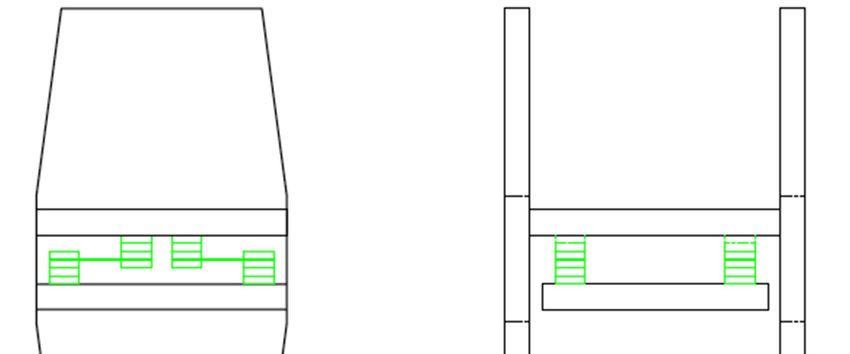
NAKAMURA M, NAKAMURA M. Changes in the Distribution of Digit Forces and Associated Finger Functions during
Prehension. J Phys Med Rehabil 2021; 3(1): 1-8.

in object weight) were confirmed and were similar to the        were previously tested and calibrated for use for digit force
functional characteristics seen with a pinching motion          measurement, were attached to the object: PS-10KAM195
using the thumb and index finger [ 15,16]. It was also shown    (rated capacity, 10.20 kgf/cm2; rated output, 1 mV/V) for
that the direction of upper limb movement and gravity           the thumb and PS-5KC (rated capacity, 5.099 kgf/cm2;
influenced the execution of digit force [17-19]. When the       rated output, 1 mV/V) for other digits.
weight of the object changed over time, the experience
acquired immediately before the change influenced the            The positions of the sensors were determined as described
execution of digit force and the safety margin [20,21]. In      previously [22]. Briefly, the mean coordinate of the center
these previous studies, however, the contact point of each      of contact of the distal pulp of each digit was obtained in
finger with the object was not determined based on daily        a natural grasping position. The errors from the mean
life situations, and the digit force measured was used solely   coordinate were confirmed to be within the sensing
for examining digit force distribution, without accounting      surface of the sensor (diameter, 6 mm). The lengths of the
for differences in the maximum force of each digit. It is       participants’ digits in this study fell within the range of the
unlikely that such simple force distribution represents         mean ± SD of the participants in the previous study [22].
functional force distribution.                                  The total weight of the model object was 116.7 g.

 The purpose of this study was to reveal how digits              Experimental procedure
respond, and consequently how the digit force distribution
changes, when the center of gravity of the grasped object         The length of the participants’ hands and fingers were
moves vertically and horizontally. This happens in real life    examined. The pulps of the right digits were wiped
when grasping an object containing a fluid, and it requires     thoroughly with alcohol swabs. The participants sat on
complex manipulation. We used the digit force output rate       a stool and the forearm was placed in a neutral position
(proportion of the digit force measured to maximum digit        in a fixation stand. The maximum voluntary pinch power
force) to examine functional roles of the fingers.              (MVPP) of each digit was measured as the participant
                                                                grasped the object on the table in front of them.
Methods                                                         Measurements were taken 3 times. After adequate rest
                                                                time to prevent tiredness, experiments were completed
 Participants                                                   using two weight loads (200 g and 400 g) and different
                                                                centers of gravity.
 The participants were 10 healthy female adults (mean
age, 22.1 ± 1.2 years). All were right-handed with a mean        Before starting the experiment, participants practiced
Edinburgh Handedness Inventory score of 97.7 ± 4.85.            grasping the object with a 200-g and a 400-g weight
None had motor or sensory function impairment in                attached to each of the 5 positions of the center of gravity.
the upper limbs or a history of neuromuscular disease           Then, the 5 positions were tested, in random order, in one
or orthopedic surgery in the forearms or digits. The            experimental trial that was repeated 3 times with each
explanation of the study was provided to participants           participant. The experiment using the 200-g weight was
in writing, and informed consent was obtained before            performed before the experiment using the 400-g weight
commencing the study. This study was approved by the            to eliminate the effect of the change in safety margin.
Ethics Committee of Sapporo Medical University.                 Adequate rest time was allowed between the measurements
                                                                to eliminate the effect of fatigue.
 Apparatus
                                                                 The object with weight attached was held stationary
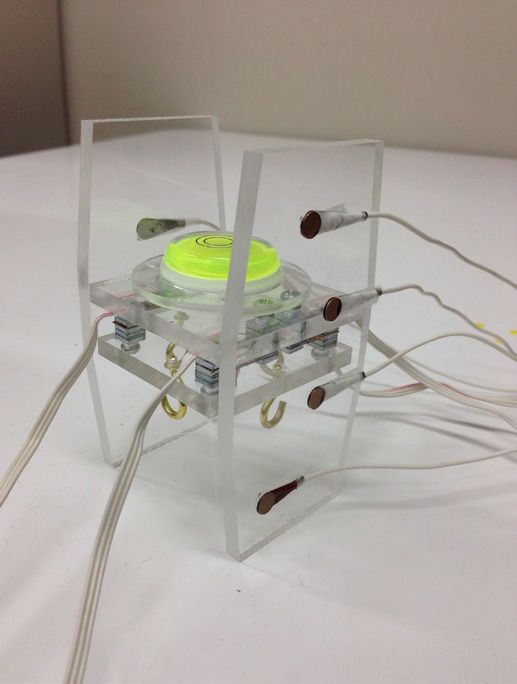
 The object previously used by Nakamura et al for a             in a horizontal position in air for 10 s, and digit forces
prehension experiment, an H-shaped object made of               were recorded using a vital sign recording program
acrylic board [22], was modified for use in this study. The
                                                                (VitalRecorder; Kissei Comtec Co., Ltd., Nagano, Japan)
size of the side panel was 50 mm × 100 mm × 5 mm. To
                                                                at a sampling frequency of 1 kHz (Figure 1).
eliminate possible contact with the digits and consequent
interference with the adjustment of digit force, 4 corners of    Data analysis
the panels were cut off to obtain octagonal panels. A sensor
(Kyowa Electronic Instruments Co., Ltd, Tokyo, Japan) for        All data recorded by the VitalRecorder were analyzed
detecting the timing and position of weight load was placed     using a multipurpose vital signal analysis program
in the center of the panel. In order to change the center of    (BIMUTAS II; Kissei Comtec Co., Ltd, Nagano, Japan) and
gravity, hooks were attached to the center of the panel in 5    saved as Microsoft Office Excel 2010 files.
locations: center, and midpoints of the top, bottom, right,
and left sides (Figure 1). The following miniature pressure      The highest of the 3 MVPP measurements taken was
sensors (Kyowa Electronic Instruments Co., Ltd), which          analyzed in this study for %MVPP calculation. To analyze

J Phys Med Rehabil. 2021
Volume 3, Issue 1                                                                                                         2
NAKAMURA M, NAKAMURA M. Changes in the Distribution of Digit Forces and Associated Finger Functions during
Prehension. J Phys Med Rehabil 2021; 3(1): 1-8.
50mm
100mm
【Design of center panel with strain gauge】
(distal)
45mm
(23.46,80.63)
distal (index)
29.02mm
・ (18.81,56.56) (29.02,72.19)
(middle)
50mm 35mm
center
thumb ・ ・ ・ fingers (19.19,39.96)
side side (ring)
(37.13,11.98) 72.19mm
・ (little)
proximal
mini force sensors fingers (0,0) thumb
thumb : PS-10KAM195 Rated capacity 10.20kgf/cm2 side coordinate point side
finger : PS-5KC Rated capacity 5.099kgf/cm2 35mm
【Hooks locations of center panel】 【Sensors locations-coordinate data-】
Figure 1: Experimental setup.
digit force with a change in the object’s center of gravity, the but that approach does not account for differences in
peak force detected in a 0-2000 msec period after weight muscle strength and MVPP among the digits and so the
load were obtained (initial peak force). Then, the mean contribution of small finger pressure during prehension
force of each digit when the object was held at a horizontal would be low. However, we thought that that even if finger
position (i.e., the holding phase 3000-5000 msec after pressure were small, when the involvement of the finger is
weight load) was calculated. The holding phase varied in high, it may play an important role in the manipulation, and
previous studies, such as 10000-15000 msec in a study we therefore used %MVPP as an index of the involvement
by Johannson et al. [2], 5000-7000 msec by Kinoshita of each digit in manipulation. The initial peak force, the
et al. [8], and 2000-5000 msec by Yao et al. [16]. The mean digit force in the holding phase, and proportion of
present study used a holding phase of 3000-5000 msec to these to MVPP (%MVPP) were compared among the digits,
obtain the mean force of each digit (Figure 2) because the different points for the center of gravity, and presence/
mean time to stable digit force exertion obtained from the absence of the information for the center of gravity using
randomly extracted data fell into a holding phase of 3000- a one-way ANOVA. When significance was detected,
5000 msec, as reported recently. multiple comparison was performed using the Tukey-
Kramer test. A paired t-test was used to examine changes
This study examined the initial peak force, and mean in digit force in response to the changes in the object’s
digit force and %MVPP in the holding phase. Previous center of gravity. Statistical analysis was performed using
studies calculated the proportion of force of each digit SPSS 12.0 for Windows, with statistical significance set at
to the total force of all digits loaded on the object [8,15], pNAKAMURA M, NAKAMURA M. Changes in the Distribution of Digit Forces and Associated Finger Functions during
Prehension. J Phys Med Rehabil 2021; 3(1): 1-8.
Peak Holding phase
Raw data
strain gauge
2000msec 2000msec
2000msec 3000msec 5000msec
weight
stimiluation
Figure 2: Data analysis. The peak force detected in a 0-2000 msec period after weight load were obtained initial peak force. The
present study used a holding phase of 3000-5000 msec to obtain the mean force of each digit because the mean time to stable digit
force exertion obtained from the randomly extracted data fell into a holding phase of 3000-5000 msec, as reported recently.
Results this trend was reversed with the 400-g weight. Increases
in %MVPP values with an increase in weight load were
Five-digit prehension: characteristics of the significant for the index finger (p=0.014, t-test), middle
distribution of digit force; initial peak force with finger (p=0.022), and little finger (p=0.047; Figure 4a).
the center of gravity at the center of the grasped
object Increases in digit force and %MVPP were attributed to
changes in weight load. When the timing of the initial peak
With the 200-g weight, %MVPP values of the initial peak force was compared, it was earliest for the index finger
force were 10.56% for the thumb, 9.74% for the index finger, with the 200-g weight but for the little finger with the 400-
4.02% for the middle finger, 10.63% for the ring finger, g weight.
and 10.02% for the little finger, indicating differences in
involvement of the individual digits. The involvement of Five-digit prehension: characteristics of the
the middle finger was likely to be low, and the degree of distribution of digit force; in the holding phase
involvement was similar between the ring and little fingers with the center of gravity at the center of the
(Figure 3). grasped object
When the 400-g weight was used, %MVPP values tended With the 200-g weight, the thumb exerted the largest
to be higher than when the 200-g weight was used. digit force, followed in order by the index, middle, ring,
Involvement of the ring finger appeared to be stronger and little fingers, indicating that force distribution in the
than that of the little finger with the 200-g weight, but holding phase was roughly similar to the time of peak
J Phys Med Rehabil. 2021
Volume 3, Issue 1 4NAKAMURA M, NAKAMURA M. Changes in the Distribution of Digit Forces and Associated Finger Functions during
Prehension. J Phys Med Rehabil 2021; 3(1): 1-8.
(%) (%)
50 45
45 40
* * * * * *
40 35
35
30
30
25
25
20
20
15
15
10
10
5 5
0 0
thumb index middle ring little thumb index middle ring little
*pNAKAMURA M, NAKAMURA M. Changes in the Distribution of Digit Forces and Associated Finger Functions during
Prehension. J Phys Med Rehabil 2021; 3(1): 1-8.
(%) Peak %MVCC Holding %MVCC
(%)
*
25 25
20 20
15 15
10 10
5 5
0 0
distal center proximal distal center proximal
pair t-test
index little index little
*pNAKAMURA M, NAKAMURA M. Changes in the Distribution of Digit Forces and Associated Finger Functions during
Prehension. J Phys Med Rehabil 2021; 3(1): 1-8.
Discussion moved toward the little finger. These findings are in good
agreement with those of previous studies that examined
This study examined changes in digit force that occur changes in digit force in response to torque applied to the
when the center of gravity of a grasped object changes grasped object in the direction of pronation or supination
to simulate the motion of fluid. We demonstrated that of the forearm [11-14,17]. More precisely, to keep the
changes occur in the digit force distribution during 5-digit object in a horizontal position, the force exerted by the
prehension when the object’s center of gravity changes little finger was increased to generate the supination
from the center in a distal, proximal, thumb, or finger torque as the object’s center of gravity moved toward
direction. The use of %MVPP as an index enables us to the thumb (i.e., torque in the direction of pronation was
determine the actual degree of involvement of each digit in applied to the object), while the force exerted by the index
grasping and manipulating the object. finger was increased to generate the pronation torque as
the object’s center of gravity moved toward the little finger
Relationships between the digits and the function
(i.e., the torque in the direction of supination was applied
of individual digits when the object’s center of
to the object). Increases in the force exerted by the little
gravity changes in a distal or proximal direction
finger were more prominent with the 400-g weight than
When the center of gravity moved in a distal direction, with the 200-g weight, suggesting that the functions of the
digit forces and %MVPP values increased for all digits. digits become more prominent in manipulation when the
When the center of gravity moved in a proximal direction, object’s center of gravity changes.
digit forces and %MVPP values did not change much, but
Taken together, the findings of this study suggest that the
%MVPP tended to be greater for the little finger than the
middle and ring fingers, which are located centrally among
ring finger. When the object’s center of gravity moves in a
the digits, contribute to the fixation of spatial orientation
distal direction (in other words, when the center of gravity
and position, while the index and little fingers play a
moves away from the palm), digit force is applied to
reverse the torque of the object, and it is likely that strong dominant role in active manipulation when the object’s
pull-back force is generated, especially by the index finger. center of the gravity changes. These findings are in good
In weight lifting, joint moments and consequent muscle agreement with those of previous studies where the index
fatigue increase as the distance between the object to be and little fingers contributed to the generation of torque,
lifted and the body increases [23], and this may explain and the middle and ring fingers exerted forces depending
our findings of increased digit force and %MVPP when the on the torque generated and weight load applied [11-13].
distance between the object and the hand increased (i.e., Given that the digit force and %MVPP of the little finger
the center of the gravity moved in the distal direction). increased, this digit is likely involved in the generation of
When the object’s center of gravity moved in a proximal force against a downward sliding object, while the index
direction (in other words, when the center of gravity finger is likely involved in directional manipulation of the
moved toward the proximal part of the palm), the object object regardless of its weight.
was likely to be held in the horizontal position without
increasing digit force or %MVPP. The torque of the object Digit forces and %MVPP values of the index and little
toward the proximal direction was reversed by the force fingers tended to be lower in the holding phase than at the
generated by all digits, where pull-back forces of the ring time of peak force. This may represent the condition of the
and little fingers, and especially the ring finger (as shown holding phase where these digits, which have independent
by its higher involvement rate), were essential. In this extensor muscle and greater manipulation ability than
study, participants knew in which direction the object’s the other digits, were ready for manipulation function.
center of gravity would move because they were told Although responses to changes in an object’s center of
beforehand, and the involvement rate of the little finger gravity in a distal-proximal direction have not been well
increased according to the prediction. This suggests that studied, the index and little fingers are likely to be involved
the little finger is responsive to the direction of change in in force adjustment and manipulation in response to such
the object’s center of gravity. changes in all directions, while the middle and ring fingers
are involved in responding to the disturbance load and
Relationships between the digits and the function maintaining the spatial orientation of the object.
of individual digits when the object’s center of
gravity changed in a direction toward the thumb Acknowledgements
and little finger
The authors would like to give special thanks to all
Digit force and %MVPP of the little finger increased the participants and staff who facilitated in the data
when the object’s center of gravity moved toward the collection. This paper was supported by the Sapporo
thumb, while those of the index finger increased when it Medical University Graduate School of Health Sciences.
J Phys Med Rehabil. 2021
Volume 3, Issue 1 7NAKAMURA M, NAKAMURA M. Changes in the Distribution of Digit Forces and Associated Finger Functions during
Prehension. J Phys Med Rehabil 2021; 3(1): 1-8.
Declaration of Interest Cybernetics. 2002 Jul;87(1):40-9.
The authors report no conflicts of interest. The authors 12. Zatsiorsky VM, Latash ML. Multifinger prehension:
alone are responsible for the content and writing of paper. an overview. Journal of Motor Behavior. 2008 Sep
1;40(5):446-76.
References
13. Zatsiorsky VM, Latash ML. Prehension synergies.
1. Arbib MA, Iberall T, Lyons D. Coordinated control Exercise and Sport Sciences Reviews. 2004 Apr;32(2):75.
programs for movements of the hand. Experimental
brain research. 1985:111-29. 14. Latash ML, Friedman J, Kim SW, Feldman AG,
Zatsiorsky VM. Prehension synergies and control with
2. Westling G, Johansson RS. Factors influencing the referent hand configurations. Experimental Brain
force control during precision grip. Experimental brain Research. 2010 Apr;202(1):213-29.
research. 1984 Jan;53(2):277-84.
15. Friedman J, Latash ML, Zatsiorsky VM. Prehension
3. Johansson RS, Westling G. Roles of glabrous skin synergies: a study of digit force adjustments to the
receptors and sensorimotor memory in automatic continuously varied load force exerted on a partially
control of precision grip when lifting rougher or more constrained hand-held object. Experimental Brain
slippery objects. Experimental Brain Research. 1984 Research. 2009 Jul 1;197(1):1-3.
Oct;56(3):550-64.
16. Sun Y, Zatsiorsky VM, Latash ML. Prehension of half-
4. Johansson RS. Sensory input and control of grip. full and half-empty glasses: time and history effects on
InNovartis Foundation Symposium 1998 Jan 1 (pp. 45- multi-digit coordination. Experimental Brain Research.
58). Wiley. 2011 Apr;209(4):571-85.
5. Nakamura M, Hirota M, Nakamura M. Characteristics 17. Latash ML, Shim JK, Gao F, Zatsiorsky VM.
of Adjusting Precision Grip Strength -Relationship Rotational equilibrium during multi-digit pressing and
between coordination and pulp-to-pulp distance when prehension. Motor Control. 2004 Oct 1;8(4):392-404.
applying and reducing pinch pressure. Japanses Journal
of Occupational Therapy Research. 2013;16(1):23-30. 18. Smith MA, Soechting JF. Modulation of
grasping forces during object transport. Journal of
6. Amis AA. Variation of finger forces in maximal Neurophysiology. 2005 Jan;93(1):137-45.
isometric grasp tests on a range of cylinder diameters.
Journal of Biomedical Engineering. 1987 Oct 1;9(4):313- 19. Gao F, Latash ML, Zatsiorsky VM. Internal forces
20. during object manipulation. Experimental Brain
Research. 2005 Aug 1;165(1):69-83.
7) Reilmann R, Gordon AM, Henningsen H. Initiation
and development of fingertip forces during whole- 20. Augurelle AS, Penta M, White O, Thonnard JL.
hand grasping. Experimental Brain Research. 2001 Oct The effects of a change in gravity on the dynamics
1;140(4):443-52. of prehension. Experimental Brain Research. 2003
Feb;148(4):533-40.
8. Kjnoshita H, Kawai S, Ikuta K. Contributions and
co-ordination of individual fingers in multiple finger 21. Augurelle AS, Smith AM, Lejeune T, Thonnard JL.
prehension. Ergonomics. 1995 Jun 1;38(6):1212-30. Importance of cutaneous feedback in maintaining a
secure grip during manipulation of hand-held objects.
9. Taguchi H, Hase K, Maeno T. Analysis of the motion Journal of Neurophysiology. 2003 Feb 1;89(2):665-71.
pattern and the learning mechanism for manipulating
objects by human fingers. Nippon Kikai Gakkai 22. Nakamura M, Katagiri K, Nakamura M.
Ronbunshu, C Hen/Transactions of the Japan Society of Determination Factors of Contact Positions during
Mechanical Engineers, Part C. 2002 Jun 1;68(6):1647-54. Grasping the Object with Thumb and Four Fingers.
Japanses Journal of Occupational Therapy Research.
10. Zatsiorsky V, Gao F, Latash M. Prehension synergies: 2012;15(2):27-33.
effects of object geometry and prescribed torques.
Experimental Brain Research. 2003 Jan;148(1):77-87. 23. Sasaki M, Horio A, Wakasa M, Uemura S, Osawa Y.
Influence of quadriceps femoris fatigue on low back load
11. Zatsiorsky VM, Gregory RW, Latash ML. Force during lifting of loads at different distances from the toes.
and torque production in static multifinger prehension: Journal of Physical Therapy Science. 2008;20(2):81-9.
biomechanics and control. II. Control. Biological
J Phys Med Rehabil. 2021
Volume 3, Issue 1 8You can also read


