ChargeIT May and August 2020 Operational Case Study Examination Pre-seen material - advance copy for tutors - Astranti
←
→
Page content transcription
If your browser does not render page correctly, please read the page content below
May and August 2020 Operational Case Study Examination
           Pre-seen material – advance copy for tutors

                               ChargeIT

Contents:                                                       Page
1 Job and role outline                                          2
2 Company information                                           3-6
3 Company operations                                            7-11
4 Industry analysis                                             12
5 Financial statements                                          13-15
6 Budget information                                            16-19
7 Tax regime in Eastland                                        20
Magazine article: Battery power – lithium-ion is here to stay   21
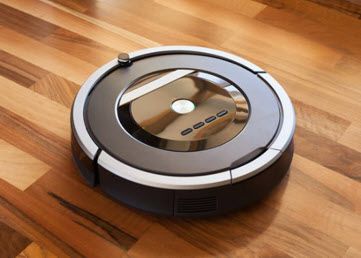
Magazine article: March of the Robots!!                         22
Operational Case Study Exam – May & August 2020 Pre-seen Material

1.   Job and role outline
     You are a Finance Officer for ChargeIT. Your main role is to support Sophie Jacobs, the
     Finance Manager. Your tasks include preparation of the annual budget, producing the monthly
     management accounts and providing information to management as required. You also assist
     with the preparation of the financial statements and deal with any queries regarding financial
     reporting.

     © CIMA 2020. No reproduction without prior consent
                                                                                                 2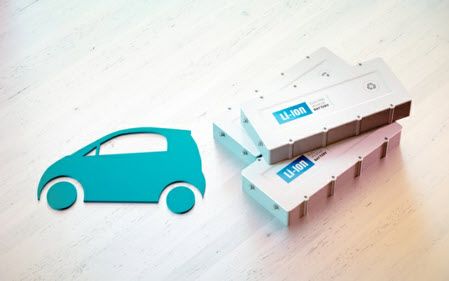
Operational Case Study Exam – May & August 2020 Pre-seen Material

2.   Company information
     Company background
     The company, ChargeIT, develops, designs and manufactures cordless domestic electric
     products. The company operates from a single site in Eastland, in Northern Europe. Eastland
     has the E$ as its home currency.
     The company was founded in 2001 by Gavin Mansell and is owner-managed by Gavin and
     his wife Anthea, who each hold 50% of the company’s equity. The company started when
     Gavin, who worked for a competitor vacuum cleaner manufacturer, decided to set up his own
     company to exploit his expertise in product design. Manufacturing was originally outsourced
     to a company in South-East Asia but in 2016, the decision was taken to bring the
     manufacturing operation to Eastland.
     The company’s development was initially slow, but it has since grown rapidly despite a
     contraction in the overall market for vacuum cleaners. As a result of investment in research
     and development, it has established a market lead in battery technology which it continually
     exploits in the development of new and innovative products. In the financial year to 31
     December 2019 the company reported annual sales revenue of E$96.7 million (an increase
     of 32.4% on the previous year) and profit before tax of E$12.0 million (an increase of 59.4%).
     This rapid growth however has presented a number of challenges in terms of managing the
     business, its staff and putting in place an appropriate infrastructure.

     The products
     The product range consists of cordless floorcare and garden products including vacuum
     cleaners, lawnmowers and hedge trimmers. These products are sold in Eastland to consumers
     through its own website and directly to major retailers. Sales are also made in the USA and
     Europe. At present, the majority of the company’s sales revenue (around 75%) is from sales
     in Eastland.
     All the products sold are cordless and exploit ChargeIT’s lead in battery technology. The
     company has a reputation for producing quality products and being a reliable supplier.
     The product range is split into two main segments: floorcare products and garden products.
     Floorcare products:

     ·   Upright vacuum cleaners
     ·   Stick vacuum cleaners
     ·   Hand-held vacuum cleaners
     ·   Robotic vacuum cleaners

                                                         Garden products:
                                                         ·   Lawnmowers
                                                         ·   Grass trimmers
                                                         ·   Hedge trimmers
                                                         ·   Robotic lawn mowers

     © CIMA 2020. No reproduction without prior consent
                                                                                                  3
Operational Case Study Exam – May & August 2020 Pre-seen Material

Company strategy
The company aims to continue to develop its product range, whilst meeting environmental
standards and providing the best quality products and service. It also aims to develop new
markets for its products.
To achieve these aims, it continues to invest in research and development. It focuses on the
philosophy of bringing battery technology to a wider market sector. It uses technology to make
people’s lives easier and designs products which are as easy to use as possible. A key long-
term strategy is to promote the benefits of cordless appliances and by exploiting the
company’s battery technology, to be a lead player in the sector as customer preferences
change from corded to cordless.
With these aims in mind, the company has invested heavily in new manufacturing equipment.
It has however identified a need for future investment in its central systems and processes to
support this ongoing product development.

The people
The company currently employs 250 staff of which 120 operate in Production and Research
and Development and 75 operate in Logistics. The remainder are administrative staff
operating in the Marketing and Sales, Finance, IT and Human Resources (HR) areas of the
business. Staff numbers have grown rapidly, in response to the growth in sales revenue which
has presented significant challenges in human resource management.

The directors
The company directors are as follows:
       Gavin Mansell         -       Managing Director
       Anthea Mansell        -       Sales and Marketing Director
       Gemma Jorgensson      -       Research and Development Director
       Ben Da Silva          -       Finance Director
       Jack Martinez         -       Production Director
The directors have a wide range of previous experience mainly in the electrical and retail
industries. They are relatively young and highly enthusiastic. Gavin and Anthea, as both
owners and directors of the business, are keen to ensure profitable business development.
They keep a close watch on company operations and are the main decision makers within the
business.

© CIMA 2020. No reproduction without prior consent
                                                                                            4
Operational Case Study Exam – May & August 2020 Pre-seen Material
Directors’ profiles
Gavin Mansell, Managing Director, is responsible for the company's
strategy. He worked for a competitor company before founding
ChargeIT in 2001. Gavin's main love is product design and he takes a
very close interest in the product development side of the business.
Gavin is proud of the success of the company but is concerned to
ensure that an appropriate infrastructure is in place to support future
expansion.
Anthea Mansell is the Sales and Marketing Director. Anthea graduated
from Eastland University with a BA in Management Studies. She
worked as a marketing executive for a retailing company before joining
her husband to form ChargeIT. Her experience in the retailing side of
the industry is invaluable for the company.
Gemma Jorgensson is the Research and Development Director.
Gemma graduated from Eastland University with an MA in Product
Design. Gemma works closely with Gavin Mansell in new product
design and development. Gemma is keen to expand the company's
product range further and is constantly looking at potential new
product opportunities.
Ben Da Silva, Finance Director, is responsible for Finance, IT and
Human Resources (HR). Ben is a qualified accountant and was
appointed as Finance Director last year. He has quickly earned a
reputation for keeping a tight rein on the company's finances. He is a
bit of a 'techie' and is interested in exploring the use of digital
technology to make processes more efficient.
Jack Martinez, Production Director, is responsible for Production,
Procurement and Logistics. Jack is an engineer by profession and has
been with the company since 2007, intially as part of the Product
Development team. He was appointed as Production Director in 2016.
Jack would like to improve the production facilities but needs to
convince Ben that investment in new production technologies would
yield sufficent returns.
© CIMA 2020. No reproduction without prior consent
5Operational Case Study Exam – May & August 2020 Pre-seen Material
Extract from ChargeIT’s organisation chart
Production Manager
Jack Martinez
Procurement Manager
Production Director
Logistics Manager
Gemma Jorgensson
Research and
Research and
Development Manager
Development Director
Gavin Mansell
Marketing Manager
Managing Director
Anthea Mansell
Sales and Marketing
Director
Sales Manager
Sophie Jacobs YOU
Finance Manager Finance Officer
Ben Da Silva Finance
IT Manager
Director
HR Manager
© CIMA 2020. No reproduction without prior consent
6Operational Case Study Exam – May & August 2020 Pre-seen Material
3. Company operations
Manufacturing
The company’s products are all manufactured at its factory in Eastland. Many of the parts and
components, including the batteries, are bought in from external suppliers and then assembled
at the Eastland factory to create the finished product.
There are four main operations carried out in the factory: injection moulding of plastic parts;
motor assembly; finished product assembly and packaging.
Bought in
parts and
components
Injection Finished Motor
moulding of product assembly
plastic parts assembly
Packaging
At each stage of the manufacturing process quality inspections are carried out to ensure the
products meet the high-quality standard set by the company.
© CIMA 2020. No reproduction without prior consent
7Operational Case Study Exam – May & August 2020 Pre-seen Material
Extract from the ChargeIT website
How our upright vacuums are manufactured
Injection moulding of plastic parts
The plastic parts are shaped in a two-part steel mould, that is lowered into the chamber of an
injection moulding machine. Tiny plastic pellets are poured into a heating vat and melted. The
melted plastic is injected, under high heat and pressure, into the chamber of the injection
moulding machine, penetrating every part of the mould. The two halves of the mould are opened
and the plastic part falls into a bin. The plastic hardens on contact with the air as the mould
opens. Many identical plastic parts of the same type are made during the injection moulding
process. When the desired number have been made, the mould is removed from the injection
moulding machine, another one is inserted, and the process is repeated for another type of part.
Motor assembly
The motors for the products are built on an assembly-line. Workers at assembly stations attach
sub-assemblies or individual parts to the motor as it moves along the assembly line.
Finished product assembly
Assembling an upright vacuum starts with the base, which is made of moulded plastic. To this is
fitted a steel beater bar with brushes. A rubber drive belt is placed in around the beater bar and
pulled over a belt guide and motor pulley on the underside of the base.
At the rear of the base, an axle is inserted that passes from one side of the base to the other. A
release handle is fitted onto one end of the axle that allows the vacuum's operator to raise or
lower the handle during operation. Wheels are added to both ends of the axle.
The fan is bolted onto the base, and the motor assembly is attached to the top side of the base.
Plastic fittings that support the bag and handle are attached to the rear of the base. An opening
at the back of the base holds a rubberized length of flexible hose that transfers dust from the fan
to the bag.
The final touches are added, including attaching the bag and outer markings giving operating
instructions and information such as the serial number and the power of the motor.
Packaging
The completed machine is taken to the packing department where it is wrapped in a plastic bag
and put in a carton. A box of plastic attachments, including nozzles and a hose for upholstery
cleaning, is also put in the carton with an information booklet, assembly instructions, and a
warranty card. The cartons, which have been pre-printed with marketing information, are then
closed, sealed, and stored for shipping and distribution.
© CIMA 2020. No reproduction without prior consent
8Operational Case Study Exam – May & August 2020 Pre-seen Material
Procurement
Raw materials and components are purchased from a range of suppliers with whom ChargeIT
has built close relationships over the years. Supplier selection is based on a mixture of price,
quality and reliability. ChargeIT works closely with its suppliers to ensure that quality standards
are met and that suppliers maintain at least the same environmental standards applied by
ChargeIT.
The batteries used in the products are purchased from a specialist battery manufacturer which
licences the battery technology from ChargeIT.
Logistics
The company’s logistics system records the movement of all goods from the receipt of raw
materials, part and components at ChargeIT’s warehouses to the distribution of the packaged
products to customers. The raw materials, components and finished products are held in
warehouses which are situated adjacent to the Eastland factory.
ChargeIT’s products are distributed to online customers and major retailers in Eastland by
road using its own haulage trucks. It also works with a number of shipping partners to deliver
products to distributors in other countries.
The warehouses employ a total of 75 staff who are assigned to four teams which carry out the
following activities:
· Receiving: receiving of raw materials, bought-in
components and finished goods
· Picking: picking of raw material and bought-in
components for production and finished goods for
customers’ orders
· Packing: packing orders ready for despatch to
customers
· Despatch: loading delivery vehicles heading to
online customers, retailers and shipping partners.
Sales and marketing
In Eastland, the company’s products are sold to consumers through its own website and
directly to major retailers who sell the products both online and through physical stores. The
company’s website contains detailed information about the company’s background, strategy
and current product ranges. It offers a secure platform for the processing of financial
transactions.
In the USA and Europe, ChargeIT use carefully selected distributors. The main responsibility
of the distributors is the fulfilment of online orders, however in some countries they also
distribute ChargeIT products to retailers.
At present, sales made in Eastland represent around 75% of the company’s sales revenue.
Profit margins vary depending on the sales channel used to sell the product.
© CIMA 2020. No reproduction without prior consent
9Operational Case Study Exam – May & August 2020 Pre-seen Material
Sales of floorcare products are evenly spread throughout the year however garden product
sales are seasonal with the majority of the sales volumes being in the spring and summer
quarters.
Marketing is carried out by the company’s Marketing Department which employs a range of
marketing methods. The company’s website is considered an important marketing tool as it
represents its main sales channel. The website has been continually developed to ensure
visitors are engaging with the content. Web pages are informative, clear and easily navigated.
The website employs data analytics to enable the company to source sales data but also other
metrics such as: number of visits; number of downloads; average time on page and ‘bounce
rate’, which measures the percentage of visitors entering the website and leaving without
visiting another page. These website data analytics are considered an important source of
information to help determine customer preferences and the sales potential of the company’s
products.
Research and development
Research and development are a major focus for the company as it strives to develop new
products and exploit new technologies.
Research and development are carried out by a separate department. The department’s
primary purpose is to drive forward the development of an idea through to the proof of concept
stage, ready for the business to take forward into production. This is achieved through
researching and exploring existing methods and applications or by identifying where new
technologies could be used. Once the concept is proved, it can then be implemented through
the fast turnaround of building and then testing of prototype models.
A major focus for the department is the development of battery technology for which the
company has a strong competitive advantage. The company exploits this competitive
advantage in its new products and through the development of new product ranges which rely
on battery technology.
The Research and Development department is also responsible for the design and
functionality of the electronics used in all of ChargeIT’s products. This also includes supporting
other areas of the business with electronics knowledge and understanding.
Finance and IT
The financial information system produces monthly management accounts and annual
statutory accounts. This information system also generates daily and weekly sales revenue
and gross margin information. The company operates a standard absorption costing system
and applies a factory-wide overhead absorption rate based on direct labour hours.
Budgets are produced by the Finance Department on an annual basis using a top-down
incremental budgeting approach. Standard costs are reviewed as part of the budgeting
process and other information to formulate the budgets is obtained from the directors and
senior managers. The final budgets are approved by the Board. Individual functional managers
do not have budget responsibility. Monthly reporting on actual performance compared to
budget is to the Senior Management Team. The Finance Department is relatively small and
much of the staff time is spent on day to day transaction processing. The Finance
Department's role within the company has changed very little since the company was formed
in 2001.
© CIMA 2020. No reproduction without prior consent
10Operational Case Study Exam – May & August 2020 Pre-seen Material
Human resources
Human resources are the responsibility of the HR Manager. The company has expanded
rapidly which has created a number of issues in managing human resources. It has been
recognised that there is a need to build new processes for human resource management to
ensure the well-being of both existing and new staff.
© CIMA 2020. No reproduction without prior consent
11Operational Case Study Exam – May & August 2020 Pre-seen Material
4. Industry analysis
Vacuum cleaners
The vacuum cleaner manufacturing industry in Eastland was dominated in 2019 by three major
players who account for more than 40% of market share. ChargeIT ranks 4th in terms of
market share.
Sales volumes of vacuum cleaners in Eastland contracted slightly in 2019 to just over 6 million
units (E$648 million sales revenue). Upright and cylinder vacuum cleaners still represent the
main categories, but sales volumes have continually fallen since 2015. In contrast, sales of
cordless hand-held vacuum cleaners continued in an upward trend, rising by 5.7% in 2019.
This increase was mainly due to exceptionally high levels of innovation and investment that
has significantly improved battery performance. Convenience is key with the cordless/low
weight factor of hand-held vacuum cleaners appealing to consumers looking to transform a
chore into a quick and easy task. Unit prices of hand-held cleaners are gradually decreasing,
making this category more accessible to a wider range of households. Robotic vacuum
cleaners, whilst still one of the smallest categories, showed strong growth with sale volumes
rising by 17.5% in 2019.
Online retailing of vacuum cleaners is booming as physical stores are increasingly being used
for consumers looking to see, touch and sometimes try the product before making a purchase
online. The major online retailers are increasingly demanding special deals from
manufacturers to purchase bulk products at a low price, while manufacturers are still being
asked by the online retailers to pay to advertise on their websites. Online retailers also provide
strong guarantees on labelled product ranges and provide consumers with the option to return
unsatisfactory products free of charge.
Lawnmowers and gardening power tools
Sales of gardening power tools in Eastland increased in 2019 by 3.9% to E$324.4 million
whilst sales of lawnmowers contracted by 1.1% to E$356.9 million. Robotic lawnmowers
however showed strong growth from E$51.5 million to E$58.9 million.
Sales of both power tools and lawnmowers are expected to continue to grow over the next
five years. The main growth area will be in robotic lawnmowers with sales expected to reach
over E$90 million by 2024. Awareness of this product category is low in Eastland compared
to other countries in continental Europe and the potential for growth is high.
Robotic lawnmowers have improved significantly in recent years due to the advances in
robotics. With most models, it is still necessary to lay a boundary wire for the robot to locate
the boundary of the area to be trimmed. The lawn mower tackles the task utilising a "random"
mowing system (basically, the robot moves around the lawn until it detects the boundary wire
limiting the lawn area, then changes direction until it detects the wire again). Modern versions
however now include advanced features such as self-docking and rain sensors which means
the robot will return automatically to the charging station if rain is detected.
© CIMA 2020. No reproduction without prior consent
12Operational Case Study Exam – May & August 2020 Pre-seen Material
5. Extract from ChargeIT’s 2019 Financial Statements
Statement of Profit or Loss
for the year ended 31 December 2019 2018
E$000 E$000
Revenue 96,674 73,009
Cost of sales (47,499) (33,364)
Gross profit 49,175 39,645
Operating expenses (37,176) (32,115)
Operating profit 11,999 7,530
Finance income 42 26
Profit before tax 12,041 7,556
Taxation (1,828) (826)
Profit for the year 10,213 6,730
© CIMA 2020. No reproduction without prior consent
13Operational Case Study Exam – May & August 2020 Pre-seen Material
Statement of Financial Position
as at 31 December 2019 2018
E$000 E$000
Non-current assets
Property, plant and equipment 11,429 11,296
11,429 11,296
Current assets
Inventories 9,528 8,043
Trade and other receivables 5,974 5,388
Cash and cash equivalents 12,703 2,779
28,205 16,210
Total Assets 39,634 27,506
Equity and Liabilities
Share capital 8 8
Revaluation surplus 560 560
Retained earnings 27,843 17,630
Total equity 28,411 18,198
Non-current liabilities
Warranties 2,800 2,682
2,800 2,682
Current liabilities
Trade and other payables 7,322 6,115
Tax payable 1,101 511
8,423 6,626
Total Equity and Liabilities 39,634 27,506
Extract from ChargeIT’s Statement of Accounting Policies
f) Property, plant and equipment
Property, plant and equipment are stated at historical purchase cost less accumulated
depreciation. Depreciation is provided on all property, plant and equipment at rates calculated
so as to write off the cost less residual value of each asset on a straight-line basis over its
useful economic life. Depreciation is charged on a pro-rata basis in the year of purchase and
disposal.
h) Significant judgements and estimates
Warranties - the company is required to estimate the cost of potential repair of goods under
warranty. The estimate is based on the expected level of returns.
© CIMA 2020. No reproduction without prior consent
14Operational Case Study Exam – May & August 2020 Pre-seen Material
Statement of Cash Flows
for the year ended 31 December 2019 2018
E$000 E$000
Cash flows from operating activities
Profit / (loss) before tax 12,041 7,556
Depreciation 2,179 1,654
Loss on disposal of property, plant and equipment 23 0
Finance income (42) (26)
Increase in inventory (1,485) (1,320)
Increase in trade and other receivables (586) (1,015)
Increase / (decrease) in trade and other payables 1,207 (5,258)
Increase / (decrease) in warranty provision 118 (880)
Cash generated from operations 13,455 711
Tax paid (1,238) (1,645)
Net cash generated from/(used in) operating activities 12,217 (934)
Cash flows from investing activities
Interest received 42 26
Purchase of property, plant and equipment (2,585) (1,317)
Proceeds on disposal of property, plant and equipment 250 0
Net cash used in investing activities (2,293) (1,291)
Cash flows from financing activities
Dividend paid 0 (1,688)
Net cash from/(used in) financing activities 0 (1,688)
Net increase/(decrease) in cash and cash equivalents 9,924 (3,913)
Cash and cash equivalents at beginning of the year 2,779 6,692
Cash and cash equivalents at the end of the year 12,703 2,779
© CIMA 2020. No reproduction without prior consent
15Operational Case Study Exam – May & August 2020 Pre-seen Material
6. Budget information
Budget for the year to 31 December 2020
Total company budgeted revenue and gross profit:
Spare parts
and
Floorcare Garden accessories Total
E$000 E$000 E$000 E$000
Total sales revenue 53,608 47,507 10,111 111,226
Cost of sales 28,176 21,923 4,044 54,143
Gross profit 25,432 25,584 6,067 57,083
Gross profit margin 47.4% 53.9% 60.0% 51.3%
Note: The figures above show the total from all sales channels. Different gross profit margins
apply to each channel.
© CIMA 2020. No reproduction without prior consent
16Operational Case Study Exam – May & August 2020 Pre-seen Material
Detailed budget for floorcare products:
Upright Stick Hand-held Robotic
vacuum vacuum vacuum vacuum Total
cleaners cleaners cleaners cleaners
Quantity (units) 207,000 34,500 86,250 9,200
Per unit E$ E$ E$ E$
Average selling price 165.00 135.00 115.00 530.00
Standard cost 89.75 70.25 57.25 243.00
Gross profit 75.25 64.75 57.75 287.00
E$000 E$000 E$000 E$000 E$000
Total sales 34,155 4,658 9,919 4,876 53,608
Total cost of sales 18,578 2,424 4,938 2,236 28,176
Total gross profit 15,577 2,234 4,981 2,640 25,432
Gross profit margin 45.6% 48.0% 50.2% 54.1% 47.4%
Budgeted average standard costs for floorcare products:
Upright Stick Hand-held Robotic
vacuum vacuum vacuum vacuum
cleaners cleaners cleaners cleaners
E$ E$ E$ E$
Direct material cost 65.00 50.00 40.00 180.00
Direct labour cost 8.25 6.75 5.75 21.00
Variable production overheads 2.48 2.03 1.73 6.30
Fixed production overheads 14.02 11.47 9.77 35.70
Total standard costs 89.75 70.25 57.25 243.00
© CIMA 2020. No reproduction without prior consent
17Operational Case Study Exam – May & August 2020 Pre-seen Material
Detailed budget for garden products:
Grass Hedge Robotic
Lawnmowers Total
trimmers trimmers lawnmowers
Quantity (units) 97,750 57,500 51,750 6,900
Per unit E$ E$ E$ E$
Average selling
price 325.00 85.00 135.00 560.00
Standard cost 148.75 37.75 65.25 266.00
Gross profit 176.25 47.25 69.75 294.00
E$000 E$000 E$000 E$000 E$000
Total sales 31,769 4,888 6,986 3,864 47,507
Total cost of sales 14,540 2,171 3,377 1,835 21,923
Total gross profit 17,229 2,717 3,609 2,029 25,584
Gross profit margin 54.2% 55.6% 51.7% 52.5% 53.9%
Budgeted average standard costs for garden products:
Grass Hedge Robotic
Lawnmowers
trimmers trimmers lawnmowers
E$ E$ E$ E$
Direct material cost 100.00 25.00 45.00 200.00
Direct labour cost 16.25 4.25 6.75 22.00
Variable production
overheads 4.88 1.28 2.03 6.60
Fixed production overheads 27.62 7.22 11.47 37.40
Total standard costs 148.75 37.75 65.25 266.00
© CIMA 2020. No reproduction without prior consent
18Operational Case Study Exam – May & August 2020 Pre-seen Material
ChargeIT key performance indicators
Budget Actual Actual Actual
2020 2019 2018 2017
Sales revenue (E$000) 111,226 96,674 73,009 52,582
Sales growth +15.1% +32.4% +38.8% +26.2%
Gross profit (E$000) 57,083 49,175 39,645 30,831
Gross profit margin 51.3% 50.9% 54.3% 58.6%
Operating profit (E$000) 13,200 11,999 7,530 10,642
Operating profit margin 11.9% 12.4% 10.3% 20.2%
Number of new products launched 4 2 4 3
© CIMA 2020. No reproduction without prior consent
19Operational Case Study Exam – May & August 2020 Pre-seen Material
7. The tax regime in Eastland
Corporate profits:
· The corporate tax rate applicable to taxable profits is 20%.
· The value added tax (VAT) rate is 20%. The sales revenue threshold for VAT
registration is E$150,000.
· Unless otherwise stated below, accounting rules on recognition and measurement are
followed for tax purposes.
· The following expenses are not allowable for tax purposes:
o accounting depreciation;
o amortisation;
o entertaining expenditure;
o donations to political parties; and
o taxes paid to other public bodies.
· Tax depreciation allowances are available on items of plant and machinery (including
vehicles used for business purposes) at a rate of 25% per year on a reducing balance
basis.
· Tax losses can be carried forward to offset against future taxable profits from the same
business.
© CIMA 2020. No reproduction without prior consent
20Operational Case Study Exam – May & August 2020 Pre-seen Material
Technology Monthly
April 2020 No. 77 E$4.70
Battery power –
lithium-ion is
here to stay
Georgio Lossatti - Business Correspondent
It has long been argued that if we want to
catch up. That lead is only likely to
convince skeptical consumers about
increase further as a number of planned
electric cars and running the grid on
new lithium-ion factories come online in
renewable power, then we need a better
the next five years. The need to produce
battery. And yet it seems that the battery
a return from this capital investment will
of the future will almost certainly be the
create a powerful incentive for the
battery of the past.
industry to keep tweaking lithium-ion
Lithium-ion technology has existed for technology rather than developing
decades. The basic battery works by something new.
sending charged lithium atoms, or ions,
The recent development of a silicon-
through a liquid electrolyte substance,
based powder which could boost the
moving back and forth between a positive
energy storage of a lithium-ion battery by
cathode and a negative anode.
20% or more, has further enhanced the
Over the years, changes made to the staying power of the lithium-ion battery.
materials used in the cathode has Silicon can hold more lithium than the
increased the amount of energy the carbon in graphite, the most common
batteries can hold. As a result, what anode material, which
started out inside consumer electronics, means batteries using silicon can store
such as mobile phones, can now be more energy.
found in electric cars and connected to
All things considered it looks like lithium-
the power grid.
ion technology is here to stay, at least for
The humble lithium-ion battery has built a few more years yet.
up such a commanding lead that
competing technologies may struggle to
© CIMA 2020. No reproduction without prior consent
21Operational Case Study Exam – May & August 2020 Pre-seen Material
Technology Monthly
May 2020 No. 78 E$4.70
March of the
Robots!!
Georgio Lossatti – Business Correspondent
The advent of modern AI techniques has
When the first robotic vacuum cleaner was
accelerated the pace of robotics
developed most people didn’t even think it was
innovation, particularly in computer vision.
a robot. Our mental image of how robots were
going to vacuum was a humanoid pushing a A new imaging sensor uses odometry to
manual upright vacuum. infer distance travelled from wheel turns,
and internal sensors identify particularly
The first form of robotic vacuum cleaner was dirty spots on floors.
however ideally suited for moving around tables
and chairs because of its small size. The two- So, does this innovation mean that we will
wheeled, disc-shaped autonomous vacuum soon see a single home robot capable of
could detect the presence of obstacles and doing it all — the sort that has dominated
sense steep drops, using sensors. Most models science fiction for decades? Apparently
had a pair of brushes rotating in opposite not!!
directions and a horizontally mounted side-
spinning brush that swept against walls, Developing autonomous assistants to help
followed by a vacuum that directed airflow with domestic tasks is more complicated
through a narrow slit. than it seems. While household chores are
relatively easy for humans to achieve, they
Early models were also relatively static in their are surprisingly difficult for an autonomous
approach to sweeping. They relied on a set of system to understand and carry out
algorithms like spiral cleaning, room crossing, reliably. Robots, of course, have no ‘innate’
wall-following, and random-walk angle- knowledge. While we might like to tell an
changing, triggered by collisions with walls and assistive robot to just ‘do the laundry’, the
furniture. As a result, they covered some areas robot needs much more information, from
more frequently than others and took several how to move each of its joints to where it
times longer to clean rooms than a human should look as it performs each operation,
would. and how to use its cameras and sensors.
Newer models have a forward-looking,
It looks like our current form of robotic
obstacle-detecting infrared sensor and a self-
vacuum cleaners and lawnmowers are
charging, bin-emptying home base that they
about as good as it is going to get for now.
seek out at the end of each cleaning session via
embedded infrared beacons.
© CIMA 2020. No reproduction without prior consent
22You can also read


