CHARTER 2021 - Ko Taku Reo
←
→
Page content transcription
If your browser does not render page correctly, please read the page content below
CHARTER 2021
Introductory Section

Who are we?

We are New Zealand’s provider of education services for Deaf and Hard of Hearing (DHH)
children. We have a large team of over 300 specialist staff across New Zealand with specialist
school provisions in Auckland and Christchurch.

We are a tri-lingual, tri-cultural organisation. With both Deaf and hearing staff, New Zealand
Sign Language (NZSL) and English are used on a communication continuum throughout, from
administration to the classroom.

We also reflect the importance of Māori culture and Te Reo Māori by being culturally
responsive, celebrating diversity and respecting the preferred learning styles and needs of all
our students.

Ko Taku Reo Deaf Education Charter 2021                                                 Page 1
Under the Education Act 1989, all children have the right to enrol at their local school:
 “… people who have special educational needs (whether because of disability or otherwise)
 have the same
 rights to enrol and receive education at State schools as people who do not”
 Education Act 1989 s(8) (1)

Over 2800 DHH children throughout New Zealand are enrolled at or receive services from
Ko Taku Reo Deaf Education New Zealand. We employ nearly 400 staff who are employed
by the Ko Taku Reo Board.
Ko Taku Reo is a specialist school and operates an enrolled school, two residential
facilities and Early Childhood Services. In addition, based on our Auckland campus
is Ruaumoko Marae, the only Deaf Marae in the world. We also offer a range of courses
and services for parents/caregivers, schools and other professionals.
Specialist regional outreach roles include New Zealand Sign Language Tutors, Audiologist, and
Hearing Aid technicians.
Other Specialist services provided in local areas include Resource Teachers of the Deaf
(RTDs), ASSIST staff, Educational Interpreters / Communicators.

 Ko Taku Reo Deaf Education Charter 2021                                                  Page 2

Resourcing
                                                    Investing in the right support early on will help raise the
                                                    achievements of our learners and improve their emotional and
                                                    social wellbeing. Our work is underpinned by the National
                                                    Learning Support Plan’s guiding principles which aim to:
                                                    • Remove barriers to learning

                                                    • Become involved earlier

                                                    • Provide quality services

                                                    • Monitor and evaluate our work and build a strong
                                                     evidence base to improve what we do

•   Build and sustain productive partnerships with parents, whānau, schools and other professionals. As a
    result, every day, children will learn and succeed because of the work we do.

    Each year the Ministry of Education provides funding to the Board so that Ko Taku Reo can offer a
    range of services to support DHH learners. The school is funded in line with the principles that resource
    all schools. The additional early involvement, regional, specialist, resource centre and technical support
    services are funded on a yearly contract within the Resourcing Notice. Working closely with the
    Ministry of Education, the Board strives to make the best use of its available resources to meet an ever-
    increasing demand on our services and the expectation of high achievement.

          Ko Taku Reo Deaf Education Charter 2021                                                   Page 3
Ko Taku Reo Deaf Education Charter 2021 Page 4

To live our Core Values through:
      Strategic Goals 2021                Goal 1
                                          Lifting student wellbeing and academic
                                          achievement.

                                          Goal 2
                                          Delivering a nationwide service which is
                                          holistic, accessible, equitable and efficient.

                                          Goal 3
                                          Utilising student data, evidence and research
                                          to inform high quality teaching, learning and
                                          resourcing.

                                          Goal 4
                                          Build and maintain strong, collaborative
                                          relationships with students, family/whānau,
                                          the Deaf community, the wider education
                                          community and other external stakeholders.

Ko Taku Reo Deaf Education Charter 2021                                               Page 5
Our Services
Early Childhood
We operate two centres for the delivery of early childhood education. There is
our preschool at our Auckland campus and an Early Involvement Centre (EIC) at our
Christchurch campus.
At both centres we provide programmes that emphasise language development and offer a
place of support for parents and families; a caring and welcoming learning environment and
time to form relationships, support each other and identify the resources to meet specific
needs and concerns.
Both facilities specialise in early intervention practices and follow the Te Whāriki
Curriculum with an emphasis on communication development. We provide a language-rich
environment, offering a bilingual/bicultural approach in which NZSL, English and Te Reo Māori
are respected and valued.

 Ko Taku Reo Deaf Education Charter 2021                                              Page 6
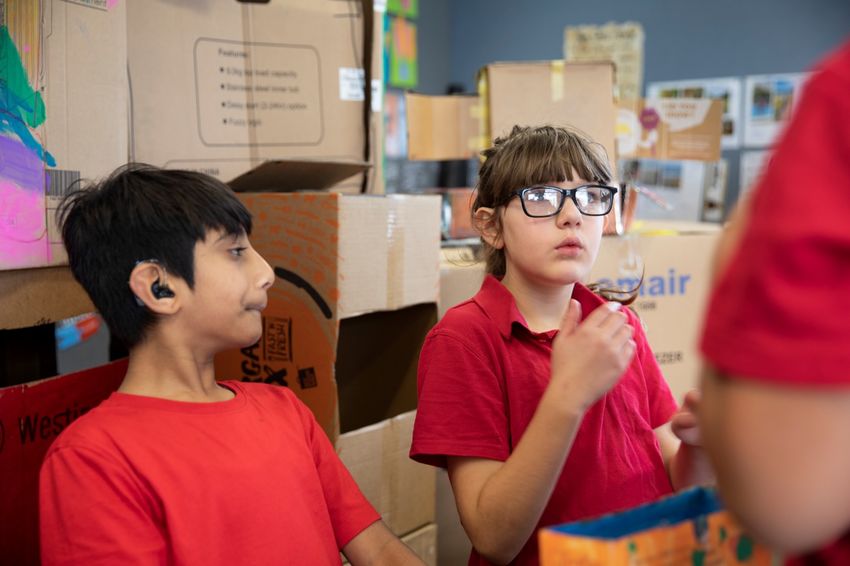
Enrolled School
School-aged students are enrolled with us because they are Deaf or Hard of Hearing and
require specialist and precision teaching to access the New Zealand Curriculum. Specialised
education pathways from Years 1–13+ for Deaf and Hard of Hearing students are provided
according to their individual needs.

Enrolment Process
   •   An application to enrol in the school is completed
   •   Parents / Whanau meet with school leaders to discuss the reasons for the application
   •   When possible the student will complete a placement visit which includes initial
       assessments and spending time at the provision and or hostel
   •   The completed application is shared with the Ministry of Education at an admissions
       meeting and a recommendation is made
   •   The final decision is made by a Ministry of Education Senior Representative

Hearing factors
Strong preference will be given to students who have a bilateral, sensorineural hearing loss.
Students who present with a bilateral conductive hearing loss will be considered on a case by
case basis. Preference will also be given to students who are ORS funded. Students who are
not verified as having ORS funding may be enrolled in exceptional circumstances.
Ko Taku Reo is not funded to enrol students with a unilateral hearing loss.

 Ko Taku Reo Deaf Education Charter 2021                                               Page 7
Residential
Ko Taku Reo has two residential accommodation options; one at our Auckland Campus in
Kelston and the other at our Christchurch campus in Sumner. Residential accommodation is
available for students aged 11 to 21 while they attend school or vocational training. The
residential facilities operate a 24 hour service during term time. Students are transported
home (by flight or bus) every five weeks and at the end of each term.
The residences have simple adaptations to make them suitable for Deaf youth to develop and
experience independence in preparation for life beyond school. Each bedroom door has a
flashing light doorbell and all rooms are equipped with flashing light fire alarms and vibrating
smoke alarms for every bed. The latest communication technology is available so students can
easily keep in touch with family and friends at home. Students have opportunities to
participate in a range of activities, both during and after school. They are encouraged to
engage in extra-curricular activities within and outside of the residences.

The overarching aim of these activities is for enjoyment; however, they also serve the purpose
of helping students gain discipline and the skills and confidence to take part in wider
community activities and events, using their communication skills and building on this over
time. Ko Taku Reo also recognises the importance of wellbeing and identity and social and
emotional growth occurs while living and socialising with their peers and deaf adult role
models. Residential staff are committed to working alongside students to foster independence,
self-awareness, and self-sufficiency so that they can become confident members of their
family, school, Deaf community and general community. Some staff use New Zealand Sign
Language (NZSL), some use spoken English, and many use both languages. Staff encourage and
actively support the use of NZSL and a greater understanding of Deaf Culture.

 Ko Taku Reo Deaf Education Charter 2021                                                Page 8

Regional Services
The Ko Taku Reo Outreach School provides specialist teaching, advice and guidance, assistive
technology and NZSL support to Deaf and Hard of Hearing students enrolled in their local
mainstream school. The level of specialist support provided to students is reviewed and
allocated on a term-by-term basis following a process of local prioritising and moderation.

RTD
Direct RTD Specialist inclusive teaching support, advice and guidance, regular monitoring to
check progress is being maintained

ASSIST
Advice and guidance. Regular monitoring to check progress is being maintained

Direct teaching support
Direct teaching support is designed to provide inclusive access for DHH students in a
mainstream school classroom. It has an emphasis on language, literacy and Deaf Culture.
Direct teaching support is provided by either a Resource Teacher of the Deaf or by a staffing
transfer teacher. These teachers assess language, reading and writing and class engagement.
Specialist teaching services are allocated to students meeting the criteria for literacy, language
support in an inclusive setting. This service is provided either by a Resource Teacher of the
Deaf (RTD) or qualified teacher based in the student’s local area. Both RTDs and staffing
transfer teachers receive outreach/professional support from the Resource Teachers of the
Deaf (RTD) and Teacher of the Deaf (ToD) for literacy, sign language and speech-language.
NZSL tutors provide sign language tuition and Deaf awareness training.

 Ko Taku Reo Deaf Education Charter 2021                                                  Page 9
Resource and Technical
Our audiology service offers a range of support
Clinical — hearing assessment, hearing aid fitting and evaluation, monitoring of young child
and student progress in listening and the perception of speech. The provision of resources,
guidance and support to children/students themselves and to their parents/family/whānau.

Resource development — Maintaining current knowledge of paediatric and educational
audiology through literature review, and the production of suitable resources and training
materials for children/students, their families and associated professionals.

Training — Orientation of students training to become Teachers of the Deaf and audiologists
towards an appreciation of the world of the child and young person with hearing loss and the
needs of their parents/families/whānau. The upskilling of professional colleagues in audiology
and education.

The benefits of our audiology service
   - Specialisation in paediatric and educational audiology on the Enrolled School sites, in a
      team-oriented professional environment
   - Close links with Enrolled School Teachers of the Deaf, Resource Teachers of the Deaf,
      Ministry of Education Advisers on Deaf Children and DHB Audiology Services
   - Promotes the understanding and management of children and young people’s hearing
      and spoken communication needs, within a context of family-centred care and
      sensitivity to visual and sign language communication

 Ko Taku Reo Deaf Education Charter 2021                                               Page 10
Priority Learners
Te Rautaki Matauranga Māori– Māori Achievement Strategy
The Treaty of Waitangi is a founding document of New Zealand. As such, the Treaty is a crucial driver
for the way the Board delivers services and engages with Tangata Whenua, Learners, Whānau and Iwi.
The Board acknowledges that Iwi and Hapu have a constitutional interest in the effectiveness of
service delivery to DHH learners. To meet its obligations and responsibilities under the Treaty of
Waitangi, the Board has developed, adopted, and implemented Te Rautaki Matauranga Māori.
Our school will reflect the unique position of the Māori culture by:
- Respecting and honouring the traditions of Māori students and their whānau
- Ensuring a strong presence and role in the school for Turi Māori
- Supporting the development of school Kaupapa
- Developing staff and students’ knowledge of Te Reo and Tikanga Māori
- Employing staff who are proud of their Māori background where suitable personnel are
available
- Providing all students with learning opportunities about Māori culture and language
- Provide increasing use of Te Reo Māori in instruction in where possible
- Improving the knowledge and skills of all staff in Te Reo Māori and Tikanga Māori
- Engage meaningfully with our Māori whanau
- Ensuring Māori representation on the Board which will help promote the strategic growth
of Te Ao Māori
- Operating consistently with the principles of the Treaty of Waitangi: 1. Partnership 2. Protection –
language, knowledge (curriculum), transmission of knowledge (pedagogy) 3. Participation – access
to resources, visibility of Māori language and culture
• Key early focus areas:
• Appointing appropriate staff to strategic positions
• Develop and improve the educational function of the Ruaumoko Marae and use protocols
• Ensuring there is a national presence and balance of Māori within the development areas including
multiple iwi, regional needs and Māori Deaf
• Developing expertise for provision of kapa haka and tikanga for students
• Explore idea of Marae tikanga workshops, Māori Kit days, tangata Māori immersion days
Ko Taku Reo Deaf Education Charter 2021 Page 11Strategic Action Plan 2021
Strategic Goal Project Personnel Intended outcome in 2021
Student Wellbeing Inquiry – Enrolled School Leaders, Practice in this area impacting more students
continue, broaden, collate and Student Wellbeing Committee Practice in this area more consistent nationwide
analyse longitudinal data Pastoral Care staff
Lifting student Residential Staff
wellbeing and academic Collaborative Inquiry Pathways: All teaching staff. Inquiries continued.
achievement. Hauora Other staff working with Sharing of Findings Nationwide
students:
Māori Deaf Learners TAs, EAs, NZSL tutors. Reviewed Inquiry Goals set.
NZSL Learners With support from Megan
Peterson
other Evaluation Associates
Board
Ko Taku Reo SLT
Delivering a nationwide MoE Term 1 2021: new ways of working
service which is holistic, Unions. Beyond: continual improvement.
accessible, equitable
and efficient. Service Delivery Design projects:
*Evaluative Pilot re Holistic, Agile Senior Leaders Increased understanding of differences in practice.
Service in the Regions Local Teaching Teams Recommendations for aligned practice
MoE
Ko Taku Reo Deaf Education Charter 2021 Page 17V school concept explored, more students engaged
*Digital Transformation Senior electronically, trials in place, conclusions
*Development of NZSL Leaders, about best practice beginning to form
Immersion Hubs Relevant staff
Knowing our Learners: All Teaching IEPs more data driven.
Utilising student data, embedding of KAMAR, data staff. Data Longitudinal data and analysis in reporting and
evidence and researchto use support staff. planning of resourcing, and of high-quality teaching
inform high quality skills strengthened, IEP data and learning.
teaching, learning and driven,collaborative inquiry data
resourcing. driven.
Targeted engagement with Board Whānau and Stakeholders feel better understood by Ko
stakeholder groups Senior Taku Reo
according tolocal learner Leaders Whānau and Stakeholders feel more positively
Build and maintain strong, profile and need. Middle engaged with Ko Taku Reo
collaborativerelationships Leaders
with students, Teaching and non-Teaching staff
family/whānau, the Deaf as
community, the wider relevant
education community, and Communications with whānau All Ko Taku Reo staff Whānau feel included and informed in discussion about
other external about their students, learning their children, learning and progress.
stakeholders. and progress is appropriate,
supportive, and empowering.
Ko Taku Reo Deaf Education Charter 2021 Page 18National Learner Profile The detailed learner profile below records overall learner numbers rather than percentages. The aim of the table is to provide an overview of learners according to their - Year Level - at School. Learners use a wide variety of amplification – Technology – this includes Cochlear Implants (CI); Cochlear Implant and Hearing Aid (CI/HA) and Hearing Aids (HA). The table also indicates the overall national – Ethnicity of Learners - using Ministry of Education Categories: NZ European; Māori; Pasifika; Asian, and Middle East, Latin America and African (MELAA). National Enrolled School data National Outreach school data National Outreach School data Ko Taku Reo Deaf Education Charter 2021 Page 19
Sector Co-operation

     Universal
                                                                           Confident
     Newborn
                         Early             Success in   Achievement and    adulthood
   Screening and                                           Transition
                       Language             School                        Employment
 Early Intervention
                                                                           Education
    Programme          Acquisition
                                                                            Training

 Ko Taku Reo Deaf Education Charter 2021                                     Page 20
Guiding Documents Evidence Based Shifts in Practice to Lift Outcomes The annual Resourcing Notice provides the key record of the staffing and operational resources available to the Board of Ko Taku Reo. The notice describes the enrolled school and regional specialist staffing and operations entitlements as well as the payments made for early involvement, residential, specialist technical services that Ko Taku Reo provides. The notice also outlines the purposes and outcomes for each service. Since 1998 Government has agreed that these core functions, and additional services, should continue in alignment with the wider “Special Education 2000” initiatives. It was agreed that the enrolled school and residential functions at each campus should be resourced in accordance with the principles that resource all schools, and that the additional early childhood, regional specialist and Resource Centre functions should be funded transparently and separately. Ko Taku Reo Deaf Education Charter 2021 Page 21
Current Opportunities
The Ministry recognizes that the education sector is operating in a state of continuing change as
we work together to sharpen the focus on lifting the outcomes for Government’s priority learners.
Work programme matters of particular relevance during 2021 include

1.      Realise quality gains through a focus on equity of access to quality teaching and learning and
improved outcomes in all geographic locations.
2.      Realise cost efficiencies arising from the school's merger by reducing the replication of
services, systems, procurement and new initiatives.
3.      Work within the LSDM to contribute to improved education for children and young people
with additional learning needs who are Deaf and Hard of Hearing by contributing to clusters and
establishing relationships with Learning Support Coordinators (LSC) where they are in place, and
Ministry staff carrying out the learning support facilitation function.
4.      Continue to strengthen relationships and partnerships with key stakeholders.
5.      Specific projects:
            •continuity of services in response to future COVID-19 level changes
            • establishing NZSL hubs
            • support for Māori Deaf
            • continue to grow the NZSL@School initiative
            • work with the Ministry as they scope a review of NZSL@School and to participate in
            the review.
6.      Conduct an internal review of early involvement servicesincluding:
            • the two Early Childhood facilities in Christchurch and Auckland to ensure that the
            entity and governance arrangements are legal and fit for purpose
            • residential immersion courses for young children
            • Resource Teacher Deaf services for children aged 3-5 years.

  Ko Taku Reo Deaf Education Charter 2021                                                 Page 22
Additional References The Ko Taku Reo Board acknowledges these guiding documents of the New Zealand Education system’s principles, values and desirable achievements with particular emphasis on DHH learners. • the National Education Guidelines, • the National Plan for DHH Education, • the New Zealand Disability Strategy and • UN Conventions on the Rights of Disabled People and the Rights of Children • Human Rights Commission Report New Era for NZSL in Aotearoa (2012) • Better Public Service – Goals • Ministry of Education Investing in Education Success - Focus on priority learners (2014) • Wilson Report – Role of the Advisor on Deaf Children (2010) Ministry of Education | Tātaritanga raraunga Page 23
ANALYSIS OF VARIANCE REPORTING

 School Name:                             Ko Taku Reo                                     School Number:      903
 Strategic Aim:                           Ko Taku Reo is a major provider of educational programmes and services to
                                              • Raise and sustain the academic achievement of Deaf and Hard of Hearing learners in New Zealand
                                              • Promote the social, emotional health and wellbeing of Deaf and Hard of Hearing learners in New Zealand
                                          So that Deaf and Hard of Hearing students thrive in an environment where they

                                          To ensure all Deaf and Hard of Hearing people in New Zealand will have the skills and knowledge necessary to enjoy
                                          fulfilling and satisfying lives.
 Annual Aim:                              Goal 1 Lifting student wellbeing and academic achievement.
                                          Goal 2 Delivering a nationwide service which is holistic, accessible, equitable and efficient.
                                          Goal 3 Utilising student data, evidence and research to inform high quality teaching, learning and resourcing.
                                          Goal 4 Build and maintain strong, collaborative relationships with students, family/whānau, the Deaf community, the
                                          wider education community and other external stakeholders.
 Target:                                  60% Y3-10 learners will make progress from Time 1 to Time 2 in maths
                                          60% Y3-10 learners will make progress from Time 1 to Time 2 in reading
                                          50% Y3-10 learners will make progress from Time 1 to Time 2 in writing

Ministry of Education | Tātaritanga raraunga            Page 24
90% attendance at school
The social and emotional wellbeing of learners is monitored and reported
Establish the Te Tai Tonga Programme at Ormiston Senior Provision for Year 11 Learners to complete NCEA
Level 1 in one year
80% of School Leavers will have Level 2
Baseline Data: Since 2012, van Asch and Kelston Deaf Education Centres were governed by a Combined Board of Trustees, who have
been working to merge the two schools. In July 2020 Ko Taku Reo Deaf Education New Zealand was formed and is
governed by the Board of Ko Taku Reo
At the beginning of the 2020 School year the target was set, shared by both schools but still operating separately.
Ministry of Education | Tātaritanga raraunga Page 25Actions Outcomes Reasons for the variance Evaluation
What did we do? What happened? Why did it happen? Where to next?
Target 1
• Mathematic assessments The cohort used was learners Years 3 • As NZC levels can extend • Best practice of
are not yet aligned – 10. The school roll was 110 and over 2 – 3years of mathematics planning 2
between both DECs at this cohort was 49% of the school schooling reporting the day workshop planned for
Time 1 roll. The cohort was 52 learners. NZC level does not show Lead Teachers March 2021
• Learners at Primary Assessments were completed in incremental progress within • Research and review
Provisions receive daily Term 1 (Time 1) and Term 3 (Time 2) a level current mathematics
mathematics lessons. Time 2 data was gathered as Ko • There is no consistency in assessments best suited to
These lessons are a mix of Taku Reo. the planning, teaching or Deaf/Hard of Hearing
whole class, small groups assessment of Mathematics learners under the
and 1:1 with a teacher Results showed that 1 student from in our new national school. guidance of Ko Taku Reo
• Learners in Years 9 and 10 the cohort made progress from one • There is no consistency Best Practice Mathematics
are taught mathematics New Zealand Curriculum Level to the across Primary Provisions Lead.
by Ko Taku Reo teachers next. who can use; • Create a new kete of
in the home room. NUMPA/GLOSS/e-AsTTle Mathematic assessments to
• When comparing results when assessing be used at Ko Taku Reo
from Time 1 to Time 2 the
NZC Level Progress - • Secondary Provisions could Enrolled School
New Zealand Curriculum Maths use: custom made e-AsTTle • Investigation and
level equivalent to where Time 1 - Time 2 or marks from mainstream implementation of
the learner was operating classes teaching Mathematics
was used Professional Learning for
2%
Made teachers
Progress
• Continue to work with
98%
Stayed the Evaluation Associates to
same
strengthen the
understanding and use of
the Progress and
consistency Tool (PaCT) for
Deaf/HH learners
Ministry of Education | Tātaritanga raraunga Page 26Target 2 • Results have shown that 24 % • Results only show • Literacy support group will
• Learners at Primary learners made progress in movement to a another continue to meet, planning
Provisions receive daily their reading levels from NZC level, they do not a ‘forum discussion’ for
instructional reading Time 1 to Time 2. This was a reflect incremental Term 2
sessions. These sessions group of 13 learners. progress within a level. • Targeted support and
are usually 1:1 with a • Our results show us the • Different practices in the guidance from Best
teacher. largest group of learners to teaching of reading Practice Leads in the
• Learners in Years 9 and 10 make progress was in Years 8 between Provisions, teaching of reading to
are taught literacy by Ko – different practices in Deaf/HH learners
Taku Reo teachers in the 10. assessment • Application to Ministry of
home room. Education new Professional
• Following the formation Learning and Development
of Ko Taku Reo, a literacy project “Better Start
support group was Literacy Approach”
formed. The intention was • Planning Workshop Term 1
to review the teaching of week 7 for Primary and
This was a group of 9
literacy practices in Secondary Teachers to co
learners.
Auckland and construct curriculum
Christchurch. The group planning and assessment
met twice a term. templates
• Application for Best Start
Approach MOE PLD 2021
• The writing assessment
used was the Deaf Learners
Written English Exemplars.
The exemplars indicate • Continue to work with
levels within a NZC where
Evaluation Associates to
students are working at.
strengthen the
The assessment tool
understanding and use of
Target 3 effectively shows
incremental progress within PaCT for Deaf/HH learners.
a NZC
Ministry of Education | Tātaritanga raraunga Page 27• Learners at Primary • Include moderation of
Provisions receive
NZC Level assessment as best practice
opportunities for writing Progress - Writing when using the Deaf
and conference daily. Time 1 - Time 2 Learners Written English
These sessions are usually Exemplars
1:1 with a teacher. Made
17%
• Learners in Years 9 and 10 Progress
are taught writing by Ko Stayed the
83%
Taku Reo teachers in the same
home room.
• A 2020 focus on teaching
pre Level 1 NCEA skills
• In 2019 writing Within NZC Level
assessment was a focus Progress - Writing
for Kelston and van Asch Time 1 - Time 2
DECs
• Moderation was
Made
introduced at Local, 38% Progress
Regional and National 62% Stayed the
level using Deaf Learners same
Written English Exemplars
• In 2020 the Progressive • Covid 19 Lock down
and C Tool (PaCT) was created irregular
introduced at a workshop attendance
to Lead Teachers from • Some parents reluctant to
both DECs send students back to
school
Target 4
Ministry of Education | Tātaritanga raraunga Page 28• Collected data on • Regular reporting of
attendance on SMS attendance totals to
(KAMAR) Teachers and whānau
Primary Provision
• Phone calls and letters to • Attendance concerns raised
Attendance
parents at Hauora Meetings
• Letters of attendance
concerns will be sent in
29% Attendance Term 1 for those who have
71% Absence had absences of 5 days or
more in the first month.
• Continue to develop our
processes of following
attendance concerns with
Teaching Teams and
whānau
Secondary Provisions • Continue to access and use
Attendance
• New systems and Attendance Service
processes were created and Application when
introduced following the appropriate
Attendan merge in July
24% ce
• Covid 19 distorted
Absence
attendance data, OMT data
76%
was not gathered by all
Provisions (presence)
• Different approaches of
how Integrated Services
Target 5
Team Specialists are used
• The Social and Emotional
in Provisions. Alignment yet
Wellbeing of students was • Following the merge of both
to take place
monitored by DECs in July the Pastoral Care • No National systems in
• OMT Committee (VADEC) and the place gathering data on;
• Well being Learner Survey referrals and outcomes,
Ministry of Education | Tātaritanga raraunga Page 29• Referrals to Pastoral Care Wellbeing Committee (KDEC) number of pastoral care • Professional development
Team formed a new group Hauora. memos/visits on the best use of the
• Pastoral Care Memos by • The Hauora group is made • Well being survey not OMT, particularly for new
Aps up of Enrolled School completed staff
Leadership Team, Residential • In 2021 the Hauora group
Team and the Integrated will continue to meet with
Services Lead. an increased Residential
• The group meets fortnightly input from 2 x Residential
with the aim of being Leads
proactive when discussing • The referral process for
students of concern related specialist support will be
to social and emotional refined and shared wider
wellbeing, physical health • A programme was on Kelvan, along with a list
and attendance. established to support a of services available for
large group of learners students
moving into Year 11 from • Recruitment for Social
Ormiston Junior College. Worker (permanent in
The programme provided Auckland) and School
the opportunity for learners
counsellor (National role)
to achieve NCEA Level 1 in
• Increased collaboration
one year.
• One learner gained 5 credits with the Integrated
• A letter went to parents
for Level 1, PE 1.1 explaining the new Services Team to identify
• 5 learners gained 3 credits programme for Year 11 student need and respond
Target 6 for Level 1, PE 1.3 • Selected a group of appropriately in a proactive
learners who would manner
• Learners in this group
benefit from this
attended mainstream
programme
classes and also PE/Health
• We explored opportunities
Standards by Ko Taku Reo
for Bone and Stone carving • Resources and easily
staff. The standards
Academy from Toi accessible property are
taught provide the
Manawa where learners required to effectively carry out
potential to achieve the
Ministry of Education | Tātaritanga raraunga Page 30Literacy component of could achieve some NCEA this programme. e.g. access to
NCEA Level 1. level 1 credits. the gym at OSC was very
difficult, due to it being mostly
Level 3 University Entrance booked by mainstream classes.
Level 1 NCEA There were also timetable
Level 3 NZ Certificate in • Supported Teaching clashes with Te Taitonga’.
Construction Programmes at the High • Recommend
Level 2 NCEA School Provisions
stocktaking/oversight of what
• Use of Special Assessment
Level 2 NCEA resources we do have / are
Conditions with NZQA for
Level 2 NCEA easy to obtain or access, then
assessments
Level 3 NCEA • Academic counselling plan
sessions with teachers the programme subjects from
that.
• Confirm moderators and
their availability well in
advance.
• A teaching team for this
programme to avoid isolated
Target 7 teaching.
• 80% of School Leavers will
have NCEA Level 2
• At the end of 2020 there
were 7 School Leavers
• Introduction of two new
• 85% left with having
roles to support the focus
achieved Level 2 NCEA or
and growth of NZCEA
higher
• Academic Qualifications they achievement in the
left school with were; Provisions, with support
from Residential staff
Ministry of Education | Tātaritanga raraunga Page 31• Upskill Residential staff on
NCEA, including how to
support with homework
• Create opportunities for
standards to be taught in
the Residences after school
hours between 4 – 6pm
• Proposal for NCEA Credit
Camp at the end of 2021
Planning for next year:
Alignment of best practice teaching and assessment of Mathematics across the twelve Deaf Bilingual Provisions of Ko Taku Reo Enrolled School.
New targets:
30% of all learners Years 3 – 6 will show progress in Mathematics from Time 1 to Time 3 in numeracy
80% of all learners Years 3 – 8 will make progress within a NZC Level in Reading from Time 1 to Time 2
80% of all learners Years 3 – 8 will make progress within a NZC Level in Writing from Time 1 to Time 2
All learners studying NCEA standards will achieve 80% of standards completed.
Ministry of Education | Tātaritanga raraunga Page 32Appendix 1 – Exit Achievement Level and Destination NCEA Achievement 2020 Enrolled school students take a variety of NCEA subjects offered by partner schools, alongside NZSL (Christchurch and Auckland) and Mathematics, English, and English for speakers of other languages (Auckland). Students taught by Partner School Teachers are supported by Ko Taku Reo staff in mainstream classes or within a Supported Learning Programme. These can be Teachers of the Deaf, Teacher Aides of the Deaf and/or Educational Interpreters. A small percentage of students attend some classes independently. When back in the Provision classroom, Ko Taku Reo teachers provide pre and post teaching of the mainstream class material. NZSL NCEA Levels 1, 2 and 3 is taught by Ko Taku Reo teachers in the Provision classrooms and at distance. Student at distance attend a mainstream school that has a Memorandum of Understanding with Ko Taku Reo to provide the delivery of NZSL as a NCEA subject. One student was dual enrolled with Ara Institute of Canterbury taking part in a part time Trades Course. Another student was dual enrolled at National Trade Academy Canterbury in an Equine Course. Enrolled school students typically take 3-4 subjects, rather than 5-6 subjects, and therefore often work towards an NCEA Level over more than one year. This can make reporting on student achievement more complex. The table below shows student achievement at their year levels and across NCEA levels 1-3. It also includes learning recognition credits (LRC) earned in 2020 due to COVID-19 lockdowns. These are calculated as 1 learning credit for every 5 credits students earned (1:5), with further adjustments to cater for the second regional lockdown for Auckland students. Ministry of Education | Tātaritanga raraunga Page 33
2020 NCEA Achievement
Credits Achieved A= Auckland Students                      C = Christchurch Students
 Year 11 Level 1 Level 2 Level 3                         Total LRC Total +LRC        Other Achievements
 Aa        27     10                                     37      7       44
 Ab        15     15                                     30      6       36
 Ac        27     15                                     42      8       50          Level 1 Literacy and
                                                                                     Numeracy credits
 Ad              36             9              25        70      10      80          Level 1 NCEA
 Ae              9              8                        17      3       20
 Af              31             15                       46      9       55          Level 1 Literacy and
                                                                                     Numeracy credits
 Ag              31                            10        41      8       49
 Ca              59                                      59      10      69
 Cb              74                                      74      10      84
 Cc              64                                      64      10      74          Level 1 Art endorsed
                                                                                     with excellence
 Year 12         Level 1        Level 2        Level 3   Total LRC Total +LRC        Other Achievements
 Ah              8              38             3         49      9       58          Level 1 NCEA
 Ai              34             4                        38      7       45
 Aj              14             19                       33      6       39
 Ak                             5                        5       1       6
 Al              4              24             20        48      9       57          Level 1 and 2 NCEA
 Am              1              48             2         51      12      12
 Cd              4              26                       30      6       6
 Ce              19             42                       61      10      71          Level 2 NCEA
 Cf              18             7                        25      5       30
 Cg                             65                       65      10      75          Level 2 NCEA
 Ch              20             35                       55      10      65          Level 2 Photography
                                                                                     endorsed with merit
 Year 13         Level 1        Level 2        Level 3   Total LRC Total +LRC        Other Achievements
 An              1              41             2         44      8       52
 Ao              3              13             23        39      7       46          Level 2 NCEA
 Ap                                            63        63      10      73          Level 3 NCEA
 Aq              3                             32        35      7       42
 Ar              23             59                       82      10      92          Level 2 NCEA
 Ci                                            64        64      8       72          Level 3 NCEA
 Cj                             3              39        42      8       50
 Ck                             44             14        58      24      72
 Cl                             29                       29      5       34
 Year 14         Level 1        Level 2        Level 3   Total LRC Total +LRC        Other Achievements
 As                                            63        63      10      73          Level 3 NCEA,
                                                                                     University Entrance
 At              1              1              31        33      7       40
 Au                             10             28        38      7       45
 Av              19                                      19      3       22
Ministry of Education | Tātaritanga raraunga             Page 34
Cm Level 3 NZ Certificate in
Construction
Cn 37 18 55 10 65 Level 1 NCEA
Year 15 Level 1 Level 2 Level 3 Total LRC Total +LRC Other Achievements
Co 3 22 11 36 7 44
School Leaver Destinations 2020
School Leaver Year Achievement Destination
A 13 Level 3 ‘GAP’ Year
University Entrance
B 14 Level 1 NCEA Employment with ‘Alsco’
C 14 Level 3 NZ Certificate in Construction Seeking employment
D 15 Level 2 NCEA Work experience on a
farm with the prospect of
employment
E 12 Level 2 NCEA Ara Institute of
Canterbury, studying Level
3 Pre Health
F 13 Level 2 NCEA Ara Institute of Canterbury
G 13 Level 3 NCEA Employment in the family
business
Ministry of Education | Tātaritanga raraunga Page 35Glossary – Technical Terms
AODC Advisor of DHH Children
AoDCs work alongside children identified as DHH and
their families and whānau from birthto year 3 at school.
They provide advice and guidance on communication
and language development. They also help provide
resources and programmes required to meet the
developmental and educational needs of the child and
their family and whānau through early childhood and
into school.
They work collaboratively with other service providers
including the DHH Education Centres, the Northern
Cochlear Implant Programme and the Southern
Cochlear Implant Programme, and Deaf Aotearoa New
Zealand, among others.
ASSIST Service Assessment involving Specialist Teachers
Provides support for learners who are year 4 to 13
including advice and guidance and the management of
Hearing Aids and FM equipment
At Distance NZSL The use of videoconferencing to support the tuition of
NZSL to learners, families and professionals at
distance.
Bilingualism Bilingualism is the ability to use New Zealand Sign
Language and English Language (spoken and/or
written) to communicate effectively.
Biculturalism Biculturalism is the ability to move freely between Deaf
and hearing cultures, by adapting to, combining and
blending aspects of both cultures.
Bimodal Bimodal is the development and use of language in
more than one modality. NZSL is a signed language
and English is a spoken language (spoken and signed
are the “modes” to which “bimodal” refers).
CODA Children of Deaf Adults
Enrolled school The school within Ko Taku Reo Deaf Education.
Learners range from Year 1 - year 13 + They are
enrolled full time as learners. They are placed in either
of the three hubs offsite or in the Transition
Programme at the Sumner hub.
Ko Taku Reo Deaf Education Charter 2021 Page 36Deaf Community The Deaf Community comprises those Deaf and Hard
of Hearing individuals who use New Zealand Sign
Language, and share common experiences and
values.
Deaf Culture Deaf Culture is the set of social beliefs, behaviours, art,
literacy traditions and values that are influenced by Deaf
people in New Zealand and which uses NZSL as the
main means of communications.
EIC The Early Intervention Centre. Provision of
education and language to children 0-5years.
Preschool A preschool service for children aged 2 yrs to 5 yrs.
FM system Equipment which enables the learner to receive the
teacher’s voice directly to their Hearing Aid or cochlear
implant
IEP Individualised Education Plan
Immersion A period of time where learners, usually regional
learners, are ‘immersed in Deaf Culture, language and
identity.
KIT Days Keep in Touch Days
Activities planned for mainstream learners under the
Outreach Service to meet with other learners from the
same area. In Christchurch, Enrolled School learners
also take part in these events.
Learning and Change A collaborative team inquiry approach to support
Network (LCN) teaching and learning programmes for learners across
Ko Taku Reo
NCIP Northern Cochlear Implant Programme
Ko Taku Reo Deaf Education Charter 2021 Page 37NZSL New Zealand Sign Language
The main language of the Deaf community in New
Zealand. It became an official language of New
Zealand in April 2006, alongside English and Te Reo
Māori.
ORS Ongoing Resourcing Scheme
Pedagogy The discipline that deals with the theory and practice of
education.
Outreach Services Specialist support delivered to eligible learners in
Mainstream schools throughout the regions.
Residential Hostel accommodation for learners from around the
regions to enable them to access the Enrolled schools
in Christchurch or Auckland. The staff that work with
these learners on a roster system are also included in
this term.
RTD Resource Teacher of the Deaf
RTDs are specialist teachers who work in mainstream
schools to help classroom teachers adapt the learning
environment and differentiate their teaching to suit the
child’s needs.
They work with teachers and families to set collaborative
achievement goals in IEPs for children andlearners who
are DHH.
Satellite Unit / Hub Classroom/s situated on the grounds of a host school.
They are staffed by Ko Taku Reo to provide educational
services to learners.
SCIP Southern Cochlear Implant Programme
SLT Speech Language Therapist
Ko Taku Reo Deaf Education Charter 2021 Page 38Learners
Enrolled Learner A learner who lives within the Christchurch,
Wellington or Auckland regions and is enrolled at Ko
Taku Reo Deaf Education New Zealand
Christchurch Campus
Hagley Hub Learner Year 11 - 13+
Hillmorton Hub Learner Year 9 - 13
Regional learner Mainstream learners from the Christchurch area who
are supported in school by RTDs
Residential Learner A learner who lives within the Christchurch region
and is enrolled at the enrolled School. They reside at
the Residences.
Transition Programme Learner A learner based at the Sumner Hub. Year 12+ Several
learners take part in programmes across the Sumner
and Hagley Hub, and other providers eg CPIT, SIT
Wharenui Hub Learner Year 1- 8
Auckland Campus
Oteha Valley Provision Year 1-6
Kelston Primary Provision Year 1-6
Ormiston Primary Provision Year 1-6
Kelston Intermediate Year 7&8
Ormiston Junior College Year 7-10
Kelston Boys High School Year 9-13+
Provision
Kelston Girls College Year 9-13+
Provision
Ormiston Senior College Year 11-13+
Tu Kokiri Year 12-15
Ko Taku Reo Deaf Education Charter 2021 Page 39You can also read


