Children's Occupational Therapy Services Sensory Motor Tools for the Classroom Sensory Breaks Children's Occupational Therapy Services Sensory ...
←
→
Page content transcription
If your browser does not render page correctly, please read the page content below

Children’s Occupational Therapy Services   Children’s Occupational Therapy Services

Sensory Motor Tools for the Classroom      Sensory Motor Tools for the Classroom

Sensory Breaks                             Sensory Breaks
Some children are easily over stimulated or distracted by sounds, Some children are easily over stimulated or distracted by sounds,
others by touch or visual stimulation. Some children need others by touch or visual stimulation. Some children need
movement of their hands, legs or mouth to focus their attention. All movement of their hands, legs or mouth to focus their attention. All
children need an appropriate environment and good seating. children need an appropriate environment and good seating.
Using some of the Sensory tools given below you can help to: Using some of the Sensory tools given below you can help to:
alert alert
organise organise
focus and settle children within the school day by focus and settle children within the school day by
increasing their attention increasing their attention
decreasing defensiveness and helping to modulate their levels decreasing defensiveness and helping to modulate their levels
of arousal. of arousal.
Some children might need to take a regular sensory breaks, Some children might need to take a regular sensory breaks,
perhaps every 20 minutes, others at transition times and others first perhaps every 20 minutes, others at transition times and others first
thing in the morning and afternoon. thing in the morning and afternoon.
Choose the activities the child enjoys and adapt as necessary. Choose the activities the child enjoys and adapt as necessary.
Chair Push Ups Chair Push Ups
1. Sit in a chair with your feet flat on the floor. 1. Sit in a chair with your feet flat on the floor.
2. Put your hands to your sides with palms flat and fingers curled 2. Put your hands to your sides with palms flat and fingers curled
around the edge of the chair. around the edge of the chair.
3. Push up so that your bottom comes off the chair seat and feet 3. Push up so that your bottom comes off the chair seat and feet
come up off the floor. come up off the floor.
4. Use your arms and hands to help push you up and lower you 4. Use your arms and hands to help push you up and lower you
down. down.
5. Whatever your age do that 5. Whatever your age do that
many Chair Push-ups. many Chair Push-ups.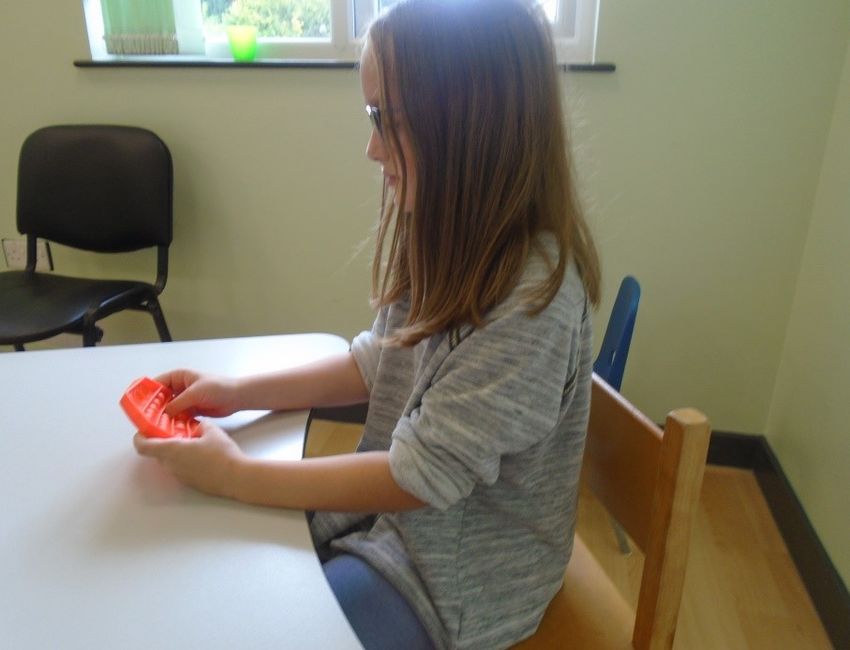
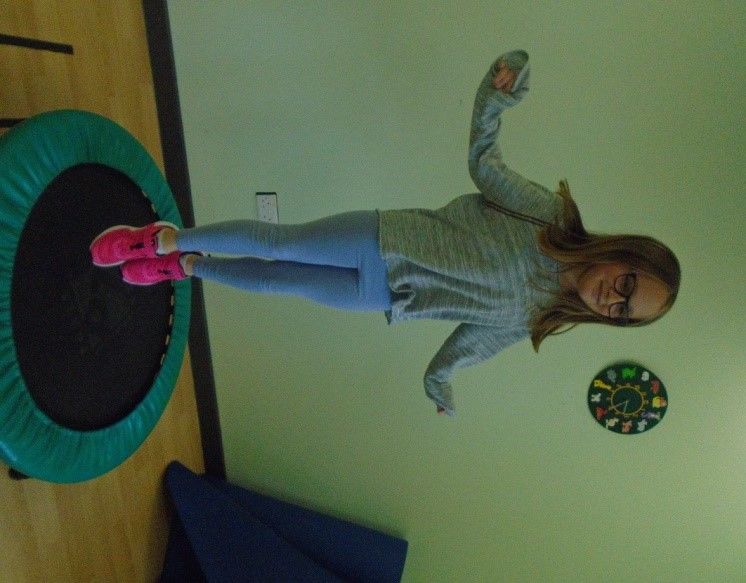
Trampette bounce you can increase the                                Trampette bounce you can increase the
difficulty level for the child as necessary.                         difficulty level for the child as necessary.

1.   Do 10 - 20 jumps counting out loud.                             1.   Do 10 - 20 jumps counting out loud.
2.   Do 10 Star jumps counting out loud.                             2.   Do 10 Star jumps counting out loud.
3.   Jump around in circles and jog for a minute.                    3.   Jump around in circles and jog for a minute.
4.   Jump and catch a ball or bean bag 10 to 20                      4.   Jump and catch a ball or bean bag 10 to 20
     times.                                                               times.

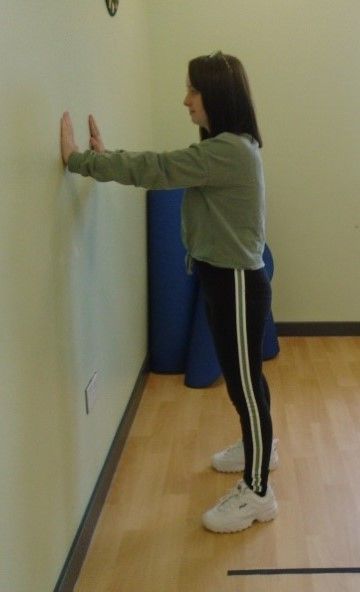
Wall press ups                                                       Wall press ups

1.   Lean against wall arms ex-                                      1.   Lean against wall arms ex-
     tended and hands flat.                                               tended and hands flat.
2.   Bend your elbows as you low-                                    2.   Bend your elbows as you low-
     er your body towards the wall.                                       er your body towards the wall.
     Keep your feet still.                                                Keep your feet still.
3.   Hold for a count of four and                                    3.   Hold for a count of four and
     then slowly push yourself                                            then slowly push yourself
     back.                                                                back.
4.   Repeat 10 times.                                                4.   Repeat 10 times.

Rolling ball- do slowly                                              Rolling ball- do slowly

1.   With tummy on the therapy ball walk hands out as far as         1.   With tummy on the therapy ball walk hands out as far as
     possible without falling off and return to starting position.        possible without falling off and return to starting position.
2.   You may need support.                                           2.   You may need support.
3.   When you feel confident, collect bean bags and throw into a     3.   When you feel confident, collect bean bags and throw into a
                            bucket in front of you.                                              bucket in front of you.
Bouncing ball – good for balance                                        Bouncing ball – good for balance

1.   Sit on the ball with feet on the floor.                            1.   Sit on the ball with feet on the floor.
2.   Bounce all the way round the ball and back again with out stop-    2.   Bounce all the way round the ball and back again with out stop-
     ping.                                                                   ping.
3.   Bounce while throwing and catching.                                3.   Bounce while throwing and catching.

The seat walk - gets all parts of your body                             The seat walk - gets all parts of your body
working together                                                        working together

1.   Sit on the floor with your legs and                                1.   Sit on the floor with your legs and
     arms straight out in front of you.                                      arms straight out in front of you.
2.   Lift up one side of your bottom by                                 2.   Lift up one side of your bottom by
     leaning to the side and push for-                                       leaning to the side and push for-
     wards.                                                                  wards.
3.   Shift and do the same thing on the                                 3.   Shift and do the same thing on the
     other side.                                                             other side.
4.   Keep on moving!                                                    4.   Keep on moving!
5.   You might find it easier at first to go                            5.   You might find it easier at first to go
     backwards.                                                              backwards.
6.   Time how long it takes you to move across the room.                6.   Time how long it takes you to move across the room.

Simon Says                                                              Simon Says

Put together a series of actions such a                                 Put together a series of actions such a
hopping on one leg, clapping five times,                                hopping on one leg, clapping five times,
jumping three times for child to copy.                                  jumping three times for child to copy.
You can make it easy by keeping it                                      You can make it easy by keeping it
simple with just one action to copy at a time or extend it by using a   simple with just one action to copy at a time or extend it by using a
combination of                                                          combination of
sequences and include spoken Instructions                               sequences and include spoken Instructions

Tug of war                                                              Tug of war

Play tug of war with ropes, scarves, stretchy bands.                    Play tug of war with ropes, scarves, stretchy bands.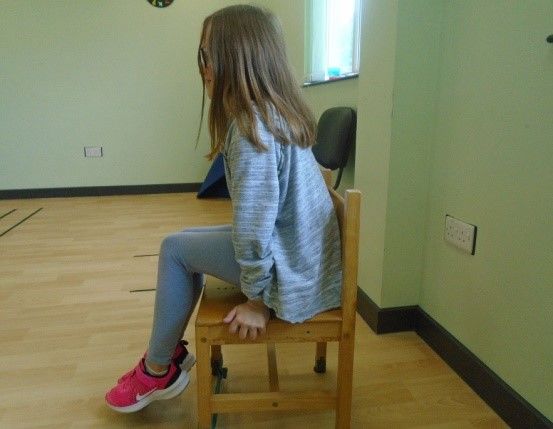
The Plank                                                                The Plank

1.   Get onto all fours with your hands shoulder width apart.            1.   Get onto all fours with your hands shoulder width apart.
2.   Take one leg behind you and push up onto your toes.                 2.   Take one leg behind you and push up onto your toes.
3.   Once balanced take the other leg behind you and do the same.        3.   Once balanced take the other leg behind you and do the same.
4.   Make sure your bottom is as flat as possible.                       4.   Make sure your bottom is as flat as possible.
5.   Hold for a count of 4 and then get back onto your knees.            5.   Hold for a count of 4 and then get back onto your knees.
6.   Repeat 5 times.                                                     6.   Repeat 5 times.
7.   If this is too difficult keep on your knees and push through your   7.   If this is too difficult keep on your knees and push through your
     arms and shoulders.                                                      arms and shoulders.

Bear walk                                                                Bear walk

1. Begin on the floor on you hands (flat) and knees.                     1. Begin on the floor on you hands (flat) and knees.
                     2. Keep your arms straight, elbows only slightly                         2. Keep your arms straight, elbows only slightly
                       bent.                                                                    bent.
                     3. Start doing a ‘bear                                                   3. Start doing a ‘bear
                       walk’ with knees bent.                                                   walk’ with knees bent.
                     Try other animal walks                                                   Try other animal walks
                      – waving one arm for a                                                   – waving one arm for a
                      trunk for an                                                             trunk for an
                     elephant walk.                                                           elephant walk.

Spider Push-ups                                                          Spider Push-ups

1.Place the back of one hand against the table top.                      1.Place the back of one hand against the table top.
2.Place the other hand (the spider) on top, matching the fingers         2.Place the other hand (the spider) on top, matching the fingers
(pinky to pinky, ring to ring, etc.).                                    (pinky to pinky, ring to ring, etc.).
3. Extend the fingers from the bottom hand (mirror) up in the air fin-   3. Extend the fingers from the bottom hand (mirror) up in the air fin-
    ger tips together (like a tee-pee).                                      ger tips together (like a tee-pee).
4. Then bring the fingers back down against the table.                   4. Then bring the fingers back down against the table.
5. Do this five times. Then turn the hands over so now                   5. Do this five times. Then turn the hands over so now
6. the spider is upside down.                                            6. the spider is upside down.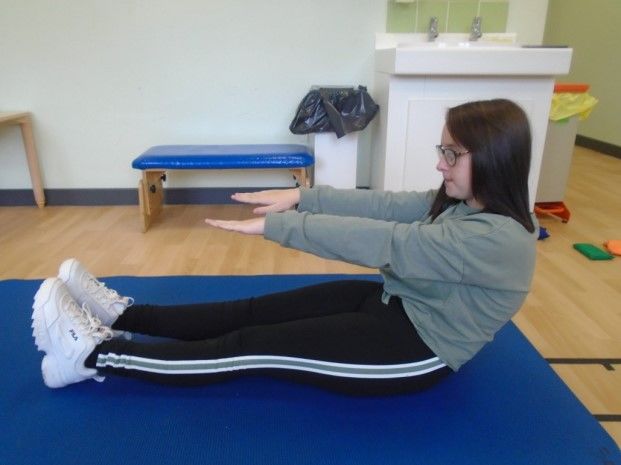
Blowing activities                                                      Blowing activities

1.   Blowing bubbles.                                                   1.   Blowing bubbles.
2.   Blow football using straw and cotton balls or paper balls.         2.   Blow football using straw and cotton balls or paper balls.
3.   Whistles.                                                          3.   Whistles.
4.   Blow toys.                                                         4.   Blow toys.

Hand Fidgets - (relieves                                                Hand Fidgets - (relieves
stress and helps                                                        stress and helps
concentration)                                                          concentration)

1.   Stretch toys such as Koosh                                         1.   Stretch toys such as Koosh
     balls and bendable rubber                                               balls and bendable rubber
     toys.                                                                   toys.
2.   Fidget pencils – see pic-                                          2.   Fidget pencils – see pic-
     ture.                                                                   ture.
3.   Beanie-like toy.                                                   3.   Beanie-like toy.
4.   Fiddle toys such as hair                                           4.   Fiddle toys such as hair
     bands, key rings, bracelets.                                            bands, key rings, bracelets.
5.   Therapy putty, silly putty or                                      5.   Therapy putty, silly putty or
     other ‘slime’ or ‘gloop’ to shape.                                      other ‘slime’ or ‘gloop’ to shape.

Sensitive Hearing                                                       Sensitive Hearing

For children who are easily distracted and                              For children who are easily distracted and
disturbed by unexpected noise, or even the usual classroom noises,      disturbed by unexpected noise, or even the usual classroom noises,
earplugs, earphones and ear muffs can be useful.                        earplugs, earphones and ear muffs can be useful.

Fidgeting                                                               Fidgeting

Very restless, fidgety children who cannot sit still can be helped by   Very restless, fidgety children who cannot sit still can be helped by
using a ‘move and sit’ cushion. These help to give the child tactile    using a ‘move and sit’ cushion. These help to give the child tactile
and                                                                     and
proprioceptive feedback as they move, and                               proprioceptive feedback as they move, and
reduce the need for excessive fidgeting they also improve posture.      reduce the need for excessive fidgeting they also improve posture.

Wrap ‘Theraband’ around the legs of the child’s chair to give them a    Wrap ‘Theraband’ around the legs of the child’s chair to give them a
resistive surface to kick against when sitting down.                    resistive surface to kick against when sitting down.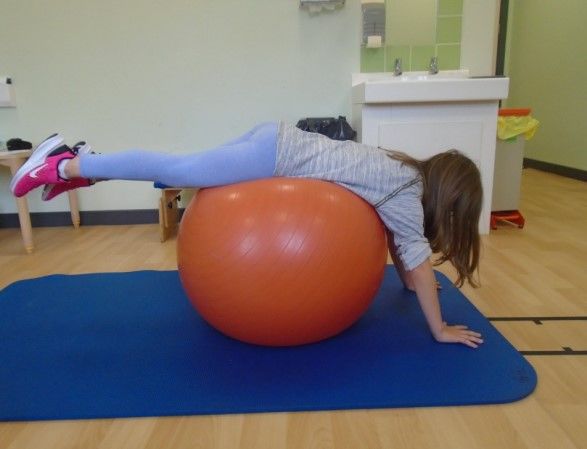
Sensory Bags Sensory Bags
While each child's "bag" should be based on his or her individual While each child's "bag" should be based on his or her individual
sensory needs, here are some sensory needs, here are some
suggestions that may help you get started. suggestions that may help you get started.
Fidget toys. Fidget toys.
Two footprints that can be put on the floor for jumping or stomp- Two footprints that can be put on the floor for jumping or stomp-
ing on. ing on.
Lotion with one of the more calming scents, such as Lotion with one of the more calming scents, such as
Vanilla. Vanilla.
Two handprints that can be placed on a wall as a deep pressure Two handprints that can be placed on a wall as a deep pressure
"push place," "push place,"
Natural smells Natural smells
Mouthing toys such as blow toys, harmonica, chew toys, Mouthing toys such as blow toys, harmonica, chew toys,
chews. chews.
Small toys with movable parts. Small toys with movable parts.
Fabric swatches. Fabric swatches.
A beanie baby type of tactile toy. A beanie baby type of tactile toy.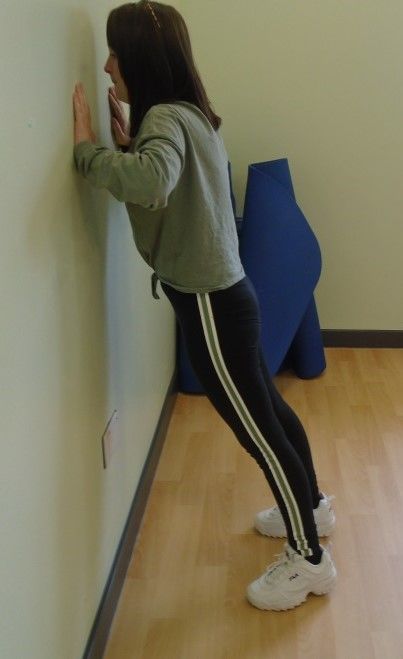
Paediatric Occupational Therapy Service                                 Paediatric Occupational Therapy Service
Redgrave Children & Young People’s Centre                               Redgrave Children & Young People’s Centre
Redgrave Gardens                                                        Redgrave Gardens
Luton LU3 3QN                                                           Luton LU3 3QN
Telephone: 01582 708141                                                 Telephone: 01582 708141
Email: ccs.beds.childrens.ot.redgrave@nhs.net                           Email: ccs.beds.childrens.ot.redgrave@nhs.net

Paediatric Occupational Therapy Service                                 Paediatric Occupational Therapy Service
Child Development Centre                                                Child Development Centre
Hill Rise                                                               Hill Rise
Kempston                                                                Kempston
Bedford MK42 7EB                                                        Bedford MK42 7EB
Telephone: 01234 310274                                                 Telephone: 01234 310274
Email: ccs.beds.childrens.ot@nhs.net                                    Email: ccs.beds.childrens.ot@nhs.net

                                                0726 - July 2021 (V1)                                                   0726 - July 2021 (V1)
                                                July 2021                                                               July 2021
                                                July 2024                                                               July 2024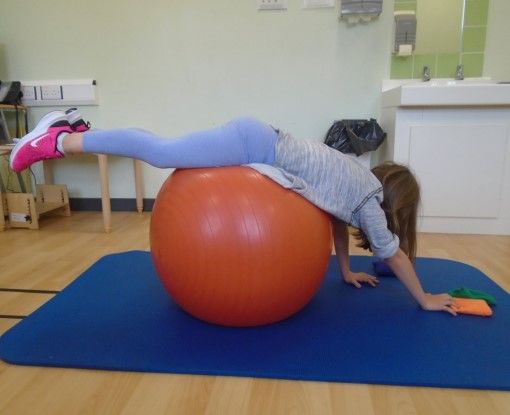
You can also read


