Chinese One Belt, One Road Initiative - LINKING CHINA MORE CLOSELY TO ASIA, AFRICA AND EUROPE BY LAND AND SEA - TIM CONSULT
←
→
Page content transcription
If your browser does not render page correctly, please read the page content below
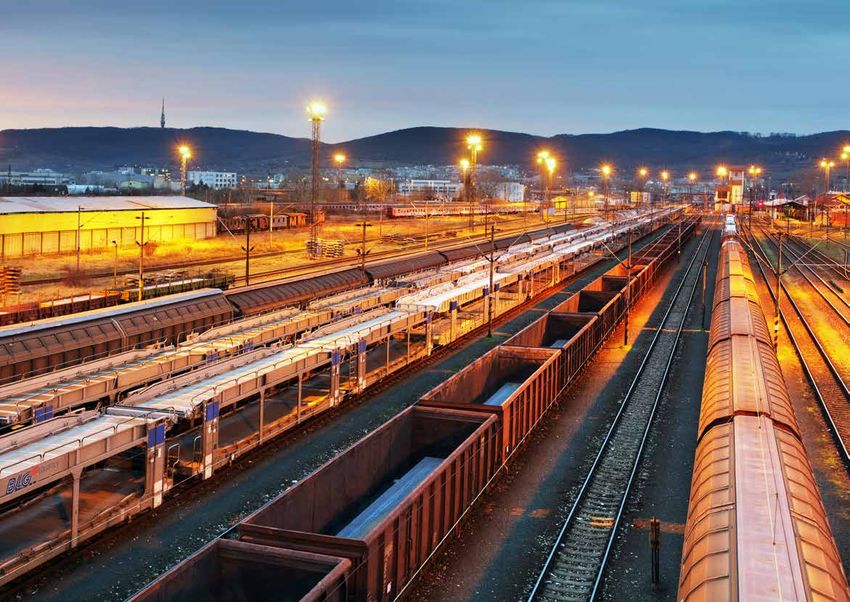
ONE BELT, ONE ROAD INITIATIVE

                                Chinese One Belt, One
                                Road Initiative
                                LINKING CHINA MORE CLOSELY TO ASIA, AFRICA
                                AND EUROPE BY LAND AND SEA
ONE BELT, ONE ROAD INITIATIVE

                                Content
                                INTRODUCTION ........................................................................................ 3

                                INSIGHT INTO THE CHINESE ONE BELT, ONE ROAD INITIATIVE .................. 4

                                SURVEY: SHIPPERS’ EXPERIENCES WITH THE EURASIAN LAND BRIDGE..... 5-8

                                ANALYSIS OF EASTBOUND-WESTBOUND TRADE IMBALANCE................... 9

                                CHINA’S TRANSPORTATION AND TRADING SUBSIDIES ............................. 11

                                CHINA’S INVESTMENTS INTO NEW CORRIDORS AND PORTS .................... 12

                                CHINA’S INVESTMENTS INTO AFRICAN PORT INFRASTRUCTURE.............. 13

                                CHINA’S DIRECT INVESTMENTS IN THE EU................................................. 14

                                CHINESE ONE BELT, ONE ROAD INITIATIVE – FINDINGS IN SHORT............. 15

                                TIM CONSULT & ITS MARKET INTELLIGENCE INITIATIVES.......................... 16

                                                                                                                                          | 2
ONE BELT, ONE ROAD INITIATIVE

                                                                            Connecting the Far East,
Introduction                                                                Central Asia and Europe
As part of the Chinese One Belt, One Road Initiative, more and more         This e-book is realized based on our sea freight experts’ analysis of the Eurasian
services are being implemented for end-to-end supply chains in trade        Land Bridge supplemented by the results of a master thesis realized in close
between the Far East, Central Asia and Europe. For shippers, this creates   cooperation with the MII Global Ocean Transport.
new interesting alternatives to air and sea transport.
                                                                            In addition it contains information on the trade imbalance between westbound
                                                                            and eastbound transports as well as the investments and subsidies currently
As a result of this development, our sea freight experts have been
                                                                            implemented by the Chinese government to expand transport infrastructures.
analyzing the developments of the Chinese One Belt, One Road Initiative
since autumn 2017. The results are primarily made available to the          Finally, we present the results of a survey on the use of the Eurasian Land
members of our Market Intelligence Initiative Global Ocean Transport in     Bridge, to which close to 200 renowned European shippers participated.
the form of an annual report. The update report 2019 has been available
since the beginning of August. The main focus of the report is on
container transports by rail on the Eurasian Land Bridge.

                                                                                                                                                            | 3
ONE BELT, ONE ROAD INITIATIVE

Insight into the                                                                    Routes of the Eurasian Land Bridge Container Rail Project

Chinese One Belt, One
Road-Initiative
The “New Silk Road”, as the One Belt, One Road Initiative is also called, is a
long-term project in China dedicated to the development of transport, supply
and trade infrastructures. To this end, a large number of Chinese infrastructure
investments and economic co-operations will be bundled to improve transport               Northern route               Southern route
connections. Professionals expect profound effects on the global economy.                 Mongolian route              Regular railway service Deutsche Bahn

The aim of the initiative is to link China more closely with Asia, Africa and Eu-
rope by land and sea.

                                                                                    New roads, railway lines, bridges, ports and power stations are planned, which
                                                                                    will be built based on historical routes between China and the West. Asia, Africa
                                                                                    and Europe will be included in the project.

           Chinese One Belt, One Road                                               In addition, numerous oil and gas pipelines and telecommunications networks

           Initiative                                                               are planned. The necessary financing will be provided through the Asian Infra-
                                                                                    structure Investment Bank (AIIB) and the Silk Road Fund, which were estab-
           • Eurasian Land Bridge                                                   lished specifically for this initiative. Existing bilateral finance companies such as

           • Maritime Silk Road                                                     the Asian Development Bank (ADB) have also announced their participation.

           • Economic co-operations
                                                                                                                                                                       | 4
ONE BELT, ONE ROAD INITIATIVE

Survey: Shippers’
Experiences with the
Eurasian Land Bridge
In June of this year Tim Consult realized a survey among European shippers to
ask them about their experiences with the Eurasian Land Bridge.                   European shippers
For the transport of certain products like electronics or fashion the Eurasian    plan to expand usage of
Land Bridge is an attractive alternative to sea and air freight. Transports per
rail from China to Europe are faster than those per sea and less expensive than
                                                                                  Eurasian Land Bridge
air transports. That is why the survey focused on the Eurasian Land Bridge.
We received answers from close to 200 renowned European shippers which
helped us to get a clearer picture of the Eurasian Land Bridge conditions. The
participating shippers were asked about the current usage, future plans and
operative challenges.

Researched topics in detail:
•   Future trend in usage of the Eurasian Land Bridge
•   Most frequently used terminals
•   Main reasons for delay of container trains on the Eurasian Land Bridge

The survey results are summarized on the following pages.

                                                                                                            | 5
ONE BELT, ONE ROAD INITIATIVE

Transports via the Eurasian Land Bridge
Survey results

Facing the growing importance of trade between the Far East, Asia and          us about their plans concerning transports via the Eurasian Land Bridge. More
Europe it was interesting to find out how European shippers assessed the       than 30% of them are planning to increase usage of Eurasian Land Bridge
situation. More than 120 out of close to 200 participating shippers informed   over the next two years.

Current usage                                                                  Planned usage

                                                                                                                                  34%
                               53%            47%                                                         58%

                                                                                                                                  8%

                             Regular    Seldom                                                        More often than in 2018      Less often than in 2018

                                                                                                      About the same as in 2018

Source: Tim Consult survey                                                                                                                                   | 6
ONE BELT, ONE ROAD INITIATIVE

Terminals in Europe and China
Survey results

China’s Rail services have been expanding throughout Europe, with a growing    and Wuhan are the three most frequented terminals on the northern route.
number of cities connected directly to China, including main European rail     Measurement is based on the number of transports per year.
terminals. We asked shippers about their preferred terminals on the northern
                                                                               On the southern route Duisburg, Hamburg and Lodz are considered the most
and southern routes.
                                                                               important terminals in Europe. In China Chongqing, Shenzen and Zhengzhou
According to the survey Duisburg is Europe‘s most popular terminal for         occupy the places one to three.
importing goods via northern route & southern route. On the northern route
Duisburg is followed by Moscow and Hamburg. In China Zhengzhou, Chengdu

Terminals northern route                                                       Terminals southern route

   Western terminals                   Chinese terminals                          Western terminals                   Chinese terminals
 (rated per no. of transports/year)   (rated per no. of transports/year)         (rated per no. of transports/year)   (rated per no. of transports/year)

   1.   Duisburg                       1.    Zhengzhou                            1.   Duisburg                       1.   Chongqing
   2.   Moscow                         2.    Chengdu                              2.   Hamburg                        2.   Shenzhen
   3.   Hamburg                        3.    Wuhan                                3.   Lodz                           3.   Zhengzhou
   4.   Düsseldorf                     4.    Changsha                             4.   Malaszewicze                   4.   Xi’An
                                       5.    Dalian                               5.   Munich                         5.   Chengdu
                                       6. Shenyang                                6. Mannheim                         6. Yiwu
                                       7.    Suzhou                               7.   Warsaw                         7.   Wuhan
                                                                                  8.   Rotterdam

Source: Tim Consult survey                                                     Source: Tim Consult survey                                                  | 7
ONE BELT, ONE ROAD INITIATIVE

Schedule Reliability across Eurasian Land Bridge
Survey results

An important decision criterion for the choice of the Eurasian Land Bridge for    terminals followed by incorrect or incomplete customs documents. But also
transports to and from China is the adherence to scheduled transport times.       infrastructure, weather conditions or additional work due to consolidation
According to the survey participants, schedule reliability across the Eurasian    and deconsolidation have an important impact.
Land Bridge is mainly influenced by operational processes in the border

Main factors influencing schedule reliability
               Delays during the operations of the
                                 border terminals
       Incomplete/incorrect customs documents
         Poorly built or maintained infrastructure
                                Weather conditions
            Additional work due to consolidation/
                                 deconsolidation
                           Gauge change process

    Increased shunting at the container terminal
Communication problems with service providers/
                    carriers; language barriers
       Other incomplete/incorrect documents
                      Short-term political decisions

           Accident due to technical failure (train)
                                    Robbery/terror
                                                       0%                    5%                      10%                       15%                     20%
Source: Tim Consult survey                                                                                                                                     | 8
ONE BELT, ONE ROAD INITIATIVE

 Analysis of eastbound-westbound
 trade imbalance

 Commodities transported
 Comparing westbound and eastbound transports on the Eurasian Land Bridge                    differences between westbound and eastbound transports can be seen in wood
 we found out that mainly machines and other industrial products followed by                 industry products with 11% eastbound and 2% westbound and consumer goods
 glass and metal products are carried both westbound and eastbound. The biggest              with 6% westbound and 2,5% eastbound.

 Westbound                                                                                   Eastbound

                                                                                                                                                  2,5%
                                                                                                                                         7,5%
                                                   10%
                                                             6%
                                                                                                                                                10,5%
                                                              7%
                                                                         2%
                                                                                                                50%                                  11%
                        56%

                                                             19%
                                                                                                                                           18,5%

                                                                                       Wood industry             Glas & metal products          Machines, equipment,
        Raw material                Consumer goods                 Chemical products   products                  & materials                    industrial products
Source: Research of Ludwig-Maximilians-Universität München                                                                                                             | 9
ONE BELT, ONE ROAD INITIATIVE
Quantity westbound and eastbound trains
Eastbound – westbound trains ratio
Keeping in mind, that China is the world’s largest exporter, it is not surprising
that the number of westbound trains is higher than the number of eastbound 7000
trains. In 2017 about two-thirds of all container trains were westbound, while
only one-third was eastbound. In 2018 the share of eastbound trains reached
6000
42% of the total container trains. At the same time the number of eastbound
trains has increased by 52% and westbound trains by 35% in comparison to
2017. According to Chinese rail freight forwarders, the overall volume on the
Eurasian Land Bridge will continue to increase 5000
Transport costs WB
58%
Number of trains
The imbalance between westbound and eastbound trains is reflected by 4000
43% higher prices for westbound trains. Current costs of transporting a
40’ container from China to Europe stand at $US 9,200 with subsidies per
container going up to $US 5,700. 3000
The twice as high westbound container freight rate is conditioned by less WB
demand for eastbound services and a higher percentage of eastbound subsidies 65%
2000
from Chinese government in comparison to westbound.
Transit times EB
1000 42%
The westbound inland haulage is in general shorter than the eastbound.
Westbound connections have transit times of up to two days less compared to
EB
eastbound connections. Depending on the route chosen they count between 35%
13 to 19 days compared to 14 to 20 days eastbound for the route Duisburg to 2017 2018
China and vice versa. The transit time of container trains connecting Asia and Westbound Eastbound
Europe has been reduced by 50% on average from 2008 until 2019.
Source: China Rail Transport Corporation, Ltd.
| 10ONE BELT, ONE ROAD INITIATIVE
China’s transportation
and trading subsidies
In order to be competitive, Chinese cargo companies receive transportation
and trading subsidies from the government. About 60% of the transport
costs per container are financed with the help of subsidies. They are realized
in the form of standard subsidized rates, special „tailor made“ rates, which
make rail competitive to ocean freight or in the form of volume discounts.
Subsidies are paid more and more on a local level varying by city between 10
to 83% of market transportation costs.
The Chinese government is planning to reduce the rail subsidies with the
aim of operating the transportation network on a purely commercial basis.
The big question now is whether the current network can function without
subsidies.
Subsidies:
• about 60% of transport costs
per container
• 10 to 83% of market transportation
costs dependent on city
| 11ONE BELT, ONE ROAD INITIATIVE
China’s investments
into new corridors New corridors:
and ports • Helsinki-China
• Lyon-China for refrigerated products
• Zhuzhou-Minsk
China invests into infrastructure projects worldwide and has more projects
planned already.
New train connections
Since May 2019 the Helsinki-China corridor is open. The Lyon-China corridor
is available for refrigerated products. Furthermore the Zhuzhou – Minsk
corridor is open since July 2019.
In addition a Singapore-Kunming railway is planned. China is going to build
railways in Serbia, Montenegro, Bosnia-Herzegovina and Macedonia. In 2020
Duisport will build a rail terminal in Minsk. Partners are China Merchants &
the Belarusian State Railways. Finally China-Laos railway is scheduled to be
open to traffic in December 2021.
Activities by ports
In May 2019 Cosco Shipping invested $3bn in Chancay Multipurpose Port
Terminal, Peru. In January 2019 Colombo Port City, funded by China,
completed land reclamation. Furthermore China signed an agreement to
invest in the ports of Trieste, Italy and Rijeka, Croatia. China has also signed
BRI deals with 18 Arabian countries. Finally China is expected to invest in | 12
Vasco da Gama Terminal in Sines port, Portugal.ONE BELT, ONE ROAD INITIATIVE
China’s investments
into African port
infrastructure
Within the scope of the maritime silk road project, China heavily invests
into African port infrastructure. In 2018 China lent $60 billion to Africa for
infrastructure development.
At least 46 existing or planned port projects in sub-Saharan Africa are funded,
built and/or operated by Chinese entities. Africa is expected to increase its
exports to China to ameliorate the trade imbalance. In return for investment
capital, some sub-Saharan African countries grant China resource concessions.
Most recent and biggest projects:
• Suez Economic Zone: 8,2 bln. USD investment
• Ethiopia-Djibouti Railway: 4 bln. USD
• Tema Port Expansion: 1,5 bln. USD
The Sub-Saharan Africa region ranked as the second-largest recipient of
investment and Chinese construction projects worldwide after Europe.
| 13ONE BELT, ONE ROAD INITIATIVE
China’s direct investments in the EU
After more than a decade of expansion, China’s outward direct investment in China’s direct investment in the EU
the EU has slowed over the last two years. The amount of Chinese foreign direct
40
investment in the EU peaked at more than €37 bn in 2016 and has fallen since
then amidst a slowdown in Chinese investment globally. In European countries
outside the EU, Chinese investment also dropped in 2018. 35
The top 3 EU countries for Chinese investments from 2010 until 2018 are UK,
Germany and Italy. 30
China now owns or has a stake in twelve maritime ports in the EU.
25
Billions of euros
20
15
10
5
2014 2015 2016 2017 2018
Source: www.bbc.com
| 14ONE BELT, ONE ROAD INITIATIVE
Chinese One Belt, One
Road Initiative –
Findings in short
• There is an enormous trade imbalance between east and westbound,
which is also reflected in the prices.
• The success of the Eurasian Land Bridge depends heavily on China’s
infrastructure investments and state subsidies for carriers.
• Transit time has been halved between 2008 and 2019.
• The operation of border terminals is an essential factor for the
reliability of timetables.
• Although China is very active in Africa, relevant trade media report a
slowdown in Chinese global investment.
| 15ONE BELT, ONE ROAD INITIATIVE
Tim Consult – The Combined strengths for your success
market engineers Transport
• Benchmarking & best practice analysis
• Global procurement strategies
In today’s interconnected global economy, companies continuously face
• IT-supported tender management
the complex task of managing and optimizing worldwide value networks.
Successful performance depends on precise and rapid adaption. • Land, air, ocean & express
As highly experienced international consultants in logistics and end-to-
Network
end supply chain management, we design applicable solutions to help our
customers confront and master these challenges. For more than 20 years, we • Strategic network design
have supported our clients independently and neutrally from our locations in • Supply chain planning
Mannheim and New York City. Since 2018 we have been part of Transporeon.
• Horizontal & vertical cooperation
• Organization & processes
Digital Logistics
• World-wide cloud platform for transport
logistics
• Supply chain digitalization
• Innovative services & tools
• Global network of shippers & logistics
service providers in over 100 countries
| 16ONE BELT, ONE ROAD INITIATIVE
Tim Consult’s Market Intelligence Initiatives
MII Europe MII Global MII Global MII North America
Road & Rail Ocean Transport Air Cargo Truck & Intermodal
• round trip • port-port • airport-airport • round trip
• single trip • pre-carriage • pre-carriage • single trip
• unbalanced roundtrip • on-carriage • on-carriage • unbalanced roundtrip
• packed incl. reefer & bulk • dry cargo, reefer & tank • general cargo • packed incl. reefer & bulk
• FTL • FCL (main & lower deck) • FTL
• LTL • LCL • dangerous goods (PAX/CAO) • LTL
• contracted & spot • inland haulage • temperature controlled • contracted & spot
• 90,000 lanes • 18.000 port pairs • 35,000 lanes • 30,000 lanes
• 6 bn €/year freight spend • 6 bn $/year freight spend • 1.5 bn $/year freight spend • 4 bn €/year freight spend
• 7 m FTL/year • 7 m TEU/year • 600 kt/year • 4 m FTL/year
| 17Keep in touch with
Tim Consult’s Market
Intelligence
Clemens Schapeler
Manager Market Intelligence Initiative Ocean
Telefon: +49 621 150 448 70
c.schapeler@timconsult.com
Maria Kupfer
Analyst
Telefon: +49 621 150 448 41
m.kupfer@timconsult.com
Tim Consult GmbH
L 15, 12-13 MORE INFORMATION HERE
68161 Mannheim, Gemany
Telefon: +49 621 150 448 0
info@timconsult.com
www.timconsult.com
This report or any contents of it, including but not limited to photos, graphics, text,
may not be copied, reproduced, changed, published or used in any other manner
without the previous expressed written permission of Tim Consult GmbH.You can also read


