Liverpool City Region Mayoral Elections 2021- Vision Zero Manifesto - A manifesto proposal by - Action Vision ...
←
→
Page content transcription
If your browser does not render page correctly, please read the page content below
Liverpool City Region
Mayoral Elections 2021–
  Vision Zero Manifesto
               A manifesto proposal by...
Liverpool City Region Mayoral Elections 2021 - Vision Zero Manifesto

Introduction
Mayoral Elections 2021: Vision Zero – A future where no one is
killed or seriously injured on the roads in the Liverpool City Region

The Vision Zero goal - that no one should be killed or seriously injured on                  We ask the Liverpool City Region to support Vision Zero, to commit to setting a target
                                                                                             for ending fatal and serious road casualties (along with interim targets) and to pledge
our roads - is closely linked to wider policies to reduce traffic, improve air
                                                                                             to:
quality¹, reduce climate changing emissions², create active neighbourhoods
and ensure economically vibrant city centres as well as town centres and                     1. Create safe city centres and safe town centres and high streets across the Liverpool
high streets. These policies can work together to dramatically improve the                   City Region; these are where a large proportion of injuries to people walking and
quality of life for those who live, work in and visit the region.                            cycling occur.

At present reducing danger on the roads in the Liverpool City Region is                      2. Lower speeds. Moving to a default 20mph speed limit across the six Local
                                                                                             Authorities and using this to ensure that roads, streets and neighbourhoods are safe for
guided by the Road Safety Strategy 2017-2020. At a time when other UK                        all.
cities are setting targets to reduce fatal and serious road casualties to zero
by as early as 2040, this strategy commits to a future where “where no-one                   3. Vigorous enforcement. Focusing on the “high harm” offences; increased speed
is killed on Merseyside’s roads and the injury rate is reduced” and a vision                 enforcement and promoting widespread third-party reporting of driving offences.
where there will be a “A reduction in the numbers of those killed and seriously
injured to fewer than 400 by 2020”.                                                          4. Less traffic. Reducing traffic volumes is a key part of Vision Zero; the City Region
                                                                                             should commit to significant reduction in both the mode share and total volume of
                                                                                             motor vehicle journeys by the end of the next Mayoral term. This would be coupled
Given the high levels of casualties that occur across the City Region, this                  with promoting walking, cycling and public transport.
represents a failure of ambition and commits the region to high levels of
death and serious injury on its roads for the foreseeable future. An altogether              5. Safe neighbourhoods. To combat the number of injuries on neighbourhood
bolder and more radical approach is needed especially if the region is                       streets across the City Region, we need a comprehensive programme of Low Traffic
serious about putting walking and cycling and healthy active communities to                  Neighbourhoods to remove through traffic from them and to enable far higher levels
                                                                                             of walking and cycling
the forefront.
                                                                                             As well as these policies, Vision Zero needs to be embedded throughout the work
                                                                                             of the combined authority. Reducing road danger must become an integral part of
                                                                                             decision making and be considered across a range of areas including transportation
                                                                                             and how roads and streets are designed, public health and how walking and cycling
Liverpool City Council Clean Air Zone proposals https://www.bbc.co.uk/news/uk-england-       and public transport are enabled and planning policy where homes and services are
merseyside-56458448                                                                          located and how car usage can be reduced.
LCR Year One Climate Action Plan 2021/22

                                                                                         2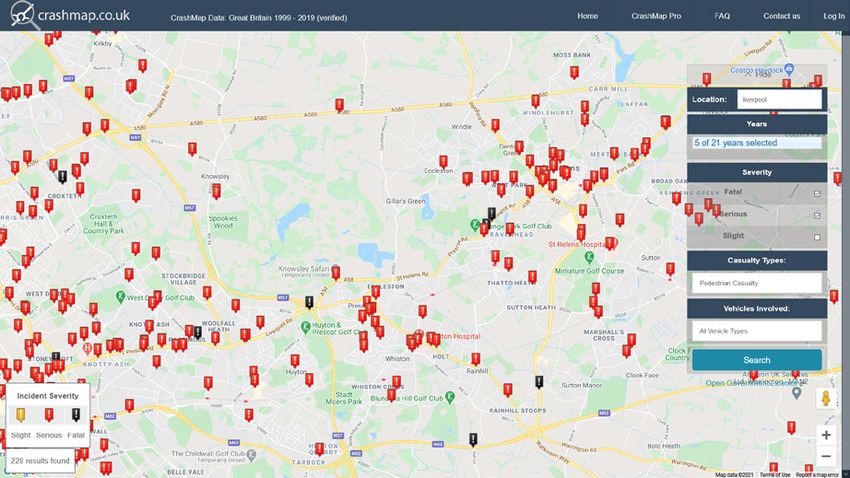
Liverpool City Region Mayoral Elections 2021 - Vision Zero Manifesto
Reducing Danger on our Roads
Progress in the Liverpoool City Region3
Understanding the trends for the numbers of people killed and seriously Road Fatalities in the Liverpool City Region (2000-2019)
Fig 1) Road Fatalities
75
injured on the roads in the Liverpool City Region has been made more 69 68
65
difficult by the changes in reporting of serious injuries since 2016. For 63
fatalities, the trend was one of significant decline from 2000 to 2009 but 51
47 48 48
there has been little progress since then.
32 33
29
27 27 27
25 24 25 25
For fatal and serious injuries, data (adjusted to take account of the changes 19
in reporting) only exists from 2013 onwards. There has been some progress
in reducing the numbers of people killed and seriously injured since 2013 2000 2001 2002 2003 2004 2005 2006 2007 2008 2009 2010 2011 2012 2013 2014 2015 2016 2017 2018 2019
but rates in Liverpool remain amongst the highest in the country especially
amongst pedestrians. Fatal & Serious Road Casualties Liverpool City Region (2013 to 2019 (adjusted data available))
Fig 2) Fatal and Serious Road
939
846
884
911
830
Casualties
Amongst those walking and cycling, the numbers killed and seriously injured 762
726
in 2019 have fallen sightly from 2013. Those walking and cycling consistently
make up more than a half of all fatal and serious injuries. The numbers of
people cycling who are killed or seriously injured have risen from an annual
average of 53 between 2000 and 2004 to 91 between 2015 and 2019
(unadjusted figures).
2013 2014 2015 2016 2017 2018 2019
Fatal and Serious Road Casualties Liverpool City Region - Walking and Cycling (2013-2019 (adjusted data))
Pedestrian Cyclist
Fig 3) Fatal and Serious Road Casualties
Figure 1 - https://roadtraffic.dft.gov.uk/custom-downloads/road-accidents Walking and Cycling
Figure 2 - DfT - RAS30043 - Adjusted data used as “Since 2016, changes in severity
149
reporting systems for a large number of police forces mean that serious injury figures are not 137
136 141 125 124
124
comparable with earlier years. Adjustments to account for the change in Great Britain have
been produced.”
Figure 3 - DfT - RAS30043
(3) The Liverpool City Region analysis is based on data from Knowsley, Liverpool, St Helens, 282 282 269 269 275 279
245
Sefton, Halton and Wirral
2013 2014 2015 2016 2017 2018 2019
3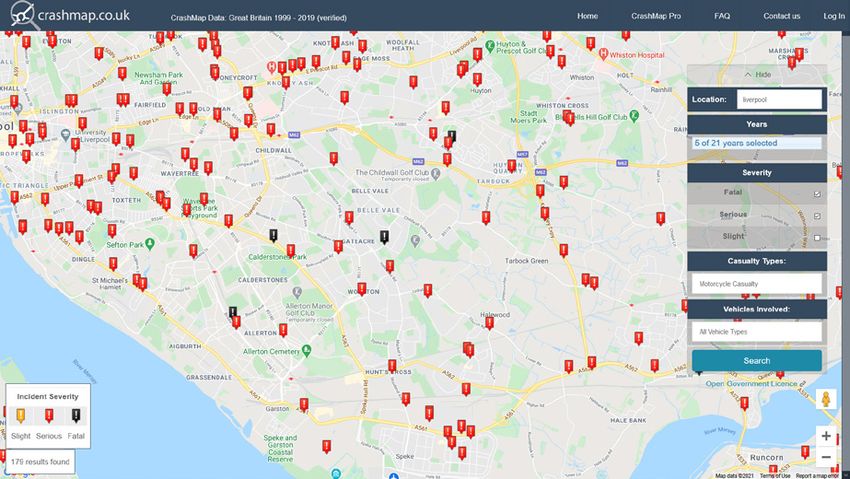
Liverpool City Region Mayoral Elections 2021 - Vision Zero Manifesto

Where People Walking, Cycling and Motorcycles
are most at Risk
Main roads carry a large proportion of traffic but are where people are more likely to be injured; they need to be made safe for all users. At the same time
Neighbourhood roads (Unclassified) have seen an increase in the proportion of casualties that occur on them in recent years. Between 2000 and 2004 on average
43% of serious and fatal casualties occurred on Unclassified roads; this has risen to an average of 54% in the period 2015 to 2019.
4) Serious and Fatal Pedestrian Casualties 2015        5) Serious and Fatal Cycling Casualties                6) Serious and Fatal Motorcycle Casualties
to 2019                                                2015 to 2019                                           2016 to 2019

• Serious and fatal pedestrian injuries often occur    • Serious and fatal cycling casualties are             • ‘A’ roads are responsible for 34% of serious
  in town centres and high streets where people          divided between main roads (‘A’ and ‘B’) and           and fatal injuries to motorcycle riders.
  and vehicles mix.                                      Unclassified roads.                                  • On average, 53% of serious and fatal injuries to
• Pedestrians are especially exposed to danger         • The significance of the main road and arterial         motorcycle riders occur on Unclassified roads.
  from motor vehicles owing to the need to cross         routes can be clearly seen in the map above
  the road.                                              BUT
• The proportion of injuries occurring on              • Serious and fatal cycling casualties on
  Unclassified roads has risen from an average of        Unclassified roads have risen from an average
  47% of all pedestrian fatal and serious injuries       of 51% of all cycling fatal and serious injuries
  in 2000 to 2004 to 57% between 2015 and                in 2000 to 2004 to 63% between 2015 and
  2019                                                   2019.

Figures 4,5 & 6 - www.crashmap.co.uk
                                                                               4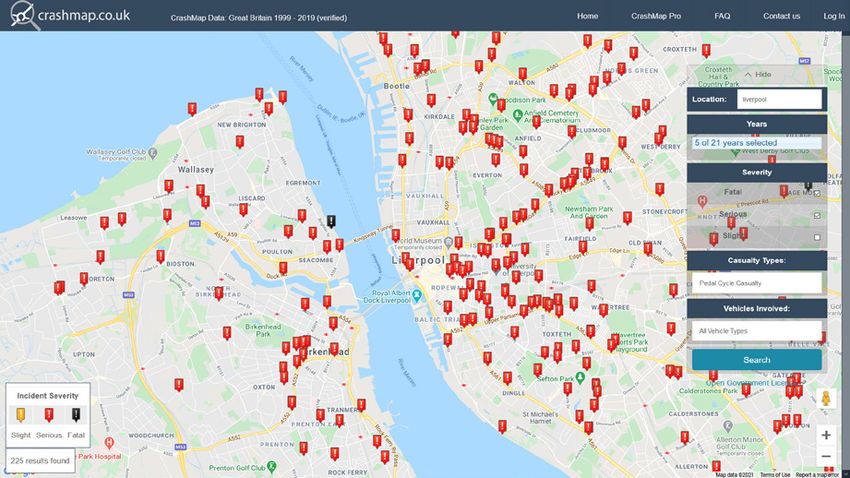
Liverpool City Region Mayoral Elections 2021 - Vision Zero Manifesto

Recent Research on Road Danger

Recent research has identified the need to focus on two other important
sources of danger.

Working Vehicles

Research by UCL Centre for Transport Studies4 shows that across Great
Britain around 1 in 3 road deaths, 1 in 5 seriously injured casualties and 1
in 4 casualties of all severities involve someone driving for work. The study
estimates that 39% of killed pedestrians were hit by a working driver. The risk
that working drivers pose is also highlighted by the increase in the volume of
Light Goods Vehicles (LGVs) in recent years. DfT data on road traffic by road
and vehicle type5 shows (Table TRA8905b) that volumes of Light Commercial
Vehicle traffic (vehicle kms) increased by 52% between 2001 and 2019
across the TfWM area.
                                                                                      (4) https://www.ucl.ac.uk/civil-environmental-geomatic-engineering/news/2020/dec/
                                                                                      injury-risk-significantly-higher-when-driving-work
Neighbourhood Roads                                                                   (5) https://assets.publishing.service.gov.uk/government/uploads/system/uploads/
                                                                                      attachment_data/file/916305/tra8905.ods
Traffic is increasingly able to navigate routes through residential areas and         (6) https://roadtraffic.dft.gov.uk/regions/5
neighbourhood streets owing to the huge take-up of Sat-Nav technology.                (7) https://roadtraffic.dft.gov.uk/custom-downloads
Since 2009 across the North-West, mileage on ‘C’ and Unclassified roads
has risen by 47% and overall traffic volumes on these roads are now at the
same level as for ‘A’ roads (+3% over this period)6
On average well over half (54%) of all serious and fatal casualties in the
Liverpool City Region occurred on Unclassified roads in the years 2015 to
20197, this is an increase of 11 percentage points from the average of 43% in
the years 2000 to 2004. These need to become safe places for people and
the communities they live in.

                                                                                  5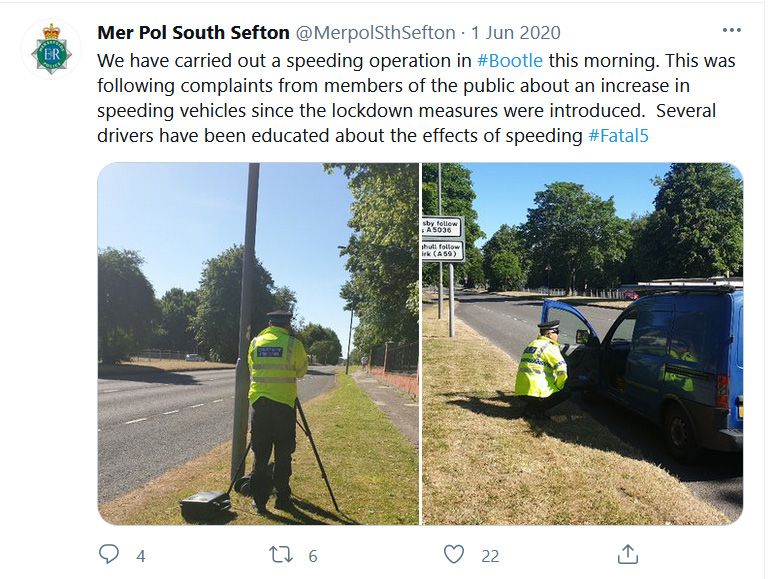
Liverpool City Region Mayoral Elections 2021 - Vision Zero Manifesto

Lessons from the Lockdown

There have been a number of lessons from the pandemic that touch on
reducing road danger.

Town Centres and High Streets

The pandemic has highlighted the importance of the town centres and other
important local and suburban centres across the Liverpool City Region.
This is likely to continue as the pandemic recedes and some people carry
on spending more time working from home and shopping locally. Making
these safe and attractive for walked and cycled journeys from surrounding
residential areas is key.

Speeding

With less traffic, the numbers of road casualties have fallen. Merseyside
Police8 saw a dramatic decline in the average number of reported road
casualties per month from 235 in January and February 2020 to 140
reported casualties on average, per month, between March and June 2020.

BUT the severity of the injuries appears to have increased especially amongst
those who walk and cycle. In London, Transport for London had already
stated9 that inappropriate speed is a factor in up to 37% of collisions resulting
                                                                                        (8) https://www.gov.uk/government/statistics/announcements/reported-road-casualties-
in death or serious injury. TfL has also estimated10 (Travel in London 13 Road          in-great-britain-provisional-estimates-year-ending-june-2020 - RAS45013
danger and the pandemic) that the rise in the severity of road casualties               (9) content.tfl.gov.uk/vision-zero-action-plan.pdf (3.1)
over the spring/summer 2020 (during the first lockdown) stemmed from                    (10) https://tfl.gov.uk/cdn/static/cms/documents/board-20201209-agenda-papers-
an increase in average traffic speeds, as traffic levels and congestion fell,           public-amended.pdf
coupled with an increase in ‘non-regular’ drivers.

                                                                                    6
Liverpool City Region Mayoral Elections 2021 - Vision Zero Manifesto

Mayoral Elections 2021: Key Vision Zero Pledges

So, what does the Liverpool City Region need to do to once again start to                 2. Safe speeds offer the opportunity to reduce the numbers killed and seriously
see a sustained decline in fatal and serious injuries on its roads? We want an            injured on our roads by almost two-fifths. The Liverpool City Region needs:
adopted Vision Zero strategy to focus on safe town centres, high streets and              • A 20mph default speed limit. This requires the remaining Local Authorities
neighbourhood roads, to tackle speeding, to reduce traffic and ensure robust                   to adopt default 20mph limits. Of the six Local Authorities, to date Liverpool,
enforcement. The good news is that what is needed to make roads across the                     St Helens and Sefton have taken up widespread 20mph limits. It is time for
Liverpool City Region safe has a very close fit with other important issues. What              Knowsley, Halton and Wirral now to bring in 20mph limits. Town centres and
works to reduce danger on our roads also makes our air cleaner, reduces                        high streets should be a particular focus with consideration given to advisory
CO2 emissions and enables more people to be active by walking11 and                            15mph limits where the numbers of pedestrians and people cycling are
cycling.                                                                                       especially high.
                                                                                          • Safe working vehicles with a comprehensive package of measures (such
We are calling for a shift in the balance between vehicles and people that will                as the Construction Logistics and Community Safety (CLOCS) standard)
deliver safe roads and reduce casualties especially amongst those who are not                  including a Liverpool City Region standard for working vehicles by 2025; a
protected inside a motor vehicle. We call on the Liverpool City Region to take                 key requirement will be mandatory speed limiters on all working vehicles. In
a Vision Zero approach to reducing the danger on its roads setting a final date                addition to this, a sustainable freight framework should be developed that
(and interim targets along the way) when serious and fatal road casualties will                enables shorter driven freight delivery to be replaced by (e-)cargo bikes.
reach zero and to endorse the following:
                                                                                          3. Vigorous enforcement. In partnership with the Merseyside Police and Crime
1. Safe and healthy high streets and town centres. The Liverpool City Region              Commissioner and Merseyside Police (and in Halton the Cheshire Police and
must redouble its efforts to create safe town centres and high streets. A dedicated       Cheshire PCC), the City Region should commit to:
Town Centre programme needs to link local economic vitality with a Vision Zero
focus on low speeds, reducing capacity for private motor vehicles, safe crossings         • Harm reduction, with priority offences (speeding, drink/drug driving,
and junctions and creating a network of protected cycling lanes on main roads12.            careless driving, mobile phone use and uninsured vehicles) accounting for at
This programme should be linked to public transport use (as we emerge from the              least two-thirds of officer detected offences;
pandemic) and attractive environments for those on foot.                                  • Increased speed enforcement, particularly of 20mph limits;
                                                                                          • Transparency with quarterly road crime statistics published; and
                                                                                          • Promote third-party reporting of driving offences and demonstrate best
                                                                                            practice, including providing feedback to those submitting footage.
                                                                                          • A programme of driver education with a focus on the need to share street
                                                                                            space especially with those walking and cycling.

                                                                                      7
Liverpool City Region Mayoral Elections 2021 - Vision Zero Manifesto

Mayoral Elections 2021: Key Vision Zero Pledges

4. Less traffic. Traffic reduction must be acknowledged as a key tool in             In addition, Vision Zero needs to be embedded across the work of the
the Vision Zero armoury; there are established links between traffic volume          Combined Authority and become a prism through which all policies are
reductions and declines in the numbers of people injured on the roads13,14. By       viewed. In New York for example, a permanent Vision Zero task force was
the end of the next Mayoral term, the Liverpool City Region will have reduced        established in the Mayor’s Office of Operations in order to get the buy-in that
both the total number of journeys by motor vehicle and reduced the mode              was needed to enable these changes. A wide range of policy areas need to
share of driven journeys from the current levels of more than 70% (Active            be viewed in terms of reducing exposure to road danger with an example of
People Survey) to a level of 50% or less.                                            this being planning policy and street design where all aspects of the design
                                                                                     of streets are taken into account rather than solely prioritising motor vehicle
In the Liverpool City Region Combined Authority Transport Plan (June 2019)           movement. All of this work will also require high-profile leadership, senior
significant growth in journeys on the road network are anticipated in the            representation from key partners such as the police, together with early and
period to 2050. This appears incompatible with any strategy to reduce road           sustained joint working with third sector stakeholders.
casualties as well as the May 2019 declaration of a Climate Emergency by
the City Region and a zero carbon target of 2040.                                    (11) https://www.livingstreets.org.uk/news-and-blog/press-media/mayoral-
To support this, additional support and promotion should be given to active          candidates-urged-to-stand-up-for-pedestrians
                                                                                     (12) Pop-up cycling network - phase 2 https://liverpoolexpress.co.uk/liverpool-
modes of transport walking, cycling and public transport.
                                                                                     launches-consultation-on-next-phase-of-pop-up-cycling/
                                                                                     (13) https://actionvisionzero.org/what-to-campaign-for/less-traffic/
5. Safe neighbourhoods. To combat the numbers of casualties                          (14) https://actionvisionzero.org/2021/02/16/vision-zero-more-on-the-case-for-
on neighbourhood streets, the City Region needs a comprehensive                      traffic-reduction-the-dramatic-impact-of-the-first-lockdown-on-road-casualties/
programme of delivery of Low Traffic Neighbourhoods (LTNs) or Liveable               (15) Southport Liveable Neighbourhood https://www.sustrans.org.uk/our-blog/
Neighbourhoods15 to remove through traffic. These have been proven to                news/2020/november/locals-help-design-southport-streets/
                                                                                     (16) https://findingspress.org/article/18330-the-impact-of-introducing-low-traffic-
reduce road danger16 as well as increasing levels of walking and cycling17
                                                                                     neighbourhoods-on-road-traffic-injuries
and making streets into more social spaces. Priorities can be identified based       (17) https://doi.org/10.32866/001c.17128
on levels of population density, deprivation, car ownership, volumes of
through traffic, the numbers of schools, the numbers of people injured on the
roads and the presence of children and older people. Development of LTNs
can be supported by the roll out of School Streets, the development of a
wider programme of safe routes to school for those walking and cycling and
increasing the use of controlled parking zones across the city.

                                                                                 8
Liverpool City Region Mayoral Elections 2021 - Vision Zero Manifesto

Our Organisations

Email: anna.s@20splenty.org                          Email: merseysidecyclingcampaign@hotmail.co.uk    Cycling UK Liverpool City Region/Northwest
Web: 20splenty.org                                   Web: www.merseycycle.org.uk/                      Web: https://www.cyclinguk.org/
Twitter: @20splentyforus                             Twitter: @merseycyclists                          Email: stewart.walsh@cyclinguk.org
                                                                                                       Twitter: @Cycling_NW
                                                                                                       Facebook: @CyclingUKLiverpoolCityRegion

Email: jeremy@actionvisionzero.org                   Email: merseysideenvironmentaltrust@gmail.com
Web: actionvisionzero.org                            Web: www.met-net.org.uk                          Wirral Pedestrians Association
                                                     Twitter: @MET_EnvTrust                           Email: wirralpedestrians@gmail.com

Web: https://friendsoftheearth.uk/groups/liverpool   RoadPeace North West
Twitter: @LiverpoolFoE                               Email: pauline.fielding@btinternet.com
                                                     Tel: 07703-357504

                                                                           9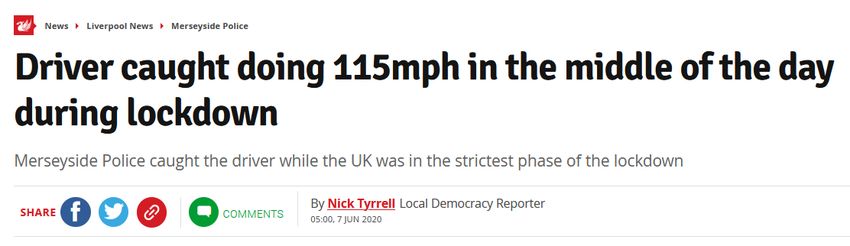
You can also read


