MI COVID response Data and modeling update - October 12, 2021 - State of ...
←
→
Page content transcription
If your browser does not render page correctly, please read the page content below
MI COVID response
Data and modeling update
October 12, 2021
Executive Summary
Special Population Focus: Children
Cases and hospitalizations are increasing compared to last week
There were 393 outbreaks and clusters in K-12 schools
7% of school districts (36) have rescinded their school mask policies

Michigan remains at High Transmission
Percent positivity (11.2%) increased for two weeks (10.3% last week)
Case rate (304.4 cases/million) is increasing for three and half months (258.9 cases/million prior week)
   In the last 7 days, only 3 states reported more cases than Michigan (this week rank 55th lowest; 52nd last week), and Michigan case rate is 46th
   lowest (T37th last week)
   100% of positive tests available for sequencing in Michigan were Delta variant in the last 4 weeks
Percent of inpatient beds occupied by individuals with COVID (9.3%) is increasing for 12 weeks (up from 8.0% last week)
   Michigan has 30th lowest inpatient bed utilization (20th last week) and 28th lowest adult ICU bed utilization (13th last week)
Death rate (3.0 deaths/million) is increasing for one week (2.8 last week). There were 210 COVID deaths between Sep 28-Oct 4
   Michigan has the 36th lowest number of deaths (30th last week), and T16th lowest death rate (T10th last week) in the last 7 days
7-day average state testing rate increased to 4,095.1 tests/million/day. Daily diagnostic tests (PCR) is 41.5K per day, and the weekly average for
   PCR and antigen tests conducted in Michigan is 52.2K.
Nearly 11.0 million COVID-19 vaccine doses administered, 52.7% of population is fully vaccinated (5.26 million people)

                                                                                                                                                2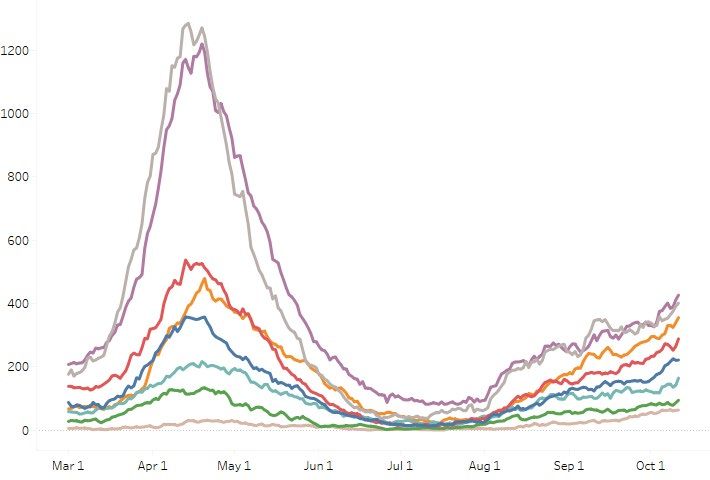
COVID-19 and Pediatric
      Populations
      Cases and hospitalizations

                       National                        Public Health     Other      Science
Special Populations                Spread   Severity
                      Comparison                        Response       Indicators   Roundup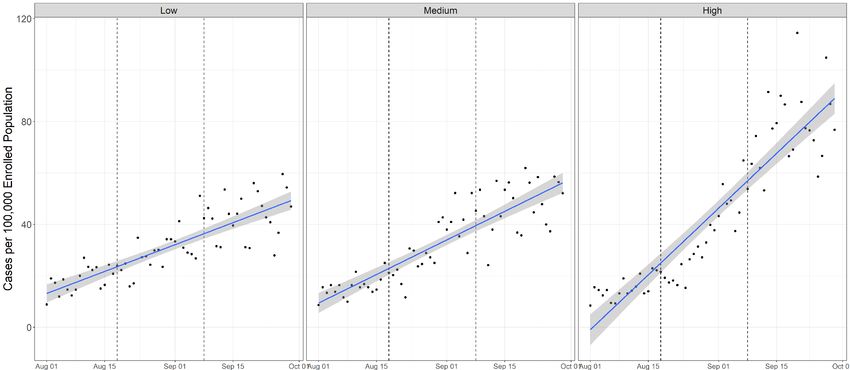
Overview of metrics for individuals < 18

                                                                                                                 *                                   *

                                                                                                                                                               <

                                                                                                                                                               <
 • Each day more than 425 children under age 12 become infected with COVID-19, 50 more children per day than last week
 • Pediatric case rates are steady at 305.6 cases/million (last week: 269.4 cases/million)
 • Pediatric (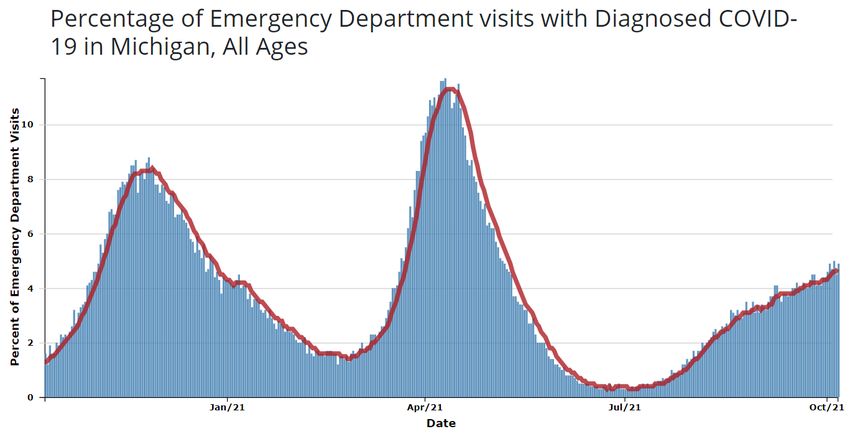
Statewide Hospitalization Trends: Pediatric COVID+ Census
                                       The census of COVID+ Pediatric
                                       patients (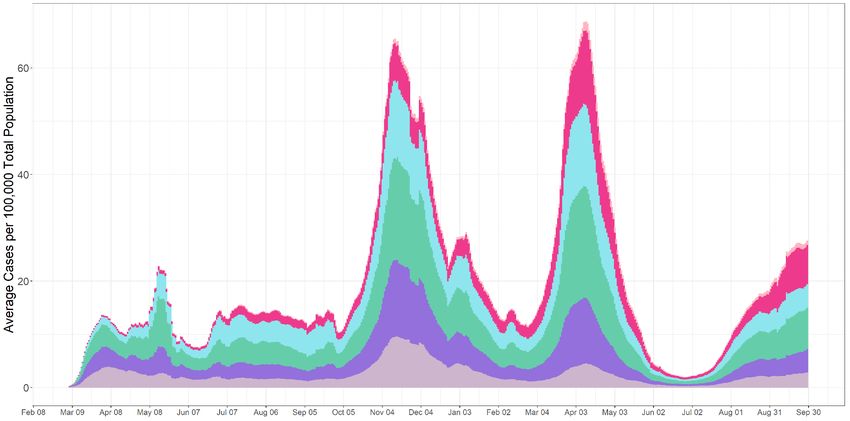
What do we know about
      COVID-19 impact on
      Michigan children and
      schools

                       National                        Public Health     Other      Science
Special Populations                Spread   Severity
                      Comparison                        Response       Indicators   Roundup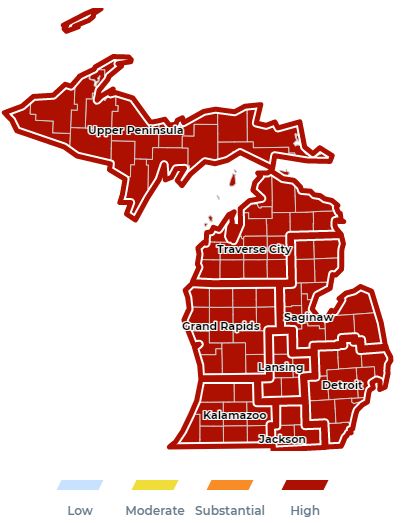
Number of Weekly Reported Outbreaks
Number of outbreak investigations by site type, week ending Oct 7
Visibility1 Easier to identify outbreak
Site type Outbreaks by ongoing/new classification, # Harder to identify outbreak
Ongoing New Total
K- 12 SCHO O L 312 81 393 Total number of active
SNF/L T C/ O T HE R A SSIS T E D LIV ING 108 30 138 outbreaks is up 6% from
CHIL DCA R E/Y O U T H PRO G RA M 31 1142 previous week, with 161 new
MA NUF A CT UR IN G , CONS T R U CT IO N 33 740 outbreaks identified
*RETA IL 22 6 28
OTHER 21 4 25
K-12 schools reported the
HEA L T HCA R E 12 3 15
greatest number of new
CORRE C T I O N S 9 4 13
outbreaks and clusters (81)
*SOCIA L GA THER IN G 8 4 12
8 4 12
this week, and there were an
*RES TA U RA N T S A ND BA RS
7 4 11
additional 11 new outbreaks in
OFF ICE SET T IN G
COLL EG E/ U N IV E R S IT Y 9 2 11
childcare and youth programs
*CO MMU N IT Y EXPO S UR E - OUT DO O R 7 0 7 for a total of 92 outbreaks in
*SHEL T E RS 3 0 3 settings primarily with 0-19-
*CO MMU N IT Y EXPO S UR E - INDO O R 2 0 2 year-olds. (57% of all known
*REL I G I O U S SERV I CE S 1 1 2 new outbreaks)
*PER S O NA L SERV IC E S 2 0 2
A GRICU L T U RA L / F O O D PRO CE S S I NG 2 0 2 The next greatest number of
758 new outbreaks was among
TO TA L 597 161
SNF/LTC (30), followed by
1. Based on a setting’s level of control and the extent of time patrons/residents spend in the particular setting, different settings have differing levels of ability to ascertain whether a case derived from that setting manufacturing/construction (7),
NOTE: Many factors, including the lack of ability to conduct effective contact tracing in certain settings, may result in significant underreporting of outbreaks. This chart does not provide a complete picture of retail (6), and eight other
outbreaks in Michigan and the absence of identified outbreaks in a particular setting in no way provides evidence that, in fact, that setting is not having outbreaks. settings with at least 1 new
NOTE (10/4): MDHHS adopted the new CSTE school cluster and outbreak definition which impacts how transmissions within school-sponsored settings are reported to the health department
outbreak in the last week.
Source: LHD Weekly Sitreps
National Public Health Other Science
Special Populations Spread Severity 7
Comparison Response Indicators RoundupK-12 school clusters and outbreaks, recent and ongoing, week ending Oct 7
Number of reported outbreaks increased since last week (364 to 393), including increases in High Schools (123 to 133), Middle/Jr High (89 to
92), and Pre K-Elementary (146 to 164). Only Administration declined (5 to 4).
Number of Range of cases
Region Number of reported cases, # # Ongoing - Excluding New # New outbreaks per outbreak
Region 1 446 96 75 2-29
Region 2n 170 80 50 2-31
Region 2s 152 7 25 2-23
Region 3 836 106 97 2-47
Region 5 106 57 19 2-46
Region 6 383 42 55 2-61
Region 7 107 13 24 2-12
Region 8 400 38 48 2-43
Total 2,600 439 393 2-61
Number of Range of cases
Grade level Number of reported cases, # # Ongoing - Excluding New # New outbreaks per outbreak
Pre-school - elem. 850 167 164 2-40
Jr. high/middle school 621 85 92 2-35
High school 1,111 187 133 2-61
Administrative 18 0 4 2-9
Total 2,600 439 393 2-61
Many factors, including the lack of ability to conduct effective contact tracing in certain settings, may result in significant underreporting of outbreaks. This chart does not provide a complete picture
of outbreaks in Michigan and the absence of identified outbreaks in a particular setting in no way provides evidence that, in fact, that setting is not having outbreaks.
NOTE (10/4): MDHHS adopted the new CSTE school cluster and outbreak definition which impacts how transmissions within school-sponsored settings are reported to the health department
Source: LHD Weekly Sitreps
National Public Health Other Science
Special Populations Spread Severity 8
Comparison Response Indicators RoundupMI School Districts and Mask Policy as of Oct 11, 2021
Yes – Any masking policy in some subset of school grades
No – No mask policies (includes unknown)
NUMBER OF SCHOOL DISTRICTS NUMBER OF STUDENTS* IN SCHOOL NUMBER OF SCHOOL
WITH MASK POLICIES IN K-12 DISTRICTS WITH MASK POLICIES DISTRICTS WITH MASK POLICY
SETTINGS REVERSAL
600
500 36
No, 504627 400
Yes, 222 275
300
Yes, 200
No, 311 748181
100 222
0
Mask Policy Present No Mask Policy Mask Policy Rescinded
• 42% (222/533) of K-12 school districts have mandatory mask policies
• School districts with mandatory mask policies cover 60% (748,181/1,252,808) of K-12 students*
• Not all K-12 grades or students may be covered by masks polices; examples include policies for those through K-6, or only during higher levels
of community transmission
• 7% (36/533) of K-12 school districts have rescinded their mask policies
* Student size based on school enrollment numbers; Buses and public transportation are federally required to enforce mask mandates
Source: Executive Office of Governor School District Mask Policy Database
National Public Health Other Science
Special Populations Spread Severity
Comparison Response Indicators RoundupCase increases are First days of school in Michigan
largest in school aged
children (5-18 year olds)
• School aged children (5-18 y)
saw a rapid rise beginning over
the school reopening period that
has remained high following
back-to-school
• 31-50 year olds are now
beginning to increase to next
highest, above other age groups
• Previous surges had larger
proportions of cases in adults
Data source: MDSS case data as of 10/6/2021Districts without First days
of school in Few mask rules
mask requirements Michigan
are experiencing Partial mask rules
higher case rates
Masks required
• 5-18 year old school population case
rates are higher and rose faster in
districts without mask requirements
7-day Avg
• Districts with complete or partial
mask requirements have lower case
rates with slower increases
Aug 01 Aug 15 Sep 01 Sep 15 Oct 01
• Note districts may change categories High mask index (more mask rules) Medium Low mask index (few mask rules)
as mask rules change
First days First days First days
• Districts with mask rules may also of school of school of school
have other prevention measures that in
Michigan
in
Michigan
in
Michigan
can contribute to lower transmission
levels
High mask index = mask required for all grades;
Medium = partial mask req. (tiered, some grades, based
on vax status, staff only); Low = None or unknown. Blue
line & shaded region is a linear trend fit. Data Sources:
MDSS/MDHHS case data as of 10/6/2021 geocoded to
school district, EOG School District Mask Policy Tracker
data. Note: Cases are among all 5-18 year olds,
population is the school-enrolled population. Aug 01 Aug 15 Sep 01 Sep 15 Oct 01Aug 01 Aug 15 Sep 01 Sep 15 Oct 01Aug 01 Aug 15 Sep 01 Sep 15 Oct 01Global, National and Michigan Trends
Global and National Comparisons
  Globally, 237,973,161 cases and 4,854,144 deaths (Data* through
  10/10/21)
  •   Countries with the highest case count are U.S. (44,340,408), India                                               National and Michigan 7-day average New Cases per 100K†
      (33,971,607), and Brazil (21,575,820)                                                                            100

  United States: Nearly all US jurisdictions have High community
                                                                                                                        75
  transmission¶
  •   California and Connecticut are Substantial
  •   Palau and Puerto Rico are Moderate                                                                                50
  •   While National case rates are decreasing, Michigan case rates
      continue to increase and are higher than U.S. total rate
                                                                                                                        25
  •   7-day moving average of daily new cases decreased 11.6%
      compared with previous 7-day moving average
  •   Percent positivity has decreased from the previous week, now at                                                        0
      6.1%. The number of PCR tests performed has increased.                                                                     3/2   5/2   7/2    9/2     11/2     1/2     3/2      5/2   7/2   9/2
                                                                                                                                                       Michigan       United States
  Midwest states maintain High transmission levels†
  •  Overall plateau in Region 5 but some states (MI, MN, WI) are seeing
     increases

     Source: * Johns Hopkins Coronavirus Resource Center; ¶ CDC COVID Data Tracker Weekly Review; † CDC COVID Data Tracker

                                    National                                                                                           Public Health                 Other                  Science
Special Populations                                                      Spread                           Severity
                                   Comparison                                                                                            Response                  Indicators               Roundup
State Comparison: Ohio and Indiana
Ohio Confirmed New Cases / 1M (7 days average) Indiana Confirmed New Cases / 1M (7 days average)
1000
1000
500
500
0 0
Jul 1, 20 Sep 1, 20 Nov 1, 20 Jan 1, 21 Mar 1, 21 May 1, 21 Jul 1, 21 Sep 1, 21 Jul 1, 20 Sep 1, 20 Nov 1, 20 Jan 1, 21 Mar 1, 21 May 1, 21 Jul 1, 21 Sep 1, 21
60K
60K
Percent Positive (7 day average) New Tests
Percent Positive (7 day average)
40K
40K
New Tests 11.4%
10.3%
20K
20K
0K 0K
May 1, 20 Jul 1, 20 Sep 1, 20 Nov 1, 20 Jan 1, 21 Mar 1, 21 May 1, 21 Jul 1, 21 Sep 1, 21 May 1, 20 Jul 1, 20 Sep 1, 20 Nov 1, 20 Jan 1, 21 Mar 1, 21 May 1, 21 Jul 1, 21 Sep 1, 21
0 0
-50 Mobility retails and recreational -50
Mobility retails and recreational
400 400
Hospitalizations / 1M 290 Hospitalizations / 1M
224
200 200
0 0
May 1, 20 Jul 1, 20 Sep 1, 20 Nov 1, 20 Jan 1, 21 Mar 1, 21 May 1, 21 Jul 1, 21 Sep 1, 21 May 1, 20 Jul 1, 20 Sep 1, 20 Nov 1, 20 Jan 1, 21 Mar 1, 21 May 1, 21 Jul 1, 21 Sep 1, 21
14State Comparison: Wisconsin and Michigan
Wisconsin Confirmed New Cases / 1M (7 days average) Michigan Confirmed New Cases / 1M (7 days average)
800
1000
600
400
500
200
0 0
Jul 1, 20 Sep 1, 20 Nov 1, 20 Jan 1, 21 Mar 1, 21 May 1, 21 Jul 1, 21 Sep 1, 21 Jul 1, 20 Sep 1, 20 Nov 1, 20 Jan 1, 21 Mar 1, 21 May 1, 21 Jul 1, 21 Sep 1, 21
60K
80K
Percent Positive (7 day average) New Tests
70K
40K 60K Percent Positive (7 day average)
50K
New Tests
9.5% 40K
20K 30K
20K 9.6%
10K
0K
May 1, 20 Jul 1, 20 Sep 1, 20 Nov 1, 20 Jan 1, 21 Mar 1, 21 May 1, 21 Jul 1, 21 Sep 1, 21 May 1, 20 Jul 1, 20 Sep 1, 20 Nov 1, 20 Jan 1, 21 Mar 1, 21 May 1, 21 Jul 1, 21 Sep 1, 21
0 0
-50 Mobility retails and recreational -50
Mobility retails and recreational
-100
400 400
300 212 Hospitalizations / 1M 188
Hospitalizations / 1M
200 200
100
0
May 1, 20 Jul 1, 20 Sep 1, 20 Nov 1, 20 Jan 1, 21 Mar 1, 21 May 1, 21 Jul 1, 21 Sep 1, 21 May 1, 20 Jul 1, 20 Sep 1, 20 Nov 1, 20 Jan 1, 21 Mar 1, 21 May 1, 21 Jul 1, 21 Sep 1, 21
15State Comparison: Illinois and Minnesota
Illinois Confirmed New Cases / 1M (7 days average) Minnesota Confirmed New Cases / 1M (7 days average)
1000 1000
500 500
0 0
Jul 1, 20 Sep 1, 20 Nov 1, 20 Jan 1, 21 Mar 1, 21 May 1, 21 Jul 1, 21 Sep 1, 21 Jul 1, 20 Sep 1, 20 Nov 1, 20 Jan 1, 21 Mar 1, 21 May 1, 21 Jul 1, 21 Sep 1, 21
100K
100K
Percent Positive (7 day average) New Tests
Percent Positive (7 day average)
9.5%
50K New Tests
50K
2.6%
0K 0K
May 1, 20 Jul 1, 20 Sep 1, 20 Nov 1, 20 Jan 1, 21 Mar 1, 21 May 1, 21 Jul 1, 21 Sep 1, 21 May 1, 20 Jul 1, 20 Sep 1, 20 Nov 1, 20 Jan 1, 21 Mar 1, 21 May 1, 21 Jul 1, 21 Sep 1, 21
0
0
-50 Mobility retails and recreational -50
Mobility retails and recreational
400
300
300 Hospitalizations / 1M
Hospitalizations / 1M 200 163
200
100 100
110
0
May 1, 20 Jul 1, 20 Sep 1, 20 Nov 1, 20 Jan 1, 21 Mar 1, 21 May 1, 21 Jul 1, 21 Sep 1, 21 May 1, 20 Jul 1, 20 Sep 1, 20 Nov 1, 20 Jan 1, 21 Mar 1, 21 May 1, 21 Jul 1, 21 Sep 1, 21
16Key Messages: COVID-19 Burden Among Younger Ages Remains High
Statewide positivity increased 11.2% (last week: 10.3%)
• This is a 9% increase in the past week (prior week: 17% increase)
• Positivity is increasing in all MERC regions
• Positivity in seven regions is above 10%
Case rate has increased to 304.4 cases/million (last week: 258.9 cases/million)
• Increasing for three and a half months (June 26 low)
• Cases per million are plateaued or increasing in most MERC regions;
• 10-19-years-olds are experiencing the greatest case burden (596 daily cases; 474.8 cases/mil)
Michigan is at High Transmission level
• All counties in Michigan are at high transmission level
• CDC recommends all individuals, regardless of vaccination status, should mask indoors
• The U.S. is at high transmission level (195.3 cases/100,000 in last 7 days) with 52 states/territories in substantial or high transmission
Number of active outbreaks is up 6% from last week
• 161 new outbreaks were identified in the past week
• K-12 reported the most total outbreaks (312) and new outbreaks (81) this week
National Public Health Other Science
Special Populations Spread Severity
Comparison Response Indicators RoundupConfirmed and probable case indicators Risk levels
Table Date: 10/11/2021 (7 days from date table was produced: 10/4/2021) Low A B C D E
Cases Positivity
National Public Health Other Science
Special Populations Spread Severity 18
Comparison Response Indicators RoundupMichigan Lag adjusted COVID cases by onset date
New confirmed cases by onset actual and adjusted as of October 11, 2021 (-2 days)
• The gray line is cases reported
3500
ADJUSTED as of 10/11 by onset date.
NEW_CASES
• The blue line is the expected
3000
adjustment for cases by onset
date as data is backfilled
2500
• The increasing delay between
onset of symptoms and date
2000
of testing means that recent
case numbers underestimate
1500
the true number of cases
1000
500
0
Jun 2 Jun 12 Jun 22 Jul 2 Jul 12 Jul 22 Aug 1 Aug 11 Aug 21 Aug 31 Sep 10 Sep 20 Sep 30 Oct 10
19Michigan at High Transmission Level
Dashboard | CDC | MI Start Map for most recent data by
reporting date
National Public Health Other Science
Special Populations Spread Severity 20
Comparison Response Indicators RoundupTime Trends – Positivity, Case Rates, Hospitalizations, Deaths
COVID-19 transmission remains high and early indicators show Delta surge may be speeding up again
Daily Positive Test Rate Daily Inpatient Beds Occupied by COVID patients
Daily Case Rate Daily Deaths
National Public Health Other Science
Special Populations Spread Severity 21
Comparison Response Indicators RoundupTime Trends – Annual Comparison
We are heading into the winter months (and holiday season) starting at higher cases rates than last
year
7- day rolling average of Rates 2020 vs 2021
800 2020 Holiday wave
Alpha (B.1.1.7) wave
700
600
500
400
Delta (B.1.617.2) wave
300
First wave
200
100
0
3/1 3/15 3/29 4/12 4/26 5/10 5/24 6/7 6/21 7/5 7/19 8/2 8/16 8/30 9/13 9/27 10/1110/25 11/8 11/22 12/6 12/20 1/3 1/17 1/31 2/14 2/28
Weekly Case Rate 2020 Weekly Case Rate 2021
National Public Health Other Science
Special Populations Spread Severity 22
Comparison Response Indicators RoundupCase Rate Trends by Age Group
Daily new confirmed and probable cases per million by age group (7-day rolling average)
0-9 30-39 60-69
10-19 40-49 70-79
1000 20-29 50-59 80+ 500
400
750
300
500
200
250
100
0 0
3/1 5/1 7/1 9/1 11/1 1/1 3/1 5/1 7/1 9/1 6/26 7/10 7/24 8/7 8/21 9/4 9/18 10/2
• Case rate trends for all age groups are plateaued or increasing
• Case rates for all age groups are between 187 and 475 cases per million (through 10/4)
• Case rates are highest for 10-19-year-olds followed by 30-39, 40-49, 20-29, and 0-9
Note: Case information sourced from MDHHS and reflects date of onset of symptoms
Source: MDHHS – Michigan Disease Surveillance System
National Public Health Other Science
Special Populations Spread Severity 23
Comparison Response Indicators RoundupNumber of Cases and CaseRates by Age Group, data as of Oct 11
Daily new confirmed and probable cases per million by age group (7-day rolling average)
Age Average† Average† One Week • Trend numbers and comparisons are being
Group daily cases Daily Case % Change (Δ #)* impacted by longer backfill times – the data
Rate in this table are comparing the two time
0-9 299.7 260.0 4% (+12) points from the most recent data file
10-19 595.9 474.8 4% (+23) • Average daily number of cases (595.9) and
20-29 405.4 293.9 7% (+26) avg. daily case rate (474.8 case/mil) are
highest for those aged 10-19
30-39 475.0 391.5 10% (+43)
• This week the highest growth was among
40-49 390.7 331.3 8% (+29)
those 70+
50-59 344.6 255.2 12% (+36)
• Case rates for age groups 10-19, 30-39, and
60-69 271.4 212.8 15% (+35)
40-49 are all higher than the state
70-79 171.9 224.1 29% (+39)
• Case rates bottomed out on June 26, 2021
80+ 77.6 187.3 32% (+19)
Total¶ 3,047.9 304.4 9% (256.4)
† Rolling 7-day average; ¶ Total may not reflect state due to missing age data
Note: Case information sourced from MDHHS and reflects date of onset of symptoms
Source: MDHHS – Michigan Disease Surveillance System
National Public Health Other Science
Special Populations Spread Severity 24
Comparison Response Indicators RoundupCase Rates by Reported Racial and Ethnic Group
Daily new confirmed and probable cases per million Daily new confirmed and probable cases per
(7 day rolling average) by race category million (7 day rolling average) by ethnicity category
400 American Indian/Alaska Native Black/African American 400 Hispanic or Latino Not Hispanic or Latino
Asian/Pacific Islander White
Race Case Rate
Race Case Rate
300 American Indian/ 315.0 300
Alaskan Native Hispanic/Latino 203.5
Asian/Pacific Islander 88.3 Non-Hispanic 214.4
200 Black/African American 147.6 200
White 230.0
100 100
0 0
6/26 7/10 7/24 8/7 8/21 9/4 9/18 10/2 6/26 7/10 7/24 8/7 8/21 9/4 9/18 10/2
Updates since last week:
• Cases per million are increasing for Whites, Blacks, and Non-Hispanics; case rates are plateaued for Asian/Pacific Islanders
• The high number of cases with missing race/ethnicity data, and those multiracial or other are impacting the case rates shown here
• American Indian/Alaskan Native have the highest case rates but are declining; Case rates for Non-Hispanic recently surpassed that
for Hispanics
• In the past 30 days, 24% (↑1%) of race data and 28% (↔) ethnicity data was either missing or reported as unknown
Note: Case information sourced from MDHHS and reflects date of death of confirmed and probable cases.
Source: MDHHS – Michigan Disease Surveillance System
National Public Health Other Science
Special Populations Spread Severity 25
Comparison Response Indicators RoundupIdentified COVID-19 Delta Variants by County
Last week (Oct 4, 2021) This week (Oct 11, 2021)
Data last updated Oct 11, 2021
Source: MDSS
National Public Health Other Science
Special Populations Spread Severity
Comparison Response Indicators RoundupKey Messages: Healthcare Capacity and COVID Severity
Hospitalizations and ICU utilization are increasing
4.9% of ED visits are for COVID diagnosis (up from 4.1% last week)
Hospital admissions are increasing for most age groups this week
Hospital census has increased 18% (vs. up 10% week prior)
All regions experienced increasing trends in hospital census this week
Regions 1, 3, 6, and 8 now have above 200/million population hospitalized
Most growth is in Regions 1, 5, and 6
Volume of COVID-19 patients in intensive care has increased 15% since last week (vs. 12% increase last week)
Death rate is increased to 3.0 daily deaths/million residents (up from 2.8 deaths/million last week)
Overall trends for daily average deaths are increasing for Whites, Non-Hispanics, and Hispanics
Currently, American Indian/Alaskan Natives and Whites have the highest death rates
In the past 30 days, there have been 6 deaths among confirmed and probable COVID-19 cases under the age of 20
National Public Health Other Science
Special Populations Spread Severity
Comparison Response Indicators RoundupMichigan Trends in Emergency Department (ED) Visits for
Diagnosed COVID-19
4.9%
• Trends for ED visits have increased to 4.9% since last week (4.1% week prior)
• Trends vary by age groups with most age groups seeing an increase
• Over past week, those 40-49 years saw highest number of avg. daily ED CLI visits (6.8%), but those between 40 and 74 all above state average
Source: https://covid.cdc.gov/covid-data-tracker/#ed-visits
National Public Health Other Science
Special Populations Spread Severity
Comparison Response Indicators RoundupAverage Hospital Admissions by Age Groups
Confirmed COVID-19 Hospital Admissions by Age Group - Statewide Rolling Weekly Average
60 60-69
55
50
45
40
35
30
25
20
15
10
5
0
9/5/2021 9/8/2021 9/11/2021 9/14/2021 9/17/2021 9/20/2021 9/23/2021 9/26/2021 9/29/2021 10/2/2021 10/5/2021 10/8/2021 10/11/202
0 - 11 12 - 17 18 - 19 20 - 29 30 - 39 40 - 49 50 - 59 60 - 69 70 - 79 80+ Age
Unkn
• Trends for daily average hospital admissions have increased 22% since last week (vs. 6% increase prior week)
• Most age groups experienced a one week increase in daily hospital admissions
• Over the past week, those 60-69 years have seen the highest number of avg. daily hospital admissions (59 admissions)
Source: CHECC & EM Resource
National Public Health Other Science
Special Populations Spread Severity 29
Comparison Response Indicators RoundupAverage Hospital Admissions Are Increase for all Age Groups
60-69
Peds
• Trends for daily average hospital admissions have increased 22% since last week (vs. 6% increase prior week)
• Most age groups experienced a one week increase in daily hospital admissions
• Over the past week, those 60-69 years have seen the highest number of avg. daily hospital admissions (59 admissions)
Source: CHECC & EM Resource
National Public Health Other Science
Special Populations Spread Severity 30
Comparison Response Indicators RoundupNumber of Hospital Admissions and Admission Rates are Increasing for Most
Age Groups
Daily new hospital admission per million by age group (7 -day rolling average)
Age Average† daily Average† Daily One Week • Through October 11, there were an average of 261
Group number of hospital Hospital % Change (Δ #) hospital admissions per day due to COVID-19, which
admissions Admission Rate* is 47 (22%) more than last week
0-11 3.3 2.4 -8% (-Statewide Hospitalization Trends: Total COVID+ Census
Hospitalization Trends 3/1/2021 – 10/11/2021 The COVID+ census in hospitals has
Confirmed Positive & Persons Under Investigation (PUI) increased 18% from the previous week
(previous week’s increase was 10%)
Confirmed Positive
Hospitalized COVID Positive Long Term
Trend (beginning March 2020)
PUI
32Statewide Hospitalization Trends: Regional COVID+ Census
The hospital census of COVID+ patients has
Hospitalization Trends 3/1/2021 – 10/11/2021
increased in all regions. The fastest growth
Confirmed Positive by Region
was seen in Regions 1, 5 and 6.
Region 1
Region 2N Regions 1, 3, 6 and 8 have greater than
Region 2S
Region 3
200/M population hospitalized.
Region 5
Region 6
Region 7 Region COVID+ Hospitalizations COVID+
Region 8 (% Δ from last week) Hospitalizations /
MM
Region 1 221 (24%) 204/M
Region 2N 401 (12%) 181/M
Region 2S 426 (15%) 191/M
Region 3 288 (17%) 254/M
Region 5 164 (40%) 172/M
Region 6 355 (23%) 242/M
Region 7 94 (11%) 188/M
Region 8 63 (11%) 202/M
33Statewide Hospitalization Trends: ICU COVID+ Census
The census of COVID+ patients in ICUs has
Hospitalization Trends 3/1/2021 – 10/11/2021 increased by 15% from last week
Confirmed Positive in ICUs
Regions 1, 6, 7 and 8 have greater than 30% of
adult ICU beds filled with COVID+ patients and
Region 6 is approaching ~40% of adult ICU beds
occupied with COVID+ patients.
Region Adult COVID+ in Adult ICU % of Adult ICU
ICU (% Δ from Occupancy beds COVID+
last week)
Region 1 56 (8%) 90% 32%
Region 2N 95 (0%) 74% 17%
Region 2S 116 (30%) 85% 17%
Region 3 79 (25%) 91% 23%
Confirmed
Region 5 33 (-3%) 75% 18%
Positive in ICU
Region 6 90 (11%) 83% 39%
Region 7 45 (29%) 81% 31%
Region 8 20 (33%) 69% 32%
34Average and total new deaths, by age group
Daily COVID-19 deaths in confirmed and probable Total COVID -19 deaths in confirmed and probable
cases per million by age group (7 day rolling average) cases by age group (past 30 days, ending 10/4/2021)
0-19 40-49 70-79 • 22% of deaths below age sixty 260 262
30 20-29 50-59 80+
30-39 60-69 Total
170
20
109
10
49
23
6 8
0
7/22 8/5 8/19 9/2 9/16 9/30 0-19 20-29 30-39 40-49 50-59 60-69 70-79 80+
• Through 10/4, the 7-day avg. death rate is more than 12 daily deaths per million people for those over the age of 70
• In the past 30 days, there have been 6 deaths among confirmed and probable COVID-19 cases under the age of 20
• 30-day proportion of deaths among those under 60 years of age is steady from the prior week
Note: Death information sourced from MDHHS and reflects date of death of confirmed and probable cases.
Source: MDHHS – Michigan Disease Surveillance System (MDSS)
National Public Health Other Science
Special Populations Spread Severity 35
Comparison Response Indicators Roundup30-day rolling average daily deaths per million people by race and
ethnicity
Average daily deaths per million people by race Average daily deaths per million people by
ethnicity
6 American Indian/Alaska Native Black/African American Hispanic or Latino Not Hispanic or Latino
6
Asian/Pacific Islander White
4
4
2 2
0 0
7/22 8/5 8/19 9/2 9/16 9/30 7/22 8/5 8/19 9/2 9/16 9/30
• Overall trends for daily average deaths are increasing for Whites, Non-Hispanics, and Hispanics
• Currently, American Indian/Alaskan Natives and Whites have the highest death rate (2.9 deaths/million)
• In the past week, Hispanics have seen the largest increase in death rates (+16%)
Note: Death information sourced from MDHHS and reflects date of death of confirmed and probable cases.
Source: MDHHS – Michigan Disease Surveillance System
National Public Health Other Science
Special Populations Spread Severity 36
Comparison Response Indicators Roundup• `
Key Messages: Public Health Response
COVID-19 Vaccination
• 4,386 first doses administered each day (7-day rolling average*); total administrations increasing
• Most administered frequently by pharmacies, local health departments, and hospitals
• More than 893K third doses administered since August 13th, may include additional dose or booster dose
• 5.26 million people (52.7%) in the state are fully vaccinated
Breakthrough
• Less than 1% of people who were fully vaccinated experienced vaccine breakthrough
• Trends over time show that both case and death rates among the Fully Vaccinated are lower than the Not Fully
vaccinated rates in Michigan
*Source: https://covid.cdc.gov/covid-data-tracker/#vaccination-trends_vacctrends-onedose-daily
National Public Health Other Science
Special Populations Spread Severity
Comparison Response Indicators Roundup• `
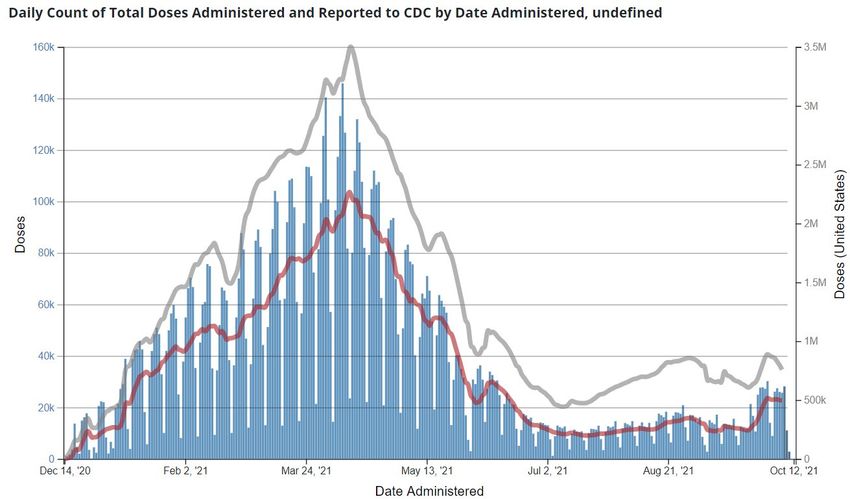
Average daily doses administered declining (data through 10/12/2021)
13,869,960 doses delivered to providers and
10,972,618 doses administered*
MI 7-day rolling average ending October 6th
• 22,833 total doses/day on average† (19,826 on 9/29)
• 4,012 first doses/day on average † (4,386 on 9/29)
Total primary series doses in month of September were
most frequently administered¶ by:
Pharmacies (208,480)
LHD (17,213) and hospitals (15,366)
Family practice (10,727) and FQHCs (8,865)
Third Doses
• 309,943 third doses administered as of 10/11
Source: *CDC COVID Data Tracker > Vaccinations in the US, † CDC COVID Data Tracker > Vaccination Trends; ¶ MCIR COVID-19 Vaccine Dashboard
National Public Health Other Science
Special Populations Spread Severity
Comparison Response Indicators Roundup5.26 Million Michiganders fully vaccinated and 52.7% of total population fully
vaccinated
Vaccination Coverage in Michigan as of 10/12/21
5.26 million people in the state are fully Age Group % At Least % Fully Number Fully
vaccinated*
One Dose Vaccinated Vaccinated
84.0% of people aged 65 and older have
completed the series (↔%)* Total Population 57.3% 52.7% 5,264,411
57.3% of total population initiated (↓0.1%)* ≥ 12 years 66.5% 61.2% 5,264,291
Race/Ethnicity¶ for those 12 years and
older: ≥ 18 years 68.7% 63.3% 4,967,788
• Initiation coverage highest among those ≥ 65 years 89.1% 84.0% 1,483,463
of Non-Hispanic (NH) Asian, Native
Hawaiian or Pacific Islander Race
(56.5%), then NH American Indian
(54.9%), NH White (49.8%), NH Black or
African American Races (39.9%).
• Initiation is at 53.4% for those of Hispanic
ethnicity
• Completion follows the same pattern
• 16.6% data missing or unknown
Source: *CDC COVID Data Tracker > Vaccinations in the US, ¶ MCIR COVID-19 Vaccine Dashboard
National Public Health Other Science
Special Populations Spread Severity
Comparison Response Indicators RoundupUpdate on breakthrough
cases
National Public Health Other Science
Special Populations Spread Severity
Comparison Response Indicators Roundup`
Potential COVID-19 Vaccination Breakthrough Cases
Michigan part of CDC’s nationwide investigation (COVID-19 Breakthrough Case Investigations and Reporting | CDC)
Michigan Data (1/1/21 through 10/5/21):
• 38,571 cases met criteria based on a positive test 14 or more days after being fully vaccinated
• Less than 1% of people who were fully vaccinated met this case definition
• Includes 574 deaths (504 in persons ages 65 years or older)
• 1,412 cases were hospitalized
• Vaccine breakthrough cases are expected. COVID-19 vaccines are effective and are a critical tool to bring the pandemic under control;
however, no vaccine is 100% effective at preventing illness. Some fully vaccinated people will get sick, and some will even be
hospitalized or die from COVID-19. However, there is evidence that vaccination may make illness less severe for those who are
vaccinated and still get sick. The risk of infection, hospitalization, and death are all much lower in vaccinated people compared to
unvaccinated.
• More than 185 million people in the United States have been fully vaccinated as of October 4, 2021. CDC is monitoring these cases
among vaccinated persons and evaluating trends in order to better understand who is at risk for severe COVID-19 following vaccine
breakthrough infection. Vaccinated people have also experienced asymptomatic infections.
• Current data suggest that COVID-19 vaccines authorized for use in the United States offer protection against most SARS-CoV-2 variants
circulating in the United States.
National Public Health Other Science
Special Populations Spread Severity
Comparison Response Indicators RoundupCumulative COVID-19 Cases by Vaccination Status, Michigan, Jan 15 – Oct 5
Fully Vaccinated People (4,948,851)
Cases Hospitalization Deaths
Percent of Cases In People Not Percent of Hospitalizations In People Percent of Deaths In People Not
Fully Vaccinated Not Fully Vaccinated Fully Vaccinated
(505,838 / 544,409) (13,512 / 14,924) (5,662 / 6,236)
92.9% 90.5% 90.8%
505,838 13,512 5,662
Total Cases Not Fully Vaccinated Total Hospitalized Not Fully Vaccinated Total Deaths Not Fully Vaccinated
Total Breakthrough Cases Total Breakthrough Hospitalizations Total Breakthrough Deaths
38,571 1,412 574
0.779% 0.029% 0.012%
Percent of Fully Vaccinated People who Percent of Fully Vaccinated People Who Were Percent of Fully Vaccinated People Who Died of
Developed COVID-19 (38,571 / 4,948,851) Hospitalized for COVID-19 (1,412 / 4,948,851) COVID-19 (574 / 4,948,851)
7.1% 9.5% 9.2%
Percent of Cases Who Were Fully Vaccinated Percent of Hospitalizations Who Were Fully Percent of Deaths Who Were Fully Vaccinated
(38,571 / 544,409) Vaccinated (1,412 / 14,924) (574 / 6,236)
Total Cases: 544,409 Total Hospitalizations: 14,924 Total Deaths: 6,236
Michigan Disease Surveillance System may underestimate the frequency of COVID-19 hospitalizations:
- Case investigation and follow-up is more difficult for individuals who get vaccinated (e.g., they are too ill to speak to investigators, don’t answer their phone, or otherwise).
- These hospitalizations include individuals who are hospitalized for issues other than COVID19 (the same as breakthrough COVID-19).
- Individuals who get hospitalization will lag after infection and may occur after case investigation.
National Public Health Other Science
Special Populations Spread Severity
Comparison Response Indicators RoundupTrends in Breakthrough Cases, Hospitalizations, and Deaths
100%
• 52.7% of the population is fully 90%
vaccinated yet only account for ~20-
80%
25% of cases, hospitalizations, and
deaths 70%
• As the fully vaccinated population 60%
has increased, so have the percent
50%
of breakthrough incidents; but
breakthrough burden remains lower 40%
29%
30% 25% 25%
27% 28%
24% 23%22% 23% 24%
22%
20%
In the last 30 days (Sep 6 – Oct 5), 20% 17%
16%
13%
13,124 (16%) of 83,966 cases, 282 11% 12%
10% 5% 6%
(24%) of 1,186 hospitalizations, and
5%
1% 2% 2% 2%
0% 0% 0% 0% 0% 0%
104 (28%) of 378 deaths were among 0%
fully vaccinated individuals
Cases Hospitalizations Deaths
Michigan Disease Surveillance System may underestimate the frequency of COVID-19 hospitalizations:
- Case investigation and follow-up is more difficult for individuals who get vaccinated (e.g., they are too ill to speak to investigators, don’t answer their phone, or otherwise).
- These hospitalizations include individuals who are hospitalized for issues other than COVID19 (the same as breakthrough COVID-19).
- Individuals who get hospitalization will lag after infection and may occur after case investigation.
National Public Health Other Science
Special Populations Spread Severity
Comparison Response Indicators Roundup`
COVID-19 Vaccination Breakthrough Cases and Deaths
1200 Breakthrough Case Rate vs. Not Fully Vaccinated Breakthrough Death Rate vs. Not Fully Vaccinated
Case Rate Death Rate
1000 Case Rate among Fully Vaccinated
12
Case Rate among Not Fully Vaccinated
800 10
8
600
6
400
4
200
2
0 0
1/25 2/25 3/25 4/25 5/25 6/25 7/25 8/25 9/25 1/25 2/25 3/25 4/25 5/25 6/25 7/25 8/25 9/25
• Trends over time show that both case and death rates among the Fully Vaccinated are lower than the Not Fully vaccinated rates in Michigan
• The proportion of breakthrough cases and deaths among all cases and deaths has shown some increases as more people become fully
vaccinated
• However, the risk of infection and death remains significantly lower among the fully vaccinated
National Public Health Other Science
Special Populations Spread Severity
Comparison Response Indicators RoundupAppendix
Michigan Lag adjusted new COVID cases by onset date
 New confirmed cases by onset actual and adjusted as of October 11, 2021 (-2 days)                       • The gray line is cases reported
                                                                                                           as of 10/11 by onset date.
    8K
                                                                                                         • The blue line is the expected
                                                                                                           adjustment for cases by onset
    7K
                     ADJUSTED                                                                              date as data is backfilled
                                                                                                         • The increasing delay between
                     NEW_CASES

    6K
                                                                                                           onset of symptoms and date
    5K
                                                                                                           of testing means that recent
                                                                                                           case numbers underestimate
    4K                                                                                                     the true number of cases

    3K

    2K

    1K

    0K
         Feb 1, 20   Apr 1, 20   Jun 1, 20   Aug 1, 20   Oct 1, 20   Dec 1, 20   Feb 1, 21   Apr 1, 21   Jun 1, 21   Aug 1, 21   Oct 1, 21

                                                                                                                                             46
Identified COVID-19 Cases Caused by All Variants of Concern (VOC)
in US and Michigan
Variants Circulating in United States, Oct 3 – Variants of Concern in Michigan, Oct 11
Oct 9 (NOWCAST)
Given the reclassification
of several variants to
Variants Being Monitored,
we will retire the reporting
of Alpha, Beta, and Gamma
on future presentations
820 cases in Wayne attributed to Detroit
Variant MI Reported Cases¶ # of Counties % Specimens in last 4 wks
B.1.1.7 (alpha) now VBM 13,667* 81 0%
B.1.351 (beta) now VBM 88 24 0%
P.1 (gamma) now VBM 336 35 0%
Data last updated Oct 12, 2021 B.1.617.2 (delta) 4,617 (↑668) 82 (↔) 100%
Source: https://covid.cdc.gov/covid-data-tracker/#variant-proportions and MDSS
* 534 cases within MDOC; ¶ 41 cases with county not yet determined; now only Delta remains a VOC
National Public Health Other Science
Special Populations Spread Severity
Comparison Response Indicators RoundupYou can also read


