TRANSCENDING BORDERS The official Publication of the - KAZUNGULA BRIDGE
←
→
Page content transcription
If your browser does not render page correctly, please read the page content below
TRANSCENDING
     BORDERS
                     The official Publication of the
                     Cross-Border Road Transport Agency
                     June 2021

      KAZUNGULA BRIDGE
A boost for transport and Trade
     in the SADC region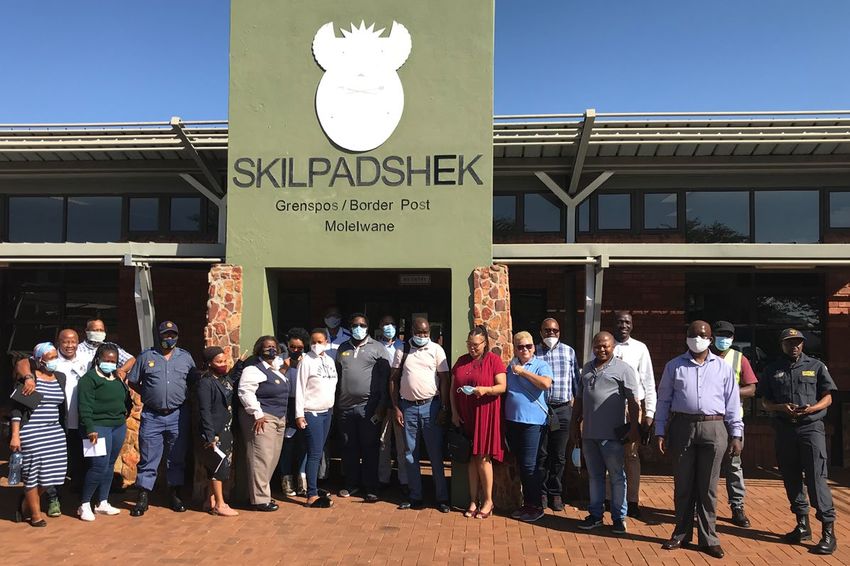
CONTENTS

VISION
                                        CONTENTS
                                        From the CEO’s Desk.................................................................... 1

Leading economic cross border            Kazungula Bridge – A boost for transport and
road transport regulator facilitating     Trade in the SADC region........................................................... 2
unimpeded flow of goods and people
across the African continent              The C-BRTA hosts a cross-border road transport
                                           taxi operators’ workshop......................................................... 4

MISSION                                   TKC assesses the impact of Covid-19 pandemic
                                          on border post operations......................................................... 5
To drive an integrated African
continent through excellence in cross    C-BRTA strives for efficiencies in the cross-border industry.... 6
border road transport economic
regulation, law enforcement, advisory
and facilitation of unimpeded flow of
goods and people

             WEAR A MASK,
                     BEND THE CURVE
                                    Let’s Do OUR Part!
Trancending Borders I June 2021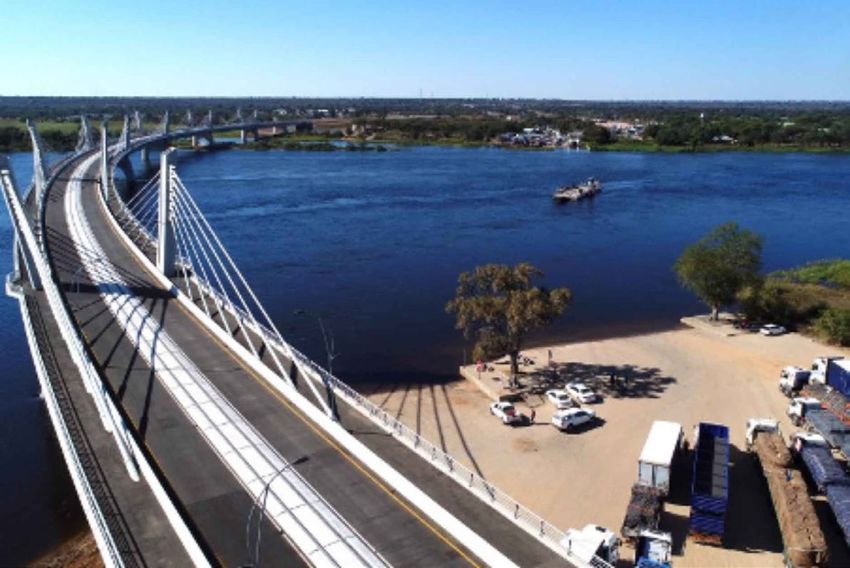
FROM THE                           CEO’S DESK

Dear Readers,                                                        have also engaged our counterparts from other countries to
                                                                     discuss and come up with better ways of moving passengers

L
      et me introduce you to the latest edition of our external      and goods in the region.
      newsletter, Transcending Borders. This publication is one
      of our many communication platforms which we use to            In May this year, we held a cross-border road transport taxi
communicate and update external stakeholders about pertinent         operators’ workshop to listen and address the concerns raised
cross-border road transport industry issues. We also use the         by the operators in relation to the challenges they face in the
newsletter to inform the industry at large about the work of the     industry. We have also been engaging different stakeholders
C-BRTA and the many initiatives that the Agency is busy with.        who play a role in the cross-border road transport value chain.
                                                                     In March, April, May and June, we visited several land border
As the C-BRTA, our primary mandate is to ensure the seamless         posts to assess the impact of Covid 19 on border operations.
movement of passengers and goods across the borders. We              These included Lebombo Border Post in Mpumalanga Province,
do so primarily to ensure that the cross-border road transport       Kosi Bay Border Post in Kwa-Zulu Natal Province, Ficksburg
operators ply their trade without major impediments so that          Bridge and Maseru Bridge in the Free State Province.
countries can reap the benefits of trade which significantly
contributes towards economic development. Although we have           We also joined an initiative by the Trans-Kalahari Corridor
been hard at a work, this task has proven difficult because of       (TKC) to conduct corridor assessments to gauge the impact
the challenges brought about by the Covid-19 pandemic which          of the pandemic on border operations. The borders which
has taken the world by surprise.                                     were assessed as part of this initiative were Ramatlabama,
                                                                     Skilpadhek, Kopfontein Border Posts in the Noth West Province
As a continent, we were also not spared. Transport and trade         as well as Groblersbridge and Beitbridge in Limpopo. These
on the continent were heavily impacted by the pandemic. To           initiatives were conducted to collect data which will help our
minimise the impact of Covid-19 on the lives of people across        Shareholder, the Department of Transport, to partner with other
the continent, many countries had to place their economies           government Departments to address issues which hamper
under lockdown. Although necessary, the move placed many             efficiencies at various border posts in the country.
economies under serious strain due to the minimal movement
of passengers and goods.                                             As you page through this newsletter, you will find stories about
                                                                     many initiatives which are taking place in the industry. In this
In spite of the economic impact of Covid-19, it is important         edition there are stories on the opening of the Kazungula
for transport regulators and authorities to continue supporting      Bridge, an update from the taxi operators’ workshop, our visit
governments in the region in an effort to make sure that transport   to Kwa-Zulu Natal Province to meet with several stakeholders
and trade contribute towards the economic development of             as well as our visit to various Border Posts.
individual countries and the region at large.
                                                                     Please enjoy the read!
As the C-BRTA, we have been, and continue, to play a key
role with many stakeholders in South Africa and in the SADC          Regards,
region to find innovative ways of moving essential goods across
borders amid these difficult times. We have held numerous            Lwazi Mboyi
meetings with operators to take note of their concerns. We           Acting CEO: Cross-Border Road Transport Agency

                                                                                                       Trancending Borders I June 2021   1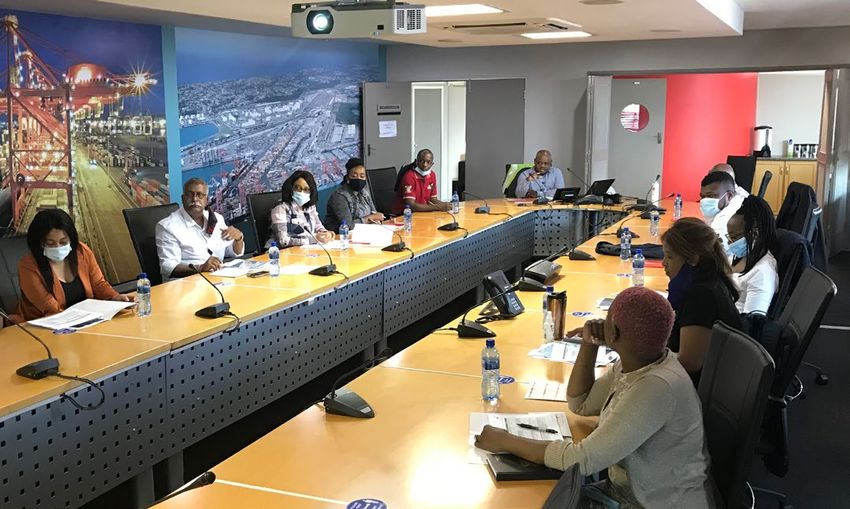
Kazungula Bridge – A boost for transport and
                          Trade in the SADC region

    T
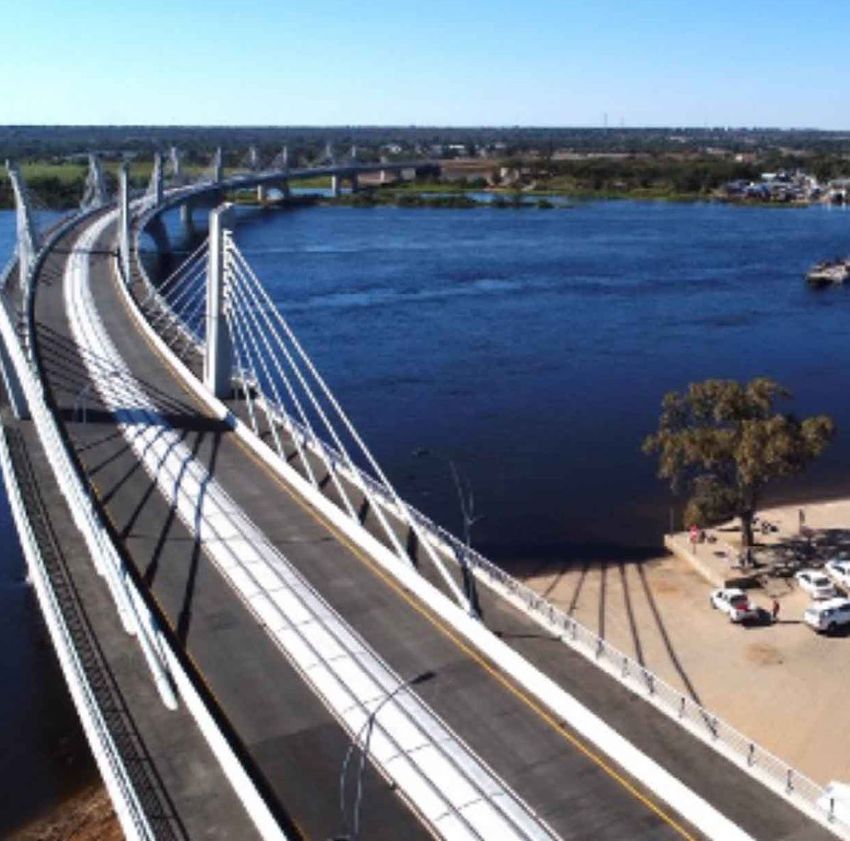
              he movement of passengers and goods in the                The Kazungula Bridge, is meant to ease the congestion at other
              Southern African Development Community (SADC)             border crossings in the region by offering long haul truckers an
              was given a boost in May 2021 with the official           alternative route and allowing them a reduced transit time as a
              opening of the much-awaited Kazungula Bridge              result of a shortened route which cuts through Botswana to Zam-
    which links the Republic of Botswana and Zambia. The bridge         bia. It is set to give travellers an option to bypass other border
    was officially opened on 10 May 2021 and brought much relief        posts which were traditionally used to transport passengers and
    to the cross- border road transport industry. The construction of   goods in the region. It is anticipated that this development will
    the 923-metre-long bridge, which stretches across the Zambezi       lower the cost of doing business in the region.
    River, began in 2014 and the project was officially completed
    in 2020 at a cost of $259.3 million.                                According to the Trans-Kalahari Corridor Secretariat (TKCS), “it
                                                                        is expected that the Kazungula Bridge and the One Stop Bor-
    The Kazungula Bridge is on a key artery of the North-South corri-   der Post (OSBP) will be a game changer with regard to improv-
    dor which connects landlocked countries such as Malawi, Zam-        ing trade facilitation and performance of the cross-border road
    bia and Zimbabwe and several other countries which include the      transport system within the SADC region, which is important
    Democratic Republic of Congo to key seaports in the Southern        towards achieving the objectives of the TKC MoU, the Tripartite
    African Development Community (SADC) region such as the             Free Trade Area (TFTA) and the African Continental Free Trade
    Port of Durban in South Africa and Walvis Bay in Namibia.           Area (AfCFTA). Thus, the facilities are expected to also improve
                                                                        the region’s economic performance.”

2   Trancending Borders I June 2020
The bridge features single carriageways for vehicles with a single   FACTS ABOUT THE
locomotive railway track running down the middle. Pedestrians
will also be able to utilise the bridge’s sidewalks.
                                                                     KAZUNGULA BRIDGE
Previously, freight operators moving goods from South Africa to      The bridge project has three components; being

Lusaka had to travel via Zimbabwe through Beitbridge Border          Package 1, 2 and 3 respectively consisting of the
Post which connects South Africa with Zimbabwe. However, with        following:
the new bridge at Kazungula, travellers have another alternative
route.                                                               Package 1 is the bridge, which is designed as an
                                                                     extra-dosed road-rail bridge to accommodate a future
Following the opening of the bridge, the Trans-Kalahari Corridor
                                                                     railway line, which will link Mosetse-Kazungula in
Secretariat (TKCS) in partnership with the TKC Member States
such as Botswana, Namibia and South Africa conducted a corri-        Botswana to Kazungula-Livingstone in Zambia.
dor assessment from Martin’s Drift to the Kazungula segment of
the North-South corridor in Botswana from 06 -14 June 2021.          There is also a single carriageway for motor vehicles, a
The corridor assessment, was conducted following the success-        single railway track and pedestrian walkways on both
ful completion and opening of the Kazungula Bridge and the           sides. The bridge has specifications of length 18,5m
One Stop Border Post (OSBP). The Cross-Border Road Transport
                                                                     width and span arrangement of 923m. This package
Agency (C-BRTA) and the Department of Transport formed part
                                                                     also includes an approach road on the Botswana side
of this initiative.
                                                                     of 302m and 416m on the Zambia side.
The purpose of the corridor assessment was to gauge the cur-
rent conditions of the corridor with the main focus on the fol-      Packages 2 and 3 are the One-Stop-Border Post
lowing key areas:                                                    (OSBP) facilities on the Botswana and Zambia side
•   Corridor Performance Indicators; Time, Cost and Reliability      respectively.
    factors;
                                                                     Each package consists of, among others, a passenger
•   Infrastructure (Road and Border Facility Conditions);
                                                                     terminal,    vehicle   inspection    building,    freight
•   Understanding the current transit system and processes;
•   Current volumes such as traffic and cargo;                       inspection building, truck transit offices (entry and
•   Road Safety which might require urgent attention; and            exit), health inspection building and veterinary offices.
•   Interaction with stakeholders within the border and along the
    corridor.                                                        The packages also cater for internal circulation roads
                                                                     and car parking facilities for buses, trucks and light
The outcome of the corridor assessment with be communicated
                                                                     motor vehicles as well as access roads to the new
in due course. However, the construction and opening of the
                                                                     border posts.
Kazungula Bridge has been welcomed by many stakeholders in
the transport and trade sector as a step in the right direction.

                                                                                                Trancending Borders I June 2021   3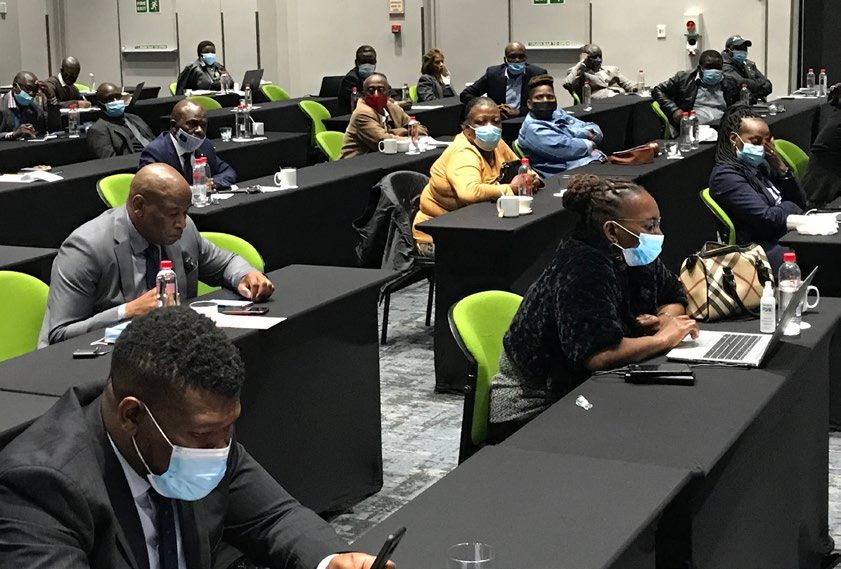
THE C-BRTA HOSTS
    a cross-border road transport
    taxi operators’ workshop

    I
       n an effort to discuss and address the challenges faced by    The Chairperson of the C-BRTA Board, Mr Mos Ramathe
       the cross-border road transport operators, the Cross-Border   addressed the operators and indicated that the Agency is
       Road Transport Agency (C-BRTA) held a two-day cross-border    aware of the meaningful role that taxi operations play in the
       road transport taxi operator’s workshop from 3 to 4 May       cross-border road transport industry. He acknowledged the
    2021 in Kempton Park, Johannesburg. The primary purpose of       challenges experienced by the taxi operators and encouraged
    the workshop mainly was to discuss and resolve the challenges    them to use platforms made available by the C-BRTA to engage
    experienced by cross-border operators when conducting cross-     on issues of concern in a bid to find amicable solutions.
    border operations.
                                                                     The Acting CEO of the C-BRTA, Mr Lwazi Mboyi echoed the
    The cross-border operators play an important role of             chairperson’s words by acknowledging the vital role that the taxi
    transporting passengers between South Africa and its             operators play in the movement of passengers between South
    neighbouring countries and challenges they face are viewed in    Africa and neighbouring countries. He further mentioned that it
    a serious light because the movement of passengers between       is evident that the taxi industry is the largest mode of passenger
    countries contributes towards intra-Africa trade.                transport that ferry large numbers of commuters and requires
                                                                     special attention to make sure that it is effective and beneficial to
    To address these challenges, the C-BRTA organised the            commuters and the cross-border road transport industry at large.
    workshop to afford the operators an opportunity to share their
    concerns with relevant stakeholders who have a role to play      The workshop resolved that there should be further
    in ensuring efficiencies in the cross-border road transport      engagements between the C-BRTA, operators and other
    industry. These stakeholders included the National Department    stakeholders on the challenges faced by the cross-border
    of Transport, the City of Joburg and City of Tshwane Metro       taxi industry. It also resolved that all affected parties would
    Police Departments, the South African Police Service (SAPS),     convene a meeting wherein a clear stipulated action plan with
    The Road Traffic Management Corporation (RTMC) as well as        time frames will be developed, to ensure that there was follow
    transport authorities from the neighbouring countries.           through on issues that must be resolved.

4   Trancending Borders I June 2021
TKC ASSESSES
the impact of Covid-19 pandemic
on border post operations

T
        he Cross-Border Road Transport Agency (C-BRTA)              management authorities such as Immigration, Port Health,
        recently partnered with the Department of Transport         South African Police Service (SAPS) and Customs. As part
        and the Trans-Kalahari Corridor (TKC) Secretariat to        of the discussions the port management team was allowed
        conduct a corridor assessment and site visits to the        an opportunity to present the state of operations while the
border posts which form part of the Trans-Kalahari Corridor.        corridor assessment team under the leadership of the TKC was
The identified borders included those which are situated along      afforded an opportunity to address the challenges and shared
the border of RSA and Botswana through the North West and           lessons and experiences of how different TKC Member States
Limpopo Provinces.                                                  (South Africa, Namibia and Botswana) responded to Covid-19
                                                                    regulations.
The purpose of the corridor assessment and border site visit
was to examine the impact of COVID 19 on the operations and         The challenges identified throughout the assessment have
activities at the border posts as well as to have an appreciation   been compiled and presented to the Department of Transport
of challenges, successes, and experiences of each border post.      in South Africa. The intention is to present the outcomes to
                                                                    the Minister of Transport, Mr. Fikile Mbalula to equip him with
The identified border posts were;                                   information regarding the challenges and successes recorded
•         Kopfontein Border Post;                                   from each border post. This will place the Minister, in a better
•         Skilpadshek Border Post;                                  position to make informed policy decisions in relation to
•         Ramatlabama Border Post;                                  corridors and the overall cross border road transport industry.
•         Groblersbridge Border Post; and                           Plans are underway to conduct similar assessments at other
•         Beitbridge Border Post.                                   border posts around the country.

At each border of these border posts, the corridor assessment
team had an opportunity to meet with the various border

                                                                                                     Trancending Borders I June 2021   5
C-BRTA STRIVES
    for efficiencies in the cross-border
    industry

    A
              s part of living to its mandate of ensuring the seamless
              flow of passengers and goods in the cross-border road
              transport industry, the Cross-Border Road Transport
              Agency (C-BRTA) regularly embarks on extensive
    stakeholder engagement programmes to exchange ideas on how
    to eliminate the inefficiencies in the cross-border road transport
    industry. Recently, the Acting CEO of the C-BRTA, Mr Lwazi
    Mboyi led a team from the Agency to engage stakeholders in
    the cross-border road transport value chain in Kwa-Zulu Natal
    Province. The identified stakeholders included the Provincial
    Department of Transport, the Port of Durban, Ports Regulator of
    South Africa as well as Kosi Bay Border Post which links South
    Africa with Mozambique through KZN Province.

    One of the key activities of this stakeholder engagement
    drive was a study tour of the Durban Port. The purpose was
    to learn about the vehicle reservation system which is being
    implemented at the port to manage and control traffic flows
    to, and from, the port. This study was important because
    the C-BRTA, in partnership with other border management
    stakeholders, plans to introduce a similar system at various
    border posts to eliminate delays and long vehicle queues.

    To this effect, the C-BRTA has identified the need to implement
    an Electronic Cross-Border Commercial Vehicle Reservation
    System (ECBCRVS) to manage the arrival of cross-border
    transport and long queues at South African commercial

6   Trancending Borders I June 2021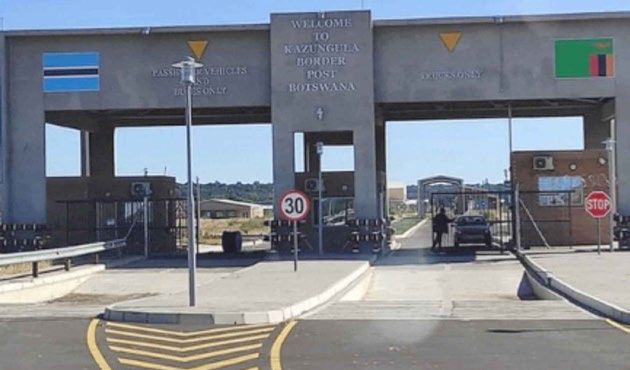
border posts. It is envisaged that the ECBCRVS, will eliminate      The delegation, also visited the Kosi Bay Border Post which
congestions and inefficiencies along the corridors which lead       links South Africa with Mozambique. The purpose was to
to border posts and neighbouring countries by allowing trucks       interact with the border management to have an appreciation
to book an arrival slot before proceeding to border posts for       of the challenges and the impact of Covid-19 pandemic on
processing. This means there will be a dedicated parking or         border operations.
waiting area for trucks which arrive at the border precinct
before their booked slot and will only proceed to the border post   The C-BRTA will continue to embark on similar stakeholder
once they receive the go-ahead from the border authorities.         engagement drives across the country and the African continent
                                                                    in its resolve to strive for efficiencies in the entire cross-border
The Durban Port, has a similar system which manages the flow        road transport value chain. An update on such engagements
of trucks to, and from, the port and it was important for the       will be featured in the upcoming editions of this publication.
C-BRTA to study the system before introducing a similar one
at border posts.

                                                                                                       Trancending Borders I June 2021     7
Did you know?
    heading

                                      It is illegal to operate as a
                                      commercial cross-border transport
                                      operator without a permit.

    The C-BRTA licenses commercial cross-border road transportation by offering
    permits to passenger and freight operators.

    We offer two types of permits and these are:
    •     Temporary Permits, and
    •     Long Term Permits.

    Temporary permits range from 14 days to three months depending on the needs of
    the operator. Long term permits range from 12 months to five years for operators
    who run permanent or regular cross-border business. These are applicable to both
    passenger and freight operations.

    Operators can visit our offices at 350 Which-Hazel Avenue, Eco Point Office
    Park, Block A, Eco Park, Centurion to apply for permits. We also accept electronic
    applications. Application forms can be downloaded from the C-BRTA website and
    then send through completed application forms to permits@cbrta.co.za. Once
    all the required documentation is received, a dedicated officer will process the
    application. The operator will be informed once the permit is ready for collection.
    Alternatively, at the client’s request, the permit may be posted to the client for their
    convenience.

    For more information on permits call +27 12 471 2000 or visit www.cbrta.co.za

8   Trancending Borders I June 2021
You can also read


