Cloud-Based IT Infrastructure and High Performance Computing - The New Frontier of IT in Higher Education - Research ...
←
→
Page content transcription
If your browser does not render page correctly, please read the page content below

Cloud-Based IT Infrastructure and
    High Performance Computing
             The New Frontier of IT in Higher Education

                                                                       August 31, 2016
                   © 2016 Huron Consulting Group. All rights reserved. Proprietary and confidential.
What is the Cloud?

                     © 2016 Huron Consulting Group. All rights reserved. Proprietary and confidential.   2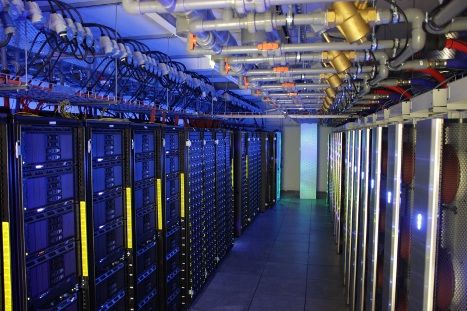
The Cloud, simply,
 refers to software and
 services that run on
 the Internet instead of
 your computer.

 Source: CNN Money – What is the Cloud? 9/3/2014
© 2016 Huron Consulting Group. All rights reserved. Proprietary and confidential.   3
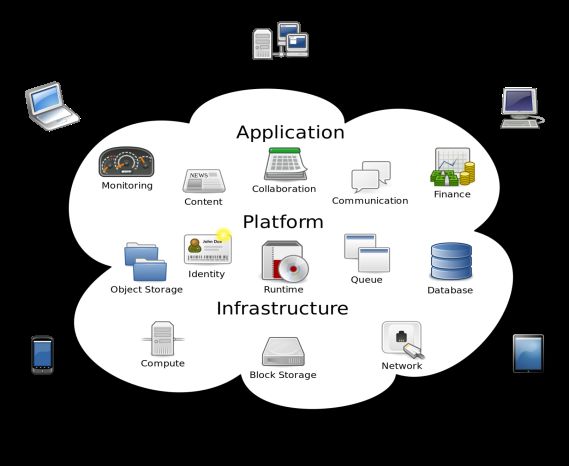
What Applications are Offered in the Cloud?

                                                                                    Financial Management
                                                                                    Supply Chain
                                                                                    Budgeting and Planning
                                                   Human Resources                  Business Intelligence
                                                   Payroll                          Order Management
                                                   Recruiting                       Project Management
                                                   Student Administration           Grants
                                                   CRM

© 2016 Huron Consulting Group. All rights reserved. Proprietary and confidential.                            4
What is the Difference?
On Premise Cloud Solutions
• Perpetual licensing fee Cost Per User • Subscription per seat and/or
functional area
Hardware & • Vendor provided hardware/technical
• Client owned
Software support
Ownership
• Done on site by a client or by • Virtually synced with cloud
a third party Upgrades & solution
Enhancements
• Client purchased • Monthly or annual subscription
Applications
• Owner supported • Vendor hardware/technical; Client
Support functional/business process
• Longer implementation cycle Implementation • Shorter implementation cycle
Cycle
• Customizations are managed • Customizations not made to
by your staff Customizations base application; rather
configuration or ‘bolt-ons’
© 2016 Huron Consulting Group. All rights reserved. Proprietary and confidential. 5“ Trends in deployment preference
While only 2 percent of Gartner
survey respondents said they had
core ERP systems running in the
cloud, almost half indicated they
12%
planned to make the move within 5 2008
years. 88%
On Premise
Cloud
Noel Radley, Market Research
Associate, Software Advise
© 2016 Huron Consulting Group. All rights reserved. Proprietary and confidential. 6“ Trends in deployment preference
New research recently released by
RightScale, reveals that 95 percent of
companies are using some form of
cloud computing, a clear indication 5%
that the cloud has quickly become an 2016
essential ingredient of modern IT.
On Premise
95%
Cloud
RightScale Cloud Management
© 2016 Huron Consulting Group. All rights reserved. Proprietary and confidential. 7Challenges of the Traditional IT Infrastructure
• Cost Information technology costs have increased
significantly over the past decade, including hardware,
software, and maintenance/upgrades
• Data Security Decentralized structure creates
increased risk of data loss or security breach, also
requires more dedicated IT security staff
• System Maintenance Deploying upgrades or
performing system maintenance on local hardware can be
expensive, inconvenient, and time consuming
• Outdated Technology Shorter hardware lifecycle
hinders system performance and limits scalability
49% of CAOs and CFOs at 4 year Public institutions say that technology
improvement and maintenance is one of the greatest cost drivers
© 2016 Huron Consulting Group. All rights reserved. Proprietary and confidential. 8Benefits of Moving to the Cloud
• Lower Costs
− IT Infrastructure Costs
− Implementation Costs
− Staffing Costs
− Application Maintenance/Upgrade Costs
• Improved Security
− Dedicated Security Resources
− Secured Infrastructure
− Business Continuity
© 2016 Huron Consulting Group. All rights reserved. Proprietary and confidential. 9Benefits of Moving to the Cloud
• Reduced Maintenance
− Highly Configurable
− Streamlined Process
− Regular Automated Upgrades
− Transition to Vendor Resources
• Improved Technology
– System Performance
– Frequent Updates
– Use of the Latest Technology Standards
– Improved Scalability
© 2016 Huron Consulting Group. All rights reserved. Proprietary and confidential. 10High Performance Computing and
Cost Recovery
© 2016 Huron Consulting Group. All rights reserved. Proprietary and confidential. 11High Performance Computing
Centralized Performance/Cloud Computing
In order to centralize and streamline the
IT infrastructure, many institutions have
established high performance computing
centers to provide cutting edge technical
capabilities to the research community
across a variety of academic disciplines.
These services can include:
• High performance computing
• High throughput computing
• Cloud-based computing services
• Storage of large data sets
• Data backup and security
• Performance networking capabilities
© 2016 Huron Consulting Group. All rights reserved. Proprietary and confidential. 12High Performance Computing
Challenges for the Institution
• Establishing and maintaining high-performance computing centers can be
extremely expensive for the institution. Costs include:
– Servers and other hardware
– Software licenses and maintenance
– Technical staff and IT security personnel
– Facilities costs, which can include the usage of space and utility costs
• How can an institution recover some of these costs on an ongoing basis
while continuing to provide critical support to the research mission?
– An Option:
• Operate as a recharge/service center, establishing billing rates for each
service provided and charge on a per-use basis
© 2016 Huron Consulting Group. All rights reserved. Proprietary and confidential. 13Cost Recovery
Recharge/Service Centers under the Uniform Guidance
• Under the Uniform Guidance (§ 200.468), the cost of operating a
specialized service facility or recharge center is considered an allowable
cost assuming the following conditions are met:
– The costs of services must be charged directly to applicable awards based
on the actual usage of the services on the basis of a schedule of rates or
established methodology
– That Methodology must be designed to recover only the aggregate costs of
the services. The costs of each service must consist normally of both its
direct costs and allocable share of all indirect (F&A) costs.
– Rates must be adjusted at least biennially, and must take into consideration
over/under applied costs of the previous period(s)
In other words, a recharge / service center must charge awards
directly based on usage, according to calculated billing rates
designed to break-even, and these rates must be reevaluated at least
every other year.
© 2016 Huron Consulting Group. All rights reserved. Proprietary and confidential. 14Cost Recovery
Calculating Billing Rates- Direct vs Indirect Costs
• The “break-even” rate for each service is determined by
estimating the annual direct costs of providing the service with
the total estimated usage. Allowable direct costs include:
– Personnel (salary and fringe)
– Materials and supplies
– Maintenance contracts
– Equipment depreciation (depending on institutional policy)
– Other direct costs
• Indirect (or F&A) costs are typically not easy to allocate to the
operation of the service center and are often not included in the
“break-even” rate
© 2016 Huron Consulting Group. All rights reserved. Proprietary and confidential. 15Cost Recovery
Calculating Billing Rates- User Groups
• Typically service centers establish different rates for internal
and external users
– Internal users, including those directly charging service to
sponsored agreements, are typically charged the break-even
direct cost rate. Internal users should not be charged less than
the break-even rate unless the center is supported by an
institutional or departmental subsidy
– External users may be charged a higher billing rate. This rate is
often determined based on the market rate for that particular
service or calculated by adding the negotiated on-campus
organized research F&A rate to the break-even rate
© 2016 Huron Consulting Group. All rights reserved. Proprietary and confidential. 16Challenges &
Considerations
© 2016 Huron Consulting Group. All rights reserved. Proprietary and confidential. 17Challenges & Considerations
Separating Services and Tracking Usage
High performance computing operations may also face some unique
challenges, including:
• Should institutions charge for these services?
− Subsidize this operation?
• What costs should be included in the billing rates?
− What should be the rate base?
• What constitutes a specific “service” and how can the costs for each be
separated?
© 2016 Huron Consulting Group. All rights reserved. Proprietary and confidential. 18Challenges & Considerations
Separating Services and Tracking Usage
• Is it possible to clearly define what percentage of a specific piece of
equipment cost can be allocated to a particular service provided?
– For example, is one server or cluster used specifically for one type of
service?
• Are there technical units of measurement (I.E. hours of server usage)
that can be used for each service?
• What protocols can be used to monitor system usage? Are these
protocols currently in place or would there have to be changes made to
the system in order to implement them?
• What is the best way to allocate the time of the staff to each service?
© 2016 Huron Consulting Group. All rights reserved. Proprietary and confidential. 19Challenges & Considerations
Accounting Practices
• Does your institution require service centers to establish an operating
account for service centers?
• Does your institution have defined limits for an allowable working capital
balance that can be maintained for operations?
• Is it possible to proactively track the balance of the revenue and
expenses to ensure that the center is not generating an excessive
surplus or deficit?
• Are there ways to separate revenue from internal and external users?
• Do all costs included in the billing rates adhere to the cost principles of
the Uniform Guidance?
– Reasonable
– Allowable
– Consistent
– Allocable
© 2016 Huron Consulting Group. All rights reserved. Proprietary and confidential. 20Challenges & Considerations
Considerations for F&A Proposal
• Space- Difficult to classify space as organized research in space survey
without the ability to track sponsored projects to support the classification
– May be combined with other general IT infrastructure support
• Equipment Depreciation- Equipment depreciation can be either
included in the billing rates for a service center or included in the F&A
rate proposal, but not both
– Can be difficult to track equipment that included is in billing rates to ensure
that it is excluded from the F&A proposal
– Costs are only recovered fully through billing rates if the appropriate rate is
charged to customers
• Administrative Cap- Many institutions align performance computing
with general IT costs, which typically fall under general administrative
(GA) costs in the proposal.
– Limited benefit to the on-campus OR rate as an administrative cost
© 2016 Huron Consulting Group. All rights reserved. Proprietary and confidential. 21THANK YOU
550 W Van Buren St #1700, Chicago, IL 60607
312-583-8700
www.huronconsultinggroup.com
© 2016 Huron Consulting Group. All rights reserved. Proprietary and confidential.You can also read


