Clumber Forest Plan 10 year plan 2018 2028 - Forestry England
←
→
Page content transcription
If your browser does not render page correctly, please read the page content below
Clumber Forest Plan
         10 year plan
           2018 – 2028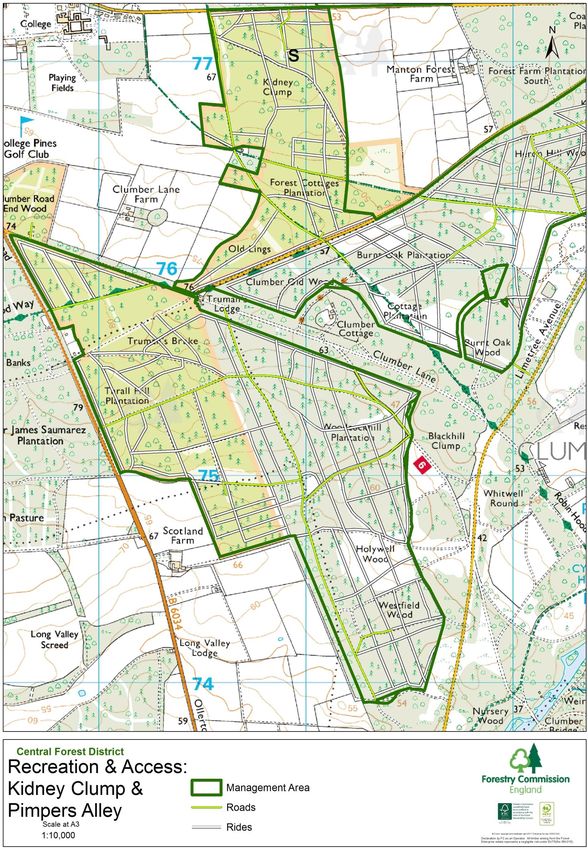
Clumber Forest Plan

Contents                                                                                                              3.1 Felling & Thinning ................................................................................ 12
Introduction .................................................................................................. 3
                                                                                                                      3.2 Natural Regeneration & Restocking ......................................................... 12
  Application for Forest Plan Approval................................................................ 4
                                                                                                                      3.3 Environmental ..................................................................................... 12
Clumber Forest Plan Management Review .......................................................... 5
                                                                                                                         3.31 Retentions ...................................................................................... 12
UKWAS Compliance Table ................................................................................ 5
                                                                                                                         3.32 Deadwood ...................................................................................... 13
1.0 Key Characteristics and Survey Data ............................................................ 7
                                                                                                                         3.33 Biodiversity .................................................................................... 13
  1.1 Location ............................................................................................... 7
                                                                                                                         3.33 Invasive Species .............................................................................. 13
  1.2 Geology and Soils .................................................................................. 7
                                                                                                                      3.4 Open Space ........................................................................................ 13
  1.3 Aspect and Landscape ............................................................................ 7
                                                                                                                      3.5 Social ................................................................................................. 13
     1.31 Apleyhead ........................................................................................ 7
                                                                                                                      3.6 Archaeology and Heritage ...................................................................... 14
     1.32 Carburton ......................................................................................... 7
                                                                                                                      3.7 Landscape .......................................................................................... 14
     1.33 Clumber ........................................................................................... 7
                                                                                                                      3.8 Other Management............................................................................... 14
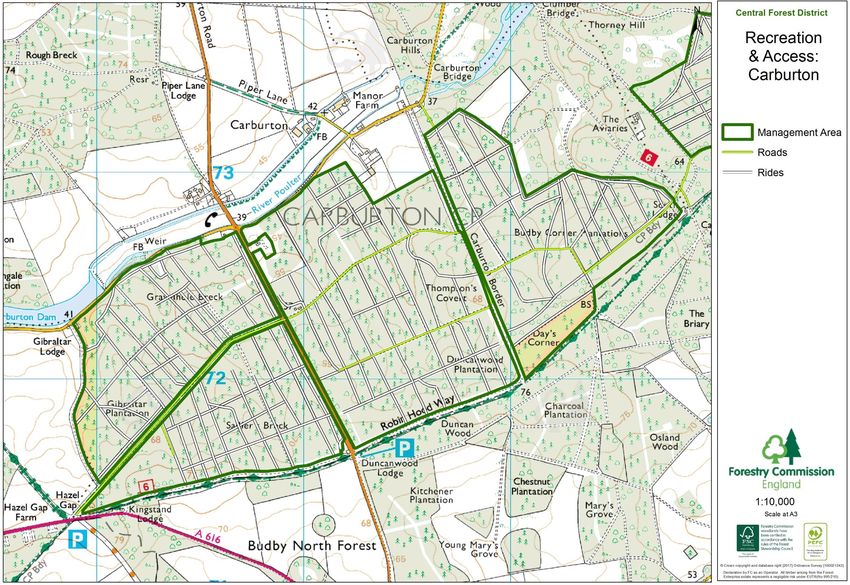
     1.34 Elkesley ........................................................................................... 7
                                                                                                                      3.9 Future Structure and Land Use ............................................................... 15
  1.4 Landscape Character Assessment and Natural Character Area ....................... 8
                                                                                                                         3.91 - Future Forest Structure (2067) ........................................................ 15
     1.41 Landscape Character Area (LCA) .......................................................... 8
                                                                                                                         3.92 - Future Land Use (2067)
     1.42 National Character Area (NCA)............................................................. 8
                                                                                                                         3.93 – Future Species (as of 2067) ............................................................ 15
  1.5 Hydrology ............................................................................................. 8
                                                                                                                    4.0 Meeting and Monitoring Objectives ............................................................ 16
  1.6 Archaeology and Heritage........................................................................ 8
                                                                                                                    5.0 Economic forecast ................................................................................... 17
  1.7 Designations, Habitats and Species ........................................................... 9
                                                                                                                    6. Consultation ............................................................................................ 17
     1.71 Designations ..................................................................................... 9
                                                                                                                      6.1 Statutory Consultees ............................................................................ 18
     1.72 Species of Note ................................................................................. 9
                                                                                                                      6.2 Non-Statutory Consultees ...................................................................... 18
     1.73 Invasive Species................................................................................ 9
                                                                                                                      6.3 Consultation Process............................................................................. 18
     1.74 Trees of Special Interest ..................................................................... 9
                                                                                                                    7. Maps ...................................................................................................... 19
     1.75 Other Features .................................................................................. 9
                                                                                                                      7.1 Location ............................................................................................. 19
  1.8 Social and Community Interest ................................................................. 9
                                                                                                                      7.2 Designations ....................................................................................... 20
  1.9 Access and Tenure ................................................................................. 9
                                                                                                                      7.3 Current Species ................................................................................... 25
2.0 Current Woodland Information .................................................................. 10
                                                                                                                      7.4 Recreation & Access ............................................................................. 30
  2.1 Current Species, Age Structure and Yield Class ......................................... 10
                                                                                                                      7.5 Concept Map ....................................................................................... 35
     2.11 Current Forest Structure ................................................................... 10
                                                                                                                      7.6 Silvicultural Systems ............................................................................ 40
     2.12 Current Land Use............................................................................. 10
                                                                                                                      7.7 Felling Map ......................................................................................... 45
     2.13 Current Production Forecast .............................................................. 10
                                                                                                                      7.8 Future Species ..................................................................................... 50
     2.14 Current Species (as of 2017) ............................................................. 11
                                                                                                                      7.9 Coppice Management............................................................................ 55
     2.15 Age Structure ................................................................................. 11
                                                                                                                    8. Relevant Forestry Commission & Government Policies .................................... 56
3.0 Future Management ................................................................................ 12
2 | Central England F.D. | Forestry Commission England | 10/06/2021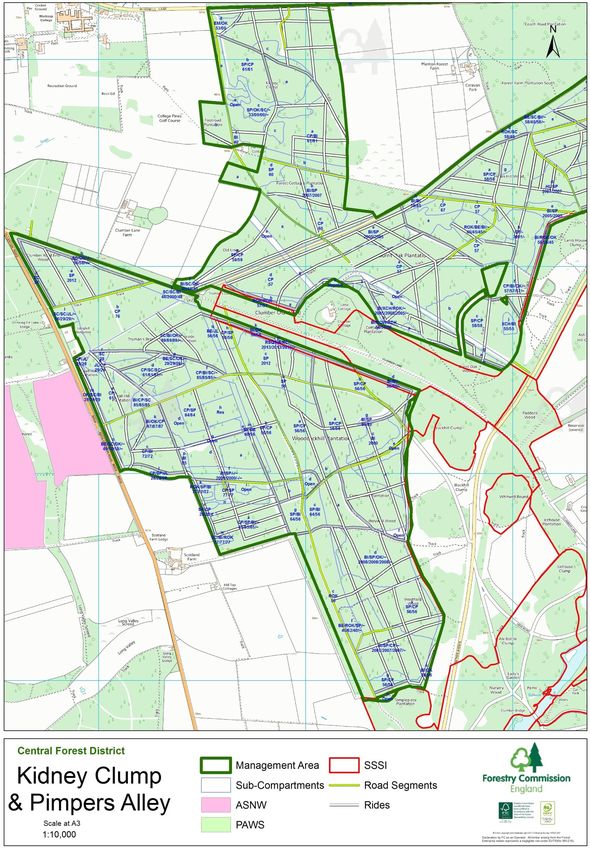
Clumber Forest Plan

Introduction                                                                               Terms of Reference for Clumber Forest Plan

                                                                                           FEE National    District                        Objective
This plan sets out our management proposals for the next 50 years and                        Strategic     Themes
facilitates   approval   for   felling   and   thinning,   both       conventional   and       Goal
                                                                                           Economy      Timber            Maintain a structured programme of
unconventional, for the next 10 years within the Clumber Plan area.                                     production        thinning to achieve the maximum
                                                                                                                          sustainable cut whilst focussing on crop
                                                                                                                          improvement.
This Forest Plan is guided and directed by a number of policies and strategies,
the main points of which are summarised below in the FC England Planning                                                  Select suitable species and appropriate
                                                                                                                          Silvicultural techniques to regenerate
Strategy. Delivering this plan will require the Forestry Commission to be                                                 commercially productive but more
responsive to shifts in our operating environment, and to be increasingly                                                 structurally and species diverse and
                                                                                                                          resilient forests.
flexible in our approach in order to sustain this responsiveness over decades
to come.                                                                                   Environment SSSI               Consider the needs of SSSIs on
                                                                                                                          neighbouring land.

This plan contains areas of high importance for Economy, Wildlife and People
                                                                                                        Invasive          Take into account aims of the district
and will set out how the Clumber area will continue to deliver for these                                Species           Invasive Species Strategy.
priorities in the next 10 years and beyond.
                                                                                                        Species and       Identify key species and habitats and make
                                                                                                        habitat           appropriate provision for their
                                                                                                                          requirements.

                                                                                           People       Landscape         Diversify species composition and
                                                                                                                          structure, and plan sympathetically
                                                                                                                          designed and appropriately scaled
                                                                                                                          interventions to improve and maintain the
                                                                                                                          visual integration of the forest into the
                                                                                                                          wider landscape.

                                                                                                        Formal Public     Give consideration to the level of visitor
                                                                                                        Access            pressure within the Clumber Park area.

                                                                                                        Informal Public   Recognise the location and scale of
                                                                                                        Access            demand in making appropriate provision
                                                                                                                          for public access, where there is open
                                                                                                                          access woodland or public rights of way.

3   |   Central England F.D.   | Forestry Commission England      |    10/06/2021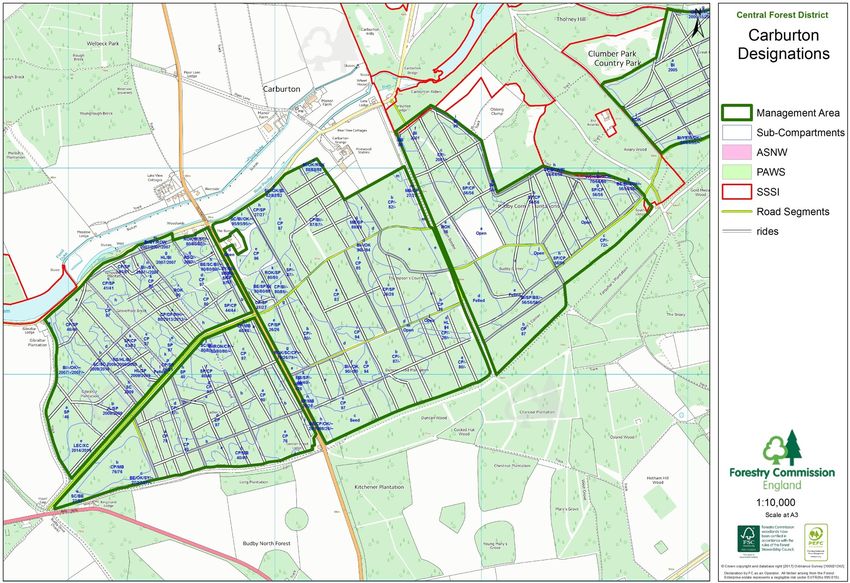
Clumber Forest Plan

Application for Forest Plan Approval
1. Plan area identification
Forest District:                Central England Forest District
Beat:                           Sherwood North Beat
Name:                           Clumber Forest Plan
Nearest Town:                   Worksop
Total Plan Area:                1089 hectares
OS Grid Ref:                    SK 6073 7547
Local Planning Authority:       Nottinghamshire –Bassetlaw District

2. Designations
Notable plant, reptile, and mammal species. Historic Parkland.

3. Date of commencement of plan
As soon as possible after the approval date.
4. Planned operations within 10 year period of the plan
      Area (ha)         Conifers       Broadleaves         Total
Felling                104.4          24.1             128.5
Restocking             93.4           21.4             114.8
Underplanting          -              -                207.0
Thinning               -              -                1988.2

Signed…………………………                                …………………………………..
Forest Management Director (FE)                       Field Manager (FS)
Date ……………………………                                ……………………………………

4   |   Central England F.D.   | Forestry Commission England   |   10/06/2021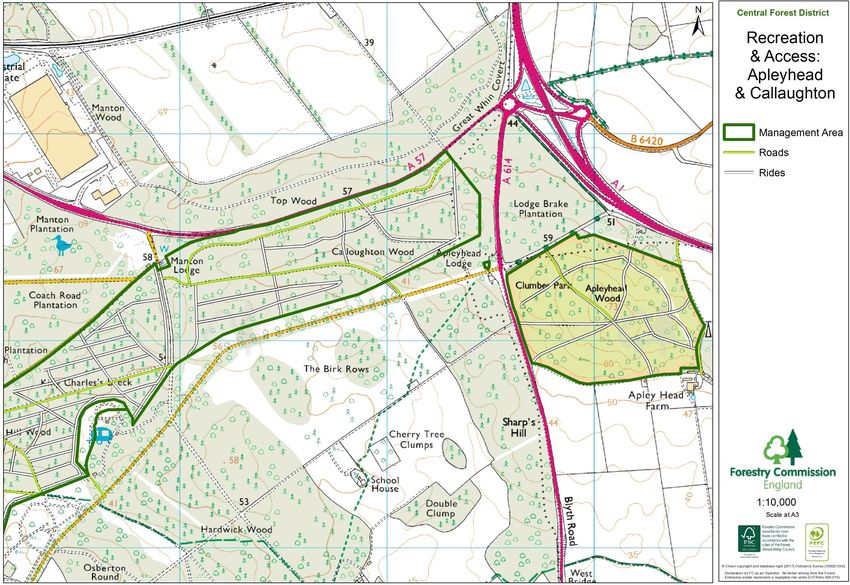
Clumber Forest Plan

Clumber Forest Plan Management                                                     UKWAS Compliance Table
Review                                                                                                  Forest Plan
                                                                                                        Area
                                                                                                                      Forest Plan
                                                                                                                      Percentage
                                                                                                                                    Forest District
                                                                                                                                    Area
                                                                                                                                                      Forest District
                                                                                                                                                      Percentage
This section is a brief review previous forest plans and their objectives. The     Total Area
                                                                                                           1089ha         100%        28,121ha             3.9%
new plan will replace two existing plans; Clumber & Carburton MID003/(01)
and Elkesley & Apleyhead MID/036/(02) both of which ran from 2002 to 2012          Total Wooded Area
                                                                                                            968ha        88.9%        23,820ha             4.1%
with a five year extension to 2017. The new plan will run for 10 years with a
                                                                                   Natural Reserves –
mid-term review at the 5 year point and will cover all four areas within the old
                                                                                   Plantation (1%)           0ha           0%           171ha               0%
plans; Apleyhead, Carburton, Clumber and Elkesley.
                                                                                   Natural Reserves –
The proposed plan will adhere to UKFS (UK Forest Standard) and UKWAS (UK
                                                                                   Semi-Natural (5%)         0ha           0%           342ha               0%
Woodland Assurance Standard) guidance, as well as working toward delivering
results in areas identified by statutory and local consultees.                     Long-Term
                                                                                   Retentions and
The previous plan achieved its objectives and has assured sustainable              Low Impact              350.1ha       32.1%        14,609ha             2.4%
                                                                                   Silvicultural
management. The Clumber area is important for all three district priorities
                                                                                   Systems (>1%)
(Economy, Environment and People). The new plan will need to continue to
                                                                                   Area of
provide a sustainable supply of timber, environmental benefits such as
                                                                                   conservation value
invasive species removal and habitat creation/improvement as well as               (>15%) including
                                                                                   designations,           350.1ha       32.1%        15,122ha             2.3%
providing space and benefits for people.
                                                                                   PAWS, AW, ASNW,
                                                                                   NR, LTR and LISS
New challenges have arisen since the creation of the previous plan, such as
the impact of Dothistroma Needle Blight (DNB). The new plan will need to
outline our response to this, with methods including species change and
underplanting. This work has already started within Clumber and Carburton
and the new plan will outline our approach going forward for all the woods in
the plan.

5   |   Central England F.D.   | Forestry Commission England   |   10/06/2021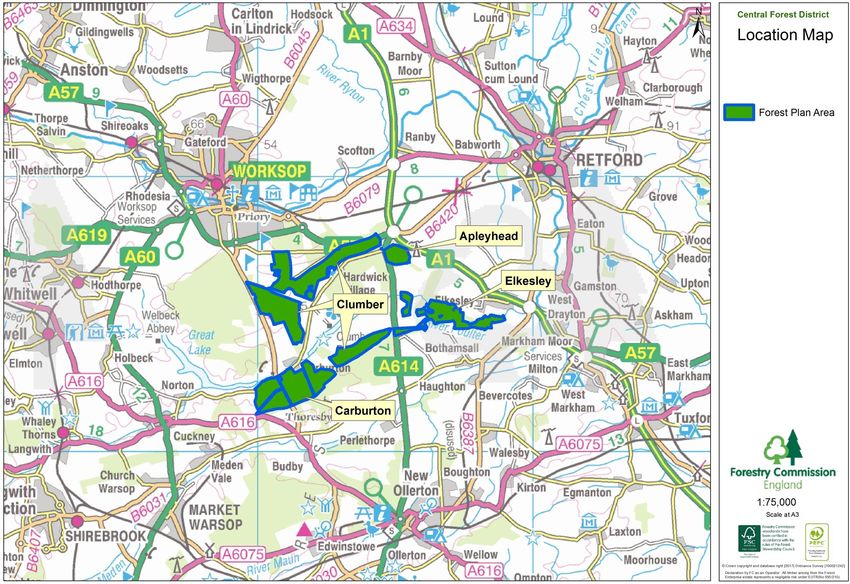
Clumber Forest Plan

FC Management Objectives                                                                           Forestry Commission England’s Planning Strategy

Economic - produce sustainable timber
                                                                                                                                   National Forest Policy
yields, encourage and support new and
existing business activity associated to                                                                           The FC sets out it’s vision and aims for Forestry in
                                                                                                                   England at a national level. This is outlined in the
the public forest estate and to make the                                                                           Strategic Plan for the Public Forest Estate in England.
economic potential of our forests and
woodlands more resilient in the face of a
changing     climate.          Growing      and
diversifying our income from a wide
range of sustainable activity on the                                                                                            Forest District Strategic Plan

estate, including non-forestry activities.                                                                         The District Strategic plan sits between the national and
                                                                                                                   local planning levels and supports the aims and
                                                                                                                   objectives within the districts, according to the FE
                                                                                                                   England National Policy and gives direction for the
                                                                                                                   management of woodlands at a District level.
                                                  Environmental         -        To     increase
                                                  where possible the environmental
                                                  contribution made by the Estate to
                                                                                                                                        Forest Plans
                                                  the range of ecosystem services
                                                  delivered   and       to       protect     and                   Forest Plans are used by the FC to demonstrate
                                                                                                                   sustainable forest management on the public estate in
                                                  enhance its overall biodiversity and
                                                                                                                   the long term and to define a 10 year programme of
                                                  heritage    value         at        both   the                   approved work. They explain how a local area of forest
                                                                                                                   will be managed and why and is produced in
                                                  landscape and local level.
                                                                                                                   consultation with internal and external stakeholders,
                                                                                                                   and following UKWAS, PEFC™ and UK Forest
                                                                                                                   Standards.
People - Enable everyone, everywhere
to connect with the nations’ trees and
forests so that they understand their
                                                                                                                            Operational Site Plans (Ops 1’s)
importance     and      act    positively    to
                                                                                                                   Management plan for specific operations on site,
safeguard forests for the future.
                                                                                                                   undertaken in accordance with the above and by
                                                                                                                   following national guidance as set out in the UK Forest
                                                                                                                   Standard.
6   |   Central England F.D.    | Forestry Commission England       |   10/06/2021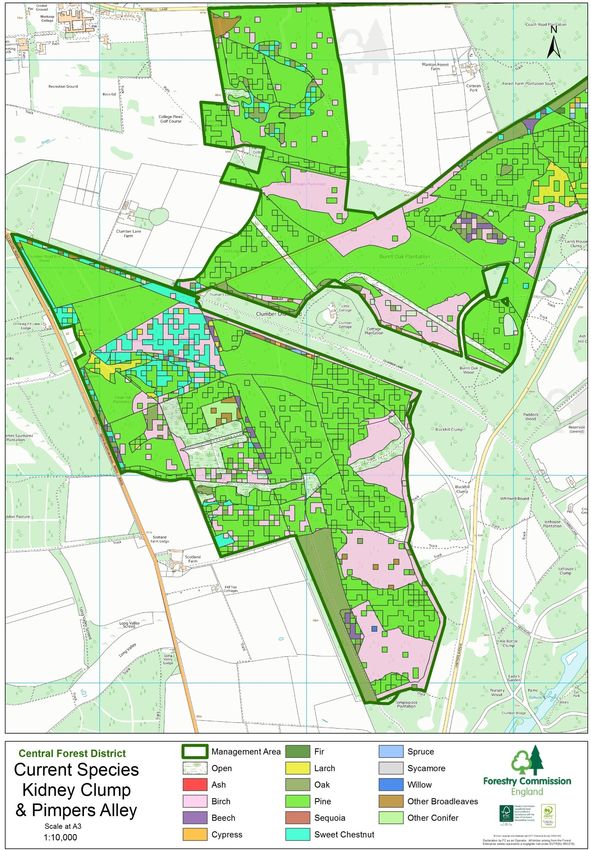
Clumber Forest Plan

                                                                                      1.31 Apleyhead
1.0 Key Characteristics and Survey Data                                               •   Apleyhead is visible from the A1 and the A614.
1.1 Location                                                                          •   It is also opposite one of the main entrances to Clumber Park.

•   See Location map                                                                  1.32 Carburton
•   All of the woodlands lie within 7.5 miles of Worksop.                             •   Carburton is visible from the A616. The B6034 Ollerton Road passes
•   OS Grid References:                                                                   through the middle of the block and the Norton/Carburton road passes
                                                                                          along the northern edge of the block.
                    Apleyhead         Carburton        Clumber            Elkesley
                                                                                      •   The internal network of rides creates an intrinsic plantation internal
                                                                       SK 6692 7494
        Access                                                                            landscape.
                  SK 6476 7743      SK 6092 7230        Various              or
        Point
                                                                                      1.33 Clumber
                                                                       SK 6490 7495
                                                                                      •   The Clumber blocks have a lot of internal landscapes and they provide the
    Centre of
                  SK 6507 7709      SK 6092 7230    SK 6073 7547       SK 6703 7516       backdrop for some of the main routes into Clumber Park, both current and
        Wood
                                                                                          historic. The block encircle the National Trust managed Clumber Park,
                                                                                          containing the historic lake and parkland.
        Area          51 ha             290 ha          522 ha             181 ha
                                                                                      •   There are high levels of access from members of the public within the
                                                                                          Clumber area. Member of the public enjoy these areas and major internal
1.2 Geology and Soils                                                                     landscape changes could be unpopular.

•   All of the woodland within the plan area sits on freely draining slightly acid    •   There are also external views from the A614 and B6034.

    sandy soils; with the exception of some parts of Elkesley, which are on           1.34 Elkesley
    naturally wet very acid sandy and loamy soils.
                                                                                      •   Elkesley is visible from the A614, Elkesley village and from points in the
                                                                                          surrounding landscape.
1.3 Aspect and Landscape
                                                                                      •   The Robin Hood way passes through the middle of this block. This crosses
•   The plan consists of seven distinct blocks of woodland, all situated around
                                                                                          the River Poulter in two places. These crossing consist of a single bridge
    Clumber Park and the River Poulter.
                                                                                          and a bridge & ford, which are nice internal viewpoints.
•   The sites all take the form of conifer plantations, mixed with areas of
                                                                                      •   The natural river valley created by the River Poulter creates a rolling
    broadleaves, designed rides and open space.
                                                                                          landscape in places and some nice riverside views.
•   All the woods are between 20m and 70m above sea level.

7   |     Central England F.D.   | Forestry Commission England    |   10/06/2021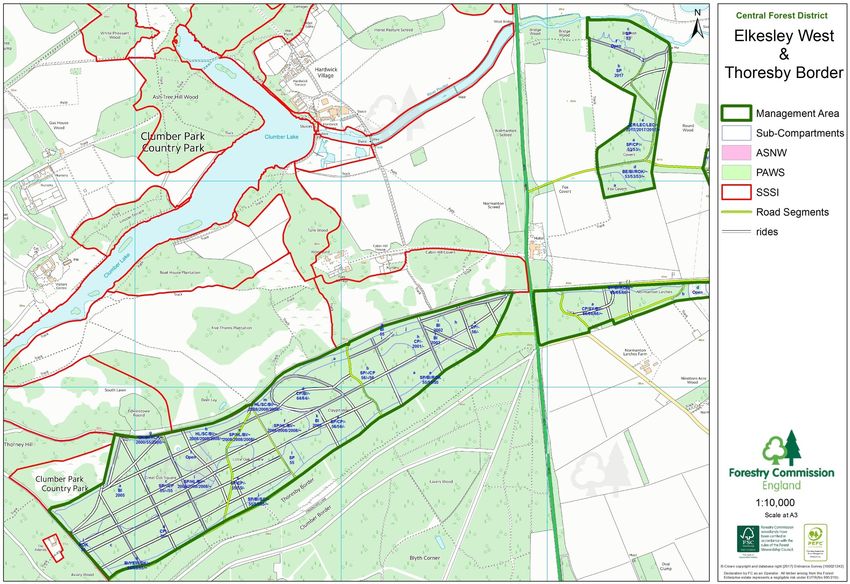
Clumber Forest Plan

1.4 Landscape Character Assessment and Natural                                             1.5 Hydrology
Character Area
                                                                                           •   All of the woods have a network of drainage ditches, as well as ponds and
1.41 Landscape Character Area (LCA)
                                                                                               natural links to local hydrology.
•   The plan lies within Bassetlaw District Councils Sherwood LCA, this
                                                                                           •   The clumber blocks surround the national trust managed Clumber Park,
    mentions:
                                                                                               which contains the Clumber Lake.

    “There are significant variations in the distribution and pattern of woodland across   •   Carburton sits above the River Poulter, which also runs through the middle
    the region. These variations are one of the most important factors in determining          of Elkesley.
    its landscape character. The area between the Maun Valley and Worksop
                                                                                           •   The local area receives an average of 888mm of rainfall per year and it
    represents the most densely wooded area of the County. This contains the
                                                                                               rains on average 135 days per year (according to long term Met Office
    remnants of the historic Sherwood Forest, the emparked lands of the Dukeries,
    the broad-leaved estate lands and the coniferous infill plantations established in         statistics).

    the last 60 years.”
                                                                                           1.6 Archaeology and Heritage
1.42 National Character Area (NCA)
                                                                                           •   The historic land management of this area has been dominated by the
•   The plan falls within the Sherwood NCA. Natural England mentions:
                                                                                               Clumber, Thoresby & Welbeck estates and the parkland landscapes they

    “Woodland is a distinctive feature of the area with a mosaic of broadleaved, mixed         created.

    and coniferous woodlands, including ancient oak wood pasture and parkland, and         •   The majority of Clumber is designated as a historic park and garden by
    pine plantations. Wooded horizons frame extensive areas of open arable farmland            Historic England. This covers the remaining features of the Clumber estate,
    with large, geometric fields contained by low, often treeless, hawthorn hedges.”
                                                                                               house, gardens and parkland.

    “Large-scale planting of conifers occurred during the first half of the 20th century   •   Within Carburton, Budby Corner there is the remains of a cottage garden.
    and provide a strong contrast to native woodland elsewhere. There is generally             This was attached to a Clumber estate house which was demolished in the
    less woodland cover in the north than in other places. Views throughout the area           1980s. The Apple tree orchard within this is also designated as a
    are often bounded by woodland on all sides, giving a sense of enclosure and
                                                                                               conservation feature.
    tranquillity.”

8   |    Central England F.D.   | Forestry Commission England    |   10/06/2021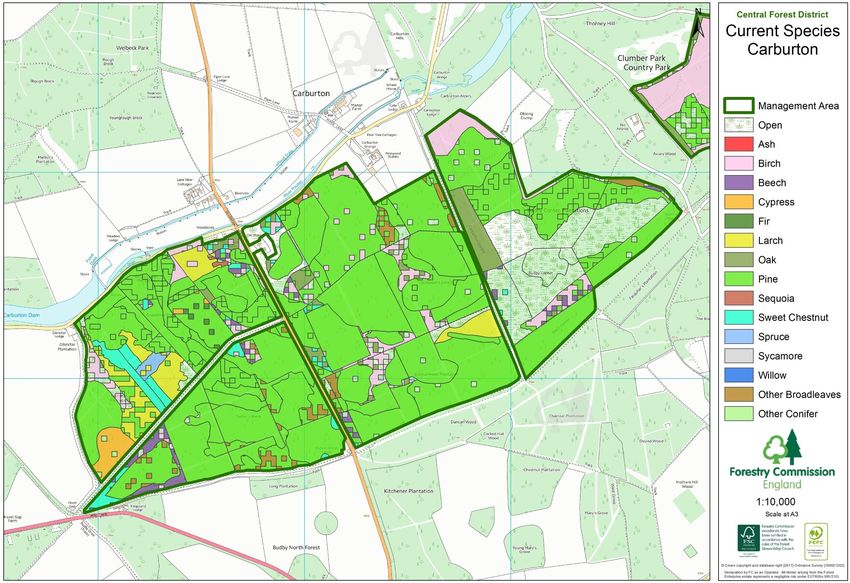
Clumber Forest Plan

                                                                                   •   1800s Corsican Pine, Carburton

1.7 Designations, Habitats and Species                                             •   Yew Trees, Thoresby Border
1.71 Designations                                                                  •   Cedar of Lebanon, Thoresby Border
•   None of the sites are designated, however land bordering the clumber           •   Chestnut Tree, Pimpers Alley
    blocks is designated Site of Special Scientific Interest (SSSI). The Clumber
                                                                                   1.75 Other Features
    SSSI is designated for being: “One of the largest areas of mixed habitat in
    Nottinghamshire, Clumber Park supports extensive areas of lowland acid         •   A number of ponds.
    grassland, heath and mature deciduous woodland characteristic of the           •   Apple tree orchard, Budby Corner (see Section 1.6)
    English North Midlands. An exceptionally rich beetle fauna is associated
                                                                                   •   Botanically rich Heather rides.
    with mature timber and dead wood habitats and the park is notable for its
    breeding bird communities.”
                                                                                   1.8 Social and Community Interest
•   The plan area contains no Ancient Semi-Natural Woodland (ASNW) or
                                                                                   •   Clumber Park is a very popular National Trust property with a high number
    Plantation Ancient Woodland (PAWS).
                                                                                       of visitors. The Forestry Commission woodland blocks surrounding Clumber
1.72 Species of Note                                                                   Park are well visited by people venturing beyond the park and those
•   Goshawk, Buzzard, Woodlark & Nightjar.                                             travelling to it.

•   Smooth Newt & Great Crested Newt.                                              •   A National Trust cycle route that passes through our woodland as well as a
                                                                                       Sustrans cycle route. There are various Public Rights of Way and large
•   There are a number of Badger setts.
                                                                                       areas of our estate are designated as open access. This makes all of the
•   Slow Worm & Common Lizard.
                                                                                       blocks that have public access popular for a number of recreation activities;
1.73 Invasive Species                                                                  including walking, cycling and riding.

•   Rhododendron                                                                   •   Apleyhead has an active archery group, based within the wood. There is

•   Himalayan Balsam                                                                   also a caravan site within Clumber Park which borders our woods.

•   Laurel
                                                                                   1.9 Access and Tenure
•   False Acacia
                                                                                   •   Apleyhead is owned freehold whilst the rest of the plan area is leasehold.
1.74 Trees of Special Interest                                                     •   Elkesley and Carburton have no public access other than existing Public
•   Small Leaved Lime, Carburton                                                       Rights of Way. The rest of the plan area is open access.

•   Mature Beech, Carburton, old hedgerow trees.
9   |   Central England F.D.   | Forestry Commission England   |   10/06/2021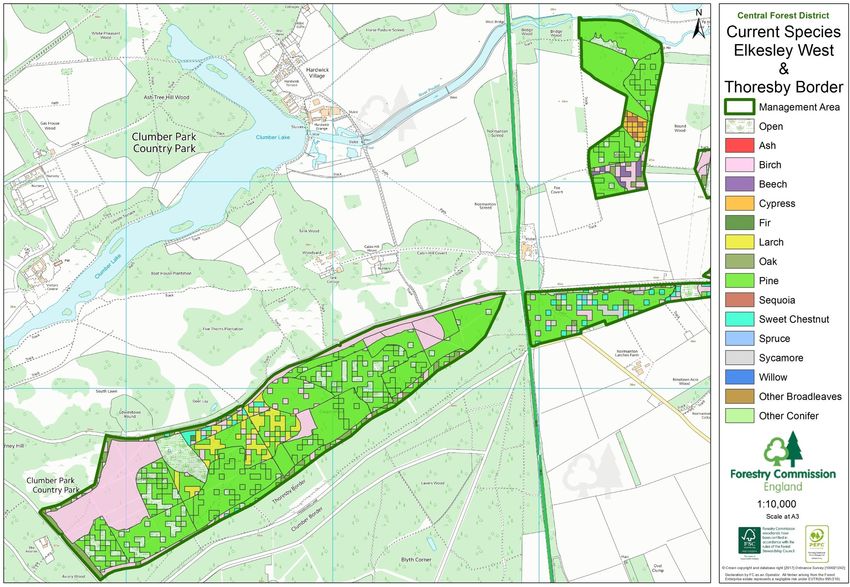
Clumber Forest Plan

2.0 Current Woodland Information                                                            2.12 Current Land Use

2.1 Current Species, Age Structure and Yield Class                                                                    Current Land Use (ha)
     The area covered by the Forest Plan amounts to 1088.7 ha of which 994 ha                                                     4.1 24.7
                                                                                                                                             8
                                                                                                                           57.7
     is woodland. Of the planted area, 64.7% is conifer and 26.6% is
     broadleaved woodland (See Fig.2). 57.8 ha of the plan area is currently
     open space; this element will increase and decrease rotationally due to
     usual     clearfelling,   thinning   and   restocking   operations    and    natural
     regeneration. The woodland will be managed sustainably in line with
     UKWAS and UKFS guidance.
     Section 2.11 shows the breakdown of current species by area and 2.12                                                                                      Unplantable
                                                                                                                                    994.2
     shows current land use by area. Section 2.15 shows the current age                                                                                        Felled
     structure of the trees in the plan area.                                                                                                                  Water

                                                                                                                                                               Woodland
2.11 Current Forest Structure
                                                                                                                                                               Open

                        Current Forest Structure 2017 (%)

                                    8.7                                                     2.13 Current Production Forecast
                                                                                                       Forecast       All                    All          All
                26.6                                                                                   Period         Species                Conifers     Broadleaves
                                                                             Conifer                       2017-2021         11369               10469        901
                                                                             Broadleaf
                                                              64.7
                                                                             Open/Other       Volume       2022-2026          7474               6923         551

                                                                                              to           2027-2031          9835               8450         1385
                                                                                              7cm          2032-2036          6536               5813         723
                                                                                                           2037-2099          7174               5946         1228

                                                                                            Note: values given are for m3 per year for each year of that period.

10    |      Central England F.D.   | Forestry Commission England    |   10/06/2021
Clumber Forest Plan
2.14 Current Species (as of 2017) 2.15 Age Structure
Percentage of Age Structure
Species Area (ha)
Total Area 400
Conifer
350
Corsican Pine 438.9 40.3%
300
Scots Pine 213.5 19.6%
Planted Area (ha)
250
Larch 20.8 1.9%
200
Norway Spruce 9.3 0.9%
150
Other Conifer 22.0 2.0%
Total Conifer 704.5 ha 64.7% 100
Broadleaf 50
Birch 154.3 14.2% 0
Pre 1957 1957-1976 1977-1996 1997-2006 2007-2017
Oak 53.6 4.9% Year Planted
Sweet Chestnut 34.6 3.2%
• The “Age Structure” graph above shows how much area was planted in
Beech 12.6 1.2% which time period. The age structure is relatively even, but there is a
large amount of pine planted between 1957 & 1976 reaching the end of
Sycamore 12.2 1.1% its rotation.
Other Broadleaf 22.3 2.0%
Total Broadleaf 289.6 ha 26.6%
Other
Open 57.8 5.3%
Felled 24.7 2.3%
Open Water 8.0 0.7%
Unplantable 4.1 0.4%
Total Other 94.6 ha 8.7%
Total Area 1088.7ha 100.0%
11 | Central England F.D. | Forestry Commission England | 10/06/2021Clumber Forest Plan
3.0 Future Management restored. As felling is happening in stages within the wood, it will be
possible to use the results of regeneration in previous felling coupes to
Of the 1088.7 ha plan area:
influence whether supplementary planting or complete restocking is
required from the outset in future nearby coupes. This will allow us to
3.1 Felling & Thinning
manage restocking on areas where the water table rising after felling
• The clear-fell and restock element of the Forest Plan will amount to
could hinder attempts to restock. The use of Continuous Cover Forestry
128.5 ha over the next 10 years. Restocking will be achieved by planting
(CCF) in some areas, as opposed to clearfell, will also help mitigate
with Conifers or Broadleaves; other than areas which will become open
against this.
space.
• Some areas at the edges of the plantation will be converted to Broadleaf
• The remainder of the woodland will be manged through thinning or
or Broadleaf Conifer mix over the next 50 years. These will be managed
continuous cover systems. This could include stripfelling and
on a Continuous Cover basis. They will provide unchanging external
underplanting with alterative conifers.
views, as opposed to the clearfell and restock of pure conifer crops.
• Throughout the plan all compartments will be thinned on a five year
• The proportion of Broadleaf will increase from 26.6% in 2017 to 35.3%
rotation totalling 2117.4ha. In some areas this will be a thinning biased
in 2067. This comes from species changes and converting edges to
towards achieving volume whilst in others it will be biased towards the
broadleaves.
crown, improving canopy structure. This will improve the quality of
• Restock Species will include established conifers such as Scots Pine,
existing trees whilst opening up canopy gaps for succession of
Alternative Conifers and Broadleaves.
understory trees or for us to undertake underplanting with alternative
• Underplanting and species choice will follow establish practice within the
conifers.
Forest Plan area and methods used in other forests. For further
3.2 Natural Regeneration & Restocking information see the Forestry Commission Successful Underplanting
• The aim is to achieve restocking by a mixture of planting and natural
Guidance listed in Section 8.
regeneration as appropriate; because of this proportions of species have
been estimated. On a coupe by coupe basis, the decision may be taken 3.3 Environmental
to opt for planting rather than natural regeneration, if that offers the 3.31 Retentions
most effective means of achieving the plan objectives. This gives us the • Areas of long term retention have been identified throughout the plan
flexibility to counter threats such as pests and diseases; as viable area, totalling 4.3ha. These will be retained beyond their normal
regeneration may not lead to canopy cover in the future. economic life to provide veteran trees and biological benefits to habitats
• Natural regeneration may be used in some areas instead of and species.
restocking/planting. If suitable regeneration is not achieved by year five;
beat up, supplementary planting or full restocking with appropriate
species will be implemented as appropriate to ensure woodland cover is
12 | Central England F.D. | Forestry Commission England | 10/06/2021Clumber Forest Plan
3.32 Deadwood
3.4 Open Space
• Deadwood will be retained where appropriate, working towards the
• Open space will be created through ride widening, creation of a deer
Forestry Commission’s policy on retention and creation; which is set out
lawn and transitional open space such as clear fells and coppiced areas.
in the Forestry Commission’s Practice Guide – Managing deadwood in
Some of the open space gained from rides will be achieved by accurately
forests and woodlands. One way of achieving this would be leaving
mapping existing rides so they can be reclassified as open space. He
brash on site from felling, thinning and coppicing operations as well as
rest will come from removing edge trees to bring existing rides up to the
retention of trees of special interest (TSIs), including veteran trees.
width where they can be reclassified as open space.
• A recent example of proactive deadwood creation and management has
• The amount of open ground within the Forest Plan will increase from
been a thinning for deadwood scheme at Laughton. This has involved
5.3% to 7.9% (85ha). This does not include transitional open space
under thinning then over thinning an area to create suppressed trees
such as clearfells and the area at Budby Corner under coppice rotation
which become deadwood. It is difficult to foresee a scheme of this kind
which could potentially provide an additional 50ha of transitional open
within Clumber due to the high levels of public access, but any
space. The inclusion of this would bring the total open space to 12.4%
opportunities for deadwood creation and retention will be explored.
(135ha) which would exceed the UKFS 10% target.
3.33 Biodiversity
• The Forestry Commission maintains records on biodiversity and these 3.5 Social
are consulted at the operational planning stage. Important species will • The woodland within the plan remains popular with walkers, dog walkers
be highlighted and protected as part of this. We also welcome records & horse riders; as well as the sports clubs and groups which run
from organisations and groups that can help us improve our activities and events within the wood.
understanding of biodiversity within our woodlands. • We currently feel the level of recreation provision within the wood is
• The Forestry Commission has its own rigorous polices and standards in appropriate for the level of demand, but we will continue to review this
addition to the United Kingdom Forest Standard (UKFS); to which as part of our ongoing management.
management and operations within these woods will adhere. • We will continue to promote access where possible; as well as actively
engaging and encouraging local groups and individuals where there is
3.33 Invasive Species
mutual benefit from their involvement in these woods.
• Management of invasive plant species will continue to be a priority. The
• Access remains restricted in Carburton & Elkesley due to the terms of
work of the community rangers, volunteers and ecology team will
our lease agreements.
continue to make inroads into the control and eradication of
Rhododendron, Himalayan Balsam, Laurel and other invasive species
within the plan area.
13 | Central England F.D. | Forestry Commission England | 10/06/2021Clumber Forest Plan
production. This will allow gradual changes over time though thinning
3.6 Archaeology and Heritage and under planting.
• The only known current heritage features are the cottage garden at • Edge areas have been planned as continuous cover broadleaves in some
Budby Corner and the historic parks and landscape designation. of the larger blocks such as Callaughton and in some places within
• The proposals in the plan remain in keeping with the historic park blocks. This will give a continuous soft edge and screen clearfells both
landscape. The cottage garden at Budby corner forms part of a coppice within and outside the woodland.
management area and will be protected within this.
3.8 Other Management
• Heritage features will be considered at the operational planning stage.
• 207ha will be underplanted over the next ten years. This will be under
Specific protection or preservation strategies will be implemented to
thinned conifer crops or in stripfells and will be mostly conifer; or a
protect any features which may be adversely affected by operations.
mixture of conifer and broadleaves. Additional areas for underplanting
• Heritage features and operations in their vicinity will be managed in line
may be identified during the plan period.
with Forestry Commission and UKFS policy. If there are any new finds of
• The woodlands will be managed using a variety of Silvicultural systems
importance, the County Archaeologist will be informed.
to allow for the production of commercial conifer and broadleaved
species. All forest operations will be carried out in accordance with
3.7 Landscape
• The blocks of woodland which make up the clumber plan are not a current best practice and will be assessed at the Operational Planning
dominant feature in the local landscape. However they are spread widely stage. Operations comply with UK Woodland Assurance Scheme
and have a high level of public access, making internal landscapes (UKWAS), UK Forest Standard (UKFS) and Forest District Strategic Plan
important. Felling has been planned to provide economic and to ensure that the woodlands are managed sustainably.
environmental benefits, but in a way that minimises impact in areas with
high visitor pressure.
• The woods are very typical of the local landscape character in their
current form and future management will seek to enhance and preserve
this status.
• There are some external views from the surrounding landscape and
nearby roads. Clearfell coupes on the edge of the plantation will be small
scale or well planned to avoid dramatic view changes.
• Clearfell coupes within the woodland have been planned to avoid
adjacent coupes being felled in similar felling periods. This should
minimise internal landscape changes whilst allowing ongoing timber
14 | Central England F.D. | Forestry Commission England | 10/06/2021Clumber Forest Plan
3.93 – Future Species (as of 2067)
3.9 Future Structure and Land Use Species Area (ha) Percentage
3.91, 3.92 & 3.93 show a breakdown of future forest structure:
of Total
3.91 - Future Forest Structure (2067) Area
Conifer
Future Forest Structure 2067 (%)
Overstory mixtures of Corsican & Scots Pine.
8.3 Underplanted areas with alternative conifers
Clearfell restocks with alternative conifers.
35.3
Conifer
Total Conifer 614.5 56.4%
56.4
Broadleaf Broadleaf
Open/Other
Mostly Birch on Clearfells with Oak and Sweet
Chestnut to a lesser extent.
Shade tolerant broadleaves such as Beech
may be used in underplanting areas.
Total Broadleaf 384.4 35.3%
3.92 - Future Land Use (2067)
Open 85.0 7.9%
Future Land Use 2067 (%)
Other 4.7 0.4%
8.3
Total Area 1088.7ha 100%
Section 3.93 Future Species suggests species making up the majority of each
coupe based on the species that are currently dominant in each coupe and
Open/Other management proposals such as diversification.
Woodland
91.7
15 | Central England F.D. | Forestry Commission England | 10/06/2021Clumber Forest Plan
4.0 Meeting and Monitoring Objectives
FEE National District Objective Proposal Methods of Monitoring
Strategic Themes
Goal
Economy Timber Maintain a structured programme of Structured thinning program to continue, this will be Monitored through SCDB, Ops 1 Process and 5
production thinning to achieve the maximum supplemented by targeted underplanting to maintain year mid-term Forest Plan review.
sustainable cut whilst focussing on crop sustainable forests.
improvement.
Economy Timber Select suitable species and appropriate The timing, scale and shape of future felling Monitored through SCDB, Ops 1 Process and 5
production Silvicultural techniques to regenerate operations have been designed to create a diverse year mid-term Forest Plan review.
commercially productive but more woodland structure. Alternative species and restock
structurally and species diverse and
methods have been planned to covert clumber to a
resilient forests.
structurally and species diverse and resilient forest.
Environment SSSI Consider the needs of SSSIson Manage adjacent areas as appropriate; consider Consultation with environment and heritage
neighbouring land. impacts and relevant policy when planning
team as part of the ops 1 process will help
operations. improve outcomes for biodiversity.
Environment Invasive Take into account aims of the district Continue to use financial resources and volunteers to
Species and areas to target to be monitored
Species Invasive Species Strategy. tackle Invasive Species in a planned way. by Ecology Team, Beat Team & Community
Rangers.
Environment Species Identify key species and habitats and Consider impacts on key species at operational Consultation with environment and heritage
and make appropriate provision for their planning stage. Use results of biological surveys to team as part of the ops 1 process will help
habitat requirements. improve understanding and management. improve outcomes for biodiversity. New
surveys will be reviewed and their results
compared with existing data and used to
improve management.
People Landscape Diversify species composition and Edge and coupe boundary areas transitioned to Monitored through SCDB, Ops 1 Process and 5
structure, and plan sympathetically broadleaves to provide stability and maintain the year mid-term Forest Plan review.
designed and appropriately scaled visual landscape. Clearfells and interventions planned
interventions to improve and maintain
at a scale to be Silviculturally and economically
the visual integration of the forest into
viable, but to minimise visual and environmental
the wider landscape.
negative impacts.
People Formal Give consideration to the level of visitor Current features will be maintained. New features to Beat and RPA teams to monitor in line with
Public pressure within the Clumber Park area. be added where appropriate. operational objectives throughout the plan
Access period.
People Informal Recognise the location and scale of Current features will be maintained. New features to Beat and RPA teams to monitor in line with
Public demand in making appropriate provision be added where appropriate. operational objectives throughout the plan
Access for public access, where there is open period.
access woodland or public rights of way.
16 | Central England F.D. | Forestry Commission England | 10/06/2021Clumber Forest Plan
5.0 Economic forecast 5.12 Future Production Forecast Graph
The woodland will continue to be managed sustainably as set out in previous
and current objectives relating to Forest Standards. Section 5.11 shows the
Future Production Forecast
future production forecast which takes into account Silvicultural systems and
felling years. The graph in section 5.12 compares the previous forecast with
the future forecast and the forecast for timber production nationally.
Volume to 7cm
20000
18000
5.11 – Future Production Forecast
16000
14000
Forecast All All All
Volume m3
12000
Period Species Conifers Broadleaves 10000
2017-2021 10277 9611 666 8000
6000
Volume 2022-2026 7857 7146 711 4000
2000
to 2027-2031 10115 8756 1358 0
2017-2021 2022-2026 2027-2031 2032-2036 2037-2041 2042-2046 2047-2051 2052-2056 2057-2061
Time Period
7cm 2032-2036 6137 5421 716
Current Forecast New Forecast National Production Forecast (000 m3 obs)
2037-2099 7246 6011 1236
Note: values given are for m3 per year for each year of that period.
17 | Central England F.D. | Forestry Commission England | 10/06/2021Clumber Forest Plan
6. Consultation • New or revised management planning documentation is being produced.
• The woodland is being evaluated for certification.
6.1 Statutory Consultees
Nottinghamshire County Council The consultation process will last for a minimum of 30 days. It will include us
Natural England directly contacting Statutory Consultees and other groups, neighbours or
Historic England organisations; that we are aware of and that may have an interest in our
management of the woodland (Non-Statutory Consultees).
6.2 Non-Statutory Consultees
Babworth Parish Council Other interested parties will be directed via on site signage to Worksop Library
Bassetlaw District Council where copies of the plan will be held. Consultation of the plan will also take
Bothamsall Parish Council place on the Citizenspace website. In woods where there are a relatively high
Carburton Parish Council number of visitors; we may also run onsite events to enable us to meet
Carr Family Estates anyone who is interested in our plans or management proposals. These will be
Clumber & Hardwick Parish Council advertised by onsite signage.
D Pickard & Sons Ltd.
Elkesley Parish Council Once the consultation is complete we will reply to any responses we receive.
Martin Robinson & Sons Timber Ltd. We shall then submit the plan for approval.
National Trust
Normanton Larches All of our forests and woodlands in this Forest District are certified by the
Thoresby Estate Forest Stewardship Council®(FSC®) and the Programme for the Endorsement
Tilhill Forestry of Forest Certification (PEFC). All Forestry England
Welbeck Estate forests and woods are independently certified as
Welbeck Parish Council sustainably managed, to continue to benefit future
Worksop Town Council generations. The FSC is an international, non-
governmental organisation dedicated to promoting
responsible management of the world’s forests. The
6.3 Consultation Process PEFC is an international non-profit, non-governmental organisation dedicated
to promoting sustainable forest management.
As part of our commitment to this we undertake a public consultation process.
Consultation is the process we use so that local people and relevant
organisations and interest groups can be made aware that:
18 | Central England F.D. | Forestry Commission England | 10/06/2021Clumber Forest Plan 7. Maps 7.1 Location 19 | Central England F.D. | Forestry Commission England | 10/06/2021
Clumber Forest Plan

7.2 Designations

20   |   Central England F.D.   | Forestry Commission England   |   10/06/2021
Clumber Forest Plan

21   |   Central England F.D.   | Forestry Commission England   |   10/06/2021
Clumber Forest Plan

22   |   Central England F.D.   | Forestry Commission England   |   10/06/2021
Clumber Forest Plan

23   |   Central England F.D.   | Forestry Commission England   |   10/06/2021
Clumber Forest Plan

24   |   Central England F.D.   | Forestry Commission England   |   10/06/2021
Clumber Forest Plan

7.3 Current Species

25   |   Central England F.D.   | Forestry Commission England   |   10/06/2021
Clumber Forest Plan

26   |   Central England F.D.   | Forestry Commission England   |   10/06/2021
Clumber Forest Plan

27   |   Central England F.D.   | Forestry Commission England   |   10/06/2021
Clumber Forest Plan

28   |   Central England F.D.   | Forestry Commission England   |   10/06/2021
Clumber Forest Plan

29   |   Central England F.D.   | Forestry Commission England   |   10/06/2021
Clumber Forest Plan

7.4 Recreation & Access

30   |   Central England F.D.   | Forestry Commission England   |   10/06/2021
Clumber Forest Plan

31   |   Central England F.D.   | Forestry Commission England   |   10/06/2021
Clumber Forest Plan

32   |   Central England F.D.   | Forestry Commission England   |   10/06/2021
Clumber Forest Plan

33   |   Central England F.D.   | Forestry Commission England   |   10/06/2021
Clumber Forest Plan

34   |   Central England F.D.   | Forestry Commission England   |   10/06/2021
Clumber Forest Plan

7.5 Concept Map

35   |   Central England F.D.   | Forestry Commission England   |   10/06/2021
Clumber Forest Plan

36   |   Central England F.D.   | Forestry Commission England   |   10/06/2021
Clumber Forest Plan

37   |   Central England F.D.   | Forestry Commission England   |   10/06/2021
Clumber Forest Plan

38   |   Central England F.D.   | Forestry Commission England   |   10/06/2021
Clumber Forest Plan

39   |   Central England F.D.   | Forestry Commission England   |   10/06/2021
Clumber Forest Plan

7.6 Silvicultural Systems

40   |   Central England F.D.   | Forestry Commission England   |   10/06/2021
Clumber Forest Plan

41   |   Central England F.D.   | Forestry Commission England   |   10/06/2021
Clumber Forest Plan

42   |   Central England F.D.   | Forestry Commission England   |   10/06/2021
Clumber Forest Plan

43   |   Central England F.D.   | Forestry Commission England   |   10/06/2021
Clumber Forest Plan

44   |   Central England F.D.   | Forestry Commission England   |   10/06/2021
Clumber Forest Plan

7.7 Felling Map

45   |   Central England F.D.   | Forestry Commission England   |   10/06/2021
Clumber Forest Plan

46   |   Central England F.D.   | Forestry Commission England   |   10/06/2021
Clumber Forest Plan

                                                                                 Coppice Management Area.
                                                                                 See Section 7.9

47   |   Central England F.D.   | Forestry Commission England   |   10/06/2021
Clumber Forest Plan 48 | Central England F.D. | Forestry Commission England | 10/06/2021
Clumber Forest Plan

49   |   Central England F.D.   | Forestry Commission England   |   10/06/2021
Clumber Forest Plan

7.8 Future Species

50   |   Central England F.D.   | Forestry Commission England   |   10/06/2021
Clumber Forest Plan

51   |   Central England F.D.   | Forestry Commission England   |   10/06/2021
Clumber Forest Plan

52   |   Central England F.D.   | Forestry Commission England   |   10/06/2021
Clumber Forest Plan

53   |   Central England F.D.   | Forestry Commission England   |   10/06/2021
Clumber Forest Plan

54   |   Central England F.D.   | Forestry Commission England   |   10/06/2021
Clumber Forest Plan

7.9 Coppice Management

55   |   Central England F.D.   | Forestry Commission England   |   10/06/2021
Clumber Forest Plan

8. Relevant Forestry Commission &
Government Policies
     •       Bassetlaw District Council, 2009. “Bassetlaw Landscape Character Assessment”
             Available at: http://www.bassetlaw.gov.uk/everything-else/planning-
             building/planning-policy/core-strategy-development-management-
             policies/core-strategy/landscape-character-assessments-study.aspx

     •       Natural England, 2014. “National Character Area profile: 49. Sherwood”
             Available at: http://publications.naturalengland.org.uk/publication/1401066

     •       Forestry Commission, 2014. Central England Forest District Strategic Plan
             2014-2020.

     •       Forestry Commission, 2016. Silvicultural Guide: Successful Underplanting.

                                                                                            End of Document

56       |     Central England F.D.   | Forestry Commission England    |   10/06/2021
You can also read


