COAL AND RENEWABLE ENERGY REPORTING IN INDONESIA - By Ari Ulandari, with Cherika Hardjakusuma Climate Tracker Fellows
←
→
Page content transcription
If your browser does not render page correctly, please read the page content below

COAL AND
RENEWABLE
ENERGY
REPORTING
IN INDONESIA
By Ari Ulandari, with Cherika Hardjakusuma
Climate Tracker Fellows

Children play by the beach near a coal power plant in Jepara, Central
Java province, Indonesia. Photo by Kemal Jufri/Greenpeace

Cover: Coal barges travel down the Mahakam River in Samarinda,
East Kalimantan province, Indonesian Borneo. East Kalimantan is
Indonesia’s most significant coal export region. Photo by Kemal
Jufri/Greenpeace

EXECUTIVE SUMMARY Overall, our two Indonesian researchers examined 390 arti-
cles across 10 news outlets from January 2019 to July 2020 and
found that despite some positive renewable developments, “king
Southeast Asia is a fast-developing region, and its energy deci- coal” was still framed as the future of energy in Indonesia. The
sions are critical to the next decade’s global effort to reduce researchers also came to the conclusions below:
carbon-emitting fossil fuels. Yet little is known about the specific
media narratives that shape the national debates on an energy
Key Takeaways
transition in each country. For stakeholders wishing to influence
such narratives and increase the quality of energy reporting, les-
sons from the past are crucial for future success. This knowledge – News articles in Indonesia framed coal extremely positively
gap is what Climate Tracker and the Stanley Center for Peace and far more often than negatively. Around 67 percent of coal
Security wished to fill with an analysis of energy-related media articles portrayed it as indispensable for the country’s devel-
coverage in five countries across Southeast Asia. This report on opment. This is far more than any other Southeast Asian
Indonesia is the fourth in a series of reports commissioned by country included in this regional study. When environmental
the Stanley Center and produced by Climate Tracker that will concerns were covered, they were regularly invalidated in
be copublished as part of Fueling the Tiger Cubs: How Southeast that coverage by the economic contribution of the country’s
Asia’s Media Is Covering Coal’s Last Frontier, a multicountry media mining sector.
analysis led by young journalists from the Philippines, Indonesia,
Malaysia, Thailand, and Vietnam. Each of the Southeast Asian – Even when the negative impacts of coal plants or mines
countries in our study has a unique media landscape with differ- were discussed, we did not find any articles in the 18 months
ent challenges and opportunities for energy reporting. that discussed a coal phaseout in the near future. Solutions
proposed were often framed around improved coal plant
Indonesia is a country with the fifth-largest population in the technology or higher-carbon coal.
world and the largest in the Association of Southeast Asian Nations
(ASEAN). With relatively few restrictions on establishing media – Coal mining was generally presented as safe for the sur-
outlets, it has both the largest market and media industry in the rounding community when properly regulated. When specific
region. There were more than 47,000 different outlets across mining activities in certain areas were presented as harmful
the country as of 2017. Indonesia is experiencing rapid media or risky, their legality was questioned rather than the impacts
convergence, however; 12 major media conglomerates dominate of mining itself.
the media landscape and mold reporting to serve the owners’
interests—most of which include significant stakes in the energy – Financial ties may have influenced the choice of coal frame,
industry, specifically, coal. according to two journalists interviewed. “When a media
organization grows into a for-profit media conglomerate,
Indonesia is the leading global exporter of thermal coal, with it expects revenue,” stated a Mongabay journalist, Meidella
some of the largest proven coal reserves in the world. The sec- Syahni, who used to work in mainstream media. “Advertorial
ond-ranked country in the region, Vietnam, has less than 10 collaborations and other [financial ties] affect any issue
percent the amount of coal Indonesia has. On a domestic level, reported, including energy issues.” Deasy Indriwati from
coal power makes up more than 62 percent of Indonesia’s energy online outlet Inidata shared that opinion: “LOTS of business
mix. In contrast, renewable energy, which is dominated by hydro- interests [in Indonesian media]; this has been a problem from
power, makes up only 12.24 percent of the nation’s energy. While the stone age to the present.” To present a good energy story,
there is a goal for renewable energy to reach 23 percent of the she said, a journalist must have “guts” to be able to challenge
nation’s energy mix by 2025, Indonesia is well behind this target. the influence and power of the energy sector.
In our regional media analysis, Indonesia was the only country – In our sample of seven news outlets, three—Okezone,
where coal was framed more positively in the media as quintes- Sindonews, and detikNews—are owned by corporations with
sential for the nation’s economy. Articles emphasized that coal significant coal mining interests. Okezone and Sindonews
mining plays an indispensable role in Indonesia’s economy, despite together published 62.5 percent of articles highlighting the
its potential environmental harms. Even when the controversial positive economic contribution of the coal industry.
coal mining omnibus law was discussed, most criticisms were
directed at the undemocratic process by which the law was – The Indonesian government is trying to pass an omnibus law
passed, rather than the environmental impacts of coal mining and a coal mining law, which would essentially streamline
itself. Renewable energy, for the most part, is still in its nascent businesses’ process for obtaining mining permits. Though
stages of development in the country; solar and wind installation the laws were described as controversial in Indonesian
remains largely nonexistent. Articles thus discussed renewables media, most criticisms were directed at the lack of legisla-
as a general concept rather than provide specific insight into the tive transparency and civil society involvement in decision
technologies and applications. making rather than the environmental and human impacts
of coal mining itself.
3
–     Forty-five percent of renewable energy stories discussed the      –   Kumparan, an online-only outlet published by a new media
      concept in general terms without mentioning specific alter-           company, stands out for publishing 35 articles on renewable
      native technologies. An editor from kompas.com, Erlangga              energy’s merits—the most of any outlet. In contrast, it pub-
      Djumena, said renewable energy “has limited sources [for              lished only six articles praising coal. This might stem from the
      journalists to cite/interview], because it is still rare...plus       outlet’s unique editorial approach, which allows for user-gen-
      the sources are too technical. Not only the readers, the              erated content. Half of the energy articles from Kumparan
      journalists are sometimes confused.” Because of this lack of          were written by external contributors and were overwhelm-
      understanding, it was difficult for journalists to dive deeper        ingly hopeful about the future of renewable energy.
      into a specific renewable energy source.
                                                                        –   There is a severe lack of source diversity across the media
–     More than 98 percent of renewable energy articles, however,           industry. More than half of coal and renewable energy articles
      framed it in a positive light, arguing that renewable devel-          in our analysis included quotes from only one source—almost
      opment would ensure energy security for Indonesia while               always government or business representatives.
      reducing its carbon emissions. In a contrast to Thai media,
      articles omitted mentions of coal phaseout as necessary for       –   Hard news stories dominated the energy reporting, making
      reducing emissions, arguing instead that replacing oil and            up more than 80 percent of energy stories.
      gas—which the country currently imports—is enough.
                                                                        –   While mainstream media publish far more positive stories
–     Indonesia’s recent rapid development of biofuel, boosted              about coal, there were more wire stories produced in the 18
      by a 20 percent biodiesel mandate, was universally praised            months focusing on the opportunities of renewable energy
      by the mainstream outlets. However, the biofuel primarily             than coal.
      comes from palm oil—a highly controversial industry tied
      to widespread fires and deforestation in the country, with
      powerful backers.

    Drilling and well-testing stations at the Muara Laboh Geothermal
    Power Project in South Solok, West Sumatra province, Indonesia.
    Photo courtesy of Asian Development Bank

          4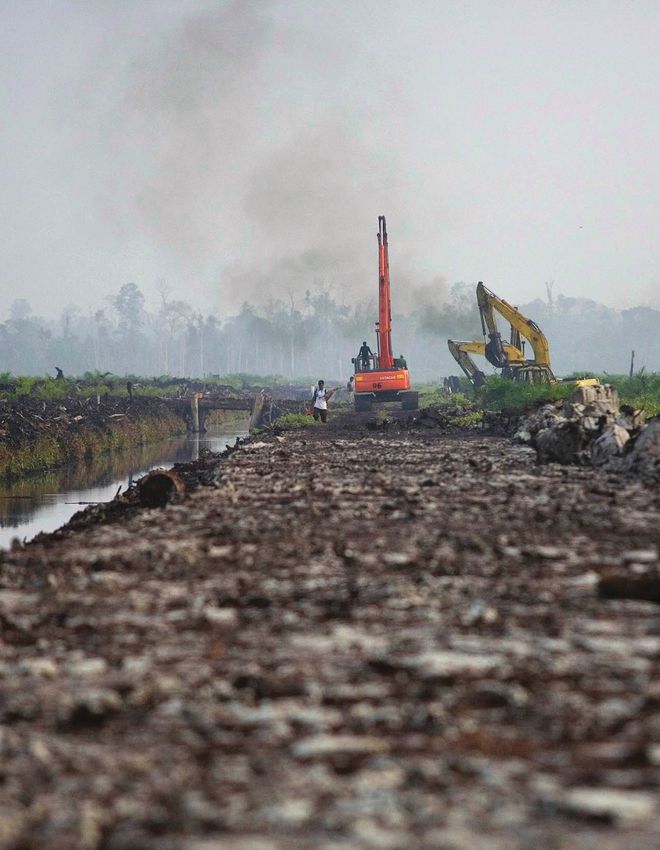
METHODOLOGY                                                           All three outlets are privately owned, though Kompas and Bisnis
                                                                      are similar in being online versions of daily newspapers. Bisnis
                                                                      caters more to a business readership and has founding ties with
The research was conducted by Ari Ulandari and Cherika                the Nasional Demokrat Party, currently a part of the governing
Hardjakusumah, who examined coal and general renewable                coalition. Tempo, one of the oldest weekly magazines in Indonesia,
energy coverage in Indonesian media outlets. The time frame of        is known for its in-depth political and investigative reports.
interest for the research was January 2019 to July 2020.              Tempo belongs to the Tempo Group, and its major shareholder
                                                                      is the Ciputra Group, with strong ties to mining. Hardjakusumah
1. Sampling                                                           searched for articles using the keywords “minerba” (coal and
Ulandari sampled 350 online articles from seven of the largest        mineral), “batu bara” (coal), “omnibus law,” and “RUU” (draft bill).
online, commercial news outlets in Indonesia. Those outlets were:
                                                                      2. Content Analysis
–   Kompas, the online version of Indonesia’s most-circulated
                                                                      For the content analysis, Climate Tracker media researchers uti-
    and oldest broadsheet.
                                                                      lized a standardized coding method developed with the researchers’
–   Tribunnews, a local newspaper chain founded by Kompas             input. Using this method, they analyzed articles according to
    Gramedia, the company that owns Kompas.                           22 parameters in five categories: Article Type, Thematic Focus,
                                                                      Broader Framing, Energy Literacy, and Sources Used.
–   Liputan6, the online version of a television news program of
    the same name, aired on SCTV.                                     3. Framing Analysis
                                                                      From all collected articles, a representative sample of 82 of 350
–   Okezone, an online-only news portal owned by MNC
                                                                      articles was then selected by Ulandari and 20 of 46 articles by
    Corporation.
                                                                      Hardjakusumah for more in-depth framing analysis, which
–   Sindonews, the online version of broadsheet Koran Sindo, a        involved asking questions about each article’s choice of sources,
    newer mainstream media outlet known for its creativity. Also      imagery, and discursive strategies. The framing analysis template
    owned by MNC Corporation.                                         can be found here.

–   detikNews, one of Indonesia’s pioneering online-only news         4. Interviews with Journalists
    portals, owned by CT Corporation.
                                                                      In total, six editors and 13 reporters were interviewed through-
                                                                      out this research. Nine of them worked for the selected outlets
–   Kumparan, an online news portal where users can contribute
                                                                      Liputan6, detikNews, Kompas, Kumparan, and Okezone, while
    articles.
                                                                      the rest worked for other outlets—Viva, Inidata, CNBC, ANTARA,
                                                                      Republika, the Jakarta Post, and Mongabay Indonesia. The inter-
Stories in the outlets’ archives were selected using the keyword
                                                                      viewees were chosen based on their experiences in energy
“batu bara” for coal and “energi terbarukan” for renewable energy.
                                                                      reporting in mainstream online news outlets in Indonesia.
Sample news outlets were chosen to represent both digital and
traditional media outlets. Digital-only publications included
detikNews, Okezone and Kumparan. Traditional media included
Kompas, Tribunnews, Sindonews and Liputan6.

Some online publications in Indonesia give free space for their
users to publish their own stories. In this research, 52 percent of
sampled stories from Kumparan were written by its users. The
users of Kumparan are both amateur contributors as well as jour-
nalists from local media.

Supplemental research carried out by Cherika Hardjakusumah
looked at the online archives of these three media outlets:

–   Kompas.
                                                                      Ari Ulandari | @Ulandari_ari
–   Tempo, the online version of Indonesia’s weekly news and
                                                                      Ari Ulandari is a writer and researcher focused on environmental
    politics magazine of the same name.
                                                                      issues. Previously, she worked as a content writer at Kumparan.
                                                                      Her master’s thesis discussed the 2002 Bali bombings. As a free-
–   Bisnis, the online version of Indonesia’s business daily.
                                                                      lance writer, she uses her skills to provide more information about
                                                                      environmental movements, especially the climate movement.

                                                                                                                                5
Introduction                                                              Discussion

In this report, I will discuss my analysis of online media in Indonesia
                                                                          Quantitative Analysis: Story Types and Prevalence
to answer the research question, “How are Indonesian media out-
lets framing the future of energy in the country?” The research was       Hard news stories dominate at 80 percent of total
conducted between June and October 2020 and covered seven of              sample
the biggest digital outlets in the country. Even though renewable
                                                                          My research began with quantitative analysis, a process by which
energy and energy transition haven’t been mainstream issues in
                                                                          I categorized articles based on type and the sections they were
national media, analyzing existing energy frames, influences, and
                                                                          published in. More than 80 percent of energy stories are pre-
practices is critical to better understanding the current and poten-
                                                                          sented as hard news in Indonesia. However, nuanced differences
tial future narratives shaping energy coverage.
                                                                          existed between renewable versus coal stories: the percentage
Indonesia is in the nascent stages of a potential energy transition.      of wire stories and op-eds about renewable energy was signifi-
Currently, fossil fuels are still king in this country; coal contrib-     cantly higher than for coal. In the sample, there was only one
uted 62.07 percent to the mix in the first quarter of 2019, while         op-ed story on coal, discussing it as an economic opportunity.
renewables, including hydro, stalled at 12.24 percent. Meanwhile,         Renewable energy op-eds were more diverse, covering economic,
the Indonesian government is trying to reach its 23 percent energy        political, and environmental angles.
mix by 2025, though policies to attract solar and wind investors
                                                                          Story classifications give clues about how much time and effort
are woefully inadequate. The only renewable energy source that
                                                                          a journalist spends writing a story. A journalist from Mongabay
has seen notable development in recent years is biofuel, which
                                                                          Indonesia, Meidella Syahni, said, “When it comes to hard news,
remains highly controversial since it is generated from palm oil.
                                                                          usually it’s based on an invitation for coverage.” However, Syahni

Figure 1. Story type of coal (A) and renewable energy (B)

Most stories are placed in economic section, discuss economic impacts

Figure 2. Story section on coal (A) and renewable energy (B)

        6
explained, “when it comes to features, it is usually more in depth,
we can frame it based on many angles.”

In other words, hard news is the simplest type of story, so it is
possible for journalists to produce many hard-news energy stories
in a relatively short time. A journalist from kompas.com, Rully
Ramli, said pressure for views might affect decisions to prioritize
hard news over other story types. Online media are “now more
of a quantity over quality,” he said. “The media will present more
things that will be more clickable” in a short amount of time.

Looking at the placement of stories in each news outlet, energy
articles were mostly placed in the business/finance/economy
section (more than 65 percent). Among the sampled publications,
three out of seven dedicated a specific subsection (within the
business or economy section) that focuses specifically on energy.        There was no significant difference in terms of type of impacts
Outlets with such a subsection, including Liputan6, Tribunnews,          being discussed in coal and renewable energy stories. Economic
and detikNews, published more energy articles.                           impacts dominated the thematic framing (almost 50 percent of
                                                                         total sample), followed by environment impacts (around 32 per-
A journalist from Mongabay Indonesia, Lusia Arumingtyas,
                                                                         cent). Social impacts made up the smallest portion (18 percent).
explained that most energy stories are placed in the business
                                                                         All the journalists interviewed who work for mainstream media
section because of energy’s close relationship with the economy.
                                                                         were assigned to the economy desk. This likely accounts for the
She gave the example of coverage of electrification in Papua, which
                                                                         economic perspective dominating their stories.
focused on the economic impacts of energy.
                                                                         Most renewable energy stories did not focus on any
“In Papua, they haven’t had electricity for a long time. Then they
                                                                         one technology
took the initiative to use village funds for microhydro develop-
ment. With electricity entering the village, there is a lifestyle that   Figure 4. Renewable energy stories by technology discussed
has changed. ... [T]hey become more [economically] productive.
They can make noken [a traditional cloth] at night.”

An editor from kompas.com, Erlangga Djumena, further noted that
energy is not the only subsection frequently lumped under “busi-
ness” or “economy.” “Everything typically goes into the money [or
economy section of the publication], except crime or environ-
mental news,” he said.

Figure 3. Thematic framing on coal (A) and Renewable energy (B)

                                                                         Surprisingly, nearly half of energy stories presented renewable
                                                                         energy as a general concept without providing an in-depth discus-
                                                                         sion of any one renewable energy source, such as solar or hydro.
                                                                         This could be because renewable energy is still relatively new or
                                                                         unfamiliar in Indonesia, with few concrete developments in recent
                                                                         years. Kompas.com editor Djumena said renewable energy “has
                                                                         limited sources [for journalists to cite/interview], because it is
                                                                         still rare...plus the sources are too technical. Not only the read-
                                                                         ers, but the journalists are also sometimes confused.” Because
                                                                         of this lack of understanding, it is difficult for journalists to dive
                                                                         deeper into a specific renewable energy source. Many of these
                                                                         planned renewable energy projects are in remote areas, which
                                                                         limits the journalistic coverage possible. Mongabay journalist
                                                                         Meidella Syahni noted, “In these regions it may be easier to find

                                                                                                                                    7
A solar power system donated by Greenpeace in the coastal
village in Aceh province, Indonesia, one of the areas hit worse by
a December 2004 tsunami. Photo by Hotli Simanjuntak/Greenpeace

      8
people who experience [renewable energy] directly, but in Jakarta        Figure 5. Prevalence of positive versus negative frames
[where most mainstream newsrooms are based], it is difficult. ...
It’s hard to ground the story.” Not surprisingly, Kumparan, which
accepts articles from contributors in provincial areas, published
nearly a fifth of all renewable energy stories that mention a spe-
cific technology in this study.

When stories do discuss one energy type in depth, they mostly
focus on either solar energy or biofuel. Indonesia has been iden-
tified as a country with high potential for solar power, though
the energy source only contributes a miniscule 24MW to the
total output. Regarding biofuel, the media have paid attention
to recent government plans to develop palm-oil biofuel through
the B-20 to B-100 program, which enforces mandatory use of
diesel containing 20 percent palm oil biofuel. Yet while biofuel
derived from palm oil is branded by industry advocates as “clean
energy,” most of the international environmental community is
in stark disagreement, and many sources within Indonesia also
disagree with this characterization because of its destruction of
carbon-absorbing forests.

Just from the quantitative analysis, therefore, it is clear that main-
stream Indonesian media largely classified energy as a business
story. For ASEAN’s largest economy, the future of energy is not
seen through an environmental lens but a predominantly eco-
nomic one—despite the fact that energy affects every aspect of
the average Indonesian’s life.

Qualitative Analysis:
Common Energy Story Frames
Before diving into the qualitative framing analysis results, I
would like to briefly discuss the breakdown of all sampled arti-
cles according to “positive” versus “negative” attitude displayed
toward an energy source. Though journalists may present diverse
viewpoints in their writing, an article categorized as “positive”        Figure 6. Specific frames for coal and renewable energy stories
ends by promoting the growth of a particular energy source, while
an article categorized as “negative” is more concerned with the
risks associated with such growth.

Out of the 174 coal stories sampled, 67.1 percent framed the energy
source positively, while 32.9 percent framed it negatively—a
remarkable breakdown given that coal received more negative
than positive coverage in all other Southeast Asian countries in
this study. Renewable energy stories in Indonesia, however, were
also less critical, with less than 2 percent of the 175 renewable
energy articles employing a negative frame of the energy sources.

After identifying all stories according to the journalists’ domi-
nant attitude, I analyzed the specific positive and negative frames
presented in these stories. To do this, I chose 82 stories from
the original sample, half focusing on coal and half focusing on
renewables, for a more in-depth qualitative framing analysis. Out
of these 82 articles, I found six commonly used frames in energy
reporting as shown in figure 6: the economic, the moral values,
the human impact, the conflict, the attribution of responsibility,
and the powerlessness frames.

                                                                                                                              9
A deep dive into the three most frequent frames for each energy          story quoted three sources: the general director of mineral and
type is shown below:                                                     coal mining, the Ministry of Energy and Mineral Resources, and
                                                                         the academic Center of Reform on Economics (CORE Indonesia).
Coal framed as indispensable for economic                                While the first two government sources agreed that an expansion
development by government and business sources                           of the coal mining industry is already certain, the CORE repre-
The six different frames for coal are used with varying degrees of       sentative argued that it would render Indonesia dependent on the
frequency. As the economic frame makes up the largest portion of         dynamic of global coal prices. This is a viewpoint typically missing
coal stories, I first conducted an in-depth analysis of this frame by    from articles that do not quote from academic or nongovernmen-
examining relevant article topics, headlines, sources quoted, and        tal organization (NGO) sources. Overall, the story pushed for a
potential biases. Articles are categorized as using the economic         progressive downscaling of the coal industry.
frame if they focus on the economic repercussions of an energy
                                                                         The next-most-discussed economic topic was the economic
policy or project on the national, local, industry, or company levels.
                                                                         benefits of coal gasification programs, which convert coal
Accordingly, 17 articles (40 percent of coal stories analyzed)           into the gas dimethyl ether. Through my analysis, I found that
describe coal mines and plants as indispensable for national             some common viewpoints presented within this frame are that
economic development. These 17 stories are distributed across            dimethyl ether will be a cheap energy source, the program will
all news outlets, although Kumparan—the only outlet that allows          reduce the national importing of liquefied petroleum gas (LPG),
user-generated content—stands out for publishing only one story          and the program is good for development of the coal business.
using the economic frame.                                                Almost two-thirds of these articles were published by Sindonews
                                                                         and Okezone, the outlets owned by MNC Corporation. Yohana
In terms of story content, articles about the economic side of           Artha Uly, a journalist of Okezone.com, wrote an article about
coal discuss the dynamics of the coal industry, such as coal trade       the government’s coal gasification strategy headlined “Reducing
volume, price, production costs, and the impacts of COVID-19.            LPG Import, Government Encourages Coal Gasification to Be a
Notably, of the 17 articles sampled, six were devoted to the topic of    Strategic Policy.” The story began with a brief introduction of the
coal gasification, which had recently gained traction in Indonesian      government’s coal gasification plan, then listed the coal compa-
media, as the government has tried to increase the value of its coal     nies that will be the main targets. Uly used only one source, the
reserves to protect the coal mining industry,                            minister of energy and mineral resources, who said gasification
Figure 7. Energy stories by number of sources                            would add value to coal and reduce importation of LPG. Hence,
                                                                         the story pushed the view that coal gasification is a priority in the
                                                                         national mining investment plan for the next five years, and the
                                                                         practice will receive enthusiastic government support.

                                                                         Furthermore, coal articles with economic frames claimed that
                                                                         Indonesia cannot move on to renewable energy easily, as there are
                                                                         still many unresolved factors that make the transition difficult and
                                                                         many parties supporting coal. A journalist from CNBC Indonesia,
                                                                         Anisatul, said, “coal will be gradually replaced by [renewable
                                                                         energy] because fossil energy has a bad impact on the environ-
                                                                         ment. However, it cannot be done immediately because of various
                                                                         complex considerations.” Norman Joshua, a journalist from the
                                                                         Jakarta Post, added that although the national energy plan aims to
                                                                         reduce coal to 23 percent of total energy mix, several studies say
                                                                         Indonesia will miss that goal. “There are major policies that sup-
                                                                         port the use of fossils in our economy. There is a regulation which
                                                                         says that coal sold in Indonesia cannot be more than $70/tonne.”
In terms of source diversity, as seen in figure 7, more than 50
percent of articles on coal used no maore than one source of             Coal blamed for causing human impacts globally
information—in the case of the economic frame, either govern-            After I analyzed coal articles with an economic frame, I focused
ment or business representative. Even when two sources were              on the human-impact frame, which, at eight stories, was the sec-
quoted, most of the time they were from similar organizations            ond-most popular. In human-impact articles, coal was framed
with similar perspectives; only 16 percent of articles quoted three      as a potential risk for humans because it produces pollutants
or more sources and offered more diverse viewpoints.                     (two articles); contributes to global warming (three articles); and
                                                                         threatens the lives of workers and people living around coal mines
One example of a coal story that did a better job of quoting diverse
                                                                         (three articles).
sources was “ESDM: PKP2B [coal mining license] to Give Extension
to Coal Mining Businessman” by Tribunnews’ Reynas Abdila. The

         10
A technician inspects solar panels on the roof of Istiqlal Grand
Mosque in Jakarta, Indonesia. Photo by Yorri/Greenpeace
11Excavators beside a peatland drainage canal cut through recently
deforested and burnt peatland in Riau province, Indonesia. Photo by
Natalie Behring/Greenpeace
12Notably, the two stories by detikNews that framed coal as However, the six stories that used the moral values frame all
polluting were both international wire stories—in other words, stopped short of advocating for an energy transition away from
they did not specifically examine coal plants and coal mining’s coal, instead calling for solutions such as using technology and
impacts on the local environment in Indonesia. An article regulation to push for “clean” coal—defined as coal with higher
headlined “After Lockdown, the Air in China Starts to Be Polluted carbon content burned with supercritical technology. A story
Again” in detikNews was directly translated from the Guardian. from Okezone, while citing Indonesia’s commitment to the Paris
An analyst for the independent Centre for Research on Energy Agreement, stated it was possible to make coal “clean.” The min-
and Clean Air was quoted as saying, “The rapid return to air ister of energy and mineral resources, Arifin Tasrif, was quoted
pollution and the rate of coal consumption across China is an as saying technology like advanced ultra-supercritical and inte-
early warning of what an industry-led increase in pollution will grated gasification combined cycle is “proof that we comply with
look like.” Research from the very same organization about coal’s the Paris Agreement in creating a clean environment.”
contribution to Indonesia air quality, however, was not cited.
Though the story included a video about dark smog in Jakarta, Though I was not able to obtain an interview with the article’s
it did not specifically mention coal as a potential cause. author, I brought up this frame with an editor from Okezone, Dani
Jumadil Akhir, who explained the publication’s viewpoint. “Not
Similarly, coal was framed as a contributor to the global warming all coal is environmentally unfriendly,” Akhir said. “There is coal
crisis in another story. Syanti Mustika, a journalist from detikNews, which is higher in carbon content and good for the environment.
wrote “Let’s Learn More about Global Warming,” a vague story that [High-quality coal] does not disturb the community in general.”
presented climate science based on information from the website Hence, Akhir believes Indonesia is only responsible for using low-
of the National Aeronautics and Space Administration and the er-emissions coal, not phasing out coal altogether.
Intergovernmental Panel on Climate Change. The story briefly
pointed to fossil fuel, including coal, as a cause of global warming The moral responsibility frame is not only used to describe gov-
but did not connect the issue to Indonesia’s coal industry. ernment commitments but private sector commitments as well.
Maulandy Rizki Bayu Kencana from Liputan6 wrote an article
The only stories that directly presented coal’s impacts on about “green financing” that discussed how Indonesia’s largest
Indonesians’ life were those about coal mining, specifically “ille- bank, Bank Mandiri, has a responsibility to tighten loan require-
gal” coal mining. Within the framing analysis sample, one article ments for palm oil and coal mining companies. The president
by a contributor of Kompas reporting from the coal-mining hot director of the bank was quoted as saying the tight environmen-
spot Kalimantan tackled this issue, under the headline “Illegal tal requirements for financing will make people more responsible
Coal Mining in Samboja Kutai Kartanegara Water Dam Threatens when starting mining and palm oil businesses. “We have sent a
960 Lives.” The story began with a direct quote from the head team to learn from other countries about how to slowly move
of the River Area Authority of Kalimantan, who emphasized that Indonesia towards green financing,” he concluded. Once again,
“the illegal coal mining is just 15 meters away from the upstream the moral value of social responsibility was used to introduce
of a big dam.” A bird’s-eye view of coal mining in Kalimantan regulations rather than a reduction to coal mining activities.
helped readers imagine the current situation there. The under-
lying assumption of this story was that illegal activities can break The two stories above showed that even though some articles
the dam barrier and cause a loss of 960 lives in the area—an frame emission reduction and environmental protection as social
environmental disaster. The differentiation between “legal” and responsibilities, they only call for tighter regulation rather than a
“illegal” coal mining, however, shifted attribution of blame to coal phaseout—in direct opposition to the Paris Agreement, which
the illegality of some mining projects rather than the inherent some of the journalists cite.
dangers of coal mining itself.
Media outlets’ ties to coal mining could influence
Emissions reduction framed as a responsibility journalists’ reporting
toward international community To sum up the section on coal article frames, it is reasonable to
The third-most-used frame in coal reporting was the moral values say that the media largely portrayed coal as a key contributor
frame, which raised the universal value of responsibility to dis- to Indonesia’s energy and economic future. No article explicitly
cuss emissions reduction. I placed six coal articles under this called for a coal phaseout, only going so far as to call for regula-
category because they mentioned the word “responsibility” or tions and “cleaner” coal. Examining media ownership in Indonesia
lofty concepts such as Indonesia’s commitment to the interna- might provide insight into these narratives.
tional community—often without discussing the practical benefits
Three of the seven news outlets examined—Sindonews, Okezone,
reducing emissions would have on local society and environment.
and detikNews—are owned by conglomerates with a stake in coal
Four of these six stories emphasized the Intergovernmental Panel
mining. Sindonews and Okezone are under MNC Group, which
on Climate Change’s 1.5 degree report, the Paris Agreement, and
owns more than 50 percent of Nuansacipta Coal Investment and
low-emission examples from other countries.
Bhakti Coal Resources, while detikNews is owned by CT Corp,
whose subsidiary CT Global Resources is, according to its website,
13“dedicated for the existing plantation businesses, as well as future Several journalists from other outlets spoke more explicitly
expansions in energy, mining.” Together, these three publica- about the influence of ownership and ad sources on editorial
tions are responsible for half of the articles that framed coal as independence in Indonesia. Meidella Syahni, a journalist of
indispensable for Indonesia’s economy and four of six articles Mongabay Indonesia who used to work in mainstream media,
promoting coal gasification. DetikNews published two articles said, “Advertorial collaborations and other [financial ties]
that connected coal with air pollution and global warming; how- affect any issue reported, including energy issues. For example,
ever, both were wire stories and contained no details specific on the issue of coal, media outlets that expect revenue from
to Indonesia. As discussed above, Okezone published an article advertising will make space for coal companies to post adver-
suggesting that with the latest coal technology, Indonesia can still tisements, advertorials, and all kinds of things.” According to
develop coal while meeting Paris Agreement goals. Syahni, reporters themselves may not be aware of such influence
before the article gets published. “No matter how independent
No journalists interviewed from these three outlets directly the reporter is…their articles [about coal] may be cut off or not
acknowledged media ties to the energy sector as a factor in published at all,” she said.
choosing frames for energy stories. An editor from detikNews
did acknowledge that “cooperation clearly exists” between energy Deasy Indriwati from online outlet Inidata shared the same
companies and journalists, but said this “did not have much opinion in an email: “LOTS of business interests [in Indonesian
influence on the writing process.” He described a “confirmation media]; this has been a problem from the stone age to the pres-
process” whereby journalists send other parties the text of the ent.” To present a good energy story, she said, a journalist must
articles written before publishing to “fact check.” have “guts” to be able to challenge the influence and power of the
energy sector. In light of the financial interests that mainstream
A man takes care of his horses on a grass field near a wind turbine
farm in Jeneponto, South Sulawesi province, Indonesia. Photo by
Muchtamir/Greenpeace
14papers have in the coal sector, a journalist may also need to seek Some articles framed Indonesia’s need to reduce emissions and
“sufficient funds” from independent sources to carry out such its responsibility to international agreements and international
reporting, she continued. bodies as a moral imperative. Resya Firmansyah wrote a story for
Kumparan headlined “Willing to Advance Renewable Energy Usage
Interestingly, a journalist interviewed who stated he or she experi- in Indonesia, PLN [National Electricity Company] Works Together
enced no outside influence worked not for a commercial outlet but With CEIA [Clean Energy Investment Accelerator].” This story,
for ANTARA—Indonesia’s state-owned news agency. This journal- quoting a business representative (vice president of PLN) and an
ist said ANTARA “continues to prioritize independence in seeking academic from the World Resources Institute, introduced the
information...there is no coercion from other parties...we are free. view that PLN’s commitment to reducing carbon emissions should
The important thing is that it is in accordance with journalistic mean supporting renewable energy investments in Indonesia.
ethics.” This person also said energy is a less sensitive issue than
other, more political matters. Renewables framed as good for the economy
In total, two journalists with experience in mainstream media Media outlets did not just entertain lofty ideals about renewables,
said they believed pressure from newsroom ownership and ad however; they also reported on more bread-and-butter issues
buyers could heavily sway article frames. The only journalist who associated with an energy transition’s economic impacts. In fact,
expressed a different opinion worked for a noncommercial outlet. the second-most-prevalent frame I found for renewable stories
was the economic frame, which, at 12 stories, made up 40 per-
Renewable energy development framed as a moral cent of renewable energy reporting. When I examined the article
imperative due to environmental and security concerns headlines, quotes, and reporting language, five main narratives
emerged from the 12 stories: renewable energy can be a source of
Next, I analyzed the three most popular article frames used in
national and regional income (four stories), attract foreign invest-
renewable energy stories: moral values, economic, and attribution
ment (three stories), provide clean jobs (two stories), add value
of responsibility. As before, I categorized article frames according
to agriculture products (two stories about the biofuel B-20-B-
to the dominant viewpoint throughout and proceeded with a deep
100 program), and support business development (one story). As
analysis of headlines, quotes, quote placements, and language use.
before, Kumparan stood out for publishing five of the 12 stories—
Though Indonesian outlets do not discuss the need to phase out the most of any outlet.
coal, they tend to frame renewable development as necessary to
A reason for this might be that Kumparan republishes articles from
replace other fossil fuels such as oil and gas, which Indonesia must
local outlets in regions with more vibrant renewable energy devel-
import. Many of these articles’ frames fall under the “moral values”
opment. A story headlined “Aceh Increases Renewable Energy
category for calling on readers’ innate sense of social responsi-
[Contribution], Here Are Some of the Sources” was published by
bility and patriotism. Specifically, renewable development was
Aceh Kini, a local online media that used Kumparan as a platform
described as a moral imperative in 16 stories—47 percent of total
to deliver its stories to a national audience. This story quoted
renewable energy stories examined. A prevalent argument was
Aceh’s governor as saying the company is committed to making
that renewable energy can help Indonesia achieve an energy-in-
renewables 12.25 percent of the region’s energy mix by 2022
dependent future, so it should, therefore, take up a larger portion
because of potential economic benefits for the region.
of the country’s energy output. Kumparan and Okezone stood out
as the outlets that published the most stories with this frame, Renewable energy, as a new technology, was also framed as attrac-
combining for 10 of 16 stories. Notably, on Kumparan, which allows tive to foreign investors. Two of the three articles that used this
user-generated content, two of the stories with this frame were frame discussed the Cirata Floating Solar Power Plant Project,
written by the site’s users. hailed as the biggest floating solar plant in Southeast Asia. One
story from Okezone cited information from the Ministry of Energy
Seven stories, such as this one from Okezone, quoted from govern-
and Mineral Resources to show that the selling price of electricity
ment sources who said that even though renewable development
and market share of a company involved in the project were prof-
is challenging, it is imperative for Indonesia. In the Okezone story,
itable. The second story from Detik specifically mentioned that
the director of electrification programs in the Ministry of Energy
Cirata received foreign investment from the United Arab Emirates,
and Mineral Resources stated, “In the future, there are many chal-
suggesting that other countries view solar as a cheaper and more
lenges that we face in developing renewables. [But] renewables
profitable investment than coal.
are not just clean; they help us head towards energy security
by utilizing existing resources in our country, not imports.” The To sum up, when using an economic frame, journalists empha-
director then cited government plans to install solar panels sized that renewable energy could be a source of income, attract
in former coal-producing areas as proof of its commitment to foreign investors, provide clean jobs, add value to Indonesian
increasing renewables to 23 percent of the national energy mix. products, and support business development. These five narra-
No external source, however, is cited to verify or provide comment tives contribute to future renewable energy growth seen as a
on those plans. positive development in Indonesia. However, noticeably absent
15were articles that framed renewable energy as baseload power, supplement the coal industry and ensure energy security as well
and none framed it as a coal replacement. as bring economic benefits. Though the narrative was positive,
absent were articles that framed renewables as baseload energy. A
Renewable energy policies require further support small percentage of stories discussed remaining roadblocks, such
from government and the public as unsupportive policies and lack of public awareness.
The first two renewable energy frames analyzed overwhelmingly
After completing the framing analysis, I then moved on to a quali-
painted renewables in an optimistic light; the third-most-popular
tative examination of how well energy stories were written, using
renewable energy frame, attribution of responsibility, brought
three key parameters: article complexity, journalists’ energy lit-
up more pragmatic issues such as current roadblocks to further
eracy, and the editorial process.
renewable energy development. In my analysis, I found that four
stories, or 12 percent of sample renewable energy stories, called
Qualitative Analysis: Article Quality
on the government and the public to support more renewable
development via policy changes. In these articles, criticisms of Journalists write simple stories, see energy as a
government policies or lack of public awareness were commonly difficult topic to broach
found, sometimes accompanied by potential solutions. All the sto-
Figure 8. Complexity of the stories on coal (A) and renewable
ries quoted from academics at universities or NGOs, sometimes
energy (B)
as the only source.
Nanang Wijayanto, a journalist of Sindonews, produced a story
with the headline “The Rules by ESDM [Ministry of Energy and
Mineral Resources] on Renewable Energy Seems Inconsistent,
Investors Are Confused.” The story used a quote from the director
of the International Geothermal Association as he argued that
current regulations on renewable energy are unstable, regulations
confuse potential investors, and a law about renewable energy
should be a priority for parliament. The story claimed that change-
able regulation is considered common in Indonesia, but its impact
on renewable energy investment is significant.
Articles also framed renewable energy development as needing
support from the general public. Hanif Hawari, a journalist of
detikNews, wrote an article headlined “Nicholas Saputra’s Movie
Helps Campaigning Environmental Issues.” A researcher from the
think tank Institute for Essential Services Reform was quoted in
this article as saying she believes it is important for the think
tank to communicate its findings on renewables to the public. The
implication is that it is important to raise public awareness about
renewable energy and related scientific reports and that there
could be a benefit to academics/activists working together with
the creative industry to disseminate scientific findings.
A story published by Liputan6, on the other hand, is unique in
crediting countries besides Indonesia with renewable develop-
ment responsibility. Misleadingly headlined “RE Growth Rate
in Indonesia Is the Highest in the World,” the story highlighted
Indonesia’s high biofuel growth rate under the mandatory B-20
program and framed it as a pillar of renewable energy devel-
opment—even though biofuel generated from palm oil is not As seen in figure 8, most energy stories, being hard news arti-
necessarily carbon neutral, and Indonesia’s installed solar and cles, were written in a simple way, and they had fewer than 500
wind capacity remain among the lowest in the region. Neither of words. Editor and senior energy journalist Intan from Republika
these facts was mentioned in the article, which ended with a call attributed this to the peculiar nature of online media, which
for the global community to install more carbon neutrality policies require extreme brevity. “In online outlets, we can’t write lengthy
“like Indonesia has done.” articles because that affects page views and clicks. Not everyone
wants to read a long story...and page views will determine reve-
In general, a framing analysis of renewable energy stories revealed
nue.” Meanwhile, a journalist from kompas.com, Rully Ramli, said
that Indonesian media promoted further renewable growth to
16her energy articles need to be “user friendly. ... Something A CASE STUDY OF COVERAGE
that can be read by the public, not too focused on tech-
nical things.” ON THE OMNIBUS AND MINING
Regarding energy literacy, most of the journalists inter- LAWS IN INDONESIA
viewed in this research confessed it was not easy to write
energy stories, especially for junior energy journalists in
their first year or two on the job. A journalist from ANTARA, By Cherika Hardjakusumah | Climate
Afut Syafril Nursyirwan, said, “Energy is a sector that is
Tracker Fellow
very rare to rotate because not many people can master
it and not many want it.” Nursyirwan, a journalist for four On November 2, 2020, Indonesian President Joko Widodo signed
years, has not been rotated because there is no suitable into law an omnibus bill that contains a set of deregulation mea-
replacement. Similarly, a journalist from kumparan.com, sures across all sectors to boost investment. The discussion about
Ema, said, “Energy is complicated...dizzy...things like writ- the bill has been ongoing since 2019, and it has sparked public
ing units per barrel or units for gas” can be confusing. Intan debate for political and environmental/social reasons.
from Republika added that in the first year, he struggled
The law shifts the authority of permit issuance (for natural
to understand the terms and units of energy.
resources exploitation such as in mining and forestry) from local
Editorial process: Flexible relationship between governments to the central government. It represents a signif-
icant setback from decentralization efforts that the previous
reporters and their editors
administration had been working on. The law also softens the
Almost all the journalists interviewed said reporters can consequences for companies that violate environmental rules
work without much editorial oversight. As an editor from from criminal to administrative sanction.
detikNews said:
In addition, on May 20, 2020 parliament passed a revised version of
“Journalists get a reporting assignment agenda; upon a mineral and coal mining bill that is also controversial because of
arrival at the event location, journalists provide initial the lack of public consultation in the process. My research focused
information such as who are the speakers present at the on articles published on online media about these two laws.
activities covered. From there, the editor helps provide
direction to the reporter, including providing additional Trend 1: Most common framing
questions. In the process of editing the news, the editor
My analysis of news articles published by three media outlets—
will ask the reporter whether the information submitted
Kompas, Tempo, and Bisnis—show at least five common frames
is correct. ... At this stage, there is generally a short dis-
used when writing about the omnibus and mining laws:
cussion between reporters and editors to determine the
title of the article to be broadcast.” The omnibus law and the revised mineral and coal law were framed
in 16 articles as policies that only benefit big corporations, not the
Most of the interviewees said reporters and editors worked
people. With the mineral and coal law specifically, this framing
collaboratively, but reporters were given freedom in pre-
accurately reflects the reality that eight large coal companies will
senting energy stories. Kompas.com editor Djumena said
highly benefit from a new provision that allows automatic permit
reporters “received assignments from editors, but they
extensions up to 20 years, since these companies have permits
were not prohibited from covering according to personal
that were previously set to expire within five years.
preferences.” The Jakarta Post’s Norman Joshua provided
further insight: “For small media, there are journalists who Nine articles focused on parliament rushing the process of passing
directly post news without going through the editor. For the mineral and coal law, and the public, represented by civil soci-
medium media, reporters only make pitches, one to two ety organizations, questioned whether this decision had followed
sentences, and the editor only needs to say yes or no. If it the proper rules and procedures.
is a bigger media, they can discuss the angles and what the
source persons are before making the stories.” Eight articles focused on parliament’s failure to involve civil
society or even government officials with relevant experience
To conclude, my study of article quality found that most in the consultancy of the two draft bills. In a Bisnis article from
journalists described a supportive, if slightly hands-off, November 2019, it was mentioned that the Ministry of Environment
relationship between editors and reporters. This would and Forestry was not involved in the consultation because it was
presumably be suitable for journalists with many years’ not a partner of parliament’s Commission VII. Unfortunately, the
experience in energy reporting, but junior journalists writer of this article did not respond to my interview request to
frequently found the topic hard to broach. More than 70 further explain this.
percent of stories ended up being simple hard news articles
with few nuances.
17Seven articles focused on parliament choosing to discuss con- Of the nongovernmental actors, Jatam (the mining advocacy
troversial bills when the public’s attention was distracted by the network), which is more activist-centric, was the most quoted,
COVID-19 pandemic. If this was the plan it backfired heavily, as although other advocacy organizations were quoted, such as
both the omnibus and mining law bills attracted media attention Publish What You Pay (international advocacy) and Indonesia
and have been heavily criticized by civil society. Corruption Watch, as were environmental NGOs like Walhi,
Greenpeace, and others.
The shift of authority from local governments to the central
government was framed in four articles as a setback to decen- Articles included limited statements from companies and others in
tralization efforts and possibly a threat to democracy. the private sector. In an interview, Aris Prasetyo of Kompas con-
firmed that unlike government officials from the ministries, who
The two laws’ implications for the country’s energy future and are generally open for interviews, only a few companies are open
environment were not used as the main framing in any of these to doing media interviews. Since mining and coal data are com-
outlets’ stories. mercially sensitive, it is also difficult to obtain data for research
purposes. In addition, an energy journalist from a financial tabloid
Trend 2: Elements that contribute to framing underscored the difficulty in getting sources from parliament.
Due to the controversial nature of the bills, it was common to find “While reporting about coal law, it was very hard to [get] the par-
provocative headlines for the articles. For example: liament’s clarification,” he added.
– “Activists Consider the New Coal and Mineral Law as a Tempo magazine, however, did interview officials at two coal
Legalized Crime” (Tempo, June 1, 2020) companies linked to the coal mining contract issue. One of these
companies is owned by the family of the current minister of state-
– “Coal and Mineral Law Passed, YLBHI Viewed the Parliament owned enterprise. The writer put this information at the end of
Betrayed Constitution” (Kompas, May 14, 2020) an article headlined “Who Benefited from the Revised Coal and
Mineral Law” (Tempo, May 23, 2020), calling into question the
– “The Articles on the Regional Authorities Have Been
political and business interests behind the proposed law.
Removed from the Coal and Mineral Law, Jatam Viewed It
Leads to Corruption in the Central Government” (Kompas,
Trend 3: Quality
May 12, 2020)
Articles analyzed were narrowly focused on the omnibus and
mining laws and did not provide in-depth definitions of energy
Most of the sample articles have an equal balance of quoting
terms or concepts. Both online and print media outlets fre-
government and nongovernmental actors’ statements. However,
quently used photos to support the articles. Kompas has a
there were no statements from local/regional actors, even
strong infographic team, and decisions about what visuals to
though the law will clearly affect authorities at these levels.
Protesters rally against Indonesia’s deregulation, or the omnibus
law, in Padang, West Sumatra province, Indonesia, in October 2020.
Image courtesy of Rhmtdns/Wikimedia Commons, Share Alike 4.0
International license
18use are made in editorial meetings. The types of infographics also influences the depth and quality of the articles. For example,
it published were, for example, key dates and chronological in “Who Benefited from the Revised Coal and Mineral Law,” the
events of the bills, key changes in the law, and coal production writer connected chronological details of the law’s revision and
visuals and graphs. provided the relevant context. Moreover, the article also published
a letter issued and circulated in parliament (which was not usually
In terms of article complexity, online media outlets consistently available publicly) that provided details of companies’ contracts
had less depth in their analysis and provided more hard news that are expiring soon.
on events linked to the laws, including coverage of parliament
assembly sessions, people’s assembly sessions, and webinars. A In Kompas, on the other hand, “a journalist will be assigned to
senior journalist explained that this is the nature of Indonesia’s one desk and expected to remain there for years” said Aris of
online media, where quantity is prioritized over quality. “They Kompas. This system fosters a journalist’s expertise in writing
have to publish as much content as possible, and less concern about an issue. However, it provides less room for journalists to
about analysis,” this journalist said. Daily print outlets have slightly be exposed to other issues that may have some link to energy
more depth in their analyses. Yet when those daily print outlets matters. Besides regular editorial meetings, Aris and Ichwan
(like Kompas) offer an e-paper version, the online version is only Susanto did not mention any other coordinating mechanisms to
accessible with a paid subscription. align messages or framing for articles that discuss similar issues
(e.g., coal) in different sections (e.g., economics or humanity). So,
In an interview, Retno Sulistyawati of Tempo confirmed that daily for example, an article written by Susanto, “Celah Regulasi Picu
journalists who are assigned to work in certain ministries have Lubang Tambang,” or “Regulatory Loopholes Trigger Ex-Mining
good access to official sources in press conferences or for door- Pits Issue,” which discussed reclamation policy, only mentioned
step interviews. However, due to the time sensitivity of the work, the coal and omnibus laws briefly, despite their strong links to
daily journalists have less opportunity to do in-depth research, reclamation policy. This suggests that better collaboration with
unlike those at weekly magazines. Retno said that as a journalist journalists from other desks might help make the reports richer
working for a weekly magazine, she can invest time in a one-on- in terms of data and analysis.
one setting with sources to get more insights.
Concluding Remarks
Trend 4: Biases/interests/challenges
The three media outlets researched provided a great deal of cov-
A senior journalist from an international media outlet based in erage of the coal and mineral law and omnibus law. The peak
Indonesia said in an interview that “advertisement is usually a of coverage was on May 20, 2020, coinciding with a parliament
major cause for a bias in an article. Companies that pay to adver- plenary session, and these articles mainly covered business and
tise in the media may get less criticism. The second factor that political aspects of these laws. Minor elements of social-environ-
leads to bias is media ownership.” However, in this research, none mental impacts were referenced, but none discussed the scientific
of the journalists interviewed acknowledged coal-business ties to aspects of higher carbon emissions in concrete terms.
owners of the media outlets they worked for.
The third factor that may lead to bias is political views. For
example, Kompas has long been known for its nationalistic or
inward-looking approach (not proliberalsim/proforeign) and is
keen to maintain neutrality in its articles, whereas Tempo is more
critical, investigative, and direct in its approach. In 1994, the mag-
azine was banned by former president Suharto for being overly
critical of the government. Bisnis tends to be more proinvestment
and business oriented.
Four of the journalists interviewed have more than 10 years’
Cherika Hardjakusumah
experience, and one is also a section editor. Another journalist
interviewed is an energy reporter with two years’ experience Cherika Hardjakusumah is a research and communication special-
working at a financial tabloid. At Tempo, all journalists go through ist with over five years of experience in multifaceted career roles
rigorous training and gain experience working for print newspa- in Europe and Asia. She is passionate about climate and energy
per and online edition for years. Once they reach a certain level issues and has worked on various research projects related to
of seniority, they can join the magazine team. At the magazine, palm oil, biofuels, and solar energy. Hardjakusumah is keen to
these senior journalists rotate from one desk to another. All of learn more about energy access and low-carbon economic devel-
them are expected to be at ease writing about different topics. opment, which she finds highly relevant to her home country,
Indonesia. When she is not working on energy issues, she enjoys
The advantage of this system is that it allows journalists to con- discussing cultural interactions, diversity, and inclusion on her
nect the dots using different lenses while reporting. This structure podcast channel.
19You can also read


