Code of Conduct 2018 - JPMorgan Chase
←
→
Page content transcription
If your browser does not render page correctly, please read the page content below

Code of Conduct 2018

Code of Conduct — It Begins with Me
JPMorgan Chase stands committed to maintaining the highest levels of
integrity, fairness and responsibility. Our Code of Conduct guides us
each day as we strive to meet our obligations to all our constituents –
customers, employees, the Board, shareholders, regulators – and to
ourselves.

We recognize that in business, as in every other arena, ethical behavior
does not just happen. It needs to be cultivated and repeatedly affirmed
throughout the organization. Our Code of Conduct lays out the firm’s
expectations for each employee, providing the necessary information
and resources to conduct business ethically.

It is your responsibility to fully understand and comply with our Code.
It’s how we do business with the highest levels of transparency and
accountability – and how JPMorgan Chase continues to be a company
of which we can all be proud.

Remember, each of us has a duty to speak up whenever we see or
suspect illegal or unethical activity. If something doesn’t look or feel
right to you, raise the issue. Don’t ever hesitate to report a possible
violation or concern.

A company is only as good as its people, and our people are the best.
Our integrity begins with you.

Jamie Dimon
June 2018
Our Code Principles: A Shared Responsibility
At JPMorgan Chase & Co. (“JPMC”), preserving our strong ethical culture is a top priority; we must continue to embed the values of integrity, fairness,
and accountability in all that we do. We all share a responsibility to build on this proud heritage, and to maintain exceptional relationships with our
customers, shareholders, each other, and the neighborhoods and communities in which we operate. We must never underestimate the importance
of our conduct, and always take personal responsibility for our actions — it is how we do business. The Code of Conduct is our shared commitment to
operate with the highest level of integrity and ethical conduct.

                              Our Code Principles: A Shared Responsibility to...                                                       Your Code Resources
Our Heritage
                                                                                                                            • Code Reporting Hotline
➢ Know and comply with the Code and speak up if you have concerns or suspect violations
                                                                                                                            • Code Resource Page
➢ Comply with applicable laws, regulations and policies wherever you operate in the world
➢ Protect confidential information — trust is essential to our business success                                             • Code Specialist
➢ Practice sound ethical decision-making, and take actions that will preserve an ethical workplace                          • LOB/Regional/Corporate Function
                                                                                                                              Compliance Officer
Our Customers and the Marketplace
                                                                                                                            • Human Resources/Access HR
➢ Ensure ethical business practices — always deal fairly and in good faith and never take unfair advantage of anyone
  through manipulation, concealment or abuse of privileged information
                                                                                                                                       Your Responsibilities
➢ Never buy, sell, or tip others off while in possession of material, non-public information relating to those securities
➢ Personal investment activities should never conflict with JPMC or client interests                                        • Follow the letter and spirit of the Code and
➢ Never offer, give, solicit or receive anything of value if it is intended to give, or appears to give, an improper         related policies
  business advantage or benefit
                                                                                                                            • Speak up! If you are aware of or suspect
                                                                                                                             violations of the Code, Company policy,
Our Company and Shareholders                                                                                                 law or regulation, you are obligated
➢ Protect all Company assets — our physical assets, information, intellectual property and business relationships            to promptly report the violation through
➢ Avoid personal conflicts of interest, inside and outside of the workplace                                                  the Code Reporting Hotline or another
➢ Communicate responsibly — seek authorization to speak on behalf of the Company, and use good judgment on                   appropriate resource
  social media                                                                                                              • Annually train and affirm to the
                                                                                                                             Code of Conduct
Each Other
➢ Treat others with dignity, and respect the diversity of cultures, backgrounds and experiences                              Access the Code and Related Policies
➢ Do your part to promote a safe workplace, and report any activity that can pose a threat to others
                                                                                                                            Remember, you may be subject to more
Our Neighborhoods and Communities                                                                                           restrictive LOB/Regional/Corporate
                                                                                                                            Function policies – to access supplemental
➢ Recognize your responsibility as a global citizen — give back to the communities where you work and live,
                                                                                                                            policies/ procedures. Go to:
  and do your part to reduce the environmental impact of our operations
➢ Make sure political activities and charitable contributions comply with laws, regulations and applicable JPMC policies    • Code of Conduct Intranet Site
                                                                                                                            • Code of Ethics for Finance Professionals
                                                                                                                            • Firmwide Policy Portal
Table of Contents
A Shared Responsibility to...

1.0 Our Heritage                                                      1           3.3.4 Gifts and Entertainment                         26
        1.1 Personal Integrity                                        2           3.4 Acting on Behalf of Our Company                   28
        1.2 Ethical Decision-making                                   3           3.5 Communicating Responsibly                         28
        1.2.1 Manager Responsibilities                                5           3.5.1 Use of Social Media and Other Online Activity   29
        1.3 Compliance with the Law                                   5           3.5.2 Speaking on Behalf of the Company               29
        1.4 Dealing with Confidential Information                     5           3.5.3 Other Types of Communication                    29
        1.5 Sharing Concerns and Reporting Violations                 7           3.6 Leaving JPMorgan Chase                            30
        1.5.1 Non-retaliation Statement                               9
        1.6 Administration of the Code of Conduct                     9    4.0 Each Other                                               32
                                                                                  4.1 Diversity                                         33
2.0 Our Customers and the Marketplace                                 11          4.2 A Safe Workplace                                  34
        2.1 Insider Trading and Information Barriers                  12          4.3 Alcohol-free and Drug-free Workplace              34
        2.2 Personal Investment Activities                            13
        2.3 Ethical Business Practices                                15   5.0 Our Neighborhoods and Communities                        36
        2.3.1 Anti-money Laundering                                   16           5.1 Political Activities                             37
        2.3.2 Economic Sanctions Regulations and Anti-boycott Rules   16           5.2 Charitable Contributions                         38
        2.3.3 Competition, Antitrust and Tying                        17           5.3 Human Rights                                     39
        2.3.4 Anti-bribery, Anti-Corruption                           17           5.4 Corporate Responsibility                         39
        2.3.5 Taxes                                                   18           5.5 Environmental Stewardship                        39
        2.3.6 Other Obligations of Some Employees                     18
                                                                           Closing Thoughts                                             41
3.0 Our Company and Shareholders                                      20
        3.1 Protecting JPMorgan Chase’s Assets and Using                   Need to Report a Potential Violation or Other Concern?       42
            Them Appropriately                                        21
        3.2 Maintaining Accurate Records                              22   Glossary                                                     43
        3.3 Avoiding Conflicts                                        23
        3.3.1 Personal Relationships                                  23
        3.3.2 Personal Finances                                       24
        3.3.3 Outside Activities                                      25
1.0 A Shared Responsibility to Our Heritage

   Our people, our services and our enduring commitment
   to integrity have made us one of the largest and most
   respected financial institutions in the world. We all share
   responsibility for preserving and building on this proud
   heritage. A strong reputation can’t be bought or sold
   and should never be compromised. Code of Conduct —
   It begins with you.

                                                                 1
1.1 Personal Integrity                                                         Your Code Specialist is an important resource.

   Thousands of employees from our many predecessor institutions have          Every employee has at least one Code Specialist who is a
   worked to build our success — now, we are responsible for preserving        representative from the Compliance Department. Your Code
   it. Our Code of Conduct is an important tool in that respect. It lays out   Specialist can answer questions about the Code, Company policies
   the expectations the Company has for each of us and provides the            and procedures and can explain how the rules apply in a specific
   information and the resources we need to conduct business ethically         situation. Contact the Code Specialist assigned to your region,
   and in compliance with the law everywhere we operate. Our Code              Line of Business or Corporate Function group for help with any
   helps to ensure that the actions we take today will preserve this great     Code-related matter or ethical issue. You can also reach out for
   legacy for the future.                                                      assistance to other resources at the Company including your
                                                                               Compliance Officer or Human Resources.
   The Code applies to all of us.

   All who work for, or on behalf of, JPMorgan Chase have a duty to
   demonstrate the highest standards of business conduct. Our Code
   applies to employees and directors of JPMorgan Chase & Co. and its
   direct and indirect subsidiaries (the Code will refer to these companies
   as “our Company” or “JPMorgan Chase”). In general, consultants,                     Your Code Specialist can answer
   agents and contract or temporary workers are expected to comply                     questions about the Code, Company
   with the underlying principles of the Code as well as the Suppliers’                policies and procedures and can
   Code of Conduct.
                                                                                       explain how the rules apply in a
   Throughout the Code, you’ll find information, links to definitions of               specific situation.
   key terms, Q&A’s and links to some related policies to guide you in
   making ethical decisions. What you won’t find is the answer to every
   question you may face at work or every related policy. In the absence
   of a specific policy, you have a responsibility to use good judgment,
   comply with the spirit of the Code and seek help from your Code
   Specialist if you have any questions or concerns.

                                                                                                                                                  2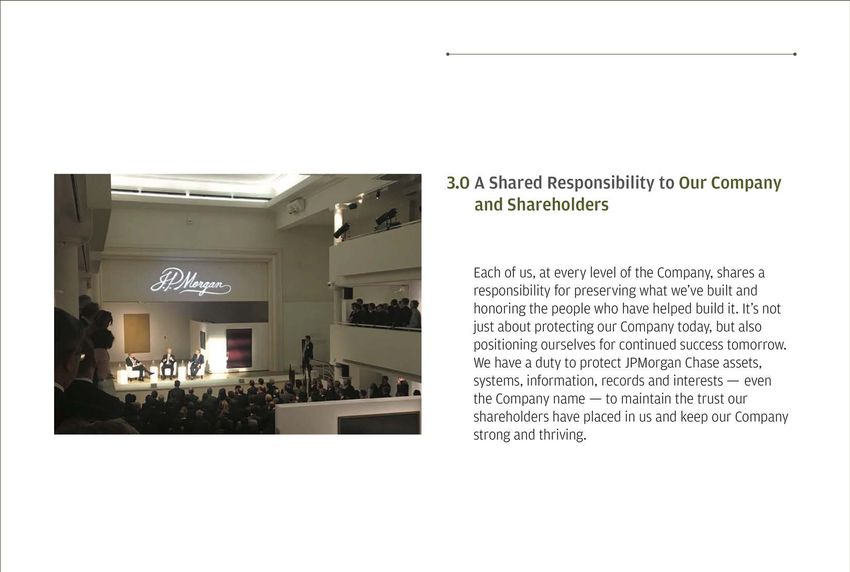
1.2 Ethical Decision-making
   Each of us has a responsibility to uphold the Code; in fact, compliance
   with the Code is a term and condition of employment with the
   Company. This means you must know the Code, you must do the
   right thing when it comes to your own conduct, and you must speak
   up about conduct by others that might violate our Code or Company
   policies. It also means you must cooperate as directed by the
   Company with any investigation, inquiry, examination or litigation
   related to the Company’s business.

   Prior to joining the Company, new hires are required to provide an
   affirmation that they have read and understand the Code, will comply
   with it and will report suspected violations as required by the Code.
   New hires must complete Code training shortly after they begin work.
   All employees are required to complete additional Code training and
   provide a new affirmation periodically, usually annually. Compliance
   with these requirements is a condition of employment.

   No business unit or location in the Company can adopt policies that
   are less restrictive than the Code, but some do have rules that are
   more restrictive. If your business unit has more restrictive policies,
   you must know and follow those policies.

   We will take actions necessary to enforce our Code.

   We may take action against employees who violate our Code, up to
   and including termination of employment. Where appropriate we may
   also seek monetary damages and/or a court order prohibiting the
   employee from continuing to violate the Code.

   We rely on you to practice sound decision-making and take actions
   that will preserve an ethical workplace. Remember, you are in charge
   of your decisions. No one, at any level, has the authority to tell you to
   do something unethical or illegal. If you are ever unsure of the proper
   course of action, a decision tree can help.

                                                                               3
Decision Tree

In any ethical dilemma, ask yourself:

         NOT                        NOT                        NOT                        NOT                            NOT
         SURE                       SURE                       SURE                       SURE                           SURE

                             Does it comply with         Am I sure it would                                     Am I sure I would not
                              our Code and our             not cause loss               Would it                 feel uncomfortable             Your decision
      Is it legal?            Company policies,            or harm to our              be okay if                or embarrassed if I          appears to comply
                      YES     and the principles   YES                        YES   everyone did it?     YES    read about it on the    YES
                                                          Company and its                                                                       with our Code.
                             of ethical behavior           shareholders?                                          front page of the
                                they reflect?                                                                        newspaper?

          NO                         NO                         NO                         NO                             NO

                                                                                    NOT
                                                                                    SURE    Wait seek assistance before proceeding.

                                                                                     NO     Stop this action could have serious
                                                                                            consequences.

                                                                                                                                                           4
1.2.1 Manager Responsibilities                                                     the Code, follow the more restrictive policies.

   Managers have an even greater level of responsibility.                          As an employee, you are expected to know and comply with the laws
                                                                                   and regulations that apply to you and, if you ever have questions,
   If you are a manager, your employees look to you to lead with                   to contact your Code Specialist, your Compliance Officer or Human
   integrity. Make sure you know the Code and can either help employees            Resources for help.
   with questions or direct them to someone who can. If an ethical
   issue or a suspected violation is brought to your attention, don’t           1.4 Dealing with Confidential Information
   investigate it yourself. Report it through the Code Reporting Hotline
   or another proper channel and ask the employee who came forth to                Trust is essential to our business success. Customers, suppliers and
   do the same. The matter will be investigated by the appropriate party,          companies with whom we do business trust us to be good stewards
   such as Global Security & Investigations, Human Resources, Legal or             of their confidential information, whether that information relates to
   other function as appropriate. Make sure the reporting employee is              financial, personal or business matters.
   protected from any form of retaliation.
                                                                                   Confidential information can be written, oral, telephonic or electronic
   Managers are responsible for supervising the activities and                     and includes a wide variety of data, from technology applications,
   conduct of employees in their reporting chain. Consult with Human               business strategies and customer lists to credit procedures, customer
   Resources when you identify a concern, any misconduct and on                    preferences and personnel information. How do you know what
   how to prevent its recurrence. Managers who fail to take action and             information is confidential information? A best practice is to assume
   report misconduct may be held responsible for their failure to report           that all personal information and all information you have about the
   misconduct or to take steps to address or remediate an issue.                   Company and its business (including information concerning past,
                                                                                   present and prospective customers, business partners, suppliers,
1.3 Compliance with the Law                                                        directors and employees) is confidential, unless the contrary is clear.

   We work in a highly regulated industry. Being aware of — and                    Disclose confidential information only on a need-to-know basis.
   complying with — the laws and regulations under which we operate is
   not just a critical part of our business, but fundamental to who we are.        You have a duty to protect confidential information and to take
   Remember that it is important to comply with not just the letter, but           precautions before sharing it with anyone, inside or outside the
   also the spirit and intent, of the law. Violating the law — or engaging         workplace. Don’t share confidential information with friends or family,
   in unfair, deceptive and abusive acts or practices — may weaken                 and don’t discuss it in places where others could hear you. Don’t
   customer confidence and put our reputation at risk, and can result              access or use confidential information, and don’t disclose it to fellow
   in regulator criticism, legal action, fines and penalties, and other            employees who are not involved in providing services to the owner of
   negative repercussions for our Company.                                         the information, unless you are authorized and legally permitted to
                                                                                   do so. Finally, don’t send confidential information, including internal
   If complying with any provision of our Code would cause you to                  communications such as intranet postings, outside the Company
   violate local law, you should follow the local law. But if the conflict is      (including to your own personal email address), unless permitted
   between local custom and our Code, we comply with the Code. If your             to do so under applicable law, regulations, and Company policy or
   business unit or location has policies that are more restrictive than           procedures.

                                                                                                                                                            5
Before disclosing confidential information: Your responsibility to protect confidential information also applies
• Be sure you are permitted to do so, under applicable law, to work you may have done before coming to JPMorgan Chase.
Sharing confidential information from a former employer is
regulations, and Company policies or procedures.
unethical and can also expose you and JPMorgan Chase to legal
• Disclose it, only to those who are authorized to receive it and
liabilities. Do not disclose any confidential information of a prior
who need to know it to do their job. employer unless it’s already been made public through no action of
• Limit the amount of information shared to what is required to your own.
achieve the stated business purpose.
• Obtain a JPMorgan Chase approved confidentiality agreement,
non-disclosure agreement or other agreement with appropriate
JPMorgan Chase approved privacy clauses, if required, when sharing
it with someone outside the Company.
What if ...
• Make sure the recipient knows that the information is confidential A co-worker asks me to share customer information
and any restrictions related to its use or dissemination. from my former employer. Can I do that?
The restriction on disclosing confidential information is not intended You must not disclose that information. The customer
to prevent employees from reporting to the Company’s management information of your former employer is that employer’s
or directors, the government or a regulator, employees’ attorneys,
(or its customer’s) confidential information and you have
or a court under seal, concerns of any known or suspected Code
violation; or to prevent employees from reporting retaliation for an obligation to protect the information, even after leav-
reporting such concerns. It’s also not intended to prevent employees ing that company. By disclosing the information, you are
from responding truthfully to questions or requests from the breaching this Code, as well as obligations to your former
government, a regulator or in a court of law. employer (or its customer). You may also be exposing
yourself and our Company to legal liabilities. Remember,
Note that nothing in the Code should be interpreted to prevent you will have an obligation to protect the proprietary and
employees from engaging in activities that are protected under
confidential information of our Company, too, should you
laws and regulations that allow employees to discuss or disclose
compensation information. leave to go work somewhere else.
Safeguard confidential information of prior employers, too.
6There are special rules regarding processing and safeguarding 1.5 Sharing Concerns and Reporting Violations
customer information and personal information.
Preserving our heritage and protecting our Company’s reputation is
Each of us has a special responsibility to protect the privacy of the responsibility of every employee in every location. If you see or
our customers, clients, partners and other third parties, and the suspect that something is illegal or unethical, you have not only the
confidentiality of their information. This responsibility may be right, but also the obligation, to speak up and share your concerns.
imposed by law, may arise out of agreements with or representations
to our customers, or may be based on policies or practices adopted We encourage employees to ask questions and have open
by the Company. Certain jurisdictions have regulations relating conversations with their managers on business and conduct
specifically to the privacy of individuals and business and institutional concerns. We rely on our employees to speak up when something
customers. Various business units and geographic areas within is unclear.
JPMorgan Chase have internal policies regarding customer and
employee privacy. You are required to promptly report any known or suspected
violations of the Code, any internal Company policy or any law or
Customer information should never be disclosed to anyone inside regulation related to our business. Reporting is required whether
or outside the Company except as permitted by law in the proper the violation involves you or someone else subject to the Code.
conduct of our business, where disclosure is required by legal You should report any known or suspected illegal conduct, or
process or where the Compliance or the Legal Department conduct that violates the underlying principles of the Code, by any
otherwise determines it is appropriate. of our customers, suppliers, consultants, employees, contract or
temporary workers, business partners or agents. Just as you will
be held responsible for your own actions, you can also be held
responsible for not reporting the actions of others if you knew or
should have known that they were in violation of any applicable
What if ...
policy, law or regulation. In addition, your reporting obligations to
I emailed a report to a client and accidentaly attached the Company do not prevent you from reporting to the government
the wrong report, that contained information about or regulators conduct that you believe to be in violation of law.
another client. I’ve asked the client to delete the
email, do I have to do anything else?
Yes, report it to your Privacy Incident Response Team
Manager or to global.data.breach@jpmchase.com.
Contact your Line of Business, Corporate, or Regional
Privacy Incident Response Team Manager for guidance.
7You can always discuss issues relating to the Code with your Code
Specialist, your Compliance Officer or Human Resources. Depending
What if ... on the kind of question you have or concern you wish to share, there
are others you may contact too. Refer to the Need to Report a Potential
I’ve seen a colleague do something that I think may
be a violation of the Code of Conduct, but I’m not sure Violation or Other Concern? chart for more information.
and frankly, it doesn’t directly affect me.
Why should I say anything? Report criminal, legal or regulatory proceedings that involve you
personally.
We rely on our employees to report misconduct and
You must immediately report to Human Resources the following
unethical behavior even if it doesn’t affect the employ-
incidents that involve you personally, whether they relate to the business
ee making the report. A violation, left unreported, can of the Company or not:
cause immeasurable damage to our reputation and put
your co-workers, our customers and the Company at risk. • Any arrest, charge, conviction or legal proceeding relating to a criminal
It can also lead to regulatory and legal consequences. charge, or in the United Kingdom a police caution, including unresolved
Even if you’re not sure, report concerns and suspected criminal charges, however minor
violations — the Code requires it. • Any inquiry or action by a financial services regulator, law enforcement
agency or similar authority, including any denial or suspension of a
license or request seeking to take testimony or interview you regarding
conduct at the Company or any other financial services institution
You can use our toll-free Code Reporting Hotline to report any
• Any legal claims against you asserting fraud, dishonesty, or unfair or
known or suspected violation.
unethical conduct related to financial services
Operated by an independent third-party reporting service, our Code
Generally, employees do not need to report minor traffic offenses. If
Reporting Hotline is one way to report your concerns. You can
you have questions on whether you need to report a criminal, legal or
contact the hotline any time, night or day, to speak to a professional
regulatory proceeding, contact Human Resources.
interviewer, or you can file an online Web report. Translators are
available so you can report in your preferred language. Your
Employees who are acting as attorneys for the Company have additional
concern will be documented in detail and forwarded to our Company
reporting obligations. You should know and comply with these rules if
for investigation. You may report anonymously where permitted by
they apply to you.
applicable law.
The Code Reporting Hotline number is 1-855-JPMCODE
(1-855-576-2633). From many jurisdictions outside the U.S. and Canada
you will need to dial an access number before dialing the hotline
number. You can also file a report online at www.tnwgrc.com/jpmc.
There are other people and resources you can contact regarding
violations.
81.5.1 Non-retaliation Statement 1.6 Administration of the Code of Conduct
Sharing concerns without fear of retaliation. Our Code, which is administered by Global Compliance, is a living
document that should serve as your first-line resource for ethical
Don’t be afraid to speak up and promote an ethical culture at decision-making. It may be amended from time to time, and all
JPMorgan Chase. We are counting on you to do so. You are the amendments are effective immediately upon posting. You can
Company’s eyes and ears and we rely on you to tell us about any access the most current edition of the Code on the Company
suspected misconduct so that we can take action. intranet. Note that the Code and some related documents have been
translated into a number of languages. Translations are available on
We strictly prohibit intimidation or retaliation against anyone who the Code home page or from your Code Specialist.
makes a good faith report about a known or suspected violation of
the Code or any JPMorgan Chase policy or procedure, or any law or The Code of Conduct Compliance group may provide interpretations
regulation. We also strictly prohibit any intimidation or retaliation of the Code, in consultation with the Chief Compliance Officer or the
against anyone who assists with any inquiry or investigation of any General Counsel, where appropriate. Any waiver of the provisions
such violation. of this Code for a member of the Operating Committee or a director
must be made by the Board of Directors and will be promptly
Be assured that the information you provide will be handled disclosed to JPMorgan Chase stockholders. The Code of Conduct
discreetly and shared only with those we have a need to inform, does not create any rights to continued employment and is not an
such as regulators and those who are involved in investigating, employment contract.
resolving and, if necessary, remediating the issue. Employees
who have concerns about or are aware of possible retaliatory All investigations of possible Code violations are conducted by
action must report it, either to their manager, Human Resources the appropriate party, such as Global Security & Investigations,
representative or the Code Reporting Hotline. Human Resources, Legal or other function as appropriate. Do not
investigate the matter yourself.
What if ...
I report misconduct, will I be penalized because I
made the report?
No, we strictly prohibit intimidation or retaliation against
anyone who reports misconduct. If you think someone
is retaliating against you because you spoke up, say
something to your manager or Human Resources, or
call the Code Reporting Hotline.
9Section 1: A Shared Responsibility to Our Heritage
We all share a responsibility to uphold our commitment to doing business with integrity and preserving our proud heritage.
Section 1 Principles: A Shared Responsibility to Our Heritage Select Related Policies and Resources
1.1 Personal Integrity
• Our Business Principles
➢ Demonstrate the highest standards of business conduct – use good judgment and comply with the letter
and spirit of the Code. • Report a Potential Violation
or Other Concern
• Privacy Policy - Global
1.2 Ethical Decision Making
• SEC Rule 205 Compliance Policy - Up the
➢ Deal fairly and in good faith when conducting the Company’s business. Ladder Reporting
➢ Managers must direct employees to the appropriate resources and ensure employees are protected
• EMEA Whistleblowing Policy
from retaliation.
• Work Environment Policy - Firmwide
• Employment Records, References and
1.3 Compliance with the Law Notification Responsibilities Policy -
➢ Comply with the letter, spirit and intent of the laws and regulations that govern Company business. U.S. (see Section 7 on Reporting
Legal Matters)
Remember, the list above is not inclusive of all
1.4 Dealing with Confidential Information
related policies and you may be subject to more
➢ Protect confidential information and take precautions before sharing it with anyone. restrictive LOB/Regional/Corporate Function
➢ Do not disclose confidential information from a former employer unless it has already been made public. policies. Go to:
• Firmwide Policy Portal
1.5 Sharing Concerns and Reporting Violations • Code of Conduct Intranet Site
➢ Report known or suspected violations of the Code, internal policy, law or regulation related to Company business.
Your Responsibilities
➢ Intimidation or retaliation for good faith reporting or assisting in an inquiry or investigation is strictly prohibited.
• Report known or suspected violations to
the Code Reporting Hotline:
1.6 Administration of the Code of Conduct
➢ The Code is a living document and serves as your first-line resource for ethical decision making. Phone: 1-855-JPMCODE (576-2633)
Online: https://www.tnwgrc.com/JPMC/
• Complete all Code training and provide
your affirmation.
• Comply with any LOB/Regional policies
that are more restrictive than the Code.
• Cooperate with any investigation, inquiry,
examination or litigation.
• Report any legal or regulatory
proceeding that involves you personally.
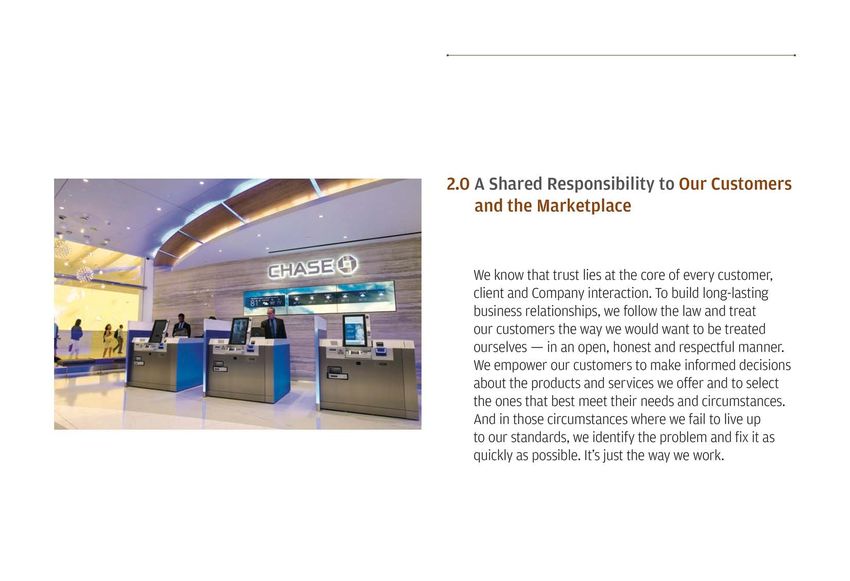
102.0 A Shared Responsibility to Our Customers
and the Marketplace
We know that trust lies at the core of every customer,
client and Company interaction. To build long-lasting
business relationships, we follow the law and treat
our customers the way we would want to be treated
ourselves — in an open, honest and respectful manner.
We empower our customers to make informed decisions
about the products and services we offer and to select
the ones that best meet their needs and circumstances.
And in those circumstances where we fail to live up
to our standards, we identify the problem and fix it
as quickly as possible. It’s just the way we work.
112.1 Insider Trading and Information Barriers of MNPI relating to those securities (see the Personal
Investment Activities section or Connected Persons).
As an employee of a financial services company, you may have access
to material, non-public information (“MNPI”) about our Company, our • You may not pass along MNPI or tip anyone to buy or sell securities
clients and other companies that conduct business with us. MNPI is while in possession of MNPI relating to those securities.
information that is not known by the public, but if it were, would likely
affect the market price of the securities issued by a company (ours These rules apply to the securities of our Company and of other
or any other) or be considered important to a reasonable investor in companies, no matter how the MNPI is acquired. Our Information
deciding to buy or sell those securities. In certain jurisdictions, MNPI Barriers Policy and other trading policies provide additional details on
may also be referred to as Inside Information. The terms MNPI and sales and trading activities while in possession of MNPI. If you believe
Inside Information are used interchangeably in the Code of Conduct. that you have come into possession of such information, you should
contact your Compliance Officer or your regional Compliance Control
How do you know if information is “non-public”? Room for further guidance.
The best practice is to consider all information non-public unless it has
been publicly announced or otherwise disseminated in a way that does
not breach any confidentiality or fiduciary duty. What if ...
How do we know if the information is “material, non-public I learned some information in a meeting with a client
information” or “inside information”? that could be MNPI. What should I do?
The best practice is to consider all non-public information about You must contact your regional Compliance Control
publicly traded securities, activities or financial condition of a Room or your Line of Business Compliance Officer. You
company and its employees as MNPI and consult with the Legal or
are prohibited not only from using the information to
Compliance Departments or your regional Compliance Control Room.
buy or sell securities, but also from telling others.
There are many laws and regulations that prohibit the misuse of MNPI.
We have policies and procedures designed to comply with these laws
and guard against even the appearance that something is improper.
As an employee:
• You may not buy or sell securities in your own account or any
account over which you exercise control (either alone or with
others, including client accounts), when you are in possession
12Our Information Barriers Policy is designed to further protect MNPI. • Always base your decisions on a philosophy of long-term
investment objectives, not short-term or speculative trading
Our system of Information Barriers is designed to safeguard and (such as day trading or trading based on rumors).
restrict the flow of MNPI and keep us in compliance with applicable • Never buy or sell securities or tip others to do so while in
laws and regulations. Some business units and locations have possession of MNPI relating to those securities (see the Insider
additional policies governing Information Barriers. Trading and Information Barriers section).
• Make sure your trading and investment activities are within your
The Information Barriers Policy prohibits anyone in a “Private Side”
financial means.
area (also known as an “inside” area) from communicating MNPI,
however it’s obtained, to anyone in a “Public Side” area, unless • Do not ask for or accept any preferential terms or conditions in
approved by the Compliance Control Room or your Compliance Officer. connection with any personal trading or investments, unless the
The policy also restricts the flow of information within Private Side terms are available to:
areas and MNPI should only be shared on a need-to-know basis.
- Anyone with a portfolio or creditworthiness comparable
Make sure you know and comply with all policies that apply to you. to yours
- All JPMorgan Chase employees under a plan negotiated by
2.2 Personal Investment Activities our Company
You have a duty to ensure that your personal investment activities are In general, employees should not invest in a competitor of JPMorgan
conducted with our Company’s reputation in mind and in compliance Chase (unless it is a publicly traded company). A “competitor” for
with all applicable laws, regulations and Company policies. We trust these purposes includes unrelated financial services companies
you to devote your time at work to serving the interests of our clients of any kind and others engaged in any business we are involved
and our Company, not your personal interests. (Note that this section in (even if not currently in direct competition with our Company),
of the Code discusses personal investment activities. See the Personal such as banks, asset managers, private equity firms, depository
Finances section for information about other personal financial institutions, credit unions, lenders, investment banks, some
matters.) insurers and insurance agencies, and securities brokers, dealers
and underwriters.
With regard to personal securities or other financial transactions,
including private investments, you make:
13What about trading in JPMorgan Chase securities?
What if ... As an employee, you may have been granted stock or other securities
in our Company as part of your compensation. All sales are subject to
An old friend has asked me to invest in a start-up the insider trading and applicable personal investment and account
private bank in our hometown? There is no JPMorgan dealings policies outlined in this Code. For some employees, additional
Chase presence in the area and the new bank’s restrictions may apply as identified below. You are also permitted,
business model is very different from ours, so the again subject to the policies outlined in our Code, to buy stock on
new bank won’t be competing with our Company for your own. Diversification is important too, however, and you should
business. Can I make the investment? carefully consider whether it is wise to concentrate all of your assets
in JPMorgan Chase or other financial companies. In general, you are
No. Employees are generally not permitted to invest in not required to buy or hold JPMorgan Chase stock and you won’t be
a competitor of JPMorgan Chase (other than publicly looked upon unfavorably if you do not do so.
traded entities), and any financial services company
is considered a JPMorgan Chase competitor for these In general, employees and directors may not invest in privately
offered, unregistered funds organized by the Company. Before
purposes, even if there is currently no direct competition
considering such an investment, contact the Personal Account
between the two. As such, you should not invest. Dealing Group or your Compliance Officer for advice.
Employees subject to the Personal Account Dealing Policy — Firmwide
are required to preclear transactions in JPMC securities and are
subject to more restrictive personal trading policies when buying
Our Personal Account Dealing Policy - Firmwide establishes trading or selling JPMorgan Chase common stock or other securities or
limitations and includes requirements for preclearance of personal equivalents. These employees are also subject to quarterly “blackout”
securities transactions, minimum holding periods and, in some periods during which they are prohibited from trading in JPMorgan
countries, the use of approved brokers. Depending on your Line of Chase securities and equivalents. The “blackout” period lasts for
Business and job function, you may also be required to comply with a approximately two weeks beginning on the first day of a quarter and
supplemental Line of Business or Corporate Function Policy, in addition ending after the release of JPMorgan Chase quarterly earnings.
to this policy.
There are special trading restrictions for some employees.
Policies that apply to you also apply to your Connected Persons.
Certain employees are restricted from engaging in transactions
Contact the Personal Account Dealing Compliance group if you are not in JPMorgan Chase securities except during quarterly “window”
sure whether an account is covered by these rules. periods. They may also have to comply with other restrictions and
requirements. If you are subject to these kinds of restrictions, you
will be notified.
14Know the rules for trading in the securities of our clients and suppliers.
In general, you should not invest in any securities of a client with We are committed to complying
which you have (or recently had) significant dealings or responsibility with the letter and spirit of
on behalf of JPMorgan Chase if it might appear that your investment
applicable laws...
is based on confidential information. Note that you may be subject to
more restrictive rules, depending on your business unit or location.
If you have information about, or are directly involved in negotiating,
a contract with a supplier of JPMorgan Chase, you may not invest in to ethical business practices preserves our Company’s reputation for
the securities of that supplier. integrity.
Each time you’re asked to represent JPMorgan Chase in any dealings In addition, JPMorgan Chase may have fiduciary obligations to our
with a company in which you own securities or have another interest, clients to act in their best interest. This means you must avoid or
you must immediately disclose that information to your manager
otherwise address through controls, disclosures or other appropriate
and your Compliance Officer.
steps actual or potential conflicts of interest. Don’t use your client
The policies regarding personal investing are designed to build relationship to serve your personal interests ahead of your clients.
honest business relationships and promote fairness throughout the
marketplace. If you have any questions about our Company’s Protect the interests of JPMorgan Chase.
expectations regarding your personal financial activities, please
contact Personal Account Dealing Compliance group, or your We have built an extraordinary global team and customer base.
Compliance Officer. Help us respect and protect our most valuable assets. Do not:
2.3 Ethical Business Practices • Solicit for a competitor or direct a JPMorgan Chase customer,
prospective customer, supplier or other individual or company to
In addition to compliance with applicable laws and regulations, we one of our competitors
expect all employees to hold themselves to the highest standards
of ethical conduct. We strive to treat all customers in a fair, ethical • Solicit or encourage a current JPMorgan Chase employee, consultant,
and non-discriminatory manner and work to achieve a competitive independent contractor, agent or supplier to leave our Company
advantage through superior products and services, never through
unethical or illegal business practices. Reinforcing a strong sense of personal accountability and ownership
is a priority at our Company. An employee’s action or inaction may
Always deal fairly and in good faith with our customers, suppliers, harm our clients, damage market integrity, undermine the Company’s
competitors, business partners, regulators and other employees. reputation, or negatively impact our internal culture. Employees must
Never take unfair advantage of anyone through manipulation, be alert to any potential negative effects that their actions or inactions
concealment, abuse of privileged or confidential information, may cause our clients, the markets or our Company. Employees are
misrepresentation of material facts or any other unfair dealings or encouraged to escalate concerns, regardless of whether it affects your
practices. Always listen carefully to any feedback you receive from line of business or you directly.
those doing business with the Company. Your commitment
15Each Line of Business is responsible for knowing the laws and
regulations that apply to its businesses, communicating relevant
information to its employees and maintaining an appropriate What if ...
compliance program. The following sections outline some key
regulatory requirements that apply across the Company. You and your co-worker disagree on whether to es-
calate an unusual customer transaction through your
2.3.1 Anti-money Laundering normal Line of Business process. What should you do?
Money laundering is the process of taking the proceeds of criminal You should escalate the matter to your manager and
activity and making them appear legitimate. Money laundering is if necessary, contact your Compliance Officer or Anti-
generally accomplished in three steps — placement of cash or other
Money Laundering Compliance Officer for assistance.
assets into the financial systems; layering, by moving these assets
around multiple accounts or institutions; and the integration of the Remember, everyone is responsible for identifying and
assets back into the mainstream economy. Money laundering can result escalating potentially unusual or suspicious transactions
from almost any crime, including fraud, drug trafficking and terrorism. or activities. Doing so will facilitate further review of the
transaction and can help protect you and the Company
Our Anti-Money Laundering Policy — Firmwide and related procedures from any involvement in questionable or illegal activities.
are designed to comply with all applicable laws and regulations related
to money laundering, terrorist financing and economic sanctions. You
are required to comply with these policies, procedures and controls.
Specifically:
• Make sure you accurately complete all “know your customer” 2.3.2 Economic Sanctions Regulations and Anti-boycott Rules
requirements.
U.S. economic sanctions regulations, administered by the U.S.
• If your job requires more detailed knowledge of anti-money
Department of the Treasury’s Office of Foreign Assets Control (or
laundering, counter-terrorist financing and sanctions rules, talk
“OFAC”), prohibit anyone subject to the jurisdiction of the U.S. –
to your manager to receive and complete the necessary training.
including financial institutions like ours and our foreign branches
• Be alert to — and report — any unusual or suspicious activity and sometimes our non-U.S. subsidiaries – from exporting financial
to your manager, Anti-Money Laundering Investigations, your services to certain foreign jurisdictions, governments or individuals.
Anti-Money Laundering Compliance Officer or the Risk Manager
responsible for anti-money laundering and sanctions compliance. These regulations sometimes also require that assets in which these
governments or individuals have an interest be frozen. Economic
• Complete all required Compliance training on a timely basis.
sanctions can also be imposed by the United Nations, the European
Union or other countries, and these may impact our activities as well.
Our Global Anti-Money Laundering Policy and Firmwide Sanctions
Standards are designed to achieve compliance with the U.S. economic
16sanctions regulations. You have a responsibility to know and comply Examples include agreements to:
with the policies and procedures that apply to you. Consult with your
Line of Business Sanctions Officer (“LSO”) or Regional Sanctions • Raise, fix, stabilize, or maintain prices, fees, spreads or any item (e.g.
Officer (“RSO”) if you are involved in any transaction or activities that benchmarks, costs) that would ultimately affect price (price fixing)
appear to implicate economic sanctions.
• Reduce or eliminate competition in a competitive bidding process
(bid rigging)
U.S. anti-boycott laws are designed to prevent U.S. companies,
including their overseas branches and subsidiaries, from cooperating • Divide customers, territories, markets or products (allocation
with illegal foreign boycotts of countries that are friendly to the U.S. In schemes)
general, these laws prohibit us from: • Refuse to deal with a competitor, customer or third party (group
• Refusing to do business in a certain countries or with companies that boycott)
do business in certain countries;
Predatory or exclusionary conduct that is intended to harm competition
• Discriminating against someone based on race, religion, sex, national
is also prohibited.
origin or nationality;
• Furnishing information about someone in response to a boycott- If you have any question as to whether any conduct may be collusive or
related request, or anticompetitive, consult with Antitrust Compliance. Even if your work
does not involve interaction with a competitor, customer or outside
• Implementing a letter of credit that contains a condition related to any
party with which JPMorgan Chase does business, you must review, be
of the prohibited actions.
familiar with and comply with the Antitrust and Competition Compliance
Policy – Firmwide and any related policies adopted by your business unit
Boycott-related requests may arise in a number of ways such as letters
or region.
of credit and trade transactions, loan syndications and visa applications.
Consult with the Global Financial Crimes Compliance Department if you
Tying arrangements – which force a customer, as a condition of buying
receive any requests that appear to be boycott-related.
one product at a particular price, to have to purchase another (as one
2.3.3 Competition, Antitrust and Tying example) – are illegal under some circumstances. There are laws that
govern tying arrangements involving bank subsidiaries of our Company.
Competition laws, known in the U.S. as antitrust laws, promote and You are responsible for being familiar with these rules if they apply to you.
maintain the benefits of free markets. These laws vary from place to
place, but they share core principles that protect competitive market 2.3.4 Anti-bribery, Anti-corruption
participants, including our Company and our clients. We are committed
JPMorgan Chase’s reputation for integrity is central to the success of our
to complying with the letter and spirit of applicable competition laws
business. We must never compromise our reputation by engaging in, or
wherever we do business.
appearing to engage in, bribery or any form of corruption.
These laws and our Company policies prohibit agreements among
You may not give, offer or promise (directly or through others such
competitors that are deemed collusive or anti-competitive.
as third party intermediaries) anything of value to anyone, including
17government officials, clients, suppliers or other business partners, restrictions on these standards. If something seems improper or
if it is intended or could reasonably appear as intended to influence may involve bribery, contact Anti-Corruption Compliance, your local
improper action or obtain some improper business or other Compliance Officer or call the Code Reporting Hotline.
advantage. You also may not solicit or accept anything of value
from anyone (directly or through others such as family members) if 2.3.5 Taxes
it is intended or could reasonably appear as intended to improperly
influence your decisions on behalf of JPMorgan Chase. Anything of JPMorgan Chase is committed to complying with both the letter
value is broadly defined and includes but is not limited to: and the spirit of applicable tax laws wherever we operate and
ensuring accuracy in the tax-related records we produce and the tax
• Money information we are required to report. You may not facilitate any
client activities intended to breach applicable tax laws, which may
• Gifts and hospitality (e.g., meals, entertainment, travel and related
include engaging in activities that would assist a client in evading the
expenses, training and conferences)
payment of taxes that are due and payable or concealing information
• An offer of employment or other work experience, whether paid or from tax authorities. As an employee of JPMorgan Chase, you are
unpaid (e.g., full-time employment, unpaid internships) responsible for being familiar with and complying with related policies
and procedures. Be alert to all unusual or suspicious client activities
• Charitable contributions
that may have as their purpose or apparent purpose hiding income or
There are heightened risks when interacting with government officials. assets from tax authorities or evading the application of tax reporting
Government official is defined broadly and includes employees of requirements. You must promptly report any violations or suspected
government-controlled entities. Special procedures may apply, violations of this section either through the Code of Conduct Reporting
including preclearance requirements, when providing anything of Hotline or one of the other methods outlined in Section 1.5.
value to a government official.
2.3.6 Other Obligations of Some Employees
For the purposes of the Code, providing anything of value (for example, Because of their positions within the Company, some employees,
money, gifts or offers of employment) indirectly through a family including employees in specific Lines of Business or certain jurisdictions,
member, close associate or business partner of the government official have additional obligations (for example, U.S. Securities Registered
is considered the same as providing it to the government official directly Representatives or employees subject to the Prudential Regulation
if it is intended, or could reasonably appear as intended, to influence Authority & Financial Conduct Authority U.K. Conduct Rules). If you are
improper action or obtain some improper business advantage. one of these employees, make sure you know what is expected of you
and meet all applicable obligations.
In addition, you may not make facilitation or “grease” payments, which
include anything of value given to anyone, including a government Additional training and reporting requirements must be satisfied by
official, in his or her personal capacity, to cause the person to perform employees with special regulatory status and those who hold licenses
or expedite performance of a routine duty or function. to perform certain financial services activities. Contact your local
Compliance Officer if you have questions about licensing and training
We expect all employees to act ethically and we do not tolerate bribery. requirements.
Consult our Anti-Corruption Policy for the rules and
18Section 2: A Shared Responsibility to Our Customers and the Marketplace
We all share a responsibility to follow the law and treat our customers the way we would want to be treated – in an open, honest and respectful manner.
Section 2 Principles: A Shared Responsibility to Our Customers and the Marketplace Select Related Policies and Resources
2.1 Inside Trading and Information Barriers
• Information Barriers Policy - Firmwide
➢ Never buy or sell securities while in possession of MNPI relating to those securities or tip others off to do so. • Personal Account Dealing (PAD)
➢ Know and comply with the Company’s Information Barriers system. Policy - Firmwide
• Anti-Money Laundering Policy - Firmwide
• Antitrust and Competition Compliance
2.2 Personal Investment Activities
Policy - Firmwide
➢ Make sure your personal financial activities don’t conflict with the interests of our Company or our clients. • Anti-tying Policy
➢ Follow the personal trading rules and restrictions that apply to you, including trading in JPMorgan Chase securities. • Anti-Corruption Policy - Firmwide
➢ Remember that Company policies on personal securities and financial transactions extend to connected persons • Hiring of Referred Candidates Policy - Firmwide
(i.e. spouse, domestic partner, minor children and those to whom you provide significant financial support). • Code of Ethics for Finance Professionals
➢ Do not invest in a competitor of the Company (unless publicly traded) or vendors and suppliers you negotiate • SEC Rule 205 Compliance Policy - Up the
with or have information about through work. Ladder Reporting
Remember, the list above is not inclusive of all
related policies and you may be subject to more
2.3 Ethical Business Practices
restrictive LOB/Regional/Corporate Function
➢ Promote ethical business practices – always deal fairly and in good faith – with customers, suppliers, regulators, policies. Go to:
and other employees. • Firmwide Policy Portal
➢ Never take unfair advantage of anyone through manipulation, concealment, abuse of privileged information, or • Code of Conduct Intranet Site
misrepresentation of material facts.
➢ Complete all KYC requirements and be alert to – and report – any unusual or suspicious transaction or other Your Responsibilities
indication of possible money laundering.
➢ Never offer, give, solicit or receive anything of value, either directly or indirectly, if it is intended or appears • Report known or suspected violations to
intended to obtain an improper business benefit or expedite the performance of a routine government function. the Code Reporting Hotline:
➢ Comply with antitrust and competition laws promoting a free and open global marketplace.
Phone: 1-855-JPMCODE (576-2633)
➢ Comply with OFAC identified applicable economic sanctions regulations and U.S. anti-boycott rules.
Online: https://www.tnwgrc.com/JPMC/
➢ Satisfy all additional training and reporting requirements.
• Contact your Compliance Officer or
regional Control Room if you receive
material non- public information (MNPI).
• If you are subject to the PAD policy,
disclose all associated accounts and
preclear your investments.
• Never engage in predatory or exclusionary
conduct intended to harm competition.
• Preclear all gifts and entertainment for
government officials.
193.0 A Shared Responsibility to Our Company
and Shareholders
Each of us, at every level of the Company, shares a
responsibility for preserving what we’ve built and
honoring the people who have helped build it. It’s
not just about protecting our Company today, but
also positioning ourselves for continued success
tomorrow. We have a duty to protect JPMorgan Chase
assets, systems, information, records and interests —
even the Company name — to maintain the trust our
shareholders have placed in us and keep our Company
strong and thriving.
203.1 Protecting JPMorgan Chase’s Assets and Using Them (email, telephone, etc.) and assets (JPMC email addresses, JPMC
Appropriately technology, JPMC information resources, etc.) should be kept to a
minimum, to the extent permitted in your jurisdiction or business, and
Our assets are the resources we use to conduct our business. Use comply with JPMC policies and procedures, and with applicable laws
Company assets for legitimate Company business and appropriately and regulations. Personal use should not interfere with your business
safeguard them including against cyber-related attack, theft, loss, obligations, should not burden JPMorgan Chase’s assets, should not
waste or abuse. By protecting our assets, we protect our competitive introduce additional risk to the Company, and should not negatively
advantage in the marketplace. You also have a responsibility to extend impact or disrupt your colleagues.
the same degree of care to assets entrusted to our Company by others.
Use electronic communications wisely and be aware of the Company’s
Our assets include: monitoring practices.
• Physical assets, such as office furnishings, equipment and supplies
We reserve the right to monitor, review, access, record, and disclose
• Technology assets, such as computer hardware, software and data as we deem appropriate, subject to applicable laws and regulations.
information systems You should not expect privacy when using Company resources.
• Financial assets, such as cash, securities and credit cards
Make sure your use of the Company intranet and internet access
• Our Company’s name, its brand and our customer relationships complies with our policies. In particular:
• Information assets, such as Intellectual property, including information
about products, services, systems and other data • Do not transmit or provide access to confidential information unless
it is adequately protected in accordance with Company policies and its
Company assets should be used only for the conduct of the Company’s transmission is necessary for business purposes.
business, except where otherwise provided by the Code or other • Do not use these resources in a way that would violate applicable
Company policies. The Company’s business includes, for these purposes, law (for example, use or sale of controlled substances) or any of our
service related to an outside activity at the request of the Company (for policies (for example, discrimination, harassment, gambling, misuse
example, service on the board of a not-for-profit at the request of JPMC, of confidential information or social media).
or at the request of the JPMC Market Leadership Team, or service on an
• Do not access, download, upload, save or send sexually oriented —
advisory committee or on the board of a clearing house, exchange or
or other offensive materials.
depository at the request of JPMC (see Section 3.3.3)).
• Do not access, download, upload, save, send or use any proprietary
All physical and technology assets provided by the Company, whether materials — such as software, articles, photographs, pictures or
used inside or outside the JPMorgan Chase workplace, are Company graphs — unless you are authorized to do so.
property and are provided for your business use. Never sell, lend or give
• Do not send Company information to an external email address for
them away, regardless of their condition or value, unless you
any non-business purpose or to your personal email account for
are authorized to do so. In general, you should not use our assets
any reason.
(including technology or information resources) for your personal
activities. Personal use of JPMC electronic communication devices
21You can also read


